Sunday, 18 October 2009

What Are Trades Councils?

What is a trades council? When I first got involved in leftist politics comrades would occasionally mention brother or sister so-and-so had been to this mysteriously named body and had either passed a resolution or got some cash from its coffers. What puzzled me was why a business-sounding organisation would be willing to give money to obvious ne'er-do-wells. It wasn't until after I'd become a T&G shop steward that I found out what one was. Trades councils are basically your local version of the TUC to which affiliated trade union branches send delegates. They are bodies comprised of lay activists and their aim is to organise and coordinate cooperation among different trade unions - which is not always easy as some affiliates compete among themselves for recruits and recognition deals.

Brother S and I regularly attend the North Staffs Trades Council on behalf of Keele UCU. Typically the meeting is half about local struggles and campaigns, and half business (which is a big improvement on how they used to be). This week our monthly meet gave the floor to Tom Mellish, who occupies a policy role with the TUC proper as well as being chair of his local council in Lewisham. He spoke on trades councils and the labour movement.

He began with the good news. After the long years of decline, trade union membership has stabilised around the seven million mark. Since 1995 there have been 3,600 new union recognition agreements reach has given unions access to another 1.3 million workers. The macho image often associated with trade unionism lags behind reality as 51.2 per cent of trade union members are now women. But this all needs tempering with the recognition of some negative developments. Current membership growth is low as are new recognitions, and overall union density is low. Only 28 per cent of the work force are in a union, and just 36 per cent benefit from collective bargaining arrangements. The picture is even grimmer in private sector workplaces. Only 16.4 per cent of which are unionised and only eight per cent of firms have a density of 50 per cent plus - not a great base from which to influence industrial policy.

Despite this and the massive drop in numbers from the seventies, the trade union movement in Britain remains strong and are easily the largest campaigning organisations in terms of activists. But even unions and their membership need some convincing. In the 90s unions tried to reinvent themselves as employment insurance service providers. The so-called 'new unionism' saw unions offer holidays, insurance and credit cards. By and large these were not successful nor did they stymie declining memberships. Instead unions should stick to what they do - which is representing the interests of workers. To do this unions need clout: a larger activist base and membership. The legacy of the service model must also be shed: unions are about enabling workers to take action for themselves; not providing a layer of full timers who can be called in to do the representing for them.

Trades councils can help build unions through their independent campaigning activity. But some layers inside unions themselves find local TUCs "difficult". Whereas union full timers have definite objectives and are responsible to the rest of officialdom for their actions, trades councils are not. They are sometimes perceived as left-wing and oppositional. Furthermore trades councils recruitment of workers can be "problematic" because they lie outside existing membership growth strategies. Citing the example of one unemployed workers' centre, a case worker used to regularly recruit non-unionised workers to the relevant union. However the unions were far from appreciative - for them it meant their new recruit profile was fragmented. Extra resources would have to be expended organising these workers, who were often very isolated. Small wonder some elements of officialdom are sceptical.

Moving onto the discussion I asked how many trades councils there are across Britain, given its story has been one of folding councils and declining attendances. Much to my surprise Tom replied there are 134 registered for 2009, which is up from a low of 102 in 2002. It seems campaigning is the key to growing the numbers. Brothers S and J talked a bit about our recent visibility in a number of actions and strikes across the city - two public meetings on the post office, a presence on local posties' and lecturers' picket lines, involvement with anti-fascist and anti-academy campaigning. Our TUC is slowly but surely rebuilding is profile in the local labour movement - through Bro S thought we need a distinctive campaign that can make our name more widely known. Sister J suggested there are other things we can do beyond acting as recruitment sergeants for trade unions. We must remember that, generally speaking, our council is politically unrepresentative of affiliated members, which can compound any "isolation" TUCs have from the rest of the movement. Instead we need to get stuck into these wider issues, which can demonstrate to non-unionised workers the continued relevance of trade unionism. Trades councils can "bridge" trade unionism and issues beyond the workplace.

All in all this was quite a useful meeting. As we head into a situation where the government are taking a chainsaw to public services, the strength of trade unions are crucial to building a viable opposition. Trades councils can and will play a vital role liaising between unions at the local level and mobilising solidarity. If you're a lay trade unionist who wants to see a stronger and more unified labour movement, you can do worse than seeking your branch's delegation to your local trades council. If there isn't one in your locality but fancy setting one up, get in touch with your regional TUC
here. And if you're not in a union already, why not?

Image courtesy of
Brighton and Hove District Trades Council.

Friday, 16 October 2009

Twitter Power Vs Media Power

It's been a good week online for progressive people. First we have the humiliating blogger/twitter-led take down of oil trading firm Trafigura and libel specialists Carter-Ruck. And today the Daily Mail online got turned over by Twitter for this scurrilous piece of homophobic garbage.

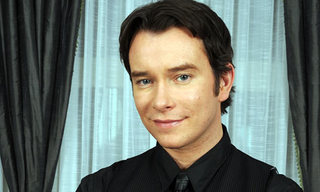
There's no real need to go into Jan Moir's disgusting character assassination of the late Stephen Gately (comprehensive fisks
here, here and here). But the reaction it provoked on Twitter has been even greater than the Trafigura/Carter-Ruck debacle. Why?

Stephen Gately was a well-liked celebrity no one had a bad word to say about. Moir's gleeful attack on his reputation when the man hasn't even been dead for a week was not only distasteful, but also a catastrophic misreading of the public mood.
The Mail might have got off had it been one of its usual targets like Katie Price, Pete Doherty or Amy Winehouse, but definitely not here.

Then there is the pronounced left-liberal bias among British tweeters, not in the least bit harmed by several popular Labour-supporting comedians commanding thousands upon thousands of followers. Such blatant homophobia coming from a hated and hateful right wing rag is never going to sit easy with this group.

Finally, unlike political or protest activity, the cost of making one's opinion felt or registering disgust is no more than the time it takes to type out 140 characters or less. The low bar of entry encourages engagement.

In both cases, it's as if Trafigura and Moir found an extremely sensitive spot in the liberal-left body politic and aggravated it with a venom-tipped pointy stick. Trafigura excited the anxiety over the erosion of democracy and freedom of speech by monied interests. Moir provoked the passive revulsion felt against the unimpeded flow of bigotry coming from
The Mail and its ilk.

But to become a trending topic that can force itself onto the mainstream news agenda a twitter storm appears to gather momentum by progressing through three stages.

Stage One - A number of "normal" users (usually bloggers and/or politicos with medium-sized followings) start tweeting about an issue, which in turn provokes reactions and retweets from others. Usually this gets an issue trending at the lower end of Twitter's trending topics.

Stage Two - The issue is picked up by mid-rank (in Twitter terms) comedians and celebrities, such as
Charlie Brooker, David Schneider and Graham Linehan, who retweet and spread it about a bit.

Stage Three -
Stephen Fry takes notice, which is brought to the notice of his 840,000+ followers. At that point it goes stratospheric.

To give an example of what a Fry retweet can do, by plugging the Enemies of Reason's post today Anton Vowl's traffic went up from an average of roughly 1,500 page views/day to
almost 34,000 (and that was four hours ago!). When this is coupled with calls to (internet-based) actions it can be quite potent.

And so it proved in
The Mail's case. The whirlwind of anti-Moir tweets fuelled hundreds of comments left beneath the article in question, most of them extremely critical. Later in the afternoon the website changed Moir's title from 'Why there was nothing natural about Stephen Gately's death' to the softer-sounding 'A strange, lonely and troubling death . . .' As if no one would have noticed. Next, following angry emails and tweets to Marks & Spencer their adverts were removed from the article. And the (toothless) Press Complaints Commission has been deluged with complaints. It's one of those nice twists of history that the chair of the PCC's editors' code of practice committee is none other than The Mail's editor, Paul Dacre.

Since then it's taken a slightly ugly turn. Rumours abound of Moir's address being bandied about on Twitter. It's one thing to organise a flash mob of Carter-Ruck's offices, it's quite another to implicitly threaten someone - despite their scummy beliefs.

Perhaps this will be a lesson learned by Moir and
The Mail. It was once said the media exercises power without responsibility. But social media and the rapid responses it enables are changing the rules of the game. Twitter is only one way social media is helping articulate and concentrate the diffuse anger and frustrations that exist out there. It brings right wing journalists and newspaper editors face to face with the disgust and opposition they stir up. And it's possible next time they over step the mark the mob won't just be confined to cyberspace. It might turn up on their doorsteps.

Tuesday, 13 October 2009

Twitter vs Trafigura

Thanks to the ill-thought gagging order slapped on The Guardian last night, preventing the paper from reporting this, even the dogs in the street now know what question Newcastle-U-Lyme MP, Paul Farrelly, will be asking in the commons this Wednesday about the oil and energy trading firm Trafigura. What happened today will have media litigators and libel specialists worried.

When you're a company with something of a
checkered history you might not want your involvement with the dumping of toxic waste off the Ivory Coast appearing in a mass circulation newspaper. Hence Trafigura employing libel specialists Carter-Ruck to prevent The Graun following up their original story by reporting on Farrelly's parliamentary question.

Once bloggers (The Third Estate and Guido to name but two) got wind of the gagging order they turned to Wednesday's order book of parliamentary questions and simply blogged what they found there. This broke on Twitter last night and by this morning, the incredulity toward Carter-Ruck's and Trafigura's attempts to crap all over democratic process and cover up a ghastly crime off the West African coast had spectacularly backfired. Hundreds of thousands of people who wouldn't have heard of Trafigura otherwise read about the injunction on blogs and tweets and in turn retweeted them. One can only imagine the involuntary bowel movements at Carter-Ruck's offices. After lunch time it had become a joke and
The Graun got the gag lifted. I wonder if Trafigura will be asking for a refund?

But does this mean the mainstream media is dying on its feet, as some bloggers like Tory Bear
claim? Not really. No blog or alliance of bloggers would have been able to uncover the Trafigura/Ivory Coast story in the first place. A rare few might make a pretty penny from Google AdSense but it's hardly enough to finance the necessary field work and follow up. It still remains that with very few exceptions, when it comes to news reporting blogging is parasitical on the mainstream media.

Carter-Ruck and Trafigura were forced to back down because their injunction was about media management and perception. Their chosen battleground was always vulnerable to subversion because the internet cannot be gagged. As soon as something is let loose it can never be chased down, as last year's release of the BNP's membership list demonstrated. But outside of medialand, the impact Twitter can have on "real world" political processes has so far proven marginal. The use of it by activists in Iran and, to a lesser extent, Honduras, acutely embarrassed the respective regimes and mobilised a diffuse international
sympathy that helped keep the protests and actions in the public eye. But that is all. Likewise, remember Tory MEP Daniel Hannan running around the States this summer badmouthing the NHS? It was a total PR disaster for David Cameron as #welovethenhs attracted angry responses from Twitter users pissed off with his antics and those of the American hard right. There were bad headlines and Tory MPs scrambled to assure voters the NHS was safe in their hands. And yet the polls didn't move. Nothing really changed. And of course, sadly, the BNP remain very much with us.

Twitter and blogging have shown they can force certain items onto the news agenda. But by themselves they will not shape the consequences of bringing them to wider public scrutiny. That still depends on good old-fashioned political struggle for progressive outcomes.

Sunday, 11 October 2009

Move Over Labour?

The German elections a fortnight ago brought a bit of cheer to the British left. Die Linke increased its representation in the Bundestag from 54 to 76 seats and secured 11.9 per cent of the national poll (up three per cent from 2005's 3.7 million to almost 4.8 million votes in the constituency and 4.1 to 5.1 million in the list vote). In the mean time the traditional party of the (West) German working class continued its historic decline. The SPD's vote tumbled over 11 per cent and lost 76 seats. Their decision to take part in Angela Merkel's grand coalition with the CDU/CSU has left them badly mauled - and rightly so.

What can socialists in Britain campaigning for a new left party take from these results, aside from a sense of satisfaction? Do Die Linke's results show that potential exists for a similar formation in Britain, as the
Socialist Party's Peter Taaffe argues? Yes and no.

Die Linke's results do not indicate a political space is opening up for a mass Marxist party. As Andy Newman
rightly argues, the success of Die Linke stems from presenting a traditional set of social democratic policies to the German electorate and appearing credible enough to deliver them. Prior to the banking bail out New Labour had spent the previous 13 years putting clear neoliberal water between it and Labourism. And now, when traditional Labourist policies are finding support among the wider electorate, the party will only countenance the weakest of social democratic measures. An 'old Labour' political space exists to Labour's left, and not a revolutionary Marxist one - no doubt to the disappointment of some ultra lefts who think we can substitute a revolutionary party for a broad new workers' party.

But the nature of this political space to Labour's left is extremely problematic. Again, Andy is right
to note minor parties' votes are likely to be squeezed (outside a few constituencies) as the mainstream of the labour movement swing behind Labour and right-wing voters return to the Tory fold.

Here is the problem. While Labour has travelled to the right since Blair became leader in 1994, the opening political space on the left has, despite everything, been smothered
organisationally by the party and the affiliated trade unions. Blair's calculation that Labour's trade union backers would support it come hell or high water, even when his and Brown's policies were kicking them in the teeth, has proven accurate. Even now with Unite apparently running the party there's little evidence of pro-trade union and pro-worker policies. When anger has risen pro-Labour elements of union bureaucracies have moved to diffuse it. Take Unison for example. Opposition to the wave of hospital cuts in 2006-7 was effectively derailed by the leadership's refusal to build a national campaign against the measures. Every time a motion to discuss disaffiliation has been submitted to conference it was ruled out of order. The result of this has tended to be disillusionment and apathy. More trade unionists have been turned off politics altogether rather than join the real but so far weak movement for a new left alternative. Fewer still are actively pushing their unions to "reclaim" Labour. For the time being, the custom and practice of bureaucratic inertia rules the day.

The political space is simultaneously open and closed. One can speculate what will happen to this after the next election. If Labour loses (as seems virtually certain), a stronger social democratic turn in response to the Tory cuts agenda is possible - even if only at the level of rhetoric. On the surface this would close what opportunities exist for socialists who want a new party, but then again maybe not. In Greece, the coalition of the radical left,
Syriza, founded in 2004, has grown in stature while the main party of the centre left, PASOK was in opposition. It is possible in the highly charged political atmosphere of outright trade union opposition to Tory cuts a new opportunity for the left may arise - especially as Labour has done its best to alienate all but the most committed and careerist among younger organised workers.

It all depends if the heirs apparent in Labour have learned the lessons of the Blair/Brown years and whether the unions are prepared to act more politically through the party's structures. If the answer to either is no, the political space for the left cannot be smothered forever. Either Labour accommodates it, or gives way to something else. What is it to be?

Saturday, 10 October 2009

MPs' Second Jobs

Gordon Brown's damaged retina has been hitting the headlines this afternoon. So taken is the BBC with the prime minister's eyesight that it is currently the leading story on the website, pushing the latest MPs' expenses story off the front page. I'm sure the appearance of the PM's story after news many MPs will be forced to pay back unjustifiable expenses claims was entirely coincidental.

But there is another parliamentary storm looking to break: second jobs. While no taxpayers were harmed in the lining of MPs' pockets by private firms, they represent a corrosive set of pressures that have no place in any form of democratic governance. First off, big pay outs for consultancies and directorships are just plain unhealthy. How can MPs be expected to investigate and regulate the activities of companies if a chunk of them are on the pay roll as part-time advisors?

Second, it makes MPs even more remote from everyday life. Take
these examples from the Tory front bench. How can we be "all in it together" when some of these jokers "earn" tens of thousands for 12 days/year work? In the Tories' case, at least it has a function. This enables them to hobnob with their base in corporate boardrooms. But what about a certain West Midlands Labour MP who is paid in excess of £30,000 to fly twice a year to sunnier climes to provide "advice" about their specialist subject? Reportedly when challenged their reply was "Why would anyone object? It doesn't interfere with my parliamentary duties". Obviously this MP hasn't a clue their less-than-affluent constituents might care very much.

I'm not opposed to MPs having second jobs
per se, but the rules clearly need a steam clean.

Wednesday, 7 October 2009

Marx and Foucault: Some Conclusions

The purpose of this series of articles was to investigate the significant divergences between Marx and Foucault in their treatment of power and the levels their methods operated on. It was then established that both Marx and Foucault would have to undergo some modification of their approaches if they were to be accommodated in the same theoretical framework. The preceding discussion demonstrated how this could be facilitated by Althusser.

Out of the ‘three Foucaults’ (i.e. the periodisation of Foucault's career into three phases - the archaeological, the genealogical, and the preoccupation with the self), the encounter was explored here at the level of genealogy because of the common ground shared by Foucault and Althusser, particularly where the rejection of metaphysics and (different) commitments to materialist social theory were concerned. It is also the genealogical Foucault who has had the widest ranging impact on contemporary social theory. The emphasis he places on the micro technologies of power and subject formation have helped provoke feminist debates around epistemology and ontology and has led to important contributions to the field of sexual difference. For example,
Judith Butler’s challenging but influential work on the discursive construction of sex. Therefore if Marxism is to meet the challenges of providing convincing and rigorous analyses of contemporary social processes, it needs to encounter this body of work. It is hoped the brief sketching out of the terms of a rapprochement between Foucault and Marx will help facilitate this.

The convergence discussed in the last chapter is by no means exhaustive or conclusive. Instead it should be viewed as the opening of a dialogue between the two perspectives. We have seen with Foucault’s how power inscribes the body, providing an account more sophisticated than top-down Marxist explanations of subject formation. We have also seen how beyond a certain level of abstraction Foucault has practically nothing to say, whereas Marxism does. By bridging the gap between the two, Althusser’s approach to social formations offers an avenue for the enrichment of Marxism, adding to the explanatory value of concepts like bio-power and power/knowledge.

The Marx-Foucault encounter is but one place where the explanatory capacity of materialist social theory can be renewed. Today it is a pastiche of different trends and theorists. In their own ways, each subject a particular facet(s) of late capitalist society to searching analysis and criticism and providing a greater or lesser number of insights about its operation. Given the potentiality of abstraction discussed in this paper, there is no reason why the recent innovations coming out of poststructuralist and non-poststructuralist social theory cannot be received by and built upon by a materialist sociology. Pursuing this is ambitious and tradition-wide in its scope. Its challenge is to produce new analysis while constantly interacting, engaging and critiquing the arguments and findings of competing schools of thought. It is hoped the encounter here between Marx and Foucault shows the Marxist tradition has enough theoretical resources to carry this programme through.

The whole contents of
Toward a Marxian/Foucauldian Encounter can be viewed here.

Monday, 5 October 2009

Branch Meeting: Workers in Uniform

Without much fanfare, the 15th September edition of The Socialist announced Brian Caton, the militant general secretary of the Prison Officers' Association, had joined the Socialist Party. Anticipating this will prove controversial to the SP's opponents on the far left, Stoke branch decided to hold a discussion to clarify the traditional Marxist position on the state, what attitude socialists should have to prison officers, the police and the army and whether they should be permitted to join a revolutionary socialist party.

Brother P began with setting out a thumbnail view of the classical Marxist position of the state. He said that despite there being a wide variety of state forms, capitalist states all have something in common - be they liberal democracies, dictatorships or theocracies. And this commonality is the existence of a repressive apparatus, what Engels famously called 'armed bodies of men' that exist to defend private property and property relations. Other functions, such as the army's "humanitarian" work or the police's 'policing' are, from this viewpoint, secondary to the real reason for their existence. To emphasise these points, P read out a quote from Trotsky's
History of the Russian Revolution:
Toward the police the crowd showed ferocious hatred. They routed the mounted police with whistles, stones and pieces of ice. In a totally different way the workers approached the soldiers ... The police are fierce, implacable, hated and hating foes. To win them over is out of the question.
Do those who wear the state's uniform have a place in the struggle for socialism? Do their occupations place them in irreconcilable antagonism with that struggle?

Brother J said that, like other workers, prison officers, the police and soldiers are selling their labour power in return for a wage. This means they can be open to similar pressures as anyone else. Brother A concurred. None of these arms of the state are homogenous, nor are they immune to being contaminated by the class struggle. In some ways their organisation can prove to be especially susceptible to them. For example, there are few institutions in capitalist society where class privilege and power is as clear cut as the army, and this is the case even among the more privileged elite units. For example, the Bolsheviks were able to split and win over the Cossacks during the Russian Revolution - despite their historically being Tsarism's battering ram against the people. Similarly, the police can be won over to class struggle politics. In 1918-19 the police strike on Merseyside so frightened the ruling class that they called the army out on to Liverpool's streets to confront them. P also noted it was the sympathetic chief of Helsinki's police who hid Lenin during the
July Days.

Clearly neither are a homogenous reactionary mass, and to pretend they are - especially at moments when their interests contradict those of the state (such as the recent debacle over police pensions, or the discontent over inadequate equipment in Afghanistan) - risks driving them further away from the labour movement and firming up their support for the state. A key objective for socialists to weaken them as a defence of bourgeois interests is to establish relationships and encourage fraternisation. Generally speaking the police would find it harder to spy on, harass and batter labour movement mobilisations if their representatives had to regularly sit down with them. Furthermore, in preparation for a future period when the system is thrown into general crisis and socialism is back on the agenda it's in the interests of the labour movement that the police and army do not stand in its way. To this end socialists call for the election of officers, the right to form independent trade unions, and the right to take strike action to
break them from their historic functions.

Brother G argued recent history of police deployment to pursue government's class struggle objectives demonstrated the uneveness of their character. It was not for nothing Thatcher drafted in police battalions from outside areas at the forefront of the miners' strike. Village coppers were too embedded in miners' communities to ever be effective as a means for repressing their families, friends and neighbours. Similarly A added the police already fraternise with a well-organised workforce everyday: the civilian back room staff you can find in any police station.

P returned to the theme of weakening the police as guarantors of capitalist property relations. He suggests no one joins the police because they want to protect the interests of the rich and powerful. While it is true some are little better than thugs in uniform, most join up out of a commitment to the ideology of the thin blue line. The SP's historic call for democratisation of the police is about limiting the purview of the police to their crime-fighting functions above high profile stunt busts and protecting the powers that be. Because it asks the police to live up to their official ideology, it's quite possible reforms and demands of this character could win support from within the force.

Rounding off the discussion, A added there is only one set of criteria that matters for any party member, and that's their commitment to building the party, the labour movement and fighting for socialism. If this is the case then membership is entirely justified, regardless of whether they're a copper, a soldier, or a screw.

Also, it turns out Medway SP were simultaneously having the same discussion. A report can be read
here.

Saturday, 3 October 2009

Minor Parties European Election Spending

The Electoral Commission have released campaign expenditure for parties who spent under £250,000 in the European elections. The full figures are available to view here.

There are two sets of figures that stick in my craw. The 153,236 votes (1.01%) cast for
No2EU came on the back of a campaign costing £118,326.

The
Socialist Labour Party won 173,115 votes (1.14%). And the cost of their campaign? £5,354.

Per vote, No2EU spent 77p and the SLP three pence(!) I'm lost for words.

Here are the figures for other left campaigns:

Scottish Socialist Party - 10,404 votes (0.07% - Scotland only), campaign cost £4,733 (45p/vote).

Socialist Party of Great Britain - 4,050 votes (0.03% - London only), campaign cost £3,760 (92p/vote).

New Anti-BNP Leaflet Hits the Streets

Members of North Staffs Against Racism and Fascism (NorSCARF) were out last weekend leafleting around Abbey Green ward in Stoke-on-Trent. For readers unfamiliar with the political topography of The Potteries, Abbey Green is one of two wards in the city (the other is Bentilee) where all three of its council seats are occupied by the BNP. NorSCARF has targeted the Abbey in this instance because two of the BNP's leading members sit as councillors here. As the Richard and Judy of the far right (or should that be Joseph and Magda?), Alby (pictured) and Ellie Walker are the friendly aryan faces of the fluffy, community-minded BNP (see here). And it just so happens at next year's council elections Alby is up for re-election. If the good people of the Abbey turf him out it would constitute a very heavy body blow to the BNP indeed.

Here is the text of the latest NorSCARF leaflet, with some comments on the end.
Abbey Green Matters - A NorSCARF Bulletin
BNP Oppose New Children's Centre

THREE BNP COUNCILLORS are opposing a new Sure Start Children's Centre at Hillside primary school and in the process are whipping up fears and misinformation.

The Sure Start centre will provide childcare, support for mothers and a baby clinic, and will join a growing list of successful Sure Start centres in the city.

The BNP is opposing the Children's Centre because they claim that mothers will be given drugs support. There are no plans for any drugs support at this centre or at any of the others around the city. But even if there were, surely helping people to come off drugs is sensible?

Not for the BNP. They would prefer to punish all local young mothers for reasons of political dogma.

The BNP have previously proposed cutting funding for the Citizens; Advice Bureau in case it benefits immigrants. They have also opposed new schools and even a new health centre.

It's about time we got rid of the BNP and got ourselves some councillors who will actually help local people.
Curfews, Long Skirts and Matrons: The BNP Policy for Women

SINGLE YOUNG MOTHERS should be refused any benefit and placed in homes run by matrons. That's the shocking motion to be discussed at the forthcoming BNP conference. It calls for these mothers to have "a curfew of approx 9pm, a dress code which states skirts must come to at least the knees and no cleavage to be on show. Failure to comply with the homes' rules will result in the mother being sent to prison, and the baby being taken into care".

This is just the latest BNP attack on women.

Last year a leading BNP organiser dismissed rape as "simply sex". "Women enjoy sex, so rape cannot be such a terrible physical ordeal", he wrote. "To suggest that rape, when conducted without violence, is a serious crime is like suggesting that force feeding a woman chocolate cake is a heinous offence. A woman would be more inconvenienced by having her handbag snatched".

The BNP do not believe that women should have an equal right to work. A leading BNP officer recently told the BBC that the answer to the recession was for women to give up work.

It is no surprise then that so many women reject the divisive and aggressive politics of the BNP.


Comments
To start off with this leaflet is much better than the standard "don't vote for nasty Nazis" fare pushed by
Unite Against Fascism and Britain's largest revolutionary socialist party. Years of churning out propaganda concentrating on Holocaust denial and the like has done little to resist the rising tide of BNP support, nor has it inspired enough voters in other parties to turn out. The approach here, combining a pertinent local issue and a (proposed) national policy exposes the BNP more effectively than UAF's moralistic appeals to people's better nature. It's no accident NorSCARF's new *political* approach owes more to its relationship with Searchlight than the SWP's anti-fascist front group. And I wouldn't be surprised if it goes down well in the Abbey. When I was last out canvassing round the ward there were a fair few young mums prepared to give the BNP a punt.

There are a few minor criticisms that can be made - bearing in mind NorSCARF is a broad anti-fascist organisation and not a simon pure socialist outfit. Firstly, it was perhaps unfortunate this leaflet went out shortly before Gordon Brown himself announced plans for (compulsory?) state supervision of 16-17 year old mums. Second, attacking the BNP for opposing new schools overlooks the fact a good chunk of the city are too - for the right reasons. The new schools in question are going to be the government's flagship
academy scheme. If the BNP see a bandwagon, they'll try their damnedest to jump on it. Lastly, the leaflet calls on voted to elect "councillors who will actually help local people". As Labour are best poised to win back Abbey Green, it's unfortunate their likely candidate is of the lowest calibre possible. See this, for example.

But in all NorSCARF are on the right track.

Friday, 2 October 2009

Communist Party Split?

Readers will know the Communist Party of Britain has formally withdrawn from the talks around founding a successor organisation to No2EU. As opposed to being part of the coalition, at the next election the party has committed itself to standing its own candidates; supporting communist party members from overseas domiciled in Britain as part of their peace and socialism alliance; backing Respect, son of No2EU and other left challenges; and of course calling for a Labour vote as well.

For anyone reasonably acquainted with the Communist Party's politics the withdrawal come as much of a surprise. Since its foundation in 1988 the CPB have backed Labour at every election. The only exceptions have been the handful of occasions the comrades have stood their own candidates. In recent years it's been no secret a section of the party have been chafing against their historic auto-labourism. A section of the leadership were reportedly impressed with Respect, with an affiliation vote being narrowly defeated in 2007. And of course, the CPB was a core component of No2EU - the first time it had been part of a nationwide left challenge to Labour.

However, since the comrades' withdrawal from talks with the RMT, Socialist Party and Alliance for Green Socialism, unconfirmed rumours have reached me that trying to placate the auto-labourite and pro-left alternative wings have led to a split in the leadership. It would appear no less a figure than Rob Griffiths, the general secretary of the CPB, has resigned from the party over the decision to withdraw from the talks. Other leading figures are reportedly considering their positions also.

As I've said, this is an unconfirmed rumour and I'll post up more information when I've received it.

Also in other left regroupment news, the SWP has written to the core groups of son of No2EU and Respect about electoral cooperation. We may still yet see a viable left challenge emerge.

Saturday edit: A couple of interesting contributions from the Former Communists' forum:

"The official lines are all silent, nobody's talking. It seems Griffiths was rather pissed after the outcome of the EC meeting on sunday (that part's almost certainly true) and rumours are circulating that he's resigned (not impossible). There is certainly a large grouping around Griffiths' position.

In the end we'll know when either the official announcement of a new General Secretary being appointed goes out, or Griffiths and co. issue their call to arms to sympathisers or this whole rumour dies out and turns out to have had no merit."

"Some bits and bobs from the Former Communists\ forum:

"The official lines are all silent, nobody's talking. It seems Griffiths was rather pissed after the outcome of the EC meeting on sunday (that part's almost certainly true) and rumours are circulating that he's resigned (not impossible). There is certainly a large grouping around Griffiths' position.

In the end we'll know when either the official announcement of a new General Secretary being appointed goes out, or Griffiths and co. issue their call to arms to sympathisers or this whole rumour dies out and turns out to have had no merit."

"I've just heard an unconfirmed rumour that Griffiths, Haylett and their supporters intend to leave the CPB and set up a new organisation called the WCPB (which apparently stands for Worker Communist Party of Britain). Their intention is to affiliate with the RMT's new electoral platform and to try and wrest control of the Morning Star from the rump CPB."