Dan Evans's A Nation of Shopkeepers: The Unstoppable Rise of the Petite-Bourgeoisie yet (copies here) sounds fascinating. As is this long form interview with Aaron Bastani. As someone who has written a lot about the changing nature of class and its impact on politics, and the Conservative Party's mass support, a careful and fruitful read is on the cards.
Feel free to follow Dan on X/Twitter here.
Thursday, 17 August 2023

Wednesday, 16 August 2023
Keir Starmer's Radicalism

Radical, if it's to mean anything in politics, refers to a break with the status quo. I.e. The conventions, practices, and ideas that dominate the bourgeois mainstream. But anyone can do that. Boris Johnson's contempt for constitutional niceties and probity would, by this definition, cast him as a radical politician. But this was subordinated to a very conservative aim (self-promotion) with equally conservative outcomes: the continued political dominance of the Conservative Party. Radicalism has to do more than upset: it has to fundamentally threaten the power relationships that structure and are upheld by a political settlement, and does so in a way that opens up opportunities for more democracy. Radicalism is a politics that embraces the potentials of the mass, and looks to invite the demos in. It cannot therefore ever be about replacing one ossified elite structure by another. New Labour then? Very obviously not radical. The "gains" of that period of government, where they were not undercut, raised living standards and made life better for millions of people. But it did not alter the fundamentals.
And according to Freddie Hayward, our NS scribe, neither will Starmerism. He says that Labour have opted for a "better managers" strategy, and as such have decided to follow political opinion. Which, in practice, has meant not saying much. But we can look forward to a veritable policy blitz this Autumn as per Starmer's five missions. There are announcements due on net zero, economic growth, and plans to cut violent crime. These are the headline grabbers-to-be, but the real radicalism on offer is virtually cost-free: planning regulations, public sector reform, devolution, collective bargaining.
Are these radical? They are certainly different to what the Tories are offering, as well as Labour pre-Corbyn. The change to planning will allow building on the greenbelt, which would increase housing supply and should contain the rise in prices. Except this is what developers have been lobbying for for years. Reforming the public sector suggests making state services work better and be more responsive, but could easily be the Trojan horse for more private sector involvement and reinscribing the state/citizen relationship as provider/customer. I doubt private health and other outsourcing specialists are bunging shadow ministers because they agree with a radical democratic vision of politics. Devolution will see more powers pushed out of Westminster, but this is more consistent with setting up a new regime of accumulation. And the one unalloyed good, the expansion of collective employment rights and bargaining backed by statute itself owes more to managerial imperatives than an endorsement of workers' self-organisation.
What of the other claim Hayward makes? He says that for all Labour's caution on fiscal matters, "you can already picture [Rachel] Reeves standing at the despatch box, brow furrowed, proclaiming that action is required because the situation is worse than she understood." Can you? This is exceedingly unlikely, because she routinely defers to Bank of England orthodoxy. Be it on the causes of inflation and how it should be dealt with, her understanding of state finances, attitude to social security recipients, and suspicious attitude toward spending money, all come with a whiff of City consensus about them. Just because something is broken and it's necessary to fix it doesn't mean a government will cleave to this necessity. As the lessons of this very Tory government teaches us week in, week out. But supposing Reeves, faced with collapsing public services, does act. The options are borrowing more or taxing more. Closing tax loopholes, equalising capital gains and income tax rates, and upping the higher bands to address the NHS and teacher retention crises would be welcome. Chances are it would be very popular, but it's not radical.
Here's where we get to the nub of the matter. Labourism, apart from the programme the party had between 2015 and 2019, has never been radical. It is an ameliorative project, the political expression of a workers' movement that has long been integrated into the UK's constitutional order. It is circumspect and loyal, and is intellectually impoverished and intellectually elitist at the same time. The shock of Starmerism isn't that it abandoned Labour's radical tradition, but has rather forcibly returned the party to the historical mean. Starmer's politics does not break with Labourism, it's a rude instantiation as authentic to its tradition as any of its predecessors in government. If there is a radicalism here, it's the stark way Starmerism is presenting Labourism's true face to the public's gaze.
Image Credit
Tuesday, 15 August 2023
Tronti's Defeatism
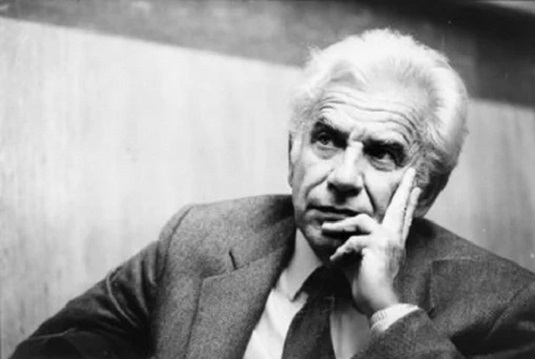
Tronti's pessimism speaks to us now because the left in this country has also been defeated. But is there anything we can take from his gloomy prognosis? Do these remarks tell us to give up, not least because Tronti talks approvingly of reading and studying reactionary thought? I would suggest not. He speaks of how operaismo and the workerist politics of Workers and Capital were situated in the moment of active and open class struggle, but that his error, and that of his comrades, was to mistake this for a revolutionary rupture. "The workers wanted a wage rise, not the revolution ... We saw red. But it wasn’t the red of a new dawn, rather that of the sunset." He says the experience taught him political realism and that the values of the left - progressivism, historicism, and Enlightenment - suppose too simple a set of solutions to the problems we face. As such, Tronti lately engaged with the world through the tinge of "serene desperation". Not least because what came of the revolutionary events of the 1960s was nothing that really challenged capitalism. Radicalisation (in Italy) led to some taking the dead end to terrorism, while for most it meant a generational turnover in the managerial class. Therefore we have two 20th centuries, the large and the small. The large was characterised by earth shattering events. The 1960s called time on that. And what came after was the small - a period of unoriginality, of low stakes politics, of (effectively) capitalism without class struggle. An endless present of stasis and decay.
Tronti does not rule out hope for the future, but just doesn't see it. He said,
This period is very confused. Everything carries on its own way. At the start of the twentieth century there was talk of a great crisis of modernity. Then it came. And now we’re up to our ears in it, we don’t know in what direction to go. So it’s stalled. You look without seeing.This is what his realism tells him, but he also says that politics needs faith and passion. He said his communism wasn't grounded in science, but in hope. Implying that a new radical politics is possible through a fusion of the two, but without offering any direction to possible flashpoints. Tronti remarks that he's on a borderline, and like Walter Benjamin's angel of history with its eyes firmly fixed to the past his self-declared obsolescence suggested he had nothing more to say. "My father believed in a better world. He wanted to see it. Bless him. I say to young people: thank god I’m not your age. I’m glad that I’m going to see the back of this world. That’s what I say."
Not revelling in defeat, but a case of bluntly stating it. And a sense of how it put Tronti through the ringer. In the context of Britain, we've had our own defeats. The industrial losses of the 1980s. And more recently, the experience of Corbynism and its defeat from within and without. Tronti's diagnosis of a directionless society fits our predicament. There is no certainty about how to build a radical, insurgent class politics above and beyond the the defensive struggles foisted on the labour movement by the Tories and their deployment of inflation as a weapon. Stick with Labour, despite the dead hand of Starmerism? Go with the Greens and their limitations? Try and build something new? There is no guide to the way out of the impasse in Tronti, but maybe his warnings about faith and his (cautious) affirmation of realism offer a hint.
Thinking beyond Tronti, being resolutely realistic there are three observations we can make about the conjuncture in this country that suggests his rendering of defeat isn't entirely generalisable. Tronti's thought had to grapple with the decomposition of revolutionary consciousness, and later the political and industrial institutions of the working class in Italy. And then the seeming dispersal of our class as any kind of coherent actor. Like Italy, Britain underwent a similar process, but what differed was the Corbyn moment. Despite its problems, relative incoherence, and its structural tendency to compromise, it acted as a political magnet that, for an interlude, brought mass politics into the mainstream and came within a whisker of inflicting significant defeats on the Tories and the centrist/liberal establishment both. This didn't happen because people-in-general responded to the moral goodness of Corbyn and his politics, but because it spoke to the inchoate but consolidating interests of the rising class of workers. This had two aspects: a push back against the hostility shown working age people by the Tories and the neglect of the previous Labour leadership. And the political consequences of immaterial labour. The defeat of Corbynism, as painful as it was, took place at a moment of the continued consolidation and coming to consciousness of the so-called socialised worker. As such, despite Starmerism the left inside Labour, though muted, is stronger than it was before Corbynism. Street movements and mobilisations are more frequent and stronger. And the industrial battles of the labour movement are of a magnitude greater than anything seen since the early 1990s. The Corbyn moment has passed, but the return of socialist and communist politics has not.
Tronti was worried that latter day readers of Workers and Capital were wasting their time because the class organisation and class struggles it researched and reflected on were buried in the past. There were few lessons to learn in a context characterised by quietude. However, what links that work to the present are the contributions of Mariarosa Dalla Costa, Maurizio Lazzarato, and Antonio Negri - among others. The last's championing of immaterial labour, its embedding in new configurations of exploitation, and potentials for a new radical politics have been variously criticised as too hopeful and optimistic. An excess of Trontian faith, perhaps. But in the essentials, Negri is right. There are no guarantees in politics, only probabilities. His understanding of the reconstitution of the working class as immaterial workers and the consequences this has for the intertwining of subject, value, and interest formation has been borne out historically. His is not a hypothesis but increasingly a class reality his theory reflects and reports on. As such, where all Tronti could see was a messy and bewildering closure the increasingly strategic role immaterial labour plays in capital accumulation opens up new points of struggle and new directions for history.
This is why we need to think about our defeat differently to Tronti's defeatism. His was the mourning of a famous, epochal defeat. Our malaise, however, is the consequence of something that was and is significant, but not on the same scale. It was a bruise inflicted on something new, on a rising power pregnant with new potentials. As such our defeat need not be seen in Trontian terms. It does not have to be as debilitating. And, indeed, is proving itself not to be.
Image Credit
Sunday, 13 August 2023
Stoke Chartist Festival 20th August 2023
This post is from Adam Colclough and first appeared on the North Staffs News site. There is also a link tree for the festival here with all the information you need.
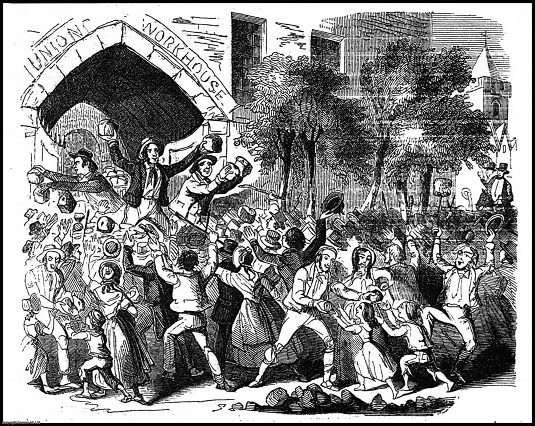
Local trades unionists will join musicians and other performers to commemorate the death of Leek born Josiah Heapy in the Burslem Chartist riots of 1842.
The First Stoke Chartist Festival will take place behind the town hall on Market place, Burslem, on Sunday 20th August and is a co-production organized by New Vic Borderlines and the People’s History Association of North Staffordshire (PHANS).
Support, including the loan of a fire engine converted into a mobile stage previously used when Jeremy Corbyn visited Hanley, has been provided by unions including Unite, the FBU, and Unison.
New Vic Borderlines is an award-winning community arts program that uses theatre to give a voice to those who have been marginalised.
Director Sue Moffatt has written a play based on the events surrounding the Chartist riots and the death of Josiah Heapy that will be performed on the day by members of the community supported by three professional actors.
In keeping with the Chartist theme trades unions active in North Staffordshire will be present to provide information about the work they do to support working people today.
There will also be stalls run by local groups including Period Power, NORSCARF, and community support charity Better Together, as well as craft activities and a display of work relating to Chartism created by students at local schools.
Josiah Heapy was born in Leek and died on 16th August 1842 when troops broke up an open-air Chartist meeting taking place on Swan Bank, Burslem, causing a riot that resulted in damage to several prominent local landmarks.
In the aftermath of the riot 146 Chartists were imprisoned and 54 were transported to Australia.
The Burslem Chartist riots have been described as the ‘Potteries Peterloo’ after the more famous riots in Manchester.
In 2019 a successful campaign saw a commemorative plaque unveiled in Burslem near to the spot where Heapy was killed. A street on a nearby housing development has since also been named after him.
Jason Hill, a member of PHANS who also took part in the campaign to have a street named after Josiah Heapy said the festival will “honour” Josiah Heapy and other trades unionists who “fought for the freedoms that we take for granted today”.
He emphasised the important role played by Heapy and other Chartists in creating the trades union movement in North Staffordshire and nationally.
He believes the festival will “raise awareness of this important episode in the history of Burslem which, sadly, seems to be largely forgotten today."
The festival will feature speakers, including Chrissie Gibson a living relative of Josiah Heapy, music, poetry, and performances of the play at various locations around the town.
The festival will take place on 20th August at Market Place, Burslem, ST6 4AT between 11:00am and 4:00pm.
Image Credit
Friday, 11 August 2023
The Sinking of Boat Week
Despite the campaigns of opportunist backbenchers, the sensible plan to house asylum seekers in hotels as opposed to detention centres/internment camps has come under pressure from the Tories' press allies. It has allowed for a whipping up of froth about the supposed luxury that greets the "guests", as well as complaints about the money getting shelled out by the "taxpayer". This would be ideal political pickings for the Tories if they weren't the ones overseeing it. Having long decided that posturing is more important than resettling traumatised people fleeing war, drought, and poverty, finding a "solution" that earns them cruelty points was a must.
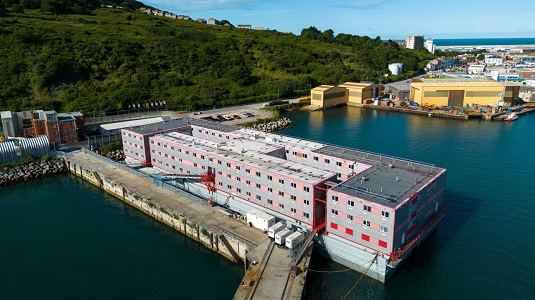
The employment of the Bibby Stockholm is part of a £1.6bn "migrant barge" scheme. Timing its opening to boat week was, of course, intentional. And, as with so many outrages committed by this Tory government, they wanted publicity for their "tough stance" drummed up by their political opponents. And so the Fire Brigades' Union said the barge was a "potential death trap". There was a Mirror piece reporting how one guy suffering with TB was to be interned there, and NHS Dorset had prepared a plan for infectious outbreaks, which the government completely ignored. But these were the optics the Tories wanted. The more unpleasant life on the barge was painted, the more political credit they accrue from beating down on a long-scapegoated group. And so the concerns were brushed aside and the first inmates boarded the barge.
Unfortunately for the Tories, nasty politics only works if you're seen to be competent implementing it. With Legionella found in the on-board water system, the Home Office was forced to evacuate the inmates. It appears basic checks were not carried out, which leaves the Stockholm's owners on an unwanted legal hook, while making the government look amateurish. It is getting to some, with anonymous anti-Braverman briefings doing the rounds. Not great news for someone with leadership ambitions. It will be weeks before the barge can be used again, and who knows what delays it might cause the rest of the "fleet" as they get checked out.
For anyone hoping this episode will lead to Braverman's sacking or a change in policy, both are incredibly unlikely. Sunak deliberately took Braverman back on precisely so these kinds of schemes can get dreamed up and implemented. With absolutely nothing positive to offer, the Tories are stuck in a rut where they think culture war and racist policies can pull the same populist trick Boris Johnson managed. It should be obvious by now that this was a one-off and the circumstances surrounding it ended when Britain left the EU and Jeremy Corbyn was replaced as Labour leader. No. Sunak, Braverman, and their disgusting attacks on refugees stands and falls together. As it surely will when the election comes.
Image Credit
Wednesday, 9 August 2023
The Pirates of Dark Water for the Super Nintendo
The premise of the show was the world of Mer is imperilled by the mysterious and noxious dark water. This substance, said to be leaching from the core of the planet, threatens to envelop the entire world and consume everything. The hero of the piece, Ren, and his doughty band of misfits sail the world seeking 13 treasures that, when brought together, will banish the dark water and make everything good again. As part of a popular cultural effort to raise awareness of climate change, the backdrop of a creeping doom and its link to our travails was more subtle than Captain Planet et al. But having "dark water" as the big bad and it enjoying more than a passing resemblance to oil situated the show well.
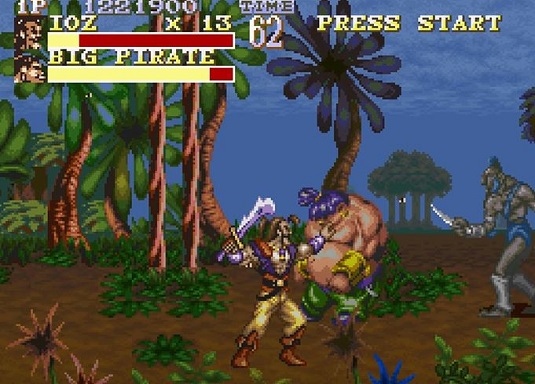
The plot of the SNES game is no different. Collect the treasures, save the planet. But as with the cartoon, there are baddies working to thwart Ren's efforts. Namely the crew of pirate captain Bloth who wants the treasures for his own nefarious purposes. This provides an excuse to beat up a roster of enemies, followed by the standard boss guarding the end of each stage. Their defeat reveals a treasure and the completion of Ren's quest is a step closer. On the journey, players can choose one of three characters in solo play or co-op. Ren is the standard character with a balance of speed and strength. Tula, an "ecomancer" and the franchise's token woman is speedy but weak, whereas Ioz is slow but strong. Each have a fairly limited move set that doesn't take advantage of the Super Nintendo controller's extra buttons. They have a standard attack, a desperation attack (which loses your character energy if it connects with an opponent), and a strong attack. Sadly, many an enemy - including some bosses - can be offed simply by spamming this move.
Nevertheless, Pirates is an entertaining beater. The enemies are quite chunky and there is a good variety of them. Despite there not being any more than three opponents on screen at once things can get challenging at times, which makes pulling through with just a sliver of energy left very satisfying. On the whole, the graphics are well drawn and competently animated for a game of this sort, and the sound design is fine. The tunes are appropriate - just don't ask me if they were from the original. There are the unnecessary but SNES signature mode seven interludes, and there is a touch of creativity. Late on the play style flips from brawler to a brief horizontal shooter. Can't say many beat 'em ups do that.
The game is not without problems though. Unlike Streets of Rage 2, it does outstay its welcome. There are too many levels and so the problem attending most beaters - repetition - manifests. This isn't helped by how the roster of enemies are very quickly introduced, so there are no interesting challenges later on. The developers tried getting round this creatively via the shooter encounter, but also relied on old tricks. Such as chasms to jump over, falling boulders/fireballs, and sometimes combining the two. Not especially useful when the jumping mechanics aren't perfect. On my playthroughs this resulted in a few cheap and unnecessary deaths. There are also hazards which can effect enemies as well as you. Because the AI isn't especially intelligent, if you park yourself parallel to on screen flames, spikes, or patches of dark water your opponents will happily run into them until expiration.
Entertaining then, but not exactly a must play. But what is worth revisiting is the allegorical aspect of the game. Back in 1994 it was infused with the climate change zeitgeist, but almost 30 years on the game sums up exactly where we are politically with the environmental crisis. Managing zero carbon and the switch to renewables is a bit of a slog, but as per the game when one batch of opponents are confronted and refuted, the same old names keep coming back with the same old attacks. The "new" just differ in terms of name and image, but their behaviours don't. It's the same enemies, over and over. Despite the global crisis getting worse, there is no putting aside of ambitions, the chance to make money, or interests to tackle the common threat. Indeed, for Captain Bloth the coming disaster is an opportunity for an authoritarian politics. He could be a disaster capitalist. And at the end of the game, with the defeat of the baddies the ship runs aground and the force of the collision catapults the 13 treasures all over the world. They are 'lost' and have to be recovered again, lest Bloth gets them first. This doesn't preface a second compulsory playthrough as per Ghouls 'n' Ghosts, but suggests struggle without end. Thus a firm conclusion is avoided, just as it was abbreviated in the TV cancellation. But it works for our climate change allegory as well. It underlines the necessity to never stop and keep pushing, no matter how repetitive it is. The alternative is something worse than game over.
Monday, 7 August 2023
The Repeated Surrender to Tory Framing
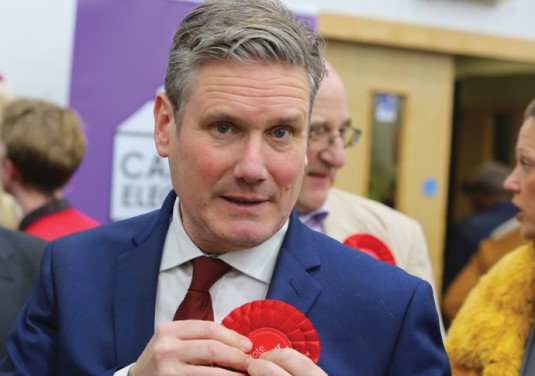
In other areas, however, New Labour was not so reticent. Though its programme didn't offer a qualitative change in the sense of breaking with the pro-market, neoliberal consensus established by Thatcher and bedded down by Major, a combination of rhetorically vicious attacks on the Tories, some good-sounding lines (tough on crime, tough on the causes of crime; education, education, education), a set of very modest pledges that at least gestured toward a fairer society, riding the tide of hope, and the baleful record of the Tories themselves ensured Labour scored a crushing victory.
Nearly 30 years on, and it seems the lessons learned by Keir Starmer from this period is to abandon the field of politics altogether. Or, to put it another way, accept Tory framing as sacrosanct on everything. The dishonest attacks by the likes of Grant Shapps that accuse Labour of being the political wing of Just Stop Oil are taken seriously by just one man: the Leader of the Opposition. Blair and Brown capitulated on economics but retained some autonomy on other political matters. Starmer, however, has surrendered across the board. North Sea exploration must be honoured, so the Tories gleefully issue scores of new licences while Starmer attacks Just Stop Oil as "contemptible". The Tories have their stop the boats/Rwanda scheme, and in their race to the gutter they want to use unsafe barges - redolent of 19th century prison hulks - to detain asylum seekers. This finds no opposition from Starmer, who says Labour will keep them too for as long as there's a backlog. And on the NHS, having thoroughly marketised it the Tories are busily defunding medicine and health to create a two-tier service. To this all Labour manages is a shrug, followed by a commitment to using private providers to plug the gaps the Tories have left. Despite it being a complete non-starter.
You could call this cowardly behaviour, but that lets Starmer and friends off the hook. They know an election win is virtually certain. You can look at the polls and note how Labour's double digit leads have been the norm for over a year now. The Tories have had their Black Wednesday moment. There's no chance of a John Major repeat, especially with Labour's huge support among working age people and a collapse in the Tory vote among the older/retired base. Blair's and Brown's caution on economics was well founded, as much as one might disagree with their take then. There is no such excuse now. Which ineluctably leads to one conclusion, that Starmer and co are not so much interested in power for a purpose as power in itself. His project, as correctly divined here many years ago, is interested only in restoring the authority of and modernising the state. It is an authoritarian project that puts state managers in the driving seat of politics, and anything that benefits people in general is a by-product of and not the objective of Starmerist policy. Without wanting to get too romantic about the history of the Labour Party, for them Labourism is about ministerial cars and briefcases. Not using the lever of policy to make life better or, with the looming catastrophe of climate change, dealing with serious and unavoidable problems.
This explains Starmer's willingness to accept Tory framings. There are no "tough choices" here, just a set of easy things to say that keeps the Tory media off their backs until they win the general election by default. And because they have accepted Tory framing, don't be surprised if Starmer is constantly steered by the front bench opposite as it gallops off further to the right. What a despicable position for the Labour Party to be in.
Image Credit
Saturday, 5 August 2023
A Comment on Political Commentary
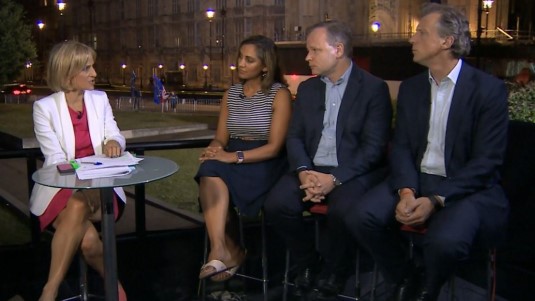
Apart from the handsome careers it occasionally awards, what is the point of political commentary? It's a question I've been asking a lot since cutting back on writing thanks to the tedious trinity of burn out/having nothing to say/intervention of other interesting things. What sparked my recent episode of introspection was this piece for UnHerd by chief academic Conservative Party whisperer, Tim Bale. The article doesn't say much. He talks about past hubris circa the 1997 general election and he enumerates the difficulties the party had adjusting to being out of government. Bale discusses how opposition parties fall back on fundamentals while celebrating their time in office, and how the Tories then believed voters shared the rose-tinted specs they looked at their recent past through. He says opposition is crap because one cannot shape public opinion, and success in second order elections can delude a party into thinking the issues they run with are more of a vote catcher at the crucial general election than they actually are. The Tories' recent lurch into pro-motorist, anti-green rubbish off the back of the Uxbridge by-election being an apposite demonstration of the point.
What have we learned from spending a few minutes with Bales's take on the Tories? Not much. Except that the times Nigel Farage and Jeremy Corbyn shifted politics on Europe and immigration, and austerity and economics respectively were impossible accomplishments seeing as they were achieved from opposition. But there is no sense here of why the Tories turned right in the late 1990s, nor a discussion of how they are likely to go even further right once Labour dispose of them at the next general election. What's missing is explanation. We have a superficial description of recent political history, but no grasp of the social relations, the articulations of interests, the networks between Tory MPs and capital - sometimes embodied within the person of a politician, such as Rishi Sunak's relationship to the City and his closeness to InfoSys - that can lay out the trajectory of the Tories. I haven't read Bale's latest book on the Tories after Brexit, but the common refrain from reviews is the he-said she-said approach - that the thorough scholarship is not paired with a convincing narrative that ties together and offers an argument about the crisis the Tories are in. I don't know if that's a fair criticism, but it's certainly one that can be made about his earlier history of the Tories from Thatcher to Cameron.
And this is where most political commentary sticks. At the level of opinion untroubled by a cognisance of the forces in play. But superficiality doesn't mean it comes without a depth of affect. The frothing nonsense served up by The Mail and The Telegraph is not meant to be "true". Its job is speak at existing prejudices, whip them up if necessary, and cohere groups of support for the Tories. Most liberal/centrist and centre left commentary is little different. Though UnHerd is an unusual venue for Bale's missive, this genre of comment, which is published plentifully elsewhere, reinforces the idea that the Tories are crazy, blinded by ideology, dogmatically mistaken, and not fit to run a bath let alone a country. It too coheres a constituency characterised by an anti-Tory sensibility that dissociates their opposition to and distaste of the Conservatives from any claim on interests. Save the ardent desire to see the state run properly, because that's in everyone's interest.
When the right has to confront its opposite number, it's rarely a contest of ideas as per the useless marketplace metaphor. They hype them up as conspiratorial elites, often on the most spurious of grounds, or propagate stories that demonstrate their hypocrisy. This is how the Tories have handled Keir Starmer, and that this happens time and again shows it's more than a rhetorical feature among a range of possible strategies. It's a structural projection of their own organic relations with capital, the state, and other fundamental institutions. This is their everyday, and it cannot but condition how they view political opponents. Likewise, centrism avoids ideas too. Their technocratic habitus is the root of their critique of the right, hence the ritual use of 'ideology' and madness as explainers of Tory actions. And why they will always have time for a "good Tory". I.e. Someone who shares aspects of their very grown up, disinterested, results-oriented view of how to do politics and how the state should be run.
Faced with something outside of their experience, the result is complete overreaction. For the Tories and the rise of UKIP, it staked Britain's EU membership to prevent the shedding a three or four seats to the misfits, loons, and closet racists. Losing the referendum was a small trifle to be paid for keeping the party going. For the centrists, it was their demonology of Jeremy Corbyn and the movement assembled behind his candidacy and leadership. To save the Labour Party, it was necessary to destroy it. Even now, the centre and the Labour right have no explanation for how and why Corbynism happened. All they knew is it had to be stopped, and that's the only lesson that need be learned. Whereas for most of the right, UKIP and the Brexit Party were warnings - and reasons to stick with traditional concerns.
Political comment, establishment political comment then is always expressive. And in so doing it more or less encapsulates the two orientations of the British ruling class: those who have no problem with or compunction about the reality of the state as an institution of their class, and the other who are squeamish of its reality, prefer to forget it, and will go to almost any length to deny it.
Image Credit
Friday, 4 August 2023
Basshunter - Now You're Gone
I was planning on writing today, but a spot of wardrobe assembly got in the way. I've decided the price of radio silence is humiliation, so it's time to announce how 15 years after the fact and some distance from the song's ubiquity that Basshunter's Now You're Gone is an absolute banger. Sorry, not sorry.
Tuesday, 1 August 2023
Five Most Popular Posts in July
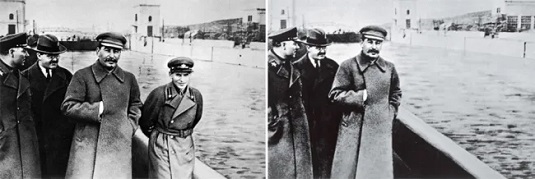
1. And Then They Came for the Soft Left
2. Strong on the Weak
3. Making Sense of Tory "Corbynism"
4. Beyond the July By-Elections
5. Along Comes Another New Left Wing Party
Going back to the start of the month, news that long-time Labour member and advocate of progressive alliances, Neal Lawson, was under investigation for a two-year-old tweet excited more fretful comment about Labour's authoritarian turn under Keir Starmer. And so it was almost this blog's duty to step in and consider the issues. And yes, it should have been clear to anyone that when Starmer turned the dirty business of organising the party and fixing elections to Labour First, their attacks would inevitably extend to the soft left. Sticking with Starmerism, Labour ditched its promise to get rid of the two child benefit cap all because Starmer wanted to look "tough". Funny how toughness in politics always equates to dumping on the weak, never taking on the strong. In at three was some reflections on John Rentoul fretting over the likely right wing direction the Tories are going to head in after their electoral pummelling. I felt duty bound to put any such move on sociologically sound footing, and not evaporate the causes away into "madness" so mainstream writers and commentators don't have to think too hard about it. There were also some by-elections in July that were very bad for the Tories. But as the one they retained was partly thanks to negative campaigning about Ultra Low Emission Zones, I forecast this would become the centrepiece of their political strategy from now on. And so it has proven. And bringing up the rear is news of another new left party, or rather regroupment of existing outfits, under a new banner. The barriers to success appear insurmountable, but aren't helped either by not having a clear purpose separate from the already-existing extra-Labour left groupings that already exist.
What did the fickle audiences pass over this month? I'm going to put two posts out there, because it's my blog and I'll plug if I want to. The first is another rare Tony Blair intervention, this time on the NHS. Thinking about what he's proposing and the politics that come tangled up in it are very important to grasp how the NHS will continue to provide capital guaranteed markets under a future Labour government. And last night's piece on Tory fossil fuel mania deserves a punt as it won't be immediately apparent on the side bar.
Have to day I am getting well suited to this more sedate pace of posting. Reading books and doing other things in the evening is quite nice, so don't expect 30 more missives in August - unless real happenings happen, or something. If you haven't already don't forget to follow the free (mostly) weekly newsletter, and if you like what I do (and you're not skint), you can help support the blog. Following me on Twitter and Facebook are cost-free ways of showing your backing for this corner of the internet.
Subscribe to:
Posts (Atom)