Showing posts with label Introversion. Show all posts

Friday, 10 April 2026

Science Fiction Book Haul #8

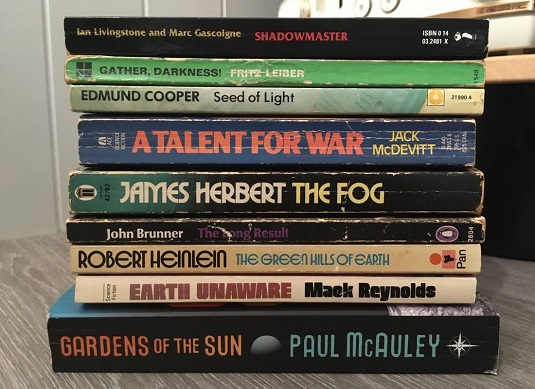
Thanks to not feeling it writing-wise lately, I've accumulated loads of (mostly vintage) science fiction paperbacks since the last post outlining my acquisitions. Instead of trying to wade through them all in some sort of order, I'm going instead for the most recent clutch: those I picked up from visiting Stoke-on-Trent today.

Without any further ceremony, starting from the bottom we have Paul McAuley's Gardens in the Sun. This is second in his Quiet War quartet and deals with the aftermath of the events in the first novel, The Quiet War. No spoilers here in case you haven't read that, but it made my top ten of last year's best SF reads. Imagine a near-future solar system that has become something of a powder keg, and there's real tension between the earthly powers and the outer colonies. If this sounds a little bit like The Expanse, that's because - I'm convinced - this series "inspired" the later mega hit. Except this is much more intelligently and better written, with great characters, and no silly, pulpy elements. The Quiet War is on my best science fiction of the 21st century list, and I've got no reason to believe that this sequel won't live up to its predecessor.

Next up is Mack Reynolds's Earth Unaware. In case you didn't know, Reynolds was for many years a leading cadre of the US Socialist Labor Party and was expelled for fostering illusions in capitalism or some such. Therefore, much of Reynolds's work has a sort-of Marxist/utopian bent to it. Of his books, the first I'd heard of this one was when it presented itself on the shelf in front of me. According to the blurb, a self-proclaimed prophet and, its words, "his sexy young daughter" use telepathy to wean the human race off the mass media. Does no television mean instant revolution? The answers to this question lie within this slim volume.

My bad with the Heinlein. I originally picked this up as a Baen omnibus with The Menace from Earth a few weeks ago. Ooops. The Green Hills of Earth is a short story collection from early on in Heinlein's career. They centre on a blind engineer who's a poet and a musician, and goes about the solar system singing, performing, and fixing things. I've had tricky times with Heinlein in the past, and only one of his books so far - Citizen of the Galaxy - have ticked the okay box for me. Perhaps I'll find this collection more agreeable.

John Brunner's The Long Result has some good news and some bad news. The good? Racism is dead. The bad? It's now applied to species other than humans. Earth had colonised two extra-solar worlds when we're approached by intelligent folks from Tau Ceti. They want to set up a meeting, but the extremist The Stars Are For Man League want to sabotage the occasion to demonstrate humans are the galactic top dogs. Obviously, a very clever move destined to go entirely to plan, and with the desired outcomes. Not normally considered a major Brunner by those conversant with such things, but even that would rank this book above the usual fare.

The Fog! A horror book! Or, to be more exact, an SF-based horror book. This James Herbert classic has some meaning for me. When I was a nipper, my Dad had a book case full of horror paperbacks at the top of the stairs. Herbert was his favourite author, and this was among the collection. I never read it, but do remember someone bringing their dad's copy into junior school and reading aloud the grim gym scene. Over the years, I've got through a handful of his books - the last one being '48, an alternate history after which Hitler has unleashed a deadly plague. That was great fun, as have been all the other Herberts I've read. This version - the 1979 printing - is, I think, the same one Dad had. Maybe he's still got his library in the loft?

A Talent for War by Jack McDevitt is also another book with some meaning attached. I remember my mum buying a random collection of paperbacks from the local primary school's annual May Fayre. Among them were Larry Niven's Ringworld, the 70s film tie-in of Dracula, James Herbert's Sepulchre, Nikolai Tolstoy's The Coming of the King, and this. I read it and found it more interesting than the, to my 14-year-old mind, frankly weird Ringworld. Christopher Sim is a legend who fought off the alien Ashiyyur while Earth and the main colony planets were twiddling their thumbs. But what if this is a load of nonsense? It's undemanding stuff, and made me a bit of a fan of McDevitt's work. Unfortunately, my original copy was let go during a huge book clear out we had. So there is a vague, vague chance that the copy I picked up today could be the same one from back then.

Our next one is Edmund Cooper with Seed of Light. I still haven't read any Cooper, despite owning several of his books. Somewhat noted for being a grump and not a fan of feminism, the SF Encyclopedia says that this title, from the late 1950s, is a touch optimistic. The Earth has been wrecked through environmental catastrophe and war, but the launching of a generation ship marks the possibility of a hopeful new beginning. We could all do with that.

I took a risk with Fritz Leiber's Gather, Darkness! considering how much I disliked The Big Time. Originally serialised in 1943, the blurb supposes a fantastical society in which science is suppressed and everyone is at war. Magic is in frequent use, and devils and angels are in the mix too. Yet not even a theocratic dictatorship can defy the laws of social dynamics forever, and a revolution breaks out that brings the edifice crashing down.

The last book is also holds some meaning. Before computers grabbed me, I was dipping my toe into role-playing games. But without enough interested friends, solo adventures were the way to go. As a fan of the Choose Your Own Adventure line, my mate Jay lent me a Fighting Fantasy game book and from that point I was hooked. I assembled a collection of the first 39 books, plus the Sorcery! quartet, the original rule book, and the two source books about FF monsters and Titan, the fantasy setting for most of the series. I still have them all and most are in very good nick. Anyway, I remember there being a trilogy of straightforward novels written by different authors from the FF stable. They followed the adventures of the strangely-named Chadda Darkmane and began with Steve Jackson's The Trolltooth Wars. Itself a rare book, I was able to happen upon it several months back. It turned out to be terrible, even for a kids' book, and has one of the worst endings I've ever read. But of the two sequels, I knew nothing. Until I chanced upon Marc Gascoigne's Shadowmaster today. The concluding book of the trilogy, Chadda teams up with FF recurring character Yaztromo the wizard to see off the forces of chaos. As the middle book typically goes for about £120, I don't fancy my chances of randomly picking it up cheap like I did with this. But still, it's nice to add something to my own FF range.

Those are my latest pickups. Have you bought anything new and interesting lately?

Wednesday, 1 April 2026

Five Most Popular Posts in March

Lower posting frequency made for a quieter month on the blog, but what piqued the interests of most visitors to this corner of the internet?

1. On Anti-Green Hysteria
2. On Labour-Green Defections
3. Labourism and Social Conservatism
4. Slipping the Leash
5. Angela Rayner's Alternative

Smashing into first place is the realisation that, despite apparently seeing off Jeremy Corbyn and Corbynism, the left and the aspirations and interests it speaks to have not gone away. Now the Greens are the vehicle of this coming politics the establishment are losing their minds. Again. Sort-of-related to this are the issues arising from would-be Labour defectors to the Greens. Apparently, some MPs want guarantees that they would be selected again for their new party - exactly the kind of careerist entitlement one might expect from Labour right wingers. The problem is the Green Party constitution can't guarantee it. If they want selection, any newbie MPs would have to work for it. In at third was yet another stroll down the well-trodden Blue Labour path, this time in riposte to yet more idiocy from this quarter. Making waves at four was the shocking news that Keir Starmer hasn't followed Trump into war with Iran. Though, by happily allowing British bases to be used for bombing raids and supply runs, Iran are not appreciating that nicety. And coming in last was Rayner's "outspoken" criticism of the government's record. We must be getting close to the local elections and the window for a leadership challenge.

Selecting the post deserving an additional plug is easy. It's last night's discussion of Jean Baudrillard's (Nietzschean) approach to terrorism and how the Islamic Republic are pursuing a symbolic strategy against which the US and Israel cannot possibly win.

April has plenty of things happening. Being caught in a writing funk for a while now, last month I started several posts but gave up early on. But after last night's offering, which took far longer than normal, I'm hopeful that the energy and inclination will present itself. Even outside of the news there's plenty of interesting things happening - not least the transformation of the Greens, Reform's hiccups, the continued decline of the Tories, on and on it goes. As the philosopher Gillian Rose used to say to her postgrad students, "Speak! Or the idiots will speak."

Image Credit

Wednesday, 11 March 2026

Science Fiction Book Haul #7

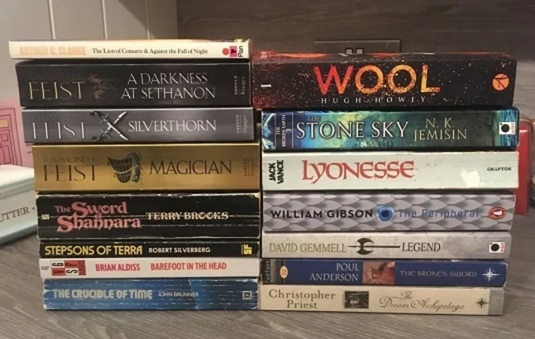
Let's haul some books!. What we have here are a collection of gatherings from my out and abouts, and arranged by format. In the first pile are some ropey-looking As, and the other features better weathered Bs.

Beginning on the left, sitting at the bottom is John Brunner's The Crucible of Time. This involves a bunch of aquatic aliens trying to flee their world as it passes through a (potentially) civilisation-ending debris field. This is SF at its most ambitious as Brunner tries putting together a convincing history of a species. Having recently finished George Zebrowski's excellent - and under appreciated - Macrolife, I'm not averse to epic scale thought experiments. I still haven't read any Brunner, despite acquiring his celebrated Stand on Zanzibar in haul #6, but aware of his reputation. If there's anyone who can pull it off, it's sure to be him.

Next is Brian Aldiss's Barefoot in the Head. Known (to me at least) as an early chill out track, Barefoot is set after a global war in which the primary weapons were payloads of psychedelic drugs. Far out. The survivors are on a permanent trip, seemingly unable to tell the difference between the real and the hallucinatory. The story follows a sober protagonist in a drive across Europe as he slowly succumbs to pharmacological intrusion and psychosis. Published at the close of the 1960s, it's one that could be described as being of its time. But the fact it found its way into the SF masterworks range means there must be something to commend it.

Robert Silverberg's Stepsons of Terra is an isolated colony story. Corwin hasn't had anything to do with mother Earth for 500 years, but desperately want to now as a rising military power has sent an armada in their direction. It's almost as if Silverberg had Dubai ex-pats in mind when he wrote this nearly 70 years ago. An ambassador is promptly appointed and dispatched to Earth to beg for help but, horror of horrors, the home world has slipped into indolence and decadence. As a relatively early novel, I'm not expecting much - but did find his Invaders from Earth from the same period jolly enough.

And then we have a famous/infamous book, depending on where you're sitting. Terry Brooks's The Sword of Shannara, the novel that sparked a trilogy and the huge boom in fantasy publishing that continues to this day. Often decried as a direct rip off of The Lord of the Rings, I've come round to occasionally collecting interesting spells-and-swordplay silliness. Given its importance, I couldn't pass it up after spotting it for a couple of quid.

Continuing the theme, going for a song in a local second hand bookshop was Raymond E Feist's Rift War trilogy, which is the first in a seemingly endless sequence of 30 novels. A portal is opened between a Middle Earth-type world and all sorts of perils come spilling out. Inspired by playing Dungeons and Dragons with his mates, apparently - just like Shannara - there are some unacknowledged and "accidental" homages. In this case to the setting of another early role playing game that subsequently influenced D&D. Nevertheless, The Magician is well thought of and now I have it, I'm duty bound to read it.

Sitting atop the pile is an Arthur C Clarke double bill, The Lion of Comarre and Against the Fall of Night. These two short works share a similar theme: that utopias are boring. Lion sounds like a centrist fantasy. The world is governed by wise politicians and technology can pinpoint and take care of citizens' needs. With everything taken care of, the best and the brightest choose to enter politics. Richard Peyton rebels because he wants to become an engineer, and he gets mixed up with some robots' rights stuff along the way. Sounds delightfully naive. Against is one of Clarke's more famous works, and follows Alvin, the last child to be born in 7,000 years. This is immortals-at-the-end-of-time stuff, and everyone is bored rigid. No one can leave the last city of humanity, but Alvin wants to. Cue the story. I don't mind Clarke and, to reiterate, found what I've read so far fairly decent - including more recently A Fall of Moondust. Not expecting literary fireworks, but then that's not what Clarke was ever about.

On to the B pile, at the base is our chum Christopher Priest and his The Dream Archipelago. A collection of linked short stories, here Priest subtly unsettles by offering a series of worlds that are immediately recognisable and familiar, but are off in some way. Something that is done in different ways in each of his books I've so far read - Fugue for a Darkening Island, Inverted World, The Prestige, and The Adjacent. Priest is a bucket list author and one whose oeuvre I plan on reading in full.

We're back in fantasy now with Poul Anderson's The Broken Sword. His sword and sorcery is often lauded in ways that his science fiction isn't, this is historical fantasy set in the time of the Vikings. There's Norse mythology, elves, fights with trolls, and has plenty of limb chopping and blood fountains. Not something you'd expect from the middle of the 1950s.

Then we have David Gemmell's Legend. By the mid-80s the fantasy boom was underway, and Legend offers a bloody vista of medieval warfare. The undermanned fortress is threatened by a half-million strong horde from the north. Hmmm, where has a very similar plot detail turned up in another popular fantasy series? Druss the Legend is the hero of the Drenai Empire, but as the enemy approaches he's retired and contemplates his death. Can he be called back into the fight? There is, as you might expect, plenty of action and siege scenes. Should be fun.

The Peripheral is the first in William Gibson's latest trilogy. Two viewpoints, one in near future rural US and the other in London 70 years after, and is a return to the noirish sensibilities of The Sprawl books. Flynne is a working class woman working on a 3D printer, and Wilf lives in her future where inequality has run so amok that there aren't many people left apart from the 1%. But is it really her future? Is it real at all? I enjoyed Neuromancer after last year's re-read, which I followed with Count Zero. Gibson is also another bucket list author, so will get round to this eventually!

Fantasy again. I read all four books in Jack Vance's Dying Earth science fantasy sequence a couple of years back, and especially enjoyed the middle two Cugel books. But the thing you take from them is the soupy, languid texture of an Earth sluggishly dragging itself through the end of its days. In Lyonesse, Vance's effort at a King Arthur-linked fantasy series, I'll be interested if this sensibility translates. It's high fantasy stuff with princesses and princes, star crossed lovers, and a load of intrigue and magic. I understand Merlin features, because of course he does. Lyonesse appears well thought of, so if I like this I'll pick up the other two.

Speaking of the dying Earth, NK Jemisin's Broken Earth trilogy tap dances on Vance's toes. The Stone Sky is the third book in the sequence, and I can't say much because I don't own the second and haven't read the first. All I know is it's the far future, technology and magic are indistinguishable, and the Earth is shaking itself to bits through a plague of devastating earthquakes. What gives? Each book in Jemisin's sequence is highly rated and collected an embarrassment of awards, so this series won't stay at the bottom of the tbr pile forever.

And lastly, there's Hugh Howey's Wool. Now a TV series, the remnants of humanity are ekeing out a bleak existence living inside a missile silo. This protects them from the dangerous radiation outside. Life isn't great, and there's little sense of what it was like before the apocalypse came. Anyone who expresses curiosity or a desire to go outside are duly obliged. They're expected to clean the external sensors, even though it means certain death. It's very much a YA piece, and I read the graphic novel adaptation ages ago and don't remember being that impressed. But this was practically being given away and so it's here.

Since getting these, I've also grabbed several more piles of books. We'll look at them when the mood takes me.

Have you picked up anything interesting lately?
Sunday, 1 March 2026

Five Most Popular Posts in February

A loud month in politics, but a comparatively quiet one posting-wise around these parts. As is customary, here are the most popular posts this February.

1. A Farewell to Morgan McSweeney
2. Why Labour Can't Argue with the Left
3. What is the Point of Keir Starmer?
4. The Unmaking of Mandelson
5. Labour after Gorton and Denton

February 2026 is a month to savour. All the worst things happened to the worst people in Labour Party politics. And joyful moments weren't confined to seeing others taken down a peg or two. Leading, unsurprisingly, was the overdue fall of Morgan McSweeney. The man partly responsible for the topic of the number two post - Labour's inability to square off against anything to its left. With the mastermind behind Starmerism out the door, the question then arises concerning the point Starmer now has - the topic of the third placed post. In at four was the public disgrace of Peter Mandelson, and fifth is the political culmination of all their works: the loss of one of Labour's safest seats to the Greens.

What for the second chance saloon? As I was a member for all of three months, I'll give my temporary political accommodation a shout out. Your Party's leadership elections finally coughed up a result after some bilious mudslinging, so here's my take on what comes next.

And there we are for the shortest month. As Trump and Netanyahu have unleashed hell against Iran, one can't expect too many political highpoints in March. And, undoubtedly, the government will disgrace itself again bending over backwards to support the latest criminal venture. But as the reverberations of Gorton and Denton work their way through domestic politics, perhaps there will be some nice surprises.

Image Credit

Friday, 13 February 2026

What I've Been Reading Recently

It's been some time since we last had one of these, so rather than a mega list here's a more manageable chunk: the books I got through in January.

Chasm City by Alastair Reynolds
Leonard and Hungry Paul by Ronan Hession
The Transparency of Evil by Jean Baudrillard
The Gulf War Did Not Take Place by Jean Baudrillard
The Illusion of the End by Jean Baudrillard
Cold Allies by Patricia Anthony
The Food of the Gods by HG Wells
Baudrillard Live edited by Mike Gane
Young Mungo by Douglas Stuart
Clash by Night by Henry Kuttner and CL Moore
The Man Who Fell to Earth by Walter Tevis
Baudrillard's Challenge by Victoria Grace
The Forge of God by Greg Bear

Once again, Baudrillard is gently simmering on the back burner, so no commentary about these works here. But I will say the book by Victoria Grace is by far the best one-volume treatment our hyperreal hero has received. At least among the not inconsiderable secondary literature I've read. Her target are the feminist debates around subjectivity that dominated proceedings in the 1990s, and makes a cogent and compelling case that Baudrillard offers a way out of the impasse it butted up against. Yes, really. Baudrillard, by way of Haraway, opened a path to a materialist feminism of the 21st century - one that could grasp the specificities and new patterns of power in the postmodern era. Published in the futuristic year of 2000, it's now a very old book, but its relevance lies not only in the feminist case for Baudrillard, and the fact much contemporary feminism did take the Harawayan road. The possibility of a fruitful engagement remains.

As mainstream novels went in January, it's a real case of chalk and cheese. Leonard and Hungry Paul was the sort of book that made me want to hulk out and rip in half. A twee story of friendship between two socially awkward, and implicitly autistic men, it inspired nothing but hostility in me. It would have been a DNF were it not a book group read so I endured ... and then couldn't go because of illness anyway. I don't mind plodding and inconsequential as long as it's done well, but this was an irritant. The very opposite of calming. And now it's been filmed as a TV series. I won't be watching. What a welcome difference Young Mungo made. About the titular Mungo, this is a coming-of-age story about a young, gay working-class Glaswegian. The ever present backdrop is alcoholism, child neglect, violence, abuse, and sectarianism. Life is brutal, and it's as far from a cosy read you can get. Yet it's a novel full of love as well. A shocker it never made the Booker short list.

Up there this month with Young Mungo is The Man Who Fell to Earth, a stunning work of loneliness and despair. What a cheery read! Thomas Newton is on a mission from Mars, and that's to save his people! He uses their advanced technology to make millions so he can build a fleet of ships and ferry what's left of his civilisation to Earth. But nothing is ever straightforward. The preceding sentence does not do this book justice. It's one of the greatest SF novels I've read, and sure to be on the year-end list. A good way for the mainstream literary reader to sample science fiction without the tropy stuff getting in the way. Also very good, but this time super-tropy was Chasm City, a slab of a book typical of British new space opera, but one that is extremely polished and compelling. Chasm City is an exciting mix of generation ship, spy, and hard-boiled SF noir. A recommend if you like that sort of thing.

And the rest, sadly, was quite average. Bear's The Forge of God was over long, and half-way through I couldn't wait to see the Earth destroyed. Clash by Night by golden age power couple, Kuttner and Moore was high seas hi-jinks on Venus. It had a certain sharpness and quality, but by the same token it didn't grab me. Mercifully, it was short. I was expecting good things from The Food of the Gods, Wells's tale of oversized plants, animals, and (eventually) humans, and how Edwardian society dealt with them. Not a patch on his better known stuff. And lastly was Patricia Anthony's future war novel, Cold Allies. Europe is fending of invading Arab armies, driven north by run away climate change. And as the former teeters on the brink of defeat, a set of mysterious aliens show up. Friend? Foe? Sadly, you'll be indifferent to the answer by about a third of the way through.

What have you been reading recently?

Sunday, 1 February 2026

Five Most Popular Posts in January

Time for the monthly round up about the previous month's doings! What was hot in January?

1. Why I Have Joined the Greens
2. What is the "Stakeholder State"?
3. Farewell Labour
4. Trump's Venezuelan Oil Piracy
5. Playing the Supplicant

In at one is the move from Your Party to the Greens. I'm sure my adventures in the party will get the occasional blogging treatment. This was followed by an examination and take down of the stakeholder state, which is self-serving managerialist twaddle used by suited politicians and spads to make sense of their rarefied existences. Served up by the disgraced Paul Ovenden, because no matter what you do as long as you remain a faithful servant of the political establishment you will always be awarded with media opportunities, new jobs, etc. In at three was the disgraceful barring of Andy Burnham from the Gorton and Denton by-election. A short-sighted decision that's going to cost Labour dearly. At four was the US raid on Caracas and the kidnapping of Nicolas Maduro. And where was "Mr Rules" Keir Starmer? Nowhere. Which was followed up by an explanation, at fiev, of why the British state and its ruling class happily prostrate themselves before the US.

What's getting the second chance treatment? How about two posts. Seeing as he's in the news over serious corruption allegation made by the FT, here's a piece about Peter Mandelson. And following that is Starmer's "toughness" vs Trump's Greenland theatrics.

I am quite enjoying not blogging as much. Getting books read. Watching things. Going out. This thing called life is alright, you know. As ever, if you haven't already don't forget to follow the (very) occasional newsletter, and if you like what I do (and you're not skint), you can bung a few quid and help support the blog. Following me on Bluesky and Facebook are cost-free ways of showing your backing for this corner of the internet.

Image Credit

Tuesday, 27 January 2026

Why I Have Joined the Greens

While defections are in the news, there's another that might be worth reporting on. My own. Yesterday I cancelled my Your Party membership and signed up to the Green Party. The local party meets next week, and I'm looking forward to becoming actively involved. For those interested in such things, here's the politics bit.

Binning off Your Party wasn't a difficult decision. Joining that was more a duty than anything approaching enthusiasm. Never has the left outside of Labour been handed such a golden opportunity, only for it to be squandered by prima donnaism and control freakery. Without re-litigating what happened in depth, Zarah Sultana should not have unilaterally launched the membership. The timing was right, but had she acted with the pre-party collective and abided by its ad hoc discipline the momentum would have still been there when it did go live, which was about a fortnight later. But once the die was cast, Jeremy Corbyn and his minions should have swallowed it - just as they did in the summer when Sultana announced that the new party was happening - and rode the wave. Doing so would have avoided bad blood and, most crucially, would have built on the 800,000 that signed up the mailing list. A party of more than 200,000 was in reach ... and Corbyn blew it because his helpers would rather run a much smaller, tightly controlled outfit that guaranteed them a living. Labour Party mk II not in name, but certainly in form.

And things have not improved. Despite handily winning positions aligning Your Party with an inclusive conception of class and democratic organisation, it's as if the conference votes never happened. Exclusions of members of left groups still stand, and candidates for the Central Executive Committee have been barred if they are suspected of paying subs to another organisation. Funny how there were never any complaints when the likes of Michael Lavalette, for example, was travelling around the country stumping for the new party and encouraging people to sign up. This is a violation of the spirit of what was voted on in November, and a big up yours from the unaccountable cabal that runs Corbyn's show to the membership. It now looks like this bar will be affirmed, assuming that Corbyn's slate of loyalists and idolaters sweeps the members' CEC ballot. Which it is likely to do. On top of that, there is the utter stupidity of the party's name, which alone demonstrates Corbyn's lack of political nous. And, let's be frank, Sultana's absence of political judgement. From childishly calling the awful Tory London Assembly Member Susan Hall a "boomer", boycotting the first day of her own conference, wanting to "nationalise everything", and being unnecessarily spiky toward the Greens is just daft. No confidence in the Corbyn clique, no confidence in Sultana, and no confidence in the prospect of Your Party becoming anything other than a shrine to St Jeremy. It didn't have to be this way.

But the Greens? It's doing rather well, and unlike Your Party has not bungled its opening. As the class composition of this country has changed, as recounted in the book, countless talks and podcast interviews, and on this blog on many, many occasions, politics has shifted too. A shift that the Greens are handsomely benefiting from.

Key to this is the growing importance of immaterial labour. In the post-war period in Western societies, the expansion of the state saw millions of workers taken out of private employment. Their jobs were less about producing material goods for private profit, and shifted toward producing services the public consumed. Education, welfare and social services, health care, the administration of the growing state at all levels. To use the old language, large sections of the work force were paid a wage to reproduce the conditions of capitalist production. They were tending to the gaps in the system, paving over the cracks, cleaning up the messes, making people broken or maimed by the system better, looking after those it discarded, and preparing generations of children for life under it. Alongside this the increasing complexity of production and the division of labour created similar roles within businesses. The expansion of management, the need for planners, logistics workers, technical specialists, office workers, cleaners, service-oriented work has come to absolutely dominate most advanced economies in terms of people employed and volumes of capital tied into and produced by services. Alongside this, postwar affluence kicked off mass consumption and the rise of privatised leisure activities. The casualties of this, at least in Britain, was declining church attendances, the withering away of the millions-strong political parties, and an erosion of working class community culture - which accelerated following the Conservative attacks on and defeats of the labour movement in the 1980s. But the expansion of immaterial labour selected for certain traits. In service work based on the production and maintenance of social relationships, sociability, knowledge, patience, and care were the key forces of production increasingly mobilised by the emerging post-industrial economy. Despite the privatisation of many state services and the intrusion of commodification into all facets of life, this "immaterialisation" of labour has continued apace.

The consequence for culture and politics has been profound, but to stop this from becoming another book, there are two key developments that are reaching fruition now. Because the nature of labour has changed with the object of work being the production of social relations, care, knowledge, social roles, etc., which in turn places a social premium on relatedness and sociability, this has resulted in a long-term tendency toward tolerance. Or, in other words, the gradual replacement of social conservatism by social liberalism. Each generation becomes increasingly comfortable with difference as they are socialised into and experience life as an immaterial worker. The generational differences we see in values surveys are not a reflection of lefty schooling or an essential tendency toward conservatism as we age, but a class cohort effect. There is a direct link between class, of being socialised into and working for a living in the post-industrial economy, and accepting socially liberal values as the everyday commonsense. Generation Z are the most radical, most socially liberal generation so far. And are likely to surrender that title to the younger people coming after them. The mores are cumulative, and we're now at the point where social conservatism is a minority outlook, and one that shrinks by the year.

The second consequence of this is overtly political. Faced with a politics that tries screening out the interests of the rising layer of workers, a typical mass response is disengagement and abstention, but for others it's a marked tendency to vote centre left or left. The first coming of Corbynism and, for a period, the rapid passage of the Labour Party from a husk to a true mass party - and then the 2017 general election - was the first mass electoral flex of the political conscious sections of the new working class. Though Corbyn lost badly in 2019, his real achievement, buried under the self-serving rubbish about the worst result since the 1930s, was hitching Labour to a new political articulation of class relationships. And one the party needed to build on for sustainable success. Unfortunately for Labour, it elected Keir Starmer whose project ever since has been to disperse this coalition to the point where his party courts extinction. But that dispersed support doesn't simply disappear. This is not 1997, it does have somewhere to go. Your Party looked like it could have been it, until they derailed themselves. And so, the Greens. A socially liberal party with left wing positions on a raft of issues that speaks to the class interests and outlooks of immaterial workers, stands up against the scapegoating and racism of the mainstream, and being the only party that really takes climate change, energy challenges, and the green transition seriously, Zack Polanski's leadership and his adroit interventions have catalysed and coalesced mass support around the Greens.

As argued here previously, there are two types of Green Party. The so-called realists, who elevate members to high office and inevitably disappoint - much to their cost. Like the German and the Irish Greens. And those parties that go down a Nordic path, that are to all intents and purposes Green-Left radical parties. This is currently the trajectory GPEW is on - the Scottish Greens being their own, somewhat different, thing - and is likely to draw in more members and more supporters on that basis. Far from the petit-bourgeois party as labelled by the little Lenins, the Greens are being taken over and getting filled out by our class, our rising class, and are inhabiting it as an instrument of our collective interest. It is a party that is becoming, a symptom and driver of a wider politicisation. It is occupying the position Your Party could have taken, but rejected. As Labour under Corbyn was one moment in developing the generalised political consciousness of a class, this is another. That task has fallen to the Greens. These are my reasons for joining. And why you should too.

Image Credit

Thursday, 1 January 2026

Five Most Popular Posts in December

2025 is now history. Want to know something else that is? The posts made on this blog during December. Here's what the internet-travelling public found the most interesting during advent.

1. Going Beyond Corbynism
2. Delegitimating Labour
3. Wes Streeting's "Change of Course"
4. The Darkness of The Dark Forest
5. 10 Best Science Fiction Books Read in 2025

We began the month with something of a high - a sign that Your Party might be emerging from the cocoon of Corbynism. Subsequent developments suggest a successful emergence is far from guaranteed, seeing as the petty bureaucrats close to Jeremy have decreed that members of other parties aren't allowed to stand for the collective leadership. A ruling that clearly violates the spirit of the vote that was passed in conference. And they also decided to increase the size of the committee by two seats, subsequently rubber stamped by a barely noticed online referendum. It's all very tedious. Coming in second was a look at efforts by some sections of the right to completely delegitimise Labour. This goes beyond the usual moaning about tax and whatnot, but something that goes back to the party's foundation. I.e. That sections of the ruling class have never reconciled themselves to a party based on the labour movement, despite the supine character of Labourism its subordination of the many to the few. Rolling in at three is more Wes-for-leader shenanigans. Won't say any more for now because he's likely to feature here a few times in the year ahead. In at four was my take on The Dark Forest, one of the worst books I encountered this year. And bringing the quintet to a conclusion is the rundown of the best novels read during the year.

What am I hauling out for a second chance in the spotlight? Befitting the reflective mood, how about the most read posts of 2025 and, of course, my tunes of the year.

It's easy to get doomerist about the state of politics. The recklessness and incompetence of this government, the march of Reform, the descent of official politics into outright racism. It's all very disgusting. But at the same time, things are not going according to plan. The media's ramping up of extreme right wing talking points is happening precisely because the popular acceptance of their framing is slowly, unevenly slipping away - and this terrifies them. The long-term value shift toward social liberalism matches the changes to class composition often written about here, and the legitimacy of establishment politics relies more on inertia than active consent than at any time in recent times. The existence of a mass left-wing Green Party and, to a degree, Your Party are cracks in this unstable edifice. So yes, as 2026 breaks there are real reasons for cautious optimism. The tide of filth we saw last year can be turned. A new politics and a better future is both necessary and possible.

Image Credit

Wednesday, 31 December 2025

The Most Read 20 of 2025

That's enough about other people's writing, what about the words that were thrown down on this blog? It has been a quieter year than previously for a variety of reasons I won't entertain you with, but readership is up. How ironic - the less I say the more people are interested. Looking down the list of 2025's most popular, nearly all of it offers analysis of the Starmer/McSweeney implosion of the Labour Party, or what the hell is going on on the left - be it the frequently exasperating drama of Your Party, or the altogether impressive advance of the Green Party. And gazing into the crystal ball, sitting here 12 months hence I believe I'll be making broadly similar comments about what coverage attracted the clicks.

Buckle up.

1. The Politics of Noticing
2. Rachel Reeves's Pitiful Attack on Corbyn
3.
The Your Party Debacle
4. Zack Polanski's Green-Left Populism
5. The Crisis in Your Party
6. The Case for Cautious Optimism
7. Going Beyond Corbynism
8. Reluctant Corbynism Revisited
9. Chamberlain Labour
10. Over for Ovenden
11. AI as an Apparatus of Capture
12. Why Labour Attacks the Disabled
13. Blue Labour and the Working Class
14. The Radicalisation of Young Women
15. Unravelling McSweeney
16. Keir Starmer Vs the Far Right
17. The Greens' Historic Opportunity
18. How Labour Could Beat Reform
19. After Angela Rayner
20. The Lure of the Racist Self-Own

And there we have it, the best of the posts as voted by the feet of this blog's viewing public. What might 2026 bring?

Image Credit

Tuesday, 30 December 2025

10 Best Science Fiction Books Read in 2025

We've had the bad stuff, so what makes the opposite - a great science fiction book? Despite the best efforts of literary establishments and genre gatekeepers there is no determinate criteria. Character, writing, plotting, what matters collectively shifts with the fashions, and for the individual it is as much about peccadilloes and mood as the wider field. And so sitting at the end of this year, the cuts below have been selected because of the favourable impression they made at the time and how they've (pleasantly, productively) played on my mind since. That means that while I read oft-acknowledged classics like Ursula K Le Guin's The Lathe of Heaven, Christopher Priest's Inverted World and the first volume of the Book of the New Sun, Gene Wolfe's The Shadow of the Torturer, these didn't stay with me in the same way - despite my expectations going in. There were a few near misses that did get their hooks into me. I enjoyed JG Ballard's The Wind from Nowhere, Nina Allan's The Rift, Vernor Vinge's A Deepness in the Sky (yes, really), M John Harrison's Light, and Ken MacLeod's Intrusion. So what edged out these great novels and made the mark in 2025? Expect something a little different to the usual best-of lists.

Tender is the Flesh by Agustina Bazterrica. A contender for the best novel I read this year, as I said at the time. A mash up of Upton Sinclair's The Jungle and Neil Barrett Jr's barely-remembered Through Darkest America, Bazterrica has confected a sparingly written and brutal meditation on the ultimate society of excess. When the animals are dead, why not put specially-bred human beings on the menu? Hugely hyped at the time of its translation, this is a rare work that justified all of it. The subtlety with which Bazterrica paints her horrific dystopia is a lesson more science fiction authors would do well to learn. And the story itself, with its utterly unsparing ending, is among the most impactful I've read in years. This comes with the strongest of recommends.

Dark Eden by Chris Beckett. This is Tender's immediate competition. It's some point in the future, and a couple of hundred humans are stranded on a sunless, wandering planet. Life is possible thanks to copious internal heating, a digestible biome, and a world lit up with bioluminescence. And our nascent society? All of them are descended from one pair of astronauts. Yuck. Yet Beckett handles the ick factor of in-breeding extremely well, and builds a believable setting of matriarchal social structures and fixed cultural symbolism coming under pressure from innovation, rebellion, and conflict. Dark can also be read as a meditation on the emergence of patriarchy and its reliance on physical violence, as well as the limited powers of tradition in dealing with disruption and social stagnation. This wouldn't be worth a hill of beans of the story wasn't any good, but Beckett provides his characters believable dilemmas and relatable motivations for doing what they do. Simply one of the best British science fiction novels of this century.

Bridge by Lauren Beukes. Another great book that got the review treatment. This is a drama of parallel worlds, a cross-reality hunt for the truth - and for new victims by a pitiless killer. The titular Bridge finds a weird stringy mass in her late mother's fridge. This is a dream worm, and eating its threads lets anyone drop into the lives of their alternate selves in other timelines. This might not sound especially original, but the doings Beukes embroils her characters in is a cut above. At the heart of Bridge is the tight rope Bridge has to walk between escaping her dissolute existence at the risk of greater disassociation and mental collapse, all the while riding a plot full of moral ambiguity and the uncertain stakes of potential catastrophe. Probably the cleverest of this year's reads.

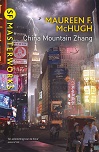
China Mountain Zhang by Maureen F McHugh. Never met anyone who doesn't like this novel, China stands out on this list - and among SF generally - because nothing really happens. It's the near future and US power has been smashed by socialist revolution. China is the dominant world power, but we're still far from the society of associated producers Marx forecast. Zhang is a half-Han labourer in New York, and he knows his ethnicity can open doors for him. But he's also gay, which is strictly illegal. How he makes his way in this world, participating in the manned kite-racing scene, dealing with an unwanted betrothal, and surviving police raids, over the span of the novel Zhang is able to modestly advance up the pecking order. We also follow San-xiang, another American-born Chinese woman who undergoes cosmetic surgery, and Martine, a goat herder on a colonised Mars. Everything seems low stakes compared to others on this list, but what McHugh brilliantly realises is a sample of the everyday life that is hardly ever treated by a genre dominated by space opera and goodies vs baddies heroics. Believe me, this is not as dull as it sounds!

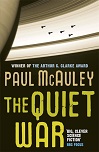
The Quiet War by Paul McAuley. Speaking of space opera, The Quiet War is spectacular. It's the near future and our colonisation efforts find most planets and moons garlanded with habitats, installations, and orbitals. This is a solar system recovering from a devastating Earth/Mars war, in which the home world emerged victorious but badly beaten. The three oligarchical big powers, Greater Brazil, the EU, and the Pacific Community variously compete for dominion and are looking for toeholds around Jupiter and Saturn. Meanwhile, the survivors of Mars migrated to these outer planets where they set up shop as Outers. Cue espionage, chases, exploding spaceships, speculative genetics, and clever plotting. Written before The Expanse, one might say some of its elements inspired what we saw later in that mammoth series. Except The Quiet War is its superior in every way - composition, character, political complexity, McAuley delivered a slice of space going SF that shows how it should be done.

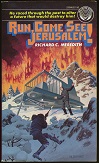
Run, Come See Jerusalem! by Richard C Meredith. The oldest book on this list and we have a time travel story. Eugene Spillman works with time, and he's just been drawn into a conspiracy - to escape into the past and change history! Oh, we do love our paradoxes. Unfortunately, the plot has been rumbled by the tyrannical regime and agents are dispatched to stop the scheme. The action moves back to prehistoric North America, and then forward again to 19th century Chicago. Stumbling into the street injured, Spillman is taken in by wealthy good samaritans and nursed back to health. He then gets caught in the Great Fire of Chicago, and perhaps - if everything has gone to plan - an uncertain future. Time travel is hard to pull off well, and Meredith does not get too bogged down with silly paradoxes. This will not (nor did it) win any literary prizes, but the characters stand up on their own, and Meredith moves and down tempo as the plot requires. What results is an unshowy but satisfying timeline tapping bop.

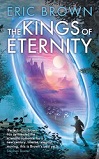
The Kings of Eternity by Eric Brown. This just edged out his pub-based SF first contact tale, Kethani, Brown's Kings deserves a much wider audience. One leg of the book is in 1999 where reclusive author Daniel Langham is enjoying the fruits of literary success. But his voluntary exile on a Greek island has attracted the attention of a journalist looking for a scoop, and isn't afraid to use blackmail to get his story. 60-odd years earlier, his grandfather Jonathan Langham - a struggling novelist - is invited with successful SF writer Edward Vaughan to an old school friend's country pile. Their friend has discovered a zone in his grounds that is periodically visited by mysterious lights. One night, after a few swigs of scotch, they go to see what's happening. In Kings, Brown managed the tricky job of pulling off a cosy work without the cringe. His skilful rendering of character and dialogue suffuses it with genuine warmth and good vibes. You really care about the characters, and it's a mark of real craft that the pulpy elements are deftly woven in and don't come across as awkward grafts. An unsung hero of British SF.

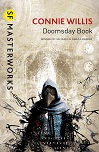
Doomsday Book by Connie Willis. A huge chonker of a novel, the first in Willis's Oxford time travel sequence also comes in two halves: the "present", which is our near future, and the 14th century. Instead of getting into the business of excavating a series of small walls, the Dons are using time travel to aid their scholarly activity. Kivrin Engle is whisked back to the Oxford of 1320 just as everything goes to pot in the present. A wave of nasty flu rips through the country, hospitalising the time travel technician and shutting the country down, while Kivrin isn't entirely sure she's at the date she should be. Sadly, the two halves vary in quality. The present is, to be honest, quite boring, forced, and unnecessary. The technician, for instance, bursts into the pub unwell and tells the project team that something has gone wrong. But decides to run off before giving them specifics. He's then in and out of consciousness before finally letting them know what's happened. Oh dear. But where Doomsday shoots into the stratosphere is in the medieval narrative. The detail, the relationships, the bleakness and despair, it's impeccable. This works despite the so-so time travel stuff, and this half of the book alone is way above most of the things I've read this year.

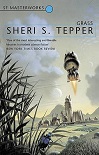
Grass by Sheri S Tepper. The galaxy is in the grip of a plague. There's no known cure, but there's one curious fact. The people living on the world of Grass have not contracted it. The Sanctity, the church militant that rules human space send a husband-and-wife team to Grass to get to the bottom of it. They get a frosty reception from the locals and it takes a lot of coaxing to get the posh locals to admit them to society. The clans of the aristocratic ruling class organise their lives around the hunt. They ride the native alien hippae and use native "hounds" to hunt down the cunning and mysterious foxen. But it quickly becomes apparent that something isn't quite right. Young women disappear, and the needs of the aristos to go hunting borders on the pathological. What the hell is going on? Grass surprised me with its cleverness, tight plotting, and a sense of creeping dread as the mysteries of Grass are unravelled. There is plenty about the stupidity of patriarchal gender relations and the cynical use of ideology for personal gain. Rightly celebrated.

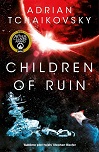
Children of Ruin by Adrian Tchaikovsky. He made the list last year with the preceding volume, so I'm here to redress an injustice. Children of Time gets loads of praise, but I would suggest Children of Ruin is its equal. The humans and the spiders have made for a good symbiotic civilisation, so why not head off into the galaxy to see if the old, wrecked empire have left other offspring of Earth around other stars? The answer is yes. This book is about sapient cephalopods and the messy, chaotic society they build. But making things complicated is that, on the next planet over, an alien intelligence is stirring. All of Tchaikovsky's strengths are on show here. Speculative sociology, his ability to construct convincing non-human characters, and a pacey story with high stakes and thrills and spills aplenty. This demonstrates, against, why he's front rank.

Those were the 10 best science fiction novels read this year. But a shout out to a few other books. 2025 has been the first year I've read as many fantasy novels since I was a keen teenaged fan of the Fighting Fantasy game book series. The clear winner in the seven or so I read was Michael Moorcock's Elric of Melnibone. The first in the rhizomatic Elric sequence, it had everything for someone coming back to genre fantasy after giving it a wide berth for many a year. Intelligent dialogue, complex relationships, cliche avoidance, just great stuff. From mainstream fiction, two novels vie with Bazterrica and Beckett for the best read of the year. There's Han Kang's 2021 novel, We Do Not Part, which was published in English this year. Haunting and beautifully written, its depiction of a snow storm is likely to leave you with frostbite. Believe the hype. And the second is much older, and that's Play It as It Lays by Joan Didion. I've always been a Bret Easton Ellis aficionado, and Play is the degree zero for Less Than Zero. A dead-inside young woman bounces through star-crossed marriages, bereavement, success, and mental collapse in a nihilistic masterpiece. Brilliant.

What have been your best reads of the year, science fiction or otherwise?

Saturday, 27 December 2025

The Five Worst SF Books Read in 2025

My second year of binging on science fiction is nearly over, and it's pleasing to report that out of 107 SF novels and collections, I found only a handful of books that were properly annoying. Continuing the anti-festive spirit from last December, here's 2025's clutch of do-not-recommends arranged by the order I read them.

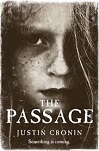
The Passage by Justin Cronin. I see this get praised a lot, and none of it is warranted. A clandestine subsection of the US government are experimenting on death row murderers and serial killers and turning them into super strength zombie/vampire monsters. Sounds like a good idea. And because of the mysterious mind powers they have, they are able to escape and more or less kill everyone. A post-apocalyptic story of survival with, of course, a special "chosen one", endless hundreds of pages are given over to cliches and characters prey to unnecessary/scarcely believable tensions that ends up imperilling them. Then there is the incredulous stupidity of the unleashed zombie/vampire virus killing everyone who lives outside of North America. A pretty dumb genuflection to US exceptionalism. If all this wasn't bad enough, the effort Cronin puts in to provide a science fictional conceit for this bloody-but-boring mess is undone by shoeing magic powers in toward the end. Terrible.

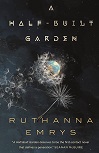
A Half-Built Garden by Ruthanna Emrys. This has such an interesting premise. It is the near future and the world is transitioning away from capitalism to some sort of eco-communism. States remain, but they're largely vestigial and ceremonial hold overs. And capitalism, as in turbo-charged faceless corporation capitalism, is confined to a few (literal) islands of influence. The main bulk of the population ignore their nonsense and live in decentralised communes organised on a geographical basis around watersheds - which makes for a thought-provoking suggestion for post-scarcity social organisation. Sadly, this is the best aspect of the novel. The appearance of cartoonish eco-conscious aliens and their organic ship that constantly shits their effluent into the Atlantic is not the ideal first contact scenario, and it doesn't get much better from there. Also, the characters always seem to be lecturing each other on pronouns, and thrown in are as many non-binary modes of address Emrys could think of. I don't want to dump too much on this book, as Emrys is attempting an empathetic SF here with genuinely different, if right-on aliens - but its earnestness does not make for a compelling story.

The Big Time by Fritz Leiber. Normally, it's his Hugo-winning The Wanderer that gets the brickbats. Alas, the absence of alien cat babes is this novel's only redeeming feature. Set around a temporal war where two factions battle over the course of history, Greta, a time-travel part-psychologist, part-comfort woman offers her ministrations to the troupe of soldiers that file through her end of a pocket universe. The Maintainer, a device that sustains this gap in reality, is stolen and someone threatens to set off an atomic bomb. All in a day's work for Greta! Sorry to say that if I could wind back time, I'd have spent the time reading this (mercifully) short work on another book. It's a complete mess and barely holds together. The problem is you get the sense Leiber is fizzing with ideas and wants to show off his distinction as an erudite writer, but here he lacks focus and falls short of a coherent and compelling novel. The definite tie for the worst novel to have crossed my eyeballs in 2025.

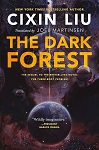
The Dark Forest by Liu Cixin. The Three-Body Problem juggernaut lands on this list. I wrote more about it earlier this month, and it gets worse the more I think about it. It's puzzling why Dark Forest makes so many best of lists. The writing is leaden, characters completely interchangeable, and human beings are by turns robotic, faddish, stupid, and hysterical. The aliens, the pulpy-sounding Trisolarians, are probably some of the worst realised in contemporary science fiction. But above all, the ideas if proffers - something which the series is often praised for - are hardly original, having been done many times before elsewhere. His "original" idea of Cosmic Sociology, a speculation about what alien societies might be like, is simply laughable and wouldn't be out of place in a collection of ravings by right-wing evolutionary psychologists. A book written to be thrown at the wall - more than once. Unfortunately, two-thirds in I'm likely to end up finishing the trilogy. So don't be surprised if Liu pops up here again this time next year.

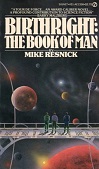
Birthright: The Book of Man by Mike Resnick. Competing hard with Leiber for the worst-book-read-this-year award, Birthright was horribly out of date when it was published in 1982. Resnick's future history tells of the rise, fall, and eventual extinction of "Man". We are "treated" to a sprinkling of vignettes throughout that history to give a sense of how humanity conquered an empire, treated its subjects, underwent democratic revolution, and then slid into oblivion. Why we did so well was because humans were more special and imaginative than the thousands of other species we discover during our galactic rampage. All humans, like all aliens, are cut from the same essentialist cloth, and we're cast as aggressively expansionist and imperialist by nature. It's exactly the same sort of species-level dopiness Liu indulgences. But if anything, this is more badly written. Supposedly a critique of colonialism, it is not nuanced enough to even gesture in that direction. Instead it comes across as a clumsy and boring celebration of dominance, militaria, and the wily application of statecraft. Just a very, very poor book that was 40 years too late.

Rants are over. What were your worst reads of the year, be they science fiction and/non-sf or even non-fiction?

Monday, 1 December 2025

Five Most Popular Posts in November

Finally got my posting skates on last month, so here's what attracted most attention.

1. The Your Party Debacle
2. The Man Who Would Liquidate Labour
3. The Beginning of the End
4. From Reform-Lite to Reform-Plus
5. Bon Voyage, Iqbal Mohamed

In at one was the in-fighting in Your Party. Do I need say more? Yes, but more comment is coming later today reflecting on the weekend's conference. TL;DR in case you're not around to read it: better outcome than expected. In second were further observations about the flimsy, know-nothing politics of Morgan McSweeney, the Prime Minister's right hand man if you've been living under a rock. His project might not be the destruction of the Labour Party, but he's certainly acting as if it is. In at three were the rumours about Wes Streeting planning to coup Keir Starmer in the aftermath of the budget. Which was always an unlikely proposition this side of the coming wipe out in May's council elections. At four was a condemnation and explanation of Labour's adoption of far right policies on refugees - something that is bound to do nothing but harm to their electoral prospects. Bringing up the rear is another YP story, this time the welcome departure of Iqbal Mohamed. Not all resignations and splits are bad!

Second chances? I'll give this piece on wealth taxes another shot in the spotlight. And for science fiction nerds, how about this take on Caspar Geon's The Immeasurable Heaven.

December is here, so treat this place like an especially fun advent calendar. This coming month I'm expecting more Your Party stuff, more science fiction reviews, a still-gestating piece on Jean Baudrillard, the usual politics thrills and spills, and the post absolutely none of you are waiting for - my top ten tunes of the year. It's tradition! As ever, if you haven't already don't forget to follow the (very) occasional newsletter, and if you like what I do (and you're not skint), you can bung a few quid and help support the blog. Following me on Bluesky, Facebook, and for what it's worth, Twitter, are cost-free ways of showing your backing for this corner of the internet.

Tuesday, 18 November 2025

Science Fiction Book Haul #5

There's some A-format goodness for the discerning genre fiction fan.

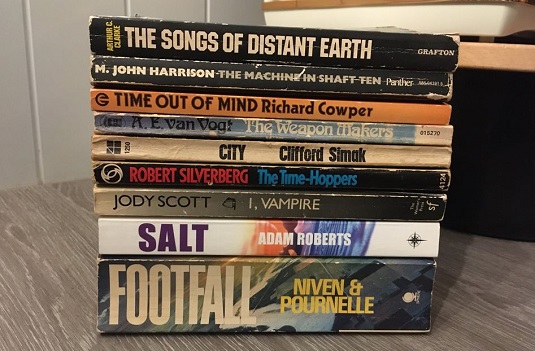
Starting at the bottom, it's another collaboration between Larry Niven and Jerry Pournelle. I did enjoy Lucifer's Hammer last year, which was a romp unnecessarily blighted by right wing and racist asides. Footfall apparently is of a similar cast, except our beautiful green Earth gets assailed by elephantine aliens. I'm sure there will be absurd moments, but nothing can top their Lucifer silliness of having a throwaway character surfing a mile-high tsunami.

Adam Roberts's Salt isn't only the newest book in this selection, it's his debut novel! To be honest, I don't know much about it. Except it's well thought of. A colony ship treks across space to a new Earth, and finds a stark, eerily beautiful world. Unfortunately, old rivalries are no respecters of new beginnings and the cracks in the mission soon show. Up next is Jody Scott's I, Vampire in the classic Women's Press line. The sequel to Passing for Human, which I also have, this features a vampire called O'Blivion who strikes up a relationship with Virginia Woolf. Who is really a dolphin-like alien, and adventures ensue. Sounds weird in a fantastically good way.

Next up is the don, Robert Silverberg. I've got loads of his books but, to date, have only read two of his novels. I'll keep collecting them though. The people of the 25th century are fed up with a crowded, hungry Earth, and have decided to chance on happiness by skipping back in time. More aposite now than the publication date (1967), seeing as too much politics plucks at the nostalgia strings. Clifford Simak's City is probably his best known, and is often considered his best book. The human race has either died out or fled the Earth for the stars, and we didn't take our best friends with us. Abandoned to fend for themselves among our ruins, a new civilisation starts its rise - a society of very good boys.

I recently had my first encounter with AE van Vogt, he of Voyage of the Space Beagle fame, and his Darkness on Diamondia didn't land with me. But his early work is generally considered first rate, among which is the second of his Weapons books, The Weapon Makers. The blurb promises a titanic galaxy-spanning scrap, and the hype suggests some of the best writing in genre sf. Something to look forward to. Richard Cowper (pronounced Cooper)'s Time Out of Mind is a story of future drugs cops, illicit substances that give users the power to teleport objects, and a conspiracy by a "fascist megalomaniac" to use all this for evil. What japes.

Final two. I recently enjoyed M John Harrison's Light, an underappreciated and seldom-acknowledged space opera. And here we have a collection of his early short fiction. One of the stories recounts the adventures of a galactic pimp. I'm sure the old beards of hard SF would not have approved. And as coincidence would have it, the final title in this wee haul comes from Arthur C Clarke. In The Songs of Distant Earth, our pearl of a planet has been consumed by a nova, and the colony ship Magellan is all that's left. We're off to find a new home, then. We happen upon the friendly aliens of the planet Thalassa but - oh no - some interspecies intimacy brings issues to light.

These are my recent pick ups. What about yours?

Sunday, 16 November 2025

What I've Been Reading Recently

It's been over a month since the last one, so here are the books that have kept me ticking over since.

The Conservative Party after Brexit by Tim Bale
Fools by Pat Cadigan
Our Bloc: How We Win by James Schneider
Far from the Light of Heaven by Tade Thompson
The Reader by Bernard Schlink
The Dog Stars by Peter Heller
Wifedom by Anna Funder
The Darkness on Diamondia by AE van Vogt
The Gods Themselves by Isaac Asimov
To Sleep in a Sea of Stars by Christopher Paolini
Azanian Bridges by Nick Wood
The Agony of Power by Jean Baudrillard
Count Zero by William Gibson
We Do Not Part by Han Kang

Shall we get the non-fiction out the way with first? Many thanks to Tim Bale for kindly sending me a review copy of the second edition of his latest book on the Tories. I will write about it soon, promise! The appearance on this list of Baudrillard's final book marks not a descent into nihilism, but a side project that has quite a bit to do with hegemony. In The Agony of Power, he refers to simulation, simulacra, and their logics as hegemony. But untangling it meant going back to Symbolic Exchange and Death and his other key subsequent works. They will get featured on the next round up, but I will say they were all enjoyable as well as useful reads. On the subject of the H-word, I also read James Schneider's short book answering the perennial 'what is to be done?' question. And his argument was for a coordinating organisation that could network across and facilitate solidarity between an array of protest and social movements. Apparently this influenced Jeremy Corbyn enough to set up the Peace and Justice project, and you can see parallels between his remarks on what the new party should look like and the arguments in this book. Though, as we know, the practice has fallen somewhat short. Last here is Anna Funder's Wifedom, an excoriating expose of how George Orwell and his biographers have suppressed Eileen Blair, his wife, out of his writing and accounts of his life. It somewhat undermines the saintly pedestal sundry centrist writers have put him on.

Two works of mainstream fiction cropped up thanks to book club commitments. The Reader is probably best known for the 2008 Kate Winslet flick, and it was good group fodder. Plenty in there about post-war trauma, war crime blindness and forgiveness. It was a very easy rid. On a not dissimilar theme, Han Kang's We Do Not Part was dreamlike, chilling, melancholic, and beautiful. A meditation on a series of massacres that prefaced the Korean War, it is an elegant piece of writing.

On the science fiction, at the bottom was van Vogt's tedious tale of slow-burn alien rebellion in Darkness on Diamondia. Do not recommend, and not ideal for a first foray into his oeuvre. Better but not great was Tade Thompson's Far from the Light of Heaven. I do like Tade and follow him on social media, but this - again a first try of his work - did not sit with me. Pat Cadigan's Fools began with promise and fizzled out amid a mess of melding personalities and confused memories. And, I'm sorry to say, William Gibson's follow up to Neuromancer didn't leave much of a lasting impression. I remember Count Zero being entertaining enough, but it didn't stick. Nick Woods's Azanian Bridges had promise: an alternative South Africa where apartheid had persisted to the mid-2010s, someone invents an empathy/mind-reading machine. A well-constructed piece but, I don't know, it just missed something. Isaac Asimov's The Gods Themselves, with a lovely Ken MacLeod intro doing the contextualising, was also interesting but I didn't find the speculative dimensional physics babble in the last third that gripping. Perhaps I'm getting harder to please and going off hard SF? To Sleep in a Sea of Stars was a thick chonker of a space opera, and paused before giving it a go. And it was a bit mid. Christopher Paolini's background as a fantasy writer shows through with SF analogues of magic items and lich lords, but also dump in Cthulhu-style aliens, mutated zombie hordes, periodic down times for exposition, and the sorts of battles that read like a first person shooter/end boss fight narration - that should give you a flavour of what to expect. Only one SF novel properly stood out, and that was Peter Heller's The Dog Stars. The plague has come and gone, nearly everyone is dead, and what's left has to get by in a brutal and nasty world. Somewhere between The Road and Station Eleven in the violence/brutality department, it was well written enough to earn a recommend.

The highlights then? Undoubtedly the two mainstream novels, and the Baudrillard. What have you been reading recently?

Saturday, 1 November 2025

Five Most Popular Posts in October

Did you get mugged by costume-clad kids last night? Don't worry, I have some post-Halloween treats for you: what was hot in October as decided by the internet going public.

1. Uncovering Starmer's Fraudulent Politics
2. What about the Little Lenins?
3. What Happened to One Nation Conservatism?
4. Politics after Caerphilly
5. Racism and the Right

Coming out on top was my right up of Paul Holden's press conference about his new book, The Fraud. It contained detailed and evidenced claims about the dirty tricks and the law flouting that has attended Keir Starmer's rise to and leadership of Labour. Mr Rules indeed. Second was a meditation on the far left and what role for them in Your Party. I see from reports around the country that the SWP have shown themselves keen to run events themselves, up to and excluding others from any organising role. Even so, I still wouldn't favour banning them from the new party. In at three as my thinking about one nation conservatism, a philosophy and attitude long departed from the Tory party as it exists today. Four was the fall out of Labour's catastrophic loss of their Caerphilly seat for the Senedd. Are there any signs that they recognise the roots of their malaise? Nope. And coming up last is a foray into considerations around the shape of hegemony in Britain today. What does Sarah Pochin's racist "outburst" say about the state of elite politics?

The post selected for the second chance promo treatment is The Second Green Surge. Has Your Party missed the boat with dithering and infighting? What's powering the rapid growth of the Greens? Is it just because Zack Polanski is a dab hand at the social media?

The unwelcome intrusion of Covid meant I didn't write quite as much as I hoped in October. But for the first time in a long time, I'm feeling motivated - even if politics is still a bin fire. Bubbling under I've got more things I want to say about the Greens, about Your Party, and what's going on with the Labour Party. Is it too caught in the grip of a process of long-term decline just like the Tories? I want to throw down some more thoughts about the debates around hegemony/anti-hegemony, and something might appear about our old chum Jean Baudrillard. On top of that the usual commentary on events, dear boy will populate this blog. As ever, if you haven't already don't forget to follow the (very) occasional newsletter, and if you like what I do (and you're not skint), you can bung a few quid and help support the blog. Following me on Bluesky, Facebook, and for what it's worth, Twitter, are cost-free ways of showing your backing for this corner of the internet.

Image Credit

Sunday, 26 October 2025

Science Fiction Book Haul #4

Book hauls have never stopped being popular on YouTube. But written versions? Somewhat less so. As you can tell from this place's paint job, being fashionable has never been a concern for this blog. And, sadly, these days science fiction is far from the flavour of the month either. Therefore posting about recent SF acquisitions on here is something of an apposite match, and perhaps a waste of time. Not that this bothers me.

Up first is Nevil Schute's On the Beach. I'm sure most readers, even if they're not sf or literary buffs will have heard of this thanks to the Gregory Peck film. A rare exercise in the hopeless everyone-dies-in-the-end scenario, nuclear war in the northern hemisphere has created a radioactive cloud that is slowly enveloping the Earth. Australia has escaped the fall out, but weather patterns mean it's closing in and with it, certain death. How do you cope when the end is nigh, and what happens when a submarine captain receives a radio signal from the irradiated shores of the United States?

Next is John Scalzi's Old Man's War from 2005, the first in a seven book series - the latest of which came out this year. The conceit here is that old people are being enlisted for space war. Their wizened frames are traded in for biochemically and nanotech enhanced soldier bodies that can take the fight to the aliens. It is well thought of and was nominated for the Hugo. Bringing things back to Earth, The Parable of the Talents is the second book in what would have been Octavia E Butler's near future series about the collapse of civilisation and the Mad Max-style fun that entails. Noted because the narrative jumps off in the 2020s as the US crumples beneath the weight of a right wing authoritarian president, this was to be a story of struggle, of overcoming, and building a space faring future away from the ruined Earth.

Arthur C Clarke gets a bit of a bad rap these days for having churned out, by our standards, dull and Whiggish science fiction (though I found his A Fall of Moondust entertaining enough). Does this judgement include Imperial Earth? 150 years from now, citizens from across the solar system are converging on Earth to celebrate 500 years of American independence. The futuristically named Duncan MacKenzie is making the diplomatic pilgrimage from the tunnels of Titan, but is he visiting to just make nice with the locals or are their ulterior motives afoot?

Jumping from the nearish future to the far past, Caspar Geon (AKA Tom Toner) sets The Immeasurable Heaven a long time ago in a galaxy far away. Billions of years back, to be precise, during a time when the universe was smaller and empty space was alive with a rich soup of elementary particles. There are no humans in this story, but we do have a settled galaxy - Yokkun's Depth - and a plot arising from the consequences of puncturing holes in the fabric of reality to reach the younger universes beneath. Immeasurable was published in the summer and comes highly recommended to me via several sf booktubers, so looking forward to digging in before long.

Last is the compilation Nebula Award Stories 5 edited by James Blish. In his intro, Blish takes issue with vote massaging accusations around the 1970 contest. But that's by the by. Included here are two authors' signature shorts. Samuel R Delany's Time Considered as a Helix of Semi-Precious Stones and Harlan Ellison's famous A Boy and His Dog. The "also-rans" are Robert Silverberg's 1969 award winner Passengers, Ursula K Le Guin's Nine Lives, Larry Niven's Not Long Before the End, and The Man Who Learned Loving by Theodore Sturgeon. There are bonus essays about the state of science fiction in 1969 from Darko Suvin and Alexei Panshin. Apart from a touch of sun fade on the spine, this is in very good nick for such an old book/

Have you picked up anything interesting lately, SF or non-sf related?

Monday, 20 October 2025

Covid, Round Three

A his 'n' hers. Hers, a blunt, rude indicator of a Covid bout in full force. Fatigue, muted senses of taste and smell, feeling off. A most unwelcome intruder in our happy house.

Mine, a barely-there mark befitting a fading illness that, on the third time of asking, has been milder than previous memberships of the Covid club. Enough to keep me away from work, going out, and doing most normal things. Tragically, no lawn mowing last weekend for me. I also had to put down the threads I would have weaved into tapestries of political comment this last week, so apologies for the brief interlude of silence. Having munched through my weight in decongestants, paracetemol, and downed a vat's worth of Nightnurse (other respiratory remedies are available), the blighter is almost finished. No word marathons ahoy in the immediate recovery period then, but a few canters around the block should start reappearing hereabouts.

Friday, 3 October 2025

What I've Been Reading Recently

Proper blogging resumes tomorrow. In the mean time, I'm looking back over recent reads. As it's been a while since the the last round up, I'm not listing everything I've read since early July as it's quite a lot. So I'm sticking to September's tally, which is plenty big enough!

Get In by Patrick Maguire and Gabrield Pogrund
Declaration by Michael Hardt and Antonio Negri
Grass by Sheri S Tepper
The Wide Sargasso Sea by Jean Rhys
The Wild Shore by Kim Stanley Robinson
Agonistics by Chantal Mouffe
Children of Ruin by Adrian Tchaikovsky
Birthright: The Book of Man by Mike Resnick
Cat's Cradle by Kurt Vonnegut
For a Left Populism by Chantal Mouffe
New Tales of the Cthulhu Mythos edited by Ramsey Campbell
Toward a Green Democratic Revolution by Chantal Mouffe
Intrusion by Ken MacLeod
Light by M John Harrison

Some of my reading is groping toward issues around hegemony and anti-hegemony, hence the Hardt and Negri and the Mouffe. Re: her work on hegemony, like many socialists of a certain vintage Mouffe's famous/infamous Hegemony and Socialist Strategy, authored with Ernesto Laclau, never sat well with me. As a good Althusserian I enjoy a textual expunging of essentialisms as much as anyone else, in their case against treating politics as simple expressions of class. They argue there isn't a necessary correspondence, let alone a guarantee that ensures our class takes up socialist politics. Instead politics has to be articulated by organisations and parties through the formation of hegemonies and hegemonic blocs. While this latter point is true, there is obviously a relation between class and politics, which we see when classes and strata always tend toward certain parties. This is empirical fact, and is a pattern we see repeated across all liberal democracies. The explanation lies not in essential relations and simple correspondences, but the inertia of history and life experience. I.e. Broadly similar experiences of living in capitalist societies spontaneously produces broadly similar and shared outlooks, which inculcates certain dispositions and tendencies towards certain kinds of politics. Don't get me wrong, there is much that is valuable in Mouffe's work and I find it persuasive, but the autonomy of the political is not something I can get on board with.

More of that another time. Novels-wise, there were plenty of highlights. Tepper's Grass was a slow burn, unlike the fires that rip through the book. The world building was spot on, the characterisation well done, and the story compelling. Tchaikovsky's sequel to Children of Time was a worthy successor. As inventive as that celebrated book, it doubles down on the multiplicity vs oneness dynamic, the speculative sociology and psychology, and also is a white knuckle ride of a novel. Excellent stuff. Our Ken's meditation on New Labour-y nanny state authoritarianism was a timely read now that a worn out tribute act is in office. Intrusion is a paranoid classic, and the Kafkaesque climax is as gripping as it is technically brilliant. Lastly, Harrison's Light, the first of his I've read, was remarkable. Some of the best writing and character work you'll find anywhere, not just several thousand light years from Earth. A serial killing protagonist, shades of eldritch horror, mind games, and hard physics are seamlessly blended together. One of the best sf novels of this century.

Alas, there were downers too. I know The Wild Shore was well reviewed on release, but is very YA without realising it and, even worse, is quite boring. Not one of KSR's best. Also disappointing was the Cthulhu collection. The key note story, Stephen King's Crouch End was too heavy handed in my view. Attanasio's The Star Pools was a short of two halves, with the latter half being excellent while the first didn't work. And the others were a mixed bag, a hybrid of entertaining and try hard. Apologies if I've trodden on the toe/flippers of Old Ones fans. But truly terrible was Resnick's Birthright, a series of linked vignettes taken from his future history sequence about the rise and fall of our species. Nothing more need be said - I'm saving my venom for the end-of-year worst books list.

What have you been reading recently?

Image Credit

Wednesday, 1 October 2025

Five Most Popular Posts in September

The posts have been flowing this month following the extended summer break. And, as it happens, so have the audience numbers! Here are the top five.

1. The Crisis in Your Party
2. Over for Ovenden
3. Chamberlain Labour
4. Unravelling McSweeney
5. Reluctant Corbynism Revisited

I did lament last month that this place's stats were somewhat unreliable, and this month's were no different. But there has been a discernible boost to individual post counts that does not suggest an invasion by LLMs. Maybe, just maybe, the blog is refracting a renewed interest in politics. That this coincides with what we might crudely call Corbynism's second coming pretty much mirrors what happened 10 years ago when the audience then took off.

Anyway, on with the posts. The splits in Your Party got top billing, and now membership is open it's just daft that this ever came to a head. What's going on with Labour these days occupied the next three posts. The fact Diane Abbot has rent-free accommodation in the Labour right's collective heads claimed the career of Starmerite acolyte Paul Ovenden earlier in the month. How will the labour movement prosper without his services? Then came my analysis of the cowardly approach the Prime Minister has taken vis a vis racism and "real concerns", and who benefits from their Reform-lite rubbish. A few quick notes on the under-siege Morgan McSweeney strode into fourth, and in a close fight for top five entry was my - unenthusiastic - justification for sticking with the Your Party project.

Who wants a second chance? Let's have my piece on Zack Polanski's Green leadership win, and last night's overview of Keir Starmer's declaration of war against Reform.

What might feature next month? I can't read the entrails of October to come, but if I write anything on Your Party I'm sure it will be here. As well as anything on Labour's politics. Maybe I'll get around to writing something about other parties too, or get back on my science fiction kick. As ever, if you haven't already don't forget to follow the (very) occasional newsletter, and if you like what I do (and you're not skint), you can bung a few quid and help support the blog. Following me on Bluesky, Facebook, and for what it's worth, Twitter, are cost-free ways of showing your backing for this corner of the internet.

Image Credit