Showing posts with label Religion. Show all posts

Monday, 21 July 2025

Circling the Drain

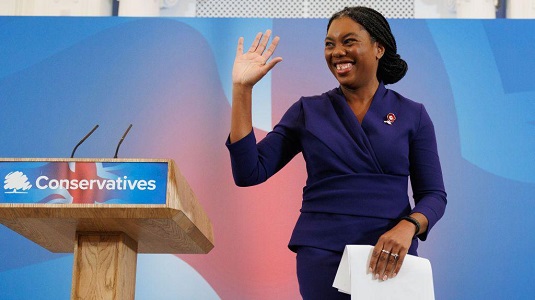
It's difficult to appreciate how, just three years ago, the Conservative Party was the pivot around which British politics turned. These days, it's an uninteresting side show followed by a diminishing band of aficionados and weird people. Kemi Badenoch has proved herself incapable of kicking the football, let alone powering one into the back of Labour's open goals, and everywhere the party is floundering, completely disoriented by getting dumped out of office and watching Reform become the primary opposition to Keir Starmer's government.

As we head into the summer recess, a couple of things remind us of their decrepitude. The Graun's man in Wales, Will Hayward writes about the party's looming extinction. 10% of their vote passed away between 2019 and 2024 with a further 40% due to grow angel wings before 2029, as per everywhere else in Britain young people are not replacing the base like-for-like. Going in for the Nigel Farage cosplay is not helping them, nor are efforts at trying to create new points of resentment over Welsh Labour's basic income pilots. No one is interested, and that means next year they could be wiped completely from the Senedd.

But all is not lost. There was a spasm of excitement on Thursday about a speech Danny Kruger delivered to a deserted House of Commons. He argued for a restoration of Christianity in politics. In an intervention the polyester populist Robert Jenrick described as "magnificent", Kruger expressed concern that Christianity had been ejected from our shared cultural space by two other religions. One was Islam, and the other ... was "woke". He said,
It is a combination of ancient paganism, Christian heresies, and the cult of modernism, all mashed up into a deeply mistaken and deeply dangerous ideology of power that is hostile to the essential objects of our affections and our loyalties: families, communities, and nations ... [it] must simply be destroyed, at least as a public doctrine ... It must be banished from public life — from schools and universities, and from businesses and public services."
Yes, Kruger wants to mobilise Christian values against a sensibility that finds exploitation, prejudice, and poverty abhorrent, and in its weakest version asks that we treat each other with respect. A Tory effort in this direction is likely to have as much effect turning around their party's fortunes as Badenoch's performances at Prime Minister's Questions.

What it does underline is the predicament the Tories are in. Everyone knows about their crisis of political reproduction and how their ageing voter base condemns them to dwindling relevance. This point is no longer a fringe belief confined to this corner of the internet, but is the political common sense in Westminster and mainstream political comment. Except, evidence suggests, the Tories and their press. Without any understanding of their predicament, and hemmed in by a strategy that cannot concede anything that could raise political expectations, their reflex is to double down on their core premises to try and consolidate themselves following a shattering defeat. It's what they did between 1997 and 2005, which gave them a foundation for the faux liberal Toryism that came next. And arguably, Boris Johnson followed a similar strategy when he became leader. Hard on Brexit, tough on immigration, showed his opponents the door and the British public lapped it up.

Except this time, it is not working. Doing Farage impersonations is pointless while the real deal is cruising the country, gliding from one soft ball interview to another. It's also a waste of time when the things the Tories are concentrating on, immigration, war on woke, are issues that, from the standpoint of the people they're addressing, they've demonstrably failed on. As Starmer nver misses a chance to remind the hapless Badenoch, the Tories put rocket boosters under net immigration. They're just not credible, which is something neither she nor the heir presumptive can do a thing about. Except publicly, desperately endorsing more and more extreme politics, which Farage is savvy enough to keep his distance from. And without the levers of power, the Tories cannot demonstrate how much they mean it this time.

Here we are then. The activities of the Tories are no longer the doings of an organisation in charge of its destiny. They are reflexes, a scramble of unthought reactions as this once mighty party circles the drain.

Image Credit

Sunday, 30 March 2025

Laura Kuenssberg's Gotcha "Journalism"

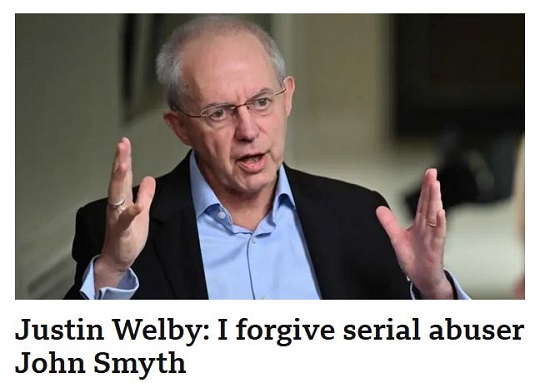
Every time Laura Kuenssberg interviews anyone newsworthy, her goal is to generate "controversy" rather than shed light on a topic or, heaven forfend, produce a piece of journalism that might help demystify politics. Her interview with Justin Welby, the former Archbishop of Canterbury on Sunday morning is a textbook example of her "method".

Asked about his presiding over child abuse scandals in the Church of England, Welby at length apologised for his inaction and supplied a series of excuses for not investigating allegations properly. Why use several sentences when an "I'm incompetent" would have done? But it was when Kuenssberg got round to the notorious serial child abuser John Smyth that the "trap" was sprung. She asked if Welby had "forgiven" Smyth.

The reply was so obvious that even ChatGPT would have got it right. With the caveats of "it's really a question for the survivors" and "I shouldn't be centred in this", he said yes. Because as a serving bishop Welby still has to pay public heed to the nostrums of Christianity, in which mercy and forgiveness are primary virtues. Kuennsberg knows this, knew he couldn't offer any other answer, and immediately following the end of the interview turned to her panel of pundits and Yvette Cooper and expressed faux astonishment that the former leading cleric of the Anglican Communion could forgive such a man. As night follows day, that was the headline on the BBC website (reproduced above) and across several newspaper sites.

Apart from the usual establishment biases, it's well known that Kuenssberg's approach to politics journalism involves two things. Gossip-mongering, which serves to distort how politics really works. And to make political weather at her interviewees' expense, provided they are outwith polite Westminster company (recall the "lapses" of the Corbyn interlude), or their career is on the skids. Welby had disgraced himself as Archbishop by, at best, not noticing the Church's problems with child abuse, and attracted even more opprobrium for his jokey valedictory speech in the Lords. It was therefore safe for Kuenssberg to reuse this has-been as a headline generator, and conveniently any outraged whipped up puts distance between his time at the heart of the establishment and the establishment itself.

Kuenssberg's "techniques" wouldn't pass muster on a hyper-local blog, let alone on BBC Sunday politics programming if gotchaism didn't serve the powers that be. The so-called concern for the truth is reduced to wrenches thrown into politicians' spin, but in the hands of mainstream broadcast journalism this is to dumb down public discourse about politics even further. Kuenssberg, for instance, is almost a virtuoso at teasing out the trifles and irrelevances. She might repeat well-worn criticisms of the issue she's interviewing a politician about, but never knowingly questions the assumptions their position is based on nor suggests credible alternatives to what's being fronted. Treating politics like soap opera often means characters and performance get criticised, but the script is never open to challenge.

Tuesday, 29 October 2024

The Futility of Conservatism in Pavane

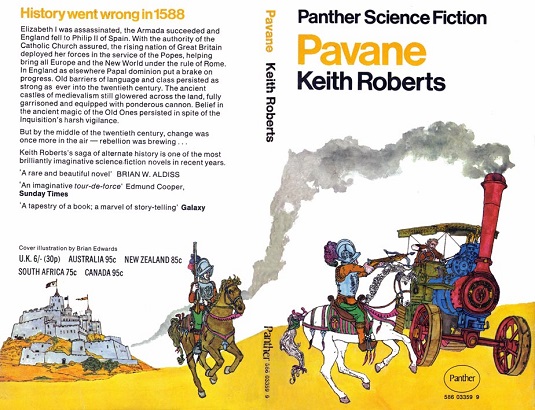
Pavane is one of the greatest science fiction novels ever written. Often billed as the best exercise in alternate history, it exemplifies everything about and delivers on the promise of the British new wave: an SF setting suffused with literary finesse. That it is unlikely to be touched by mainstream readers because of its inclusion in the Gollancz Master Works collection and the attendant livery is a real shame.

Keith Roberts produced six interlinked stories set in a stunted 20th century Britain under the heel of the church. An assassin's bullet struck down Elizabeth I on the eve of the Spanish Armada, with the consequence that the invasion was successful and Protestantism was crushed. The country becomes an unhappy satellite of Rome, Britannia never rules the waves, and the industrial revolution unfolds at a snail's pace. The heavy hand of the papacy weighs on technological development, so in Roberts's 1968 there is no television or radio. The internal combustion engine is in development hell, waiting for its sanction by papal bull. There are no railways, with commerce between cities centring on chugging steam wagons. A dependency on horseback remains. Bandits and dangerous wild animals roam the countryside as smugglers plough the waters. Communication across distances is only possible via chains of mechanical towers under control of the secretive and fiercely independent signallers' guild. As our 20th century compressed time and space and sped everything up, history in the world of Pavane is an unhurried crawl.

Unlike most adventures in other timelines, the book is not a dramatic imagining of hero characters triumphing over the adversities and absurdities of an unfamiliar setting. Instead it deals with the small and how, over a couple of generations, these feed into great events. We get stories of the everyday, the mundane, and the seemingly inconsequential. The one constant is the Dorset environs. Crashing seas and cliff edges, howling winds and bleak heathlands, the clouds roil and billow as the landscape husbands the sluggish and harsh lives of those who survive there. This is a world of superstition and faeries where place is inseparable from the old gods and spirits. Dream and illusion is their favoured manner of manifestation, while the omnipresent Church enforces its divine teaching by the materiality of cannon, soldiery, and the torture chamber. There is a plot of sorts, but it rests lightly on Roberts's canvas. This Britain comes alive in brush strokes, of showing rather than telling.

In later years, Roberts described himself as an anti-communist and a conservative, which was somewhat at odds with the new wave milieu he was a central contributor to. But unlike other writers, the conservatism in Pavane is barely perceptible. It whispers its presence in the privileging of the quiet wisdom of everyone who resides in his Dorset, of a semi-mystical spirit that unites (rural) worker, haulier, signaller, and aristocrat. One nation in one county, you might say. More broadly, Pavane does not read like anti-Catholic polemic in the unionist "no popery!" tradition. Rather, the Church here is a synonym for totalitarianism. It is (theologically) internationalist, indifferent to the peculiarities of its English subjects as long as they don't cause any trouble, pay lip service to doctrine, and fulfils the pope's quotas for foodstuffs and manufactories. This is justified by dogma founded on abstract principles.

Pavane is also Roberts's meditation on the ultimate futility of his politics. Conservatism is congenitally dishonest because it presents the particular, monied interest as the universal interest. But it's also fundamentally pessimistic. Conservatism knows its efforts to preserve what it values are doomed, that the better yesterdays it imagines (or, to be more accurate, invents) are doomed never to recur. While for Roberts the Church Militant is his bogey and Soviet surrogate, it also works as the location for working through conservative anxieties. Based on traditional authority in Max Weber's sense, its ecclesiastical grip cannot halt the flow of history indefinitely. Corfe Gate, Roberts's final story follows the eruption of open defiance and insurgency, enabled by forbidden technologies that work around the sanction of excommunication, and the concluding Coda chronicles the break out of modernity as the papacy crumbles before the hammer blows of revolution. For all its vast apparatus of repression and the chilling effect of its theology, this authoritarian conservative institution could not stymie the flows of history forever. A realisation that might make a commitment to a quieter, more modest everyday conservatism a fruitless exercise, but also the only conservatism that is palatable given the excesses of Pavane's imagined Catholicism.

Because of its pacing, light plotting, and eschewing of the thrills and spills of contemporary SF, Pavane is not for everyone. Those expecting something of that stripe, or even in the ballpark of A Canticle for Leibowitz might wonder what the fuss is about. But readers who appreciate literary fiction and enjoy the flow and beauty of evocative prose will encounter an exceptional work. Not just one of the best SF novels, but a novel of the first rank that deserves canonisation among the English greats.

Image Credit

Friday, 9 February 2024

The Anomaly by Herve Le Tellier

Many things have been written about Herve Le Tellier's The Anomaly. One of those pesky science fiction novels passing itself off as a mainstream literary novel, it has attracted flattering remarks over its originality, its fidelity to the Oulipo school of French writing, and for being a good read. While quibbling the claims to newness - doppelgangers have been an SF staple since Poe's William Wilson - Le Tellier's scratching of an old groove produces a melodious work. It has the page turning quality of a Michael Crichton, centring the scientific/military inquiry into/protection from the unknown with small character studies of everyday folk thrown into an unbelievable situation. But what reviews and other commentary has tended to neglect is The Anomaly's polemical thrust.

Spoilers below.

In March 2021, an Air France airliner lands at JFK airport. The passengers and crew disembark and go about their lives. In June 2021, the exact same plane with the same crew and passengers appears in US air space and is escorted by fighter jet to a US Air Force base. What's going on? The duplicates (or are the ones who landed in March the duplicates?) have experienced no lost time, and have to come to terms with a world where their niche is inhabited by their other selves. This poses a problem for Blake, a hit man, who has no intention of surrendering his shadowy life to a double. But not so much for struggling novelist Victor, whose alter ego finished writing a book of aphorisms - entitled The anomaly - and promptly took his own life. This catapults the book to the top of the best seller charts for Victor to more or less pick up where he left off. What duplication means for relationships, for people's standing in society (or at least those who come out publicly), and the arrangements some characters arrive at to assure their co-existence is all deftly done.

How to explain what happened? Eventually, the leading hypothesis is that our world is one of many simulations ran on an inconceivably vast computer by a super advanced civilisation for reasons unknown. The duplication of Flight 006 is a test of some kind, the insertion of an unknown variable to see how us little computer people would go about reacting to it. There is some suggestion it could be existential. If our response is wrong then our simulation will get turned off. The White House invites representatives of several religions for their take on what happened and where the creation of over 200 duplicated people might sit theologically. A consensus of sorts is arrived at that if they were abominations, then God would not have given them life. The Devil, after all, cannot create.

For my money, The Anomaly is a polemic against what Le Tellier sees as the real anomaly - the unending eruption of unreason in culture and politics. The US President, who is never named but is obviously Donald Trump and has a deal of trouble following the explanations and recommendations offered by his advisors. Published in France in 2020, Le Tellier didn't have much faith in the American people cutting short the tangerine dream's bid for a second term. That's and his two-faced dealings with Macron are the light relief appetiser. The polemic hits hard toward the book's end. One of the young women from the flight appears on The Late Show with Stephen Colbert with her doppelganger. It's all wholesome with the sympathetic liberal audience. They're slightly gawky and awkward. The one who landed in March has embarked on her first hesitant romance with a boy. They couldn't be more unthreatening. But outside the studio is besieged by Christian fundamentalists drawn from America's religious redoubts. As the pair leave in a company car, they're caught up in a traffic jam caused by the protest. By chance one of the zealots spot the pair giggling in their seats, and convinced they're Satanic spawn he shoots them to death. The theological positions put out by at the government's behest count for nothing as his mind is consumed by religious ecstasy.

And then, the end. In October 2021 JFK airport is radioed by a third Flight 006 seeking landing permission. The action cuts to the cockpit of a fighter pilot querying his orders. They've come straight down from the President himself. The flight must be destroyed. The missile streaks towards the helpless jet and in the seconds before impact, everything stops. The world feels a shudder, and the text breaks up and collapses to a point. The obvious implication being that we, or rather the unreasonable order of an unreasonable President have failed the experimenter's test and our simulation gets shut down.

The warning is clear. The anomaly of unreason is an existential threat, but not an insurmountable one. If the right people made the right decisions. If the crazed and the stupid were not encouraged and empowered, we might stand a chance.

Image Credit

Tuesday, 24 October 2023

Abandoning Muslim Supporters

To lose one councillor is careless. But 23? Since his unfortunate faux pas last week where Keir Starmer went on the record and backed Israeli war crimes in Gaza, the back-pedalling from those comments has got more frantic and desperate looking. It took him nine days to try and correct himself, and then he he ended up denying what he said. Just when you thought bare faced lying was over when Boris Johnson made his exit from politics. If it was a case of Starmer "misspeaking", I don't understand why he didn't say sorry and explain what he meant to say. That might have defused the issue a touch and eased the damage. But no, in bourgeois politics it always has to be never apologise, never explain.

And now Labour is paying the price. Last week's by-election victories show the party is well on its way to winning and that the fall out of genocide-gate had little to no effect on the overall result. But neither Tamworth nor Mid-Beds had large Labour-loyal Muslim communities in play. Many seats across London, the Midlands and the North do. And by his carelessness and bullishness, Starmer is risking this core component of Labour's coalition.

Let's be honest. Labour's Muslim supporters have been long suffering. Despite eight-out-of-ten Muslims voting Labour, they are taken for granted and occasionally traduced by their party. And you could be forgiven for thinking these last 20 years have tested their patience to breaking point. Subject to intense media and government surveillance after the September 11th attacks and in the lead up to the invasion of Iraq, Labour was only too happy to reward decades of majority support with disrespect, insult, and cleaving to Islamophobic press campaigns. Yet the electoral rebellion against this was largely confined to some good election results for Respect, including George Galloway's twice getting elected to the Commons, and the rise of Aspire in Tower Hamlets. This suggests industrial levels of forbearance on the part of Muslim voters. But you can't go against the interests of your base forever and always.

I hear that as soon as Hamas launched its attack on Israel and it was understood that Netanyahu would commemorate the victims by massacring thousands of Palestinians, consultative meetings between the Labour leadership, its trusted lieutenants, council leaders - particularly in areas with large Muslim populations - and Muslim "notables" went into the grid to try and ensure Labour got its messaging right. We can see that process has been a complete failure, and it was always going to be the case. For one, loyalty to Britain's geopolitical interests are as Labourist as Sure Start centres. And that means Israel is to the Labour leadership what the Soviet Union was to the old Communist Party of Great Britain. Its works are never to be criticised, let alone condemned. And its doings are to be alibied if they cannot be passed over in silence. "Defending" Israel, which means defending its right to murder Palestinians and grab their land, cannot be reconciled with assuaging the disgust, anger, and fear British Muslims are feeling.

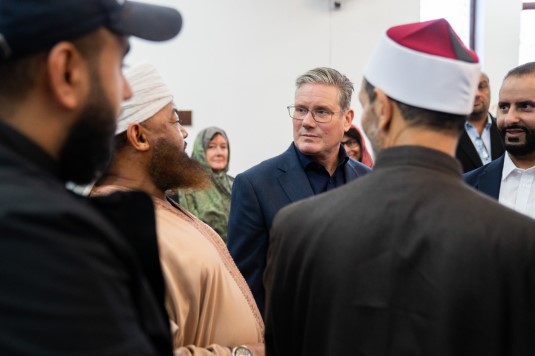
What makes this even worse is the shoddiness of Labour's efforts to try and square the circle. Quite a few Labour MPs have now come out and demanded Rishi Sunak pushes for a ceasefire (fat chance), but Starmer and friends have also avoided making this demand. We get platitudes about letting the aid into Gaza without reference to the hundreds being killed every night. It's incoherent and is damning the party among Muslims. Then over the weekend, we learned of the deception behind Starmer's photo opp at a South Wales mosque. The image it wanted to convey was of the Labour leader listening to worshippers' concerns while everyone were smiling away. Meanwhile, as Labour are half-arsing their spinning of an impossible position, you have the likes of Luke Akehurst - one of Starmer's key fixers - amplifying suggestions last weekend's solidarity marches were motivated by antisemitism, and helpful "anonymous" sources from Starmer's office saying that they don't care about Palestinian deaths.

It's difficult to overstate the seriousness of the crisis of Labour support among Muslims. Shredding the party's credibility among its most solid constituency is not only incredible stupidity, it is a foretaste of what we can expect from Starmer in government. I often talk about the long-term decline of the Tories, and - just like his adoption of Conservative policies and framing - Starmer seems determined to follow them in this as well.

Image Credit

Sunday, 17 April 2022

Class Conscience and the Church of England

The Church of England, it used to be said, was the Tory party at prayer. Inbetween the pews and the pulpit, this was the place tens of thousands of Tory members and supporters found one another in the early to mid parts of the 20th century and knitted the organisation together. Particularly in the expanding suburbs from the 1930s to the 1960s, and for scattered but big C Conservative congregations in rural areas the local church was a community focus. It's no accident that there is a relationship between falling church attendance and declining Tory membership from the 1950s on. Indeed, what was once an intimate relationship is now something of an estrangement. Rather than recalling maids cycling through the mist, contemporary Tories are more likely to curl their lips when the CofE gets a mention. And this is because the Tory imaginary sees the Church as an opponent. Like schools and universities, the Church of England is a peddler of the woke ideology.

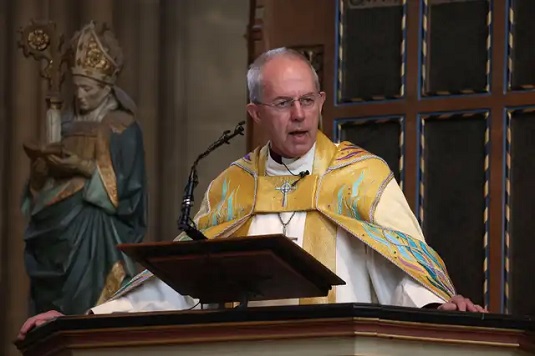
The furore around Archbishop of Canterbury Justin Welby's Easter sermon is a case in point. Pulling no punches, the Tories' Rwanda asylum plan is unChristian. He said the "sub-contracting out our responsibilities ... is the opposite of the nature of God." He added that it's
... so depressing and distressing this week to find that asylum seekers fleeing war, famine and oppression from deeply, deeply troubled parts of the world will not be treated with the dignity and compassion that is the right of every human being, and instead of being dealt with quickly and efficiently here on our soil will be shipped to Rwanda.
Not helpful to the Tory project.

An intervention like this is nothing new. In 2020 and from his kitchen, Welby's Easter sermon concentrated on Covid and warned against post-pandemic public spending cuts. In 2018 he criticised Brexit divisions and how Tory austerity was "crushing the weak". And after a year in the job, in 2014 he called on the government to fund food banks after the Tories turned down EU money for them. His predecessor, Rowan Williams, took up similar concerns during the Blair/Brown years - particularly with regard to Iraq. And in the Thatcher years, Robert Runcie's criticisms of inner city poverty so irked the Tories that Norman Tebbit floated the idea of disestablishing the Church. The next world and this don't mix, apparently.

The idea the Church is some liberal bastion really dates from George Carey's spell at the helm. In the 1990s there were key debates around the ordination of women and the Christian attitude to homosexuality. The tabloids had turned against the Tories at this point, but they enthusiastically piled in against the Church's perceived liberal agenda. When sex offenders among the clergy were uncovered, they reported it with alacrity. Typical of this was the feeding frenzy over the Nine O'Clock Service. Attracting adverse coverage for marrying rave to Christian worship throughout the early 90s, the press went into overdrive when allegations of abuse and improper conduct came to light. Any old rope would do as the moral guardians of Fleet Street took on the hypocrisies of state-sponsored religion. But ultimately, prurient copy on clerical sex crimes was concerned with more than satisfying an appetite for scandal, it was about discrediting an institution whose values put it at odds with the authoritarian and atomising project the Tory press were committed to. Are still committed to.

The funny thing is the Church of England wasn't and doesn't raise concerns because of "liberalism" or "wokeism", even if its Archbishops are drawn almost entirely from liberal backgrounds (Rowan Williams once described himself as a "bearded leftie"). The CofE is merely reflecting its constitutional role as part of the state. Marx and Engels talked about the state being the general committee for managing the common affairs of the bourgeoisie. In Britain it's best to think of the state as a system, a constellation of semi-autonomous and relatively autonomous institutions subject to the authority of the executive - the government - and whose affects are the reproduction of the class relations that underpin the show. The CofE's role has been to confer the constitutional set up and, ultimately, class rule with heavenly blessings. An ideological state apparatus in the most literal sense. The Monarch, as head of state and head of the church unites God's will and the popular will in one office, ensuring harmony between the secular and the spiritual. But the Church has always been more than a constitutional prop for legitimation purposes. It is a class conscience too.

The divergence between the Church and the Tory party preceded Thatcher by around two decades. Michael Ramsey, who was Archbishop between 1961 and 1974 and his successor Donald Coggan, who held the office until 1980, were known for also having relatively relaxed attitudes toward the ordination of women and homosexuality, and both publicly opposed racism when this was not de jure in establishment circles. Ramsey, for example, suggested the armed overthrow of Ian Smith in white supremacist Rhodesia was justifiable on Christian grounds - cue right wing hysterics. But also both were concerned with the consequences of mass consumption and the privatisation of life. And they were right to be. It didn't lead to a crueller society, but certainly meant there were fewer bums on seats for Sunday service. What concerned them was how this process, which contributed to what came later, might be loosening the grip of religion on the public imaginary. This spiritual weakening would have knock on effects where it came to families, crime, sexual morality, and communitarian values. Indeed, if anything this was the spur for the conservative Festival of Light and the resurgence of evangelical Christianity in the 1970s and 80s. But the CofE were concerned not just because it meant its institutional power was waning, but also that integration into (bourgeois) norms and values might become jeopardised. It had no choice but to raise the alarm, regardless of what the government of the day was thinking or doing, because it foresaw a potential danger that more radical forces might fill.

The same is true of Welby's pronouncements this last decade. Undoubtedly, as a Christian he feels personally obligated for speaking on behalf of those not afforded mainstream platforms and write ups in the papers. His patricianism and attempts to shame the Tories into doing the right thing is, again, a warning. Don't create hated out groups and clearly defined minorities, because that logic could rebound on the party of the one per cent. Don't hammer poor people lest they become the ones who do the hammering. At each stage, the public display of Christian conscience has a class content - a content that criticises the government not because the CofE want to build a woke utopia by smashing capitalism, but precisely because its messianic mission is to save it. Unfortunately for Welby and the Church, the Tories aren't interested. They're annoyed by suggestions there are great gaping chasms between what they do and what Jesus said in the Bible, but appeals to the divine won't get Boris Johnson and cronies to change course. If the Archbishop, in the final analysis, attends to the common outlook of the bourgeois, by their actions the Tories are chiefly interested in the sectional interests of the City, of commercial capital, and of property wealth - big and small. They've got the authoritarian politics and the big stick if the state is challenged. As far as they're concerned, Welby is just another wet wipe. A minor distraction from their missionary zeal for their one true God: perpetual political office.

Image Credit

Wednesday, 23 February 2022

The Birmingham Trojan Horse Scandal

Another evening, another break from writing I'm sorry to say. But there's always plenty of good stuff worth viewing. Such as this Novara piece on the Islamist Trojan Horse "plot" in Birmingham's schools, how a pair of New York Times journalists did some proper journalism and uncovered the fakery, and how The Observer's Sonia Sodha has provided liberal cover for the press and the politicians who lapped it up. A reminder, as if we needed one, about how we must build the depth and reach of our own media.

Wednesday, 18 August 2021

The Taliban and Self-Preservation

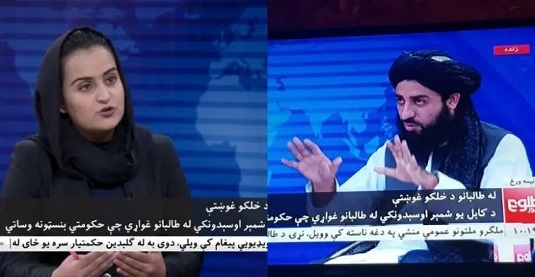
The BBC called it "extraordinary". In reality, Tuesday's Taliban press conference was pretty banal. The media in this country tend to ignore coups and civil wars that have no impact on oil supplies, so I suppose a spokesperson making vague, reassuring promises about the new regime is something of a novelty. Five quick points about the Taliban's media offensive and what it means.

1. The Taliban have assured the populace and the Western media that everyone is safe, and there will ne no reprisals against those who were part of the previous government. Actions might be at odds with the words, but no insurgency riddled with factions and whose rapid advance is largely thanks to deals cut with localised militias and regional government are about to openly declare a reign of terror, even if this is what they will end up doing.

2. The Taliban's leadership are aware they must placate the Western powers, even as they continue removing their forces. 20 years of war has devastated the countryside in their rural strongholds, but many Afghan cities have been rebuilt. Bombed out central districts have been repaired, electrical, water, and road infrastructures renewed, and the capacities of the state apparatus modernised. The Taliban of 1996 had to build a ramshackle and repressive state from scratch in an utterly devastated country, while the Taliban of 2021 inherit something entirely different. Antagonising the West, for all they know, could unleash a campaign of air strikes that would easily rub all of this out. Therefore the reassuring words, their commitment to prevent Afghanistan from becoming a haven for terrorists again, the retention of UN agencies and aid-related NGOs, and the more welcoming attitude to Western journalists is part of this. In other words, the Taliban are proving adept exponents of statecraft.

3. The position of women is central to this. Going from the previous horrors of their regime, large numbers of women in Kabul have taken to the burqa and have disappeared from public places. Except for some courageous women who have publicly protested in defence of their rights. Here, the Taliban have fudged the issue, with their spokesman Zabihullah Mujahid saying "The Islamic Emirate is committed to the rights of women within the framework of sharia. Our sisters will have the same rights, will be able to benefit from their rights." Which can mean anything as there are as many interpretations of Sharia as there are Sharia jurists. However, while women have suffered appallingly in Taliban-controlled areas the leadership know it's good optics to talk up women continuing in work and education, and having a woman interview a commander for one of the news channels. This reduces the chances of antagonism with the West and keeps the aid money flowing.

4. Another good reason for not rubbing the United States up the wrong way is the service they and the West are rendering the Taliban. As awful as the scene at Kabul airport was on Monday, it appears the Taliban are utterly uninterested in preventing the evacuation of Afghan civilians who were variously employed by the previous government - apart from some warm words about staying and rebuilding. Here, a layer of the (mostly urban) population are removing themselves from the equation. Potential oppositionists, and potential points of tension with whatever form of Islamism they end up installing as the official ideology are gone. And while they might be an annoyance to the regime as they take to the airwaves safely overseas, the post-occupation recovery will be greatly assisted by whatever remittances they send to relatives remaining in Afghanistan.

5. What's the Taliban end game? It's the retention of power. As the last 20 years have shown, the Taliban leadership are far from stupid and are unlikely to make the mistakes that saw them ousted by the West. They can see from looking at Iran and Saudi Arabia, and how the military elites from Pakistan who've generously funded and supplied them that modernised Islamist states can support theocratic or religiously-aligned ruling classes and repressive religious doctrine. And as controllers of the state, they're well positioned to seriously enrich themselves from the scramble for rare earths. The Gulf states have shown official ideology is no barrier to wealth and (lopsided) capitalist development. The Taliban are unlikely to proves themselves any different.

Image Credit

Friday, 17 July 2020

Lives on the Left

I couldn't wait for next month's new left media plug to share this. Lives on the Left is a new project by Paul Simpson looking at well-known and lesser-known figures in labour movement history, and it's fascinating. The first episode below profiles Peter Lee, a largely forgotten ex-miner, trade unionist and politician from Durham in the early 20th century. This interview with Jonathan Tomaney highlights the relationship between the labour movement and Methodism, looks at the deep roots of Labourism's conciliatory politics, and discusses how working class institutions in Durham in alliance with local government came together to empower our class - a movement ironically undercut by Labour's election in 1945.

There are 12 episodes so far and hopefully many more to come. If you appreciate Paul's efforts, he's raising funds to keep the project going here.


You can find the list of available episodes here.

Saturday, 2 June 2018

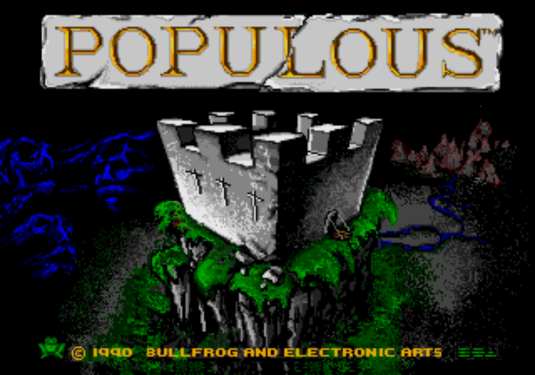
Populous for the Sega MegaDrive/Genesis

Raise land, lower land is basically all you need to get a handle on. Yes, that's Populous. Think back to a time before the internet, when the likes of Sega and Nintendo were but rumours in the ears of British gamers and the 16-bit roost was ruled by the Atari ST and Commodore's Amiga. Into this scene burst a little-known studio and their beguiling front man, one Peter Molyneux. And they had a product, no, a genre to sell. I can remember it well. Being round my mate's house, opening his C&VG and seeing the review of Populous for the very first time. I read the article and was seduced. A game where you can literally play God, a whole people at your command and, best of all, the followers of an opposing deity to subjugate. A teenage megalomaniac's dream ... and then the despair knowing this would never touch down on the humble Spectrum.

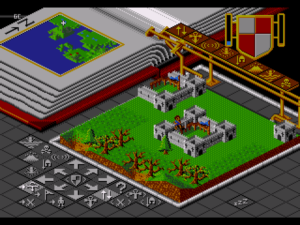
A couple of years later I had scraped enough cash together for Sega's MegaDrive and, well, I think you can guess what an early purchase was. If you're not in the know or too hopelessly young to have even heard of Populous, it is widely recognised as the game that kicked off the God genre. In the base game (expansions were available in short order for the Amiga and ST) you were tasked with 500 worlds to conquer. Your little computer people wander around the isometric map until they find a flat piece of land and build a settlement. You can then raise and lower surrounding land to provide for their farming, which allows the town to become more sophisticated and its inhabitants stronger. Flatten out enough land and it turns into a castle which, eventually, produces harder followers with better weapons. They go and find more land and it begins again. In practice, you're sorting out land and finding dozens of your faithful flock new places to live. Everything is in real time so as you're expanding and flattening your land mass, the AI-controlled opposition is doing exactly the same. As you advance up the levels, they get quicker about it too.

You can command settlers to seek new land, follow your leader (who you can direct with the Ankh, an icon you can play anywhere on the map and instruct the leader (and therefore the people) to go to it. Handy for invasions ...), associate with others before settling to make followers merge and become stronger, and seek out enemies to fight. Battles are always automatic and the outcome relies on a mix of how strong the individual settler is and the weapon they're using. Beware if you've got a strong fella but the enemy are equipped with much better weaponry. They will have your guts for garters.

If this was it, being God would be pretty boring. But you have powers. The more followers you grow, the more people worship your majesty. This converts into manna, which allows the arrow on your power meter to edge along. You need manna to raise and lower land and move the Ankh about, but beyond that come the fun bits. Next are earthquakes which, when unleashed on your enemy, randomly lowers land and fills their carefully cultivated landscape full of holes. There are knights, which turns your leader into a genocidal terminator that seeks out the enemy, kills them and leaves ruins and poisoned land in their wake. Swamps can swallow enemy settlers whole, and so are super handy if your enemy has a really powerful leader or has the habit of sending strong knights your way, volcanoes suddenly produce an inconvenient mountain decked out in indestructible rocks, making the area a pain to return to its previous glory, floods, em, flood the entire globe (build high!), and Armageddon forces all the settlers on the map to migrate to its centre for the final battle for the control of the world. Only press when you're appreciably much stronger than they.

Each world differs according to what powers are available to you and your opponent. On the first, Genesis, you can do everything and your opponent nothing beyond raising and lowering land and moving their evil icon about. If Armageddon isn't available as an option, be prepared for a very long war of attrition. There are also different terrain types to consider. Grasslands are nice and benign and your followers can stroll about like a flâneuse through a Parisian shopping arcade. The other types are somewhat less forgiving. There are desert worlds, ice worlds, and, um, lava worlds. If at the start of these your folks don't find somewhere to settle they will die and leave you in something of a pickle. You can toughen up settlers by extending their farm land in the normal way, but anyone, no matter how tough, will weaken if they're left dawdling about. The same applies to the enemy deity, but as they tend to be faster they will soon start sending disasters in your folks direction, severely inconveniencing their day.

And that is Populous. A brilliantly original concept at the time, even if - understandably - the AI was quite limited. Don't expect any shrewd moves, it will just go all out to kill you by any and all means. For instance, if the opponent has more manna than you, it will spam disasters on you. If it can flood the world, it will - even if you have built your empire several levels above the sea and the majority of their people are in low lying areas. But hey, it was the 1980s. Because the AI was limited, it does mean games can get quite samey and long-winded. If you have drawn one of the attrition worlds, it can take about four hours to slay every single one of their people and win. Where some skill is involved are the handful of worlds where you cannot raise or lower land. If you are in close proximity with the enemy you have to use your Ankh placing and battle choosing very carefully. A shame there's so few of them in the base game.

Populous was designed for computers and mouse pads, but it did end up getting ported to nearly every console going at the time. Only the NES and Game Gear missed out. Yes, even the Game Boy got its version. On the MegaDrive it was published among Electronic Arts' initial wave of titles and  it cost me 40 quid in 1991 money. Was it worth it? You bet. My cartridge was certainly well used. I didn't even mind how using the pad was a bit of a pain. In particularly fast-paced games, your cursor (symbolised by a hand) was like being dragged through treacle and so I had to actually pause (frequently) to move it from one end of the screen to the other. The game also slowed down more the larger you and your enemy became. The poor old MegaDrive wasn't designed to keep track of dozens of little folks at any one time and display their location on a mini map. That Bullfrog managed this on what was limited hardware was quite a feat. Also, MegaDrive Populous had rush release written all over it. The expansion packs were not incorporated, when they were present for the SNES version and even the Master System iteration. A shame.

As the ground zero of God gaming, all the observations you can make about similar games apply here. The instrumentalist view of your charges, their disposability, the indifference greeting the demise of one settler here, one settler there, the ease with which they can be directed by the four behaviour commandments and, well, the coherence you lend them by being their divine manipulator and commander, it replicates the logics of managerialism, nationalism and religious animosity, albeit reworked in a harmless and safe digital environment. Nevertheless because Populous does reinforce certain habits of mind, which have long since been taken up by turn-based and real time strategy and God games since, Populous is responsible for repackaging and, effectively, training millions of gamers in how to think managerially. It's not alone in doing so, but Populous was a pioneer, and its legacy leaks far beyond the genre it helped usher in.

Tuesday, 29 May 2018

The Unionist Politics of Abortion

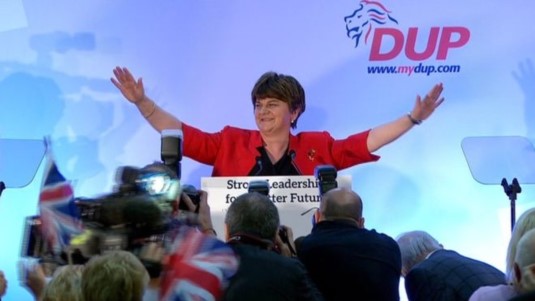
Theresa May could never make a likely feminist, as we see with her attitude to abortion in Northern Ireland. In response to pressure from the welcome result of last week's referendum, and facing Labour's calls to extend the law on the mainland to the province, all she can do is mumble that it's a devolved matter. This is nothing more than an excuse for inaction; the North doesn't have a government, power sharing has collapsed and direct rule from Westminster is the order of the day. No, May's "feminism" runs only so far as her DUP friends will let it for they remain implacably opposed to liberalising abortion. And we all know why the Prime Minister wants to keep Arlene Foster and friends sweet.

This, of course, isn't the first time in recent memory the issue of abortion in Northern Ireland was subordinate to the argy bargy of Parliamentary arithmetic. In 2008 a move to extend UK provisions to the north was blocked by ... Harriet Harman. Apparently, women's rights were so much a shibboleth when New Labour wanted to lock suspects up for 42 days without charge, and they needed the DUP's support to get it through the House. Ho hum.

What is more important and interesting is why the DUP cling to the near-ban on abortion. Consider the disposition of the people of Northern Ireland, which is somewhat complex. Drawing on research conducted in 2016, the ESRC-funded ARK project found that 63% of respondents accepted it was a woman's right to choose to have an abortion or not. There are large majorities to allow abortion in cases of foetal abnormality or threat of life to the would-be mother. Notably the agree totals for both were higher among DUP voters than either Sinn Fein or SDLP supporters. However, the same research outlined seven scenarios in which a woman may seek an abortion, ranging from the possibilities above, a pregnancy in the event of rape or incest, (non-lethal) threats to physical and mental health, to just not wanting to have children. ARK found pluralities in favour of abortion in six of the seven cases. The one they didn't was the last with 43% agreeing it should definitely be illegal vs just 17% saying it should definitely be legal. Confusing matters even further, 55% to 33% said women taking abortion pills for not wanting a child should not face criminal charges. 63% also said doctors should not face charges if they performed an abortion, and 70% thought abortion should be a matter of medical regulation not criminal law. What a confusing picture!

Why then do the DUP remain signed up to the ban? Well, the obvious answer is party members agree. It's hardly a stretch to believe that Foster and friends honestly, as much as such a thing exists in unionist circles, subscribes to backward views. And it's just as well, because abortion is inseparable from the DUP's raison d'etre. Originally the insurgent and now the establishment party of unionism, it touts itself as the representative of a "faith community". The party offers a cross-class appeal to a loyalist population defined in, well, loyalist and religious terms by Westminster, the provisions of the Good Friday Agreement and the terms of power sharing (and the statelet's political history since its formation), and has a clear commitment to maintaining the basis of the sectarian division of Northern Ireland. Shock horror, that is what unionism has always defended. Unionism, however, has always depended on a certain othering of the Catholic minority and the rest of Ireland to keep the meagre privileges it enjoys. As the weekend's win for abortion reform marks the latest episode in the long secularisation of the Republic, clinging to the abortion ban reinscribes the difference between north and south in different terms. Once, the other was papism, now it's permissiveness and immorality.

Secondly, bringing the north in line with the UK adds an unwelcome secular element to the mix. Unwelcome because as loyalism vs republicanism has so often been framed as an intractable religious conflict between Protestant and Catholic (which is the view of plenty of establishment ignoramuses), lifting the abortion ban and extending reproductive freedom undermines the religious case for the separation of the communities. Take religion completely out of the question and the divide in Northern Ireland appears as what it always has been: a political one. Thus exposed, what's the point of carrying on? The justification for dividing the population up evaporates and, suddenly, the DUP are left defending the indefensible.

Unionism is in trouble anyway. The balls up the Tories are making of Brexit has seen support for it collapse further and the desire for a united Ireland within the EU skyrocket. Culturally, unionism and the sectarian divide is decreasing in relevance for younger people as the social liberalism from within and elsewhere is doing a welcome job of worrying it away. Just as the Tories are out of ideas, the DUP have no clue how to revive support for crumbling unionism except for setting their face against change. And for as long as they keep voting with the government, Theresa May is very happy to let this continue.

Tuesday, 28 November 2017

Gynoug for the Sega MegaDrive/Genesis

Sometimes you come across games that are hard to write about. Such is the lot of video game writing. Take 1991's Gynoug for instance (or Wings of Wor as it was rebadged stateside). There really isn't a lot to go on. The games starts, the screen scrolls right to left, you shoot things using an array of power ups and special weapons, and then you're done. Which usually happens fairly quickly for newcomers because it is one of the more challenging MegaDrive titles to have been released. Apart from being a good game, surely it's like every other horizontally scrolling shooter. i.e. Put the brain away and get blasting. Nevertheless, Gynoug was well received upon its release as a solid shooter, and while something of a canon title it's pretty much forgotten now.

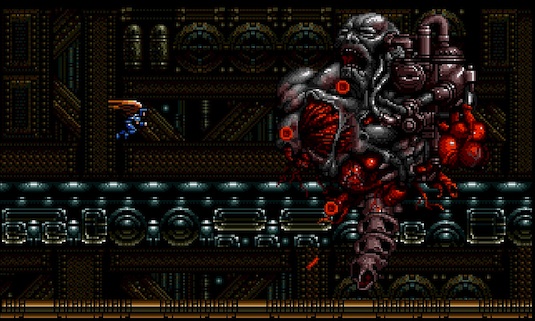
And that's a shame, because Gynoug is something special. Not because of the blasting action, which on the whole stands up with the best 16-bit shooters, but because of the art style. As the MegaDrive was the go-to console for edgy youth, Gynoug underlined its 'not for kiddies' aura. The graphics are some of the most detailed, yet disgusting, grotesque and questionable to have appeared on the system. Yup, Gynoug is all about ugly ass. Enemies begging to be blasted are brains hopping around on what's left of spinal column, ghoulies who jump out of coffins, and biomechanical bosses with pulsating bits, like the charmer above. The fifth level take us on a journey through the guts of some otherwise unseen monster. It undulates, it wobbles and shimmers, and worst of all it's pink. All enough to have you clutching your own stomach, if it wasn't for the hordes of baddies trying to make short work of you. But that's nothing. The gentleman you see displayed down below is the chappy awaiting you at the end. And yes, that is what you think it is.

Apart from the art style, Gynoug doesn't bring much to the table. The power ups are straight forward and no frills, and I suppose it does have a unique special weapon feature, albeit one too boring to expend words on here. Game play is hardly innovative, though it is polished and the overall presentation, including the excellent soundtrack, help elevate it a cut above.

Yet there is something else of interest here, and those are the changes made during the localisation. As the box art and in-game presentation makes plain, you are some sort of angelic fella charged with dispatching a load of demons. Expelling hell from heaven is a common enough theme nowadays, but for some reason Sega, following the Disneyfying approach to gaming that still marks off Nintendo's key titles, thought North Americans and West Europeans would not be cool with these sub-religious themes. Well, the US perhaps, but Europe? And so the plot is changed. Never mind you're a winged man who possesses a couple of special power ups that call angels to battle by your side, that you can find crucifixes and Stars of David among the enemy host, and that three of the levels are obviously redolent of afterlife themes (the underworld, marble halls, cloud tops). No, apparently we are to believe some evil virus is loose and transformed your peaceful planet into a playground for some of the ugliest critters in the history of video gaming. Sega mandated a similar move with the Tengen port of Devil's Crash when it came to the West, but for whatever reason couldn't be bothered to censor out the bits and bobs that connoted religion. Bizarre. Especially when it left a giant demon dick in the game.

Wednesday, 6 September 2017

From Moggmentum to Nomentum

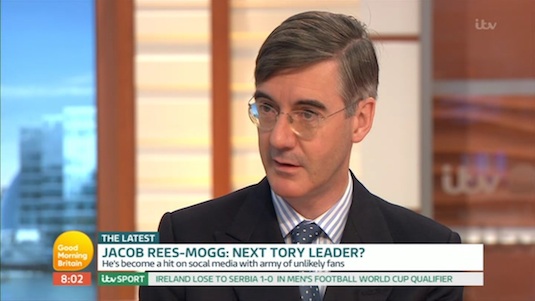
NB aspiring politicians, the breakfast sofa and cosy chat could spell curtains for your career. Believe me, their croissants and coffee aren't worth it. But spare a thought for the presenters, even for Piers Morgan. Well remunerated they are, think how much you'd demand if your every morning was spoiled by a parade of Very Interesting guests prattling banalities and hawking ghost written books. Imagine Twitter sans screen and the (merciful!) distance in space social media allows; such is the lot of the breakfast television host. Dragged into the Good Morning Britain studio, um, this morning, the Moggmentum bandwagon made itself available for 21st century audiences. By the end of Jacob Rees-Mogg's plummy, measured utterances his leadership carriage lay dashed in a ditch and the horse slipped its reins for the sweet oblivion of the glue factory. I wonder if the nag took a few of Mogg's despairing advisors into the collagen extractor with it.

Even before this morning's ado, Moggmentum had no dynamic of its own. It was a simulacra of a movement even within the ranks of the rapidly thinning Tory party. Mogg has never been anything other than a creation of the media, a figure - like the ever-appalling Johnson - whose prominence owes much more to Have I Got News For You than the niche audiences crowding around the set for Question Time, Newsnight and The Daily Politics. Like establishment heroes of the liberal variety, a political media celebrity has to marry one fifth quirkiness to four fifths emptiness to achieve success. Bumbling/Bottler Boris pioneered the HIGNFY formula followed by Nigel Farage, Ruth Davidson and Mogg. Between them, they each pivoted their bland but, in the context of the zombie greys of Tory Westminster, outrageously dynamic personalities to generate interest, and their vacuity to suck in the desires of untroubled right-leaning voters who prefer funny haha over knowing how their favoured party intends on shafting them.

Mogg appeal lays claim to the ever-so-hilare status of honourable member for the 18th century, but doing so is to curse the 1700s with an unwarranted blemish. The 18th was the time of the Enlightenment, of the first stirrings of atheism as a serious intellectual current. As the rights of deities were thrown into doubt the rights of men (and it was men, alas) fired imaginations and combustibles that touched off the American and French revolutions - doubtless two of the most important events in human history. It gave us capitalism and economics, the scientific method, modern philosophy and republican politics. The lofty thoughts of Kant swam in the same intellectual waters with the smut of Cleland and the perversions of de Sade while the rhythm of life increasingly beat to the rhythm of steam powered pistons. You'd have to go back much further to find a (pre-Reformation?) firmament more suited to Mogg than this tumult. Remember, Mogg's politics were on the losing end of the 18th century. He represents the most appalling reaction, a stream of anti-modernist aristocratic atavism the Tories claim as an organic and valued part of their declining coalition.

Yes, Mogg's politics. They have always been awful. In almost every Commons vote he has participated, he has walked through the lobby in defence of causes that deserve to be lost. Dishing out tax cuts to the rich and expecting public sector workers to get by on a pay restraint he does not practice himself, and battering the poor and the social security dependent, Mogg's vaunted principles are flexible as per the vagaries of his class interests and the short-term twists and turns of the Tory party. Like most Tories, their interests and the views attending make them entirely unsuitable as democratic representatives of constituencies where the majority of people have to work to earn a living. A case then for returning the property qualification, but this time for candidate eligibility in reverse?

I digress, so back to the Good Morning Britain sofa. Mogg's unequivocal opposition to abortion in all circumstances and to equal marriage is based on religious grounds. Quick to add that he doesn't judge others for the choices they make, ultimately sacraments (and therefore other matters of faith) are the province of the Catholic Church to decide. "I am a Catholic and I take the teachings of the Catholic Church seriously," he said. No compassion or quarter for women driven to risk their lives with the backstreet abortionists then. Okay, our Mogg takes the church's authority seriously. Let's have a look at some of its teachings then. The 1891 Encyclical of Pope Leo XIII on Capital and Labour notes "When there is a question of protecting the rights of individuals, the poor and helpless have a claim to special consideration. The rich population has many ways of protecting themselves, and stands less in need of help." How about "Love for the poor is incompatible with immoderate love of riches or their selfish use." (Catechism of the Catholic Church: 2445). Or "The obligation to provide justice for all means that the poor have the single most urgent economic claim on the conscience of the nation." (Paragraph 86, United States Catholic Bishops). When Mogg rocks up at the pearly gates and the angel on his shoulder hands over the ledger, is St Peter going to nod him through because he defended Catholic doctrine on breakfast telly while ignoring hundreds of years of church teaching on the poor?

Mogg's professed religiosity places him in an inglorious line of politician hypocrites who've used faith to cover for their attitudes to and the laws they inflict upon people they regard less than human, be it women, LGBTQ folks, minority ethnicities, the disabled and the working class. That Mogg was even considered a possible future leader of the Conservatives says everything you need to know about them.

Sunday, 13 August 2017

UKIP's Fascist Future?

What is going to happen to the United Kingdom Independence Party? Not many people care any more. Since they were broken at the Stoke-on-Trent by-election its fortunes have gone from bad to worse. Members have fallen away faster than Paul Nuttall's hair follicles, UKIP has tanked in the polls and they scored their worst general election result since 2001. What do you do when Brexit - your raison d'etre - is now owned by the Conservative Party, when Nigel Farage is more interested in presenting radio shows and having selfies with Donald Trump, politics has shifted appreciably to the left and not many people give a fig about what you have to say? Under such circumstances folding is an option, but there is a modest local authority gravy train to protect.

The biggest problem for UKIP is its social base has entirely evaporated, and when political parties are expressions of classes and class fractions that is something of a deal. Without an alignment to a constituency, which in UKIP's case was always quite volatile, it is loose from the rest of society and is buffeted by the turbulence even further to the margins. And once there, empty of social content, it becomes the battleground of (effectively) de-socialised, detached individuals. This shows up especially in leadership contests. As big parties are coalitions of interests, different political figures and currents represent certain constituencies. When there are large numbers of candidates, chances are the relationship between the party and the wider world is somewhat tenuous. That UKIP has 11 people standing for the role says all you need to know.

There are two front runners in the race to replace Nuttall and, interestingly, there is a smidgen of a political difference between them. The "moderate" appears to be David Kurten, who sits on the London Assembly. In his corner you will find Arron Banks, Raheem Kassam of Breitbart, and that no mark conspiracy fool from Infowars. I know it's old, but a more accurate picture of the dud, the mad, and the smugly is seldom found. Incredibly, there is worse political effluvia floating in the hard right toilet bowl and our second candidate found them. Anne Marie Waters, self-styled anti-Islam activist has had her person endorsed by Geert Wilders and Tommy Robinson (or whatever his name is these days). The Charybdis of homophobic batshittery versus the Scylla of a BNP turn. It couldn't happen to a nicer party.

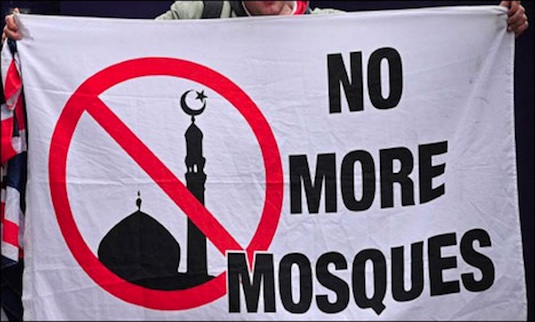
Waters has the higher profile by a country mile thanks to her being a regular on far right scene. As "director" of the Sharia Watch blog and founder member of the still-born Pegida UK, I first came across her thanks to the efforts of Andy Newman, who outed Waters as an anti-Islam bigot trying to get on the Parliamentary gravy train via the Labour Party. Among her political positions are the enforced closures of mosques and mass deportations, which marks her out as a right charmer. She also probably stands a good chance of getting the leadership thanks to 1,000 people signing up to the party to vote for her. Having Waters as leader is too much for Farage, who has said UKIP would be "finished" in the event of her victory. It's difficult to see what passes for UKIP's faces - Suzanne Evans, Patrick O'Flynn, perhaps even Neil Hamilton - hanging around either. Still, no matter how putrid they become UKIP's safe seat on BBC Question Time is unlikely to be affected.

Here is the problem. There is a political market for anti-Islam bigotry, unfortunately. It's not a massive one - after all, the BNP at its height only mustered 50-odd councillors, a couple of MEPs and a London Assembly member. The Waters strategy does hold the possibility of connecting with and catering for a very small, very backward section of the electorate. She offers something, even it means changing the party colours from putrid purple to fascist brown - and for some members staring oblivion in the face, that will do. It comes with a hefty cost though. UKIP would be finished as a party with a hope of future mainstream success. See, there is a slight possibility of a future UKIP revival. If Brexit is "betrayed" and the Tories are seen to be either delivering an insufficient exit from the EU (whatever that means) or bending the knee to Brussels as we negotiate from a position of obvious weakness, the volatile ex-kipper vote now with Theresa May could be off on its travels again. While such voters have no love for Muslims, UKIP as the BNP mk II carries the pall political stigma. They will likely go where Farage leads. That could be UKIP if Kurten wins, or curtains entirely if Waters gets the job.

Sunday, 4 June 2017

Theresa May's Counter-Terrorism Shambles


It takes chutzpah to suspend national campaigning and then give a political speech about Saturday night's terror attack. But this is Theresa May and the modern Conservative Party has no qualms when it comes to turning a crisis into an opportunity. Naturally, May and her advisors are wily enough not to play the big P politics card but you have the genesis of a simple, touch-sounding black and white position they will use to browbeat voters into backing them as we enter the final stretch.

This morning May said "enough is enough", implying that Britain has been a soft touch for Islamist radicalism which, if that was the case, means she oversaw a dereliction of duty for the last seven years. But she doesn't mean that at all, it signifies a serious and potentially calamitous switch in direction when it comes to counter-radicalism and anti-terrorism. This is plain to see in all of her proposed four changes to policy. She said:
They [the terrorists] are bound together by the single evil ideology of Islamist extremism that preaches hatred, sows division and promotes sectarianism ... it will only be defeated when we turn people's minds away from this violence and make them understand that our values - pluralistic British values - are superior to anything offered by the preachers and supporters of hate.
Well, yes. But no. The problem is this comes from the Douglas Murray/Henry Jackson Society's Islamism for Dummies guide. As Murray is bound to say something on this topic again soon, we'll save up a polemic until then. For the time being, it is enough to note that showing off British values to a bunch of befuddled thugs and telling them they are superior to the idiocies of Islamism isn't going to work. May is firmly on the terrain of the ideas delusion, that ideas in terms of elaborate and sketched out ideologies are the prime motivators of jihad. Yes. No. Why does a minuscule subset of Muslims find these views compelling and convincing? What is it about them that makes sense according to their everyday life? How are emotions - anger, frustration, anxiety, companionship, hope - fermented by Islamist ideas into intoxicating zealotry? Why is it men, and young men in particular, are the ones carrying out acts of violence informed by this crackers creed? After all, no women have undertaken Islamist terrorism in the West. And what of those who turn to Islamism without becoming ideologues, without chowing down on the virgins-in-the-afterlife hook? Homing in on just the ideas effaces individual biographies of jihadis, of the material circumstances of their life and their positions in the fabric of social life. We make our own history, but not under the conditions of our choosing as someone once said. Focusing on just Islamism is tantamount to saying Islamists are Islamists because Islamism. Not helpful, and it doesn't bode well for May's first "change".

Her second argument flows from the first. Islamism should be denied the safe space it needs to incubate, and that means governments should work in tandem to "regulate cyberspace". She'll be calling for traffic stops and toll booths on the internet superhighway next. Retro (out-of-touch?) buzztalk aside, this is more evidence of the ideas delusion. Jihadi content is easy to access with a little bit of Google wizardry. The violent imagery and propaganda vids of IS certainly act as bridging tools for some would-be Islamists. However, it's not the case that an exposure to this material causes Islamists. If you start watching this stuff rooting for IS indicates something else has already gone on. Mobilising people for any kind of politics is a process. Ideas have efficacy if, as we've already noted, it speaks a truth about someone's individual existence. Of crucial importance are the networks and relationships one has, and real or imagined grievances. The reason jihadi propaganda slides off most people is because those things do not align. Indeed, for a large number of young people who watch them, IS propaganda vids are merely an edgy subset of gross out videos. In short, for all sorts of reasons governments want tighter control of the internet and bedroom radicalisation offers a handy pretext.

Third, May wants to take on the real world safe spaces in which Islamism thrives. That means more bombing abroad, because that is sure to kick away a grievance prop jihadism draws upon, and taking the fight to Islamism at home. She said "there is - to be frank - far too much tolerance of extremism in our country. So we need to become far more robust in identifying it and stamping it out across the public sector and across society." What on earth does this mean? Is she thinking about the Birmingham Trojan horse scandal, which was shown to be rubbish? Is she expecting educators to police the classroom to root out would-be jihadis from among the student body? And how about the safe space she reserves in Downing Street for delegations from Saudi Arabia, whose largesse for Wahhabism in the West is so well known that the EU officially regards it as the primary wellspring of Islamist terror. This is just incoherent and hypocritical nonsense playing to the gallery of newspaper editorials and the inchoate notion that "they", the public sector lefties, the cultural Marxists and the race relations professionals are destroying the fabric of Britain with liberal tolerance. Getting tough here is code for kicking experts and intellectuals, traditional hate figures for Tories and right wing hacks.

Her last pledge is to review the counter-terrorism strategy, which is just about the only thing I do agree with. Though you might have thought what with the security of the people at stake, this would be under constant monitoring and review. Therefore May would look at introducing new powers for the intelligence services and police, which takes us back to more monitoring, more surveillance. However, there is something very clearly missing from her pledge: more police. With 20,000 fewer coppers on her watch and firm refusal to rule out more recruitment or even further cuts, this is not a serious strategy for dealing with the problem. As former Met officer Peter Kirkham argued this afternoon, the government are lying about the number of armed officers and their funding, and no full well the removal of community constables has hampered the intelligence capabilities of our counter-terrorism efforts.

In short then, May's proposed strategy from the off is not interested in understanding the radicalisation process, thinks clamping down on the internet will fix it, and giving the security services new powers - and presumably new responsibilities - without reversing the cuts she personally oversaw and implemented. It's a bloody shambles, offers no improvements over what already exists that I can see, and one doomed never to work. A recipe that promises security, but will do nothing to stymie Islamism.

Inside the Jihadi Mind


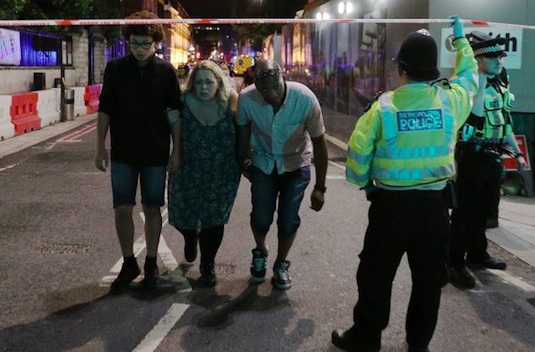
That numb, helpless anger you feel when a group of innocent people have been murdered in another jihadi attack. This is quickly followed by contempt for those who try and hijack the tragedy for their own ends, be it for self-publicity or political grandstanding, whether at home or overseas. Once this has passed, reflection sets in as folks try to grasp what's going on, because understanding is the prerequisite of doing something that prevents future radicalisation, and therefore future plots. We - the public - know nothing about the attackers yet, except they shouted for Allah as they attacked people, according to multiple witnesses. We know from the photos that at least one of the dead terrorists is a young man of Arabic or Asian descent. And we know their MO fits the pattern of other Islamist outrages here and elsewhere - the attempt to inflict as many casualties they can without any regard for their own lives.

This still begs the question why. At the beginning of Ramadan, IS called on its followers to wage all-out war on the West, but what are they hoping to achieve? After all, war always has objectives in mind. Given IS territory is under siege in Syria and Iraq, and concern has been voiced over the "ungoverned spaces" in Libya thanks to the connections Salman Abedi had with them, how do outrages here, and across Europe and the Middle East help IS build its twisted caliphate?

While it might appear to be terror for terror's sake, mass casualty events serve two distinct purposes. Just as terror bombing of civilian centres during WWII were designed to sap the morale of enemy populations, IS are trying to accomplish the same thing with sneak attacks and seemingly random eruptions of violence. Choosing the softest of soft targets - pedestrians on a bridge, kids at a concert, Londoners on a night out - are attempts at sedimenting simple, mundane pastimes with a layer of threat. A society ill-at-ease, that cannot relax and must be on its watch, is a frightened society, an anxious society clamouring for security and safety. And the traditional (and hoped-for) response is to ratchet up authoritarianism. More gun-toting police, more jailings, and, crucially, more scapegoating. Whenever reports filter through of mosques daubed with racist graffiti, of Muslim women spat at in the street and forcibly uncovered, of politicians and pundits stirring up trouble for Muslims at large, be it the dog-whistling of a Douglas Murray or a "Muslims must do more to tackle terror in their communities" of practically every mainstream MP, it suits IS. It helps IS. Every curtailment of freedom, every spike in hate attacks creates the kinds of circumstances that nudges young would-be Islamists a little bit further down that road. The likes of IS don't hate democracy because they despise freedom and tolerance (though they do detest those things), they hate it because, among other things, democratic societies are much harder to penetrate into and recruit from. The torture chambers of Gaddafi, Ben Ali, and Mubarak/Sisi are the factories of Islamist radicalism, and is where IS and other jihadis have drawn sustenance for decades.

Two attacks to have taken place during election campaigning is no accident or coincidence, then. With politics in the air, as terrorism is political violence it can't not raise political issues. These attacks were made with a view to bending the election course down a more authoritarian route, to try and shift policy in one or both the main parties and boost support for racist, Islamophobic politics.

It goes without saying that freedom and democracy happen to be the values most associated with the powers that bomb IS and have, since the First World War, been overtly involved with the politics of the Middle East. In the jihadi imagination, mass casualty attacks are payback for (secular) dictatorships backed, for giving Israel carte blanche in the occupied territories, for bombing civilians with no come-back, interfering in civil wars, plundering oil wealth - the list of historical grievances go on. Consider, for example, the coverage in British media of an attack here or in another Western country versus the death of innocent families at the hands of bombing raids and drone strikes anywhere in the Middle East. Individual motivation of jihadis in mass casualty suicide attacks always have an element of this emotional connection to a perceived injustice, and a desire to redress the score by visiting terror and death on the citizens of Western nations.

Lastly, terror attacks such as we saw last night are a symptom of IS weakness. Leaving aside the Manchester attacks where the full details about the sophistication of the bomb used has not been made public, this, the Westminster Bridge attack, and the murder of Lee Rigby were all primitive affairs with motors and knives. As their hellish caliphate contracts the routes into their territory are blocked, would-be fighters are left to skulk about their bedrooms and closed jihadi forums. To their mind, this justifies their assaults of civilian targets - because they can't get to the battlefield, they have no choice but to "defend" IS by targeting defenceless people and murdering them, and they will use whatever comes to hand to achieve this murderous end.

IS are a bunch of murderous thugs. Their values are antithetical to secularism and democracy, but that does not make them unknowable. There are plenty of people writing and working in this field who know full well how IS thinks and why they do what they do, as well as the processes underpinning and conditioning why someone decides to go down this path - despite it also being antithetical to Islam itself. And with that understanding, strategies aimed at undermining and disrupting the path to radical extremism can and are employed by a variety of agencies. As we enter the final days of the election campaign and reaction to this outrage casts its shadow over campaigning, we will see who wants to deploy this understanding of IS to stop them, and who wants to ignore it to score political points.

Sunday, 6 November 2016

White Nationalism, Conspiracy, and Anti-Semitism

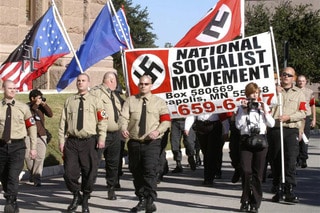
Our last Sociology Research Seminar Series session at the University of Derby saw Andrew Wilson present his recent conference paper, 'The Thematic Preoccupation Governing Meaning Construction on a White Nationalist Forum'. The focus of his research was the infamous hang out of assorted fascists, Nazis, and racial fantasists, Stormfront. Founded in its present incarnation in 1996, Stormfront is the hub for white supremacism/nationalism on the internet. For instance, between 1st April and 29th June this year, it received two million unique visitors and 3,246,612 page views. 51% of its audience are from the US, and ten per cent hail from the UK.

Andrew's previous experience researching apocalyptic cults, conspiracy theory, and fringe beliefs took him to Stormfront in the wake of last year's Paris attacks. He found that by post six (on a thread of thousands) about the incident a poster was already touting conspiracy theories by way of an explanation, which became the dominant discussion theme. What also attracted Andrew's attention was the convergence of this conspiracy mindset, which is a staple of the far right with a certain species of spirituality, or, as Charlotte Ward and David Voas put it, conspirituality. This is important because for the site's participants as their investment goes beyond the political (and certainly the party political). Their loyalties lie in a transnational ethnicism, a quasi-mystical attachment to a contested and variously understood ayranism which, for its part, is held down by sinister conspiracies.

The performance of conspiritual identity requires the adoption of certain regalia. Anyone who's been on Twitter for five minutes will know that overtly political people tend to fix their avatars or festoon them with ribbons. Stormfront is no different. Typical displays include knights, flags, wolves, Norse Gods, weapons, targets, and a pantheon of Nazis. Some were assembled in a manner akin to Dick Hebdige's celebrated notion of bricolage. What Andrew was interested in was whether there was a correspondence between contributors with certain avatars posting on particular topics via the process of discourse mapping. Picking the five most popular discussions - The Holocaust, National Socialism, September 11th, Illuminati, and Reading, which amounted to 28,808 posts at the time of the study, among the 50 most used words and terms were Jews, People, Germany, Nazism, and Holocaust. As there was a chance the result could have got skewed by extended but relatively neutral discussion of aspects of holocaust history, stripping the thread out of the combined results saw Hitler receive greater prominence. Performing a similar operation by discounting the National Socialism thread, Andrew found the terms 'People' and 'Jews' came top. No matter what was left in or taken out, Jews and Jewishness cropped up again and again. He then performed a Latent Dirichlet Allocation, which identifies word patterns, and found Jews were mostly associated with Holocaust, Nazism, and Conspiracy. In the rarefied world of far right conspirituality, anti-semitism remains the core attribute. At the same time, Andrew began to see patterns emerging, of avatars tending to be active across topics that shared common ground with their motif. Further investigation of these patterns would allow a researcher to identify the in and out groups, what terms and values are likely to repeat, what and who gets labelled friends and enemies, and how this work tries to glue together a collective identity.

Questions were then taken about the place of hatred in these conspiritualities - is being against something enough for these identities? The repeated use of avatars with repeated far right themes, which in turn are anchored by the discourses posters contribute to suggests it is necessary but insufficient. Andrew also noted that despite Europe's far right switching to Islamophobia as their public target of choice, there was little evidence Stormfront's contributors were concerned with Islamism, the Islamification of Europe, or other such nonsense: obsession with Jews and Jewish-controlled conspiracies remained the shared focus of paranoia and hate.

This was an interesting opener into work yet to be done, and Andrew raised a number of interesting questions. Particularly with regard to the status of the white nationalism on display on Stormfront. Because of the transnational understanding of race they operate with, the fusion of conspiratorial politics and pseudo-religion, and, of course, the far right's propensity to terrorism, perhaps it would be profitable it they were viewed as a species of extremism not dissimilar to Islamism.