Showing posts with label Terrorism. Show all posts

Tuesday, 31 March 2026

Iran's Baudrillardian Strategy

As the third gulf war drags into its fifth week, neither the end nor the end game are anywhere in sight. Big bets on the stock market before Trump makes an announcement are now routine. And the President's remarks are as incoherent and contradictory as ever. "We're talking to nice people in Iran" one hour, the next is a threat to smash power stations and destroy desalination plants. He says negotiations are ongoing, while Tehran denies any such dialogue. The bombs keep raining down from Iranian skies, while in return their ballistic missiles and drones prick Israel's Iron Dome hype and thwart US defences to make life at 13 of its regional bases difficult. Here, Keir Starmer castigates the Tories and Nigel Farage for wanting to drag the UK into this war, while at the same time the US Air Force is using these islands, as well as Cyprus and Diego Garcia for "defensive strikes". Airstrip One is very much part of the conflict.

It doesn't take much to bamboozle Trump, but the White House and military planners cannot grasp why Iran is still fighting. The boasts about annihilating the navy and air force are noisy brags, but do contain some truth. Conventionally speaking, Iran cannot hold a candle against the firepower America and its Israeli satrap can field. So why aren't they surrendering? Why aren't they keen to cut a deal? Why haven't Iranians taken to the street to depose the regime? Instead, Iran is absorbing the punishment, following through with promised retaliation, shouting its defiance, and trolling Trump with Lego memes. He was expecting a gift-wrapped victory, as per Venezuela, or perhaps an Iraq-style collapse into barbarism. Something that could be sold at home as mission accomplished and, for the Israelis, the elimination of the one regional power that goes some way to matching them. None of this has happened, nor is it likely to happen.

The inscrutability of Iran, its refusal to play by the White House's rules of war is not new. It was something dissected with precision by Jean Baudrillard over 20 years ago in his famous essay, The Spirit of Terrorism. Written in November 2001 and reflecting on the September 11th attacks, much of what he diagnosed then carries over to the Iran war and the country's - apparently baffling - resistance to overwhelming force.

On the spectacle of the attack on New York, Baudrillard wrote the destruction of the Twin Towers fascinated and appalled because of their position in the global order. It symbolically embodied American-led globalisation. But, at the peak of its power, order begot an internal will to disorder, a dream of destruction fed by the conveyor of Hollywood disaster movies. As he put it, "Very logically - and inexorably - the increase in the power of power heightens the will to destroy it." (The Spirit of Terrorism and Other Essays, pp 6-7). Entertainment was meant to exorcise this suicidal impulse through pyrotechnics and special effects, but instead of dampening it down it readied us for catastrophe, almost to the point of desiring the spectacle of disaster. The West was primed for September 11th long before it happened, and the spectacle of the attack was captivating precisely because it showed the mortality of the world's greatest military power. Trump, as a television man, understands the superficiality of the spectacle. Burning Iranian cities and cratered infrastructure is dazzling to him, and plays well to his base. But far more fascinating are the military reversals - the banned footage of Iranian missile strikes across the Gulf states, the hard-to-find smashing up of US military bases, of Israeli cities mourning their dead and counting the cost of demolished districts.

The spectacle of one's own defeat goes beyond the furtive hunt for concealed imagery. It's seen in the endless reams of punditry. The discussion of how, come what may, Iran can exert its control over the Strait of Hormuz. Of how targeted bombing taking out leading regime figures, past and present, has solidified the Iranian position. How Trump's war is spiralling into global economic chaos. How, despite the severe asymmetry in the respective militaries, the US is on the brink of a catastrophic strategic defeat. The talk is of nothing else. The spectacle is as much about the tarnishing of Trump's star power and how he can lie his way out of the calamity. Like all good reality TV, the audience wants his actions to rebound back on him in abject humiliation.

What makes this more acute for Trump and the US is that Iran are refusing to abide by their rulebook. Baudrillard talks about the singular character of large scale suicidal terrorist attacks. In a system of generalised exchange, which American-led globalisation is, this kind of terrorism cannot be "exchanged" - there is no equivalent of it. 20-odd years ago pundits characterised the domestic terrorism in Europe, be it of separatist/nationalist provenance or rooted in political extremism of the left or right, as entirely understandable. Their goals were within the horizon of the modern, if not theoretically possible within the prevailing system. But suicidal Islamist terror was not. The very thing Western societies try and deny - death as a rude tragedy, as the worst thing that could possibly happen to any of us - lies at the heart of its fundamentalist nemesis. This itself is an inevitable outcome of the free, unhindered, and unbalanced operation of global capitalism since the end of the Cold War. Baudrillard argues that the duality of struggle, of good and evil, or capitalism and communism, are as interdependent as they are opposed. When one triumphs over the other, as the principle of good has in the operation of our system, and capitalism has versus its other, the defeated party becomes disarticulated but autonomous. Resistance to and the rejection of globalisation assumes an unpredictable virality, of which Islamist terrorism was one example. And one that, because its existence lies in the inherent contradiction of the system's victory, appears anywhere and everywhere against which the most powerful society in existence appears impotent.

The virality has moved on since then, but the character of Islamism has not. The Islamic Republic is now the repository of this logic. Iran's defiance attacks the logic of an order based on the positivity of life. By propaganda and by deed, the Iranian state is willing to stake its lives and those of its citizens in what amounts to a symbolic challenge. It knows Iran cannot possibly win a military confrontation, but through sacrificing itself while inflicting damage on the US, Israel, and the Gulf states, it assumes the monstrosity of terrorism, of an implacable and fundamentally other foe that will not yield. Faced with such an implacable opponent, of seemingly suicidal defiance, the US is powerless. It can commit troops to a ground invasion, carry on the bombing, see through the promised destruction of civilian infrastructure - but because the Iranian state will offer up any number of lives to maintain this position, the US is doomed to defeat. For Baudrillard, as it was for the 9/11 terrorists the same applies here. For the Iranians are in a duel with the Americans, it is very personal. Their maximalist demands - reparations for damages, closure of American bases, sovereignty of the Strait - dovetail with the "internal" Western desire. Both want to see the US humiliated, not liquidated. Hence Iran's responses to missiles and bombs are missiles and drones, its counter-violence is governed by a symbolic logic, not the operational calculation of x airfields destroyed, and y soldiers and civilians blown up. Trump's empty boasting about victory secured followed swiftly with fire and brimstone is the usual bombast that ordinarily keeps his opponents unbalanced, but Iran has rejected this logic. And that is why underneath it all, panic is the mood among White House insiders, the military, and their allies abroad.

Trump then is looking for the exit ramp, and nothing he does now can look like a victory. More killing and more unnecessary destruction is, sadly, entirely likely. But the strategic defeat has already happened. Iran knows this, and so does the rest of the world.

Image Credit

Friday, 15 October 2021

The Use and Abuse of David Amess

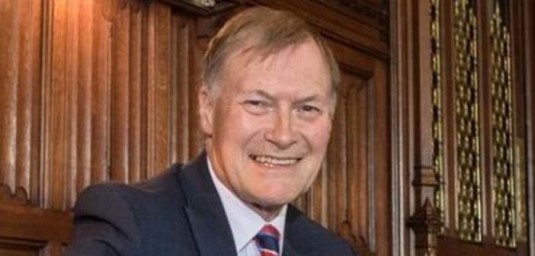
Irrespective of politics, the murder of David Amess calls for unreserved condemnation. Like what happened to Jo Cox, violent attacks on MPs as representatives of the meagre and faltering democracy we have in this country demands nothing less. It should then be a moment for pause and reflection about how we conduct our politics, especially while we don't know anything about the suspect's motives. Pondering the security of parliamentarians, yes. Paying tribute to Amess's life and work, yes. Offering thoughts about taking the sting out of politics and how we might realise the earnest promises made five years ago, yes. What this isn't a moment for is exploiting Amess's death and his family's pain for petty politics. And yet.

In the hours since lunch time, there have been three such attempts. The first are your common or garden racists. Upon news that the suspect is apparently Somalian, it doesn't take much for these to connect the murder with Islamism and from their trying to stir up a confected panic against Somalis everywhere, and by extension anyone with brown skin. No opportunity can be passed up to stir the cauldron of race hate.

Then we have the straightforward point scoring. As the motive behind Jo Cox's murder was quickly established and shown to be directly an act of far right terrorism against the backdrop of overheated anti-immigration and anti-liberal rhetoric from the Leave camp, a relationship was obvious. Thomas Mair was enabled and encouraged by the hothouse climate fanned by sundry politicians and press barons. Looking at Twitter shortly afterwards today, trending topics around Amess's murder were absolute cesspits of dishonesty and bad faith. There were rightwingers absolutely desperately trying to draw a chain of causation between what had happened, and Angela Rayner's off script comments at a Labour conference meeting where she branded the Tories scum. Naturally, drawing in all the bile Darren Grimes said "this is exactly why it’s completely unacceptable to describe your political opposition as ‘scum’?" This is the same Grimes who, a couple of years ago, went around saying it was perfectly acceptable to thump MPs who were opposed to Brexit. Just imagine. Crapping all over a politician who'd loyally served the Tory cause in the Commons for 38 years for the sake of right wing identity performance. What a grotesque bunch.

Coming in last is someone ostensibly from our own side. Chris Bryant's tribute to Amess is good, but to use the occasion to peddle his own hobby horse of ending social media anonymity? Such bad taste. Given we don't know whether social media or, for that matter, politics played a role in today's events, this is at best jumping the gun. At worst, opportunistically jumping on an issue to strike while the iron is hot, as it were. Never mind that the majority of social media abuse comes from accounts that are readily identifiable and, in most cases, use their own names it's an utter waste of time anyway. Something Bryant already knows, but he dishonestly carries on, recruiting the memory of a MP who can no longer speak for himself. What a shoddy, shameful effort.

The truth is if politics is at root of David Amess's murder, politicians and their press allies would do well to look at their own rhetoric. When she's not demonising refugees, Priti Patel is talking about pushing them back into the sea and exempting border patrols from prosecution for the subsequent drownings. The Tories dog whistle scrounger sentiments with their Universal Credit cut, the press egg on drivers to run over Insulate Britain protesters, and Boris Johnson himself built his victorious 2019 campaign off the back of labelling his opponents traitors and unpatriotic. All this is done in the service of a polarisation of politics they're happy to feed for as long as they benefit from it. This is the root of the political pathologies we see, and the Tories cheerfully apply more gas to the pressure cooker. For as long as these stark inequalities and antagonisms continue, we'll see more hateful rhetoric and, in all likelihood, a small number of people responding to it.

Image Credit

Sunday, 15 August 2021

What Next for the Taliban?

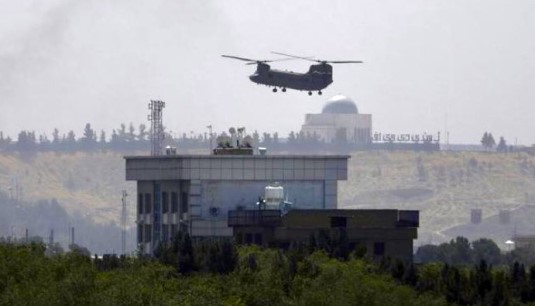
"The Taliban will be in Kabul within weeks!" So went the media punditry on Friday just gone. And just a mere two days later the Afghan government has completely dissolved, the United States are evacuating personnel in scenes reminiscent of the embassy airlift from Saigon in 1975, and the Taliban are back in charge. 20 years of blood and treasure wasted for the situation to wind up where it began. To be sure, the rapid collapse of the client government and the humiliation of the Western powers underlines the bankruptcy of "humanitarian intervention". A point lost on sundry Tories and hand wringing centrists doing the rounds and attacking the withdrawal of military support. They have learned nothing.

None of this soft soaps the Taliban. This might be Taliban 2.0, one savvier when it comes to diplomacy and cutting deals with regional powers, not executing Western journalists and allowing aid agencies to stay, but their extreme gynophobia and suppression of select aspects of modernity remains. What happens next? In this discussion between Alex and Paul Rogers of Bradford University's Peace Studies department, Paul explores the difficulties the American-led coalition faced, the division in their foreign policy establishment, the stupidity of the occupation authorities, and how the Central Asian great game is going to play out between Pakistan, India, and China as well as the US. Events have unfolded rapidly since this was uploaded yesterday, but the analysis underpinning it is a must listen.


And don't forget to help support Politics Theory Other out via its Patreon.

Wednesday, 28 July 2021

The Military-Directed Entertainment Complex

In Althusser's celebrated essay on ideology, he talks about how the ideological state apparatuses have their own repressive aspects (violence and discipline in the family and at school, sanctions and shunning in religious organisations), and how the apparatuses of repression secreted ideology. This is something we know well in this country, with the biggest and most critically acclaimed shows of recent years most likely to be cop shows. And it's barely different in the rest of Europe. But for those interested in analysing the production and consumption of shows of this kind, the default assumption is the show's creators and showrunners are (usually) working toward the values and myths repressive institutions surround themselves with. Few if anyone thinks the British military manipulate the Pride of Britain awards, for example. They're independent but ideologically conformist.

It turns out this is not the case in the United States. In this excellent video, Owen Jones speaks with Matthew Alford about his work on military interference in film and television production. He estimates that between 1911 and 2017 the military had a had in the direction of some 800 movies. Throw in TV and add the FBI, CIA, and other state security agencies and we're talking about 10,000 scripts. As Matthew argues, this might sound like tinfoil hattery but it isn't - his work has uncovered the documentation to find household favourites like the Marvel Cinematic Universe, the Terminator franchise (from the fourth film on), have been significantly interfered with in exchange for "advice" and "support" from the Pentagon and other agencies. I'm sure none of this would come as a surprise to folks here, but it's well worth hearing Matthew's argument for yourself.


Thursday, 8 April 2021

Loyalism's Tortured Decline

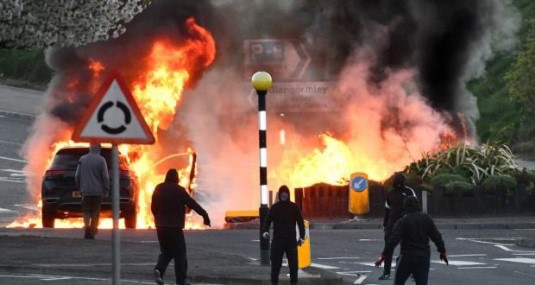
"Policing is a devolved matter for Northern Ireland", said Matt Hancock after getting quizzed about another night of loyalist violence. The non-too-subtle subtext being this is nothing to do with the government nor its grandstanding and reckless approach to Brexit. For his vanity and the electoral interests of the Conservative Party, Boris Johnson at first courted and then betrayed the Democratic Unionist Party and its wish to keep the UK internal market together. And what do you know, since Brexit happened we've seen supermarket shortages and the perception the government in Westminster have washed their hands of all responsibility for the province. The Tories have also made the DUP look like a right bunch of mugs.

This is the background, and knowing there is trouble at the mill Arlene Foster has tried her damnedest to ride the wave of disaffection rippling through unionist communities. Making a big deal of Sinn Fein ministers' attendance at a funeral last year, she made it clear on Wednesday evening how this was more objectionable than torching a bus. Ham fisted and equivocal by the standards of Westminster boilerplate, Foster is actually in a great deal of political trouble. Not only is the Brexit the DUP campaigned for proving damaging to their raison d'etre and making a united Ireland more likely, the most pressing concern are the threats gnawing at Foster's position as First Minister and the DUP's standing.

The latest poll from January reports the surreal result that Sinn Fein is the most popular party in Northern Ireland. The DUP however are now scraping second place with 19%, down nine points on the 2017 elections and one point ahead of the third placed Alliance. They are proving especially threatening as the party emerged from and bites deeply into moderate unionism, despite punting itself as a non-sectarian party. And to the DUP's right, Traditional Unionist Voice has been egging on street opposition to the Northern Ireland Protocol and, by extension, the Executive Foster leads. Boxed in and seemingly giving up on tacking toward the moderates, she has decided to ramp up the rhetoric against SF and virtually giving loyalist riots a free pass to bring back the extremists. Unfortunately for her, the DUP's doey-eyed participation in Brexit and having led unionism into the current impasse doesn't bode well for the party's political future.

Yet the predicament the DUP find themselves in isn't entirely their own doing. As per conservatism and Tory Britain generally, loyalism itself is in long-term decline. This year 42% polled in the north said would back a united Ireland, declining slightly from 45% when asked last year. In all, by far the most popular party among the under-44s is Sinn Fein, and by a very healthy majority Northern Ireland voted to Remain. The unionist community split 57/43 to leave, but like elsewhere younger people were most likely to support remaining with the EU. As we also saw recently, the DUP were on the wrong side of Northern Ireland's abortion debate, leaving them saddled with a sectarian social conservatism increasingly at odds not just with younger people's values, but their everyday experience. As the most vocal champions for the union and the UK, the British state could do with better cheerleaders.

Unionism's decline is more than value change and the recomposition of the working class, but an erosion of the sectarian character of the Ulster statelet itself. Active discrimination in housing, jobs, particularly public sector jobs, and policing had been in decline prior to the Good Friday Agreement and has continued since. Politics has a tendency to lag behind economics, and as the material basis for a particular cultural location evaporates so clinging to its identities and rituals can become stronger and, in some instances, extreme among a significant minority, Even as, especially as its wider influence diminishes. Given the alacrity with which the DUP opposed the decriminalisation of abortion, here we have a particular case of trying to uphold the social conservatism unionism identifies with. This is also the root of their embrace of Brexit too. There is no loyalism without the Irish border, and so withdrawing from the European Union, they calculated, would remphasise their difference and distinction from the rapidly secularising republic and secure their continued political relevance. What they weren't expecting was Boris Johnson hanging them out to dry by moving the border into the Irish Sea and, if anything, accelerating their appointment with marginalisation.

The problem is what happens next. If a group feels under threat, thanks to Northern Ireland's history this could step up from property damage and play itself out as attacks and murders. And given loyalism's record of butchery during the Troubles, this everywhere and always means political opponents and ordinary civilians. There is no popular appetite for a return to violence, but this is unlikely to stay the hands of would-be terror gangs. As Ulster unionism comes apart, there's every chance its final chapter could be blood-soaked and violent.

Friday, 26 February 2021

The Use and Abuse of Shamima Begum

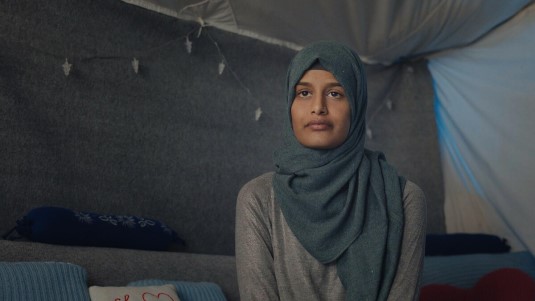
1. Friday's court victory for the government is horrific. The Supreme Court's decision to reject her application to return to the UK to fight her case and upholding Sajid Javid's decision to strip her of UK citizenship sends a message to everyone born of migrant parents that they're here under sufferance. At any time their rights can be taken away at the flick of the Home Secretary's pen and be treated as if they're a foreign national of a country they didn't grow up in, do not know and, in all likelihood, wouldn't accept them either. Shamima Begum has been denied the right to a trial, the right to a defence, and a right for the chance at rehabilitation. And now the same shadow is cast over millions of Britons if the government of the day deems it politic to revoke their citizenship.

2. This is a reprieve for national security, so argue some dickheads. Apparently the very presence of this woman would lead to "increased risks of terrorism." There's the suggestion she's an unrepentent jihadist, that returning to Britain to stand trial would somehow embolden radical Islamists, and there's a good chance securing a conviction would be difficult thanks to the lack of evidence beyond hearsay. In other words, the UK state should wash its hands of a troublesome citizen and dump her on the Kurds because she presents too many unknowns. Talk about a lack the state has in its own legal system.

3. The politics of all this doesn't really have anything to do with the specifics of Shamima Begum. She was a useful foil who came along at the right time for the Tories to burnish their tough-on-terrorism credentials. That she was a schoolgirl effectively groomed by her recruiters doesn't matter: here we have a brown Muslim woman onto whom was poured every Islamophobic trope, every doubt about the "loyalty" of British Muslims, and every punitive cruelty the Tories and their base reserve for appropriate non-people. For Tory divide-and-rule to work, they need scapegoats. And scapegoats need their demon figures. Begum fit the bill.

4. Legal judgements are never just legal judgements. The law, especially the peculiarites of the English legal system, is class rule codified. And as the Supreme Court is an arm of the state, it is hyper conscious of this fact and how the government are minded to curb its powers following its ignorant waffling about "activist judges" - rhetoric imported directly from the United States. Having ruled against the government on prorogation and noting lower courts had recently ruled Matt Hancock's procurement practices unlawful, self-preservation dictated a certain interpretation of the law in Begum's case.

Image Credit

Friday, 2 October 2020

After Trump?

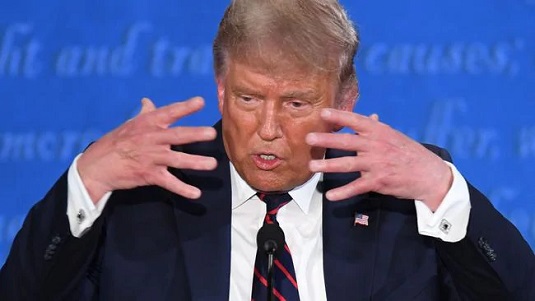
Fate has dealt 2020 a cruel hand, but there's something poetic seeing Donald Trump contract the diease he steadfastly refused to take seriously. He should have taken his own advice and necked the bleach.

I'm mindful of the consequences crowing can have for those scared out their wits about contracting it. But in Trump's case, there is no sympathy here. The worst possible president at the worst possible time, he has encouraged every boss to force their workers back into work, backslapped every Covid-sceptic governor to lift restrictions, made the most ridiculous and harmful public health claims, rendered consistent preventative action impossible, and used the crisis to whip up a racist campaign against China, a campaign that has made life hellish for Americans of East Asian heritage. Trump's recklessness, exceptional incompetence, overweening naricissism and, ultimately, complete lack of regard for the lives of others has put 200,000 people in the ground and left many more with the lingering effects of long Covid. Forgive me if I don't wish the President well.

As Trump's symptomatic condition goes from "mild" to "moderate" to treatment by experimental drugs to an extended "precautionary" stay in a military medical facility, what happens next with the election campaign? Seems Trump and many of his inner circle either have it or, like Mike Pence, were exposed to it. There's concern Joe Biden might also have copped a dose from Trump during the week's live TV debate. As far as Trump goes, the grid is out the window. The opportunities to stir the racist pot to get the support out will be missed and, seemingly, assuming Biden remains healthy he can tour all the crucial swing states without facing the neurosis and the skipful of dead cats emanating from Trump's Twitter account. Game, set, match to the Democrats?

Possibly. There is certainly a level of confusion and despondency among the Trump base. For those who believed his playing down the seriousness of Coronavirus might be wondering how a sniffle and a cough might incapacitate him. Indeed, a tour of his 4Chan fans and the allied networks of white nationalist and conspiracy theory boards shows not insignificant quantities of disorientation, if not despondency. Is it an 11 dimensional ploy? Are his opponents in the deep state bundling him out in a shadow coup? Or is Trump stepping out of public view to more effectively wage his secret war against the nonces, the Satanists, and the Clintons? Whatever happens, an easy conspiracy theory can be moulded to fit the facts and are getting cooked up as you read this.

Yet this is not the preserve of America's unhinged right. There are plenty on both sides of the Atlantic who are spamming Twitter with their own liberal/leftish conspiratorial takes of Trump's illness. These are the same people who believe Boris Johnson's difficult brush with Covid-19 was a wind up job conceived to build support and elicit public sympathy. The thinking goes if Trump disappears from public view, his absence will be taken for Christ-like suffering, and his pain and trevails will magically draw support as American voters rally around the stricken president. This is nonsense. On the sympathy vote argument, while all world leaders enjoyed a bump in support during the initial outbreak, Trump's was the weakest. He also carried on peddling divisive politics in the hope of turning out his white, middle class base. Repeating the trick of 2016, in other words. He cannot be the rallying point for the whole nation, and so a significant sympathy vote inclining to Biden's camp are suddently going to cleave the other way is doubtful. This said, the alacrity with which some liberals and leftists have leapt into conspiracy thinking underlines the anxiety they have about their own capacity to win. They overestimate, as opposed to soberly analysing the strength of reaction Trump has gathered. Trump isn't the antichrist, tangerine or otherwise. There was nothing supernatural about his 2016 victory, and diabolism isn't going to magic a victory from nowhere. No, the unease exists because the initiative has passed entirely to the Democrats. If they screw up now, it's entirely on them and the politics of their new liberal hero.

What if millions get their wish and Trump succumbs to the disease? A fitting end for him, but the possibility of a new and dangerous phase for American politics can't be discounted. Thanks to the hold of conspiracy thinking, QAnon can point the blame at the evil cabal. Others the deep state. Others the agents of China. Whatever explanations emerge and circulate, their great leader's passing would mark an occasion of mourning and despair. Most are going to fall silent until another right wing bandwagon rolls into town, but for some his passing will be experienced as illegitimate, a crime committed by whichever shadowy group believed to be pulling the strings. In this sense, Trump becomes a martyr, someone whose deceased person could inspire more mass murder/mass casualty events - with women, minority ethnicities, and sexual minorities the most likely targets. This, in their twisted imaginary, is vengeance, and it's international. If QAnon can cross the ocean and cohabit with our own covidiocy fringe, why not violence too?

For this simple reason, while I can understand the many, many people wanting to see Trump die at the behest of those he effectively condemned, we need to think carefully about what we wish for.

Image Credit

Monday, 2 December 2019

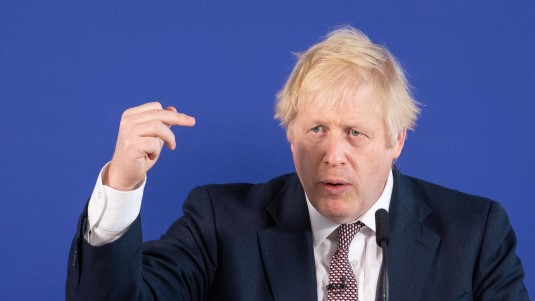
The Lying Lies of Boris Johnson

How do you know when Boris Johnson is lying? When he opens his mouth. Lies come as easily to Boris Johnson as breathing does to the rest of us, but his disgusting reaction to the terrorist murders of Saskia Jones and Jack Merritt marks a new low even for him. To suspend campaigning in London as a sign of respect while appearing on Andrew Marr to blame Labour for the early release of Usman Khan was grotesque. It was probably the most graceless performance a leading politician has ever given on his show. And then, despite pleadings of Dave Merritt against using Jack's death to ramp what he dubbed an agenda of hate, Johnson and the newspaper editorial offices under Tory control did exactly that.

Writing in the Mail On Sunday, Johnson combined lies and shamelessness with some of the most disgusting opportunism ever seen in British politics. Under the headline, 'Give me a majority and I'll keep you safe from terror', Johnson argues he did make moves to keep violent criminals and terrorists in jail for longer, but was prevented from doing so. He said "... due to the broken hung Parliament that was preoccupied with blocking Brexit, we could do no more." A demonstrable untruth. Johnson then goes on to attack Labour who want to "give more powers to human rights lawyers" with the net result it "would make us less safe."

Johnson is carrying on almost as if the Tories haven't been in power for nearly a decade, and that the gutting of the criminal justice system, rehabilitation, community policing and provision of youth services is an imaginary happenstance. In fact, this is precisely why Johnson has gone and trampled all over the victims' family wishes. He knows a hard line plays well with a base with more than a psychotic tinge about them. Their self-identification as graduates from the school of hard knocks for whom a good hiding is the best solution for all crimes at all times would presumedly lap it up. And he'd much rather have his opponents gasping at his tough-on-terror brutalism than talking about how the Tories have failed and failed miserably on counter-terrorism and security. All so the rich can enjoy more tax breaks.

The lesson from the last general election was how May also tried to capitalise on two terror attacks, one of which was the weekend before polling day, but was derailed precisely because of the Tory record on funding and cuts. By going harder Johnson hopes to drown out the critique though, it has to be said, without much success. Not even Andrew Marr, who at his most savage is like getting worried by candy floss, could sit idly by as Johnson kept repeating the lies and the bluster.

Are there risks in what Johnson is trying to do? Certainly. Lies were always going to feature in their campaign. But Johnson's carry on is no episodic dead cat to move the conversation in a direction he thinks advantageous to the Tories, it is the central characteristic of the party's strategy. Part of it is thanks to their having a programme that won't make life better for anyone, and so all they have in the tank is scaremongering and falsehoods. But mainly Johnson's lying is about muddying the political waters for everyone. We know he lies profusely free from constraint and consequence. And if that's the case, why not other politicians? The LibDems are almost as bad, though their lying is rooted in structural desperation. No, by lying his head off Johnson is deliberately cultivating the default cynicism that politics is awful, and cannot be trusted ever to make anything better. And this is especially corrosive, he thinks, of projects that do promise a break with the normal, offers hope, and holds out the possibility of positive change. If masses of people feel as if things can't ever get better, they're not going to vote for it. And so while Johnson spins his webs of deceit, so Labour's programme appears fanciful if not undeliverable. I mean, how stupid do you have to be to take a politician at their word?

This is why Johnson lies. They're more than foibles, rather it's a deliberate attempt to suppress Labour's support and keep things as they are. But the strategy isn't magic, and it's in our power to show it can be beaten.

Image Credit

Saturday, 13 April 2019

Glamorama by Bret Easton Ellis

Broadsheet litcrits consider Glamorama among the blackest of Bret Easton Ellis's sheep. It's over long, it's repetitive, it goes nowhere, it's needlessly graphic, and dwells too hard on the superficiality of consumer culture like so many novels have done. For a novel heavily and self-consciously laden with mid-late 90s fashionistas, getting panned as unoriginal and derivative upon publication is pain indeed. Yet this is to miss a trick. Glamorama is a novel of its time, like all novels are, and was absolutely tethered to the contemporary zeitgeist.

The 'critique of consumerism' argument is as lazy and a superficial a take as the culture Ellis sends up. What species of criticism is this? Of the shopping sucks killjoy-leftydom variety? Or a wearisome conservative worry about materialism (in the conventional, bourgeois sense) displacing real meaning and connection? This is why, read in their context, Ellis's novels are so compelling. They eschew the earnest and the trite, and instead inhabit the spectacle of trinkets, branding and celebrity. Less a panorama of all that glitters and more a, ahem, glamorama. Ellis's (often clueless) characters inhabit a dimension of artifice, of lives consumed by the pursuit of fripperies, the casual encounter, and the endlessly (tediously) novel. In American Psycho yuppie anti-hero Patrick Bateman embodies the psychopathology of consumerist narcissism, the laughs mostly located in his disinterested connoisseurship of stuff. Thanks to Christian Bale's portrayal of Bateman, in one of the best remembered scenes he is anything but disinterested when his business card is trumped in the style and cost stakes by one of his fellow executives. But the novel is full of observations on brands and style, of women's body types, and sharp, sensitive career overviews of Phil Collins, Whitney Houston, and Huey Lewis and the News.

Glamorama's Victor Ward (AKA Victor Johnson, a bit-parter in 1987's The Rules of Attraction) is not dissimilar to Bateman. Whereas he has a cunning, semi-detached-but-appreciative relationship to the artifice surrounding him, Ward is totally immersed in this universe with barely a hint of self-understanding. Whereas it was all about the brands for Bateman, for Ward, as an upcoming supermodel, he goes where the celebrities go. The book opens with Ward planning a big club opening, and on the guest list is virtually every hot New York glam scene celeb from the mid 90s - pop and rock , fashion and film, the novel begins as it means to go on. As Ward takes a trip later on to Paris and London celebs keep popping up, including then-in Britpop bands that never really troubled American markets. And over to Paris an impressive roster of French celebs crop up. In fact, apart from a stint on the QE2 mid-novel, celebrities are everywhere Ward goes. Even later on when he becomes embroiled in terror plots to blow up Parisian hotels and cafes, we usually find celebs somewhere picking their ways through the carnage and rubble. Though, it has to be noted, no celebrities are harmed during the course of the narrative.

Like American Psycho, the tone grows darker as Glamorama wears on. Here, inconsequential razzmatazz is traded in for relationship breakdown and international terrorism. Ward is pressed into a cell of fellow supermodels and, against his better judgement, becomes complicit in the execution of a number of gratuitously described atrocities, and a party to a handful of murders. Why supermodels? Because celebrity gives them the best cover. As we now know in real life thanks to the exposure of several sexual predators and paedophiles on both sides of the Atlantic, hiding in plain sight is the best way of avoiding suspicion (interestingly, a certain Harvey Weinstein never makes Ellis's tally of the silverscreen notables who flit hither and thither across Glamorama's pages). Ward eventually tries to extricate himself from his predicament, but is hampered by the fact a doppelgänger has assumed his place back home in New York and is making a good fist of turning his scandal-addled life around.

Like Patrick Bateman, Victor Ward is an unreliable narrator. Bateman descends into madness and we're led to question whether he's a serial killer at all. Though he does have a cameo in Glamorama, and Ward notes weird stains on Bateman's collar. Ward undergoes a similar breakdown which invites a barrel load of side eye questioning. About a third of the way through a camera crew appears from nowhere as if they've always been in the background. As the intrigue, double-dealing and questions of motive are raised, so other camera crews appear filming other leading characters, talking over film scripts, discussing what's about to happen, and Ward and other characters getting freaked out and reacting when things start happening that aren't in any of the scripts. There's also questions about the terror attacks. The first, in London, is actually part of a film production with dummies, papier-mâché body parts and all the rest of it. After this, they are for real, or at least present themselves as such. People are vaporised, crushed by falling masonry, blown through windows, burned, dismembered, every kind of death is detailed and afflicted on passers-by. The purpose, however, is absent. Is it done for the benefit of one of the film crews, who are always on scene? The whys and wherefores, the cause is always up in the air. Is it to replace Ward with someone less embarrassing as his father, a US senator, contemplates a run at the White House? Do they actually happen at all? In the end, it doesn't matter. A downward spiral of despair and, when the cameras stop rolling, rejection and discard alls upon Ward as everything is lost. His character literally breaks apart with a flash back, a visit to the reformed character Ward's double is carrying off, and a moody contemplation of his future without the life he used to lead. Were the bombings, the murders, the fights, the doppelgänger, and the camera crews eruptions of delusion into a life without a real sense of self, effortlessly passing through a celebrity system lacking any centre apart from the craving of attention? It sounds like Ward's rocky road and miserably uncertain future is a narcissistic projection of someone who is noticed and addicted to getting noticed, even if that means leaving a bloody trail of bodies and atrocities.

And yes, the violence. As per American Psycho, when it happens it is gratuitous. Detailed descriptions of the torture and murder of people. Detailed descriptions of people blown apart. Detailed descriptions of the last moments of passengers on a jet blown apart in mid-air. Detailed and pornographic descriptions of sex, oral sex, and MMF sex. Detailed descriptions of interiors, fashions, and the ever-present celebrity cameos. Gratuity and excess is the hallmark of all Ellis's novels - something his mainstream critics don't really pick up. It's ceaseless and relentless, the repetition mimicking our over-stimulating consumer cultures and attention economies. Ellis seizes the pile-on and pushing them to absurd degrees. His characters are vain-but-empty vessels because they are carriers of these logics, a parodic collapse of use and exchange value whose lives are nothing but the means by which the accumulation of a particularly stunted symbolic and social capital is expressed. This is a world of objects, and Ward (like Bateman) is an object of objects.

If this sounds a bit Baudrillardian, it is - if the number of learned journal articles using Baudrillard as a way into Ellis's work are anything to go by. By pushing these logics to their ends, Glamorama, like American Psycho, are fruits not of a critical but of a fatal strategy. Agency is surrendered to the (commodity) flows of objects, the characters are buffeted along, and what we are left with is a novel of comic absurdity. It satirises consumerism through its affirmation, of taking vicarious pleasure from rubbing shoulders with luxury brands and exclusive people, not its denial. Therefore to be appreciated, the reader needs to be carried along the same fatal trajectories as Ellis's characters. Like life, the destination is always uncertain and is probably a let down, the journey dark, dangerous and repetitive, but there are always a few laughs and fleeting enjoyments to be had along the way.

Wednesday, 10 April 2019

Brexit and National Humiliation

Brexit's not going well, is it? The right wing press give voice to the tortures of the Tory backbenches. Imagine their pain, feel their agony. They achieved their heart's desire, a vote affirming their dream of leaving the European Union. And for the best part of two years, their Prime Minister has strung them along. At the height of her powers in 2016 she declared for a hard Brexit, and the Brexit hardcore squealed with glee. And immediately after the election, Theresa May gave her parliamentary party all the assurances that nothing had changed. Brexit was about "controlling our borders", kicking the European Court of Justice out of UK law, dark blue passports, back off Brussels, and signing new trade deals. These fantasies all appeared within reach and, well, May kiboshed them. Not only does her deal cede a great deal of leverage to the European Union should the UK fall into the backstop arrangements, parliament has repeatedly reminded the ERG that their favoured scenario isn't going to happen. Unless we tip out of the EU this Friday without a deal. After all, accidents do happen.

In short, this process May has been repeatedly humiliated by her party, their media, by parliament, and by the EU itself. Yet for all the blows she's taken, she was able to dole out a few jabs of shame in the ERG's direction. They've been made to look like mugs, and they know it. Some have felt chastened and come back to "mummy" - like Shrewsbury's Daniel Kawczynski, and others hold their no deal fetish in a death grip and refusing to deal with realities. Good. May the next Tory leader come from this unrepresentative rump of hard right chumpery.

Unrepresentative, yes, but not without a following. There are still a few hundred thousand people who read the Express, the press home of no deal since The Mail went woke. This disgusting rag has tried to keep the pecker of its falling circulation up with the viagra of more racism, more hysteria. If this was aimed at young men Prevent would be all over it like a rash. What it is doing is stirring up not just hate, but betrayal myths, stoking the utterly stupid and reckless notion that everyone apart from Mogg and his mates, UKIP, Farage, and Tommeh are stabbing the nation in the back. Where have we heard that before?

Assuming the EU grants the UK an extension which, at the time of writing, looks like it will be up to a year, the process is primed with opportunities to peddle a humiliation narrative. If we're looking at March 2020, the UK is set to be "supervised" at three monthly intervals to check how the process of coming up with a deal acceptable to Westminster. For the likes of the Express, this is fine for basket cases like Greece but definitely not us because, well, Britain. Under May's deal, assuming the impossible for a moment and that it comes back, we have no say over the custom's relationship in the backstop, and so another occasion for humiliation. Because the UK, in the backstop (or for that matter, no deal) would have to negotiate a trade deal from a position of weakness, more humiliation. And if we do arrive at a deal but we overrun the transition period because we can't arrive at a trade deal with the EU, the UK has to pay the EU £1bn/month to stay in that relationship until a new arrangement is arrived at. Even more humiliation.

I imagine the concept of national humiliation doesn't mean much for most readers. Except perhaps when your chosen home nation fails badly at the footy, or the UK does miserably at Eurovision. But for others it does, particularly those the Express has had a hand in cultivating and radicalising over the years. Brexit, shorn of its mystical trappings, is the withdrawal of the UK state from a common, cross-national system of regulations and legal obligations. Fed by false and distorted stories by the press, they fall on fertile ground because their experience of life chimes with a fantasy narrative of a world going to hell in a handcart. As Wolfgang Streeck observes, as capitalism seizes up and the world appears more uncertain, more frightening the more some people will reach for trusted anchors that short cut the complexity of the social. this is ideology as a crutch, a coping mechanism. In some countries that is religion, and in others it is nationalism. In the UK, it is Englishness specifically that is the anchor point of hard right Brexit nationalism. To be English is almost like being an ethnicity - it's possible to be Black British or Asian British and even be for Brexit, like a number of sitting Tory MPs, but they can never be English because English is exclusionary. It's something belonging to white people and white people alone.

And what does Englishness mean? Reformulated as an identity, it's much easier to grasp than multi-culty Britishness. It's masculine and loud, proud and brash, imperial and royalist, meat eating and beer swilling, an England that isn't all those foreign influences. An essential spark of national continuity running like a white and read cross stitch from the pure bred English past to a land under siege today gives us our line of purest descent. It wasn't for nothing that the EDL was both English and articulated itself as a defence. England and Englishness then is a foundation, a principle of coding the world in the whitest and blackest of terms.

As we saw while analysing Trump's support that, contrary to popular belief, were disproportionately well-off and economically secure. The assumption politicians, journos and not a few political and social scientists of equating being poor with economic insecurity and therefore open to far right populist nonsense forgets that those who have property and/or a fixed income, like pensioners, are going to be fearful of losing it. Hence why privileged and propertied layers in any population are more likely to support the party protecting those interests than those who don't. ABC politics. Leave very cannily spoke to these layers, the bedrock of Brexit, by talking up all the markers of insecurity and threat - waves of refugees, migrant workers signing on, money that would be better spent on the NHS, and did so by working a not insignificant proportion of them up into a fever pitch. In so doing, the dire warnings made by remain were masochistically incorporated and transformed into a virtue for leaving. In a world gone soft, the damage of Brexit, especially a no deal Brexit, is something to be embraced to shake things up and give the rising generation a taste of the school of hard knocks. Such adversity would then bring out the best of British (English) by allowing our national character's essential qualities come to the fore and refound a new identity on hard work and sacrifice.

These conceits held be people who won't have to do any of the sacrificing or hard work, help explain the near fanaticism and the potency of the potential for national humiliation. Seeing England weakened and begging from scraps from the EU angers on two counts - the shabby treatment of us by the EU (again, long stoked by the right wing press), and the supine and traitorous character of our MPs. Foreigners are going to foreign, but capitulation to this state of affairs is too much. They are colluding in national humiliation, making us a global laughing stock (what happened to Britons never will be slaves?) and frustrating the path to national salvation.

If this were just a bunch of harmless idiots, it could be dismissed. Unfortunately, there are links between betrayal mythologies and murder. We saw it with Jo Cox's murder, and we've found these arguments and tropes - including quotes from British columnists and British papers - in the miserable manifestos of spree killers. The danger the far right poses in the UK is not a mass movement of extra parliamentary thuggishness and street fighting, but of the radicalised-but-atomised carrying out acts of individual terror.

As the Tory party falters in the polls, it is virtually guaranteed to make a sharp turn to the right after May. Such a move would surely seal their electoral doom but the temptation will be to embrace the discourses of humiliation and betrayal. The consequences of which would be an acceleration of the main-streaming of these beliefs, normalising and naturalising them, and increasing the chances of violent and terroristic consequences.

Thursday, 6 September 2018

Here Come the Cranks

One of the very first things I learned about radical politics (thank you Class War!) is that your enemy's enemy isn't necessarily your friend. This always comes to mind when Russia is in the news because, in a pathetic echo of the Cold War official CPGB apologias of the old Soviet Union, we find people happy to go to great lengths to prettify or explain away the activities of the Russian state. The naming of two Russian suspects for the poisoning of the Skripals is one of those occasions.

Cast your minds back to March-April time. As Sergei and Yulia Skripal lay ill in hospital, this was seized on with alacrity by a Tory government getting blown from pillar to post by its own internal difficulties. They declared to the world that the Russians were responsible when this could not have existed beyond conjecture. How do we know when we're not privy to the intelligence? Well, we've seen how the scanning of the CCTV and tracking the movements of the alleged perpetrators, and their identification has taken months to assemble. Were such information at the security services' fingertips to begin with, it would have got released pretty sharpish to make themselves - and the government - look good. However, May began with the assumption that it had to be Russia (you don't need to be a Cluedo champion to surmise the victim, motive and method point at the FSB), and they went all out on it for political reasons. Not least because it provided an opportunity to show Jeremy Corbyn up as weak on security issues. Sadly for them, because of the stance he took - and much to the grumbling of Labour's backbenches - the story quickly became entangled with the innumerable and complex ties between Russian money, the City, and the coffers of the Conservative Party. Always beware the law of unintended consequences.

Nevertheless, being distrustful of the Tories, the security services, and the convenience of alleged Russian terror doesn't mean the Russian government is blameless. The left should not simply put a plus wherever the Tories and the spooks put a minus. In all probability, this wasn't a hit ordered by Vladimir Putin. All authoritarian regimes are, paradoxically, chaotic. Even the two most extreme examples from the last century, Stalin's USSR and Hitler's Germany were marred by fractious and sometimes murderous conflicts within the ruling parties. In such chaos, a lot of organisational movement was possible because individuals and groups of people 'work toward the leader'. That is undertaking activities, often on their own initiative, designed to curry favour with the higher ups. The commissar who, at gun point, requisitioned more grain than the quota demanded. The SS corporal who set about murdering villagers and burning their homes to catch a superior's eye, it is more than possible the Skripal hit was cooked up in the bowels of the FSB to earn someone a promotion and a salary bump. Nevertheless, as Putin came up through the KGB and this is his system, whether he issued the order or not he ultimately is responsible - if this likely scenario turns out to be the truth.

Sadly there are sections of the left, and I use that term advisedly, who aren't interested in analysis, weighing up evidence or considering probabilities. Consider ex-diplomat Craig Murray, for example. He has acquired undue prominence in left wing circles for peddling conspiracy theories, which in itself is an indictment of the level of sophistication and political confidence of out movement. In this case, Murray has declared shenanigans for two reasons. One are the photos of the two suspects apparently standing in the same place at the same time, at least according to the CCTV time stamp. As Brian Whitaker points out, this can easily be explain by ... both men passing through two separate gates simultaneously. And, being the helpful sort, Brian provides photos of these short passages. Still, not being interested in fact Moscow is now parroting the same line too. Prior to this, Murray had claimed there was something fishy about the photos of the two suspects when it turned out to be a diminution of quality thanks to the Graun's own scans. Mountains and molehills, etc. And then there is his obsession with where the Skripals are located and why they're not appearing in public - it would appear he's not familiar with the idea of witness protection. These alone should demonstrate why no one on the left should give him credence and why he should be regarded as a crank.

Just because the British state is duplicitous and rotten doesn't make Putin and his works automatically virtuous. Russia is a state like any other, and one that uses its not inconsiderable lobby in Britain to deepen the distrust millions of people have in the security services following Iraq and other debacles. By accident, idiocy, or intent Murray has placed himself in that lobby, along with George Galloway, Alex Salmond and now Tommy Sheridan. I don't know about you, but the world is a messy, complex place and one which the left should try and maintain a critical distance from to try and understand it to, you know, change it. The likes of Murray do worse than hinder, they make our work more difficult. In short, these are friends the left could do without.

Monday, 19 June 2017

Why Far Right Terrorism is on the Rise


And here we are again. Another day, another terror attack with one dead and eight others injured. Though, on this occasion it's definitely not Islamist-inspired. According to witnesses the man who rammed worshippers leaving Finsbury Park Mosque screamed "Kill me, kill me, I want to kill all Muslims". It's to the credit of the traumatised crowd that the suspect wasn't granted his wish and got carted off into police custody. As the legal process is now in train there is little that can be reported about him or his intentions, but there are points we can make about hate crime and political violence motivated by far right politics.

While incidences of Islamist terror are shocking, in another sense they aren't. For the last 16 years the press and politicians have talked up the possibility of attacks from this quarter to justify military action overseas and authoritarian legislation at home. It's part and parcel of measures that have the consequence of scaring, cowing, atomising large numbers of people. It is an approach utterly disinterested in dealing meaningfully with the roots of terror as it raises uncomfortable questions. And so we have a sensibility, a notion that as awful Islamist atrocities are they are also banal, or something to be expected. The state is prepped for it. Culture is prepped for it.

Unfortunately, it is possible we could be approaching a similar situation when it comes to far right terrorism. Permit me to quote this post on the murder of Jo Cox:

But you know what the really awful thing about this is? We should have seen it coming a mile off. In most of the advanced Western states, acts of political terror tend to be committed by two creeds of extremist. The Islamist, and the Neo-Nazi. The depths to which the debate around the referendum has plunged has seen Leave, and I'm singling out the Tory right and UKIP in particular, raid the BNP playbook and repeat their attack lines have contributed to a febrile atmosphere where migrants are terrified for their future, and a good many decent people share those fears too. But remember, it's definitely not racist to scaremonger about tens of millions of Turks coming here, about "rapist refugees", about people "with a different culture". This poisonous drivel is all about addressing "the very real concerns people have about immigration", not pandering to racism, whipping up hysteria and hate.

What happened to Jo is a violent culmination of a politics that has played out over decades. The finger should be pointed at every politician who has used immigration and race for their own selfish ends. Farage and Johnson are two well accustomed to the sewer, but all of the Leave campaign have been at it. They more than anyone are responsible for the present climate. But blaming them alone is too easy. The Conservative Party as a whole have played the immigration card repeatedly throughout its history, more recently the PM doing so by portraying Labour as the party of unmitigated immigration and open borders. And idiot Labour politicians calling for restrictions here and peddling stupid pledge mugs there have all done their bit in feeding the drip drip of toxicity. The media as well carry some of the can, especially those regular Daily Mail and Daily Express headlines that scream out as if ripped from Der Stürmer. Their ceaseless diet of Islamophobia and refugee-bashing pollute our politics and ensure its eyes are dragged to the gutter instead of being fixed on the horizon. The press are windows onto the political world for millions of people, and they what they see is tinted with purposive misrepresentation and lies. They too are culpable for this mess.

In short, when you have a huge propaganda operation, of so-called intellectuals poisoning the waters, and politicians seizing upon race and religion to grub for headlines and votes, we should not be shocked that a small subset of people who gorge on these lies should feel compelled to act on them. Mostly, they are content shitposting racist memes on social media or forming their own internet cesspits well away from the mainstream. Others get involved in political activity and/or the "street activity" of the English Defence League and/or Britain First. And for some, well, terror is a viable option - at least if the number of racists and far right activists banged up for weapons or bomb making offences are anything to go by.

While true, this propaganda apparatus has operated for a long time, so why should the prospect of far right terror become more likely? One cannot offer an exhaustive explanation, especially in the space of a blog post, but there are two things worth looking at. Firstly, there is the role of gender or, to avoid essentialist explanations rooting masculinity in hormonal aggression, the practices and expectations that come with being a man. After all, it is not insignificant that all the jihadi attacks and far right terrorist incidences to have taken place in Western Europe and North America over the past 20 or so years have exclusively been carried out by men? For younger men, the tendency toward the dissolution of gendered privileges but without a congruent retreat of gendered expectations is background noise to all extremist politics. For instance, IS is viciously misogynistic for a reason. For young white men, the parallel processes help fuel the ugly underbelly of online gynophobia and gay hatred though, it should be stressed, this has an outright purchase on only a minority of young guys just as the IS message draws in very small numbers. The fraying of gendered tradition impacts on older men differently. For some, they and wider society has undergone a process of emasculation, they just know it and feel it. Women don't know their place, boys are screwing around with boys, and men's jobs have given way to women's jobs. As far as UKIP and organisations further right go, part of their appeal is gendered nostalgia, of a strong Britain when men were men and took pride in being in charge and providing for their families. Nowadays, everything is so permissive and effete. Britain's gone soft, but something surely has to be done about Muslims taking the piss and killing girls and mums at pop concerts.

This is where masculine impotence intersects with political realities. With the collapse of UKIP at the general election from nearly 13% in 2015 to just under two per cent this year, effectively the constitutional outlet for right wing, xenophobic politics has dried up. And with the rise of the left, the general political culture is much less congenial to nudge nudge race hate than was even the case last year. Not least as politics is polarising and the Tories have smothered the political space the far right can operate in. With them locked out of the system, with politics more hostile and seemingly unconcerned by their hobby horses, and a studied refusal by the mainstream to blame Muslims in general for the terroristic acts of extremists, so non-constitutional methods start looking more attractive, be it vandalism of mosques or Muslim-owned businesses, hate crime, or terrorism. Their imagined grievances boil over into frustration, and that can in turn spin off into the kinds of actions we've seen a dramatic rise in.

That is why I believe the possibility of far right terrorism grows, not because it's strong, but because it's weak and out of kilter with the real world. What can be done? Using what laws already exist to round up and charge far right hate preachers, like the execrable Tommy Robinson, is something of a start. But more authoritarianism is not the answer, and so politics has to be. It means politicians should not be allowed to get away with toxic politics, that far right voices who pepper the airwaves and newspaper columns with barely coded race hate should be denied their berths in the mainstream, and a more robust challenging of this politics, be it the fascism lite of UKIP or the dyed-in-wool drivel of Britain First, wherever it appears sound like good places to begin.

Monday, 5 June 2017

Revisiting Lesser Evilism


It's time to revisit the unavoidable horizon of lesser evilism, albeit from a completely different perspective. Traditionally at election time people like me have to lecture comrades on the left to think deeply about their ill-fated electoral interventions and/or abstaining and vote Labour to keep the Tories out. As I've been a party member for seven years, that has meant urging a Labour vote despite Ed Miliband's immigration mug and the disaster zone that was Gordon Brown's premiership. Even before, all through my time as a Trot, it was obvious that a Labour government, regardless of the fact that it undermined the constituency it was set up to represent, is always preferable to a Conservative government. How things change. The left have captured the leadership, the left is running the election campaign, and the well-received manifesto is a document of the left. This time it's entirely unnecessary to bother with the few folks determined to lose their deposits. On the whole, most of the extra-Labour left are now on board. They may have criticisms of Corbyn but overall the party is heading in the right direction.

Yet there are some Labour people, some former activists and members, who have left the party and are determined not to vote for Labour. Some have gone because of Brexit, even though Labour accepting the result appears to be vindicated by the polling. And not a few vanished because of Jeremy Corbyn and all the reasons that got a full airing during the two leadership contests. And so to these people - you know who you are - this is for you. A few have even joined the Liberal Democrats. I say this in the same way it was sais to impatient lefties in the past: get a grip. This election is not about you, it is bigger than whatever criticisms you may have.

Just look at what is happening. Every time Theresa May opens her mouth about Brexit, the more likely we will crash out of the European Union without a deal. Because, true to form, the short-term headline-driven interests of the Tory Party is what comes first and foremost in every Conservative leader's mind. Their record this century on this score speaks for itself. Fine, you don't like it that Labour trooped through the aye lobby for triggering Article 50, or that the party is now committed to the end of free movement, but the choice is very clear. It's a choice between a likely no deal or a very bad deal negotiated by the clowns May has put in charge of Brexit, or a Brexit that preserves as much of the status quo as possible. Two evils, one is less damaging than the other to our people. Which is it to be?

Should we mention the security situation again? Okay, you don't like Jeremy Corbyn because of his past associations, his lefty record, his stance on nuclear weapons. It's unlikely a sentence or two expended to persuade you otherwise is going to change your mind. Instead, look at it this way. Under Theresa May, you know as well as anyone else that police numbers were substantially cut, depriving the security services of crucial community-level intelligence. In her speech responding to Saturday's terror attack, May not only unveiled a counter-terror strategy doomed to failure, but even now won't rule in extra police resources or rule out further police cuts. Meanwhile, Jeremy and the party have pledged 10,000 more coppers - a partial reversal of Tory cuts - and whatever it takes to keep the people of Britain safe. Which then is the lesser evil? Having someone you have political differences with as Prime Minister who would nevertheless address the terror threat, or a complacent Conservative government who've presided over three attacks after a period of defunding counter-terror policing? Which is the lesser evil?

Let's have a think about aspiration seeing as it got bandied around with much gusto in the immediate aftermath of the last general election. I'm going to define aspiration quite simply. It's something much more basic than "second home ownership, two cars in the driveway, a nice garden, two foreign holidays a year, and leisure systems in the home such as sound, cinema, and gym equipment", as Scottish Labour once put it. For too many of our people, it's the aspiration of having a regular job with regular hours, of getting work in which one can exercise their full talents, of buying their own home, of a life free of debt, of not getting hounded by the DWP for a few quid overpayment, of not having to face the humiliation and fear of the work capability assessment, of going into overcrowded hospitals and not having to wait for hours in pain, and the aspiration of living in a society that has left behind dog-eat-dog attitudes and is offering something better for everybody, be they poor or better off. Fine, you don't like how Corbyn supporters have talked down achievements of past Labour governments, but what is important is happening now. You can support a Prime Minister elected on a manifesto that will address all of these, or vote for a party that talks about a fairer society, but will leave social care unattended, the NHS in a mess, the disabled in crisis, and disproportionate numbers locked into low paying insecure jobs. This isn't even a lesser evil question, it's a simple yes to a positive programme or the acceptance of a miserly, grey patrician vision of a Tory Britain. There really is no contest.

These are the choices you have to weigh up. Does your dislike of Jeremy Corbyn trump the transformative programme Labour offers? Does your dislike of Jeremy Corbyn mean you'd rather see a Conservative government that's reckless with the wellbeing of its citizens, reckless with Brexit, and reckless with our safety? And, seriously, what is better for the centre left politics you're committed to - a government that seeks to put the values you hold dear into practice or one that is their very antithesis? Are you prepared to see the Tories win just so your centrist purity remains unsullied? Think about the others who need a Labour government. After all, it's a line you have used with others before. So if you don't like Jezza, put on your nose peg on Thursday and do your duty just as many others have done for previous Labour offerings.

Sunday, 4 June 2017

Theresa May's Counter-Terrorism Shambles


It takes chutzpah to suspend national campaigning and then give a political speech about Saturday night's terror attack. But this is Theresa May and the modern Conservative Party has no qualms when it comes to turning a crisis into an opportunity. Naturally, May and her advisors are wily enough not to play the big P politics card but you have the genesis of a simple, touch-sounding black and white position they will use to browbeat voters into backing them as we enter the final stretch.

This morning May said "enough is enough", implying that Britain has been a soft touch for Islamist radicalism which, if that was the case, means she oversaw a dereliction of duty for the last seven years. But she doesn't mean that at all, it signifies a serious and potentially calamitous switch in direction when it comes to counter-radicalism and anti-terrorism. This is plain to see in all of her proposed four changes to policy. She said:
They [the terrorists] are bound together by the single evil ideology of Islamist extremism that preaches hatred, sows division and promotes sectarianism ... it will only be defeated when we turn people's minds away from this violence and make them understand that our values - pluralistic British values - are superior to anything offered by the preachers and supporters of hate.
Well, yes. But no. The problem is this comes from the Douglas Murray/Henry Jackson Society's Islamism for Dummies guide. As Murray is bound to say something on this topic again soon, we'll save up a polemic until then. For the time being, it is enough to note that showing off British values to a bunch of befuddled thugs and telling them they are superior to the idiocies of Islamism isn't going to work. May is firmly on the terrain of the ideas delusion, that ideas in terms of elaborate and sketched out ideologies are the prime motivators of jihad. Yes. No. Why does a minuscule subset of Muslims find these views compelling and convincing? What is it about them that makes sense according to their everyday life? How are emotions - anger, frustration, anxiety, companionship, hope - fermented by Islamist ideas into intoxicating zealotry? Why is it men, and young men in particular, are the ones carrying out acts of violence informed by this crackers creed? After all, no women have undertaken Islamist terrorism in the West. And what of those who turn to Islamism without becoming ideologues, without chowing down on the virgins-in-the-afterlife hook? Homing in on just the ideas effaces individual biographies of jihadis, of the material circumstances of their life and their positions in the fabric of social life. We make our own history, but not under the conditions of our choosing as someone once said. Focusing on just Islamism is tantamount to saying Islamists are Islamists because Islamism. Not helpful, and it doesn't bode well for May's first "change".

Her second argument flows from the first. Islamism should be denied the safe space it needs to incubate, and that means governments should work in tandem to "regulate cyberspace". She'll be calling for traffic stops and toll booths on the internet superhighway next. Retro (out-of-touch?) buzztalk aside, this is more evidence of the ideas delusion. Jihadi content is easy to access with a little bit of Google wizardry. The violent imagery and propaganda vids of IS certainly act as bridging tools for some would-be Islamists. However, it's not the case that an exposure to this material causes Islamists. If you start watching this stuff rooting for IS indicates something else has already gone on. Mobilising people for any kind of politics is a process. Ideas have efficacy if, as we've already noted, it speaks a truth about someone's individual existence. Of crucial importance are the networks and relationships one has, and real or imagined grievances. The reason jihadi propaganda slides off most people is because those things do not align. Indeed, for a large number of young people who watch them, IS propaganda vids are merely an edgy subset of gross out videos. In short, for all sorts of reasons governments want tighter control of the internet and bedroom radicalisation offers a handy pretext.

Third, May wants to take on the real world safe spaces in which Islamism thrives. That means more bombing abroad, because that is sure to kick away a grievance prop jihadism draws upon, and taking the fight to Islamism at home. She said "there is - to be frank - far too much tolerance of extremism in our country. So we need to become far more robust in identifying it and stamping it out across the public sector and across society." What on earth does this mean? Is she thinking about the Birmingham Trojan horse scandal, which was shown to be rubbish? Is she expecting educators to police the classroom to root out would-be jihadis from among the student body? And how about the safe space she reserves in Downing Street for delegations from Saudi Arabia, whose largesse for Wahhabism in the West is so well known that the EU officially regards it as the primary wellspring of Islamist terror. This is just incoherent and hypocritical nonsense playing to the gallery of newspaper editorials and the inchoate notion that "they", the public sector lefties, the cultural Marxists and the race relations professionals are destroying the fabric of Britain with liberal tolerance. Getting tough here is code for kicking experts and intellectuals, traditional hate figures for Tories and right wing hacks.

Her last pledge is to review the counter-terrorism strategy, which is just about the only thing I do agree with. Though you might have thought what with the security of the people at stake, this would be under constant monitoring and review. Therefore May would look at introducing new powers for the intelligence services and police, which takes us back to more monitoring, more surveillance. However, there is something very clearly missing from her pledge: more police. With 20,000 fewer coppers on her watch and firm refusal to rule out more recruitment or even further cuts, this is not a serious strategy for dealing with the problem. As former Met officer Peter Kirkham argued this afternoon, the government are lying about the number of armed officers and their funding, and no full well the removal of community constables has hampered the intelligence capabilities of our counter-terrorism efforts.

In short then, May's proposed strategy from the off is not interested in understanding the radicalisation process, thinks clamping down on the internet will fix it, and giving the security services new powers - and presumably new responsibilities - without reversing the cuts she personally oversaw and implemented. It's a bloody shambles, offers no improvements over what already exists that I can see, and one doomed never to work. A recipe that promises security, but will do nothing to stymie Islamism.

Inside the Jihadi Mind


That numb, helpless anger you feel when a group of innocent people have been murdered in another jihadi attack. This is quickly followed by contempt for those who try and hijack the tragedy for their own ends, be it for self-publicity or political grandstanding, whether at home or overseas. Once this has passed, reflection sets in as folks try to grasp what's going on, because understanding is the prerequisite of doing something that prevents future radicalisation, and therefore future plots. We - the public - know nothing about the attackers yet, except they shouted for Allah as they attacked people, according to multiple witnesses. We know from the photos that at least one of the dead terrorists is a young man of Arabic or Asian descent. And we know their MO fits the pattern of other Islamist outrages here and elsewhere - the attempt to inflict as many casualties they can without any regard for their own lives.

This still begs the question why. At the beginning of Ramadan, IS called on its followers to wage all-out war on the West, but what are they hoping to achieve? After all, war always has objectives in mind. Given IS territory is under siege in Syria and Iraq, and concern has been voiced over the "ungoverned spaces" in Libya thanks to the connections Salman Abedi had with them, how do outrages here, and across Europe and the Middle East help IS build its twisted caliphate?

While it might appear to be terror for terror's sake, mass casualty events serve two distinct purposes. Just as terror bombing of civilian centres during WWII were designed to sap the morale of enemy populations, IS are trying to accomplish the same thing with sneak attacks and seemingly random eruptions of violence. Choosing the softest of soft targets - pedestrians on a bridge, kids at a concert, Londoners on a night out - are attempts at sedimenting simple, mundane pastimes with a layer of threat. A society ill-at-ease, that cannot relax and must be on its watch, is a frightened society, an anxious society clamouring for security and safety. And the traditional (and hoped-for) response is to ratchet up authoritarianism. More gun-toting police, more jailings, and, crucially, more scapegoating. Whenever reports filter through of mosques daubed with racist graffiti, of Muslim women spat at in the street and forcibly uncovered, of politicians and pundits stirring up trouble for Muslims at large, be it the dog-whistling of a Douglas Murray or a "Muslims must do more to tackle terror in their communities" of practically every mainstream MP, it suits IS. It helps IS. Every curtailment of freedom, every spike in hate attacks creates the kinds of circumstances that nudges young would-be Islamists a little bit further down that road. The likes of IS don't hate democracy because they despise freedom and tolerance (though they do detest those things), they hate it because, among other things, democratic societies are much harder to penetrate into and recruit from. The torture chambers of Gaddafi, Ben Ali, and Mubarak/Sisi are the factories of Islamist radicalism, and is where IS and other jihadis have drawn sustenance for decades.

Two attacks to have taken place during election campaigning is no accident or coincidence, then. With politics in the air, as terrorism is political violence it can't not raise political issues. These attacks were made with a view to bending the election course down a more authoritarian route, to try and shift policy in one or both the main parties and boost support for racist, Islamophobic politics.

It goes without saying that freedom and democracy happen to be the values most associated with the powers that bomb IS and have, since the First World War, been overtly involved with the politics of the Middle East. In the jihadi imagination, mass casualty attacks are payback for (secular) dictatorships backed, for giving Israel carte blanche in the occupied territories, for bombing civilians with no come-back, interfering in civil wars, plundering oil wealth - the list of historical grievances go on. Consider, for example, the coverage in British media of an attack here or in another Western country versus the death of innocent families at the hands of bombing raids and drone strikes anywhere in the Middle East. Individual motivation of jihadis in mass casualty suicide attacks always have an element of this emotional connection to a perceived injustice, and a desire to redress the score by visiting terror and death on the citizens of Western nations.

Lastly, terror attacks such as we saw last night are a symptom of IS weakness. Leaving aside the Manchester attacks where the full details about the sophistication of the bomb used has not been made public, this, the Westminster Bridge attack, and the murder of Lee Rigby were all primitive affairs with motors and knives. As their hellish caliphate contracts the routes into their territory are blocked, would-be fighters are left to skulk about their bedrooms and closed jihadi forums. To their mind, this justifies their assaults of civilian targets - because they can't get to the battlefield, they have no choice but to "defend" IS by targeting defenceless people and murdering them, and they will use whatever comes to hand to achieve this murderous end.

IS are a bunch of murderous thugs. Their values are antithetical to secularism and democracy, but that does not make them unknowable. There are plenty of people writing and working in this field who know full well how IS thinks and why they do what they do, as well as the processes underpinning and conditioning why someone decides to go down this path - despite it also being antithetical to Islam itself. And with that understanding, strategies aimed at undermining and disrupting the path to radical extremism can and are employed by a variety of agencies. As we enter the final days of the election campaign and reaction to this outrage casts its shadow over campaigning, we will see who wants to deploy this understanding of IS to stop them, and who wants to ignore it to score political points.