Showing posts with label Conservatives. Show all posts

Monday, 1 June 2026

Trade Unionists for Farage?

For The Times, JL Partners' poll of the political intentions of trade unionists found that 28% of them are prepared to back Reform, a 20-point increase since the general election. Labour on the other hand have fallen by the same margin to tie with them. Elsewhere in the survey the Greens have increased their support to 12%. Speculating about the why behind these figure on Times Radio, Terry Stiastny thought it has to do with wokery, net zero, and anti-immigration worries. Which is exactly what I would expect someone with no understanding of the history of the labour movement to say.

The truth is there has always been a strong right wing bloc among working class people. We're not talking about those patronised by Blue Labourism, but dyed-in-wool anti-Labour voters. This is the section of the class that loyally turned out to vote Conservative, amounting to about a third of the work force. That part of the class where I come from. And this also had a political expression in the labour movement. Informally as, for want of anything else, backers of strike-averse right wing Labourism, and formally as the Conservative Trade Unionists. In the 1970s they were a real outfit that commanded the allegiance of tens of thousands of members. Yes, it's hard to believe now, but the Tories had the sort of trade union clout left groups, with the exception of the official Communist Party, could only dream of. The historic appeal of conservatism to working class people is not much of a mystery, and it is worth noting that the Tories made real efforts from the late 19th century onwards to win over "working men" and were particularly successful in the 1930s, following the granting of universal suffrage, in organising rural workers. Working class conservatism runs deep.

What the Times poll simply shows is a switch. The Tories have destroyed themselves by torching their means of mass political reproduction, and so the right wing sections of the labour movement who might have supported them in the past have shifted allegiances to Reform. An assumption borne out by the figures. Just 14% of 2024 trade unionist Labour voters have switched to Reform, the rest coming from those who either supported Nigel Farage at the time, or predominantly voted Tory.

A case of shrugging the shoulders then? Of course not. As we have seen generally, Labour have paved the way for Reform by trying to out-do them from the right on immigration and asylum, affirming thir talking points and not contesting the politics. And, sorry to say, by and large trade unions matter very little in the day-to-day life of most of their members. Ballot papers, a seldom-read magazine, and that's about all most members see of their unions - a point reinforced by the abysmal turnouts for internal elections. On the one hand, the so-called political wing of the labour movement has cackhandedly encouraged Reform support, while its industrial organisation does not, with some exceptions, do much to discourage it.

Reform might be growing their presence in the trade union movement, but it is a passive reflection of their strengthening support in society more generally, and unlike the old CTU is not organised beyond a handful of pockets. It's well within the power of trade unions to reverse this support and stop them from making further inroads. And, fortunately, Reform itself is probably their greatest ally. In February, Richard Tice was boasting how Reform would just undo the new workplace rights Labour introduced in April, but also would tear up workers' protections. Maximum hours, safety at work, paid breaks, holidays, parental leave, fire at will, scrapping the minimum wage, Reform are promising the sort of bosses' agenda that the Tories dreamed of implementing. So proud are Reform that they call it their "Great Repeal Bill". Explaining what a Reform government means for working class people is the start of it, but that has to come from within the unions, from it being taken up by workplace reps and officials. A charge sheet filed on the union website or nestled in its magazine won't do the trick. Anti-Faragist moves will only be effective if a union is relevant to its members, that if their organisation feels like their organisation, that its moral leadership counts for more than the appeal of Reform's racist scapegoating.

Image Credit

Sunday, 10 May 2026

A Reform Victory is Far From Inevitable

What a catastrophic set of election results for Labour. In Scotland, Anas Sarwar's branch office took a bold step backwards as support fell to 17 seats on 19% of the constituency and 16% of the list vote, breaking through the floor he sat at the 2021 elections. The electorate sealed their verdict on his miserable performance by voting him out of his Cathcart and Pollok seat, but thanks to the list system he'll be back when Holyrood reconvenes. Likewise in Wales, Labour smashed its terribly low expectations with a plunge from 29 seats to just nine, losing two-thirds of its vote and also consigning its leader, the hapless First Minister Eluned Morgan, to the political dustbin.

Labour's devolved government woes overshadowed a disastrous night for the Tories too. They went from 31 seats to 12 in Scotland, and from 16 to 7 in Wales. A fraction under 12% and 11% respectively, they look increasingly like an utterly spent force. Unfortunately, that's because a great deal of unionist energy is now stored in Reform's political batteries. On 34 seats and 29% of the vote, they are the second largest party after Plaid Cymru and will be the opposition, as well as the standard bearer for continuing the union in Wales. In Scotland they are tied with Labour on 17 seats, thanks primarily to the list system. Here it too is the ascendant voice of unionism, making the link between the preservation of the UK state and right wing extremism something the socially liberal SNP are sure to exploit.

Likewise, in England it was a pitiful night for Labour. Keir Starmer achieved its worst result in English local elections since it became a party of government. The low of 1,300 councillors lost by Jim Callaghan in 1976 was surpassed as Labour gave up 1,496 seats. The party relinquished control of 38 councils, and scored a projected vote share of 17%. No wonder more Labour MPs are finally breaking cover and calling on the Prime Minister to go without waiting for the would-be successors to get all their ducks in a row. As forecast by sundry pundits, councils in the north tumbled in Reform's favour, while right on cue a clutch of London councils fell to the Greens, along with two directly-elected mayoralties.

Though you wouldn't know it from Kemi Badenoch's upbeat countenance, the Tories' performance in England almost matched the Scottish and Welsh disasters. 563 fewer councillors will be paying in tithes to their local Conservative group. Still not convinced that this once-mighty party is in long-term decline?

It was, again, Reform's night. A projected 26% of the vote and 1,451 new councillors puts them head and shoulders above the other parties and, thanks to the dysfunctional verities of first-past-the-post, would get them close to an overall majority if this was repeated at a general election. 14 more councils fall under their sway, and undoubtedly deals will be done in other local authorities that will see them govern in coalition with others, such as Tories and/or localist independents. There is no cordon sanitaire in British politics! The Greens inched ahead of Labour and took second place, with a projected 18%, 441 more councillors and five councils - again more or less matching forecast expectations and turning in the party's biggest ever win.

So much for the new state of play, but what about the underlying politics? John Curtice's position, that a decline on last year's vote share would represent a stalling of Reform's chances, regardless of how many councillors they picked up, was borne out on Thursday. Their share is down four points on the 2025 elections. But taking differential turnout into the equation, it's possible these results flatter Reform's level of support if a general election was to be held imminently. Which, of course, is not going to happen.

To restate the argument, polls consistently show that Reform, like the Tories, are demographically dependent on older people for their support. There are several reasons for this. This matters because it is well known older voters and particularly the retired are more likely to fill out their postal ballots or turn up at the polling station than the bulk of working age people. Therefore, the right has an important advantage going into elections. By way of an example, if retired people has stayed at home on EU referendum day a decade ago then Remain would have won. Where second order elections are concerned, most voters believe these "matter less" than general elections. Turnout goes down across the board, but the reduction is disproportionately greater for younger cohorts, strengthening the advantage of the right.

In Reform's case, its 29% in Wales and 15.8%/16.6% tally in Scotland are likely to overstate their real level of support vis a vis a general election. Ditto for England's projected 26%. And yet that figure is roughly in line with what pollsters report from their balanced samples. Does this suggest differential turnout is a mirage? Polls are always models and are, at best, only indicative. They are trumped by votes cast and, arguably, the analysis of those votes. Second, pollsters know this themselves which is why numbers given are caveated by margins of error. Dealing with the effects of differential turnout, I would suggest that the reversion from the right's second order election advantage to the weaker one it enjoys at general elections could reduce the Reform (and the Tory) score by two to three points as other cohorts turn up to vote. Not a massive amount, but one that matters when politics is this close run.

For the same reasons, there is a strong case that in England, perhaps less so in Scotland and Wales thanks to the SNP and Plaid Cymru, the Greens' 18% is an underestimate of where the party actually is. To have scored so highly, outperforming Labour (who suffer a similar disadvantage) and the Tories (who don't) is all the more remarkable considering the Greens' working age/young base is comparatively less likely to show up. A confirmation that Zack Polanski's Green-left populism is the right strategy for the right time.

Obviously, this comes with further caveats. Above all, geographical variation. Reform's 29% in Wales suggests the party is proportionately stronger there than elsewhere. Though looking at it from a right bloc/liberal-left bloc perspective, it's a 41%/58% division, which is wider than the same 43%/51% division for the English local elections (the untidy splits denote independents/others). Seat variation also matters. Bradford, for instance, saw Reform take 23 seats on 26%, but the Greens just seven on 22%. Nevertheless, the direction is clear. We, rightly, hear concerns about the danger from the right, the damage they do, and the atavisms they enable. They could win an election. But the numbers and the political direction shows greater numbers and the greater potential for mobilisation to their left. Reform and the right can be defeated. They are not inevitable.

Image Credit

Monday, 13 April 2026

An End to Orbanism?

Orban's gone, but so has Orbanism? Sunday's election results must be beyond Péter Magyar's wildest dreams. 138 seats, well over the two-thirds majority required to make sweeping changes to Hungary's constitution does, on paper, give the incoming Prime Minister the tools he needs to address the damage wrought by Orban. The crony appointments to the judiciary, to the media regulators, to the ministries, for 16 years these have been nothing but so many troughs for his allies. The end of his premiership and the impressive electoral performance means, for Magyar, that expectations will be sky high. Is he in a position to reverse Orbanism and clear out the state apparatus? Does he have the trousers to back up what his mouth says?

Unfortunately, even as Hungarians are dancing in the streets and observers abroad cheer on Orban's downfall, the warning lights have long been flashing. If anything, Magyar is more anti-immigration than Orban, having roundly criticised him for the introduction of a guest workers' scheme. Much has also been made of Magyar not being pro-Russian, what with the chants of 'Russians Go Home' echoing as much around Western social media as the streets of Budapest. But this does not necessarily mean he's supportive of Ukraine's war effort. He has, for example, gone on the record to say he supports Hungary's opt out from contributing to the EU's loan to Kyiv, albeit using more emollient tones than Orban's. Likewise he hopes to take advantage of the cheap oil deal Hungary has with Russia, though who knows where that is now Moscow has declared them an "unfriendly country". Nevertheless, Magyar is keen on receiving the €17bn in frozen EU funding, so there are costs to continuity Orbanism.

Apart from this, there are other problems too. The Tisza Party was a down-and-out centrist outfit before Magyar joined, following his exile from the Orbanist state apparat. And he has built it up as a formation distinctly of the centre right, despite its becoming the repository of democratic aspirations across Hungarian society. And how effective could such a figure prove to be in resetting government, untangling institutional corruption, and addressing the fusion of state and oligarchical interests? Imagine if Rishi Sunak were to lead a popular upsurge against a Nigel Farage Reform government. The analogy isn't a million miles away. I'm not in the business of forecasting doom before Magyar has attempted anything, but given his background, his political programme, and the fact unpicking the oligarchy too much could have far reaching progressive consequences for Hungarian politics, which might include a revival of independent working class politics in the long run, there are limits to how far he's going to go. And that could mean a return to Orban or another right wing authoritarian after the next election. The United States and the failure of the Democrats to follow through after the January 2021 putsch debacle serves as a warning.

Outside of Hungary, however, the significance of Orban's loss is obvious. For the United States and Russia, for Trump and for Putin, Orban was a natural ally, a seemingly successful experiment in open class rule, of not bothering to drape the obscenity of the naked oligarchy in anything but a few rags of scapegoating and welfare bribes. That has not only failed, but the record turn out for a Hungarian election shows that even the limited liberalism of an illiberal democracy can be seized upon to lever their sort out of office, if not out of power. Putin is more secure thanks to his extensive domestic security apparatus, but Trump is not. The efforts to try and rig the mid-terms through the ill-fated re-districting efforts and ballot conditionalities shows the forces he coheres are still concerned that there's enough life in American constitutionalism to bring them down. Magyar's victory then has a double edge. His failure to undo the last 16 years could lead to a retread of precisely what's just been cancelled, but simultaneously it shows that no authoritarian leader can indefinitely manage a restricted democracy to their benefit.

Image Credit

Friday, 20 February 2026

Reform's Toryism

There are fewer people in politics worse than Robert Jenrick. So a plague on Nigel Farage for accepting his defection to Reform, and then installing him as their economics spox. Because the party is still ahead in the polls, when Jenrick now gives a speech we have to have some awareness of what he has to say. And on Wednesday it was Reform budget time. What would Farage in Number 10 mean for economics and public spending? And the answer is ... we've seen it all before.

Top of Jenrick's pops was the restoration of the two child benefit cap. This had already been trailed by Farage, with him suggesting earlier in the month that he wants the cap brought back so punters can save 5p a pint down at Spoons. Performative cruelty for pocket change? The most spiteful sections of Reform's support would lap it up. But how this sits with Matthew Goodwin's view that women should be fined/taxed punitively if they don't have children, and the generalised panic on the right about birthrates is anyone's guess.

Also on Jenrick's agenda was a pledge to keep the OBR, and the supremacy of the Treasury in state spending matters. And with that, the continued "independence" of the Bank of England. Something the establishment would be happy about, seeing as the symbiotic and interpenetrating relationships these institutions have with each other and the City of London are a crucial nexus of class power in this country. He also committed Reform to a low inflation strategy, which - as per previous governments - would be wheeled out as a technocratic wonky argument against increasing public spending. Which, funnily enough, never applies to splashing out on the military.

There wasn’t much else to Jenrick's speech, but as with such things it's the silences that are pregnant with meaning. Wanting to force hundreds of thousands of children back into poverty, dressed up as instilling "some realism into this business" could have come from any speech of George Osborne's during his time as chancellor. Indeed, one might expect Reform to go down the path of the Tories' 'austerity populism'. The arguments the Tories deployed in the run up to the 2010 general election that successfully persuaded enough people that the crisis in state finances was caused by public spending and social security commitments, and not the global response - largely led by the British government - to bail out the banks. Blaming the poorest for Britain's woes would be right up Jenrick's street. There has never been a group of vulnerable people he didn't want to punch.

This also definitively kills any suggestion of a "left turn" on Reform's part, which was always a stretch, despite Farage toying such a position for a bit of attention-seeking. Likewise, combine Suella Braverman's rants as their education spox against universities and mickey mouse courses. This is the completion of a movement back into the Reform leadership's preferred policy diet, a menu of foul tasting warm ups from the last decade. As the party's position as the main political force on the right is consolidated, making an offering that looks like traditional Tory fare might, they hope, extend Reform's reach into what is left of the Tory coalition. And perhaps those softer, more liberal-inclined elements that might otherwise go Liberal Democrat because the liberalism they care about is more of the economic than the political kind.

On the other hand, this comes with a set of difficulties. Reform's success derives from its distance from the Tories, of being the owners of Brexit in our post-Boris Johnson politics and the scapegoaters du jour of a range of powerless people. Reform aren't about to drop their racism, their anti-environmentalism, nor their soft anti-vaxism and conspiracy theory dog whistles, but sounding identical to the Tories on economic matters and getting former Tories from the last, failed government to front it? That's like exposing a swathe of ankle and renaming themselves Achilles. The populist posturing starts looking just like that, a poor cover for a programme that made life more difficult for significant sections of Reform's volatile voter coalition when the Tories were last in charge. There are political costs to positioning Reform as a racist mk II Conservative Party, and it could be a move that is already starting to depress their polling numbers.

Image Credit

Monday, 26 January 2026

Desperate for the Limelight


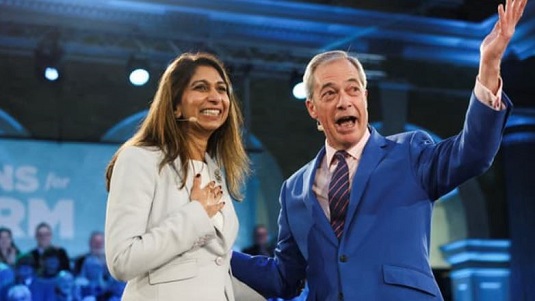
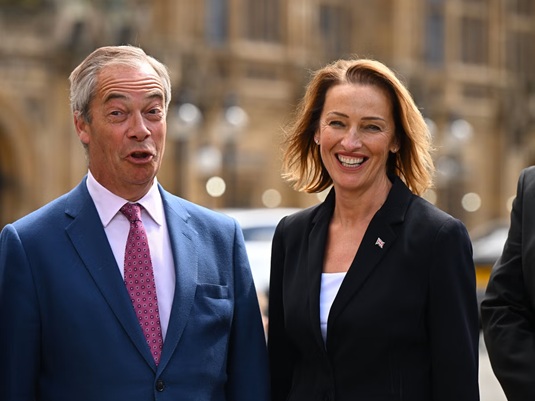
Not another one! Having blogged on many occasions that Nigel Farage would never be so daft to take on Suella Braverman, on Monday he unveiled Reform's latest star defector - Suella Braverman! There she was giggling on stage as if she was doing something very naughty, she launched into a hypocritical rant about how awful her old party was, how most Tory MPs would be better off sitting as Liberal Democrats, etc. Snore, bore, we've heard it all before. Braverman moaned about being politically homeless for "two years" - but obviously was comfortable enough to stand as a Conservative candidate at the last general election. In reality, what she couldn't stand was being out of the limelight. As Kemi Badenoch took over, there was little backbencher Braverman could do to attract attention as the new leader took the party even further rightwards. And now she's back in it. Top billing in politics news, knocking the Andy Burnham fallout off its perch, hundreds of comments on Conservative Home, and she can look forward to framing the front pages tomorrow morning with her and Nige striking the old chums pose.

Farage justified taking her on because Reform have got to fill out "the experience" the party so far lacks in government. One might wonder if recruiting a bunch of clodhoppers responsible for the disasters of the worst administration in British political history is wise, seeing that many Reform supporters turned to the party because they were fed up of the chancers Farage's recruitment drive keeps scooping up. For Braverman, she has the licence to say many of the racist things Sarah Pochin can't and can do this far more effectively than Farage's other misfits and turncoat failures. A useful idiot in the truest sense, the danger to Farage comes not from offending a liberal opinion that Labour, more than anyone else, has contrived to snuff out, but in reminding the more racist-minded core support of Reform that the woman who promised and failed to deliver the abominable Rwanda scheme is now making a living off the back of their party.

The Tory response was silly and apolitical, suggesting - at least initially - that Braverman's defection had something to do with poor mental health. When, in fact, all she's suffering from is incurable narcissism. By blowing up her membership, Braverman can enjoy her 24/48 hours as if she's relevant again. But Reform in the Nigel Farage show. Yes, she can say racist things, but she cannot be allowed to have more exposure than the party's dear leader. Her trajectory is on the Lee Anderson track, once a noted gobshite the media could not get enough off, and now a strangely cowed, strangely silent presence. Like a Sleeper bloke anonymously strumming in Louise Wener's background. Cutting through and being a face again won't be helped by further Tory defections as they seek their moments in the sun, and the prominence existing Farage minions, such as Zia Yusuf, and Laila Cunningham feel they've earned ahead of the conveyor belt of carpet baggers. A dictatorship Reform might be, the toxins and petty jealousies clinging to each imported recruit is sure to give the party bilious stomach cramps sooner or later.

Image Credit

Monday, 12 January 2026

A Bolt Hole for Failed Tories


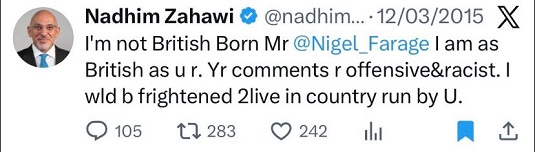
So frightened was Nadhim Zahawi, that 11 years on he shook Nigel Farage's hand and joined Reform. For Farage, bagging another (former) leading Tory is always a coup. It attracts favourable coverage in the right wing press, encourages more ex-MPs who'd like to have another crack at Westminster to think Reform is the better bet, and for everyone else it confers the impression that the momentum is still with them. The only time Nigel is likely to say no to a petitioning defector is if they're a big personality/loose cannon. Which is why the door remains firmly shut on Suella Braverman.

Zahawi though. He's always been a bit of a no mark. Serving for two whole months as the chancellor, he distinguished himself there for calling on Boris Johnson to go without resigning. And later he got sacked by Rishi Sunak for dodging tax while threatening to sue journalists for defamation. A pity it never went to court as the self-inflicted humiliation would have been delicious. Anyway, for a man even Keir Starmer mocked as a lightweight, the reasons for throwing in with Reform are predictably vacuous. The country needs a "glorious revolution" we're told, we're reeling under an avalanche of illegal immigration, and the Tories are likely to cease trading as a national party before long. One wonders when he reached these conclusions. Was it before or after Kemi Badenoch rejected him for a peerage?

Looking at the list of notable Tory-Reform switchers, they all have something of the second-rate about them. Nadine Dorries, Jonathan Gullis, Jake Berry, Danny Kruger, Andrea Jenkyns, all at best were side characters in the Tory dramas of recent years. Despite strenuous efforts at courting notoriety or having public tantrums. Legends in their own lunch times they undoubtedly were, but they are anonymous to the public at large. And Zahawi fits right in, a non-presence who'll be a stranger to most Reform members, let alone its more disengaged support. Which begs the question, does Farage actually benefit from providing a bolt hole for Tory mediocrities and failed politicians?

A lot of it depends on who's doing the pointing out. From a Labour Party perspective, the numbers show that Reform's claim on its 2024 voters is scanty indeed. For this marginal group of voters, highlighting how Tory faces from Boris Johnson's tenure are popping up in Farage's supposedly anti-Tory party might be supposed to be a killer argument. If Labour hadn't kicked off its first year in office with attacks on elderly people while unapologetically helping themselves to the spoils of office. For this layer, their perception of little difference between the Tories and Labour in power is unlikely to dissuade them from giving Farage "a chance", even if his party is fit to bursting with Tory turncoats. If the Liberal Democrats and Greens are going to talk about it, then perhaps they can stymie that small proportion of Labour's vote tending to the right, but it will be they who benefit from residual anti-Tory feeling attaching to Reform, not Labour.

But could the wave of Tory defections put off Reform's existing supporters? It's doubtful. The lack of big personalities, competence, or shred of intelligence between them means no one is about to upset the Nigel show. If a new arrival was to get into a pickle, like problems with taxes, too-strong racism, or a good old Tory sex scandal, it won't be a problem for Farage to shrug it off. Or them, if necessary. Charges of school boy racism, dodgy funding for his home, collusion with Russia, and buddying up with Trump haven't unduly damaged him. So difficulties involving next-to-invisible trophy minions won't either. He knows this, and so more defections are likely to come. And more of them will get nodded through.

Tuesday, 25 November 2025

Labour's Continued Attacks on Liberty

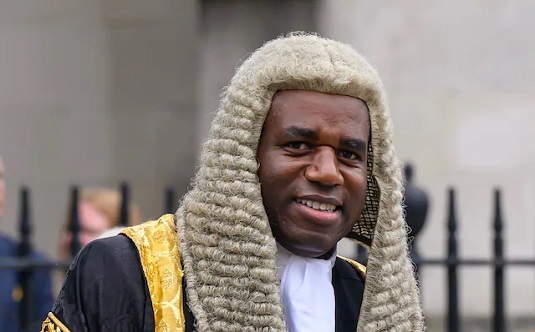
Here is a story that won't stick in the headlines for more than a day. David Lammy has unveiled plans to curtail the right to jury trial for anything but the "most serious" offences.The Times reports the automatic right to appeal will also be scrapped by the government. The plans will involve a new tier of courts presided over by judge-only trials, and will cover offences with penalties of up to five years in prison and/or especially complex cases, like those involving fraud. Relying, as ever, on managerial justifications for a political decisions, drawing on a report by our old friend Sir Brian Leveson, his recommendations were that upending of the right to jury trials would bring much-needed efficiency to proceedings. There is a huge case backlog and that is set to grow further by the end of this parliament, so getting through cases quicker will stop the system seizing up. Leveson and Labour are one: doing nothing is not an option.

Evidently, neither is restoring the levels of resource to the courts that was worn away by the Tories. Hypocritically, Kemi Badenoch memory holed her party's record as she criticised the proposals to scrap juries. Ordinary people have a role to play, she mused. Suella Braverman (remember her?) called this a "serious assault on our liberty" and "an end to our world class justice system". This is the very same former Attorney General who attempted to disregard the jury-led acquittal of four Black Lives Matter protestors accused of dumping Edward Colston's statue into Bristol harbour. Despite this, unfortunately Badenoch and Braverman's charges are examples of the worst people you know making good and correct points. Though if Badenoch takes Keir Starmer to task about this at Prime Minister's Questions, he'll have the list of Tory failings ready around court waiting times, levels of defunding, and so on. It's all very predictable.

That said, I'm not buying what the government are selling. Lammy is saying the backlog has to be reduced, and so the process needs speeding up.That's as far as it goes. Are we to suppose it's a matter of coincidence that this comes after Labour have backed state-mandated curbs of the right to protest and clampdowns on our liberties? Such as the disgraceful designation of Palestine Action as a terrorist group, more police powers to prevent protests, including stopping what they deem "repeat protests", and Labour's support for disproportionately long sentences for "disruptive" protestors - particularly those from the environmental movement. Combine that with Labour's attack on asylum, including the legal remedies open to those forced through their inhumane-by-design process, and ICE-style deportations units, Labour are happily - gleefully - building up the infrastructure an authoritarian regime would find useful. It's a good job a right wing extremist party isn't topping the polls and stands no chance of winning the next election.

Image Credit

Sunday, 9 November 2025

The Right Wing War on the BBC

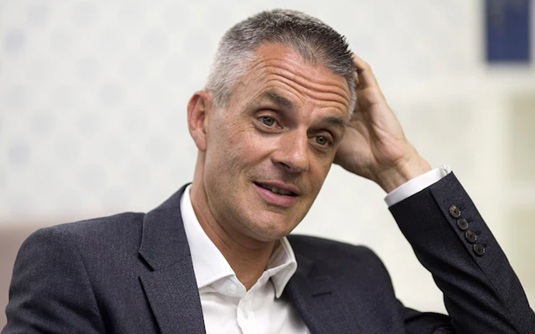
The resignations of Tim Davie, BBC Director General, and Deborah Turness, the corporation's Head of News was some unexpected Sunday news. The trigger, as if you didn't know, were accusations of bias and unfavourable editing of an edition of Panorama. 'Trump: A Second Chance?' was found by an internal review to have misled viewers after showing a clip that spliced together two parts of the speech Donald Trump gave to his supporters on 6th January, 2021 prior to their storming the Capitol. As James Ball rightly noted, while the actualité was off, the substance was true. Trump did rile up his rabble, and he did try to prevent the constitutional passing of the presidential office to Joe Biden. But the truth doesn't matter. The White House has been crossed and there had to be consequences. The departure of Davie and Turness was the price to be paid.

I've occasionally written about the BBC and the role it plays in British politics. The ideal of fact-based reporting, impartiality, and balance have always been values worth striving for. These are the chief props around which the corporation's illusio is draped. But like most official ideologies, these are for the little people - those who produce BBC programming, and those that consume them. As Tom Mills argued a while back, as an institution its leading cadres have always been clear which side the BBC is on. It cleaves to the state, is always guarded in its critical reporting, and takes its political coverage cue from the right wing press. Even though they're in such an advanced state of decay that their collective editorialising reaches niche as opposed to mass audiences.

Despite this, and having been led for the last five years by a close ally of the Tories, being overseen by committees of Tory appointees, and Turness's own efforts to skew news story selection to "win over" Reform supporters, the right in this country want to see the BBC destroyed. The media interests BBC news coverage does so much to emulate want an end to a non-commercial competitor. They want it gone so there's more eyeballs on their programming, more markets, and more opportunity to shape output through the pressure of advertising. They want to rid the airwaves of the idea of journalism, and reduce news coverage to the abysmal level of GB News-style propaganda. The BBC, like the NHS, also demonstrates that organisations based on state funding independent of markets can be successful. Which is anathema to the small-minded but hyper-class conscious elites that dominate this country's media production.

What now? There is an opportunity for the government here. The BBC Board will appoint the next Director General, and considering its present make up another establishment worthy with solid links to the right wing press and/or the Tories would be a likely pick. However, though the body is arm's length there are ways and means Keir Starmer and Lisa Nandy, as culture secretary, can engineer an outcome congenial to them. There are plenty of former Blairites orbiting around the consultation/CEO/directorship circuits available for the role. It is in their interests to have someone at the helm that would nudge the BBC's steering wheel away from amplifying right wing talking points and give the government a bit of a break. But as we've seen time and again, this Labour leadership's first instinct is to appease the right. In my view, Starmer is more likely to acquiesce to the appointment of another right winger than get anyone committed to the BBC as an institution. After all, giving in to what the oligarchs want is the grown up thing to do.

Image Credit

Tuesday, 28 October 2025

Racism and the Right

Racist party in racism shocker. Reform MP Sarah Pochin has been forced to apologise after saying "it drives me mad when I see adverts full of black people, full of Asian people, full of anything other than white." Her non-apology partially withdrew her remarks, saying she wanted to say something about how unrepresentative adverts are. As far as the rest of mainstream politics was concerned, this was a straightforward racist outburst. Wes Streeting didn't mince his words, seeing as Labour have belatedly discovered that opposing racist arguments is a good thing. The Liberal Democrats have moved a Commons motion of censure against Pochin too. But more interesting were the remarks from Chris Philp, the shadow home secretary. Asked to respond, he said "It’s not language I would have used ... but we should acknowledge the public do have legitimate concerns about large-scale immigration and discussing that is certainly not racist." That Pochin was not talking about immigration suggests, at best, that Philp has a blind spot on racism.

It's hard not to conclude that the right are embracing racism in ways we haven't seen for years. The last Tory government certainly pursued racist policies. From Theresa May's hostile environment and victimisation of Windrush citizens, Rishi Sunak's Rwanda scheme, and the rubbish peddled by Suella Braverman, they sailed close to the wind of mainstream conventions but purposely had an element of plausible deniability. We aren't targeting black and brown people, our beef is with legal and illegal immigrants and asylum seekers. We have to control our borders, Britain is only a small island, and this have nothing to do with race. These pretences have evaporated. The repugnant Robert Jenrick can complain about not seeing any white faces during a trip to Handsworth. Nigel Farage can unveil plans for deporting everyone with indefinite leave to remain, while having a convicted racist hatemonger address his conference. The Tories have tried outbidding Reform, with the "rising star" Katie Lam calling for more deportations to make the country more "culturally coherent", which Kemi Badenoch has said is broadly in line with party policy. And then the Pochin/Philp nonsense.

There are a couple of popular theories circulating around online political chatter. The first is about Twitter, or what it has become. Under Elon Musk, it is an open sewer, a welcome home for neo-Nazis, Holocaust denial and antisemitism, anti-Muslim and anti-black racism. Musk has created a safe space where the far right are not just tolerated, they're coddled. The algorithm boosts their posts, and several times Musk has publicly intervened to promise that Grok, the AI chatbot he's forcing down users' throats, backs up and supports racist views of the world. Meanwhile, links to external sites have been downgraded, and the reach of left wing and even centrist views are algorithmically dampened. The theory goes that the right, and much of the political establishment for that matter, have remained on the site and treat it as they always have: as a window on the world. Because the far right have been normalised on the platform, political and media elites assume this is reflective of real life. With Reform topping the polls and immigration surging as a priority issue, these serve as secondary confirmations of this belief. Hence the overboard coverage and discourse here about the assassination of Charlie Kirk, and the importation of many a trope and trick from Trumpland. Twitter brain makes them think overt racism is popular, that it has cut through.

The second is a consequence of the aforementioned immigration policies pushed by the Tories. The relentless scapegoating and dog whistling around refugees only has one place to go, and that's outright racism. Cut the crap and go for plain speaking. The racist rioters last year knew what they were about, and follow up remarks from the Tories showed they understood too. With Reform stealing the Conservative base from under the party's feet, going ever more extreme is the only way of holding the central components of their coalition together. This was aided and abetted by Labour too. Keir Starmer's critique of the Rwanda scheme was about cost and practicality. Nowhere did he or his front bench challenge the politics. Over this year, they've tried to look credible and failed utterly on small boat crossings while ratcheting up immigration controls. And we had the utterly shameful spectacle of Labour ministers refusing to criticise this summer's far right-organised protests against asylum seekers, saying they were sympathetic to their "genuine concerns". And they wonder why the Greens are surging. The consequence of this? Laying the ground work for open racism to flourish.

Both points have something to recommend them, and neither excludes the other. But I think they speak to something fundamental - a deep crisis in ruling class politics that goes beyond the decline of the Tories and the evaporation of Labour in office. Gramsci's celebrated discussions of hegemony were more than a question of securing popular consent for class rule. It was inseparable from providing leadership, of a tiny class and its allies generalising their particular interest as the universal interest, their class-bound outlook as the proper, commonsensical outlook. Their rule as the natural state of things. Generally this sits in the background, and only comes to the fore at moments of crisis. The post-war consensus, the compact between labour and capital to ensure the latter's continuation was refracted through Labourism and one nation Conservatism and helped pacify the radical mood following the war. The class battles of the 1970s and the ruling class "solution" of Thatcherism was another. Though not at the same level, New Labour emitted sub-intellectual hogwash about the third way that gestured toward political leadership, as did the Tories of the coalition years with their Big Society hand waving, and after them May with her talk about the burning injustices, and Boris Johnson with the mashing together of Brexit and "levelling up". When Liz Truss induced a crisis in public finances, it was simply introduced as a measure that would straightforwardly favour the wealthiest. Sunak abandoned this, but retreated from offering leadership as he tried keeping his government on an even keel. And Labour? As Starmer has retreated from his leadership pledges, he's also drawn back from those aspects of his platform that might have laid the foundations of a new hegemony. The devolution agenda, green energy, expansive workers' rights, all have been toned down. And what do we have instead? Breakfast clubs, AI boosterism, arms for a genocide, and blandly technocratic statements about economic growth.

This is a problem, because their system is beset by trouble. The old way of governing is in crisis, it is not delivering the goods, and their traditional political agents find their legitimacy collapsing. Labour is an ideas-free zone, and their effort to rest their appeal on "delivery", as if voting is a simple question of customer satisfaction, is doomed. There is no sign from within that they're capable of providing the leadership this moment if crisis requires, either for their own electoral wellbeing, for sustaining class relations, nor providing initiatives for gaining popular consent for the persistence of this state of affairs. They're relying on social inertia to keep things going.

The same applies to the right. Strip Reform of its racist programme and what does it offer? Is there any sense of giving Britons their sense of self-respect? Of rebuilding a country of community and belonging? Of a policy agenda that might restore the country to the land of nostalgic fancy? No. Theirs would be a straightforward rule of oligarchical interests just like Trump's America. A hellhole of roving deportation gangs, crude and racist public discourse, shuttered cultural institutions, and a hobbled politics. The Tory programme, at this stage, is identical. It too is stripped back, the bones of the class relations they uphold visible through paper thin skin. Because the starting point of right wing politics is dishonesty, of presenting the elite interest as the general interest, central to these politics across time and space has been division, of preying on existing divisions or generating them where they haven't previously existed. The latter does require some political nous to identify and articulate new out-groups, which is what the press is for in this country. But the right are now so bereft of talent, so clapped out and lazy, that they turn to the basest forms of divide and rule transmitted and received from the past. Again, Trump is the model and the possible future. A racist administration largely unconcerned with popular concerns as they trough on state coffers, lock up Americans, and erode democratic norms and mechanisms of accountability, such as they exist. And for what? there's no sense of historic mission, just a grab-what-you-can while they can before multiple crises get so bad that they either cannot get away with this any longer, or what they're doing becomes impossible. This is where the recrudescence of racism on the right comes from, a class project butting up against its limits without any obvious way forward. Faced with the end, this has encouraged the opposite of thinking, the opposite of leadership. All that's left is an opportunity for one more round of looting, and collective stupefaction. The right's re-embrace of racism is a morbid symptom, and one that cannot abate.

Image Credit

Saturday, 11 October 2025

What Happened to One Nation Conservatism?

The jamboree of delusion and extremism that was Conservative Party conference birthed a small, fleeting genre of political centrist-to-soft-left commentary about them. Columns by Zoe Williams, Polly Toynbee, and "The Bear" more or less make the same point. The Tories utterly deserve their miserable fate, but at the same time this is bad news. Keir Starmer needs to be held to account at the dispatch box to ensure good governance. Lack of scrutiny leads to bad decision-making. Second, a weak Tory party cannot be a bulwark against the racist right. If it was a viable party, the low instincts of reactionary voters would be sublimated and moderated. Instead, what we have is their free expression, all the consequences that entails, and the Tories acting as permissive peddlers of this rubbish.

There is some truth to these arguments. During the mid-late 1970s, the toxic brew of a popular, authoritarian moralism, anti-immigration politics, and racist moral panics around inner city violence and mugging - against the backdrop of rising class consciousness, a powerful labour movement, and a flailing Labour government - powered the rise of the National Front. But come the 1979 general election, by leaning into these issues the Tories snuffed out the NF's support. The price was, however, the breaking of the labour movement, the defeat of collectivist politics, and a long period of more-or-less untrammelled dominance of labour by capital. A period, some might say, we've yet to emerge from. Another more localist example comes from my old stomping ground of Stoke-on-Trent. During the 00s, the British National Party came within a whisker of winning the elected mayoralty and had nine council seats. Fuhrer Nick Griffin referred to Stoke as the jewel in the BNP's crown, among other things. While the BNP were ultimately defeated by the joint efforts of the local anti-fascist movement and the Labour Party, they were able to get an opening because the Tory organisation in the city was but a rumour. In many wards the Tories didn't bother standing, so part of the BNP coalition were right wing voters for whom the fascists were the only option.

But also, there is a dollop of nostalgia. One nation conservatism appears attractive because it offers something for everyone. In contrast to the zero-sum class conflict Benjamin Disraeli plays out in his famous Sybil, or The Two Nations, what we all share is the nation. We are either born into or become members of a national community, and this forms an essential (if not essentialised) commonality between us. Racial difference, class location, gender identity, sexual preferences, we might not be equal but we are all Britons. We are equal before the law, are free to acquire property, but most importantly we all have a place and make a valuable contribution. One nation conservatism also believes that the institutions cohering and constituting us as a national community have evolved slowly out of the accumulation of historical experience, and as such are embodiments of generations of wisdom. This is exemplified by the state, in which the crown, the church, and the commons exist in partnership - one where, rightly, the people via their parliamentary representatives are sovereign but are at times guided and tempered by the wealth of experience and moral rectitude upheld by the monarchy and the clergy. And in practice, what does one nation conservatism mean? A party that self-consciously governs for everyone, that protects the social fabric and therefore the ties that bind our country as a community. Social problems are occasions for moral improvement and judicious intervention. Inequality, though inevitable, cannot be allowed to get out of hand. The obligation to work by the many is matched by paternalism, respect, reciprocity, and charity on the part of the wealthy few. One nation conservatism is therefore frightful of rapid social change, which can ride roughshod over delicate equilibria painstakingly forged over centuries. It is deeply suspicious of any politics, particularly left wing politics, that seeks to remould society according to radical blueprints. That way tyranny lies.

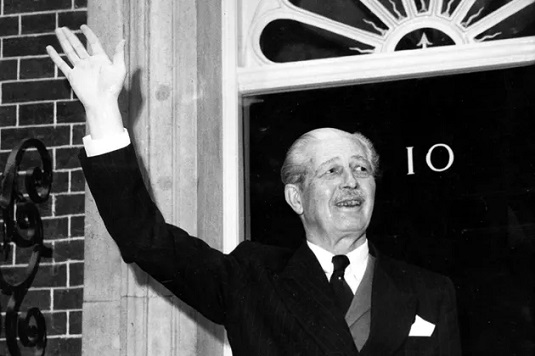
Harold Macmillan is the Tory leader and Prime Minister most associated with one nationism. At the height of the post-war boom, following his immediate predecessors the Conservatives were committed to the class compact struck by the 1945 Labour government. Council homes were built, the capacity of the welfare state expanded, public services adequately funded, and full employment maintained. Macmillan emerged from a youthful attraction to moderate conservatism, liberalism, and Fabianism, and was further imbued with a social conscience during the depression. Unlike most of his Tory colleagues, he was exercised by and campaigned against mass unemployment - reinforced by his Stockton constituency being badly blighted. He went on to serve in the war time government, and in Churchill's post war administration was the minister for housing. Macmillan understood that for his class to maintain itself in the long-term, the lower orders needed a stake and therefore a place within it. As such, well into his retirement he criticised Margaret Thatcher and her characterisation of the miners as the enemy within, but other aspects of her programme, such as privatising state industry, was something he supported. But ultimately, one nationism didn't prevail - for a time - because of Macmillan. Between the late 1940s and late 1960s, there were over two million members of the party. Association bars were common sights across the country, and the Tories had strong roots among sections of the working class. As late as the 1970s, the Tories organised tens of thousands of trade unionists. As Jeremy Corbyn today embodies a radical movement against capitalism, so Macmillan personified a mass defence of a system that then shared the goods. He was at the head of a conservative social movement with real mass appeal.

That age is long gone, and from the two-nation Toryism of the Thatcher and Major years through to the war of all-against-all hellscape proffered by the Conservatives today, there's no sign of it ever coming back. At least through the offices of that party. As if to underline the one nationism's flatline, in her piece Polly Toynbee musters a single 20-year-old student with a website as the only sign something resembling a return to Macmillanism is in the offing. One nation has gone because the Tories buried its political economy and inflicted a strategic defeat on the labour movement. It was they that decided the "solution" to the crisis of the 1970s was to do away with the postwar compromise and rebalance class relations with capital firmly in the saddle. The only problem was that this also undermined first the mass presence the Conservatives had in the country, and then, after a long, drawn out process, their passive support at the ballot box. A moderate, sensible Tory party, however much such a creature is preferable to the gateway to the far right that exists today, is not going to happen. What we see with the gruesome Badenoch-Jenrick double act, and the Putin-friendly chums of the oil lobby in Nigel Farage and Reform is where right wing politics is right now: as a naked and open defence of class relations and oligarchical interests. For the first time the right are open and honest about what they're about, and it's best for us to face them as they are. Willing back a time when they stated their interests with more circumspection is not helpful. There are no good Tories. Only class conscious defenders of a decaying system.

Image Credit

Wednesday, 8 October 2025

Tory Watching at the End of the Conservatives

What do you mean you didn't watch Kemi Badenoch's keynote speech at Conservative Party conference? Why, what a treat you missed out on. There were innovative and original policies like abolishing "mickey mouse" degrees, throwing bungs at rich landowners by reversing Labour's land tax, promising to spend half of her welfare cuts on paying off the public debt, abolishing stamp duty, clamping down on workers' rights, and subsidising private schools. An exciting policy agenda I'm sure you'll agree, and one that would very definitely reverse the long Tory slide.

Luckily, if you're one of the few people that have wondered about whatever happened to the Tory party, I sat down with Alex of Politics Theory Other fame to discuss all things Conservative. I guarantee it's more informative and entertaining than any amount of conference and fringe events that have streamed this week.

Monday, 6 October 2025

The Unreality of Tory Economics

How was your lunch time? I spent mine catching snippets of Mel Stride's speech at Tory conference. He's the shadow chancellor in case you've stopped listening/watching the doings of the Conservative Party. But I couldn't resist. Some people collect stamps. Others tour the country visiting every Wetherspoon's on the map. Me? Seeing if there's any sign the Tories have become conscious of their worst ever crisis and if they've cobbled together a ladder that can get them out of their hole. If Stride's address is anything to go by, my advice to the Tories would be to start furnishing said pit. They are going to be there for a long time.

If Kemi Badenoch is supposed to be doing the showy stuff, then Stride is the unglamorous details man. Suspend your disbelief and buy in to the science fictional conceit that the Tories can win an election. Their next government would make £47bn worth of cuts. £23bn would come from cutting sickness-related social security support. Stride has decided that people with mental health conditions like depression, ADHD, and anxiety merit deserve no support at all. Presumably, work is the silver bullet that would vanquish these illnesses. Our old friend civil service cuts are back for another tour of duty, sacking 132,000 people and returning the state bureaucracy to the size it was in 2016. You know, when it was so stretched it famously did less planning for Brexit than the Japanese government. This represents an "evolution" of Badenoch's deep thoughts, who last year was merely interested in more efficient admin. This would yield £8bn in "savings", with the rest coming from reducing overseas aid further, tying benefit eligibility to citizenship, cutting environmental commitments, and scrapping hotel accommodation for refugees.

And this hodgepodge pays for what carrots? The reversal of Rachel Reeves's increase in employers' National Insurance contributions is front and centre. Allied to this is a promise to scrap business rates up to a limit of £110k/year for retail, hospitality, and leisure. Taken together I'm sure small independent traders would welcome this so don't be surprised if Labour half-inches some of this, especially nearer to the next general election. And what about young people? The Tories have spent years scratching their heads and wondering how to attract layers of younger people to whom they are repulsive. And their answer is ... a £5,000 cash hand out. This would be a tax rebate for new workers in their first job. What would have been NI payments can be cashed in after five years and spent as they see fit. Don't ask what this could mean for state pension eligibility later on.

At the end of his speech, Stride got a bit overexcited, castigating the doom-mongering of the other parties and claiming the mantle of hope for the Tories. Which was as audacious as it was a waste of time, seeing as no one was watching. While Badenoch and co. have gone off the war on woke deep end, the shadow chancellor has stayed firmly on the ground of traditional Tory economics. A little something here for small business, an eye-catching bribe for a wider constituency - in this case, young people. And all paid for by robbing the futures of the beneficiaries of this policy, stripping out state capacity, and promising to govern like Rishi Sunak. If you remember him. Unfortunately for the Tories, conservatism here means being out of step with political realities. British capital needs a stronger, more reliable state that can do things. And despite the best efforts of Labour to dampen expectations, this is what its diminishing support and expanding former voters want to see. As does the bulk of Reform's support when the racist circus orchestrated by ringmaster Farage isn't at the forefront of their minds. The Conservatives are nowhere near where the punters are.

You could make the case that Stride's speech was as much about consolidating the Tory base as whatever rubbish Badenoch has stored away for her main conference address. But all the same, while the Tories are party to the racist and anti-democratic consensus uniting Labour and Reform on immigration and "social conservatism", they are outsiders on the economic questions of the day. So no, Stride didn't offer any credible salve for his severely wounded party. Compounded by an inability to see how and why the Tories are broken.

Image Credit

Sunday, 5 October 2025

Kemi Badenoch's Attention Seeking

Do you remember the Conservative Party? For much of this year, they hung around like a half-remembered memory. It's difficult to recall when they were the centre of political life, and I write that as someone who wrote a book and has expended hundreds of thousands of words about them. Are we living in a Britain after the Tories? It certainly feels like it. The current crop of polls has them hovering around the 16-17% mark, and they are entirely marginal to a discourse geared around the Labour/Reform face off. It seems even the Liberal Democrats and Greens are attracting more coverage and comment these days. More than any other party, this is the world the Tories have shaped. And they're absent from it.

When the Tories were dumped out of office last year, there were two strategic directions available to them. The first, which was an outside shot, was learning from their experience of trying to be a right wing "populist" party, how this positioning alienated the broader constituency they depended on, and that this committed them to promises they could not deliver. Such as the Rwanda scheme and their war against the boats. The solution? Reinvent themselves as a moderate centre right outfit that eschews the politics of division and begin constructing an appealing project that might get a hearing outside its shrinking heartland of reactionary pensioners. What with the composition of the parliamentary party and the membership being as it is, such a transformation would be as difficult as it is painful, but the party's long-term viability depended on it.

And so the Tories chose the easier path. To those for whom politics is a tussle between ideologies and vibes, this appeared as an illogical retreat into their "comfort zone" where the party can feel safe. As per its 1997 drubbing. In fact, from the standpoint of the party's two leaders this did make sense. Having suffered an earth shattering defeat, consolidating one's base by turning further to the right is a reasonable, if mistaken, response. Once the base is firmed up they could then sally forth and contest Labour for votes. This was reflected in Kemi Badenoch's oft-stated timetable for her leadership: spend a couple of years getting the philosophy right before making policy. But there is a problem. A Nigel Farage-sized problem.

Before Farage decided to re-enter British politics, Reform were barely of any consequence. But since he has become a lightning rod of disaffection, being able to prey on right wing voters for whom the uselessness of the Conservatives was amply demonstrated over five years, and the layer of Reform-curious Labour support repelled by the cruelty and incompetence of Keir Starmer's "grown-ups" and are game for giving someone else a go. Wall-to-wall media coverage hasn't hurt Farage either, with his political pronouncements burying the Russia links, not declaring earnings, and questions over who purchased his home. As such, Reform's rise has severely disrupted Conservative regroupment and making consolidation difficult, if not impossible. Matters are not helped by the fact that neither Badenoch, nor Robert Jenrick, the man who would be king, are up to the task. As they have been eclipsed in the polls, media attention, including coverage provided by what Tim Bale helpfully calls 'the party in the media', has moved on. Unaccustomed to playing second fiddle in British politics, to be relegated to third party status in the attention economy is a reduced circumstance the Tories have never endured before. How can they make waves again?

They have decided that a mixture of stunts and policy extremism can catch the media's eye. Though obviously a self-serving effort to try and secure the leadership for himself, Jenrick's ridiculous rail ticket vigilantism earned the Tories at least one item on Newsnight, but dismissal from everyone else. It demonstrated an unpopulist touch, as most rail passengers despise the money grubbing of train operators, and coming across as a plummy accented tube station Blakey could only invite ridicule. And then as small bands of fascists, egged on by the press and Reform, tried desperately to stir up a repeat of last summer's riots, Jenrick joined the protest in Epping outside the Bell Hotel, which was hosting refugees. I doubt many of the racists there knew, or for that matter cared, that this arch opportunist was rallying against a policy that he developed and implemented. Still, the media were there and it reminded the Tory press that their traditional party still existed and was trying to dance to their tunes.

Jenrick has his own approach to attention-seeking, and Badenoch has hers. With attendance well down on last year's party conference and adrift in the polls, how can she capture the headlines and turn heads? The first part of her gambit was pledging to abolish the climate change act, thereby aligning her party with fossil fuel profit margins. This will do nothing to appeal outside of the Tory core, meaning dozens of Lib Dem MPs across southern England's new yellow wall can sleep a touch more soundly. It is something Tory and Reform supporters have an opinion about, but climate change denial is not the reason why Reform supporters support Reform.

Not fussed with those opinions? Badenoch has others. The Sunday press splashed with her promise to deport 150,000 people every year. Challenged by Laura Kuenssberg, the Tory leader disassembled into stamping her foot and exclaiming "they should not be here", "send them back to where they came from", and making clumsy elisions between refugees and criminality. This pitch to the Reform faithful would include an ICE-style "removals force", which Badenoch describes as a "successful approach". As Donald Trump's goon squad, lest we forget that ICE goes out of its way to terrorise mixed ethnicity working class communities, and will scoop up anyone it doesn't like the look of. Badenoch is too stupid and too reckless to realise that their racial profiling means that members of her own family are theoretically at risk of the state-sponsored thuggery she would unleash on others.

This means getting rid of legal blockages that may hamper such work. On Saturday, Badenoch also confirmed she would withdraw the country from the European Convention on Human Rights. This would also mean leaving the convention on human trafficking, something the Tories might at least want to pay lip service too. The plan is a system where making asylum claims is virtually impossible, and legal oversight and accountability pared back. Effectively a design for one, two, many Windrush scandals. And something the Tories would welcome as a metric for how tough they are. How this would impact on the Good Friday Agreement and the post-Brexit settlement with the EU doesn't impinge on their thinking. As per the Boris Johnson way of doing things, these are problems for another time.

What else might Badenoch have up her sleeves this week? Flat taxes? The abolition of inheritance tax? Banning trade unions? Her problem is that for that tiny minority of the electorate that get switched on by the cruelty of mass deportations, the Tories can be - and already are - outbid by Reform. In addition to platforming someone jailed for saying refugees should burn, Farage has said he would abolish Indefinite Leave to Remain and promise to deport 750,000 people. Do Tory strategists, such as they are, think diet versions of Reform's full fat offerings will satisfy their appetites? This can only lead to one of two conclusions. That they are as clueless as they appear, are resigned to never winning back the 249 seats lost to parties to their left, and that they cannot orientate themselves in a political landscape where their privileged position has gone. Or, that to survive, they're making themselves into a party not a million miles away from Reform so they look like a viable coalition partner. You decide.

Unfortunately, the decomposition of the Tories continues to toxify politics. Along with Labour, Badenoch is using the small media opening she has to reinforce racist and anti-immigration politics. Their rhetoric is the background to increased racist attacks, the justification of more state violence, and an authoritarian charge to the gutter that only Reform can win. While some in the party think it would be nice for the Tories to continue all of them would be okay with Farage in Number 10 because, ultimately, the class interests both of them serve are largely identical. A Reform government would buttress corporate power with the brutality and attacks on democracy we've seen wherever their ilk get into office. The Tories, even as a spent ginger group on the margins of politics would be fine with this. The rest of us cannot afford to be as sanguine.

Image Credit

Monday, 1 September 2025

How Not to Cover a Reshuffle

The new parliamentary term began today, and Keir Starmer led it off with a small reshuffle. Darren Jones has moved from the Treasury to 'Chief Secretary to the Prime Minister', a new position in charge of "delivery". Baronness Minouchie Shafik, having previously done stints at the IMF and Bank of England is now Starmer's chief economic advisor, and Tim Allan - former Blair lackey and founder of the Blairite comms firm, Portland, is confirmed as the sole head of Downing Street's PR machine. Gone is Liz Lloyd, another Blair era appointee, to make way for Jones. Politically, does it mean anything? Does it signify a fresh start? No. The government remains the same slow motion car crash it was yesterday.

That hasn't stopped some from trying to read significance into these mainly managerial moves. In some of the most tenedentious commentary I've read recently, for the Telegraph associate editor Gordon Rayner declares this was "a power grab" that shows Rachel Reeves is on borrowed time. The evidence? Moving Jones to Number 10 leaves the chancellor "publicly humiliated". Mindful that Prime Ministers who sack their next door neighbours aren't long for this political world, this is apparently an element of a low-key campaign to make her life impossible and force Reeves's resignation after her multiple misfires in office.

This, alas, is an exercise in right wing wishful thinking. A point underlined by the additional comment provided by John Redwood. For one, if the framing was true there would be "insiders" touting anonymous briefings. Maybe Rayner's contact list has a dearth of Labour numbers, so he couldn't find anyone to give him the inside track. But nowhere else is running the line that this is a constructive dismissal effort. Not even the gossip mongers at Guido, who prefer to dwell on how Jones's appointment takes some responsibilities off Pat McFadden. If displeasure underpins the reshuffle, one could make a more plausible case for it being at the expense of his brief, not Reeves's.

Since Reeves's appointment, there is some truth to the notion that she has blindsided Starmer, particularly with last summer's debacle over winter fuel payments. One might suggest Starmer had no choice but to stick by his chancellor so early in the new government, but her initiative was consistent with the Labour right's approach to social security. And it proved to be the jumping off points for further attacks, most of which have been blunted or abandoned. These cannot be layed solely at Reeves's door. The Prime Minister nodded every one on, and his unelected henchmen were greenlit to do their worst "persuading" opposition-minded MPs to back the line.

There is no truth in the view that Starmer and Reeves are in tension, let alone at splitting point. He has accepted her outlook, conditioned as it is by the Treasury/Bank of England/City nexus as the commonsense view on matters economic - reinforced by Shafik's appointment. This reshuffle is business-as-usual and more of the same. And Rayner's Telegraph piece? A case study of forcing the facts to fit a baseless conclusion. Which just about sums up the entirety of right wing politics in the moment of Conservatism's collapse.

Tuesday, 22 July 2025

The Real Electoral Reform Threat to the Right

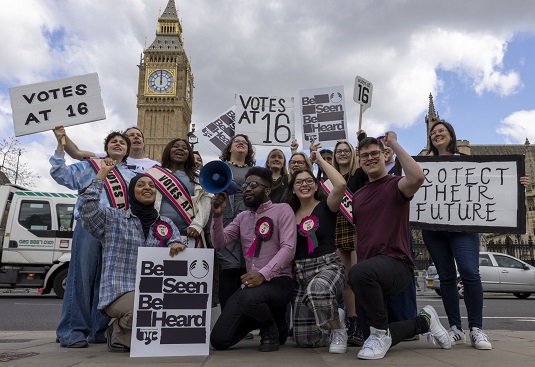
Shock horror, Labour have announced something that meets with the approval of this corner of the internet. As parliament was shutting up shop for the summer, the government announced its elections strategy paper. This aims to undo some of the damage the Tories have done to voting by expanding voter ID to virtually any and all forms of identification, and clamping down on overseas donations. But it aims for some modest improvements. Sadly, no form of proportional representation, but they are extending the franchise to 16 and 17 year olds, finally bringing Westminster and local government elections into line with devolved contests in Wales and Scotland.

Predictably, the right are very upset. The Tory communities brief, Paul Holmes, called it a "brazen attempt" at constitutional jiggery-pokery, clearly believing this will deliver extra votes to Labour as the Conservatives have given up influencing anyone outside a small segment of the voting public. The Mail have piled in with "proof" that young people are clueless. The Telegraph denounces it as an effort to "rig the system", and a declaration of war on baby boomers, while the equalities shadow Claire Coutinho feebly protested that it would "disrupt exam season".

And then we have the view that is, frankly, delusional. Nigel Farage is opposed to the change, but believes the young are beating a path to Reform's door. Other self-interested idiots think likewise, simply because Farage has wide name recognition and is the butt of many a teenage joke on TikTok. The numbers aren't there in the polling, preferring to rattle around the the imaginations of sundry right wingers.

All this misses the mark, however. 16 and 17 year olds will have marginal effects on the next election and, as plenty have noted, their turnout is likely to be in line with other young people's. I.e. Low. While the right are crying about this, it appears they haven't noticed the real threat to their position: Labour's plan to automatically register voters.

As anyone with the barest acquaintance with election studies know, turnout is lower in urban areas and because voter registration is voluntary, electoral rolls fail to accurately reflect the adult population. Automatic enrolment would see significant rises in electorate size in these places, immediately presenting the need for boundary reviews as many would be larger than the 73k "average" used to determine the present shape of constituencies. Why does this matter? This would entail a redistricting that favours urban areas, while the present over-representation of rural areas and small towns in the Commons would be pared back with a few dozen of them merging and/or disappearing. The constituency map of Britain would actually look more like the demographic map of Britain, making it harder for Reform and/or the Tories to win a Commons majority. Labour might lose out too, as these seats are where a lot of their disaffected base live who might be attracted to the Greens or a new left party. But fundamentally, because of the character of British politics and the long-term trend away from the right, the parties of outright reaction face a difficult uphill struggle.

The question for Labour is how quickly can they get this through? Or more to the point, how quickly do they want to see these changes? And when the right wing press wake up to the threat this poses their parliamentary arms, will Labour go scurrying for cover or stick by its plans? Just this once, here's to hoping the government doesn't perform a u-turn.

Image Credit

Monday, 21 July 2025

Circling the Drain

It's difficult to appreciate how, just three years ago, the Conservative Party was the pivot around which British politics turned. These days, it's an uninteresting side show followed by a diminishing band of aficionados and weird people. Kemi Badenoch has proved herself incapable of kicking the football, let alone powering one into the back of Labour's open goals, and everywhere the party is floundering, completely disoriented by getting dumped out of office and watching Reform become the primary opposition to Keir Starmer's government.

As we head into the summer recess, a couple of things remind us of their decrepitude. The Graun's man in Wales, Will Hayward writes about the party's looming extinction. 10% of their vote passed away between 2019 and 2024 with a further 40% due to grow angel wings before 2029, as per everywhere else in Britain young people are not replacing the base like-for-like. Going in for the Nigel Farage cosplay is not helping them, nor are efforts at trying to create new points of resentment over Welsh Labour's basic income pilots. No one is interested, and that means next year they could be wiped completely from the Senedd.

But all is not lost. There was a spasm of excitement on Thursday about a speech Danny Kruger delivered to a deserted House of Commons. He argued for a restoration of Christianity in politics. In an intervention the polyester populist Robert Jenrick described as "magnificent", Kruger expressed concern that Christianity had been ejected from our shared cultural space by two other religions. One was Islam, and the other ... was "woke". He said,
It is a combination of ancient paganism, Christian heresies, and the cult of modernism, all mashed up into a deeply mistaken and deeply dangerous ideology of power that is hostile to the essential objects of our affections and our loyalties: families, communities, and nations ... [it] must simply be destroyed, at least as a public doctrine ... It must be banished from public life — from schools and universities, and from businesses and public services."
Yes, Kruger wants to mobilise Christian values against a sensibility that finds exploitation, prejudice, and poverty abhorrent, and in its weakest version asks that we treat each other with respect. A Tory effort in this direction is likely to have as much effect turning around their party's fortunes as Badenoch's performances at Prime Minister's Questions.

What it does underline is the predicament the Tories are in. Everyone knows about their crisis of political reproduction and how their ageing voter base condemns them to dwindling relevance. This point is no longer a fringe belief confined to this corner of the internet, but is the political common sense in Westminster and mainstream political comment. Except, evidence suggests, the Tories and their press. Without any understanding of their predicament, and hemmed in by a strategy that cannot concede anything that could raise political expectations, their reflex is to double down on their core premises to try and consolidate themselves following a shattering defeat. It's what they did between 1997 and 2005, which gave them a foundation for the faux liberal Toryism that came next. And arguably, Boris Johnson followed a similar strategy when he became leader. Hard on Brexit, tough on immigration, showed his opponents the door and the British public lapped it up.

Except this time, it is not working. Doing Farage impersonations is pointless while the real deal is cruising the country, gliding from one soft ball interview to another. It's also a waste of time when the things the Tories are concentrating on, immigration, war on woke, are issues that, from the standpoint of the people they're addressing, they've demonstrably failed on. As Starmer nver misses a chance to remind the hapless Badenoch, the Tories put rocket boosters under net immigration. They're just not credible, which is something neither she nor the heir presumptive can do a thing about. Except publicly, desperately endorsing more and more extreme politics, which Farage is savvy enough to keep his distance from. And without the levers of power, the Tories cannot demonstrate how much they mean it this time.

Here we are then. The activities of the Tories are no longer the doings of an organisation in charge of its destiny. They are reflexes, a scramble of unthought reactions as this once mighty party circles the drain.

Image Credit

Tuesday, 3 June 2025

Geoffrey Wheatcroft at the End of the Tories

I owe Geoffrey Wheatcroft something of a debt. Before getting hold of John Ross's Thatcher and Friends, which argued that the blessed Margaret's 1983 triumph was symptomatic of a decades-long secular tendency toward decline, there was The Strange Death of Tory England. An irascible and funny condemnation of the Conservatives by one of their own, for Wheatcroft is a Tory journalist. And unusual for his tribe, an honest one. Strange Death was and remains an important book because it tries to get to grips with the party's crisis from the right, and eschews the drivel and comfort thinking of more recent lesser efforts. Having also written a book on the subject, I was interested in what Bloody Panico!: Whatever Happened to the Tory Party? - Wheatcoft's latest tome - had to say.

And the unfortunate answer was ... nothing much new. It is a brisk, short read packed with obscure anecdotes of Tory Party lore, and withering observations of the miserable cadre of Conservative politicians this country has suffered. Particularly of the fraudulent Boris Johnson. But knowing his explanation for why the Tories are facing their final crisis depends on being familiar with the earlier book. Wheatcroft himself dubs Panico as less a sequel, and more a coda or afterword. It reads like one. We are taken on a whistle stop tour of everything that has happened to the Tories since Michael Howard piloted the Tories to a third successive electoral defeat, and with the curled lip of disgust deals with all his successors up to publication in early 2024. Kemi Badenoch is therefore sadly absent. There are insights and tales of scandals to whet the salacious appetite, but without the original book you're left thinking Wheatcroft puts the crisis down to bad politicians being bad at politics.

In Strange Death, the end of the Tories began in the 1960s. This was the period where the interwar generation of patrician Conservatives were gradually displaced and shunted aside by a rising generation of petit bourgeois and professional politicians. This was a cohort that had only known rising living standards and growing affluence, but simultaneously did not see, or as is more likely, did not respect the foundation on which this was built: the compact between capital and a massive, active labour movement. Thatcher typified this trend, hating both the unions and the patrician Tories in the party that "caved" to them. But she was not the source of the Tory sin against reasonable conservatism. What did it was the abandonment of the conclave method of selecting a Tory leader by a ballot of the parliamentary party. The occasion was the fall of Alec Douglas-Home, and voting was brought in as a reaction against his appointment by preferment. In the first exercise of inner party democracy in the Tories' history, Ted Heath came out on top. And as the parliamentary party became more "professional" in composition, the ballot ensured the grip of the Old Etonians was broken. Its future was no longer guided by gentlemen of good judgement, but by rootless MPs easily swayed by faddism and popularity. This more than anything else sealed the Tories' fate.

There is something to this argument, but it is a shame that Wheatcroft didn't recapitulate it for Panico as it might have encouraged some of his more superficial readers to think deeply about the Tory crisis. Instead, all we get is a lament for a decent conservatism that once was. This implies, not unlike Peter Hitchens's frequent criticisms of the Tories, that they're no longer conservative. But whereas Hitchens argues it's because conservatism has been displaced by an amorphous progressivism (if only), for Wheatcroft - though he doesn't explicitly say it - they are a party, standing naked to the world, that supports class power, privilege, and inequality. And no party so exposed cannot last very long.

Panico therefore comes with a recommend, if only for the novelty of a Tory not putting the roots of their crisis at getting rid of Johnson, or not stopping the boats, or letting Brussels rule Britain for so long. But for the full spectrum and dimensionality of the crisis, there is another book and a blog for that.

Image Credit