Showing posts with label Scotland. Show all posts

Wednesday, 13 May 2026

Touring the Crater

"Friends of Wes" have briefed the press that he's going to resign as health secretary on Thursday and trigger a leadership contest. Who pre-announces their resignation? With that fun and games to look forward to, I offer this piece of old news. On Saturday Alex Doherty interviewed me about last Thursday's election results for Politics Theory Other. Here's what i had to say.

As per usual, if you appreciate Alex's work in producing one of the best politics podcasts around, you can support his work here.


Image Credit
Sunday, 10 May 2026

A Reform Victory is Far From Inevitable

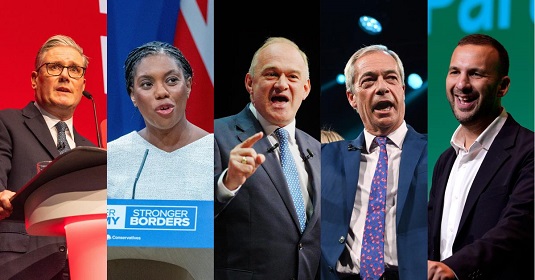
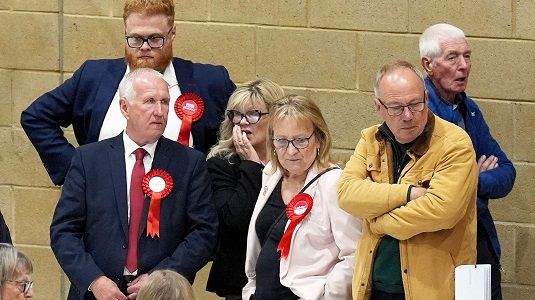
What a catastrophic set of election results for Labour. In Scotland, Anas Sarwar's branch office took a bold step backwards as support fell to 17 seats on 19% of the constituency and 16% of the list vote, breaking through the floor he sat at the 2021 elections. The electorate sealed their verdict on his miserable performance by voting him out of his Cathcart and Pollok seat, but thanks to the list system he'll be back when Holyrood reconvenes. Likewise in Wales, Labour smashed its terribly low expectations with a plunge from 29 seats to just nine, losing two-thirds of its vote and also consigning its leader, the hapless First Minister Eluned Morgan, to the political dustbin.

Labour's devolved government woes overshadowed a disastrous night for the Tories too. They went from 31 seats to 12 in Scotland, and from 16 to 7 in Wales. A fraction under 12% and 11% respectively, they look increasingly like an utterly spent force. Unfortunately, that's because a great deal of unionist energy is now stored in Reform's political batteries. On 34 seats and 29% of the vote, they are the second largest party after Plaid Cymru and will be the opposition, as well as the standard bearer for continuing the union in Wales. In Scotland they are tied with Labour on 17 seats, thanks primarily to the list system. Here it too is the ascendant voice of unionism, making the link between the preservation of the UK state and right wing extremism something the socially liberal SNP are sure to exploit.

Likewise, in England it was a pitiful night for Labour. Keir Starmer achieved its worst result in English local elections since it became a party of government. The low of 1,300 councillors lost by Jim Callaghan in 1976 was surpassed as Labour gave up 1,496 seats. The party relinquished control of 38 councils, and scored a projected vote share of 17%. No wonder more Labour MPs are finally breaking cover and calling on the Prime Minister to go without waiting for the would-be successors to get all their ducks in a row. As forecast by sundry pundits, councils in the north tumbled in Reform's favour, while right on cue a clutch of London councils fell to the Greens, along with two directly-elected mayoralties.

Though you wouldn't know it from Kemi Badenoch's upbeat countenance, the Tories' performance in England almost matched the Scottish and Welsh disasters. 563 fewer councillors will be paying in tithes to their local Conservative group. Still not convinced that this once-mighty party is in long-term decline?

It was, again, Reform's night. A projected 26% of the vote and 1,451 new councillors puts them head and shoulders above the other parties and, thanks to the dysfunctional verities of first-past-the-post, would get them close to an overall majority if this was repeated at a general election. 14 more councils fall under their sway, and undoubtedly deals will be done in other local authorities that will see them govern in coalition with others, such as Tories and/or localist independents. There is no cordon sanitaire in British politics! The Greens inched ahead of Labour and took second place, with a projected 18%, 441 more councillors and five councils - again more or less matching forecast expectations and turning in the party's biggest ever win.

So much for the new state of play, but what about the underlying politics? John Curtice's position, that a decline on last year's vote share would represent a stalling of Reform's chances, regardless of how many councillors they picked up, was borne out on Thursday. Their share is down four points on the 2025 elections. But taking differential turnout into the equation, it's possible these results flatter Reform's level of support if a general election was to be held imminently. Which, of course, is not going to happen.

To restate the argument, polls consistently show that Reform, like the Tories, are demographically dependent on older people for their support. There are several reasons for this. This matters because it is well known older voters and particularly the retired are more likely to fill out their postal ballots or turn up at the polling station than the bulk of working age people. Therefore, the right has an important advantage going into elections. By way of an example, if retired people has stayed at home on EU referendum day a decade ago then Remain would have won. Where second order elections are concerned, most voters believe these "matter less" than general elections. Turnout goes down across the board, but the reduction is disproportionately greater for younger cohorts, strengthening the advantage of the right.

In Reform's case, its 29% in Wales and 15.8%/16.6% tally in Scotland are likely to overstate their real level of support vis a vis a general election. Ditto for England's projected 26%. And yet that figure is roughly in line with what pollsters report from their balanced samples. Does this suggest differential turnout is a mirage? Polls are always models and are, at best, only indicative. They are trumped by votes cast and, arguably, the analysis of those votes. Second, pollsters know this themselves which is why numbers given are caveated by margins of error. Dealing with the effects of differential turnout, I would suggest that the reversion from the right's second order election advantage to the weaker one it enjoys at general elections could reduce the Reform (and the Tory) score by two to three points as other cohorts turn up to vote. Not a massive amount, but one that matters when politics is this close run.

For the same reasons, there is a strong case that in England, perhaps less so in Scotland and Wales thanks to the SNP and Plaid Cymru, the Greens' 18% is an underestimate of where the party actually is. To have scored so highly, outperforming Labour (who suffer a similar disadvantage) and the Tories (who don't) is all the more remarkable considering the Greens' working age/young base is comparatively less likely to show up. A confirmation that Zack Polanski's Green-left populism is the right strategy for the right time.

Obviously, this comes with further caveats. Above all, geographical variation. Reform's 29% in Wales suggests the party is proportionately stronger there than elsewhere. Though looking at it from a right bloc/liberal-left bloc perspective, it's a 41%/58% division, which is wider than the same 43%/51% division for the English local elections (the untidy splits denote independents/others). Seat variation also matters. Bradford, for instance, saw Reform take 23 seats on 26%, but the Greens just seven on 22%. Nevertheless, the direction is clear. We, rightly, hear concerns about the danger from the right, the damage they do, and the atavisms they enable. They could win an election. But the numbers and the political direction shows greater numbers and the greater potential for mobilisation to their left. Reform and the right can be defeated. They are not inevitable.

Image Credit

Tuesday, 5 May 2026

It's the Differential Turnout, Stupid

How should we judge the performance of our political parties in the aftermath of the Scottish Parliamentary, the Welsh Senedd, and English local elections? The leadership hopefuls are circling Keir Starmer, while Nigel Farage has promised something spectacular will befall Reform on Thursday. What counts as disaster? What amounts to triumph?

Starting with Labour, Keir Starmer set the bar pretty low in 2025. Labour lost 187 councillors in the context of a projected vote share of 20% - the lowest since the party emerged as an electoral force 120-odd years ago. Readers with memories might also recall Labour's 2021 election outing, where projected share stood at 29%, with 327 councillors and Labour's control of eight councils lost. It has since come out in sundry memoirs and insider accounts that Starmer seriously considered resigning because he thought this result was so bad. Unfortunately for him, Labour are now on course to do much worse than this.

In historical context, in relatively recent times Tony Blair saw Labour lose 1,150 councillors in the 1999 locals. A point when he was at the height of his powers. For even-handedness's sake, he also oversaw Labour's best ever local election performance. In 1995, the party scooped up 1,807 councillors on a projected vote of 47%. But back to the gloom. Labour's worst performance was half a century ago. In 1976, Jim Callaghan notched up a catastrophic loss of 1,309 seats. Surely Starmer will surpass that with ease and enter the record books. But the worst ever performance at a local election by a governing party is a honour that, right now, belongs to John Major. While Blair was celebrating his crushing council triumph in 1995, Major registered a collapse of 2,018 seats, a loss of almost half of all that year's Tory defences with a projected 25% vote share. If you look at the aggregate monthly votes of council by-elections since last August, Labour has only polled above 20% on one occasion - far shorter than the number that brought the Conservatives calamity.

The story in Scotland is less worse. Again, long time readers might remember Starmer ousting Richard Leonard from the branch office so the impeccably right wing Anas Sarwar could be installed in his place. In 2021, that paid dividends as support for the Scottish party slid further to 21.6% for the constituency and 17.9% in the list sections, giving Labour 22 MSPs. Recent polls from Norstat and Moreincommon suggest further slippage, but with their likely getting supplanted by Reform. Again, the previous floor presents itself as an impossibly high ceiling.

Wales is where the true disaster is brewing. October's Caerphilly catastrophe spelled out the doom that's coming: the end of Labour's domination of Welsh politics. So feeble has it become that former Labour supporters in their tens of thousands are sure to switch mainly to Plaid Cymru to keep Reform out. Bear in mind Labour's previous 'worst ever' outing in the Senedd's short history was 2007 when it could muster 32.2% and 26% of ballots cast, this year such a result is beyond Welsh Labour's wildest dreams. Moreincommon polling suggests a popular vote around half the previous nadir, and with a seat haul to match. A century of political dominance is forecast to be wiped out. Losing Wales alone should cost Starmer his job.

No matter the floor, Starmer's Labour is poised to drop through them. But what of the challenger parties? Last year, Reform triumphed, winning 10 councils, 677 councillors, and a projected vote share of 30%. Which is much better than UKIP's popular vote high point, which saw them register a projected 22% in 2013. Crunching the numbers based on current polling, a net gain of 1,401 seats seems about where most pollsters are pegging the Reform advance. Likewise, between 400-500 gains for the Greens is on the cards with a lion share of gains in the London boroughs, and winning between three to five of the capital's councils.

Triumphs in the waiting? For Reform, does a four-digit councillor gain suggest its forward march to Westminster domination has been resumed? As Peter Kellner, the former YouGov polling specialist touches on, it depends on the sort of percentage Reform are able to capture. A seat tally that simply reflects their current standing in the polls would be good news for the party, but doesn't suggest they're advancing. In my view, Kellner does not go far enough. He and most pollsters and commentators ahead of these elections aren't taking differential turnout into consideration.

All of these elections are second order elections. Political scientists have long made the distinction between first and second order elections in that for most voters, first order elections - i.e. general elections - are the ones that really matter because they lead to government formation and policies that affect their lives. For example, the 2024 general election saw a pitiful turnout of 59.7%. But in Scotland, all Holyrood elections, bar the 2021 poll, have lagged below this. The same is true for all the elections so far to the Senedd, and ditto by and large for local council elections. Rare is the parliamentary by-election that matches, let alone exceeds that constituency's previous general election turnout. Whether Scotland bucks this trend for the second election running is something we'll soon find out, but it's likely that the Welsh and English elections won't.

This matters because fewer voters turn up for second order elections. It's well known that the older one is, the more likely they are to (habitually) vote. This is true of the general election. Pensioners and older working age cohorts vote in greater numbers than younger cohorts for a variety of reasons, that we won't go into here. This differential, however, is exacerbated for second order elections. Older people are less likely to vote than they would be in a general election, but the abstention rate for younger cohorts is even greater. This matters because, as pollsters show and as this blog has talked about plenty of times, there's a strong relationship between age and voting preferences. One which, in recent years, older people disproportionately vote for the parties of the right (Conservatives, Reform) and working age people the left (Labour, Greens). Therefore, this structuring of British political opinion means the Tories and Reform have a distinct advantage in second order elections over Labour and the Greens. They can better rely on their support to vote.

This needs factoring into projections. For instance, in 2025 when Reform polled a projected 30% this more or less matched their polling average at that time. But taking differential turnout into consideration, their popular vote tally should have been higher. Similarly, Labour captured a poor 20%, but that was a figure suppressed by the age cohorts who actually turned up. If there was no age-related disproportionality, Reform would have done worse and Labour better.

Why does this matter? Because taking differential turnout into consideration offers a better read on the trajectories of parties. If Reform do win their projected 1,400 gains on 26% of the result, differential turnout suggests their real support in the general-election voting population is lower that that figure suggests. Likewise, if the Greens manage net gains of 450 seats on a projected 16%, because they have taken to the field in an election landscape where their reliance on younger voters is a disadvantage, their real levels of support are likely to be higher. Therefore, to conclude that Reform has real momentum, their vote has to be significantly above their forecasts. Ditto, to say the Greens are on the cycle path to nowhere, the party's vote has to be significantly lower. The same also applies to Labour and the Tories, the SNP and Plaid Cymru. But not the Liberal Democrats, who don't have any meaningful variations in support across the age ranges.

There is one possible objection to this view. Political science also acknowledges that because second order elections "don't matter", people who vote in them are more likely to register a protest. For instance, the 14.5% the Greens scored in the 1989 European Parliament elections didn't translate into an advance in 1992. The Brexit Party winning the same set of elections in 2019 did not convert into seats in that Winter's election. However, there are two things that suggest this skewing of voting intention has blurred. The first will be these results themselves. Labour in Wales, for instance, has withstood past protests against the direction of the Britain-wide party in and out of office. The coming wipe out speaks less of a protest and more a fundamental break in trust. And the second is the erosion of the two-party duopoly, as evidenced in the 2024 election. What we're now seeing is the further development of that trend, in seeming defiance of Duverger's Law and his view that majoritarian electoral systems cluster support around two contending parties, usually of the right and the left. What happens on Thursday is likely to continue this process.

Inevitably, the seats won and lost will command the headlines. That's what matters in electoral politics. But for those wanting to get a deeper sense of public opinion drift, of who is being overhyped or underpriced, it will all be there in the projected vote shares.

Image Credit

Monday, 9 February 2026

What is the Point of Keir Starmer?

This is the worst 24 hours of Keir Starmer's leadership! Or, as the Simpson's meme has it, this is the worst 24 hours of Keir Starmer's leadership so far. The day didn't start great for the Prime Minister. Still reeling from Sunday's departure of our chum Morgan McSweeney, from out of nowhere the head of the dire Downing Street press operation, Tim Allan, threw in the towel. Whether this had something to do with weak vetting, who can say. He once handled press in this country for one Vladimir Putin, so perhaps it's merely a coincidence. Things carried on looking shaky for Starmer, before Anas Sarwar lobbed a bomb from afar. The Scottish Labour leader was calling a press conference to tell the PM to pack his bags. It looked like curtains, especially as rumours swirled that the Welsh First Minister, Eluned Morgan, was set to follow. Matters were uncertain.

Until they weren't. She denied reports, and then cabinet member after cabinet member came out to offer Starmer their backing. It ranged from a lukewarm "he doesn't need to resign" from Wes Streeting to the usual boilerplate from everyone else. You know, "he led us to a landslide victory", and "change takes a long time!", and "we have wonderful new breakfast clubs". Writing at the end of the day, it appears that Starmer survives. For now.

Ironically, this position of precarity confers on him a new reason for living. For Sarwar, calling for Starmer's head is calculated to salvage Scottish Labour's chances before this May's Holyrood elections. He's hoping that some oppositional cache will fall to his crew. I'm not so sure. After all, the few dozen Labour MPs who splashed their support for Brexit across their 2019 literature found it didn't save them. And the fact Starmer dumped Richard Leonard out of office so Sarwar could take over. Few other-party-curious Scottish Labour voters are likely to forget this, and will see it as cynical politicking. Something the SNP will no doubt remind punters of at every opportunity.

For the rest of the party, it's in no would-be leader's interest for Starmer to go. Wes Streeting has decided not to wait for the humble address and released his batch of toe curling messages between him and former best pal, Peter Mandelson. Likewise, Angela Rayner, who saved the government from an embarrassing Commons defeat last Wednesday, has to wait for the HMRC to give her "controversial" tax affairs a clean bill of health. And even those not immediately in the frame need someone to carry the can for the battering due at the Denton and Gorton by-election, and the May local and devolved elections. No new leader can afford to start their premiership with two crushing defeats.

Therefore, Starmer has use again. For Mandelson, via McSweeney, he was the marionette that would win the party back from the membership. He was then the empty suit animated almost entirely by oligarchical interests. And now that his days are numbered and the Labour right have suffered an historic embarrassment, he remains the tool of others, a meat shield whose sole purpose is to take the electoral beating coming the government's way. And when that's done, with Starmer lying bleeding and broken on the floor, that's when the up-and-comers will step over his body. Perhaps one of them will be kind enough to roll him into a ditch, but most are likely to not linger at the scene lest the miasma of poor judgement and failure clings to them.
Wednesday, 10 July 2024

The Eclipse of the SNP

What the hell happened in Scotland? Nine years ago, the SNP carried all before it at the famous 2015 election. What it dubbed the "Westminster parties", Labour, Conservatives, Liberal Democrats, were reduced to a single seat each while everywhere else on the constituency map of Scotland turned SNP yellow. A partial uprising of these parties two years later was put down at the return match in 2019. The SNP not only ran the Scottish government, that election gave them 48 MPs. It was common sense getting back to where the Westminster parties were in 2010 would take a generation. And then, last Thursday, what was a peculiar result in England and Wales was nothing but disastrous for the SNP and the cause of independence. The party dropped to just nine seats and lost half a million voters. Labour's support increased by 350,000 votes and gave it an additional 36 seats. The Liberal Democrats increased their seats by two, despite dropping 30,000 votes and the Tories, in line with the disaster in the south, saw their support halve but with the loss of just one seat.

This only tells part of the story. Aggregating the independence parties (SNP + Greens + Alba) totals just shy of 830,000 votes. The unionist parties (the above, plus Reform) is 1.56m, almost double. Turnout was down to 59.2%, only 0.4 above the 2001 low point. In every constituency support for Labour grew and nationalist voters either stayed at home or defected directly. This does not bode well for the next round of Holyrood elections, unless Labour in office makes a spectacularly cack-handed job of governing. How was this catastrophe visited upon the SNP?

There's the conjunctural. The SNP haven't had the best time of it. The departure of Nicola Sturgeon was followed by the tawdry spectacle of her arrest and the overhanging police investigation into SNP finances. Humza Yousaf's brief tenure as party leader and First Minister didn't improve the SNP's standing. In fact, this more or less occasioned their slippage in opinion polls with more support flowing to Labour. His unilateral abandonment of the Bute House coalition agreement with the Greens contributed to the impression that he was not on top of his brief, so he had no choice but to cede power to the right leaning John Swinney/Kate Forbes duumvirate to avoid a humiliating confidence vote. This is against a background of decaying social infrastructure. The Scottish school system has posted declines in science, English, and maths. Poverty in Scotland has stubbornly persisted at around a fifth of the working age population since the SNP came to power. The same house price problems manifest north of the border - though in 2023 new build completions and new build starts went down. NHS waiting lists continue to increase. While these areas are within the SNP's gift to do something about, it would be unfair not to mention the fiscal straitjacket imposed on Holyrood by the Tories. They've borne the brunt of decisions made elsewhere.

The larger problem, however, is the collapse of the SNP's strategy to achieve independence. Having committed itself to the constitutional road to a second referendum, its battles with the Tories and the courts slammed the door on its possibility. And without the prospect of independence, what purpose does the SNP have? The radical nationalist reply, which amounts to campaigning harder on independence, found the extent of its support in the derisory vote Alex Salmond's Alba vehicle registered. Related to this, because another referendum is out of scope, where large numbers of the Scottish electorate are concerned it has receded in salience. It's become a second order issue. As YouGov polling showed, the national question was listed as an important concern for just 27% of 2019 SNP voters. It lagged behind the economy (35%), cost of living (54%), and the NHS (67%). Despite running a policy-lite manifesto, Labour's mantras of economic growth, action on the NHS, and the other fissiparous raft of pledges spoke to enough Scottish voters to draw them back from the SNP to give them a punt. That and, at least according to several post-election vox pops, making sure Labour got enough seats to turf the Tories out of government.

In these circumstances, and after a long period of running Scotland, it was a perfect storm for the SNP. With Keir Starmer now safely installed, the onus is on how the Scottish government now plays its cards. Another round of butting heads on independence doesn't seem a wise move, but there are openings on holding Downing Street to account re: its bread and butter pledges, and on its promises to devolve more powers to the nations and the regions. It's just the SNP's worst luck that in Swinney and Forbes they have two leaders singularly unsuited to capitalising on this centre left moment.

Image Credit

Friday, 6 October 2023

The Warning from Rutherglen

As Labour heads into its conference, on the surface the result in the Rutherglen by-election could not have been better. The party just didn't pick pocket the seat from the SNP, as Jeremy Corbyn managed in 2017. The Scottish government were put on their backs by an electoral mugging. It was widely expected that Labour would win, thereby doubling its representation north of the border, but getting over half the vote with a 30-point margin and netting their second best vote share in the seat ever has led to some undue jubilation. An excitable John Curtice, the patron saint of polling, declared that if the 20.4% swing was repeated across Scotland at the general election, Labour could expect to win 40 seats. Before anyone gets too exuberant, that is not going to happen.

As Keir Starmer and Anas Sarwar bask in the afterglow of their victory, it behoves us to dissect the result. In recent years, Scottish Labour hasn't exactly impressed. In 2021 it scored its worse ever result at Holyrood, and had appeared to give up trying to oppose the SNP. 2014/15 saw the mass migration of the most progressive sections of the party's base to the camp of independence, it looked increasingly as if the party was only interested in fighting the Tories for the declining unionist vote. A phrase consisting of bald men and combs often came to mind. And on and on in this vein Scottish Labour continued, and nothing might have changed were it not for events beyond Scottish Labour's control. The first person Sarwar has to thank for the turn around in his party's fortunes was Liz Truss. As per everywhere, Tory ratings collapsed in Scotland following her debacle of a government. The result was the affirmation of Labour as the main party of the union, and therefore of unionist votes. Something the Tories ended up conceding accidentally on purpose earlier this year.

Political fortune further smiled on Labour following the severe reversals suffered by the SNP over the last year. The party's most formidable opponent, Nicola Sturgeon, resigned and is subject to a police investigation. And then, at last!, a tangible recovery in the polls, coinciding with the end of the constitutional road to a second independence referendum. Why might this impact on SNP support? It meant the expectation of a better future disentangled from whatever one might project onto an independent Scotland, given this was definitively off the table. And Labour's polling surge in England meant a Starmer government might have something more to offer than ceaseless Tory/SNP deadlock over constitutional questions when there are other pressing issues. This despite Labour's determination to promise almost nothing. But let's not over-egg the pudding. Labour are back in the mix because it's going to win the next election. It is the viable anti-Tory alternative. The difficulties the SNP are facing, and the circumstances surround Margaret Ferrier's disgrace and exit from the Commons have all played their part in restoring Labour's fortunes.

And here we have the problem. As is customary, people who don't want to understand by-elections have been pointing out that the turnout means Rutherglen is actually a disaster for Keir Starmer. No, it would have been if Labour had lost. But it didn't. Nor does it suggest that SNP and Tory supporters stayed at home. Elections don't operate with solid, discrete blocks of voters. However, allowing for the usual turnout depression that attends second order elections, what it does tell us is something we already know: that there isn't enthusiasm for Labour and the Labour leader outside of a very narrow base. Presently Labour doesn't have to pay it much mind. The state of the Tories, especially after Sunak's ridiculous speech means that Labour will cruise to a healthy majority without having to enthuse millions of voters. Indeed, I would not be surprised if they win the election with fewer votes than what Labour polled in 2017. But this suggests a party with very shallow roots and loyalties, and a lack of affection for Starmer, which was there at the beginning for Tony Blair, means the slack the electorate will give him is going to be very short indeed. No, Rutherglen isn't a disaster. It's a warning, and unless Labour ups its game and actually meets what people are expecting of it, not only will Starmer's time in government be an unhappy one he could turbocharge his Liberal Democrat and Green opponents, and make them into contenders. Enjoy the triumph while you can, there aren't many of them left.

Image Credit

Tuesday, 11 April 2023

The Scottish Tories' White Flag

There's a bit of saying-the-quiet-part-out-loud doing the rounds in politics at the moment. Following the fall out from Labour's paedophile attack on Rishi Sunak, sundry "insiders" spoke to the press complaining that no one moans when the Tories launch racist campaigns/initiatives/policies, so why can't Labour? It should have the right to wallow in the gutter as well. Cheers for that, chaps. Another great unspoken got an outing over the weekend, this time uttered by Scottish politics' other Wee Dougie, (nominal) Tory leader Douglas Ross.

In remarks published by the Telegraph, Ross suggested that Tory voters should back Labour at the next general election to keep the SNP out. Well, the remarks were a little bit more Delphic. He argued unionist voters have enough tactical nous to know who to vote for when they want to put the country first, "... the public can see and they want the parties to accept that where there is a strongest candidate to beat the SNP you get behind that candidate.” The musings of the branch office manager didn't go down well in Westminster, with an unnamed spox suggesting voters should back Tory candidates wherever they're standing. Having received a stern talking to, Ross later backtracked and said Scottish voters should vote for the Scottish Conservatives, and that his musings about tactical voting was a clever-clever ruse to get Labour and Liberal Democrat supporters to give his party a punt where neither stand any chance against the SNP.

What Ross has done is merely enunciate the custom and practice of Tory and Labour activists since the great wipe out of 2015. For the Tories the maintenance of the union is the priority and, disgracefully, a large chunk of Scottish Labour thinks it trumps everything else as well. George Galloway's Britnat gymnastics of a couple of years ago reminded us of the fetid morass facing anyone who abandons the firm terrain of class politics: making common cause with the Tories obviously served Labour well eight years ago. But what is slightly unusual about Ross's musings is it's the Tories who are doing it. Normally, it has fallen to Labour politicians, albeit at the local level, to forge and apologise for alliances with the Tories to keep the SNP from running councils. Ross's argument just goes to show that the times are a-changing.

Since the cataclysm, Labour have effectively been the third party of Scottish politics. The hogging of the social democratic ground by the SNP (at least as far as appearances are concerned) and the dynamic leadership of Ruth Davidson turned Tory fortunes around. As with England, the slide in Tory support has little to do with Labour's weather-making. Following on from its worst ever Holyrood results in 2021, Anas Sarwar's leadership has steadied the boat and, to be fair to him and Scottish Labour, they have adopted a policy agenda more recognisably Labourist than the Westminster rudder. But the uptick in Labour fortunes is more a case of the Boris Johnson effect and the Liz Truss crash, and the departure of Nicola Sturgeon and subsequent SNP "troubles" than any genuine enthusiasm. Nevertheless, with the constitutional road to independence blocked and its falling down the rankings as the main priority for even SNP voters, suddenly Labour looks more attractive as a potential government in waiting. And that means the Scottish Conservatives return to their customary role as the junior partner in unionist politics. Ross then is making a plea for a de facto unionist pact to save as many Tory seats as he can from a position of weakness. It's an admission of defeat, and an acknowledgement that not many of them will be around after the next election.

Image Credit

Friday, 17 February 2023

Glory Days are Coming?

Absurd propositions can become hard fact. There have recently been two such events that have made a fool out of me. The first was Jacket Potato on The Masked Singer getting revealed as Bon Jovi guitarist Richie Sambora, after pouring much scorn on the suggestion. And the other was on Wednesday. Responding to Nicola Sturgeon's departure, I wrote the idea her resignation "opens the road to Labour gaining 25 Scottish seats is the dumbest official optimism heard in some time." And then YouGov went and dropped a poll.

In field work done prior to Sturgeon's announcement, on Westminster voting intention the SNP are in the lead on 39%, but from nowhere Labour have surged to 36%. In seat terms it means, depending on who you believe, an estimated gain of between 21 and 29 seats. So much for the scoffing. Okay, in all probability this poll is an outlier. Survation also published a poll today with figures more in the standard range (43% SNP, 29% Labour), and their field work concluded a couple of days before YouGov started gathering its data. Did much happen in that time? Nope. The issues around gender recognition certificates did not reach fever pitch. Nor did the questions surrounding Peter Murrell. Similarly, a Savanta survey done between the 15th and 17th, after Sturgeon's speech, puts the SNP on 42% and Labour 32%. All these lend credence to YouGov's being a rogue finding.

But what if it's not and most pundits, me included, have been shown up as know-nothings? How to explain a shift in the polls of this character? It's not like masses of Scottish voters have taken notice of Keir Starmer's decentralisation plans and are on board. In lieu of anything, a couple of not entirely exclusive hypotheses come to mind.

1. The SNP's approach to independence has been comprehensively defeated by the Supreme Court, which was inevitable as a matter of law. The Scottish Parliament's powers are tightly circumscribed and it has no legal basis for self-determination beyond what Westminster has delegated to it. Even though there is a strong political case for a second referendum, neither Rishi Sunak nor Starmer after him are going to say yes to one. With the SNP's commitment to accepting the constitutional rules of the game, there is nowhere else to go. Their anti-Tory alternative is blocked. Unless the independence movement becomes a campaign of mass disobedience that simultaneously puts pressure on the Tories, backed by a firm and persistent polling lead for Yes, all that is left is what the SNP can manage as the Scottish government within the UK framework. With some SNP supporters realising this, and deciding there are more pressing issues, it isn't difficult to fathom why some might return to Labour who are offering something better (but not unproblematic) than five more years of Sunak and friends.

2. Split ticketing. The poll's voter intention for Holyrood diverges significantly from Westminster. For the constituency vote share the SNP are on 39% and Labour 28%. On the list vote (where the SNP share is depressed anyway), it's 33% and 28%. This might suggest a layer of SNP voters have come to the conclusion that their party is best for Scotland, but are moving back to Labour to help lock the Tories out of Westminster. Given the policy consistency between the two parties on a range of issues (save independence), they've concluded that an SNP government can deliver more if Labour are in Number 10.

Whatever the case, it's certainly not enthusiasm for Scottish Labour in and of itself. Though, even if the poll is a freak, that might change. Having fought shy of attracting SNP supporters because appealing to the unionist leanings of erstwhile Tories was easier, Anas Sarwar's speech at today's spring conference is a good step in the right direction: clear home insulation targets, decarbonising by 2030, populist attacks on the oil giants, Centrica, and Amazon, identified NHS savings at the expense of unnecessary bureaucracy, and the homes for a quid scheme that were a big success here in Stoke-on-Trent for bringing dilapidated houses mack into use. These were all good eye catchers and is exactly what would-be Labour voters want to hear more of. Is the moment of Labour's Scottish recovery finally here?

Image Credit

Wednesday, 15 February 2023

Goodbye Nicola Sturgeon

It was meant to be a big day for Keir Starmer. With no news happening because the MPs are on half term, the Labour grid was hoping to hog the politics headlines. His message, that the changes he'd made to the party were "irrevocable", any left wingers who didn't like it knew where the door was, and that antisemitism was dead as an issue, was meant for the media, business elites, and right-leaning floating voters who are still iffy about the party. But within moments he was upstaged and, save for the rounds of discourse on Twitter, proceedings became dominated by Nicola Sturgeon's unexpected resignation. In her statement, Sturgeon admitted this was something she'd been thinking about for a long time. As well as asking whether carrying on as First Minister was right for her, she said
... more importantly, is me carrying on right for the country, for my party, and for the independence cause I have devoted my life to?
What a marked contrast to Boris Johnson and the tawdry spectacle of his doomed efforts at clinging on while the Parliamentary Conservative Party went on strike against him. Sturgeon was self-deprecating and honest about the toll a front rank job exacts from those who take it up. Coming not long after Jacinda Adern stepped down as party leader and Labour Prime Minister of New Zealand for similar reasons, it's likely her departure from the political stage helped focus Sturgeon's mind as well.
Timing, however, is everything. In recent weeks Sturgeon has been under pressure for her support for trans rights and gender recognition, an issue that finds plenty of the "genuine concerns" brigade in the SNP. Closer to home, there's been a long-running sore concerning the conduct of her husband, Peter Murrell, who happens to be the party's chief executive. A couple of years ago, questions were raised about the pressure he allegedly put on the police to press charges against Alex Salmond. And there are allegations of fraud in the air. A £600k party fund ring fenced for independence referendum campaigning was variously diverted into other spending, while Murrell provided the SNP a £108,000 loan that was not declared properly. Hardly the sorts of troughing and corruption we see with the Tories, but it doesn't look good either and could only tarnish Sturgeon's image. In politics assets can become liabilities in the blink of an eye, so who can blame her for retiring from the field while her ratings remained positive.

With no obvious successor with a similar profile to her when taking over from Salmond, the Westminster parties - despite the due decorum - feel that they might find a way back. Jim Murphy, the architect of Labour's 2015 disaster, thinks Labour's Anas Sarwar will have the credibility of insurgency in his sails, and can now claim the title of Scotland's best known politician. Really? Better known than Mhairi Black, Joanna Cherry, and Angus Robertson? Scottish Labour are doing a bit better in the polls lately, but largely thanks to the collapse of the Tories. The idea of contesting the SNP for the return of its base still doesn't figure in party strategy, beyond a bland economism that alibis unionism through the old "there are more pressing problems to deal with". If that was the case, why did Keir Starmer make such a big deal about constitutional issues in the middle of an acute cost of living crisis? I digress. The idea Sturgeon's resignation opens the road to Labour gaining 25 Scottish seats is the dumbest official optimism heard in some time.

That said, her successor is likely to have a tougher time. None of the names in the frame have the singular appeal Sturgeon cultivated. She was straight talking, empathetic, and easily tough enough to parry and fling back insults during Holyrood argy-bargy. And at 16 years at the top of Scottish politics, a canny and versatile politician that astutely played the game to victorious conclusion - save her ambition to be the first leader of an independent Scotland. For a time she embodied the Yes movement and Scottish nationalism's best face - that which is socially liberal and social democratic, honest about the challenges but, rare in UK politics, resolutely and non-cynically optimistic. The would-be heirs are variously compromised. Robertson and Stephen Flynn might have left many bloodied bodies from internal fights in their wake, Cherry is in the SNP's transphobic minority (and, like Flynn, is tied to Westminster and therefore cannot stand), Humza Yousaf is carrying the can for the Scottish NHS's refusal to meet the demands of striking nurses, and Kate Forbes's overt old school religiosity doesn't chime with the civic inclusivity ot the Sturgeon SNP. No wonder then that there will be a toasting of her resignation in Westminster tonight. Without her fronting it up, the campaign for Scottish independence has been set back and with it the union is that little bit more secure.

Image Credit

Monday, 16 January 2023

Using Trans People as Political Pawns

Of the government's threat to block the Scottish Parliament's Gender Recognition Bill - now confirmed - Nicola Sturgeon said it would be a case of "using trans people ... as a political weapon." Correct. But the idea this is a wedge to allow Westminster to interfere directly with the votes and decisions of Holyrood is well down Rishi Sunak's list of priorities. There are more pressing concerns.

For the Tories, their recent conversion to protecting women's spaces and wellbeing is so much cynical bullshit. For 13 years they've chopped away at public provision in this country. Their cuts to social security, to the NHS, to local authorities, their introduction of the bedroom tax, attacks on child benefit, their shielding of spy cops, the police, and the military from prosecution, all of these measures, all of them, fall disproportionately on the heads of women. And, very obviously, they're only interested in trans people and opposing "women's rights" to them in as far they are pawns in their wretched war on woke. Sunak signalled as much when his new year address singled out refugees for more heavy handed action. A statement of intent that they mean to carry on as they have done, because there's nothing else.

How does this work then? Why is Sunak willing to blow up the Union to prevent people from legally changing their sex that would minimise harms and allow for a more dignified process? It's about trying to exploit divisions among his political opponents, and hoping to win over a few reactionary voters on the side. As we saw during their last spell in opposition, the lurch into anti-immigrant, anti-EU politics was more than the Tories talking to themselves and lounging about their political comfort zones. It served to consolidate and stabilise the party base after its utter evisceration at the hands of Tony Blair. With a 1997-style wipe out among the more optimistic prognoses facing the Tories in 18 months, cohering the base around a straightforwardly bigoted politics now increases the chances of a viable party making it through the coming trauma.

But it hasn't escaped the Tories' notice that it's the left, particularly its more establishment and media-oriented end that has had considerable difficulty with trans issues. Who might have been considered right on trendies a decade ago have used "feminist" opposition to so-called "gender ideology" as their own path to reaction. The SNP have and are having their own war on about trans people. The Greens have largely failed to capitalise on Labour's open embrace of establishment-friendly politics because of internal conflict on matters trans, which got so bad the Scottish Greens formally dissolved their links with the party in England and Wales. And there is Labour. With leading Labour politicians genuflecting to transphobia, such as Rachel Reeves, Wes Streeting, and Jess Phillips, the rank-and-file and most of the wider left are allies and advocates of gender non-conformity, there's an opportunity here for the Tories to cause the opposition some serious discomfort.

Furthermore, because the Tories - with a little help from their friends - think Labour's base is socially conservative and obsess over the same hobby horses as they, trans rights are not only a wedge between the party's leadership and most of its activists, but could be wielded in the same way Boris Johnson drove Brexit between Labour leavers and their pro-remain party. The fact Sunak is willing to countenance a constitutional crisis is neither here nor there. He stands in the tradition of a recent Tory party that threw away Britain's membership of the European Union to save a couple of seats at the 2015 general election, and rhetorically committed itself to breaking the law in order to get Brexit done. Now the fate of the Conservative Party is very uncertain thanks to its long-term decline, causing trans people more pain and anguish is a price Sunak is willing to make them pay if it affords his party some stability. And as for the constitutional order and legitimacy of the UK state, what's the point if the Tories aren't at the centre of it all?

This is characteristic of Tory short-termism. Deal with the problem now and pay the debt later. But the political debts are potentially huge. The Tories, leading Labour politicians, well-heeled celebrities, and other establishment worthies and lackeys with their attacks on trans people are causing entirely unnecessary suffering. It's a losing battle, and if any of them are around in 20 years time they'll be busy laundering their reputations and threatening to sic the courts on anyone who reminds them of their present transphobia. But for most working age people today and those who are in their teenage years, the orchestrated hysterics against trans people is driving a wedge alright, a values wedge between them and the Tories (as if they didn't have enough reasons to give them short thrift) but also against institutions of state as well. For identifying the Union with the most backward, reactionary and dying currents in British society is storing up severe problems when these are antithetical to the rising generation of workers. Sunak's efforts at creating a constitutional crisis over trans rights might afford him some satisfying points in the Westminster game, but its political consequences could reverberate for years to come.

Image Credit

Thursday, 6 October 2022

Labour's Scottish Comeback?

With the polls turning decisively against the Tories, how might Labour be fairing north of the border where the SNP presents a properly formidable opponent? Polling done for The Times finds the SNP on 46% with Labour rising to 30%, and the Tories collapsing to 15%. This is, apparently, Labour's best score since March 2015. Additionally, Keir Starmer has a better personal rating than Nicola Sturgeon: +13 versus +11. For comparison's sake, Liz Truss is on -70. Can Labour at last think the unthinkable? Is the party on its way back in Scotland?

Only to a limited extent. We're now eight years after the Scottish independence referendum and seven since the almost total wipe out of the unionist parties, and still the Labour mainstream haven't produced an analysis of what happened, how it happened, and how the party could recover and become Scotland's dominant political force again. Indeed, at the last round of Holyrood elections Scottish Labour under Anas Sarwar reached new lows. It's not difficult to appreciate why: the party is running on vapours, sociologically speaking. Its old constituency was broken up along with Scottish industry, and what is left are retired elements and legacy votes. Sarwar's prospectus, during his leadership campaign, was a couple of shuffling steps to the left of Starmer (which is hardly difficult) but was all about Scottish Labour's comfort zone: winning back the unionist vote.

To borrow the language of Blairism, this was a core vote strategy. In 2015 the SNP ripped away swathes of Labour's base, and under the canny strategies pushed by Ruth Davidson the Tories made a good fist of cannibalising what was left of Labour's unionist vote. And now, as Tory fortunes sink through the floor Labour are taking some of it back. But as a strategy for winning loads of Westminster seats and forming a government at Holyrood, it's a non-starter. It has an inherent ceiling. And, like conservatism across these islands, unionism is in long-term decline. It's possible that a renewed unionism could be built on clear tangible benefits accruing to Scotland from remaining in the UK. For instance, if Boris Johnson had been serious about levelling up or if Starmer's very mild, very Fabian programme delivers on its promises. But until then, the tendency is downward, producing a spectacle not dissimilar to the folically challenged scrapping over a comb. Second, the unionist vote is split between Labour, the Tories, and the Liberal Democrats. While these parties might be squeezed they do have an irreducibly loyal core that would never vote Labour, even if it's a toss up between them and the SNP. Should Labour maintain its position as the unionist party, which seems likely this side of the next election, it can't take enough votes from its weakened and smaller rivals to make much of a dent in the SNP's dominance.

And here is the central problem. Scottish Labour has shut its ears to its former voters, and appears uninterested in winning their support again. It meets the Scottish government with the most dismal economism and complaints about the education system, because putting Labour on a firmer footing effectively means leaving its existing, union base to wither. What Corbynism was was a manifestation of the rising new layers of the working class, the burgeoning strata of immaterial workers well on its way to becoming the majority of wage and salary earners in this country, if it's not the case already. This was consolidating behind Scottish Labour and giving the patry a new base, but the party's arrogant and indistinguishable-from-the-Tories campaigning during the independence referendum showed that "their" party was nothing of the sort, and was uninterested in their backing. These erstwhile Labour voters got the message loud and clear, and duly supported the SNP in droves in 2015. Winning here means dumping the pathetic and grotesque socially conservative messaging (such as Rachel Reeves criticising Suella Braverman from the right for not deporting enough people), committing to a green strategy that is more than an environmentally friendly PFI scheme with a British badged holding company managing energy market investments, ensuring workers rights from day one are realised, that job prospects and new industries are invested in, and that the constitutional settlement grants, at the very least, more significant powers to the Scottish government.

In other words, Scottish Labour has to appeal directly to what is now the SNP base. That's the hard politics, and the road the party's leadership time and again refuses to take. And until it makes efforts to break out of its self-imposed unionist ghetto, no matter how badly the Tories do Labour can only ever play second fiddle in Scottish politics.

Image Credit

Tuesday, 8 March 2022

Lives on the Left: Jennie Lee

This International Women's Day, we can do worse than celebrate the oft-overlooked work of women in the labour movement. To mark the occasion here's the first of a two-part episode on Jennie Lee from the excellent (and seemingly defunct) history podcast, Lives on the Left.

Friday, 6 August 2021

A Note on Post-War Pit Closures

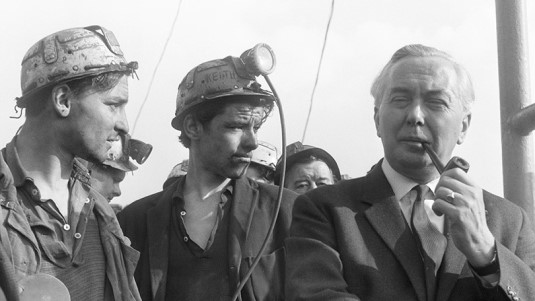
Harold Wilson's record on mines and mining was an unexpected front in political struggle today. But then perhaps not given Boris Johnson's joke about Thatcher closing the mines. Amid the sound and the fury, a Tory was always going to pop up and say "Actually, Labour closed more mines than the Tories did in the 1980s." And indeed, one did. It happens to be true as well. King Coal began his decline before Wilson, and so it can be presented - and it suits the Tories - to rewrite the 1980s as a coup de grace for an industry that didn't have a future.

As this comes up infrequently, it's useful to have a ready response. And the matter is a simple one. Coal seams don't last forever, and there is a finite amount of the stuff in the ground. Pits become exhausted and/or uneconomical eventually, and so mining ceases. The pit closure programme began under Macmillan in 1958 and carried on when Labour came to office. This, however, was not a slash and burn affair. Because of the strength of the labour movement, Macmillan's penchant for patrician Toryism and desire to keep the class peace, and the booming economy, the closure of pits were accompanied by generous redundancy packages, retraining (sometimes encouraged by the NUM), and investment to replace what was lost.

For example, consider the closure of Michael Colliery is East Fife in 1967. There was an unsuccessful struggle to keep the pit open, but as it was shutting down Wilson's government were able to attract a major alternative employer to the area. The economic wellbeing of the local community was assured, and the coherence of the union movement was preserved.

Contrast this with Thatcher's pit closure programme. This was understood at the outset as a class war offensive against the bedrock of the British labour movement. Having already thrown millions out of work to weaken manufacturing unions and use mass unemployment consciously as a labour discipline measure, the Tories succeeded in defeating the miners and destroying dozens of communities in the process. there was no investment, no retraining, and no hope for better futures as the Tories tore the hearts out of towns and villages across the country.

One programme of closures was about keeping the balance of class forces in the country by preserving full employment. And the other was a question of setting a new balance, one in which the state actively worked to tip the balance irreversibly toward capital. This was with no regard to the people affected and the ways of life destroyed. Next time Johnson tries to raise a chuckle about this bleak period in British history, just think of the tens of thousands of lives that were ruined then. And the hundreds of thousands of lives he's actively ruining now. To get their own way, for the Tories no price is too high for other people to pay.

Image Credit

Tuesday, 1 June 2021

The Limits of Divide and Rule

Little noticed because Scottish independence is a niche issue as far as SW1 is concerned, a ComRes poll for The Telegraph reported how English voters are mostly sanguine about it. Among the 57% who have an opinion, 32% are opposed to independence with 25% supportive. Only a fifth of the sample were "strongly opposed" while a third weren't fussed either way. That said, only 31% thought Scottish independence would be a success with around half expecting it to be a failure. This, like all things, hides significant age splits. 51% of 18-24s were confident Scotland would do well while only 19% of over 55s did. For those looking at any signs of grievance or vindictiveness on the part of ComRes's respondents, 35% were okay with Scotland using the pound after independence while 30% were against, and 34% were against increasing spending in Scotland to keep it within the union while 26% supported moves in this direction.

As noted the other day, one aspect of watching and analysing the Tories is scrutinising their strategies and tactics, their imaginary, and how they sell their thinking about the world to themselves and their wider support. It also means being alive to possible disruptions, cracks, and microfissures in their seemingly monolithic coalition. The possible good news is this is these findings suggest yet another.

What the Tories have to constantly work at and accomplish is providing very good reasons to punters to continue voting Tory. Having the right policies is only part of it. The constituencies naturally disposed toward them, like all actual and potential support for political parties, inhabit a structure of feeling that suffuses the social world. Because we're talking about large aggregates of people, at this level certain sections of the population who share similar material circumstances tend toward adopting common views and feelings about the world. We've talked about the class cohorts and age/property enough here to explain the stark polarisation in polling data and voting behaviour to know this is an inescapable fact of British politics. For the Tories and Boris Johnson, their success in 2019 was recognising how large numbers of older people supported Brexit in disproportionate numbers had something to do with the unease and generalised anxiety one feels as one gets older, an angst that multiplies itself many times over dependent on property holdings, investments, income streams, and so on. Leaving the European Union offered a promise of an incohate national renewal, of reasserting the certainty and authority of the nation to make their worlds a more secure, knowable, relatable, and familiar place to them. The risks of Brexit were dismissed because leaving would once and for all address the gaps, lacks, and anomie at the cores of their common social location.

With Brexit done and the Leave constituency largely (but not entirely) shielded from the economic fallout, the Tories are relentlessly searching for other rhetorical devices and performative position takings to cultivate the angst and fears among their support and keep them wedded to their project. For example, Munira Mirza - responsible for the pitiful we're not racist guv report - is employed by Number 10 to specifically articulate the Tories' war on woke rubbish, to feed the scapegoat hungry maws of the Tory press and therefore give their electoral base a supply line of hate figures and troubling cultural phenomena. The urgings of Liz Truss at government departments to withdraw from a Stonewall-sponsored scheme for LGBTQ inclusion in the workplace is typical of this, with trans women in particular cast in the unwanted role of problematic people who threaten the natural order of things.

What has this got to do with Scottish independence? As far as cohering Tory votes goes, the antipathy that can be stirred up against trans women is small electoral beer compared to the possibilities of appealing directly to English (and British) nationalism, as Brexit attests. Playing divide and rule politics, of opposing England to Scotland proved itself as an effective weapon in the Tory armoury in the 2015 general election. Here Dave successfully created a chain of meaning tying together Scottish nationalism with nuclear disarmament and the SNP holding a Labour-led coalition government hostage in exchange for support. But it's not effective at all times, as Theresa May's attempt to pull the same trick in 2017 fell flat in England, but her anti-independence posturing assisted the modest Scottish Tory revival.

As the UK reels from Covid and the Tories want to talk up the recovery there are, on paper, plenty of possibilities for playing the Scottish card. Confrontations between the SNP government in Edinburgh and Tory Westminster might suit both. Ample opportunities for Johnson to cohere his voting fodder and poison politics more with the ugly rubbish of English nationalism. Hence why the ComRes numbers matter. If only 20% really care about keeping Scotland in the union, the use of this strategy comes with some risk. It might ignite the passions in the same way leaving the EU went from a fringe issue to the dominant question in British politics for four years, but equally it could fall flat and never become more than a second order concern or press hobby horse. But what also makes a confrontation with Scottish nationalism potentially hazardous is how Johnson is prepared to throw money at Scotland to provide incentives for staying in the UK. As polling shows little appetite among English voters for sending extra funds, playing the English populism game might find some force willing to articulate the voice of the "hard-pressed taxpayer". As the Reform successor to the Brexit Party is nowhere, there will be more than a few backbench Tories happy to carry the Little England baton for press glory and advancement in the party. The last thing Johnson wants is a coherent opposition to emerge in his parliamentary party that takes the limelight away from him.

Hence, apart from a few jabs and tussles for the camera, it seems the scope for Tory agitation on Scotland in England is limited, caught between the horns of apathy and commitments to "levelling up". And this is a problem, especially if the Tories start copping the political consequences for their umpteenth delayed response to a new wave of Covid-19. None have the potential to tap into the grievance politics of English nationalism quite like Scottish independence and if efforts at corralling support against Nicola Sturgeon and the SNP fail, what have the Tories got left in the tank to distract and divide at a similar scale?

Image Credit

Friday, 26 March 2021

Local Council By-Elections March 2021

An unexpected surprise! A clutch of Scottish and Welsh by-elections ahead of May's Super Thursday. This month saw 44,016 votes cast over 15 local authority contests. All percentages are rounded to the nearest single decimal place. Eight council seats changed hands. For comparison with November's results, see here.

Party
Number of Candidates
Total Vote
%
+/- 
Nov
+/- Mar 20
Avge/
Contest
+/-
Seats
Conservative
           13
11,026
    25.0%
   -0.7
    -10.6
    848
     0
Labour
           14
 8,749
    19.9%
  +9.5
     +4.4
    625
    +1
LibDem
           12
 2,350
     5.3%
  -7.3
    -26.2
    196
     0
Green
           10
 2,676
     6.1%
  -1.2
     +2.3
    268
     0
SNP*
           11
14,559
    33.1%
  -8.8
   +33.1
  1,324
    -3
PC**
            4
 1,127
     2.6%
  +2.6
     +2.6
    282
    +1
Ind***
           11
 3.373
     7.7%
  +4.0
     -5.8
    307
    +1
Other****
            6
  156
     0.4%
  +0.0
     -1.7
     26
     0


* There were 11 by-elections in Scotland
** There were four by-elections in Wales
*** There were three Independent clashes this month
**** Others this month consisted of UKIP (31, 15, 29, 33, 26), and the Workers' Party of Britain (22)

An interesting set of by-elections in which the legend of the impervious SNP took a battering, losing four councillors to the Tories and Labour and only winning one back off the latter by way of compensation. While we're talking about Labour, I think the Scottish party are going to be quietly pleased with their performance as the month posted some of their strongest showings in quite some time. The Tories a bit less so as they dropped their gains as an Independent and Labour swooped in and took a couple of seats.

Things were also interesting at the lower end too. The Greens put in a good showing and beat the Liberal Democrats, which was fun to see. Plaid Cymru put a dent in Labour's month by nabbing a seat, and UKIP showed up to demonstrate how eviscerated a force they now are. In Argyll and Bute we witnessed the electoral debut of George "I'm voting Tory Galloway's Workers Party of Britain, probably the ugliest formation to have emerged from the far left in recent years. And they didn't do well at all. Shame.

Is that our lot until May? No, the good news is three by-elections are scheduled for April. Be still my beating heart.

4th March
North Lanarkshire UA, Fortissat, Lab gain from SNP
North Lanarkshire UA, Thorniewood, Lab gain from SNP

11th March
Highland UA, Aird and Loch Ness, Ind gain from Con
Scottish Borders UA, Leaderdale and Melrose, Con gain from SNP
West Lothian UA, Livingston South, SNP hold

18th March
Argyll and Bute UA, Isle of Bute, Ind hold
Argyll and Bute UA, Helensburgh and Lomond South, Con hold
Conwy UA, Eirias, Ind hold
Denbighshire CC, Corwen, PC hold
Glasgow UA, Baillieston, SNP gain from Lab
Glasgow UA, Partick East/Kelvindale, Lab gain from Con
Wrexham UA, Maesydre, PC gain from Lab

25th March
Gwynedd UA, Llanrug, PC hold
Midlothian UA, Midlothian East, SNP hold
Perth and Kinross, Almond and Earn, Con gain from SNP