Showing posts with label France. Show all posts

Monday, 31 March 2025

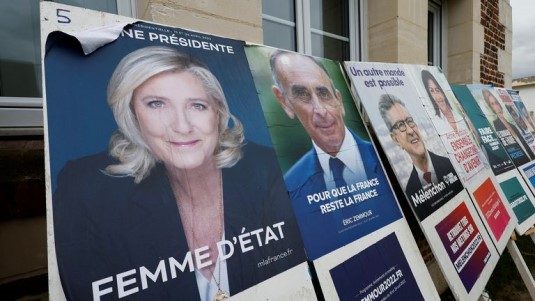
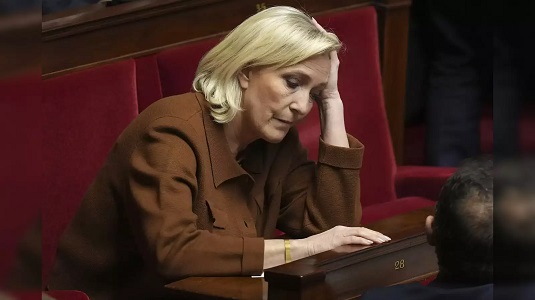
How Not to Frame the Le Pen Politics Ban

When is a crime not a crime? When a far right political leader is caught with their hand in the till. It then becomes a stitch-up and an attack on democracy, at least according to the reactionary international who've lined up to defend Marine Le Pen in the wake of her sentence for defrauding the European Union. Viktor Orban, himself no stranger to corruption allegations put out a pitiful "Je Suis Marine". Nigel Farage claims Le Pen was "cancelled". A funny way of saying 'misappropriated funds' but then again he got done himself while still an MEP. Vladimir Putin had the cheek to call the verdict a "violation of democratic norms". Something, in fairness, he has a great deal of experience with. And a "this will backfire" came in from Elon Musk.

Is a five year prison sentence, two suspended, and a four-year ban from running for office a harsh punishment for embezzling €4m? Or a punishment that fits the crime? It's probably worth considering that Le Pen ensured the (then) National Front voted for the law she was convicted under in 2016. If there was a conspiracy out to get her, it's just as plausible to say she was part of it.

Unfortunately, some on the left have offered a faint echo of the extreme right's victimology. Jean-Luc Mélenchon said "The choice to dismiss an elected official should only belong to the people" and that the ballots and streets should see Le Pen off. Yanis Varoufakis would also like to see Le Pen "destroyed politically", and argued this was the sort of lawfare that was used against Donald Trump, but "the French are doing it in a more obvious, less defensible way than the American Democrats." And David Broder also writes that she should not be barred from standing for the French presidency because it hands the National Rally a propaganda coup.

Does it? Trump remains culpable for the storming of the Capitol in 2021, and it's down to a failure of constitutionalist politicians on both sides of Congress for failing to make more of it and not prosecuting him with sufficient vigour. The drawn out and half-arsed pursuit of Trump through the courts allowed him to construct a persecution narrative that was always going to play well in a country where similar gambits from the right have played well in the past. One should never underestimate the appeal of the insurgent outsider. But does this read map onto France? Le Pen is certainly playing that card, but cannot escape from the fact that the prosecution and verdict proceeded without any evidence of political interference. She was corrupt and was found to be corrupt - just like any other establishment politician. The sentence was not special or egregious, and has been handed down to others for less. Le Pen's problem with the politics is that she now stands exposed as someone on the take, which isn't ideal when one's project has built up populist capital railing against establishment snouts in the trough.

The second issue with the left critique is its statement of the obvious, as if it's a profundity rather than a banality. Of course the extreme right have to be faced down politically and defeated. No one, not even the most venal and dumb elements of Macron's coalition think Le Pen's conviction means job done. So just who is the likes of Varoufakis taking to task for pretending this is the case? This is where he and the others run the risk of affirming the far right's framing. Giving credence the the RN's version is ... giving credence to the RN's version. The left should be clear that it's not the French establishment persecuting an inconvenient "outsider" via the law. This situation is the result of Le Pen's proven criminality, nothing else. No crime, no prosecution, it's as simple as that. Instead of offering backhanded defences of Le Pen, taking the RN on means adding her conviction to the political charge sheet. It's not a substitution for all other things that need to be done to break the far right, but her own incompetence and idiocy has handed her opponents a potentially useful weapon. One should not look a gift horse in the mouth, and the left should not leave this issue alone to be monopolised by the Macronites.

Image Credit

Thursday, 5 September 2024

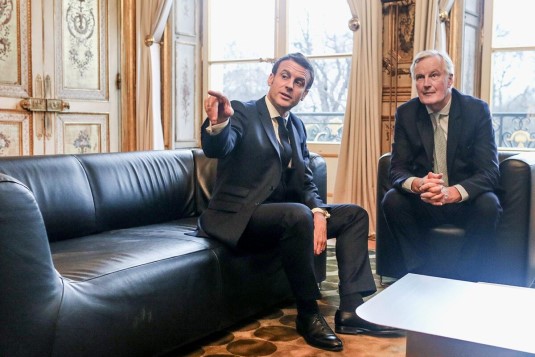
Emmanuel Macron's Cowardly Coalition

After weeks of refusal to appoint a new Prime Minister after losing the French parliamentary elections, the Jupiterean Emmanuel Macron has appointed his representative on Earth. And it's our old friend from the Brexit negotiations, Michel Barnier. For those who haven't followed the farce that French politics has become, on 10th June Macron called a snap election after his party - now titled Ensemble - got a drubbing at the EU elections. This unexpected move, which the clown king of France hoped would confirm him a masterly genius of the political arts, was with a view to bringing the far right to office and have the National Rally's aura dispelled by the difficulties of having to run a government. This being the only scenario that might give his successor a chance at the next presidential election. No, he wasn't thinking about how spectacularly this move misfired in 1933 in France's next door neighbour, but recent experience from Finland. There the far right have held seats in the government since last year, and whose popularity has plummeted - also confirmed by the same EU elections.

Unfortunately for Macron, his scheme came to nought. Following local deals ahead of the second round of voting, the left's New Popular Front and Ensemble formed a "Republican Front" alliance by withdrawing candidates in favour of who was best placed to beat the RN. It proved successful. The far right were shocked by their third place finish and 142 seats, vs the centrists' 159 and the left's 180. Though, like Britain, it was the gaming of the electoral system that ensured this outcome: the RN out-polled both in absolute vote terms.

Not getting the result he wanted, Macron has since played a petulant game - severely shaking the legitimacy of French "democracy" and exposing the reality of the state more effectively than any number of public readings of The State and Revolution. The left's policies, which included ending arms sales to Israel and recognising Palestine, price freezes on essentials, the rejection of neoliberal "fiscal rules", and abolition of the Fifth Republic, are not in the interests of the class forces Macron champions. Instead of appointing a new PM from the NPF, he vetoed their participation in any new government.

This is where Barnier comes in. His Republicans continued their historic decline, having had their base previously shredded by Macron and Le Pen, and limped into the Assembly with 39 seats. With this feeble force allied to Ensemble a centre right government under Barnier's leadership can pick up seamlessly where the old one left off. Le Monde reports that Macron has been on the blower to Le Pen for a week trying to come up with a candidate she finds congenial. She acquiesced to Barnier because he's a "negotiator" and might be amenable to RN's influence, seeing as the Barnier/Macron lash up remains a minority government. But it suits Le Pen for a few other reasons. Playing kingmaker consolidates the motherly, elder stateswoman image she has cultivated in recent years. Vibing sensibility might detoxify her just enough to push her (or her successor) over the line at the next presidential election. Similarly, by staying outside of government the RN can present itself as unsullied - which defeats Macron's reason for calling the election in the first place. And lastly, it keeps the left out of office. Their social programme threatens to undercut the bases of far right support. It would be the kiss of death for the RN to hold out against price controls and social housing building programmes, for example.

What's in it for Macron? Because his alliance with Barnier means more authoritarian austerity, he thinks enough of a cordon sanitaire has been maintained for Macron's successor and Ensemble to try and play the Republican Front card again at the presidentials in the hope they will be in the run off against the RN. At the same time, he will be daring them to vote down his minority government's measures because the alternative - the dread left - is too frightful to contemplate. And as a result become tarnished by the dark deeds Barnier can look forward to overseeing in the coming years, as per his original design.

As far as the left is concerned, the discipline the alliance of the Socialist Party, the Greens, the Communist Party, and Jean-Luc Melanchon's La France Insoumise has demonstrated is remarkable. Macron has failed to break the Socialists from their more radical stablemates - a rare instance of the left realising that it needs to hang together, or it would assuredly hang separately. But this moment of danger is also one of historic opportunity. With the centrists, the right, and the far right manoeuvring to keep the NPF out of office they could capitalise on anti-establishment discontent. Big demonstrations against Macron's constitutional outrages are set for this weekend, and more of the same old from Barnier could, as per Macron's hopes, undermine the RN. But it wouldn't necessarily be the centrists who are best placed to benefit. It could be the left.

Image Credit

Thursday, 23 May 2024

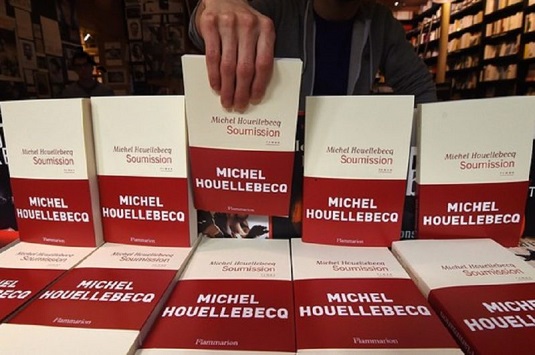
Future Blues, or Houellebecq's Submission

A general election on 4th July, you say? Sa it happens I'll be talking about the Conservatives on that date. Instead of hitting the streets to remind "the vote" to turn out, Liverpool is where I will be. My reasons for being there is because of the Current Research in Speculative Fiction conference, and in particular the paper below. If you're in the area and fancy a break from campaigning, come along!

Future Blues: Uncovering the Rules for Conservative Mundane SF

The publication of Michel Houellebecq’s Submission in French in 2015 attracted press criticism that drew attention to its critique of Islam, its nihilism, and depiction of women. Subsequent scholarship has meditated on these themes, as well as mapping how its critical reception was overdetermined by political partisanship (Ågerup 2019). Rather than debating its contested interpretation and nuances, Houellebecq’s novel can be read as an articulation of the rules of conservative polemic through the evocation of tropes common to right wing establishment political commentary. This paper specifies these rules by comparing the novel to mundane SF vignettes occasionally employed by Conservative Party supporting newspapers in the UK to ideologically cohere their readers in advance of important elections. These typically depict what grim future awaits the country if Labour are elected to office. This paper argues that while Submission is far from a crude propaganda piece, it shares certain assumptions about the way of the world with the column inches commissioned to outrage and frighten conservative-leaning audiences.

Image Credit

Wednesday, 12 April 2023

Fascist Echoes

What does the past tell us about the contemporary far right, and the spate of authoritarian populists ranging from Trump to Bolsonaro? With the far right in France capitalising on the recent unrest more than the left (according to recent polling), knowing and understanding fascism is an urgent task. Therefore, this Politics Theory Other episode is probably more timely now than when it was broadcast a month ago.

If you've got a few quid and appreciate Alex's work please consider supporting the show.

Image Credit

Monday, 25 April 2022

The Diminishing Authoritarian Centre

You wouldn't think France had dodged a bullet if you have scanned the copy clattering off centrist laptops since last night. Emmanuel Macron is the first president to be re-elected in 20 years! The first president since De Gaulle to win a second term and enjoy a parliamentary majority! A triumph of common sense! The far right were seen off! The form of words are different, but the content is the same since the consciously elitist and purposely remote Macron won against Le Pen five years ago. To bring matters down to the earth of hard electoral facts, Macron lost eight points and Le Pen gained eight, while some 28% of French voters stayed home. That is to say 28% didn't see much difference between the authoritarian "centre" and the authoritarian right when push came to shove.

Casting our minds back to the previous write up in 2017, it forecast Macron neither understood how he became president nor that his policies - attacking labour, pushing the super rich, ratcheting up the authoritarianism and the racism - would prepare the ground for a future far right advance. Five years that saw this eventuality came to pass. He scraped in this time, and with the added bonus of not tacking left to scoop up Jean-Luc Melanchon supporters from the first round. A result for centrism then. Stick to the centre and leave it to French good sense to see off the far right. What does it matter if almost a third of voters don't turn out? A win is a win is a win.

Can Macron - and France - withstand five more years of complacency? I wouldn't like to chance it, but En Marche strategists looking at the age splits would find encouraging signs. Macron was the solid victor among the pensionable vote, walking away with 71%. This is quite an achievement and easily betters the retiree support the Tories rely on here. The overall property dynamic is not as attenuated as the UK's, but it's reasonable to assume the authoritarian politics the old largely respond to here finds its corollary over the Channel, and for similar reasons. However, despite Macron's anti-democratic tendencies he is no fascist and, when it suits, he portrays himself the heir of the Fifth Republic's secular, liberal virtues and the fact its founding is steeped in Gaullist myth about the man of action, of a leader rising above petty squabbles and acting decisively to save France. It's a peculiar strongmanism Macron leans into, but one with enough nostalgic pull and promise of stability.

And at the other end, there is the young. Again, confounding polling the 18-24s went for Macron by 61% versus Le Pen's 39%. That is, despite the National Front making hay with cost of living issues this direct appeal to their immediate interests fell flat among the two thirds who did vote. It's almost as if the the experience of class and the values arising from this position is not congenial to "post" fascist politics, no matter how much it tries softening its image. For the Macron strategists then, there's nothing to worry about. Unlike Britain where the Tories face a crisis of political reproduction because property, values, and the interests of their existing electoral base puts them at odds with working age people, not just the young, in France it appears the Macron-positive elderly will be replaced by the Macron-positive young.

A couple of points to skew this conclusion. For one, as explained previously, there are alternatives to voting for the least worst option and 41% of 18-24 year olds took it: they abstained. This exodus from engagement with establishment politics is more likely to benefit the left and the street movements, but it presents a problem of political reproduction of the Macron vote. If virtually-certain-to-vote pensioners are "replaced" by much more hesitant and conditional younger voters, the job of facing down a far right challenge next time becomes harder. Not as acute as the position the Tories are in, but enough to present the Macron project significant difficulties. Second, because working age cohorts between 25 and 64 found Le Pen much more congenial, the more the President keeps banging his public sector reform/working class bashing drum, the more he'll drive the opposition. One would hope this would go left, and with the good showing for Melanchon in the first round there are good opportunities for the left to build and intersect with this discontent. Plus the disproportionate support among younger voters, especially those coming of age between now and the next presidential elections, puts the left - assuming Macron stays his ruinous course - in with a shout of getting into the second round. But this is by no means a guarantee. Five more years of crackdowns, aloof government, and galloping prices could spur resentment to drive enough voters into the camp of reaction.

As for Macron's cheerleaders here, there is some recognition that things cannot go on as they are. And they are right to be worried. Given the dynamics this election has revealed, the next presidential election could see a left versus right battle with Macron's successor dumped out in the first round. That would not only underline the bankruptcy of centrist politics, but put them on the spot. Would our assorted liberal and centrist heroes advocate a vote for the leftist candidate to keep the fascist out? Going from our experiences during the Corbyn years, we know what the answer will be.

Image Credit

Thursday, 14 April 2022

Immaterial Labour and its Discontents

Returning to the French presidential election and venturing an explanation how younger layers could vote for fascist candidates in large numbers - in defiance of the theory of immaterial labour long peddled here and its relationship to the growing dominance of socially liberal values - some corrections are in order.

First of all, the numbers did align with electoral results in the UK, Germany, the US and most other Western liberal democracies. France was not an outlier. In the under 35s, Jean-Luc Melanchon for the left won. He was just shy of 35% in the 18-24s, with Macron sitting on 25% and Le Pen 18%. In the 25-34s, the left just edged it with 31% versus Le Pen's 26% and Macron's 22%. Unfortunately, among the older working age population Le Pen won with 29% in the 35-49 and 50-64 age groups. Macron was 22% and 25% respectively, and Melanchon 20% in each. It was the retirees who saved Macron's bacon with 41% of the vote, and his far right and left rivals plodding along at 16% and 11%.

This means the YouGov poll cited previously was junk. 34% among the 18-24s for Éric Zemmour? Either it was a typo or a particularly heavy session at Paris HQ. In the end his attempt to out-right Le Pen mustered around seven per cent for the age group. Combining the fash vote with Valérie Pécresse of the centre right Soyons Libres and their total was well short of Melanchon. Eggs on the faces of team YouGov, and yet more empirical proof of the relationship between immaterial labour and, for want of a better phrase, 'progressive' voting behaviour.

Yet the thorny issue remains of the final round. According to the FT, about half of Melanchon voters will move from supporting him to staying at home. Over a quarter will put the nose pegs on and support Macron, while just under a fifth are going for the Front National. The liberal pearl clutchers here in England look on aghast, but there is no mystery as to why socially liberal young people under the boot of Macron's hapless, authoritarian rule might punt for Le Pen. For one, he appears hesitant to offer left wing voters anything. If one cannot be arsed to to win people over, then what right do you have to their votes? Second, Macron has presided over his own cost of living crisis while scapegoating young unemployed people for his failures, and has done next to nothing to address the climate crisis. His record damns him. And third, as appalling as Le Pen is, she does appear to offer solutions (of a sort) to bread and butter issues. However, it is the drop out rate, as an expression of a collective attitude, that is more significant for trying to understand the political preferences of young people and immaterial labour generally.

First, a few words on the elision between the young and immaterial labour. As explained many times before, the move to immaterial labour marks a structural transformation of work in advanced capitalist economies. While this has always been a crucial aspect of capitalism, and particularly with regard to the reproduction of labour power in the home - historically the province of women, after the Second World War it took on an increasingly formalised, public aspect. As public services and the state expanded, millions of workers were drawn into work that did not directly produce surplus value but whose role was the administration, maintenance, and reproduction of capitalist relations of production. The expansion of the civil service and local government, the growth of state education and health sectors not only provided safety nets, but also a substantial apparatus of economic planning and role socialisation. The production of relationships was simultaneously the production of people. With the onset of deindustrialisation from the 1960s onwards, the coming of mass consumer cultures, and the privatisations of the 1980s and 90s, and the IT and telecommunications revolutions, immaterial labour was increasingly commodified and harnessed for profit. Retail dominated cities where factories used to pollute the skies, the office replaced the workshop as the culturally hegemonic workplace, and social and intellectual aptitudes are what the person specs of job vacancies demand. Brains and sociality are the key forces of production.

This was not the result of capital's grand plan, or a 'great reset' before it became a thing. The growing dominance of immaterial labour was born of necessity, to manage growing populations while protecting class relations. Of post-war affluence and mass consumption, of the privatisation of social life and leisure, of shifting assumptions about the good life, and the flood of capital into meeting these lifestyle demands - all to the point where the British economy is in no small measure comprised of people selling overpriced coffees to one another. The expansion of immaterial labour was enabled by the economic boom, and then took up a dynamic of its own. Cultural mores changed, the 'new' social movements of women's liberation, anti-racism, LGBTQ rights, and environmentalism grew in breadth and depth, and helped foster a new common sense of tolerance and acceptance. And each passing generation have become progressively more embedded in socially liberal attitudes. Immaterial labour demands not cold intellects but emotional intelligence, empathy, and social competence. It demands cooperation in which the 'product' is a service at its most caring, hands-on end, or information and data at its most abstract. The objects of both are social dynamics, social interactions, relationships.

The two main consequences of this is as immaterial labour expands, socially liberal socialisation grows. Lefty teachers are not responsible. Therefore, what we commonly see in value surveys is what the theory would predict: the younger someone is, the more likely they are to have a career spent entirely in jobs characterised by immaterial labour, and conversely are going to share socially liberal values more than older generations of workers. Second, even if right wing governments didn't hold down living standards - particularly of younger workers - their positions in the culture wars would likely alienate young people, and conservative stratagems of playing divide and rule along lines of race, nationality, sexual orientation, and class falls increasingly flat among them.

But they are attacking the young. Nothing on rising prices. Nothing for housing. Nothing to tackle underemployment and precarity. Nothing on petrol. Nothing on the environment. And the Tories are putting up taxes, and slapping increased interest payments on student loans. Even without the spread of social liberalism, younger people have few reasons to vote Tory and plenty of them to carry a life-long antipathy. Something that later property ownership, higher salaries, and job security for those lucky enough to get there is unlikely to erode in short order. After all, it took decades of home ownership before working class retirees were prepared to switch away from Labour.

The future's looking good for centre left, green, liberal, and radical politics then? Yes, but only if they actively court this ever-growing constituency. The expansion of immaterial labour, particularly after the 1980s, took place in the context of labour movement defeat and its subsequent weakness. Therefore their relation to the established centre left is not, for the most part, embedded in a residual collectivist loyalty. Any identification is slight, precarious, and conditional. And it doesn't require an abstract schema to show this is the case: recent history will suffice. During the New Labour years, Blair and Brown's lack of concern with the rising working class saw younger layers disproportionately attracted to the Liberal Democrats. They offered policies that spoke to their concerns, and were able to affect a centre left pose in the run up to the 2010 elections. When they betrayed this new base by going into government with the Tories and spectacularly reneged on their tuition fee pledge, this support evaporated. Not even tilting to a hard remain position could win them back in anywhere near the same numbers. We have the experience of Scotland, where Labour's case for remaining in the union was framed almost entirely in right wing, establishment-friendly terms. They showed what should be their natural constituency how it was quite prepared to trample over their aspirations and hopes for a better future. And so immaterial labour switched en masse to the SNP, leaving little but a residue behind. Over on the continent, grave yards are full of centre left parties destroyed by similar levels of hubris. At night the tomb stones echo to the screams of careers that never were, their phantasms still ignorant of why they were snuffed out.

What political experience teaches us is if a party crosses their interests, they don't stick it out because they have nowhere to go - as per the supposedly timeless advice of Peter Mandelson. They will cast around for an alternative vehicle, something that Keir Starmer would do well to heed. Or in the case of France a not insignificant amount will vote for FN purely because they have more to say, and arguably offer, on the cost of living. Or they will simply vote with their feet and stay at home. Immaterial labour does not feel obliged to support the least worst among several options and, rightly, expects a quid pro quo in return for its votes. If Macron wants to be sure about the second round, he has to reach out to Melanchon supporters with something that would speak to their interests. Perhaps, just perhaps, it might win over some younger FN voters on that basis too. Similarly, Labour here needs to do the same: its faith, flag, and family rubbish and dependence on the Tories being awful is not the prospectus for winning an election outright. If Macron and Starmer refuse to listen, these voters will stay at home and the advantages Le Pen enjoys among older layers of workers, and the pensioner bedrock Johnson has will play to their respective advantages.

In other words, discontent in mainstream politics will express itself in (seemingly) radical forms if there are parties available to channel it, but if not nihilism awaits with its inky black emptiness. Immaterial labour can be the saviour of progressive politics. But if our teeming millions are ignored, crossed, or denied, it will be its ruin.

Image Credit

Monday, 11 April 2022

Dissecting the French Election

Taking more time off tonight, so leaving matters to the heavy lifting of the Novara comrades.

Sunday, 10 April 2022

The Warning from France

According to the exit polls from the first round of the French presidential election, Emmanuel Macron has come out top with around 28-29% of the vote. Marine Le Pen is on 23%-24% and the left's candidate Jean-Luc Melanchon stuck at the 20-21% mark. Like 2017 we're looking forward to a face off between the authoritarian centre and the authoritarian, populist, and "post-fascist" right. Opinion polling for the second round is uncomfortably close, with Ipsos MORI forecasting 54% to 46% in Macron's favour, while another has it almost level pegging at 51% to 49%. Even if Macron squeaks back in, this is disastrous. And the responsibility lies squarely on his shoulders.

We await more crunching and the outcomes of the count, but there is something very concerning about the numbers supporting Le Pen. When it comes to the voting habits of working age people and the young, they're at cross purposes with nearly everywhere else in Europe. According to YouGov numbers, the younger one is the greater the propensity to vote for Le Pen. They suggest the over 55s would support Macron 55%-45%. This is the only age cohort that shows a majority for the centrist candidate over the far right. Moving down the age ranges, it's 51%-49% for Le Pen in the 45s-54s, 53%-47% in the 25s-44s, and the 18s to 24s? 56%-44%. Is it really the case the younger one is, the more fascist-adjacent they are?

This data poses the theory often pushed here a challenge. That is the structural transformations of the character of work in advanced capitalist societies are seeing it configured around immaterial labour: the replacement of material production increasingly by service provision, knowledge, and care. The consequences of this are new patterns of exploitation, new precarities, and a multiplication of identity politics. But it also propagates a new common sense: social liberalism. Less an ideology and more a diffuse common sense, it is a decisive shift in popular attitudes and values that reflects the greater stress on sociality demanded by capital of labour power in the 21st century. Everyday spontaneous anti-racism, anti-sexism, anti-LGBTQ bigotry, and low-level internationalism are rooted in tolerance and the ability to get along. This stands in marked contrast to older layers, and particularly the retired, whose social conservatism (which is not unrelated to their relationship to property) sits awkwardly at odds with the attitudes of their children and grandchildren. Therefore, assuming values are the primary driver of voter behaviour, social conservatives vote right for conservatives. And social liberals vote liberal or left. Hence in the United States, the young being the dynamo of the Bernie Sanders campaign. Here in the UK, their powering of Corbynism and, if the polls are to be believed, disproportionate backing for Keir Starmer's Labour. And in Germany, the good showing for the Free Democrats and the Greens in the last election. Why then is France the outlier?

In 2017, Melanchon was the lead candidate among 18-24s, while Le Pen came second. But according to YouGov's numbers the leader among the young going into this election was the even-more-racist Nigel Farage equivalent, Éric Zemmour. This might have been cancelled out by the late surge for the left in recent days, but combined with Le Pen's support we're looking at 49% of France's most socially liberal generation willing to support a far right candidate. How can this be?

It's the interests, stupid.

When Macron was elected in 2017, his "liberal" administration was all set to repeat the mistakes of his predecessors in the Socialist Party. Who, incidentally, have gone from holding the presidency five years ago to winning a projected two per cent today. For his pains, Macron has presided over France's persistent youth unemployment problem. Even with a plan to massage the figures by giving youngsters €500/month for completing a series of training courses, it jumped from 14.8.% to 16.4% between January and April this year. He has also tightened the conditionalities on unemployment support, disproportionately impacting the young, and, like here, the cost of living is outstripping wage rises. Similarly, while not at UK-levels house price inflation is rising faster than pay, and Macron pushed through pension reforms that will lead to lower incomes for workers in retirement. Other factors include high-handed, authoritarian government, a retrenchment of the over-centralised French state at the expense of the regions, and poor public road infrastructure have played their parts. Many of France's problems precede Macron, but has hasn't done much about them.

And there is the disastrous re-election campaign. Macron thought now would be a good time to affect elite disinterestedness. He announced his campaign late, refused to debate other candidates, and has kept away from meeting the public. Contrast this with Le Pen who's not only done her woman-of-the-people shtick, but has made cost-of-living issues the centrepiece of her campaign. For many people of working age and particularly the young, the final round choice will be between a candidate offering more of the same and another talking about jobs, wages, housing, and prices. People prepared to support Le Pen over Macron, including Melanchon supporters, are making a rational choice calculation. She might be authoritarian, racist, and wants to go out her way to bash Muslims. But then, for all his Blair-lite impostures about social justice and "radicalism", Macron appears to be little different. Political science isn't rocket science. If politicians speak to popular interests, they will attract support from across the spectrum. Especially when up against a cloth-eared incumbent.

France therefore is a warning. Macron is going to have a great deal of difficulty converting younger voters in the second round because of his record. It's not enough to expect voters to follow Melanchon's advice and not transfer their support to Le Pen, he's got to offer something by making the left a comprehensive offer. It might work and keep him in office. But it's a reminder for us too. Values broadly align with politics, but when a formally socially liberal government reneges on its values and puts capital before labour, voters who, on paper, should be their supporters will gravitate to parties and candidates who offer them something. As France is demonstrating, arguing Le Pen is beyond the pail is very definitely not enough - especially while you're kicking those whose votes you want in the teeth.

Image Credit

Monday, 8 June 2020

Bourgeois Playgrounds

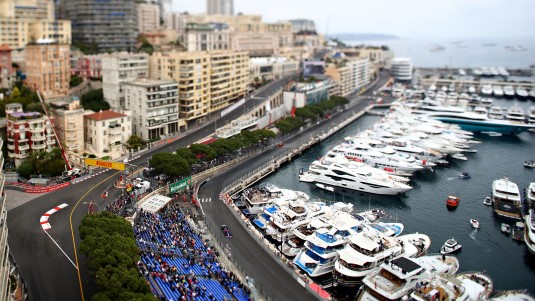
If you're a working class kid, a playground is a sprinkling of swings, a slide. a roundabout, bench, and climbing frame. If you're born into megabucks a playground is, well, something like Monaco. With the world convulsed by economic cataclysm, itself the unwelcome by-product of the health crisis, for the BBC to screen a documentary about the world's most opulent micro-state seems, well, not the most appropriate of timings. Still, there is a curiosity to be sated. What is a place like when the one per cent make up 30% of the people? Insufferable.

There's little need to go into the ins and outs of the baubles dangled before the viewers' eyes. Supercars with ostentatious paint jobs, petty competition between billionaire yacht owners for ever larger vessels, palatial rooms at the Hotel de Paris going for 15,000 Euros a night, and the zero income tax that, as the narrator put it, helps "protect the substantial family fortune." Then we have the exclusive parties, the invite-only gatherings up at the Royal palace, and the master of ceremonies himself, Prince Albert II of Monaco - the only absolutist monarch on history in possession of an American accent. It's the sociology matters, the glimpses of the principality's power relationships.

Albert affects a patrician if avuncular presence at odds with his and Princess Stephanie's hard-living reputations from the 80s and 90s, but his word is law. There is a no photography rule in Monaco, and professional photos or filming requires written permission - hence no paps, another bonus for harried celebrities considering residence. He also gets to decide who can become a Monegasque citizen, of which there are 9,000. The programme makes much of the elaborate hoops one has to jump through to tick the boxes, but it's very clear the (unspecified) rules are a complete sham - Albert decides all applications, and if your face doesn't fit you're not coming in. Citizenship does confer advantages though. Even a state given over to the indolence of the leisure class needs workers, and a relatively generous system of subsidies are available to citizens. As one air traffic controller observes, his citizenship means he pays 700 Euros per month for his apartment whose market rate would ordinarily be €4,000/month.

Monaco however is entirely dependent on the circuits of the globe-trotting rich, as well as the sufferance of the French state. Revenues are funded by the 20% VAT the state levies on everything, which makes spectacles like the Monaco Grand Prix essential money spinners. But there is a problem: with the rise of the likes of Dubai as another luxurious hold out for the rich, how might the principality stay competitive and keep the cash flowing? Princess Camilla, consort of the Duke of Castro and one of the claimants to the long abolished and disputed throne of the Two Sicilies is determined to "preserve tradition" and come up with new ways of making Monaco relevant. Her wheeze? Influencer awards. For a micro state whose social basis rests on discretion, inserting Monaco into the overexposure of the attention economy can bring in the next generation of money bags. By getting the images of the awards and the lavish hospitality out to tens of millions of followers, Monaco hits the aspirational imaginary and the whole grift can carry on indefinitely.

Monaco's opulence is grotesque and, not at all coincidentally, showcases the poverty of bourgeois success. The dream of capital is accumulation without workers nor the responsibility for their maintenance. The dream of power is control without accountability, and therefore responsibility. Monaco marries the libertarianism of the super wealthy with the arbitrariness of absolutism, and they are shown to be the conditions for one another. The other two key tax haven states, Dubai and Singapore, have near identical set ups - the only real difference being the degree to which they ratchet up the authoritarianism. And this, ultimately, underlines the pointlessness of wealth. Fortune liberates one from economic necessity, but the freedom excessive money buys is luxury behind closed doors, a berth in a rarefied society of artifice and superficiality. When you consider all the crap the ruling class inflicts and the destruction of human beings their system affects - just so they can recline in the bounded universe of gilded gated communities - doesn't it make you feel sick?

Tuesday, 8 January 2019

Weak Bonapartism

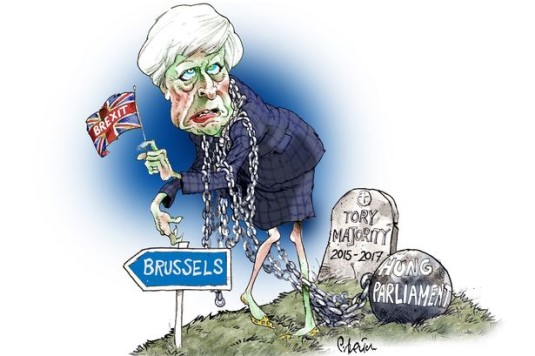
It's worthwhile thinking about the concepts that emerge from the analysis of politics, particularly when it is fraught and strained as per, well, now. And, after all, if commentators are doing their job properly they should be thinking about how to describe and explain what's going on. First up is weak Bonapartism, which is something used here loads of times to describe the situation in the Tory party and the position of Theresa May. It describes how her weakness vis the rest of the party paradoxically gives her room for manoeuvre and strength.

Bonapartism as a concept has a lengthy history among the grey beards. Coined by Marx himself in the articles collected in The Class Struggles in France, Bonapartism refers to the politics in France between the failed revolution of 1848 and 1850, when universal suffrage was abolished. This culminated in 1852 with the founding of the ill-fated Second Empire. Without getting bogged down into the historical detail, Louis Bonaparte (later Napoleon III), the nephew of the original Napoleon, was elected President in 1848. Having been shook by a failed plebeian revolt and thanks to fractiousness between the remnants of the aristocracy and different sections of the rising bourgeoisie, Marx argued the struggle of classes and class fractions had balanced out. The popular masses were no longer willing to be ruled in the old way, but were not capable of exercising power themselves, and likewise the ruling class were disorganised. Into the vacuum the state stepped and assumed political independence from landed interests and industrial capital. It became less a committee for managing the common affairs of the bourgeoisie, as per The Manifesto, and more an organised power for stamping the authority of a single man. The state was strong, the contending classes were weak, and so state authority prevailed. Nevertheless, as Trotsky later observed it was still a bourgeois state because it preserved prevailing class relations and, later on, used government to drive economic development and participate in the European scramble for global markets and colonies.

There have been various adaptations of Marx's concept since. Most controversially in Marxist circles, Trotsky used it in his analysis of Stalinism. In a series of articles written in the 1930s, and most famously in his semi-holy screed (for some), The Revolution Betrayed, he argued what the Soviet Union had become following the October Revolution and its subsequent international isolation an example of 'proletarian Bonapartism'. Again, sparing the details, Trotsky argued that following the revolution and civil war the Russian working class were devastated, the country lay in ruins, and the party had effectively fused with the state as the only organised power in the land. Because the workers and peasants were ruined so were the chances of socialist democracy. And so the organs of direct democracy withered, followed by internal democratic norms in the party itself and the bureaucracy assumed power. However, because capitalism wasn't restored and, indeed, the power of the apparatus flowed from its command over a post-capitalist economy, this dictatorship over the proletariat nevertheless protected the nationalised property bequeathed by the revolution. Hence Stalin's Bonapartism was progressive and marked a gain over what existed previously.

Trotsky also employed Bonapartism in his analysis of fascism in Germany as overlapping categories. Here, fascism started as a mass movement of petit bourgeois reaction against a rising workers' movement, which propelled it to power. Once there, the Nazis turned the organs of the state against their political enemies without and, eventually, within their own movement. And once it was tamed/absorbed into the state it more or less settled into something akin to Bonapartism. Whether he'd have changed this assessment had he lived beyond the early years of the Second World War is a matter of speculation.

In the post-war period there were a number of permutations of Bonapartism. The expansion of Stalinism to Eastern Europe and South East Asia proved/disproved Trotsky's concept, depending on your view of the Soviet Union. For some Trotskyists, the coming to power of De Gaulle in 1958 and the founding of the Fifth Republic was a moment pregnant with Bonapartist dangers. With decolonisation often the only organised body in newly independent states was the military, and often found themselves in situations analogous to, but not as fortuitous as that of Napoleon III, and more recently the army played a Bonapartist role in Egypt's Arab Spring.

Bonapartism then has a pedigree of unpicking the relationship between classes and the state in rapidly moving historic movements and processes. What use could it have for understanding the predicament of Theresa May?

In what you might call the long June since May lost her majority at the 2017 general election, the Tory party has been in a state of stable instability, or permanent disarray. The membership are drifting away or dying, and at the top of the party May's shattered authority is beset by rival factions and ambitious individuals. I guess we've become habituated to it, but we should remember that the spectacle of cabinet members thinking aloud about Brexit is unprecedented and a symptom of May's weakness. Yet thanks to the disunity of the Tories, the awful mess May has on her plate, and leadership contenders balancing one another out, paradoxically the Prime Minister is safe from challenge. After all, if you were an ambitious MP and fancied a bite at Number 10, would you make your move now when Brexit is up in the air and there is still the drawn out process of a trade deal to come? Likewise, would you want it while the party is in the midst of tumult and you're unable to exercise your authority over it? No, and so May abides.

This is where the perverse character of weak Bonapartism is brought out. The central authority is weak, but none of May's would-be rivals have the strength to see her off and replace her. This gives May considerable strength and autonomy, something she only really cottoned on to over the summer. When the details of her Chequers Deal was made public, the likes of David Davis and Boris Johnson could have made a move. But they didn't, preferring to resign and grandstand from the back benches. May also realised that there was no need to appease the hard Brexiteers either, and that if they were able to force a no confidence vote in her leadership she would see them off - a calculation that proved correct. However, weak Bonapartism is an anomalous situation and one that, for May, can't less forever. Should her deal fall at next week's vote, what then? Will she soldier on, knowing no one's about to usurp her (indeed, under party rules this cannot happen until next December), apply for an Article 50 extension, which is the talk coming out of Brussels today, or throw in the towel - assuming she survives Labour's no-confidence vote?

And of weak Bonapartism itself, if May goes in short order her successor will be prey to the same pressures. But weak Bonapartism is so out of the ordinary that I can't think of any other examples or situations where it applies. Any suggestions?

Saturday, 15 December 2018

Hurrah for the Yellow Shirts?

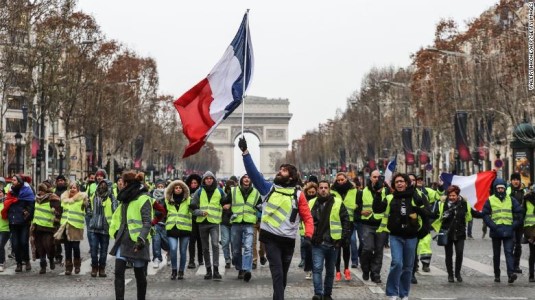
Far be it for someone so humble to offer advice to the exalted Emmanuel Macron, but faced with a revolt in which one's haughty, arrogant style of leadership is one factor in the galaxy of grievances, perhaps appearing on television behind a gold table in a room shiny with this most wretched of metals to assure the populace that you're "listening" wasn't the best idea. Nor was the related announcement that his "concessions" would be funded by public spending cuts elsewhere. And to think a good chunk of professional politicians in this country really rate this deeply mediocre man.

Macron is yesterday's man, and has from the outset of his presidency shown British politics its past, not its future. But what to make of the Gilets Jaunes movement that has grown up in revolt under his watch? We've seen the violence, the vandalism, and the reports of racist and homophobic attacks. Apart from being what they're against, what are the Gilets Jaunes for? Matters aren't helped by this unofficial list of demands doing the rounds. Some of it, from a left wing point of view, is entirely supportable. Others wouldn't be out of place in a Le Pen speech. What is this movement, then. Should the left be intervening and moulding it, or is it a case of our French counterparts crossing their arms and forswearing it as an abomination?

Well, that ship has sailed. The Gilets Jaunes won't pass the political hygiene tests set for it by sundry centrists here, but as Gabriel points out the left are involved and taking part in increasing numbers. However, because the movement doesn't fit certain people's pre-ordained categories we have seen attempts to politically excommunicate it from the terrain of politics altogether. For instance, this foolishness from Buzzfeed argues the Gilets Jaunes are a "beast born entirely from Facebook". Apparently, tweeks to the company's algorithms designed to de-prioritise fake news and allow material from "trusted local sources" a higher ranking in one's newsfeeds has privileged local news, allowing the movement to emerge online from the ground up and appearing as if from nowhere from the metropolitan point of view. This isn't anything new as protest movements have utilised the internet for as long as the internet has been around, but to claim it's a Facebook phenomenon is absurd. Does the author not know anything about France?

An adjacent explanation is that the movement is a creature of the Kremlin. Of course it is. If in doubt, always blame the Russians. Because the movement was sparked off by protests against a fuel tax, which would coincidentally diminish the money coming in to Putin's petrochemical kleptocracy, the former could only be an effect of the machinations of the latter. No other explanation makes sense. It's also anti-Macron, just like Putin! The Gilets Jaunes hold the French mainstream media in contempt, just like Putin! And it communicates memes based on fake news, just like ... You get the picture. It's almost as if there is a large, influential section of elite opinion who refuse to believe there is anything wrong with the world and prefer the delusion of Russki conspiracy or the overweening power of social media to confronting their own obsolescence.

The truth, sociologically and politically speaking, is the yellow vests are not an exotic movement and follows the well understood path of mobilisation of social movements. To follow the approach defended and tweaked in the old PhD thesis, these can be boiled down to structural conduciveness, strain, growth and spread of generalised belief, precipitating factors, the mobilisation of resources for action, and the role of the authorities - the operation of social control. Translated from the jargon of 1960s functionalist sociology, what this means in this instance are the contradictions and tensions of French society have incubated a series of grievances over a long period. Strain in this instance is located in the centralisation of the French state, the consequent economic centralisation, poor public transport by road, flat-lining living standards, and the political and cultural disinterest those at the centre have in provincial and small town France. Into this situation successive government have tossed austerity grenades exacerbating the situation further.

For his part, Macron isn't responsible for the strains. But as widely predicted by everyone with an eye on political reality, he was never going to do anything to resolve them and would, as per his predecessors, exacerbate them. And so he has. His short, dismal turn at the top has hardly been the Jupiterian triumph he imagined. He provoked mass strike action by cutting public sector pensions, affected a distant, high-handed style of leadership, and then arrogantly introduced his fuel tax, knowing full well it would do little to curb carbon emissions - people have to drive to get around, regardless. This was the grievance, the straw that did for the proverbial camel and ignited the simmering anger around the country. Facebook and social media played its role by enabling the the rapid facilitation of connections between like-minded people and the sharing of key ideas. This would have happened without it being there because, well, French history, but in this instance online networks acted as an information cyclotron that accelerated messaging and experiences, condensing into local, semi-permanent actions at speed. The characteristic indifference of Macron to local protests and blockades afforded a clear field for the emergent movement to get its message across further, and the actions of the authorities - standoffish last Saturday, hands on this - have catalysed the movement further. Mass arrests have done nothing to dampen it down.

So much for a broad brush strokes analysis of the Gilets Jaunes' mobilisation, but what of the movement's character. Unfortunately, some have looked upon it and determined it to be the French equivalent of gammon at riot, or a bunch of fascists, the occasional presence of FN voters on local mobilisations, and the aforementioned confused, anti-globalist programme listing the movement's unofficial demands. Others are discombobulated by what you might call the extreme Deleuzism of sections of the movement. It was widely reported that the dozen or so people put forward to "represent" the Gilets Jaunes in negotiation with the authorities had to pull out after death threats apparently from within the movement. The argument goes as soon as you set up representatives, it quickly evolves into another authority structure that bears down, limits, and excludes. Yet it's less the case tens of thousand hi vis protesters have cuddled up with Anti-Oedipus and A Thousand Plateaus, and more an expression of their lived experience. As people on the periphery, a sense of being ignored and taken for granted by politicians from the left and right, and seeing other institutions of civil society limited in their struggles against whoever is in government feeds a visceral fuck 'em attitude. They have no skin in the game because the game doesn't recognise them, so why not blow it up?

An entirely understandable response then. However, apart from the anti-representation dynamic the confused and contradictory ideas on show, including the participation of the far right and the far left, is typical of a movement in formation. It might be news to the wiseacres who populate political science and journalism, but movements do not pop into existence fully formed. When something takes off it moves and evolves depending on the social stuff it draws in, and the extent to which its leading figures have control over the movement. Analysis that has moved beyond impressionism and offence at the defacement of the Arc de Triomphe shows it has pulled in workers, farmers, the petit bourgeois. Apart from geography, in the initial phase of mobilisation age was a common factor. i.e. It presented as a movement of older people, but the increasing participation of the young, especially the school and college kids who've come out in support, is a positive sign that this won't evolve into an adjunct of Le Penism. Also potentially encouraging is the movement calls into question the social basis of modern France. In other words, from the outset, despite its confusion it is explicitly political. Again, no guarantee of a progressive outcome but this is the terrain where the left have a worked out critique and programme. Unfortunately, so do the far right. One thing can be sure, if the left and leftists didn't intervene in the movement and try and steer it, the forces of nationalism and fascism would.

What then are the stakes? Gabriel's piece argues that we should see the Gilets Jaunes as a movement and moment of political recomposition in France, and of the left particularly. In the space of less than a decade the Socialist Party, once a natural party of government, has gone the fate of social democracy elsewhere in Europe. Meanwhile, the Communist Party has continued its long march to ever-diminishing returns, and various projects of the left have broken through and faded away - the workerist Trotskyism of Lutte Ouvriere, the New Anti-Capitalist Party, Jean-Luc Mélenchon and the soaking up of the centre left vote by Macron's En Marche in the parliamentary elections. There is also the anti-globalist movement, itself tinged with a bit of French exceptionalism, that has cast a shadow over protest and environmentalist politics for 20 years, and the anti-austerity mobilisations of the last few years that - rightly - did for the Socialists. The Gilets Jaunes are drawing hundreds of thousands of people hitherto excluded the mainstream and throwing them into the maelstrom of the street, and in so doing the process of recomposition. It is a process analogous to what is happening in Britain and the United States, though there it is primarily expressing itself through constitutional means, the French are doing so in their own inimitable style. Any leftist advocating abstentionism then is a flaccid sack of sentient water that is neither use nor ornament.

Our job here in Britain is to keep studying the movement, learn from it, and be alive to the possibility that an accumulation of similar grudges could lead to similar explosions here. With our febrile and dysfunctional politics, that might just happen.

Sunday, 11 November 2018

Why the Great War Was Not Stopped

One hundred years since the guns fell silent on the Western front. The horrors and death that were visited upon the trenches were, at that point, unprecedented in human history. "Never again!" the establishment said, while Britain backed the whites in the vicious Russian civil war and bloodily repressed revolt in its misbegotten colonies. And just a couple of decades later the Great War was surpassed by an even more ferocious and destructive conflict. To mark 100 years since the Armistice, I'm reposting this from the occasion of the centenary of the Great War's outbreak.

A century on and the establishment are still soft-soaping it. Britain didn't declare war against Germany for the sake of poor little Belgium, the rights of small nations or for the defence of neutrality. The peoples then groaning under the weight of our empire might have had a thing or two to say about those matters after all. These were the good reasons. The real reasons, which did not make war an inevitability, was acting to prevent French and Belgian channel ports from becoming German naval bases, and putting the Wilhelmine upstart back into its box. Cold, hard interests carried the day in the lead up to the declaration. Humanitarian concern was so much flim-flammery.

The question is why was this senseless and utterly unnecessary slaughter allowed to happen? Recall the extraordinary Basel Congress of the Second International in 1912. It passed a manifesto declaring the following:
If a war threatens to break out, it is the duty of the working classes and their parliamentary representatives in the countries involved supported by the coordinating activity of the International Socialist Bureau to exert every effort in order to prevent the outbreak of war by the means they consider most effective, which naturally vary according to the sharpening of the class struggle and the sharpening of the general political situation.

In case war should break out anyway it is their duty to intervene in favour of its speedy termination and with all their powers to utilize the economic and political crisis created by the war to arouse the people and thereby to hasten the downfall of capitalist class rule.
Fine words. Stirring words. This was not the rhetoric of some cranky sect gathered in Switzerland's version of Conway Hall either. The Second International was a mass movement. Its sections ranged from important working class parties to organisations numbering millions of members, affiliates and supporters. The German Social Democrats were the jewel in the crown, and its formal commitment to Marxism provided the International its shared intellectual reference point. Yet with the outbreak of war, Lenin reportedly fell off his chair and condemned his copy of Vorwärts (the SPD's paper) as a forgery for reporting that the party's deputies had unanimously voted for war credits in the Reichstag. How did the mighty movement committed to turning imperialist war into class war fall apart? Why did sections of the Second International, with a few exceptions - most notably the Russian Social Democratic Labour Party (Bolsheviks) - rally to their national colours?

The contemporary revolutionary opposition lay responsibility for international socialism's betrayal at the feet of its leaders, and the argument has changed little in the intervening century. Rather than doing the right, revolutionary thing, the official Marxists of Germany, Austria and France, the Labourists of Britain, and working class parties in the smaller combatants took the opportunist road, of treading the path of least resistance. Yet this was not a failure of nerve, a failing that can be reduced to a crisis of leadership. Long before 1914 Rosa Luxemburg was regularly polemicising against the revisionism and opportunism of the SPD's politics. Her argument was that the position of elites in the international as party and union bureaucrats invested them in the politics of the small gain here, the compromise there. They had become mediators of the relation between capital and labour and, therefore, because they owed their prominence to such a position they possessed an interest in its maintenance. When push came to shove they jumped into the nationalist camp of war to maintain their niche, and were happy to deliver the factory and battlefield fodder to imperial interests. Lenin had made a not too dissimilar analysis of trade unionism and the class struggle in his maligned and misunderstood What is to be Done?. Lenin's view was substantially the same as Luxemburg's basic position and via his analysis of imperialism argued that the collapse of the International was thanks to a 'labour aristocracy' encompassing party and union bureaucracies, but taking in all kinds of layers of relatively privileged workers. While also dependent on selling their labour power for a wage, their higher living standards were brought by the "super profits" extracted from the colonies. As beneficiaries from colonialism, they had an immediate interest in maintaining empires and therefore acted as bourgeois contaminants in the workers' movement. As they had extended their sway through those movements, so social democratic and labour parties succumbed to reformism and, latterly, chauvinism and war fever.

This tale, with little modification, still passes for an explanation in Trotskyist and Stalinist circles. It is, however, obviously false. Not only was no evidence forthcoming proving the transfer of "super profits" into the wage packets of privileged workers, it also neglected to mention that Germany's "empire" was economically negligible, Austro-Hungary had no colonies at all, and the "labour aristocracy" in countries like Serbia, Italy, Bulgaria, Russia, and Ottoman Turkey were thin to non-existant. Where combatants were leading imperial powers their wealth stemmed not from plunder but developed markets in economic competition with the other great powers. The second problem is an implied elitism, of assuming that where the leaders go the masses shall meekly follow. Had your Eberts, your Scheidemanns, your Hendersons, et al rallied workers to the class war banner then the July crisis would have grown over into a crisis of capitalism, which is an obviously false prospectus.

While the argument is a non-starter, it does avoid having to ask awkward questions about the political capacity of Europe's working class at that time. In Britain in the first six months of 1914, there were over 40 million strike days - only the strikes of 1921 and 1926 saw greater numbers taking industrial action. That July, St Petersburg was paralysed by 135,000 workers taking strike action and calling for the monarchy's abolition. Workers were conscious of their interests and were quite prepared to stand up for them. How to explain the about face, of militancy evaporating and millions flocking to sign up? To answer the question is to put a huge question mark over the viability of revolutionary socialist politics, classically understood. While Luxemburg and Lenin were right that the upper echelons of the labour movement had become integrated into their respective national capitalisms, so had the majority of workers themselves. Far from plain sailing, nevertheless Britain was a representative democracy of sorts and had improved the lot of working people through piecemeal grind here, strike action there. Ditto for imperial Germany and republican France. The parties and organisations of workers had wrested significant concessions from bosses and governments. Allied to rising living standards, pragmatism appeared to work. This was the early phase of the attempted institutionalisation of class conflict, and it seemed to be working. The majority of workers had a stake in the bourgeois state, in their nation. Conversely, despite double-digit economic growth, Tsarism in Russia and its struggle to maintain the autocracy actively stymied the rise of its growing working class. By denying it a stake in their system, Russian proletarians were more combative, more open to revolutionary ideas, more likely to resist the call to war - and even then they were not totally immune.

As organised labour movements found their feet and successfully prosecuted their interests it's small wonder the increasing sense of advance, of security, of solidarity contributed to nationalism's mass appeal. Hence when declarations of war were met with outbreaks of class peace, it was the case the leaders were following the workers, not the other way round. The Socialist International was not able to prevent the war because the working class enthusiastically went along with it. It wasn't just the lamps that went out across Europe one hundred years ago. The hope European capitalism could be brought down by revolutionary socialism was snuffed out too.
Tuesday, 6 February 2018

Spiral and the Thin Blue Line

And there endeth another season of Spiral, the smash French police procedural that, along with other near abroad cop shows, have been putting the noir into our dark Saturday nights. Like the acclaimed Scandi hits (The Killing, The Bridge, Arne Dahl), they pull off a depth of drama we just don't get in British detective shows, and certainly not in American offerings since the climax of The Wire all those years ago. Yet this quality of Spiral, the hook which a small but not insignificant UK audience chomps down on is flavoursome with some familiar and very old forms of ideology.

The superlative quality of Spiral is never in doubt. The French title, Engrenages in written English is redolent of anger, of 'enrage' and repeated in the daft accent British people put on while trying to read out French underlines this impression. The literal translation, however, is Gears, implying to its native audience complexity, depth, and mechanisms that just have to play out once set in motion - none of which its rendering as Spiral adequately encapsulates. Nevertheless, the main plot wasn't too deep in this, the sixth season. A cop is brutally murdered and local community champions feted by the municipal mayor are the chief suspects. It goes from there into stolen gold, bent coppers, fences, trafficking young women and girls, it has the lot. The season's two side plots featuring Judge Roban and lawyer Joséphine Karlsson sees both coming off the rails - Roban lies under oath to cover his own cover up of a colleague's indiscretion, and Karlsson attempts to murder her rapist and ends up getting charged for it.

Jolly old Louis Althusser in his well known essay on ideology made distinctions between institutions of two types: those whose primary effects were the articulation and dissemination of ruling class ideas which, given they were the outlooks of a very small, very privileged and very powerful minority meant they offered a distorted picture of how the social world looked from the standpoint of the immense majority. These Ideological State Apparatuses buttressed the legitimacy of the capitalist state, and were comprised of what you might expect - education systems, the media, religions, the family, and so on. Building on the classical Marxist view of the state, Althusser wanted to preserve the core insight that all states, from terroristic dictatorships to fluffy Scandinavian social democracy are dedicated to the preservation of private property and the rule of the ruling class, and will resort to violence if that is deemed necessary. These coercive apparatuses, or 'Repressive State Apparatus' comprise the branches of the armed forces, intelligence agencies, carceral capacities, and, of course, the police. As they exist to repress, and as no state can indefinitely last on coercion alone, the ideological apparatus works to confer them legitimacy. Simultaneously, each type of apparatus carries an element of the other. Education coerces with sanction, the family coerces with discipline and, at times, physical punishment, and so on. Similarly, like all organisations, those of the repressive type secrete their own ideologies, particularly around self-sacrifice, loyalty and duty. In Britain, for example, the shift to community policing in the 1990s to the present has enmeshed large sections of the police with social care, a move that came from within the police itself in response to its own problems of legitimation stemming from racism and the political policing of the 1980s.

I digress. One of the core ideologies secreted by the police is that of the thin blue line, that the police are the guarantors of social order per se rather than an order of a particular kind. These few are the ones that keep the chaos from our doors and the decent people safe in their beds. The most obvious manifestation of this is wave after wave after wave of cultural product dedicated to crime detection. That the bulk of crimes are banal, mundane, are easily solved, and represent no threat whatsoever to the social fabric is neither here nor there. The rare, spectacular crimes - the murders, the serial murders, the heists, the sophisticated con, organised crime - are easy pickings for entertainment. They have the casts of characters, conflicting motivations, the dialectic of evasion and capture, the posing of clues, the second guessing of motive, the brain work of cracking a puzzle, this is the stuff from which some of our best drama is made.

All of these staples are present in Spiral, but here it is the character types that interest. The core CID characters of Captain Laure Berthaud, Gilou and Tintin are all expertly played and come across as complex human beings. Laure is no-nonsense and is single-minded about the task to hand, though here in season six we are confronted with her existential terror of becoming a mother and her lapse into the anomic abandonment of her baby. Gilou, now in a discreet relationship with Laure, is a policeman's policeman, absolutely loyal to the force but not afraid to rough up suspects if it helps get the confession. And Tintin, the more by-the-book of the trio who is nevertheless hard bitten by the collapse of his marriage thanks to long hours work forces upon him. All three are broken in some way. They're gritty and grizzled, people who've lived and seen things. They're a million miles away from your Dixons of Dock Green and the woke Sam Tylers of Life on Mars. Yet, in each case, their character arcs spin (spiral?) ideological yarns found here too; particularly attention to duty. Laure is a mess because she is a copper above all else. Motherhood and its responsibilities throw her into an acute sense of anomie; when your sense of self is inseparable from the badge, what does that do to someone suddenly confronted by a new, overwhelming priority that will forever change the course of your life? Gilou, much like our own Gene Hunt, isn't brutal for the sake of being brutal. The abuse he dishes out has nothing to do with real life abuse of police power but is strictly instrumentalised, is geared toward the bad guys and is about getting results. And Tintin, like pretty much any fictional detective, has sacrificed his closest intimate relationships for, yet again, duty. Even the friction with Laure and Gilou arises from his disapproval of their methods, of their being against his sense of officer integrity.

The message is clear. These people are heroes because of what they give up to enforce the law and keep the public safe. It might come with harsh language, violence, sex, parleying with villains, sticking it to the bosses further up the chain. It drips with frustration, anger, sweat, and blood. It invites the viewers into a world of dog eat dog, of society at its very worse. By proxy, you too wallow in the morass. But the deepening plots and the satisfying pay offs - even if it leaves the protagonists strewn about as so much human wreckage - serves a very conservative, some might say twee permutation of thin blue line ideology.

Sunday, 16 July 2017

Holding Out for a (Liberal) Hero

Where have all the good men gone, and where are all the gods? Alongside Bonnie Tyler, a small coterie of liberals and self-defined centrists are asking the same thing. Yet there might be succour on the horizon. A rumour presently doing the rounds suggests Chuka Umunna had something more than a leadership campaign on the launch pad post-general election. That 'something' was the plan for a new centre party. Surely not! He has, after all, protested aplenty to the contrary. True or not, he is probably the Labour politician best placed to lead such an outfit. Consider the qualities needed. If one is going to take off it pays to have someone slick heading up the operation. He or she must also possess qualities one would expect a liberal hero to have: youth, dynamism, eloquence and, yes, a certain vacuity to suck in all those projected hopes. When you line the pantheon of the "radical centre" up - Emmanuel Macron, Justin Trudeau, Tony Blair ('97 vintage), Nick Clegg, the Clintons, and Barack Obama - what qualitative difference separates them and the political persona of the honourable member for Streatham? None. Same cookie cutter. Same flaky old dough.

This however is not another post on Chuka (we went there recently) but about the possibility of new middle-of-the-road force firing the fancies of people like Anna Soubry, Peter Mandelson, George Osborne, assorted Labour MPs and worthies, and getting something going. After all, His Blairness decrees that the centre ground is there, is squeezed, but is totally vital for the future of politics. Likewise, his former speech writer and now paid-for Corbyn sceptic Philip Collins reckons there is a "yawning chasm" in the middle of British politics. Yet the more we hear tell of such a thing, the harder it is to spot. The latest aggregate poll tracker from Britain Elects puts the Liberal Democrats, the archetypal centre party on a smidgen over six per cent. Such is the groundswell for liberalism in the Labour Party that the Progress candidate in 2015 received 4.5% of the vote, while itself boasting of around 2,500 members and is staring ruin in the face. And on the Tory side, Theresa May is in an awful spot but still preferred to bring back Michael Gove than offer an olive branch to the Cameroons. Centrism, if it ever was anything, is entirely a spent force. There is just no call for it. I repeat, there is just no call for it.

What's driving the fever dreams for a new party? Partly, it's despair. The battle for the Labour Party isn't over yet, but the election result has ensured the struggle is tilting the left's way. Matters aren't helped much by the fact Blairism destroyed its base in the Labour Party while they ran the show. How then can politics of the Liz Kendall or Yvette Cooper sort come back now the ranks of Corbyn supporters in the PLP have grown, most of the trade unions are on board, and the huge bulk of the members are sold on the left's strategy? Short of a catastrophe for Corbyn, they cannot. Or at least can't for a long bloody time. Therefore we are left with an elite caste of politicians without a party to lord over. How awful for them. If that wasn't bad enough, the election result has confounded everything they know about politics. Blair has finally acknowledged the weight of evidence and conceded that Jeremy Corbyn could be Prime Minister, but critical reflection about how and why they got everything wrong remains absent. When a political trend or movement hits an impasse like the one soggy Blairist/Cameroon/liberal centrism is stuck in, two outcomes are possible. A rethink and reorientation, or a doubling down and retreat into fantasy.

Self-described centrism has chosen the latter, and are clutching to their chests the comfort blanket of centrist triumphs past. In the dim and distant, the SDP split from Labour came at a time when the party was to the left and gripped by factional intrigue versus a right wing Tory party. Aren't those stars aligning again? Might history repeat itself? As omens go, it just so happens Anna Soubry, currently the Conservative MP for Broxtowe and noted Cameroon was a founding member of the SDP. Fancy that. Upon splitting, they won a respectable number of defections from the Labour benches, briefly polled very strongly and, in terms of votes cast, won just shy of eight million votes in 1983 in alliance with the Liberals. It's worth noting before the SDP the Liberals were hardly tearing up the track so in effect, the new party made its own political space. Never mind what happened in the end and forget how it split the anti-Tory vote and ensured two large majorities for Thatcher, the SDP experience shows it can be done. When things are in flux anything is possible.

Bolstering this analysis hope is the election of the Jupiterian God-king across the Channel. Consider how his rise to power appears. If you ignore a career spent in elite departments of the civil service, years wine and cheesing as a city slicker, then acquiring a position on Francois Hollande's staff before graduating to finance minister and resigning from the government in a blaze of publicity, it looks like Macron suddenly rose from nowhere to the top job. It doesn't take much to tweak the subsequent story either. The two-thirds vote won facing off against Marine Le Pen in the second round of the presidentials was driven by enthusiasm, not the repugnance of and fear toward a fascist candidate. Likewise, the clean sweep in June's Parliamentary contest was the third way driving all before it and nothing to do with the historically low turn out. If that can happen in France, why can't it happen in Britain?

The problem with this so-called analysis is that we don't have a British Macron in waiting. He is in fact the French Blair. By that I'm suggesting the liberal hero moment in British politics lies in its past. Blairism was only possible because the labour movement was weak, and it rode roughshod over a damaged and despised Tory opposition. It could get away with promising little while undermining its own constituency because there wasn't an alternative. In 2017 any politician from any party presenting a vacuous platform backed by vacuous sloganeering is on track for a hard dose of electoral reality. The votes won't stack up, and even if they did the electoral system will do a good job of derailing their translation into seats.

Those are the hard realities for "centrist" politics. Yet we find accompanying political turbulence a great deal of political stupidity, as the Tories have recently reminded us. With everything against them, by cherry picking history it is possible for hardcore Blairists, liberals, and Cameroons to fool themselves into thinking a new project is a go-er simply because their clique groupthink tells them it's a good idea. I hope and look forward to them decamping or, if you will, making a "centre parting" and setting up a SDP mark II. After all, we know history tends toward farce the more one tries to repeat it.

Saturday, 15 July 2017

Tony Blair is Wrong about Everything

Taking time out from hanging with Bono and advising Central Asian dictators on how best to spin repression and executions, His Blairness has condescended to return to British politics to tell us things. And there are two things on his mind: Brexit and the election result. To save you the trouble, I've read his essay so you don't have to.

Boiling his argument down to its constituent parts, the first is the usual Brexit is bad and is a massive distraction from more pressing problems. Well, there's no disagreement here. Brexit is bad, and one cannot deny that third country status outside of the single market and the customs union is going to cause major problems. That said, we shouldn't just accept this situation. It's the job of political leaders to act as educators and set forth a number of Brexit options, which could include an invitation for the EU to reform as a price of keeping our membership. According to some unspecified chats he's had with the movers and the shakers, they want us to stay and are even willing to compromise on free movement.

Oh really? Colour me sceptical. Some of us can remember the debacle of Dave's negotiations with the EU early in 2016. He was then told repeatedly the "four freedoms" of the EU - the frictionless movement of goods, services, capital and people - are indivisible, and there is no budging on this. Over a year on and the answer is still the same. Managerially it might make sense for the EU27 to fudge it, but politically it's an absolute no. Nothing would stir up far right populism more than Britain opting out of free movement of labour but retaining the benefits of everything else. So excuse my French when I say Blair is talking out his backside.

The other problem is intractable nature of Brexit. Staying in the EU is not and cannot be on the table, regardless of whether it reforms or not unless there is a democratic vote to undo the referendum. Do we need reminding that setting aside a decision whose legitimacy is accepted by the vast majority is a really stupid and dangerous thing to do? As Blair notes, there is no political groundswell for revisiting the decision, and so we're stuck. Blair can rail against this along with the other nostalgics who refuse to accept the result, but that's what we've got to deal with. Again, while it makes economic sense to remain party to as many EU institutions and agreements as possible, in the end both the Tories and Labour have eyes on the politics. For the Tories, it's about protecting the interests they've always protected and trying not to plunge themselves further into ruination. That also means not leaving openings to their right again. Labour, as outside the negotiating process, also has a very difficult line to tread. According to YouGov contra Blair, reacting against Brexit was not a self-reported reason for voting Labour (while guarding it was the main reason respondents gave for voting Tory), so the claims remainers are going to dump the party when they find out it is committed to seeing Brexit through is bunk. But it must be careful - being honest that Brexit is going to hurt and that only Labour can fix the messes and divisions the Tories have left is a start, but it much stretch every sinew to ensure the costs of Brexit are not borne by our people. An extremely difficult task in the best of times (you try managing a capitalist economy in the interests of the many), but one that is existential for Labour as it adjusts to the new class relationships of the 21st century. Get it wrong then Labour will get consigned to the history books.

Hopeless on the politics of Brexit, I wasn't holding out much for his analysis of the election result. Naturally, there was no reflection on why he called it wrong, but that's par the course - two years on his remaining friends in the Labour Party still haven't asked the key questions about Corbynism, let alone arrived at any answers about why it brushed them aside and won millions of new votes. That in mind, Blair is forced to suppress the Corbyn factor and talk up the rubbish Tory campaign. Undeniably it played its part, but if negativity toward Theresa May was the driving factor that would not explain the dramatic uplift in Jeremy Corbyn's personal ratings. Indeed, according to the YouGov data above anti-Tory/anti-May sentiment combined fell well short of the main driver of Labour support, which was the manifesto. Jeremy as a positive reason to vote Labour wasn't far behind either. Compare this to Tory voters, in which anti-Labour and anti-Jez motivations (combined) are way out in front. This isn't surprising considering how the Tories are dependent on fear and loathing to cohere their vote. For Blair's project however, it must simply ignore the evidence, and in this case it means passing over the appeal of Corbynism and pretending it's nothing more than "unreconstructed hard left economics" that cannot "answer the call of the future". Au contraire, the chord it struck for millions of people across the occupational range just goes to show they were the most modern politics on offer.

Those for whom Blair is "the master", he does offer some hope. "People will default to populism when a radical centre is not on offer; where it is, they will vote it in, as Macron has shown", he argues. Ah yes, Emmanuel Macron, the absurd "Jupiterian" (neo)liberal hero of France and his "complex thoughts". Like Blair's analysis of the British election, this observation requires overlooking a lot of things. Like the collapse of the Socialist Party for adopting the sort of politics Blair pursued in office (and Macron has promised more of), the collapse of the centre right that allowed him to get through by default to run off against Marine Le Pen, and the historically low turn out at last month's parliamentary elections (48% and 43% in rounds one and two, respectively). Blair might think Macron represents a return to the centre, but it's the last gasp of a knackered politics. One hopes a turn to the left might come as per Britain, but politics is unlikely to be straitjacketed by cosy liberalism for long.

All that said, why bother paying attention to what Blair has to say? Believe me, I'd rather not have to but there are two very good reasons why we should. The first is because he gets wall-to-wall coverage in the media. It behoves us to take him seriously as an object of criticism just as so many of them take him seriously as an object of emulation. I recall his unhelpful intervention on Brexit during the Stoke-on-Trent Central by-election campaign and how much trouble it caused on the doorstep. The second point is he condenses the views of decaying liberalism. He acknowledges politics have changed, but he clings on to the same old same old. He offers up the centre ground as the source of solutions and, bizarrely, as the agent for change ("The space for the centre may seem smaller; but the need for it is ever bigger"). Such dogmatic insistence on a force that never existed is flatly delusional. Blair also talks of problems, but seems to think a bit of managerialism here and there's going to sort things out. From his point of view and according to his own words, it appears the more things change the more they stay the same. Imperious in his arrogance yet ignorant of his obsolescence, Blair's intervention epitomises the global establishment he represents. He may have been the future once, but increasingly socialism is the future now.