Showing posts with label Germany. Show all posts

Monday, 24 February 2025

The Radicalisation of Young Women

"Why does 25% AfD among young men spark a thousand "what is going on with young men?" posts yet Die Linke 34% among young women generates...nothing at all? Yes, young men voting for the radical right is an important phenomenon. But so is young women going rad left *at even higher rates*." So writes Rob Ford, reflecting on the marked gender split among 18-24 year olds at Sunday's general election in Germany. The reasons why few if any have remarked on this trend probably has something to do with politics never taking women that seriously. But what is driving the gender divergence - also seen in this country - that sees younger women bolshevising at the rate of knots?

Three quick and dirty interlinked hypotheses.

1. Maria writes "I’m so looking forward to all the articles on why young women are being ‘pushed into the arms of the far-left’ due to their ‘legitimate concerns’ about things like bodily autonomy, rape culture and the hollowing out of state welfare protections, right?". Yes. Young women are encountering misogyny every day among their peer groups and the swill of social media. The election of the misogynist-in-chief in the USA, the antics of Elon Musk, and the widely publicised rejection of the gender equity lip service paid by American tech companies for a dorkish, inauthentic "masculine energy" reinforces the message that women don't matter. This is the background noise to efforts by the far right to politicise young men as incels and misogynists. While this commands the chin-stroking and concerned frowns, political science and political sociology has overlooked how this is politicising women in the opposite direction. Precisely because the far right politics of gender means stuffing women into a narrow straitjacket that comes in two sizes only: pornified objects and tradwives. Young women's embrace of the radical left is not just a reaction against forcing on them a stultifying subaltern identity. It's a realisation by them that contemporary misogyny is inseparable from the politics of oligarchy. That taking on patriarchal social relations is inseparable from the struggle against capital. They can clearly see who is pushing this drivel and why.

2. For well over a decade, concerns with the "new misogyny" has found a ready explanation in the changes to work and configuration of the labour market. Less attention, however, has been paid to the consequences this has had for women. On paper, immaterial labour - the dominance of 21st century work by the production of knowledge, services, care, social relations affords some advantages to those whose childhood and teen socialisation has stressed the importance of caring for others, having emotional intelligence, and developing a more pro-social as opposed to competitive, atomised individuality. Which largely remains the norm for the upbringing of girls. As noted many times here before, for the new working class of immaterial labourers/socialised workers, social liberalism is the practical everyday consciousness. Workers are required to mobilise their social being, their sociality in the service of their employer to collaborate with others and meet the needs of clients/customers. This is a set of tools capital cannot own, though it won't be for want of trying. Therefore efforts that the right use to mobilise its supporters. I.e. Making scapegoats out of vulnerable minorities is one reason why younger cohorts are repulsed by centrists and the mainstream right. However, survey after survey shows women are less susceptible to racism, anti-immigration politics, and transphobia. Why? Because they are more more likely to have been socialised into empathetic structures of feeling than men, which are continually reinforced by the capacities required by contemporary work cultures. And so women are more likely to feel an affinity between the belittling of minorities and their life experiences of becoming women, and draw the necessary (radical) political conclusions.

3. Younger women are more likely to go to university than men. This is partly because the growth areas in the professions - consistent with the rise of immaterial labour - offer a growing array of gender normative pathways to career success. More people with people skills are needed than ever before. However, as Dan Evans has rightly observed, there are not enough graduate positions to go around with many stuck for years, if not forever in non-graduate jobs after leaving university. The outcome of this is downward social mobility and a radical frustration with the world that, inter alia, provided many a shock troop to Jeremy Corbyn's campaigns. This is still true, whether we're talking about the UK or Germany. Because of the gender imbalance in universities, this crisis of the graduate is going to be disproportionately felt by young women. Their expectations frustrated and ambitions stymied, why not a radical politics that provides convincing explanations for why they are in this predicament? Certainly makes more sense than anything the far right and the mainstream have to say.

Sunday, 23 February 2025

Two Points on the German Election

Two points. One's big. The other's small. But it might become big.

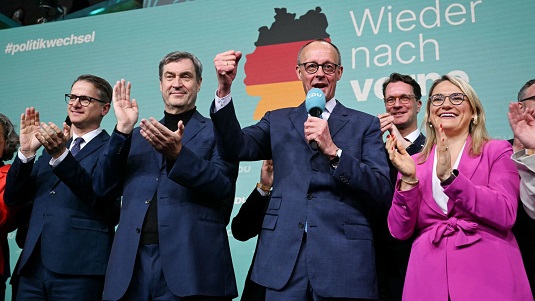
The German exit polls have mirrored those taken during the election. The CDU/CSU are out in front with circa 30% of the vote, the far right AfD on around 20%, the SPD have collapsed to around 16% - its worst result since the 1880s. The Greens are on about 13%, and the late surge for Die Linke puts them between eight and nine per cent. In political terms, Germany has become a "normal country". The centre has caved in (the FDP are on course to lose all their seats), the centre left have taken a battering, and the rise of the extreme right has grabbed the headlines.

There are obvious parallels between what's happened in Germany and what's unfolding here. A centrist coalition of sensible grown ups have presided over years of economic stagnation and lacklustre investment. Coincidentally, farmers' protests over the cancellation of a tax break was one of the nails driven into the SPD-FDP-Green coalition's coffin. The final straw was the provocative proposal of the FDP to take the axe to social security and public spending, which proved to be so popular that again they find themselves without representatives in the Bundestag. Having learned nothing and uninterested in the lessons of history, the SPD and Greens both pursued policies at odds with their popular constituencies and have paid the political price. As such, it was easy for the AfD to pose as the champions of ordinary Germans against a political establishment tone deaf on immigration, the cost of living, and efforts at undermining German identity.

The AfD have been assisted in this by Friedrich Merz, the Union's leader and incoming chancellor. Like the Tories his party have banged on about immigration, legitimating and amplifying an AfD that can easily outflank their positions. Indeed, if Merz has achieved anything long-lasting in toppling a decrepit opponent on his party's second lowest federal vote share, it is to confirm the Christian Democrats as the main right wing party in the west while allowing AfD to monopolise "real concerns" in the east. Merz has already courted notoriety by effectively cooperating with them in the Bundestag vote on a vote about immigration, and undoubtedly further such "accidental" alliances will be forged over the course of the next parliamentary session. As the party appears to have lost a million supporters to the far right, Merz will be hoping his "tough" approach will ensure further AfD-curious Union voters will stick with them, and that the old east/west border will confirm his partitioning of the right and stop them from setting up shop in his heartlands.

No one should not be complacent about the rise of the AfD. A fifth of the popular vote is only going to inspire more extremism and with it more violence against immigrant communities, sexual minorities, women, and political opponents. A Merz-led government doesn't care. Defeating the AfD and driving them out of politics will not come from above.

Which makes the small story of Die Linke's resurgence significant. First, they saw off the Sahra Wagenknecht Alliance, a reactionary split from the Left that embraced Blue Labourism with German characteristics. Going right on culture and left on economics is on-paper smart politics, since the AfD are effectively the FDP plus open racism and overlaps with fascist groups. But then again, none of the far right's supporters have voted AfD because they think free markets and neoliberalism are very good actually. Here, as there, it was a hiding to nothing and Die Linke have squelched them. Quite the turn around since BSW were beating them in the polls a few months ago. Some might put this down to the viral anti-fascist speech of co-leader Heidi Reichinnek, and there is some evidence - thanks to the largest turnout since 1987 - that a mix of this, its socially liberal pro-working class messaging and policies struck with the rising generation. Die Linke were by far and away the most popular party among younger voters.

Obviously, Die Linke are not perfect. The self-removal of the anti-woke, pro-Russia right has undoubtedly helped the party, but divisions remain between those elements who are soft left and want a slice of the government pie and those wanting more radical social change, and criss-crossing this are divisions about Israel and Palestine. Undoubtedly, given the unexpected successes, German media actors and others looking to rebuild the shattered SPD at their expense will try using these divisions to sap the party's energy and drive new supporters away. Because having a mass fascist-adjacent party as the second party in the Bundestag is a trifling concern versus a left wing insurgency. Nevertheless a harbinger of good things to come, one hopes.

Image Credit

Thursday, 26 October 2023

Rachel Reeves's Plagiarism Scandal

Having 20-odd years experience dealing with plagiarism in assignments, it tends to come in two kinds. There's the "accidental" sort, where a student pleads ignorance or misunderstands what it is. Because they've changed a couple of words in a paragraph they think that's fine, or something has been shunted in verbatim and think it's okay because there's a proper reference appended. I tend not to go hard on these sorts, leaving a bit of feedback warning them about plagiarism, signposting the academic regs and study skills pages, and deducting marks. And that's because, after having marked thousands of pieces of work, you can more or less tell when malicious intent was not present. And then you have the other kind where passages are copied out without attribution or a covering reference, and every effort is made to pass the work off as their own. This does not get the kid gloves treatment. There's an investigation and punishments vary depending on the university. At ours, it means a black mark goes on the student's academic record and that debars them from a career in the legal profession and might throw up obstacles for other post-graduation destinations. Criminal justice occupations are usually hot on this kind of stuff, for instance.

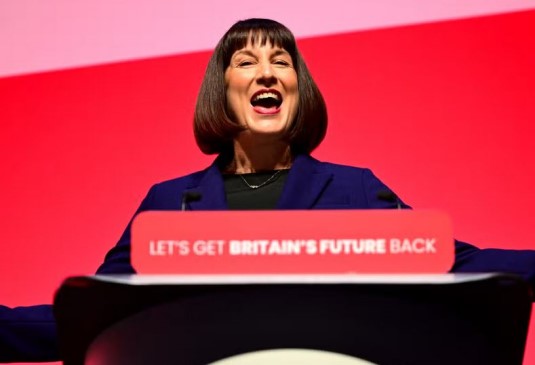
This in mind, news that Rachel Reeves has plagiarised sections of her book should debar her from being an MP, let alone a candidate for the office of Chancellor of the Exchequer. If she does not resign in shame, she should be sacked in disgrace. It's true that politicians lie all the time, and being tied to Keir Starmer as he closes in on Boris Johnson's claim to the title of prince of the porkies means they're hardly a stranger to Reeves. But stealing other people's work to pass off as your own is beyond her boss's levels of shamelessness. How ironic that her book, The Women Who Made Modern Economics, is about women who never received proper credit for their contributions to the discipline.

I have an inkling how this could have come about. In Westminster, it's common for MPs to have everything done for them. Speeches and lectures are often produced by an office lackey. Getting a bag carrier to write them an article for the mainstream press they then collect the fee for is a perk of the job. The dear departed Johnson was a rarity in that he wrote his own articles, books, and a chunk of his speeches. Reeves, being an unoriginal plodder has gone with the parliamentary flow and contracted out her book. Whoever has done the work could not be bothered about the standards of the most rudimentary scholarship and chucked in any old tat they could find in five minutes with Wikipedia and Google. Why should they care? Their name doesn't appear on the copyright page. And, obviously, neither did Reeves. Has she even read the book she "wrote"? In her effort to craft an intellectual posture that is something more than loyally stringing out Bank of England orthodoxies, it shows up her light mindedness and lack of interest in women and mainstream economics - save her place as the inheritor and culmination of this history.

A couple of years ago Annalena Baerbock, the German Greens' candidate for Chancellor in the general election was also caught out in a plagiarism scandal. Originally denying the allegations when they broke, with the party attacking the claims as "character assassinations", she eventually owned up to copying other people's work for her book. It also turned out she had padded her CV as well. Consequently, the Greens took a hit in the polls. Of the three parties that now make up Germany's coalition government, up until then they were polling the highest and was a factor in the SPD's overtaking them and benefiting from a collapse in the CDU/CSU's support. Honesty and integrity matters to voters, who knew?

While Reeves's plagiarism has splashed all over social media, the press, and gives the Tories a good attack line on the shadow chancellor (which might have worked, were they not totally awful), sadly, no resignation will be forthcoming. Because media attention is largely focused on whitewashing a massacre, and the pressure on Starmer is coming from his inept handling of the fallout from Israel's carpet bombing of Gaza. Were the circumstances different, Reeves could have caused the Labour leadership some real embarrassment. As things are, she's lucky and this time next week it will be long forgotten. But just like what Starmer's compulsive lying means for his putative premiership, it puts down a marker about what we can expect from her time in Number 11. Intellectually vapid policy, a pilfering of other people's ideas, and a propensity to bullshit about the strength of Britain's economy in a way no different from any Tory chancellor. And these, remember, are the "grown ups".

Image Credit

Tuesday, 22 August 2023

What Happened to Eva Braun?

A non-tin-foil-hatty account of the anomalies surrounding Eva Braun's autopsy. Anomalies that have never had a satisfying explanation.

Monday, 30 August 2021

The SPD's Unexpected Comeback

Something strange is happening in Germany. According to weekend polling, the Social Democrats (SPD) are edging out the Christian Democrats (CDU/CSU) in the popular vote ahead of September's federal elections after a period as the junior partner in the grand coalition between right and left. Strange because, as far as leftist analyses of German politics are concerned, the SPD are a thoroughly Pasokified party. If the thesis is right its chances of becoming the largest party should be thin to non-existent, surely. What's going on?

Pasokification, for those unfamiliar with the term, is associated with the collapse of the mainstay of the Greek centre left and describes the process how it went from 44% of the popular vote to 12.3% in 2012 to 4.5% in 2015. So enfeebled this once mighty party was that PASOK has since merged with a couple of small centre left parties, forming the Macron/Change UK-sounding Movement for Change and returning 22 parliamentarians on eight per cent of the vote in 2019. What occasioned this sudden collapse was the party's embrace of austerity measures as the chill wind of the 2008 crisis bit into the Greek economy. They found, to their cost, that forcing workers to pay for a crisis of capital isn't a good idea for centre left parties. Who could have forecast that attacking their core constituencies would entail negative political consequences? Few on Europe's official social democratic and labour parties cottoned on and similar results repeated in the Netherlands, Italy, and France. In other countries, centre left parties who allied themselves with the main ruling class party of the right suffered similar fates. Scottish Labour here was one of them, but a party lucky to experience both was the SPD.

Between 1998 and 2005, the SPD governed in coalition with the Greens. Winning 41% in the first and 38.5% in the second, the pair ruled at the point Third Way politics dominated the horizon of bourgeois politics. In 2005 the SPD vote slid again to 34%, virtually level pegging with Angela Merkel's CDU/CSU, and on this occasion opted to form a grand coalition - the first in 40 years - that oversaw cuts to social security and increases to VAT and the equivalent to National Insurance contributions. In 2009 the SPD's service was awarded with a collapse in its vote down to 23% and the return of just 146 seats, its worst result since the first federal elections in 1949. They were dumped out of office as the Union turned to their preferred coalition partners, the right-liberal Free Democratic Party (FDP). A four-year period of opposition was good for the social democratic constitution as the SPD went on to regain three percentage points worth of lost ground, and presaging what happened in the UK the FDP were completely wiped out, losing every single seat. This was good enough for a resumption of the grand coalition in 2013 and, unsurprisingly, history repeated itself yet again in 2017 when the SPD vote dipped below 10 million again and won them 21%. The rise of Alternative for Deutschland (AfD) helped spare the SPD's blushes by making sure the Christian Democrat vote was hit with a nine-point drop, but as the two main parties remained the most viable partners they renewed their coalition following an appeal from the German president.

What has changed since then? The SPD's ride through the polls since 2017 have been a bumpy one. Upon entering government again the numbers absolutely tanked, occasionally dipping into fourth place behind the Greens and AfD. They reported ratings worse than the vote the SPD received in the fake election of 1933 where the Nazis used the force of the state to attack the party, engaged in ballot stuffing, and getting their bully boys to watch voters as they made their choices. But since June the Union have suffered, with their figures posting well below the 25% floor established in 1949 while the SPD have dramatically recovered and are touching a quarter of the popular vote. How to explain?

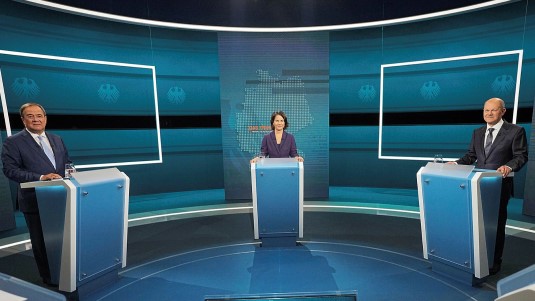
The first is the debacle of this year's floods, in which 184 people died. The Union's candidate, Armin Laschat, is the party leader and state premier of North Rhine-Westphalia's state, a place hit particularly hard by flooding. While there are questions about his regional government's handling of the crisis, what has harmed his chances was him laughing and joking with local officials in the background of a broadcast given by the President mourning victims of the disaster. With nothing left in the tank, Laschet has gone for good old fashioned red baiting, claiming the SPD can't wait to jump into bed with Die Linke, Germany's slowly shrinking SPD left split/fusion with the East German PDS - the successor to the former communist party. The tumbling numbers suggest the traction it's getting is minimal. The Greens have also taken a bit of a dive over the summer after briefly leading several polls. Their candidate for chancellor, Annalena Baerbock, has become embroiled in a plagiarism row which has hurt her personal standing as a fresh faced alternative to the primary parties. And the SPD itself? Their candidate, Olaf Scholz, seems to be winning by simply keeping his nose clean. As finance minister and vice-chancellor to Merkel, if anything he better represents continuity and stability - the CDU/CSU's traditional strong suit - than the Christian Democrats themselves. For many Germans, mainly older Germans, he is a known quantity. As Jeremy Cliffe notes, during this weekend's three-way debate he merely plodded through the answers and is content to trade off the mantle of Merkel's heir - undoubtedly assisted by his sceptical views on public spending and reining in debt. Apart from a preference for a Eurozone-wide financial transaction tax, there's little to suggest he is much of a social democrat.

Therefore what we're seeing is the possibility of a strange ending to the Pasokification process. The Greens are by far and away the most popular party among the young, followed by a reinvented FDP fishing from similar waters. What is saving the SPD is a two pronged assault on the right. The AfD have long soaked up the populist constituencies who might otherwise be relied on to vote reluctantly for the Union, while the SPD are living the Blairite dream of occupying the proving grounds of conservative politics and are proving successful at ripping these supporters away from the CDU/CSU. In other words, in 23 years the SPD have lost its mass base, done its best to liquidate its traditional support among workers, made it very clear the rising generation of immaterial workers aren't welcome, and look like they're coming out the other side with a chip off the old bed rock of dyed-in-the-wool centre right Christian Democrats.

Given what is happening in Germany, we can imagine someone one these shores is watching events closely. With its determination to disperse its coalition inherited from the past two general elections, and temper any policies that might be regarded as radical, such as abolishing tuition fees and improving trade union rights with right wing positioning and unconvincing flag waving, the Labour leadership are seeing their fondest dreams playing out across the North Sea. This gives them the evidence they think they need to plug away as they are doing, downplaying expectations, giving no reason to hope, and merely offering a competent steady-as-she-goes approach to politics. A position that could well lead to the liquidation of Labour without the consolation of replacing its vote with disgruntled Tories.

Image Credit

Sunday, 30 August 2020

1945 Berlin in Colour

Just some colour footage from Berlin in July 1945. Apart from the ruins and the soldiers and the Stalin portrait, it's striking how mundane it all is in its everyday-ness.

Wednesday, 12 August 2020

A Depression Made in Downing Street

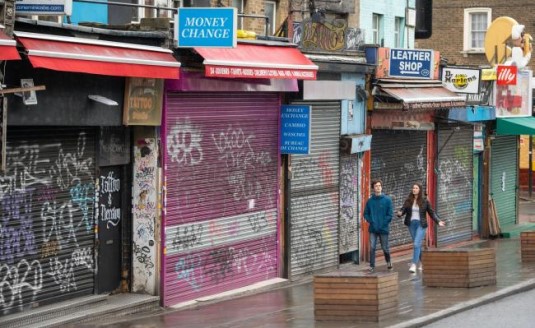
You've seen the numbers by now. Measured in GDP terms, the UK economy collapsed by a fifth between April and June. It would have been much deeper hadn't June in and of itself recorded a dead cat bounce of 8.7% growth. As Rishi Sunak says, this recession is unprecedented because the crisis precipitating it is unprecedented. True, true. Then riddle me this. Germany, down 10.1%. Belgium 12.2%. Blighted Italy, 12.4%. And even Spain, with a catastrophic a fall of 18.5%, fared better than us. The UK is the sick man of Europe again, both literally in the numbers of dead and people infected, and a far worse economic performance than any EU state.

How might we account for this? We can be generous and note the UK's over-dependence on services, which comprise 81% of the economy. Germany's is just shy of 70%, Italy's is 74%, and ditto for Spain. Naturally, any country so dependent will suffer a huge contraction if social distancing is enforced. All the more reason why the Tories were loathe to take the Covid-19 threat seriously, and why they're keen to play down the crisis with jiggery-pokery over statistics, set arbitrary dates not at all informed by the epidemiology for lifting restrictions, and Gavin Williamson's outright denial of children as possible disease vectors to get schools reopened.

Leaving aside the UK's relatively unique exposure to a biopolitical crisis, the next obvious (if crass) point is more excess deaths and people who are sick = fewer participating in economic activity. But when you compare the UK with Italy and Spain, we are talking relatively small numbers and certainly not enough to account for the performance gap. What gives?

Firstly, timing. Going into lockdown later than most other European states did not confer the UK a brief competitive edge of any sort. Rather, it prolonged the formulation of the economic support package. The lockdown officially, and reluctantly began on 23rd March. Prior to this, on the Friday the government announced the furlough scheme, which did not go live until 20th April - almost a month later. For smaller businesses there were packages of loans and interest-free credit lines, but it was not enough and it came too late for some. Tens of thousands of businesses either shut up shop, or simply laid off staff to cut costs their much reduced operation. By tarrying, hundreds of thousands of people were left without an income and the Universal Credit hotline was duly overwhelmed. Other European states moved earlier, and so protected their economies better.

The second problem was furlough itself. Paying up to 80% of staff salaries was a significant cut for many people, but there were also those excluded from the scheme, such as the self-employed and freelancers, and those who were caught between jobs. Most other schemes were more comprehensive.

Thirdly, social security support. Remember, the six week wait to even receive support (reduced to five by caring, sharing Theresa May) was introduced when Iain Duncan Smith was at the DWP as a means of "encouraging" people to find work. Because, again, in topsy-turvy Westminster land there are MPs on both sides of the Commons who think welfare causes unemployment, not lack of jobs. And so a couple of million people were left with nothing while their claims were processed. And once they were? Universal Credit entitlements vary, but they're hardly generous. For instance, Jobseekers' Allowance tops out at £74.35 for the over 25s and £58.90 for 18-24s. Compare this with, say, Germany where 60% of your salary is paid up to a value of roughly £1,725/month. The Italian system is less generous, but more so than the UK's - 75% of salary up to the first €1,195, and 25% of anything over that to a maximum of €1,300, but with three per cent deductions each month after the fourth month. Spain runs a not dissimilar but more generous model. In other words, the spending power of the unemployed in each of these states is greater and therefore contributes to a shallower dip.

Want more? Sick pay. Statutory sick pay is among the weakest level of support offered in any advance economy. If you're ill, you can get a princely £95.85/week provided you meet the conditions, and for up to 28 weeks. In Germany, for up to six weeks an employee is entitled to 100% of their salary. In Italy it's 50% of daily pay between the fourth and 20th day of illness, moving to 66% from the 21st day. In Spain it's 60% of salary. Again, the same observations apply. For most workers in the UK, a long-term period of illness means penury. Needless to say, the UK is the pits when it comes to redundancy payments too.

It doesn't have to be like this, of course. The Tories particularly hate working people for all their flattery for them. The typical worker is needy, feckless, dishonest, lazy and, very occasionally, dangerous. Simply put, for 40 years the Tories - and New Labour - have designed a welfare system that punishes instead of supports, and reflects their real feelings about the employee class. All those decades using social security as a football to kick the most vulnerable in pursuit of votes (and labour discipline), combined with the particularly cruel turn policy took after 2010, and Johnson's own disastrous handling of the crisis is behind the crisis. The reason the UK is in the deepest depression, or rather a deeper depression than it had to be, is because of Tory policy, Tory incompetence, and Tory callousness. This is a crisis made worse by Downing Street, and it's Labour's job to pin this on them.

Image Credit

Saturday, 9 November 2019

The End of Stalinism

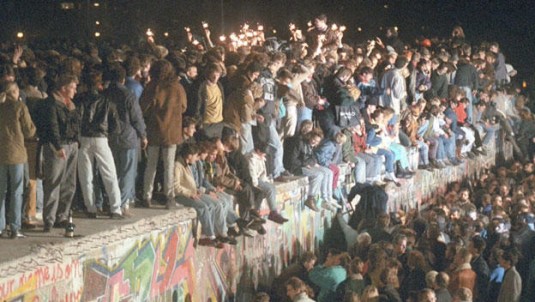
What an amazing contrast. The breaching of the Berlin Wall was greeted by ecstatic scenes right across the Western world. 10 years after and the party was still in full triumphal swing, being a decade into the end of history and a rapidly globalising world of dual sovereignty - capital was king, and markets our monarch. And then 10 years on, in 2009, the commemoration of the collapse of East Germany, or the German Democratic Republic to appease readers with a Stalinist fetish, was more downbeat thanks to the worst economic crisis since the 1929 Wall Street crash. And now, in 2019, events marking the 30th anniversary of the beginning of the end of the USSR and its client regimes are even more sombre. Speaking in Berlin, Angela Merkel chose the occasion to remind everyone that democracy is not a given, and that universal values are menaced from the extremes. In an obvious swipe against the racist right in power in Hungary and Poland, and advancing even in Germany, it was nevertheless fitting in given how the GDR was a totalitarianism born out of the ashes of its genocidal other, which in turn was the (by no means inevitable) consequence of the collapse of bourgeois democracy.

From gloating to shame-faced apologia, that is some distance travelled in a blink of the historical eye. For those who weren't around during the Cold War, it is difficult to convey how different the world felt. For some, the tyrannies stretching from the Elbe to the Bering Sea were misrecognised as zones of workers' control, where capitalism had been suppressed (true) and something better ruled in its wake (not true). It was a comfort and an alternative, and helped keep generations of leftists going when things weren't great. And this suited the captains of industry and their cadres of paid ideologists quite nicely. To most people, including those in the labour movement, the likes of East Germany were a model alright, a model to avoid. For every Communist Party activist the Soviet bloc kept going, dozens, scores, hundreds found the idea of socialism repugnant. If socialism is nationalised industry plus a knock on the door at midnight, we'll stick with capitalism ta.

Yet while, perversely, so-called really existing socialism was a buttress for post-war Keynesian capitalism, the very existence of an alternative system in the East had put our own ruling classes on notice. The Russian Revolution was and remains the largest blow against capital to date, and though the revolution succumbed to isolation, bureaucratisation, and became one of history's most grotesque dictatorships, hard won victory over Nazi Germany and support for communists elsewhere saw Stalinism advance across the world after the war. And where it won, capital was largely uprooted, markets suppressed and and effectively closed to Western capital, with one or two exceptions. In other words, the existence of these regimes struck at the root of and challenged bourgeois property relations and with it the very basis of capitalism itself. For as long as global capitalism faced off against global Stalinism, bourgeois dreams were frequently interrupted by communist nightmares.

And so with the fall of the Berlin Wall, the rapid collapse of the Warsaw Pact signatories and finally the dissolution of the Soviet Union itself two years later, you can understand why Fukuyama's end of history thesis got such traction. Capitalism had been trembling at the very thought of the communist phantom since the 1840s, and all it took were gaudy consumerist baubles and the freedom to speak your mind to exorcise it - permanently. And so when we talk about the triumph of neoliberalism, its spread as the new common sense was greatly aided by the expiration of its collectivist nemesis. The various permutations of ruling class ideologies were "proven" by history, and everything associated with the fallen Soviets and socialism more generally didn't so much fade away as practically drop out of public consciousness altogether. And at the point Tony Blair assumed Labour's leadership, it was almost as if socialism had been uninvented, so thorough was its purge from mainstream politics. Consciousness was thrown back and its only now, with the rise of Corbynism here in the UK are we groping back toward a new class conscious politics.

This was characterised, as my erstwhile comrades at the Weekly Worker used to put it, as a period of reaction of a special type. i.e. One in which labour movements and their parties had not been physically liquidated but ideologically defeated. The decline of old-style industrial working class consciousness pre-dated the Thatcher/Reagan era, as well as the end of the USSR, but were greatly accelerated by both. No Soviets meant no alternative to free market capitalism. Worse, while the USSR and its clients discredited socialism in life they carried on doing so in death. With the brutalist politics to match the brutalist architecture, the Soviet Union committed the cardinal sin of any putative alternative - it failed spectacularly. Nevertheless, that period has come to an end. Political polarisation is a fact of life as the old fault lines push to the surface and burst open all over the world. Even if Labour loses the socialist genie's not going back into the bottle, and any incoming Tory government will have its hands full placating growing disaffection - especially from those at the sharp end of their policies.

As Angela Merkel made her remarks at the designated graveside of East Germany, she did so as her system is imperilled by stuttering growth rates, a long-term swing against the power of capital, the law of value, and the nature of property, an inability to provide a decent, rounded standard of living for millions in the advanced countries, and its systemic culpability for climate crisis. Socialism is back, and communism is more than just sassy memes on the internet. Looking back on the disbanding of the Stasi, the dismantling of the wall, and the disintegration of a superpower bloc from the vantage of 30 years, their passing into the pages of history is starting to look more like a clearing of the air. And this, comrades, means our politics can soar to undreamed of heights without the burden of tyranny weighing us down.

Image Credit

Saturday, 27 April 2019

Remembering Simon Speck

My friend and colleague Simon Speck passed away on the 19th after a short illness. Finding words to describe the shock and accompanying numbness is difficult. It still hasn't properly sunk in.

I first met Simon at my Derby job interview - he was one of the panellists. Little did I then know we would be spending the next couple of years cooped up in a cramped three-person office. And in such surrounds, you can't fail to get to know someone well. He would talk with pride about his footy-mad daughter, Melitta, while offering caustic observations about the mums and dads who would bawl at their girls from the touchline. I'd get stories about his time in public school where he would labour under the watchful eye of a Lenin poster, revel in a reputation for being a red, and also how he developed his talents as a mimic and cartoonist to ward off the attentions of the bullies. As a boy hailing from the labour aristocracy - his words to describe his dad's itinerant oil worker/engineer job - such comparatively humble origins might have otherwise singled him out, were it not for his wit and ability to make people laugh.

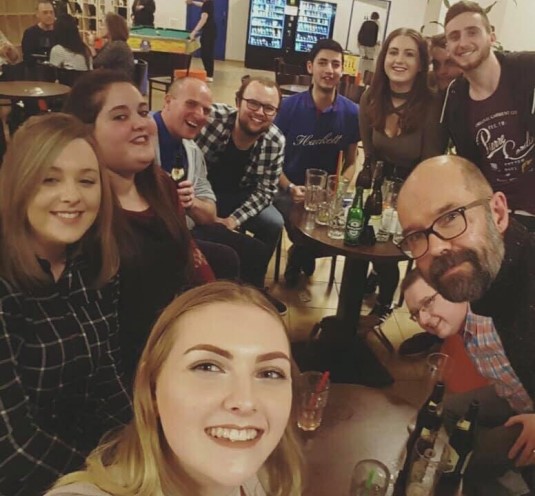
When it came to matters of sociology, he could broadly be described as the department's theoretician. He ran the heavy duty social theory modules, which betrayed, how shall we say, a broad Germanic flavour. As one of Gillian Rose's PhD students, who supervised his dissertation on Hegel and Derrida, his thought was deeply immersed in the Frankfurt School and especially Adorno. His other main intellectual influence was Anna, who he spoke of frequently, and through her he had a serendipitous link to the critical culture he revered. She was born into the West German New Left, and her family participated in the rebellions of the late 1960s, the formation of the Green Party, and debates with key post-war intellectual figures, including Jurgen Habermas. It was no accident then that when, in recent years, the university gave us fully-funded "teaching and learning" trips overseas for third year students, Simon was in charge and Germany was the inevitable destination. The photo above, for instance, is from the first such outing abroad and where Simon taught the students that the hard drinking you pick up in your younger years is never a skill you entirely relinquish.

Steeped in critical theory, his chief intellectual influences, along with Adorno, were Hannah Arendt and Ulrich Beck, the theorist of the risk society. As such, he certainly retained the pessimism of the first two, but this was not the dour miserablism you typically associate with Adorno. Indeed, he had a certain fondness for Bertolt Brecht, whose own impish humour was often channelled in a wry Simon observation. Resistance therefore wasn't always futile, but it would nearly always throw up absurd, comedic results. Indeed, one of his favourite stories concerned his own spell of resistance in the mid-1980s. On a miners' picket line, he oft told in excruciating, nay eye watering detail how a copper grabbed his ghoulies and squeezed them really hard during a spell of argy bargy. Of all the methods of physical assault Simon could have experienced - a baton charge, a clip over the head, a roughing up in the back of a van - he of all people had to fall victim to the most schoolyardish of police brutalities.

Simon was especially interested in the nascent sociology of humour, and ran a successful third year Humour and Society module. Plenty of people have noted that what a society finds funny says a great deal about it, and also how the role of comedians have changed from bearing witness to political actors in their own right - see Ukraine's Volodymir Zelensky, Bepe Grillo in Italy, and to a lesser extent, Russell Brand. Simon was interested in taking this further to investigate how risk and reflexive modernity - the notion advanced societies have an unprecedented capacity to know themselves (but frequently eschew it) - inflect and inform contemporary forms of humour. For instance, he was fascinated by the British custom that everything has to be a laugh. Politics couldn't be too serious, weighty and grave matters were not for everyday conversation, and that even staring down the barrel of disaster one had to face the inevitable with a smile on your face and laughter on your lips. Why? Unfortunately, I haven't yet read his paper so will have to see how his framework can go about answering this question.

Given his intellectual roots, you might expect him to not have much time for authority. And you would be right. Simon detested managerialism, its cynicism, and its happy clappy adaptation of universities to the marketisation of higher education. Teaching and academia were very much his vocation, while the oft unnecessary bullshit accompanying it was something to be endured. I know he felt a great deal of relief when programme leadership was passed from him to me. Indeed, during the job interview I mentioned my (relative) competence as an administrator which got a "did you hear that, Simon?" from someone around the table. Sadly, his warnings that one might wake up at night with a student's name playing on your mind has proven correct on more than one occasion. Yet he was second to none in caring for the students. He wanted to make social theory intelligible in the hope they too would inhabit it and use it to critique the world, rather than a means of passing a few credits on the road to graduation. Judging by the tributes received from former students on the Derby Sociology Facebook group, he certainly had a big, and deeply appreciated impact on many.

Sociology at Derby is a small team, and we are missing Simon. We will never stop missing him. Our best tribute is to try and live up to the standards he expected of himself as a teacher and a scholar. This way he will always be with us. Andrew Wilson, the member of the Sociology dept who knew him the longest has set up this memorial for Simon. If you knew Simon please leave a contribution.

My love and sympathies to Simon's family, especially Anna and Melitta.

Sunday, 11 November 2018

Why the Great War Was Not Stopped

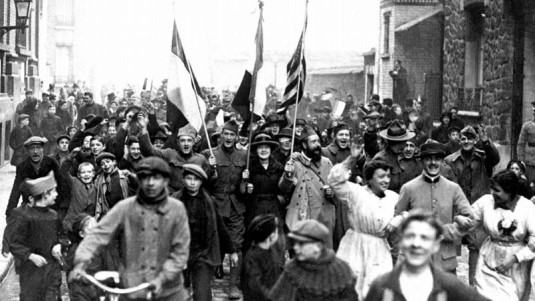
One hundred years since the guns fell silent on the Western front. The horrors and death that were visited upon the trenches were, at that point, unprecedented in human history. "Never again!" the establishment said, while Britain backed the whites in the vicious Russian civil war and bloodily repressed revolt in its misbegotten colonies. And just a couple of decades later the Great War was surpassed by an even more ferocious and destructive conflict. To mark 100 years since the Armistice, I'm reposting this from the occasion of the centenary of the Great War's outbreak.

A century on and the establishment are still soft-soaping it. Britain didn't declare war against Germany for the sake of poor little Belgium, the rights of small nations or for the defence of neutrality. The peoples then groaning under the weight of our empire might have had a thing or two to say about those matters after all. These were the good reasons. The real reasons, which did not make war an inevitability, was acting to prevent French and Belgian channel ports from becoming German naval bases, and putting the Wilhelmine upstart back into its box. Cold, hard interests carried the day in the lead up to the declaration. Humanitarian concern was so much flim-flammery.

The question is why was this senseless and utterly unnecessary slaughter allowed to happen? Recall the extraordinary Basel Congress of the Second International in 1912. It passed a manifesto declaring the following:
If a war threatens to break out, it is the duty of the working classes and their parliamentary representatives in the countries involved supported by the coordinating activity of the International Socialist Bureau to exert every effort in order to prevent the outbreak of war by the means they consider most effective, which naturally vary according to the sharpening of the class struggle and the sharpening of the general political situation.

In case war should break out anyway it is their duty to intervene in favour of its speedy termination and with all their powers to utilize the economic and political crisis created by the war to arouse the people and thereby to hasten the downfall of capitalist class rule.
Fine words. Stirring words. This was not the rhetoric of some cranky sect gathered in Switzerland's version of Conway Hall either. The Second International was a mass movement. Its sections ranged from important working class parties to organisations numbering millions of members, affiliates and supporters. The German Social Democrats were the jewel in the crown, and its formal commitment to Marxism provided the International its shared intellectual reference point. Yet with the outbreak of war, Lenin reportedly fell off his chair and condemned his copy of Vorwärts (the SPD's paper) as a forgery for reporting that the party's deputies had unanimously voted for war credits in the Reichstag. How did the mighty movement committed to turning imperialist war into class war fall apart? Why did sections of the Second International, with a few exceptions - most notably the Russian Social Democratic Labour Party (Bolsheviks) - rally to their national colours?

The contemporary revolutionary opposition lay responsibility for international socialism's betrayal at the feet of its leaders, and the argument has changed little in the intervening century. Rather than doing the right, revolutionary thing, the official Marxists of Germany, Austria and France, the Labourists of Britain, and working class parties in the smaller combatants took the opportunist road, of treading the path of least resistance. Yet this was not a failure of nerve, a failing that can be reduced to a crisis of leadership. Long before 1914 Rosa Luxemburg was regularly polemicising against the revisionism and opportunism of the SPD's politics. Her argument was that the position of elites in the international as party and union bureaucrats invested them in the politics of the small gain here, the compromise there. They had become mediators of the relation between capital and labour and, therefore, because they owed their prominence to such a position they possessed an interest in its maintenance. When push came to shove they jumped into the nationalist camp of war to maintain their niche, and were happy to deliver the factory and battlefield fodder to imperial interests. Lenin had made a not too dissimilar analysis of trade unionism and the class struggle in his maligned and misunderstood What is to be Done?. Lenin's view was substantially the same as Luxemburg's basic position and via his analysis of imperialism argued that the collapse of the International was thanks to a 'labour aristocracy' encompassing party and union bureaucracies, but taking in all kinds of layers of relatively privileged workers. While also dependent on selling their labour power for a wage, their higher living standards were brought by the "super profits" extracted from the colonies. As beneficiaries from colonialism, they had an immediate interest in maintaining empires and therefore acted as bourgeois contaminants in the workers' movement. As they had extended their sway through those movements, so social democratic and labour parties succumbed to reformism and, latterly, chauvinism and war fever.

This tale, with little modification, still passes for an explanation in Trotskyist and Stalinist circles. It is, however, obviously false. Not only was no evidence forthcoming proving the transfer of "super profits" into the wage packets of privileged workers, it also neglected to mention that Germany's "empire" was economically negligible, Austro-Hungary had no colonies at all, and the "labour aristocracy" in countries like Serbia, Italy, Bulgaria, Russia, and Ottoman Turkey were thin to non-existant. Where combatants were leading imperial powers their wealth stemmed not from plunder but developed markets in economic competition with the other great powers. The second problem is an implied elitism, of assuming that where the leaders go the masses shall meekly follow. Had your Eberts, your Scheidemanns, your Hendersons, et al rallied workers to the class war banner then the July crisis would have grown over into a crisis of capitalism, which is an obviously false prospectus.

While the argument is a non-starter, it does avoid having to ask awkward questions about the political capacity of Europe's working class at that time. In Britain in the first six months of 1914, there were over 40 million strike days - only the strikes of 1921 and 1926 saw greater numbers taking industrial action. That July, St Petersburg was paralysed by 135,000 workers taking strike action and calling for the monarchy's abolition. Workers were conscious of their interests and were quite prepared to stand up for them. How to explain the about face, of militancy evaporating and millions flocking to sign up? To answer the question is to put a huge question mark over the viability of revolutionary socialist politics, classically understood. While Luxemburg and Lenin were right that the upper echelons of the labour movement had become integrated into their respective national capitalisms, so had the majority of workers themselves. Far from plain sailing, nevertheless Britain was a representative democracy of sorts and had improved the lot of working people through piecemeal grind here, strike action there. Ditto for imperial Germany and republican France. The parties and organisations of workers had wrested significant concessions from bosses and governments. Allied to rising living standards, pragmatism appeared to work. This was the early phase of the attempted institutionalisation of class conflict, and it seemed to be working. The majority of workers had a stake in the bourgeois state, in their nation. Conversely, despite double-digit economic growth, Tsarism in Russia and its struggle to maintain the autocracy actively stymied the rise of its growing working class. By denying it a stake in their system, Russian proletarians were more combative, more open to revolutionary ideas, more likely to resist the call to war - and even then they were not totally immune.

As organised labour movements found their feet and successfully prosecuted their interests it's small wonder the increasing sense of advance, of security, of solidarity contributed to nationalism's mass appeal. Hence when declarations of war were met with outbreaks of class peace, it was the case the leaders were following the workers, not the other way round. The Socialist International was not able to prevent the war because the working class enthusiastically went along with it. It wasn't just the lamps that went out across Europe one hundred years ago. The hope European capitalism could be brought down by revolutionary socialism was snuffed out too.

Monday, 24 October 2016

Hitler: The Rise and Fall

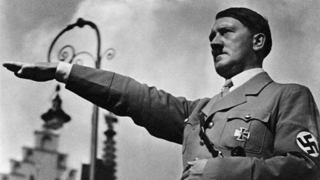
Broadcast on More4 these last few weeks is the definitive documentary about the Nazi leader. Bear in mind those are their words, not mine. Like most pieces that try and unpick Adolf Hitler, this claims to get at the man behind the monster by building on insights dredged up by decades of scholarship. And yet, somehow, despite there being virtually nothing that hasn't been said or written about Hitler, TV documentaries always miss the mark. Rather than challenge the myth that he was a political titan in a field of mediocrities, they tend to reconfirm it. In no sense is he analysed in his context, as the head of a social movement and, as such, he gets off as one of history's great (but damned) men. In this respect, I'm afraid to say Rise and Fall is no different.

Despite drawing on academics and experts, Rise and Fall's obvious shortcoming concerns Hitler's rise to power. Obvious, because it is repeated time and again. As even my cat knows, after the Munich Beer Hall Putsch Hitler came to the conclusion that (relatively) peaceful and constitutional campaigning was the way forward for the fledgling Nazi movement. Violence against opponents was ever present, but this took place alongside the work of contesting elections, kissing babies, setting up Nazi social clubs, and so on. After his release from Landsberg prison, Hitler set about reorganising the Nazis and polishing up his image as a dynamic politician. The conventional narrative, which Rise and Fall parrots, is that he got nowhere - despite the celebrity Hitler's trial afforded him - until the Depression came knocking and Germany's economy nosedived. Once this happened, Hitler's assumption of power was more or less guaranteed.

As anyone who imbibed their inter-war history from the teet of Trotskyism knows, matters were more complex. In histories of the time, backed up by Trotsky's excellent contemporary analyses of the rise of Nazism, we were told that Hitler was the fault of Joe Stalin and his minions in the German Communist Party (KPD). The most powerful and well-organised party in the Communist International outside of the USSR, with the onset of economic crisis the official Comintern line declared that a new period in politics had opened up in which revolution was imminent. The time now was to take the offensive and declare war on all capitalist parties, and this included (and especially targeted) the mainstream social democratic and labour parties. In Britain's case, where the tiny CPGB's positioning vis a vis the Labour Party merely reinforced their stillborn status, in Germany the effects were far more serious. Trotsky had rightly identified that the Nazis presented the labour movement a mortal threat, and for that reason the KPD and Social Democrats (SPD) should make common cause to crush the Nazis on the streets and drive them out of politics. They certainly had the combined social weight and large enough militias to do so. And yet, time and again, opportunities for unity were passed up as the KPD pursued the "class against class" line. Rather than seeing the SPD as potential allies, they were "social fascists" to be smashed alongside the real fascists. The fact Stalin's Comintern carried on with this policy to the mutual ruination of German communism and social democracy underlined its bankruptcy and the need for a new revolutionary centre, as far as Trotsky was concerned.

While this was true, Trotsky is a touch guilty of over egging the pudding. Yes, the main enemies were the Nazis, but the KPD didn't pursue the class against class line just because Moscow told them to. The KPD was mainly a young party, but it contained plenty of activists who were around when the Social Democrats in government used proto-fascist militias to murder Rosa Luxemburg and Karl Liebknecht, two of the party's outstanding early leaders. It was the SPD that colluded with the army against the communist government in Bavaria, and summarily executed its key cadre when the Munich soviet collapsed. While history does not excuse the communist failure to unite against the Nazis, it helps explain why many party members swallowed the social fascist line. Meanwhile, the SPD weren't especially keen on forging an alliance against the Nazis with the revolutionary left either - what was taking place on Germany's streets were secondary to its constitutional responsibility toward the republic it had created, and manoeuvring with bourgeois parties to keep the possibility of mainstream coalition government open.

The Nazis were fortunate to face a divided labour movement. By the time they were in government and used the emergency powers contrived by Hitler in the wake of the Reichstag Fire, they were able to roll over both parties without so much as a shot fired. This outcome, however, was not predetermined. Politics are always fluid, and because of the repeated blunders in the face of the Nazi threat Germany succumbed to fascism.

Needless to say, this opportunity to defeat the Nazis was passed over in favour of a narrative of a smooth assumption of power. But the second point, which rarely warrants a mention, is that by the time Hitler was invited to form a government, his party was past its electoral peak. In the July 1932 general election, the Nazis became the biggest party in the Reichstag with 37% of the popular vote (13,750,000 votes) and 280 seats. Come the November election, they lost two million votes and 34 seats. Rise nevertheless portrayed Hindenburg's invitation to Hitler as a natural outcome of an insurgent Nazi party. In fact, by this time Germany was over the worst of the economic crisis and clearly, all it took was a few months for former Nazi voters to get fed up of Hitler's shenanigans and posturing. It was the play of bourgeois coalition politics that elevated the Nazis to the level it could cut liberal democracy's throat. The options were there for yet another bourgeois/SPD coalition, and yet at this late stage the establishment feared the KPD more. In those final free elections it rose to 100 seats and almost six million votes while the SPD's support was spiralling downward. Again, Hitler's rise was not inevitable.

Unfortunately, by skirting over these important historical details they reinforce the Führer myth. As established scholarship has asserted time and again, Hitler was an ignorant blowhard that rendered him entirely inflexible, and was a man consumed by infantile fantasies fed by cowboy novels and Wagnerian opera. He had a talent for rabble rousing, a flare for marketing, and a cunning that could sniff out weakness in others. None of these attributes are signs of genius: they are banal character traits shared by tens, if not hundreds of millions of people. In his rise to power, what is striking is less an exercise of preternatural talents but exceptional luck. Luck that his opponents underestimated the Nazi movement, despite the living example of Fascist Italy, luck that the labour movement was consumed by its own civil war, and luck that the game of government formation made the Nazis an invitation at the moment their support had started to plunge. If you're looking for the last word on this topic, Hitler: The Rise and Fall isn't it.

Sunday, 26 July 2015

Jeremy Corbyn and Hard Left "Infiltration"

The press are not neutral arbiters when it comes to the Labour leadership contest. If they can use the debates between party members as a way of deepening divisions in the party, they will. At the forefront of these attempts is the so-called quality "paper of record" The Times, which of late is transforming itself into a straight propaganda sheet. Earlier this week, a fairly innocuous piece by Charles Falconer setting out his support for Andy Burnham was spiked with the headline "Women are not tough enough to lead Labour". It was misleading bollocks as he said nothing of the sort. Nevertheless, it had the desired effect. The 'Burnham is sexist' meme got a lift before, the day after, The Times issued their mea culpa.

And now they're at it again. The front page legend goes "Hard left plot to infiltrate Labour race", with the subby "Harman urged to halt leadership vote". It reads "140,000 new activists are projected to have joined ... with many signing up to back the hard left candidate". And "The Communist Party of Great Britain has called on supporters to join and back Corbyn as part of its revolutionary "strategy"". Then we we "Labour MPs say" their CLPs are being flooded with lefties (of course, these sources go unattributed). Let's unpack some of this.

First off, taking my very old friends the cpgb as evidence of any movement at all is the thinnest of thin gruels. Here's a 30-strong collective who've spent over three decades peddling their politics to little effect. They've also participated in practically every left regroupment project going, managing to alienate virtually everyone they've ever come into contact with. By far left standards, that's some feat. The Times also goes on to say that some TUSC candidates have also signed up. That may be the case, but some proof would be nice. Furthermore, the two main forces on the far left - the rape cover-uppers in the SWP, and my increasingly stop-the-world-we-want-ti-get-off erstwhile comrades in the Socialist Party are standing aloof from what's going on. Any real political movement of tens of thousands of politicised people is a real risk to their coherence as organisations. There's that and the fact the organised "hard left" outside of Labour would be hard-pressed to muster 6,000-7,000 members and supporters. The numbers we're talking about dwarf that pretty pitiful figure.

On that flood of new members, it says a great deal about the mindset of The Times and the briefers quoted. They cannot grasp that real people have all kinds of views, and that some might be attracted to a party when a menu of different options are unveiled. They cannot conceive how anyone would join Labour of their own volition to support a candidate without some plot or shadowy clique behind the scenes manipulating things. I can only speak for my CLP, but since the start of 2015 about 100 people have joined sturdy old Stoke Central and 70 of them signed up after the election. From those that have come to meetings, most are not there just to vote in the leadership contest. They've joined because they want Labour to win nationally against a cruel and stupid government. Some of these are Jeremy Corbyn supporters, but by far and away the most important - and numerous - contingent of that constituency are established members. If the doomsayers want either Andy, Yvette, or even Liz to win they need to shut up and try and understand where the Jez supporters are coming from.

Half-way in we get to John Mann MP, the one "urging" the suspension of the Labour leadership contest. Acting as the party's cut-price Simon Danczuk while he is temporarily indisposed, he says it's "becoming a farce" as long-standing members are getting "trumped" by people who don't care about the Labour Party. Too right, John. We can't let any old any old swamping the members, can we? Except, according to this piece John penned for Progress, he'd go even wider and let anyone choose the party's parliamentary candidates, including - presumably - "people who have opposed the Labour Party and want to break it up". What a tool.

Of course, John - and also-quoted Labour donor/David Miliband groupie Assem Allam and Lord John Hutton - are being useful idiots for Conservative/Murdoch ambitions. They've seen Scotland, they've seen how it is possible to completely rout the party in its traditional core areas. And they want to repeat the same in England and Wales. Their inspiration here is German politics, how the left is split between Die Linke and the SPD. The former contains the radical, anti-austerity elements and the latter the so-called moderates. In practice where national politics are concerned, it has doomed the former to perpetual opposition and the latter to shoring up Angela Merkel. It would suit Murdoch and the Tories if such a scenario could be imposed on British politics as it makes the possibility of the centre left ever forming a government again incredibly unlikely. If Labour MPs and other senior figures want to avoid this, they'd do well to stop fanning hysterical attacks on Corbyn, they'd do well not to give the Murdoch press and its Express, Telegraph, and Mail allies reasons to put the boot in. Because they're not only - yes - scabbing on the party, they're putting their own careers on the line too.

Saturday, 18 July 2015

The Royals and the Nazis

Who wasn't tickled by this front page? Well, The Palace, obviously. They said it's "disappointing that film, shot eight decades ago... has been obtained and exploited". Disappointing? How so? It's not like anyone seriously believes the Queen has an attic full of Nazi regalia and goes to bed with a signed copy of Mein Kampf. And no one is suggesting that she is somehow culpable for what the Queen Mother and the execrable Edward VIII encouraged her to do. Those for whom sycophancy is the only appropriate mode for treating with and speaking about the royals should neck a bottle of chill pills. Relax, Elizabeth Windsor today remains the same patrician Tory who places herself above big P politics as she was upon her assumption of the throne.

What is, of course, inexcusable is the behaviour of the dear old Queen mum and the empty-headed simp Edward. The Sun tries its best to soft soap the pair, adding that the film should be seen "in context". That "no one" knew Hitler was a bit of a wrong 'un, and that these are just larks because "families of all kinds larked around apeing the stiff-armed antics of the faintly comic character". This is just so much poppycock. The 1930s had mass media. The press had international correspondents. You did not need to follow Trotsky on the rise of Hitler to know the Nazis were violent thugs who routinely attacked opposing parties (eternal kudos to those KPD and SPD comrades who replied in kind). It was also fairly common knowledge that the Nazis singled out and attacked Jews, were committed to tearing up the Versailles Treaty, and was bent on rearming Germany with a view to expanding its borders. For toffs like Elizabeth and Edward, liberal democracy, the rule of law, rights of minorities, and political freedom were so much collateral. Germany had a large and powerful labour movement that could, on paper, have swatted away the Nazis with a flick of its wrist were it not paralysed by internal fratricidal division and hobbled - at least in the SPD's case - constitutionalism. It was perceived as a latent threat to the prevailing social order and required putting in its place, hence why so many aristos and bourgeois-types in Germany and abroad broadly welcomed the Nazis' assumption of power.

As The Sun itself notes, the Queen Mother did her bit once the Luftwaffe started bombing London and arguably atoned for her earlier attitudes. Edward was later to scab on the war effort advising the Nazis to bomb Britain into a quick peace, and until his dying day remaining an unrepentant fascist and anti-semite. Small wonder the royal archives concerning him remain under lock and key.

In all, there's nothing especially new here - though The Sun were right to publish this because it is of historical interest. And comes as a welcome tonic to the usual grovelling and kowtowing we get from the press. In fact, it's Rupert Murdoch's sole redeeming quality that he finds the monarchy as an institution pretty appalling, though it's been a signal feature of his entire business career to put his own political leanings second to News International/News Corp's commercial interests. Apart from that, however, why have The Sun decided to splash on this story now? What's grinding away in the background, is there a surreptitious master plan at work here?

Nah. It's a scoop and it will sell newspapers, ensuring the currant bun features on news bulletins around the world. It needs it as the paper's web presence is but a fraction of its rivals. The Sun's army of readers conspicuously give it the body swerve treatment when they venture onto the internet. But the story will not be without its consequences for how the royals are perceived. Only the most deluded thinks Charles won't follow mummy to the throne - unless she outlives him. Nevertheless, we are reminded that the royals have their views about political issues. Whereas the Queen has always been discreet enough to keep hers away from the prying eyes of the public, Charles is not so fussed. By acknowledging the views of royals past, we may be preparing ground for a monarch who's openly opinionated.

Saturday, 11 July 2015

Review - Look Who's Back by Timur Vermes

A comic novel with Adolf Hitler as the main character? Really? Quite apart from the humourless fanaticism that characterised Hitler and the regime he founded, isn't it still a bit early to turn the most notorious name in modern history into a sympathetic figure of fun? Yes, it is. Or at least it's something that's very risky. As Gavriel Rosenfeld puts it, Look Who's Back flirts with "the risk of glamorizing what it means to condemn, giving voice to racist ideas in the process of making fun of them".

What's the fuss all about? The novel finds Hitler waking up and reeking of petrol on a vacant Berlin lot, which the reader is left to assume was on the site of his famous Führerbunker beneath the Reich Chancellery. Having no clue what has happened and puzzled by the lack of bomb damage and young people sans Hitler Youth attire, he's taken in by a friendly newspaper vendor. He learns that it's 2011 and has to adjust to modern times. Taken for an impersonator that never breaks character, the comedy lies in his entirely inappropriate answers to every situation. And very quickly this Hitler becomes famous. Finding fame on a skit show, a YouTube slot quickly follows along with a dedicated show and a list of awards. One of the funniest moments of the book is where he pays an impromptu visit to the headquarters of the National Democratic Party (NPD), the far right outfit that foreswears but unofficially has considerable continuity with the Nazis. Needless to say, Hitler is far from impressed and hilarity ensues as he unknowingly tries to trap the hapless chairman into admitting their fealty to national socialism on camera.

I don't want to give too much away, except to say Look Who's Back is a very funny novel. It's also perhaps surprising that it originated in Germany where, understandably, Hitler remains very much a taboo topic. Problematically, there are almost moments when Hitler is cast in a sympathetic light, especially when he is roughed up by a couple of Neo-Nazis who take him as a Jew-orchestrated send up of their beloved inspiration. Having read Mein Kampf, which is not an experience I'd recommend to anyone, in may ways Vermes captures Hitler's character well. While not the rasping, ranting demagogue of the newsreels, the monomaniacal self-belief is there and the exceedingly limited racialised way of looking at the world is well-rendered, though understandably without the kinds of terms Hitler would have thought with. Where Vermes goes off-piste with Hitler's character is that the narrative convention of novel writing means rendering the fuhrer coherent and well-expressed. As his semi-autobiographical rantings and musings demonstrate, this was definitely not the case.

Of course, this book isn't really about Hitler. It's not even about standing attitudes toward his legacy. It's about modern Germany. One thing that always strikes me about reading modern European literature in translation is how similar societies over the channel are to dear old Blighty. It's the Americans who are weird. Therefore, Look Who's Back it's about us too. Vermes has the superficiality of celebrity culture in his sights and exposes the impossibility of authenticity under these conditions. Our Hitler is the real Hitler, but his "authentic" offerings can only be viewed as a simulation of the real thing, his declarations for lebensraum, musings on the "interracial mixing" of dogs, and attack on the cowardly lampooning of other nationalities (yes, really) are taken as affectations of an impersonator, his message - which is deadly earnest - a bit of harmless distraction to be laughed at. Like so many offensive celebrities, as per Clarkson and Hopkins, Hitler is allowed to peddle his nonsense because there is money to be made. The consequences, which are a coarsening of public discourse and an evacuation of sympathy and feeling from popular culture always play second fiddle to ratings.

It's also a polemic against the the disappearance of history. No one in the novel takes Hitler seriously, but his reappearance allows for the characters - mainly his media support - to indulge in some dubious recrudescences. Replying "jawohl mein fuhrer!", indulging a mass sieg heil by the production staff, saluting him, and providing him a chat show adjutant replete with SS uniform speaks of the amoral, ahistorical grinding of an entertainment industry that repackages and effaces the past as it sees fit. Even something as disgusting as the Nazi period.

In all, a very funny read. The satire and the criticism isn't particularly cutting edge - it's been done before. But this is about chuckles, not chin-stroking.

Sunday, 5 July 2015

Greece Votes No: What Now?

In time, they might come to call it the Tsipras Gamble. With an impossibly weak hand, no one seriously thought Syriza could pull it off. The verdict of the bail out referendum was predicted to be close, so close that it might well have been Syriza as opposed to Greece heading for the exit door. Predictions were made and screeds written on the genius/idiocy of Tsipras, but whatever side one took everyone inside and outside Greece forecast a tight vote (including, um, me). That, it was suggested (and indeed, was actively hoped-for in some quarters) would have tied the hands of the Greek negotiating team in meetings with the troika.

And so the decisive result, 61% no to 39% yes is of huge significance. It represents two things, both of which are troubling for the status quo across Europe and the nature of the European project itself. In their decadent determination to imprison Greece behind ever thicker walls of debt, the Commission, the ECB, and IMF have progressively undermined the likelihood that the full amount of monies lent will ever be seen again. The demands that the hard pressed majority of the country have to pay up to stay within the (ideologically defined and selectively enforced) set of rules governing relationships between creditors and debtors have set themselves up for a huge fall. While they and their proxies in the Greek opposition threatened the fiscal equivalent of thermonuclear doom, the ground of national pride and democratic self-determination was ceded to Syriza. Tsipras didn't run rings around the troika because of Napoleon-like genius - he did it because he knows austerity is a political matter, while his opponents have managed to convince themselves it's a matter of technocratic decision-making and economic necessity. The margin of victory, won in the teeth of a near unanimity of yes propaganda pouring from media outlets, means that when the troika meet the negotiating team again, they know there's a solid democratic mandate behind them. It also means something of a precedent has been set. Should Portugal or Cyprus say find themselves in further difficulties, referenda are a proven counter measure to the weapons of economic devastation.

The leading representatives of the EU establishment are not used to dealing with a democratic upsurge. The EU, after all, has always been an elite project with marginal input from EU citizens, apart from sparsely-observed elections once every five years. The shoddy way the troika have treated Greece is not lost on tens of millions who switch on their news every night. The awful behaviour of Merkel in particular does not reflect favourably on the EU. It's already in the legitimacy doldrums as far as many right wing voters across Europe are concerned. Therefore, it's bonkers to risk the political capital the EU has with people of a centre left persuasion - particularly when Dave's vainglorious and totally unnecessary in/out referendum in Britain slowly but surely approaches. Merkel and co. would be extremely foolish to persist in the hard line they've so far pursued. And there appears to be signs of movement - Merkel and Hollande are jointly convening a Eurozone summit for this Tuesday in response to the referendum. What will win out, the short term placating of voices at home calling for no more Greek bail outs or continued commitment to the Euro and EU?

At home, the win has cemented Syriza's position not just as the government (despite, formally, still being a coalition) but as the hegemonic force in Greek political life. It's a lesson all parties of the left can learn from. Tsipras didn't just campaign on national sovereignty and democracy, Syriza has won the argument on economic competency. As I've argued previously, Syriza has promised to manage Greek capitalism better than the capitalists. Their demands are more than just the "isn't it awful" rhetoric that, unfortunately, colours most of the left's anti-austerity campaigning here. It's bound up with a convincing, credible economic model that has something to say to layers of capital as well as labour. Their opponents to the right don't have anything apart from doom-mongering and more misery on offer (unsurprisingly, the official leader of the opposition, Antonis Samaras has resigned as the right fall into disarray), and the left have either capitulated (PASOK) or consigned themselves to irrelevance (KKE). Whatever happens, Syriza's position bristles with the democratic weaponry handed to them. Opposition at home and abroad cannot touch them, for a time at least.

Now what? From the right, Fraser Nelson runs down the dangers of the situation. But there are opportunities too. The risk of financial contagion might focus minds at Tuesday's Eurozone meeting to hammer out something that might inject a bit of stability into the situation. Like following the IMF's recommendation that Greek debt be restructured with some necessary write down. Perhaps even a touch of quantitative easing might be indulged seeing as the deflationary pressures on the European economy remain (provided Germany overcomes its understandable reluctance to do so). As the banking crisis in 2008 reminds us, neoliberal dogma can go out of the window if the system is imperiled.

There's a geopolitical dimension too. Russia as a possible source for a Greek bail out has been discussed and dismissed thanks to collapsing energy prices. However, perhaps now mainstream comment and EU watchers will pay more attention to the invitation Greece received from Brazil, Russia, India, China, and South Africa (the so-called BRICS)in setting up a new development bank. Ostensibly to fund development in emerging economies, in practice it will provide an alternative to both the IMF and World Bank. Rather than accept the punitive strings these outfits have customarily attached to "assistance". It would be a major coup and a blow to the financial status quo if a developed economy, cut adrift by a short-sighted troika was to act as a fiscal honeypot for European states in trouble. That doesn't mean Greece can be ejected from the EU only to fall into the arms of the BRICS in short order, but in the medium to long-term the IMF and its friends might not want to facilitate the development of a rival.

Saturday, 25 April 2015

Lenin and Hitler vs Grant Shapps

When you're dealing with the broad sweep of history, of the collective efforts of billions of people as they produce, consume, go to war, and compelled to struggle among themselves for scarce resources, what role for the individual personality? For the majority of us, the point is moot. The vast majority of us will have our latter day three score years and ten, and fade into the background noise of the human story, though the digital footprint we leave behind will probably endure long after our immediate circle of family, friends, and acquaintances have shuffled off too. Some, however, will have names and personalities that live on long after their deaths because of their contributions to their fields of endeavour, or are forever associated with historical events posterity labels pivotal. History isn't a procession of great men - and it's nearly always men - who bend the course of social development to their will, but it sometimes appears that way.

Let's look at a famous example from the Marxist canon, depending where you sit on the Trot/Tankie spectrum. In his masterful The History of the Russian Revolution, Trotsky pauses his gripping narrative to consider what would have happened had a brick fallen on Lenin's head in between February and October, and comes to the conclusion that the seizure of power by the Soviets would not have occurred. Writing some 30 years later in his equally superlative biography of Trotsky, Isaac Deutscher takes Trotters to task for this observation. Here, the founder of the red army is taken to task for lapsing into idealism and, inadvertently, contributing to the cult of the personality Stalin created around Lenin as a foundation stone for his own legitimacy. Deutscher rightly observes that historical processes are the tectonics of millions upon millions of people moving simultaneously. Lenin did not create the conditions for the revolution, and in all likelihood the momentum of grievance would have made it without him.

Trotsky was more right than Deutscher, however. While it is true that Lenin was frequently in a minority on the Bolshevik central committee over the question of immediate socialist revolution, he had to wage a protracted political struggle to win them and the wider membership over to his famous April Theses. It's reasonable to assume that on the level of myriad micro social interactions and transactions, the figure of Lenin was absolutely crucial - as this otherwise silly right wing counterfactual also concludes. This however wasn't the basis of Trotsky's argument, though it was important. What was was Lenin being more than just Lenin as an individual. He was the figurehead for a real mass revolutionary movement in Russian society, a condensation that was made possible over many years of factional struggle, dissemination of writings and Bolshevik propaganda, and who - with his programme - was able to pull growing numbers of radicalised peasants and proletarians into the orbit of his party. Lenin was just a man, but effectively he was also a social movement, a figure that was the collective property of millions. This collectivity invested a great deal in him, so that his premature death would have constituted a major defeat for that movement.

Let us consider someone who's Lenin's polar opposite: Adolf Hitler. As the subject of more counterfactuals than practically any other historical figure, Hitler is taken as a 'great man' upon which the pivot of history hinged. If only he'd launched Barbarossa earlier. If only he listened to his generals more. If only he hadn't embarked on the industrial extermination of Europe's Jews. If only von Stauffenberg's bomb had got him. However, like Lenin, Hitler sat atop and was the collective property of a social movement. As Nazi Germany started collapsing under a shower of allied bombs and military defeat, the solidity of German society - which in 1944-45 was losing around 300,000 people a month - was maintained by the fuhrer cult. Support for the Nazis even as they were visiting ruin on themselves remained because of the legitimacy initially secured through the attraction of mass support, and then a ceaseless let up in regime propaganda around Hitler's superhuman qualities. In a society denuded of ideological resources save those sanctified by the Nazis, Hitler was less a projection of fear and more a source of hope for beleaguered Germans. Hence his movement had raised him up to the point where his whims and moods was not just life and death for millions of people, but determined the course of history.

The characters of each men say a little something about the movements they personified too. Lenin, by all accounts, was single-minded in his pursuit of socialist revolution. Everything about him was subordinated to that goal. He also, again it is generally agreed, did not have a trace of egoism - he resisted the personality cult, for example. Written into his character were the revolutionary aspirations of Russia's growing proletariat, of a class excluded from what passed for official politics and was ruthlessly suppressed; despite the fact he wasn't drawn from that class himself. Hitler's personality too was suited to the movement that made him. His prejudices, his sense of entitled victimhood, his nationalism, his taste for the high life, these were qualities that commended him to the petit bourgeois, the middle class, and the declassed elements of Depression-era Germany.

What then could these two possibly have in common with the Conservative Party Chairman Grant Shapps, a man destined to be nothing more than a footnote in this country's political history? Hitler and Lenin are names indelibly linked with the human story. Shapps is a man liable to be forgotten way before he retires from Parliament. Well, this is because what Lenin and Hitler say about their movements, so Shapps sheds light on today's Tory party.

I have had a correspondence acquaintance with Shapps. Back in the day I wrote to him in his then capacity as housing minister. Under his watch Shapps scrapped a particular house building scheme - the name escapes me (it was not Building Homes for the Future) - that saw a nice return to the Treasury for every pound the taxpayer put in. Using the clipped, precise language one uses to address civil servants writing on behalf of their Whitehall masters, I invited him to explain to the constituent for whom the letter was written why he had withdrawn funding from an initiative that was a net contributor to UK finances. The reply that came was the kind of stupidity we've come to expect from the Tories. "We've got to get the deficit down" and, um, that was that. Points not acknowledged, let alone answered. While this was common among Tory ministers - IBS over at the DWP being a particularly egregious example - some did at least try and address the points put. From that point on, I've filed Shapps under D for Dumb.

It could have been for 'dishonest' too because he stands out among the cabinet as the shabbiest of Dave's gang of chancers. Take the claims about Shapps manipulating his own Wikipedia entry and making alterations to others, all to the greater glory of, um, Shapps. The denials were issued like clockwork, but are hardly believable. While small beer politically speaking, if you're prepared to be so dishonest over the little things then you can hardly be trusted with the big. but it's not just Shapps's political habits and lying, sorry, "over-firmly denying" his business activities while a front rank Tory politician, but his business activities themselves. Shapps has long been a laughing stock over his Michael Green alter ego (and lying about it too) and the peddling of get-rich-quick schemes. There's also the small matter of dodgy internet marketing, which encouraged his customers to plagiarise others' content. Shapps business is not only morally dubious from the standpoint of online ethics, it's entirely socially useless.

Appropriate, you might say, that such a man can rise without a trace within the latter day Tory party. As the political home of high finance and low pay, of spivvery and huckstering, of stupidity and decadence, that a man who distinguishes himself as a serial fibber and had made millions from digital snake oil should find himself in charge of the party machine is no accident. As it decomposes and frays, as the more forward looking and astute representatives of capital give it a wide berth, so its more lumpen elements come forward.

Hitler and Lenin were condensed and embodied their rising movements. As the Tory party degrades and decomposes on its slow slope to oblivion, it too will find itself represented by people best suited to reflect its decrepitude.