Showing posts with label Your Party. Show all posts

Thursday, 26 February 2026

Where Now for Your Party?

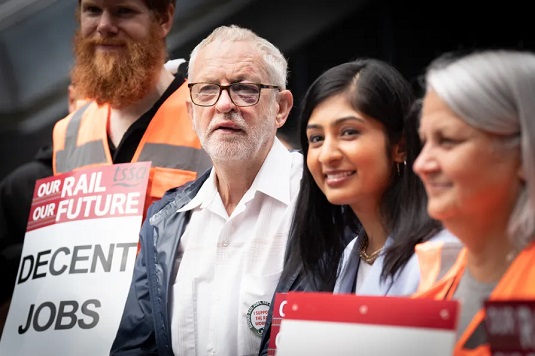
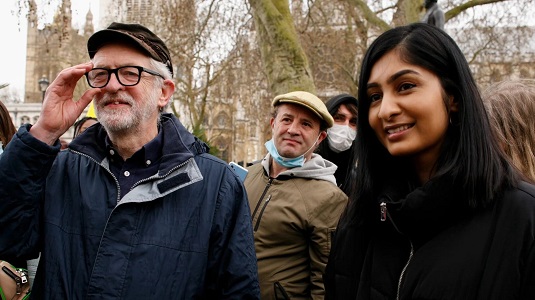
It's been one of the most bad tempered elections seen in many a year. Opponents accused opponents of all manner of things as the contest itself descended into mudslinging and skulduggery. No, this is not the Gorton and Denton by-election but the vote for Your Party's Central Executive Committee, the results of which were announced on Thursday morning. The Jeremy Corbyn faction, For the Many, won 14 seats. The Zarah Sultana-backed Grassroots Left took seven seats, and the remainder went to independent candidacies. Corbyn and Sultana are also two of the four elected public office holders under the collective leadership arrangements, with Corbyn set to be YP's parliamentary leader.

Following the results, Corbyn released a mom and apple pie statement that said he wanted to build a "positive and inclusive party" and congratulated members on voting for a "mass socialist party that takes the fight to Starmer and Farage." Sultana likewise put out an emollient piece that emphasised the need to work together, but that calls for accountability and transparency "need to be respected". After the heat, may there be light?

Unfortunately for YP, it's likely this leadership election is going to leave lingering bad feeling. As late as yesterday Laura Alvarez, Corbyn's famously combative significant other, was absurdly musing about infiltration from Labour Together into YP. Which invited supportive comments that, in terms of tone, one might expect of a frothing conspiracy theory Facebook group. And this was typical of the standard of debate that raged across social media. There was precious little discussion about strategic direction, and a great deal of questioning the motives of those unwilling to extend Corbyn saintly status. Those supportive of the Grassroots Left were little better, as false character assassination and boilerplate Trot denunciations were flung in the opposite direction.

It might be possible to overcome the entrenching of divisions in YP this election has thrown up, but there remains significant obstacles to internal harmony. The first is the propensity of the nascent bureaucracy to trample over membership decisions. For instance, the instruction from conference was to allow dual membership with other parties (i.e. keeping YP open to other far left organisations), but it was down to the CEC to sort that out. This was ignored as "known" and "suspected" members of said outfits were barred from standing in these elections. A case of starting as they mean to go on? And then there was the edict that suggested people who served as officers in active unofficial YP branches would be ineligible to run for lay positions when they're finally inaugurated. A right recipe for the "inclusion" Corbyn waxed about in his statement.

And this is before we get to the main problem: how YP has spectacularly wasted its opportunity, and in so doing allowed the Greens to almost triple in size, become a true mass party and is now the vehicle for the political recomposition of the working class. A prize that was in front of YP's leadership cadre, but decided to pass it up for criminally petty reasons. That said, politics buzzes with volatility. If YP is able to stabilise, set aside its internal nonsenses, and start facing outwards it could build up a presence through consistent community, workplace, and street campaigning. And if it does, this would be a good thing for British politics. A small but viable presence could, in the spirit of socialist competition, act as a means of keeping the Greens honest. It could threaten swathes of inner city Labour-held seats where the Green presence is hitherto patchy, and a second strong radical force could work to tilt British politics as a whole further left. Cue a return to 2015-2020 levels of mainstream media hysteria and howls of outrage from politicians who treat their Commons sinecures as private property.

This is where YP can go. But it's now up to them - is this where they want to go, or is further recrimination and needless bloodletting more its style?

Image Credit

Wednesday, 4 February 2026

From Your Party to the Greens

Had a chat with the Byline Times podcaster and producer, Adrian Goldberg yesterday. We talked about Your Party, the changing character of British politics, the Greens, and why I decided to join them.

Tuesday, 27 January 2026

Why I Have Joined the Greens

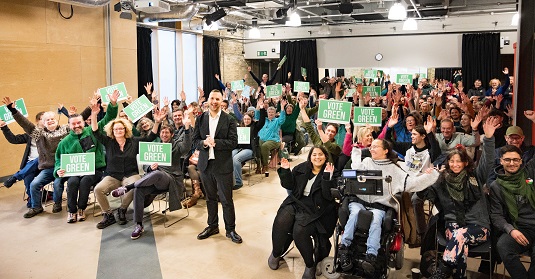
While defections are in the news, there's another that might be worth reporting on. My own. Yesterday I cancelled my Your Party membership and signed up to the Green Party. The local party meets next week, and I'm looking forward to becoming actively involved. For those interested in such things, here's the politics bit.

Binning off Your Party wasn't a difficult decision. Joining that was more a duty than anything approaching enthusiasm. Never has the left outside of Labour been handed such a golden opportunity, only for it to be squandered by prima donnaism and control freakery. Without re-litigating what happened in depth, Zarah Sultana should not have unilaterally launched the membership. The timing was right, but had she acted with the pre-party collective and abided by its ad hoc discipline the momentum would have still been there when it did go live, which was about a fortnight later. But once the die was cast, Jeremy Corbyn and his minions should have swallowed it - just as they did in the summer when Sultana announced that the new party was happening - and rode the wave. Doing so would have avoided bad blood and, most crucially, would have built on the 800,000 that signed up the mailing list. A party of more than 200,000 was in reach ... and Corbyn blew it because his helpers would rather run a much smaller, tightly controlled outfit that guaranteed them a living. Labour Party mk II not in name, but certainly in form.

And things have not improved. Despite handily winning positions aligning Your Party with an inclusive conception of class and democratic organisation, it's as if the conference votes never happened. Exclusions of members of left groups still stand, and candidates for the Central Executive Committee have been barred if they are suspected of paying subs to another organisation. Funny how there were never any complaints when the likes of Michael Lavalette, for example, was travelling around the country stumping for the new party and encouraging people to sign up. This is a violation of the spirit of what was voted on in November, and a big up yours from the unaccountable cabal that runs Corbyn's show to the membership. It now looks like this bar will be affirmed, assuming that Corbyn's slate of loyalists and idolaters sweeps the members' CEC ballot. Which it is likely to do. On top of that, there is the utter stupidity of the party's name, which alone demonstrates Corbyn's lack of political nous. And, let's be frank, Sultana's absence of political judgement. From childishly calling the awful Tory London Assembly Member Susan Hall a "boomer", boycotting the first day of her own conference, wanting to "nationalise everything", and being unnecessarily spiky toward the Greens is just daft. No confidence in the Corbyn clique, no confidence in Sultana, and no confidence in the prospect of Your Party becoming anything other than a shrine to St Jeremy. It didn't have to be this way.

But the Greens? It's doing rather well, and unlike Your Party has not bungled its opening. As the class composition of this country has changed, as recounted in the book, countless talks and podcast interviews, and on this blog on many, many occasions, politics has shifted too. A shift that the Greens are handsomely benefiting from.

Key to this is the growing importance of immaterial labour. In the post-war period in Western societies, the expansion of the state saw millions of workers taken out of private employment. Their jobs were less about producing material goods for private profit, and shifted toward producing services the public consumed. Education, welfare and social services, health care, the administration of the growing state at all levels. To use the old language, large sections of the work force were paid a wage to reproduce the conditions of capitalist production. They were tending to the gaps in the system, paving over the cracks, cleaning up the messes, making people broken or maimed by the system better, looking after those it discarded, and preparing generations of children for life under it. Alongside this the increasing complexity of production and the division of labour created similar roles within businesses. The expansion of management, the need for planners, logistics workers, technical specialists, office workers, cleaners, service-oriented work has come to absolutely dominate most advanced economies in terms of people employed and volumes of capital tied into and produced by services. Alongside this, postwar affluence kicked off mass consumption and the rise of privatised leisure activities. The casualties of this, at least in Britain, was declining church attendances, the withering away of the millions-strong political parties, and an erosion of working class community culture - which accelerated following the Conservative attacks on and defeats of the labour movement in the 1980s. But the expansion of immaterial labour selected for certain traits. In service work based on the production and maintenance of social relationships, sociability, knowledge, patience, and care were the key forces of production increasingly mobilised by the emerging post-industrial economy. Despite the privatisation of many state services and the intrusion of commodification into all facets of life, this "immaterialisation" of labour has continued apace.

The consequence for culture and politics has been profound, but to stop this from becoming another book, there are two key developments that are reaching fruition now. Because the nature of labour has changed with the object of work being the production of social relations, care, knowledge, social roles, etc., which in turn places a social premium on relatedness and sociability, this has resulted in a long-term tendency toward tolerance. Or, in other words, the gradual replacement of social conservatism by social liberalism. Each generation becomes increasingly comfortable with difference as they are socialised into and experience life as an immaterial worker. The generational differences we see in values surveys are not a reflection of lefty schooling or an essential tendency toward conservatism as we age, but a class cohort effect. There is a direct link between class, of being socialised into and working for a living in the post-industrial economy, and accepting socially liberal values as the everyday commonsense. Generation Z are the most radical, most socially liberal generation so far. And are likely to surrender that title to the younger people coming after them. The mores are cumulative, and we're now at the point where social conservatism is a minority outlook, and one that shrinks by the year.

The second consequence of this is overtly political. Faced with a politics that tries screening out the interests of the rising layer of workers, a typical mass response is disengagement and abstention, but for others it's a marked tendency to vote centre left or left. The first coming of Corbynism and, for a period, the rapid passage of the Labour Party from a husk to a true mass party - and then the 2017 general election - was the first mass electoral flex of the political conscious sections of the new working class. Though Corbyn lost badly in 2019, his real achievement, buried under the self-serving rubbish about the worst result since the 1930s, was hitching Labour to a new political articulation of class relationships. And one the party needed to build on for sustainable success. Unfortunately for Labour, it elected Keir Starmer whose project ever since has been to disperse this coalition to the point where his party courts extinction. But that dispersed support doesn't simply disappear. This is not 1997, it does have somewhere to go. Your Party looked like it could have been it, until they derailed themselves. And so, the Greens. A socially liberal party with left wing positions on a raft of issues that speaks to the class interests and outlooks of immaterial workers, stands up against the scapegoating and racism of the mainstream, and being the only party that really takes climate change, energy challenges, and the green transition seriously, Zack Polanski's leadership and his adroit interventions have catalysed and coalesced mass support around the Greens.

As argued here previously, there are two types of Green Party. The so-called realists, who elevate members to high office and inevitably disappoint - much to their cost. Like the German and the Irish Greens. And those parties that go down a Nordic path, that are to all intents and purposes Green-Left radical parties. This is currently the trajectory GPEW is on - the Scottish Greens being their own, somewhat different, thing - and is likely to draw in more members and more supporters on that basis. Far from the petit-bourgeois party as labelled by the little Lenins, the Greens are being taken over and getting filled out by our class, our rising class, and are inhabiting it as an instrument of our collective interest. It is a party that is becoming, a symptom and driver of a wider politicisation. It is occupying the position Your Party could have taken, but rejected. As Labour under Corbyn was one moment in developing the generalised political consciousness of a class, this is another. That task has fallen to the Greens. These are my reasons for joining. And why you should too.

Image Credit
Monday, 1 December 2025

Going Beyond Corbynism

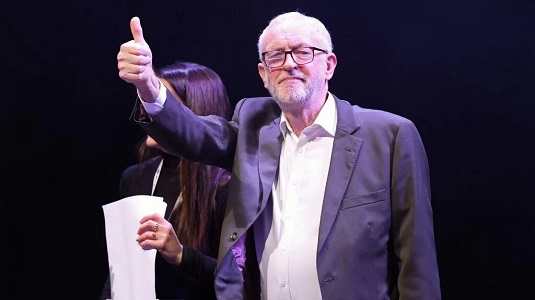
On Saturday evening I was in a foul mood. Throughout the day, on social media and YouTube, from text messages to WhatsApp updates, the news was the Your Party founding conference was the shit show everyone thought it would be. Inconvenient amendments not being heard, members being barred from conference - some, but not all, were SWP supporters, the forced removal of a Stand Up to Racism stall pn the orders of "a Scottish woman called Karie", an apparent diddling with the naming options before conference, and Zarah Sultana's own boycott of the first day promised a catastrophic waste of time. And then on the second day, things got ... better.

On single leadership vs collective leadership, the latter won. On keeping the ban on dual membership, Team Jeremy lost. On enshrining trans liberation in the constitution, that vote was won. All these might have been tighter or lost if the secretive organising committee hadn't ham-fistedly imposed themselves on proceedings on the previous day. And in ballots over the weekend, measures emphasising local branch democracy and initiative, anti-cuts principles, trade union relationships, and positioning YP as an explicitly working class socialist party all passed. The only thing Corbyn got his way on was the ridiculous Your Party name. It was good to see him strike a contrite note in his interviews, and likewise Zarah Sultana apologise to conference for her role in making the founding of this party a mess. In all, despite the overdramatic protestations of Corbyn superfans, something was achieved. If YP was in the toilet following the last round of bilious fallings outs, the membership scooped the project out of the bowl as the party's would-be elites yanked hard on the chain.

There are still unresolved issues. Who gets to be the leadership now? With MPs and councillors barred from the incoming executive committee, this is an opportunity for the party to put forward a new generation of leaders. Corbyn will forever remain YP's figurehead, but there's now a chance the party can transition from one-man-band status to something other than his needy dependent. And though existing self-declared Leninist outfits are not barred, what kind of relationship they should have in the new party is in the new committee's gift. Keep them as is, require them to fold into party platforms, re-impose the block? Whoever the leadership will be and whatever they decide to do, the membership have already demonstrated good sense. The chances of the SWP or the other little Lenins taking over or wrecking it through sectarianism is thankfully, for once, remote.

To be sure, Your Party is taking risks organising this way. As others have pointed out, in politics having a stand-out figure is a boon. Ask Reform. Ask the Greens. Without that, how can YP capture the public's eye? This is now especially difficult as September's stupidities have ensured Zack Polanski is hogging much of the space that was YP's for the taking. Where there are still openings is where the left are much stronger than the Greens. I.e. In the workplaces, in community organising, in street movements, in solidarity campaigns. We build from there. Owen Jones argues that time is of the essence, and that's true. But he also knows from his labour movement history and that building the political capacity of our class isn't dependent on elections. There are other ways, and the existing collective experience of YP can counter Labour and the rise of Reform outside the ballot box. It's not the mainstream way of doing things, but then again YP is not a mainstream party.

Doesn't collective leadership and the recall of lay officials suppose permanent factional struggle? Yes. But if the project is organising our class as a political party, it cannot be any other way. The working class is as diverse as it is vast, and anything aspiring to this role has to be a clearing house for experiences and opinion. Discussion, debate, the freedom to form platforms and factions around positions, all these are necessary for formulating strategy. The way forward is not going to be handed down from superhumans living on a higher plane. A democratic workers' party is a noisy party, not a personality cult, not an agreement of diplomatic silences, not a narrow mono-idea sect. This is the challenge YP's membership has set. Which demonstrates a level of political maturity over and above the caricatures attributed to the left - even, sometimes, by itself.

Politics is not easy, especially class politics. Nor are there any guarantees. YP's membership have chosen a difficult path, but in the circumstances, it was the right path, the only path. Drawing a line under the mistakes and idiocies of the last few months means moving on from Corbynism. With all the dust having settled, it's clear this is what Your Party has started to do.

Sunday, 30 November 2025

Zarah Sultana's Your Party Speech

No time for writing tonight, so here's the speech Zarah Sultana gave to the second day of Your Party's founding conference. Some reflections to come tomorrow evening, but if you want the full fat version you can find proceedings here and here. Interesting to compare the watch numbers with those attracted to Labour's conference live stream.

Friday, 21 November 2025

Bon Voyage, Iqbal Mohamed

And off he goes. Following the departure of Adnan Hussein on 14th November from Your Party, resignation watchers' eyes were on Iqbal Mohamed. There was his conversation with Hussein on this very topic. And he prepped the ground for leaving by taking to social media to repeat the same tired transphobic talking points. An action Mohamed knew would provoke a reaction from YP supporters, as well as sharp criticism from Zarah Sultana, his erstwhile colleague. And, what do you know, his resignation statement references "false allegations and smears". How very unexpected.

You could see it coming from a mile off. Yet this caps off another row, this time about Sultana hosting her own rally prior to the founding conference next weekend. Apparently, there was no guarantee that she would address the main gathering and is, therefore, having a pro-democracy meeting to rally left wingers fed up with the Labour-esque control-freakery that has disfigured YP from the beginning. The background to this is the demand with menaces that she hand over the cash from her ill-starred unilateral launch of the YP membership portal, and her being kept away from the conference organising committee. Which, of course, is taking place in utmost secrecy and without any accountability whatsoever. And now there's news Jeremy Corbyn will host his own rally, replete with "special guests". With leading figures like these, it's a wonder the process has got as far as it has.

But back to the resignation. Some will take this as more evidence of the new party's instability and chaotic start. I'm inclined to a more positive view. As argued previously on the relationship between the new left party and the Independent Alliance MPs, this should be one of respect, continued dialogue, and joint actions where appropriate. But because of their politics, they should not have been invited to take leading roles in founding a left alternative to Labour. The rows that have happened are testament to this and, again, do not speak well of Corbyn's acumen. Nevertheless, Mohamed's departure is welcome as it underlines what the party should be - a party of our class in all its diversity.

Image Credit

Friday, 14 November 2025

The Your Party Debacle

The left in this country doesn't need agents provocateurs to stuff things up, it's more then capable of doing that itself. And here are two more etchings for the incompetence ledger. A public briefing in the name of the Independent Alliance MPs against Zarah Sultana, a parliamentary group she's apparently a member of. And the resignation of Blackburn's Adnan Hussein from the "steering process" of Your Party. A favourable contrast to the Greens these latest developments do not make.

The fallout from September's public arguments got the Geiger counters twitching last month. Your Party "insiders" briefed the press that it was taking legal action against the directors of MoU Holdings Ltd. This was the company set up by Andrew Feinstein, Beth Winter, and Jamie Driscoll ahead of the launch of Your Party, and was to hold some money and data gathered during the initial phases of the launch. Sultana climbed on board in the summer with her quitting Labour, announcing she would co-lead the founding process of a new left party. This was the occasion she announced a mailing list, attracting about 850,000 sign ups. The starting pistol on the foundation process had been fired, somewhat to the annoyance of Jeremy Corbyn and the people around him. Then Sultana jumped the gun again two months later, announcing Your Party's membership was open. About 20,000 joined inside a day, until Corbyn intervened and said no, this ain't happening. There was a public row with legal threats flying about, reports to the information commissioner, and a great deal of rancour. Then, about two weeks after, the "official" membership portal was launched.

Here lies the problem. The details and monies of the first "launch" sat with MoU Holdings. To be "official", members would need to either join again via the new route, or wait until the information and cash was transferred over. Unfortunately, this is a far from a straightforward matter. Legally, the monies and data can't simply be given. It's not like writing a cheque and sharing the relevant passwords. MoU is liable for bank charges for processing refunds. Second, there are more costs associated with navigating the transfer of the sum, winding up MoU, and settling the resulting legal bills. When YP "sources" threatened legal action against the directors of MoU, claiming they were withholding funds and accusing them of having "gone rogue", that same someone was lying. They knew there were legal complexities, and why Feinstein, Winter, and Driscoll were not prepared to shoulder the costs. I.e. It was not they who initiated the premature membership drive. That was Sultana. To try and resolve the problem, the Independent Alliance MPs were invited to become MoU directors but they turned it down, knowing they'd be on the hook for the costs. The existing directors then resigned, with Sultana becoming the sole director. Undoubtedly an expensive decision for her, but a willingness to take responsibility for the problems her premature membership call caused. Something she deserves credit for.

On Thursday Sultana was able to transfer £200k from MoU to YP, and for this she was targeted for a hostile briefing. Issued in the the name of the IA MPs while she was on BBC Question Time, it was an act of deliberate sabotage. Corbyn has apparently disowned the statement. It says everything that was said previously. All MoUs monies should be ours, we demand an immediate transfer, blah blah, yeah yeah. A move designed to undermine Sultana and throw more discord into the mill of pain the nascent party has become. Who is responsible? One of Corbyn's close allies who want something between a personality cult and Labour mkII, albeit with less democracy? Someone who enjoys being important and at the centre of things, and can rely on Corbyn's indulgence? Or someone else?

The timing of Adnan Hussein's resignation makes for an interesting coincidence. He references "becoming drawn into very serious and damaging internal disputes on matters relating to organisational conduct and governance", a barely-concealed Islamophobia ("I am troubled by the way ... Muslim men have been spoken about and treated ...I witnessed insinuations about capability, dismissive attitudes and language that carried ... veiled prejudice."), and how YP was at odds with its billing - a "movement that welcomed diversity of background and thought." It also came hours after Novara Media put questions to him that he and others in the IA were minded to dump the new party.

To be honest, the independent MPs should be nowhere near this process. As a "source close to Zarah Sultana" was quoted as saying in the New Statesman, "this shows what a stupid idea it was to transfer control of the founding process over from a decision making body, appointed by Jeremy and containing a broad array of left-wing figures, to the six MPs, some of whom do not remotely share the politics of the 800,000 people who signalled an interest in Your Party". Quite.

For example, trans issues are not a shibboleth to be fought over like one's attitude to the dead USSR, but a live issue used by sections of the media in a crude divide-and-rule effort. The government have jumped on the campaign to attack trans health care, and have made the lives of trans people a misery, stoked up prejudice, and driven some to take their lives. These are direct attacks on our class in all its diversity, something Hussein had the cheek to invoke in his Dear John letter. Anyone who alibis this are unsuited to be an elected representative of a class-based left party, never mind play a leading role in its founding. The same is true of MPs who defend first cousin marriages, the criminalisation of abortion after 24 weeks, call on the army to fill in for striking workers, or have significant landlord interests. Collaboration and cooperation in parliament, yes. Friendly relations and persuasion to win them over, also yes. Roll out the red carpet and give them leadership positions in a socialist party? No. This is so obvious that no one should need to say it.

Unfortunately, we know who is responsible for this. And that's Corbyn. He's responsible for the people he's promoted to the heart of the new party, he's responsible for bringing the IA MPs into the fold while overlooking questionable and anti-working class aspects of their politics, and he's responsible for dragging his feet - even having to be bounced into starting a mailing list. The only thing preventing this from being a complete write off is that despite the shenanigans and stupidities, upwards of 50,000 people have joined - in the face of the serious alternative presented by the Greens. By all accounts, where regional assemblies are taking place members are showing up. And across the country, unofficial branches have convened. A dynamic independent of the centre's gatekeeping and the dithering is underway, and is refusing to be snuffed out by the idiocies leading figures keep inflicting on the project. Yes, it's hard to believe right now but this resilience shows Your Party, or whatever it will end up getting called, can come out the other side of these squabbles. It could overcome its over-dependence on Corbyn. It may yet realise its potential and have a great future ahead.

Image Credit

Wednesday, 22 October 2025

The Second Green Surge

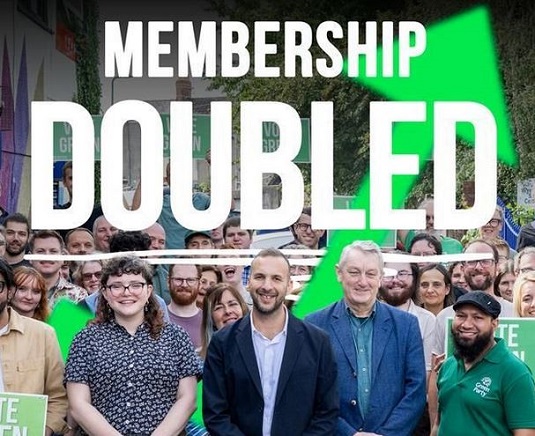
Congratulations to the Greens. Doubling the size of the party in two months to 140,000+ members and leaving the Tories in the dust is no mean feat. Especially with politics being as it is, with right wing talking points crowding other views out of the mainstream and Nigel Farage parading around as the establishment-sanctioned anti-establishment alternative. Yes, the Green Party in on an upward trajectory as long forecasted around these parts, but what's driving it?

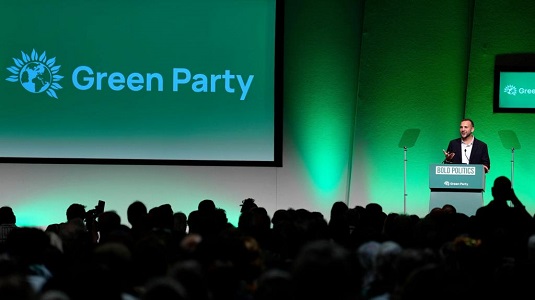
Since the election of Zack Polanski, no one can fault the Green Party for making the most of him. Polanski is doing a good job of making the most of his fresh face status. His "eco-populism", which emphasises the us vs them populism characteristic of Corbynism at its most successful has leant itself to spiky social media posts and a refusal to play the usual media game. Polanski promised he would be a Farage-like figure, albeit from the left, and he's making a good fist of it. His social media shorts have gone viral, he's earned praise from Alastair Campbell(!) for his easy style and the slogan "make hope normal again", and following a short campaign he was granted a slot on Laura Kuenssberg after he was "overlooked" during party conference season. Less noted but also important is Polanski's new podcast, Bold Politics. Featuring interviews with well known left and radical figures, such as Grace Blakeley, Owen Jones, and Gary Stevenson, this has drawn in a layer who spend less time on your Twitters and Blueskys and more cycling around the politics podcast circuit.

We make our own history, but not under circumstances of our choosing. Polanski and the Greens are fortunate that there are two more things in their favour. Which, interestingly enough, almost repeat what happened a decade ago. Though this time as triumph, rather than tragedy or farce. Obviously, enthusiasm for the Greens is a blowback against the reactionary cul de sac Labour has parked mainstream politics in. In their cynical and reckless fashion, Keir Starmer and galaxy-brained Morgan McSweeney have charged to the right in an effort to dampen any progressive expectations their support might have following 14 wasted years of Tory government. Being racist and posturing hard on immigration is ideal: the lure for Labour is the same as it was for the Tories. Create scapegoats, stir up panics against them, and reap the benefits from clamping down hard. The overall balance of forces in the country remain unchanged, but the government gets to look effective. For Labour, to McSweeney's mind this tees up the support for Reform, but in the absence of any positive sell in 2029 the choice is between Starmer and Farage. That's right, this Labour government would rather risk opening the door to a government of the extreme right than abandoning its present course and tipping toward the centre left.

The Green surge of 2025 is then a larger echo of the Green surge of 2015. Millions of people are sick of this politics. No one voted Labour last year to chip away at social security, starve public services, give NHS data to private corporations, rip up the green belt, arm a genocide, outbid the racists on immigration, demonise trans people, or slavishly kowtow to billionaires at home and abroad. The Greens are well placed to intersect with this discontent, because Polanski is just about the only politician talking about these issues. Had history pivoted the other way and Adrian Ramsey and Ellie Chowns won the leadership, would they have made the most of this? It's doubtful.

I said just about the only politician, because the others who might have capitalised on this are Jeremy Corbyn and Zarah Sultana. Arguably, as Your Party is going through its founding process and there not being much to join might have counted against their appeal. But undoubtedly, last month's fireworks have put plenty of would-be recruits off. Just the idea that the new party could fudge it on landlords, and could fudge it on trans people, the opaque moves and secrecy, and now the lack of faith in its leading figures because of all this rubbish, why not head to a party that has name recognition, a support base, a ready-made structure that is very democratic, and a seeming absence of the back biting and media leaking some are intent on importing into Your Party from Labour and the trade union movement? The Greens are taking off, in part, because the main player in the new party has dithered and delayed, and then the project was almost tossed into the skip. Politics waits for no one. If there's an opportunity, someone will move on it. Zack Polanski has, and this is why the Greens are surging and Your Party will have to play second fiddle to them. For good or for ill.

Monday, 13 October 2025

What about the Little Lenins?

Last Thursday, the Trade Unionist and Socialist Coalition urged its supporters to take out Your Party membership. This is despite the bar on the signing up page that says "you cannot be a member of another national political party". TUSC, for electoral purposes being another party - though it definitely isn't in reality - should not be allowed in on these grounds. Nor, for that matter, should other left outfits that have boarded the YP express train. Yet the Socialist Workers Party have set up and run YP meetings. The Socialist Party, TUSC's mother ship, has urged its members to join, and as for the Revolutionary Communist Party it's a case of support them but join us!. Thanks, but no thanks.

Barring other organisations at the outset is wrong, but understandable. This country's revolutionary left, which fancies itself as the most clear-eyed and class conscious of us haven't covered themselves in glory in the 21st century. Theirs is a history of splits, sometimes over points of principle, but more often than not because self-styled leaderships would rather see their organisations damaged or destroyed than submit themselves to accountability, or suffer the indignity of being democratically replaced by junior cadre. And theirs is a history of sabotage as well. The SWP are notorious for wrecking or derailing campaigns they don't control, or dropping them like a hot potato when paper sales and new recruits have been peeled off. The record of far left parties working with other far left parties is similarly poor. Watching the SP walk out of the Socialist Alliance because they could not bear to be a minority. The SWP trying to eviscerate and wreck Respect when they fell out with George Galloway. Both organisations' disgusting binning off their opponents in the Scottish Socialist Party when they backed (subsequently) convicted perjurer Tommy Sheridan and his ill-fated efforts at swindling money out of the Murdoch press. And should we even mention the episodes of sex assault cover ups all three organisations are guilty of, especially the Comrade Delta case. Who'd want such a bunch in a new left party?

I don't, but bouncers on the door is not the way to do it. I recall the farcical scenes, though thankfully was not party to them, of Arthur Scargill's Socialist Labour Party. A promising left regroupment project that squandered its potential and energy in witch hunt after purge, chasing out small left groups like Workers' Power, the Communist Party of Great Britain (Weekly Worker), and the International Bolshevik Tendency, before cliques of witch-finder generals turned on one another. In short order, even more obscure sectlets - the Fourth International Supporters' Caucus, the Economic and Philosophic Science Review, and Harpal Brar/Lalkar, who went on to form the comedically ultra-Stalinist Communist Party of Great Britain (Marxist-Leninist), got expelled. If the no-parties-allowed rule is allowed to stand now, are we going to let history repeat itself as tragedy as the most promising breakthrough for working class politics since the Poll Tax toppled Thatcher is skipped in a sectarian pique?

The solution is obvious. Let the left's little Lenins join. Give each party the right to form its own platform with the freedom of its own press. Let them run their own slates for election, let them make the case for their politics in front of the mass membership, let them become subsumed by the rhythms and life of a broader living, breathing political movement. The far left have turned other campaigns and projects into ashes because these were small efforts of no consequence where social weight was concerned. Despite the recent crisis in Your Party and the huge surge in Green Party membership and support, YP has the potential to reach more and organise more, and as such swamp them. The chances of their winning over swathes of members is unlikely because they have proven incapable of undertaking mass recruitment from active and politicised social movements, like Palestine solidarity. And also, to a tee, all of them are brittle organisations. They work because they create small, semi-autonomous worlds that insulate their members from the pressures that bear down on "ordinary" trade unionists and activists, and thrive on cultures of hyper-activity usually focused on petty party promotion. Being fully exposed to a proper political process of organising our class as a mass party is likely to have the opposite effect. Their contact with masses of our people is likely to erode them, a point underlined by the crudity, unreadability and faux naivete of much of their output. It's probably fair to say that, regardless of their politics, the Weekly Worker remains the only weekly publication on the British left that treats its readers as grown ups. But even then, it uses an idiom and saddles hobby horses far removed from the realities of mobilising our class for itself.

And if I'm wrong? If YP is able to politicise class relations and mobilises hundreds of thousands, if not millions, and they collectively, democratically decide that some sort of revolutionary politics is the necessary solution to decaying capitalism, that's democracy.

Therefore, no to bans on organisations, or so-called parties-within-a-party, or their presses, and yes to a carnival of ideas, political education, and a mature tradition of debate. Not because discussions are jolly good fun, but because without such basic democracy our class cannot hope to organise itself, let alone set about winning a world.

Image Credit

Wednesday, 24 September 2025

Your Party's Membership Launch

Who doesn't like moments of collective joy? Here's one I was looking forward to: the launch of the membership of Your Party. Seeing the numbers shoot skyward like a SpaceX rocket, what we didn't want was an unscheduled rapid disassembly. But that is exactly what we got with last week's farce. And now, after things have settled a little bit and some calm has prevailed, YP is back on the pad and has blasted off again. Jeremy Corbyn took to the socials on Monday lunch time to launch his political moonshot. Yet instead of excitement, the buzz online has been downbeat, cynical, and gives off going-through-the-motions vibes. What a contrast to how things were a couple of months ago, and what could have been.

Matters weren't helped by the manner of this launch. Though the video accompanying Corbyn's announcement featured library footage of Zarah Sultana, featuring her as well might have undone some of the damage. Making matters murkier is the small print on the party website, which says the membership is operated by Your Party UK Ltd, in turn owned by the Peace and Justice project. Where is MOU Operations Ltd, the outfit that has the mailing list and recruited 20k members last week? What happened to the prior agreement between the two legal entities? We don't know and will have to wait for the memoirs, because it's all hush-hush: the very antithesis of an open and democratic way of proceeding.

Another unasked for feature of the recruitment is the barring of other parties. The sign-up page says that "you cannot be a member of another political party". I'm sorry, that is a decision for the party to make and not for friends-of-Jeremy to decide. Neither is it clear what parties are considered "political parties" here. Obviously the Greens, who do allow for dual membership, are out owing to their being registered as such. But what about the SWP, whose branches have variously organised YP meetings up and down the country? Or the Socialist Party? The YP project has made generous use of Dave Nellist's time in convening and chairing gatherings. Are they allowed? And if their comrades ignore the bar, are Karie Murphy and Pamela Fitzpatrick going to deck themselves out in witch-hunter garb? This is both an unserious approach to political differences and an unwelcome power grab that, I hope, the membership will undo at the first opportunity. And that's before we get on to the involvement of the other Independent Alliance MPs. No problems collaborating on an issue-by-issue basis, but giving them leading roles in this project, even if they are only "facilitating", is a dubious decision at best.

Yes, this should be something to celebrate. An episode of a new political movement rising to prominence, while making its opponents and enemies shake as masses and masses of people take on membership. Instead, the secrecy and petty power plays have tarnished its leading figure and, for many, whipped the rug from under them. Unfortunately, the ranks of reluctant Corbynism have swelled because of recent disappointments. And nearly all of them will head over to the membership portal and sign up out of duty, not enthusiasm.

Image Credit

Sunday, 21 September 2025

Reluctant Corbynism Revisited

So much for the hope of reconciliation. Late Friday night, Zarah Sultana announced she was seeking legal advice against unspecified instances of defamation. And on Saturday, a new effort by other prominent Your Party supporters to try and make the "leadership" see sense reported that only one side was open to mediation. Yet at the conference of Jeremy Corbyn's Peace and Justice campaign group, the man himself defended Karie Murphy from "abuse" she had received and vowed again to press on with the foundation of the new party. Its conference will still take place in November, he said. For a bit more context and how the Gaza Independents and Collective, the group around Corbyn, sees things, Andrew Murray appears to have a good grasp on their thinking.

It's all a bit depressing. Undoubtedly, who's to blame for what will rumble on for some time yet, and there doesn't seem much point giving more recrimination a turn on the spit. But on the question of what now, for those of us who won't be trekking over to the Greens, we are stuck with the process Corbyn agreed with his Gaza Independent colleagues. Which, according to the 15th September email from Your Party HQ, means the membership is to open within the next fortnight, instruments of online deliberation and document submission are going to be made available, mass regional meetings to debate these will be organised, and then a delegated - determined by sortition - founding conference with some direct membership voting. Also to be launched is The People Speak campaign, which is a huge canvassing effort to get the party known on the doorstep, recruit supporters, and find out what the issues are. As most parties rarely door knock between elections - and some, such as Reform, don't even do that, this is a good idea. But it's sure to be a patchy affair with the ad hoc character of the YP groups that currently exist.

Setting critiques of this process aside, there is now no path to a new party except Corbyn's route with the time available to us. He has effectively been the leader of the left for the last decade, and he became this not through some magical process or hero worship - though the latter undoubtedly exists - but because he served as a lightning rod for the discontent and grievances that were studiously and intentionally ignored by mainstream politics. A situation that still remains the case today. Using the platform the Labour leadership contest supplied, he enthused hundreds of thousands of people and when put to the electoral test, even in the dire circumstances of the 2019 general election, there was more of a popular appetite for what he was saying than Starmerism has fostered, even at its peak. Corbyn was the condenser and subsequent embodiment of a mass movement and as such all the personal attacks on him, the internal right wing shenanigans now freely admitted to, and orchestrated media hit jobs were and continue to be efforts at forcing that movement back into a box.

This has not changed. No other left wing figure is close in name recognition, popularity and, where our opponents are concerned, notoriety. Corbyn has become the focal point, a personality through whom the stuff of history has elected to flow. And so, despite frustrations, well-worn criticisms of his record and politics, and regardless of whether one leans towards Team Jeremy or Team Zarah in the current fracas, the ballast lies with Corbyn. Only he can be the midwife of the new party. No one else right now has the ability or authority to draw together hundreds of thousands of people that can win over millions and set British politics off in a new, brighter, more hopeful direction. Obviously, an urgent task of the new party is to raise up a generation of new leaders so that, as we root ourselves in our workplaces and communities, we shake off dependence on the charismatic figurehead. And besides, Corbyn will be 80 come the next election and has to be considering retirement. He deserves to spend more time with Laura and his allotment.

In 2016, I wrote about 'reluctant Corbynism' in reference to the small layer of Labour members who moved left during the first year of his leadership of the party and supported Corbyn against the effort to oust him. This was 'reluctant' because they were motivated more by the disgust and scorched earth chicanery of the parliamentary party and their helpers in the Labour machine than enthusiasm for Corbyn's brand. It was based on an appreciation that democracy matters, and that sovereignty in the labour movement belongs to the people that make it up. The specifics today have changed, but the way things have played out is that reluctant Corbynism, which is much larger now than it was then, has to come to terms with the fact this is the only game in town where starting a new party is concerned. Just ask the far left and other recent initiatives about how they've been getting along with their party building projects.

Comrades, you might not like it. But this is where we are. Carrying on meeting as local groups and starting new ones is the best course of action for now, and is much more productive than shouting on social media. We have to take Corbyn at his word that he sees himself and his immediate supporters as facilitators of the new party. Thankfully, as politicians go, Corbyn does have a track record of honesty and keeping to his promises. We might be reluctant Corbynists, but a great prize is within reach. As such we have no choice but to exercise patience.

Image Credit

Friday, 19 September 2025

The Crisis in Your Party

Considering the last fortnight, it takes something special to make Keir Starmer and Morgan McSweeney look like exemplars of competence. Just a quick reminder of where we are in the Your Party crisis. Zarah Sultana's faction, annoyed with the snail's pace of the project and the conference arrangements worked out seemingly behind her back, opened a membership drive. Only to have it disowned by Jeremy Corbyn and the four Gaza Independents. Sultana's reply complained about being frozen out, and another communique from the Corbyn camp said they had reported the affair to the Information Commissioner. Archie Woodrow has done the honours in supplying the time lines, and his superlative guide to the hidden differences behind the Your Party project is required reading. Things have settled down a bit today, with prominent supporters in Wales and a new grassroots initiative each fielding their takes. Sultana has endorsed the latter while Sky News reports on reconciliation efforts. Your Party might be in the toilet but no one's pulled the chain. Yet.

There's nothing much to add except for hundreds of thousands of would-be supporters, the outbreak of collective joy that occasioned this summer's announcement that a new party is but a memory. Recrimination, anxiety, and disappointment is now filling the vacuum left by this unseemly falling out. As Woodrow writes in his overview of Your Party's factional balances, there is an abundance of control-freakery and secrecy. It's tempting to locate this in the desire of a handful of people around Corbyn wanting to secure paid positions and influence in the new party, and plenty have made that inference. But this is secondary to the politics of our shadowy movers and shakers. And what are these politics? Fundamentally, it comes down to what they think the new party should be.

For the Corbyn wing and its (understandably) reluctant leader, the desire is obviously a mk II Labour Party. One with a touch more democracy and better politics, but ultimately Labourist in orientation and method. The "sexist boys' club" Sultana criticised has centred the formation of the new party on the honourable members - Corbyn and the so-called Gaza Independents. From the off, the MPs have had a privileged say over the party's direction, and are looking to preserve their autonomy and standing within it. This is hardly the grass roots democracy Corbyn promised over the summer, and is concerning when it's very clear that apart from Gaza, the politics of the independents are barely Labourist, let alone socialist. But that suits a Labour mk II fine, which thrives on a politics of the lowest common denominator.

Some have asked why Corbyn wants to co-habit with the independents in a new party. Is he not aware of their positions on landlordism, LGBTQ issues, and cousin marriage? Of course he is, but Corbyn's ethical socialism predisposes him to a politics of diplomacy. This is a politics of moral outrage at the evils of the world, and believes in the essential dignity and goodness of human beings. Capitalism is obviously damaging and cruel, and there is an ethical imperative to build something better - a position everyone can get behind, because everyone benefits. Socialist morality abstracted from a materialist appreciation of power and politics, in Corbyn's case, helps explain his decency and willingness to engage with people most wouldn't touch with a barge pole. Why can't we all get along is the principle by which he's lived his political life, and he reciprocates the friendship and loyalty shown him by others. Karie Murphy, for instance, is often criticised as a gatekeeper and an authoritarian, but she stayed in the trench with Corbyn until the end. Small wonder she's part of the inner circle, alongside Len McCluskey who did everything he could to get Corbyn readmitted as a Labour MP. Unlike Starmer, who bins off allies when they become an encumbrance, the fusion of the personal and political in Corbyn means he can never be as mercenary. Regardless of how damaging his allies might be for whatever project he's involved with. Where the Gaza Independents are concerned, while Labour "oppositionists" to Israel's genocide have been few and far between, they have been resolute and faced down Westminster and media hostility. On paper, who would not want to make common political cause with such courageous people?

Corbyn-as-figurehead is the glue that keeps this faction together. Unity where their common interests are concerned, and diplomatic silences over political differences. Which makes Corbyn ideal to lead a broad church that stretches from the far left to anti-LGBTQ "traditionalists", as long as no one talks about difference or, horror of horrors, politics. This is where his keen interest in community organising comes in. While laudable in and of itself as a means of implanting the new party into our communities, activists so engaged will build trust and solidarity through good works. Disagreements would simply wither away and not matter because action takes precedence.

Sultana's faction has a different objective. They are not looking for a Labour mk II, and want to establish a radical left party. Indeed, in her interview with Novara on the topic, she said her preferred name for the new party would be the Left Party or The Left. In other words, quite similar to several continental left-green parties and broadly congruent with Zack Polanski's trajectory. She has argued for putting "class issues" front and centre, while maintaining it should be a socially liberal party. I.e. Mirroring the vast majority of the class it seeks to organise in the age of immaterial labour. Obviously, this party isn't a place for landlords or those whose politics seek to sow division, regardless of how good they might be on questions of war and peace. And she's impatient with the bureaucratic obstructionism and foot dragging given the state of political affairs. Whether you agree or disagree with her positions, at least Sultana has been open about her vision and what the new party should be like. Can you say the same for Corbyn?

These are the fundamental differences between the two broad camps, and the reason we've reached this impasse is because one side - Corbyn's - would rather not have a "divisive" debate about the party's character. The problem is when you stifle politics, they find other, more damaging ways of finding expression, and it ends up scarring those doing the repressing. The situation we're in means Corbyn is the only politician with sufficient social weight to bring together the left and refound it on a mass, as opposed to a sectarian basis. But the more he delays, the more his associates are given free reign to arrest this process, the more his standing will diminish to the point where the moment could be lost. But the situation can and must be retrieved. Open the membership, put the party on a firm financial and organisational setting, regularise the already-existing branches and fora, and let's have this founding conference where the purpose and politics of our party can get thrashed out.

Image Credit

Monday, 28 July 2025

The Case for Cautious Optimism

Like 500,000 other people, I signed up for the Zarah Sultana/Jeremy Corbyn Your Party mailing list. Comparing free registration to the memberships of other political parties is hardly a like-for-like exercise, but it does demonstrate a real appetite for an alternative to Keir Starmer's authoritarian incompetence and Nigel Farage's right wing extremism. And it's very likely the donation facility has already raised tens if not hundreds of thousands in small donations. Already, the new party is orders of magnitudes more significant than any other left-of-Labour outfit in British political history, and it doesn't really exist yet.

Since the announcement, and setting aside dishonest rubbish about letting Reform in and right wing panic, the establishment have, by and large, greeted it with two responses. The first is with dismissive humour, that - ho, ho, - neither Corbyn nor Sultana could get their story straight about the new party's name. What a muddle! The other, articulated on Times Radio, has it that there are too many irreconcilables among the party's potential support. That on the one hand you have Muslim voters lost to Labour over Gaza but who are socially conservative, and social progressives motivated by, among other things, trans rights. This surely is a mountain the nascent party would find impassable.

A more thought-through variant of this position is offered by John Oxley. He makes a similar point about the incompatibility between the voting behaviour of the so-called Gaza Independents in the Commons, and where the party's progressive base would sit. But a further difficulty is that if this can be overcome, it would - at best - lead to a handful of seats because the party has "too narrow a niche". Building reach requires issues that have broad appeal and can be capitalised on, as Farage has done with Brexit and immigration. Reform also complicates things, as it pivots towards Labour seats with its mix of anti-immigration, English nationalist politics, and dalliances with left-populist economics. Another problem are the new party's supporters, among whom are likely to be unpopular views at odds with public opinion, it's not clear how these difficulties could be overcome. That is, in the absence of one thing: a Farage of the left. "Someone with a demagogue appeal, political nous to weave these tribes together, and organisational skills to pull together a party which pushes its advantage strategically." Without this, there are flashes of anger and fragments of grievance. And so the new party will be born, but with limited life chances.

These are serious issues, but they are issues limited to a party of a certain type. All parties are condensers and coalitions of interests, but where the government, the Tories, Reform, and the Liberal Democrats are concerned, there is one interest that predominates - capital's. What they offer then are variations on a theme. I.e. Who can manage its collective interests best, which in the case of the Tories and Labour, is about engineering the class relationships British capitalism depends on. To ensure they're on the right track, leading figures cosy on up to business interests as closely as possible. No need for members as mediators of interests when luncheons and private meetings do the job. In Labour's case, this closeness to capital has proceeded with the attacks on and removal of democracy, due process, and natural justice inside the party. This leads to a politics where agency and efficacy is invested in the leadership, and offers bourgeois politics a model of how it should be done.

As a mainstream politics writer, this is the prism through which Oxley perceives politics. However, this is not the approach informing the new party. In the aftermath of his victory last year, Corbyn argued that he owed his return to the Commons to community embeddedness and power. And perhaps mindful of other left wing splits from Labour and the sundry efforts at building an alternative, he has been reluctant to commit to a new party in the absence of a strong base and an orientation that would sink deep roots into our class. Like many others, I've found this reticence frustrating. Starting a new organisation requires that someone who has social weight, which Corbyn does, makes the move and be the catalyst for what could come next. He might have been pushed into it before he was ready, but the die is cast and the numbers are coming up.

When he was Labour leader, Corbyn and Corbynism pushed it to the limits of Labourism and threatened to go beyond it. Corbyn tried to ground the party in community organising, to turn what was the traditional party of the working class in name into its party in substance. And it's encouraging that this model of collective power is the approach Corbyn wants to found the party on, and not the electoralism of a Labour mk II. This is where things can get weird where the mainstream model of politics is concerned. If this quickly puts on a few hundred thousand members at launch, as noted a while back the organisation in and of itself can become a political factor. Not because it can turn out armies of canvassers - though helpful. It comes from its social weight. Putting its energies and grounding its organisation in workplaces and communities makes it familiar, creating living relationships between members, activists, and our class at large. It becomes a party that lives the everyday lives of everyday people, because the party is them. The party doesn't need a strong leader, because its job is to generate hundreds of thousands of them. These aren't people who stand above and separately from them, like Labour politicians do, but are indistinguishable. Their leadership comes from organising and building institutions that bring our people together. This is not only the best way to break from Labourism and transform society for the better, it is the only practical way of doing so.

The party as a substantive collective, as a part of and vehicle for our class, this is its potential as things stand. There will be arguments and problems, but its declaration comes at the right time. Labour have performed dismally in office and have attacked its own base, like all Labour governments do. The country is pervaded by a miasma of dissatisfaction that the current crop of parties cannot intersect with. And, germane to the new party, the experience of the last decade in Labour Party politics, the explosion of street movements, and the proliferation of industrial disputes has swelled the legions of politically switched on and experienced activists looking for something to cohere their efforts around. The Labour leadership contest of 2015 and all that followed was a moment upon which the direction of this country's politics turned. This new party could be another one.

Image Credit