Showing posts with label Neoliberalism. Show all posts

Friday, 2 January 2026

What is the "Stakeholder State"?

Paul Ovenden is someone we did not need to hear from again. He could have spent his time over Christmas reflecting on what cost him his job. But what disgraced former special advisor could resist the chance of redress in the pages of The Times? And at what has his spleen been vented at? The double whammy of cluelessness and cruelty that characterises the government he served? Don't be silly. The new bĂȘte noire is something called the "stakeholder state".

Picture the scene. A government is elected and wants to do things, but at every juncture they're besieged by lobbyists and campaigners. Some are from outside the state. But what is new is that within the institutions itself, even within a "neutral" civil service purposed to carry through the wishes of their political masters, there are networks of interest groups supporting and pushing issues they're exercised about. Particularly egregious are the quangos, those arms-length agencies of state that work to water down executive decisions they do not like. And where are the British people while this is going on? Nowhere. Voters don't get a look in. They're not the real stakeholders; a bloated establishment is. What they say goes, and for those inside government the weight of this machinery quickens a state-of-siege sensibility.

A couple of things about this. The stakeholder state stuff isn’t specific to Ovenden, or this government. Anyone familiar with politics memoirs will see shades of his complaints in former politicians' frustrations. It's also the inverse of the pluralist theory of politics. In the Marketplace of Ideas, different groups tussle for influence and policy. That is entirely what politics is, and parties have to build coalitions out of this to win and hold office. It's one of the first perspectives sixth form/FE students learn when studying politics. In other words, all he's stating is a banality.

The second point is this dovetails with every right wing, tin foil hat argument about the character of the state. Ovenden rightly says "It isn’t a grand conspiracy. There aren’t secret meetings or handshakes. Rather, it is a morbid symptom of a state that has got bigger and bigger while simultaneously and systematically emasculating itself." But the effect is the same. Nigel Farage's insincere whingeing about the liberal elite finds confirmation in these arguments. Liz Truss's ranting about the deep state and how it derailed her premiership is there, between Ovenden's lines. Michael Gove and Dominic Cummings's objections to "the blob" are echoed in the article's words.

What Ovenden doesn't talk about is how this form of the state came about. And, the truth of the matter is, this is what it has become after nearly 50 years of rebalancing labour and capital in the latter's favour. It was our old friend Margaret Thatcher who not only smashed and shackled the labour movement, but reconfigured the state away from a rough pyramid of clustered bureaucratic institutions to a looser collection of semi-autonomous bodies whose horizontal relationships were mediated by government-mandated markets. Business logic only works if there is competition. Meanwhile, the pre-existing expertise that existed within them was undermined and/or scrapped, and market thinking was granted the status of common sense. What happened to education, for example, in which local democracy, professional autonomy and independence, and the curriculum was done away with or reconfigured by government diktat typifies what Thatcher, the John Major government, and New Labour did to the state. But it wasn't just about creating new opportunities with a guaranteed return for (internationally uncompetitive) British capital. It was an issue of governance. In his memoir, John Major wrote with a sense of accomplishment about how shifting institutions to metric chasing and enforcing competition between departments to meet them improved the "customer experience". From a governance point of view, central government could just leave them to chase their tails. A case of winding them up and letting them go, while the relevant minister could spend their time on more interesting things outside of their brief.

Likewise, during the Thatcher years it became evident that government and governance could be outsourced. We're not talking just about the privatisations, but how the state became content to leave sectors to the province of "independent" regulators and watchdogs. This constellation became increasingly complex as charities and campaigning organisations engaged with and became embedded in a bewildering array of fields and sub-fields concerned with this or that aspect of social life. From here lobby outfits multiplied, to seemingly absurd outcomes where parts of the state lobby parts of the state. But crucially, what Thatcher enshrined and has been consolidated ever since is that government is the absolute sovereign, both as arbiter and the one point of the state that can unilaterally restructure everything else. Yet this appears to be a formality for those inside the system. Occasionally the Tories declare war on the quangos, but this same constellation structure with the executive at the centre persists. For anyone with a sense of history, its endurance as such might suggest an element of fit between contemporary politics and economics. It was all, after all, designed to be by the same sort of state functionaries now decrying it.

Ovenden finishes his article by saying it doesn't have to be like this. That is true. He talks about the power of government to change things and respond to democratic aspirations. And yet, this government, in case anyone needs reminding, has declared Palestinian solidarity protestors terrorists, wants to abolish jury trial for most court cases, is moving to shut down VPNs, and has legislated to officially scapegoat refugees and trans people. These were not in Labour's manifesto. It is true that Thatcher's restructuring of the state was minimising the democratic checks on capital, but - as it always has been - the main threat to liberty and democracy stems from the centre. Obviously, Ovenden cannot and will refuse to see it because he personifies this outlook.

Image Credit

Sunday, 17 November 2024

Hacking the State

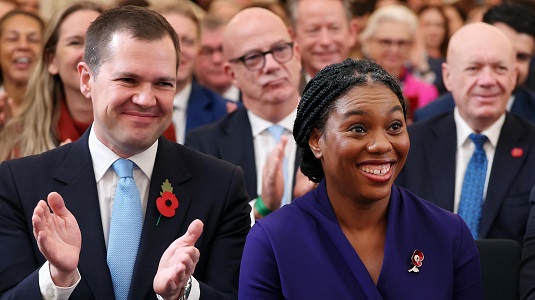
Writing in the Sunday Times, Kemi Badenoch has set out her vision of what government would look like if she becomes Prime Minister. The principles, which she calls "reprogramming the state" could be more accurately described as hacking it. Into smaller and smaller pieces.

In her argument, Badenoch does not attack the people who work for the state. Her target is bureaucratic process. Drawing on her time as business secretary, she says the inability to pay out compensation to the victims of the sub postmasters Horizons debacle in a timely fashion was symptomatic of the problems afflicting the state. Every decision has to be backed by x number of reviews, y gaggles of consultations, and z quantities of impact assessments. Attempts to abbreviate the process would find ministerial decisions subject to court challenge and, therefore, more delay. The risk averse culture afflicting the civil service, she concludes, is not a case of the mindset of staff but their experience of having to satisfy all the reporting requirements. These, Badenoch acknowledges, might have grown out of sensible concerns for accountability and transparency but in practice they only lengthen administrative processes and make them more opaque. The more laws that are passed, the more the state grows, the more the prospect of litigation enlarges, and with it the risk averse culture. A perfect doom loop.

If this is her problem ("I made this diagnosis the central plank of my campaign to become leader"), the solution is reprogramming the state. Government must stop rewarding managerialism among ministers, and every level of the state needs looking at afresh - but "box ticking" and "judicial review" must be avoided if the problem is to go away. In all likelihood improving "accountability", Badenoch style, will be the subject of suggestions churned out by the Tufton Street think tank complex. As well as the churn from Elon Musk's anticipated evisceration of the federal state in the US.

There are a few things of interest here. Or rather, interesting absences. If this is the culture of the state and it's so irksome, the Tories had 14 years to change it so why didn't they? Was it a symptom of talking conservative but governing left? Well, no. There were plenty of changes to governance over that period of time, and all of them embedded the Thatcherite settlement further. I.e. The counter revolution that started under her and was consolidated in the Major and the New Labour years, which saw bits of the state sold off, or forced into debt relationships with private finance, or forced to "compete" in internally constituted "markets" with one another. This was consolidated under the Tory/Liberal Democrat coalition. To put it another way, the proliferation of performance indicators, targets, "market intelligence", and the requisite legal expertise to go alongside them increased the amount of administrative work required. Neoliberalism is the bureaucrat's friend. But this was in the context in which the coalition government slashed at the state. Form filling multiplied as form fillers were laid off. More work was demanded from a shrinking workforce, and so the system was prone to seizing up. This is the first "inefficiency" Badenoch "forgot" to mention in her article.

The paradigm of this consolidation of neoliberal governance was the vandalism committed against the NHS during the first term of the Tories' long stint in office. Effectively, Andrew Lansley abolished the NHS as was and replaced it with a market, underwritten by state money, in which NHS organisations and "any willing provider" competed for contracts handed out by the hundreds of fund-holding Clinical Commissioning Groups. This meant huge sums diverted from health care to the maintenance of a wasteful and needless internal market, and rampant profiteering as private health concerns won contracts and subcontracted them to NHS organisations, creaming off layers of profit in the process. This was supposed to run autonomously of government and, formally, responsibility for the NHS no longer lay with the health secretary. As it happened, increasingly CCGs and NHS trusts found ways around the market and established cooperative relationships contrary to the designs of the legislation. With the immediate first wave of Covid out the way, the Tories belatedly discovered this and returned sweeping powers to the health secretary - then Matt Hancock - with unprecedented range to intervene and micromanage. The kind of model Badenoch seems to be hinting at. I.e. Ministerial direction unchecked by established procedures and remits to enhance accountability. And how has the NHS looked since this innovation was introduced? Yet another slice of pertinent recent experience from government the leader of the opposition chose not to dwell upon.

Lastly, completely by coincidence her "reprogramming" of the state is consistent with Tory efforts to wind down its capacity to do things. It bears comparison that Badenoch's view is a reskinned version of Jacob Rees-Mogg's planned civil service cull. In short, the state has not failed because of a magic theory of bureaucracy. It has virtually collapsed because under the Tories this was the policy objective. It has been starved of resources, saddled with extra responsibilities, and forced into a governance strait jacket that could only produce sub-optimal outcomes. And Badenoch's answer is to make this crisis of capacity the desired goal of the next Tory government. Her big idea is the regurgitated pap of the recent past, a programme and an agenda that saw the Tories crash to their heaviest ever defeat.

Image Credit

Wednesday, 11 September 2024

Residual Welfare Vs Universal Social Security

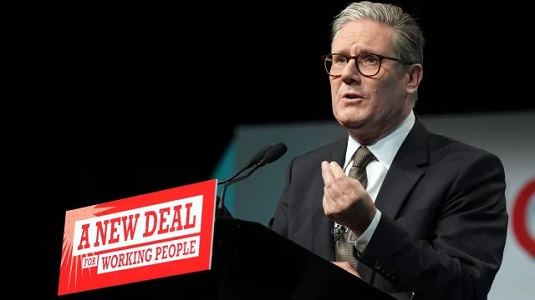
It's now abundantly clear what Tuesday night's Winter Fuel Allowance vote was about. It wasn't, according to the cynical and dishonest household budget metaphor, a money saving measure. Showing the political establishment that, like in opposition, Keir Starmer's Labour would carry on being strong on the weak was a useful by-product, but not the main reason. Nor was it an exercise in a twisted notion of fairness, where pensioners are going to have to suffer because it's "their turn" - following 14 years of attacks on younger, working age people. No, what Rachel Reeves really set about doing was abolishing an example of universalism, of rubbishing the idea that social security should be accessible to all.

How do we know this? The new Labour government have told us in not so many words. From the beginning, Reeves said stopping the payments would be mitigated by a campaign to get more eligible pensioners on to pension credits. My friend Pete Nicholls has roughly calculated that the take up of pension credits by an extra 800,000 eligible pensioners would cost over £2bn - wiping out the £1.2bn it would contribute to closing the famous £22bn black hole. Regardless of what one thinks of Reeves, Starmer, and the rest, they are not stupid people. They know this is the case, which ineluctably points away from fiscal prudence towards a different objective: universal provision.

In this respect, Reeves truly is the heir to Blair. Universalism is not "progressive". It costs a bomb and is "inefficient" because people who don't need it get it. I'm sure His Blairness would have performatively disavowed his Winter Fuel Payment, if the government was in a bit of a spot and they asked him. But this is ideology masking interests. Since the battles successfully waged by Thatcher in the 1980s, her aim of stripping back the welfare state and public services to the barest minimum has largely succeeded. Residualism is the common sense. This was a strategy in her class war to permanently tip the scales away from labour to capital. I.e. Clawing back benefits, introducing conditionalities, holding them down at barely subsistence levels, was an effort to centre the wage as the primary, if not the only means of income for millions of people - giving capital the whip hand. In Thatcher's scheme, it sped up labour "flexibility". By cutting social security, she made sure any job was better than no job, even if the pay was poor and the conditions abysmal.

This contrasts with how the architects of thw welfare state saw things. Whether one was Labourist, one nation Tory, or Liberal, it represented a social wage. Universal social security provided a floor designed to catch anyone who fell on hard times. Welfare was never a luxury, despite how the unchanging propaganda of the last 45 years styles it, nor was it a product of high-minded enlightenment by clever, compassionate politicians. It was a gain extracted from capital by labour as the cost of avoiding social unrest and certain kinds of events. The fact of universalism gave other layers in society a stake in the social security system. Better off families might not have needed child benefit, for example, but it gave them extra spending power they could splash on extra clothes, treats for the children (and treats for themselves). But by extending them a stake, it was hoped opposition to their losing an entitlement would protect those who really needed it - families crippled by low wages and debt, mums financially controlled by abusive husbands, and so on. And as imperfect as it was, universalism was a bureaucratic expression of solidarity. Universalism, as a product of heightened class struggle when our people were politically ascendant, went into retreat as the tides of battle flowed in the bosses' favour. As class consciousness eroded it was easy to characterise universal entitlements as largesse/symptoms of administrative inefficiency, and the axe fell on them in due course. Unsurprising that getting shot of Winter Fuel Payments, ironically introduced under the otherwise anti-universalist Gordon Brown, fits the Starmer project like a hand in a glove.

As we noted the other day, this was not a "tough choice" for the government. But one, from the standpoint of Starmer's statecraft, a politically necessary one. Universalism raises the idea of everyone getting something, of building on collective aspirations that lie outside the class alliances and type of capitalism the Labour right want to build. This is a capitalism that offers steady, stable growth, is run by Treasury-brained technocrats like Reeves, has a re-legitimated state that works, a pacified work force interested in consumer durables and coffee shops, and returns a semi-permanent government of centrist sensibles at election time. There is no room for alternative ways of doing things. Hence universalism is anathema not just to the nuts and bolts of this dismal project, but to their very conception of politics.

Image Credit

Wednesday, 16 August 2023

Keir Starmer's Radicalism

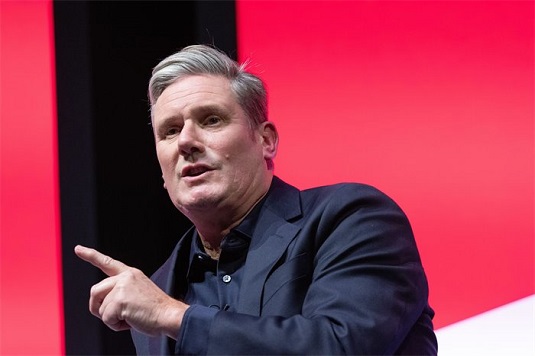
Is Labour going to be more radical in office than the image currently projected by Keir Starmer and the shadow cabinet? Yes, if you take this New Statesman headline as good coin. But what counts as radicalism? After all, Tony Blair's period in office, which saw the retrenchment of the Thatcherite settlement under new branding and the continued undermining of Labour's own base was dubbed "radical". Mostly by Blairite loyalists and no one else, but the point remains.

Radical, if it's to mean anything in politics, refers to a break with the status quo. I.e. The conventions, practices, and ideas that dominate the bourgeois mainstream. But anyone can do that. Boris Johnson's contempt for constitutional niceties and probity would, by this definition, cast him as a radical politician. But this was subordinated to a very conservative aim (self-promotion) with equally conservative outcomes: the continued political dominance of the Conservative Party. Radicalism has to do more than upset: it has to fundamentally threaten the power relationships that structure and are upheld by a political settlement, and does so in a way that opens up opportunities for more democracy. Radicalism is a politics that embraces the potentials of the mass, and looks to invite the demos in. It cannot therefore ever be about replacing one ossified elite structure by another. New Labour then? Very obviously not radical. The "gains" of that period of government, where they were not undercut, raised living standards and made life better for millions of people. But it did not alter the fundamentals.

And according to Freddie Hayward, our NS scribe, neither will Starmerism. He says that Labour have opted for a "better managers" strategy, and as such have decided to follow political opinion. Which, in practice, has meant not saying much. But we can look forward to a veritable policy blitz this Autumn as per Starmer's five missions. There are announcements due on net zero, economic growth, and plans to cut violent crime. These are the headline grabbers-to-be, but the real radicalism on offer is virtually cost-free: planning regulations, public sector reform, devolution, collective bargaining.

Are these radical? They are certainly different to what the Tories are offering, as well as Labour pre-Corbyn. The change to planning will allow building on the greenbelt, which would increase housing supply and should contain the rise in prices. Except this is what developers have been lobbying for for years. Reforming the public sector suggests making state services work better and be more responsive, but could easily be the Trojan horse for more private sector involvement and reinscribing the state/citizen relationship as provider/customer. I doubt private health and other outsourcing specialists are bunging shadow ministers because they agree with a radical democratic vision of politics. Devolution will see more powers pushed out of Westminster, but this is more consistent with setting up a new regime of accumulation. And the one unalloyed good, the expansion of collective employment rights and bargaining backed by statute itself owes more to managerial imperatives than an endorsement of workers' self-organisation.

What of the other claim Hayward makes? He says that for all Labour's caution on fiscal matters, "you can already picture [Rachel] Reeves standing at the despatch box, brow furrowed, proclaiming that action is required because the situation is worse than she understood." Can you? This is exceedingly unlikely, because she routinely defers to Bank of England orthodoxy. Be it on the causes of inflation and how it should be dealt with, her understanding of state finances, attitude to social security recipients, and suspicious attitude toward spending money, all come with a whiff of City consensus about them. Just because something is broken and it's necessary to fix it doesn't mean a government will cleave to this necessity. As the lessons of this very Tory government teaches us week in, week out. But supposing Reeves, faced with collapsing public services, does act. The options are borrowing more or taxing more. Closing tax loopholes, equalising capital gains and income tax rates, and upping the higher bands to address the NHS and teacher retention crises would be welcome. Chances are it would be very popular, but it's not radical.

Here's where we get to the nub of the matter. Labourism, apart from the programme the party had between 2015 and 2019, has never been radical. It is an ameliorative project, the political expression of a workers' movement that has long been integrated into the UK's constitutional order. It is circumspect and loyal, and is intellectually impoverished and intellectually elitist at the same time. The shock of Starmerism isn't that it abandoned Labour's radical tradition, but has rather forcibly returned the party to the historical mean. Starmer's politics does not break with Labourism, it's a rude instantiation as authentic to its tradition as any of its predecessors in government. If there is a radicalism here, it's the stark way Starmerism is presenting Labourism's true face to the public's gaze.

Image Credit

Tuesday, 31 January 2023

Care and Capitalist Reproduction

The recent return to Hardt and Negri wasn't a whim. Thinking about the end of neoliberalism as a political economy is relatively easy, seeing as macroeconomic policy in this country and elsewhere is moving away from it. But what about the end of neoliberalism as a mode of governmentality? With the end of cheap commodities and the tight property market, the capitalist carrot is getting increasingly thin. But are there other movements afoot that pose neoliberal governance a challenge? By way of prepping for a project on this, the work done around care and social reproduction by comrades working in the socialist feminist tradition is fruitful because of its reflections on resistance to the commodification of care and building a mutual aid commons, and how capitalism tries to colonise and commodify this opposition to itself. To this end, here's a recording from a couple of years back from the Care Collective, who wrote their  Care Manifesto from the front lines of the struggle against neoliberal governance. Well worth a listen.

Sunday, 25 September 2022

Courting Ruin

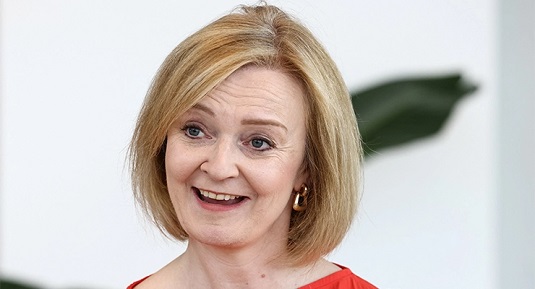
What's the lay of the land like three weeks in? Already upset and rumours of upset are making their way into the press about Liz Truss. Just a quick run down from this week. We've had the Telegraph fantasising about what might have been had Ben Wallace not lost his bottle. The Mirror reports on noses put out of joint after two whips refused to debase themselves before Truss's cult of the non-personality. The Telegraph (again) talks of open revolt on the government benches if the pound sinks to parity with the dollar, or dives below it. And Tory MPs complain about the disloyal mood among parliamentarians. It's not only Ken Clarke saying Truss's schemes won't work. The patron saint of remainia and imagined Tory decency is only saying words that are common currency on the parliamentary estate.

Truss also has another feather in her cap. No Prime Minister taking office in mid-term without immediately turning around their party's fortunes in the polls has gone on to win a general election. She has the unique distinction of being the first in such a position. Truss and her outriders are masochistically leaning into this. Having stripped the Tories of all pretence that her government is anything other than an instrument of the ruling class, Truss is staking her premiership on whether her natural voter coalition and Conservative-leaning swing voters are gullible enough to buy it. Levering more money into the already bulging pockets of the rich is entirely reliant on the ideological legacies of past governments for its justification - it assumes the past neoliberal commonsense continues to frame such questions. That the mass purchase is still there. Having peddled the view that enriching the wealthy is correct and proper economics, it says a great deal about the exhaustion of Toryism that Truss isn't playing the legitimation game beyond the already accomplished. Why dig further when Thatcher, Blair and co. have already done the spadework?

Just saying what her government is doing is necessary for economic growth won't work, politically speaking. When Dave embarked on his ruinous programme of cuts 12 years ago, he did so with the same commonsense behind him. And also the unanimity of the Tory party, their press operation, broadcast journalism, and the acceptance and meek support by Labour. Oppositional voices were almost entirely sidelined, and therefore the Tories were able to mobilise just enough support to keep them on track and win a majority in 2015. The situation could not be more different for Truss. The cost of living crisis is seeing even the better off counting the pennies. There is widespread anger toward the energy companies for their profiteering. The background presence of socialist ideas and sympathies is the lasting consequence of the Corbyn interlude. Labour movement mobilisations and victorious strike action is on the up, and significant layers of journalistic, professional, and political opinion oppose the naked class project of Trussonomics. And, as we can see, there are jitters on the Tory benches: pump primed by a summer of denunciation by Rish! Sunak. Can Truss rely on a diet of scapegoating and mass sadism? It's seems rather doubtful.

There is nowhere else for her to go. Having declared a protectorate around fossil fuel profits, the eye watering borrowing costs of her energy price freeze and tax cuts for the wealthy leave no room for anything else. For Tory MPs nervously eyeing the polls and despairing that Boris Johnson's levelling up wheeze has been abandoned, it won't be long before the mood turns even more sour. Especially when the unforced errors crop up, along with the whiff of corruption, supposedly confined to the Johnson era, catches in the press's nostrils. It's rare for a Prime Minister to begin their tenure with as pressing a set of problems, and even rarer for one to actively make matters worse within their first few weeks in the job.

Image Credit

Sunday, 11 September 2022

Royalism and Labourism

The Labour Party officially greeted news of the Queen's demise as the constitutionalist outfit it is. Keir Starmer said nice words about the recently departed, and his Twitter feed given a sombre make over as a mark of respect. None of this is surprising. Rare have been the moments when the party has found itself troubled by republicanism. But what was a bit more of a shock for some comrades was the pulling of strike action. Commenting, General Secretary Mick Lynch said "RMT joins the whole nation in paying its respects to Queen Elizabeth. The planned railway strike action on 15 and 17 September is suspended." Similarly, the CWU called off postal strikes for this weekend. You might expect tributes to the monarchy from the Labour leadership, but demobilisation by two of the most militant unions in the land? How to explain?

The immediate reasons aren't too difficult to fathom: it's a question of PR and optics. Had strike action gone ahead, the hounds of hell would have got unleashed by the press with leading trade unionists subject to the bin emptying treatment and possibly getting set up for assaults by over enthusiastic royalists. Further, RMT action on the rail might have disrupted the transportation of the Queen's body from Balmoral to London. And there's the issue of the establishment using her death as a wedge between the strike leadership and more politically conservative workers going along with action. Then there are wider concerns. During the Summer, the RMT won the public relations war against the government. They've come to the conclusion this could be jeopardised if they are seen to be "disrespectful". The downside is it interferes with the momentum and tempo of the struggle, effectively introducing a cooling off period that might impact negatively on subsequent rounds of strikes. With republican sentiment a minority position even in the labour movement, our union leaderships had to weigh up the pros and cons and, unfortunately, I think they've made the right call in this instance. Class struggle, after all, doesn't mean putting your foot on the accelerator come what may.

As some observed on social media, the death of the Queen has found the British left more British than left. Or, at the very least, its mainstream mass institutions. And they have a point, but this is a challenge to be confronted and not a moment for Dave Spart posturing. If strike action is called off because mass fealty to the royal family might be offended, we have to understand not just how monarchism is produced and reproduced, but also how it is rarely challenged within the labour movement. I'd suggest there are two historically interrelated points to this, one of which has somewhat withered on the vine. One is the push for respectability, and the other is the labour movement's integration into mainstream society.

The contradictory and self-destructive history of Labourism is well known. The earliest trade unionism in this country was less characterised by revolutionary aspirations, and more by taking our (capitalist) society for granted but securing a recognised place and a "fair share" for workers within it. In the 19th century, as the labour movement grew it understood that this could be secured by industrial action and negotiations with political elites. The original alignment between unions and the old Liberal Party was based on the view of their being more amenable to offering concessions. The Labour Party came about when most trade union leaderships became convinced, thanks to long experience, that it was not and therefore required a party of its own. When the new party took the field and began playing the constitutional game, the dominant right wing tendency of Labourist politics shifted. From subordinating industrial struggle to not upsetting cosy relationships with Liberal MPs, it became one of making sure disputes and strikes played second fiddle to the Labour Party's political needs. And this was always defined in terms of not upsetting public opinion, which itself is an imagined assemblage of establishment/press/middle class opinion. What justifies this is the belief, seldom realised in practice, that Labour governments are the only means of achieving progressive ends and meeting the aspirations of workers available. It's not much of a leap from this to believing that industrial struggle and strikes are unnecessary and, for some, completely wrong.

This preoccupation leads to a politics of respect, which is not earned by establishing and defending the interests of a constituency, status group, or class, but through the practice of supplication and capitulation to established power. If Labourism is premised on sharing out the proceeds, it never questions how these are produced in the first place. Rather than a structural feature, exploitation is a moral outrage that can be tackled through legislation or organising "partnerships" with good employers. Likewise, the state is a capitalist state, but government and legislation shows we can abolish unfairness by the law and inequality through economic policy and public spending. If the focus on wages and conditions is the bread and butter of trade unionism, an economistically-defined welfarism and fairness is the province of Labourist politics. Issues of high politics are awkward because, unless they impinge on the province proper to Labourism, they aren't really much of a concern. Or rather, to establish the goals of Labourist politics respect demands its accommodation with the status quo. An understanding that is less resisted and more embraced as generations of Labour politicians and not a few general secretaries have availed themselves to the trappings of preferment - titles, gongs, sinecures in the Lords. Becoming respectable then sanctifies Labourism, its party, and its movement with official recognition and an acknowledged place at the table.

This is the politics of royalism in the labour movement, and one that reached its height in the post-war period. The partial integration of trade unions into governance was the highest honour British capitalism could bestow, and many a union reciprocated and became disciplinary agencies of (some might say over) the working class. But it's not just a top down affair. It afforded a sense of dignity and place in the national story. Far from having no country, Britain was a workers' country too and it was great because of their efforts. Millions of workers knew their position and value in a status hierarchy atop which sat the Queen. And, as distant as she was, Elizabeth II was their Queen, her party political neutrality a reflection of the state's class neutrality Labourism wanted to and forced itself to believe.

With the post-war period long passed, since 1979 the material wellspring of the labour movement's respectable, royalist politics has diminished. It was destroyed by Thatcher's brutal deindustrialisation (compare with Harold Wilson's). This liquidated the foundation of industrial unionism, and her authoritarian ruling class politics ejected trade unions from any role in governance. The chains of office were swapped for the chains of repressive legislation. Thereby the glue that held working class monarchism together came unstuck, renderings its foundations shaky and vulnerable to slippage. The second consequence of the Thatcher years was the multiplication of individuated governance. I.e. Neoliberalism. Through institutional design, backed by blanket messaging and socialisation the isolated but entrepreneurial individual became the de facto human condition, and the only subject institutions would respond to. If you don't engage on these terms, public agencies would either ignore you or sanction you. The atomised individual was the axis of creativity and hard work, the locus of choice and responsibility. With the neoliberal subject thrown onto its own resources, it stands to reason the highest authority is the self. I.e. You live and die by your choices, and only you - not a benevolent other - can make them. This can be experienced as insecurity, and help explain why millions cling to symbols of nationhood. Or it can count toward explaining irreverence and the crisis of legitimacy institutions of state are experiencing, including the monarchy.

Without the same relationships sustaining royalism in the labour movement, it now relies on the economics/politics split practised by the unions and the economism/high politics division in the Labour Party. Political education does not take place, so constitutional issues are left a free for all. But there still remains some incentives that support the monarchical given. Right wing trade unionism and its investment in how things are. And most of Labourism, ranging from the soft left to the right for whom republicanism is at odds with respectability and avoiding wedge issues that might get in the way of building a winning voter coalition. Plenty on the left capitulate to this, including self-described Trotskyist organisations, for whom high politics are distractions from the proper struggle against cuts and job losses. And there is a legacy of the postwar period, which casts a long shadow over trade union officialdom.

This means labour movement royalism is quite thin. And it's under pressure. Not just from neoliberal cultures emphasising hard graft and individual accomplishment, but from the experience of class itself. As recounted plenty of times, the contours of class have changed, as have the "rewards" of wage labour. With millions locked out of property acquisition, career prospects non-existence, precarity standard, and little space for freedom and dignity at work, the irreverence unwittingly stoked by Thatcher is building, and building, and building. It exploded once with the Jeremy Corbyn moment. It is sustaining the movements of our time, such as Black Lives Matter and Don't Pay UK. It's now feeding into mass mobilisation in workplaces, and it's going to carry on until the polarisation of politics ends in either a decisive victory for our people, or some new compromise that allows British capitalism to carry on, albeit with a new settlement.

Ultimately, royalism's persistence is a failure of our politics because the left as a whole does not take its politics seriously. Republicanism raises the question of how we are ruled, we absolutely have to talk about it, and the issue cannot be ducked by a workers' movement that wants to win, and win permanently.

Saturday, 16 July 2022

The Hard Right and the Far Right

Commenting on my analysis of Penny Mordaunt's leadership bid, and the point about her potential meddling with the Treasury upsetting the right, James Meadway noted that "a Brexity section of the right hate HMT, too - talking Brexit down, putting out Remainer forecasts, etc." He's right, so I think we need to think about what we mean by "the right" of the Tory party.

Eager watchers of the Brexit saga are well aware of the European Research Group on the backbenches, the self-appointed guardians of ensuring the UK left the EU. But there are other groups too. We've mentioned the Northern Research Group (no prizes for guessing which part of the country it draws support from), the One Nation grouping, the No Turning Back group, the Covid Recovery Group (the formal name of the anti-maskers), and loads of others. But while the Tory right can concentrate around some groups, with the ERG being the most notable, it tends to cut across these variously formalised factions.

I think it's useful to think about the Tory right in two ways, so here's a rule of thumb. On the one hand you have the hard right. What characterises them is a fealty to market fundamentalism, whether because they're ideologically convinced of their rightness and/or because it grows out of their class affinity with the interests the Tory party brings together. Rish! Sunak and Sajid Javid hail from this faction, and it has the most cross over with the Tory establishment. Thatcher worship, anti-worker militancy, obsessions with cutting taxes and gutting public services are what they're about.

And then we have the far right. This is the term usually reserved for fascist outfits like the BNP, For Britain (now defunct), the National Front, etc. But givent their virtual eradication it makes sense to use it in the context of the Tory party. When the right are pushing hard against trans rights, are actively agitating for pushing refugees back into the sea, regularly trot out "Cultural Marxist" and Great Reset conspiracies, take the "war on woke" as a core strategy for winning votes, openly agitates for the abandonment of the ECHR and the abandonment of green targets, all that's missing from this entirely negative prospectus is the BNP logo. As watchers of Britain's fascist movement are well aware, the BNP abandoned - at least in its public-facing propaganda - a stress on biological racism in the 90s and emphasised essential cultural differences between "British values" and the religious and cultural practices of certain minority ethnicities. And in the 00s the BNP reaped some limited success with 60-odd councillors and two MEPs. The Tory far right are likewise "culturalist" and have subsumed this project. Its culturalism allows it to count Priti Patel and Suella Braverman among its number, with Kemi Badenoch as its remaining standard bearer in the leadership contest.

There are commonalities between the two groupings. As broad camps, both are entirely at ease with and indeed favour an authoritarian state. Nor are they entirely mutually exclusive. Jacob Rees-Moog, for instance, is in equal parts neoliberal and identarian. But despite the overlaps, the differences matter. The hard right tend more toward the emerging social liberal consensus on identity matters, and the far right are happier to say "fuck business", to coin a phrase, if it conflicts with their project. Badenoch's embarrassing attack on Ben and Jerry's, the purveyors of over-priced ice cream, at her leadership launch is a case in point. And the continuity remain criticisms James flagged up is another.

When we talk about the right in the Tories we need to be clear about which right we're talking about. The job of political comment is to inform and explain, after all.

Imge Credit

Monday, 11 July 2022

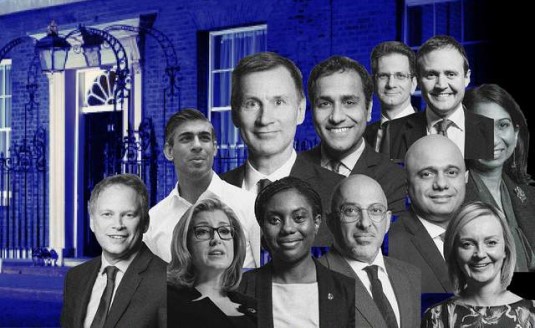
Explaining the Tory Leadership Race

What are people expecting from the Tory leadership contest? I ask because there's some genuine befuddlement among media circles and the ivory towers of the politics professoriat. They look at the dozen names that have put themselves forward and see a shared tranche of priorities that aren't really anyone's priorities. Nearly all candidates are talking about mega tax cuts, with some bandying about promises equivalent to the annual spend of the NHS. We see plenty of posturing about the EU and the European Court of Human Rights. There are attacks on trans people from all candidates, save Tom Tugendhat and Grant Shapps (pronouns they/them), and the thin Tory commitment to net zero is also in their sights. Where do you suppose these sit in the issues most "normal people" care about? Looking at data from a fortnight ago, the economy (i.e. the cost of living crisis) is top. This is followed by health, immigration, and the environment. Tax is only a pressing issue for 15% of people, and the war on woke doesn't even feature. Why are leading Tory figures so at odds with the country?

There are conjunctural explanations, and there are structural explanations. Both of which are true. The first is obvious: the candidates are pitching to their electorate. These are colleagues of the Parliamentary Conservative Party and the membership - whose size we will find out very soon. Both audiences incentivise performative right wingery, because this more or less reflects their prejudices and outlooks. During the agonies prior to the election, Boris Johnson saw off what was left of organised liberal Toryism through splits, expulsions, and resignations. In their place the party scoured the barrel to find any nodding donkey who'd sign up to the Brexit deal. Many of these turned out to be utter dross, (sex offenders, anyone?), but the party was desperate and so CVs weren't vetted too closely. And as the party had turned decidedly right in the wake of the referendum, we got perhaps the most right wing parliamentary party in Tory history. This in mind, how might you pitch your tent if you are someone like Jeremy Hunt who campaigned for remain and has cultivated an undeserved 'sensible person' image during the last three years? By promising to rip up the Northern Ireland Protocol, deporting refugees to Rwanda, and appointing the always-awful Esther McVey as deputy Prime Minister.

Closely related to this are ambitions that fall short of leadership. Do the likes of Shapps, Suella Braverman, Kemi Badenoch, and Reham Chisti (who?) stand a chance? I doubt it, but for them it's about carving bigger roles out or preserving their status as a big beast in the Tory jungle. Shapps, for instance, despite forswearing the bigoted anti-trans obsessions of fellow MPs has made much play of his desire to crush the RMT. Perhaps he'll be given a free hand under whoever takes Number 10.

The membership are little better. Already ageing and politically out-of-touch before the EU referendum, the polarisation of the Brexit years has chased off all but the true believers and determined politics climbers. If the Tories' disproportionate support among the old and retired make them less representative of the country as a whole than Labour, the party membership is at an even greater remove than the average person strolling down the street. With The Mail, Express, and The Sun their windows on the world is it really much of a shocker that the Tory hopefuls are appealing almost entirely within this twisted imaginary? No. Political science isn't rocket science, and this much should be obvious for anyone making a professional career out of studying politics.

And then there are the structural issues which, for analytical clarity, can be subdivided in two. The first of these is denialism. A small part of Johnson's success was his astute reading of what Brexit meant for many of its supporters. It was a protest against a country that, they believed, was going to the dogs. By electing someone who could knock heads together, a Britain they felt more secure in was possible. I.e. One that was whiter, more monolingual and monocultural, but where one could feel safe knowing Britain was secure as an independent and unique nation. For Johnson, this also meant a (weak) modernisation project to spruce up the neglected, deindustrialised corners of the country. He failed thanks to the tensions within the Tory coalition, not least thanks to the propertied interests of major Tory donors. And so prevarication, dithering, and stagnation has been the hallmark of this government. The problems we have now - the profit-price spiral (sure to be exacerbated by candidates' desires to cut corporation tax), galloping energy and food costs, the stubborn refusal of Covid to go away, the lack of progress on climate change, and the suffusion of Tory politics by sleaze to an extent that makes the 1990s look squeaky clean, these aren't just Johnson's responsibility. They're the fault of each and every member of his cabinet and all Tory MPs, none of whom have lifted a finger to challenge this state of affairs. Therefore the chase for tax cuts is displacement activity, of casting around for issues save the real problems facing the country. Problems they are on the hook for.

The second is the Tories as a class party. As an institution, the Tories condense and articulate the interests of capital. Not evenly and often not directly, but over the course of its history the Tories have prosecuted the bourgeois interest by maintaining the state. After 1979, this has taken a more authoritarian direction. Its class character has become more obvious as coercion was deployed against the labour movement and working class communities, particularly those in which minority ethnicities are concentrated. The Tories also pioneered a labyrinthine system of economic and social governance that undermines collective resistance by making it more difficult to imagine in the first place. And they have used legislation to shackle trade unions, criminalise protest, and reduce sections of our class to destitution through punitive welfare settlements. Their jobs is to keep wage labour - us - passive, quiescent, and compliant. Each of the candidates have to show the Tory base that matters - big capital - that they're a safe pair of hands where the management of labour is concerned. Braverman talks up social security "as a choice" made by the indolent, with the logic being that if claiming is tough people are more likely to accept the abundance of minimum wage jobs on offer, undermining the (potentially strong) bargaining power of labour as a whole. Likewise the obsession with tax cuts isn't just so bosses can pocket more cash. Paying for it requires an offensive against public sector workers, the strongest remaining bastion of mass trade unionism in this country. The Tories get to see off a potential threat, hundreds of thousands flood the dole queues, and the availability of labour undercuts wage claims. Of course, the possibility of pulling this off is a different proposition - but making the tax pledge tells of their readiness to discipline the workers at capital's behest.

However, what both sets of considerations, the conjunctural and the structural, show is little awareness of the creeping crisis of decline gnawing at the Tories. None of the candidates seem aware there's even a problem. By ignoring the British people's priorities so publicly now, they're hardly endearing themselves. There are no appetites for more cuts. The national debt ballooning off the backs of Covid and Brexit mismanagement is not matched for a popular enthusiasm for Dave/Osborne-style austerity. And the benefits most working age people get from pennies in the pound tax cuts are quite marginal and barely scratch the dents inflation is making on the standard of living. In other words, even the 'mass' part of the candidates' programmes for capital tickle the peccadilloes of a distinct minority only. And so the crisis of Tory political reproduction continues apace. Older people pass away, and their voters are not being replaced like for like among the under 50s - and aren't likely to when it's their turn to retire. Whichever horror wins the Tory pageant is surely going to spend the next couple of years inflicting misery, driving public services into the ground, and make the lot of our people worse. But as they do so, they're making their own collapse more rapid and more complete.

Image Credit

Sunday, 15 May 2022

The Tory Politics of the Civil Service Cull

Friday's BBC Breakfast's had Jacob Rees-Mogg on to explain why the government plans to axe 91,000 civil servant jobs. In an arrogance that typifies his entitled ignorance, he batted away questions about workloads and existing delays in discharging services by suggesting "technology" could be brought in to ease the burden and allow for a clear out. To try and downplay its significance, Rees-Mogg suggested we would only be returning to the civil service staffing levels of 2016 and implying that the bureaucracy has got overweening, wasteful and burdensome since. What he failed to mention was how this low point resulted from the gutting of the civil service by five solid years of cuts. This programme, loudly backed by Boris Johnson, would return the state's capacity to a low point of historical weakness.

Why are the Tories keen to do this? Rees-Mogg said the highest calling of a politician is to reduce the taxpayers' burden by ensuring money is spent wisely and efficiently. This, as we know, is premised on a political fiction - the UK state isn't dependent on the tax returns Rees-Mogg's hedge fund does so much to dodge, but that's by-the-by. However, as rationales go this argument is a pretty thin one. It might have stood up in the Thatcher years, and even during the deficit panic the Tories cultivated after the stock market crash, but in 2022 when the government have let billions slide in fraud and, it turns out, helped bung "taxpayers' money" to the failing Tory press? It leaves their we're-careful-with-your-money shtick wide open to attack. This dawned on the Tories as the day wore on, and by lunch time we'd gone from "efficiency" to "saving money to tackle the cost of living crisis". If in doubt, pull on the divide-and-rule lever.

Like most things Tory, the consequences for themselves haven't been thought through. If we are to take their levelling up rhetoric seriously and not with a pinch of salt, then Rees-Mogg's plans don't match up with what Michael Gove and, for that matter, Johnson are supposed to be working on. Central to their rebalancing strategy is moving civil service jobs out of Whitehall and distributing them around the country. In a back-handed acknowledgement of Keynesian multipliers, these jobs would redirect wage and salary spend away from the capital, rejuvenate battered local economies, and provide graduate opportunities outside London and the big cities. Cutting 20% of the civil service workforce somewhat undermines this ambition. But then what does Rees-Mogg, the beneficiary of a lifetime of indolence, know about practicalities? And there are the political consequences too. One can't imagine there are too many Tory-voting civil servants left, but attacking such a huge workforce with its families and dependents isn't smart electoral politics when the ageing Tory base are shrinking and swaying, and the parliamentary party are in a restive mood.

How to go about explaining this self-destructive policy stance? Just because, from our perspective, this appears to be an unforced error doesn't mean Tories see it in the same way. For Rees-Mogg, there are two considerations for pushing this. It raises his own profile as an "effective" minister among the party rank-and-file. If he's able to deliver the cuts, and after all it's much easier to destroy than build something, his future chances of the party leadership or a guarantee of senior posts after Johnson has gone are greater. Second, there's the comfort zone of substitutionist activity. As Brexit has netted no tangible benefits while blighting exports and living standards, rather than have to deal with the mess he campaigned for his pivoting to mass sackings is easier and consistent with his world view. For his pains, or rather the pains of tens of thousands of people due to lose their livelihoods, he'll bask in Tory praise for "tackling waste" which reinforces the first consideration. And no doubt spun as a front in their dreadful war on woke nonsense, it might help cohere some of the more backward sections of their base - but it's sure to put many more off.

This, however, is not enough when it comes to getting to the bottom of Rees-Mogg's cuts obsession and it cannot be separated from a longer-term Tory project aimed at reducing, for want of a better phrase, the state's social capacities. The Tory/LibDem coalition carried through a "classical" programme of austerity by slicing services to the bone and further consolidating neoliberal governance, but since the outbreak of Covid the Tories have shifted gear to something else: the dampening down of demands on government and state to try and shrink the popular political imaginary. What does this mean?

The consequences of Corbynism and the pandemic shifted the boundaries of politics - Corbynism broke decisively with the penny-pinching market fundamentalism of the Dave/Osborne years, and the Tories were forced to adapt to it. Theresa May's one nation rhetoric didn't form in a vacuum. Johnson co-opted this when he ousted May and, again rhetorically, married it to his Get Brexit Done programme to win over those Labour-leaning leave voters who weren't keen on Corbyn, and on Labour's second referendum pledge even less. Thus levelling up was born in the context of raised expectations. Then the pandemic hit and, in what you might describe as a smash and grab, after defeating Labour they adopted Corbyn's pandemic plan. All of a sudden the state had underwritten the wages of millions of people and were keeping business on life support. Since that very moment, the Tories have worked not just to depoliticise their responsibility for the horrors of the crisis, but slam shut the Overton window opened by the post-referendum and pandemic moments.

The Tories went about this by reimposing conditionalities on social security as soon as they were able. Homelessness, which was solved at a stroke, was allowed to return. Furlough was pared back, and significant holes in business support persisted throughout the moments of acute crisis. They stubbornly resisted extending the scope of free school meals during school holidays, progressively eased Covid precautions according to their political, not clinical, timetable. Have not stumped up anywhere near the promised funds for regenerating the English regions, and done nothing to ease the cost of living crisis - apart from a council tax rebate and compulsory loan that won't cover half of the fuel bill rises. The cumulative effect of all this, and an increasingly dominant trend in Tory statecraft, is of active abstentionism and abrogation of governmental responsibility. Rishi Sunak's refusal to do anything to address the crisis, typified by his absurd "computer says no" argument is consistent with their don't-expect-us-to-do-anything-about-it. And this is where Rees-Mogg's civil service plan fits in. It is a prospectus for degrading the state, and so if it can't do anything simple, like processing passport applications, enforcing food and environmental standards, or can't guarantee the receipt of social security support on time, the thinking is the public are more likely to blame state inefficiency than Tory malfeasance for its decrepitude and not expect future governments to do anything. Which, for the Tories, minimises the scope of political responsibility and accountability, and allows for more showboating, frivolous initiatives, and policy that reinforces the interests the party articulates and promotes.

During his rounds of interviews, Rees-Mogg argued his war on the civil service was not a return to austerity. This is certainly a factually accurate statement, and one the left and labour movement should take on board. It's worse than that.

Image Credit

Wednesday, 27 April 2022

Hungarian Capitalism Under Orban

Listen to Alex's discussion with Dorit Geva about Viktor Orban's election victory in Hungary, how he pulled it off, and how his "post-neoliberalism" is a selective recombination of neoliberal policy and governance with "national" capitalism and state authoritarianism.


Image Credit

Thursday, 3 February 2022

Why is Sunak's Energy Support So Stingy?

Topping out another disastrous day for the government, this evening four of Johnson's top aides quit/were fired. Depending on if you believe increasingly desperate Tory MPs or not. But while the chatter exciting Westminster's chatterati will last all the way to tomorrow lunch time, Rishi Sunak's half-arsed measures to deal with soaring energy bills matters most. With the energy price cap soaring to just under two grand a year and the typical bill putting on an extra £700, this is one cost of living crisis the Tories have to pretend to do something about. What costs you could cost them.

At the centre of Super Sunak's rescue plan is an automatic £150 rebate for Council Tax payers across bands A to D, with a £144m discretionary payment fund doled out to local authorities to cover anyone in band E and/or are particularly in need of support. This rebate will be resourced via government grants, though Sunak did not say if it would cover all or some of the rebate burden. The Tories have form on this, like the time when council tax and housing benefit were devolved to local authorities while cutting a fifth from these budgets. Or perhaps they'll expect councils to eat up the cost now and the grant will come later. Again, entirely the Tory thing to do. Aside aside, Sunak announced an interest-free loan scheme of £200 off energy bills to be paid back in five £40 installments . What people are supposed to do if neither goes far enough, Sunak neglected to say. Then again, while Rachel Reeves criticised the fare offered in the Commons Thursday morning, Labour's proposed VAT cut to bills is similarly weak sauce. The problem is structural: energy production is essential infrastructure that remains in private hands, and is heavily dependent on fossil fuels. Effective action requires the socialisation of energy and a swift transition to carbon neutral renewables. Labour aren't interested, of course, and the very notion of radical but necessary would bring the Tories out in a rash.

This begs the question. Why is Sunak's remedial help so meagre? Again, it's not about personal failings (apart from a personal commitment to the narrow politics of privilege) but the politics of the Tory coalition. There's a tiny bit of the ever-reliable divide and rule in Sunak's announcement. 80% of households are getting a tokenistic handout, but more is available for the needy. A set up tailor-made for tabloid exposes and Channel 5 programmes on feckless claimants who use social security money to heat their outdoor pools.

The addition of the loan is slightly more interesting, and there are three ways of thinking about it. With inflation soaring, the tried and trusted Thatcherite measure for combatting it is restricting the money supply. I.e. Pushing down wages. The energy bill loan, goes the thinking, takes the edge off the April price shock and becomes repayable in 2023 when, presumably, things have settled down a bit. The loan means money will be put aside to pay for it and therefore, they hope, won't have inflationary consequences. The second are the disciplinary consequences of debt. It has proven itself an effective method of population management and political pacification by individuating obligation and, from the Tory point of view, inculcating the "virtues" of thrift and living within one's means. If people can't pay back the debt being foisted on us, then that's their fault for not being responsible. Finally, throughout the pandemic the strategy the Tories have been united behind is not to offer too much. Sunak wants to wind the clock back and get politics into a position where there are no expectations on the state at all. This puts the horrors of socialism back into its box, dissolves all thought of a better future in non-neoliberal terms, and the asset economy the Tories depend on can chug along without challenge. At least, that's what they think.

Not that you would get any of this from reading mainstream political comment or the criticisms ventured by opposition politicians. It's all clueless, incompetent, nasty Tories. No scintilla of awareness of their relationship to class and political economy. Nor, most damning of all, any curiosity about why they are what they are either. Unless there is a popular backlash and Sunak's ratings take a tumble independently of the muck Boris Johnson is covering the Tories with, the chancellor will get away with it.

Image Credit

Thursday, 27 January 2022

The Tory Culture War on Universities

The Tories are in crisis, but the wheel of vindictive government still turns. Announced at the end of last week, Universities minister Michelle Donelan outlined their latest attack on higher education provision. Branded as a common sense concern with "value for money", what Donelan is proposing is the restructuring of the university sector by the back door using the tried and trusted anonymity of metrics to do the job.

Launching her broadside against "mickey mouse degrees", she argues their proliferation - backed by zero evidence, of course - threatens to undermine the social mobility advances made during the Conservative government. This "progress", according to their own figures, includes half a million more children in poverty since 2012, people from privileged backgrounds being 60% more likely to get a professional job than those who are not, and in 2019 those from working class backgrounds who made it into the professions earned on average £6k/year less than their counterparts. While this is true, Donelan argues there are 25 universities from which fewer than half graduate to professional occupations or what we call "graduate destinations", implying it's HE institutions rather than Tory policy that's responsible for this state of affairs.

Having introduced new targets for apprenticeships and technical courses, Donelan is keen to bring forward a "quality assurance plan". Alongside the recently rested Teaching Excellence Framework, 75% of students will now be expected to finish their degree and programmes will be judged against a 60% benchmark for graduate destinations. Any course that does not meet these requirements will have to carry a 'requires improvement' badge, letting students know a course is inadequate. There has also been chatter on the HE grapevine that this system could be backed by fines for persistent offenders.

From the view of the lobotomised taxpayer, it seems reasonable. Money won't be wasted on unnecessary degrees, students will move to courses with greater remuneration opportunities, and lecturers are going to have buck their ideas up instead of wasting time pushing woke nonsense and trying to shut down free speech. A measure, in other words, designed to play well to the Tory base - a technocratic fix fully in line with culture war objectives.

The outcomes of this would be manifestly unfair and utterly absurd. In the first place, one look at our Oxbridge-dominated media and political elites is enough to show anyone that universities do not exist on a level playing field. They are stratified by class, by prestige, and by the extent institutions can lever their reputation to bring in research monies. Oxbridge for example are directly subsidised by the government to the tune of billions through such grants, whereas provincial universities are lucky to get a couple of million quid. And then there is geography. Universities in the Midlands and the North have a tougher time of it graduate destination-wise because London retains the lion's share of the top jobs. Indeed, it was this realisation that scuppered previous plans to introduce a scheme like Donelan's. And this is where the government is responsible. Two years into his miserable premiership, Boris Johnson's promises to fix infrastructure and rebalance the economy have proven not to be worth the tissue-thin manifesto it was printed in. Universities and the careers of hundreds of academics and thousands of support staff will carry the can of their failure.

This is how it will work. High drop out rate? Sub-par graduate outcomes? Said courses are slapped with Donelan's remedial notice, and future students will steer clear. The consequence will be a further contraction of arts provision, something the Tories don't have time for anyway, and less time for critical research as humanities and social sciences departments invest their time chasing the metrics. To survive, some institutions will effectively redefine themselves as technical institutes (polytechnics, anyone?) and compete directly with the FE sector for recruits. Courses and jobs will disappear, and perhaps entire universities - with appalling consequences for local economies. But the end result, the Tories wager, is a rebalanced system. Technical and vocational education for the many, and the humanities, arts, and social sciences an elite preserve offered by a smaller layer of institutions. An attempt to wind the clock back to before 1992, but with less choice.

This offers up three obvious difficulties. For one, it spells the end of many prospective mature students, particularly those who have or are near to retirement. We're going to see universities actively discourage people from entering HE later in life simply because "graduate outcomes" defined in narrow terms make them a risky proposition. Every older student makes hitting that 60% target that bit more difficult, hence tens of thousands will find their entry into the university system barred. It also raises problems around international students too. Traditionally money spinners for British institutions thanks to the premium fees they get away with charging, tracking graduate destinations becomes more difficult the more a university depends on students from overseas. With some courses having dozens of entrants from dozens of countries, a question mark hangs over how everyone is to be tracked. Therefore some programmes, even at Russell Group institutions, might fall foul of the graduate benchmark simply because adequate returns can't be filed. This says nothing of the amount of resources sunk into this exercise better spent elsewhere. And lastly, it creates an incentive for universities to manufacture graduate outcomes of their own, particularly in areas far from the cities of metropolitan opportunity. There would be more pressure on recruitment from their graduate body, perhaps even rebranding admin roles as requiring a degree. More significantly universities would have an incentive to expand postgrad provision with a range of discounts and postgrad certificates. Certain elite institutions already game the metrics by handing out Masters awards as a matter of course because they deem their undergrad provision exacting enough.

The
actualité won't trouble the Tories, it never does. Attacking universities fulfils a dual political function for them. It gives the government space to carry on pushing the war on woke rubbish. Divide and rule by another name, in other words. But it also takes aim at a key oppositional grouping - academics. The Tories are against academia not just because the Conservative Party is the stupid party, but because of what it represents. For one, in the right wing imaginary universities are the source of social liberalism that's undercutting conservatism across the Western world. Getting shot of what we might loosely call the liberal arts by shuttering courses and replacing them with vocational and technical programmes might set back the rise of this culture and perhaps send it into reverse. It won't, by the way. The second is directly related to the authoritarian core of the Tory project. From Thatcher onwards, successive Tory and Labour governments have centralised authority in the executive and, particularly, the office of the Prime Minister. Between 1979 and 1997, this meant not just a war on the labour movement, but on the relative autonomy and authority enjoyed by the constellation of the state's institutions. This, which took place under the rubric of Thatcher's war on expertise (which finds its cultural echoes today in Tory anti-maskers and anti-vax idiocy) saw the government exercise its direct authority over different state functions, with internal markets and target cultures designed to police and discipline institutions. Professional knowledge and expertise were secondary to the application of political technologies, effectively proletarianising these occupations and gutting them of the capacity to challenge the government's authority. Academia with its knowledge and, at its best, informed critique of policy and governance is one such potentially autonomous point of authority to bring under the market cosh.

That the Tories prefer to discipline state institutions this way shows there's nothing neutral or technical about the metrics they introduce. The likes of Donelan talk about value for money because they know a direct political attack on occupational groups they want to bring to heel is more likely to elicit public sympathy than an apparent technical tweak to how higher education is regulated. Let there be no doubt that their seemingly innocuous measure is designed to reshape the entirety of the university system over a relatively short space of time. The result will be a more elitist system, job losses, closures, and a restriction of opportunity.

Image Credit

Wednesday, 5 January 2022

Scapegoating the Unvaccinated

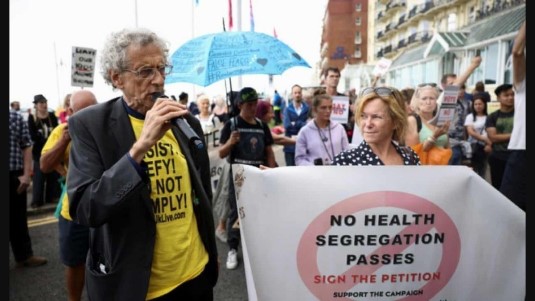
Unless they have dispensations for medical reasons, Tony Blair thinks they're idiots. Emmanuel Macron wants to "piss them off" and carry on doing so until the pandemic ends. And Boris Johnson mumbled something uncomprehendingly negative about them at Tuesday's Covid press conference. At home and overseas, we're seeing hints of a new biopolitical strategy: making the unvaccinated scapegoats for our present difficulties. And from the standpoint of our Tory government, it's the logical culmination of the politics of the pandemic they've peddled for two years.

As recently argued, prioritising public health sits in tension with received statecraft and governance that has prevailed these last 40 years. The messaging pushed by medicine and heeded by millions of people was to act as if they themselves were infected. I protect you and you protect me. If everyone acted in the same way, then transmission would not happen as easily. To put it another way, conduct was to be other-focused as opposed to self-interested. And this advice undoubtedly prevented hundreds of thousands of infections from taking place, and with it tens of thousands of cases of serious illness and death. But we can't well have a germ of solidaristic behaviour taking root, no matter how many times the Tories and their press helpers heralded the Blitz spirit.

I don't intend to go through everything the Tories have done since, except to note they have struggled (and largely succeeded) in reversing the axis of public health messaging. As time went on restrictions were portrayed as overly burdensome, even if they were something as simple as wearing a mask. Freedom days came and went, the middle class were encouraged to eat out, plans were afoot to enforce a mass return to work ... and then another two lockdowns, more restrictions, and then none again. Refusing to fix the roof when the sun was shining, to borrow a favourite phrase of a former Tory PM, the much-hyped freedoms were merely moments in which the virus could circulate at lower rates while the Tories didn't do anything to prepare for a winter wave nor a more infectious variant. Amid the incoherence and the refusal to intervene until it was too late, public health became more a matter of personal responsibility. Which suits the Tories down to the ground. Catching Covid wasn't their fault - contracting it is either hard luck or not taking the necessary precautions. You are the master of your own health, again.

Summer 2020 was when we saw a first overt push using public health as a new tool of divide and rule. Suddenly the press were awash with stories about young people having parties in contravention of the rules, and raves taking place deep in the woods that were a bit laissez-faire on social distancing. Less hands, face, space, more Everybody In The Place.. The broadcast news showed heat vision police footage to whip up concern. The yoof, always a potentially dangerous cast of characters in the right wing imaginary, were now responsible for keeping Covid going because they were flouting the regs. The numbers appeared to show it - infections among the youngest adult age brackets showed stubbornly higher rates than the general population. What didn't receive attention was the real reason why the young were disproportionately affected: because many of them had returned to work in hospitality and were therefore getting it and transmitting it in the workplace. It wasn't parties but the monomaniacal Tory obsession with forcing people back into work. Johnson, Sunak and co were Covid's useful idiots, not young people themselves. This angle of Covid scapegoating did not last long: it was hard to maintain the pretence when children were drummed back to school and further and higher education reopened, handily helping distribute the disease.

Now, time is increasingly ripe for another round of scapegoating. With the Tories on the ropes and Johnson's authority imperilled, if not now, when? The ground appears fertile for such a strategy. Early last month, YouGov found clear majorities among all age groups and political persuasions for bans on the unvaccinated going into "non-essential" shops and attending indoor events. Already, there is an identifiable 'out' population who, thanks to media coverage, are associated with the fringe idiocy of the anti-vax/Covid-denialist movement. If they're targeted, it's not terribly likely the wider population would listen to their concerns with a sympathetic ear. Second, with all the information available and demonstrable lower risk of illness from the vaccine than catching Covid, refusing the jabs marks one out as selfish and uninterested in keeping others safe. They've turned their nose up at the collective sacrifice made and seem to think being potential bed blockers in our overstretched hospitals won't happen to them. As crass as Macron's comments were, there are plenty on these shores who would lap them up. One should never underestimate the collective desire to give unworthy others a bit of a slap.

We should not forget about the politics of this, though. If the Tories go down this road it's not because they want to see people fit and healthy. Their seeming indifference/herd immunity approach to letting Omicron tear through schools and workplaces should put that notion to bed. Using the unvaccinated as scapegoats gets them off the hook. The lack of business support, pitiful sick pay, no meaningful health measures except for wearing a mask, the cavalcade of failures, their prioritising of their class interests can be memory holed and depoliticised if our prolonged health crisis is pinned on Piers Corbyn and his ilk. The Tories are past masters at the politics of divide and rule. Keep an eye out for it.

Image Credit

Tuesday, 28 December 2021

Critiquing the Anti-Lockdown Left

We've dealt with the grifters. The Tory-friends-of-Covid were looked at. But there's another group that have set their face against pandemic precautions, particularly social distancing, restrictions on movement, closures of services and amenities - particularly hospitality - and quarantine measures. People who, politically speaking, are otherwise sound. For ease of short hand, I'm referring to the anti-lockdown left. This group of comrades, which tend to be London-based, very online, but, politically speaking, otherwise heterodox are critical of Covid precautions that require more than mask wearing. That vaccines are rolling out and large numbers are triple jabbed renders curbs on social mixing obsolete. Not ones to cheer on Boris Johnson, undoubtedly his decision to avoid reimposing new requirements ahead of New Year's Eve was welcome to them.

Different comrades emphasise different points. For some, young people welcoming in 2022 are probably going to be taking greater risks than contracting Covid. Others suggest calling for more precautions is indicative of middle class privilege, as the expectation is still on working class people to bring them their supermarket deliveries and Amazon orders. Meanwhile, independent SAGE - who've done a pretty good job of pushing the science around Covid and the measures required to curb it - is elided with an ideological state apparatus suggesting its "function" is social control. Others criticised the Tories bringing in travel bans and red listing. We've seen comrades claiming that high transmission rates don't matter. Others have bristled at Covid-inspired inroads into civil liberties, while praising successful containment strategies in "socialist" countries like China, Vietnam, and Cuba - policies much more restrictive than anything seen in the UK. And the comrades over at The Popular Pod have just released a series looking specifically at the harms of lockdowns.

What follows is not about point scoring or narcissistic posturing, but trying to come to grips with a trend on the left, its roots, trajectory, and political fall out. As such, it's neither total nor complete nor comprehensive. It sets out not to denounce and attack but persuade.

Let there not be any doubt, after almost two years the use of lockdowns and travel restrictions are a policy failure. The Tories have had ample opportunity to enforce mask mandates to stymie the spread of infection. They could have installed air purifiers in schools and clinical settings, made grants (or, knowing Sunak, loans) for businesses and public sector agencies to install filtration systems in their buildings. Manufacturing capacity could have been expanded to make FFP2 and FFP3 masks and distributed for free. The Tories could have introduced better sick pay, so workers didn't have to choose between their incomes and their health. Instead, their class politics were (and still are) in the driving seat. Johnson's might be an authoritarian project, but his Covid management has been a stop-start cycle of freedoms and restrictions, making future reasonable precautions against surging infections politically and socially difficult to implement. Unfortunately, what has been largely absent is a class analysis on the part of the left, despite providing many of the key policies the Tories co-opted into their pandemic governance. Keir Starmer has proven dreadful and failed to rise to the occasion, whereas other MPs have made the right calls on sick pay, furlough, and Universal Credit this was not incorporated into a joined up analysis that makes sense of where the Tories have crashed and burned, but have also, almost surreptitiously, succeeded.

The beginning of the Coronavirus crisis in March 2020 threatened to open politics up. Under Johnson and before him, Theresa May, the Tories were moving away from the austerity economics the government had pushed the previous half-decade. The massive stimulus such as the job retention scheme, the grants and the loans, and the uprating of social security reminded us that British capitalism is underwritten by the state. For a brief period Sunak superficially had more in common with Gosplan bureaucrats than his pantheon of free market saints. What was particularly worrisome from the standpoint of Tory economics was the challenge Covid posed governance. To put it plainly, the project of different governments has been the naturalisation of the entrepreneurial outlook so it is spontaneous and unquestioning. This cultivation was and is conscious and fully intended by policy makers, even if it was badged as "consumer choice" or "driving up standards". It's now the case practically all public institutions relate to us as bearers of this neoliberal subjectivity, and are in turn governed by metrics that more or less stand in for customer satisfaction. The advantage of promoting these modes of governance in the state's institutions, according to John Major who enthusiastically restructured the civil service along these lines, was that employees, service users, and the agencies themselves would autonomously and more efficiently deliver their "products" than administrative instruction. For all the trumpeting of levelling up and the tacit acknowledgement of market failure, Johnson's "modernisation" is premised upon leaving these strategies of governance intact. And why not? It individuates and atomises, encourages people to look to their own economic, cultural, and social capital, and failure, however that is defined, is a matter of bad luck or insufficient effort or ability. It inculcates an outlook that treats capitalism as the inescapable and normative horizon of social life.

Public health strategies for mitigating Covid cut against these neoliberal logics. The move to homeworking on the part of millions of workers, and the abeyance of work for the furloughed caused sleepless nights on the Tory benches. Management surveillance of performance was always the reality of the self-activating, entrepreneurial worker - hence the government's oft-noted keenness to get workers back at work. But on the more subtle level, Covid mitigation reorients the axis of responsibility. Early in the pandemic, it became common knowledge that masking up wasn't fantastic for preventing one from contracting the virus, but what it did do was prevent the spread of infected droplets. In other words, instead of the onus being on protecting oneself from infection we had a duty to protect others, especially given the prevalence of asymptomatic spread. All of a sudden, the responsible citizen in the age of Covid went from the self-interested and self-regarding individual to being a potential vector in a web of contagion. Our actions were not about risks to ourselves, but risk to others. I was responsible for the health of acquaintances, colleagues, friends, family, etc. and they were responsible for my continued good health too. Covid communitarianism meant those who were clinically vulnerable and/or could not have the vaccine for whatever reason were acknowledged, and that the public health of the group was the guarantee for the public health of the individual.

It's not difficult to see how a solidaristic Covid citizenship poses neoliberal governance and with it the class relations they support a danger. You can have a serious pandemic strategy that puts saving lives first, or a haphazard approach that buttresses the wage relation, rentier and debt relationships, and social security conditionality. Far from being the dictatorial overlords of a NHS-state with Tory characteristics, Johnson's government have gone out of their way to undermine lockdowns and any other mitigation measures. The Autumn and Winter 2020-21 lockdowns were nowhere near as stringent as the first, and the progressive relaxing of precautions, culminating in July's absurd "Freedom Day" and the end of furlough and the UC uplift, progressively shifted the pendulum away from communitarianism. Covid was now a matter of individual self-responsibility, and contracting it was a case of rotten luck or risky behaviour. Why else resist even the most elementary of precautions, namely masking up on public transport, shops, and indoor communal areas? It had nothing to do with loving freedom and liberty, and everything to do with resetting the governance underpinning class relations after the pandemic's initial shock.

The problem with the anti-lockdown left's "critique" of Covid precautions is its fidelity to the state's effort at returning things back to normal. Recommending comrades look to their own individual risk profiles is the advice Johnson, Javid, and the grim coterie of Tory backbenchers are proffering. They make exactly the same arguments about young people having their youth robbed from them, their new-found concern for mental health if people can't socialise, and the tough time businesses and workers in hospitality are facing. Albeit with an anti-authoritarian sheen.

This is not working class politics. Building anti-capitalist capacities is a collective enterprise. It requires the construction of new institutions, new political collectives, rebuilding and strengthening workplace organisation, popular cultures of resistance, and encouraging newly emergent movements. These overlapping efforts and projects can only head in the same direction if there is not just a theoretical appreciation of the solidarity necessary to hold them together, but a substantive politics that encourages it. It's perhaps unsurprising those bits of the left closest to and embedded in the labour movement have had the best approach to Coronavirus. They have put the safety and wellbeing of our class first and raised the necessary demands.

Yet this left libertarian response is not simply a matter of comrades having the "wrong ideas". It has material roots more serious than wanting to go to the pub. Firstly, there is the universal experience of restrictions themselves. These range from inconvenience to the hellish and the tragic. People not seeing loved ones for up to two years, the corrosion of social isolation, not being there when family members and friends needed them. Saying final farewells over Zoom, and unnecessary bereavements because Covid put people off attending medical appointments. A great well of sadness, regret, and bitterness has filled to overflowing for the duration of this crisis, which helps explain why the anger over the Tory Christmas parties is so volcanic. Who cannot empathise with the desire to be free of Covid restrictions, particularly when some of the comrades making the libertarian argument have badly suffered? The second is thanks to the class location of most young people. Disproportionately working in hospitality and retail, and with Sunak's studied refusal to directly support workers in these depressed sectors, restriction-scepticism is straightforwardly the spontaneous reaction to livelihoods under threat from a virus that isn't terribly likely to do them serious harm. It has internalised and fatally resigned itself to no government help, which merely reinforces the scepticism. Surely it's no accident a number of comrades who have made this case now find themselves left media entrepreneurs of some description, and so are subject to similar levels of precarity. The left libertarian critique articulates these sentiments, even if it's not making the relationship between the political position and their class basis explicit.

Covid is going to be with us for a long time and we have to learn about how to cope with it. The question is how we live these lives. Do we tail the government and, despite ourselves, assist them in bedding down their post-pandemic settlement - which looks a hell of a lot like the pre-pandemic settlement? Or do we try something different and proceed from our class analysis of the situation?

Image Credit