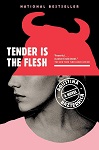
Tender is the Flesh by Agustina Bazterrica. A contender for the best novel I read this year, as I said at the time. A mash up of Upton Sinclair's The Jungle and Neil Barrett Jr's barely-remembered Through Darkest America, Bazterrica has confected a sparingly written and brutal meditation on the ultimate society of excess. When the animals are dead, why not put specially-bred human beings on the menu? Hugely hyped at the time of its translation, this is a rare work that justified all of it. The subtlety with which Bazterrica paints her horrific dystopia is a lesson more science fiction authors would do well to learn. And the story itself, with its utterly unsparing ending, is among the most impactful I've read in years. This comes with the strongest of recommends.
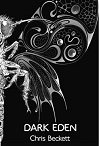
Dark Eden by Chris Beckett. This is Tender's immediate competition. It's some point in the future, and a couple of hundred humans are stranded on a sunless, wandering planet. Life is possible thanks to copious internal heating, a digestible biome, and a world lit up with bioluminescence. And our nascent society? All of them are descended from one pair of astronauts. Yuck. Yet Beckett handles the ick factor of in-breeding extremely well, and builds a believable setting of matriarchal social structures and fixed cultural symbolism coming under pressure from innovation, rebellion, and conflict. Dark can also be read as a meditation on the emergence of patriarchy and its reliance on physical violence, as well as the limited powers of tradition in dealing with disruption and social stagnation. This wouldn't be worth a hill of beans of the story wasn't any good, but Beckett provides his characters believable dilemmas and relatable motivations for doing what they do. Simply one of the best British science fiction novels of this century.
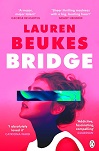
Bridge by Lauren Beukes. Another great book that got the review treatment. This is a drama of parallel worlds, a cross-reality hunt for the truth - and for new victims by a pitiless killer. The titular Bridge finds a weird stringy mass in her late mother's fridge. This is a dream worm, and eating its threads lets anyone drop into the lives of their alternate selves in other timelines. This might not sound especially original, but the doings Beukes embroils her characters in is a cut above. At the heart of Bridge is the tight rope Bridge has to walk between escaping her dissolute existence at the risk of greater disassociation and mental collapse, all the while riding a plot full of moral ambiguity and the uncertain stakes of potential catastrophe. Probably the cleverest of this year's reads.
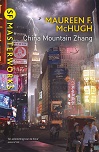
China Mountain Zhang by Maureen F McHugh. Never met anyone who doesn't like this novel, China stands out on this list - and among SF generally - because nothing really happens. It's the near future and US power has been smashed by socialist revolution. China is the dominant world power, but we're still far from the society of associated producers Marx forecast. Zhang is a half-Han labourer in New York, and he knows his ethnicity can open doors for him. But he's also gay, which is strictly illegal. How he makes his way in this world, participating in the manned kite-racing scene, dealing with an unwanted betrothal, and surviving police raids, over the span of the novel Zhang is able to modestly advance up the pecking order. We also follow San-xiang, another American-born Chinese woman who undergoes cosmetic surgery, and Martine, a goat herder on a colonised Mars. Everything seems low stakes compared to others on this list, but what McHugh brilliantly realises is a sample of the everyday life that is hardly ever treated by a genre dominated by space opera and goodies vs baddies heroics. Believe me, this is not as dull as it sounds!
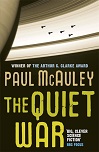
The Quiet War by Paul McAuley. Speaking of space opera, The Quiet War is spectacular. It's the near future and our colonisation efforts find most planets and moons garlanded with habitats, installations, and orbitals. This is a solar system recovering from a devastating Earth/Mars war, in which the home world emerged victorious but badly beaten. The three oligarchical big powers, Greater Brazil, the EU, and the Pacific Community variously compete for dominion and are looking for toeholds around Jupiter and Saturn. Meanwhile, the survivors of Mars migrated to these outer planets where they set up shop as Outers. Cue espionage, chases, exploding spaceships, speculative genetics, and clever plotting. Written before The Expanse, one might say some of its elements inspired what we saw later in that mammoth series. Except The Quiet War is its superior in every way - composition, character, political complexity, McAuley delivered a slice of space going SF that shows how it should be done.
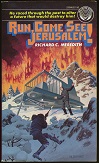
Run, Come See Jerusalem! by Richard C Meredith. The oldest book on this list and we have a time travel story. Eugene Spillman works with time, and he's just been drawn into a conspiracy - to escape into the past and change history! Oh, we do love our paradoxes. Unfortunately, the plot has been rumbled by the tyrannical regime and agents are dispatched to stop the scheme. The action moves back to prehistoric North America, and then forward again to 19th century Chicago. Stumbling into the street injured, Spillman is taken in by wealthy good samaritans and nursed back to health. He then gets caught in the Great Fire of Chicago, and perhaps - if everything has gone to plan - an uncertain future. Time travel is hard to pull off well, and Meredith does not get too bogged down with silly paradoxes. This will not (nor did it) win any literary prizes, but the characters stand up on their own, and Meredith moves and down tempo as the plot requires. What results is an unshowy but satisfying timeline tapping bop.
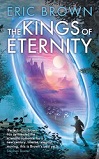
The Kings of Eternity by Eric Brown. This just edged out his pub-based SF first contact tale, Kethani, Brown's Kings deserves a much wider audience. One leg of the book is in 1999 where reclusive author Daniel Langham is enjoying the fruits of literary success. But his voluntary exile on a Greek island has attracted the attention of a journalist looking for a scoop, and isn't afraid to use blackmail to get his story. 60-odd years earlier, his grandfather Jonathan Langham - a struggling novelist - is invited with successful SF writer Edward Vaughan to an old school friend's country pile. Their friend has discovered a zone in his grounds that is periodically visited by mysterious lights. One night, after a few swigs of scotch, they go to see what's happening. In Kings, Brown managed the tricky job of pulling off a cosy work without the cringe. His skilful rendering of character and dialogue suffuses it with genuine warmth and good vibes. You really care about the characters, and it's a mark of real craft that the pulpy elements are deftly woven in and don't come across as awkward grafts. An unsung hero of British SF.
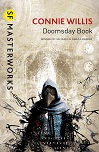
Doomsday Book by Connie Willis. A huge chonker of a novel, the first in Willis's Oxford time travel sequence also comes in two halves: the "present", which is our near future, and the 14th century. Instead of getting into the business of excavating a series of small walls, the Dons are using time travel to aid their scholarly activity. Kivrin Engle is whisked back to the Oxford of 1320 just as everything goes to pot in the present. A wave of nasty flu rips through the country, hospitalising the time travel technician and shutting the country down, while Kivrin isn't entirely sure she's at the date she should be. Sadly, the two halves vary in quality. The present is, to be honest, quite boring, forced, and unnecessary. The technician, for instance, bursts into the pub unwell and tells the project team that something has gone wrong. But decides to run off before giving them specifics. He's then in and out of consciousness before finally letting them know what's happened. Oh dear. But where Doomsday shoots into the stratosphere is in the medieval narrative. The detail, the relationships, the bleakness and despair, it's impeccable. This works despite the so-so time travel stuff, and this half of the book alone is way above most of the things I've read this year.
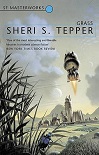
Grass by Sheri S Tepper. The galaxy is in the grip of a plague. There's no known cure, but there's one curious fact. The people living on the world of Grass have not contracted it. The Sanctity, the church militant that rules human space send a husband-and-wife team to Grass to get to the bottom of it. They get a frosty reception from the locals and it takes a lot of coaxing to get the posh locals to admit them to society. The clans of the aristocratic ruling class organise their lives around the hunt. They ride the native alien hippae and use native "hounds" to hunt down the cunning and mysterious foxen. But it quickly becomes apparent that something isn't quite right. Young women disappear, and the needs of the aristos to go hunting borders on the pathological. What the hell is going on? Grass surprised me with its cleverness, tight plotting, and a sense of creeping dread as the mysteries of Grass are unravelled. There is plenty about the stupidity of patriarchal gender relations and the cynical use of ideology for personal gain. Rightly celebrated.
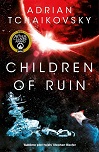
Children of Ruin by Adrian Tchaikovsky. He made the list last year with the preceding volume, so I'm here to redress an injustice. Children of Time gets loads of praise, but I would suggest Children of Ruin is its equal. The humans and the spiders have made for a good symbiotic civilisation, so why not head off into the galaxy to see if the old, wrecked empire have left other offspring of Earth around other stars? The answer is yes. This book is about sapient cephalopods and the messy, chaotic society they build. But making things complicated is that, on the next planet over, an alien intelligence is stirring. All of Tchaikovsky's strengths are on show here. Speculative sociology, his ability to construct convincing non-human characters, and a pacey story with high stakes and thrills and spills aplenty. This demonstrates, against, why he's front rank.
Those were the 10 best science fiction novels read this year. But a shout out to a few other books. 2025 has been the first year I've read as many fantasy novels since I was a keen teenaged fan of the Fighting Fantasy game book series. The clear winner in the seven or so I read was Michael Moorcock's Elric of Melnibone. The first in the rhizomatic Elric sequence, it had everything for someone coming back to genre fantasy after giving it a wide berth for many a year. Intelligent dialogue, complex relationships, cliche avoidance, just great stuff. From mainstream fiction, two novels vie with Bazterrica and Beckett for the best read of the year. There's Han Kang's 2021 novel, We Do Not Part, which was published in English this year. Haunting and beautifully written, its depiction of a snow storm is likely to leave you with frostbite. Believe the hype. And the second is much older, and that's Play It as It Lays by Joan Didion. I've always been a Bret Easton Ellis aficionado, and Play is the degree zero for Less Than Zero. A dead-inside young woman bounces through star-crossed marriages, bereavement, success, and mental collapse in a nihilistic masterpiece. Brilliant.
What have been your best reads of the year, science fiction or otherwise?

2 comments:
You only read Elric of Melniboné NOW?! I read it in the 1970s - and it has stayed with me till this day (I still have it). I concur on young Tchaikovsky, BTW: one of the best new talents in SF!
Aye. I did not touch fantasy for a very long time!
Post a Comment