
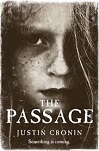
The Passage by Justin Cronin. I see this get praised a lot, and none of it is warranted. A clandestine subsection of the US government are experimenting on death row murderers and serial killers and turning them into super strength zombie/vampire monsters. Sounds like a good idea. And because of the mysterious mind powers they have, they are able to escape and more or less kill everyone. A post-apocalyptic story of survival with, of course, a special "chosen one", endless hundreds of pages are given over to cliches and characters prey to unnecessary/scarcely believable tensions that ends up imperilling them. Then there is the incredulous stupidity of the unleashed zombie/vampire virus killing everyone who lives outside of North America. A pretty dumb genuflection to US exceptionalism. If all this wasn't bad enough, the effort Cronin puts in to provide a science fictional conceit for this bloody-but-boring mess is undone by shoeing magic powers in toward the end. Terrible.
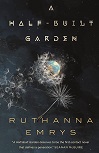
A Half-Built Garden by Ruthanna Emrys. This has such an interesting premise. It is the near future and the world is transitioning away from capitalism to some sort of eco-communism. States remain, but they're largely vestigial and ceremonial hold overs. And capitalism, as in turbo-charged faceless corporation capitalism, is confined to a few (literal) islands of influence. The main bulk of the population ignore their nonsense and live in decentralised communes organised on a geographical basis around watersheds - which makes for a thought-provoking suggestion for post-scarcity social organisation. Sadly, this is the best aspect of the novel. The appearance of cartoonish eco-conscious aliens and their organic ship that constantly shits their effluent into the Atlantic is not the ideal first contact scenario, and it doesn't get much better from there. Also, the characters always seem to be lecturing each other on pronouns, and thrown in are as many non-binary modes of address Emrys could think of. I don't want to dump too much on this book, as Emrys is attempting an empathetic SF here with genuinely different, if right-on aliens - but its earnestness does not make for a compelling story.
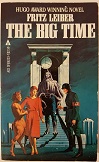
The Big Time by Fritz Leiber. Normally, it's his Hugo-winning The Wanderer that gets the brickbats. Alas, the absence of alien cat babes is this novel's only redeeming feature. Set around a temporal war where two factions battle over the course of history, Greta, a time-travel part-psychologist, part-comfort woman offers her ministrations to the troupe of soldiers that file through her end of a pocket universe. The Maintainer, a device that sustains this gap in reality, is stolen and someone threatens to set off an atomic bomb. All in a day's work for Greta! Sorry to say that if I could wind back time, I'd have spent the time reading this (mercifully) short work on another book. It's a complete mess and barely holds together. The problem is you get the sense Leiber is fizzing with ideas and wants to show off his distinction as an erudite writer, but here he lacks focus and falls short of a coherent and compelling novel. The definite tie for the worst novel to have crossed my eyeballs in 2025.
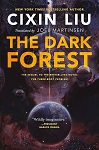
The Dark Forest by Liu Cixin. The Three-Body Problem juggernaut lands on this list. I wrote more about it earlier this month, and it gets worse the more I think about it. It's puzzling why Dark Forest makes so many best of lists. The writing is leaden, characters completely interchangeable, and human beings are by turns robotic, faddish, stupid, and hysterical. The aliens, the pulpy-sounding Trisolarians, are probably some of the worst realised in contemporary science fiction. But above all, the ideas if proffers - something which the series is often praised for - are hardly original, having been done many times before elsewhere. His "original" idea of Cosmic Sociology, a speculation about what alien societies might be like, is simply laughable and wouldn't be out of place in a collection of ravings by right-wing evolutionary psychologists. A book written to be thrown at the wall - more than once. Unfortunately, two-thirds in I'm likely to end up finishing the trilogy. So don't be surprised if Liu pops up here again this time next year.
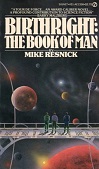
Birthright: The Book of Man by Mike Resnick. Competing hard with Leiber for the worst-book-read-this-year award, Birthright was horribly out of date when it was published in 1982. Resnick's future history tells of the rise, fall, and eventual extinction of "Man". We are "treated" to a sprinkling of vignettes throughout that history to give a sense of how humanity conquered an empire, treated its subjects, underwent democratic revolution, and then slid into oblivion. Why we did so well was because humans were more special and imaginative than the thousands of other species we discover during our galactic rampage. All humans, like all aliens, are cut from the same essentialist cloth, and we're cast as aggressively expansionist and imperialist by nature. It's exactly the same sort of species-level dopiness Liu indulgences. But if anything, this is more badly written. Supposedly a critique of colonialism, it is not nuanced enough to even gesture in that direction. Instead it comes across as a clumsy and boring celebration of dominance, militaria, and the wily application of statecraft. Just a very, very poor book that was 40 years too late.
Rants are over. What were your worst reads of the year, be they science fiction and/non-sf or even non-fiction?

3 comments:
Have you ever had a look at Carl Neville's books on Repeater? I read Eminent Domain a few years ago (it took me the whole year, the structure is a bit broken up and difficult in places), but it's an interesting, utopian take on 'Britain goes Communist'.
I have not but it sounds like something I should try!
I second the Carl Neville recommendation - a meditation on the Cold War going the other way.
Post a Comment