Friday, 16 July 2021

Final Fight for the Super Nintendo

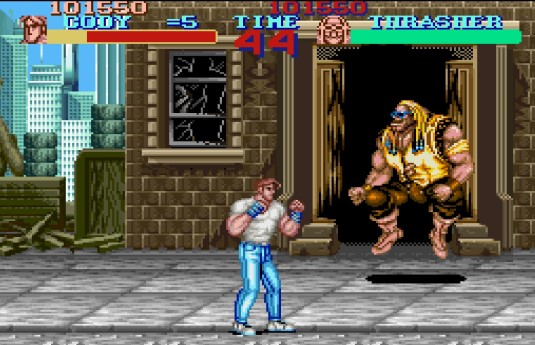
Games don't come much more manly than this. Launched by Capcom to arcades gagging for new beat 'em up action, Final Fight was a qualitative leap up the evolutionary ladder from other brawlers. Consider Double Dragon II, which was released in Japan in November 1988. And contrast with what came 13 months later. It's the difference between a King Charles Spaniel and a dire wolf. Everything was ramped up to ludicrous proportions. The sprites enlarged, the levels lengthened, proper bosses with unique attack patterns, and unlike its Double Dragon forebears the player characters had their own move set. The simple smack-everyone-into-next-week gameplay was much more kinetic and satisfying than anything before it, thanks to the great sound effects, and Capcom's tills rang to the pitter patter of tiny coins.

Everyone wanted a piece of the Final Fight action, and in the end practically every home machine got their version. Including the humble 8-bit micros. As Capcom were long-time publishers for Nintendo and had made a few bob from the relationship, the game's first home outing was scheduled for the Super Famicom - then the hottest piece of gaming kit. And ... things did not go according to plan. Eager for killer apps, Final Fight has subsequently been considered something of a let down. Capcom tried cramming as much into an eight megabit cartridge, but it meant some significant omissions were made. The two player option was out. Of the three characters, speedy and nimble Guy was left on the cutting room floor - only Cody and Mike were available. An entire level was excised, and the Japanese version saw the game suffer debilitating slowdown in places. This didn't matter, it looked damn close to the arcade in magazine screen shots. That and the generally positive reviews it got helped Nintendo shift product.

To be sure, as in home as at the arcade SNES Final Fight is hyper macho nonsense of the most ridiculous and gratuitous order. It's the 1990s so, naturally, the inner city is a no-go zone stalked by hoodlums and exploited by organised crime. This is true of "Metro City", which is controlled by the Mad Gear gang. Elected mayor on an anti-corruption ticket, the former street brawler Mike Haggard is approached with a proposition - continue turning a blind eye and his daughter, who they've kidnapped, will be safe. In the American and European version Jessica appears on his TV screen in a red dress. In Japan, to make a rape threat implication clear, she's in just a bra. Outraged Mike meets with her boyfriend Cody and off they go to do battle with all manner of street scum.

Final Fight introduced lots of basic enemy types, as well as mini bosses, requiring different tactics to deal with. The Andore types, not at all based on the image of beloved WWF wrestler Andre the Giant, would charge at your player character. But stand there jabbing away and he'll run into your fists. The same cannot be said for the Big Bull types. Fat, bald baddies, they can charge under the jabs and so require slightly different handling. Unfortunately, due to the limitations the SNES can only handle three enemies on screen, but this doesn't stop the enemies from crowding you. Here the J types, thugs with puffy jackets and mohawk hair, prove especially frustrating with a tendency to evade punches and sneak up behind while you're mixing it with their confederates. Interestingly, this is where a bit of Nintendo censorship creeps in. In the Japanese version, Poison and Roxy, scantily-clad babes in short shorts and crop tops with handcuffs dangling from their waists because reasons find themselves removed from the Western versions and replaced by Billy and Sid, a couple of punky looking chaps ... also with the handcuffs. Riddle me this. Were they taken out because Nintendo were queasy about their inclusion? Or was having our muscle-bound heroes slapped around by high-kicking women too much for an exercise if digital manliness?

Despite the limitations, SNES Final Fight isn't an easy game. Enemies are frequently cheap, and their attacks often overpowered. Ground breaking as the arcade was, the move set is too limited and frustration frequently sets in. A couple of bosses are a bit too much as well. Take Abigail, the Kiss face paint-wearing respray of the Andore sprite has a long reach preventing the kinds of tactics that saw his forebears off. He also has a penchant for throwing you in the air and knocking about three quarters of the energy bar away. Unless you're well practised and have done the hard yards to learn his patterns, the loss of lives is inevitable. Likewise the end boss, Belger, you expect him to be a bit tricksy and indeed he is. Appearing on a motorised chair holding Jessica against her will, the crossbow comes out and you're getting skewered each time you try and get up from the last shot. Getting close and quickly throwing, or spamming the piledrivers is the way to sort him out - but this can't be pulled off with impunity and getting there will also deplete the life count.

Get through all that, and with father/daughter, boyfriend/girlfriend reunited Cody gives Jessica the brush off(!) Having rescued his damsel in distress, the ending says he can't be with her for as long as evil persists in the world. A lame excuse for his desire to grapple with muscley men if you ask me. Or, if you prefer the more conventional reading, putting his duty to a version of robust city clean-up than fripperies like relationships and caring for someone else. A harsh if fitting analogy for the relationship between games, particularly at this point in time, and their end sequences - the journey, at least in good games, is much better than the prize.

Despite being toned down for the SNES, Final Fight is a good game and well worth playing, even if only for a digital retread of popular manly tropes that cycled through Hollywood in the 1980s. It's one of those games the years have treated kindly: it doesn't look objectionable by contemporary standards, and has the all-important pick-up-and-play quality. But two things I realised, not having indulged the Final Fight phenomenon first time round. The Mega/Sega CD version is much better on all counts with no missing features or levels, options, fluid animation, and more on-screen enemies. With a CD and coming out two years after the SNES version this was the minimum expectation. And second? It's proper shocking how much the Streets of Rage series on the Mega Drive was "inspired" by this game's example. The first game on the Mega Drive had puny sprites owing more to Double Dragon than the Final Fight it was supposed to be Sega's answer to. But there were better moves, an amazing sound track versus Capcom's terrible ditties, and enemies who were directly ripped off from their source material. The Signal types behaved exactly like the J types. Third level boss Abadede combined elements from Abigail, and the level two boss Katana (Sodom in Japan). And, entirely coincidently, the end of game boss Mr X shoots off his machine gun just as Belger was handy with his crossbow. Moving on to Streets of Rage II, the best 16-bit thumper ever with the banging tunes to match, the "inspiration" is blatant. It introduces themes and gameplay elements of its own that leaves Final Fight in the dust, but the substrate is there. Sprite size, sprite types, sprite moves, even the bloody character types owe something to Cody and Mike. Which sort of makes the efforts Sega putting in to publishing Final Fight CD a touch curious - as good a conversion it is, Streets of Rage II improved on it in every single way. It was, to all intents and purposes, obsolete by the time of its release.

Returning to the SNES, Final Fight is worth a blast today, especially if you've spent quality time with Streets of Rage IV on the Switch or whatever and fancy investigating the glory days of the scroll-a-long fighter. Enjoy the absurdity, the button mashing, the inevitable frustration and occasional cheap shot, and the condensation of 1980s action-men tropes, gestures, logics, and absurdities. They don't make 'em like they used to.

Image Credit

Thursday, 15 July 2021

The Levelling Up Con

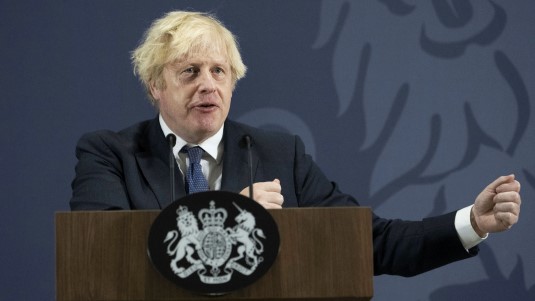
This was Boris Johnson's big agenda-driving speech. Long time Tory watchers will recall this is a theme Johnson is fond of, having visited it under a series of guises and slogans, but is there any substance or are we dealing with whispy rhetoric?

It would be easy to dismiss, and a set of words were duly delivered in the characteristic, haphazard style. There was a weird digression on the "loony left" of the 1980s, and an equally bizarre line on how focusing government investment outside of the South East doesn't mean cutting down their share of the pie. Someone's been reading the wrong people on the whys and wherefores of the Chesham and Amersham result. There was a plea for all local leaders to beat a path to his door as he raised the prospect of more devolution for England, acknowledging that the metro mayor model isn't suitable for all circumstances. This could take the shape of the repatriation of a range of powers by local authorities, with the caveat they'd have to pass a vaguely defined fiscal responsibility and democratic accountability test. In other words, don't expect more powers to pass to Salford and Preston any time soon. And apart from an awkward and bruising exchange about Tory racism and the England team, that was it. It took Johnson an hour to say what could have been said in five minutes.

This shouldn't be entirely dismissed as hot air. There is a project of Tory modernisation and large sums have been allocated to key projects, including the super fashionable gigafactories and more monies for research and design. But befitting the disjointed delivery, the programme matches the dilletantism of the Tory leader. This is a million miles from the thought-through approach to economic regeneration and addressing geographic disparities, and leaves some thinking 'levelling up' is an empty signifier, a soundbite for people to read what they wish into it. Much like the 'Northern Powerhouse' and 'Midlands Engine' rubbish of George Osborne's time in Number 11.

Peeling off the nonsense and clearing away the debris of waffle, two things remain. Because of the focus on infrastructure those immediately benefiting from the Treasury's largesse will be big construction firms and key manufacturers. There will be the trickle down of Keynesian multipliers, but while this is happening the Tories are ending furlough and taking £20/week off the poorest families in the country. Levelling up never means intervening to bail out our people. Here Tory spending is the means for reinforcing and concentrating economic power in the hands of their class, and with the numbers of vacancies growing. removing time-limited support is the stick the Tories think they need to get people out of slovenly habits picked up these last 18 months. The second? Sitting back and hoping for the best. Dole out a few more powers to councils, combined authorities, and metro mayors, give them a few million here and there to fix local transport issues (caused by the privatisation and fragmentation of networks ... by the Tories) and let them do the hard work of nurturing businesses and attracting investment. It just remains for Johnson to visit a new factory here, a new road there over the next couple of years and, he believes, the optics will do an election winning job.

This leaves plenty of hostages to fortune. There's plenty of scope for the government to be mired in cronyism and corruption scandals. Having more or less got away with the last round of NHS-related crookedness, and looking to bed it down further in in state institutions, it's almost as if Tory modernisation is purposely scattering a minefield for the party to later step on. With cracks and vulnerabilities starting to show, it's no means guaranteed softer Tory voters will carry on turning a blind eye. Who knows, perhaps these might be occasions for the opposition to do some opposition and actually lead public opinion for a change.

Image Credit

Dawn Foster on BBC Tory Bias

Earlier today, her close friend James Butler announced that Dawn Foster had unexpectedly and suddenly passed away. Such terrible news, especially when it's a talented comrade taken so young.

We should remember Dawn doing what she did best - taking a scalpel to the powerful and exposing their hypocrisy.

NB: Read this tribute from Juliet Jacques too.


Wednesday, 14 July 2021

From Renaissance to Relapse

One thing about Labour is how endlessly productive it is of reviews, coalitions, initiativism and ginger groups. Off the top of my head, in the last five years we've had Momentum on the left, and on the right Labour to Win, Progressive Britain, Labour Together, the People's Vote, and commissions and policy reviews galore. So why not one more? Announcing its existence on LabourList, Renaissance promises to target research, resources, and activism on the so-called red wall seats to win as many back as possible. Sounds sensible. It also badges itself leadership-loyal and styles itself as helping Keir Starmer "develop his storytelling". An admission, if there ever was one, that he's gone down like a lead balloon in the former heartlands. Can Renaissance pump enough helium to reinflate his chances?

Fronted by Stephen Kinnock with Yvette Cooper and Ruth Smeeth on the advisory board, Renaissance wants to keep Labour out of the "comfort zone" and "reconnect" with "working families". Tipping its hat in a Brexity direction, Kinnock argues that the UK needs to stand on its own feet and it does this by investing heavily in manufacturing, married to the usual gubbins around sound money and kowtowing to the imagined taxpayer. Naturally, a report will come in September focusing on why people who've supported Labour previously haven't and what can be done to win them back. This is England and Wales only. Despite committing Renaissance to the vision of Labour as a Britain-wide project ("whole nation" in wonk speak), they're strangely uninterested in what former life-long voters in Scotland have to say.

Avoiding hard answers, at least where the Labour right are concerned on matters Scottish augurs ill for this new initiative. As does the accompanying puff piece by Ruth Smeeth. She writes how Labour has always been an alliance of workers and the progressive middle class, typified respectively by The Mirror and The Graun. Unfortunately, the 2019 manifesto was lopsided toward the latter. The party lost its ideological anchor and was set adrift in seat after seat as the old base deserted the ship.

If you're interested in understanding a problem, it pays to approach it in full possession of the facts and that your thesis has some evidential basis. Shall we consider them? Smeeth says Labour talked about tuition fees but had nothing to say about meeting rent payments. Turning page 79 of the 2019 manifesto, we find pledges for rent controls by capping them. Local authorities would be granted powers to curb rents further, no-fault evictions ended, the enforcement of minimum standards of habitation, and public funding for renters' unions so tenants can best defend their rights. Sounds utterly divorced from working class interests, doesn't it? Sticking with the Labour right's obsessions with tuition fees, she argues further education mattered more to her former constituents than measures that would benefit students in higher education. Pages 37 and 38 are our oracles here, and they committed Labour to expanding FE provision, reintroducing the EMA grant for FE students, giving people lifelong access to FE (and HE) for reskilling in the face of the next wave of automation, and integrate the whole lot into a National Education Service. Fancy that, tuition fees can be abolished while lifelong learning and FE are revolutionised.

She goes on. Rail nationalisation is nice and Stokies would have liked it, but the appalling state of the local buses matter more. As someone lacking a gas guzzling megamobile to ferry myself around the Potteries, I know this very well. Which is why pages 19-20 went down a treat:
Labour will ensure that councils can improve bus services by regulating and taking public ownership of bus networks, and we will give them resources and full legal powers to achieve this cost-effectively, thereby ending the race to the bottom in working conditions for bus workers. Where councils take control of their buses, Labour will introduce free bus travel for under-25s. We will increase and expand local services, reinstating the 3,000 routes that have been cut, particularly hitting rural communities.
She then criticises the party for failing to address concerns over job security. Talk about a green revolution smacks of change being done to voters rather than working with them. A good job then page 17 sees Labour pledged to invest in heavy industry, including science and research spend for cleaning them up and backed by a Britain-first procurement strategy to stop offshoring. This was in addition to three gigafactories, four metal processing plants, and a package of measures to keep the British steel industry going. Huge sums would be invested in plastic reclamation and recycling, a process the manifesto terms 'remanufacturing'.

The examples Smeeth cites to support her fairy story of a disconnected Labour Party are shown to be false. Or to put it plainly, pure bullshit. If her constituents didn't know these were priorities, then whose fault is that? She had a two-year lead in to tell the good people of Stoke North and Kidsgrove how a Labour government would change their lives for the better. History records she elected to spend her time with the Labour right torching the party's chances instead.

What this also means is the answers from the Renaissance report can be forecast now with unerring accuracy. There will be no findings that contradict the distorted preface Smeeth has offered, no honest accounting of the role Brexit played. Nor, for that matter, how the remain-focused strategy of the current leader properly torpedoed the party - something red wall voters haven't forgot, in case anyone's still bewildered by the poor results from the last two Labour defences. We'll just get a reiteration of the party is too middle class and too socially liberal, which will entirely coincidentally support Starmer's idiotic embrace of Blue Labourism.

It's worth remembering these people think they're the election winning specialists. They're also the people who deny their efforts at blowing the party up had any effect on Labour's reception, are completely uninterested in the character of the voter coalition we currently have and stupidly assume it's going nowhere, and argue pivoting toward social conservatism as the country is trending toward social liberalism is super smart, strategic politics. Perhaps instead of 'Renaissance', they should have called themselves 'Relapse'. This is a prospectus for promise-nothing, status quo-tailing Labourism, a vision so anaemic that you'd have to go back to David Miliband's policy platform in the 2010 contest to find anything so weak. With this shower in the driving seat, Labour's going nowhere - and it's our people who'll pay the price for their failure.

Tuesday, 13 July 2021

Juliet Jacques on Writing Trans Lives

In this excellent edition of Downstream, Ash Sarkar talks to friend-of-the-blog Juliet Jacques about her latest short story collection, Variations. Watch the video below and then get your copy here.

Monday, 12 July 2021

Against Internet Authoritarianism

The hypocrite-in-chief tweets "This England team deserve to be lauded as heroes, not racially abused on social media. Those responsible for this appalling abuse should be ashamed of themselves." You could be forgiven for thinking the racist taunting and trolling of the England team simply dropped out of the sky. In reality, Boris Johnson and his government greenlit this abuse once players started taking the knee. Tory MPs aplenty have trotted out the same line in the TV studios, in the media, and on their socials: solidarity against racism is illegitimate, protesting against it at home and abroad is "divisive", and Black Lives Matter is a thuggish, Marxist movement that wants to rewrite history and destroy Britishness. The Tories might have affected a liberal, tolerant, anti-racist pose, but preferred to stoke their usual, doomed culture war nonsense instead. Individuals made the choice to leave racists comments, but they do so in a climate encouraged from the very top.

Unfortunately, whenever there is an outbreak of racism on social media it is immediately met with an authoritarian response. It's understandable. Open expressions of racism in the flesh involves significant social costs if one is not sheltered by position and privilege, and so attempted enforcement of these costs online are to be expected. These mores are ostensibly policed by the (hit and miss) complaints procedures platforms have, which those with long memories will recall were forced on social media firms after some resistance - they do like to pretend they're merely content carriers and not creators, after all. The problem is their inadequacy is well known. One account is banned, but another can quickly get spun up and the battle rejoined. Therefore, some have taken to imposing sanctions of their own. If a racist is stupid enough to say racist things from a clearly identifiable account, screen grabs and emails duly clutter up their employer's socials and inbox. I certainly don't care if some bigot loses their job for being a bigot, but we - the left - need to have a think about this. Call me old fashioned, but as a rule we shouldn't be calling on bosses to police the content of what their employees post online. Yes, it's a way of ensuring racism has its costs, but it suggests employers have a responsibility for the private activities outside of hours of their workers, a normative expectation anyone with a trade union bone in their body should be uncomfortable with. True, there isn't much one can do directly to shut racists and fascists down online, but let's not pretend mess reporting people to their boss, even if they are foul, is an act of militant anti-fascism.

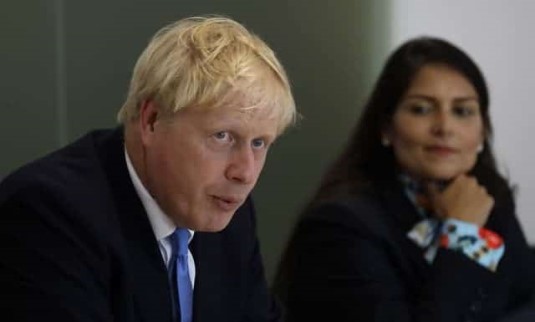
Still, there is sympathy in the wider country for controls on the unruly, extremist spaces on social media. Speaking in the Commons earlier, Priti Patel - no wide-eyed innocent when it comes to stirring the pot - said the government will bring the Online Safety Bill forward. Ostensibly a charter against scammers, terrorists, and paedophile networks it carries provisions that will protect "democratically important" viewpoints. I.e. Protecting whatever bullshit the Tories and their MPs decide to disseminate platforms might otherwise censor or flag. It also expects social media firms to take action against "misinformation", whatever that is. For its part, Labour has decided being seen tougher than the Tories is where the opportunities lie. Wrong, consistently wrong.

Ever since politicians discovered that social media cannot be tamed and its refuseal to afford the reverence they think is due, a wing of mainstream politics have champed at the bit for some sort of regulation. It doesn't surprise me state-backed efforts at privileging the words and thoughts of the establishment are packaged with anti-nonce measures and curbs at suicide glorification. Who could disagree with these laws? Nor that Labour's faltering leadership are smashing the authoritarian button. A smidgen of an understanding is all it takes to know there will never be a system for stamping out racist communications. The removal of anonymity won't make a difference either, as anyone who has spent some time hanging out on Tory MPs' Facebook pages will tell you. What it would do is open users up to a host of dangers - having interests and lifestyles exposed to families that could put them at risk, political activities employers would be all too happy to curb, and naturally those overseas staking their lives organising against repressive regimes - many of whom are good friends to the UK government. If changing anonymity on social media has no effect on you, congratulations on being able to enjoy that privilege.

To be accurate, the government are not committed to curbing anonymous use, which leaves an opening for authoritarian Labour. But instead the bill does consider new laws for criminalising online behaviours, defined as those "likely to cause harm." Compliance with the law gives platforms an incentive to de-anonymise their users to avoid falling foul of the the legislation themselves, but the dividend is even more targeted, personalised advertising. The stick comes with a juicy carrot. Where does this leave the left? With the urgent need to think through relations of power and authority in the digital age. We must resist the drift to constituting ourselves as an apparatus of voluntary surveillance, one that ends up policing platforms for the benefit of employers, bourgeois politicians, and the state. As always, the convincing alternative, the only alternative is the patient work of building our counterweights and working to make our ideas the popular, spontaneous common sense.

Image Credit

Sunday, 11 July 2021

We're Singing for England

England didn't win, but the campaign on the pitch has brought about a victory in the culture wars. At the beginning of the Euros, rightwingers lined up to attack the England team for taking the knee. The likes of Laurence Fox and Paul Joseph Watson accused them of "surrendering" to "Marxism". And where they prepared the ground, opportunist rightwing politicians followed. Nigel Farage, pretending to be England's biggest fan before the match was straight on the attack with a defence of booing the players. Always looking for a rightwing bandwagon to jump on, Priti Patel likewise defended racism on the terraces, before the inevitable about turn and staged photos of celebrating goals. The only one to stick to his guns was Lee Anderson. Vying for the title of the Tories' most bigoted backbencher, he said he would be boycotting England matches and will carry on doing so. No doubt he'll be pleased Italy won, but don't tell him they took the knee too.

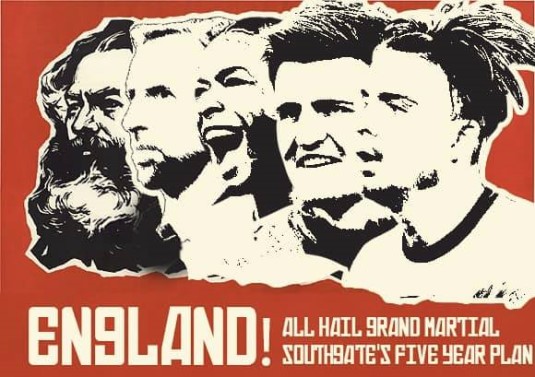
This has made England's run all the sweeter, with the team pushing a soft solidaristic, inclusive, anti-racist politics articulated in these terms, and acuitting themselves with aplomb on the pitch. Meanwhile, the right have overreached and put themselves on the wrong side of public opinion - an opinion that has shifted even more in the direction of England's stand as the tournament progressed. The chance of Boris Johnson, with his flag-bedecked Downing Street, awkward appearances in the team shirt, and its politicians mobilised for the so-called war on woke, being able to identify the penny-pinching miserablism of Tory Britain with a much improved England seems a bit of a stretch. One cannot be associated with attempts to rubbish their efforts and then claim credit for their success. A fun fact repeatedly noted by leftwing Twitter, who have loudly (and no doubt irritatingly, for some) claimed credit for England's success. After all, if we accept the arguments of sundry Tories and rightwing screechers about taking the knee, the adoption of Marxism by the team has produced more success than 55 years of tabloid-powered jingoism.

Surveying the scene from The Sunday Telegraph, David Goodhart argues there has been an appreciable shift among elite opinion as well: "progressives" are singing for England too. This marks a sigificant change from the embarrassed disdain they normally reserve for popular expressions of Englishness. One might recall thw Emily Thornberry/White Van Dan incident all those years ago. Goodhart argues these professional layers have traditionally been estranged from Englishness because there are no unique English state institutions, and the national identity they tend toward is Britishness. There's some mileage in this. Thinking about his social universe of politicians, wonks, academics, senior civil servants, media people, and upper management, their work immediately links them to the British government and other UK-wide institutions, and their spontaneous national consciousness reflects this. Englishness, as filtered through the media and its cynical self-appointed champions is traditionally conceived as something lesser, an atavistic throwback of congealed racism and the EDL that can be mobilised for backward political projects that are a direct threat to their station. Goodhart argues the action on the pitch and in the culture wars off it has made the case for an inclusive Englishness, and one congenial to their liberal attitudes.

Yes, but there's more going on. For one, when establishment commentators write about "the left" this is who they mean. The actually existing left, at least in my decades of involvement, have happily supported England because whole swathes, most of it are footy mad. With the possible exception of Socialist Worker, who in all seriousness wag their finger and affect revolutionary defeatism whenever England plays. Rubbing shoulders with the hoi polloi who invaded their metropolitan Labour branches may have left some populist tastes hanging in the air, making the great unwashed that little bit less alien. The second is the consequence of Britishness becoming more inclusive itself. An idea of 'the British' as a multi-national, multi-ethnic common identity was taken up by New Labour with some enthusiasm, enabling the party to distinguish itself and their rebranded Cool Britannia from the tired and narrowly white Britain of the Tory imaginary. Meeting with the anti-racist and social liberal push from below, equalities legislation and managerial initiative enforced a bureaucratic, 'official' multiculturalism, an inclusivity cemented by quotas, mission statements, and diversity workshops. It was inevitable this would fold into Englishness, what with social liberalism the spontaneous common sense of growing millions and the membrane between Britishness and English identity measured in microns, not miles. The administrators of multicultural Britain aren't leading but following the drift of popular culture and values.

There's another. Just as the left have claimed England for Marxism thanks to the right's excesses, the stupidities of Anderson, Patel, et al has given, to the minds of Goodhart's contemporaries, the permission to endorse and embrace the team and the theatre around it. If the vulgars and grotesques are piling into England for wokeishness, they have effectively relinquished Englishness for someone else to take up.

Am I guilty of overreading a tournament and the hype surrounding England's excellent young team? Events commanding national attention are crucibles for sentiments and ideas. If something is working its way through national life, if there are movements in opinion they can bubble to the surface and code the event with significance, announcing what is already an accomplished fact. England in the European championships is one of these moments. It affirms the advance of social liberalism, and underlines the retreat of conservatism from mainstream values.

Thursday, 8 July 2021

Make or Break Time

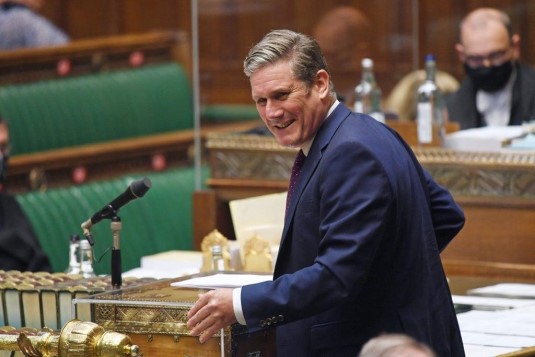
Keir Starmer did well at Prime Minister's Questions this Wednesday lunch time. He asked searching questions about the "uncontrolled" removal of Covid restrictions, about projections of infection numbers and hospitalisations. He made suggestions about the next steps, and raised the likely danger of new mutations of the disease. Taking his cue from thousands of Twitter users, he accused the Prime Minister of leaving the door open for the "Johnson variant". Good stuff that won plaudits from the Labour leader's centrist media fans and yes, it was welcome. It's not a good thing that the government are bent on a psychopathic course, and challenging their reckless necropolitical startegy is the minimum one would expect from a competent opposition leader. The pity is Keir wasn't making these sorts of criticisms over a year ago.

On the cusp of the fourth wave, the sad and unpalatable truth is the Labour leader is partly culpable for the dangerous situation we find ourselves in. The warning signs were there from the off, with Keir treading carefully around the government's tardy efforts and treating it like a management exercise as opposed to a political challenge. And from there things haven't picked up much. As his defenders have argued, he didn't have much choice to go softly-softly at the beginning of his leadership. With life abruptly, unexpectedly thrown into abeyance and people clinging to government against an unknown enemy, a mood of national unity was in the air. The Tories were posting ridiculous poll leads, and the public at large weren't tuned in to what politicians other than the government were saying. Had Keir gone hard on the Tories, so goes the argument, he would have looked like he was scoring points as people were succumbing by the thousands. The Tories knew this and took advantage.

Timing is everything in politics. Unfortunately, Keir wasn't watching the clock. Stressing measured opposition was probably the right move initially. What wasn't was interpreting 'constructive' as 'keeping shtum'. In the dying days of his tenure, Jeremy Corbyn tempered his criticisms with suggestions and demands. Despite trailing in the polls by a wide margin and a dead man walking in conventional political terms, the government adopted these policies in part or in whole. As the party of working people with a direct link to the front line against the pandemic, when he took over he could have carried on where his predecessor left off. Keir had an opportunity to speak up for those who were up against it. But he didn't. When criticisms did issue from the Labour leader's lips, they were spreadsheet criticisms. They didn't take the Tories to task for slow action, nor the scandal in the care homes which was well known as it was happening, nor the outright corruption of PPE procurement. The politics weren't contested, there was no alternative plan, nor a vision about how life might be after the pandemic had receded. Instead, Keir Starmer insisted on road maps out of lockdowns and an "expectation" that children be back at school come September. He couldn't even muster a criticism of Eat Out to Help Out.

But as long as the polls were steadily but perceptibly moving in Labour's direction, there was no pressure on the leadership to change course. The plan, as much as one existed, wasn't to contest anything and let the Tories own their mistakes. Points of intervention were necessary to demonstrate Labour was on the side of public opinion, but there was no effort to show leadership. And so in the autumn after scientists started sounding the infections alarm, it was only then Keir came out for a short lock down to stymie transmission, which the Tories reluctantly followed through with. Likewise, when holiday hunger came to public prominence Labour only got on board after Marcus Rashford put in the hard yards. As for the incoherencies of the Tory tier system, Keir absented himself and it fell to others to offer opposition and leadership. As such, saying very little about the management of the crisis left Labour in a vulnerable position. Because the Tories defined it, they determined what failure and success was. And so when the polls began to swing back towards the Tories, coincident with but not entirely reducible to the suspension of Jeremy Corbyn, Labour had little to fall back on. Keir refused to make the link between Tory recklessness and deaths, ceding the ground to the cultivated Tory view infection was a matter of rotten luck. Worse, because he hadn't bothered articulating a political critique, an alternative plan, and a way out when he did attack Johnson it came across as carping and hindsightism - so reported the party's red wall focus groups.

And so the scene was set for our present malaise. Johnson took the credit for the vaccines and their rollout, and with little to say and politically foolish right wing opportunism, the poll numbers kept tumbling. While the Tories enjoyed a so-called vaccine bounce, it did not explain why Keir's numbers were heading south. What did was a refusal to oppose and an active effort at demobilising Labour's existing coalition of voters. And so his authority bled away. The goodwill built up in the first half of his leadership went with it.

Ordinarily, and especially under the terms politics has conducted itself these last 40 years, Keir Starmer would be finished. 323 votes from the good people of Batley and Spen was all that stood between him and the end of his leadership. But he has got lucky. Unlike Gordon Brown and Theresa May, who were finished long before they left office, the fates present Keir with an opportunity. What might save him and revive Labour's fortunes is how he handles life after 19th July. Attacking the government for lifting restrictions, plans to charge for tests, the mounting numbers of hospitalisations, the stats for persistent long Covid, images of crammed public transport, and cases of retail bosses mandating mask removal for customer-facing workers, every single instance is a Tory failure and a demand Labour goes on the attack. A recent poll suggests the public back the removal of remaining restrictions on the 19th, this hides the complexity of anxietes and worries simmering beneath the surface and it could rapidly change as Covid cases surge. The moment requires Keir Starmer ventures out of his wonkish, managerial comfort zone into political leadership.

Already, Wednesday's PMQs has established at least a willingness to move on it among the opinion forming elite and politics watchers, which has duly been relayed by the main media outlets. But this is his last, best hope. He can turn around his year of inaction on Covid by sticking up for those at the sharp end, save his leadership, and put Labour back on track for 2023/24. There are never any guarantees in politics, but persistent criticism informed by the everyday difficulties of trying to navigate the health crisis safely will, in all likelihood, be rewarded. If he fluffs it and doesn't keep hammering the Tories on this, then others will. Keir has seen what has happened when he plays politics by the rules set by the Tories. He is in a position where a pushback can change them to their disadvantage. It's make or break time.

Image Credit

Tuesday, 6 July 2021

Labour's Double Standards

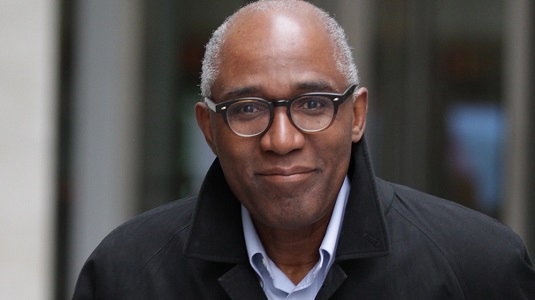
Muslims see the world differently from the rest of us. Muslims are a nation within a nation. Muslims fostering non-Muslim children is something like child abuse. Muslims have sympathy with terrorists. Remarks not from Stephen Yaxley-Lennon, Britain First, or the usual line up of far right toerags. These are phrases and arguments used by Trevor Phillips, who's just had his Labour Party membership unsuspended. As Sienna Rodgers notes, that Phillips will be interviewing shadow cabinet members on Sky News's Sunday politics show, and shares the same party branch with Keir Starmer might not be a coincidental happenstance. Meanwhile, as Phillips's Islamophobia is brushed under the carpet Jeremy Corbyn remains suspended from the parliamentary party for telling the truth about how antisemitism was mobilised (and sat on) by the right for factional reasons. One doesn't have to be a cynic to think things look a bit suss.

It seems the Labour leadership have learned something about party management. In the wake of the EHRC's egregiously flawed report into antisemitism in the party, Peter Mandelson criticised its key recommendation for handling complaints about racism: the setting up of an independent panel. He argued the party's National Executive Committee should oversee the complaints process. Why the hostility? Without getting too much into the party's history, the labour movement has well-founded reasons for being sceptical of outside authorities setting the terms of its organisation and imposing rules on it. The anti-trade union laws of the 1980s and 1990s are recent examples, but there are plenty of others. As all wings of the labour movement have developed as institutions, they have jealously nurtured and guarded their emergent sovereignty. This has suited the Labour right down to the ground. As long as they're in charge and the taboo for running to the courts is in place there is no power, save out organising them, that can stay their hand.

In her piece on the implementation of the EHRC recommendations, Ailbhe Rea argues that while the new measures are designed specifically for deaing with antisemitism complaints, it would be unsustainable for this to be reserved for cases of this character and not sexism, Islamophobia, anti-black racism, anti-gay and anti-trans issues. As she rightly observes, its roll out will find the likes of Rosie Duffield in a difficult position, as well as MPs and councillors who think nothing of pushing anti-traveller leaflets through people's doors. And it brings the forever delayed Forde Report into play, and ultimately Keir Starmer's competence in deciding to pay staff members off rather than fight a legal action the party would, in all likelihood, have won.

You can see why Mandelson was concerned. An independent complaints process as mandated by the EHRC theoretically checks the power of the dominant faction to abuse it for their ends. Burdens of proof and complaints are presently considered against the immediate interests of the leadership and the apparat. If they are inconvenient, as per the Phillips case they are dismissed or kicked into the long grass. Weight of evidence counts for nothing against the weight of connections and political allegiances. Perhaps this has dawned on the leadership have and are looking at ways of wriggling out of their obligations to the EHRC (notably, no reports of the last NEC meeting mention the scheduled sitdown meeting with them about progress of implementing the complaints process). Or the party is trying to make the most of the time it has left before surrendering external oversight by shoving through unpopular but factionally convenient decisions. Whatever the case, it stinks and simply reinforces the view that rules are for the little people while those with power act with impunity.

Image Credit