Pretty sure I've told this story before. Upon becoming the secretary of Stoke Central Labour Party in 2011, I visited Geoff Bagnall, the then general secretary of Unity the union. For those unaware, Unity was the 00s rebrand of CATU, the Ceramics and Allied Trade Union appropriately headquartered in The Potteries. With Geoff and his successor, Harry Hockaday, I told them in no uncertain terms to stop funding Labour candidates who only showed an interest in the union at election time. Instead, I said my priority was to make the Labour link work for the union and its members. Unity itself has long since dissolved, having been absorbed by the GMB in 2015, but the point remains. What is the purpose of affiliating a trade union if Labour politicians merely treat them as cash dispensers?
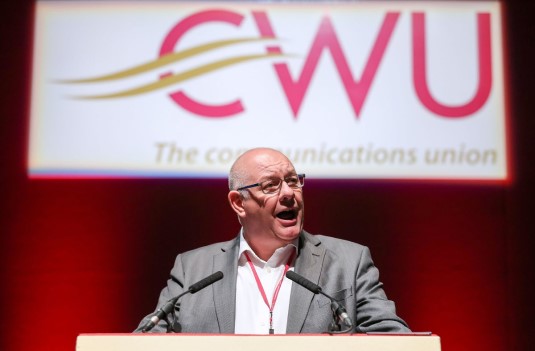
Which brings us to the result of the Communication Workers Union special conference, which took place this Sunday. Its decision notes the distance between Labour and working class aspirations that have opened up under Keir Starmer, and resolves to cut union funding outside of affiliation fees while reserving the right to support candidates, local politicians, and MPs who remain committed to the CWU's objectives. Interestingly, and rightly, this move marks a conscious effort at politicising the union further by developing its own candidates' programme for CWU members and build networks of branch level political officers to push the union and the interests it stands for at community level. As general secretary Dave Ward put it, "less money and support to Westminster Labour. More to Labour MPs, Mayors, Councillors and candidates who have our members' backs."
What a curious pickle Starmer has got Labour into. We have a situation where he's bent the party backwards to attract the rich donors by refusing to commit to anything but the barest minimum, yet is relaxed about spurning the potentially much greater sums offered by trade unions for sticking up for working people, pensioners, and those having to get by on social security. Curious, but not unfathomable. In the topsy turvy world of Starmerism, the route to victory lies in pandering to propertied interests and not building a coalition based on but reaching out beyond Labour's new base. Therefore, the reasoning goes, anything putting distance between Labour and the trade unions is going to curry favour not just among 2019 converts to the Tory cause, but those who haven't voted for the party for years.
There are good reasons to be sceptical. Just as the right say Labour can't win without persuading and taking votes from the Tories, likewise the party won't get anywhere if it dumps on its new base. Mistakenly and misleadingly characterised as young graduates who live in the big cities, Labour has pretty much always enjoyed winning disproportionate vote shares among working age people. Funny that the traditional workers' party regularly manages such a feat. Yet the consistent tacking to the right by Starmer threatens to disassemble this vote. With polls showing poor personal ratings and growing support for the Greens, particularly among younger cohorts, it's almost as if reneging on pledges made when Starmer presented as diet Corbynism with a haircut has been noticed. To reiterate to the hard of thinking, Labour's new core support assembled during the Corbyn years is everywhere. It exists in the red wall, the blue wall, and any other seat you care to mention, and therefore a strategy that wants to take back seats lost, or make inroads into other marginals cannot afford to alienate this support. Doing so is just about the most stupid thing a Labour leader could do. And yet.
As it happens, there is a way forward. Keeping the new base doesn't have to come at the cost of not appealing to Tory voters. And chasing them doesn't have to involve machine gunning the party's feet. The balance is met by articulating interests. Ben Cooper writes in the latest Renewal about Labour's countryside strategy, stressing how an accent on community but also issues like the NHS, transport, and housing have potential to cut through the polarisation that plays into the hands of the Tories. This means offering leadership and acknowledging there are some Tory voters who are gone forever, but in the game of Westminster thrones a party just has to win enough votes, not all of the votes.
Unfortunately, this requires political leadership and a certain hard-headedness, the latter quality Starmer has only shown versus the left. If the leader genuinely believes he's following the recipe book for election victory, then the man is a fool. Preserving, not purging our present coalition is the precondition for winning. This, among other things, means keeping unions on board as Labour's potential messengers in millions of workplaces, and remembering delivering for them is the same as delivering for everyone. Labour's future, if it is to have a future, demands holding the unions close so we can keep our coalition close. To lose one union is careless, but to lose three is self-sabotage. Failure in this regard doesn't just point to more election defeats, but to the viability of the party itself.
The fireworks are going off! Not talking about bonfire night nor even the difficulties the Tories are facing, but the clutch of new left media projects to have reached these towers this last month. Check them out!
If you know of any new(ish) blogs, podcasts, channels, Facebook pages or whatever that haven't featured before then drop me a line via the comments, email, Facebook, or Twitter. Please note I'm looking for new media that has started within the last 12 months. The round up appears hereabouts when there are enough new entrants to justify a post!
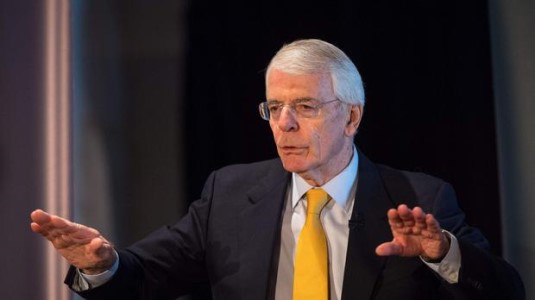
On Radio Four Saturday morning, John Major attacked the government following the unedifying scenes witnessed in the week. He called Boris Johnson's government "politically corrupt". Branding them "unconservative", he goes on, "This government has done a number of things that have concerned me deeply: they have broken the law, the prorogation of Parliament. They have broken treaties, I have in mind the Northern Ireland Protocol. They have broken their word on many occasions." If there has been another occasion when a previous Tory Prime Minister has criticised his successors in strident terms, I don't recall it.
This is quite welcome. Johnson's efforts to gut the meagre accountability available to the Commons has hammered a few more cracks into the coalition of interests the party holds together, if not at the base then at least among ruling circles. Any opposition worth its salt would be doing all it can to lever these cracks open. But for some, it seems, Major's intervention is a moment for another thing, an occasion for unseemly gushing. Whenever a Tory, any Tory, emerges from the woodwork and ventures criticisms of the current administration, British liberalism breaks out the blu tack for their latest pin up. Regardless of past misdeeds and damage done.
Consider Major. During his seven wretched years in office, he tightened the screws on the labour movement, slung hundreds of thousands out of work, marketised public services and bedded down the forms of governance that blights our society and its politics today (Major gets a full chapter in the book about how his government was crucial for consolidating the class settlement struck during the Thatcher years). People suffered, and people's lives were cut short unnecessarily because of his devotion to the project. Watching so-called liberals throwing in the Persil and laundering his reputation is pretty grim. Grim, but not unsurprising considering it didn't affect them.
There is a pattern of behaviour among the overlapping worlds of liberalism, centrism, and continuity remain. You might recall when Rory Stewart ran for London mayor, or the Tory MPs who resisted Johnson (and Theresa May) on Brexit. These people were hailed as heroes and, in some cases, talked about as if they were the "proper" opposition. And it's happened again. Since Owen Paterson resigned, liberals and centrists got very excited about the possibility of an anti-sleaze candidate for North Shropshire, especially when news broke about brief talks held between Labour and the Liberal Democrats. Cue speculation about who could fit the bill. Our man Rory was there. As was John Bercow, Ken Clarke, David Gauke, Anna Soubry, a proper who's who of ... former Tories. Even the one celebrity who got thrown into the mix - Carol Vorderman(!) - has something of the right about her. Coincidence?
The Conservative Party is a structurally dishonest enterprise. Its job is to present the minority bourgeois interest as the universal interest, and has had a great deal of success doing so. From this flows all the other features we associate with the Tories. Its propensity to lie. The resort to scapegoating. Its habitual impulse to divide and rule. Given its record in office, you could be forgiven for thinking anyone following politics would conclude these efforts are the party's defining characteristics, not occasional quirks. And yet at times of political crisis, particularly recently, liberals and centrists gather up their search parties and start searching the woods for the Good Tory. What is it about their outlook that conditions this curious and seemingly bewildering behaviour?
Liberalism and centrism aren't just a body of ideas, they're a movement in wider society. A class movement. In the first place a current with impeccably bourgeois credentials, the destruction of the old Liberal Party - their proper home - after the First World War saw its political expression fold into the Tories and Labour, with a small rump leading a twilight existence. Occasionally as an independent third party, occasionally as an adjunct to the Conservatives. To cut a long story short, by the European Union referendum they were out of sorts. Theresa May assembled an impressive electoral coalition by appealing to - mostly - older voters on a nationalistic basis, with the Tory press recruiting voters on the basis of seeing off the traitors who would do Britain down. She pointed at the direction the Tories needed to travel to win big, and Johnson duly followed. Except he was fortunate enough to be faced by a divided opposition whereas May was not. Meanwhile in the Labour Party, during the Jeremy Corbyn interlude the liberals and the centrists were no longer pre-eminent and calling the shots. They were fighting for their political lives, even if it meant shredding the party and, in some cases, their own chances of re-election. For the first time in liberalism's existence, it was locked out of front rank political influence.
The result? Crisis. Most, hitching their bandwagon to Brexit and overturning the referendum result, used it to try and reassert their power. Some did so outside of parliament via mass mobilisations. The other track was within parliament, both in the inner party struggles in the two main parties, and by positioning the Liberal Democrats as the party of remain. We know what happened next. Johnson evicted his centrist-tinged wing, while years of wrecking was topped off by converting Labour to the second referendum (not that, in the end, it had much choice) saw the party lose heavily. Keir Starmer won the subsequent leadership election, and the centrists and liberals were in the ascendency in the party again. But, ultimately, it's grasping this precarity, of not having an authentic home of one's own that underpins the position the Good Tory occupies in the liberal/centrist imaginary. It comes from, politically speaking, being a junior partner.
To reiterate, it's a bourgeois trend spread over the two big parties and the "dedicated" party of liberalism is a distant third in England. They are, or were, variously integrated, but exist in their hosts under sufferance. This anxiety gives liberalism a certain rootlessness, which manifests itself in the infamous liberal/centrist conceit of being free from "ideology" and viewing the political scene without the encumbrance of "tribalism" - in a manner akin to how the petit bourgeois misrecognises their structural location caught between the vice of capitalist and worker as being somehow above it all. With just this illusio as their star map to the political firmament, liberalism like/dislike politicians not on the basis of making people's lives harder (or for that matter, better), but on the feels. In other words, those who make their dominated/dominant position welcome, accepts their rules as the proper way of doing things, or gestures in their direction. This is affective politics, so if someone does something that aligns with their values, or appears to promise to return liberalism to an imagined pre-eminence, then these figures become objects of their affection. For example, it's how, simultaneously, the continuity remain elements of liberalism and centrism simultaneously adored Keir Starmer (until last December, anyway), and Michael Heseltine. It wasn't just their pro-EU credentials, but the appearance that they played by the rules of their politics illusio: constitutionalism, nice suits, estuary accents, and knowing better than the hoi polloi.
But why should this result in the Good Tory trope? Because, more often than not, when push has come to shove liberalism has lined up with the Tories. They did this between 2010 and 2019. And they did it in the 1930s to try and crush the Labour Party. There is form, and this preference lies in the class origins of the trend. Liberalism is a fundamentally bourgeois philosophy and sensibility because property is the root of individuality. Socialism is antithetical because it turns the claims of liberalism against its class basis. I.e. liberty consistently applied is the enemy of private ownership in the means of production, the real relation liberalism, like Toryism, defends. Any kind of social democracy, no matter how mild, threatens to open this question. The Good Tory then is how they wish to see the Tories, a projection of class instinct, and so are predisposed to seek these figures out. The hope is the Good Tory will come to recognise themselves in liberalism. After all, what they disagree on can be resolved by polite conversation: how to keep the capitalist show on the road. And this also helps explain the affected hate for Johnson's corrupt bunch. They gnash their collective teeth with the bitterness of a lover spurned.
Surveying politics in 2021, it's obvious the Tories don't need liberals and centrists. And for those who haven't drifted back into Labour or washed up in the LibDems, life outside is a back and forth between searching and praying for the Good Tory, undergoing repeat public breakdowns blaming the evil Jeremy Corbyn for their ills, and feting the European Union as if it's the shining city on the hill.
A show of strength that crumbled barely after it was asserted. News of Owen Paterson's resignation after the government hung him out to dry topped off 24 hours of Tory calamity not seen since the halcyon days of the Brexit indicative votes. Conservative MPs, including those who followed the government whip to save Paterson's skin made public their displeasure and unease. As late as this morning, Kwasi Kwarteng did the studio rounds saying the standards process wasn't fit and the commissioner, Kathryn Stone, should consider her position. And then the government pulled the rug from under him, making him look more of a fool than he managed himself.
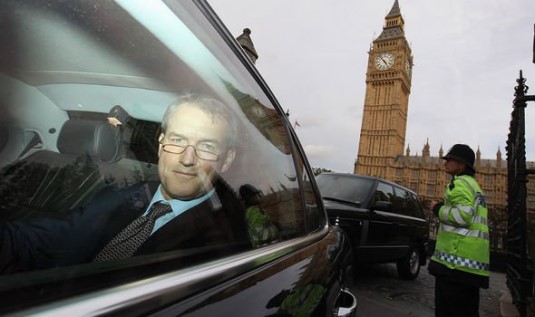
Someone else found themselves high and dry: the crooked member for North Shropshire himself. Reportedly out shopping in the supermarket when he heard, before the kids were home from school his resignation letter was in and zipping around the newsrooms and socials. Having blown up the standards committee to defend Paterson's non-existent honour, the screeching 180 meant Wednesday's theatrics were for nothing. He'd have to go through the humiliation of the suspension, and very probably the rigmarole of a by-election where his "integrity" would have had issues washing with local constituents.
The letter itself is as grubby a resignation note you're ever likely to see. He attacks unspecified MPs for mocking his late wife, Rose Paterson, and using the standards committee findings to "belittle our pain". This is news to anyone closely following proceedings. Hansard will show no MP has made light of the tragic circumstances surrounding her death - not that it stopped Paterson's Salopian confederate, Lucy Allen, from jumping in with her size nines. What a bit of diligent searching might find is how the official inquest found no evidence the standards investigation was a contributing factor, a position backed up by Paterson's own statements at the time. It's only since he was found guilty that the committee were retrospectively held responsible. Grotesque is the appropriate word for this situation, but is it any wonder when we consider the petty point scoring uses the murder of a fellow Tory MP was put to? There's sleaze, there's corruption, and then there are great black holes of moral vacuity.
After expending political capital and riling up backbenchers who cling to parliamentary mores, why did Boris Johnson pedal his bike into reverse? Quite obviously, painful headlines and a knock to the Tories could have been avoided had Paterson served his 30 days without a fuss. And the by-election, which was by no means a dead cert, might have passed without much excitement or attention from national media. As many have observed, the "solidarity" with Paterson - the sentiments that motivated the dread Andrea Leadsom in crafting her amendment - were utilised to eviscerate parliamentary accountability ahead of more standard hearings involving the poltroon-in-chief. Given that they won, why tip the fruits of their victory onto the compost heap?
The first is pain. Unlike the other awful things the Tories have done recently, like the raw sewage scandal and the Universal Credit cut, the wronged party, for most people the Tories want to influence, is not an abstract, unrelatable entity. It's them. As the MPs expenses scandal catalysed public antipathy and ran, and ran, and ran as the Telegraph drip fed the revelations, keeping Paterson around makes it look like Johnson went out on a limb to shield him from the consequences of corrupt dealings, and therefore could invite further scrutiny into the lobbying undertaken by other honourable members. Second, the manner of Wednesday's disgraceful spectacle so comprehensively irked the opposition that the cover was not there for a new standards system. Even the Daily Express would have had a difficult time selling a scrutiny system designed and staffed by the government to hold the government to account, to its gullible readers. Johnson and the chief whip were not expecting Labour and the SNP to boycott their "cross party" committee, and so were left with little choice to abandon their enterprise.
And then there is hubris. Politicians miscalculate, especially if they have an overinflated sense of their power and the depth of their support in the country. The persistent Tory leads in the wake of repeated failures and the growing pile of Covid dead has emboldened Johnson to Sun King levels of self-delusion. With an 80 strong majority, an opposition that won't say boo to a goose, and his own blue wall of black and white news print and broadcast journalism, Johnson is inflated by the bubble they puff up around him. Add to this the Tories' commitment to authoritarian statecraft in which the executive has the divine right to act with impunity, we have a social, political, and institutional context gravid with disasters. The inept handling of the Paterson episode probably won't matter a year from now, but it serves to remind us that, again, the Tories aren't infallible because they make the right calls. It shows that focused, determined opposition, even from a position of relative weakness, can help push the Tories into reverse and make political weather. And perhaps, just perhaps, if this is done more often maybe the political climate can change too.
It is a dark day for parliament. By 250 to 232 votes, the Tories rescinded Owen Paterson's 30 day suspension from the Commons and scrapped the (formally) independent parliamentary standards process. Under the successful Leadsom amendment, which the cringing lackey Lindsay Hoyle was well within his rights to reject, the Tories have seized control of standards by installing a committee on which they will have a majority to decide what the new system's going to be. Quite rightly, Labour and the SNP said they're going to boycott this farce. In the meantime Paterson will carry on, still on the payroll of Randox Laboratories free to lobby ministers and ask questions on their behalf. A disgraced MP flaunting his corruption in full public view.
This has to be considered in its full context. Answering the question 'is there a Johnsonism?', 18 months on the answer is a clear yes: a frontal assault on constitutional checks and balances governing the accountability and probity of ministers, and an entirely conscious effort to dilute the quality of parliamentary democracy so the Tories can pretty much do as they please. There is an obvious personal benefit to this: no Prime Minister has been as obviously corrupt, reckless with the lives of others, and as subversive of parliamentary norms as Boris Johnson. In a manner customary to self-styled presidents for life, the pins of the unwritten constitution are getting bowled away to the point where the meagre substance of liberal democracy is pure appearance, a gossamer thin negligée barely covering the indecent goings ons of Johnson's Tories. As a contrived, premeditated effort it's not as though there weren't any warnings.
This comes after repeated breaches of the ministerial code. The riotous writ of Dominic Cummings across government. Cressida Dick. Covid procurement. Bullying the BBC. Changing the rules to make Paul Dacre head of Ofcom. Scandals that would have brought down previous governments with larger majorities are weekly occurrences for this most degenerate of Tory administrations. Yet while 13 Tory MPs did find a backbone and voted against the government's three-line whip, this is the logical culmination of the statecraft Margaret Thatcher set in train over 40 years ago. Her principle was simple. To carry through her (counter) revolution the authority of the state was centralised in the executive. The story of the Thatcher years wasn't just one of bringing the labour movement to heel, but rooting out points of expert and administrative autonomy within the state's constellation of overlapping institutions and forcibly subordinating them to the authority of her government. A process that only expanded under John Major, Blair and Brown, and all the Tory governments since 2010 - despite many of these voices now being raised against Johnson's butchering of the constitution (more here).
Perhaps the immediate consequence of what the Tories have done is wake some people up. Keir Starmer's response was uncharacteristically sharp, at least by his standards. Maybe there's a belated realisation that doing some opposition is a good idea, instead of constantly appealing to the ref or telling the Prime Minister off for not having a grip. As for Johnson, he's doing this because he can. He's banking on the public, above all his voter coalition not being that fussed. Maybe. But the more authoritarian a government becomes, the greater its rigidity, and the more likely that political crises will accumulate to the point of explosion. This is what history tends to suggest. Hubris now, Nemesis later. In other words, what might look like a show of political strength will, in time, serve to sap it. But until that day comes, the question is how much more damage can Johnson do the public life and the institutions underpinning it. The answer is a hell of a lot.
After a very long day at work, what warms the cockles of your wretched heart? For me, it's easy. The prospect of Tory pain. In the Lords this evening, peers rejected the government's plan to suspend the state pension Triple Lock and send it back to the Commons for another try. This isn't exactly what the Tories could be doing with right now.
Brought in by Dave to (ostensibly) shield pensioners from bearing the direct costs of his ruinous cuts programme, it guarantees a rise on the state pension by 2.5%, the rate of inflation, or average earnings - whichever is highest. Back in September alongside the rise in National Insurance contributions, the Tories announced they were scrapping the average wages component for this year to prevent the pension rising by eight per cent. As readers know, increasing aggregate pay rates are largely a consequence of low paid jobs bearing the brunt of the Covid depression. It's not, as Boris Johnson and Rishi Sunak like to boast, thanks to bumper pay packets. Nevertheless, it's a headache for the government. It works out at just over £11 extra/week per pensioner for those retired before 2016 and £14/week for those after. Hardly princely sums, but one the the BBC reckons will weigh in at £3bn/year. And even then it would still leave UK pensions lagging behind comparator countries.
This represents a big headache for the Tories. Their success is premised on a voter coalition that has home-owning pensioners at their core. They disproportionately vote Conservative because Tories promise them a certain kind of security and stability. They use nationality, scapegoats, law and order, and other discursive tricks and media campaigns to shore up their imagined community where people know their place and feels secure in a fundamentally insecure world. But none of this would work if it wasn't fed by the stability of the pension guarantee. The difficulty the Tories now face is having to argue in public that, to use DWP minister Therese Coffey's words, an eight per cent rise on a measly payment "isn't fair". Saying pensioners don't deserve more money is not a good look, especially with prices inflating and energy bills heading upward.
In this hour of difficulty, is there anyone who can help cushion the impact of their doings and save the Tory coalition from cracking? Why yes, ever-reliable Labour. Originally the party was set to abstain on the vote, and then changed its mind. Jonathan Reynolds heralded the government's defeat before adding "An 8% rise as a result of a statistical quirk would not be fair." Because nothing says 'effective opposition' more than agreeing with the Tories that their objection to raising pensions is basically correct. Sadly, it's consistent with current party positioning. When the matter was before the Commons in September, Labour sat on its hands and abstained. Because passing up golden opportunity after golden opportunity to inflict damage on the Tories will win Keir Starmer plaudits and votes for taking the high road.
It's no secret that Sunak has wanted to ditch the triple lock since he became chancellor, while other Tories are alive to its political importance for their coalition. The scene is set for a considerable loss of Tory face and an opportunity to finally push a wedge between the government and its most loyal support. But it requires Labour to make a song and dance and push its own critique and alternative, and at this moment in time it looks like opposition is just too much trouble.
The worst possible government at the worst possible time. This truism applies to all the challenges the country has faced and is facing. Brexit. Covid. Adult Social Care. Policing. Each Tory response recalls sloppy solutions and a complete lack of attention to detail, save in one respect: the politics.
Except, it seems, when it comes to the Tories and COP26, currently meeting in Glasgow. The government are all over the place. Boris Johnson's behaviour, for instance, is proving more erratic than usual. When he should have been single-mindedly pushing the conference at last week's G20, he couldn't resist getting sidetracked by the French fishing row and contriving an awkward photo opportunity. This while he intoned about the seriousness of the climate crisis, wibbling about humanity being 5-1 down at half time and, yesterday, falsely claiming the Roman Empire was brought down by immigration. This morning we were "one minute to midnight", and by this afternoon he was asleep in the auditorium, catching 40 winks before a private jet whisked him back to London.
A shambling performance, and one unlikely to inspire confidence among green-minded voters, so-called green business, nor for the climate sceptics inhabiting the Tory party's extended universe. But his own incoherence and disdain mirrors the contradictory web the Conservatives are caught in. The so-called levelling up agenda talks a lot about green jobs and green industry, but Rishi Sunak's October budget passed nary a whisper about the issue. Indeed, cutting duty on internal flights isn't a policy that telegraphs climate change mitigation. It's starting to look like the chancellor is exhibiting a pattern of behaviour. Meanwhile, the legs of green modernisation are yet to find the trousers of delivery. The promises and the yacking are uttered as frequently as the deficit and long term economic plan once did from Tory lips, and it's difficult to see them ever coming to fruition. The Conservatives are the party of the worst polluters, after all.
Here are the filters we need to apply when considering the Tory politics of COP26. As per Covid, the first priority is not the defence of people, but their people: the interests the Tories have faithfully articulated, prioritised, and defended. But this cannot be done coherently in the context of a slow burning disaster Britain is ill-prepared for, and responding to opposing quarters of the party's present electoral coalition. For instance, as Gabriel Milland points out, far more Tory voters, even among the rock solid over 65s, believe Johnson and co need to do more on climate change, not less. The sceptics are a minority, even if they have overweening influence in the right wing press and Number 11 Downing Street. This is why we see Johnson using colourful metaphors and earnest pledges of action. Because it has worked before, being showy with one's promises, provided the press don't kick up a fuss, making a spectacle of one's pledges crowds out the eventual failure of delivering on them. The circle is squared.
Because, ultimately, the forces arraigned against meaningful action on the climate will be satisfied with the Tories' performance. Sunak's budget, Johnson's mooning around the convention, the refusal to rule out new coal in Cumbria, jetting here, there, and everywhere, this says going through the motions of "green crap" more loudly and clearly than anything else. If there is an agreement at COP, Johnson will get the plaudits and he won't have to deliver any of his promises. And if not, he can make more noise about the UK meeting its obligations while failing utterly to do so. It's a no-pain position as far as he's concerned. Johnson and his kind will be alright when the floods come and stay. The rest of us? Not so much.
When it comes to Boris Johnson's Conservatives, most of its many critics are entirely at sea when it comes to understanding what is going on. Ideology, the wrong information, the wrong opinions, we've heard them all. Most are incapable or unwilling to get to the nub of the issue: class politics. It' s what the Tories are about, whether Brexit is the focus, a global pandemic, or taking up the cudgels against climate change. The incompatible tensions within its base, the vagaries and demands of political necessity and always finding the glue that sticks together their coalition best is the root of their frequent lapses into incoherence and incompetence.
The nights draw in and before you know it another month has vanished. To mark the passage from the old to the new, here are the five hottest pieces as determined by the viewership.
What an odd month. A Tory MP is murdered at his constituency surgery, and politicians from both sides of the Commons chose to mark his passing by calling on social media companies to end anonymity on their platforms. A display at once tasteless, shameful, and shabby, it's a wonder Amess's friends didn't attack the critics calling out their tawdry behaviour for being disrespectful. Following behind in the charts was my exploration of the politics of the UC cut and how it is entirely of a piece with Tory class war strategy. Keir Starmer makes his first of two appearances at number three looking at the issues around writing for The Sun. Fourth place is an overview of the cooperative alliance struck by the Northern Independence Party, the Breakthrough Party, and our old friend Left Unity. And last, again, is Starmer as I rant about his uselessness.
Do we have to put up with him for much longer? This is my second chance saloon piece this month, covering the means of his defenestration and who his likely successor will be. Grim. No promises, but in November I'm going to try a few longer pieces and write about something other than the latest Labour Party nonsense. Spending too much time thinking about the vacuities of the right and Starmerism runs the risk of emptying the brain of more interesting thoughts. That and basically writing the same piece over and over again. Enough establishment commentators do it already without a few hobbyist efforts adding their recycled two penneths.
Keir Starmer was inconvenienced by Coronavirus at the worst possible time. 20 minutes before Prime Minister's Questions, and 50 before Rishi Sunak re-announced his menu of spending commitments, his lieutenants had to scramble to fill the void. As someone who shamefacedly feels the pangs of nostalgia for simpler times, Ed Miliband stood in for the leader and gave a good account. Calling it a masterclass would be a stretch, but he had a more galvanising effect on the benches behind him than his Covid-afflicted boss. And then Rachel Reeves stepped in and also acquitted herself well. Not the most engaging of speakers, she managed a competent critique of Sunak's bungs to frequent fliers and banks. With other stepping up to the plate, it didn't take long for the speculation machine to start cranking up. Who's going to follow Starmer?
As far as I'm concerned, Starmer's leadership has proven itself to be a decadent disaster. Even so, despite pandering to the scorched earth sensibilities of the Labour right, they know a dud when they deal with one, and the end could come sooner rather than later. Given Claudia Webbe's conviction earlier this month, pending the outcome of her appeal Labour might be looking at a by-election in what was, prior to 2019, a very safe seat. If it's a good win, Starmer is safe. If it's a narrow margin, as per Batley and Spen, the knives might get put away for the local elections. But if it's a loss, whether to another George Galloway intervention or the Tories (somehow) manage it Starmer is toast.
Who is in the frame to replace him? The excitable chatter revolves around these three. Rachel Reeves because she had a good week, and probably knows how to chair a meeting and take the minutes. Lisa Nandy thanks to her ubiquity, certain adroitness in the media, and because Dominic Cummings singled her out for backhanded praise in his own 12,000 word attack on Starmer. Though Dom seems unaware that Wigan is in the North, not the Midlands. And lastly, Bridget Phillipson has been thrown in because she managed to not make a fool of herself in the week's round of interviews, including last Thursday's Question Time.
Appropriate we should be discussing these scary prospects on Halloween. Phillipson I know little about except she's "nice" and was fully on board with right wing wrecking tactics during the Corbyn interlude. Which included being one of the first Labour MPs to campaign for a second referendum, a genius stance that turned her safe seat into a marginal. Reeves, of course, is well known to readers. Having taken a more Labourist turn of late and keeping Rebecca Long-Bailey's ambitious green agenda (without due credit, of course), she has never apologised for her "the Tories are too soft on benefits" line, nor her complete lack of sense for nominating Jess Phillips's leadership bid/vanity vehicle in early 2020. To be honest, Reeves has never struck me as someone who fancies the top job. We hear time and again her ambition is to be the first female chancellor, and for once this isn't polite spin to unconvincingly mask loftier aspirations. Of the three women she is by far the most wonkish, and would be happy "doing policy" behind the closed doors of Number 11 and the Treasury. She's no frontwoman, and she knows she isn't. And then we have Lisa Nandy. A congenital inability to tell the truth should have sunk her career long ago. Instead, she's in the party's upper echelons and might have another crack at the top job. But, in my view, not any snap leader's poll to replace Dear Keir.
This round of speculation forgets there are other horses in the race for Starmer's job, and none of their insider prattle rises above the who's-going-to-marry-who musings of Coronation Street Facebook groups. In the first place, a few thoughts are worth expending on the timing of any contest. Assuming Leicester East or the next set of local elections do for Starmer, a contest is going to be early summer. If Johnson does go for an early election in 2023, a contest could happen inside a year from that point. This means no time for the customary leisurely leadership election, nor, presumably, a race that would show the party in a disunited light. The pressure would be on for a coronation, something made easier by the new threshold rules and the soft left's tendency to tail the right.
Who's in the frame? A good indicator are the MPs who've built up their own slush funds. David Lammy, Wes Streeting, and Dan Jarvis. They're there, but they might (might) give way for a well-connected saviour from the north. No, not Andy Burnham. But rather his 2015 opponent: Yvette Cooper.
For the Labour right, she's the ideal unity candidate. She ticks the awful Blue Labour boxes on immigration and, thanks to her select committee activities, established herself a hardliner on these matters. For those in thrall to the House of Commons illusio, she has the briefcase Labour creds as an experienced former minister, being better at the media than the Labour leader, and is more cutting in her lines of questioning against Johnson's lieutenants than Starmer's useless appeals to the referee. She also took a backseat during Labour's factional warfare, and as far as connecting with the public are concerned some in SW1 would find advantages in Ed Balls's stints on Strictly. What's more, she doesn't have to establish herself as a safe pair of hands with the Tory press. They know she is, and they know her politics would not fundamentally challenge the status quo. A coronation for Cooper would also have the happy consequence of making Labour even safer for capital ensuring the radicalism of recent years is just a trace left in historical accounts. Her prospectus would be a few more bones thrown to the trade unions - something they might tolerate under the present conditions of Covid and Brexit-induced labour shortages.
Could it happen? It's clear Starmer's leadership is heading straight for another Labour defeat, and those sections of the party who care about winning elections because it's their neck on the ballot box chopping block know it as well. A right wing safe pair of hands, someone they can spin as an experienced and serious figure, and whose spell out of the public eye allows for her re-presentation as someone "fresh", Cooper seems like the obvious choice for the Labour right and the PLP. A frightening prospect to be sure.