Monday, 15 March 2021

Keir Starmer's Reluctant Opposition

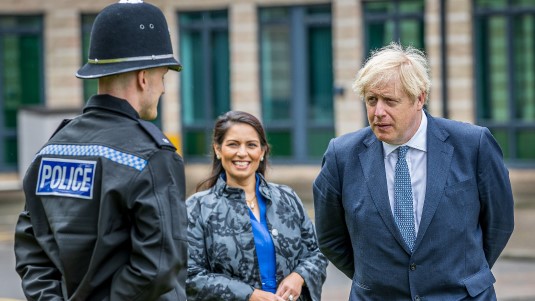
According to advice from someone paid to tweet for a living, the left should be giving Keir Starmer a hearty pat on the back. The changing of Labour's position on the police powers bill from fence sitting to opposing is a plus for the left, and we should be magnaminous in victory. Okay, because it is entirely normal to congratulate a Labour leader for belatedly coming to the defence of basic democratic freedoms. Perhaps we should heave laurels over him for opposing the Tory one per cent "pay rise" for NHS workers, and occasionally affirming other elementary labour movement values. But let's be clear here, Dear Keir has not reversed gear for principled reasons. Following the Met attack on Clapham Common's women's vigil, the optics were so bad the party's failure to oppose would crater his already tanking numbers. And we know this goes against the grain of his instincts because he refuses, as the barest minimum, to call on Cressida Dick to take responsibility and resign. On this, even the Liberal Democrats are better.

One can fulminate against the Labour leader, and readers are welcome to on the social media platforms of their choice. Yet, it's not enough to condemn, it behoves the left to understand so we know where the pressure points are, the trajectories of "Starmerism", and how in the future Keir's leadership will prove itself a blockage. We've learned, for example, on matters of working conditions and pay he'll keep mum if trade unions are involved. On the Coronavirus crisis, it was obvious just five weeks into his leadership that he wouldn't contest the politics of pandemic management, only offering suggestions when it was deemed politically safe to do so (compare and contrast with his predecessor). And on law and order matters there's no way he's going to let the Tories paint him as soft - and so we saw the disgusting spectacle of Labour officially abstaining on the spycops bill. Awkward editorials in Tory papers meant more to him than accountability for rapist undercover coppers.

Let's get down to brass tacks. Keir's reluctant opposition to the police powers bill has three roots tangled up with one another. There is his authoritarian personality. Having helmed the CPS after shivvying up the greasy pole, his leadership of the Labour Party exudes the managerialism of someone habituated to the command and control of a bureaucracy than an (ostensibly) democratic political party. And, without picking over the entirerty of his record while in post, Keir wanted to throw people who'd overclaimed social security into the slammer, refused to prosecute anyone in connection with the police murder of Jean Charles de Menezes and went out his way to protect the security state. And, of yes, there was the time Keir Starmer wanted to make it easier to lock up protesters. By inclination and practice, Keir Starmer is no friend to democracy. Quite the opposite.

Unsurprisingly, the authoritarian personality finds authoritarian politics congenial. Once the Corbyn-lite frippery of the leadership contest was dumped, Keir revealed himself a grey technocrat flanked on Labour's frontbench with snoring mediocrities who'd never threaten to upstage the leader. And the politics? Starmerism, in as much as it is a thing, is entirely top-down. Congruent with the Fabian tradition, it amounts to a prospectus in which people vote Labour at elections, the politicians then get on formulating policy and governing and everyone else goes to sleep for four or five years until polling day comes again. It is instinctively antipathetic toward extra-parliamentary mobilisation, and distrusts trade unionism because they are harbingers of and catalysts for mass politics. Which, in case anyone needs reminding, escapes capture by plodding MPs and official oppositions frightened of actual opposition. How Keir Starmer acts in the Labour Party is a foretaste of what he would be like in government, not that he'll get there at the rate he's going.

And lastly, there's the official reasons for his going gaga over the police: because the focus groups. Never before in Labour politics, not Ed Miliband, not Tony Blair, has the party been as led by the dubious wisdom of randomers plucked from select marginal seats. To think there are Tory voters residing in Mansfield, Stoke, Walsall, and Durham who, in their two-hour Zoom call with a LOTO dogsbody, have had more input on party policy than members who've rendered Labour decades of service. Keir Starmer's leadership is the antithesis of the vanguard party. Instead of getting led by the most conscious or the most "advanced" workers, Labour's path to dissolution is thanks to tailing the most backward. The irony is (unrequited) public love-ins with the police looks fake, desperate, and isn't about to beat the Tories at this game anyway. All he's managing is to drive away Labour's actual core vote without winning over the "red wallers", swing Tory voters or, for that matter, the LibDem leaning.

It's interesting. Take a managerialist personality, pair it with an authoritarian politics, and, in this instance, the result can only be described as abject cowardice. Not only does this deserve condemning on its own terms, but is proving disastrous according to the polling metrics the "grown-ups" fetishised and clung to during Jeremy Corbyn's time. As Keir isn't about to change, the prevarication and hasty about turn over the police powers bill promises more frustration and failure in Labour's immediate future. Can the party turn this around? A lot depends on the Tories because thanks to a pitiful and petrified leadership, Labour has long ceased making its own weather.

Image Credit

Sunday, 14 March 2021

The Tory Attack on the Right to Protest

Within hours of writing on institutionalised sexism and misogyny in the police, the Met proved the thesis by piling in and attacking women at Saturday night's Clapham Common vigil for Sarah Everard. As plenty have pointed out, the old bill are all kid gloves when it comes to footy fans and anti-mask whingers, but women are fair game. For the Tories, however, the Met's violent outburst was not the most convenient of timings. On Monday, the Police, Crime, Sentencing, and Courts Bill comes before the Commons for its second reading. The proposed legislation is classic tough-on-crime populism. Longer sentences, stronger protections for emergency workers (above all, the police), new rules on electronic surveillance, and much else besides. Guaranteed to go down well with the yellowing grass roots, the core support, and the editorial offices then. However, what might have expected to sail through without much opposition save from the usual suspects on Labour's benches (the party was set to abstain, until this morning), the LibDems, Caroline Lucas and one or two Tories, and some criticisms from the liberal press, the Met's riot has drawn attention to the draconian and authoritarian provisions of the bill.

The bill wants to give police powers to restrict a protest if ... it's overly noisy, and might therefore "disturb" passersby or organisations going about their work. For example, tonight's demonstration outside Scotland Yard could, under these powers, fall into this category if the coppers inside deemed the chanting and shouting was stopping them from pushing papers or whatever. Hence the possibility of disrupting an organisation is now reason enough for the police to break up a protest or a demonstration which, when you consider it, is the whole point of a protest in the first place. Likewise as picket lines tend to be quite an annoyance to the employer concerned, you can see the potential for mission creep away from street activity to any form of protest at all. Recalling the smallest march I've ever been on - a mobilisation of some 16 people in solidarity with striking civil servants - if the police believed it might inconvenience or upset anyone at all, they could have clamped down on it. Thought the Tories were against snowflake culture? Well, no. In fact, anyone charged under these laws can face a maximum tariff of 10 years in prison, and the burden falls on the defendant to provide a "reasonable excuse" for causing "serious annoyance."

A dog's breakfast of a bill then, and one left purposely vague to allow for maximum application where and when the police see fit. It basically gives them what they want. But why, though? The labour movement remains relatively quiescent, and the street movements of the last couple of years - Extinction Rebellion and Black Lives Matter - hardly pose Tory political dominance, let alone their state a threat to warrant such a blunt instrument. Constructing a coherent account has to proceed at three overlapping levels. At the most abstract is a generalised authoritarian turn among most states. This has been the case in Britain for the last 40 years, but few are the liberal democracies to have relinquished powers. This has to do with the evolution of state institutions and the difficulties governments have governing increasingly complex societies. The second is Tory statecraft itself, or its habit of governing: centralising the powers of the state and concentrating them in the executive is the same project Thatcher embarked on in 1979, and has been vigorously pursued by Tory Prime Ministers ever since. But here we're going to focus on the day-to-day politics of Johnsonism in government.

Understanding the new restrictions on the right to protest goes to the heart of the (Tory) politics of their electoral coalition. As discussed here more times than I care to remember, the typical Conservative voter is older, retired, and are owner occupiers of their home. They are also relatively secure: a mix of the state and occupational/private pensions are enough to keep the wolf from their door, and their incomes are protected from the Tories' ongoing cuts programme. A significant minority enjoy income boosts from modest levels of share ownership, and rent payments from second or third properties. Yet, the absurd flipside of their security is experiencing it as profound insecurity. As older people who are either retired or don't have much time left in work, making good any personal disasters through earnings is difficult: they know how fixed their income is. Second, particularly among retired people, being outside of the workplace removes the element of compulsion from their lives. No bosses to answer to means they are free to follow their inclinations as much as their resources allow. Retirement then individuates everyday life, albeit with a tendency toward atomisation and social distancing between them and their former life. And with property ownership, this individuation is consolidated as one frets about property values, the behaviour of tenants, and returns on stocks and shares. This is productive of a subjectivity and outlook not dissimilar to that of the small business person: a terrifying world in which fate could strike one down at any moment.

Why does this tend toward Tory support? Because they promise security while stoking their angst. From Marx onwards, political sociology has noted how the petit bourgeois gravitates toward authoritarian politics and traditional institutions. This is because they provide (illusory) certainty. The world might be rough, but the monarchy endures. Threats rise around me all the time, but strong government will put them in their place. I don't recognise the country any more, so let's go back to the tried and tested truths of a better past. In short their becoming is stunted, and this being conditions consciousness. With the adjaceny to small, petty capital, the ontology of the older/retired worker has resulted in millions becoming receptive to a politics that appeals to and deepens petit bourgeois habits of mind among them. Sticking on topic, the appeal of smiting criminals depends on the Tories and their press talking up fear of crime. Likewise, pushing uncertainty (something plenty of its politicians and thinkers feel keenly) can attach itself to scapegoats who condense their fears for a future in which they are left behind. Hence, traditionally, the potency of anti-immigrant populism has proven a favourite. But other groups do just as well. The undeserving poor are harbingers of a Britain that will be on its arse, unless they show the pluck and determination of better Britons (i.e. (formerly) hardworking Tory voters). Black Lives Matter distills yet more fears, particularly of a Britain that isn't Britain any more, the prospect of a country forgetting its glorious martial past, of when it used to stride the world as top dog and therefore when things were better. Brexit was for millions of these people a rebellion against the course of history and the kind of terrifying - for them - destination BLM points toward. The Tories know this, which is why this legislation is aimed at hammering a group of people it has designated as undesirable. Seeing BLM activists, or young people generally getting carted off in police vans is a projection of their felt impotence, a cathartic and mediated lashing out at their imagined enemies. It confers a flash of satisfaction, but it's not long before the ontological itch demands scratching again. And for as long as these conditions of social life persist for their supporters, the happier the Tories are dishing them out.

This is why appeals to the Tory politicians' conscience, or persisting in the naive belief that they're merely mistaken or wrong are doomed to fail. As are, sadly, appeals to Tory voters' better nature, or liberal stat-splaining of the follies of their choices. Shaming has zero effect. Knowing the Tories is one thing, but coming up with an effective counter-strategy to disorganise and loosen their hold on millions is quite another. But what is certain, pandering to these concerns can never win them over because the Tories do it so much better. You cant beat them by effectively joining them, but going around them by mobilising a coalition in opposition and having modest strategies aimed at chipping some of their coalition away. When politics is polarised, and the Tory strategy amounts to keeping it this way, the option is limited to one: this.

Image Credit

Saturday, 13 March 2021

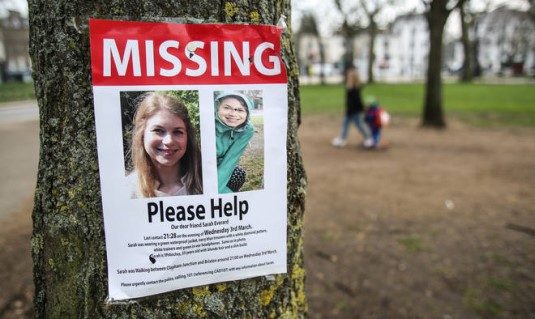
Her Name Was Sarah Everard

Her name was Sarah Everard, a woman who was just going about her business. She wore bright clothing on the night of her disappearance and stuck to well-lit streets. She had taken the well-meaning advice issued to women who find themselves outdoors after dark, and this wasn't enough. Someone - a man - decided to make this irrelevant. He decided to abduct Sarah and end take her life. If anything good is to come from this disgusting crime, let it be a change in the politics of women's safety. And it can start with changing the terms of reference: the politics of male violence. It's not like women fear going out alone at night because a force of nature will assault them. It's time a spotlight was shone on the behaviour of men, because what happened to Sarah was no isolated incident. Violence against women lies on a continuum ranging from commonplace harassment, comments on the street, unwanted and unasked for attention online, physical and mental domestic abuse all the way up to rape and murder. This is not a case of one or two bad men. This spectrum of gendered violence is sustained by the actions and complicity of millions of men. Perhaps even by some reading these words.

Entitlement, predatory behaviour, indifference to women's safety and women's voices, it's interesting and telling how social media reaction, including by some women who should know better, have responded by pretending there isn't a problem. That violence toward women by men is not a structural characteristic of gendered relationships and a lived reality of all women. When encountering this resistance to looking at how so many men subject women to intimidation and violence, you're forced to ask why. Why are many men resistant to taking this seriously, or keen to conscript this to Britain's dreary culture wars? Have they something to hide? Scared of confronting their own culpability and responsibility for making women feel unsafe? Unwilling to accept they benefit from the privileges, however meagre, being a man affords them? Is it a fear of being shown up to be a pathetically fragile human being?

There are another set of questions too. While the chief suspect, who's now been charged, is a serving officer in the Met, we know there is an outstanding indecent exposure case against him. Without pronouncing on his innocence or guilt, he's entitled to a fair trial after all, we need to also talk about the institutionalised sexism of the police. Last year we had the appalling case of coppers taking selfies with the bodies of Bibaa Henry and Nicole Smallman, two murdered women of colour. The pitiful level of rape convictions, which shoud be a source of national shame, fell to an all-time low since tracking began in 2009. Domestic abuse incidents were up nine per cent in 2019-20 on the previous year, while arrests were made in just 34% of cases and referrals from the police to the CPS for charging fell almost by a fifth. And of coppers found to have committed gross misconduct on the job, only 8.4% were dismissed from post. A case of there not being enough female officers? Or a matter of gender imbalances reflecting a male-centred sexist institution?

The culture of the police not only reflects the character of wider society with its abuse and disregard for women, black, asian, and other ethnic minorities, and LGBTQ people, it concentrates it. The police might attract those who want to "help people", or are sucked in by the usual thin blue line nonsense, but it also takes recruits from the last people you'd want in a uniform. Because it is the most visible and highest profile arm of the state as a violent institution, we find it selects the violently-minded, the bigoted, and those not just happy with the inequalities and crap this society throws up but are prepared to put themselves at risk to defend it. Sure, there are nice coppers. I know quite a few who've done time in the force. But they do not disprove the sexist, racist character of the institution they worked in any more than a friendly Tory councillor challenges the idea their party looks after the minority class interest.

Naturally, those on the inside do not see things this way. For serving police, they view their job is a never-ending slog against the dregs of society, or the "evil poor" as the celebrated copper-turned (ex-)blogger NightJack once put it. This is a grim, dirty business but someone has to do it. Therefore, if a suspect gets roughed up a little too much, or a collegue spouts racist, sexist bullshit, or uses their position to harrass or accidentally-on-purpose assault women, it's no harm done. A perk even when faced with the worst of what humanity can throw. Such a culture inculcates a sense of impunity and entitlement, and given the degree of solidarity and occupational identification among coppers so much of it is brushed under the carpet. But it cannot be repressed forever. It struggles to the surface and we see it in the lack of interest in sexual offences cases, domestic violence incidents and, naturally, the dismissive attitude towards complaints against their own.

I feel so sorry for Sarah Everard, but we know she's not going to be the last. Until we deal with men's violence and the social relationships allowing for and encouraging it, and the police are confronted not just over their systematic failings but its core institutionalised sexism and routinised misogyny, no woman is safe.

Friday, 12 March 2021

Sonique - Sky

I can't believe this one hasn't had an airing on this website before.

Thursday, 11 March 2021

The Tory Politics of the 1% "Pay Rise"

The Tories are imposing a one per cent pay rise on NHS workers. Which, thanks to inflation and the projected five per cent increase in council tax everywhere, is really a pay cut. This has upset and angered a lot of people. According to polling by Opinium, 72% thought the pay "offer" should be more generous, with 58% of self-identified Tories also agreeing. Interestingly, 51% said they would support strike action of nurses against the derisory settlement versus 36% opposed. There's something in the air ...

Not in free circulation is an appreciation of the problems the Tories have got themselves into. Their line isn't working like they hoped, but sadly some comrades refuse to see the mess in front of their faces. There are otherwise sensible people seemingly believing the attempted imposition of one per-cent isn't a screw up, but rather a clever-clever game of rank manipulation. It's all part of an elaborate master plan.

Look, the Tories know how to manage politics, but they're not ominpotent. There's nothing supernatural about their mastery of the dark arts. For instance, let us consider the proposition being pushed, that the Tories are pushing one per cent so they can get away with awarding their real "offer" of 2.1%. They'd be seen being a listening government and, presumably, when the inevitable cave-in comes and this will translate into favourable polling ahead of this May's Super Thursday. Yet this doesn't make sense. On Wednesday at Prime Minister's Questions, Keir Starmer waved around his bit of paper reminding the assembled honourable members that 2.1% was already budgeted for and had been voted through by the Tories in January 2020. The question is if the Tories wanted to look good, they should have simply implemented this instead of damaging themselves and their standing in the eyes of those equivocating voters who've recently travelled back toward them thanks to the vaccine bounce. Bouncing back like this just doesn't happen in politics in the absence of a clear out of the incumbent leadership.

This tendency to ascribe the Tories horrifying power comes from a failure to appreciate them as a collective political actor. They operate with numerous advantages, but like all parties they can make mistakes. Decision-making and policy in the Tory party is highly centralised and, like any other political actor, its leadership cadre make judgement calls on the basis of evidence, feeling, commitments, lobbying/favours, strategies, etc. They are also conditioned by the push-me-pull-you of internal politicking, factionalising, ministerial rivalries, and pressures from outside - both that perceived coming from the wider electorate and what the chief executive whispered into minsters' ears over dinner. Even if one is armed with the most accurate appreciation of what politics is and the probabilistic character of social relationships, the correct call is by no means guaranteed and things go wrong. Misreadings are a commonplace, and the one per cent pay "increase" is such a moment.

What is the Tory thinking in this instance, given how we find them willingly and unnecessarily risking their authority over something that is marginal to their project again. There's the ongoing cuts to the NHS, which amount to running it down so it can be offered up cheaply to those whose nests the Tories have generously feathered throughout the pandemic. But of more consequence is the concerted efforts of the government to dampen down expectations after Covid has abated. They have navigated the crisis with some political skill. They're not on the hook for 125,000 deaths, nor the economic cataclysm, and so there's no real reason to believe they can't win the peace - especially when the official opposition has barely challenged their overtly politicised management of Covid-19. The Tories want things to go back the way they were, and holding down public sector pay - including NHS workers - is a statement of intent. It's a reminder to state employees who's boss, so be grateful you have jobs and don't rock the boat, and to assure their support among the fractions of capital, big and small, that stoking the fires of higher wage claims won't be among their worries once an approximation to normality resumes.

And they thought they could genuinely get away with it. One thing about these Tories. Their political management of the big issues is skilled, but on day-to-day tactics they acquire butter fingers and drop the ball frequently. Lockdown timings, holiday hunger, food parcels, and now NHS pay. Other concerns appear to crowd out Tory nous and hubris sets in. A majority of 80 and a fondness for old-style Dave/Osborne strivers-vs-the-skivers assumptions would tend to do that, and as this keeps happening there's no reason to believe it won't happen again and they'll make a pig's ear of another tactical matter. Therefore, the labour movement must be alive to the likelihood of more mistakes in the future, and the potential they have for mobilising opposition. Already the government have partially retreated from their money's tight/we're all in the same boat positioning to awaiting the outcome of the independent pay review, but the constant talk of strike action and evidence of mass anger can force further retreats. And if they cave on NHS pay, the road is open for public sector workers first, and then workers more generally to make demands and organise around them. And once we move and move decisively, the Tories' omnipotence is really shown up as impotence.

Image Credit

Wednesday, 10 March 2021

To Labourism and Beyond

I do admire Paul Mason's brave attempt to paint Rachel Reeves's recent big (and largely unnoticed) New Statesman essay in left wing colours, but it is nevertheless an interesting moment in the slow evolution of "Starmerism". Not least because the article, Our search for a national story borrows a lot from the left's analysis of the last 40 years, and why British capitalism is on the skids. A backhanded if unacknowledged complement? It just goes to show the depth Corbynist commonplaces have reached even among those for whom such arguments were anathama a few short years ago. This said, while Rachel's argument certainly isn't big C Conservative, it is big L Labourist, and that's where the problems are.

There are two things about the piece worth noting. There is the recognition of the depleted state, which we have seen in haphazard and dysfunctional action thanks to Tory cronyism and the abject failure of those aspects of pandemic management outsourced to party donors. This is thanks to decades of under-investment and dogma. Contrasting what happened after 1979 as opposed to the broadly communitarian thrust of post-war policy, Rachel argues after this time,
... the UK economy was reshaped around a much narrower set of interests. Many of the national assets built up over the postwar decades were sold off or run down. No other Western country has allowed so many of its strategic assets, great companies and public services to be captured by overseas interest. Rather than investing the proceeds in the modernisation of our manufacturing base or in our people, tax cuts were awarded to the rich, North Sea oil revenues were squandered when we could have created a Norway-style sovereign wealth fund, and great British industries – and the jobs that went with them – were left to collapse faster and more precipitously than those anywhere else in Europe.
Pretty standard left fare, I'm sure you'd agree. She goes on,
Meanwhile the state itself was being marketised and privatised. Outsourcing created a shadow economy of crony capitalism: unaccountable, extremely lucrative and frequently ineffectual. Money extracted from the public sector was handed to wealthy directors and shareholders. The consequences have been stark: deteriorating standards, mismanagement, corporate greed and, in the case of the construction firm Carillion, self-destruction. Working people paid the price in lost jobs, incomes and pensions.
The regular critique of neoliberalism, in other words. This is followed up by her observing that while Labour in government invested more in public services, it "maintained the country’s overreliance on outsourced provision" and came round to the idea of a state-led industrial strategy too late. Which is true, it was only after Gordon Brown had seen off the worst of the global crisis and Peter Mandelson returned as the trade and industry supremo that "industrial activism" as it was termed became a serious policy option. But this is where we encounter one of many self-imposed limits on the discussion. As a Labour politician firmly on the right of the party, I can understand why this potted history of Thatcherism and Blairism might skimp on details, but if we're to have an honest reckoning with these years we need to incorporate two standpoints. First, the further depletion of the depleting state under Tony Blair and Gordon Brown was neither an oversight nor an honest mistake. It was a carefully calibrated authoritarian project designed to bed down corporate welfarism through outsourcing and marketising strategies, while pushing the semi-autonomous governance on the public sector and its clients. If this was not bad enough, the second problem concerns New Labour's short-sighted stupidity. This was the intended, entirely deliberate and enthusiastic effort to undermine the labour movement and disaggregate working class institutions and consciousness. Stupid because this is eating away at the basic spontaneous politics that predispose our people to supporting and voting Labour in the first place. And what do you know, this is precisely what happened. The 2019 result, coming after the wipeout in Scotland in 2015, was only in part thanks to strategic errors, leadership blunders, and infighting: it was a culmination of a process well under way before Blair had completed his first term.

Of further interest is Rachel's own embellishment of Keir Starmer's ham-fisted patriotic turn, and she does a much better job of it. Instead of the embarrassing flag 'n' family nonsense, she locates labourism's place in the country's national story. As she puts it,
What we sometimes call “British values” – democracy, the rule of law, individual liberty, tolerance and mutual respect – are not “British” because they are unique to our country, or found in our blood or in the air. They are a product of our history and of the struggles of working people. Our values have been shaped every bit as much by those who have chosen to make this country their home, as those who were born here.
Rachel talks about the "expansion of our national community", which is a natural outgrowth of working people pulling together to overcome the Nazis, rebuilding the country after the war, and the insecurity of "unrestrained markets." As Labour was founded as the political voice of working people, the party was a central actor in building the physical and cultural infrastructure of Britain. "Labour spoke in the name of the people against the private interests that held back investment, slowed the modernisation of the country and clung on to undue privilege. It stood for fair rewards for workers, and for greater security for families, communities and the nation." This is the distillation of Labourism as it conventionally sees itself. Less a movement of workers organising around the separate and ultimately antagonistic interests of our class vs capital's vampiric exploitation and theft of our time, hers is a story of workers securing their rightful place in the nation as a recognised and valued partner to business, the landed interest, the state, the lot. Therefore Rachel's brief people's history of the 20th century appears to have a radical and class-based sheen, and is broadly accurate considering the contours of the last hundred years, but stays well within the Labourist boundaries of her narrative.

It's interesting. To keep inside the political limits she's set herself, Rachel is forced to recognise, in fleeting glimpses, the realities of class struggle. Capital's minority interest is identified, the fact of tension and conflict is acknowledged, but systematically expounding on them is too much to expect. It would expose the illusory foundations of her own position for a start, and so the fact of struggle has to be repressed at the very moment it comes to light. It has to be buried because what her essay leads into is a particular kind of post-Covid recovery: national renewal with government working with "all those prepared to put national reconstruction first – managers, small business owners, workers, unions and beyond." In other words, one can speak about the genie in hushed, perfunctory tones but it mustn't be courted. The proper job of the labour movement is never to get serious about its interests and instead return a cadre of specialist administrators and technocrats who'll look after them when in office. Rachel's prescription is, unsurprisingly, purest Fabianism.

Don't get me wrong, this prospectus is much better than anything the Tories can offer, and in the slow becoming of the rising class of new workers a Labour government along the lines outlined in this essay can assist in this process by offering more economic security, greater opportunity, new forms of collectivism, and deepen the development of immaterial labour. It can, perhaps despite itself, help tip the balance toward labour and away from capital. But the struggle doesn't end when Rachel takes up residence in 11 Downing Street. In many ways, it's just beginning.

Image Credit

Tuesday, 9 March 2021

Sacking Piers Morgan


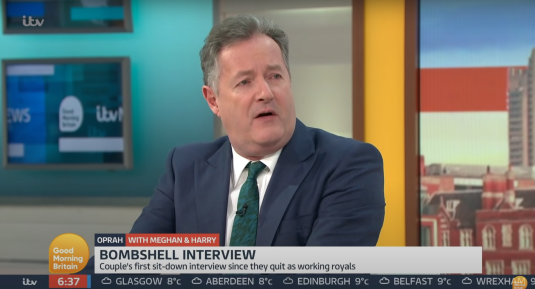
It was one rant too many. Having vented his Meghan obsession following that interview, professional arsehole Piers Morgan finally got his comeuppance. Criticised on air by Good Morning Britain's weatherman, Alex Beresford, the straw that broke the braying donkey's back was the entirely correct observation that Morgan's antipathy to the Sussexes was thanks to Meghan breaking off their acquaintance. He couldn't handle the detonation of a truth bomb of this size and, in the best tradition of egotistical manbabies, he stormed off the set. See for yourself.

And now he's gone. According to the write up from ITV, Morgan has merely "left his role as presenter." Were 41,000 complaints and an Ofcom investigation too much even for the GMB bosses? Or was his sulking, skulking escapade something of a fatal wounding, a big mouth who was shut up by a bit-part player in the GMB line up? Not a good place to come back from when your shtick is an obnoxious line in hard questionning. This wasn't a triumph of decency, as if the executives have ever cared about that, but putting a wounded animal out of his misery and avoiding his contaminating the GMB brand beyond recuperation.

Where now for Morgan? I'm sure not many people care, but he'll find something. A berth at the Mail or Express maybe, a new national platform to cry about his cancellation. A path well-trodden by other whingeing right wingers complaining about their marginalisation in the pages of mass circulation titles. Social media has speculated about a slot on GB News, the great white hope of the Tory culture wars. It depends if it has pockets deep enough, and the station is capacious enough for a simultaneous accommodation of his and Andrew Neil's egos.

Morgan's obsession with Meghan is a high profile example of a depressing commonplace. Here is a comprehensive trove of obsessive Morgan tweets about her. Simply put, here was a man who couldn't handle how the object of his preoccupation rejected him and moved on with her life. Compounding this psychic wounding was the dramatic upending of their positions in the celebrity firmament. According to this syndicated Mail piece, by his own account he was flattered by their initial contact and clearly cast himself as a gatekeeper (or sugardaddy) willing and able to leaver his superior standing in the celebrity firmament to help her career along. For what in return we can only speculate. And then she met Harry, leapfrogging him in the rankings and leaving Morgan nursing his bruised entitlement.

Where have we encountered this before? Oh yes, in the comings and goings of everyday life. All those uncounted occasions of men treating women like property, of assuming an entitlement to women's time and attention. And if women dare brush them off, ignore them, or leave them, then woe betide the consequences. How many women are stalked and harrassed by former partners? How many women attract unwanted and uninvited attention from so-called admirers, or just men wanting to impose themselves on their lives in some way? Millions. And that's in this country alone. Morgan simply used his position to try and impose himself on Meghan, firstly with creepy flattery and overfamiliarity, and latterly deployed his considerable national platform to subject her to unending abuse and character assassination. If the press wasn't simply a plaything of moneyed interests, then perhaps he'd be the one receiving condemnation for his shitty and entirely willful behaviour. He'd have to account for his actions. Not the woman who spurned his unasked for admiration and had the nerve to couple up with someone way above his exalted station.

But there is a positive here. While the reasons for Morgan's departure are somewhat murky, it is being perceived as a blow struck against the snarky, obsessive and, yes, racist coverage that is the British media's stock-in-trade. And it's part of a pattern pointing to a slow but certain marginalisation, an uneven glacially-paced cancellation of right wingers from television media for whom boorishness and Morgan-style ranting is their bread and butter. Who follows Jeremy Clarkson any more? What happened to David Starkey? Won't someone give Laurence Fox a break? Indeed, the formation of GB News is a direct response to this slippage and, with any luck, will be a ghetto for the freakish and backward, a place of no more consequence to politics than Parler is to the global social media landscape. For that reason, it is okay to chalk up today as a good day.

Image Credit

Monday, 8 March 2021

An Inconvenient Rebellion

If you're looking for the hottest of takes about that interview, Ash Sarkar has more than delivered. On the comparisons between Harry/Meghan and Diana, on fleeing The Firm and finding a replacement, and the contrasting characters of the oligarchies in the UK and the United States you'll seldom find a better piece. Marxists don't normally do the Royals, and so it's a refreshing alternative to the lickspittle content, the fawning over the Queen, and the faux outrage from Piers Morgan and his ilk.

What the Oprah Winfrey interview has shown is how nothing has fundamentally changed since Diana's day. In happier times having William, Kate, and Harry roving around and continuing her patrician good works was excellent PR for the Royals. A youthful rebranding in which the young royals spoke (semi-) candidly about mental health, and made soft noises about climate change and racial prejudice was just the tonic. An update of a venerable institution for the 21st century. But Meghan and Harry's revelations about the bullying, the silencing, the lack of support, the policing of their movements by palace flunkies and, of course, the claim a senior royal made tut-tutting noises about their son's skin colour goes to show the royal makeover was woke wash. Under the hood thrummed the same old racism and ruthless regard for nothing but the continuance of the institution in the reverent style it had grown accustomed.

On the rare occasions this place has pronounced on royal affairs, we've visited the successful rebrand and, latterly, a certain indifference concerning their comings and goings. Indeed, to understand the popular perceptions of the royals and particularly the antipathy Harry and Meghan attract is partly located in their being royals of second rank. The institution as a whole, of course, is venerated because its eternal character offers a point of fixity in a vastly changed world, undoubtedly helped by the very long reign and very long life of the Queen herself. She did her bit during the war, oversaw the end of empire, post-war "socialism", the crises of the 70s, the dog-eat-dog of the 80s, and the irreverance of the 90s. Her time has seen off all challenges, from infidelity, divorce, untimely deaths, to fallings outs and the persistent stench of sexual abuse. There she is, stoically cutting ribbons and clutching her handbag. The nation's repository of good, old fashioned British values: duty, persistence, honour, sacrifice. The reason for her popularity, particularly among older people, is because they believe she instantiates all that is best about them.

How about the others? Charles's life in the public eye has foolishly courted controversy, not least over his opinions on architecture and, if you remember them, memos to ministers. Yet, despite not sharing Mummy's popularity he retains her sense of duty. Something William has also embraced and reinvented, and so the first and second in line to the throne command a certain respect. However, outside of the core spine of the royals the rest of the family are viewed differently. Margaret was seen as an old soak of little consequence. Anne a dutiful and workmanlike second rank royal who earns her crust. Andrew, well, and Edward, a soft-hearted luvvie not cut out for a martial life in the military or for much else. Harry for his part courted outrage as a young man as the press pursued his partiality to wine, women, and song, let off when he tagged along with his brother and sister-in-law on high profile public engagements and did his bit for former servicemen and women, most notably with the Invictus Games. But then Hollywood came into his life in the shape of Meghan Markle, a mixed race woman with a previous life and an unscrupulous father happy to grift by association. As a commoner, an American, and a woman of colour, she was received by our repugnant press as a grasper and a gold digger, and therefore another mouth at the taxpayers' trough. As a second order royal with no line of succession to the throne beyond a series of unlikely accidents, this undoubtedly emboldened the press to harrass and treat them like any other celebrity. And, it seems, The Firm were happy with this arrangement. If Harry and Meghan are tabloid fodder, the core of the royalty are left alone - so no deep dive stories about William's infidelity to queer the pitch, or scrutiny of Charles's idiot opinions, or damage-by-association courtesy of Andrew's associations with Jeffrey Epstein.

What The Firm didn't plan for was Harry and Meghan's rebellion. As royals, they were economically dependent on carrying on as royals. And so when they announced their "retirement" as royals the palace moved with its customary ruthlessness to expunge them. No support, no allowance, no nothing. However, as Ash Sarkar rightly argues, they had options and could leverage their connections for a new life in America where British media scrutiny is less intense. as far as the core of mass royalism is concerned, running off and dishing the dirt just confirms what the press have said about them all along: they were unworthy royals. They weren't prepared to do the honourable thing and stick by their duty. They were flaky and wanted an easy life, just like how many older royalists view the young in general. The racism, the inhuman treatment, the claims of suicidal thoughts and mental health problems - convenient lies to justify their selfishness and lack of fortitude. Their departure nevertheless leaves The Firm with a problem as far as media management goes. Apart from periodic stories about the ex-royal couple, will the carnivorous press respect the first order pillar of royalty as we enter into the period we might euphemistically refer to as the "handover"? Given Charles's comparative lack of standing, re-establishing the Queen's hard won reverence was always going to be difficult, and becomes much harder if his peccadilloes are once again fodder for content-hungry editors. This, ultimately, is the significance of the estrangement of Harry and Meghan: the royals now have to do without their shit catchers.

It is tempting to treat the royals as an unexciting, glitzy soap opera. But we must remember The Firm are a core institution of the British state. While not meritorious, the family are emblematic of their being something special and/or other worldly of those constituting the British ruling class. An ancient institution, it is also the repository of the essential, timeless quality of the nation, and constitutionally is the guarantor against democracy if it gets, well, too democratic. If the Harry and Meghan saga makes its position harder to manage and altogether more vulnerable, then the interviews and its fallout is all to the good.

Image Credit

Happy International Women's Day

Socialist greetings to women comrades everywhere.

This year, like the last, celebrates the exploits of women soldiers on the eastern front during the Second World War. Here from Mark Felton's superb military history channel we remember the contributions of female snipers and particularly Roza Shanina, dubbed the 'Terror of East Prussia' by the Canadian press.

Sunday, 7 March 2021

New Left Media March 2021

We're in the third month of the new year already and new media projects are springing up everywhere! Give them some of your time, and if you like them support them!

1. Amplify Stroud (Twitter) (Blog)

2. Ann Narkeh Media (Twitter) (Meme Factory)

3. Good Sense (Twitter) (Podcast)

4. INCURSIONS (Podcast)

5. JohntheDuncan (Twitter) (YouTube Channel)

6. Labour in Exile (Campaign Group and YouTube Channel)

7. Labour Organiser (Twitter) (Journal)

8. LEFT/OVER (Twitter) (Podcast)

9. RUPTURE Radio (Twitter) (Podcast)

10. Ten Thousands Posts (Twitter) (Podcast)

11. The International (Magazine)

12, World Outlook (Blog)

If you know of any new(ish) blogs, podcasts, channels, Facebook pages or whatever that haven't featured before then drop me a line via the comments, email, Facebook, or Twitter. Please note I'm looking for new media to have started within the last 12 months or thereabouts. The round up appears when there are enough new entrants to justify a post!

Image Credit