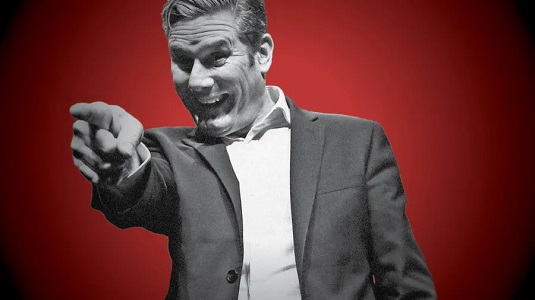
Thanks to The Times by way of the ridiculous Corbyn book, Left Out, news reaches us that Ian Murray was all set on being the eighth founding member of our old pals The Independent Group/Change UK/The Independent Group for Change. Some might congratulate Murray for making the right decision to stand by the red team, but I'm not one of them. Having pulled out from TIG/CHUK's opening presser at the 11th hour and electing to stay has condemned him to drawing his handsome Westminster salary and getting to play the Big I Am in Scottish politics trading off his last man standing/shadow Scottish secretary shtick. Someone much more capable and honest could have had the seat he's now squatting in. Unlike the others who traded in their seats for the boards of water companies, trade union-busting consultancies, and chairing the pressure group for bailiffs. According to the people he's been yacking to, “I didn’t want to hand my seat to someone from the Corbyn wing of the party and felt loyalty to all the people who had worked so hard to help win over the years" was the post-facto justification. The same article also says that if the seat had fallen to the SNP (which was a doubtful prospect), he'd have suffered "major reputational damage." Hard to sell yourself as a competent consultant if you appear too self-interested, though it hasn't slowed down his contemporaries. He goes on to say "All my life I’ve fought for a Labour government", except for the past five years when he did all he could to prevent one from happening. Scabby behaviour like Murray's is nothing new to the Labour Party. It takes place at all levels and is, in many ways, inscribed into the political DNA of Labourism. As a party wedded to forming majorities in Westminster as the sole (permitted) agent of social change, many of its MPs think they were elected on the basis of how wonderful they are as opposed to the Labour ticket they ran on, which in turn gives them license to behave as they please. The utter failure of Murray's would-be confederates last December would, you think, drive home the brute fact of MPs' dependence on the party label for electoral success. But it won't. And then there is the privilege afforded the back and forth of procedure, votes, committee hearings, and the rest of it. This is a venue for compromising or, if you want to be blunt about it, peddling away principles and the interests of constituents for a minor policy concession here, or a bit of preferment there. John Mann and Ian Austen being prime, but by no means unique examples of crapping on the people who put them into the Commons for Tory approval and cash. Labourism's exclusivist parliamentarism therefore insulates those on the inside from the pressures on the outside, a position that simultaneously flatters them as artful practitioners at the top of politics and people who know its realities (and secrets) better than the constituency activist and trade union branch secretary. It's a place where banalities like "we need to win elections" become profundities, and factionally convenient myths assume the status of eternal truisms. This is the lot for most Labour MPs and why they tilt toward reconciling themselves with the received way of doing things - it's a social thing, not just a matter of personal failing. Ian Murray is a creature of this environment, a duplicitous toad inhabiting his pool alongside all sorts of pond life. He should be sacked from his shadow role, sent to the back benches and face deselection. But he won't be. His fate as Labour's token Scottish MP in this parliament is assured, and makes him invulnerable to shenanigans, scandal, and the consequences of his own banal, unremarkable mediocrity.
NB What do you know. Ian Murray was also in negotiations with the Liberal Democrats about defecting. Charming. Image Credit
Many of us do bullshit jobs, or have jobs that come with thick layers of bullshit. Here's David Graeber, who sadly passed away yesterday, talking about the five broad types of bullshit jobs that exist. Rest in power, comrade.
Writing about video games is a difficult business, so compiling a six-part documentary for Netflix must have been a nightmare. Yet a critical piece could be done on the restrictive practices of hardware manufacturers, the toxic work cultures of programming, the questionable tropes recycled endlessly into games, and how games have contributed to the gamification of life and work with its metrics and endless apps for quantifying the self. Sadly, High Score, which began streaming in late August, did none of these things. If the problem with the bulk of writing about games is its refusal to break with the evaluation of the play experience, this show does not even approach these well worn parameters of video game criticism. Choosing what should and shouldn't be covered was always going to be a difficult task, but you do expect something about the early days of video games to avoid distorting history. Like how, for instance, video games were almost entirely American-centric. Japan merits a mention thanks to its dominance of the US market from the mid-late 1980s and the influence of arcade games coming from the likes of Taito, Namco, and Nintendo, but if the viewer is entirely new to the history of video games it suggests nothing of any consequence was happening outside of these territories. Indeed, so egregious was the US-centrism at times that it failed to mention how Sega's Genesis was known as the MegaDrive in its country of origin, and everywhere else bar Canada. Naturally, the documentary makers might not wanted to have got bogged down in the home micro revolution in Europe either but given the subsequent impact British and French studios and publishers were to have globally, perhaps a smidgen of acknowledgement would have been the polite thing to do? The significant omissions pile up. The 1983 crash which, again, was a US-only affair, was not thanks to E.T. on the Atari VCS upsetting kids and annoying parents, but was thanks to the glut of poor but pricey software. Which also included the appalling 2600 iteration of Pac-Man. The episode about adventure games overlooked the importance of Adventure on Atari's machine, and you would be forgiven for thinking Sega were also-rans before Sonic the Hedgehog arrived. Other readers who happen to know anything about video game history can watch High Score and find their own nits to pick - there are more than enough to go around. Pretending the world outside America and Japan doesn't exist is one thing, but then there are the choices about what to focus on within these self-imposed limits. The beginnings of Atari and arcades, okay. The arrival and dominance of Nintendo. Yes. The challenge of Sega and the 16-bit console wars - essential. And I would also agree with the focus of the other three outings of High Score - adventure and role-playing (episode three), fighting games (episode four, with the spotlight on Street Fighter II and Mortal Kombat, but at least the prior history of beat 'em ups should also have got some acknowledgement), and lastly 3D games with Starfox and Doom taking over the episode. But here, there are major problems with how these stories are told. Three types of people provide the bulk of the narrative. The artist/visionary/programmer, the businessman, and the player. For example, we hear about how Roberta Williams (later of Sierra Online) encountered a text-based adventure and it inspired to write her first adventure game, Mystery House. John Romero of id software talks about his part in the creation of Wolfenstein and Doom. Tom Kalinske, the celebrated head of Sega of America in its heyday waxes about his multi-pronged strategy for carving up Nintendo's American market share. These constitute moments of individual brilliance, and set up their celebration/veneration as auteurs. They might have been creative and insightful and made contributions to the development of video games, but these contributions were collective efforts assisted, supported by, and dependent on staff who don't get the same spotlight treatment. And besides, are we really to believe there would be no polygon-based games without Argonaut software as per the implication of High Score's overestimation of the importance of Starfox, or would first-person shooters never have become a thing had Romero ended up developing business software instead of games? This sort of naive, impressionistic history sits awkwardly on a streaming service sharing space with complex and multi-layered dramas. Alongside the legend of the auteur, we have an entirely needless narrative of player-as-athlete. Even in the United States, the championships Nintendo and Sega ran were marketing gimmicks marginal to popular video game culture, and so the inclusion of four tournaments completely over-eggs their contemporary resonance, and for what purpose? Just for a little note at the end to say esports are becoming a thing? I suppose this accomplishes two things. It celebrates the cult of the hardcore gamer, which has taken something of a pummelling in recent years thanks to associations with toxic masculinity and the harassment of women in the video game industry. And by demonstrating the serious time kids put into Space Invaders and Tetris, the power of capturing and holding attention underlines the seriousness of video games as a medium, as if anyone in 2020 believes otherwise. This is the gamer as addict, as someone who can't get enough and is, therefore, the ideal consumer. Why casual gaming didn't merit a mention is another peculiar editorial decision given the size of its market, but it certainly doesn't fit the image of the player the documentary laboriously and annoyingly works to establish. There are a few occasions where the role of women, black, and LGBT people are mentioned and briefly profiled, but it's strictly on the level of individual contributions and looks tacked on. Which, overall, is entirely consistent with the viewpoint the show's production team chose to privilege. Rarely does High Score lift itself above the horizon of a corporate documentary telling the world how wonderful, progressive, and economically useful the video game industry is. It's glossy and interesting if you know nothing about the topic, but it is not critical. Indeed, you could be forgiven for thinking no one put out an awful video games after 1983, and that the Nintendo Seal of Quality ensured shovelware was a thing of the past. And this is the most galling aspect of High Score. Everything is lovely. Games are fun, and we should play them. One or two gestures toward the representation of minorities fails to establish how, like all cultural artefacts, the production, reception, and commentary upon video games is a seething cauldron of struggle cutting across production and consumption. The terrain is contested and this should not be papered over or ignored. When a documentary fights shy of making an evaluation - the singular feature of most video game coverage - and goes in for the uncritical celebration of games and gaming, as a history it's useless save as a Noddy's introduction to the very basics. At best, it's a marketing exercise. And for this reason, High Score belongs in landfill with those mouldering 40 year-old E.T. cartridges. Image Credit
A Tory placeman wants to curb criticisms of the Tories? An attitude appropriate to some failing tabloid rag surely, but the Director General of the BBC? The new boss, Tim Davie, has taken umbrage at left comedians telling jokes about racism, Brexit, and the government. How brittle must our betters be if even Mock the Week can bring them out in multiplying fractures? A throw away comment then to commence his tenure in the big chair which, as it happens, started today? As with all things, this seeming statement of intent has to be seen in context. Of which there are two most immediately relevant to our analytical eye. The attempted striking of a new Tory settlement enabling Johnson and his successors politically dominate the first half of the 21st century in the same manner they shaped the second part of the last and, crucially, the BBC's place within it. Yet what is being suggested is not the murder of BBC comedy, but a suggestion of more balance. If there's any justice, hopefully Have I Got News For You will get swept up in the dragnet and finally disappear some 20 years after its bin by date. There might be new opportunities too. Shappi Khorsandi ponders how producers might have to think beyond the knackered panel show format. Though TV fans need not worry, the same boring celebs and tax-dodging comedians laughing at each other's jokes will have their safe place over on Channel Four. Is this complacency on my part? Are Davie's comments the thin end of a very thick wedge? Perhaps, but surely this should be seen more as right wing genuflecting to the press gallery - a signal that one of them (Davie, after all, is a former Tory association chair) is ensconced in the top job. Of greater concern is the likelihood of more marketisation at the BBC. With a background in marketing, Davie has long been part of the management cadre who've overseen the neoliberalisation of the national broadcaster and are responsible for dumbing down content and overseeing compliant news coverage - as Tom discusses in his book. The position the BBC is in cannot be discounted. It is vulnerable thanks to continuous pressure over the licence fee, and the government expects it to make good on the promise the Tories made to the over-75s five years ago. Abolishing the charge for them means swingeing cuts or, some BBC tops hope, a new fudged understanding with the government. Appearing to be reasonable on right wing peccadilloes might enlist wider support from among the Tory coalition for a softer settlement if Davie is seen to get tough on the lefties while gesturing toward value-for-money concerns. And there are competitive pressures too, especially from the streaming services. So far Britbox, the joint BBC-ITV alliance appears to be doing well in North America with over a million subscribers but the pressure is on to provide it more exclusive content to make it a worthwhile proposition for British viewers, which then raises the legitimacy of the licence fee. Tacking right on the rhetoric front might keep the press off Davie's back as these are dealt with. We have to pay attention to the politics too. For the Tories, the BBC is a crucial institution. The newspapers play a key role in cohering and frightening their coalition of voters, so they cling on to the party all the more tightly. The BBC as the national broadcaster, for its part, remains a trusted source of news programming for many of them, and is therefore strategically important for popular opinion formation. The way the Tories have tried ensuring coverage favourable to them has come via the repeated ideological attacks and threats to break the BBC up or scale back the licence fee, which has, coincidentally, beget some of the most conformist and compliant reporting not normally seen outside of war time. And there's always the threat of introducing new competitors, such as the oft-repeated promise to set up a British Fox News as a means of diluting the BBC's influence and privileging something else more reliable for generating Tory talking points. This is especially the case now as fear and irrationality plays an ever greater role in gluing the Conservative alliance together - there can be no space for criticisms or awkward questions that might upset the apple cart. Within the Tory imaginary, the role of the BBC is something stripped down and offers little to no critical resources to apprehend the order they wish to build, and have worked and will continue working until this objective is realised. Whether this is Tim Davie's view of the BBC's direction of travel is a moot point. Given his sympathies and record, he's not about to prove himself resistant to reaching this destination. Image Credit
August done, which means the summer is nearly over with. But rather than ponder the passage time like some melancholic, let us reflect on the most read posts since we last did one of these. 1. Opposition as Colourless Managerialism 2. John McDonnell: Be Nice to Keir 3. The Zoomers and Class Politics 4. Waiting for Opposition 5. The Moral Turpitude of Cllr Ally Simcock Again, critical Keir studies rules the blogging roost with three posts dedicated to this most scintillating of topics. Here's a fun fact for the stat fans; but one page view separated the top two. As for the others, it's always pleasing to see a more heavyweight post do well. My look at the relation between class and generation managed to clamber into the number three spot. Longer term processes of class composition and the particular rentier model of capitalism characterising the UK's political economy is the driver of the age polarisation we see in politics, and it's a reality our benevolent and wise party leadership appear not to have cottoned on to. This can make a real difference between being the master of or victim of circumstances, so will they wake up to it in time? Bringing up the rear is a tale of political betrayal and woe from the Pearl of North Staffordshire. And who doesn't follow Potteries politics with alacrity? As always, two posts are ushered back onto the launch pad in the hope of stratospheric success that eluded them first time round. Set up and ready to go is Bernard Stiegler and the Attention Economy, an appreciation of the militant philosophy of the French theorist who passed away early last month. Second is Rule Britannia and Tory Culture Wars, which is a sort of companion piece to the meditation on the Zoomers. Nationalism appeals to and is the glue holding together the Tory coalition of older people. We need to understand how and why it works, what strategies the Tories are likely to pursue to keep their band together, and what can be done to disrupt them and break it apart. Who says theory is an idle pastime? Next month who knows what might happen. Could Labour take a lead in a poll? Might Stoke yield more blog-worthy shenanigans? Can your humble author continuing dodging the dread Coronavirus? Carry on tuning in and you'll be sure to find out. Image Credit
Don't write about Stoke for ages and two local politics stories come along at once. Last night, preparations were nearing their climax. Tanks were assembling and reliable infantry units were radioed into place. And then, as the August Bank Holiday got underway, the coup! An email from Council Leader Abi Brown charged into Deputy Council Leader (and City Independent group leader) Ann James's inbox informing her with immediate effect that she was sacked. Cllr Joanne Powell-Beckett, also of the CIndies, was out too. In a rousing show of defiance not seen since Salvador Allende defended the presidential palace gun-in-hand, Cllr James said "We don't have any cabinet members now, so as far as I'm concerned the coalition is over." Note the words as far as I'm concerned because for two of her colleagues, it isn't. Former BNP councillor Melanie Baddeley and the outgoing racist Lord Mayor Jackie Barnes hang on as City Indy councillors pocketing an extra six grand as "cabinet support" members. Curious how Stoke Tories have moved from staying silent about racism to awarding it. This isn't the first time the Tory leader has made her erstwhile allies look like the grasping fools they are. Save for the BNP and UKIP, nothing speaks of Stoke-on-Trent's civic decay better than the City Independents. United only by a shared animosity toward Labour and a penchant for the most backward, white-washed nostalgia, they couldn't wait to get into bed with the Tories after the 2015 local elections. Despite promising in a rather eccentric and extravagant manifesto they wouldn't countenance going into coalition with anyone, this promise took all of two minutes before the memory hole claimed it. And, straight away, as senior partners to the Tories they telegraphed their stupidity to the world by giving them all the most glamorous, media-facing posts in the cabinet enabling them to front up every good news story about x jobs created, y buildings built, and z public amenities given a lick of paint and smartened up. Then council leader, the incoherent bag of potatoes David Conway, was so unsuited to the job that officers quickly realised they had to go to Cllr Brown to get anything done. It wasn't too difficult then for her to appoint herself the public face of Stoke's City of Culture bid, which was unsuccessful, but gave her the sort of profile any half-decent council leader would beg for. Which says everything you need to know about Conway's political instincts. Deservedly, Labour's David Williams removed him from the council chamber in an otherwise poor night in the 2019 locals, while the Tories gained eight councillors. The coalition resumed with the Tories having the upperhand, and Cllr James, the new CIndie leader, assuming the deputyship. And since the election, matters haven't been as smooth. Back in March the coalition suffered a major upset and were forced to climb down over attempts to immolate working conditions for the Council's lowest paid employees. They were defeated partly thanks to the refusal of six CIndies to go along with the scheme, including the Deputy Leader herself. With unreliables like this on your team and with terms and conditions to savage, the clock was ticking on the governing coalition. But for how long? Last Saturday gave us the answer with the defection of three CIndies and one Labour councillor. To be honest given the politics of Baddeley, Barnes, and Powell-Beckett it's a wonder they didn't hop on the Tory gravy train too. Now with 19 councillors the Tories are the biggest party on the council, but are three short of an effective majority. Keeping the racists on the payroll confers them a voting bloc of 21. Arrayed against them are Labour's 14 councillors - former group leader Mohammed Pervez resigned abruptly in May. There are then the six non-payroll CIndies, and then two non-aligned councillors. The Tories have calculated, rightly, that given James's threat to pay Brown back for the ruthless filleting she received by, erm, promising to vote on motions on a case-by-case basis, and the non-aligned propensity to go here, there, and everywhere bar collaborating with Labour, the chances of pulling together a coherent opposition to Tory schemes are slim. It requires Labour shows as much nous as Abi Brown has to get the Tories into this position of dominance. As with any moment of triumph, the seeds of downfall are also present. The first is gifting two cabinet posts to two of the turncoats. Why should loyal councillors who've gone out and done the leaflet rounds and photo opps, and who stuck with the party during the fallow times between 2011 and 2015 miss out on a £12k post for someone who was describing herself as a socialist as little as a fortnight ago and would go elsewhere if she received a better offer? If Labour were daft enough to offer her a clear run in either Central or North, she'd be back in the fold like a shot. And speaking of seats there is the question of Stoke-on-Trent Central, which went Conservative last December. It's the worst kept secret that local Tories are less than impressed with our new MP, Jo Gideon, who much prefers tending to her hedgerows in Kent than her constituents in Stoke. One can only wonder at what skulduggery and shenanigans might go on behind the scenes should she refuse to shape up. And the scramble for the seat if she's "helped" into deciding one term is enough. Would all the local Tories be tickety-boo to see a dishonest shyster like Cllr Ally Simcock or an unprincipled opportunist like Cllr Janine Bridges scoop their chance for parliamentary glory? One suspects not. All that is for another time. For now, Abi Brown can take a moment and survey her achievements. The largest party on the City Council with it almost under her complete control, and the three city Westminster seats complementing the Tory clean sweep of the rest of Staffordshire. Enjoy it while you can Stoke Tories, for nothing in politics lasts forever. Image Credit
Just some colour footage from Berlin in July 1945. Apart from the ruins and the soldiers and the Stalin portrait, it's striking how mundane it all is in its everyday-ness.
Stoke-on-Trent Conservatives have got much to be cheery about. A full roster of three MPs (well, two if you discount the always-absent Jo Gideon), the City Council's leadership, andfour new councillors. That's right, Stoke's Tories announced yesterday that four have crossed the floor - three (former) City Independents and one from the Labour Party. Eh, what? Let's look at these councillors more closely. The first two from the CIndies were no surprise. In fact, it was more a case of why it took them so long. Shaun Bennett is a former Tory who was deselected by his party as a council candidate for publicly opposing the 2010-11 grand council coalition the Tories then participated in. He's also happy to defend homophobes, but this is all bygones as far as the local Tory machine is concerned. The other is Janine Bridges, one of the more unprincipled chancers to have taken a seat in the chamber. This is the second time she has left the CIndies, and previously served as a cabinet member in the last Labour administration. Noted then for her right wing views on social security and the NHS, it says everything about the poverty of the local Labour Party that she was allowed to ascend to this level before jumping ship back in 2015. Ho hum. The third councillor, Lesley Adams, is someone I know less about. Loads of grey blurs in the council chamber and only enough hours in the day. And then there is our fourth turncoat. Councillor Ally Simcock was elected for Sandford Hill for the first time last May on a Labour ticket, but not just any old Labour ticket. Unlike your usual clutch of careerists and place seekers, Cllr Simcock made a big play of her socialist credentials. She apparently gave good interview to the local government panel and spoke convincingly about her Labour and socialist values. Indeed, moving with the Corbynist times she had the pose most appropriate to the situation. She talked up her mining origins and how her late Dad was out in 1984-5 for the full stretch. Indeed, as recently as 16th August this yearshe wrote on Twitter, "Standing on the picket line aged seven with my dad, fighting for miners around the country and living on the breadline for a year, all to stand up in solidarity against pit closures ... that is what ignited my activism." Funnily enough, that tweet is now deleted. Curiously, despite tweeting on every topic under the sun since yesterday's announcement she's neglected to say anything about her new found friends. If I had dumped on the politics, the values, and the heritage one claims to be proud of, I'd be a bit sheepish too. Why then? According to the pre-prepared statement given to The Sentinel it's because the local Tories are "doing stuff" and "divisions" in the local Labour Party. It might surprise readers to learn Stoke Labour in 2020 is a becalmed oasis compared to the fun and hi-jinks of recent years. The Labour Group are about to elect a new leader, but the debate can hardly be described as acrimonious. And in all the party is settling into the long haul of winning the city back. In other words, there is no principled reason for her departure. Some local comrades have speculated about the pieces of silver a committee chair or a cabinet position Council Leader Abi Brown must have dangled in front of her eyes to secure Simcock's defection. I'm afraid to say the situation is likely to be worse than that. Anyone coming into mainstream politics with half a critical brain can't avoid recoiling at the sycophancy and slavish deference some councillors and members show senior people, regional officials and (especially) MPs. All it would have taken for someone like Simcock to cross the floor were the regular cosy chats with the two Tory members, a bit of flattery and ego massage from the council leader, and the chance to hang out in public with these "important people" to bask in their glow. As far as Cllr Simcock is concerned, trading in her "socialism" for the Tories was no more bother than switching a selfie filter. They made her feel good, and ultimately that's all that matters. What the Tories are actually doing to the city's most vulnerable people is something, I strongly suspect, she has given zero consideration to. It might be tempting to bash Stoke Labour over this, but defecting councillors are a fact of political life. They afflict all parties and happen for all kinds of reasons. Even our old friends the Socialist Workers Party once had a direct defection of a councillor to the Tories, and any mitigation parties can take against unscrupulous peddlers is limited. Considering this particular case, as Simcock was professing left wing politics she hardly ever bothered with actual meetings of the party. And for all the nice things she said about miners' heritage, she was not involved in trade unionism at all. Warning signs? After the fact, yes. But then again there are other councillors everywhere who fit very similar profiles and stick around for years. For once, this is not a symptom of Stoke Labour's collective failure. Opportunists happen, and Cllr Simcock thinks there are more opportunities to be the Big I Am in the local Tory party. But here's the real kicker, as she will find out soon enough. The flattery will stop and the texts and phone calls will cease. Quickly, life as voting fodder for cuts and ridiculous vanity schemes are going to get routine. She'll never be a prominent face nor, for that matter, fully trusted by her new confederates. Once a scab always a scab, and not a few Tory backbenchers and members are going to be wondering when she'll do the dirty on them. I will not be at all surprised if in three years' time we hear on the grapevine she's been in touch with such-and-such a councillor begging for re-admittance to the Labour Party. It's happened before, and contrary to what the MPs and the Council Leader have told her, she's no one special. Here's then to the next three years before she loses her seat and fades from the memory.
From my vantage of viewing the Liberal Democrat leadership contest askance, Layla Moran certainly had the momentum. She was a fresh face, of sorts, young, and fairly radical in the twee manner liberalism occasionally gets. The endorsements piled up on social media, and even The Sun decided to run a hit piece on her last night. There was wind in her sails, and, and ... she lost. Instead two-thirds of voting LibDem members went for Ed Davey, the very personification of dull, uninspiring politics. But is this what the traditional third party of Westminster politics needs? Davey's victory speech was so painfully conventional, Ian Murray could have written it. Thanks folks for the vote of confidence, but you're all shit and we need to listen to the electorate more. Well, given Ed's Orange Book background and time served in the Coalition government of old, the LibDems have pronounced a certain direction of travel based on what all the data has told them. And, interestingly, it's one that could be helpful to Labour. A Layla Moran-led outfit might have presented Labour a few problems. The dropping of some Corbynist policies as Keir Starmer shifted the party in pursuit of the mythical centrist voter would have given her licence to go after Labour's left flank. Whether this would have proven successful is something we will never find out, but it might have given the leadership pause when it came to ditching left wing positions. Remember, triangulation ain't what it used to be. Ed Davey's yellow neoliberalism suggests this threat has retreated somewhat. However, a Moran leadership would have presented her party with some problems of her own: how does a more radical liberal party go down in the areas it can win next time? In the 20 seats the LibDems came closest in 2019, 18 of them are Tory-held. In the 91 seats where they were the runner up, only 11 did not return a Conservative MP. One might suggest the LibDems;s future electoral prospects dodged a bullet by going with Davey. Hold on a moment. Jo Swinson's ill-fated leadership was many things, but left-wing certainly wasn't one of them. As Davey is from the same wing of the party, won't he also have as grim a time of it by taking them to the right? Possibly, but more likely not. Under Tim Farron and, to an extent, Uncle Vince, the thinking was Labour's socialist turn under Corbyn had opened up political space on the centre left. Well-meaning bleeding heart types for whom the red party were too red could instead turn the new social justice friendly LibDems in their millions. It was a bad misreading of the politics and the party did worse in vote terms in 2017 than 2015. But the LibDem bigwigs didn't need a pipeline to a certain left-wing blog that was saying they were on a hiding to nothing at the time - they just had to pay attention to what their council by-election results which were telling them. Time after time, the Tories were proving more vulnerable to LibDem challenges and so it made sense to go after them instead of concentrating their fire on Labour. From the perspective of now, Jo Swinson appears something of a transitional leader. On the centre right of the party, her instincts about where the political profits lay accorded with the data. On this point she was much more astute than Uncle Vince, but she was waylaid by the immediate gains that could be made from the crisis in the Labour Party. There was the opportunity of rapidly expanding the parliamentary party by first going hard on Corbynism, and then pitching the LibDems as the party of Remain. The latter helped clean up in the EU elections and destroy any possible space for our friends Change UK, and then induced them to split with a handful of its MPs hopping aboard a Liberal Democrats now appearing to go somewhere. Then Swinson made the catastrophic decision to adopt the Revocation of Article 50 as the selling point of the manifesto. Not for the first time, she mistook Westminster as the only place where politics happens. Her Commons strategy became the election strategy. This mistake was an authoritarian move. And, as recently confirmed, helped alienate a swathe of voters her party needed to win over. If that wasn't bad enough, she echoed Tory attacks on Jeremy Corbyn and alienated remain-minded progressive voters by putting stopping Corbyn before stopping Brexit. And we won't mention the narcissistic campaign cribbed from Hillary Clinton's leftovers. Swinson was formally targeting the right, but aped them by punching left and luxuriating in the spotlight parliamentary arithmetic afforded. The vote went up but the seats didn't, and she took her leave from parliament at the hands of the SNP. Hubris and Nemesis, eh? At this early stage, Davey isn't offering Swinsonism without Swinson, but something more plodding. As his last article prior to the results shows, his target is the Tories. There's no residual EUphilia, or the temptation to have a go at Labour, and a cult of the personality is an obvious non-starter. Indeed, his dullness might lead some to think few things separate Sir Ed from Sir Keir, but they do share a community of interest. To tackle the Tories and disrupt their base, both have to concentrate on them and not each other. Think the arrangement like the de facto understanding between Tony Blair and Paddy Ashdown prior to 1997. In that sense, despite Davey's awful politics, his election might just have made his party more competitive in a swathe of Conservative-held seats. And so, for this very narrow reason, the Tories can sleep a little less soundly tonight.
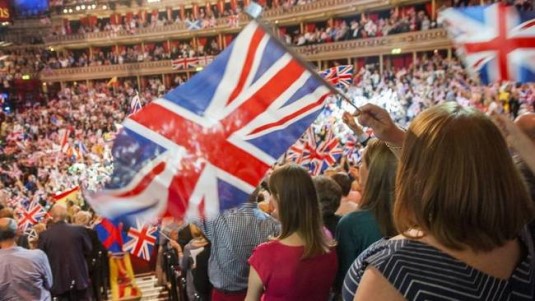
Coming in more tedious than the centrist-right obsession with Jeremy Corbyn has been the entirely contrived controversy over the Last Night at the Proms. If your news sources are The Express, The Sun, and other fonts of Tory talking points, you might have suffered palpitations thanks to the BBC's decision to ban Rule Britannia. Cue "it's political correctness gawn mad" takes from the very worst people paid to have opinions. It doesn't matter that the truth is the banning of all singing thanks to Covid-19 restrictions. The right saw an opportunity to whip up Britain's victim status, and they ran with it. One should never pass up an opportunity to get a dig in at the Buggers Broadcasting Communism and delegitimise the BBC that little bit more, but you'd think some of the pushers of the latest lie in the Tory culture war might show a bit of decorum. Andrew Neil built his reputation as TV's toughest politics interviewer on, you guessed it, the BBC. Isabel Oakeshott became a personality on the right thanks to repeated guesting on Sunday morning politics shows. And who would have heard of Nigel Farage had BBC not given him his safest seat of all: a regular slot on the Question Time panel. Such ingrates. And yet, perversely, those on the the receiving end of (wilfully) distorted BBC reporting tend to be those who are duty bound to defend it as an example of pubic broadcasting, however degenerate it may be. Funny old world. The Rule Britannia outbreak, like all other outbreaks of right wing hysteria, do have political consequences. And those stoking the fires are fully conscious of what they're doing. This is the big picture: Brexit is presently holding the Tories' pensioner-dominated electoral coalition together for reasons discussed many times round these parts. For people who predominantly occupy a fundamentally insecure location, their anxieties sublimate into scapegoat condensers of their fears and totems of uncertainty, such as the young, wider culture, technology, etc. Brexit offers illusion and delusion as a means of finding a passage to a more secure, fixed past they find comfortable and knowable: a place they more readily see themselves in than the confusing, seething, unknowable mess they watch (but crucially, tend not to directly experience) on the television or read in the papers. The problem the Tories have is Brexit can't last forever. Time's up at the end of this year and we can look forward to the future and a new and less-than-optimal relationship with the UK's largest trading partners. Where do the Tories go then? How do they keep their people together? Being seen as a reforming, activist government is actively positioned for by the very top of the Johnson government, but this can only go so far. Spreadsheets and tractor production figures might have cut it with Tory voters in 2015, but faced with the sheer incompetence and deliberate cruelty of these people party strategists and what passes for its "intellectuals" are casting around for the special sauce that can maintain the polling lead. The only thing that makes sense is something nationalistic, but dripping with victimhood, a new populism (looking a lot like the previous populism) opposing the good honest folks of the United Kingdom England to evil elites and ne'er do wells who want to ban Britishness. In other words, expect a constant barrage of poor little Britain moaning and whingeing. What are the chances of keeping their coalition together? These efforts will carry on motivating the core components of Toryism, but what about the fringes who voted "tactically" last December to see Brexit done? Will they too fall down the rabbit hole into a wonderland brimming over with Benny Hill, oversized Wagon Wheels, and fantasies of empire? It's unlikely. Brexit populism made sense because there wereelites determined to stop it, and nullify people's votes. But a sing-a-long called off because of Coronavirus? Panics about Marxism taught on every university degree apart from Maths and Computing? The danger of face masks? They might have a certain potency now, but with Brexit off the table and the people's will seen to be done, their urgency and vitality could drain away with culture war investments offering only ever-decreasing returns. Could. Under these circumstances, it behoves the left to properly understand the interplay of right wing rhetoric and the cohering effects it has on its intended audience. And it's down to us to come up with strategies that can disrupt their messaging, make their clarity fuzzy, and present compelling stories and critiques of our own so we intersect better with the lived experiences and concerns of older workers and retirees. Easier said then done, but them's the breaks. No one's going to do it for us.