Showing posts with label Constitutional Issues. Show all posts

Tuesday, 29 September 2026

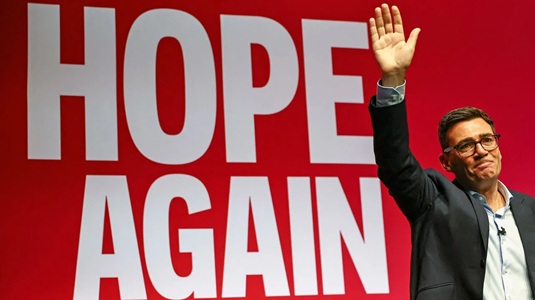
Andy Burnham at Labour Party Conference

There was something for almost everyone. Andy Burnham's speech at Labour conference was what most of the party's voters were hoping for. It began with a restatement of ambition on housing - more leaseholder reform, a curtailing of right to buy, greater local authority powers over private rental, and the option of expropriating slum landlords and empty houses. Reducing deposits to 2.5% for new builds for first-time buyers, which was pre-announced at the weekend, sounded like it could have been pinched from a Tory prospectus.

On water, there were more hazy promises of "public control". But this time there was more flesh on the skeleton. Repealing the Thatcher-era ban on taking water into public ownership is a symbolic gesture, as that could have been dispensed with by any legislation that took a water company back into state ownership. In the forthcoming water bill, there will be greater oversight and powers of intervention devolved to mayoralties. Bonuses for failing bosses will be stopped, there will be tougher consequences for failure with nationalisation being the ultimate sanction. Something Thames Water customers are likely to welcome. On energy, more home-grown renewables and domestic nuclear is to be encouraged, the unveiling of a national energy grid plan with local input, a new state-owned company called Great British Grid will be launched to enable its renovation, and market reform is coming - above all the speeding up of disentangling energy prices from gas prices.

Burnham moved on to care. Recalling his grandmother's experience with the care system, and the work put in by his late dad's care givers he said, with some emotion, that "I want to speak directly to our care workers: you are not invisible to me." And drawing attention to how the industry has been variously neglected by successive governments, he said "I am sorry my profession has let down yours for so long". The national care service was revisited, and he defined the vision as "person-centered high quality care service that starts in the home", according to the principle of everyone contributes, and everyone is covered. There will be no care charges taken from the basic state pension, and the idea is that people won't find their savings eaten up by escalating costs. Burnham said this would be as significant as the foundation of the NHS.

How to pay for it? The scrapping of the triple lock on pensions was trailed heavily before the speech, and when it came its replacement sounds very much like ... a double lock. The link with earnings after 2030 will be dropped, and instead the state pension will rise with inflation or 2.5%. Though Burnham strongly implied it will retain a relationship to wage levels. Eh? It sounded a bit of a muddle, and it's not clear how this would save money that would be ploughed into the care service.

On young people, there was the usual nod to parity of esteem re: academic and technical routes in education. There's also to be a stronger emphasis on comprehensive education as a means for securing the future. Likewise, his remarks on foreign policy were brief and offered no break with the established way of doing things - Russia, bad; Iran, bad; Palestine, two-state solution.

And rounding the speech off, Burnham riffed off the theme of fixing our broken politics. He said he would work cross-party on as much of his programme as possible, but noted how the Westminster system is the root of much of our problems. Referencing the possibility of a "divisive government" being elected on under 30% of the vote, he announced a national commission on electoral reform with an invitation to all parties to contribute. He also said the next Labour manifesto would have a clear commitment to changing the system. And from here, he moved on to Brexit. Unlike Keir Starmer who wouldn't touch the issue with a barge pole, Burnham was repeatedly scathing about its consequences. He went on to say the upcoming UK/EU summit will be an occasion for laying out the country's long-term relationship with the EU, and he will offer some options for structuring it. A code, as if it needed spelling out, for putting rejoining the EU back on the table.

Burnham began his speech saying it wasn't going to be a traditional conference speech. And really, it wasn't. There was no point scoring against the opposition parties. No lame jokes tied to cheap shots. It was, unusually, an address aimed at Labour's former coalition outside the hall. Everything here, the promise of breaking with 40 years of neoliberalism, the "rewiring of the state", fixing the foundations of British capitalism, the ambitions for the National Care Service, electoral reform, and a closer relationship to the EU, it was taking up the mantle of modernising the state and putting the country on a new trajectory. That's the promise, and - as we have seen - the record since entering Downing Street has been more mixed. But politically speaking, this was crafted to consolidate centre left and left voters, including not a few centrist voters and those on the soft right that like the idea of national renewal and EU alignment, behind Labour. If Burnham follows through and this programme is visibly making headway by the next election, then he may well get to oversee the fruits of his 10-year plan.

Image Credit

Sunday, 5 July 2026

From Brexit to Frexit?

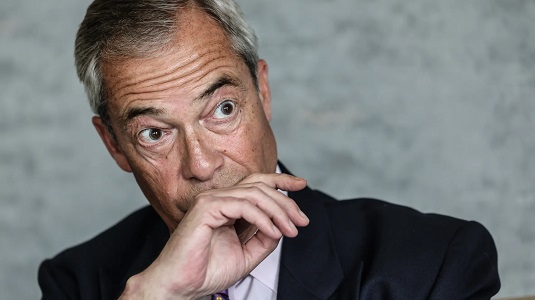
If you're sparing a thought for Nigel Farage this Sunday, his exposed links to a convicted fraudster are likely to colour them. The Sunday Times writes that Farage received security support, housing perks, and staff funded by crypto "entrepreneur", George Cottrell. Deliciously, Cottrell was arrested in the US in Farage's company in 2017, after doing the rounds at that year's Republican convention. These benefits were, apparently, provided in the lead up to the 2024 general election and, what with Farage's custom and practice, they were not declared.

It's been a bad week for the Reform leader. We learned he'd pocketed £270k fronting a gold bullion dealer, and that he has acquired a £4m property portfolio. He also got testy being pressed on his £5m gift from Christopher Harborne, the Thailand-based crypto billionaire and Russian oil profiteer. From BBC Breakfast's Sally Nugent, to TalkTV's Julia Hartley-Brewer, and LBC's Nick Ferrari, he came across as exasperated, petulant, and annoyed that he should get questioned on this topic. This comes after a poor campaign in Makerfield, where Farage went to ground to avoid those giving answers. These difficulties and his uncharacteristic avoidance of the media spotlight have led some to ask the unthinkable: is Farage long for this political world?

Undoubtedly, it's a question Farage will be asking himself. He will apparently be taking a long break this summer, which will be good news for Andy Burnham and gives his government plenty of opportunities to set the political agenda. But might Farage throw in the towel? It must be tempting. According to former Farage lackey Ben Habib, Farage stood in the election because Harborne ponied up the cash. His frequent issues with not declaring earnings is a sign of a politician on the make, and while not the wealthiest MP he did report the largest income from outside interests - the eight or nine second jobs he's taken since his election as the very occasional representative for Clacton. For Farage, he's got to know that life would be easier and his earning power not dimmed too much if he walked away.

Consider the parliamentary standards investigation. Given precedent, he won't walk away with a slapped wrist. Indeed, a Commons suspension and a recall petition are the likely consequences of the Harborne affair. Undoubtedly exacerbated by the multiple occasions he's failed to declare earnings, including today's Times splash. Unless all the other parties could get behind a squeaky clean anti-corruption but non-political figure, like finance guru Martin Lewis, Farage would surely win the by-election. But would he want to fight a campaign when it's his money grubbing that's the reason for and the focus of the contest? Does Farage want to risk the awkward viral videos of having random Clacton'ers berating him, or having a strip torn off him on a previous Reform voter's doorstep?

The second issue is his political future. Braving the by-election means more years of scrutiny and accountability. It's possible, thanks to past behaviour, that there are going to be future non-declarations, and perhaps more Commons investigations. But supposing those storms are weathered, everything goes wrong because Burnham turns out to be no different to Keir Starmer and Farage finds himself in Number 10. Not only would this be the gravest disaster in British political history, it would be an opportunity for him and his lieutenants to engorge themselves. However, Farage is a greedy man, not a stupid man. Does he want a future where yes, he can fill his boots, but afterwards face possible pursuit by whoever might succeed him. Would Farage rather spend his infirm old age relaxing on sun loungers, or fending off investigations, legal challenges, criminal probes, imprisonment? Hence why the Reform leader's Frexit can't be entirely discounted.

Image Credit

Monday, 20 April 2026

Bureaucratic Theatre

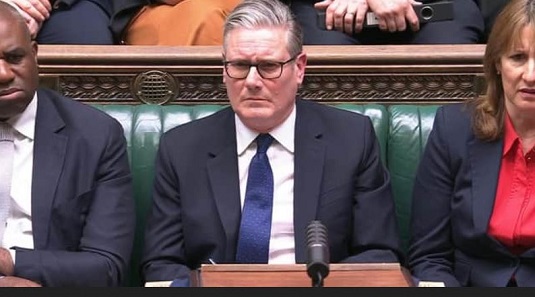
Last weekend, I almost wrote about how Keir Starmer was looking safe despite the coming catastrophe of losing Wales and getting wiped out in the English local government. That was before the toxicity surrounding Peter Mandelson's appointment resurfaced. Presenting like the Spanish Inquisition, from nowhere we learned that Starmer wasn't told that the former US ambassador had failed his security vetting in January 2025 and that the Foreign Office cleared Mandelson anyway. Olly Robbins, the civil servant in charge, was promptly sacked when Starmer found out. There has since followed a who-knew-what-when game involving confected and performative frothing over procedural matters, and an effort to absolve the Prime Minister of all responsibility.

In the Commons on Monday, Starmer apologised for appointing Mandelson. But then spent the next half hour recounting the timeline. He was adamant that he wasn't told about the outcome of the security check which, rather stupidly, was undertaken only after the announcement of the appointment. This has now been changed. The problem being, and for which Starmer has not provided an answer, is that The Indy ran a lead story on the checking's failure last September and had contacted Downing Street about it. Starmer side-stepped the this question from Kemi Badenoch, hiding behind the "all process was followed" excuse. Even if this was true, didn't this query involve further discussion in Number 10 at the time? It's difficult to believe this did not reach the ears of certain senior people.

Whatever the ins and outs of process, no one is likely to believe Starmer apart from those who want to. Easily Boris Johnson's equal when it comes to matters of the truth, Starmer's leadership is so fully compromised by an economy with the actualite that everything he says should come with a warning and a lengthy fact check. His strategy to come out fighting is all about burying the problem in boring procedure to avoid blame. Reams and reams of articles going over the prescribed way of doing things and making it look like a dysfunction of arcane Whitehall machinery. This, however, is nothing but a shield. Starmer knew who Mandelson was, his history and record, his disgraces, and his close friendships with billionaires, above all convicted child sex offender Jeffrey Epstein. Starmer wasn't to know about Mandelson's treachery, but there was plenty of other things that suggested giving him the top ambassador's job was stupid. And he was appointed anyway, following Mandelson apparently lobbying Morgan McSweeney for the post and as reward for services rendered. Despite Starmer's insincere apology, he's never proffered an explanation for employing him in the first place. Because he hasn't got an acceptable answer, hence why we're getting treated to the unique tedium of Starmer's bureaucratic theatre.

Image Credit

Monday, 6 April 2026

On Trashing MPs

Friday's Graun article from Hannah Spencer upset some people in politics. Reflecting on her first few weeks in the Commons, she suggests MPs - above all Labour MPs - are out of touch. And it struck a needle into a raw nerve. Stafford MP Leigh Ingham called it "insulting and oversimplistic" and accused Spencer of making "populist slurs" and "feeding anti-trust in politics". Economics prof Jonathan Portes thought it was "deeply depressing". His conclusion is that it was "lazy soundbites and bad economics".

Spencer is not wrong, though. If any of them read beyond the headline, I imagine these lines sat awkwardly.

I don’t think that’s something most MPs understand – not really. They might think they do, they might say they do, but they don’t properly know what it’s like; how it feels in your bones.
And
The Labour government has finally bowed to pressure and is set to bring in new measures this month that it says will help people with the cost of living. But the reality is its plan isn’t good enough.
That much is true, but if anything Spencer is too kind to the honourable members. Today, for example, changes to Universal Credit means that applicants for extra support for disabilities face lower payments than those already receiving them. The projected saving for this is £1bn over the next three years, a sum so low that one can only conclude the cut is being made for punitive reasons. Something the government themselves admit, albeit behind the usual rubbish about "increasing the incentive to work". It begs the question that if MPs are "in touch" like they claim to be, then why was this allowed through following the disability cuts rebellion last year. Have costs gone down for people living with severe impairments?

There are several things that work to estrange MPs from the electorate. Their salaries and perks put them in the top one per cent of earners. They are flattered and feted by parliamentary and party hangers on, and important people enjoy treating them. Like the £3k of hospitality our hardworking Leigh Ingham enjoyed from Google at last year's Glastonbury. The experience of dealing with constituents has a similar effect. Most come seeking some form of assistance, and so the MP has a 'power-over' position from the start. This can lead to a certain arrogance. I.e. A belief that they know what people want better than anyone else, particularly the weirdos that come to branch and constituency meetings. And, in some cases, contempt for constituents' concerns. This forms an insulating barrier against everyday life. And enables so many to get sucked into the doings and frequent dramas of Westminster - the work they want to do as opposed to the stuff they have to do.

This can be mitigated, and it's worth remembering that left wing MPs, though not immune to customary entitlements, do better than most. Not because they're superhuman or uniquely moral, but usually thanks to the strong links they have with their local party, community groups, trade unions, and social movement mobilisations. Whereas the freebies, business lunches, and VIP trips give those who avail themselves of them an altogether different grounding. And readies them to cater for the interests of those who must be kowtowed to.

Spencer then is absolutely right to call MPs out of touch, because their realities are far removed from most ordinary people's. Everyone knows MPs live a rarefied life, and it's farcical to pretend otherwise.

Image Credit

Thursday, 19 February 2026

On Andrew's Arrest

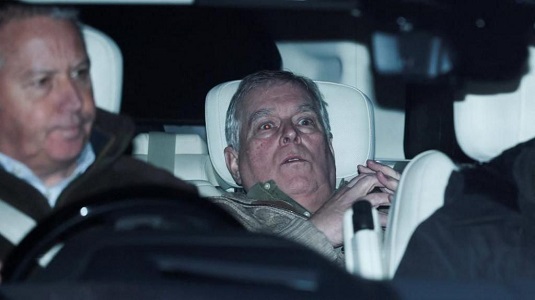
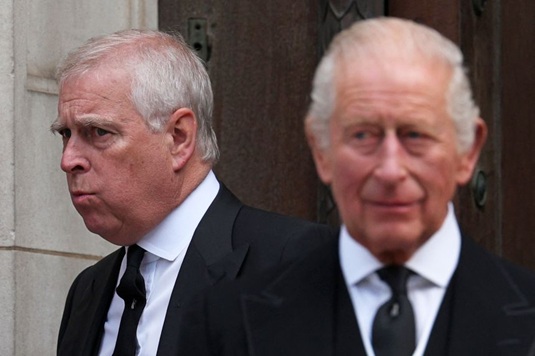
The former Prince Andrew arrested on his birthday? It's certainly one he won't forget in a hurry. His being taken into police custody and questioned all day over misconduct in public office allegations at least offers a suggestion that powerful people can be held to account for their activities. In this case, it regards correspondence in the Esptein files that purport to show Mountbatten-Windsor passing on documents to the world's most notorious paedophile. Allegations very similar to those levelled at the disgraced Peter Mandelson.

Obviously, as there's now an investigation with the possibility of charges, this corner of the internet won't be making further comment about the substance of this case. But the politics? That's a different matter. The establishment have spent the last couple of years disentangling itself from Mountbatten-Windsor. On several occasions, Keir Starmer has gone on the record to say he should submit himself to questioning. The press, naturally, have taken a prurient interest in the sex abuse allegations against him, diminishing his already poor standing further in the public's eyes. And the King has moved with some haste to put clear distance between the playboy prince and the family firm.

Where our most gracious sovereign is concerned, dealing with Andrew efficiently and ruthlessly was the only option available to him. For too long, Andrew enjoyed the late Queen's favour, and that preferment undoubtedly shielded him from proper accountability. The police didn't want to go there, knowing that the upset caused might have discomfited the increasingly frail Elizabeth II to expire. And with obvious ramifications for any senior officer in charge of such a probe. Instead, it was the audience with Liz Truss that saw her off. But for the King, this is a headache. Despite his strong statement on the matter. If the investigation strays into who in the Palace knew what and when, there is a possibility of major embarrassment. And if the Queen is directly implicated, which even the dogs in the street know she would be, this has ramifications for the legitimacy of the monarchy itself. Which has taken a few knocks of late.

With politics dropping to bits before our eyes, Starmer's ratings in the toilet, and a widespread impression given by the government itself that it can't affect basic levels of competence, the corrosion of the British state's major legitimating institution is very bad news for the establishment. And this is only the beginning of what will be an excruciating spectacle.

Image Credit

Sunday, 2 November 2025

Exiling Andrew

How was your week? It probably wasn't as bad as Andrew Mountbatten-Windsor's. Gone are his titles and honorifics, his position in the royal family, the imprimatur of the British establishment, and his 30-room grace-and-favour "lodge". He remains, for now, in the line of succession but the purge of Andrew is every bit as efficient as the deletion of problem DJs and celebrities of yesteryear from the BBC archive. All that remains is his vice-admiralty of the Royal Navy, and its days are numbered. According to the Sunday papers, a half-million pay off, an annual stipend from the King, and accommodation out of the public eye on the Sandringham estate is the shape of his exile. As crushing this is for him, there wouldn't be many people who would sniff at these spoils of disgrace.

It was oft-noted while the Queen was alive that she was ruthless in preserving the family firm, but this goes beyond her treatment of Diana, Sarah Ferguson, and the well-publicised fallings outs and failed reconciliations with Prince Harry. Andrew, somewhat protected by his mother's most-favoured-son status is not so indulged by big brother. His sacking and disowning is almost on par with the expulsion of Edward VIII/the Duke of Windsor 90 years ago, though hopefully Andrew won't further embarrass his family by cosying up to fascists.

There has been unanimity between the King and the leaders of his most loyal political parties during Andrew's filleting. For Keir Starmer, being seen to back tough measures against Andrew will, he hopes, bury memories of Peter Mandelson and his unfortunate Jeffrey Epstein connections. And for Kemi Badenoch, the Tories still have to pretend their political standing matches their constitutional relevance. More importantly, they are one because Andrew's relationship to Epstein and the harrowing allegations levied by Virginia Giuffre was a blot on an institution already on the skids, and further embarrassments were likely. There have been lurid stories about Andrew's sexual escapades while working as an overseas trade envoy, dodgy business transactions, and unhelpful questions over his murky income arrangements. And there is the drip, drip of further revelations. Like uncomfortable emails, and more secrets ready to spill from the Epstein files.

The King was not prepared to tough any of this out, and so for the family's greater legitimacy much water needed putting between the royal household and Andrew. The thoroughness of the break is demonstrative of Charles III's seriousness of purpose. Getting pictured with an alleged sex offender at family gatherings or on the palace balcony would tarnish by association, and raise questions about how much the King and golden boy Prince William knew, and when. Likewise, for the mainstream parties, with their reputation and political roles in abject crisis, there was no question of them not rallying around the crown and endorsing the King's tough measures.

What does this unwelcome episode for our sovereign tell us? That, unlike his Prime Minister and Leader of the Opposition, he is aware of the monarchy's precarity and has a firm grasp on public opinion. Certainly more so than dear m'ma. But this is an institution in retreat. Defending it by offloading a liability is quite easy, if personally painful. The challenge is winning over new support and securing the future. An altogether much harder task.

Image Credit

Thursday, 30 October 2025

"Inadvertent Errors"

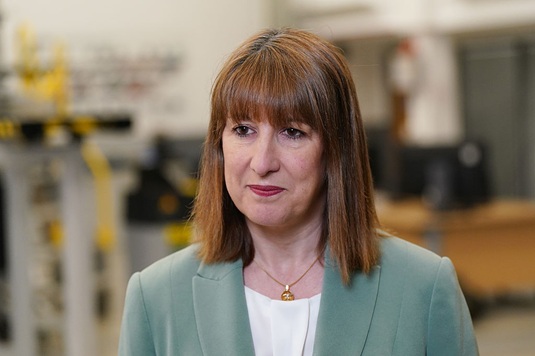
Poor Rachel Reeves, she cannot catch a break. In today's news, the chancellor is having to defend herself against dodging payments due to Southwark council for renting out her home. According to local rules, landlords have to purchase a £945 licence. When Reeves put her family home up for rent following the general election, she failed to cough up and - apparently - only found out she was liable after the Daily Mail did some digging. She said it was an inadvertent mistake, the government's ethics advisor concurs, and Keir Starmer said he has full confidence in her. In the facts presented, it does indeed appear that Reeves is free of blame. As the rental was handled by a lettings agent, they should be responsible for knowing the requirements and sorting out the levy. This has since been corroborated by their admission of error.

I have no sympathy for landlords, and especially landlords who happen to be a dishonest and incompetent chancellor. Finding out her family home was 200 miles from her Leeds constituency came as no surprise either. Even if there is no wrong doing and it is the agency who are at fault, it's not a good look. Especially when Angela Rayner was forced out for another "innocent mistake". It builds up the impression that this government are in it for themselves, that they break the rules everyone else is expected to abide by and only apologise when they get found out.

The problem Labour has is this is starting to look like a pattern. There is a marked contrast between this government and the flouting of conventions and rules that marked Boris Johnson's time in office. Yet the context of Reeves's error is not only a cabinet who help themselves to freebies, whether they're personal clothing allowances from Waheed Alli, or tickets for prestigious sporting events and pop concerts, they defended their right to accept these gifts. What is the point of the spoils of office if you can't spoil yourself in office? Reeves looks crooked because she and her peers have decided that being seen to be on the take isn't a problem. This blindness to how they're perceived is partly cluelessness, but is also symptomatic of the collapse of mainstream politics. And that means even if Reeves is completely exonerated, it adds to the troughing vibes surrounding this government and politicians generally. Something that the far right can capitalise on, but so can an insurgent green left populism.

Image Credit

Tuesday, 22 July 2025

The Real Electoral Reform Threat to the Right

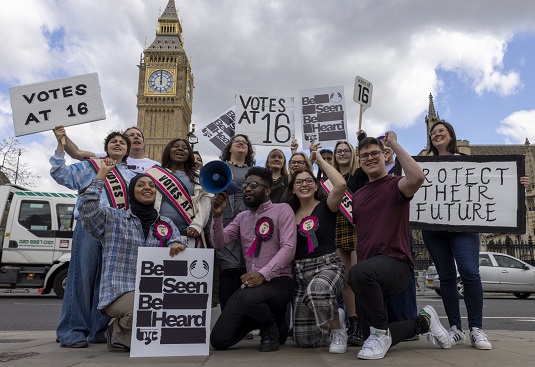
Shock horror, Labour have announced something that meets with the approval of this corner of the internet. As parliament was shutting up shop for the summer, the government announced its elections strategy paper. This aims to undo some of the damage the Tories have done to voting by expanding voter ID to virtually any and all forms of identification, and clamping down on overseas donations. But it aims for some modest improvements. Sadly, no form of proportional representation, but they are extending the franchise to 16 and 17 year olds, finally bringing Westminster and local government elections into line with devolved contests in Wales and Scotland.

Predictably, the right are very upset. The Tory communities brief, Paul Holmes, called it a "brazen attempt" at constitutional jiggery-pokery, clearly believing this will deliver extra votes to Labour as the Conservatives have given up influencing anyone outside a small segment of the voting public. The Mail have piled in with "proof" that young people are clueless. The Telegraph denounces it as an effort to "rig the system", and a declaration of war on baby boomers, while the equalities shadow Claire Coutinho feebly protested that it would "disrupt exam season".

And then we have the view that is, frankly, delusional. Nigel Farage is opposed to the change, but believes the young are beating a path to Reform's door. Other self-interested idiots think likewise, simply because Farage has wide name recognition and is the butt of many a teenage joke on TikTok. The numbers aren't there in the polling, preferring to rattle around the the imaginations of sundry right wingers.

All this misses the mark, however. 16 and 17 year olds will have marginal effects on the next election and, as plenty have noted, their turnout is likely to be in line with other young people's. I.e. Low. While the right are crying about this, it appears they haven't noticed the real threat to their position: Labour's plan to automatically register voters.

As anyone with the barest acquaintance with election studies know, turnout is lower in urban areas and because voter registration is voluntary, electoral rolls fail to accurately reflect the adult population. Automatic enrolment would see significant rises in electorate size in these places, immediately presenting the need for boundary reviews as many would be larger than the 73k "average" used to determine the present shape of constituencies. Why does this matter? This would entail a redistricting that favours urban areas, while the present over-representation of rural areas and small towns in the Commons would be pared back with a few dozen of them merging and/or disappearing. The constituency map of Britain would actually look more like the demographic map of Britain, making it harder for Reform and/or the Tories to win a Commons majority. Labour might lose out too, as these seats are where a lot of their disaffected base live who might be attracted to the Greens or a new left party. But fundamentally, because of the character of British politics and the long-term trend away from the right, the parties of outright reaction face a difficult uphill struggle.

The question for Labour is how quickly can they get this through? Or more to the point, how quickly do they want to see these changes? And when the right wing press wake up to the threat this poses their parliamentary arms, will Labour go scurrying for cover or stick by its plans? Just this once, here's to hoping the government doesn't perform a u-turn.

Image Credit

Sunday, 9 February 2025

The Sacking of Andrew Gwynne

News that Andrew Gwynne's been done for sending sexist and racist WhatsApp messages came as a surprise for those who didn't know him. It wasn't long ago that he was affecting a Mr Nice persona on social media, and that the strongest expletive he'd ever use would be "crumbs". Unfortunately for him, he was caught red-handed making fruitier comments by the Mail on Sunday. These included looking forward to the death of a constituent complaining about her bins, dropping the F bomb, messaging antisemitic banter, and bad mouthing a local Tory council leader. And because this is the Labour Party, racist comments about Diane Abbott and sexist comments about Angela Rayner were in there too. Rightly, Gwynne has been given the heave-ho pending an investigation that will ... slap him on the wrist and readmit him because his politics are the right politics. The obsequious apology won't harm Gwynne's chances either.

Once again, the culture uncovered by the Forde report is open for all to see. And the reaction is a performative recoil of disgust by the party's establishment. Performative because they well know this is the culture they encourage, preside over, and participate in. Racism, sexism, callous attitudes, cynical language, this is the meat and gristle of informal Labour Party communication. And it has always been thus, though what was once said behind people's backs is now written down and shared among hundreds of informal groups of chummy insiders. Unhappily for Keir Starmer and the Labour right, all it takes is for some local notable or a disgruntled MP to share these contents with the likes of the Mail for more WhatsApp scandals to erupt. The more senior the messenger, the more juicier. Savvy MPs know not to do this, but when the parliamentary party is stuffed with nodding donkeys whose inflated self-opinion is in inverse proportion to their lack of nous there are plenty of liabilities for the right wing press to swoop on.

And this is a headache for party management. The forced resignation of Louise Haigh, ostensibly over a conviction from years ago that the leadership already knew about lowered the bar for accountability and ministerial resignations and sackings. IF, for instance, another round of freebie gate visited British politics and a minister was caught improperly troughing on corporate "hospitality", Starmer would be under real pressure to sack them. Or a trusted lieutenant was caught in a spotlight on other improper conduct, because the Prime Minister lacks a stock of political capital very little can be expended to defend them. Especially with polling in the doldrums and a range of backbenchers jostling to make their mark as ministers sooner rather than later. Perhaps more worryingly for Starmer, the press now know they can bring pressure to bear and cause him to act, meaning they're likely to sit on further revelations until they become strategically useful.

The government must be hoping more Gwynne-style incidents aren't going to surface. Unfortunately for them, considering how the party's culture is riddled with a hierarchy of racism and a preponderance of mouthy blow hards, chances it won't happen again are slight to non-existent.

Image Credit

Sunday, 15 December 2024

On the Road to Somewhere

It didn't attract much coverage, but last week The Spectator reported that the co-called 'Gaza Independents' will be registering as a political party in the new year. This follows months of off-again, on-again talks between Jeremy Corbyn supporters, a handful of left notables grouped as Collective, and sundry others. After 30 years of false dawns for new left alternatives, could this be a contender?

A couple of things in the gravy should get picked out before we reach the meat. First, that the political space to Labour's left is so obvious that even the bourgeois press are picking up on it. Patrick Maguire wrote about it for The Times last Thursday, and it got coverage from UnHerd, albeit through the prism of a whinge about religious sectarianism. Because the website's founder would never endorse divisive, extremist politics.

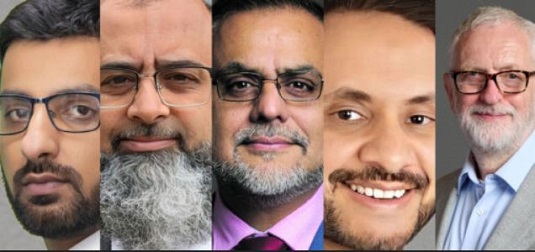
The second point, overlooked by professional politics watchers, is what's happening in the Commons. On 9th December, the Commons Procedure Committee announced an inquiry into the status of independent MPs. This is being explicitly convened to address the formation of the Independent Alliance, the grouping of Corbyn, Shockat Adam, Adnan Hussain, Ayoub Khan, and Iqbal Mohamed. This is to establish whether ad hoc groupings can be afforded the same rights as those sitting for registered political parties. It will also examine the "status" of independents, whether they're elected as such or end up losing a party whip. That the IA announced they were formalising themselves as a proper party the day after is sensible lest the committee finds ways of limiting their access to resources.

Considering the party itself, as noted on other occasions Corbyn isn't overly keen at the prospect of a new organisation, favouring a slow and steady community building approach. The issue with this is its strategic indifference to the political opportunities opening now to build something new. Such as the suspension of seven Labour MPs because they stood up for our people. The problems facing a new left party are well understood and have been covered here almost to death. There's the fractious character of the left and the legacies of bureaucratic manoeuvring and little Lenin syndrome, the Greens' left turn, and the outsized privilege any parliamentarian would enjoy in a new organisation. And this is an issue when you look at some of them criticising Labour's tax on landed wealth from the right, and opposition to banning on first cousin marriage. No party discipline works for the Greens because, among their four MPs, there's a great deal of policy agreement. Among an IA left party it's a recipe for internal dissension, chaos, and paralysis.

If these can be overcome, there is a big prize waiting. Of the Westminster parties, none speak to the reality of workers' lives in the 21st century. Labour doesn't, but its commitment to Blue Labourism seems like an excuse to do right wing things rather than a genuine and serious strategic orientation to the working class. The so-called Workers' Party of Britain seeks to fill the sweet spot identified by political scientists - economically radical but socially conservative. George Galloway has said that the "Arab world is dead to me" following the collapse of the Syrian regime, so that gives you an idea about the direction that project is heading. And then the Greens, economically radical and socially liberal - so the party enjoys congruence with most people's outlooks. But the absence of an explicit class orientation in words and deeds does and will continue cutting them off from the most disenfranchised voters - the people the left need to win and activate as a political force. The new alliance, if it gets the class orientation right, could supply Labour with more than a few migraines over this parliament. But, as ever, it depends on the politics and as they stand at the moment it would be wise to temper one's expectations.

Image Credit

Thursday, 7 November 2024

Kemi Badenoch at Prime Minister's Questions

Because of events, dear boy, people could be forgiven for missing Kemi Badenoch's debut at Prime Minister's Questions. Some of us didn't though and took one foe the team. The questions going into the session were how might she introduce herself to a wider public, and would she set the tone for her leadership of the Conservative Party?

The answer to both questions was yes. To give Badenoch her due, she appeared to genuinely relish the moment - even if her jibes were easily batted away by Keir Starmer, not known for being fleet of foot and given to rhetorical flourishes. Going with yesterday's US presidential results, Badenoch pledged her commitment to "constructive opposition" and then ham-fistedly needled Starmer about David Lammy's recent past disparaging remarks about Donald Trump. "Will he be apologising?" she asked. The Prime Minister replied with mention of the constructive dinner they'd both had with the president (re-)elect and almost chastised her for trying to point score where there is traditionally consensus. Badenoch wasted three of her questions without landing a glove. She then moved on to military spending, and claimed it did not merit a mention in the budget - a demonstrable untruth. And she finished off attacking the changes to farmers' inheritance tax, which does not affect most farmers and is designed to close a tax loophole. One that Jeremy Clarkson proudly announced he was taking advantage of a decade ago, and is upset he can't carry on his fiddle.

In fairness, Badenoch has a tough gig. But this first outing showed zero deviation from the right wing path she took through the leadership race. When Trump's ratings among the British public are on the floor, it seems few would expect anything from Starmer other than a pragmatic approach to the incoming administration. There is nothing to be gained domestically from championing the egregious sucking up approach that Badenoch touted. Her false claims about military spending were a clumsy missive trying to tie Labour - a loyal party of forever wars - to perceptions of weakness, if not outright pacifism. And from her final shot championing the farmers, she committed the Tories to her second policy - reversing Rachel Reeves's measure and granting rich landowners a generous tax cut.

There were no clever politics here or new thinking. Given the choices available to her party, it's beyond any doubt that she thinks going right, peeling off supporters from Reform, and somehow attracting disgruntled punters on Labour's margins is the way back after one term in opposition. It's not totally mad, but nor does it do anything to address the Tories' long term problems of decline and the shrinking base of mass conservatism. If Badenoch has started as she means to go on, chances are Labour have very little to worry about when election time swings around again.

Image Credit

Sunday, 6 October 2024

What a Gray Day

Back in June, this blog asked a question. What is the point of Morgan McSweeney?. He had made the Labour Party safe for Keir Starmer and his brand of authoritarian politics, and with a 2015-style left wing surge ranging from infinitesimally unlikely to impossible what role awaited him following the general election? Well, he did find purpose. To make Sue Gray's, Starmer's chief of staff, life a misery. And that culminated in her resignation today and her replacement by a victorious McSweeney. She is out, packed off to the nations and the regions office to oversee Labour's devolution plans, and our Morgan gets to cosplay as Malcolm Tucker. Lifetime achievement unlocked.

Despite the hype surrounding Gray, her appointment did not live up to its stellar billing. She was there because, like Starmer, she's a state functionary through and through. She inspired the confidence of the apparat. It telegraphed that, finally, the professionals, the "grown ups", the adults-in-the-room were in charge and the age of overconfident amateurs and chaos agents was done. Let efficient government, smooth government commence with the take over of the state by the state. But things haven't gone that way. If anything, for a new government its disarray has often recalled an administration on its last legs.

Not all of this can be laid at Gray's door. She didn't petition Rachel Reeves to stop Winter Fuel Payments or talk up "the pain" scheduled in the Autumn budget to the point that confidence in the UK economy was severely knocked. And despite the complaints about "Downing Street comms", often repeated from unattributed sources by the New Statesman podcast, freebiegate wasn't a disaster because of inept spinning. It has damaged Labour's credibility and forced Starmer's favourability rating into a nosedive because the Prime Minister won't countenance surrendering the perks of office. Polishing a turd is a messy business. It goes everywhere and makes everything it sticks to stink.

That isn't to say Gray's case is a spotless one. She tried forcing the cadre of incoming spads to accept lower salaries than their Tory predecessors and, in some cases, what they were receiving in opposition. To their complaints she turned a tin ear, forcing an unlikely unionisation effort among a sliver of party staff for whom the words 'solidarity' and 'collectivism' are normally entries in the dictionary. Hence the wave of hostile briefings against her, including the barb that Gray is the only pensioner to have done well out of the Labour government. Not useful to have the operation turning on itself after the gentlest application of media pressure. There are some other wonkish complaints about not having proper transition plans. But, the greatest sin of all was that she did not appreciate that her job was a political one. According to an, again unattributed conversation this time relayed by Sienna Rodgers, an insider said "I think fundamentally Sue Gray is a person with no politics or political experience/nous doing a job that has become very political. And in Morgan [McSweeney] she's got an enemy who is essentially just much better at politics than her."

This is true enough, but who put her there in the first place? It was clueless Keir that made the call. Starmer had enough sense to trust his fortunes to Sweeney during the leadership election and in the factional battles and purges since. But as office approached it appears the understanding that he required a political hatchet man fell out of his head. Perhaps he's made the mistake of snorting his own vapours, imagining that he could do a government and a politics that "treads lightly" on the British people. That once in office, like Macron across the Channel he could pretend to be a Prime Minister that operates above politics. In such a world there is a use for a Sue Gray, but not one for a Morgan McSweeney. Which was why he was initially frozen out. However, Gray's ineptitude and the briefing operation run by camp McSweeney has knocked Starmer off his cloud and brought him down face-to-face with the grubby doings of politics. Albeit pulled off in such a way that the boss doesn't experience it as a humbling. By pinning the blame of everything from freebies to Lord Alli's Downing Street pass to staffing issues and poor spinning on Gray, Starmer was presented with a fait accompli. This was topped off by Gray's decision to fall on her sword for the good of the government. A masterpiece of manipulation for those who get excited by such things.

What now? With McSweeney's people in charge one might expect a more disciplined Downing Street. The impression of a shambles will quickly be replaced by message discipline and rebuttal. Anything that comes out of Number 10 now, as per the days of Dominic Cummings, does so with McSweeney's blessing. That might seem limiting as plausible deniability for "leaks" is reduced, but it enables the PLP to get a read on where their (apparently uncommunicative) leader is going, as well as signalling who's on the up and who's on the way out. Handy for the legions of career-minded MPs. Politically, however, nothing has changed. The opportunity to waste the historic opportunity Labour has remains on track, but that's not what's important. The Labour right's backroom apparatchiks get the goodies they're entitled to, and McSweeney gets to feed his legend - one that should set him up for life. Grown ups, eh?

Image Credit

Wednesday, 10 July 2024

The Eclipse of the SNP

What the hell happened in Scotland? Nine years ago, the SNP carried all before it at the famous 2015 election. What it dubbed the "Westminster parties", Labour, Conservatives, Liberal Democrats, were reduced to a single seat each while everywhere else on the constituency map of Scotland turned SNP yellow. A partial uprising of these parties two years later was put down at the return match in 2019. The SNP not only ran the Scottish government, that election gave them 48 MPs. It was common sense getting back to where the Westminster parties were in 2010 would take a generation. And then, last Thursday, what was a peculiar result in England and Wales was nothing but disastrous for the SNP and the cause of independence. The party dropped to just nine seats and lost half a million voters. Labour's support increased by 350,000 votes and gave it an additional 36 seats. The Liberal Democrats increased their seats by two, despite dropping 30,000 votes and the Tories, in line with the disaster in the south, saw their support halve but with the loss of just one seat.

This only tells part of the story. Aggregating the independence parties (SNP + Greens + Alba) totals just shy of 830,000 votes. The unionist parties (the above, plus Reform) is 1.56m, almost double. Turnout was down to 59.2%, only 0.4 above the 2001 low point. In every constituency support for Labour grew and nationalist voters either stayed at home or defected directly. This does not bode well for the next round of Holyrood elections, unless Labour in office makes a spectacularly cack-handed job of governing. How was this catastrophe visited upon the SNP?

There's the conjunctural. The SNP haven't had the best time of it. The departure of Nicola Sturgeon was followed by the tawdry spectacle of her arrest and the overhanging police investigation into SNP finances. Humza Yousaf's brief tenure as party leader and First Minister didn't improve the SNP's standing. In fact, this more or less occasioned their slippage in opinion polls with more support flowing to Labour. His unilateral abandonment of the Bute House coalition agreement with the Greens contributed to the impression that he was not on top of his brief, so he had no choice but to cede power to the right leaning John Swinney/Kate Forbes duumvirate to avoid a humiliating confidence vote. This is against a background of decaying social infrastructure. The Scottish school system has posted declines in science, English, and maths. Poverty in Scotland has stubbornly persisted at around a fifth of the working age population since the SNP came to power. The same house price problems manifest north of the border - though in 2023 new build completions and new build starts went down. NHS waiting lists continue to increase. While these areas are within the SNP's gift to do something about, it would be unfair not to mention the fiscal straitjacket imposed on Holyrood by the Tories. They've borne the brunt of decisions made elsewhere.

The larger problem, however, is the collapse of the SNP's strategy to achieve independence. Having committed itself to the constitutional road to a second referendum, its battles with the Tories and the courts slammed the door on its possibility. And without the prospect of independence, what purpose does the SNP have? The radical nationalist reply, which amounts to campaigning harder on independence, found the extent of its support in the derisory vote Alex Salmond's Alba vehicle registered. Related to this, because another referendum is out of scope, where large numbers of the Scottish electorate are concerned it has receded in salience. It's become a second order issue. As YouGov polling showed, the national question was listed as an important concern for just 27% of 2019 SNP voters. It lagged behind the economy (35%), cost of living (54%), and the NHS (67%). Despite running a policy-lite manifesto, Labour's mantras of economic growth, action on the NHS, and the other fissiparous raft of pledges spoke to enough Scottish voters to draw them back from the SNP to give them a punt. That and, at least according to several post-election vox pops, making sure Labour got enough seats to turf the Tories out of government.

In these circumstances, and after a long period of running Scotland, it was a perfect storm for the SNP. With Keir Starmer now safely installed, the onus is on how the Scottish government now plays its cards. Another round of butting heads on independence doesn't seem a wise move, but there are openings on holding Downing Street to account re: its bread and butter pledges, and on its promises to devolve more powers to the nations and the regions. It's just the SNP's worst luck that in Swinney and Forbes they have two leaders singularly unsuited to capitalising on this centre left moment.

Image Credit

Wednesday, 13 March 2024

The Political Uses of Racism

Another day, another awful day in the Commons. Having disgraced himself and his office during the SNP's opposition day to spare Keir Starmer's blushes, as those reading this know cringingly loyal Hoyle has done it again. Following the widely publicised remarks of Frank Hester, the moneybags filler of Tory coffers (and who, completely by coincidence, profited nicely from Covid procurement and other government contracts), Rishi Sunak tied himself in knots during Prime Minister's Questions. Hester's comments, in which he said Diane Abbott makes him want to hate all black women and that she should "be shot", was "wrong and racist" according to Sunak. But that the Tories wouldn't be returning the money because he has made a proper apology and that's that. Starmer rightly attacked the Tories, as did the SNP's Stephen Flynn and several other MPs for giving Hester a free pass. However, the one voice we didn't hear from was Diane Abbott herself. Despite indicating her desire to speak on at least 46 occasions during questions.

Having lately broken procedure to "defend MPs", during this tumultuous PMQs Hoyle was the very picture of propriety. At least according to the feeble defence proffered by his office. Abbott was neither on the order paper, which has to be prioritised, and the session only has so many minutes on the clock, and so couldn't be called. The Speaker was chapter and verse by the book, and he's bound by convention to discharge proceedings by those rules. Except this doesn't wash for two reasons. When a member is the subject of a controversy, it is customary to call them. For example, if a white woman MP was the object of similar comments would Hoyle have denied her the right to speak or let sundry men speak on her behalf instead? I very much doubt it. And second, if the order paper is so precious why was Ed Davey called to ask a question when he wasn't on it?

There's no need to don a tin foil hat to explain his decision-making. Because past behaviour is the best guide to present and future behaviour, Hoyle again abused his position to defend Starmer's leadership. This is not because of straightforward partisanship. Hoyle would never allow such crudities to intrude on the "neutrality" of his judgement. He committed a procedural violation in the service of his unstated constitutional role: upholding the authority of the state. As per the SNP's motion, Hoyle did not call Abbott to speak because she wouldn't just attack the Tories over their appalling and unjustifiable defence of their position, but raise the racist attacks she has sustained from her own side. Above all, what was said in in the Forde report about anti-black racism in generally and what was directed at her personally by employees of the Labour Party. A point she reiterates in her post-PMQs Independent piece. Hoyle wants to oversee a smooth transition from the chaos of the Tories to Starmer's briefcase government, and if he can help this by seeing off divisions or preventing racist blemishes from adhering to the incoming administration, he will.

But this episode on Starmer's side reminds us of what racism is in bourgeois politics. For the labour movement, racism is an evil. Among other things it justifies exploitation and is employed by bosses and right wingers to divide and rule. It is immediately, viscerally a class issue. But in the rarefied halls of Westminster, racism is a weapon to be wielded for one's own ends. And that was typified in Starmer's attacks on Sunak. In four years he and his allies have gone from using accusing their opponents on the left of racism for factional ends, to ignoring it when their own side was on the hook, to gleefully exploiting it when sundry Tories openly tout their racist wares. Starmer and friends might occasionally find the expression of racism distasteful and bad manners, but they're not interested in addressing it let alone getting to grips with its roots. Because it is and will always be a handy stick for bashing political opponents with, whether on the Conservative benches - as per Wednesday's PMQs - or (ostensibly) on their side. Labour has to hold the space open for scapegoats of its own too, just in case.

Which brings us back again to the old-fashioned but no less true insight that politics is not about ideas, but interests. And in mainstream politics that applies to the fielding of or batting away accusations of racism, as it does to everything else.

Thursday, 22 February 2024

A Reliably Loyal Servant

What is the point of political commentary? In my view it should try to explain what's going on in politics, explain the stakes, the tactics and strategies deployed, tear asunder its self-serving illusio, and make plain the interests that work in and through politics. A million miles away from the stenography of establishment-friendly "analysis", but one that might become increasingly redundant. For as the shenanigans in the House of Commons on Wednesday have shown, politics is relaxed about operating in the open. By that I mean its pursuing of vested and minority privileged interests, and being brazen about the arm twisting and unconstitutional tricks pulled to ensure they're served. If there is no mediation, if the truths of politics are immediately visible to anyone who glances at them, we return to the opening question. What's the point of political commentary?

Obviously, there is still a point because even now the naked contempt for democracy is too much to bear for those paid to write and talk about politics. How the SNP's correct and genuine motion calling on Israel to stop bombing civilians cowering in tents became a seemingly arcane dispute about Commons procedure shows how the institution works to blunt the pointedness of politics when it is aimed against the interests of British state power. A useful lesson for anyone working and hoping to bring about radical change in this country.

What happened was a disgrace, but it was what we should expect. Lindsay Hoyle is not an impartial speaker, he's one that has always kowtowed to power. When Boris Johnson was the ruler of all he surveyed, Hoyle worked the Commons to his benefit. Now the Tories are heading for a deep dark hole and Keir Starmer can look forward to a mega majority without much extra effort, his loyalties naturally gravitate toward the centre of coming power. Whether Hoyle was threatened with defenestration after the election if he didn't select Labour's amendment to the SNP's opposition day motion, or if he was moved by pressure exerted by Starmer about dubious but politically convenient terror threats to MPs is, in one sense, significant. Because it was, in full public view, seen to ride roughshod over parliamentary procedure it means the independence of the Speaker was also seen to be fatally compromised. Whereas John Bercow's twists and turns over Brexit were driven by his own concerns, Hoyle has given every impression of caving in to a mix of persuasion and threats. Exactly the carrot and the stick the whip's office forces on the party's would-be rebels.

However, given Hoyle's pedigree it's likely he would have made the same decision even if there were no dirty tricks, and Starmer hadn't dropped by his office for a personal visit. As a loyal servant of establishment politics and beneficiary of Labour nepotism, there was absolutely no chance he would have allowed the next government to be torn apart before it had even taken office. Starmer's project - authoritarian modernisation - requires a concerted if not cross-party effort at restoring trust in state institutions whose popular legitimacy is under question. It's not a totally ridiculous proposition. The death of the Queen showed there is something of a constituency who want to believe and are comforted by the presence of a strong but fair state. Hoyle's job is to see this succeed because his first and only loyalty is to the state in which he sits as an exalted functionary. If this means ignoring parliamentary conventions as well as rubbing the SNP up the wrong way and annoying our pitifully weak government, that's a small price to pay if it secures stability and the politics of business-as-usual in exchange.

Image Credit

Monday, 13 November 2023

The Return of Dave

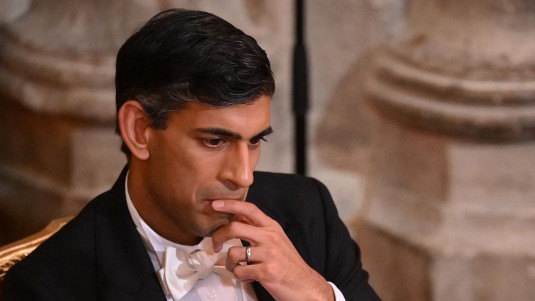
Who saw that coming? No sooner were the lobby hacks getting over the expected demise of Suella Braverman than Rishi Sunak pulls off the unexpected: David Cameron enters into Downing Street and, following a hasty ennoblement, is appointed Foreign Secretary. I don't want to call it a master stroke, but in the game of politics no one saw it coming. We've gone from a day where Labour would have made hay over Braverman's departure to one where the headlines were occupied by Dave's return to frontline politics. Sunak has short circuited the "weak, weak, weak taunts and his appearance of buckling under political pressure. Which is just as well because the fates are not kind to Prime Ministers who hand active, mobilised social movements a ministerial scalp.

Getting rid of Braverman immediately posed the question: who now? As rightly forecasted, the honour of being her replacement and the sixth Home Secretary since 2016 (seven if you count Braverman twice) fell to James Cleverly. At the Foreign Office, he's burnished his reputation as a dependable pair of hands. Someone not given to grand standing and has loyally discharged Britain's traditional interests without any qualms. For Sunak, he's the natural counter to Braverman who, hired to say the unsayable, inevitably went off piste and threatened to bury the Tory ski resort under a political avalanche. With a reputation for seriousness, and as someone who has spoken sensitively and positively about his mixed race background, it is hoped Cleverly can repair the government's fraught relationship with the police and start undoing the damage left by his predecessor.

As many have pointed out, bringing Dave back into the fold after a
barely-reported scandal and, more recently, "working closely" with a UK-China investment firm shows up a paucity of talent on the Tory benches. An observation that won't find any quarrel round these parts. But within the terms of briefcase Toryism, Dave works on three counts. He is experienced, is well known among the foreign policy establishments of the States That Matter (though not always positively - see his frequent and not terribly successful efforts at handbagging the EU), and is a known quantity. He's not about to go rogue and sign Britain up to recognising Palestine. And his administration's extensive love-in with China won't do any harm given how much Sunak is pivoting to East Asia. Second, Dave had the special sauce where a layer of Tory and Tory-curious support was concerned. His slippery PR patter and teflon countenance served him well in office until the Brexit gamble destroyed his career. Might some be attracted back to the party now Sunak has disposed of Braverman's services? And thirdly, most outrageously, at a time of fraught politics and a mass movement against British foreign policy, making Dave a peer give the Foreign Office an extra layer of insulation from democratic accountability. Even Lindsay Hoyle expressed his annoyance. Dave will be taking questions in the Lords while a bag carrier becomes his meat shield in the Commons.

Sunak has won the day by keeping the fall out of Braverman from the main headlines, but is it going to make any difference to Tory prospects? No. Dave destroyed his cache with liberal-inclined Tory voters by delivering a Leave vote in the referendum, and then leaving others to clean up his mess. Nor are right wingers going to look at his return with favour. The never not ridiculous Andrea Jenkyns was hardly full of praise in her no confidence letter. And you can't imagine the Tory base being full of unalloyed enthusiasm, given it was he who "forced" many of them to support UKIP in 2015. He was woke before wokery was a glimmer in the Tory culture warrior's eye.

On the other hand, he reminds plenty of people of how made life worse. The cruelties he oversaw in social security, particularly the humiliations of the work capability assessment and the bedroom tax, the saddling of young people with unsustainable levels of debt, the flatlining of living standards - is it any wonder Dave accelerated the turning of an entire generation against the Tories?

Sunak seems to have realised this as the day wore on. Without any women occupying the four chief offices of state and no obvious right winger front and centre, he has belatedly resurrected the miserable career of Esther McVey. Dubbed the "Minister of Common sense" by The Sun, she will now work as a minister-without-portfolio with responsibility for fronting up the government in the media. In other words, someone else who will say the right wing things Sunak is too cowardly to repeat, but doesn't have any power to wreck stuff. Though being white means McVey does not have the same leeway Braverman had in her pronouncements.

In the social media branding accompanying the reshuffle, the Tories said Sunak was "strengthening his team". What this really means is briefcaseism dominates the cabinet more than hitherto. But it's the politics that matters. It doesn't matter who's selling it, be it Dave and his salesman slick, Cleverly and his new found seriousness, or McVey and the inevitable "I'm working class me" routine, no one is biting. Thankfully, the agony might soon be over. Dan Hodges alighted on the number of ministers stepping down voluntarily and how this points to a May election. I hope this is correct. The wipeout of the Tories, so thoroughly and richly deserved, cannot come soon enough.

Friday, 8 September 2023

The Stagnant Monarchy

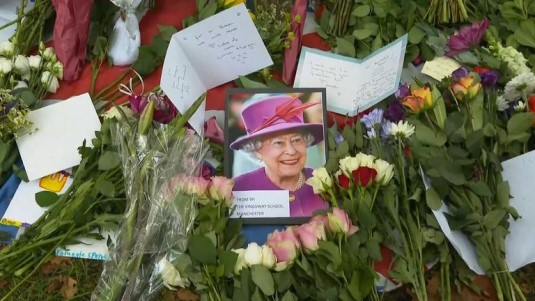
It's been a year, Gawd rest her soul. Though there hasn't been the outpouring of sycophancy you might expect on this first anniversary from official channels. Still, one can always rely on the Telegraph to publish something suitably cringing, and Camilla Tominey is just the woman for the job. There is almost nothing in her maudlin piece to write about. Her Maj has left a gaping hole in everyone's life, the constancy of her presence no longer there to offer reassurance in an uncertain world, and the example of her commitment to duty - so at odds with modern life - died with her. This is a case of projection to be sure. Tominey's entire career has revolved around writing unbidden prettifying copy for the Windsor firm, but a set of sentiments shared by the sensibilities of Telegraph readers.

I said almost nothing. There is an absence in her lament of the absence; the King. He and Camilla get a mention, but only about how the House of Windsor "feels a little diminished". One might pick up a scinittla of anxiety in these words. While most of her fellow Tories were toasting the jubilee last year and regarded the monarchy was as safe as houses, we get the sense that Tominey suspects reinforced autoclaved aerated concrete is present. Consider the year in royalty. The coronation passed without a hitch, even if Penny Mordaunt inadvertently stole the show. The ongoing trouble with Prince Harry doesn't seem to have rebounded unfavourably on the monarchy. There have been no major scandals or controversies that have splashed all over the papers, though some were a bit annoyed when the King was wheeled out to anoint Sunak's Brexit compromise. And there was the rare moment of amusement when he met the post-crash Liz Truss with a "dear-oh-dear". The monarchy is steady as she goes, it seems.

And it's this that tugs at Tominey. The institution relies on a mix of passive acceptance and tolerance, as demonstrated by the lack of popular take up of the coronation celebrations. But when establishment politics have been badly shaken in recent years, and the incumbents and next likely government commands zero enthusiasm too, renewing the state and the monarchy doesn't have any mass buy-in. If the constitutional monarchy is to survive, something more than business as usual is required. While the Queen was alive she could inspire a degree of deference. The worry is, a year in, that Charles doesn't and never will. Which is fine, if it wasn't the case that ratings are down and trouble is brewing in the future. When the whole system needs an overhaul to put the relationship between state and monarch, and the people they preside over on sturdier legs, from whence will it come?

Image Credit

Thursday, 13 July 2023

The Politics of Standards in Public Life

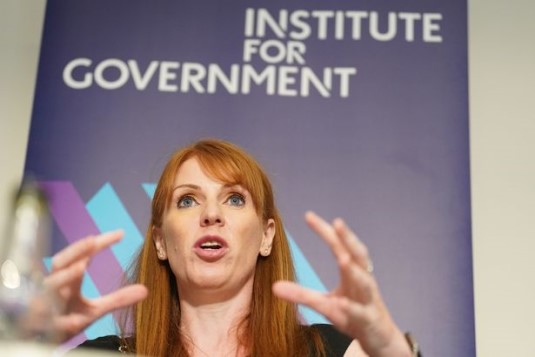
Standards in public life? Sounds like a good idea, Not sure the Labour leadership are the ones to to give that lecture, but that didn't stop Angela Rayner holding forth on the subject at the Institute for Government today. What she had to say wasn't new. It was a reheat of proposals first cooked a couple of years ago. But reminding the media and the public of them at a moment of acute Tory sleaze and rule breaking wouldn't do Labour any harm.

In her speech, Rayner said ministers would be banned from lobbying jobs related to their briefs for five years. No more aspirant Patricia Hewitts doing the health minister's job and then catching a private medicine consultancy after retiring from the big house. There's also a change in who gets to makes the decision about launching a standards investigation, It's taken out of the Prime Minister's hands and will be in the gift of that old favourite - an independent panel. This ethics and standards commission could be given powers to determine the punishment of those who fall foul of its remit, though Number 10 will be given a final say.

This ticks a couple of boxes. For the wonks and the self-styled modernisers it wraps up several ad hoc committees and appointments, making for a more efficient process not (immediately) beholden to the politics of the day. It might create a bit of a headache for Keir Starmer down the line. But it's also smart politics, and not just because Tory bad behaviour is right now winning votes for Labour. Because of the scale of Tory corruption, any current ministers who survive the coming deluge will have to spend some time concentrating on and laundering their records and reputations instead of opposing a Starmer-led government. And it would serve quite a few political purposes four or five years hence to remind the punters about how corrupt and lawless the Tories have been.

But constitutional fixes can't mend politics. That comes from the ebbs and flows of the struggle itself. The problem Starmer has is despite claiming the mantle of Mr Rules and Grown Up in the Room, his performance as Labour leader has been brazenly shameless in its dishonesty. At Unite's conference today he said he won't make any apologies for doing what is necessary to win. In that context he was obviously referring to the dumping of high profile policies. But as Labour Party watchers know, this has gone hand in hand with the exclusion of undesirables from candidate lists and the membership without the pretence of natural justice or recourse to the rule book. Lies are frequently told by leading Labour figures about his predecessor, and Starmer himself can get very evasive about his recent record. That the media has largely let this slide doesn't mean it hasn't happened. Indeed, there is a burgeoning cottage industry of left wingers cataloguing all of those misdeeds.

And here is the trouble. Are we supposed to believe this behaviour will cease when Starmer enters Number 10? That the trumpeting of a new quango for overseeing ministerial conduct means an end to making misleading statements in the Commons, duplicity, and cashing cheques from moneyed interests? I doubt it very much, and what that means is when the commission is set up whatever remit it has will be tightly circumscribed by the every day dishonesty of doing political business.

Image Credit

Thursday, 29 June 2023

Rishi Sunak's Good Bad Day

Not the best day for the government. The Appeal Court said no to the Tories' obnoxious Rwanda plan, and they ruled it was not a "safe country" to transport refugees to. This morning, as expected, the Privileges Committee put out a report naming a handful of prominent Tory MPs as being in contempt of parliament. And sloshing away in the background has been the bankruptcy of Thames Water and the will they/won't they speculation about whether the government will nationalise it. The Tories have a choice of adding its debt to the state's balance sheet, or allowing the South East to run dry. And yet no decision has been made.

All three of these speak to an acute vacuity at the heart of government. Which shouldn't come as a shocker, considering Rishi Sunak began the year promising to do absolutely nothing. But even on these risible terms, he's failing. There is a school of thought that the Rwanda scheme, dreamed up by Priti Patel as one of myriad culture war substitutes to fill the hole left by Brexit, was never designed to be implemented anyway. This is state money being chucked on a wholly intentional strategy of tension, in the hope the Tories would find themselves on the right side of political opinion and Labour's "lefty" lawyer at odds with the British people. Amazing to think any of them could mistake Keir Starmer for a man who cares about liberties and human rights. The problem is that a wheeze cannot last forever, and if you keep promising you're expected to cough up the goods eventually. It might be good news for Suella Braverman, seeing as she gets another crack at laying out the ground for her leadership campaign. But for Sunak, it's a disaster. His hand-wringing criticisms of the judgement make him look powerless, and he's got to know it as well. Short of repealing the Human Rights Act and withdrawing from the ECHR, which is unlikely given the company he'll be keeping, his policy now relies entirely on the Supreme Court deciding in his favour. And if the Appeals Court have found the government at fault because they've breached the law, simply arguing the same thing again isn't likely to cut it.

Coming after disappointment in court, the Privileges Committee report must have come like a kick in the pants. Having ducked out of one vote to pronounce on Boris Johnson, Sunak will be hoping for a vitally important meeting with a foreign leader to pop up in the diary. The Privileges Committee report into the conduct of Johnson cheerleaders accused 10 parliamentarians, seven MPs and three lords, of trying to undermine its work. Nadine Dorries and Jacob Rees-Mogg are on the hook for impugning the integrity of the committee and orchestrating a campaign against its Conservative members. Also in the dock are Andrea Jenkyns, Michael Fabricant, Brendan Clarke-Smith, Mark Jenkinson, and Priti Patel. The report will go before the Commons on 10th July, and MPs will have a free vote on the fates of this most motley of crews. Sunak will avoid expressing a view, no doubt. But the rest? Some of the briefcase brigade would happily see these incur the 10 day suspension penalty, which will mean a slew of by-elections the Tories would lose. But on the bright side they could make the case they've shut the door on the Johnson era and get on being "sensible" and "grown up" without their theatrical distractions. There are good right wing reasons to get shot as well. Of the gang, Patel is in the safest seat but a big drop in her vote would harm her leadership ambitions, benefiting Braverman and Kemi Badenoch both. Not only would a potential rival be knocked down a peg, the riddance of the rest leaves their residual support up for grabs too. And for the right wing attention seekers who remain, like the always appalling Jonathan Gullis, that means more media opportunities. The situation has something for everyone!

Whatever happens, Sunak will take a hit if the Tories close ranks, or if they pave the way for suspensions and by-elections. Surely even he has to realise that the last few weeks have definitively shown there's no coming back for his party. It's not a question of whether they'll lose, but how much by. And it might just be the case that by-election pain in the Autumn could allow for a quieter life between now and the election, and maybe, just maybe, save a few more seats from the coming bloodbath.

Image Credit

Wednesday, 7 June 2023

Prince Harry in Court

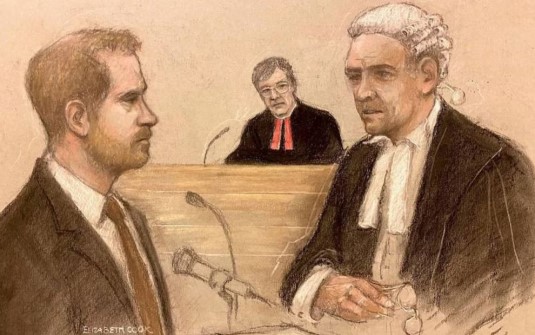
Prince Harry was in the witness box again for the second day of his litigation against Mirror Group newspapers. Having refused to settle over phone hacking claims like many other celebrities have done, he is there ostensibly to stand up for privacy and take one of the more notorious media organisations to the cleaners. He alleges journalists working for Mirror Group newspapers had, over a period of years, obtained voice messages illegally and used them to run a slew of exclusives about his private life. 33 such articles are at the heart of the case. They deny it and say their stories were obtained from passers-by, friends, acquaintances, etc. A line that might have credibility had they and other papers not spent tens of millions paying off disgruntled parties who had accused them of doing the same.

There are a couple of things of interest beyond the salacious details avidly consumed by royal-watchers. The first is the point oft made before Harry was due in court: the fact he's the first senior royal in the witness box in 130 years. Previously appearing was the then Prince of Wales and future Edward VII, or "Bertie" as he was affectionately known, and questioned in a slander case involving an illegal game of baccarat. The difference between then and now is he was called as a witness and compelled to attend. Harry, along with several other litigants, initiated this action.

It's this that makes matters highly irregular. The royals are not just supposed to be above the pettiness of the press, but at a far remove from it and commonplace affairs. At the pinnacle of the state, the constitutional monarchy is supposed to embody it. In a weird sor of way, they are us. And that means neutrality where day-to-day matters are concerned. In the present set up, the monarchy is an anti-democratic check on unruly aspirations incoming governments may have, and a guarantor the means of violence would be employed to serve the status quo in the unlikely event of a revolutionary upheaval. But all this is obscured by protocol, bowing and scraping, and the enthusiastic support of the official left for this state of affairs. One of the reasons why the Palace have taken such umbrage at the comings and goings of Harry and Meghan is their refusal to be bound by the straitjacket of expectation and the hypocritical rubbish demanded of them. The cutting off, so ostentatiously demonstrated at the Coronation, is necessary to close the window Harry has opened onto Palace intrigue and familial relations and repair the distance. By attacking Mirror Group through the courts, however justified Harry's action is, his behaviour is just another episode of his violating constitutional neutrality. He humanises the institution, and doing so makes it appear historical, frail, and possibly impermanent.

This isn't the only reason why we'll hear nothing from royalty during the case. Except the usual run of puff stories and good news with which we're invited to play the game of compare and contrast. The silence and being seen not to comment is their way of keeping the papers onside. The King can remember well how he and his family were damaged by the press campaign in the 1990s, that is before their knight on a white charger galloped in and helped save their bacon. No comment, not even letting an off-the-record "Palace source" hold forth on the case, helps keep the papers respectful and cooperative. Because with the royals looking at a long-term decline not dissimilar to other props of the establishment, they need continual good press if their efforts to re-legitimise the institution and secure its future until the end of the century are to bear fruit.

Image Credit