
Plaid won for several reasons. By all accounts, Lindsay Whittle was an excellent candidate. A local man who has stood for the party 14 times, his long record of campaigning as an activist and a councillor stands in sharp contrast to the far right carnival that came to town, and won't likely be seen again until next year's Senedd campaign begins. And also against the faceless suits that Labour typically favours as candidates. Also in Plaid's favour is their never having been tested with office, which is married to a centre left platform few would find objectionable. As the party's leader Rhun ap Iorwerth has ruled out pushing for independence, their offering is not that dissimilar to Labour's of the recent past. Which is handy, given Wales is the most Labour of the UK's constituent nations.
Or rather, was. For the other story of the night was the complete collapse of Labour's position. Since Keir Starmer won the general election, Welsh Labour's has nose dived. The dominance of the party, which endured during the Blair, Brown, Miliband, and Corbyn years is perched on a precipice. Recent polling indicates their precarity, and Caerphilly's loss - an unwavering stronghold for a century - underlines it. The 2026 elections are set on being a repeat of Labour's 2015 Scotland wipe out. Yes, Welsh politics has its own dynamic not entirely beholden to Westminster. The scandal around Vaughan Gething's resignation as First Minister, which involved a £200k donation from a businessman convicted of environmental offences, "coincidental" awarding of government loans to his companies, and fibbing to the Covid inquiry about the deletion of messages have all eroded the party's standing. But this crisis was compounded by the hapless, hopeless farce of Labour in Westminster. Polling suggests that Plaid's vote was overwhelmingly composed of former Labour voters, and there's no reason to believe this decomposition won't carry on eating their support. It couldn't happen to a nicer Labour leadership.
Returning to Reform, despite putting a brave face on it Farage and friends will be disappointed. Their chair, David Bull, boasted about how they went from nothing to 36% in the blink of an eye. Yes, but with the media pack doing their campaigning for them and their agenda dominating politics, they should have lived up to the hype. Which has led to speculation about the role of tactical voting to keep Reform out. In such a close fought contest, it's reasonable to assume this was a factor. But is this something we're going to see more of? By and large, council by-elections are seen not to matter, and here there is seemingly no evidence of this happening so far. This hasn't stopped the FT from speculating that this might save Labour's bacon. Or at least mitigate future losses.
I think this misunderstands the dynamics of protest voting right now. Because Labour are in government and have prioritised making the rich richer, scapegoating refugees and trans people, starving public services of funds, reinforcing the curbs on protest introduced by the Tories, attacking the most vulnerable, and parading their arrogance while doing so, they have unified a vast ball of opposition. If you don't want Farage or Farage-lite policies, why vote for the Labour candidate now there are viable alternatives? Be it Plaid, or the SNP, or the Liberal Democrats, or the Greens, or Your Party when it finally arrives properly. As Labour support has collapsed almost everywhere, banking on tactical voting to keep them in and Reform out applies to so few areas that, as strategies go, it's worthless. And that's before even attempting to persuade the voters the party has abandoned that they should come back. Tactical voting isn't going to work during the next round of second order elections, which means Starmer will be toast after May. But if by some horrendous miracle he weathers the fall out, for as long as he, right wing Labour, and their politics rule the party, the fate sure to befall them next Spring will keep repeating year after year, devolved government election after council election after parliamentary by-election. By the time 2029 comes Labour's support will have withered on the vine.
Image Credit
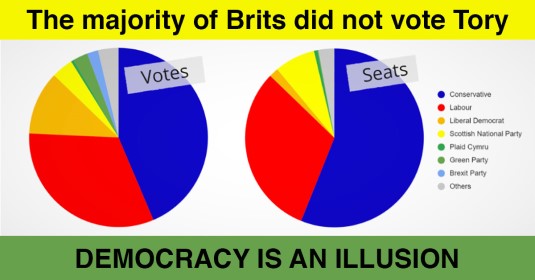
Two penneth worth concerning Jem Gilbert's piece on Labourism. Jem takes aim at what you might otherwise call Labour's sectarianism: the idea Labour is the sole means of achieving progressive social change in this country, with the trade unions and affiliated societies as adjuncts, and other movements kept at arm's length. He argues that Corbynism was a step away from traditional Labourism with its re-emphasis on community building, supporting campaigning and struggle and, yes, standing with workers on picket lines. But it was only a step. The supremacy of the Labour Party as the parliamentary vehicle for change went fundamentally unchallenged. However, this will no longer do. The opposition to the Tories is split and, as this election has demonstrated again, a Labour victory is the exception not the rule. What we need to see is the democratisation of Labour to continue apace and, for once, a bit more modesty about the party's capacity to win elections. As Jem argues, "the fantasy of another 1945 ... has paralysed our politics for too long." Labour has to think seriously about progressive coalitions and leverage the actual anti-Tory majority in the country to deliver an anti-Tory majority in the Commons.
In the abstract, who can disagree? The problem comes with the practicalities. The Greens took some votes from Labour in this election, but didn't cost the party many seats. It's a much smaller outfit that is a contender in a vanishingly tiny number of constituencies and, given its recent remainia turn, helped make the EU wedge issue for detaching Labour voters. Of the nationalist parties, Plaid Cymru has embraced neoliberalism with Welsh characteristics just as Labour moved left and, fresh from clawing back all the seats lost to Labour in 2017, there is little incentive for the SNP to sign up for a progressive alliance. Nicola Sturgeon's 2015 rhetoric notwithstanding.
And then we have a Liberal Democrat problem. The problem with forging a progressive alliance with the LibDems is, well, they're not that progressive. Given the opportunity of government with the Tories they dived under the covers with alacrity, and enabled the worst attacks seen on the post-war settlement since John Major. And they helped pave the way for Brexit too. At the recent election, instead of attacking the Tories as the greater danger they thought piling into Labour alongside Boris Johnson and parroting Tory attacks was the better bet. In short, at every juncture since Charles Kennedy stood down as leader in 2005, the LibDems have made the wrong call. If the next Labour leader was minded to arrange something with the yellow party, it would be against resistance within and without the parliamentary party. And who can blame any sceptic? There's nothing stopping the LibDems doing the dirty after benefiting from an electoral pact with Labour.
A progressive coalition faces serious obstacles coming to fruition, and that's before we even consider who the next LibDem leader might be. If it's Ed Davey he'd no doubt concur with the recently dethroned Anna Soubry that the best thing to have happened in the 2010s were their wretched coalition, and we can expect more of the disastrous same. If it's someone else, we'll have to see.
So much for practicalities, how about desirability? Jem argues continental states have seen greater protections of the post-war settlement than the UK, and progressive legislation has been enacted by centre left parties governing in coalition with smaller centrist and liberal rivals. True, though I'd suggest the greater strength and institutional weight of labour movements also had its part to play. Nevertheless, the first problem is electoral, of the Tories playing the underdog card vs an underhanded liberal alliance - something they did successfully with Brexit as the wedge. And the second is what would a progressive coalition coalesce around. Jem mentions electoral reform and yes, it's fundamental, but a coalition needs to have something distinctive and shared beyond overhauling Westminster. Just being anti-Tory would not be enough.
The other danger is despite marrying a more pluralistic political outlook to democratising the party, there is no getting away from the fact that coalition moves empowers the leader's office and parliamentary elites in general. Over the course of 2018 and most of last year we saw how frustrated the membership felt as they were relegated to spectating House of Commons and PLP shenanigans. And also with this comes the pressure to water down policy so it's acceptable to other parties. I doubt the Greens have many problems with Labour's 2019 manifesto, but despite fielding their most 'left' manifesto for years the LibDems wanted no truck with large parts of Labour's programme. We have to be honest about it: short-term coalition building with nationalists and liberals could threaten the long-term project of making the party fit for contemporary class politics, and create new blockages for realising this aim.
Does this mean ruling coalitions out of order? Not necessarily. They are worth tentative exploration, particularly in England where the outcomes of elections are decided. But we should be fully aware of the pitfalls, problems, difficulties and the dangers, as well as the possibility of failure and the potentially half-arsed character of such an enterprise. But as Jem notes, Labour hasn't succeeded on its own terms without capitulating entirely to core ruling class interests for over 40 years. So why not try something new?
Image Credit
"Dear Mr Johnson", begins Plaid Cymru's latest data harvesting exercise, "Rule out No Deal, Commit to a Final Say Referendum, Start investing in our country". And it's signed off, rather presumptuously, by "the people of Wales". The very same people who voted 854,572 to 772,347 to leave the European Union, just so you know. Okay, so what do you note about this "letter" to the Prime Minister? It is reiterating in Plaid Cymru's Brexit policy, which as it happens is the same as the Liberal Democrats (whose position is not to revoke Article 50, despite their posturing), and also Labour's position. Readers will recall the Labour's policy set by conference last year is to push for a general election, and if we can't get one push for a referendum as a means of preventing a no deal Brexit or one based on Theresa May's withdrawal agreement.
Consider Plaid Cymru's position as of this morning. Ahead of Tuesday's meeting between Jeremy Corbyn and other parties, including even Anna Soubry for the Independent Group for Change, Plaid's new leader, Adam Price, has issued a "message to Corbyn". Talking up his party's contribution to the Brecon by-election and the EU election results in which they beat Welsh Labour by 40,000 votes, he says Plaid will only support Labour's plan for a caretaker government if it commits to remain in advance.
Let's just set this out as crystal as language allows. Labour plan to no confidence Boris Johnson's government. If it is successful Corbyn will try and form a caretaker government for the single express purpose of extending Article 50, and calling a general election with a second referendum on Brexit in Labour's manifesto. Caroline Lucas for the Greens prefers a referendum first, the LibDems aren't keen on the idea because Jo Swinson is vulnerable to the SNP, and neither are the two halves of Change UK nor the Tory "rebels" who we keep hearing rumours about. Why? Because after an election, none of these people will exist. Nevertheless the general election plank of Labour's position is flexible and might be up for negotiation if it means stopping a no deal - no doubt this will be a topic for some discussion tomorrow. Once in office, all Corbyn has pledged to do is these tasks. So, unfortunately, all those things our centrist friends hold dear, like benefits sanctions, the housing crisis, and crippling tuition fee debt will go unaddressed.
It turns out this isn't enough for Price who has chosen to demand more from Jeremy Corbyn than their pitiful "Dear Mr Johnson" letter asks of the Prime Minister. For someone boasting "under my leadership, Plaid Cymru has taken the strongest anti-Brexit stance", this is a funny way of averting no deal and securing the second referendum he supposedly covets. What is Price's game?
Party politics, of course. Unlike Leanne Wood whose politics were firmly on the left of the party, her successor is firmly in the socially liberal, economically liberal mould. And by economically liberal, I mean a fervent enthusiast for the Thatcherite settlement: income tax cuts, driving down council tax bills, and corporation tax to try and tempt companies from England to relocate. No wonder as she departed office Wood accused him of being willing to do a deal with the Tories - and in quick response Price ruled out any coalition with any party. Furthermore, Price has doubled down on Welsh nationalism and has argued for an independence referendum of its own. It's more than coincidence then that he found cosying up with the LibDems in their so-called remain alliance a more inviting prospect than Jeremy Corbyn's Labour, even to the point of adopting the same tactics.
Like Swinson, Price is overplaying his hand. Drunk on the fragmented EU election results, he thinks Plaid's position can improve by appearing the most ultra of ultra remainers. The party's banked its present electorate, and so going all-out remain presumably would peel off Labour voters and remain-inclined Tories. The problem with this, as noted many times before, is most remainy Labour voters support a Labour government for reasons other than Brexit (the myth Corbyn and co. hoodwinked remain voters in 2017 on the basis of an explicit 'we'll deliver Brexit' manifesto refuses to die). By pushing neoliberalism on a bed of daffodils Price is running the risk of losing the left flank Wood helped build up over years. His ridiculous open letter to the Labour leader was sure to have gone down like the proverbial cup of cold sick among these activists, members, and voters.
This isn't Price's sole consideration. He is desperate for the remain alliance to work as clear runs in a number of seats could help him achieve the party's objective of doubling representation in the Welsh Assembly in 2021 and scooping up more seats in Westminster. By demonstrating his Corbynphobic creds, formalising this arrangement with the LibDems becomes more certain.
"This is not a time for political posturing", when every single angle of this stunt screams political posturing. No deal might be bad, but placing impossible demands on Labour just goes to show Adam Price is willing to sacrifice the well being and livelihoods of others for the miserable prospect of winning a few extra parliamentary seats. He might style himself an iconoclast and a "progressive", but his politics are as grubby and self-interested as any establishment politician's.
Image credit
Plaid Cymru. They're a nice party, aren't they? Leanne Wood's a good lefty sort who found a niche for herself in British politics as Labour's external leftwing conscience, especially in the days of Blair and Brown. More radical than either Alex Salmond and Nicola Sturgeon, a lot of Labour folks had a soft spot for her even when the aforementioned would have many of the same spitting feathers. And as a party, Plaid weren't that threatening. We compete with them here and there, but there was and remains little sense that they're about to do an SNP and give Labour a routing. Even after they took the Rhondda. Well, today will go down in political history that the warm indulgence conferred upon them by Leanne's many admirers came to an end. Left wingers who took Plaid's promises at face value and gave them a punt because Carwyn Jones's Welsh Labour wasn't politically virtuous enough are set to repent.
In what was to be a formality this afternoon to swear in the First Minister, Carwyn put himself forward to lead a minority Labour government. But the chamber had a bit of a surprise. He found that Plaid had hatched a deal with UKIP and the Tories to oppose the conferment. The result was a tie, 29 votes for Carwyn, and 29 votes for Leanne. That's right, the "socialist" leader of Plaid Cymru came within an inch of taking power at the head of a green/blue/purple coalition. Let that sink in for a moment. An arrangement with the Tories, who Leanne has repeatedly (and rightly) criticised for their attacks on our people, and their indifferent dithering over Port Talbot. And an association with UKIP, who previously Plaid had denounced as a party "based on division and the scapegoating of vulnerable people", and whose leader was attacked as "the voice of the far right". And yet, here Leanne is, breaking bread with Welsh UKIP leader Neil Hamilton (Neil Hamilton!), Mark Reckless, and five other purple people bleaters. We all know about the lion lying with the lamb, but Plaid blocking with the most vociferous opponents of anything faintly whiffing of progressive politics?
Let's give PC the chance to explain themselves. According to the BBC, Plaid maintain that this afternoon's shenanigans are all Labour's fault (of course). Because the majority of the Welsh electorate didn't vote for Labour, then it's rather presumptive of the party to try and govern alone. It should have reached out to others in the chamber (i.e. them) to reach some accommodation instead of rushing ahead with the re-election of First Minister. There is a point here. After all, coming to an understanding with Plaid wouldn't be the first time Labour have struck a deal with them. Then again, Labour could (and should) counter that there are pressing problems, not least with steel, which require decisive leadership seeing as the UK government is refusing to provide any. And so we have deadlock. 30 for Plaid's coalition of the unhinged, and 30 for Labour and the single LibDem, Kirsty Williams (in a rare principled move for them, the yellow party refuse to treat with UKIP). And if this situation persists into the beginning of June, the Assembly will be dissolved and a fresh round of elections called.
Plaid's behaviour might seem bewildering, but it isn't really. It's a political party like any other, and all parties have the propensity to maximise opportunities for office. It's rare, I'm afraid to say, for principles to prove an obstacle. The LibDems here are a rare instance. Labour isn't supposed to cut deals with Tories, but that has occasionally happened in some open (and not-so-open) coalitions in various local authorities. The PLP also collaborates with backbench Tories over matters of mutual interest. There are, however, limits. Labour would never deal with UKIP, and studiously avoids high profile associations with Conservatives. That particular lesson has finally been learned thanks to Scotland.
The second, however, goes right to the heard of Plaid's political DNA. It is a nationalist party whose raison d'etre is an independent Wales. It might not talk about it much as the eventuality is as likely as a hyperbole-free public debate about Israel, but it's there. That's the party's axis in the same way class is for Labour and the Tories - as much as some in each would pretend (and prefer) it was otherwise. All nationalist movements and parties have their own lefts and rights, and presently the social democratic wing in Plaid (and the SNP) have their respective organisations locked down. The material roots of this situation lie in positioning themselves over a long period of opposition against Labour, and traction was achieved when colourless (neoliberal) managerialism ruled the Blairist/Brownite roost and continued under the blessed Ed. But ultimately, this is always and everywhere subordinate to the aim of national independence. Sometimes, at least theoretically, a national separatist project can serve progressive politics - especially where the denial of national rights is sowing division and poisoning the body politic. And yet, history has always shown that when it comes to the crunch, even when independence is on the side of right, class politics is subordinated to national politics with greater or lesser degrees of violence. While no one's seriously suggesting a bloody resolution to this in Plaid, the different basis of the party always puts its commitment to social democratic politics into question, as well as its availability to make deals with the most backward and dangerous forces in Britain.
What game is Leanne Wood and Plaid playing at? Nationalist politics.


