Showing posts with label Anti-Fascism. Show all posts

Monday, 19 October 2026

Undercover in Reform

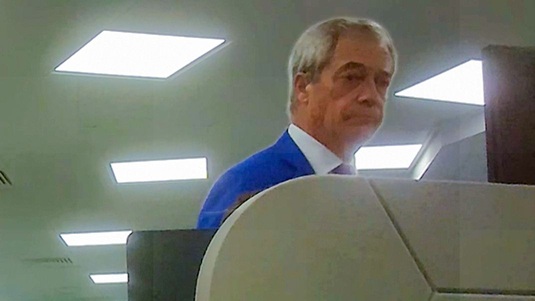
If there were doubts about Reform's political character, ITV's undercover documentary has put them to bed. In encounter after encounter, its reporters were witnesses to unprompted, off-the-cuff racism. But we're not talking about the casual dropping of slurs. Instead, a parade of councillors and party officials outlined their elaborate, violent fantasies. Of ripping people from their homes and shoving them in concentration camps, of personally carrying out public executions, of terrorising minorities and enjoying the experience of discharging imagined race war responsibilities. The expose went beyond how Reform cadre break taboos in private. Rather, what we got was fascist bloodlust, a desire by the men featured to commit mass murder because, for their own pathetic reasons, it makes them feel good.

Damning for Nigel Farage and his satraps was not their endorsement of these views. He would never be so crude. But the fact that, despite pledging to "professionalise" the party on many occasions, Reform is an organisation where these sorts of views were tolerated on a don't ask, don't tell basis. Farage himself was willing to overlook the racist attack made on David Lammy by Chris Parry, the then candidate for the mayoralty of Hampshire and the Solent - presumably because he was a rear admiral. But overall, time and again, unapologetic fascists were shown to have sailed through the "vetting", tips were given by party officials on how to circumvent it, and there was more than one case of those dumb enough not to hide racist social media posts being invited to apply again for a local election vacancy. Farage's pledges to clean up his outfit are a sham.

What does Farage gain from attracting these sorts of people to his organisation? Because he knows these are among his core constituency. Reform supporters wouldn't be that upset by the vote-splitting threat posed by Rupert Lowe's Restore if it were otherwise. What Farage gets is a quid pro quo. They do the hard yards of organising the party, of recruiting candidates and sorting out election campaigns, and ultimately putting up the yes men - and they're nearly all men - who'll do Farage's bidding in the council and mayoral chambers, who'll vote the right way in Holyrood and at the Senedd, and will nod through his enabling bill to eviscerate British democracy if they make it to Number 10. And in return, as Farage and his cronies engorge themselves on the not inconsiderable resources of the state, they'll more or less live out their fascist fantasies. Such is the unsaid pact at the core of Reform - something baldly stated in the video, and understood by both parties to the arrangement.

Unfortunately for Farage and Reform, a future where this could be enacted is becoming increasingly far fetched. The schoolboy racism revelations, which have circulated around Westminster for at least a decade, the dodgy finances and possible criminal wrongdoing, the political setbacks, and a Tory party that has, the establishment have decided, made up lost ground, have worn down Reform's fortunes. And Restore are, again, a menacing presence. Their interventions having arguably cost Reform five council by-election victories in October so far. The polling returns have fallen and while they, for the moment, have settled at around a fifth of the electorate at the time of writing, the possibility of Reform reaching much beyond an increasingly boxed-off core has receded. There is, unfortunately, a market for the poison Farage is peddling, but it is out of step with the mainstream majority. And, as such, it remains a base capable of sustaining a few dozen far right grifters, and for feeding and amplifying fascist street movements. But is that enough for a Farage who, for a short time, felt power was within his reach? Probably not.

Image Credit

Monday, 7 September 2026

Labour's Far Right Failure

I read with interest that, on Monday afternoon, Andy Burnham appointed Marc Sears as his special advisor. For those not familiar with his work, Sears was at UCL's policy lab where he studied "progressive voters". Their most recent report, published in May, found that among Keir Starmer's many failings was his refusal to articulate the sorts of politics Labour voters expect from their party in office. This failure saw Labour's erstwhile voters splinter among the Greens, Plaid Cymru, the SNP, and, to a lesser extent, the Liberal Democrats. And, to rub it in, they found very few Reform supporters - approximately two per cent - were prepared to vote Labour under any circumstance. Therefore, to reiterate the obvious, left wing voters have intertwining sets of interests and values and expect their parties they support to act on them. Political science ain't rocket science.

Part of Andy Burnham's appeal is his affected comfort with soft left politics. The opening fortnight of his premiership, the Downing Street speech, the care speech, the first address in the Commons, this is supposed to be the difference his leadership is making. And yet there is the same attacks on trans people. The same demonisation of asylum seekers, and fruitless boasting about the fall in Channel crossings. And this weekend we saw another one: political paralysis before a far right blockade/"protest" in Dover. The weakness of the government's response is so pitiful, you could be forgiven for thinking that Starmer wasn't turfed out a couple of months ago. Speaking in the Commons this afternoon, policing minister Sarah Jones "condemned" - and we should use that term advisedly - "intimidating and thuggish behaviour", lines lifted from Sunday night's Downing Street statement. There's "no excuse" for racists on the streets but, but ... "None of this is to minimise the valid concerns that law-abiding people have when they see vile criminal gangs exploiting the nation's generosity." Under questioning from Suella Braverman, she acknowledged that local people were "scared and angry" but not of far right squaddists running riot, but about small boats. This was completely different to the attitudes of fascist trouble-makers, she said, strongly implying that residents are fine to feel this way. In short, less a capitulation and more a regurgitation of Morgan McSweeney's drivel, the strategy that drove Starmer's premiership onto the rocks.

History tells us that expecting Labour to challenge the politics that has led to this shameful episode is too much. Even if the parliamentary party was overflowing with principled anti-racists, challenging the common sense Burnham's predecessor bedded down in British politics is too much like hard work. Refusing to scapegoat refugees, and pointing out how Britain's social problems are more deep rooted, more complex, and are ultimately located in systemic inequality and, therefore, class relationships is to invite the hounds of hell to the door. But even insipid liberal arguments of the "refugees welcome here" and "who's going to look after our pensioners?"-type are no-noes where this government is concerned. We're still in the moment of blokey politics, and Burnham is just about at the limits of showing a caring sensibility - doing so for outgroups, such as refugees, trans people, Palestinians, puts you beyond the pale of establishment politics. But more than that, Labour needs its scapegoats too. Bigging up undesirables and demonstrating one's efficacy by publicly doing them over is arguably the oldest strategy in politics. The incentive structure isn't there, and Labour rarely has the wherewithal to change the game anyway.

And this is where it will cause them problems. Far right thugs aren't about to change their politics if Burnham starts whistling an anti-fascist tune. Nor will the underlying dynamic change much if the police take more of an interest. 16 years of intermittent and inconsistent harassment by the authorities of Stephen Yaxley-Lennon and his fascist street rabble hasn't done much to put them back in their box. But the perception of Burnham's lack of seriousness, of marrying every "condemnation" of the far right with legitimate concerns-ings will disperse the very fragile recovery Labour's base is undergoing. Just as it did for Starmer. And, because Labour is refusing to confront the far right politically, others will do. There is a long tradition of physical force anti-fascism in this country and, as widely acknowledged, it can take the credit for ensuring the far right were effectively suppressed in the 1980s and 1990s. We're not talking about No Nazis Here lollipops or anti-racist picnics in the park, but full bore violent confrontation. In the absence of anything else, and because the mainstream are actively feeding far right support, don't be surprised if this calls into being its counter. Just as fascist mobilisations in the 1930s and 1970s did. Is this what it will take to stop right wing extremism in its tracks, that elements of the left will reply with thuggish and intimidating behaviour of its own? That looks ever more likely as the mainstream keeps giving the far right a free pass.

Wednesday, 10 June 2026

On Cowardice

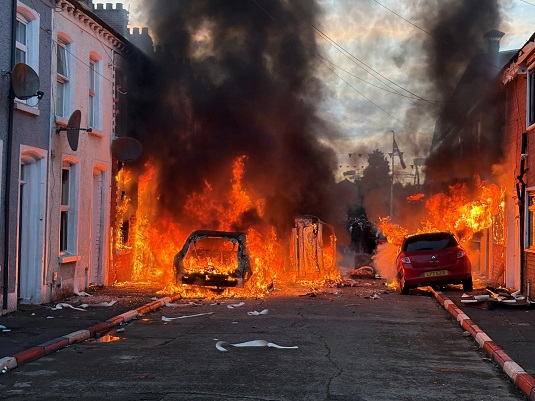
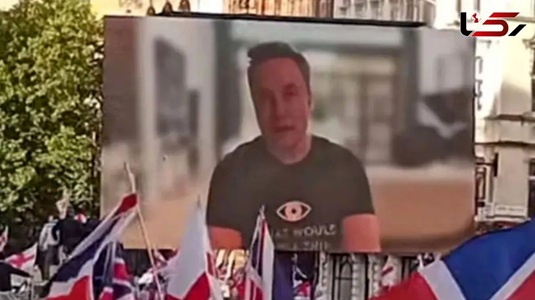
Another night of rioting, this time culminating in the burning out of African immigrants from a Loyalist area of Belfast. This was called for by Tommy Robinson, amplified by Elon Musk, and backed by Rupert Lowe's Restore. And what is the British government's response? Exactly the same as the Southampton rampage. Hand-wringing, pious words, and a pitiful attempt to shame the far right into behaving decently. Yes, arrests were made and rioters got banged up, and the same will happen to some involved in the Belfast unrest. But the political response is weak. Keir Starmer is treating the rioters like so many criminal damage cases, while the instigators don't just continue to walk free, their call for race war on Britain's streets goes unchallenged.

Why? Once, I was willing to give Starmer and his government the benefit of the doubt. He's a bureaucrat, not a politician. He hasn't got the skills to articulate the politics of where most people are on racist violence. He is afraid of putting off the (mythical) voters Labour has lost to Reform. Yet, still, no robust push back against increasingly audacious fascist provocations. Even as Elon Musk and, effectively, his employee use their social media platforms to organise and mobilise. The government's sleeping at the wheel, under these circumstances, has to be something more than incompetence and complacency. It's stretching credulity to suggest their refusal to act on Twitter is because they think it's a valuable news outlet used by millions of people.

Politics is always a struggle between interests, and this is where the government's paralysis lies. It works at two levels. Starmer will not take action against "X" because doing so would jeopardise the special relationship. I.e. The military and economic dependence of the British state and the British ruling class on the United States, which finds itself variously expressed in Farage's fondness for Trump, Lowe's bootlicking of Musk, the myriad connections that once existed between the Tories and the GOP, and not forgetting Labour's Atlanticism and its cringing love for Clinton, Obama, and The West Wing. Papa Trump must therefore be appeased. Related to this are the flows of techbro investment coming in to the country. The system of tax breaks and guaranteed markets Britain's public services offer their wares are nice opportunities, but from Labour's point of view action against Musk's interests might frighten Silicon Valley off. Especially as its luminaries are billionaire oligarchs and have the arrogant, far right class conscious politics to match. And for leading Labour politicians themselves, as noted before, taking on the interests of big capital is unlikely to do much for one's post-politics career. Especially if they see Nick Clegg and, ahem, Peter Mandelson as their models.

In the end, the mystery of Labour's failure to take the far right on politically isn't a puzzle at all. Their cowardice has material roots. It's the class politics. It's always the class politics.

Thursday, 4 June 2026

Right Riot

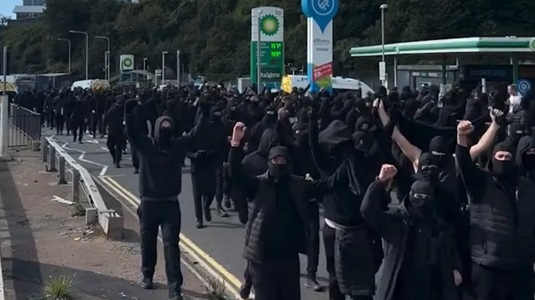
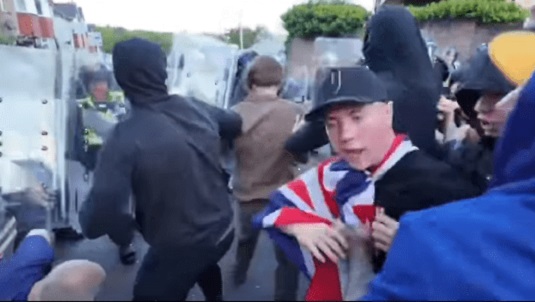
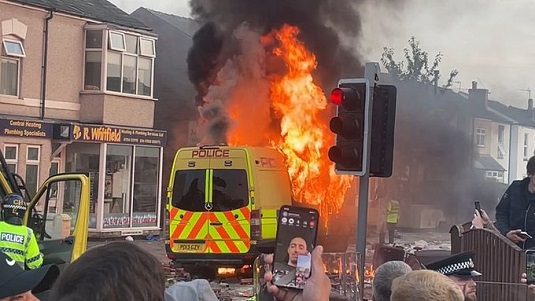
There have been two phases to the riotous assembly Nigel Farage stoked following the investigation into the police handling of Henry Nowack's murder. There was the confrontation in Southampton itself. This was no grassroots anger bubbling over, but a flashpoint that saw the far right across London and southern England mobilise for a fight. All the fascist faces were there - Tommy Robinson, Laurence Fox, Paul Golding, Posey Parker, all dragged their knuckles from their fetid swamps to whip the bovva boys up into a frenzy. And they duly obliged, rampaging through inner city residential streets and attacking the police. No doubt many of them can look forward to a spell in pokey courtesy of the footage shared by their grifting mates.

Yet the political objective was achieved. Having spent the last two years stirring the pot, the far right have had their first summer riot. Another step toward how things used to be, when the National Front routinely took to the streets in the 1960s and 70s. But the second phase of this right riot has proven more successful then any of them could have dreamed. Paper after paper, news outlet after news outlet, have surged across and trampled on the cordon sanitaire and hurled the bricks and wheelie bins of far right talking points into mainstream public discourse. For example, Sky News asked if the police are indeed "anti-white", forcing the gibberish about two-tier policing onto television screens. They were joined in this by The Mail, a "debate" on Good Morning Britain, and The Sun "just asking questions". On top of this Chris Mason, the BBC's chief politics gossip-monger ran cover for Farage as he was criticised by the other party leaders in the Commons one Wednesday. Aha! said Mason, they were being political about Henry Nowack's death too! You've got to ask it's only a matter of time before the great replacement theory gets an airing, all in the interests of debate.What happened in Southampton gave right wing papers and their little helpers in broadcast journalism an excuse to treat far right rubbish, which they themselves know not to be true, as if it was based in fact and was a valid viewpoint. This is where their riot has proven particularly successful.

Characteristically, mainstream politics have been useless in its collective response. Keir Starmer and Ed Davey tried to look statesmanlike, while telling Farage off for not respecting the stated wishes of Nowack's father not to use his son's murder for the politics of division. Instead, if they had anything about them, they should be making clear that his speech instigated Tuesday night's unrest, as Farage knew it would, and make plain that Reform is but the electoralist expression of violent street thuggery. But even when the King responded better than Labour did ti the 2024 riots, anyone hoping for better will be waiting for a long time. Something underlined earlier on Thursday as Starmer was moaned about Elon Musk dialling up the race hate in this country. If only the Prime Minister with his huge majority were in a position to do something about malign foreign actors working to destabilise British politics. At the moment where the violent consequence of Farage's tub-thumping could see politics move decisively against him, there is an absence where the far right challenges to Britain's limited democracy could be met.

Image Credit

Monday, 10 November 2025

Why Won't Labour Take on Elon Musk?

On how many occasions has Elon Musk used Twitter to declare war on Keir Starmer's government? How often has he stoked racism, intervened in British politics, called for civil war, and - not unsubtly - agitated for Labour's overthrow? At this point, enough times to warrant official action and sanctions against his cesspit of a platform you would think. But of the government, there's nary a response. Despite Speaker Lindsay Hoyle urging MPs to delete their accounts because of Musk's repeated failure to tackle abuse and law breaking. Instead, we have a government whose departments, as well as its MPs, continuing to use "X" as if all is fine, thereby feeding its petty hate machine.

Last week, further evidence, as if it was needed, was published by Sky News to highlight the platform's toxicity. Via a content analysis of posts channelled to nine fake accounts set up for the experiment, they found Musk's drivel, and right wing posts generally, elevated by the algorithm. Even when said accounts were crafted as left wing and non-political. Despite these left accounts only following leftist posters, half the material shovelled on to their feeds were from right wingers. For rightist accounts, only 14% of political content came from the left. Non-political/neutral feeds had a two-thirds/one-third split in content, with the right taking the lion's share. They also found prominent left wing posters had nowhere near as much reach as popular right wingers. It's a good piece of work that puts numbers to the algorithmic distortion Musk has built into the system since taking it over.

Yet it's tumbleweed from the government, even though Musk's behaviour constitutes overt interference in British politics that is corrosive of Labour's position. Why aren't they doing anything about it, leaving it to Ed Davey to push back and accrue political capital from doing so? Is it another manifestation of the Labour right's congenital cowardice when challenging racist and extreme right wing politics? Partly. Undoubtedly the politics-free vacuum that is Morgan McSweeney has sucked in advice about not going to war with the press, and especially the right wing press. They will hound you without cease. Inhabiting the zone of non-punishment is what a sensible government should do, whereas attacking editorial lines or, heaven forefend, legislating against ownership concentration in the media is asking for trouble. This courtesy, founded on fear, is extended to social media firms.

There's more to it than that, though. The US right take a keen interest in Britain, and complaints from Trump's team - aided and abetted by fifth columnists of Tories, Farage, and Telegraph hacks - have successfully mounted a serious assault on the BBC. Pushing back against Musk, despite his falling out with the tangerine tyrant, would upset the delicate management of Trump that Starmer has committed his government to. They understand the "special relationship" is all one-way, but cannot do without it. The second more broadly is Labour's relationship to American tech bro capital. They want them to invest heavily in UK state infrastructure because the consequences of doing so helps depoliticise politics to the advantage of Starmer and friends. Embedding such technologies across the state sector also gives that section of capital a reliable partner in Labour on this side of the Atlantic, and - most importantly to the ministers involved - it lets them put "headed up large-scale AI implementation" on their CVs, and from their post-politics opportunities as tech execs, consultants, advisors, etc begin opening up. Nick Clegg's seven-year stint at Facebook is the model, during which he enjoyed a £2.7m annual salary, a £14.8m sum from cashing in his Meta shares, and another £16m of stock he's held on to.

With the chances of netting a similar prize by letting LLM oligarchs run riot with Britain's public services, Labour's curious refusal to enforce the law, criticise Musk, or even take their social media business elsewhere makes a lot more sense than everyday pragmatism. Especially when it's now obvious that the party could reap some much-needed political credibility from doing so.

Image Credit

Wednesday, 5 November 2025

Baudrillard Vs Advertising and Fascism

Folks may or may not know that I'm currently reacquainting myself with the work of Jean Baudrillard as part of a research project around hegemonies/anti-hegemonies/counter-hegemonies. Having recently polished off his The Agony of Power, I've returned to Symbolic Exchange and Death - the ground zero for all his thoughts about simulation, the death of reality, and the end of the social. Not only am I getting on much better than when I first had a crack at it 25 years ago, it's proving itself to be a thoroughly enjoyable and relevant read.

Some remarks may come about the book in the near future, but for tonight I'm handing the reins over to the Acid Horizon comrades as they chew over and have a few laughs with Baudrillard's work.

Wednesday, 17 September 2025

Keir Starmer Vs the Far Right

The other week, a long-time reader of this blog put a question to me. They asked what warranted the assumption that if Keir Starmer did this or that, Labour would be able to see off Nigel Farage and Reform. For example, had Starmer criticised the far right instead of rolling out the red carpet for them, what's to say his efforts wouldn't be ignored in the same way their appeasement and cultivation of anti-immigrant politics haven't stymied Reform's polling? Fair point.

What Starmer says and does with regard to the extreme right matters in two ways. Pandering to their politics in a doomed effort to out-Farage Farage has emboldened other establishment figures to ratchet up the rhetoric. Confirmed waste of space Robert Jenrick, the architect of housing refugees in hotels, would not have had the gall to join far right protests to boost his long coup against Kemi Badenoch. No mark Labour MPs might have kept their counsel. The net result of going down the "genuine concerns" path? An undermining of mainstream politics, and Labour in particular. Had Starmer stood against the tidal wave of filth breaking over British politics would likely have kept more of the Labour base on side. The divisions in Starmer's personal base, which remains the managerial layers of the state, local government, and public sector bureaucracies, would never have manifested and given Labour that little more ballast to face the political head winds. Coming out hard against racism, which the Prime Minister delegated to the King last year, and individual Labour MPs these last few days, could begin winning back the natural support he has so far alienated.

What Starmer does also matters. There has been some criticism of Zack Polanski in recent days for linking the growth of the far right to the consequences of austerity and a starved public realm. The implication being that there is a direct correspondence, and that if Labour weren't committed to broadly the same approach to statecraft as the Tories then none of this would be happening. For example, Richard Seymour has argued at length about the libidinal roots of far right politics, and the spasm of pleasure that is derived from punching down. Therefore a properly funded NHS or, to use the Starmerist lexicon, "delivery" would not see the extreme right off.

Yet there is a relationship. As argued many times here and in the book, the building of the Tory voter coalition in 2017 and 2019, and the failed efforts at reviving it since, was based on an understanding of who the core vote was, how they were structurally predisposed to a politics of fear, and using the levers of government and media propaganda to stoke those fires further. A blend of statecraft, governance, and faceless processes of individuation and atomisation have broken up senses of community, evacuated hope from anticipations of the future, and engendered a wide sense of fatalism, if not powerlessness. A politics that offers some people some certainty, while identifying targets that are symptoms of or causes of the malaise can affect a powerful attraction, especially when it involves performative spectacles of scapegoating or that old trick of saying the "unsayable". If Labour had a different political economy and Starmer was governing as if his leadership pledges mattered, Britain would be on the path to better wages, security at work, an obvious and visible movement of rebuilding public services, making state and politics more responsive, and so on. It's not that dealing seriously with the cost-of-living crisis negates the far right, but consequences of this programme would cultivate social conditions that are less conducive for those politics to thrive. Ontological insecurity is displaced by its opposite. By way of demonstrating its obvious truth, why are Reform next to nowhere with young people? Is it because they're all saintly and see through their drivel? Or does it have something to do with their social circumstances, that there is something about their social being that conditions their attitudes to the world at the conscious and unconscious levels?

Labour are in a position to do something about the rise of the far right, which they are doing. It's not just Starmer and McSweeney's pathetic Chamberlain cosplay that's making life easier for the Farages and Yaxley-Lennon's of this world, but it's the consequences their beggar-thy-neighbour politics, their "fiscal rules", and utter disinterest in addressing this country's long-term problems - because it goes against the interests of those whom they serve - that are doing real damage to our social fabric. This is their responsibility, and there is no doubt in my mind that they will carry on as they are. Until they are either removed, or Farage gets himself into Number 10.

Sunday, 14 September 2025

Chamberlain Labour

Approximately 100,000 on a far right march in London. A grim new milestone in post-war political history, and one conventional politics has spent all summer cultivating. What, for instance, did the big brains in the Labour Party think was going to happen after tailing the extreme right on immigration, and saying the tiny band of fascist-led protests against asylum seekers - which were self-evident efforts at repeating the same kind of disorder we saw last year - "had a point"? This is the culmination of Keir Starmer's rancid approach to immigration, one that has, alongside blanket media coverage, legitimated and amplified Reform in the first instance, and now enabled mass far right street politics. Never mind the Peter Mandelson scandal, Labour MPs should be demanding his resignation for this catastrophe.

The government's response to racist violence on the streets of the capital this weekend is pathetic. Number 10's comms allowed tumbleweed to roll through the Saturday evening news schedules. And as the Sunday morning politics programmes swung around, there was a statement from our new Home Secretary, Shabana Mahmood, that condemned the violence and ... that was it. An almost apolitical law and order response, as if she was talking about car theft or shop lifting. Worse, Peter Kyle, considered by the leader's office as an able communicator, was invited to venture a political opinion about the far right march on Sky News with Trevor Phillips. He said it showed "free speech was alive and well" in this country. No rebuttal, no response to Elon Musk's call for the overthrow of parliament. Another roll-me-over-and-tickle-my-belly moment. Finally, on Sunday afternoon Starmer uttered something. He said will "never surrender" the flag to the far right. How can the Prime Minister's words be taken seriously with his track record of ceding them the political initiative?

We've been here before. Last summer, Starmer's approach to the riots was politically weak. Instead, he left it to the King of all people to make the rote remarks about cohesion and community. And this reluctance to afford fascism a political rebuttal does not start with Starmer. In the 1930s, as 2010 paper points out, party activists were instructed to avoid agitating and confronting the Mosleyites and that being quiet about the far right would freeze them out of politics. Though, to be fair to this feeble strategy, Labour's efforts at ignoring the British Union of Fascists did not mean adopting the overtly racist parts of their programme or suggesting its thugs were motivated by genuine concerns.

Starmer's timidity toward the far right reflects the politics of our under-fire friend, Morgan McSweeney. Caught in the same doom loop that helped do the Tories in. As a well heeled member of the ruling class, his politics coincide a great deal with Tory statecraft. I.e. Offer nothing that might raise political horizons or get people's hopes up, because that could lead to popular demands they cannot comfortably accommodate within the settlement they defend. And so draw deep on the old, anti-immigrant racist traditions and divert anger toward undesirable out-groups while demonstrating the government's efficacy by dealing decisively with them. It's an approach that smacks of patronising contempt of Labour's voters, while desperately - and against all evidence - hopes it will keep them on board in lieu of anything else. For McSweeney and his view of "working people", anything that might sound like criticism of the racist politics of Nigel Farage, Stephen Yaxley-Lennon, Elon Musk, and he rest of the horror show will put off the people they ignorantly assume might support Labour in the future. A strange strategy when the job of winning the next election is about keeping the voters the party has in the seats that they have, but who are we to dispute the genius that thought bringing Mandelson back would be a good idea?

This is the root of the Labour leadership's paralysis. If we stay quiet while drunk far right mobs scream racist abuse and say they want to assassinate the Prime Minister, perhaps they'll give us a look before the next election. A strategy that will prove a slam dunk for sure. In the real world of politics where the consequences of this are playing out, the results of Starmer/McSweeney's approach has been the loss of one parliamentary by-election, giving away dozens of seats to Reform in council by-elections, and a collapse in Labour's already low levels of support. They are legitimising the extreme right by letting them dictate the terms of politics, and in so doing are paving the way for them while hoping, somehow, its voracious appetite for division and hate will be gratified by Labour's offerings. This is appeasement pure and simple. It didn't stop fascism in the 1930s. And it will not work today.

Image Credit

Monday, 31 March 2025

How Not to Frame the Le Pen Politics Ban

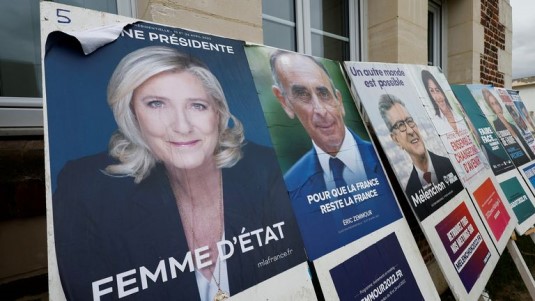
When is a crime not a crime? When a far right political leader is caught with their hand in the till. It then becomes a stitch-up and an attack on democracy, at least according to the reactionary international who've lined up to defend Marine Le Pen in the wake of her sentence for defrauding the European Union. Viktor Orban, himself no stranger to corruption allegations put out a pitiful "Je Suis Marine". Nigel Farage claims Le Pen was "cancelled". A funny way of saying 'misappropriated funds' but then again he got done himself while still an MEP. Vladimir Putin had the cheek to call the verdict a "violation of democratic norms". Something, in fairness, he has a great deal of experience with. And a "this will backfire" came in from Elon Musk.

Is a five year prison sentence, two suspended, and a four-year ban from running for office a harsh punishment for embezzling €4m? Or a punishment that fits the crime? It's probably worth considering that Le Pen ensured the (then) National Front voted for the law she was convicted under in 2016. If there was a conspiracy out to get her, it's just as plausible to say she was part of it.

Unfortunately, some on the left have offered a faint echo of the extreme right's victimology. Jean-Luc Mélenchon said "The choice to dismiss an elected official should only belong to the people" and that the ballots and streets should see Le Pen off. Yanis Varoufakis would also like to see Le Pen "destroyed politically", and argued this was the sort of lawfare that was used against Donald Trump, but "the French are doing it in a more obvious, less defensible way than the American Democrats." And David Broder also writes that she should not be barred from standing for the French presidency because it hands the National Rally a propaganda coup.

Does it? Trump remains culpable for the storming of the Capitol in 2021, and it's down to a failure of constitutionalist politicians on both sides of Congress for failing to make more of it and not prosecuting him with sufficient vigour. The drawn out and half-arsed pursuit of Trump through the courts allowed him to construct a persecution narrative that was always going to play well in a country where similar gambits from the right have played well in the past. One should never underestimate the appeal of the insurgent outsider. But does this read map onto France? Le Pen is certainly playing that card, but cannot escape from the fact that the prosecution and verdict proceeded without any evidence of political interference. She was corrupt and was found to be corrupt - just like any other establishment politician. The sentence was not special or egregious, and has been handed down to others for less. Le Pen's problem with the politics is that she now stands exposed as someone on the take, which isn't ideal when one's project has built up populist capital railing against establishment snouts in the trough.

The second issue with the left critique is its statement of the obvious, as if it's a profundity rather than a banality. Of course the extreme right have to be faced down politically and defeated. No one, not even the most venal and dumb elements of Macron's coalition think Le Pen's conviction means job done. So just who is the likes of Varoufakis taking to task for pretending this is the case? This is where he and the others run the risk of affirming the far right's framing. Giving credence the the RN's version is ... giving credence to the RN's version. The left should be clear that it's not the French establishment persecuting an inconvenient "outsider" via the law. This situation is the result of Le Pen's proven criminality, nothing else. No crime, no prosecution, it's as simple as that. Instead of offering backhanded defences of Le Pen, taking the RN on means adding her conviction to the political charge sheet. It's not a substitution for all other things that need to be done to break the far right, but her own incompetence and idiocy has handed her opponents a potentially useful weapon. One should not look a gift horse in the mouth, and the left should not leave this issue alone to be monopolised by the Macronites.

Image Credit

Sunday, 23 February 2025

Two Points on the German Election

Two points. One's big. The other's small. But it might become big.

The German exit polls have mirrored those taken during the election. The CDU/CSU are out in front with circa 30% of the vote, the far right AfD on around 20%, the SPD have collapsed to around 16% - its worst result since the 1880s. The Greens are on about 13%, and the late surge for Die Linke puts them between eight and nine per cent. In political terms, Germany has become a "normal country". The centre has caved in (the FDP are on course to lose all their seats), the centre left have taken a battering, and the rise of the extreme right has grabbed the headlines.

There are obvious parallels between what's happened in Germany and what's unfolding here. A centrist coalition of sensible grown ups have presided over years of economic stagnation and lacklustre investment. Coincidentally, farmers' protests over the cancellation of a tax break was one of the nails driven into the SPD-FDP-Green coalition's coffin. The final straw was the provocative proposal of the FDP to take the axe to social security and public spending, which proved to be so popular that again they find themselves without representatives in the Bundestag. Having learned nothing and uninterested in the lessons of history, the SPD and Greens both pursued policies at odds with their popular constituencies and have paid the political price. As such, it was easy for the AfD to pose as the champions of ordinary Germans against a political establishment tone deaf on immigration, the cost of living, and efforts at undermining German identity.

The AfD have been assisted in this by Friedrich Merz, the Union's leader and incoming chancellor. Like the Tories his party have banged on about immigration, legitimating and amplifying an AfD that can easily outflank their positions. Indeed, if Merz has achieved anything long-lasting in toppling a decrepit opponent on his party's second lowest federal vote share, it is to confirm the Christian Democrats as the main right wing party in the west while allowing AfD to monopolise "real concerns" in the east. Merz has already courted notoriety by effectively cooperating with them in the Bundestag vote on a vote about immigration, and undoubtedly further such "accidental" alliances will be forged over the course of the next parliamentary session. As the party appears to have lost a million supporters to the far right, Merz will be hoping his "tough" approach will ensure further AfD-curious Union voters will stick with them, and that the old east/west border will confirm his partitioning of the right and stop them from setting up shop in his heartlands.

No one should not be complacent about the rise of the AfD. A fifth of the popular vote is only going to inspire more extremism and with it more violence against immigrant communities, sexual minorities, women, and political opponents. A Merz-led government doesn't care. Defeating the AfD and driving them out of politics will not come from above.

Which makes the small story of Die Linke's resurgence significant. First, they saw off the Sahra Wagenknecht Alliance, a reactionary split from the Left that embraced Blue Labourism with German characteristics. Going right on culture and left on economics is on-paper smart politics, since the AfD are effectively the FDP plus open racism and overlaps with fascist groups. But then again, none of the far right's supporters have voted AfD because they think free markets and neoliberalism are very good actually. Here, as there, it was a hiding to nothing and Die Linke have squelched them. Quite the turn around since BSW were beating them in the polls a few months ago. Some might put this down to the viral anti-fascist speech of co-leader Heidi Reichinnek, and there is some evidence - thanks to the largest turnout since 1987 - that a mix of this, its socially liberal pro-working class messaging and policies struck with the rising generation. Die Linke were by far and away the most popular party among younger voters.

Obviously, Die Linke are not perfect. The self-removal of the anti-woke, pro-Russia right has undoubtedly helped the party, but divisions remain between those elements who are soft left and want a slice of the government pie and those wanting more radical social change, and criss-crossing this are divisions about Israel and Palestine. Undoubtedly, given the unexpected successes, German media actors and others looking to rebuild the shattered SPD at their expense will try using these divisions to sap the party's energy and drive new supporters away. Because having a mass fascist-adjacent party as the second party in the Bundestag is a trifling concern versus a left wing insurgency. Nevertheless a harbinger of good things to come, one hopes.

Image Credit

Thursday, 22 August 2024

Nesrine Malik on the Racist Riots

It's almost a month since far right mobs went on the rampage attacking hotels hosting asylum seekers, mosques, and seeking confrontation with Muslims and anti-fascists. In this interview on Politics Theory Other, Nesrine Malik looks at the politics of the riots. She covers the changing racist discourses employed by the fascists themselves to the politically-muted response of Keir Starmer, and how the growth of social liberalism is employed by the press and right wing actors to portray a Britain under siege - with the effect of radicalising a racist minority.

As ever, you can support Alex and the podcast here
. Image Credit

Saturday, 10 August 2024

Deferring to the King

Interesting. While Keir Starmer wastes an opportunity to benefit politically from the defeat of fascist mob violence, the King himself has stepped in to say some soothing words. The palace released details of phone calls between the King, the Prime Minister, and the country's top cops. It's all quite innocuous. The police and emergency services are praised for their efforts to "restore peace". The release goes on to say "It remains his majesty’s hope that shared values of mutual respect and understanding will continue to strengthen and unite the nation." Okay, so far so standard. And then there's this.
The king shared how he had been greatly encouraged by the many examples of community spirit that had countered the aggression and criminality from a few with the compassion and resilience of the many ...
Could this be read as an expression of solidarity with anti-fascist forces that turned out, especially on Wednesday when the planned far right attacks on asylum and immigration services didn't happen but a huge counter-mobilisation effort did? It's difficult to read it any other way. Which raises an interesting question. Labour would benefit from directly associating itself with "the street" because the overwhelming majority of the public were against the riots, and yet Starmer has ceded this territory to the King.

There are two things going on here. Starmer personally, and Labour politically are favourably disposed towards the monarchy. His Tonyness can claim the credit for saving the institution and helping it modernise its media operation. These days with popular support in decline, it falls to Labour to shore it up. After all, if Starmer's project is the modernisation of the state and the restoration of its authority, that includes the monarchy. Having the King flatter popular anti-fascism places the state rhetorically on the side of multiculturalism, keeping it in line with public opinion and the growing popular consciousness. It's also consistent with Labour's handling of the riots. Politically, the furthest Starmer has gone is call the fascist rioters "far right", but has treated it as a technical law and order issue. I.e. His is an "above politics" affair. Having the King endorse anti-fascism is an attempt to elevate it and multiculturalism as a matter beyond party politics. I.e. racism is depoliticised as a matter of individual behaviour and personal morality. No need to ask further questions.

And yet a perfect circle is an impossibility in bourgeois politics. While there is an opportunity to consolidate Labour's meagre base, especially now the Greens and the extra-Labour left have started making inroads, it's evident that Starmer and the Labour leadership would rather retain the "flexibility" to position themselves to the right when required. So no criticisms of right wingers for what they've done stoking the riots. That is apart from the beyond-the-pale Tommy Robinson. Certainly no action to curb the right wing press is forthcoming, nor any cross words about the disgusting positioning of some Tory leadership contenders. Labour is fully signed up to the "genuine concerns" consensus and has no interest in tackling the background to the riots, because scapegoating might suit its interests too. Which are, when right wing Labour is in charge, forever chasing right wing votes while its left flank is dropping to bits.

Image Credit

Wednesday, 7 August 2024

Keir Starmer's Reluctant Anti-Fascism

Barely a month in and we're already at a pivotal moment for Keir Starmer's premiership. In many ways, this last week's worth of far right riots, beginning in Southport, could almost be tailor-made for the new government. When Labour's objective is the modernisation of the state by ensuring it "delivers" (for service users and for capital), and restoring the popular legitimacy of its institutions from public services to the police and military and even the government itself, there is a lot to be gained if Starmer and Co play their cards right. On the one side, there is the overwhelming majority of the population disgusted by the violence and ugly racism of so-called patriots. On the other, an official opposition split between condemning the far right and looking to benefit from it in some way. It's an open goal moment for Starmer to consolidate his standing and with it his programme for government.

He was certainly quick to show off his law and order credentials. This afternoon the Prime Minister said 400 suspects had been arrested, 100 charged and sentencing will be carried out by the end of the week. Made easier by the abundance of evidence thanks to the far right's stupid reflex to share footage of themselves throwing bricks, egging on violence, shouting racist abuse, and looting gingerbread men from Greggs. Readers will recall that Starmer promised new powers for the police as well as a mobile specialist unit, which allowed the press to go all gooey about "supercops" over the weekend. But on the politics, Starmer's first instinct was to treat fascist mobilisation as a law and order issue. Until it became untenable. "I won't shy away from calling it far right thuggery" he said, despite waiting days to say this obvious truth. He acknowledged that Muslims were being specifically targeted, and for the first time Yvette Cooper acknowledged that the far right's attempted pogrom was motivated by Islamophobia. But that has been the limit of Labour's political response. Its MPs have been putting out more-in-common/kumbya statements, and none have been seen anywhere near anti-fascist demonstrations. Not even a token presence - following directives from the top.

Labour are missing a trick. As the party has a thin social base, these riots are an opportunity to assume that most Blairist of affectations - of presenting themselves as the political wing of the British people - by not just overseeing the prosecution and incarceration of racist thugs and their online cheerleaders, but showing empathy and solidarity with communities under siege. Obviously a difficulty thanks to the party's recent activity and long-term problems with institutional racism, but doing so would go some way of paying down debts that cost the party at the election (and could do so in the future), as well as win back those that by any measure should be in the bag. Doing the right thing now would provide the government some much needed social ballast, which would stop it from getting blown off course when the political weather gets rough.

Why is Labour not manoeuvring to capitalise on far right violence? It's alien territory for many of its MPs. The problem is the typical path to politics for most of the PLP is from outside the labour movement. The are not accustomed to and are even frightened by having to deal with masses of politicised people. It's a lack of fit between the Westminster-centred world view and skill set and a positive appreciation of an independently organised anti-fascist politics of the street. MPs are supposed to represent them, not treat with them as equals. The second is the investment in received wisdom, which has historically been driven by the needs of the Tory party. With the exception of when Jeremy Corbyn led Labour and Keir Starmer was in the running to take over, the party has always tailed the Conservative and right wing press framing of immigration and ethnic minorities as a problem to be managed. It's easier to go with the flow, especially when it's framed as the common sense of everyone outside of the M25, than to take on the myths and lies and actually lead on it. But worse than that, for right wing Labour it's not a question of capitulation for electoral reasons. Rather they too believe being seen as the best handlers of immigration - by deporting more and cutting numbers - is the route to keeping the Tories and the far right at bay. How's that perspective working out? And lastly, as per His Blairness Labour needs its own scapegoats. Taking on a political as opposed to a straight law and order approach to anti-fascism limits Labour's options in this regard, giving the government less room for manoeuvre when it thinks rightward shifts on multiculturalism and asylum are necessary.

In other words, Starmer's political timidity in the face of far right violence is conjunctural, but one consistent with the Janus-faced character of Labourism. And such reluctance now, an unwillingness and seeming inability to grasp the promise of the moment will cost Labour in the long run.

Image Credit

Sunday, 4 August 2024

Coddling the Far Right

The Conservative Party has a far right problem. Not in terms of its membership taking to the streets and attacking black and Asian people, setting fire to a Citizens' Advice Bureau and a community library/food bank, looting shops and throwing bricks at the plod, but the reflex action of party representatives that justifies the "real concerns" supposedly motivating the fascist mob.

Consider Cllr Alan Hosker, leader of the Tory group on Burnley council and a county councillor for Lancashire. He writes "Regarding these riots all over our Country it's down to the Labour Government to get a grip. Migration is way out of control. Folk in our Country feel they are being 2nd class citizens watching migrants be put up in hotels first class medical services including first on housing list". How is this any different to the ranting of the sieg-heiling fash on social media?

With a better grasp of written English but with the same awful politics, the chair of the Police and Crime Commissioners' organisation for England and Wales put out a statement (now deleted) calling for "calm and honesty". Donna Jones, PCC for Hampshire says "The behaviour of some of those protesting has been extremely violent, highly distressing and absolutely criminal". Leaving aside the dubious claims that any of them could be described as "protest", the nod to the customary respectability of the mainstream sits awkwardly with the thumbs up she gives the far right's politics. Sympathetically, she amplifies the fash complaint of "two-tier policing". She wrote the violence was driven by "the desire to protect Britain's sovereignty; the need to uphold British values and in order to do this, stop illegal immigration". This is the root cause, and banging people up does not address this problem. With the implication there will be more disorder until it's sorted. There's a word for this: apologism. Jones gives succour to mobs who target mosques and shout racist abuse.

But where Tory politics are concerned this pair are small fry. They're only putting out their mixes of the tunes performed by leading figures. These arguments are not dissimilar to what Robert Jenrick was pushing at his campaign launch, or what Rishi Sunak has been pushing since he came to office. And appearing tough on immigration is now a hill for Tory leadership campaigns to die on. In her Saturday interview with the Telegraph, the paper chooses to highlight Kemi Badenoch's comments on "integration". She says,
They should be saying that we need a clearer strategy on integration, which we don’t have at the moment. Instead, we just pretend that everything is fine and it’s a few bad apples, which is sometimes the case. But if you want to have a successful multi-racial country, you need to make an effort to do that. You can’t just pretend that there are no tensions. And we’ve been seeing this not just between ethnic minorities and white British people, but it’s even between ethnic minorities. This is not normal.
What a steaming pile. Integration is a byword for the deep unease some have about concentrated pockets of people from minority ethnicities in certain areas. It's a mix of fear and envy that mean Muslim communities, for instance, have greater ties of solidarity and commonality with their neighbours than the average elderly Daily Mail reader sat alone in their majority white village, small town, or suburb. If there are barriers "integrating" minority ethnicities into dominant norms and values, where is the evidence? What "British values" do Muslims, for example, find objectionable? Fairness? Respect? Freedom? The problem, and not one ever likely to be championed by Badenoch and her dreadful opponents are structural inequalities. Where are her concerns for black and minority ethnicity wage gaps? The persistent exclusion of people from whole sections of the economy? The poorer physical and mental health experienced by most minority ethnicities? The whipping up of rhetoric by her party that tells people that they're in this country under sufferance, regardless of whether they were born here or not? The evidence is quite clear. Minority ethnicities are discriminated against to sustain a racialised division of labour, and one that has persisted since the dawn of industrial capitalism. Badenoch doesn't want to believe in "institutionalised racism" because it's embedded in the inequalities and hierarchies she thinks are just fine and dandy.

Badenoch blames minority ethnicities for the problems they face. So does the far right. The only difference is she believes in intervening in, disciplining, and closely monitoring individuals and communities, while retaining them - above all Muslims - as handy scapegoats for when political occasion demands. The fascists just want them driven out in an orgy of violence and blood letting on the way to establishing a terroristic dictatorship. Neither side cares about the consequences of their arguments and actions because both seek to profit politically from division. It follows an anti-fascist politics can't take on "real concerns", it has to challenge and rebut them. And it also means, always and everywhere, making clear the links between the hateful rhetoric of the far right and the more restrained, but no less consequential, racism of the mainstream.

Image Credit

Wednesday, 31 July 2024

The Far Right's Southport Rampage

After forecasting that the demise of the Tories would see an uptick in far right street activity, we haven't had to wait long. Unfortunately, it was in the most appalling circumstances imaginable. One would normally expect a spree-killing at a kiddies' dance class - note that it was against women and girls, a grimly predictable target for with these murderous inadequates - to be met with shock, sobriety, and sombre revulsion. Particularly in the town where the crimes took place. But the far right had other ideas. In the most disgusting and cynical display seen for years, false allegations, rumour, and calls to action were peddled by major social media influencers on the right. This whipped up a hate mob that descended on Southport. Their violence, their attack on a mosque ensured that a terrible tragedy was forced to play second fiddle to the racist refuse of British politics.

We've been here twice in 18 months. There was the riot at the Cenotaph, encouraged by Suella Braverman while she was Home Secretary. And then in February 2023, another mob - also mainly made up of people from outside the area - rioted in nearby Knowsley. Tonight, they're outside Downing Street scuffling with the police. The far right have grown in confidence and feel things are moving their way, thanks to the advances of the populist and far right on the continent, Donald Trump being in contention for the White House, and the election of five Reform MPs to the House of Commons.

About those MPs. Nigel Farage happily congratulates himself about the time he and UKIP (apparently) saw off the BNP. He presented the electorate with a respectable, non-fascist alternative to those "concerned" about immigration. And here we have this so-called safety valve claiming that the police were covering up the "terrorist motivations" - a dog whistle for Muslim if there ever was one - of the Southport stabbings. And in recent days we've seen his lackeys Richard Tice and Lee Anderson applauding a copper who stamped on the head of an incapacitated Asian man. This is not harmless shit talking for viral content. It's a call for their arms-length supporters to do what they do.

There have been calls for these three to face parliamentary standards investigations and, it's true, they should be open and shut cases if they happen. And the Daily Mail have reported that Yvette Cooper is considering banning the English Defence League. The first problem is the EDL doesn't exist except as lazy short hand for far right mobilisation. She would be banning a phantom. The organisation of the Southport racists is decentralised and distributed and doesn't have a formal structure with an HQ, bank accounts, and assets. There is no CEO or SLT, and no membership list. Just interlinked Facebook and WhatsApp groups, mailing lists, forums, and social media influencer networks. If Cooper wants a crack down she's going to have to take on the platform giants. And, as we know, Labour would rather shy away from confronting the powerful.

Politics is the easy and difficult answer to the far right. And that means pointing the finger at all politicians that have contrived this situation. From Theresa May and her crusade against immigration to the last three Tory horrors and their appalling Rwanda scheme to the new Tory leadership hopefuls banging on about the subject. Labour's is a straightforward contribution-through-capitulation to this hard right commonsense. The answer is building cohesive communities. Southport's reply has been exemplary in this regard through community clean up and local residents of all backgrounds helping repair the mosque. The answer is a politics that doesn't merely say refugees/migrants/Muslims welcome here, but takes on the lies of the politicians and the media by stating clearly and repeatedly that they are not to blame, and will not accept the scapegoat labels these elites are trying to paste onto them. And yes, as history has shown time and again, only mass mobilisation and confrontation with the far right can see them off.

Saturday, 11 November 2023

After Braverman's Bovver Boys

In politics, chains of causation are often fuzzy. They are subject to countervailing tendencies and the pressures of concurrent actions, movements, and affects. The relationship between Suella Braverman's repeated smears against Palestinian solidarity marches and the white riot of far right thugs by the Cenotaph was not one of them. Her comments, embellished and amplified by fash-adjacent commentators like Douglas Murray and Matthew Goodwin conjured up a mob who, without anyone to kick off against, attacked the police. Braverman got the ugly scenes on Remembrance Day that she wanted, except it was supposed to be the other people who were to go on a violent rampage. Not upstanding citizens who, in their patriotic fervour, screamed "where's your fucking poppy?" at the plod.

In the end, the figures speak for themselves. 92 arrests from the thousand or so fascists at the memorial, while the Met reported "no issues" on the Palestinian solidarity march. This was supplemented by some confrontations with a 150-strong group toward evening, but that's it. From a demonstration of between 700,000 and a million people. The biggest since Iraq, eclipsing the so-called People's Vote marches of several years ago. And whereas the Iraq demo was a mass, if sullen affair by all accounts today's marches in London, Glasgow, and Cardiff were more politically clued up and angry. The rarity of stupid and antisemitic signs, broadcast by social media's placard police as "proof" the whole demo was a racist endeavour, demonstrates the increased level of self-understanding as consciously anti-imperialist and solidaristic rather than simply being a "war is bad" mobilisation. No wonder it will continue to give the establishment the heebeegeebees.

But the immediate consequence is not only pressure on the government and opposition (after all, these are as much demonstrations against Labour Party policy as they are the Tories' backing of Israeli genocide), but a real falling out among the political establishment too. As last week wore on, more and more Tories and their allies were showing concern about the Home Secretary. When even Keir Starmer delivered a damaging broadside against Braverman and, by extension, Sunak too, he was speaking for plenty on the government benches who think the Pennywise clown show at the Home Office has gone on long enough. And yet where are the signs of her demise? In Sunak's statement put out this evening, he said there were bad people on both sides. Nothing, as you would expect, on Braverman's responsibility for the scenes in front of the Cenotaph.

Is he going to sack her then? The problem Sunak has got is while she is useful because she says the things he won't, it's obvious her perpetual campaigning has made her a liability. If the Prime Minister sticks by her, he's open to the not-entirely-accurate barbs that he's too weak to giver her the heave ho. And should he submit to the pressure, like his predecessors in the leader-centric game of Westminster politics, that invites further erosion of his authority. He's in a justly deserved position of exquisite political pain. No wonder she's apparently pleading with Sunak behind the scenes to call an election on stopping the boats. Her brand of toxicity would be indispensable for such a lurch into the gutter.

Unfortunately for Braverman and Sunak, her future is more than a matter of internal Tory politics and electoral strategy. Her week's worth of far right-enabling antics, on the streets and in the Jewish Chronicle's sheets, open insubordination, and unprecedented public criticism of the police is accumulating nothing but opposition among elite layers and opinion formers. If Sunak clings onto her, sooner rather than later he could face the kind of revolt he helped initiate against Boris Johnson.

Image Credit

Wednesday, 12 April 2023

Fascist Echoes

What does the past tell us about the contemporary far right, and the spate of authoritarian populists ranging from Trump to Bolsonaro? With the far right in France capitalising on the recent unrest more than the left (according to recent polling), knowing and understanding fascism is an urgent task. Therefore, this Politics Theory Other episode is probably more timely now than when it was broadcast a month ago.

If you've got a few quid and appreciate Alex's work please consider supporting the show.

Image Credit

Saturday, 11 February 2023

White Riot

The only surprising thing about Friday night's targeting of a Knowsley hotel housing refugees by Patriotic Alternative was that fascist mobilisations of this sort aren't more common. All the conditions are there. An economy in the toilet, inflation knawing holes in people's bank accounts, the press attacking asylum seekers, and a government happily leading the rhetoric against refugees. It's a grotesque spectacle.

The Tories know full well where their rhetoric leads. When Jonathan Gullis, for example, names Stoke-on-Trent hotels that have taken on refugees, he doesn't do this supposing this information won't be acted on. Given the city's bleak history with the far right, he's fishing for racist votes in a doomed attempt to cling on at the next election. If someone with brown skin is attacked or one of the hotels is targeted for vandalism or worse, that's just the cost of doing political business. As if to underline the cynicism about small boats in the Channel while smirking at the camera, the Home Secretary's "condemnation" of far right protest violence keeps the racist ball rolling. She writes,
I condemn the appalling disorder in Knowsley last night. The alleged behaviour of some asylum seekers is never an excuse for violence and intimidation. Thank you to @merseypolice officers for keeping everyone safe.
Just Suella Braverman saying the "protesters" had a point but things got out of hand. She can't condemn the far right for what they are, because she's implicated. Indeed, that is precisely why Sunak appointed her. And as the culture war is central to the Tories' survival strategy, they can't well disown something they think will win them votes. And so the more the press and the government feed off each others' hysterical rantings and lying rhetoric, the more emboldened the far right will be to target another hotel. Or, thanks to the government's deliberately fanning the flames of hate against trans people, we're seeing LGBTQ events becoming a focus for far right violence too. Like Saturday's "protest" against a drag queen story time for kids at the Tate.

There are no shades of grey when it comes to fighting the far right. The frustrations they feed off are real enough, and confronting them on the street has to go along with direct refutations of their politics. This is the province of anti-fascism, because Labour aren't going to do it. Yvette Cooper's response to Knowsley is just as self-serving as Braverman's. She treats the far right as a policing as opposed to a political matter, and squeezes in Labour MPs' antipathy toward social media for good measure. Nothing about demonising refugees, nothing about the politics of scapegoating. Because it's a poisoned well she'll regularly draw from, when occasion demands it.

Unfortunately, while the decline and coming electoral drubbing of the Tories means the ground becomes less fertile for the far right, electorally speaking, the dynamics of how a new Labour government plays out in politics affords street-oriented fascist outfits like Patriotic Alternative more opportunities. Following a heavy Tory defeat, they're likely to lurch to the right as they did between 1997 and 2005. This is because following the trauma of a heavy pummelling, returning to "core values" is with an eye to consolidating a new base. We can expect the new Tories to run on issues of migration, asylum, and controlling our borders even harder, parroting whatever rubbish the out-of-sorts right wing press come up with to attack Labour. As past behaviour is the best indicator of future behaviour, it's entirely likely Labour accepts this framing (because it already views immigration generally and refugees in particular as problems) and cleaves to their position. Just as Uncle Tony did 20-odd years ago. And that empowers the far right, a cycle of cynicism and racism for grubby votes and nice editorials.

Unfortunately, what happened in Knowsley will happen again.

Sunday, 10 April 2022

The Warning from France

According to the exit polls from the first round of the French presidential election, Emmanuel Macron has come out top with around 28-29% of the vote. Marine Le Pen is on 23%-24% and the left's candidate Jean-Luc Melanchon stuck at the 20-21% mark. Like 2017 we're looking forward to a face off between the authoritarian centre and the authoritarian, populist, and "post-fascist" right. Opinion polling for the second round is uncomfortably close, with Ipsos MORI forecasting 54% to 46% in Macron's favour, while another has it almost level pegging at 51% to 49%. Even if Macron squeaks back in, this is disastrous. And the responsibility lies squarely on his shoulders.

We await more crunching and the outcomes of the count, but there is something very concerning about the numbers supporting Le Pen. When it comes to the voting habits of working age people and the young, they're at cross purposes with nearly everywhere else in Europe. According to YouGov numbers, the younger one is the greater the propensity to vote for Le Pen. They suggest the over 55s would support Macron 55%-45%. This is the only age cohort that shows a majority for the centrist candidate over the far right. Moving down the age ranges, it's 51%-49% for Le Pen in the 45s-54s, 53%-47% in the 25s-44s, and the 18s to 24s? 56%-44%. Is it really the case the younger one is, the more fascist-adjacent they are?

This data poses the theory often pushed here a challenge. That is the structural transformations of the character of work in advanced capitalist societies are seeing it configured around immaterial labour: the replacement of material production increasingly by service provision, knowledge, and care. The consequences of this are new patterns of exploitation, new precarities, and a multiplication of identity politics. But it also propagates a new common sense: social liberalism. Less an ideology and more a diffuse common sense, it is a decisive shift in popular attitudes and values that reflects the greater stress on sociality demanded by capital of labour power in the 21st century. Everyday spontaneous anti-racism, anti-sexism, anti-LGBTQ bigotry, and low-level internationalism are rooted in tolerance and the ability to get along. This stands in marked contrast to older layers, and particularly the retired, whose social conservatism (which is not unrelated to their relationship to property) sits awkwardly at odds with the attitudes of their children and grandchildren. Therefore, assuming values are the primary driver of voter behaviour, social conservatives vote right for conservatives. And social liberals vote liberal or left. Hence in the United States, the young being the dynamo of the Bernie Sanders campaign. Here in the UK, their powering of Corbynism and, if the polls are to be believed, disproportionate backing for Keir Starmer's Labour. And in Germany, the good showing for the Free Democrats and the Greens in the last election. Why then is France the outlier?

In 2017, Melanchon was the lead candidate among 18-24s, while Le Pen came second. But according to YouGov's numbers the leader among the young going into this election was the even-more-racist Nigel Farage equivalent, Éric Zemmour. This might have been cancelled out by the late surge for the left in recent days, but combined with Le Pen's support we're looking at 49% of France's most socially liberal generation willing to support a far right candidate. How can this be?

It's the interests, stupid.

When Macron was elected in 2017, his "liberal" administration was all set to repeat the mistakes of his predecessors in the Socialist Party. Who, incidentally, have gone from holding the presidency five years ago to winning a projected two per cent today. For his pains, Macron has presided over France's persistent youth unemployment problem. Even with a plan to massage the figures by giving youngsters €500/month for completing a series of training courses, it jumped from 14.8.% to 16.4% between January and April this year. He has also tightened the conditionalities on unemployment support, disproportionately impacting the young, and, like here, the cost of living is outstripping wage rises. Similarly, while not at UK-levels house price inflation is rising faster than pay, and Macron pushed through pension reforms that will lead to lower incomes for workers in retirement. Other factors include high-handed, authoritarian government, a retrenchment of the over-centralised French state at the expense of the regions, and poor public road infrastructure have played their parts. Many of France's problems precede Macron, but has hasn't done much about them.

And there is the disastrous re-election campaign. Macron thought now would be a good time to affect elite disinterestedness. He announced his campaign late, refused to debate other candidates, and has kept away from meeting the public. Contrast this with Le Pen who's not only done her woman-of-the-people shtick, but has made cost-of-living issues the centrepiece of her campaign. For many people of working age and particularly the young, the final round choice will be between a candidate offering more of the same and another talking about jobs, wages, housing, and prices. People prepared to support Le Pen over Macron, including Melanchon supporters, are making a rational choice calculation. She might be authoritarian, racist, and wants to go out her way to bash Muslims. But then, for all his Blair-lite impostures about social justice and "radicalism", Macron appears to be little different. Political science isn't rocket science. If politicians speak to popular interests, they will attract support from across the spectrum. Especially when up against a cloth-eared incumbent.

France therefore is a warning. Macron is going to have a great deal of difficulty converting younger voters in the second round because of his record. It's not enough to expect voters to follow Melanchon's advice and not transfer their support to Le Pen, he's got to offer something by making the left a comprehensive offer. It might work and keep him in office. But it's a reminder for us too. Values broadly align with politics, but when a formally socially liberal government reneges on its values and puts capital before labour, voters who, on paper, should be their supporters will gravitate to parties and candidates who offer them something. As France is demonstrating, arguing Le Pen is beyond the pail is very definitely not enough - especially while you're kicking those whose votes you want in the teeth.

Image Credit

Thursday, 7 October 2021

Reacting Against Reaction

Super interesting episode from the Acid Horizon comrades. Proving once again that philosophy is class struggle in theory, along with their guest Greg Sadler they have a butcher's at Nick Land's Fanged Noumena, the work that preceded his turn into what Mark Fisher called 'mad, black Deleuzianism'. Or what we might call fascism with sophist characteristics. This is a good primer for his work, an introduction to NRx thinking more generally, and why for some Land is so appealing.