Showing posts with label European Union. Show all posts

Monday, 13 April 2026

An End to Orbanism?

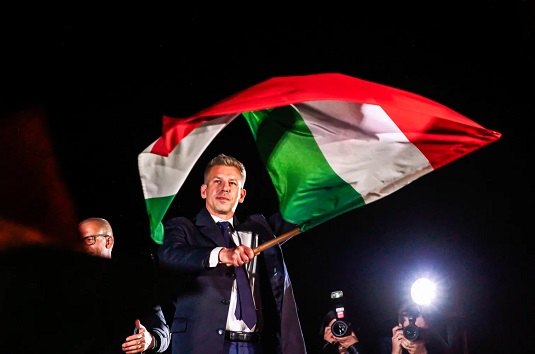
Orban's gone, but so has Orbanism? Sunday's election results must be beyond Péter Magyar's wildest dreams. 138 seats, well over the two-thirds majority required to make sweeping changes to Hungary's constitution does, on paper, give the incoming Prime Minister the tools he needs to address the damage wrought by Orban. The crony appointments to the judiciary, to the media regulators, to the ministries, for 16 years these have been nothing but so many troughs for his allies. The end of his premiership and the impressive electoral performance means, for Magyar, that expectations will be sky high. Is he in a position to reverse Orbanism and clear out the state apparatus? Does he have the trousers to back up what his mouth says?

Unfortunately, even as Hungarians are dancing in the streets and observers abroad cheer on Orban's downfall, the warning lights have long been flashing. If anything, Magyar is more anti-immigration than Orban, having roundly criticised him for the introduction of a guest workers' scheme. Much has also been made of Magyar not being pro-Russian, what with the chants of 'Russians Go Home' echoing as much around Western social media as the streets of Budapest. But this does not necessarily mean he's supportive of Ukraine's war effort. He has, for example, gone on the record to say he supports Hungary's opt out from contributing to the EU's loan to Kyiv, albeit using more emollient tones than Orban's. Likewise he hopes to take advantage of the cheap oil deal Hungary has with Russia, though who knows where that is now Moscow has declared them an "unfriendly country". Nevertheless, Magyar is keen on receiving the €17bn in frozen EU funding, so there are costs to continuity Orbanism.

Apart from this, there are other problems too. The Tisza Party was a down-and-out centrist outfit before Magyar joined, following his exile from the Orbanist state apparat. And he has built it up as a formation distinctly of the centre right, despite its becoming the repository of democratic aspirations across Hungarian society. And how effective could such a figure prove to be in resetting government, untangling institutional corruption, and addressing the fusion of state and oligarchical interests? Imagine if Rishi Sunak were to lead a popular upsurge against a Nigel Farage Reform government. The analogy isn't a million miles away. I'm not in the business of forecasting doom before Magyar has attempted anything, but given his background, his political programme, and the fact unpicking the oligarchy too much could have far reaching progressive consequences for Hungarian politics, which might include a revival of independent working class politics in the long run, there are limits to how far he's going to go. And that could mean a return to Orban or another right wing authoritarian after the next election. The United States and the failure of the Democrats to follow through after the January 2021 putsch debacle serves as a warning.

Outside of Hungary, however, the significance of Orban's loss is obvious. For the United States and Russia, for Trump and for Putin, Orban was a natural ally, a seemingly successful experiment in open class rule, of not bothering to drape the obscenity of the naked oligarchy in anything but a few rags of scapegoating and welfare bribes. That has not only failed, but the record turn out for a Hungarian election shows that even the limited liberalism of an illiberal democracy can be seized upon to lever their sort out of office, if not out of power. Putin is more secure thanks to his extensive domestic security apparatus, but Trump is not. The efforts to try and rig the mid-terms through the ill-fated re-districting efforts and ballot conditionalities shows the forces he coheres are still concerned that there's enough life in American constitutionalism to bring them down. Magyar's victory then has a double edge. His failure to undo the last 16 years could lead to a retread of precisely what's just been cancelled, but simultaneously it shows that no authoritarian leader can indefinitely manage a restricted democracy to their benefit.

Image Credit

Sunday, 26 February 2023

Brexit Vs the Northern Ireland Protocol

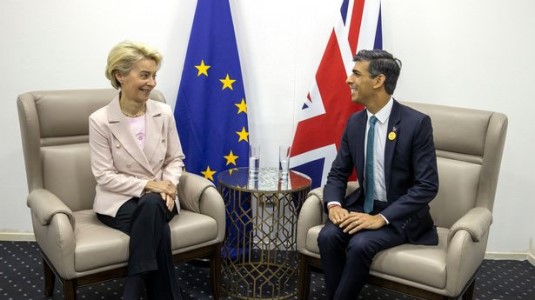
Towards the end of his time as Prince of Wales, the King said he would be politically impartial and aloof as per convention when he became monarch. More than a few Westminster eyebrows were raised when he was scheduled to meet EU president Ursula von der Leyen this weekend. Because coincidences don't happen in politics, several Brexiteers were quick to cry foul. According to the Daily Mail, the DUP and Jacob Rees-Mogg protested the King's meeting at the juncture of advanced talks between the UK and the EU set on resolving the Northern Ireland Protocol quagmire. They're right to have picked up something fishy. With all the subtlety of a brick through a constituency office window, facing opposition from his backbenches Rishi Sunak knows associating the King with whatever deal they cook up will make it harder for the Brexit ultras and DUP to vote against.

Nevertheless, news of advanced talks and the seeming likelihood of a resolution marks a clean break with Boris Johnson's handling of the mess. For starters, he was primarily responsible for it. Recalling the turbulent parliamentary year of 2019, after making a song and dance about Theresa May's efforts to secure a deal with the EU, Johnson was able to cobble something together that bore more than a passing resemblance to the document he resigned from May's cabinet over. The UK would leave the EU's customs area in its entirety, except the small print said that while an EU/UK land border lies along the line between the north and the Republic for the purposes of the deal it would move into the Irish Sea. This customs frontier meant goods from the UK mainland passing into the North would be liable for customs charges if they carried a risk of heading south. Bear in mind this deal was supposed to be an insurance policy, the terms of which the UK and EU would default to if a proper trade deal between the two was not secured. In typical slapdash fashion, Johnson didn't care about the detail of the deal. It was done, he could slap "oven ready" on it, and worry about it after winning a general election.

31st January, 2020 comes and we're outside the EU. The UK immediately moves into the transitional period where little to nothing changes. It's the holding pattern until a new trading partnership is negotiated. However, in February the Tories signalled they would be approaching the coming negotiations as a zero sum game. Having seen how Brexit brinkmanship benefited their electoral fortunes, talking up the talks as a battle of plucky Britain versus the combined might of Europe was yet more cynical games playing. While outlines of a draft trade deal were quick to emerge, by the summer talks had stalled and the UK was threatening to walk away if the EU persisted with the Northern Ireland Protocol. Indeed, the government announced it was introducing a UK internal markets bill which, while sounding dry on the surface, amounted to unilaterally altering the withdrawal agreement. It conceded it was preparing to break the law in a "very specific and limited way". This was the usual Johnson theatre, and therefore Downing Street greeted the election of Joe Biden with some dismay. Johnson believed the promise of a quick trade deal with the United States would give him leverage in the talks, and that was on the cards if Donald Trump had won re-election. Furthermore, given the pro-Irish component of American politics, Johnson was aware brinkmanship and threats towards Ireland were no longer consequence-free.

The talks were not looking good, and in December Johnson was talking about an Australian as opposed to a Canadian-style relationship with the EU. I.e. A euphemism for a no-deal scenario. Yet a deal was finally struck on Christmas Eve. It was a poor agreement that erected more bureaucracy, and particularly hammered the UK's efforts at selling services into the EU. A disaster considering the sector comprised 80% of GDP. The language about regulatory divergence covered for the fact £650bn of annual trade with the EU was bound up with conforming to its standards. As far as Northern Ireland was concerned, the new trade deal looked an awful lot like the withdrawal agreement. The UK still could not freely sell goods into one part of its territory, and the new rules governing UK/EU trade solidified it. Disruptions to the flow of goods under this arrangement were described by Johnson as "teething troubles", and the long and interminable negotiations about the implementation of the Protocol started in earnest after it came into force. Matters weren't helped by the DUP and their unwillingness to make it work. They boycotted talks, attempted to use the courts to block the Protocol, and shrugged their shoulders as loyalist areas erupted with violence. The resignation of Arlene Foster and her replacement by Edwin Poots gets off to a great start as he threatens to suspend checks on goods coming from the UK, making the agreement unworkable. This proved to be an empty threat as within two months of Foster's departure he was gone.

For the remainder of the year, EU threats of legal action and Downing Street threats of unilateral action meant the unsteady status quo persisted. Fast forward to the Assembly elections, and because of Northern Ireland's peculiar status its economy was actually outperforming the rest of the UK. Johnson's hasty approach to deal making was laying the material basis for unification, and loyalism was stuck on an existential cliff's edge. Remaining in the UK is its raison d'etre, but how can it retain mass support if loyalty to king and country means making its community poorer? Small wonder they fractured and we're in the absurd situation of having Sinn Fein's Michelle O'Neill in position as First Minister-in-waiting. As far as Johnson was concerned, the moment demanded more brinkmanship and on 13th June the government published its Northern Ireland Protocol Bill, which in UK law would grant ministers powers to set aside the treaty and implement new rules. Never mind this would contravene international law, jeopardise trade with the EU, and undermine the UK's ability to sign future deals with other countries. The passing of the Bill into the committee stage saw the EU begin legal proceedings. But with the departure of Johnson, things start cooling down. When Liz Truss enters office she says she looks forward to a reset of UK-Ireland relations. This carries on when Sunak takes over, and slow progress turns into real progress, to the point where we are today with resolution in sight.

What the Brexit ultras and the DUP fear, and what is likely to be struck with the EU, is some sort of confirmation of the status quo. A characteristic Johnsonian fudge has now governed UK trade into Northern Ireland for two years, and the relatively light touch controls have suited both sides of the border ensuring the disruption of Brexit has been mitigated. Affirming what is with a new range of oversight mechanisms, scopes for further talks and so on, locks a part of the UK into the EU, which limits the prospects of regulatory divergence. It makes a nonsense of the entire Brexit prospectus and will underline the argument frequently made by the remain camp, of the UK's transition from a rule maker to a rule taker outside the EU. It will make the UK look weak, and where the responsibility for this state of affairs lies is very clear. And, like the DUP, the Brexiteers worry what it's doing to the union. For Johnson it's just another issue he can use to remind the media that he still exists and will do politics in between his busy, lucrative speaking schedule. But for Sunak, it would be a real coup. With nothing much going for the Tories in the polls, a victory for sensible briefcase Toryism might turn some floating voter heads - especially those who like their "grown ups". The problem he has if should he get this through, the right of the party are going to become even more ungovernable. Especially if it only passes the Commons with Labour votes. For once, Sunak is doing the right thing. And it could prematurely end his premiership.

Image Credit

Sunday, 8 January 2023

Burying the Second Referendum

In his Sunday interview with Sophy Ridge, Keir Starmer showed a moment of discomfort. Referencing this week's take back control speech, Ridge alighted upon the Labour leader's attempts to associate himself with the reasons why people voted to leave the European Union. The killer question was "why then did you lead the campaign for a second referendum?" And Starmer gave an answer Liz Truss wouldn't have had any problem giving: "I voted remain, I campaigned for remain, but we lost the referendum." Talk about body swerving the question. Following up, Ridge asked if the reason for his change of heart was because then he was pivoting toward a pro-remain party membership thinking about the next Labour leader, whereas now the electorate that matters are swing-voting Brexit supporters. Bang. To. Rights. And again, he simply evaded the question.

At 10pm on 12th December 2019, Starmer dropped the second referendum like a hot potato. Having used the issue to put him ahead of the pack to be Jeremy Corbyn's successor, the Tory win emphatically closed Brexit down as a political issue. Hence, Starmer talked vaguely about preserving some of the advantages of EU membership in the subsequent leadership contest, but once elected anything about the EU and the second referendum did not leave his lips. Indeed, when Boris Johnson's hard Brexit was put to the Commons for ratification two years ago, Labour whipped in favour of it. Since then, with Brexit demonstrating itself to be a dismal failure - in line with all expectations - it's an issue Starmer would prefer not to go anywhere near. The Tory media have been kind not to have talked about his previous die hard remainism, but to be fair to Starmer he hasn't given away any hints about what Britain's relationship with the EU will be like when he gets into Downing Street. There is no meat for the press to worry at, and the shadow cabinet have maintained a disciplined radio silence.

This can't go on forever. In his clumsy, half-arsed way Rishi Sunak has baited Starmer at Prime Minister's Questions about it, but each time he doesn't rise to it. Indeed, the more Starmer gets asked about this over the next 18 months the more we'll see stock phrases about campaigning for remain but respecting the result. Almost as if second referendum/continuity remainism never happened, or if it did Keir Starmer had nothing to do with it. Ridge is right, then. "Take back control" and occasional dalliances with talk about the "freedoms" of Brexit underlines a single-minded effort to win back the Red Wall'ers, and ensure this cannot be used as a wedge issue against Labour again. The only wedge Starmer is now interested in forcing is between the Tories and everyone else.

This does leave a question mark over the UK's future relationship with the EU. Those who think Starmer still keeps the remainer faith and is going to take us back in short order are deluding themselves. The leave vote won't stop being electorally significant for the lifetime of a Starmer premiership, and he's not going to give the Tories an anti-EU populist shot in the arm as they lick their wounds following the next election. The best EU supporters can look forward to is a rationalisation of the absurdities of the EU trade agreement. Excited people might talk about a membership application, but that's all it would be. Talk.

Unfortunately for Starmer, playing fast and loose with remainism is going to have political consequences. When all is said and done, for the viability of the Labour Party embracing the second referendum position was the least worst option in 2019. However, when he turns out not to be Mr Remain in deep cover, what then? For opposition to a Starmer government, while the spent Tories will be the touch post for right wingery and reaction, the growing constituency of social liberalism and every day leftism is going to find forms of opposition of its own. And some of this will undoubtedly take on a pro-EU/return yesterday flavour. Given what happened in the last set of catastrophic EU elections, it could offer an avenue for the Liberal Democrats and the Greens to establish themselves as serious electoral opponents to Labour. Working age people are more likely to find them attractive than the Tories, and for good reason.

For the moment, all this is to come. With the national mood firmly against the Tories, burying his past involvement with the second referendum campaign isn't going to harm Starmer or Labour any. Once he's been in office for a year or so, the story may well be different.

Image Credit

Sunday, 20 November 2022

The Bourgeois Politics of Brexit

As forecast on many occasions, Brexit is unravelling. It was and is dysfunctional for British capital as a whole, apart from a few outliers, and is depressing GDP growth on mainland Britain as Boris Johnson's deal multiplies paper work and closes off markets on the continent. Polling supports the view that Brexit is turning out to be a failure, with a branding it as such by 56% to 32%. Even the government can't deny reality any longer, with the Sunday Times reporting how Rishi Sunak and Jeremy Hunt are considering a closer, "Swiss-style" relationship with the European Union. Putting this to one side, within establishment circles there is something of a gap. On the one hand, popular support for Leave has been explained as a plebeian revolt against immigration and wokery by white working class people. A bullshit argument if there ever was one, but precious little has been said about the persistence of Brexit and Leaveism among Tory MPs themselves. It's treated like an irrational affectation by centrist and EU-leaning elites.

This "explanation" from a couple of months back from Matthew Syed illustrates the thinking perfectly. Brexit is a cult, and it has the Conservative Party in a vice-like grip. He argues that to understand Tory behaviour of the last six years, only one perspective makes sense: group psychology. Drawing on the work of Leon Festinger who was interested in the sustenance of group delusions, he infiltrated a UFO cult to observe what would happen when its predictions - that members would get whisked away by flying saucers on such-and-such a date - didn't happen. When the aliens stood them up, the cult guru rescheduled their appearance to the future and doubled down on their beliefs. Syed's contention is that believing in Brexit shares these characteristics. Pointing out data demonstrating that Britain is poorer, weaker, and more diminished is like talking to a wall. They're not interested, with its adherents lashing out at the "remainer" Treasury and "woke" financial markets for the country's predicament this last month. More reasonable Brexiteers might point out that Sunak did offer Tory members an alternative, and what we see now is thanks to Truss's idiocy. Which is only partly true.

The only way out for Syed is a change of government. The Tories need to relinquish power. That this is being touted openly across the Conservative press is remarkable and a sign of how dire their circumstances are. In a paean to Tory MP Charles Walker who famously denounced the collapse of government discipline and said the first duty of the Tory party is to the country, Syed writes,

I almost felt like hugging him as I heard those words, for it hinted at the Tory party that so many of us once admired. A party of pragmatism, of moderation, of realism. We need that party back for the health of our democracy. So, please, call an election, take a break and find yourselves again. Do so now, and you’ll be back. Cling on to the bitter end, changing leaders, jumping through hoops, gazing at navels, and you may never be forgiven.
It's worth noting Syed is a former Labour candidate, an admirer of briefcase politics, and a fan of good Tories. But still, his argument is superficially plausible. The Tory majority made a Leave judgement call because reasons and have stuck with it to the moment of destruction. But this explains nothing. For instance, why was Brexit the glue that held their voter coalition together when the Tories might easily have clung to the cuts-and-deficit dogmatism of the Dave and Osborne years? After all, wasn't it Labour's perceived weakness on the issue that won the Tories the 2015 election? Syed does nothing to explain why Brexit was the object of Tory "cultism". And that's fine, for in the bourgeois press it doesn't do to peer too closely into such things. Hence we're left with a junk psychosocial argument that says something while not saying anything.

The truth of the matter is Brexit and the Tory attitude to Europe are closely bound to issues of statecraft, class struggle, and divisions among British capital. It is not a whimsy impermeable to serious analysis, nor a matter of emotional attachments to a free-floating "ideology" these elite circles subscribe to. Consider the obsession with sovereignty, a much-invoked concept at the heart of Tory Brexit discourse. It's not enough to point out that the European Union can't be described as an anti-democratic affront to the UK state, nor that since leaving the EU British sovereignty has declined vis a vis global markets and our reduction in status from a European rule maker to rule taker. These don't matter, and understanding why requires a short descent down the Tory time tunnel.

Euroscepticism as we understand it is inseparable from Thatcherism. As is well known, the overriding (and self-defined) purpose of her governments was putting the labour movement back in its box. This involved shutting down nationalised industries and the deliberate stoking of mass unemployment, and smashing trade union power - above all, the miners - in set piece industrial disputes. This project demanded a centring of state authority. Then, as now, the state was a sprawling set of institutions with their areas of competence, lines of accountability, and degrees of autonomy. This reflected not just the expansion of the state to meet social demands and expectations placed on it, but also the (semi-) integration of the labour movement into official society, the absorption of a growing strata of professional and middle class occupations, and the management of an increasingly complex and variegated population. If the Tories were going to smash the labour movement, the writ of the executive, of the government, had to be enforced in deed and not in word inside the state. Hence, as per its confrontation with pickets Thatcher's government simply trampled over convention, regulation, and expertise in health, education, local government, and social security. In each case the aim was the same: destroy the relative independence they enjoyed from the centre, and firmly subordinate all state institutions to a rapidly centralising, authoritarian government and its habit of arbitrary intervention.

Thatcher made the state's class character more explicit. It became a machine overtly concerned with smashing working class power and eroding its institutions. Therefore any apparatus, within or without, that checked governmental power in some way had to be (and was) seen off. And this is where the antipathy toward the European Community and then the EU came from. Thatcher was a known Europe enthusiast during the 1975 EC referendum, but became progressively more hostile during her premiership. This was simply because, as barriers to governmental authority were dismantled, the European Court and the European Commission, offered limited means by which Tory schemes could be frustrated. As Thatcher put it herself in her famous Bruges speech, "We have not successfully rolled back the frontiers of the state in Britain, only to see them re-imposed at a European level". Sovereignty then has nothing to do with democracy, and its only relationship to freedom is allowing the British government to do as it may without oversight or blockage. As subsequent governments have only enhanced the power of the executive at the expense of other institutions, most Tories experienced the EU as an increasingly burdensome check. Their antipathy persisted because, wrapped in all kinds of nationalist nonsense, was a frustrated class instinct, and one that was finally freed when the UK finally exited the EU. It's therefore no accident the calamity of Liz Truss happened after Brexit and why many Tories cheered her ridiculous budget. This was democracy for them - the complete freedom of the British government to act as it pleased, and "it pleased" meant sustaining the prevalent balance in the relations of production.

Politics, they say, are concentrated economics. And it's not just the practical politics of waging class struggle that made Euroscepticism the common sense of the Tory party but the economics itself. As argued here several times, the Tories are committed to maintaining the global supremacy of the City of London. This comes before increasing GDP figures, deficit management and paying down public debt, dealing with unemployment and tackling the balance of payments. There are several reasons for this. Many Tories, their families, and the networks they move in have direct interests in the health of the City. Sunak as Prime Minister typifies this linkage. It is crucial for the British bourgeoisie itself. The traditionally dominant bloc in the capitalist class owe their fortunes to City-based commercial capital and the investments made via its offices. They have a vested interest in attracting more capital flows to London (i.e. more brokerage fees to be extracted, more opportunities for "wealth management", and a local high end property market to park cash in), and therefore possess an antipathy to anything that might threaten its operation. Such as state regulation of transactions, moves to close tax loopholes, checks on inward "investment" - in other words, anything that might provide a check on these markets. Indeed, the congruence between seeing the City "free" of external interference is not unrelated to the Tory preoccupation with state sovereignty. Finally, the privileged position the City occupies in the raising and disposal of capital grants the British bourgeoisie and, by extension, its state a similarly advantageous position. The empire is long gone but their empire of capital remains, and this extra clout in the international arena can (and does) afford British capital as a whole more access to global investment opportunities. I.e. It opens markets for the export of capital, as opposed to the export of goods.

The interests in the City might be broadly the same, but those who own and manage funds and capital flows aren't necessarily of like mind. All want to expand the City, increase transactions, attract more capital, and keep the British position as global leaders in commercial and finance. But how to go about it? One side, arguably the largest section of the City (as well as the ruling class as a whole), were broadly aligned with the EU project. Having been integrated into the wider European economy for 40 years, the pooling of sovereignty with the UK's traditional rivals offered plenty of opportunities as part of the world's largest economic bloc. The opt outs negotiated by successive governments from certain EU rules enabled the City to enjoy considerable autonomy while remaining within the formal umbrella of its regulatory regime. And, as part of said bloc, the EU's collective muscle would leave the City well placed as a direct beneficiary of trade deals negotiated with the rest of the world. A minority among the City and the capitalist class generally disagreed. For some, it was the swashbuckling view that without the EU "getting in the way" that even more advantageous deals could be pursued by facing outwards. As the sub-Saharan African and East Asian states are on long-term growth trajectories, the EU is in relative decline. A more agile Britain (i.e. the City) could take advantage of this by casting off from the EU. A component of this community of opinion was dark money, whose interests were tied up in laundering money through the capital. Sometimes proceeds of crime, but usually the corrupt acquisitions of heads of state and their families. The Tory support of the Russian oligarchy is a case in point. Outside of the EU, and with a government desperate to cultivate favours with regimes the world over, regulatory oversight of this financial sludge would be weak to non-existent and this section of British commercial capital would benefit handsomely.

As we know, Vote Leave and Leave.EU, who not at all coincidentally had money from murky overseas sources tied up in their enterprises, won. The section of the Tory party who agreed with the Leave prospectus for prosperity outside the EU perfectly understood that this was for them, and not the millions who voted for Brexit. It was only when Liz Truss carried Brexit and the sovereignty it afforded to its logical conclusion, when all but a few Tory-aligned hedge funds were hit by the Truss/Kwarteng car crash that a key section of elite Brexit supporters, again personified by Sunak's briefcase tendency, that perhaps the hard Brexit pursued by Boris Johnson needs unpicking. The wider economy has taken a hit and has added to the pre-existing inflation problem, but more importantly the City itself has been severely degraded thanks to the double whammy of EU capital diverting to its own commercial and finance markets, and the war in Ukraine and associated sanctions has (temporarily) stemmed corrupt Russian capital flows. To salvage something from the wreckage, a closer relationship with the EU is now an obvious necessity.

Ultimately, explaining Brexit and why sections of business and the state are wedded to the project means understanding class politics and divisions within ruling class politics. It does not explain how Brexit won the referendum and, subsequently, won the politics, but it helps us understand the character it has assumed, why euroscepticism was primarily an elite pursuit among the ruling class's preferred party and, because of how it's linked to coalition of interests, why some of these want to double down on Brexit. Values and identities and dogmatic attachments to ideas are fine things to have, but they all pale against power and filthy lucre.

Thursday, 24 December 2020

The Shite Before Christmas

The Tory press called it an early present for the UK, while in his presser Keir Starmer said the new Brexit deal was "thin". Truth be told, it should be known as the shite before Christmas. Boris Johnson might have a barrel full of fish under one arm and a 2,000 page document in the other, but this is truly a terrible deal compared to the status quo and one much worse than might otherwise have been the case. Like, say, if Labour were in government or sundry remain MPs in the indicative vote process had voted for a closer relationship with the EU instead of their second referendum fantasy. Let's not dwell on the past, though, and unwrap the rancid-smelling gift the Prime Minister has left under the tree.

For an economy weakened by austerity, ravaged by Coronavirus, and heavily dependent on services (comprising some 80% of UK economic activity), the new deal makes it more difficult to sell them into the European Union. There will be delays to British exports into the single market as goods become subject to origins checks. There is the added paperwork, and the logistical nightmare of digesting the new rules and complying before the new year - a recipe for more waiting. And at the end of it, for what benefit? So Tory ministers can jet around the world signing bilateral trade deals replicating existing EU trading terms, and the government gets to exercise their "sovereignty" without the staying hand of the European Court. Except, they don't. For all the guff about standards and regulatory divergence, the UK must abide by and match EU standards if it wants to carry on selling stuff. Which, as Johnson helpfully reminded us, amounts to £650bn/year. Likewise, continuity in the security relationship between the UK and EU is premised upon the Tories' continued commitment to the European Convention on Human Rights. Infringe this and the UK are kept at greater arm's length.

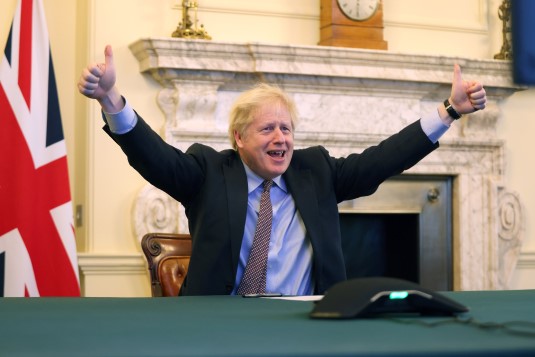
With this trade deal negotiated in record time there are bound to be some howlers and frights awaiting in its pages, and these are going to stoke the political fires well into the new year. Indeed, the Commons ratification of the treaty on 30th December might be fun even if proceedings are entirely by Zoom. And this is what matters; the politics. For Johnson this is the promise fulfilled. It doesn't matter how bad the deal is, he can guarantee the rightwing chatterers and broadcasting's client hacks will talk up the achievement and faithfully relay his lines when things go awry, or those nasties emerge from the deal's text. This is the deal he secured in the face of opposition from within parliament, opposition from within business, and has kept the faith all the way through the pandemic. The 2019 Tory manifesto didn't promise much because this was the centrepiece. Johnson has delivered Brexit, despite the grifting whingeing of Nigel Farage. For a man who compulsively lies, for millions of voters who supported the Tories a year ago he has kept his word.

Now the immediate issue is whether the deal clears the Commons, which is virtually certain. Labour aren't about to oppose it, as confirmed by Keir Starmer this evening, and nor are the European Research Group and their allies. Interviews with the likes of Andrew Bridgen and Craig Mackinlay finds them coy about the "devil in the detail", and well-known stroppy bod Steve Baker has spent the evening sanguinely tweeting the Tory party's self-congratulations. They might prefer a no deal because of the interests at stake, but allowing Johnson his moment now and not being seen to jeopardise the Brexit "project" trumps any rebellion in the Commons next week. Besides, what is done can be undone in the fullness of time.

How about the Tory vote itself, and those Johnson flattered and patronised a year back for their conditional Brexit votes? Will the deal finally break the polling logjam and start the slow bleed back of Tory supporters to Labour. Is politics going to return to "normal"? No one can say with certainty, but as predicting the outcome of social relationships is a probabilistic game, I'm going to suggest the answer is ... nyet. The remainers can bang on about what has been lost, but thanks to the pandemic the Tory base aren't fussed by the disappearance of free movement into the EU, they're not going to be bothered about the job losses or wage freezes because it mostly does not affect them, and where goods are held up it will be a minor inconvenience. So what if they can't get Spanish strawberries in the middle of Winter? As far as they're concerned nothing changes and they will feel vindicated in their decision. Perhaps a Labour strategy based on economic radicalism could reach some who switched in 2019, but remember, Brexit is a symptom of the polarisation in British society as a whole. Or, to be more precise, helped catalyse the manifestation of two poles in politics. As long as this persists, it's hard to see significant numbers of Tory voters folding over into the Labour camp. Cue pundits scratching their heads wondering why Keir Starmer's patriotism offensive etc. stubbornly refuses to work.

Johnson might be secure for now, but here's the other problem. Brexit isn't done. It will never be done. The details, difficulties, and damages inflicted by the deal might fade into the background and become one for the geeks in the same way the EU was before Dave recklessly gambled and lost, but we've seen how a fringe issue can blow up into popular consciousness. There is a grievance narrative ready to be composed by the likes of Farage and the Brexiteers looking to carve out a long-term position for themselves, and there are opportunities too for continuity remain around the fringes. The problem, as the last 10 years have taught us, is how these niche issues can become mobilising issues if the media run with them. And so this Christmas we are waving goodbye to five years worth of fraught and frustrating politics, but the wind about the door and the chill in the air carries one thing: the ghost of Brexit consequences to come.

Friday, 11 December 2020

If Remain Had Won

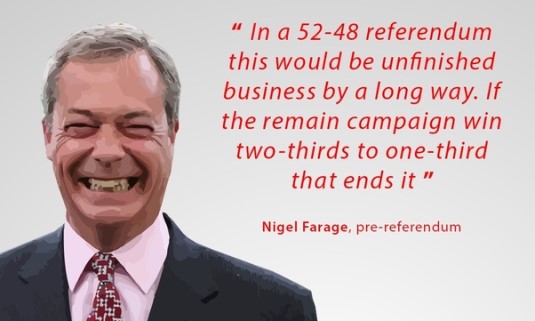
On the morning of Friday 24th June, Prime Minister David Cameron emerged from Downing Street looking tired. Tired, but relieved. In the early hours of the morning, Nigel Farage had conceded Leave had lost and attacked the government and the media for leveraging their institutional weight to secure a vote for Remain. It was tight, 52% for Remain and 48% for Leave, but a win was a win. The great gambler had promised a referendum on EU membership to pacify his right wing and see off the threat of UKIP who, just a year before, had polled four million votes. As he blinked into the cameras from the podium, he said the EU issue that had divided British politics for so long was settled and he looked forward to carry on governing in the national interest thanks to the mandate afforded him by the British people.

Cameron was the toast of the town as far as the liberal press were concerned. There were some voices raised about the recklessness of risking something as important as the UK's economic wellbeing for a prize so paltry, but this was largely ignored as centrist columnist and Labour backbencher spoke up to congratulate him for seeing us through the referendum. For the time being, the Tory right and their UKIP outriders were quiet and stunned into silence. The attention, however, swiftly moved to the Labour Party. While welcoming the outcome of the referendum, Jeremy Corbyn was roundly attacked by his backbenchers for offering "lacklustre leadership" and refusing to campaign alongside the Prime Minister to keep Britain in. Rumours of a move to depose the Labour leader did the rounds, and then went into action. On the following Monday, shadow minister after shadow minister lined up to resign, with some timing their departures to meet the hourly headlines on BBC News and Sky News. And then, that evening, Margaret Hodge tabled a motion of no confidence in Corbyn at the PLP's weekly meeting. It easily carried by 172 votes to 40, but the embattled Labour leader said this had no constitutional legitimacy and he would carry on after 60% of members had put their trust in him. Unfortunately for Labour, the crisis continued which, eventually, saw the little known South Wales MP and DWP shadow Owen Smith emerge as a challenger. As the party turned in on itself, Cameron's star rose even higher and Tory party polling received a renewed boost as he affected a statesmanlike gait vs the unseemly rabble across the Commons.

It wasn't long before matters started slipping for the Tories. In the first weekend after the referendum, a small crowd of Leave supporters held a rally in Trafalgar Square protesting the referendum con job. This weekly occurrence, not always in the same location, received little coverage and got scraps of notice in the press, but following the shock victory of Donald Trump in November's US Presidential election they became increasingly emboldened. Nigel Farage, forgetting earlier remarks where he promised to stand down as UKIP's leader began addressing the weekly rallies. They grew and, as the glow faded from the Prime Minister's referendum victory, he started looking increasingly vulnerable to backbench rebellion. The complaints about government spending and "dirty tricks" Farage raised on referendum night started coming back. The Daily Express ran lurid tales of public sector employers expecting their staff to vote remain, while acres' worth of articles complained about how the government flouted its own rules on campaigning spend. It wasn't long before the legitimacy of the referendum result was questioned - first by UKIP, but then increasingly by Tory backbenchers out of sorts in the renewed Kingdom of Dave.

For the moment, there were few opportunities for putative rebels to flex their muscles. When the Commons resumed in the Autumn following Jeremy Corbyn's second emphatic leadership victory, legislation due for introduction into the House was, for a rebellion-minded Tory malcontent, uncontentious. Likewise the obvious successors to Dave were very much bound close to him. George Osborne carried on in Number 11, and Theresa May remained at the Home Office where she'd been since 2010. A new addition to the cabinet was Boris Johnson, rewarded with the Foreign Secretary post for playing a leading role in the remain campaign, a position consistent with his pro-EU journalistic outpourings in recent years. The right inside and outside of the party might have been getting restless, but so far Cameron was shielded and the slow roll out of manifesto promises, such as a new (and punitive) Youth Allowance scheme designed to replace the dole for 18-21 year olds, the £10bn "war on waste" (a new programme of public sector cuts as opposed to an initiative aimed at curbing Britain's growing refuse problem), and extending the Free School programme further gave internal Tory opposition few opportunities to make strides.

And then, trouble. In December Jamie Reed, the Labour MP for Copeland announced he was resigning his seat. This was followed in early January by Stoke Central's MP, Tristram Hunt. Both were well-known critics of Corbyn, but had decided to pursue careers outside of Parliament instead. The contest in Stoke immediately captured the attention of the London-based media. As the city had an inglorious recent track record of returning far right councillors and, during the referendum, had voted by a large margin to Leave (Stoke Central itself was 62%/38%), this seemed like ripe territory for a UKIP challenge at the subsequent by-election. Having been burned so many times by failures at the polls, Farage was reluctant to stand but after some dithering was confirmed as the party's candidate in the by-election. For six weeks the media circus descended on Stoke-on-Trent. Activists from across the country poured in to help Labour's Gareth Snell retain the seat, and the campaign was very close. As the early hours of 24th February came in, first the awful news Labour had lost Copeland to the Tories, but then the shattering chaser. Mobilising the constituency's Leave discontent, Labour's vote held up but a collapse in Conservative support saw Farage squeeze home with a 800 vote majority. The scenario Cameron dreaded the most had come to pass: he would now face occasional questions in the Commons from the UKIP leader.

This plunged Labour into further crisis, with claims about Corbyn's incompetence doing the rounds and crisis talks over whether the party was doomed in its former working class heartlands. Even some leftwingers took to print to raise doubts about Corbyn's suitability. However, the momentum was with UKIP and while Labour looked inwards it was on the right where the effects of the by-election triumph were most felt. On entering the Commons Farage was welcomed by a rally of several thousand elderly leavers, and a march the following weekend saw 20,000 take to the capital's streets. Not a big demonstration by the standards of the left, it commanded disproportionate media attention with senior BBC and ITV journalists dipping in and out of the crowd. And then when the excitable "people's army" descended on Hyde Park to hear the words of Nigel Farage MP, they were driven to ribbons of ecstasy as he denounced the fraud perpetuated on the British people and raised a new rallying cry. The first referendum was deeply flawed, unfair, and distorted by the liberal elites who set it: it was time for an unsullied People's Referendum. Matters were not helped when, it emerged weeks later, Farage had been having regular meetings with the European Research Group faction of backbench MPs, and had even spoken at one of their gatherings. The press could smell trouble brewing and captivated by the splash Farage had made in the Commons, attention switched away from Labour's difficulties. Matters came to ahead over Osborne's Budget speech. Having learned from his second omnishambles budget of the previous year, he tried keeping matters on an even keel. Strong GDP data helped by renewed investment, following a brief pause while business awaited the referendum's outcome, meant increased tax receipts and so, Osborne argued, more room to raise the basic tax threshold even higher. However, when earlier drafts of his chancellor's speech leaked it was revealed this was initially going to be dubbed the Remain Dividend. The fact Osborne never used the phrase didn't matter. He was harangued by The Mail and The Express for lording it over the leavers, and (anonymous) Tory MPs made sure the press were well briefed about their outrage. It looked like the Tories were going to tear themselves apart.

As it happened, the next big shock struck at the very heart of the Tory programme. On 14th June fire crews were called to a fire at Grenfell Tower, which quickly burned out of all control. The blaze killed 72 residents and made hundreds more homeless. It quickly transpired the local Conservative council had cut corners on the external cladding and it did not meet fire safety requirements - all for the sake of a saving of a few thousand pounds. Immediately, Labour's internal distractions fell away and Jeremy Corbyn connected the tragedy to Cameron's and Osborne's austerity measures. Within days Corbyn was out meeting the families and speaking with the community, whereas the chancellor completely went to ground while Cameron was on an overseas trip. Caught flat footed, it eventually fell to Boris Johnson, as former London mayor, to do the official walkabout - though even he failed to meet with the families. This appalling spectacle, rightly perceived as callous and uncaring, hit the Tories hard. Already suffering thanks to UKIP's sustained 15-20% in the polls, for the first time under Corbyn Labour moved into the lead. Sensing an opportunity to embarrass the government into backtracking on cuts, Corbyn launched a nationwide tour with Grenfell community representatives. The PLP were not too happy, but by all accounts the programme of events were a success, with large crowds turning up to hear him put the anti-austerity message. Keen not to miss a bandwagon, Farage and UKIP discovered they were an anti-austerity party and said for too long the posh liberal Tory elite had balanced the books on the backs of the poor. Squeezed from two directions, Cameron was in a difficult place.

Another unhappy circumstance of the Remain victory was the fact subsequent EU meetings attended by Cameron were subject to the keenest, and some might say hysterical press scrutiny. The "renegotiations" he had undertaken prior to calling the referendum turned out to be cosmetic changes. The right wing press gleefully seized on EU migration figures, and beggar-thy-neighbour stories about EU citizens claiming benefits and "health tourism", which continued to aggravate the steadily diminishing newspaper audiences. Every time the EU agreed something which Cameron simply accepted, this was more proof of Britain's betrayal by its leaders. And when Cameron had to report on matters European in the Commons invariably the Speaker John Bercow would impishly allow Farage to ask a question.

By early 2018, Cameron had had enough. The feeling of being trapped by his backbenchers, of wincing at the UKIP thorn in his side and now, facing an energised and confident Corbyn in the Commons, was by no means guaranteed to "win" each week at Prime Minister's Questions. Following what was to be Osborne's final budget, which begrudgingly released funds for the safe recladding of Britain's public housing tower blocks, he announced the timetable of his departure as per the promise he made prior to 2015. Suggesting the Conservative Party had some hard choices ahead, he fired the starting gun on the contest so the party had the summer to debate and regroup. In the first round, the expected big beasts in the form of Johnson and May declared their intentions, but as always a few no-hopers wanting a bit of recognition stuck their names in. Sajid Javid, Dominic Raab, and Andrea Leadsom tipped their hands from the right, while the relatively unknown Rory Stewart pitched in from the party's centre. Interestingly, Osborne didn't contest - divining correctly someone who is virtually the ancien regime wouldn't stand a chance. Michael Gove, exiled to the backbenchers since heading up the Leave campaign, also put himself forward and established himself as the most credible Leave adjacent voice - and the potential leader most able to see off UKIP. For her part, May won plaudits for talking about social justice and rediscovering a Tory sense of responsibility to those at society's sharpest end. To hear one nation rhetoric not entirely dissimilar to the arguments made by Ed Miliband a few years previously turned heads and captured a great deal of broadcast and liberal press coverage. Johnson, for his part, must have been left wondering if stumping for Remain was the right career move. Popular in the party for his jovial bon homie, unfortunately for him there was little to offer. He claimed to be an election winner who could take on the left, but on matters of policy he was either vague or sounded like he was copying May. And he promised to stand up to Brussels, but given his role in the referendum Gove had greater credibility on this score.

In the end, Johnson was squeezed out by the rounds of voting and Gove and May went to the membership. The election was a strange affair, with May successfully avoiding public face-to-face debates with Gove. This allowed her to set out her stall as a reluctant remainer who treasured the sovereignty of the UK, but on balance believed staying in the EU was the right thing - but that the government should take tougher stances versus Brussels and seek to reopen negotiations on the terms of membership. Gove was able to easily outflank this from the right, and hinted on more than once occasion that perhaps UKIP and the second referendum campaign had a point. However, on matters of wider policy Gove praised Cameron and Osborne and stated in no uncertain terms he would more or less offer the same. May on the other hand seemed to take the threat from Labour seriously, who were leading in the polls despite an outbreak of infighting over the Shrewsbury poisonings and the long-running disputes over antisemitism. As such, of the 100,000 Tory members who returned their ballots on an 80% turnout they narrowly, and comedically, went for May over Gove by 52% to 48%. The significance of the ratio was not lost on anyone.

May enjoyed a brief honeymoon, and shored up Tory fortunes in the polls by winning back floating support from UKIP and Labour. However, she was conscious of her slim inherited majority and the tight margin of her victory. Her speeches intoned on the one nation theme, which seemed to suggest she was determined to put pay to the party squabbling over Europe once and for all. But inevitably, when faced with the other heads of government at Commission meetings she was not seen to be pushing right wing peccadilloes enough. Her promises to act tough came to nought, because there was nothing to act tough about. No bail outs for southern EU states, no Turkey accession, no new agreements necessary for the transfer of more powers. She started to find even the zone of non-punishment was punishing, and when she did try to contrive rows on the approval of the EU budget the press, Farage, and increasingly her backbenchers took her to task. In time, the infighting returned and the poll recovery was slipping. If she was mulling over an early election, by the time of the Spring budget - delivered by the newly promoted Philip Hammond - there was little he said or promised that would make a contest much of a go-er. And so when the EU elections swung by, the Tories fell to third place. The Leave movement found its feet again and returned UKIP as the largest party, with Labour coming a close second. It was unclear if the government would last the distance until May 2020.

Except May 2020 did not happen. Wounded by the awful losses in the EU elections, though not quite as bad as those sustained by John Major in 1994, throughout the Summer and Autumn Leave took to the streets in increasing numbers, culminating in a 100,000-strong march through London that October. The idea the government cheated in 2016 increasingly took on the form of a conspiracy theory, drawing together the liberal elite, collusion between Brussels and "shadowy financiers" (usually, but not exclusively George Soros and the Rothschilds), and evil teachers/lecturers filling younger generations' heads with internationalist rubbish. As the temperature rose because May elected to ignore the movement, some took to camping outside Parliament with sound systems, UKIP banners, and garish Union Jack suits. Questions were raised in the house following the public abuse of Tory remainer MP Anna Soubry while she tried entering the parliamentary estate. On the left, despite May's promises there was little evidence of helping out the poor in Hammond's statements. Osborne's deficit targets are long discarded, but it seems the precarious state of her party and wishing not to give any recalcitrant backbencher an excuse to jump ship and join Farage, as per Douglas Carswell and Mark Reckless in 2014, stayed any reform mindedness she may have had. As a result, when the din from Labour internal warfare died down, as it did for short lulls, there was polling evidence the party was seen more in tune with the sentiments of the British people.

And then Coronavirus happened and up ended politics. May's initial response was widely praised. She entered lockdown when the scientists recommended it, although there were loud complaints about the cancellation of Cheltenham and football fixtures, but the initial three-month quarantine period ensured UK deaths stayed below the hardest hit countries in the EU, like Spain, Italy, and France. But once lockdown was over and everything opened up again, stories came to light of PPE procurement scandals - stories that have not gone away. Farage, before jumping on an anti-face mask bandwagon, temporarily made hay over "careful Britain" handing over cash to states in southern Europe who had not taken the pandemic "seriously". Meanwhile, the furlough scheme offered by Hammond was very obviously influenced by the pressure Labour were applying, but then the chancellor showed a stubborn resistance to extending it and making sure its coverage was as comprehensive as it should have been.

Under the impact of a national crisis, any government's polling figures are going to go up. And May's duly did, reaching a high of eight points in mid-April. But since they've been falling. Labour have regained ground thanks to those losing out and angry at the mismanagement they see, and UKIP are regularly at around 20% as it adds Covid-scepticism and a toddler-like tantrum over tier restrictions and the second lockdown to its populist repertoire.

With all elections postponed until May 2021, by which time most people will have received a vaccination, it looks like May's Tories are in for a very difficult time. In 2016 David Cameron opened a wound to scratch an itch, and the politics flowing from that event have festered. And no amount of telling Leave they lost, the people had spoken and so they should get over it works. Britain is polarised, albeit with the right seemingly helplessly split. Can Labour take advantage and put Jeremy Corbyn into Number 10 next May? It's highly likely - unless May goes to the country promising a second in/out referendum. That might see off UKIP and cohere a block of voters behind the Tories, but poll after poll shows the public are fed up of hearing about Europe. But if making such a rash promise means preventing themselves from getting wiped out, Theresa May will certainly do it.
Wednesday, 9 December 2020

The Tory Sovereignty Fetish

"The thing the European Union just doesn't understand", intones any Tory asked about the state of trade negotiations, "is that Britain is now an independent coastal nation in charge of its laws, borders, and waters." Snoring boring, but this is the pat excuse of choice when Boris Johnson and his ghastly coterie are asked awkward questions about the Brexit talks. The implication being Brussels wants to treat the high and mighty Blighty like a semi-detatched vassal state doomed to take the rules emanating from the Commission if access to the European single market is to be retained. Getting all patriotic is good theatre to warm the gammon up, but preposterous posturing to anyone half paying attention to the Brexit deal saga.

As the Prime Minister bumbled and mussed his hair through an evening of face-to-face negotiations with Commission President Ursula von der Leyen this Weds evening, it is worth returning to this sovereignty trope, which is waved about like an overripe rabbit's foot. This isn't to say its rightwing uses haven't been deployed skilfully in the recent past. Readers shall recall the brute efficacy "Take Back Control" had during the EU referendum campaign, and how the argument over sovereignty tapped into and provoked a reaction among large numbers of people who felt powerless over their lives, estranged from the changes no one put in any manifesto, and were looking for a means of asserting themselves against an amorphous them. Be it anti-immigration poison put out by Arron "Magic Pockets" Banks's Leave.EU, or the small n, small s national socialism of the NHS Brexit bus, the Leave campaign cleverly fashioned something as abstract as state sovereignty into everyday language and common sense experience. Definitely something Labour's pitiful sloganisers could do with studying and learning from.

But why do the Tories fetishise it? Aren't they anti- the state, or at the very least about minimising the state? You know, the Thatcherite guff about states not being privy to perfect information which predestines intervention in the economy to be disastrous, and that it should be pared back to barest essentials. Such as the apparatus for locking people up and making war on others. The answer to that is ... one should learn not to take Tory principles too seriously. They don't, after all. Sovereignty, however, is different. This is not an airy-fairy principle scrawled from the quill of Edmund Burke and repeated by ostensible thinkers like the late Roger Scruton, but a coagulation of the Tory experience of the last 40 years, taken up, obscured and rendered seemingly rarefied by what passes for conservative philosophy. Marxism isn't the only social theory to formulate concepts on the basis of practice.

Let's stop beating about the bush. The mainstay of Thatcherism and its successors, right through to the professed one nationism of Theresa May and Johnson is authoritarian politics. The striking of a new class settlement through the punishment beating of the labour movement in the 1980s was because Thatcher tooled up the state. With no authority higher than itself, organised workers were brought to heel and war was declared on professions, local government, education, and the civil service. Everywhere their authority was undermined or scrapped and subject to direct central supervision. Under Major this continued, but the process of destroying the expertise-driven autonomy of parts of the state found the slack taken up by a mix of markets, "independent" regulators and inspectorates, backed up at all times by the central authority of the executive. Rather than scrap this, New Labour deepened it further by instituting a new ecosystem of regulators ultimately accountable to the state. The Tory/LibDem coalition undoing much of it and creating more top-heavy, over centralised relationships. The "bonfire of the quangos" only multiplied state bureaucracy elsewhere. Why did the Tories go down this route? Because this was an extension of class war. First batter resistance into submission. Second, set up forms of governance that promote competition between agencies and, therefore, workers. And third provide commercial opportunities for those companies nice enough to sprinkle a few pounds into party coffers.

This remains the case with the Tory handling of the Coronavirus crisis, which has produced a seeming incoherence from the standpoint of public health but not as far as the preservation of class relations are concerned. The state was the saviour, underwrote the economy (well, not all of it), enforced the lockdowns and is now pushing the vaccines out the door. But there was one potential check on the state, on sovereignty, on stopping the Tories from doing whatever they wanted to do, and that was the European Union. It is little coincidence the vast bulk of Brexity Conservative MPs are dyed-in-wool Thatcherites, because the EU presented itself as a barrier, a repository of alternative authority that conditioned the state's room for manoeuvre. Therefore if one's vision for the future is a deregulated clearing house for hot and dirty money, and is part of a faction (and fraction) who stands to substantially profit from pivoting the British economy in this direction, tearing up EU membership and going for the lightest possible trade deal obviously suits such interests, and is entirely consistent with the custom and practice of Thatcherism. In other words, the assertion of sovereignty is a very fancy way of announcing the assertion of class interests.

Our old friend Louis Althusser, once he recovered from his self-described "theoreticist deviation" characterised philosophy as the class struggle in theory. Like much else, the Tory fetish of sovereignty affirms the acuity of this keenest of insights. They don't stick to this otherwise mundane political concept because of its beauty or clarity, though some might find the distortions and contortions it pulls in the writings of establishment political thinkers beguiling. They feel it in their bones because, effectively, sovereignty is the flattering reflection their class-ridden, authoritarian politics projects into philosophy and provides a convenient shorthand for obscuring what they're really all about.

Image Credit

Saturday, 7 November 2020

Biden, BoJo, and Brexit

As Donald Trump drowned his considerable sorrows in a round of golf this Saturday and the rest of the Republicans miserably lamented, spare a thought for someone outside Team Trump hoping he'd pull off another win. Yes, Boris Johnson finally said something about the US presidential election. As world leaders lined up to condemn Trump's transparent and pathetic attempts to derail counts and claim them fraudulent, this most incontinent of gossp mongers, leakers, and opinion peddlers was uncharacteristically mum. That is, until the result was finally declared. There were good reasons for his welcome period of quiet.

Over at Business Insider, there are several explanations why Johnson is apprehensive about a Biden presidency. Apparently, the president-elect sees Johnson as cut from the same Trumpist cloth, which is fair enough. His lies aren't as egregious, but they come to Johnson just as easily. He has form hanging around with and taking advice from Steve Bannon, and has stirred the same populist pot that powered Trump to victory in 2016. And while readers here aren't likely to be Biden's biggest fan, he's certainly shown more circumspection treating with Johnson than former Labour politicians now sitting in the Lords as reward for backing the "mini-Trump" over their own party.

There's also the issue of racism. Johnson might like pointing to his multiracial clique of well-heeled ministers and occasionally his own distant Turkish heritage, but there was the time when, as London mayor, he accused Barack Obama of having an "ancestral dislike" thanks to his "part-Kenyan" background. Characteristically Johnson refused to apologise or back down, cheered on as always by his mates in the media. Unfortunately, Joe Biden apparently remembers sleights - especially where close friends are concerned. Another strike against Johnson.

Much more important than all this is what Biden's victory means for Brexit. Westminster watchers have noted how the return of Donald Trump would have seen Johnson more willing to walk away from discussions with Brussels, and plunge the country into further calamity by defaulting to EU trade on WTO terms, partly mediated by the thin protections of his withdrawal agreement. Regardless of the damage this would cause, Johnson hoped Trump would ride to the rescue and serve him up a political triumph in the form of a trading deal. It wouldn't replace what was lost from tearing up trading relations with the near abroad, but for Johnson this was never the point. Now a Biden White House won't play to this nonsense. Not because they think Brexit is stupid (it is) and diminishes the UK's status and usefulness as a bridge into Europe (it does), but thanks to some very stupid game playing.

Introduced to dragoon the EU into accepting UK demands, the threat to break an international treaty was destined to blow up in Johnson's face. It was idiotic because no putatative trading partner would want to strike a deal with a state who tears up treaty obligations for posturing purposes, and utterly reckless given, as Johnson knew, the polls were in Biden's favour in the race for the White House. This incoherence and extreme short-termism, also a characteristic of the Covid strategy among other things in recent years, now finds Johnson's Brexit scheme jeopardised by an incoming president who will not accept unilateral alteration to the Good Friday Agreement. Indeed, this five second clip from earlier today might be interpreted as a shot across Johnson's bows. Especially as Biden is keen to repair relations with the EU Trump at best neglected, and at worst worsened.

The pressure is now on Johnson. With disruption inevitable in Dover even with a deal, he now has a political imperative to move toward an agreement quickly. The negotiating context has shifted. There's poltiical capital to be made from thumbing one's nose at Brussels, but certainly not at the president-elect. And with polls finally turning and reporting consistent leads for Labour, there is nothing to cushion him: a hard Brexit means a hard fall out, and one he might never recover from. The odds of a deal have substantially increased as Johnson's Get Out of Jail Free card might end up in pokey once he leaves the White House. If it looks like Johnson is being pushed into a deal by changed US realities, then his position grows more precarious. If the UK are forced to swallow something or even compromise and his followers notice, his authority is gone. The "Global Britain" as an independent trading nation is for the vapours, and the Prime Minister lives on borrowed time.

Image Credit

Sunday, 13 September 2020

On Tory Law Breaking

It's the most ambitious crossover event since Brownites and Blairites teamed up to do in the Corbyn project. Writing for the Sunday Times, John Major and Tony Blair have attacked the government for its stated intention to break the Withdrawal Agreement Boris Johnson signed last October, and was voted into UK law in January. They condemn the government's posturing as irresponsible and the damage it's causing the country's international reputation. And who can disagree?

It's long been the contention of this blog that the Tories articulate the interests of the most backward sections of the business class, whether it concerns Coronavirus management or, for that matter, everything else. Indeed, over the course of the last five years the horizon of Tory ambition has contracted quite sharply to the day-to-day survival of the Tory party itself and, latterly, the career of Johnson himself. Major and Blair, as hangovers from a previous age of establishment politics, are aghast because they know, and it's hardly the keenest of insights, that the extreme short-termism of contemporary Tory politics goes beyond discrediting the occupant of Downing Street: it imperils the authority of the state itself.

When Johnson tried rushing Brexit through with unseemly haste last Autumn, it was because his project was time limited. Get Brexit done as quickly as possible, purge the critics, and win an election without dragging it out. The game plan was plain as day from day one of the Tory leadership contest. And so when leading Tories prattle on about unforeseen political circumstances and the pressure the Prime Minister was under to get a deal, the pressure was entirely his. He determined the timetable, he determined the bombastic and reckless approach, and he determined the limited window for scrutiny in the Commons. The unprecedented situation was entirely the government's own contrivance, and the customs border in the Irish Sea between the north and mainland Britain a detail Johnson reinserted into the agreement after Theresa May had excised it.

For Major and Blair, and the grandees who've chipped in this last week, there are three chief concerns. The avoidance of the hardest of hard Brexits, which would exacerbate the problems of Britain's weak economy - already cratered by Tory policy pre- and post-Covid. There's the small matter of other governments wary of signing up to anything with the UK if treaties are rode over roughshod for politically expedient reasons, a message reinforced by US House Speaker Nancy Pelosi this last week. And as for authority at home, if it's okay for the government to break the law in a "very specific and limited way", the state runs the risk of undermining respect for the law for everyone else. Consider the widespread consequences of the Dominic Cummings affair, for example. Without the cloak of the law the real underpinning of state authority, that might is right, is exposed. Tory legal shenanigans short circuit the constitutional flummery on which its legitimacy rests, and who knows what might flow from this down the line. From their point of view, Major and Blair are right to be concerned.

This is one of those rare occasions where the interests of the left and part of the bourgeois establishment episodically align. The law, like all other aspects of the state is a terrain of struggle and a useful tool for checking the arbitrary exercise of executive power. Where we depart from our temporary comrades the former Prime Ministers is the refusal to fetishise law as something sacrosanct. The law is frequently wrong and unjust because of its class character, and as such it is entirely right it be defied in some circumstances, dependent on the politics of the situation and the nature of the struggle. And besides, mainstream politicians are prepared to act unlawfully if they too believe it suits their interests - as one of the two men taking Johnson to task did so spectacularly, until the United Nations provided necessary legal cover after the fact. Nevertheless, this is a thin end of a thick wedge. The Home Office routinely tries deporting people in defiance of court orders, the trial of Julian Assange, whatever one may think of him, is a travesty of legal process, the government ignores the law to dish out juicy Covid-19 contracts to their cronies, and the attempt by Suella Braverman and Robert Buckland - the attorney general and justice secretary respectively - to soft soap treaty breaking is more than a pattern of behaviour. It's a strategy aimed at hobbling the courts, protecting themselves from legal scrutiny and challenge, and allowing the government to do as it pleases. It's the same species of authoritarianmism we've seen from Donald Trump, Viktor Orban, and Poland's Andrzej Duda, albeit with British, Johnsonian characteristics.

Major and Blair have called on MPs to reject the internal market legislation due to come before the Commons tomorrow. For its part, Labour have said it will vote against it if the law breaking provisions are not removed. There's excitable talk of up to 30 Tories rebelling (recent history suggests no one shouldn't hold their breath), and then tying it all up in the Lords. All of which suits Johnson as long as he can convince the Tory base about how the remainers are ganging up to steal their Brexit again, but given how it's his own deal he's now opposing this will stretch the credulity of some. But the theatre, which the Tories are increasingly dependent on, is all that really matters. As Buckland said in his Andrew Marr interview, the proposed legislation won't come into force if the government and EU agree a trade deal anyway. Johnson thinks the noise now is worth the consequences that may never come, though as Major and Blair are right to point out, the casualty of this reckless approach will be the Tory objective of advantageous bilateral trade deals.

This is a pattern we've seen before with Dave and May, one in which increasingly risky bets are placed on gambles offering ever diminishing returns. Being seen to posture and act tough versus the UK's intergovernmental reputation as a respecter of treaties is the dilemma. Given this choice, for Johnson there is no contest. The short-term perception of personal and party political advantage wins out every time.

Image Credit

Thursday, 20 August 2020

Cheering State Thuggery in Belarus

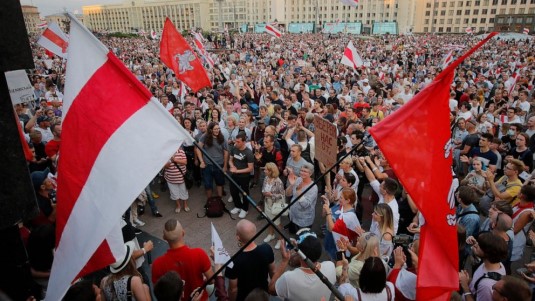
The uprising in Belarus stands on a knife's edge. Following huge demonstrations and strike action that has brought industry to a juddering halt, it's looking like the regime of Aleksandr Lukashenko is on its last legs. Popular consent has evaporated following his rigged election, and there has been some drift from the army and security services away from the state and toward the protest movement. Having got shouted down in mass meetings - he should be lucky that's all he's had to deal with - Lukashenko is looking to redouble repressive efforts, with riot police back on the streets rounding people up and administering beatings. By upping state intimidation and violence now, the president is hoping to ward people off from assembling this weekend in the sorts of numbers we saw last Sunday.

On Wednesday, the EU met and agreed to impose targeted sanctions on key regime figures, has resolved to put out a statement of solidarity with the protest while refusing to recognise the disputed election result, and offered its services as mediator between government and opposition to affect a peaceful transfer of power. The Coordination Council, set up by Svetlana Tikhanovskaya in Lithuania following her de facto expulsion after the rigged election leaves a lot to be desired, politically speaking. Initially calling for people to stop protesting, she has pleaded with the EU to back the movement and has agitated for fresh elections. For the EU, and especially the Baltic states and Poland, ever-weary of Russian revanchism, the removal of Lukashenko and his on again, off again love-in with Vladimir Putin for a dependably friendly government would be most welcome - hence its efforts at steering the opposition and, it hopes, the uprising in a pro-EU direction. For those interested in such things, the UK is following the EU line.

In these sorts of situations, sympathy, support, and solidarity goes to those risking life and limb. If Belarusian leftists are on the streets with the movement and fighting the dictatorship, the very least those of us sat comfortably in rich liberal democracies can do is listen to what they say and amplify their voices. Unfortunately, this is not the case among some who style themselves "anti-imperialist". Having seen what happened in Ukraine all those years ago, and Libya before that, in their imaginations the fundamentally open process of revolt has already been closed down. Because the EU are working to take advantage and bring any successor regime into its orbit, this is the inevitable consequence - if not the essential characteristic of the movement already. It leads to the absurd situation of a nationwide movement pigeon holed as reactionary whereas Lukashenko's disgusting gangster regime is more "progressive", and apparently socialist thanks to the still-sizeable presence of state industry. What can you say, some people are easily impressed.

I suppose it's unsurprising. Coming out of a period where revolts and mass movements were infrequent or easily derailed, and preceded by another stamped by the geopolitics of the cold war, so there are those who see mass mobilisations in countries not seen full in with Western governments as creatures of state-led subversion efforts. It's a fundamentally defeatist attitude assuming a priori the standpoint of proletarian passivity and multitudinous calm while according supernatural agency to our states, up to and including turning the repressed citizens of Europe's last dictatorship into their unwitting dupes. Often times these counsellors of despair and apologists for state terror mistake themselves for revolutionaries when, in fact, they're fundamentally conservative. If we're properly guided by a militant political science instead of tankie nostalgics, then no leftist would be in the position of defending a creature like Lukashenko from a popular revolt. And if you can do that there, think about the strange political contortions that might result here. Such as Britain's most prominent admirer of Stalin looking to cut deals with Nigel Farage and now, a scabby alliance with Scottish Tories.

Thankfully, such people are at the margins of the labour movement and the socialist left. They should stay there.

Image Credit

Tuesday, 19 May 2020

The Barney with Barnier

Dissimulation, double think, craven idiocy, lies. I could be talking about the internal life of the Labour Party, but on this occasion we're revisiting our old friend: Brexit. Keeping the issue alive is not only about pushing right wing identity politics, but a way of keeping the Tories' excitable Brexit-obsessed flank on side. The aftermath of the coronavirus crisis will be bad enough without getting menaced by a resurrected Brexit Party. So snoringly predictable I could drop off. What's going on now, then. What's on the bored, Miss Fored?

In today's grandstanding, the government have published its approach to the negotiations. You know things aren't going well for the UK's position when the Telegraph splashes with the claim Michel Barnier is "losing the argument", and the ever-dependable Daily Express cheerleads remarks made by David Frost, the UK chief negotiator, that what the EU is offering a "low quality trade deal." Sounds like fighting talk and one sure to warm the cockles of Brexity hearts.

Speaking in the Commons on Tuesday, Michael Gove blamed the EU for "holding up talks" with its "ideological approach." What could this mean? The EU's position is guided by high-minded and airy-fairy principles? No. The government have published 13 documents comprising a series of separate agreements that tie together as an overall deal. The EU reject this "copy and paste" approach based on past deals and want something different. So, yes. Um, very ideological. This was underpinned by a sharply worded letter to Barnier from Frost in which he moaned about the unprecedented expectations the EU was placing on the UK, which amounted to no quid pro quo. I.e. The idea the EU has access to some UK resource, like fisheries, without some reciprocal arrangement elsewhere. You can't simply have cake and eat cake, as David Davis's briefing notes once eloquently put it. What does the EU have to say?

Well, we read from Barnier's Friday communique that negotiations were partially hampered because the UK hadn't yet published its legal documentation. For clarity, the EU published theirs in March. Also, far from the EU refusing to play the reciprocity game it is the UK who did not want to "engage in real discussion." For instance, on the single governance framework for adjudicating disputes in the putative common trading area, it reported no progress. It's one thing to moan about how the jurisdiction of the European Court of Justice shouldn't apply to Britain under the new deal without bothering to talk about an alternative. Furthermore, the UK are refusing to provide any guarantees on human rights matters - refusing to abide by agreements made in October, and is asking the EU to dump its rules on data protection for a lower threshold - which seems to be one of the UK's vaunted divergences from the EU mainstream.

What is striking about the Barnier note is how on Friday it replies to the arguments made by Gove this Tuesday. The EU's ambition is a no-tariff deal, which would be the first in its history with a non-member precisely because of the UK's special status as an ex-member. Therefore the past deals the Tories hark back to with other countries are not appropriate to the current situation. And, contrary to what Gove and Frost are saying, it is the UK who are insisting on access to European markets while keeping bits of the UK closed to EU business. It is almost as if the Tories have pored over Barnier's document, assumed all of his positions as the UK's and repackaged them for a domestic audience to make the EU look unreasonable. For instance, of the thorny fishing issue Barnier writes, "Why would we seek to give favourable market access conditions to certain British professionals when our European fishermen would be excluded from British waters and risk losing their livelihoods?" Quite.

Naturally, Barnier is not acting out of charitable motives. He wants a good deal for the EU and is hard-headed about getting one. 45 years of economic integration has closely bound together markets across the channel. In the best of times, EU businesses would therefore be damaged in the event of a no deal exit at the end of this year. Under the catastrophic impact of coronavirus, the wreckage is set to be even more extensive. To use the old language, he's looking out for the interests of capital in France, Germany and the Low Countries by ensuring as little disruption and the continuance of as many existing relationships as practicable. In contrast, none of this is focusing the UK's mind. Instead the Tories now think the covid downturn can mask the fall out of no deal, which in turn means they're not approaching these negotiations at all seriously. Unfortunately, they have the precedent of last Autumn to fall back on where the UK went in to crunch talks with the same light minded approach and came out with a new deal. Which, of course, bore a resemblance most uncanny to Theresa May's thrice-damned deal. With the June deadline and nothing happening, the Tories are hoping the EU will blink first. That's not going to happen.

What is the point of all this, then? When it comes down to it, the only bourgeois interest the Tories have consistently supported are those of the City. Or, to be more accurate, have done what they think are best for its collective health. And right now they are aligned with that section which sees its future working as a global hub for brokerage, trading, and hot money. The model is not Singapore, but the City of London as it has been for centuries. The Tories also believe they have leverage, because the EU is also dependent on its markets for raising capital and selling bonds, despite the conscious effort to develop alternatives in Frankfurt and, to a lesser extent, Paris. That the City is in a co-dependent relationship with the EU thanks to the volumes of trade EU customers bring into the square mile is overlooked. So what if some firms take a hit, their destruction will be more than compensated by the creation of new markets and new business flowing into a City free from the EU's stringent regulations. This is the vision that has captivated the big capital interests who have and continue to pour money into the Tories. And this, ultimately, is why they can live with no deal and are content to play games with Barnier's team. The City will out, come what may, and all the rest be damned. And if coronavirus expedites this bleak conclusion to the Brexit saga, so be it.

Image Credit