Showing posts with label Celebrity. Show all posts

Sunday, 17 September 2023

Exposing Russell Brand

Like many of the celebrity sex predators who were outed before him, Russell Brand paraded his disgusting behaviour in plain sight. And a lot of us, me included, did not see what was obvious. From his jokey shagging references on EFourum and Big Brother's Big Mouth, to grossly inappropriate harassment via his BBC radio shows, and stand up routines furnished with references to violent sex, in the context of the post-ironic 00s many were quick to - wanted yo - assume this was an anarchic act in the British tradition of near-the-knuckle cheeky chappies. A persona as affected as Michael Pennington's permadrunk alter ego, Jonny Vegas. Unfortunately, this was not the case.

Saturday night's Dispatches and the accompanying Times article were difficult to stomach. In painstaking detail, the joint investigation established repeated patterns of behaviour in which women were groomed and gaslit, subject to sexual assaults and, in one case, rape. Among them included a 16 year old whom, it was alleged, was seriously sexually assaulted. Accompanying the grim details was not just the weight of testimony, but corroborating witnesses, character references, admissions by Brand himself in his multiple autobiographies, and text messages that came from his phone number. If anyone has any doubt after wading through overwhelming and credible claims which, remember, would have been vetted by the notoriously twitchy libel lawyers in C4 and Times employ, then they were either reading or watching something different, or had concluded out of hand that Brand was innocent of the allegations.

Take Britain's self-described working class hero, Paul Embery, for example. He immediately said that Brand was entitled to the presumption of innocence. A typically stupid response from a very stupid man. Firstly, there are no charges and we do not live inside a court case. Second, what does it say about someone who, confronted with overwhelming evidence that a celebrity is a danger to women and has been given a free pass from a succession of broadcast controllers, prattles on about "innocence"? And then we have a clutch of right wing misogynists closing ranks around their man. If you have Elon Musk, Jordan Peterson, and Andrew Tate - backed by the usual horrors from British right wing media (who were not so reticent about the Huw Williams allegations) rushing to provide a defence, then surely that should give anyone thinking about defending Brand pause. But there's never stopping Chris Williamson, who not only retweeted Brand's own conspiracy-mongering defence of his conduct ("all my relationships were consensual", as if that's the issue here), but also the just asking questions response of Jackie Walker. A reminder, as if it was needed, that this pair and their supporters would be the kiss of death to any left project.

A common theme of Brand's conspiracy-inflected support is that their man is a "threat" and therefore needed taking down. But how is Brand a threat, exactly? To whom? Because he incoherently rants about media bias? Or that his snake oil bullshit of wellness retreats, talking therapies and motivational mantras, and ice baths threaten the scaly grip of big pharma? Brand poses the status quo less of a threat than a GCSE media studies class. Indeed, the so-called cosmic right with its anti-vax rubbish and faux anti-authoritarianism fits right wing governance strategies hand-in-glove. Brand threatens the powers-that-be not a jot. He reinforces them.

The more convincing explanation to the "why now" comes from turning the conspiracy theory on its head. The allegations against Brand have had an airing precisely because he's not a threat. Or, to be more accurate, because he's an irrelevance. Since disappearing up his own spiritualist backside, his mainstream entertainment career has more or less withered. He still does stand up, but most of his money comes from his very anti-establishment business interests. In other words, no one in the media has any capital tied up in his celebrity. This is different to, for example, Noel Fielding whose inappropriate relationships have circulated extensively around social media. Yet with a new series of the Great British Bake Off in the can, C4 won't be inviting the spotlight to play on his affairs. Until at least the season wraps up. Similarly, the case of Dan Wootton is instructive. A proper sexual predator and no mistaking, his behaviour has been covered in the Byline Times and has since received coverage in the more liberal sections of the media. Yet his berth at GB News looks secure, even if his position at The Mail is less so. And shall we mention Nick Cohen as well? All three are protected to a degree because of the investments sunk by different media institutions into their person. If Brand was still a significant figure with a hit TV show or series of films currently under his belt, then chances are these allegations would not have had an airing.

Brand's long history of sexual abuse and mistreatment of women has justly caught up with him, and the women who have had the courage to speak out about their awful experiences should be listened to and believed. Likewise, the work sunk into this exposure of Brand's shitty behaviour reflects well on The Times and the Dispatches team. But the forces that enabled their work are the same ones that enforce a pall of silence where other TV and radio personalities are concerned. Brand is not the only sexual predator to have prowled around the celebrity circuit, and even now there are commercial interests working to ensure other allegations about other men remain nothing more than whispers and rumour.

Tuesday, 11 July 2023

The BBC: A Qualified Defence

It hasn't been long since The Sun last overreached itself. On that occasion, they allowed Jeremy Clarkson to go into print with a typically disgusting attack on Meghan Markle. This time, it's a salacious story on a so far unnamed BBC presenter that is, at best, shoddy work, and at worst deliberately misleading.

Let's recap what we know. On Saturday The Sun splashed its exclusive claiming a household name had paid over thousands of pounds to a young person for explicit photos. It also claimed they were under 18 at the time, had a crack habit apparently brought about by their interaction with our unknown celebrity, and was still in receipt of money from them. The paper further reported that the family had complained to the BBC but no action had been taken. Indeed, this celebrity was seen hobnobbing with BBC bosses recently, suggesting that yet again the corporation's management were looking the other way while questions hung over one of their biggest names. But then in an about-turn yesterday, a lawyer acting for the "victim" said this was all a tissue of lies ("rubbish" as the statement put it) and was more a case of their family disapproving of their lifestyle. I.e. They were on OnlyFans and all the presenter had done was pay them for explicit content.

Earlier today a second story came out, claiming that our presenter had contacted a guy in his early 20s, asked to meet up, didn't, and then sent him a slew of abusive messages when he threatened to go to the press. The latter has been confirmed by the BBC as coming from the celebrity's phone, but for the speculators following this on social media there is no way of knowing if these are actionable from a police point of view until The Met says something. There is now the allegation he tried meeting a third person in contravention of the lockdown rules in force at the time.

For The Sun, jumping on and spinning the story to suggest there was something inappropriate and underage going on was designed to undermine the BBC's legitimacy. It's likely to be a very costly gambit for which they'll end up grovelling again. Nevertheless, The Sun's anti-BBC vendetta isn't something worthwhile cheering on, despite the broadcaster having massive problems from our point of view. There's the obvious commercial argument. The BBC still has massive resources and can potentially out-compete most media organisations. It's a non-commercial rival to Murdoch's operations, and he has an economic interest in seeing the BBC brought low and/or transformed into a commercially-funded operation. And as we know, regardless of how distorted the institution or public good, for hyper class conscious right wingers anything that isn't about straightforward commodity production or challenges their power a smidgen is an enemy.

And there is the politics. The claims of BBC neutrality and impartiality are easily disproved, but despite that the ideology it secretes combines certain values with its pro-establishment positioning. The Sun and Murdoch want to see the BBC disestablished because, for millions of people, it embodies integrity and fairness in news. It has a certain standing against which News Corp's output is shown to be outright partial and bent to the sectional agendas of the right, and that makes their propaganda less effective than it might be. Think of it as the BBC providing a yardstick. With its disappearance from the news gathering and reporting scene, standards would inevitably tumble, or become appendages to the politics of commercial broadcasters. This is a recipe for segmenting the audience along political lines as per the United States, making divide and conquer easier, and the development of a common ground more difficult. Only oligarchical interests and grifters are served by this scenario. Presently, the BBC is an obstacle to this happening to broadcast news because it is an institution that is valued by millions across political divides.

This is reflected in the right wing and left wing critiques of the BBC. The left often criticises its low key pro-establishment editorialising and its using right wing frames to construct its reporting because it falls short of the values its committed to. The right criticises the BBC when it does approximate impartiality and even-handedness, such as when it allows left wingers onto its politics shows or critically reports on government policy and activity. Accuracy and evidence counts more for the left simply because right wing politics is structurally dishonest. Its purpose is to present the minority interest as the universal interest, and that means lying and obfuscating as a matter of routine. Or being economical with the truth when the indiscretions of a BBC presenter are used a lever for pushing a highly sectional political and commercial agenda.

Tuesday, 14 March 2023

Five Lineker Takeaways

And so the BBC caved, offering Gary Linker his Match of the Day gig back and has promised to review its guidelines on impartiality. It also acknowledged they haven't always been consistently applied in the past. Are there any takeways from this affair?

1. The BBC is sensitive to criticisms that point out the cosy relationship between senior management, the chair, and the Tory party itself. The round robin letter written by rent-a-gob Tory MPs and Lords only drew more attention to the connections, and backfired. As such the hypocrisy, nay generosity afforded right wing celebrities and political commentators versus the BBC's overreaction to criticism of the government was thrown into sharp relief.

2. It is a defeat for the Tories. And they know it, hence why we have dim bulbs like the honourable member for the Vale of Glamorgan complaining that the BBC let itself get "pushed around by a privileged and overpaid elite". Alan Cairns presumably had no problem with the pressure his handsomely remunerated colleagues crudely brought to bear. It reminds them that the country is moving away from them, and their time at the top is coming to a close. They're also unused to such a concerted outburst of opposition from the liberal/centrist establishment, and are concerned that their victory in this culture war skirmish has put them on the backfoot.

3. They needn't be worried. Lineker's criticism of the Tories' Illegal Migration Bill has segued the focus away from refugees to a free speech/BBC impartiality issue. Even when Labour eventually followed public opinion, it was to talk about the hash the BBC made of the issue. Keir Starmer criticised the BBC's Chair, calling Richard Sharp's position "increasingly untenable" but accidentally on purpose forgot what got Lineker into hot water in the first place. This "win" for the "liberal left" has not challenged how refugees are framed in the British media, nor are Labour interested in challenging it. They want refugees to remain a "problem" for their own reasons.

4. While it was right for the left to stand with Lineker despite the less than obliging comments he made about Jeremy Corbyn in the past, we have to think about our own impact on the course of events. It was primarily left wingers, unbidden and uncoordinated, that kicked up a fuss on social media and helped frame subsequent media coverage of the sacking. Remember, while Twitter is not the British public is it the place where media elites, politics watchers, and politicians ike to congregate. What happens on Twitter, therefore, does not stay on Twitter. If an issue excites and persists, it will get reflected in broadcast and press output. Obviously, more is owed to the adverse coverage and the complete collapse of BBC football programming, but the left deserves its due.

5. There would never be any reciprocation though. For the left to force such a climbdown by itself, it has to command greater social weight. Perhaps we're not that far off.

Image Credit

Friday, 10 March 2023

Gary Lineker Vs the BBC

From the Queen Mother of football to woke Anti-Christ, the weekly hate has settled on Gary Lineker for not playing by the establishment's rules. Tory politicians, right wing commentators, and the Conservative press have called for his head for likening the government's anti-immigration bill to the rhetoric you might expect from 1930's Germany. When people trafficked to the UK via small boats in the Channel are set to be criminalised, the comparison is neither crass nor far-fetched. In true fashion, the BBC relented to the pressure and said Lineker had "stepped back" from Match of the Day. He denied any such thing, and his co-presenters - Ian Wright and Alan Shearer - announced they would be walking out in solidarity. Immediately, in its clumsy stupidity the BBC's Tory management have created a cause celebre and shone a spotlight on its much vaunted "impartiality".

We don't need to recall the most egregious examples. They're readily found on your social media outlet of choice. But they all follow a distinct pattern. Right wing "celebrities" and "stars", like Alan Sugar and Andrew Neil, copped nothing but acquiescence from the BBC when they were letting the world know their very important opinions. Even Lineker himself got a pass when, in April 2017, he tweeted "bin Corbyn". It's almost as if impartiality and balance at the BBC was and is a complete fiction, as long as it's tilted toward the right.

There is something different about the Lineker sacking. With sport stars voicing support, celebs having a go, and prominent ex-BBC staff putting the boot in, it seems we're at something of a moment. Even Labour reversed the mid-week "it's a matter for the BBC" line and has said the "BBC’s cowardly decision to take Lineker off air is an assault on free speech in face of political pressure. Tory politicians lobbying to get people sacked for disagreeing w govt policies should be laughed at, not pandered to. BBC should rethink decision”.

As argued here many times, the BBC has always been a defender and a champion of establishment politics. When the Labour left were a threat, it was only too happy to join in the charge by running anti-Corbyn material morning, noon, and night. Meanwhile, it indulged the populist turn in right wing politics. It not just enabled the likes of Nigel Farage and Boris Johnson, but has happily promoted back bench Tory horrors these last 13 years. Nadine Dorries and Jacob Rees-Mogg didn't get their prominence because of loyalty to Johnson, it was because the BBC boosted and authenticated them. But more than this, the BBC has accepted whatever rubbish the right wing press define as news as the news. Consider the moment we're in. Another energy price hike due, despite the falling wholesale cost of gas, the NHS on its knees, the cost of living making life a misery everywhere, and what we get are the BBC bulletins faithfully parroting Tory crock about refugees crossing the English Channel.

How has this happened? The merry-go-round between senior BBC staff and the Tory party's associates do play a role. The most obvious being the BBC's Chair, Richard Sharp, as a Tory donor and facilitator of Johnson's spendthrift lifestyle. These two happenstances and his appointment to the position being entirely coincidental, of course. And we have to mention John McAndrew, head of programming at the ever-so-successful GB News, migrating over to the BBC as Director of News. Never has the top of the BBC been so nakedly partisan. But this is rather effect than cause, a culmination. One of the ironies is the men leading the counter-charge against Lineker's effective sacking is Alastair Campbell, whose attacks on the BBC as Tony Blair's top spinner put the corporation on its current slavish trajectory.

Readers with long memories will recall how Downing Street went to war against the BBC in 2003 after Andrew Gilligan alleged the then government had "sexed up" its dossier on Iraqi weapons of mass destruction, which subsequently created quite a stir. After threats, the BBC let Gilligan go and prostrated itself before Blair and Campbell. Never as fearless nor as independent as advertised, the BBC did surrender a degree of editorial independence and started working towards the government. I.e. Ensuring its reporting never crossed the line to challenge official narratives directly, and merely repeating critical stories when they had first got a proper trailing in the Tory press. It was a period of accommodation to those who held all the power, bringing its editorial practices in line with the cosy relationships its politics journalists had long forged with New Labour figures. When the Tories came to office, what was now customary continued. Ingratiating itself to the new government, taking its lead from the right wing press, and happily doing the spade work of framing their austerity politics in commonsensical/there is no alternative terms is what the BBC then went and did. With the right in government, they accommodated and, indeed, went out its way to appease the Tories lest they chop down the licence fee or privatise/sell off bits of the corporation. Which the Tories did anyway. Hence the easy ride given to right wing populism, and the rough treatment doled out to Corbyn and the left.

Given the BBC's capture by a Tory cabal, the Lineker nonsense and its refusal to screen a David Attenborough documentary because of his sharply critical remarks demonstrates how far this accommodation to those with power has gone, and out of step the BBC is with the changing political situation. Given his authoritarian character, it's unlikely a Keir Starmer government would stand for such an overtly Tory BBC. They would expect it to start working toward its priorities, and framing political issues in the way they, and not the dying right wing press, would frame them. In this the BBC is an outlier, and why there is an establishment-based push back. The problem is the BBC is not being run by people with its institutional interests at heart, and they care nothing for its health in the time before the next election, let alone afterwards.

Image Credit

Thursday, 12 August 2021

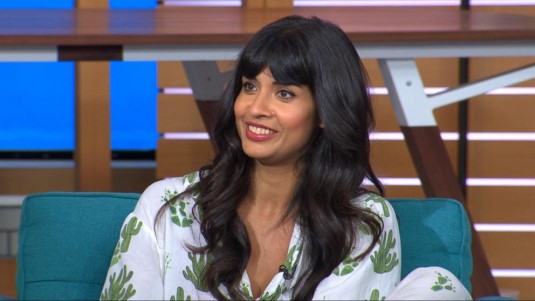
Jameela Jamil: A Defence

No one is born a socialist, we are all made. A banal observation as such things go, but sometimes this is forgotten by self-defined socialists themselves. Twitter (where else?) has provided us with an occasion for remembering this truism. On Thursday evening, Marx briefly trended following the posting of this clip of Jameela Jamil in conversation with Chelsea Handler and Amy Schumer. She said,
However much we hate capitalism, however we may acknowledge the evils of capitalism exist, currently money is freedom for women. And I know this is dirty and wrong and an unsocialist and unmarxist thing to say, but being able to know that if I have an emergency and I don't have to rely on a man, and I can make my own decisions and I as a businesswoman can hire other women and people of colour and people from other backgrounds that don't get hired for jobs, gives me freedom, ultimately.
A distillation of neoliberal feminism? She later clarified in a series of tweets that she doesn't make money for her company but rather funds it as an institution to platform activists, argues that lack of money was why the women who brought her up were trapped in a cycle of abuse, and says she's not au fait with the ins and outs of anti-capitalist etiquette. This hasn't prevented her from being criticised as not caring about women in the developing world, of bloating her bank account from the surplus value produced by others, as well as the girlboss jibes and all the rest of it.

Comrades need to decelerate and reflect about positionality and movement. The first words of her Twitter bio is "feminist-in-progress", openly acknowledging she's on a learning curve - just as we all are. What matters most in the clip is not an incorrect formulation that muddies the points Jameela was trying to make, but the trajectory she is on. If she had started out as a class conscious partisan of Marxism at its most nuanced and revolutionary, then this would be a cause for concern. But this is obviously not the case. Informed by her experience as a young, racialised woman who has become Hollywood successful and subsequently used her prominence to push causes close to her heart, including mental health advocacy and standing up against transphobia, the direction of travel is obviously clear. When someone's line of flight is into the left and poised to move deeper within it, are matters helped by trotting out the revolutionary purity tests? Is this how comrades greet new people casually interested in the labour movement and our kind of politics, but come with the baggage they bring from the outside?

One of the biggest threats to the vitality of the left comes from within the movement itself: the tendency to close up and treat the location of 'leftist' not as a strategic location but an identity in itself. And this is a property of the species of alienation that is common under the prevailing phase of capitalism. It's the sort of pathology that fetishises hardship and struggle as markers of authenticity, and/or a familiarity with the history of class struggle and capital T Theory as markers of personal, revolutionary excellence. And rather than working as something fundamentally open to connecting with others, building solidarity and forging a common socialist project, for too many "leftism" is the basis of animosity, individual recrimination, and demobilisation.

Do leftists have an individual responsibility to recognise the consequences of alienation and try and work against it? Yes, but there is a collective responsibility, of ensuring the popular culture of resistance we're trying to build is a solidaristic one too. Something that is critical not gullible, but doesn't attack people, like Jameela, coming into the left for not being the finished article at the outset.

Tuesday, 9 March 2021

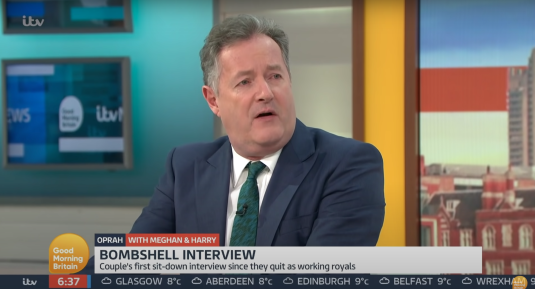
Sacking Piers Morgan


It was one rant too many. Having vented his Meghan obsession following that interview, professional arsehole Piers Morgan finally got his comeuppance. Criticised on air by Good Morning Britain's weatherman, Alex Beresford, the straw that broke the braying donkey's back was the entirely correct observation that Morgan's antipathy to the Sussexes was thanks to Meghan breaking off their acquaintance. He couldn't handle the detonation of a truth bomb of this size and, in the best tradition of egotistical manbabies, he stormed off the set. See for yourself.

And now he's gone. According to the write up from ITV, Morgan has merely "left his role as presenter." Were 41,000 complaints and an Ofcom investigation too much even for the GMB bosses? Or was his sulking, skulking escapade something of a fatal wounding, a big mouth who was shut up by a bit-part player in the GMB line up? Not a good place to come back from when your shtick is an obnoxious line in hard questionning. This wasn't a triumph of decency, as if the executives have ever cared about that, but putting a wounded animal out of his misery and avoiding his contaminating the GMB brand beyond recuperation.

Where now for Morgan? I'm sure not many people care, but he'll find something. A berth at the Mail or Express maybe, a new national platform to cry about his cancellation. A path well-trodden by other whingeing right wingers complaining about their marginalisation in the pages of mass circulation titles. Social media has speculated about a slot on GB News, the great white hope of the Tory culture wars. It depends if it has pockets deep enough, and the station is capacious enough for a simultaneous accommodation of his and Andrew Neil's egos.

Morgan's obsession with Meghan is a high profile example of a depressing commonplace. Here is a comprehensive trove of obsessive Morgan tweets about her. Simply put, here was a man who couldn't handle how the object of his preoccupation rejected him and moved on with her life. Compounding this psychic wounding was the dramatic upending of their positions in the celebrity firmament. According to this syndicated Mail piece, by his own account he was flattered by their initial contact and clearly cast himself as a gatekeeper (or sugardaddy) willing and able to leaver his superior standing in the celebrity firmament to help her career along. For what in return we can only speculate. And then she met Harry, leapfrogging him in the rankings and leaving Morgan nursing his bruised entitlement.

Where have we encountered this before? Oh yes, in the comings and goings of everyday life. All those uncounted occasions of men treating women like property, of assuming an entitlement to women's time and attention. And if women dare brush them off, ignore them, or leave them, then woe betide the consequences. How many women are stalked and harrassed by former partners? How many women attract unwanted and uninvited attention from so-called admirers, or just men wanting to impose themselves on their lives in some way? Millions. And that's in this country alone. Morgan simply used his position to try and impose himself on Meghan, firstly with creepy flattery and overfamiliarity, and latterly deployed his considerable national platform to subject her to unending abuse and character assassination. If the press wasn't simply a plaything of moneyed interests, then perhaps he'd be the one receiving condemnation for his shitty and entirely willful behaviour. He'd have to account for his actions. Not the woman who spurned his unasked for admiration and had the nerve to couple up with someone way above his exalted station.

But there is a positive here. While the reasons for Morgan's departure are somewhat murky, it is being perceived as a blow struck against the snarky, obsessive and, yes, racist coverage that is the British media's stock-in-trade. And it's part of a pattern pointing to a slow but certain marginalisation, an uneven glacially-paced cancellation of right wingers from television media for whom boorishness and Morgan-style ranting is their bread and butter. Who follows Jeremy Clarkson any more? What happened to David Starkey? Won't someone give Laurence Fox a break? Indeed, the formation of GB News is a direct response to this slippage and, with any luck, will be a ghetto for the freakish and backward, a place of no more consequence to politics than Parler is to the global social media landscape. For that reason, it is okay to chalk up today as a good day.

Image Credit

Monday, 8 March 2021

An Inconvenient Rebellion

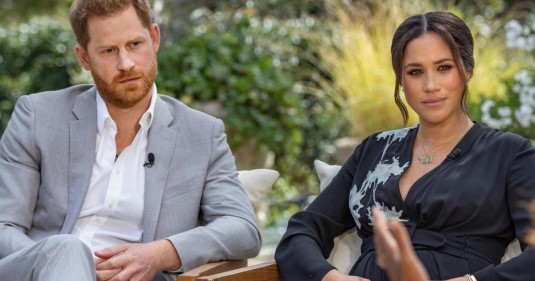
If you're looking for the hottest of takes about that interview, Ash Sarkar has more than delivered. On the comparisons between Harry/Meghan and Diana, on fleeing The Firm and finding a replacement, and the contrasting characters of the oligarchies in the UK and the United States you'll seldom find a better piece. Marxists don't normally do the Royals, and so it's a refreshing alternative to the lickspittle content, the fawning over the Queen, and the faux outrage from Piers Morgan and his ilk.

What the Oprah Winfrey interview has shown is how nothing has fundamentally changed since Diana's day. In happier times having William, Kate, and Harry roving around and continuing her patrician good works was excellent PR for the Royals. A youthful rebranding in which the young royals spoke (semi-) candidly about mental health, and made soft noises about climate change and racial prejudice was just the tonic. An update of a venerable institution for the 21st century. But Meghan and Harry's revelations about the bullying, the silencing, the lack of support, the policing of their movements by palace flunkies and, of course, the claim a senior royal made tut-tutting noises about their son's skin colour goes to show the royal makeover was woke wash. Under the hood thrummed the same old racism and ruthless regard for nothing but the continuance of the institution in the reverent style it had grown accustomed.

On the rare occasions this place has pronounced on royal affairs, we've visited the successful rebrand and, latterly, a certain indifference concerning their comings and goings. Indeed, to understand the popular perceptions of the royals and particularly the antipathy Harry and Meghan attract is partly located in their being royals of second rank. The institution as a whole, of course, is venerated because its eternal character offers a point of fixity in a vastly changed world, undoubtedly helped by the very long reign and very long life of the Queen herself. She did her bit during the war, oversaw the end of empire, post-war "socialism", the crises of the 70s, the dog-eat-dog of the 80s, and the irreverance of the 90s. Her time has seen off all challenges, from infidelity, divorce, untimely deaths, to fallings outs and the persistent stench of sexual abuse. There she is, stoically cutting ribbons and clutching her handbag. The nation's repository of good, old fashioned British values: duty, persistence, honour, sacrifice. The reason for her popularity, particularly among older people, is because they believe she instantiates all that is best about them.

How about the others? Charles's life in the public eye has foolishly courted controversy, not least over his opinions on architecture and, if you remember them, memos to ministers. Yet, despite not sharing Mummy's popularity he retains her sense of duty. Something William has also embraced and reinvented, and so the first and second in line to the throne command a certain respect. However, outside of the core spine of the royals the rest of the family are viewed differently. Margaret was seen as an old soak of little consequence. Anne a dutiful and workmanlike second rank royal who earns her crust. Andrew, well, and Edward, a soft-hearted luvvie not cut out for a martial life in the military or for much else. Harry for his part courted outrage as a young man as the press pursued his partiality to wine, women, and song, let off when he tagged along with his brother and sister-in-law on high profile public engagements and did his bit for former servicemen and women, most notably with the Invictus Games. But then Hollywood came into his life in the shape of Meghan Markle, a mixed race woman with a previous life and an unscrupulous father happy to grift by association. As a commoner, an American, and a woman of colour, she was received by our repugnant press as a grasper and a gold digger, and therefore another mouth at the taxpayers' trough. As a second order royal with no line of succession to the throne beyond a series of unlikely accidents, this undoubtedly emboldened the press to harrass and treat them like any other celebrity. And, it seems, The Firm were happy with this arrangement. If Harry and Meghan are tabloid fodder, the core of the royalty are left alone - so no deep dive stories about William's infidelity to queer the pitch, or scrutiny of Charles's idiot opinions, or damage-by-association courtesy of Andrew's associations with Jeffrey Epstein.

What The Firm didn't plan for was Harry and Meghan's rebellion. As royals, they were economically dependent on carrying on as royals. And so when they announced their "retirement" as royals the palace moved with its customary ruthlessness to expunge them. No support, no allowance, no nothing. However, as Ash Sarkar rightly argues, they had options and could leverage their connections for a new life in America where British media scrutiny is less intense. as far as the core of mass royalism is concerned, running off and dishing the dirt just confirms what the press have said about them all along: they were unworthy royals. They weren't prepared to do the honourable thing and stick by their duty. They were flaky and wanted an easy life, just like how many older royalists view the young in general. The racism, the inhuman treatment, the claims of suicidal thoughts and mental health problems - convenient lies to justify their selfishness and lack of fortitude. Their departure nevertheless leaves The Firm with a problem as far as media management goes. Apart from periodic stories about the ex-royal couple, will the carnivorous press respect the first order pillar of royalty as we enter into the period we might euphemistically refer to as the "handover"? Given Charles's comparative lack of standing, re-establishing the Queen's hard won reverence was always going to be difficult, and becomes much harder if his peccadilloes are once again fodder for content-hungry editors. This, ultimately, is the significance of the estrangement of Harry and Meghan: the royals now have to do without their shit catchers.

It is tempting to treat the royals as an unexciting, glitzy soap opera. But we must remember The Firm are a core institution of the British state. While not meritorious, the family are emblematic of their being something special and/or other worldly of those constituting the British ruling class. An ancient institution, it is also the repository of the essential, timeless quality of the nation, and constitutionally is the guarantor against democracy if it gets, well, too democratic. If the Harry and Meghan saga makes its position harder to manage and altogether more vulnerable, then the interviews and its fallout is all to the good.

Image Credit

Tuesday, 2 February 2021

The Uses of Captain Tom

Why Captain Tom Moore became the face of Britain in the age of Covid says a lot. I'm reminded of what old Plekhanov wrote about the role of personality in history. Figures of historic import rise from the multitude because they cohere and personify the blur of social forces that make them. Ordinarily, this fate is reserved for political figures and we've had reason to write on Jeremy Corbyn in this regard as well as other, um, well known personalities. But Captain Tom? Not a politician by any stretch, but someone whose role has proven indespensible for managing the politics of this crisis.

Capt Tom's celebrity was an accident. His journey into the nation's hearts began with the sponsored walk for NHS Together. One hundred strolls back and forth in his (massive) garden before his 100th birthday to raise them a grand. Desperate for some good news stories, BBC Breakfast got wind and featured him regularly on the show throughout April. This captured the public imagination and the donations flowed in. Nearly £40m poured into the coffers for supporting NHS workers, so not a bad job by any means. Then came the inevitable charity single, which went to number one, a parade of visiting celebrities, and a heap of honours. These included a Pride of Britain award (previous winners: the inventors of Viagra, JK Rowling, and the entirety of the RAF), a gold Blue Peter badge, two honorary doctorates, the Freedom of the City of London and, inevitably, a knighthood. No word for now on a state funeral and interment in Westminster Abbey.

What was it about Captain Tom? He embodied the best of British. Here was one of the few surviving combat veterans of World War II who returned to duty to pull the country through. He was the living link between two existential crises and acquitted himself with the unshowy and modest fortitude one might expect of a wartime officer and gentleman. He put himself out so NHS workers could carry on putting themselves out. It was as if Britannia put her arm around Tom as he waddled backwards and forwards with his frame, and striking out from her trident was the admonishment of younger generations of Britons for failing to live up to his example. Undoubtedly, some of the 1.5 million people who ponied up the cash did so with a sense shame.

Traipsing up and down the garden, Capt Tom was the craving for national unity made flesh, of never giving up and certainly never surrendering. As such he played his part in depoliticising the crisis. While the old boy was winning plaudits and raising cash, no one thought to ask - least of all Keir Starmer, the nominal leader of HM Opposition - why we have NHS charities in the first place. As the media cooed and flattered and splashed his face everywhere, the column inches and the broadcast minutes couldn't be found for Boris Johnson's corrupt funnelling of procurement contracts to Tory donors. And while politicians clapped their hands to Capt Tom's messages of positivity and hope, they buddied up to force children back to schools and people back to work. A certain level of community transmission was a-okay with them, and their negligence has helped along the Kent variant. Capt Tom's efforts made it rude and inappropriate to talk about politics. Now was not the time to carp and criticise, but to get stuck in and do our bit to beat the unseen nemesis.

Capt Tom came across as a lovely old granddad who wanted to help. Both mascot and national treasure, we cannot escape the uses to which his example was put. His example did help some people during the pandemic. Unbeknownst to himself, that list includes a government frantically wriggling out of any responsibility for the catastrophe that, in the end, claimed his life as well.

Image Credit

Sunday, 27 September 2020

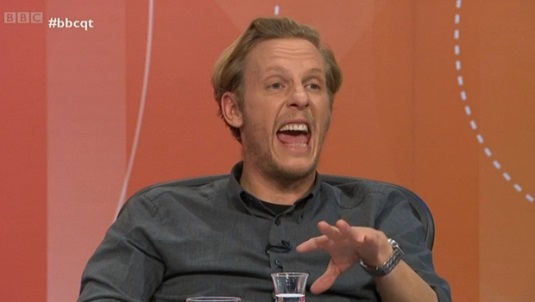
Laurence Fox's Fake New Party

I had a moan about repetitive politics the other day, and the cyclical grind continues. Though, on this occasion, we're talking about farce, not tragedy. Laurence Fox, famous for playing the sidekick of a sidekick and marrying Billie Piper has announced he's launching a political party. Under the working name of Reclaim, there's apparently a million quid of donations in the bank and has no purpose other than fighting the culture wars. To quote Fox, "Our politicians have lost touch with the people they represent and govern. Our public institutions now work to an agenda beyond their main purpose. Our modern UK was borne out of the inclusion of so many individual voices. We can reclaim a respectful nation where all are included and none are ashamed to have somewhere to call home." If past behaviour of racist and transphobic trolling is taken into consideration, readers can make their minds up about the sincerity of Fox's words.

Between 2018 and 2019, followers of political minutiae will remember it as a springtime for new centrist parties. The much-missed Change UK got founded and quickly floundered, but this was one product of a moment that birthed half a dozen petty centrist outfits. Forwarding to Autumn 2020 there is persistent talk among former Labour members about setting something up, and indeed we had George Galloway's Stalinoid Worker's Party of Britain founded early this year, and in the past fortnight Chris Williamson's Resistance Movement, and the Socialist Party announcement of the Trade Unionist and Socialist Coalition's return. We're also seeing similar moves around the edges on the right. The Brexit Party has drifted into abeyance while Nigel Farage decides what to do with the party's reputed £10m - the idea of rebranding the fan club as the Reform Party still tickles him, but there's no point if he can't hold remunerative public rallies. And so, other chancers are trying their hand. The London AM David Kurten has, for some reason, sat on the registration of his new party for two months and announced the arrival of the Heritage Party on Friday. Social conservatism and free markets are the boring fare on offer, and sounds no different to Reclaim.

The boom in petty party formation on the left is pretty straight forward. The election of Keir Starmer presents a clean break with Corbynism. It's totally understanable. But on the right? A Brexit-oriented Tory party is in power peddling right wing identity politics, and is always looking for new angles to cement its advantage. The political space is entirely squatted by Boris Johnson. This isn't like the Dave years that allowed UKIP to flourish to the Tories' right. How then to explain? In the first instance, politicians without parties tend not to last very long at any level of British politics. For someone like Kurten for whom there is no other vehicle and (probably) isn't about to be admitted into the Tories, it's a desperate roll of the die. But "Lozza" Fox?

To stand out in the crowded field of right wing punditry requires some originality - especially if one is a relative newcomer. Having made himself unemployable as an actor thanks to repeat public displays of prejudice and stupidity, Fox can - and does - position himself as a crybaby picked on by nasty liberal thesps who refuse to have anything to do with him. Therefore Fox is the perfect victim to feed the grievance culture of the right, and confirms all the suspicions about his profession throught repeated "truth-telling". But this can only get you so far. When this is the limit of your shtick, and one's musical efforts aren't pulling in the reddies, what is a privileged boy to do? Well, why not launch a political party? With a platform designed to tickle the fancy of Tory editorial offices and antagonising Fox's opponents on Twitter, it secures a new wave of attention and a justifiable excuse for inviting him on the politics programmes. And the (alleged) money bankrolling the project ensures some interest when parliamentary by-elections roll around. It's not actually going to do anything though. The prospects of electoral success range between nothing and nil, but this isn't the point. It's a vehicle for the person of Laurence Fox, a device for keeping the appearance fees and column offers flowing in. This is a non-party, a pure fake. Its substance is entirely grift.

Monday, 8 June 2020

Bourgeois Playgrounds

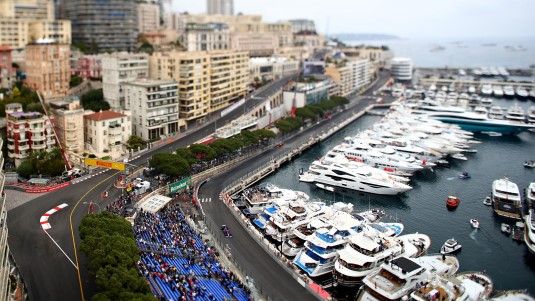
If you're a working class kid, a playground is a sprinkling of swings, a slide. a roundabout, bench, and climbing frame. If you're born into megabucks a playground is, well, something like Monaco. With the world convulsed by economic cataclysm, itself the unwelcome by-product of the health crisis, for the BBC to screen a documentary about the world's most opulent micro-state seems, well, not the most appropriate of timings. Still, there is a curiosity to be sated. What is a place like when the one per cent make up 30% of the people? Insufferable.

There's little need to go into the ins and outs of the baubles dangled before the viewers' eyes. Supercars with ostentatious paint jobs, petty competition between billionaire yacht owners for ever larger vessels, palatial rooms at the Hotel de Paris going for 15,000 Euros a night, and the zero income tax that, as the narrator put it, helps "protect the substantial family fortune." Then we have the exclusive parties, the invite-only gatherings up at the Royal palace, and the master of ceremonies himself, Prince Albert II of Monaco - the only absolutist monarch on history in possession of an American accent. It's the sociology matters, the glimpses of the principality's power relationships.

Albert affects a patrician if avuncular presence at odds with his and Princess Stephanie's hard-living reputations from the 80s and 90s, but his word is law. There is a no photography rule in Monaco, and professional photos or filming requires written permission - hence no paps, another bonus for harried celebrities considering residence. He also gets to decide who can become a Monegasque citizen, of which there are 9,000. The programme makes much of the elaborate hoops one has to jump through to tick the boxes, but it's very clear the (unspecified) rules are a complete sham - Albert decides all applications, and if your face doesn't fit you're not coming in. Citizenship does confer advantages though. Even a state given over to the indolence of the leisure class needs workers, and a relatively generous system of subsidies are available to citizens. As one air traffic controller observes, his citizenship means he pays 700 Euros per month for his apartment whose market rate would ordinarily be €4,000/month.

Monaco however is entirely dependent on the circuits of the globe-trotting rich, as well as the sufferance of the French state. Revenues are funded by the 20% VAT the state levies on everything, which makes spectacles like the Monaco Grand Prix essential money spinners. But there is a problem: with the rise of the likes of Dubai as another luxurious hold out for the rich, how might the principality stay competitive and keep the cash flowing? Princess Camilla, consort of the Duke of Castro and one of the claimants to the long abolished and disputed throne of the Two Sicilies is determined to "preserve tradition" and come up with new ways of making Monaco relevant. Her wheeze? Influencer awards. For a micro state whose social basis rests on discretion, inserting Monaco into the overexposure of the attention economy can bring in the next generation of money bags. By getting the images of the awards and the lavish hospitality out to tens of millions of followers, Monaco hits the aspirational imaginary and the whole grift can carry on indefinitely.

Monaco's opulence is grotesque and, not at all coincidentally, showcases the poverty of bourgeois success. The dream of capital is accumulation without workers nor the responsibility for their maintenance. The dream of power is control without accountability, and therefore responsibility. Monaco marries the libertarianism of the super wealthy with the arbitrariness of absolutism, and they are shown to be the conditions for one another. The other two key tax haven states, Dubai and Singapore, have near identical set ups - the only real difference being the degree to which they ratchet up the authoritarianism. And this, ultimately, underlines the pointlessness of wealth. Fortune liberates one from economic necessity, but the freedom excessive money buys is luxury behind closed doors, a berth in a rarefied society of artifice and superficiality. When you consider all the crap the ruling class inflicts and the destruction of human beings their system affects - just so they can recline in the bounded universe of gilded gated communities - doesn't it make you feel sick?

Sunday, 16 February 2020

Caroline Flack and Social Murder

To read about the circumstances surrounding the sad passing of Love Island's Caroline Flack is to learn it was entirely avoidable. Flack was dropped by ITV from the show and its spin off, After Sun once the story emerged that she had been involved in and charged with assaulting her partner. She was banned from any contact with him prior to the trial next month, despite his opposition to the CPS decision to proceed. By any token, Flack was a troubled woman who needed help and support. But instead, she suffered the usual gossip, character assassination, and vilification from the gutter snipes of the tabloid sewer. Take The Sun as a particularly egregious example. As a number of people on Twitter have pointed out, Rupert's minions have spent their Saturday afternoons busily deleting what they've written about her. These deletions include a story from Friday reporting how a "jokey" Caroline Flack-themed Valentine's card had gone on sale. Imagine if you were her, getting trolled day after day by the country's best selling newspaper and one of its biggest celebrity news sites. It wouldn't do your mental health much good either.

And then you have the disgusting hypocrisy of self-identified friends. Consider Dan Wootton, who's spent his afternoon tweeting out his horror at what has happened to Flack. Quick to blame ITV for their shabby treatment of her, quick to tweet about how she had lost everything, and quick to retweet support from Boy George blaming this on "others" who enjoy their pound of flesh, and the Brexit Party's David Bull who's pinning it on social media. Wootton has protested his "complete loyalty" to Flack and talked about their "regular contact", but this isn't any old Sun hack. He's a columnist and the paper's executive editor. Or to put it another way, this vile shit of a human being was making her troubles worse by giving stories the go ahead that only could only have contributed to her misery. And if you want the measure of the man, just scroll down his Twitter feed. Literally the last thing he put out before tweeting a broken heart emoji was something by Julia Hartley-Brewer mocking Jameela Jamil's experience of mental illness.

I expect this won't trouble his conscience too much. He comes from a press culture that saw nothing wrong with hacking the phone of a murdered teenager, after all. But creatures like Wootton and the content he decides on preceded him, and will no doubt post-date him now his buddies are secure in Number 10. Moving into the impersonal, as we noted on the occasion Peaches Geldof passed away prematurely, celebrity is individually and collectively experienced. The media creates a simulated collapse of social distance where it is possible to have a relationship of sorts with a pantheon of celebrities. Complete strangers appear close and distant simultaneously, and with the coming of social media this effect is both amplified and shortened further. Not only do celebrities now enjoy a means of communicating directly with fans, they are also forced to endure "feedback" - some of it adulatory, a lot of it abusive. And especially so if celebrities are women, are of colour, are disabled, or are lesbians or gay men. And none of this takes place in a vacuum. You don't need tabloid press coverage to be an arsehole online, but when stories are dredged up about foibles and failings, relationships and affairs, selfishness and revenge porn at the behest of these papers, and then get the first dabs on the stories, decide the edit and the consistency with which they are reported on/revisited, and so a monster is fed. Their coverage sets the tone and determines the contours of the feedback a celebrity is likely to receive.

Writing in the 1840s, Fred Engels noted how substandard housing, poor food and sanitation, overcrowded districts, and dangerous working conditions contributed to the premature deaths of thousands. The builder responsible for the housing, the authorities responsible for the built environment, the shopkeepers and bakers responsible for adulterated food and worse, and the employers whose wages barely covered the necessaries while forcing people to work in the shadow of permanent injury or death, these were not accidents of fate. It was in their gift to do something about an infrastructure that conspired to send workers to early graves, and yet they didn't. As Engels puts it, if these authorities and business people "knows that these thousands of victims must perish, and yet permits these conditions to remain, its deed is murder just as surely as the deed of the single individual ...".

This is the situation we're in when it comes to our mental health crisis. Leaving aside the wider issues of the relationship between it and social media, in the narrow case of celebrity, the opinion formers - the gossip columnists, paps, and editors who shape showbiz coverage - know they are constantly heaping on the stress and misery, making public what should stay private, and helping drive people to drink, drugs, and despair. And, on occasion, someone takes their life. Like Caroline Flack and two previous Love Island contestants, Sophie Gradon and Mike Thalassitis. When this happens the media sometimes shakes off its convenient short-sightedness and accepts culpability - as we saw following the axing of Jeremy Kyle. But mostly it's brushed away with the sort of touching tribute they would never have printed while the person in question was still alive. Celebrity coverage therefore is structurally harmful, and yet it carries on as it does, grinding out the money and conferring profile to commentators and editors who determine its comings and goings. When tragedy strikes repeatedly, we can only conclude social murder is still very much with us - updated and thriving in a set of media practices utterly toxic to the mental health of its subjects. And like their 19th century forebears, those in charge don't give a damn about the people they destroy.

Image Credit

Saturday, 13 April 2019

Glamorama by Bret Easton Ellis

Broadsheet litcrits consider Glamorama among the blackest of Bret Easton Ellis's sheep. It's over long, it's repetitive, it goes nowhere, it's needlessly graphic, and dwells too hard on the superficiality of consumer culture like so many novels have done. For a novel heavily and self-consciously laden with mid-late 90s fashionistas, getting panned as unoriginal and derivative upon publication is pain indeed. Yet this is to miss a trick. Glamorama is a novel of its time, like all novels are, and was absolutely tethered to the contemporary zeitgeist.

The 'critique of consumerism' argument is as lazy and a superficial a take as the culture Ellis sends up. What species of criticism is this? Of the shopping sucks killjoy-leftydom variety? Or a wearisome conservative worry about materialism (in the conventional, bourgeois sense) displacing real meaning and connection? This is why, read in their context, Ellis's novels are so compelling. They eschew the earnest and the trite, and instead inhabit the spectacle of trinkets, branding and celebrity. Less a panorama of all that glitters and more a, ahem, glamorama. Ellis's (often clueless) characters inhabit a dimension of artifice, of lives consumed by the pursuit of fripperies, the casual encounter, and the endlessly (tediously) novel. In American Psycho yuppie anti-hero Patrick Bateman embodies the psychopathology of consumerist narcissism, the laughs mostly located in his disinterested connoisseurship of stuff. Thanks to Christian Bale's portrayal of Bateman, in one of the best remembered scenes he is anything but disinterested when his business card is trumped in the style and cost stakes by one of his fellow executives. But the novel is full of observations on brands and style, of women's body types, and sharp, sensitive career overviews of Phil Collins, Whitney Houston, and Huey Lewis and the News.

Glamorama's Victor Ward (AKA Victor Johnson, a bit-parter in 1987's The Rules of Attraction) is not dissimilar to Bateman. Whereas he has a cunning, semi-detached-but-appreciative relationship to the artifice surrounding him, Ward is totally immersed in this universe with barely a hint of self-understanding. Whereas it was all about the brands for Bateman, for Ward, as an upcoming supermodel, he goes where the celebrities go. The book opens with Ward planning a big club opening, and on the guest list is virtually every hot New York glam scene celeb from the mid 90s - pop and rock , fashion and film, the novel begins as it means to go on. As Ward takes a trip later on to Paris and London celebs keep popping up, including then-in Britpop bands that never really troubled American markets. And over to Paris an impressive roster of French celebs crop up. In fact, apart from a stint on the QE2 mid-novel, celebrities are everywhere Ward goes. Even later on when he becomes embroiled in terror plots to blow up Parisian hotels and cafes, we usually find celebs somewhere picking their ways through the carnage and rubble. Though, it has to be noted, no celebrities are harmed during the course of the narrative.

Like American Psycho, the tone grows darker as Glamorama wears on. Here, inconsequential razzmatazz is traded in for relationship breakdown and international terrorism. Ward is pressed into a cell of fellow supermodels and, against his better judgement, becomes complicit in the execution of a number of gratuitously described atrocities, and a party to a handful of murders. Why supermodels? Because celebrity gives them the best cover. As we now know in real life thanks to the exposure of several sexual predators and paedophiles on both sides of the Atlantic, hiding in plain sight is the best way of avoiding suspicion (interestingly, a certain Harvey Weinstein never makes Ellis's tally of the silverscreen notables who flit hither and thither across Glamorama's pages). Ward eventually tries to extricate himself from his predicament, but is hampered by the fact a doppelgänger has assumed his place back home in New York and is making a good fist of turning his scandal-addled life around.

Like Patrick Bateman, Victor Ward is an unreliable narrator. Bateman descends into madness and we're led to question whether he's a serial killer at all. Though he does have a cameo in Glamorama, and Ward notes weird stains on Bateman's collar. Ward undergoes a similar breakdown which invites a barrel load of side eye questioning. About a third of the way through a camera crew appears from nowhere as if they've always been in the background. As the intrigue, double-dealing and questions of motive are raised, so other camera crews appear filming other leading characters, talking over film scripts, discussing what's about to happen, and Ward and other characters getting freaked out and reacting when things start happening that aren't in any of the scripts. There's also questions about the terror attacks. The first, in London, is actually part of a film production with dummies, papier-mâché body parts and all the rest of it. After this, they are for real, or at least present themselves as such. People are vaporised, crushed by falling masonry, blown through windows, burned, dismembered, every kind of death is detailed and afflicted on passers-by. The purpose, however, is absent. Is it done for the benefit of one of the film crews, who are always on scene? The whys and wherefores, the cause is always up in the air. Is it to replace Ward with someone less embarrassing as his father, a US senator, contemplates a run at the White House? Do they actually happen at all? In the end, it doesn't matter. A downward spiral of despair and, when the cameras stop rolling, rejection and discard alls upon Ward as everything is lost. His character literally breaks apart with a flash back, a visit to the reformed character Ward's double is carrying off, and a moody contemplation of his future without the life he used to lead. Were the bombings, the murders, the fights, the doppelgänger, and the camera crews eruptions of delusion into a life without a real sense of self, effortlessly passing through a celebrity system lacking any centre apart from the craving of attention? It sounds like Ward's rocky road and miserably uncertain future is a narcissistic projection of someone who is noticed and addicted to getting noticed, even if that means leaving a bloody trail of bodies and atrocities.

And yes, the violence. As per American Psycho, when it happens it is gratuitous. Detailed descriptions of the torture and murder of people. Detailed descriptions of people blown apart. Detailed descriptions of the last moments of passengers on a jet blown apart in mid-air. Detailed and pornographic descriptions of sex, oral sex, and MMF sex. Detailed descriptions of interiors, fashions, and the ever-present celebrity cameos. Gratuity and excess is the hallmark of all Ellis's novels - something his mainstream critics don't really pick up. It's ceaseless and relentless, the repetition mimicking our over-stimulating consumer cultures and attention economies. Ellis seizes the pile-on and pushing them to absurd degrees. His characters are vain-but-empty vessels because they are carriers of these logics, a parodic collapse of use and exchange value whose lives are nothing but the means by which the accumulation of a particularly stunted symbolic and social capital is expressed. This is a world of objects, and Ward (like Bateman) is an object of objects.

If this sounds a bit Baudrillardian, it is - if the number of learned journal articles using Baudrillard as a way into Ellis's work are anything to go by. By pushing these logics to their ends, Glamorama, like American Psycho, are fruits not of a critical but of a fatal strategy. Agency is surrendered to the (commodity) flows of objects, the characters are buffeted along, and what we are left with is a novel of comic absurdity. It satirises consumerism through its affirmation, of taking vicarious pleasure from rubbing shoulders with luxury brands and exclusive people, not its denial. Therefore to be appreciated, the reader needs to be carried along the same fatal trajectories as Ellis's characters. Like life, the destination is always uncertain and is probably a let down, the journey dark, dangerous and repetitive, but there are always a few laughs and fleeting enjoyments to be had along the way.

Thursday, 21 June 2018

On Working Class Aspiration

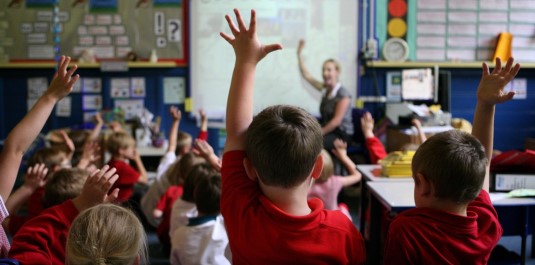
"Working class communities lack aspiration!", so says Amanda Spielman, the Chief Inspector of schools for England. Arguing that working class communities generally have borne the brunt of the economic crisis, she also notes schools that serve their children face additional challenges around teacher recruitment and retention, fewer academy sponsors and fewer networks of support that schools in more affluent areas can typically tap into. Class location and geographic location makes life harder for working class kids, which dampens aspiration and, by extension, fosters fatalism. Her predecessor, Michael Wilshaw, contrasted this with children from immigrant backgrounds, suggesting they value education more and have more supportive home environments.

There are a few interrelated issues worth teasing out here. One is a legacy issue of working class communities, one relates to changes in working class culture, and the other is about the character of aspirations and how to achieve them. Taking legacies first, there are many parts of the country, including jolly old Stoke-on-Trent, where a suspicion of formal education is deep rooted. For generations, young women and men coming of age in Stoke didn't need qualifications to get on. With local pot banks, primary industry and factory work in plentiful supply since the beginning of the industrial revolution, there have always been jobs. The cliche of leaving school on the Friday and starting work on the Monday persist because it was true, and this was the experience of millions of school leavers. Education, meanwhile, was the annoying bit you had to go through before you could start earning. Indeed, I can remember a twinge of envy when one of the lads at my school left early for a job in the local chippy. No homework, no exams, and money in his pocket - what's not to like? Formal education was superfluous to the lives and hopes of millions, and it still is. Remember, NEETs don't officially exist since the government decreed all school leavers should be in work, further education or training. School gate to factory gate has gone, but there are plenty of low paid "training" places available and from there a career of overly exploitative and precarious work awaits. Strictly speaking, you can get by on the job market without qualifications but the standard of living is low and the incomes that allowed workers of the near past to get on the property ladder are just not available.

The second issue has to do with the collapse of working class culture generally. Despite the anti-intellectualist traditions of the British national character, structurally reproduced in the Labour Party and labour movement, this existed in tension with a strand of working class intellectualism. The Penguins and, to a lesser extent, Gollancz books of the interwar and post-war years found a working class audience receptive to debates in science, history, sociology, the arts and more. Later on, the crises of the 1970s and 80s still found millions paying close attention to current affairs and informing themselves about it. The culture of self-education, at least in its traditional working class forms, were finally buried as Thatcher's bulldozers forcibly pushed the labour movement and the idea of a working class politics to the fringes. Oddly, the clobbering working class education received coincided with the fetishising of formal education in schools and of training at work as the key to "social mobility". True, there is a new kind of organic, spontaneous self-improvement that is gathering steam, but is independent from and carries little of the working class self-education movements of the past. The old collective intellectual property of class is gone, and the new one is at an early period of its formation.

Third concerns the issue of aspiration, or rather the idea working class kids and their families lack it. There are, of course, significant definitional issues around aspiration and all too often politicians define it in the terms they find congenial. Typically in terms of casting off one's working class background and becoming some sort of professional or successful business person is pretty standard. Putting those debates to one side, if we define aspiration conventionally as a nice house (or, given the times we live in, just a house), ideal/good job, car, life partner, debt freedom, and an interesting and fulfilling life, most kids want and aspire to these sorts of things. As Heather Mendick and her colleagues outline in their Celebrity, Aspiration and Contemporary Youth, wanting better things, having an idea about the sort of life they would like to lead has never been a problem. The issue is the avenues have closed down for the realisation of aspirations. If you are a working class kid who wants to make music, only more affluent schools retain fully funded music departments, and so there is little opportunity at your high school or academy. If you are a working class kid thinking about a sports career, your school might not have the facilities or coaching support that can help you along your way. Arts, creative subjects, programming and IT, and underfunding of careers' support in many schools, on top of unstable school environments and a merry-go-round of teaching staff means a great deal of talent goes unrealised. The fascination many youngsters apparently have for celebrity culture serves, in this instance, as a narrative and ideological resource, as a way of framing their own issues and identities in the context of an educational culture that has more or less discarded them. An engagement with celebrity culture is a symptom of frustrated aspirations, not its cause. The problem is inequality.

New Labour half-understood this. Indeed, so do the Tories. Both affirm equality of opportunity and, theoretically at least, accept that people on the sharp end of class inequalities require extra resources to level the playing field and compete with the better off. The difference between the two is Labour under Blair and Brown did pony up the cash, while Dave and May talk the talk while defunding the support. Restoring this is a start, but can only lead to frustrated hopes unless the purpose of education and work is fundamentally changed. Frustrated aspirations and fatalism isn't a working class problem, it's a capitalism problem.

Wednesday, 6 June 2018

Is it Okay to Like Morrissey?

Not long ago, Morrissey said he couldn't listen to Smiths songs any more. Following his endorsement of Anne Marie Waters, For Britain, and defence of Tommy Robinson, a lot of fans will be thinking the same. And this is not the first time Morrissey has expressed racist sentiments either.

Never a massive fan, but as a 90s indie kid I paid my respects. The Smiths put out great songs in their day and after they split up, Morrissey went through a purple patch (especially Every Day Is Like Sunday) which, in my opinion, he didn't reach again until 2004's You Are The Quarry. His material is as tuneful as it is well studied, coruscating, and appealing. How then can someone sensitive to nuance, someone who is an astute observer of the human condition regurgitate the kind of bobbins indistinguishable from a Daily Mail editorial? That one is easy. Different disciplines have different areas of competence. Match AC Grayling's noted oeuvre on moral philosophy with the cretinism of his Brexit pronouncements. JK Rowling and her Harry Potter preaching of tolerance versus her dreary transphobia. Accomplishments in one sphere don't automatically cross over into another, even if it is nearby. You'd think people like Grayling, Rowling and Morrissey would be better when it comes to politics because, after all, we are talking about human beings and relationships. Unfortunately, it doesn't work like that. Does it then follow that the behaviour of an artist or a scholar can sully and invalidate their work?

The answer can never be clear cut. Consider a recent case. In the realm of green political theory and radical citizenship you will come across the valuable contributions of Andrew Dobson, ex of Keele University. But because of the nature of his crime, he is understandably persona non grata. Similarly, Simon Jarvis and his contributions to 21st century poetry were trainwrecked by a child sex abuse imagery conviction. Both men were noted and important, and have inspired and encouraged the work of many others. Then again, you could equally say the same for Gary Glitter.

Art and theory runs away from its author. Just look at the monstrous uses to which Marx and Nietzsche have been put. Art and theory offer ways of looking, listening, learning, and have lives of their own. As social actors, we know how what we say and do can be misconstrued, and will in turn reflect on us well and poorly independent of our intentions and subsequent actions. We are less authors and more co-authors of our reputations. But as a rule, throughout our lives this tends to not have much of an impact beyond a small number of social circles local to is. When you produce something - a book, a piece of music, clothing - there is a possibility of it circulating beyond your immediate social environs. Already through the creative process it is imbued with a multiplicity of influences, and out there in the wider world, as it is (if it is) caught by other minds there is a possibility of it becoming all kinds of things: a diagnosis, an inspiration, an influence, a pleasure, a pastime. It is what Deleuze and Guattari refer to as 'becoming other' as it is conjoined with other ideas, other perceptions. Everything tossed into the social commons escapes intentionality. It can make creators notable people, but in these instances become monstrous and turn against their creators. The logic of the ideas Marx and Engels developed condemns the common or garden sexism and racism of their letters. The life affirming philosophy of Nietzsche rebels against his unashamed elitism and scorn for the herd. The boy wizard critiques his creator, and Morrissey's lyricism cast him the sort of miserable and pathetic character he might otherwise have sung about.

Art and theory can make new connections away from their parent, combine, recombine, and become something else entirely. On one level, their work remains all the things they were before their foibles, mistakes, utterances, and crimes also assumed life, were amplified and chased down past productions with their contemporary taint. Except, we know they don't. They are transformed. Carrying on as a Morrissey fan, or citing Jarvis favourably invariably signals something about you, a being okay with or indifferent to crude racism because the tunes are good, or finding the concepts and verse dandy and the sex abuse stuff irrelevant. Work can escape, but it never entirely escapes, and its taint can become your taint, something reflective of your character. Such are the ways of moral economies. It is recognising the social cost of stubbornness in the face of the unacceptable.

Should work be allowed to escape the author? There is and can be no one answer, though the passage of time tends to rehabilitate artists and thinkers, despite what they became. Does anyone boycott Ezra Pound because he was fash? Martin Heidegger and Carl Schmitt because they were literal Nazis? Is Louis Althusser off-limits thanks to murdering Hélène Rytmann, his wife? You'd be hard-pressed to find them ignored thanks to moral opprobrium, though there are plenty of other reasons some pass over their works. In the case of Morrissey, it's really up to those who like his stuff. If you want to listen but without conferring him royalties, remember, this is the 21st century and we're in the age of infinite reproducibility. And if you want to carry on as if his behaviour doesn't matter, well, just be prepared to - rightfully - get tarred with the same brush.

Friday, 18 May 2018

The Royal Wedding and Indifference

It's nice that a young couple have met, fallen in love, and are due to formalise their commitment to one another. For them, their family and their friends it will (hopefully) be a wonderful day, something they'll live to fondly remember. And as it's wall-to-wall telly and press, you might have heard something about it. Ah yes, the royal wedding, the taxpayer funded jamboree of bowing and scraping we are officially celebrating this weekend. Yes, I'm sure it comes as no surprise to find that this wee corner of the internet finds the spectacle not just cringe-inducing, but thanks to Windsor Council's cleansing of the streets of the homeless, and the money thrown at it while we "can't afford" to safely clad tower blocks, the absurd pomp of Prince Harry and Meghan Markle's wedding will be as tawdry as it is tacky.

That's not how millions of people will see it. For a great many, Royal occasions offer something uncomplicated and pure. The monarch and her progeny did not seek their station in life, it was thrust upon them by accidents of birth. The institution embodies duty and service in which the Queen is a repository, an empty vessel if you will, into which hopes, meaning and narratives are poured. For those ill at ease with what Britain has become, the sheer longevity of the monarchy gives them something unchanging to hang on to. Less a tug of the forelock and more of a grip, this is ably assisted by the eternity of the Queen herself. But not just the Queen, the royal family has something for everyone. In the retired Prince Philip and, to a lesser extent, Charles, we find two fossils who embody the backward-looking anxieties of the nation. The Queen's consort with his hilarious racist quips, and the heir with his meddling in matters political - they're just telling it as it is, innit? Just like all the loudmouths out there, albeit in plummier, more refined tones. And with the younger Royals, we see modern Britain poking through. "Wills" and Kate are inoffensive and pleasant and considering their backgrounds, feudal-old money and nouveau riche, come across as surprisingly normal and relatable. Likewise, Harry has grown to occupy the same wholesome, do-gooding space after a shaky start (booze, partying, Third Reich cosplay). And with Meghan, we start to see the family's first rank resemble multicultural Britain - a woman who is divorced, is foreign, and horrifyingly for the Daily Mail brigade, mixed race.

No doubt things have changed for the Windsors, and for the better. Irony of ironies, the troublesome princess who did the institution a favour by dying in a Parisian tunnel 20-odd years ago went one step further. How Diana settled into her role as the once-future queen by being touchy-feely and hanging out with the slighted and blighted of the earth ended up providing the template for how to be the British sovereign for the 21st century - roles the Cambridges and Harry have avidly taken to, at least if you swallow everything broadcast and written about them. And so the institution appears stronger now than it has been for last 30 years.

Yet there might be something interesting a-stirring. And this is the widespread indifference, occasionally acknowledged by establishment outlets, to the wedding. How to explain? Yes, Harry isn't ever going to become King. Despite the big deal that is being made, in terms of Royal events this is distinctly second order. Matters aren't helped by the FA Cup Final, but also for the indifferent it is very easy to escape the hype around the wedding - easier than Wills 'n' Kate, the jubilees, the Queen Mother's funeral, and the suffocating, maudlin miasma that hung over Britain in the aftermath of Diana's demise.

Indifference is a latent menace in their heralded celebrity/PR strategy. The Royals have always been celebrities, have always got spoken about in the gossip columns, but unlike their parents the press have proven much more hands off with the princes. Harry's occasional misadventures were an irregular fixture, but neither of them sustained full scale character assassination as per other members of the family firm. The problem is how long can this carry on, especially if anyone in our couple of, well, power couples indulge an indiscretion or end up in a scrape. Ideally, for the institution's survival, they have to keep their noses super clean, especially when Charles inherits the throne and starts putting people's backs up. Diana-like beatification has to attend to the princes and their families in contrast to a monarch who, according to watchers, is set upon a larger political role. And why should we be surprised? He was born to rule, after all. The difficulty here for what comes after is if, under Charles, they take the inoffensive path and only make headlines for opening the Invictus Games, etc. Without gossip swirling about then, in the medium to long-term their standing could suffer from a lack of interest. I mean, just look at the tedium of the stories about Meghan's family, the will-he/won't-he speculation about whether Dad would give her away, and so on. Even the most avid royalist would find this mind dribbling banality insulting. Likewise, new royal babies or two, the first day of nursery and school are not the stuff by which a mass public warms to their future King. The young royals run the risk of popping up in the popular consciousness as shiny, expensive baubles and little else. On the one hand this might not matter, monarchic succession isn't democratic, but the institution needs popular support to continue, otherwise more people might start asking what's the point.

Put away your fantasies involving Madame Guillotine and storming Buckingham Palace. The danger for the British monarchy is its coming to an end with a shrug.

Thursday, 12 October 2017

Harvey Weinstein and "Sex Addiction"


As one sexual predator shuffles off to earn the disdain of history, so another fills his space in the celebrity firmament. The explosion of allegations around heavyweight film producer Harvey Weinstein are simultaneously not shocking and shocking. Popular culture is well used to the legend of the casting couch, but the excruciating details of the harassment and attacks - some exposed by The New Yorker - are appalling. Here we have the not-at-all surprising story of a powerful man using his wealth and film industry influence to abuse women, enforce a pall of silence about his disgusting behaviour and, where necessary, pay off survivors. The weight of testimony puts the truth of the allegations beyond all reasonable doubt, as does Weinstein's behaviour since the story broke. He denies his decades of abuse and yet bleats about deserving a second chance and how he needs help. In short, his incoherence damns him.

To try and salvage something of his ruined reputation, Weinstein is engaging in that classic of abuser behaviour: denial. He has reportedly flown to an exclusive but discreet rehabilitation centre for sufferers of sex addiction. This is the rationale getting peddled to the press by the few lackeys he has left and, of course, it's complete bollocks. Whether the condition exists or not is a matter for debate. I lean toward the sceptical, but we know addictive behaviours are commonplace and physical and psychological dependencies are capable of being formed around all sorts of things. Yet to treat Weinstein's claims his abuse results from a pathologically uncontrollable libido is like granting "affluenza" and Drapetomania (treating slaves' desires to be free as a mental illness) the legitimacy of medical conditions. Weinstein is in no sense a sufferer and a victim, he is the perpetrator of a long-running series of sexual assaults. He used power to trap and attack the bodies of others.

Understanding gender is impossible without appreciating how sexuality and power is fused together. Masculinity in its hegemonic forms are coded by the positioning of women, which ranges across a spectrum of inferiority from barely human objects to second class citizens. Being a man, performing as a man, having self-worth as a man is inseparable from a heterosexual imaginary shot through with normative assumptions and expectations about the relations between genders. As the dominant gender (still), so it is men's outlooks that are naturalised and unquestioned. It's their desires that are sacrosanct, their power to define and characterise women that is accepted as the truth of gender, and, as a consequence, their violence and abuse that is covered for, explained away and, in some cases, flattered and encouraged.

The poisonous, traditional hegemonic masculinities are probably in long-term decline, but they live on in every dick pic, every fist raised against a woman, every sexual assault. Every denial of sexist and sexual violence. Weinstein isn't ill, he is entirely typical of another spectrum, this time a continuum of behaviour of men who take standard masculinity to heart, and one that takes in the full variety of misogyny. He is entirely responsible for the crimes he's accused of and deserves everything coming to him, which is hardly fair restitution for the women who bear the psychological scars of his attacks. His sex addiction self-diagnosis is designed to blur and bury his abuse of power, a ruse to try and naturalise his appalling conduct. The problem then is more than the individual. The ultimate culprit is faceless and disparate to the point where it always has a face and is therefore known to every woman. The enemy is the web of patriarchal relations responsible for the gendered disparity of power, its perpetuation, and the stunted, entitled men it turns out. Struggling to drive out poisonous masculinities would certainly make a difference, but the only way to root out patriarchy and make sure future Weinsteins are headed off before they develop demands something more than a kinder, gentler masculinity. We need to work toward the abolition of gender as a meaningful social location.