Wednesday, 28 September 2022

Incompetence or Malevolence?

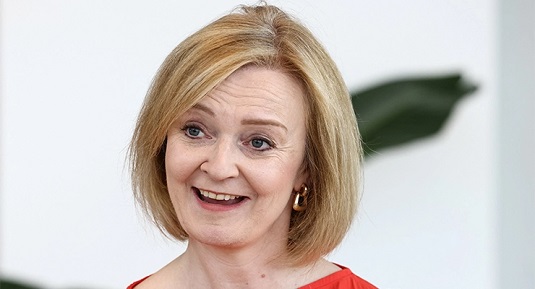
As Labour Party conference came to close with little controversy and positive coverage , the economy has been falling apart. On Monday the pound sank to all-time lows and key mortgage lenders said they were suspending their products. Late on Tuesday, notorious Bolshevists the International Monetary Fund criticised the Tories for reckless spending and turbocharging inequality. And today government bonds fell significantly in value. This forced the Bank of England to buy them up to stabilise their value, in the process bailing out pension funds and saving many from insolvency. Despite the pathetic claims made by Daniel Hannan and tax avoidance artist, Lord Ashcroft, Labour's plans to renationalise the trains and set up a publicly owned energy supply company didn't spook the markets: Liz Truss and Kwasi Kwarteng's naked Toryism has.

Capitalist economics aren't just "economics": they are power relations and cannot be divorced from the exploitation at their heart. Capital meets labour to produce something, and that something - the commodity - has to find a market and get sold on. This is the only way of converting the surplus labour expended in the process of production into surplus value and, after the necessary deductions, generating profit and further accumulating capital. Along with the discursive, disciplinary, and coercive means states employ to maintain the wage relation, they are also authors, regulators, and guarantors of the circuits of capital: the social settings of the selling and buying of commodities. What we like to call markets. In advanced capitalist societies, this gets increasingly elaborate as the web of regulation tries to capture the mounting complexity of markets, the development of which establishes patterns of commerce many times removed from the exchange of a physical product. Exploding abstract property forms like shares, debts and futures become "products" and are the bread and butter of global finance. They are the most volatile, unstable, and easy to scare markets, precisely because they are dependent on speculation and have an autonomy removed from the so-called real economy. But they have real world consequences. Crisis and disaster here can mean crisis and disaster for businesses as credit dries up, share values tank, dividends evaporates, debts are called in or, worse, go unserviced. And currencies slide, pushing up inflation. And because this process is the milieu of some capitals, they develop their own individual competitive and shared interests.

Ignorance of these basics of capitalist economics is what makes most economists and economic commentators superficial observers - capable of divining the direction of capital and the prospects of growth, but incapable of explaining it. Hence over the last few days we've seen people at a loss to explain the Chancellor's fiscal statement. And we have those who act as walking, talking press releases on behalf of the government. Crisis? What crisis? As pension funds risked insolvency and inflation was stoked further. They assume the Chancellor is a technocrat disinterestedly occupied by technocratic goals. 12 years of of division and disaster is yet to disabuse friendly journalists and economists of this notion.

As argued here previously, it's difficult to sustain the Tories are ignorant/they know not what they do line, which remains popular for some. This disaster for us is a benign environment for them, and by them I mean the networks of capitals especially close to the Truss government. Hedge funds and currency speculators have made their packets betting against the pound. Proof the Tories treat patriotism as a mugs' game. The volatility today has pushed down the value of UK assets - swathes of commercial and financial capital, traditional backers and beneficiaries of the Tories, are getting shaken down for short-termist profits while capital tied to the real economy is getting a beating from soaring inflation. And not-at-all coincidentally, following a crisis manufactured in Downing Street public services are being expected to pick up the tab for Truss's experiment in open class rule. An opportunity for the outsourcing giants to parasitise more state money that might otherwise do something socially useful.

Truss and Kwarteng have been invisible today, and indeed the Prime Minister has more or less been a rumour since her last appearance in the Commons on Friday. This is no accident. Having lit a torch beneath the interests of so much of the capitalist class to benefit a minority section of the City, as well as risking the incomes of the Tory pension-drawing base, the potential for cacophonous opposition from their own side was something to be avoided. There's no political pressure if you hunker down and refuse to engage. What Truss is doing parallels the behaviour of the late and unlamented Boris Johnson. He bulldozed through convention and scandalised polite opinion by refusing to play the established game. His dogged refusal to take responsibility and resign demonstrated how the much-vaunted constitutional checks on an authoritarian leader were fictions. It was only strike action by ministers that forced him from office. Truss is to economics what he was to politics. Things we were told were toast for governments - emergency Bank of England intervention, IMF warnings, new lows for the pound - are proving to be nothing of the sort. These calamitous happenstances do not automatically grind out the downfall of Prime Ministers and Chancellors.

Looking at the week's carnage, all of it could be foreseen and indeed was anticipated. Truss and Kwarteng chose to ignore it. Not because they don't know how to do their jobs, or because they're blinkered by "ideology". They have used the clout of the state to weaken British capital as a whole, and threaten further the economic wellbeing of tens of millions. And all so a minority of a minority can be enriched and further enriched. The right word for this is not incompetence. It's malevolence.

Tuesday, 27 September 2022

Deleuze and Marx

I'm posting this blind, but I trust the Acid Horizon folks to have turned in a super interesting episode. I read Nicholas Thoburn's book on Deleuze and Marx a few years ago and found it an excellent, thought-provoking piece of work. Take that as a recommendation!

Monday, 26 September 2022

Liz Truss and the Hedge Funds

Just before Liz Truss became Prime Minister, we observed that she had one chance to get her energy price policy right. What I was not expecting was an immediate move to see through her tax cuts plan through. But that's exactly what Kwasi Kwarteng announced, undertaking the most self-destructive strategy any government of my lifetime has embarked upon. There's no doubt the economics of allowing the profiteers to profit won't lead to economic growth: the real problem is the politics, which are simply unsustainable.

When the pound tanked and sank to new lows against the dollar, when the interest paid on gilts (i.e. government bonds) shot up, and when the likes of the Halifax, Virgin Money, and Skipton said they weren't issuing new mortgages thanks to volatility in the markets, they were all doing Britain down and being negative and had nothing to do with the policy decisions made. The consequences of which include pressure on the Bank of England to raise interest rates to keep the pound stable (hello repossessions), and further inflation growth as the country's import-dependent economy has to find more money to tread water. Undoubtedly, what Truss and Kwarteng have done have ensured recession is more or less guaranteed, and that it will be sharp and damaging for millions of people.

Politicians can and do make mistakes, but considering how tax cuts were Truss's USP versus the more cautious Rish! Sunak, and the reams of data at her disposal, to suggest it's an honest error guv won't wash. It's either wilful negligence or quite deliberate. And if it's the latter, why?

As long argued here, the Tory party is as much a coalition of interests as Labour. For want of a better phrase, Toryism in its unfiltered form is a mess of tendencies and compromises articulating the views of sections of capital, large and small, with a very subordinate and increasingly unimportant strand of working class sympathy. Alignments shift and change, but there are two constants. The first, the primary reason for existing - as historically proven time after time - is the defence of wage labour and maintenance of class relationships. A position all Tory factions and fractions share. And the second is a commitment to preserving the role played by the City of London in global brokerage and finance. This is not only the goose that lays the golden egg, it ensures the British state and British capital enjoys an outsized pre-eminence on the world stage.

This is the axis around which different interest groups and factions circulate. But, historically, with the City at the centre those who have enjoyed most influence are those bits of capital with closest ties to the City. You just have to look at Tory MPs and ministers to realise this: every Tory government has literal personifications of commercial capital legislating for their interests every time the division bell is called. At least since 2010, the hegemonic interests in the Tory party have been (naturally) commercial capital, with finance and rentier capital, asset strippers and contracting out specialists, and labour intensive industries - some retail and hospitality, some agricultural, some logistics, and some (low automation) industry. Organised in hierarchical fashion, commercial and finance (loosely defined) are pre-eminent, but everyone has to gain something for the alliance to be sustained. Hence depressed house building, tax breaks for property acquisition, holding down living standards and making work more precarious, and so on. The Tories build out from this alliance to bring their mass support on board and are singularly skilled at it, with Boris Johnson's 2019 performance a master class in how it is done.

Truss seems to have partially broken with this configuration of interests, embracing a section of commercial capital, and a particularly short-termist one at that. As is widely reported, hedge funds with close links to the government have profited enormously from the shorting of the pound. By weakening the currency's standing the UK looks less an attractive proposition to invest in and more one conducive to asset stripping on the cheap - something that can only be exacerbated by Truss and Kwarteng's extension of state debt to protect energy profits and give tax cuts to the rich. This means another round of public sector cuts are likely, and with it more opportunities for outsourcing specialists to directly profit from manufactured markets underwritten by state spending. It appears to be Truss's reasoning that getting this done quickly will catch as so much carrion in the nostrils of vulture capital and have it swoop onto a fire sale of UK state assets and delivery contracts. With the most damaging aspect of her programme done, the Tories can then spend the next two years fulminating against "militant" trade unions and the usual targets in a renewed war on woke. And if the Tories lose, it won't be for nothing. For a beautiful moment in time, the most parasitic and socially useless formations of capital will have made a killing and well remunerated retirements beckons for Truss and her lieutenants. The mess can be left for Labour to clean up.

Trussonomics then has nothing to do with growth. And, indeed, it seemingly has little to do with the Tories staying on top of British politics. The cavalier way Truss has dispensed with the alliance of interests that supported her three predecessors is reflected in the opposition and rumours of opposition appearing right across the press. But no matter how risky Truss's strategy appears to be, ultimately the costs of the risk will be borne by those who stand to lose their homes, those dependent on public services for their survival, and those for whom the deliberate stoking of inflation can only make the cost of living crisis bite harder.

Sunday, 25 September 2022

Courting Ruin

What's the lay of the land like three weeks in? Already upset and rumours of upset are making their way into the press about Liz Truss. Just a quick run down from this week. We've had the Telegraph fantasising about what might have been had Ben Wallace not lost his bottle. The Mirror reports on noses put out of joint after two whips refused to debase themselves before Truss's cult of the non-personality. The Telegraph (again) talks of open revolt on the government benches if the pound sinks to parity with the dollar, or dives below it. And Tory MPs complain about the disloyal mood among parliamentarians. It's not only Ken Clarke saying Truss's schemes won't work. The patron saint of remainia and imagined Tory decency is only saying words that are common currency on the parliamentary estate.

Truss also has another feather in her cap. No Prime Minister taking office in mid-term without immediately turning around their party's fortunes in the polls has gone on to win a general election. She has the unique distinction of being the first in such a position. Truss and her outriders are masochistically leaning into this. Having stripped the Tories of all pretence that her government is anything other than an instrument of the ruling class, Truss is staking her premiership on whether her natural voter coalition and Conservative-leaning swing voters are gullible enough to buy it. Levering more money into the already bulging pockets of the rich is entirely reliant on the ideological legacies of past governments for its justification - it assumes the past neoliberal commonsense continues to frame such questions. That the mass purchase is still there. Having peddled the view that enriching the wealthy is correct and proper economics, it says a great deal about the exhaustion of Toryism that Truss isn't playing the legitimation game beyond the already accomplished. Why dig further when Thatcher, Blair and co. have already done the spadework?

Just saying what her government is doing is necessary for economic growth won't work, politically speaking. When Dave embarked on his ruinous programme of cuts 12 years ago, he did so with the same commonsense behind him. And also the unanimity of the Tory party, their press operation, broadcast journalism, and the acceptance and meek support by Labour. Oppositional voices were almost entirely sidelined, and therefore the Tories were able to mobilise just enough support to keep them on track and win a majority in 2015. The situation could not be more different for Truss. The cost of living crisis is seeing even the better off counting the pennies. There is widespread anger toward the energy companies for their profiteering. The background presence of socialist ideas and sympathies is the lasting consequence of the Corbyn interlude. Labour movement mobilisations and victorious strike action is on the up, and significant layers of journalistic, professional, and political opinion oppose the naked class project of Trussonomics. And, as we can see, there are jitters on the Tory benches: pump primed by a summer of denunciation by Rish! Sunak. Can Truss rely on a diet of scapegoating and mass sadism? It's seems rather doubtful.

There is nowhere else for her to go. Having declared a protectorate around fossil fuel profits, the eye watering borrowing costs of her energy price freeze and tax cuts for the wealthy leave no room for anything else. For Tory MPs nervously eyeing the polls and despairing that Boris Johnson's levelling up wheeze has been abandoned, it won't be long before the mood turns even more sour. Especially when the unforced errors crop up, along with the whiff of corruption, supposedly confined to the Johnson era, catches in the press's nostrils. It's rare for a Prime Minister to begin their tenure with as pressing a set of problems, and even rarer for one to actively make matters worse within their first few weeks in the job.

Image Credit

Friday, 23 September 2022

Naked Toryism

The Conservative Party is the party of privilege. It exists to defend inequality, and to foster inequality. It's its raison d'etre. Since 1979, it has won elections and governed the country by attacking trade unions, scapegoating and whipping up division, and a concerted, continuing cultural project to individuate, atomise, and disrupt collective resistance before it emerges. Having enjoyed power for 12 years, under Boris Johnson's leadership they turned the trick all electorally successful Tory leaders have pulled off: convincing millions that the minority interest is the majority interest, and life is best served by keeping this essential truth untouched. No Tory leader is ever open about this, hidden as it is under layers of schmalz, patriotism, fear, and not a few crumbs to convince enough people to stick with their party. For Thatcher it was council housing and cheap mortgages, the chance to own shares, and a promise of a peaceful life untroubled by unruly trade unionists. For Major it was an end to the Poll Tax, and the assurance they could get an economy back on track after derailing it in the first place. For Dave, a promise to avoid saddling the costs of the banks' bail out on the shoulders of "the strivers", and making the poor and the public services-dependent pick up the tab instead. And for Johnson, it wasn't just breaking the annoying Brexit logjam but offering a vision of wealth spread evenly across the country. Each had an offer with some broad appeal, because if the capitalist class is going to keep on troughing they need a party with a mass following to allow them to carry on. Hence why the Tories are a fundamentally dishonest enterprise.

In his mini-budget address, Kwasi Kwarteng declared we were entering into a new era. He was certainly right about that. It's not just the fact the Tory energy price freeze protects the profits of the humongously wealthy suppliers, nor that his income tax cuts shovels more into the gaping maws of the rich, nor that the abolition of stamp duty will be trousered primarily by landlords and property developers, nor that regulation-free special enterprise zones allows for even more tax dodging and higher rates of exploitation, nor that city slickers will toast the lifting of the bankers' bonus cap, nor that it means more punitive hoop jumping for those subsisting on Universal Credit, nor that the vast borrowing has sunk the pound against major currencies, making imports more expensive and stoking inflation. No, this budget, the worst, most retrogressive budget delivered by a chancellor since the 1930s does offer something new - perhaps epochal. This is the first time in its 200 year history that the Conservative Party have stopped pretending to be a party of all of the people, or even a plurality of the people. The ghastly partnership of Truss and Kwarteng have junked the crap and are presenting themselves unapologetically as the party of the rich, of the government of the wealthy by the wealthy. The oligarchy is all that matters. This is the era of naked Toryism.

Image Credit

Tuesday, 20 September 2022

The Drivel of Trussonomics

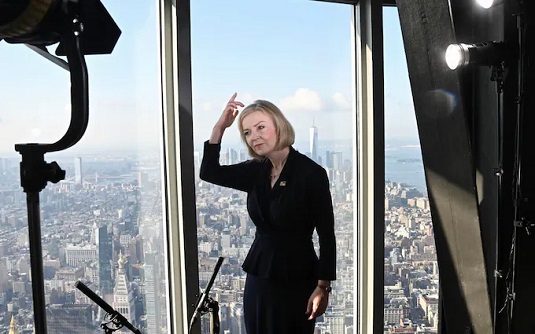
Liz Truss thinks she's still running in the Tory party leadership contest. Her media round with Sky News and the BBC made for painful watching. Painful because what she said spells bad news for our people.

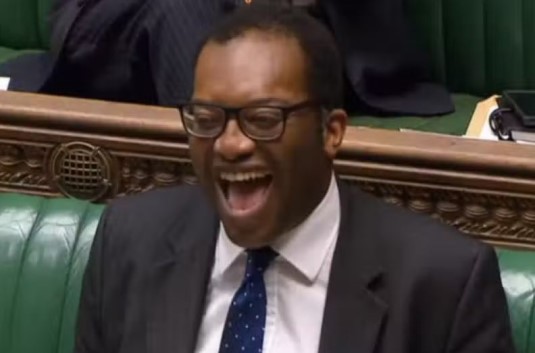
Before the Queen's passing derailed politics, Truss had outlined the bare bones of her energy price freeze. An effective cap for most households of £2,100 and to be paid for, it seems, by government borrowing. Pressed in New York about the funding, she said we can expect the detail in Kwasi Kwarteng's statement this Friday. One supposes it wasn't sight of the figures that had him chuckling his way through the Queen's funeral. As such, Truss barely advanced on her previous arguments. Taxing energy price profits "discourages" investment, and that her proposed tax cuts for the rich - which were so extreme that even arch-Thatcherite Rish! Sunak opposed them in vituperative terms - would magic up economic growth. It's straight out of the blessed Margaret's speeches. Keep taxes low, businesses will invest more, more jobs are created, and all told more taxes flow back to the Treasury.

It's nonsense. Ignoring misleading accounts that measure investment by billions, during the 2010s investment has more or less stagnated. Investment by percentage of GDP is in long-term decline and has been since 1970. Historically, despite the narrative of the stagnant and uncompetitive 70s, investment was higher then that at any time subsequently, save the private building and privatisation bonanza of the late 1980s. Yet the very opposite was supposed to happen, if we accept Truss's argument as good coin. Thatcher slashed taxes for the wealthy, and the Tory-Liberal Democrat coalition followed suit. Using an identical justification, they cut the top rate of income tax, and since 2012 have whittled Corporation Tax down from 24% to 19%, where it has been since 2017. Far from winning more investment, there's a stronger case that evidence of the last 40 years reduces it.

Why? The answer is partially there in Truss's arguments: the route out of the crisis relies on putting money in people's pockets, but the evidence shows allowing business to keep more and more of the wealth we make for them is no way to grow an economy. Indeed, what the Tories have shown in stark terms is that profit is increasingly decoupled from economic growth, conventionally defined. Not-at-all coincidentally, this is related to the country's persistent productivity problem - which, in annual percentage change terms, mirrors the falling rate of investment. What we have seen under successive governments is profit-taking at the expense of investment. More money flows to shareholders, and instead of getting ploughed back into entrepreneurial activity it's salted away to the offshore tax havens. Only a comparatively small amount goes into luxury spending, and purchasing diamond encrusted wrist watches, mansions with multiplex cinemas in the basement, and tacky super yachts aren't going to stimulate economic activity anywhere near as raising wages or giving everyone direct cash payments would.

The best indicator of future behaviour is past behaviour, therefore no one should believe Truss's drivel about her tax cuts stimulating anything other than profits. It's no use saying Truss is wrong, either. Given the data available to her as a senior politician, she simply has to know her arguments are bogus - an awareness she shares with all senior Tories. What her "plan" is about is not providing jobs or raising wages or encouraging investment, it's to carry on the project her party has pursued since 1979: the uninterrupted transfer of wealth from our class to theirs.

Image Credit

Sunday, 18 September 2022

The Queue

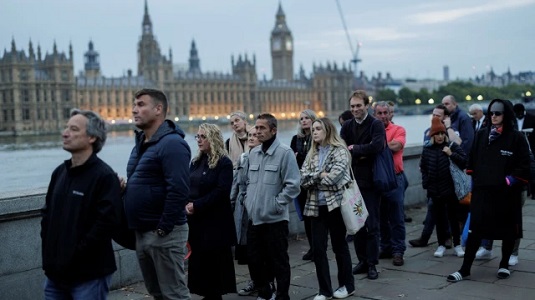
We may never see its like again. Snaking its way from Bermondsey to Westminster Hall, The Queue formed up over five miles. At its peak waiting times lasted for 14 hours, an exercise in patience and devotion hundreds of thousands of the Queen's loyal subjects greeted with sombre enthusiasm. The Queen was, apparently, with them during her long life and in death it's right and proper those she reigned over recognise her service by, uncomplainingly, standing in line for hours on end.

The Queue affirms what we already know: that millions are enthusiastic about royalty, and are drawn irresistibly to monarchical spectaculars like pilgrims to shrines, and understanding this doesn't rely on much abstraction or high theory - often it's a case of listening to people talking about their personal relationships with royalty.

As noted here many times, celebrity is at once near and distant, a juxtaposition of the familiar and the unknown. After the Church, monarchies were the first institutions to build these concrete-but-abstract relationships, and The Queue embodies this tension. In life, no British monarch has met as many of their subjects, with some estimating figures of around 15 million people. For many of those, they have a piece of the Queen that is uniquely theirs. Metres away and insensible to the flows of humanity gushing by her coffin, in death The Queue reaffirms and renews this individuated fealty. Listening to the stories, meeting the Queen when one was a school girl, the Queen as a stable background presence, the Queen as an inspiration during military service, the Queen as a symbol of a simpler past, and the Queen as a projection of what is good about our national community, The Queue is less a clearing house and more a chorus of intention, a hymn to an essentialised unity bringing together us Brits and everyone who wishes us well.

The Queue draws out the motivations for being there, arranging them in one direction and with one overriding goal - a multitude gladly shuffling along to subsume their singularity into a collective of one: a supra, semi-mystical sovereign body of duty, national community, and kindness. In the absence of other strong sources of collective knowing and feeling, the monarchy and the nation are almost the natural repository for such longing. It's therefore not surprising that the diminution of the individual before the awe many say they felt as they walked by the coffin has provoked a strange egalitarianism, albeit a negative one in which inferiority is internalised and recognised in others and affirmed by participating in this spectacular procession. The backlash against VIP queue jumpers is because they violate the spirit and disrupt the doxa these hours' long devotionals are sustaining.

Politically speaking, The Queue is a triumph. Not for Liz Truss or any political party. The Queen was above party politics, after all. But it shows that not only does the British state retain legitimacy for plenty of people, perhaps even more want it to have legitimacy. Their desire is for a higher power that will make sure everything is alright, a reassuring presence that ensures continuity and an everyday sense of security, peace, and fairness. Far from being imperilled, if the ruling class and their political satraps play their cards right their power and privilege is as secure as it ever was. The usual Tory V Labour knockabout will resume after the funeral, but the core, anti-democratic institutions of state are fine. And if they're doing okay, if the hereditary principle still has mass purchase, a challenge to the lynchpin of their power - capital, property, and the wage relation - remains a far away prospect.

Image Credit

Thursday, 15 September 2022

Working Towards the Crown

Beeps on Morrison's checkouts turned down to show respect. Flights from Heathrow cancelled to show respect. Food banks shuttered to show respect. Cancer diagnosis and treatment services closed to show respect. A handful from a burgeoning catalogue of misguided, bizarre, and in some cases dangerous decisions taken to mark the passing of the dear departed.

What we've seen over the last week are examples of "working towards". This sort of thing happens around powerful people all the time, an attempt by minions at a remove from the sovereign personage to anticipate and meet their wishes. If their efforts are appreciated, that might be rewarded with promotion, favour, or they simply get to remain in a zone of non-punishment and avoiding being made an example of. At the risk of earning the ire of someone somewhere with a Hitler comparison, it is well known that he maintained a distance from his subordinates, which basically invited his lackeys to compete among themselves to catch the Fuhrer's favour. And, as the ultimate seat of authority and power in the Third Reich, the top Nazis did so with alacrity - which saw many of them convicted of war crimes charges at the Nuremberg Trials.

The Queen and the royals, however, are not dictators. They might be petty tyrants in their own households where courtiers and palace flunkies play the game of second guessing the royal wish, but ordinary folk gushing about the time they witnessed the Queen drive past or met her at the opening of a refurbished town hall aren't so motivated. There are no rewards for standing in the mother of all queues, apart from meeting the internal desires driving their ritualised devotion. Indeed, obsequiousness is its own reward for devoted, loyal subjects.

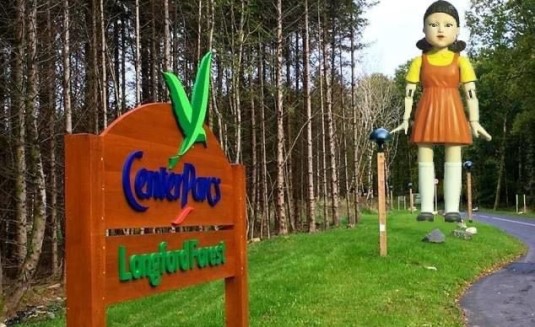
The reasons for enthusiasm for the royalty are at once complex and easily grasped, but what motivated the likes of Center Parcs, before the inevitable u-turn, to announce it was turfing out its guests for 24 hours as a mark of respect? Judging by the ludicrous nature of the proposition, this obviously came right from the top of the company because the plan wasn't killed until the backlash bit. Junior, public-facing layers of the firm would not have made such a stupid suggestion. They did roll back saying guests would be allowed to stay, but they would not be allowed outside. Truly a case study in a marketing meltdown to be studied in business classes for years to come. But again, why act so dumb in the first place?

It comes back to the aforementioned zone of non-punishment. In implicitly coercive situations, there are also powerful incentives to remain just so. At the risk of indulging a little rational choice, showing initiative runs the risk of failure and humiliation. Better to stay quietly competent, unnoticed, and going with the flow. And most of the time, it works a treat. Millions of people get through their careers dwelling entirely within its terms, and the more familiar one is with the setting the easier melting into the background becomes. But this is not available in competitive and/or uncertain environments. Businesses compete for market share, and it is received wisdom that PR faux pas costs customers. In politics, saying the wrong thing might invite press condemnation and the voters' wrath. Better be safe than sorry.

This is exacerbated even further when something abruptly changes and no one knows quite what to do. In these anomic situations, playing it safe might be the riskiest activity of all. Our Center Parcs friends, for instance, assumed that most people are either monarchists or have affection/respect for the institution and the late Queen in particular, wanted to be seen to be in tune with popular grief, and wanted to avoid attracting adverse coverage that could cost sales and profits. By making a series of seemingly rational calculations, turfing people out of their chalets to show respect for the Queen was the worst possible decision and has made them a national laughing stock. Matters get more serious when we're talking about food banks and medical services. Are food banks worried bands of enraged monarchists are going to demand their closure for helping feed the poor? That donations would dry up? Similarly for GP and hospital appointments, are practice and NHS managers afraid the press are going to splash on woke doctors and nurses who saw to their patients during the Queen's funeral service? That Tory ministers would find this another excuse to restrict funding? (Well, actually ...). In each situation, they were caught on the hop. They did not know what to do, and so the conservative strategy, of going along with official encouragement to observe the mourning, they abbreviated all common sense because common sense did not seem appropriate.

No one has to pull a lever to bring about perverse outcomes when the perception of pressure and sanction does the job more effectively. It's another occasion of where attempting to act rationally leads to irrational outcomes and invites the pain that was trying to be avoided. These are all examples of where working towards the Crown meant acting against the people. How appropriate.

Image Credit

Tuesday, 13 September 2022

Lucretius For Our Times

The philosophy of the ancients is not my bag. Keeping up with modern matters theoretical is hard enough. Besides, who needs to with the Acid Horizon comrades around? In this utterly brilliant episode with Thomas Nail (author of Marx in Motion, among many other works), the theory and complicated legacy of the Roman poet/philosopher Lucretius. Seems a bit obscure? Not at all. The theory of materialism unveiled by this discussion is only now influencing radical social theory - and one that, in my opinion, holds incredible promise.

Monday, 12 September 2022

Fluffing the Energy Price Freeze

It was supposed to be the biggest event of last week. Until, in the words of BBC news reader Clive Myrie, Liz Truss's energy price plan was "insignificant now" as the news started filtering out about the Queen. If only that was the case, and her royal demise meant plummeting fuel bills and was no longer an issue. Unfortunately, they have not gone away and despite assurances Truss gave in the Commons, millions of people still fear what Winter may bring.

Recalling the time before politics got wiped out by official mourning, Truss announced a price freeze capped at a household average of £2,500/year for the next two years. The Tories are continuing with Rish! Sunak's energy bill relief. That amounts to a £400 discount on energy bills for every household, and additional support for pensioners, the disabled, and people receiving some social security payments.

On the question of paying for it, Truss skimped on the necessary detail, which has since been ably dissected, but she avoided the most obvious political pain: the suggestion users would cover corporate profits with a levy spread out over ten or twenty years on energy bills. Not even Truss is that daft, it appears. Instead, the mooted £150bn cost is going to get paid out of government borrowing. A move guaranteed to get sections of the parliamentary party a touch sweaty. But it does come with a possible flip side for the fiscally conservative.

Those who were taken with Jacob Rees-Mogg's plans to butcher the civil service now have the perfect excuse to swing the axe. Truss said little to nothing about another round of cuts during the leadership campaign, but the stacking up of even more borrowing on top of the Covid debt is just the pretext more austerity needs if Truss finds certain quarters of the public sector bothersome. 2022-24, however, is not 2008-10 and it's difficult to see that this would appeal outside the pensionable and propertied core Tory support.

Truss has avoided the most obvious bear trap, but there are two difficulties to bear in mind. Keir Starmer's reply to Truss's statement last Thursday saw his best Commons performance since becoming Labour leader. His critique, that Truss's outright refusal to tax the energy companies' surplus profits, was more about protecting payouts to shareholders than ensuring people could heat their homes was spot on. Also, credit where it's due, he understands that people are angry with gas and electricity firms for ripping them off and would like to see them punished for it. There are significant problems with Labour's price freeze policy, but it does offer a way of kicking the energy fat cats by making them cough up. Truss's preference for sticking the price freeze on the never never ham-fistedly aligns her government with deeply unpopular outfits, something she didn't have to do. If Labour has any sense, it should spend the next two years hammering away on this.

The second is how Truss presented her plan. The £2,500 price cap figure Truss announced is all millions of people are going to have seen. This compares unfavourably to Labour's £1,971. It doesn't matter that, in practice, the cap works out as £2,100 for everyone and will actually be less than that given energy prices rises aren't going to be as eye-watering as forecast come October. Truss nevertheless gave that impression, millions will still be worrying about costs, and this only increases their antipathy toward her. Something the lengthy break from politics is likely to exacerbate as Truss trails the new King around the country on his investiture tour and says nothing.

On Monday the first proper poll of Truss's reign was published, and while her coronation has produced a bounce the Tories trail Labour by seven points. She needed to knock it out the park with this one, and while not the disaster some on the government benches feared, her framing of the freeze and decision to shield profits means she starts her premiership on the back foot. Not the most auspicious of beginnings, and not one likely to get much better.

Image Credit