No time for blogging tonight, but in case you missed it here's a little something about Fat Cat Friday I wrote for elsewhere. Check it out! Also worth a recommendation is this installment of Suite 212 on Oli Mould's intriguing-sounding book, Against Creativity.
Anyway, we know 2019's going to be something of a year so here's an apposite track to finish off this first week.
Friday, 4 January 2019

Thursday, 3 January 2019
Trash Talking the Tories
Back in September, yours truly was privileged enough to speak at the Derby Transformed event. This is the audio of the rally at the end featuring Chris Williamson, Derby City Labour Group leader Lisa Eldret, Lauren Mitchell, a Labour councillor in Hucknall in Ashfield, Paul Mason and, um, me. Please find below the recording - I start sounding off at 44.50. Also, keep an eye out for further recordings from the day on Derby Social Club's Soundcloud page.
Wednesday, 2 January 2019
Bolsonaro and Authoritarian Populism

No. As the Graun reports, Bolsonaro declared his election a "liberation from socialism, inverted values, the bloated state and political correctness", advocating a pushing of Judeo-Christian values and an education system that turns out work ready people, not "political militants". As they noted at CBS, he doubled down on the anti-socialist rhetoric, stating "Our flag will never be red ... Our flag will only be red if blood is needed to keep it green and yellow." A statement of intent or racy rhetoric to fire up his supporters?
There were conciliatory words in sharp relief to the usual fire and brimstone. “We have a unique opportunity before us to reconstruct our country and rescue the hope of our compatriots,” "We're going to unite the people", and "My vow is to strengthen Brazil's democracy." Promises of national unity and purpose, of extending a filial hand to all the people and bringing them together, it's something even you-know-who wasn't averse to. But in terms of substantive policy, what Bolsonaro is defining as his priorities are interesting - and worrying. The first is the creation of a "culture of impunity", allowing the police to effectively operate without legal checks as they become accountable to a body outside of the judicial process. He knows what this means, but doesn't particularly care. What value do the lives of criminals have, regardless of how they're defined, if you're fighting crime? Bolsonaro has already calculated that this isn't likely to cost him his support - unfortunately the wretched example of Rodrigo Duterte's government-sponsored murders has shown little electoral blowback nor much in the way of international opprobrium or consequences for the Philippines. Though, perversely, Bolsonaro is planning to bring the law into line with what happens already. In various parts of Brazil the police have carte blanche to do as they please already, and some are existing players in the drug trade. All-out war won't stamp crime out, but will allow corrupt units and stations to eliminate and take over the competition. Once the blood letting is done we have a managed and, theoretically, more peaceful "illegal" market.
Bolsonaro is going to need the police on side. As we saw previously, Bolsonaro was successful because the mainstream liberal and centre right parties threw their lot in with his candidacy. Never forget that they did so not under threat of socialist revolution or an upsurge in workers' struggle, but because they preferred a ranting, would-be dictator to a mainstream social democratic president. Nevertheless key to cementing bourgeois interests to Bolsonaro's coalition was adapting himself to the neoliberal priorities of the ruling class. This means cutting back on regulations, privatising state-owned assets and the "reform" (i.e. cuts to) the pensions system. It is the case the workers' movement was, to a degree, demobilised when the Workers' Party was in office, but if the old military governments ended up bringing a militant opposition into existence the possibility of Bolsonaro doing the same can't be discounted. Especially as there already exists a de facto coalition of resistance encompassing indigenous groups, feminist movements, LGBTQ groups, leftists and trade unionists. If your programme for government consists of throwing masses of people out of work so your new friends can loot state property, and hobbling pensions to lower their obligations to employees, you're going to need the police for the confrontations to come. I would expect who is and isn't classified as a criminal starts getting fuzzier as these battles are touched off.
Unfortunately for Bolsonaro, and like Trump (who, incidentally, sent him congratulations in the usual way) he does not have arbitrary power and the Brazilian constitution provides for a number of checks on the executive. The president can issue executive orders, which he has already done on the management of indigenous reserves. However, while it does come into force immediately, under the Brazilian constitution such orders can be amended or rescinded by either House of Congress - they are provisional for 60 or 120 days when they require approval. While thought of as emergency measures constitutionally speaking, all presidents of Brazil have routinely used them since the new constitution was enacted in 1988. This means there is plenty of potential for Bolsonaro to get bogged down in disputes with Congress, just like someone else we know. This is compounded by his Social Liberal Party having only 52 Deputies in the lower house (out of 513) and four senators out of 81 in the upper house. Bolsonaro has already declared that he won't be forming a formal coalition between the PSL and others, but rather approach matters on an issue-by-issue basis - certainly a recipe for protracted wrangling and horse trading. However, again there is the weight of tradition to factor in - self-described liberal and centre parties have tended to back the incumbent in a House of Deputies whose normal state is fractured and split between many parties. No US-style "Resistance" here. As leading figures in these outfits sold their professed love for democracy down the Amazon, the position of Bolsonaro's programme sadly looks better in real life than it does on paper.
Yet, despite the brutality and stupidity we're sure to see over the coming years, what we're seeing - albeit at a very early stage - is something less than fascism. It's authoritarian populism with violent, Brazilian characteristics, and our guide is Margaret Thatcher not Hitler or Mussolini. Bolsonaro is embarking on a class project to subsume the whole of Brazilian society under the law of value by widening the purview of the market into, well, whatever he can get away with. The impunity law shows he is prepared to use repression, up to and including the extension of extra-judicial killings the Brazilian cops are notorious for. Meanwhile, his ranting about "gender ideology" and talking up religious inspiration (coincidentally, Bolsonaro's middle name translates as "messiah"), we have a latter day equivalent of Thatcher's preoccupation with Victorian values. Like everywhere when authoritarian populism takes root, its leader articulates an establishment-friendly anti-establishment poise, an identification of enemies - usually minorities, social movements, and their institutions - and a broken programme of obsolete values. The intended results are uniform, even if the means differ from country to country: freedom of capital for the few, and cowed, chastened discipline for the many. Bolsonaro is in a strong position, but the seeing off of a military dictatorship by mass struggle resides well within living memory. He might just find that things don't go all his way.
Tuesday, 1 January 2019
Regarding the Rat Race

The always-appalling Sajid Javid found his leadership positioning aided by the main news outlets. With a mild media panic generated by the usual suspects about refugees sailing/paddling across the Channel, Javid let it be known that he was cancelling his South African holiday to come back to deal with the "crisis". And he did so without challenge, as typified by this Sky News piece. There is a sinister subtext to all this. The Tories are past masters at divide-and-rule, and while immigration has slipped down the popular causes for concern since Leave won the EU referendum that doesn't mean it isn't a potent weapon. Filling TV screens with coast guards plucking refugees from dinghies with outboard motors could, if spun by unscrupulous papers and right wingers, be elided with the horrifying refugee disaster in the Mediterranean. Being seen to be all over his brief and sticking it to powerless others plays to the core vote, the editorial desks, and the dwindling party membership. Nevertheless, while a panic about refugees is just the tonic for making a case for May's tough-on-immigration Brexit deal, neither Downing Street or Javid's rivals happy to let him grandstand. Hence a pretty lame attempt to embarrass him.
Sadly, a consideration of Tory manoeuvring means pondering our mate Gavin Williamson is unavoidable. Nicknamed Private Pike by parliamentary colleagues, unlike his Dad's Army namesake Williamson gets off strutting about as if he's some military hard man. Less Lord Kitchener and more Fisher-Price Kitchen, he was on hand to greet HMS Echo arrived in Odessa before Christmas to deter the Russians - a spectacle sure to make Vladimir Putin "go away" and "shut up". More objectionable is his floating of the idiotic Empire 2.0 delusion, the view the UK can bestride the world not just as an independent economic power, but as a military one as well. In his Telegraph interview, he announced an intention to open two new military bases. One on the outskirts of the South China Sea, presumably with the view of making China think twice about its own ambitions in the region, and one in the Caribbean for, well, reasons. He also said "nations right across Africa look to us to provide the moral leadership, the military leadership and the global leadership". Yeah, but to do what? Totally absurd. There are, however, questions outstanding. Is this government policy? How's it going to be paid for? Or is it just a dismal effort to endear the Tory faithful with its imperial fever dreams to the camp of the stupid boy? Hazard a guess.
Jeremy Hunt isn't a name that - thankfully - gets uttered much round these parts, but he too has been playing at leadership footsy. See, he's gone down the road of the "vision thing". And what would his Britain look like after Brexit? Why, he's gone and half-inched the politics of the European Research Group and holds up Singapore as his model. Sadly, their extensive state subsidised housing isn't what he has in mind. Hunt doesn't expand much on what this means but he knows something about Singapore and low taxes, and is sold on the ERG idea that becoming the global hub of tax dodging (as if it isn't already) suits the interests of him and the hedge funds and disaster capitalists that have pushed Brexit very nicely. This not only tallies with some of the interests the Tory party articulates, it can be sold to the members both as a means of cutting taxes more generally (implying moar austerity red meat) and presenting the EU with a permanent Up Yours Delors moment. Never underestimate the enthusiasm of the Conservative Party for a morally bankrupt and dismal prospectus.
Nor should one underestimate their capacity for low cunning. As weird, ineffectual and incompetent these three men are, they demonstrated a certain adroitness in their positioning. Within Tory terms, each has staked out political territory that MPs, members and, sadly, a section of the electorate, finds compelling. Borders and immigration, military and empire, tax and hard Brexit. There is nothing here with mass, cross-party appeal - unless you're a backbench Labour hawk, I suppose - but at this point there doesn't have to be. All three have shown off their wares, and should it come to facing any of them down in a general election then in all likelihood Labour will be up against a traditional Tory campaign of lies, scaremongering and scapegoating. For this party of yesterday's men and women, the Tories' past is always their future.
Five Most Popular Posts in December
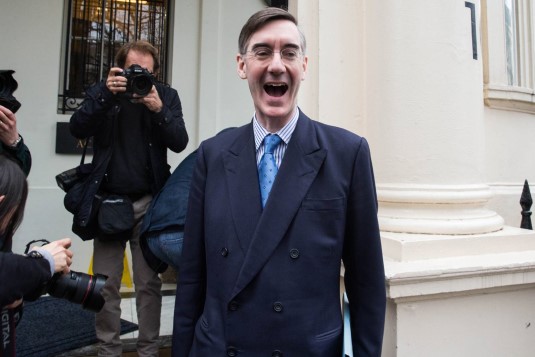
1. The "Surrender" of Jacob Rees-Mogg
2. A General Election is a Necessity
3. The Illusions of David Miliband
4. Fall Out by Tim Shipman
5. Corbynism in 2018
We almost made it, we almost got through a whole month without writing about Labour factionalism. But as soon as the MPs broke up for their holidays a winterval of silly season shenanigans came rolling in, with more dishonest rubbish about Brexit dominating social and broadcast media for a few days. And, seemingly bored over the Christmas break, a Twitter charge led by the ever comical Jolyon QC tried framing Novara Media's Aaron Bastani as an anti-semite, violent bully, and academic fraud. It's almost as if they're incapable of arguing about the politics any more. Summing it all up we have a consideration of how Corbynism fared in 2018.
Anyway, this sort of stuff made two and three in the month's tally. Much more pleasing it is to see the Tories get more attention though. All being well, 2019 is a time when I'll be spending more time than s healthy thinking and writing about the Tory party's decline and hopeful fall. So getting a consideration of Rees-Mogg's position on top, followed by further meditations on "Shippers" book on politics in 2017.
Who have we got hanging around the second chance saloon? I reckon my piece on Brexit and mental illness could do with more eyeballs gazing upon it, though it is not quite as comprehensive as I like (some of the comments it attracted are spot on). And we might as well throw in Hurrah for the Yellow Shirts?, a look at the Gilets Jaunes movement in France.
Okay, the festivities are done and it's 2019. Once more into the breach, comrades!
Monday, 31 December 2018
Top Ten Dance Songs 2018

10. Flames by David Guetta and Sia
9. Nordic Nights (Darren Porter Remix) by Mark Sherry and RAM
8. Rain by Bicep
7. Breathe by Jax Jones feat. Ina Wroldsen
6. Cure by Tube & Berger & Alegant
5. One Kiss by Calvin Harris and Dua Lipa
4. Will We Remain (Spencer Brown Remix) by ilan Bluestone and Maor Levi feat. EL Waves
3. Back Home (Fady and Mina vs Omar Sharif Extended Remix) by Hazem Belatagui feat. Adara
2. Rainbow by Estiva with Ruben De Ronde
House and trance, trance and house, such is the way of the solid disco world in 2018. And, much to my surprise as anyone's, three mainstream monsters made my considered grade. The appearance of Flames marks Sia's third appearance (and Guetta's second) on the end of year list, and it's a jolly, bombastic number suiting Sia's mighty vocals. Check it out with the video as well - a trés fun homage to 1970s Hong Kong flicks. Jax Jones and Ina were so good that they featured back on the blog in January, and I wasn't surprised they remained a favourite come the year's end. And, as much as I use these occasions to berate Calvin Harris for not doing anything good, his collab with emerging superstar Dua Lipa invalidates all previous criticisms. It was impossible to escape its boozing-on-the-beach vibes wherever you went, and stood out from the usual crowd of soulless EDM that goes down well in the American market.
Trance was well represented this year with four belters. Good to see RAM back in the listings, but it's thanks to Darren Porter's remix that catapulted his collaboration with Mark Sherry to greatness. Ditto for the work Spencer Brown did with Bluestone/Levi/Waves. I'm particularly taken with her vocal for Remain. Initially unfussy, British and business-like she breaks into full trance diva as the song progresses - brilliant. Mucho praise for Back Home too. Cheesy, nostalgic lyrics are wedded to Adara's powerful vocal and create a euphoric experience seldom surpassed in trance these days. Exceptional stuff. And the best trance track of the year IMHO was Estiva's collaboration with Armin van Buuren protege/wingman, Ruben. No vocals on this occasion but a well crafted wunderwerk I'll have on the playlist for years. In all, top job and drinks all round.
Another good year for house too. Bicep's Rain certainly tickled my fancy. Yes, I know it got a long trail on YouTube but it wasn't until this year it was released, so it qualifies. Tube & Berger's collaboration with Alegant was a proper hottie, not least because the vocal sounded very Tom Smith from Editors - he previously featured back in 2010 as part of the Raized by Wolves project. Not a dissimilar style too. Brooding but weirdly relaxing, give it a listen!
What has made it to top of the pops? It has everything. Strings. A smouldering, echoing, decadent vocal different to but redolent of Lana Del Ray at her best. And, of course, a glamorous but dark heart around which the song is weaved. Here you go, my song of 2018:
Who knows what musical goodies 2019 has in store, but I know one thing - next new year's eve is the occasion for the countdown of the best songs of the decade. Be seeing you!
The Most Read 18 of 2018

As we turn the page on the year 2018, let's have a look back at the posts that commanded the most attention. And perhaps a few that need a little bit more love.
1. Suspend Labour Friends of Israel
2. The Bourgeois Politics of the People's Vote March
3. Toby Young and the Taming of Higher Education
4. A Terrible Stalinist Purge
5. Besmirching Labour's Name
6. Enemies to the Left
7. On the Campaign Against Corbyn
8. Corbynism and Anti-Semitism
9. The Cloying Desperation of the Tory Press
10. Is it Okay to Like Morrissey?
11. Owen Jones vs the British Media Establishment
12. No One is Above the Party
13. 10 Points on Russia and Russian Politics
14. The Conservative Party's Eugenics Problem
15. Frank Field: An Anti-Eulogy
16. Labour NEC Fallout
17. No Labour Exit from Brexit
18. Can Blairism Win Back the Labour Party?
Once again Labour factionalism dominates the list. If the right behaved themselves and learned to be a constructive opposition, then I might not write about them as much. Nevertheless, happy to see a couple of pieces about the Tories get in there, but there is definitely a case for more variety. And who knows, as 2019 is the year of Brexit perhaps there will be more diversity as I'm forced to cover soup kitchens, wheel barrows full of fivers, cultivating carrots in window boxes and other fun topics. Also, in my projection of work I've got a few articles and book chapters to get done before the biggie: writing the book plan and a couple of sample chapters. Hopefully life won't get in the way too much!
No predictions again for 2019, I've learned my lesson. But there were some pieces deserving more of your time that didn't make the end of year list. For some weird reason I quite enjoyed writing this pair of pieces about the dismal 'blue' Marxism of Jon Cruddas, and I tried writing about Deleuze too. You be the judge of how well I did. Perhaps I should also do more writing on telly, because, again, writing about A Very English Scandal was good fun, as was throwing down a few scribbles about French cop drama Spiral. I almost wrote something about the summer's reality TV hit, Circle, but there was too much scabbing in the Labour Party going on demanding of words and time.
Okay, that's more or less me done for 2018. All that remains is sorting out my top ten dance tunes for the year and then ... rest. Until tomorrow morning at least, when 2019 brings in more of the same.
Sunday, 30 December 2018
What I've Been Reading Recently

Transpositions by Rosi Braidotti
The Lost Revolution by Chris Harman
Reckless Opportunists: Elites at the End of the Establishment by Aeron Davis
I'm Not Scared by Niccolo Ammanti
The Monk and the Hangman's Daughter by Ambrose Bierce
The Attention Economy by Claudio Celis Bueno
Betting the House by Tim Ross and Tom McTague
The Long Firm by Jake Arnott
Guerrilla Warfare by Che Guevara
Deleuze and Politics edited by Ian Buchanon and Nicholas Thoburn
The Penelopiad by Margaret Atwood
A Picture of Health edited by Jonathan Ashworth
The Caves of Steel by Isaac Asimov
The Way of All Flesh by Samuel Butler
Fall Out by Tim Shipman
Beyond Brexit edited by Olivia Bailey
Capital Volume One by Karl Marx
Taduno's Song by Odafe Atogun
Ball Lightning by Liu Cixin
Elephant by Raymond Carver
Game Changer by Steve Howell
With Volume One in the bag, that's another bucket list book done. Though as explained in the piece I wrote about it, Marx's prose is very straight forward. It requires patience, but it is superbly written and clear. Forget the books about Marx, or at least those written about Capital. Just dive in! Other notables - I enjoyed the Atwood, it's a good laugh. Olivia Bailey's Fabian collection on Brexit was surprisingly interesting, if only as a way of marking the tacking of Labour's old establishment to the left. In the battle of accounts of what happened to politics in 2017, I'm afraid the take from "Shippers" came out on top. Unfortunately, I didn't enjoy Steve Howell's insider account of the Corbyn campaign as much as I was expecting - basically because I was anticipating something like Alex Nunns's excellent The Candidate. It's not a bad book, but if you're well read on the ins and outs of the 2017 election campaign you might be a touch disappointed. Sorry, Steve! As for the Ross and McTague effort, considering it's a fairly hefty number it reads like it was rush-written and has precious little insight. There's nothing there that "Shippers" doesn't do better in his.
Anyway, that's enough from me. What have you been reading recently, and did Santa bring you anything interesting for Christmas?
Corbynism in 2018
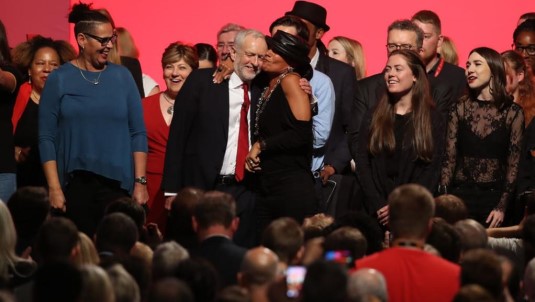
In the metrics that matter most to conventional politics, Corbyn's Labour has a good story to tell. Polling is either level pegging, a little bit behind, or a little bit in front of the Tories. "Oh", wail Corbyn's opponents, "if he was any good we'd have double-digit point leads over this shower of a government". And perhaps Labour would if it wasn't for the political circumstances we find ourselves in. As noted previously and many times since, political polarisation has persisted throughout the year. It's not just a matter of the Tories and Labour mobilising different constituencies of voters, but that Brexit plays different roles in gluing these coalitions together. For Labour voters, as a general rule Britain's relationship to the EU is important, but other concerns like housing, the NHS, jobs, a better future, etc. more or less successfully keeps the coalition together. For the Tories, Brexit is absolutely central. It keeps the former kippers on board, it helps keep the Scottish unionist vote on board, and works as an attractor for the flotsam and jetsam of voters who buy the delusions of Brexit. If Brexit was a minority pursuit, which it isn't, then the Tory coalition would be smaller. To reiterate, the reason why the Tory vote remains large is because they are the party of Brexit. They're negotiating it, they're its custodians, and millions of people - who wouldn't necessarily vote Tory under other circumstances - are backing them for as long as it takes to get it done. Whether this falls away after 29th March or persists while the government prats about with a trade deal is a question we might be able to answer this time next year.
But this post is about Corbynism, not the Tories! May's local elections weren't a thumping success, though getting the best result in London for 50 years is worth shouting about. Nevertheless it demonstrated steady-as-it-goes progress with a polarised electorate in the background. Though, without indulging official optimism, it is worth remembering that turn outs for local elections are low and tend to flush out two groups of people; the super hard core who follow local politics and, disproportionately, older people. For Labour to do well in contests whose demographics favour the party's Tory opponents isn't to be sniffed at.
With electoral consolidation, um, consolidating, how are things looking in the party? Well, in 2018 we find a similar story. Momentum's membership grew massively over the year, passing the 40K mark in the Summer and with trolling talk of it soon overtaking the real membership of the Tories. It's possible! The year also saw the left firm up its control. 2018 began well with the left making a clean sweep of the three extra seats introduced to the NEC. There was plenty of argy-bargy in the last round of selections for this year's local elections, with the right claiming the left are racist/sexist/homophobic for deselecting councillors with awful politics - the sort of absurd logic which, turned the other way, damns every one of them for supporting white boy David Miliband over Diane Abbott in the 2010 leadership contest. In March, Corbyn flexed his muscles in the sacking of Owen Smith from the front bench for continuing to peddle his own line about a second referendum as opposed to the party's position. His forced departure occasioned the usual bellyaching, with Peter Hain going so far as to describe it a "terrible Stalinist purge". Neither it nor the fall out of the Skripal affair, where Corbyn used the occasion to draw attention to Russian money propping up the Tories, made any dents on the left in the Labour Party, and following May's elections it was a fairly easy task to get left wing delegates elected to conference and returning a full slate of leftwingers to this year's NEC.
The only real setback the project suffered internally were the shenanigans around mandatory reselection. Readers will recall there was an on-paper majority for it, and sundry rightwing Labour MPs were getting sweaty. Even Westminster colossi like Mike Gapes openly pondered their resignation of the Labour whip. And, in the end, there was some sort of deal done and instead of a simple reselection process we got a reform of the present trigger ballot system. This was disappointing, but not surprising. The leadership wanted to avoid headaches from the parliamentary party, and trade unions wanted to continue to have a hand in who does and doesn't get selected. Calling it a betrayal, as some did, is a bit much but it is an own goal and one bound to bite both the leadership and trade union general secretaries on the backside in the future. Nevertheless, what it did demonstrate was a tension in the relationship between Corbynism-in-the-party and Corbynism-in-the-unions.
Throughout the year, Corbynism's opponents in the party have either resigned in despair, as per John Woodcock and Ivan Lewis (neither, of course, had anything to do with a studied refusal to face sexual assault allegations), thrown tantrums like Frank Field, or trailed the prospect of a new centre party. If these people can't marry up a coalition of recalcitrant MPs and 50 million quid of LoveFilm money, how can they hope to be decent ministers? Well, we know they can't. But as far as the old Blairism and the Labour right are concerned, they did hit upon two weapons that have caused damage to the project and will no doubt be reached for again in 2018.
The first is anti-semitism. Jeremy Corbyn isn't an anti-semite, and neither are the overwhelming majority bulk of the Labour Party. But as explained here, there is a culture of anti-semitic carelessness on the left that has come into the party, which has been amplified by ones and twos of Labour people on social media sharing anti-semitic conspiracy idiocies, far right memes, defences of Gilad Atzmon, and Rothschild obsessions - all of whom are seized upon with alacrity by the media and the Labour right. This climaxed over the summer with the row over Jeremy Corbyn's attendance at that funeral. Unfortunately, while the right should be condemned for their disgusting and dishonest behaviour on this issue - where were most of them before anti-semitism became something you could damage the Corbyn project with? - the left needs to take responsibility and stamp this shit out. Better, quicker disciplinary procedures, a programme of party-directed education, and zero tolerance of anti-semites, conspiracy fools, and "leftist" liabilities who deny there's any such problem are good starting points.
The second is Brexit or, to be more accurate, the movement for remain. Broader and more politically amorphous than the FBPE cult on Twitter, it is nevertheless a bourgeois social movement, and one used by sections of the Labour right to try and drive a wedge between Labour members and Labour voters, who the polls tell us are mostly anti-Brexit and want a second referendum, and the party leadership. There was the pre-Christmas poll from YouGov that boldly claimed the LibDems would surge to second place if Labour was seen enabling Theresa May's Brexit, and there was the Graun interview in which Corbyn restated Labour's 'all options on the table' policy, which was taken up as some great betrayal by sundry Labour MPs and their friends in the Liberal Democrats. Of course, Labour has a tricky tightrope to walk. Brexit is damaging and a load of crap, but unless you think a bit of dodgy funding and a few Facebook adverts invalidate the result (especially when remain spent more overall, including on Facebook), seeing it through is the democratic thing to do. Unless another general election comes along and rewrites the rules. As noted earlier, Brexit does play a different role in Labour's voter coalition vs the Tory vote, but different role doesn't mean no role. In my view, calling for a general election with the promise to try and negotiate a different deal with the promise of a referendum at the end to confirm it is the best approach to take. Whatever happens, the party cannot be put in a position where it "reluctantly" votes for May's deal - Scotland and the fate of the LibDems shows what happens when other parties become the Tories' meat shield.
Overall, Corbynism is more or less politically united. More activists are more regularly involved, and provided the party carefully steps its way through the Brexit mess it remains well placed to win a general election. But there is still much to be done. Corbynism conceives of labour as a party/movement, a collective active in community struggles, trade unions and wider campaigns while simultaneously being a contender for power. The two are not mutually exclusive as the cretinists of the right maintain, but central to winning an election and transforming our society. Therefore we need to be aware that Corbynism hasn't spurred wider radicalisation. At least not yet. Tied up with this is building the network of ideas, thinkers, publications and websites, broadcast media, institutions - which is central if you want to frame the battle for the country's soul in terms of hegemony and counter hegemony. This is coming together and Corbynist outriders, mainly from the left of the movement are regularly getting themselves in the media to push the new common sense. However, the problem of what John McDonnell calls 'cadre development' remains. When you have a Labour Party culture historically antithetical to, well, thinking, and a social media culture productive of conspiracy theorising, instilling a sense of history, capacities for informed social critique, and hunger for new knowledge is a big ask. Nevertheless this is happening and, fortunately for the left, the experience of tens of millions tallies with what it is saying about the world.
Corbynism then leaves 2018 in good shape, in better shape than when it entered it. 2019 isn't going to be a walk in the park, but when you look at the state of our opponents in the party and outside of it, we could be in a much worse place.
Friday, 28 December 2018
Beware Boosterism
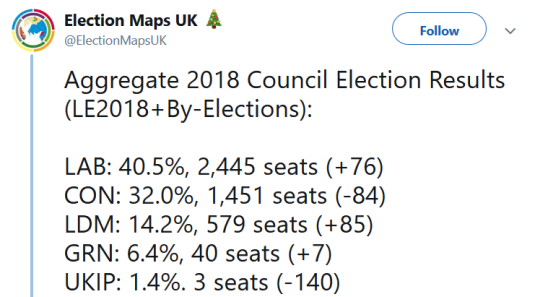
You can understand why folks would be keen to share it. Labour is put on 40.5% of the vote and is up 76 council seats with a tally of 2,445 to shout about. The Tories on the other hand finished the year with 1,451 councillors who faced election, down 84, and 32% of the vote. And for those interested in such things the Liberal Democrats have 579, up 85 (and a 14% vote share). And so these results allow for two inferences to be drawn. That Labour is doing better than polling suggests and the Tories much worse, and therefore the polling companies are minimising Labour's support - just as they did in the run up to the general election. Therefore it's safe to ignore the YouGov latest, and all those other polls the peg the Tories ahead. Unsurprisingly, we have certain sites with a reputation for a conspiratorial approach to politics gleefully republish it. It might be factually accurate, but utterly useless and politically misleading.
Labour's support in this "poll" is boosted by the performance in the local elections which, among other things, saw the best result in London for almost 50 years. The problem is for anyone wanting to read off the national picture from May is that the contests were more or less clustered in Labour held areas. It still picked up a good haul of seats, but, well, because London. It is not the rest of the country, nor is it every big city - as the results from Birmingham's mayoralty contest should remind us. One would presume next year, after a set of council elections in mainly Tory held areas register a depression of Labour's vote, that Skwawkbox will be reassuring its readers that the results are geographically skewed and therefore shouldn't be anything to worry about. Remarks that, coincidentally, apply to the by-elections that took place this year.
Bandying about results like this without any caveats might make some feel good, but it's dishonest, politically disarming, and is only setting folks up for disappointment. The job of commentary, particularly left wing commentary, is to analyse, make sense and suggest directions for one's party/movement or whatever. Boosterism of this kind is the enemy of clarity, and it's clarity what we need to identify and make the most of the opportunities presented to us.
Subscribe to:
Posts (Atom)