Who tuned in tonight to watch Andrew Neil grill Jeremy Hunt? Not me. As he's not going to win, there's little point dwelling upon his interview. Tonight then was all about Boris Johnson. Did we learn anything new, or were all our preconceptions reconfirmed? We know from decades of suffering this oaf how he elbows his way into the centre of attention, and through a series of studied ruses not only monopolises it but manipulates the situation. As Hunt observed in a rare moment of insight during the ITV debates earlier this week, Boris Johnson will make you smile and while you're laughing you've forgotten how he didn't answer the question. That might work with the less experienced interviewer, or a one shot questioner in a press conference, but in a half hour sit down with the country's fiercest politics inquisitor? Andrew Neil started off softly, asking Johnson about his character and whether he could be trusted. Perhaps expecting something a bit tougher, Johnson rejoined that there were no trust issues. He has fantastic conservative policies, which he will deliver - this is the judge of character that matters most. It was here Johnson floated one of his favourite policy themes - policing. The Tories think they have Labour on the run thanks to the increase in violent crime in London, something they (and Donald Trump, of course) are keen to hang on Sadiq Khan. Neil gave Johnson space to discuss how crime fell during his tenure as Mayor, and thus the trap was sprung. While crime fell by a fifth in the capital between 2008 and 2016, Brillo observed that it fell by 26% in the rest of the country, so why was the Johnson administration less effective in getting the figures down? Not surprisingly, there wasn't an answer. The man who would be Prime Minister lost his balance and never recovered. Returning to the theme of character, Brillo asked why he didn't stand up for the UK's Ambassador to the US, Kim Darroch, whose withering diplomatic cables on the Mickey Mouse White House were published this week, and whose leaks are now subject of a police investigation. Indeed, returning to the ITV Debate Neil drew attention to the fact he was asked four times to offer Darroch his support and failed to do so. Johnson tried his damnedest to weasel his way out by saying "I support the principle of civil servants saying what they need to", which of course, is a manner of evading the question. Neil then put it to Johnson that he was actually happy to see the ambassador out because he had previously berated Jeremy Hunt for backing Darroch. Asked if he accepted the argument Johnson's refusal to back him contributed to Darroch's resignation, he had the chutzpah to claim the "job of politicians to stick up for civil servants", and that it was not right to drag someone's career into the public domain. The evasion of responsibility continued when quizzed about Nazanin Zaghari-Ratcliffe. Readers will recall how, because he hadn't read his briefing notes prior to a stint in front of the foreign affairs committee, his claim she was teaching journalism rather than simply holidaying, which was actually the case, has cost her an extra five years in prison. Johnson did his typical "you're exculpating the Iranian regime, it's all them" and rejected any suggestion he had any kind of responsibility for her fate. Needless to say, Neil berated him for making a bad situation worse. Moving on to Brexit, Brillo asked if there was a deal in the offing prior to the Hallowe'en deadline and needed a few days over to finalise it, surely he - Johnson - would not walk away. His reply, which was unconvincing, went "we definitely come out", but we'll definitely have a deal by then anyway. Asked about his opposition to May's deal, Neil asked if Johnson would back it if all that was done was a change to the Irish backstop. Cue the full majesty of Johnson's Brexit fantasy. He said he would argue for the future of the border getting remitted to the free trade agreement he wants to negotiate with the EU. But, as Neil observed, the backstop is a fallback, a precondition for negotiations, a determination of what the UK/Ireland/EU relationship would be in the event of trade negotiations failing, an insurance policy. Damningly, it appears Johnson hasn't got his head around this very basic fact of Brexit. Which is why, by way of a miserable response, he said Neil was offering "defeatism and negativity" and what the negotiations need is "new optimism". And you thought Theresa May was bad. One of the big fears of a Johnson government is his closing parliament to get a no deal Brexit through, something Rory Stewart (remember him?) warned could lead ot a civil war situation(!). So Brillo asked Johnson why he won't rule out shutting the doors. "I don't want to do that" snapped back Johnson, and besides, we shouldn't fear no deal. Not only are the preparations in hand, we can leave the EU without a deal and carry on as normal. A deft sidestep away from a tricky issue, but into another sticky one. Trying to look as if he knew what he is talking about, Johnson cited paragraph 5B of Article 24 of the 1994 GATT agreement which allows for the present relationship to remain in place for a decade. This then is Johnson's magic bullet, and assumes the EU would consent because it's in both parties interests. Be that as it may, Neil blind-sided Johnson by citing paragraph 5C, which he didn't know about. Under GATT rules 5B is only possible if there is some form of declaration about a future agreement and a timetable for talks. One would also assume in this relationship the UK becomes a rule taker, and cannot enter into separate arrangements with countries already covered by EU treaties (for instance, the Canadian, Japanese, and recent South American deals), and also it might be challenged by a third party - all good fun for the lawyers no doubt. While Neil didn't raise these complications, to the discovery of paragraph 5C all Johnson could do was mumble incoherently about "BBC-generated gloom and negativity", as if the national broadcaster had a hand in defining the global rules of trade. Moving to Johnson's spending commitments, Neil observed that Philip Hammond's £26bn "fiscal headroom" for no deal planning isn't money set aside for a rainy day, but cash that can be borrowed according to the government's spending rules. Johnson replied his government would "continue to bear down on national debt, and setting out our plans." This money would be invested in education and the police, and amounts to significantly less than the money the Treasury is prepared to set aside, Johnson smugly retorted. And another trap was sprung. Neil flagged up the £9bn worth of tax cuts he'd promised the wealthiest tax payers by raising the threshold of the top rate, and the £13bn for taking the lowest paid out of National Insurance. It was almost as if Johnson doesn't think tax cuts are spending commitments too. In all, this was the most dismal performance I've seen from a politician in some years, and it says everything about the state of the Tory party that this poltroon is odds on to be the next Prime Minister. This seat-of-the-pants, half-arsed, drivel-pedalling incompetence should damn his chances. Instead, for the unhinged faithful at home they'll think Johnson did a good job against an interviewer who browbeat him and didn't give him a proper chance to explain himself. The Tory membership might be easily fooled, but thankfully the electorate are not so gullible.
Panorama, the BBC's premier investigative journalism show comes in two flavours. You have considered pieces, usually but not always focusing on allegations of wrongdoing, that sifts through evidence and builds a case for or against that episode's object of scrutiny. And then you have the lazy hit job that sees testimony and documentation arranged without due space for the right of reply, nor the consideration of evidence that flies in the face of the case. Can you guess which way tonight's Panorama alleging leadership interference in anti-semitism complaints went? This isn't the first time a political target has been roughed up this way. Indeed, not long after Jeremy Corbyn came to prominence the BBC used Panoramato suggest he was chillaxed with the Iraqi resistance attacking British soldiers, because in December 2003 Stop the War was present at a conference in Cairo that urged resistance to the US/British invasion, and the declaration of said meeting was published on StW's website. As we have seen since, a cottage industry has grown up around guilt-by-association gotchas as far as the Labour leader is concerned, and tonight's show was unafraid of flagging up these links. What about the substance of tonight's Panorama then? If you can't stomach the full half hour, the BBC have presented their case in written form. And, as it was always going to be, it's pretty thin stuff. We have a complaint that Seumas Milne issued an email our whistle blowers interpreted as an instruction. The email, or at least the bits the BBC chose to quote, say "something's going wrong and we're muddling up political disputes with racism ... I think going forward we need to review where and how we're drawing the line." This seems pretty straightforward and non-controversial. Because anti-semitism simultaneously exists in the party and is a factional football, there are going to be real and vexatious complaints. And how do we know distinguishing between the two was the intent and nothing more sinister, as per Panorama's insinuation? Why, you can read the full, undoctored quote from Seumas's email for yourself. We heard the old canard that staff from the leader's office interfered in the complaints process, suggesting it was improper for workers to be seconded to the department. This has been floated many occasions over the last couple of years, and has almost become a sub-genre of grumbles in and of itself. If this separation of personnel was to be strictly maintained at all times, why did our disgruntled Labour staffers regularly email Laura Murray, now head of complaints, then LOTO staff, asking for advice about cases? Indeed, Sam Matthews - one of the complainants in tonight's programme and the source of the above claim against Seumas Milne - was one of those who approached him for advice in the transition period between general secretaries. It's a measure of polemical rather than investigative intent that this went unsaid. It goes on. One Kat Buckingham says she was stuck between an "angry and obstructive leader's office" and the disciplinary process itself. That may as well be, but what this "obstruction" was is unclear. This, like may other moments of pure conjecture, were left hanging. Which is exactly what you would expect from a hack piece. Establish the case early on, and let the narrative flow away from evidence to insinuation. A dishonest approach to journalism you would expect from the Sun or the Mail, not the supposedly world class BBC. These moves were repeated to pad out the programme too. At one point, in reference to the party investigation of goings ons in Liverpool Riverside CLP, quotations appeared on screen. "Every Zionist is a target" went one. "Every Jew is a Zio-fascist" said another. Very well, but we are not told what the source of these quotes were. Are Labour Party members responsible? In the context of the broadcast it was a device used to establish that an atmosphere of hostility and anti-semitism pervaded the CLP, of the sort of remarks we're led to expect were commonplace and were aired without challenge. Similarly, the testimonies of Jewish members were left to float without context and response. I do not for one moment doubt their experiences, and it is appalling that anyone would feel unwelcome in the Labour Party because they're Jewish. Nevertheless, where our interviewees were not citing party meetings some remarks were left vague.Did they involve Labour Party members? Are we talking about real life or social media? And we do not know if those party members who did engage in such behaviour subsequently had action taken against them. Another of the so-called smoking guns was Jennie Formby's "interference" in the case against Jackie Walker, who was slung out earlier this year for bringing the party into disrepute. According to Panorama, our General Secretary is damned by her emailing "The National Constitutional Committee cannot be allowed to continue in the way that they are at the moment and I will also be challenging the panel for the Jackie Walker case." Indeed, prior to Jennie's appointment the NCC - incidentally, not then under majority left control - had sat on the Walker case, leaving it to fester and give off the impression the party was not handling complaints. What her intervention amounted to was an expediting of the complaint, and a NCC panel that ... expelled Walker. The General Secretary got on with the job she was appointed to do, and finds herself on the receiving end of a bad faith attack for clearing up a running sore. As Louis Althusser noted in an entirely different context, silences can be as significant as the spoken or written word. Sometimes more so. And what do we find missing from this piece of trash? Well, we don't hear tell of how the previous General Secretary, Iain McNichol, completely failed to grasp the anti-semitism problem - even though he was interviewed by Panorama and was in position for the first three year's of Corbyn's leadership. Why does he escape criticism when the backlog, who sundry MPs have dishonestly laid the leader's office, happened on his watch? If there is a perception the party is tardy when it comes to handling allegations, he is the one who allowed it to happen. And if this was a genuine investigation of anti-semitism in the Labour Party, perhaps some focus on the period prior to Jennie Formby's appointment is in order? The strategic silences do not end there. How about the revelations former members of Labour staff deliberately sat on, delayed, and "lost" complaints about anti-semitism to damage the party? This is not conjecture; the evidence is available thanks to email chains curiously not seen by the BBC. Overall, this was a poor piece of journalism. It was pure hackery. If Dan Hodges made documentaries ... But again, it's part of a piece. That the BBC is biased is beyond reasonable doubt, but it is tilted against what it defines as the fringes and nods toward the permitted ground of establishment reasonableness. It's why the SNP, Nigel Farage, George Galloway, and the BNP have all had the sloppy take down treatment in the past. However, with Jeremy Corbyn and the left-led Labour Party, this is all ramped up to ten. Every Labour dispute commands disproportionate coverage, every time Tom Watson undermines Corbyn the BBC cameras are ready, anti-semitism gets more broadcast traction than Tory racism, and now an hour-long documentary at the behest of disgruntled former employees less than forthcoming about their experiences working for the party. The BBC's traditional defenders - the left - wouldn't mind if there was parity and honesty in the coverage of Labour's difficulties. There are problems with anti-semitism, and it has proven very difficult sorting it out. But the BBC are not acting as an honest broker and are as guilty as those Labour MPs who see anti-semitism less a problem in and of itself and more an opportunity to take down the party's leadership. And ultimately, when the day of reckoning comes for the BBC, thanks to their shitty behaviour they will no longer find its traditional supporters willing to defend it.
In the latest episode of Politics Theory Other, Alex interviews noted socialist thinker Leo Panitch about the work of Ralph Miliband. As always, it's well worth a listen. As always, the podcast needs you support to keep it going. Please consider donating.
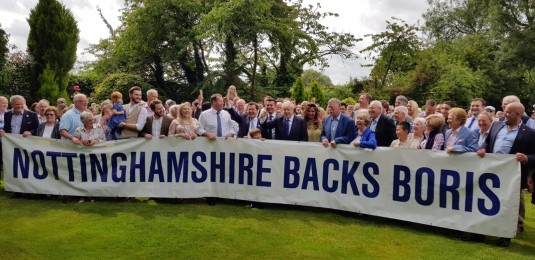
Here's the state of play in early July. We have a Tory leadership contest seemingly careening toward no deal which, to be blunt, will be the biggest preventable peace time disaster in British political history. Yet scrutiny of the candidates is superficial and interest in the contest is warned off thanks to its being mind-crushingly dull. It hasn't captured the public's imagination, and even when you tune in to 24 hour rolling coverage you get the sense of a story featured out of obligation than "newsworthiness". Even those habituated to the plod and grind of everyday bourgeois politics would find more jollies in a mini-fridge instruction manual. Politics is institutionally boring, and its marrying to arcane ceremony works to make it unappealing. It's almost as if it's a deliberate ruse designed to exclude, alienate, and ward off mass participation. Politics however shouldn't be more entertaining. After all, fascism, among other things, is said to be the aestheticisation of politics, and its reduction to celebrity over the course of the last decade gifted us the hilarity of Boris Johnson and the you-can't-say-that conceit of Nigel Farage. But as the stakes in politics have intensified and the issues have sharpened, so establishment politics has become even more boring. Which the Tory party contest exemplifies. Consider earlier, happier, less fraught times. How does the leadership campaign now compare to this century's contests? The first contest for the Tory party crown was, on paper, an interesting one. It featured Ian Duncan Smith, Michael Portillo, Ken Clarke, David Davis and Michael Ancram, all of whom variously represented different wings of the Tory party. In a bit of a shocker, IDS beat Portillo by a single vote into the final round, which he then went on to win by a country mile over cuddly Uncle Ken. Nevertheless there was some consideration of what the party should be: an explicit europhobic outfit (under IDS) replete with all the nasty stuff the Tories are associated with, or something a bit more liberal and centre facing. The party membership then weren't as psychopathic as today but the temptation of embracing euroscepticism and the perception it was a real vote winner proved too much for some. Come 2003, IDS as the most ineffective Tory leader then seen was out and Michael Howard was effectively appointed unopposed as his replacement to lead the party into the 2005 election. Following a fairly dismal showing on the second worst turnout for a century, the next contest, between David Davis and Dave, was interesting from the standpoint of Tory strategic thinking. At this point Dave was at pains to paint himself as a liberal, light touch Tory chillaxed with modern Britain and a seeming determination to turn the party away from its Europe obsessions. Meanwhile, DD promised little beyond the red meat offering of IDS, except with added bastardry. On this occasion, the shrinking membership went with pragmatism. After all, a centrist makeover did Labour no end of good, so why not the Tories? Ken Clarke and the disgraced Liam Fox were eliminated in short order and Dave romped home with a two-thirds landslide. Then came Labour's turn. In 2007 Tony Blair made good on his long-announced departure and vacated the leadership. However, Gordon Brown believed the big job was his by right and moved heaven and earth to ensure no one stood against him, and that virtually the entire PLP nominated him as Blair's successor. John McDonnell, who announced an abortive challenge never had a chance of getting on the ballot paper, while Brown completely disingenuously welcomed the opportunity of a proper election he knew was not going to happen. Then in 2010 we had a summer-long contest with David and Ed Miliband, Andy Burnham, Ed Balls, and Diane Abbott (there was some behind the scenes jiggery-pokery between John McDonnell and Michael Meacher, which meant neither stood). While it didn't set the world alight, Diane's programme and Ed Ball's technocratic anti-austerity platform arguably ensured Ed Miliband's campaign positioned itself in soft social democracy territory to scoop up these votes. And, for the headline writers, there was a rich vein in the sibling rivalry angle. Nevertheless, not spotted by anyone at the time (ahem), Diane actually came third in numbers of raw votes cast suggesting the left were not quite as dead as was supposed. Skipping five years forward Labour crashed and burned, and the next leadership contest was gearing itself up to be the worst in Labour Party history. That was until Jeremy Corbyn got on the ballot and, very quickly, all hell broke loose. The same was true of the following summer. Unreconciled (and still unreconciled), the PLP majority's cold coup went hot and we had an entertaining summer of socialist politics vs nob gags. Meanwhile, the collapse of Dave's premiership was accompanied by the spectacular implosion of Boris Johnson and Michael Gove, the death-by-media car wreck of Andrea Leadsom's campaign and Theresa May's seemingly effortless coronation. How the Tories then amused themselves at Labour's expense, not at all realising there was a ticking time bomb of incompetence and inflexibility at the heart of their creaking operation. When these leadership elections weren't entertaining, in the narrowest sense of the word, they did at least allow politics to come out into the open. The two Tory leadership elections of the 00s covered strategic issues and wrestled with how to overcome an unpopularity that was almost a structural feature of British politics. For Labour, 2010 was about how to rebuild an electoral coalition after an extended but bruising period of government, and 2015 and 16 about what kind of party it should be. With the Brexit stakes incomparably higher than these considerations, which, you'll remember, is simultaneously an existential crisis for the Conservatives, it's almost as if efforts to keep the Tory party leadership election a boring non-event that downplays the urgency of the moment. Even when Johnson and Hunt flag up and, for party selectoralist reasons, talk up the possibility of no deal it comes with a shrug of the shoulders. What would be a disaster, which in his honest moments Hunt acknowledges, is smoothed over with nods to managerialist preparation and patriotic boosterism. Therefore Brexit is suppressed not so much as an issue but as a danger. Talking it down as a brewing crisis is a deliberate strategy on the part of both leadership contenders to allow themselves to shine. Despite the rather colourful beginnings of the campaign, Johnson has allowed the much-aired revelations about his private life, political (racist) opinions, and total incompetence bounce off by being simply boring and not doing anything. While not saying much of substance while touring the home county tea rooms, and avoiding as much scrutiny as possible until most ballot papers have been returned, it has allowed his outriders to cop the flak and make the case (he's funny! He can win!). And Hunt too is complicit in this. He has flip-flopped all over the place when it comes to Brexit, moving within a fortnight from a pragmatic consideration of the Hallowe'en deadline in light of a renegotiated deal to hard ultra Brexit, and the annexation of the Irish Republic to solve the backstop issue. At one point he might have looked vaguely threatening to Johnson's chances, but as the contest wore on and with the weary inevitably of the latter's victory growing ever more obvious, Hunt has been forced into making hysterical pronouncements about Brexit while pulling his punches. He doesn't want to damage Johnson too much or criticise him too harshly because, well, he has a career to think about. And he knows, he feels it in his gut, that strong words can easily float over to the other side of the Commons and be weaponised against the Tories in the event of an election. Pathetic really that the Tories have a thing or two to teach certain Labour MPs and their hangers on about how you do solidarity. Why then is the Tory leadership contest more snore than cor or phwoar? Because both contenders are reluctant to face up to the seriousness of Brexit, particularly Johnson, and so downplay it without having to account for their lackadaisical attitude. Because as prep up until the moment Johnson crosses Number 10's threshold he's playing a super cautious game without saying much - something we'll probably see again if/when he takes the Tories to the country. And because for self-interested reasons, Hunt isn't about to rock the boat. Given the gravity of the situation, the politics of the Tory leadership election, its coverage, and its manipulation by both candidates fall far short of addressing the serious hole the country is in, let alone offering ways out. It's a failure that may damn them in the history books, but leave the likes of you and me having to pay the price.
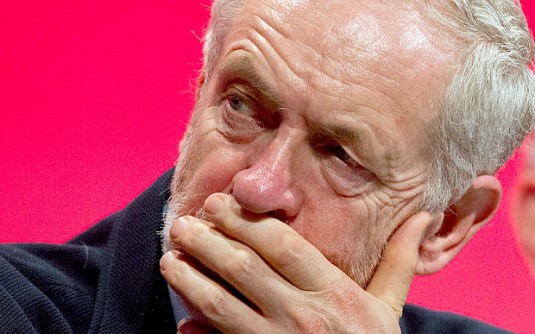
When an unnamed senior civil servant briefed the press that "we" were concerned for Jeremy Corbyn's health and he might be too frail for the rigours of office, three things immediately came to mind. I was touched, positively moved that Whitehall mandarins fret about the wellbeing of the Leader of the Opposition. There's professionalism, and then there's going the extra mile. The second was how ridiculously desperate the powers that be are to avoid a Jez-led Labour government. Of course, there is a ridiculous pretence in British politics that the civil service are neutral, and anyone can form a government and the machinery of administration will grind into action whichever way the Prime Minister decides to set it. Nice if it were true, but it's not. Attempts to reset and remake the state and redress the balance of power in the British economy will meet ruling class resistance from business, from bosses' organisations, and from within state institutions themselves. It's not for nothing that Papa Miliband, in his last book, argued the fist job a socialist government should attend to was a round of redundancies as far as the state's upper echelons are concerned. And the third? We're going to see more like this in the next general election campaign. It's true, we don't know when the next one's going to be. It might be Autumn. It might be next year. It might be 2022. But we do know it will follow past strategies to an extent. Over the course of the last weekend, Boris Johnson and Jeremy Hunt have been spraying about cash around like confetti. Money is no object when it is deployed for self-serving ambition - it's only a problem when you want to help people. Yet there still isn't much of a clue about how it can be used to float Tory boats. Johnson talks about giving public sector workers a pay rise, as if a modest sliver of cash can make up for past pay freezes, or the memory of working in run-down services and the uncertain stress of facing the threat of redundancy. Hunt thinks writing off student loans for successful new entrepreneurs will get young people onside. Whichever flavour of PM we get, there's little either can offer that can appeal to a broad coalition of voters. Which is why they might not bother, and try and build something around a right-populist core of no deal Brexit. Which, if not Hunt's approach, is certainly looking like Johnson's. When we look at how Dave and Theresa May built their 2015 and 2017 coalitions, they were able to exploit two things, albeit with different results. In 2015, the character assassinations on Ed Miliband were about establishing him as weird, weak, and in the pocket of the Scottish nationalists. In 2017, May monstered Corbyn as a man who, um, wouldn't incinerate millions and wanted to spend money on fixing public services. In both cases they tried making the election an issue of character - in Ed's case, a PM who would sell out the country and break up the union, and in Jez's someone who'd turn the place into the GDR. And on this basis, they would inculcate fear. For Dave, Labour was coming for people's houses via the mansion tax and would let the deficit balloon out of control. And a Corbyn government would pave the way for Russian tanks rolling down The Mall. Hate and fear, these are staples not just of the Tories here, but of so-called centre right parties the world over. America, Canada, France, South Korea, all in some way try and establish an illegitimate but indelible link between their political opponents and an existential threat. We can imagine how this might look in the hands of Boris Johnson: a mix of bumbling and red baiting and Brexit betrayal, you could almost write the ha ha hilarious script for him. But there is something else we need to think about. While all Tory campaigns exploit fear and loathing, they don't always do so in the same way. And we saw a permutation on this theme recently in Australia. Here, we almost had a replay of our 2015 general election. The Liberal Party's Scott Morrison played up a Dad-next-door persona vs Labor's (apparently) uncharismatic Bill Shorten, and it was fought on a presidential basis. The Liberal-led coalition emphasised their economic competence over Labor's tax and spend, and ran a targeted and tightly disciplined campaign. And here came the something new. Rather than promising anything, Morrison's coalition gave next to nothing away - apart from some last minute tax cuts. By way of contrast, Labor were policy heavy and spoke about their manifesto at length. While this was a tremendous boon for Labour in 2017, for Labor in 2019 the right, having no policies to offer or defend, simply attacked, attacked, and attacked again. Labor's policies were front and centre during the election, but it was their costs and practicalities that dominated. And with the Liberals offering nothing it was difficult to make return attacks stick - especially so as the right wing press are so much more dominant than here. Now, this isn't the main reason Labor unexpectedly lost, but it certainly helped firm up the coalition's coalition. However, given the close relationships between British and Australian politics, particularly on the right, could we see this 'do nothing, attack everything' approach imported to these shores? Arguably, we already did with Dave's deficit determinism (making it, I guess, an export), but with a Tory party bereft of ideas and faced with Corbynism it could be tempted to have a go: a couple of modest and relatively non-threatening policy items, and nothing but attack lines. Nevertheless, the Tories are disadvantaged in a number of significant other ways. The electorate is likely to become more, not less polarised with Johnson in charge, and no doubt Labour will dust down those unused referendum posters with Johnson in Nigel Farage's pocket. This is also a party with a record, and a miserable one at that, and also a party being harried from the right - assuming there is no Tory/Brexit Party accommodation (then the poster comes in doubly handy). And crucially, while the press are still a power in the land it is, like the party they tend to support, in long-term decline. In short, we know what's coming. Scaremongering, character assassination, relentless negativity. You cant say you haven't been warned.
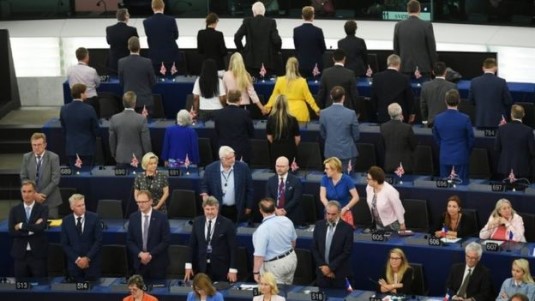
They might turn their backs when Ode to Joy is played, but they certainly won't turn their backs on the salaries, perks, and very generous expense accounts. Nevertheless, the Brexit Party's miserable stunt in Strasbourg earlier can be considered an unqualified success. It led the news across all channels, upset swathes of people they like upsetting (liberals, centrists, leftwingers), and no doubt provide for a frisson of smug satisfaction among the BXP fraternity sat at home. Indeed, in another context and with quite different politics involved, the likes of Nigel Farage and his right wing cheerleaders might call it an example of virtue signalling. For instance, I wonder what they made of Liberal Democrat MEPs who sat there during their silly little protest wearing 'Bollocks to Brexit' t-shirts? Yes, it was disrespectful of EU institutions, and yes it does remind the bloc of nations of how petty minded and unserious the UK can be. A reminder set to be repeated once Boris Johnson is installed in Number 10 and tries negotiating his fantasy land Brexit deal. But in and of itself, there is nothing inherently wrong with parliamentary protests, and trying to present BXP as illegitimate because they've clowned around in one (what they call "cheerful defiance") is short-sighted and daft. So folks trying to draw links between BXP and the Nazis by drawing parallels between today's antics with Nazi deputies turning their backs to the Reichstag speaker in 1926, aren't terribly helpful. It certainly drives outraged tweets to outraged audiences and reminds them of how awful Farage and his private, limited company are, but it's not about to make anyone change their minds and their votes. Far from there being nothing wrong per se with protests in parliament, there is something of a tradition of them in this country. Last June, the SNP walked outen bloc in protest against John Bercow's decision to bar Ian Blackford from parliament for the day. Lloyd Russell-Moyle, John McDonnell, and Michael Heseltine(!) respectively interrupted proceedings by half-inching the mace. As lately as April, members of the public glued themselves, semi-naked to the security screen. Fathers 4 Justice famously lobbed a powder bomb at His Blairness as he stood at the despatch box, pro-hunt protesters stormed the Commons, and most spectacularly of all lesbians abseiled into the House of Lords back in 1988 protesting against Section 28. Whether you agree or disagree with the causes protested, they are part of the warp and weft of democratic politics and a reminder it is always something more than votes and speeches.
The truth of the matter is efforts to delegitimise BXP as a political actor is going to have to come from somewhere else. They got the highest vote during the EU elections, and that is legitimacy enough for its supporters. Appealing to an imagined shared reverence for constitutionalism isn't going to cut the mustard among people for whom it assumes zero importance. It means being creative and thinking about who its base are and the interests it articulates. If we can understand them, then we can beat them.
What posts tickled the fancy of you, the most fickle of publics during the course of June? Well, here's where you find out. 1. Corbynism and the Second Referendum 2. Bye Bye Change UK 3. Obsolete Politics and the Socialist Party Split 4. On Tory Party Psychopathy 5. Your Hot Take on Peterborough Matters of Corbynism's continued health rise to the top of the most viewed pieces this month. And quite rightly so. When polls since the EU elections consistently report politics at the moment is between four parties, we need to have a think about how we got here and how to get beyond it. Pretending it's just a blip and everything will right itself in time is the most useless complacency, frankly. Speaking of complacency, it's all over bar the inevitable election defeats for Change UK. Hopefully I'll never have to write about this bunch of losers ever again. Then my quick overview of the crisis in the Socialist Party/Committee for a Workers' International helped pull in the lefty trainspotter audience, and this was followed by an examination of the collective psychosis gripping the Tory party membership. What a time to be writing a book about their decline and demise, eh? And last of all some ruminations on the Peterborough by-election result which was, supposedly, the Brexit Party's contest to lose. Well, next month we can look forward to a new Conservative Prime Minister. We also get to find out how many members the Tories have really got, so that will be fun. And there's the small matter of ramping up no deal Brexit preparations as Boris Johnson, for surely it shall be he, is prepared to break the economy and sacrifice other people's living standards for the continued viability of his party. All the fun things, then.
We're at the half-year mark, which means three months have passed by since last time. And so, for no reason in particular, here's what I've got through during the last quarter. Kill All Normies by Angela Nagle Corbynism: A Critical Approach by Matt Bolton and Frederick Harry Pitts Foundation and Empire by Isaac Asimov True Blues by Paul Whiteley, Patrick Seyd, and Jeremy Richardson Glamorama by Bret Easton Ellis Imperial Bedrooms by Bret Easton Ellis Edgework by Wendy Brown Injury Time by Beryl Bainbridge Leviathan Wake by James SA Corey Hawksmoor by Peter Ackroyd The Posthuman by Rosi Braidotti Great Expectations by Kathy Acker Displaced by Stephen Abarbanell On Populist Reason by Ernesto Laclau The Stories of Eva Luna by Isabel Allende The Timekeeper by Mitch Albom Crowds and Party by Jodi Dean Dan Leno and the Limehouse Golem by Peter Ackroyd Caliban's War by James SA Corey Jeremy Corbyn and the Strange Rebirth of Labour England by Francis Beckett and Mark Seddon The Idea of Communism edited by Costas Douzinas and Slavoj Zizek Bastard Out of Carolina by Dorothy Allison New Faces of Fascism by Enzo Traverso Devolution and the Scottish Conservatives by Alexander Smith London Fields by Martin Amis American War by Omar El Akkad The Portrait of Mr WH by Oscar Wilde Digital Citizenship in a Datafied Society by Arne Hintz, Lina Dencik, and Karin Wahl-Jorgensen Leninism and Western Socialism by Roy A. Medvedev The Fatal Tree by Jake Arnott Waiting for the Revolution edited by Evan Smith and Matthew Worley Anna by Niccolo Ammaniti No commentary on anything I've read this time, unfortunately. Getting struck down with norovirus isn't conducive to much in the way of thinking! So what have you had on the go these past three months?