It's certainly something of a spring time for new left media at the moment, even if it's summer. I remember there being months when nothing would appear at all - long may this mushrooming of new initiatives continue! 1. Conquest of the Useless (Twitter) 2. Keeping the Lights On 3. Mary Kelly Foy (Twitter) 4. Sheff Socialist (Twitter) 5. The Tartan Socialist 6. Voice Britannia (Twitter) 7. Working Class Academics (Twitter) If you know of any new(ish) blogs, podcasts, channels, Facebook pages or whatever that haven't featured before then drop me a line via the comments, email, Facebook, or Twitter. Please note I'm looking for blogs etc. that have started within the last 12 months or thereabouts. The new media round up appears hereabouts when there are enough new entrants to justify a post! Image Credit
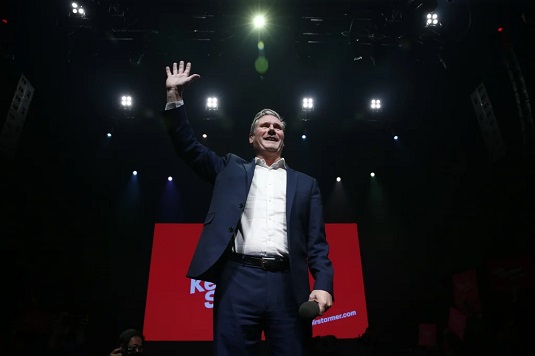
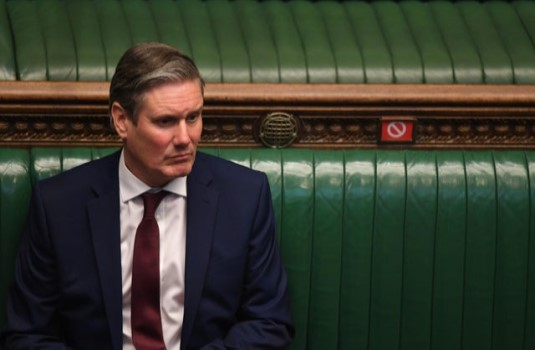
I almost added it as a foot note to the piece about Tory short-termism. Asked about the loosening of lock down measures this weekend and, above all, opening the pubs up again, in line with his stance on schools Keir Starmer supports these too. Speaking to ITV earlier, shadow chancellor Anneliese Dodds said the same thing and urged people to go out, spend money and otherwise partake. As Labour's leader isn't driven by a whack-a-mole approach to politics nor has to hold together a declining electoral coalition glued together by nationalist delusion, bloody mindedness, and fear, why is Labour going along with a strategy that, to put it mildly, is borderline sociopathic? There are two things worth recalling here: one is about the everyday aspect of mainstream politics, and another that reaches into the core of Labourism. All politicians look for an easy life, and the easy life is where (they think) most voters are, and the best indicator of this - from within the point of view of bourgeois politics - is what the press say. After all, they sell papers and so have to reflect the opinion of readers out there otherwise no one would buy them, right? Hence there's never been a time when Tory MPs have worried about a Morning Star editorial. Leaving aside their dwindling circulations, politicians want to inhabit what former Brown aide Mike Jacobs called a 'normal operating sphere' of non-punishment. This normally comes into play for governments, but given Keir's studied statesmanly gait he shares a similar concern. Because Corbyn was bad, he has to be good, and this means over-emphasising conventional notions of electability and game playing. And so accepting Tory plans for schools, for pubs, their whole framing of the coronavirus crisis in fact, means Boris Johnson would be hard-pressed to lump Labour in with "the ditherers", therefore shutting down one line of attack that might resonate with the Tory faithful and their new periphery of Brexity vote-lenders. This in turn means Keir can play politics to his strengths, which is contrasting his shovel-ready leadership qualities versus the bumbling incompetence of Johnson. The second? The tension in Labourism between what is and what might be. Having its origins in a historic alliance between a movement fighting for incremental workplace improvements and privileged professional layers, Labourism was born for the compromises, Byzantine procedures, and plodding constitutionalism of the House of Commons. To channel jolly old Lenin, if trade unionism is the bourgeois politics of the working class, i.e. seeking improvement for their lot within the confines of the capitalist workplace, Labourism is its expression writ large. Yet our class, broadly defined as everyone who has to sell their labour power in return for a wage, has a trajectory that tends to negate capitalism. The right to a decent standard of living, a home, freedom from work, a liveable environment, these are fundamentally at odds with a mode of production for whom the bottom line is the bottom line. Profit is the be-all and end-all. This was the case when Labourism was born, and is even more so now. In the history of Labourism, the tussle between what is and what might be maps on to the eternal struggle of right versus left. The empiricism of appearance, the institutional weight of trade unionism and Labourist thought, not to mention the considerable rewards of office and the flows of money has seen Labour dominated by a concern to adapt to supporters and would-be supporters as they are, and keep them as they are: atomised workers, and therefore atomised voting fodder. What Corbynism represented was an attempt to break out of this straitjacket, hence it had to be destroyed. Contrary to the bullshit you find peddled everywhere, Labour under Corbyn was about building broad coalitions of voters and meeting them where they are, but with a programme that tried transforming them from objects into subjects. Even the Tories these days like to talk about empowerment, but Corbynism actually attempted it. Corbynism, like its Bennite forebear, was a movement from within Labourism that pushed it to its limits, And from there, perhaps a post-capitalist anywhere? Starmerism, if we can speak of such a thing, is getting that genie back into the bottle. It does so by ostentatiously - not a word one normally associates with Keir Starmer - gripping Tory framing without contesting it, offering weak sauce managerial criticisms where it can muster a word against the government, stamping on anything one might construe as radical or, shudder, socialist, and evacuating anything resembling hope from the Labour Party's platform - something even Tony Blair recognised the importance of and was keen to cultivate. While it pretends itself pragmatic, it is the most dogmatic form of Labourism. It claims to be oriented to the challenges of the present, but wants to forever impose the past on the politics of the future. Sure, the party is improving in the polls. It might win an election on its present course (we'll see), but going by what Keir says and does all we can look forward to is the status quo under more competent management. Therefore anyone thinking what we're seeing now is "caution" so Keir, as the new leader, can get a hearing are kidding themselves. What you see now is what we're getting, assuming he continues to get his own way. Coronavirus plus economic crisis plus Brexit equals a perfect storm for political polarisation, and inevitably demands a response equal to the moment. If Keir Starmer isn't forthcoming then his careful project will come to naught. Image Credit
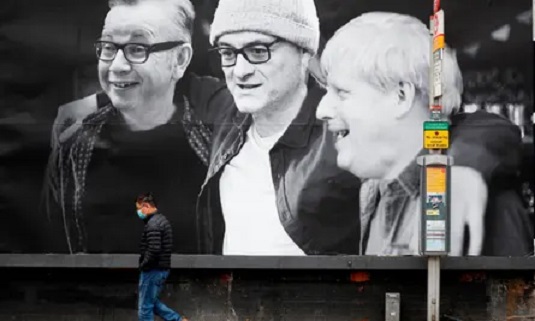
Speeches by leading Tories are ten-a-penny and not worth your time. This rule to live by doesn't always hold, and Michael Gove's latest loquacious offering does repay careful reading. His 'The Privilege of Public Service isn't a paean to civil servants as the government cuts their numbers and drives down their salaries, but something more significant: the Tory view of the state and its role in the decade of post-coronavirus and post-Brexit reconstruction. It is a meditation on Tory statecraft: on what the state is for and what the state should do, and as a contribution to Conservative Party 'theory' it could become a significant milestone. Or is it? Might this, after all, just be an exercise in cloaking the Tories' latest doings in a pseudo-intellectual veneer? On Monday, Boris Johnson did his big reveal and promised £5bn to get the country moving after lockdown. A paltry offering to be sure, but it is in the context of a (rhetorical) Tory turn to big spending, and one even avowed Thatcherites are signed up to. Gove's contribution is about tying it all together in a new Tory rebadging of what Keynesians might call the activist state. i.e. Using the power to make the law and its spending clout to stimulate the economy. Let's peel back the mystical shell of obligation and "privilege" festooning the speech and get to the kernel of Gove's contribution. Faced with a huge raft of current and future challenges, he recommends looking not to Attlee (heaven forfend!) but across the sea to the New Deal administration of Franklin D Roosevelt - perhaps because he read a biography, as well as being more politically permissible to the Tory faithful than The Major. For Gove, Roosevelt's example is useful for mainstream politics today because he solved three problems. In the midst of the Depression, his New Deal programme got the gears of social mobility moving again and gave millions of Americans a stake in the everyday life of their nation again. As Gove puts it,
There are too many in our time and our society whose economic interests, and indeed whose values, have been forgotten. In our unequal times we must attend increasingly to those who have suffered from neglect and condescension and to those whose lives have been scarred by racism and prejudice. Our contemporary work of reform must put them first.
Second, by doing this Roosevelt was able to overcome the popular alienation from the state. However, it required more than just putting money in a worker's pocket. Like most Tories, or for that matter most mainstream politicians, the state is a lumbering thing as likely to cause harm as it fixes social ills. Roosevelt's solution, Gove gushes, was the creation of new institutions that proved to be "flexible, adaptive and empirical." If the state is a state of action, if things are seen to be done and are done, then it can restore its authority through its own form of the propaganda of the deed. Roosevelt's third innovation was the empowerment of reformers. These were, effectively, entrepreneurial state bureaucrats whose "role was not to administer existing machines, or proclaim abstract virtues, but to act – to achieve real and concrete change in the lives of others." Therefore the lessons drawn for today can be summed up as inclusion, adaptability, and action, and therefore this should provide a blueprint (and an ethic) for reforming the state, and for governments to reform themselves. What then do the Tories have in store? Government needs to prioritise getting things done over and above the analytical, evaluative and presentational: improving lives through the delivery of projects matters most. It therefore follows that government has to be enabling: to provide life-changing improvements or good services, ministers have to think about delivering for those who do make the difference. Second, as a means of reforming itself government has to define what "success" entails. Here Gove defines it in terms of "making citizens flourish", and so the assessment of government programmes has to be more than the bottom line. Reform also means not carrying on with the ceaseless churn in the civil service: not only should more technical and data literate skills be prized, career progression has to be dissociated from movement from one department to the next: the state would work better if it builds up expertise. Or, as Gove puts it, "deep knowledge as the servant of public interest." Nevertheless, the snobbish (nay, class conscious) impulse reveals itself as Gove looks forward to welcoming more people with a technical education into the state's employ - presumably because he, wrongly, thinks they're more likely to be less critical and easier to manage than civil servants with history or anthropology degrees. Lastly, there should be more experimentalism in the state. "The whole culture of Government, and the wider world of political commentary, is hostile to risk, adventure, experimentation and novelty," he opines. He might also be speaking about business. In Conservatism according to Gove Thought the state is no longer a hindrance but the means for delivering Tory modernisation. And, is that it? While Gove has provided an account of the Tories' governing philosophy, his speech reads like a post facto rationalisation for their extreme short-termism, contempt for due process and accountability, and desire to pursue their hobby horses as they see fit. In this regard, there is a fundamental continuity of statecraft running through all the Prime Ministers, yes, even including those nice gentlemen Mr Blair and Mr Brown, back to Thatcher. Johnson and co have ditched the language of neoliberal economics, but their state order politics remain entirely consistent with it: remodel the state system so the centrality of government is overweening and checks on the executive's remit - other state institutions, watchdog quangos, parliamentary scrutiny and media accountability - are brushed aside by authoritarian, action-oriented government. This then isn't a break with received Toryism, but a change of emphasis. There is a more hands-on approach to economic management, but that's really all that has changed. Johnson and Gove still have need for their authoritarian state, and the received forms of governance remain unchanged. Indeed, it's quite funny to see Gove moaning about the timidity of public institutions when you consider how thoroughly marketised they are, a transformation of the civil service John Major and later Tony Blair justified in terms of, ironically, unleashing the entrepreneurial talents of state employees. What is sad though is I can imagine any number of Labour politicians listening to or reading Gove's speech, and finding nothing wrong with it whatsoever. Why shouldn't the state promote economic growth through targeted investment? Why shouldn't the state support a technocratic renovation of the civil service? Why shouldn't the state privilege a "what works" philosophy? What Gove has managed is to distil the behavioural characteristics of the otherwise empty "Johnsonism, and repackage it in a way that would appeal to those who fancy themselves as one-nationists, or technocrats. I'm surprised Andrew Adonis hasn't tweeted his enthusiastic praise. But what this spells out is Gove, Johnson, Cummings, and the rest are interested in empowering the state above all around their objectives. The rest of the settlement we've lived with for decades, the one underpinning political polarisation and rising social dislocations, is staying untouched. Image Credit
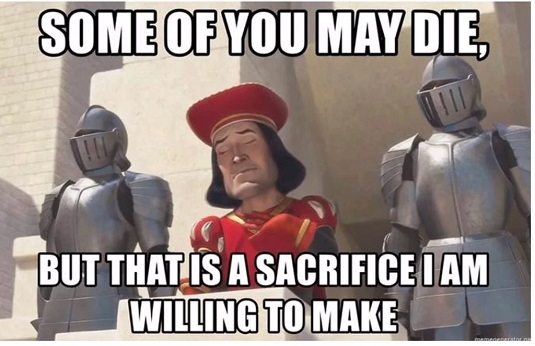
Coronavirus has supplied many more reasons for hating the Tories. Their complacency and cack-handedness have cost the unnecessary loss of tens of thousands of people. And their determination to push for the return to school, opening non-essential shops, and allowing pubs to operate is going to cost more lives. Who knew the last election would reveal its character as a life-or-death contest within so short a space of time? Underlining the government's light-minded approach in recent days has been a scandal over data. A scandal that should result in prosecutions when all this is done. In the flap around the introduction of the first local lockdown in Leicester, it emerged the Tories were, as suspected, not reporting the full infection rate figures. The numbers put out in the public health press releases report the so-called 'pillar one' cases: these are tests processed and confirmed by government labs. These are typically administered in a hospital setting on medical and support staff, and patients with Covid symptoms. The 'pillar two' tests refers to the drive-in stations and at-home tests, which are then processed in private labs. It transpires the government have counted and publicised the pillar one tests, but not the pillar two tests. This matters because, firstly, local authorities have hitherto only been supplied with the pillar one numbers and, second, it presents a woefully distorted picture. Look at the Leicester example. Going by the first lot of testing, you could be forgiven for thinking there is no crisis. Transmission appears low as tests confirming a positive are bumping along with fewer than 10 cases since mid-May. Once you report the pillar two cases, the real rate of infection is surging. Instead of four or five confirmed infections a day in mid June, it actually stood at around 70. Only so much about the government can be hung on ineptitude. Someone, somewhere, made the decision not to report the pillar two cases to give the impression the threat of coronavirus is lower than it actually is [correction - see comments]. And if they are a bureaucrat somewhere in Public Health England, someone in Number 10 also determined the government can live with the under-reporting of figures. I'm sure you have a good idea who's in the frame. In other words, the government have sold the public a pup. The lockdown has been eased this last month, and the opening of the pubs this weekend are based on a false prospectus. Tens of thousands have died preventable deaths, and tens of thousands more run the risk of a premature end. Just see for yourself how the Treasury are marketing this. Never in the history of this country has the government run such an irresponsible campaign. This nevertheless raises something of a puzzle. The Tories are caught between the biopolitics and economics of this crisis and, unsurprisingly, are putting the interests of business before the health of the workers. Yet let's think this through for a moment. Whether the Tories care or not, politically their deception and inaction is suicidal. As we know, coronavirus is disproportionately fatal to the old, who happen to be their base on the whole). And advertising your incompetence with an ever widening pool of suffering and grief should mean curtains for the Tories' chances at the next election. Why is Johnson happy to risk lives on a course of action the Tories won't benefit from? How come the Conservatives are determined to test their support to destruction? Not all answers involve playing chess in 11 dimensions. Parties and politicians make mistakes and misread situations, and this is one of them. Having almost delivered Brexit Johnson knows more generational culture war nonsense, with targeted splashes of cash, is the best way of keeping his declining voter coalition together. As he ostentatiously chafed against the remoaners and the prissy constitutionalists holding Britain back in the parliamentary struggles of late last year, ploughing forward against a new coalition of holder-backers and "ditherers" - teaching unions, Labour politicians, health experts - will get him the plaudits. He thinks. It's a calculated risk. Their hope is deaths and long-term morbidities won't reach a level sufficient to destroy the authority of his government, and the prize is getting the plaudits and props for seeing the country through to the other side of this most seminal of crises. Distinguishing between the doers and the ditherers, as he put it at PMQs on Wednesday, is a diagram of how he intends to shape "the discourse" over the coming years. The second is the inescapable habitus of Conservative Party statecraft. Short-termism is as Tory as monocles and dishonesty. Dave was the "homework crisis" Prime Minister, a baleful characteristic of complacency that surfaced as early as his amateurish and poorly-managed campaign to become Tory leader, and featured both in his headlines-driven approach to policy making and increasingly risky political gambles for ever-depleting returns. This was also shared by Theresa May: the shape of Brexit and her attempts to get it through the Commons were determined by her desire to keep the Tories together as a going concern, which meant living from vote-to-vote and Commons appearance to Commons appearance. And, naturally, Johnson exhibited exactly the same behaviour. Except his short-termism was driven not by a love for his party, but an infatuation with ambition. Johnson is fond of the whack-a-mole metaphor for his approach to local Covid-19 outbreaks, but it reveals the Prime Minister's governing philosophy. If a problem crops up, clobber it and move to the next. This means reactive government, even if kicking cans down the road means an avalanche of crap comes rebounding back in the future. Johnson and his predecessors are guilty of this flippant and supremely damaging approach to government. Except now, married to a psychopathic political strategy, it means death on a massive scale. Indeed, there are plenty of reasons to hate the Tories. Boris Johnson is determined to provide us with tens of thousands more.
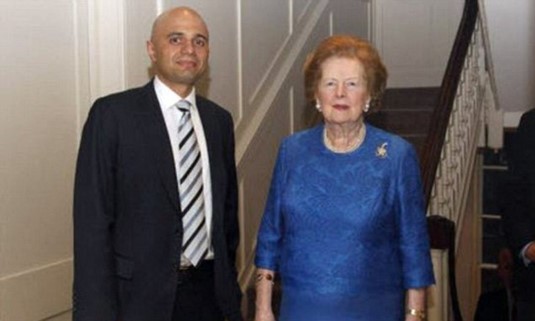
Here's what was hot during flaming June as visited by you, the viewer. 1. Stoke's Racist Lord Mayor 2. Do the Tories Fear Keir? 3. What is the Point of a New Left Party? 4. Labour Should Reject Contributory Benefits 5. On Hammering the Left Aaaand the answer, discounting the miserable existence of Stoke's (now thankfully) ex-Lord Mayor, is ... more critical Keir studies! You know you love it, and as a content provider who am I not to supply the goodies? Coming in behind Potteries racism we have a consideration of whether Keir Starmer is frightening the Tories. And the answer is a mixed one. Then we have another entry into that sub-genre of labour movement writing: why trying to start a new party is a total non-starter. Moving on to a critique of Jonny Reynolds's thinking aloud about contributions-based social security, his advocacy for a two-tier system can only sap support for welfare, which is ironic considering his viewpoint is based on building support for it. And speaking of dumb, the rear is brought up with a reflection on why hammering the left won't reap electoral dividends and might, in fact, end up destroying Labour's new but more conditional base. All indications from this last week shows Keir either does not know or does not give a hoot. We can expect more of the same in July, unfortunately. I'll try and at least provide entertaining reads about the coming shenanigans. As for the second chance saloon, propping up the bar this month you'll find my piece on Thatcherism and austerity. Or, why are Ayn Rand fans like Sajid Javid are fully on board with Johnson's plans even though his programme, ostensibly, isn't about cutting?
It's time to reveal what books I've managed to get through these last few months. Sex, Gender, and the Conservative Party by Sarah Childs and Paul Webb Defenders of Ultramar by Graham McNeill Small Men on the Wrong Side of History by Ed West The Autobiography by John Major Nemesis Games by James SA Corey An Ice Cream War by William Boyd Will of Iron by George Mann Revelations by George Mann Fallen by George Mann Solar by Ian McEwan The Assassination of Margaret Thatcher by Hilary Mantel England, Their England by AG Macdonnell This list shows up the frustrations of lockdown. I remember thinking there would be plenty of time for even more reading when all this started. Three-and-a-half months later and only a fraction of the normal consumption has presented itself to my eyeballs. Book writing only makes up for some of this. I guess waiting around for trains takes up more time than I thought. Looking at what has been read, I suppose what leaps out are the graphic novels by McNeill and Mann. These four collections are from the Warhammer 40k universe, which was something I was into back in the early 90s and revisited several years ago. Sadly, none of these novels are particularly good: the characterisation is pants, the storylines very A to B, but the star of 40k has been the unremitting grimness of the setting. If anything, these books are exercises in lore building, which I suppose might satisfy the devotee. Moving on from grimdark to grey, John Major's autobiography was very interesting - but that's all I'm going to say about it because the jolly old book talks about him at length and, in particular, his policy contribution to neoliberal governance. Fingers crossed there will be more books to reflect upon in three months time! Have you been reading anything interesting recently? Image Credit
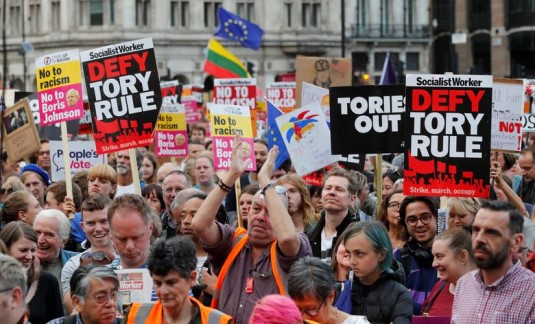
Seeing as Keir Starmer is gearing up for a confrontation with the left following Rebecca Long-Bailey's sacking and despite what's in the best interests of the Labour Party, debate in and outside of the party has started thinking aloud about a new one. This would be a complete waste of time, whether the objective is to replace Labour with a mass socialist party or something modest like a 'left UKIP', an organisation of limited electoral appeal but viable enough to keep Labour from straying too far from left wing policies. As a wise voice points out, "If you spent the TIG years laughing at how they were going to lose their seats because the name recognition lies with Labour and not individual MPs how do you square that with the desire to have left Labour MPs break away now?" Quite. Let's think this through. Anyone serious about either projects must reckon with history. The old, official Communist Party failed miserably in elections, only getting three MPs elected under its name in its 70-year history and, at most, a couple of hundred councillors. It was able to build significant influence in several trade unions but this withered as trade unionism changed and went into decline. The Independent Labour Party, which disaffiliated from Labour in 1931, had three MPs elected in 1945 and gained another the following year in a by-election, but they were all swept away in 1950. Militant was later to have success in the 1980s with three MPs, but these were only elected because they were Labour candidates. The Scottish Socialist Party had six MSPs elected in 2003 off the back of the anti-war movement, but that was thanks to the list PR system used to elect half of Holyrood's members. In 2007 these gains evaporated. And lastly George Galloway was able to get himself elected in 2005 and in the 2012 Bradford by-election as Respect's sole MP. This is your lot - it's gone from bad to worse since. A question of the electoral system? Well, yes. But not the whole story. When you look at the left alternatives and formations of the last 25 years, whatever potential they had were hobbled by infighting and sectarianism. The Socialist Labour Party was strangled at birth by Arthur Scargill's failure to, first, reach an accommodation with Militant Labour (as the Socialist Party then called itself) to break the mould of sectarian politics, and then a subsequent witch hunt against anyone not to his liking. The Socialist Alliance was destroyed by the little Lenin syndrome of each of its two main participants, as was the case with Respect and latterly, the Trade Unionist and Socialist Coalition. This was forbidden from developing any life of its own by its principal sponsor, the SP. Indeed, the two largest Trotskyist organisations on the British left have undergone profound crises of their own - the SWP has its grotesque culture of leader worship to blame, one which saw it embroiled in covering up rape and sexual assault. And the Socialist Party preferred implosion to an honest accounting of, to everyone else, its obvious fallibility. Left Unity, an attempt to cobble something together in the early years of the decade sans the SP and SWP failed thanks to the double whammy of unseriousness and playground trottery. Last of all, the Scottish Socialist Party ekes out an existence doing nothing in particular - Tommy Sheridan's bitter legacy continues to cast its shadow. Because these failed doesn't mean new initiatives are predetermined to follow their path, right? The issue all these organisations share was a failure to build a mass base. The CPGB, SSP, and Respect were able to acquire some aspects of one but this did not reproduce itself as a stable constituency, nor were these organisations sufficiently rooted to the point where they could shape their base. Leadership matters, of course, but the propensity for sectarian and unaccountable petty elites to emerge grows the more insulated they are from wider struggles. Take the British far left as a case in point: the bulk of their activism is not around workplace struggles, campaigns or what not, but the reproduction of their organisations themselves through petitions and paper sales - which tends to reinforce their distance from the class they aspire to lead as opposed to merging with it. This makes building a sustainable base difficult because this work is always prioritised. If they want to begin breaking out of this ghetto, a fundamental rethink and reorientation of their politics is required - something the far left as a collective have avoided since the CPGB's foundation. Then we have competitors. I don't believe Keir Starmer or his people understand the composition of Labour's base, its dynamics and movements, nor its trajectory. The Labour Together report doesn't change that, despite the diplomatic nice words said in its direction by the leader's office. As Keir pivots to the right and the base starts fraying, there's an opportunity to intersect with activists and voters left high and dry. Indeed, and the Greens and Liberal Democrats (if they have any sense) are well-placed to scoop them up. They have activists, a proven (modest) record of electoral success, and are superficially attuned to the concerns of a chunk of Labour's new core vote. The SNP shows what happens when Labour loses sight of where its base is. How can a new left party that doesn't even exist and enjoys zero name recognition offer credible answers and be considered a good punt for the extra-Labour curious? Look at the state of the latest new left party, George Galloway's Workers' Party. Consciously a "patriotic" party that attempts to combine Brexity nationalism with Putin apologetics, and an undisguised (and unironic) admiration for Joe Stalin and all his works, it makes you wonder who it could possibly appeal to - apart from aged tankies nostalgic for the time before. It's embarrassing, frankly. Let's park these issues to one side and consider the strongest argument from history in favour of a new workers/new left party: first past the post has locked all small parties out of parliamentary representation, but this was the case when Labour was founded. And yet Labour came to replace the Liberals as an electorally viable party of government in spite of the high bar of entry. True, true. But how did this happen? It involved alliances of convenience with the Liberals in certain seats and, oh yes, the small matter of a rising labour movement locked out of mainstream political representation. In the 2020s the situation is completely different. Trade unions aren't barred from political entry - most of them are satisfied (at the moment) with Keir Starmer nor is there much grumbling among the now growing membership about him. And besides, the contemporary work force is highly individuated: true, we have a rising cohort of the new working class, but their institutional expression was found in Corbynism. With its dissolution, its attachment to Labour is much more conditional. Good news for a new party, then? Well, no. Because it is more diffuse and harder to organise, even with the coronavirus crisis set on polarising the UK's political economy further. Its less conscious and confident sections are more likely to lapse into despondency and abstention than get angry and organised. We saw it happen last December, and it can happen again. In short, the conditions for a new party for the replacement of Labour are simply not there. How about a left UKIP instead, effectively an electoral pressure group for socialism? Assuming it manages to avoid all the pitfalls outlined above, how does it move from a standing start to something that makes for sweaty palms in the leader's office? It's difficult to see how. UKIP's success tapped into a consolidating (but declining cohort) of voters largely organised by the hard right press, and tapped into widespread cultural currents of racism, Empire nostalgia, and British exceptionalism. Every five years it also had a set of elections it could easily dominate as a repository of protest voting. Its threat pushed Dave and the Tories to promise the referendum and, well, here we are. What opportunities are available for a left alternative to make a nuisance of itself? Local council by-elections? Elections for the devolved governments in Scotland, Wales, Northern Ireland, and London? Favourable press coverage? Considering the extra-Labour left's record of strategic ineptitude when it's not busy fighting among itself, the chances of navigating choppier political waters and reaching the golden isle range from nil to Davey Jones's locker. Last of all, what is a new party for? You can look at the existing Labour left and answer this question easily: pushing socialist policies, building an infrastructure for political education and empowerment, drawing more people into politics, holding Labour's leadership to account. Success isn't guaranteed and it's never a bed of roses, but it exists, has a mass influence, and tens of thousands of activists. It's a serious endeavour and one that could retake control of Labour's National Executive Committee this summer. Some might think it's a waste of time, the right have won the leadership so why bother, but being part of this movement doesn't preclude doing things outside the party. Nothing is stopping anyone giving up dull party meetings and getting stuck into workplace or community activism, for example, and many thousands are going to do just that. It is not the be-all and end-all. Compared to this, what might a new party have to offer? Judging by snippets of conversation here and the odd polemic there, those arguing for one desire a space of the like-minded where they aren't sabotaged by their own side and feel it would be a better use of their time. That's fair enough, but let's not kid ourselves here. This is a project for building a social club or, at best, a sect no different from everything that has gone before. If people want to leave Labour, fine. It's up to them. It is nevertheless better if comrades stay, even if, for totally understandable reasons, they choose not to actively participate and concentrate their energies elsewhere. This is simply a basic fact of the political situation we find ourselves in, this is our reality. A new party at best is an irrelevance, and at worst a means for disorganising the left further.
Trust your scribe to be hit by a temporary block. It's a good job how then it's not necessary to say something when someone else does it better. And so, in that spirit I recommend Daniel Finn's excellent article about what happened. And here's a discussion from last night about yesterday's events.
Some very quick notes on the Labour leader's approach to "responsible" oppositionism. 1. It's working. Or it seems to be working, if you're using polling as a measure of success. On the whole, they're demonstrating convergence as the gap between Tories and Labour narrows. Also, for someone who was only known to weirdo politicos and those who followed the Brexit process closely, the public are warming to him as they put him on a par with or slightly above or below Boris Johnson in the best Prime Minister stakes. Remember, Johnson still has the wartime crisis inflating his support. Last of all, as much as some Labour people are grumbling recent polling data shows many more Labour supporters approve of the strategy so far than disapprove. 2. While it's good to see the polls move, we're abutting one of those tensions at the heart of Labourism. Playing the statesman is obviously Keir's strategy, and believes keeping the criticisms of the government's awful record restrained will get him a hearing among some voters Labour has to win back. And you can see where this comes from. Before the election politics was paralysed and polarised by Brexit. A lot of ordinary punters were fed up of seeing politicians slanging and wrangling at each other over issues that were esoteric, technical, and appeared like procedural games for their own sake. Keir is desperate to avoid being perceived as playing politics in order to cut through to those who "protested" this by voting Tory. 3. This is still the beginning, and so Labour are peeling back the soft Tory vote. Reducing Tory support further requires much more than the softly-softly approach. Some think attacking the left is the route to the magic kingdom, or dumping commitments to universalism can get things moving. Yes, but at the cost of destabilising and dissipating one's base and making winning a general election more difficult. 4. Recalling Ed Miliband's leadership, for about the first two or three years Ed was very reluctant to commit Labour to anything. The danger for Keir Starmer is if he combines that ill-fated strategy (which, you might remember, appeared to work for a time as Labour led in the polls) with a reticence to criticise and condemn the government, the party runs the risk of acquiring a reputation for dithering. And, for its leader, the perception he can't do his job. In short, voters do expect opposition to be an opposition after a period of time. If it's not forthcoming, they'll have you down as weak, useless, and not worth bothering with. Image Credit
From time to time the lion does lie with the lamb. The latest report published by the Centre for Policy Studies is one such occasion. The Centre was founded in 1974 by the blessed Keith Joseph and Margaret Thatcher to put right wing politics on a sound footing and push what was then referred to monetarism, one of the key doctrines in the family of theories we now refer to as neoliberalism. It's doubly weird to find them then publishing a report fronted by Ayn Rand fan Sajid Javid arguing against austerity. The former chancellor says, "as the Government puts together a stimulus package, it is essential that no stone is left unturned. Boldness, as well as out-of-the-box thinking, is the order of the day." The boldness this most Thatcherite of Thatcherites is talking about are not more cuts or assaults on trade unions, but more public spending and more state intervention. What a topsy turvy world we live in. The report makes 63 recommendations, which I'm not going to recount in depth here. Life is precious, after all. But there are standout items of interest. The first few rules in their chapter on tax, spending, and borrowing is an mixed bag, doctrinally speaking. They advocate a cut to the taper rate to Universal Credit, which means workers will lose less benefit for every pound they earn over their work allowance. But this is followed by a refreshingly Thatcherite call to look at efficiency savings in the operation of the state. It also calls for tax reform shifting away from taxing incomes and profits and more of a focus on the progressive taxation of property. The report also suggests a property revaluation for Council Tax, making it a three-year rolling process that keeps up with house prices. Then comes the Keynesian bit. It advocates exploiting cheap borrowing to prioritise national infrastructure projects predicted to do the most to boost GDP and employment. The national investment bank, a friend to have graced the last three Labour manifestos (four if you count the semi-private green bank that popped into Gordon Brown's ill-fated programme for a second term), surfaces here. As does a new fund designed to specifically invest in strategic sectors of the economy. Lots of money for roads and fibre optics too. There is also an interesting localism agenda here, which includes giving more power - including borrowing powers - and expanding devolved authorities. In case the Thatcherite faithful reading this were to start having palpitations watching their beloved dogmas go up in smoke, there's something here for them too. Javid and co. want to bring back development corporations with the powers of a planning authority, thereby circumventing the democratic input of local authority scrutiny committees. It also, predictably, calls for the relaxation of planning laws ("Review permitted development rights to allow more work to be carried out without going through the planning process", p.38) and allow for redefinitions of the green belt: perpetual Tory holy grails. On jobs and investment, the two big eye-catchers are a one year cut in VAT, which would encourage consumer spending. And temporary reductions to employers' National Insurance contributions, something Tories have long regarded as a "jobs tax". There's also a moratorium on regulation, including a questionable call to relax regulations on childcare provision. It calls for a temporary "labour market programme" for young people in areas of high unemployment, which sounds suspiciously like compulsory workfare; scrappage schemes for cars and boilers, "tax efficient" vehicles to encourage inward investment and as many post-Brexit trade deals as possible. Rounding it all off are reviews of the Bank of England's remit and, interestingly, abandon inflation targeting (more here). Thatcherism, but not as we know it? I guess a lot of it depends on how you approach Thatcherism. If you treat it as a set of ideas and assumptions about how economies work, and what government needs to do (or not) to keep the ship on an even keel, then this is not a Thatcherite programme. Sure, there is suspicion of regulation and a nod toward public sector inefficiency, but privatisation and cuts are off the cards, and there isn't an attack on workers' rights in sight. The emphasis on "sound money" and the war against inflation are absent and, for Mont Pelerin's sake, it even makes the case for a more generous social security settlement and a cut to indirect taxation. If this was 2015 other right wing think tanks would have attacked the shebang as a Marxist shopping list. As materialists, however, we do know a bit better. Readers might recall how Javid fell on his sword rather than subordinate himself to Dominic Cummings before he got the chance to deliver a budget. What eventually did emerge from the briefing case of Rishi Sunak, centrism's newest pin-up, was a set of plans not dissimilar in inspiration or scope to Javid's recommendations. Again, on the surface, they appeared to owe more to Ed Miliband than the departed Margaret. But those, just like these proposals, privilege the preservation of capitalist relations, of ensuring any programme of recovery is able to get through a period of shock - for Sunak, it was a hard Brexit, for Javid it's coming back after coronavirus - without the bourgeois class taking a hit. This is why, despite superficial similarities, Sunak, Javid, and the rest gazed upon Corbynism with horror, because its path to recovery involved tilting the balance of class forces away from the bosses and their state, and toward working people and their families. To coin a phrase. Javid's plan is cost neutral in terms of ruling class power. Lopping a few pence off VAT and allowing people on Universal Credit to keep more of their benefit are hardly concessions capable of enhancing the collective power of workers, welcome as they are to those feeling the pinch. And this is where there is continuity with Thatcher. Her programme set about recasting class relations, and one that succeeded through physical confrontation with the labour movement and a huge process of centralising the state system under the (relatively) untrammelled authority of the executive. Javid's proposals amount to a programme of dealing with an economic crisis grown out of a biopolitical crisis, but in a period where bourgeois power is dominant. Thatcher wanted to assert the pre-eminence of capital. Javid wishes to preserve it. Looked at this way, it's not so strange then that a bunch of Thatcherites have gone all Keynesian on us. It's a matter of class and class power, and just like their celebrated heroine they'll push whatever policies and initiatives they deem necessary to save it. Image Credit