
If you've got a few quid and appreciate Alex's work please consider supporting the show.
Image Credit
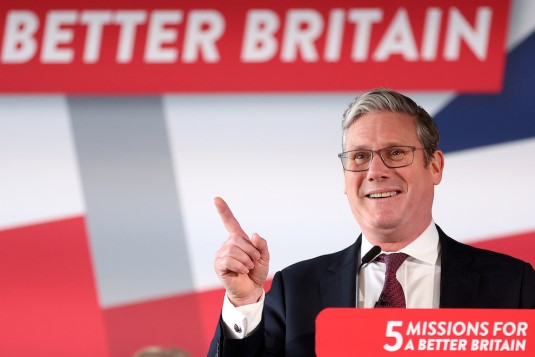

After the theatrics of the last few years, leading Labour politicians have appeared on umpteen politics programmes to declare that racism is over in the party. What was it that Lisa Nandy said last weekend? "Keir Starmer said he would tear antisemitism out by its roots, and that's exactly what he's done." Be that as it may, there's still some distance to go on racism generally if this - roundly condemned - attack ad against Rishi Sunak is anything to go by. In case you hadn't been following the political discourse this week, the Prime Minister and Suella Braverman, the gutter-dwelling Home Secretary, have leant heavily into Tory racism by playing the race card over Rotherham and northern paedophile gangs. Another episode in the war on woke, and an easy jab at Labour authorities who, so goes the argument, turned a blind eye to rape and sexual assault because political correctness.
The brainboxes in the Labour leadership thought the appropriate riposte would be a piercing dog whistle about as subtle as a flashing sign. They might be all innocent face "nonces are not getting jailed under the Tories", but their obvious implication is that as a British Asian Prime Minister of course Sunak's going to be soft on paedophiles. Challenged by Naga Munchetty on Friday morning's BBC Breakfast, Lucy Powell said it was just an example of the cut and thrust of politics. That being the case, I'm sure Labour won't complain now it's widely known that the sentencing guidelines the Tories have been working to ... were written and endorsed by Keir Starmer himself. Having not long ago been smeared by Boris Johnson for not prosecuting Jimmy Savile, you'd have thought the master strategists at LOTO's disposal might have investigated the basics and determined the possibility of blowback before painting targets onto the leader's flanks.
Equally wise commentators have noted that, despite the advert, we're all still talking about it so job done. Unfortunately, there is such a thing as bad publicity, as the Jeremy Corbyn years attest. And there are consequences. People in the Labour Party, including senior officials and shadow cabinet members, and outside of it are horrified not because of "the optics" or "the vibes", or even the impact it will have on the rather dull local election campaign. It's that it significantly adds to the coarseness of British politics and will encourage racist bullying in the playground, the workplace, as well as incidences of racial abuse. Soft on racism, soft on the political party causes of racism. Incidence of hate crime ticked upwards when Johnson likened Muslim women to postboxes, and there's no reason to believe a viral social media campaign - now amplified by much coverage - would have the same effect.
Let's be blunt. If racism against black and Asian people was taken seriously by the Labour Party, this ad never would have been conceived let alone published. It's symptomatic of the cynical politics of the Labour right, who think these attacks are the essence of super clever politics, and for whom the definition of what's racist depends on the politics of the target. But this isn't just a rank-and-file problem, but an issue of leadership failure and of turning a blind eye. Those responsible for the ad are in daily contact with the top of the Labour Party, and someone senior - maybe more than one - in the apparat and the political leadership would have given it the once over and nodded it through. Perhaps with a laugh and an appreciation of what "hard bastards" they are. The buck for this shitty state of affairs stops with the leader. Starmer, whose lying and shiftiness has become as routine as it was for Johnson is responsible for Labour's culture, for the attacks put out by the national party, and for what their content is. If there was anything decent about the man, this wouldn't have happened in the first place. But because it has and there will be no one calling for accountability and an apology in the media mainstream, it will happen again. And again. And again and again.
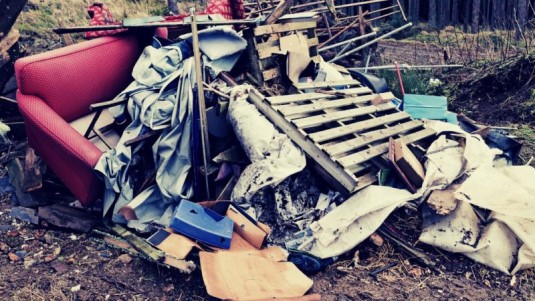
Back in Stoke, I picked up a Labour leaflet from the doormat. It featured my old muckers Cllrs Amjid Wazir and Alastair Watson talking about the hot topic of the moment: fly-tipping. Tbh, it is an issue around my former stomping ground. A week before we were due to move, from nowhere a pair of brand new window shades - still in their boxes - were dumped next to the house. Knowing that something vaguely useful won't stay dumped for long they were gone by morning. Another was earlier today. In one of the alleyways a pushchair was left unloved. By the time I left at 2pm, it had gone. And the best ever was when a lodger of Alastair's found a cache of Mega Drive games dumped in an alley near his house. £20 later and the crate was mine. But freecycling Stoke-stylee can't and doesn't lay claim to every discarded item, and fly-tipping costs the local authority around £500k/year. What's the solution? Cllrs Watson and Wazir want more resources devoted to cleaning up the city's streets. An entirely reasonable response.
Not Keir Starmer's answer though. To try and inject a bit of excitement into a drab local election campaign, the leadership announced its own plan to combat the scourge: heftier fixed penalty notices and forcing fly-tippers to join community payback-style clean up squads. Ah, there's nothing more satisfying than out-Torying the Tories with a new punitive policy they hadn't thought of first. As authoritarian voters delight in the idea of wrong 'uns getting a good hiding, I suppose it was inevitable Starmer's crew would cook up a wheeze that would appeal to these people, who aren't likely to vote Labour anyway, and be consistent with his own politics. Still, it's the local elections. The voter pool likely to turn out are disproportionately of pensionable age, and it might turn a few of their heads.
Like the discarded bits of furniture and bags of cement cluttering up country lanes and back alleys, this proposal should be skipped. It's another example of inauthentic get-rich-quick populism, which is contributing toward the construction of Starmerism's own scapegoats. On this occasion, it's the shadowy (nay, hoodied) figure of ASBO-begging malcontents he once set up 24-hour courts to deal with. But if this is tough on crime, where is tough on the causes of crime? People don't fly-tip because scattering one's broken and useless worldly goods has become a national pastime. Since 2010, local authorities have been forced to scale back refuse collection and either curtail their bulky waste collection schemes or hugely increase the charges on them. Most councils now collect bins fortnightly as opposed to weekly, and the number of municipal tips have been cut. If, then, someone has say a broken fridge, the nearest tip is many miles away, and the cost of paying the council is too steep, what are they supposed to do? Turn their garden, if they have one, into landfill? A good opportunity to have a go at the Tories for systematically undermining and cutting local government funds you might think, but no. On this score Labour has remained silent. It might imply an incoming Labour government wants to spend money.
And here is the rub. Rather than try and lead public opinion on anything, Starmer prefers to baby the audience. If he's pretending that granting councils more powers, will fix local services without the resources they need to repair shattered public and community infrastructures, then he's taking Labour's would-be voters for mugs. They know the country is in a hole, and while millions are prepared to vote Labour to get the Tories out they are expecting Starmer to do something. That also includes switchers from the Tories. The longer he stays quiet, the greater the political risk.
There is another dynamic at work here. Starmer and the shadow cabinet are keen to hold down expectations for their own craven reasons, but it's not like his cadre of councillors need much persuading. With one or two notable exceptions, local politics are the epitome of dismal politics. Cleaning up the dog shit, filling in the potholes, and pushing whatever regeneration scheme has lately dropped down the consultancy pipeline, local elections are an opportunity to double down on what the bulk of councillors are happiest doing: being petty council managers. What these elections most definitely are not are opportunities for raising wider questions that could actually help empower residents and forge more engaged, self-activating communities. Like what we've seen in Preston and Stockport, or what the Greens are proposing with council-controlled rent caps. It's much harder to be the Big I Am when communities are coherent and have their own ideas about what's best for their areas.
Image Credit
Three years into the job, how is Keir Starmer doing? Labour are enjoying healthy polling leads. The 20 points ahead meme has died as the score is routinely achieved. The Labour leader has also avoided attracting negative press, and what little he cops doesn't stick. The money bags donors are returning too, while the trade unions are relatively quiescent. Unfortunately, not everything is peachy. There is trouble at t'mill. According to Ipsos polling, he and Rishi Sunak are pretty much level pegging on 'best Prime Minister'. Starmer's score is less than what Jeremy Corbyn's was during this point of his leadership, and among Labour voters 48% are satisfied with his performance vs 45% dissatisfied. Not great when this is compared to Sunak, whose scores are 75% and 15% respectively among Tories. If that wasn't bad enough, Starmer's net rating among voters in general is -20 (31% vs 51%). No wonder the Conservatives are beginning to think they can win the next election.
How can we explain the difference? Are Labour voters just harder to please? Don't be silly. For one, Sunak's "record" of "delivery", such as the UK's entry into the Comprehensive and Progressive Agreement for Trans-Pacific Partnership, has focused on crowd pleasers for the Conservative base. The more he's able to pass off the "advantages" of Brexit, attack refugees and trans people, the happier Tory support will be. Though, as the pollsters show, everyone else are not so easily impressed. Starmer on the other hand has done practically nothing, apart from occasionally saying nice things about trade unions. In recent days, we've seen Starmer capitulate to the gender police on trans rights, repeat that public services can look forward to more reform as opposed to more money, has flailed miserably on asylum, and is acting as if Labour voters shouldn't be cultivated, let alone inspired.
There is some logic to this. Albeit a flawed one. Going back to Tony Blair, there is a theory that Labour only earns a hearing if it publicly gets itself into lathers of self-hatred. By distancing the party from anything that seems distinctively Labourist can it hope to win voters over. This typically involves the ritualistic bashing of the left, and eternal vigilance lest they stage a comeback. The big Labour poll leads supposedly prove this contention. I.e. In the wake of the Tories' spectacular implosion, former Tory voters have only turned to Labour precisely because the attacks on Corbyn et al have demonstrated Starmer's "credibility". Possibly, but even these people expect Labour to offer something more than managerialist vibes. They want to know that Labour are going to fix the issues Sunak avoids mentioning, and offer a different way of doing things. Not the same old rubbish in a red rosette.
As I've long argued, alienating loyal Labour voters - particularly the new base built during the Corbyn years - is anything but clever clever politics. Assuming things stay as they are and Starmer's vow of silence on things like hope, making life better, and ensuring people have enough money to live on doesn't change, hoping Labour are going to win by default because these supporters have nowhere else to go smacks of entitlement and little to no understanding of what this base is about. If Starmer persists with his authoritarian rubbish, some might conclude Labour have it in the bag anyway and therefore support the Liberal Democrats or the Greens at the next election. Not enough to endow them with shedloads of MPs, but it could be enough to make a difference in the key marginals. Because one thing the "worst result since 1935" rubbish misses is how Labour's vote tally was relatively healthy (for a losing party), but one that was poorly distributed where FPTP constituencies were concerned. Since then, Covid, the cost of living crisis, appalling house prices and spiralling rents suggest that support is now more geographically dispersed. If Labour is serious about winning, does it really want to alienate this key growing constituency? If the supporters' ratings of Starmer are anything to go by, they're annoyed at present. But how long before ignoring and shafting them turns into antipathy?
Europe is awash with lessons from centre left parties that have sacrificed their base. Only a few have been half-way successful in getting a new one. As we mark three years of Starmer's leadership, the political game he's playing appears bent on liquidating Labour's also - but before it's anywhere near office. This might not matter as anti-Tory feeling runs high, but the Starmer's political positioning risks passing up the prospect of an overwhelming victory while setting in motion the oppositional dynamics to the government to come.
Image Credit
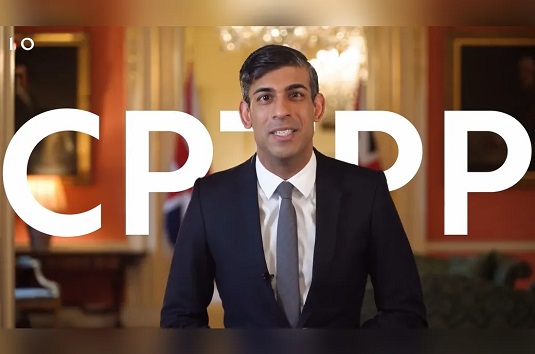
Rishi Sunak has decided to play the sensible game. At the beginning of the year, he announced he was going to become Mr Delivery. Putting distance between himself and his calamitous, chaotic predecessors, the high foreheads on retainer have advised more briefcase, less headcase is the passage to voters' hearts. Especially when his opponent is the epitome of administrative politics. On this score, Sunak has had a good few weeks. Northern Ireland has been solved, even if the DUP are running out of toys to throw out of the pram. The ERG threats and a Boris Johnson-led rebellion were brushed aside, and Jeremy Hunt's budget carried forward the do-nothing logic of "Sunakism" while not upsetting too many people. And now there's another feather in the cap: the UK's admission to the Comprehensive and Progressive Agreement for Trans-Pacific Partnership.
Yes, it does seem a bit strange. We've flounced out of one trading bloc - the world's largest - that happened to be on the country's doorstep and traded it in for another about six thousand miles away. But good headlines for Sunak as the government clinches another trade deal. It, apparently, shows the "real economic benefits of our post-Brexit freedoms". Oh good, guess that means we're all quids in as the beleaguered British economy gets a boost. Actually, no. The government's own briefing suggests CPTPP will increase GDP by 0.08%. That's right, by less than a tenth of one per cent. Or the equivalent of the average family's food shop these days. Seems ridiculous? It is. Trying to big it up, Kemi Badenoch suggested this was a down payment on the future. It's about potential: "40% of the world's middle class is going to come from that region". Nice to know, considering how Britain under the Tories is such an exporting powerhouse. And there's the rest as well. The fact we already have free trade agreements with 11 of CPTPP's 13 members, and how it hammers British farmers. Something the Tories are well practised at. What's the point?
We have to think about the core class component in the confluence of forces the Tories draw together: commercial and finance capital. As explained before, the City cannot be disentangled from the Tories - as Number 10's current resident reminds us. But when it came to Tory divisions over Brexit, the guff about sovereignty was partly about statecraft, of granting the Tory class interest untrammelled political power without limit in its home territory to shape British capitalism and manage its labour force as they see fit. And it was also about commercial opportunities and projecting the global influence of the City. Some city slickers, probably a majority, were happy with the status quo, while others thought their (note, not the country's) best interests were served outside the EU so London can consolidate itself as the global clearing house for laundering dirty cash, parking capital, and networking between commercial elites for future opportunities.
This helps us understand the Tory enthusiasm for CPTPP. Badenoch is right. Asia is on the rise while the EU, no matter how much it grows, is in long-term relative decline. The City needs to be where the action is at. Second, CPTPP is set to grow. China has applied to become a member. The UK is nowhere near as successful at trading with China as other West European countries, but as a CPTPP member with application veto rights the Tory government now hav a say over its terms of entry into the bloc. The naive might celebrate this as a chance to remind China about human rights and democracy. It also puts the UK in a strong position when it comes to the strengthening and enforcement of intellectual property rights, which are notoriously disregarded, unofficially of course, in China. This gives the government leverage and puts them in an advantageous position to extract concessions. More Chinese money in the City? Better (preferential) access for British finance? More opportunities for UK services? And also, the City could become even more of a conduit for Western capitals looking to profit from China's rise. Especially American capital.
All told, even if Badenoch's dreams come true we're not looking at more than a few percentage points on GDP. But that's not the point. Projecting the City is what matters, helping secure the UK's role as a global player is what matters, and ensuring the interests the Tories have traditionally articulated and served have long-term profitable futures are what matters. The UK's membership of CPTPP offers the electoral equivalent of a nice photo opportunity, but as with all things Tory it only makes sense in the context of the interplay between class politics and commerce.
Image Credit

Here's the round up of what's been cooking my eyeballs since the beginning of the year. Here's the previous edition.
A Fire Upon the Deep by Vernor Vinge
The Story of a Nobody by Anton Chekhov
The Ministry for the Future by Kim Stanley Robinson
What a Carve Up! by Jonathan Coe
The Prestige by Christopher Priest
The Haunted Hotel by Wilkie Collins
The Andromeda Strain by Michael Crichton
Jamaica Inn by Daphne Du Maurier
Paddy Clarke Ha Ha Ha by Roddy Doyle
Berlin Alexanderplatz by Alfred Doblin
The Andromeda Evolution by Daniel H Wilson
The Raptures by Jan Carson
Sybil, or The Two Nations by Benjamin Disraeli
A Parisian Affair by Guy de Maupassant
Annihilation by Jeff VanderMeer
Washington Black by Esi Edugyan
A Canticle for Liebowitz by Walter M Miller Jr
This is probably the most blokey list I've ever produced. That said, this is an all-killer tally. I really enjoyed Washington Black which in equal parts is a quest for freedom and self-definition, a meditation on white saviour complexes from the ex-slave's point of view, and the brutalities of the "peculiar institution" as it was practised by British colonialism in Barbados. Having heard a lot about it but avoided the film because jump scares are not my thing, the cosmic horror of Annihilation tickled my fancy and, thankfully, paid off. There's something about slow burn crisis and agonising tension, married to utter weirdness that makes the book compelling. The other two in VanderMeer's Southern Reach trilogy are on the to read pile. Jamaica Inn was excellent as well. Du Maurier is able to capture the creeping but understated (and oft-unremarked) dread of the Brontes but allow for their violent explosion in quite grim - for the 1930s - scenes. I thought this was every bit the equal of Rebecca. Lastly, something would be amiss if Liebowitz did not merit a mention. It's been on the list for a long time, and this fall, rise, and fall of civilisation - for a book written in the 1950s - has the feel of something a touch more contemporary (save the twee mutations some walk-on characters have). The world building is consistent and faithful to the sociological rules, which is always a plus. Very much a recommend.
Now I'm settled in the new place (did I mention I've moved?), expect a few more social theory texts when this appears again three months from now.
What have you been reading recently?
Image Credit
This quarter 77,058 votes were cast over 39 local authority contests. All percentages are rounded to the nearest single decimal place. 20 council seats changed hands. For comparison you can view Quarter four's results here.
Party | Number of Candidates | Total Vote | % | +/- Q4 22 | +/- Q1 2022 | Average | +/- Seats |
Conservative | 36 | 20,172 | 26.2% | -2.3 | -9.9 | 560 | -9 |
Labour | 37 | 22,247 | 28.9% | -1.2 | +8.5 | 601 | +7 |
LibDem | 29 | 14,130 | 18.3% | +3.1 | -9.0 | 487 | +5 |
Green | 25 | 6,689 | 8.7% | +0.2 | +2.5 | 268 | +3 |
SNP* | 3 | 3,743 | 4.9% | -0.1 | +3.4 | 1,247 | -2 |
PC** | 4 | 1,197 | 1.6% | +0.3 | +1.6 | 299 | 0 |
Ind*** | 31 | 7,162 | 9.3% | -1.4 | +2.1 | 231 | -2 |
Other**** | 20 | 1,659 | 2.2% | +1.2 | +1.1 | 83 | -2 |
* There were three by-elections in Scotland
** There were four by-elections in Wales
*** There were four Independent clashes
**** Others this quarter consisted of Alba (178), Breakthrough Party (120), Christian People's Alliance (93, 35), Libertarian (20), Monster Raving Loony (22), Reform (85, 40, 110, 37), Rejoin (99), Residents for Uttleford (238), Scottish Family Party (60, 90, 50), TUSC (15, 18, 23, 12), Yorkshire Party (314)
It's not very often Labour out-organises the Tories, but this was a rare quarter where they managed that, came out top in popular vote terms, and won the most council seats. I know not many people give council by-elections time of day, but given those who vote in them are disproportionately elderly and therefore more likely to support the Tories, these are a very good set of results for Labour. The Liberal Democrat revival continues as well with very respectable scores on the doors, and it might be premature to talk about the rise of the Greens but this quarter has been kind to them as well.
If this is the picture of local politics just over a month out from a crucial set of council elections for Rishi Sunak, things aren't shaping up well for the Tories.
Image Credit
