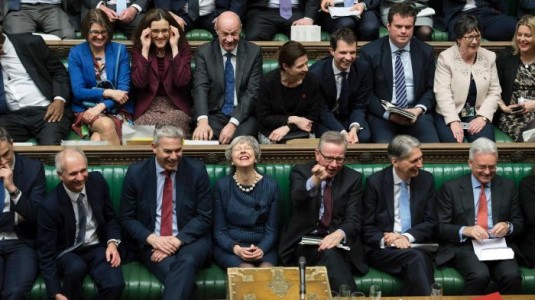
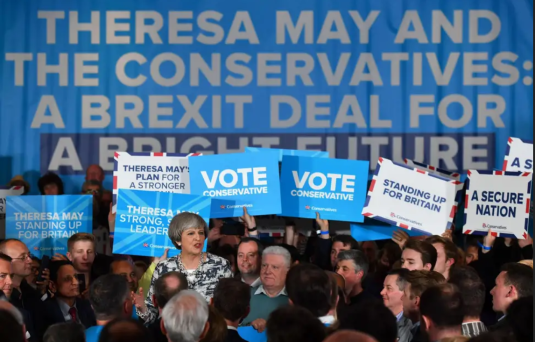
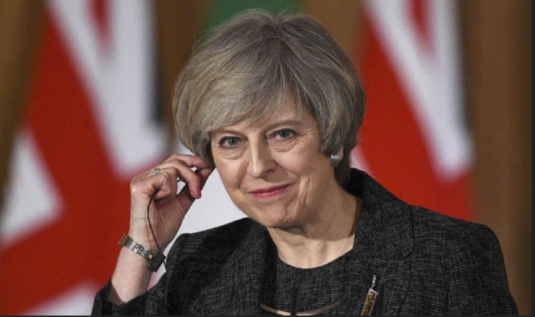
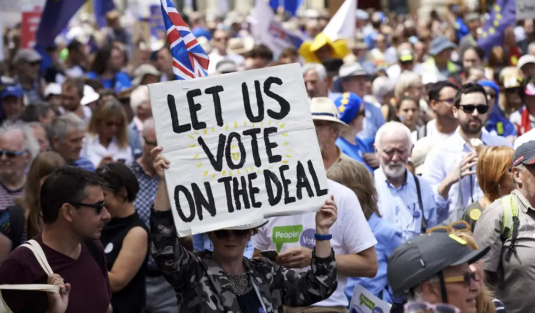
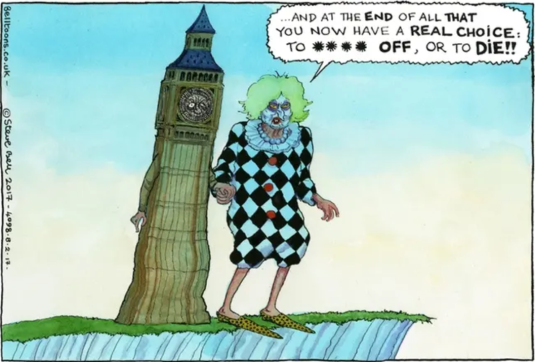
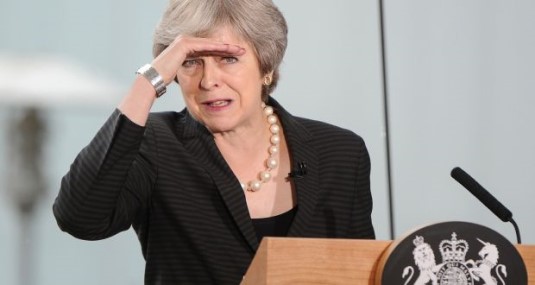
Theresa May is nothing if not persistent. After losing for the second time, she vowed to have another go. Notwithstanding procedural shenanigans from the Speaker's chair, May was able to return her deal to the Commons again this afternoon. And you know what? In case you hid away from the news all day (and, in all truthfulness, who could blame you?) May lost again. 344 to 286 was the damage this time, despite the hype train doing its best to talk up the number of Brexiteers who had changed their minds. Among them, for entirely opportunistic reasons, was one Boris Johnson. Unfortunately, it's likely we'll be hearing from him some more in the coming days, weeks and months.
Doing her peevish best, May afterwards declared parliament was coming to the end of the process and a majority cannot be found for anything. That's being somewhat economical with the actualité. If she, you know, showed a bit of leadership and an element of flexibility she could get a form of Brexit through. Sure, it might not be her first choice but the loyalist whip plus support for a softer version from the other side of the house would see something through. What then happens next? The unedifying parade of MPs in front of the cameras this evening was suggestive of a realisation that only one sensible option remained: a general election. Also, unless something else happens quickly and provided May doesn't press the fat red button of no deal, the EU has intimated it will be seeking to force a long extension on the UK. A humiliation for the Tories, certainly, and also a nightmare too as it gives Nigel Farage's new vehicle licence to carve up the Tory voter coalition. You know, the sort of thing Dave set down this ruinous road to avoid in the first place.
Not if the Prime Minister has anything to do with it. Alex Wickham reports that the deal is coming back for a fourth shot. Amazing. To circumvent John Bercow, it's bound to be modified in some way. One possibility is fixing to it the Nandy/Snell amendment disallowed by the Speaker today. For those whose eyes glaze over when following this stuff, what this binds government by parliament during the next phase of negotiations around the trade deal/future relationship. The Commons would set the objectives, the priorities, and the Prime Minister would be required to report back every three months on progress (or otherwise) made. As May isn't going to be said PM subject to this oversight, this might prove attractive to her in the abstract. The same, however, cannot be said of her suite of would-be successors. Looking harangued and beleaguered before the next mandatory general election in 2022 (assuming we don't have a snap one in the mean time) isn't a prospect any of them will relish. But could this be enough to get it through? Another alternative under consideration is effectively running off two options against one another: May's deal versus whatever comes out on top of the next round of indicative votes. I would expect something along the lines of a customs union with a confirmatory referendum bolted on to be the most likely winner, but with May whipping for her deal and whipping against whatever she goes up against, what's the point when both are likely to fall?
The big question is will May change? With a premiership that might be measured in days, all thoughts of a legacy have shrunk down to getting a pretty shitty deal through. As achievements go, few are more miserable than leaving the European Union on horribly disadvantageous terms. However, that is not her sole concern. From the beginning, Brexit under May has been a class project about maintaining the coherence of the ruling class's chief political weapon: the Conservative Party itself. This is why, despite career's end staring back every time she peers into a mirror, we're not about to see a volte face or pitch, at least by her, into a softer Brexit. Going for the customs union option is splitting territory. The virtue of today's vote is we now know for definite who the ERG fundamentalists/incorrigibles are, and who knows where this die-in-a-ditch brigade might end up should May demonstrate uncharacteristic flexibility. However, while avoiding a customs union you have the permanent damage the only real alternative - a no deal Brexit - would inflict on the Tories. And that's even before you start thinking about the appalling spectacle of a Tory leadership contest among some of the very worst politicians Westminster has seen in years.
The truth of the matter is by closing down everything, more or less everything is open again. No deal, May's deal with bells and whistles, a customs union Brexit with a referendum, a general election, and an outside chance of revoke and restart. The Tories have presided over a complete farce and an awful, indulgent, poisonous waste of time.
Many years ago I was a somewhat inactive member of a small, ultra-left group. In the flesh they were nice, supportive and very comradely. And thanks to their then relatively well-known publication, had built up a sizeable readership covering disputes inside other far left organisations. They also had a logical and consistent project: the refoundation of the Communist Party of Great Britain, and the route to success was principled unity between the main fragments of the revolutionary left. Their vision of the CPGB was a democratic centralist party along the lines of what the Bolsheviks were prior to the 10th Congress of the Russian Communist Party. That is a party united in action but operating with a culture of open debate and polemic, replete with factions and the rest. This proved an attractive proposition to a layer of militants, and indeed the cpgb - for it is they - were able to build up some political capital among the wider left as advocates for the Socialist Alliance movement, if it can be called that, in the late 90s and early 00s.
I took out membership in 2001 (I think), and by that point had been reading the Weekly Worker for four years. Unfortunately, it soon became apparent there was a weird cycle in the group's behaviour: they would undertake an initiative, attract a bit of interest, and then quickly piss it up the wall with ridiculously provocative behaviour. In the first issues I read, they were debating their impact on the 1997 referendum campaign for setting up the Scottish parliament. Rather than voting no or yes, they set up their own outfit (the Campaign for Genuine Self-Determination) and advocated an active boycott of the polls. A bit of interest was generated, and their small nucleus of organisation north of the border looked poised to fill out beyond the two members of its "Scottish Committee". The cpgb were also advocates for the then Scottish Socialist Alliance (centered on Scottish Militant Labour, which later became the Scottish Socialist Party), but very quickly spoiled their relations with SML and other leftists. This was because in their polemics they insisted on characterising SML comrades as national socialists. Not in the Nazi sense, of course, but as leftists committed to a variance of socialism-in-one-country-ism. Naturally, SML'ers were not impressed, and neither was the core of the cpgb's outfit in Scotland - especially when group guru Jack Conrad, in the most tone deaf manner imaginable, defended its use as perfectly reasonable and had a healthy pedigree among the grey beards *innocent face*. Burnout was one reason why the Scottish comrades decamped, but neither was it helped by their having to face animosity from their would-be partners and allies on the left.
Later on, as new comrades were attracted to the 'party' via their unity work they would drop polemical bombs almost designed to test newcomers' loyalties. One particularly egregious example was a bizarre obsession with the abolition of the age of consent laws, which caused no end of grief for the new comrades it had not long recruited on the infamous UK Left Network. Or unnecessarily spiky polemics. Or one bizarre episode where left unity feelers between the cpgb and the Alliance for Workers Liberty - ostensibly organised around the same 'open' principles - were destroyed because of a mix up over a billing at a public meeting attended by one man and his dog in a church hall in Leeds, an episode which saw the cpgb lose members to the AWL. This cycle, which I saw repeated a couple of times after I left before losing interest in their doings was typical of a certain kind of behaviour you see on some parts of the far left: provocation, boneheadedness, and a complete absence of tactical and strategic nous. No wonder the likes of the cpgb are no bigger now than 20 years ago.
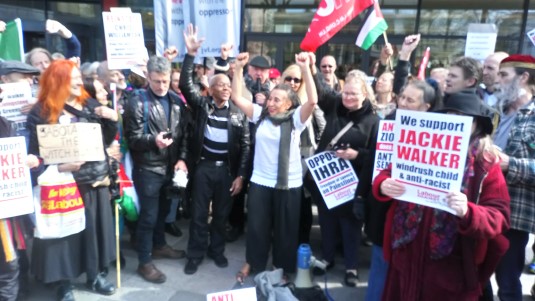
This brings us to the case of Jackie Walker, who has just received her marching orders from the Labour Party. This has caused a bit of a flap with declarations of solidarity on Twitter and all kinds of hand-wringing. Some of that support, shall we say, should set alarm bells ringing. But let's be honest and get real. The behaviour of "comrade" Walker has been harmful to the Corbyn project.
Walker has been expelled on the grounds of "prejudicial and grossly detrimental behaviour against the party". In case you need reminding, this isn't because she "criticised Israel" or some such nonsense, but because she has taken part in deliberately provocative and damaging behaviour. Imagine turning up at an event designed to tackle anti-semitism at Labour Party conference and, in full glare of the hostile media spotlight, to argue the toss over who Holocaust Memorial Day should be commemorating. Or pretending her dog-whistling comments about Jews financing the slave trade were entirely innocent and academic. And there's stuff that weren't heard in the charges against her, like attacking Momentum's decision to campaign against Gilad Atzmon, weird conspiracy theorising on public fora about Jon Lansman and his, nudge nudge, puppet mastery and "links" to Tel Aviv, defending Ken Livingstone's comments about Zionism, and the rest. While Walker has subsequently attracted a great deal of racist abuse herself, none of that excuses the fact that she has used her position, first as vice chair of Momentum, and then as a person of interest in Labour's anti-semitism wars, to ratchet up the tension, deepen controversy and damage the party and movement she supposedly cares about. This is not the behaviour of someone who wants to be helpful to the left, and certainly not of anyone deserving our solidarity against disciplinary action by the party.
The truth of the matter is ultra lefts of the Walker stripe are irritants at best and, at worst, useful idiots for the enemies of Corbynism and the labour movement. Funnily - and coincidentally - the cpgb and Walker happen to co-habit the same micro-campaign, Labour Against the Witch-Hunt. Birds of a feather and all that. As sectarians in the truest sense, their cracked ideas and provocations are far more important than the collective and the common approach. If they do know how badly their actions and behaviour reflects on and exasperates their comrades, they don't care. Winding their necks in and behaving responsibly, of trading in the infantile politics of provocation for the grown-up politics of persuasion is, it seems, far too much to ask and expect. Fine. People are quite welcome to peddle their incontinent narcissism as they always have done - just not in the Labour Party.
And so she's done it. The one thing she had left - the keys to number 10 - were dangled in front of this afternoon's 1922 Committee meeting of Tory MPs and she promised to hand them over if her deal gets through. Suddenly, all those really principled opponents on the backbenches found reasons to support her, should the deal get past John Bercow and has a third shot bite of the cherry. It is possible the government are minded to try, with BBC News all evening has doing a good job talking up the number of switchers from the hard ERG position to Theresa May's deal. 25 have changed their minds, according to Laura Kuenssberg though the DUP still say no. Which is hardly surprising as anything progressing to a united Ireland presents an existential threat to their continued relevance.
The problem with May is her conditional resignation announcement is, to reiterate a well-worn cliche, too little too late. From the moment she announced her intention to junk everything positive about EU membership, including surrendering the UK's say over the customs arrangements if we find ourselves without an EU trade deal to - all to indulge her immigration obsession - May's approach has been reckless in the extreme. Yet, despite the unexpected fatal wounding her project received at the 2017 General Election the forces within the Tories balanced out meaning that she still had the free hand to negotiate the deal she wanted. Too weak to bring her down in flight, the different Tory factions were then able to rally to sink her deal on two occasions. And possibly a third if it gets the Speaker's nod.
Humiliatingly, though tonight's indicative vote exercise found no majority for any of the options the Speaker selected, two of the options - leave the EU with a customs union in place, and a second referendum (which, funnily enough, fell by a 52/48 percentage split) - did better than May managed at the second vote. Ouch. Nevertheless, it suggests paralysis. For all the speculation and the reading of the runes, as the SNP decided to oppose Brexit tout court and won't even countenance a soft exit now the option has been put before them, there is no majority for any of the soft options. The only way it could now get through is if in an act of rare reasonableness May abandons her own ridiculous plan and whips for it. What a horrible position to be in. Then again, it was always going to be like this as party loyalties and petty ambitions won out. For instance, the SNP were joined by TInG and the Liberal Democrats in voting against Labour's position. The only way out, surely, is a general election?
Someone else taking this opportunity to play games is our old friend Boris Johnson. After spending the last half year fulminating against May's deal from the pages of The Telegraph, we now find this most slippery of customers piling in behind it. Don't expect anything in the way of principle, this is pure positioning for the top job. The near-transparent thought process here is Johnson pitching to where the bulk of Tory MPs are, to try and slither his way into the final two. And then, undoubtedly, once his name goes forward for the membership's consideration he will snap back to the hardest of hardest ERG-type positions to get the top job.
And so May's promise to stand down in short order fires the starting gun for open leadership pitching, not that many have been terribly discreet up to now anyway. Unfortunately, it also bakes in the Commons' stasis. Having learned absolutely nothing she's still clinging to her deal, and none of the other Tory factions can get anything through. But a clear out of the Commons is impossible because a new Tory leader contest cannot happen while Brexit this side of the deal remains a live proposition, and it is impossible for May to lead them into one thanks to the assurances she has given. What happens now is anyone's guess.
There is a weird discrepancy in the politics literature. Go into a good university library and you will find many more books about the Labour Party than you would the Conservatives. Check out academic specialists in politics, and there are more writing about Labour than the Tories. Go to Amazon and see the number of items available - 4,000 for the Conservatives but 7,000 for Labour, And why is there a burgeoning mini-industry of books published about Jeremy Corbyn, including a couple of biographies, but nothing as yet about Theresa May? Why this difference? Why are academia and writers on matters politics more incurious when it comes to the Tories? Here are three suggestions.
1. Consider media coverage. There is a huge focus on the Tories right now because of, well, Brexit. But stretch out these last four years - how much time has broadcast and print media spent poring over Labour's internal division versus those afflicting the Tories. You only have to compare the respective coverage of anti-semitism in Labour and Islamophobia in the Conservatives to know there is much more media interest in the former. Lazy defenders of the media might counter there is more of an interest in what goes on in Labour, and so they are reflecting audience preferences. The more astute will note that broadcast media take newsworthiness cues from the press, which is overly right wing (to all intents and purposes, part of the Tory party according to its most recent decorated historian, Tim Bale) and therefore slanted against Labour. It doesn't take too much to suppose academic output as well as so-called popular politics titles reflect this established emphasis.
2. Familiarity. Bourgeois politics are called bourgeois politics because, um, they're bourgeois politics. The Westminster system is their system, and they determined the rules of the parliamentary game long before the House of Commons was troubled by the intrusion of worker representatives. If we date Parliament to the 1800 Act of Union, Labour has only been around for about half of its political history. If you want to go back to 1604, as per the precedent recently restated by the Speaker, or even further to its misty origins in feudal England Labour represents even more of a newcomer, a positive novelty. From the Tory standpoint of statecraft and managing the country, knowing what the party of the plebeian masses is thinking and doing always has to be a top priority, not just because of electoral competition but to protect their system and privileges from what the Labour Party implicitly threatens. Despite a century of what you might euphemistically describe as a mixed record, Labour politicians have a demonstrable capacity to win elections, form governments, and occasionally pursue politics involving the imposition of aspirations from below on the interests from above. Labour terrifies them because liberal democratic politics has incubated a proletarian party capable of permanently relegating the Tories to the margins and tilt calls power decisively away from them. The Tories are a known quantity, so why encourage an intellectual culture that privileges the study of the Conservative Party?
3. The left also neglect the Tories. During the 1980s Stuart Hall's work stimulated a wide-ranging debate about the state, the Thatcherite project, and the contemporary relevance of Gramsci's concepts. This was also alongside attempts by the left in Britain to think through socialist strategy in the context of changing class structures, the demobilisation and fragmentation of the industrial working class, the place of ethnic minorities and 'new' social movements in the progressive firmament, and a politics appropriate to the emerging post-industrial economy. After Thatcher, analytical concerns with the Tories diminished. Partly, because the rise of New Labour meant bourgeois politics had (temporarily) found a new natural home, and partly because the Tories were a busted flush - despite the unexpected triumph of the 1992 general election. Furthermore, the left have always taken strategic questions seriously and a great deal of debate about class, economics, and the relationship between them and Labour and/or alternative left vehicles are always strategic debates. For the Labour right, in as far as they've participated in such discussions, it's been about what they regard as necessary to guarantee Labour's electability. For the left it has been as much concerned with the possibility of transforming Labour as an instrument of socialist policy and class struggle as taking power. Therefore the Tories have tended to be crowded out. We know they're the enemy, so why pay them special attention?
A thousand obituaries have been written for Theresa May, and yet she's defied every single one of them. From the moment she bungled the election, the fall out from Grenfell Tower, and the long, calamitous June we've endured for nigh on two years, the premier-ship has weathered all storms. Sure, her first major squall smashed the bridge completely and swept her two most important - and able - lieutenants out to sea. But it also locked steering into position, ensuring subsequent buffeting by turbulence or tempest failed to knock her from her unidirectional course. Not even gaping chunks shot out of the hull by some of the worst defeats ever suffered by a government failed to sink the vessel. And as she limped into port, the deck in tatters and the sails but rags streaming from the masts, it looked like May inadvertently scuttled herself.
It wasn't just May's ill-advised choice of words and tone that marked the end of the road, it's the test she set herself. Last Sunday with the PM's blessing, cabinet members did the rounds to say the deal wouldn't be coming back if support can't be mustered for it. Come the week the Speaker was minded to rule out its return thanks to parliamentary standing orders, and in the days since the EU issued their two-lane extension - 12th April if May's deal wasn't agreed and nothing else was forthcoming, and 22nd May if it was to get the supplementary legislation through - the hard Brexit right and the DUP cried foul and reiterated their opposition. Then came her disastrous public address. There was no way, not even the remotest likelihood a third try could clear the Commons. For someone with no reverse gear, who confuses obstinacy for leadership, this is a recipe for paralysis. You could quite easily see May doing nothing except for pantomiming negotiations and waiting for the clock to run down again to get the deal through.
If the Twitter buzz retailing rumours and rumours of rumours is correct, then the end truly is upon us. Reporting earlier on Saturday, Alex Wickham of Buzzfeed had the low down on an awkward but fruitless encounter between the Tory whips' office and May. To all intents and purposes they told her to go. And the gossip about unnamed minister texting unnamed minister with a view to decanting May from Number 10 acquired substance as "Shippers" chimed in. He claims 11 ministers are planning to tell May to go at Cabinet on Monday, including Michael Gove who has "secretly assembled" a leadership campaign team. What chance an orderly transition after May? Um ...
Ordinarily, if a Prime Minister steps down the deputy takes over as caretaker until they are replaced by a new leader. On this occasion, this would be David Lidington - an otherwise anonymous and not obviously objectionable Tory, at least compared to the other "characters" that make up the government. The problem with Lidington, according to "Shippers", is that he's quite prepared to do Brexit as the full customs union with single market access monty, with the backing of the Labour Party. Curious that Sajid Javid is counted among the Leavers-for-Lidington, while Jeremy Hunt is very much not in favour of such a proposal. Even more bizarre is Gove who, despite his popularity among the backbenchers and the most prominent Tory in the Leave campaign after Boris Johnson, also has the hots for Labour's position, at least according to self-appointed ERG shop steward Steve Baker. Is this what hegemony looks like? Is Jeremy Corbyn Prime Minister already?
For Tory watchers, this is very exciting. The left's path to and retention of power involves the disruption of the Tories and the dispersal of their voter coalition. Happily, they're on the verge of doing this necessary job themselves. For the government to adopt Labour's approach to Brexit will cause a major schism. The ERG and their friends will cry betrayal, of course, and Nigel Farage is sure to go through the "this ain't Brexit" motions. With luck, the hard right will decamp and split the party from top to bottom - but that's expecting a bit too much. As per their friends on the Labour right (literal friends, in some cases) who have a record of demobilising their base, what is more likely is their shrieks and squeals to start prising apart the Tories' electoral coalition and driving a wedge between the Conservative Party and those hard right voters for whom the hardest Brexit has become an S&M fantasy. Not ideal when your coalition is old, isn't replacing itself, and when leaving the EU is the glue holding the shebang together.
For May, the writing is on the wall and she will be remembered as a terrible Prime Minister. Even so, she has rendered a valuable service. In spite of herself she has led the Tory party to the brink of immolation. If the whole thing is touched off and goes up like a bomb, then history might be kinder to her than she could ever hope it to be.
Last week at the Media Democracy festival, Juliet Jacques of Suite 212 fame hosted a discussion under 'Podcasts - a tool for political change?'. Joining her on the panel was Jack Frayne-Reid of Mike Gapes's favourite podcast, Reel Politik (see link below), James Shield filling in at the last minute for Ayeisha Thomas-Smith of the New Economics Foundation podcast, and lastly Riley Quinn from TrashFuture.
There was a time when a good part of my political work was organised around petitions. For calling attention to an issue and, of course, selling the ubiquitous newspapers, we found them a handy tool. As a form of activism or expression of solidarity, signing a petition is the least time consuming and cost-free type of political participation there is - bar sharing a Facebook post or retweeting something. This is why people need to calm down about the Revoke Article 50 and remain in the EU petition currently ongoing and be clear about what it can achieve.
It clearly has tapped into something. After last night's disgraceful address of the nation by Theresa May, millions are incensed and exasperated at her pathetic attempt to annex the public to her project. The petition then is an outlet, of remain supporters forcing their way into the parliamentary process by the only means constitutionally afforded them inbetween elections. Speaking earlier in the Commons, Andrea Leadsom summed up the government's attitude by saying they will take a serious look at it once it has topped 17.4m signatures. At just over two million at the time of writing, there's a way to go.
Nevertheless, the petition is good organising and publicity fodder. It has dominated Twitter all day, which guarantees prime billing across all the new sites, and is good for raising awareness about this weekend's second referendum march - a demonstration likely to have a larger official(ish) Labour contingent on it than last October's. No doubt the demonstration will be very large - but is it going to make a difference?
It depends on what your objectives are and why you're on the march. While previously there were plenty of speakers and so-called notable personalities who used their remain creds to attack the Labour Party, a repeat might not be on the cards. Labour's signalled willingness to go for a second referendum over and above accepting May's deal, and Corbyn's careful refusal to rule out revoking Article 50 (who says he can't do the clever-clever?) is good position-taking from the standpoint of shoring up the party's voter coalition. We know there are (and still are) people active in the People's Vote movement whose dedication to the cause has a thing or two to do with driving a wedge between Labour's leadership and the mostly pro-remain base of Corbynism, especially among younger activists and voters. Not only has Labour's referendum and Article 50 pirouettes helped draw the sting from the issue, the decamping of Corbynism's worst critics to the absurd Independent Group has exposed their long-term intentions, put paid to their wrecking scheme and damaged their standing among their peers in the upper echelons of Remain. These people were only useful in so far as they were levers on Labour's position of "constructive ambiguity", and their use now is, well, not much.
In wider terms however, it won't make any difference to Theresa May. There could be three, four million people marching down the Embankment and surrounding Westminster and she wouldn't budge. Not because of her ruinous obstinance or "leadership", but because she knows those taking to the streets aren't her people. The march against the Iraq war, for example, was neither sufficiently aggro - as per the anti-poll tax campaign - nor composed of people who would make much of a difference in general election terms. Ever the cynic, Tony Blair knew that with the Tories four square behind his plans, the LibDems much, much smaller, and the threat from the far left derisory he calculated he could go for it and safely assume the 2005 general election wouldn't cause Labour much bother. And so it proved. May knows a demonstration of remainers, no matter how big it is, is never going to cause her party trouble - and is one reason why she's far more invested in pandering to her right flank than the liberally-Cameroony Tories of the Justine Greening/Dominic Grieve type.
Therefore, from the standpoint of putting pressure on May it won't. And with news coming through that the EU are prepared to grant an unconditional extension to 12th April, she can go about playing for time again. But in so doing, she's accelerating the welcome doom of the Tories. May is ensuring her party cops the lion share of the blame for the Brexit fiasco, and events like this Saturday's march are an episode, a moment, in consolidating a solid bloc of growing anti-Tory voters that could keep them out of government for a very long time indeed.
Brexit is deep in logic denying territory. It's almost as if events are actively gaslighting those paying close attention to them, so let us consider the events of the last few days in an effort to keep hold of our collective sanity.
Over the weekend, May indicated she planned on dragging her deal back to the Commons for the third time. Again, having learned nothing from the fourth and the all-time worst defeats ever inflicted on a government, she thought it would be a simple task to to table it again. There were also indicators from some hard leavers, like Esther McVey, that they were prepared to stomach her deal because it was the nearest to their idea of Brexit they were ever going to get. And the possibility of the DUP changing their minds thanks to more Northern Ireland cash was talked up in an effort to create a buzz, or at least an impression of movement. Why? In the hope of shunting a few Labour MPs in the direction of the deal too.
And then John Bercow happened.
The government protesting against his "ambush" is, as with all things the Tories say about their opponents, completely disingenuous. At the very beginning of the meaningful vote process the Speaker plainly and bluntly stated the government would not be allowed to keep bringing the same deal back after its defeat, as per the rules of the parliamentary rule book, Erskine May, and upheld on several occasions since 1604. In fact, by allowing it to come back a second time you might argue the Speaker has shown considerable leeway and generosity. To get around this, the government have to do more than just find another form of words. They could put forward their deal with Labour's second referendum amendment, or negotiate something different. Instead, they have threatened to refuse Bercow a peerage - the second time this pathetic threat has been aired - and proceeded as the Speaker hadn't ruled on the matter, talking up other obscure parliamentary routes to circumvent the Speaker's authority. Bizarre.
Well, Theresa May might consider Bercow's statement beneath her notice but Donald Tusk certainly didn't. Her letter formally requesting an extension to the Article 50 process to 30th June is, like everything else, subordinate to Tory party management. At this afternoon's Prime Minister's Questions the point was reiterated. The truth of the matter is she fears participating in the European elections for reasons other than their being an utter farce. Her concern is an insurgent force to the Tories' right, be it UKIP or Farage's vanity vehicle, not just taking seats but sticking a great bloody crowbar into her party's widening divisions. Nevertheless, Tusk's reply - Delphic as always - suggested the EU would be receptive at giving this deal more time if there was a plan and a positive vote attached to it. Nothing on what they are prepared to do to avoid no deal, nor ruling out the possibility of someone else coming to them with something else.
And typically of May this bounced right off her tin ear. In her appeal "over the heads" of parliamentarians, she obviously thinks if Farage and, to a lesser extent, Jeremy Corbyn can do the populist thing she might as well have a go. As a number of folks have pointed out, opposing "the people" to parliament is not a good idea, especially when the political mood is febrile and, lest we forget, last time matters were at fever pitch a MP was murdered. Who, apart from the unhinged fools who spend all day every day outside of Westminster shouting "traitor!" at passing MPs or the grizzled loner dreaming of getting their hands on a "traitorous" member is this sort of rhetoric supposed to appeal to? May is past caring. As an authoritarian lacking all authority, there is nothing she won't say, nothing out of bounds if she thinks it will serve her ridiculous ends. Up to and including dog whistling political violence.
The more things change the more they stay the same. In May's mind, her inflexibility and rigidity demonstrates resilience and leadership, when in fact it's a symptom of weakness and an unwillingness to face up to political realities. A deal can be done. Labour's customs union approach, or the similar scheme hawked around by Nick Boles (who, nevertheless, has voted for May's deal twice and probably will do so again) has a greater chance of getting through the Commons - especially if May whipped for it in a 'it's-this-deal-or-remain' scenario. But she isn't about to do that because the tenuous unity just about keeping the Tories together would be torn asunder. Still, she has today allowed a glimpse of her Plan B. Assuming the EU grant an extension, which is likely seeing as the Irish Republic are desperate to avoid a calamitous Brexit, but May's deal is rejected again and again, those are three months in which disgraced minister Liam Fox potters around the world signing continuity trade deals (this week Liechtenstein, next week Andorra?), three more months of Brexit contingency planning, and three more months to sort out side deals on the down low with the EU to keep things going after exit day. She won't get her deal, but she will be the Prime Minister who more or less kept her party together, produced Brexit and, with it, controls on immigration. Damn all the rest - to her own satisfaction she will have delivered her political objectives: the cracked promises she began her blighted premiership with.
Twitter is such an innocent-sounding word. Yet in the dystopic social media landscapes of 21st century late capitalism it is a crusher of spirits and devourer of souls. It is an expansive news service, a friendship network, trolling board, and niche fandom simultaneously and ceaselessly packaged in one simple, easy-to-use interface. That makes it ground zero for, well, everything. For folks not plugged into the juggernaut, or those who've never known anything but always-online describing its novelty is difficult. My account marked its first decade on the 10th of this month, and for me and hundreds of millions of others it has transformed how we do the daily politics and the very way we think and react.
What was Twitter like 10 years ago? One should studiously avoid nostalgia, which is often more dangerous than any ideology. But it was different. Size mattered, and it was several orders of magnitude smaller. When I joined there were no hashtags and, consequently, trending topics. The retweet button wasn't invented, threading was far in the future and, yes, there were only 140 characters. It was a platform still finding its feet, as were all of its users. See for yourself with the inane bullshit that was my first day on the platform. However, its use very quickly became apparent. Not long after joining, the G20 rolled in to London for one of its high profile summits. During the days of protest PhD productivity fell as tweets and reports rolled in from on-the-ground participants. Of course, sat behind a computer screen in a dingy office seeing micro blogs roll in didn't feel like you were there in the crowd, but the immediacy of the reporting and its real time updating engaged you in a process of observation and feeding back. Then Ian Tomlinson, a bystander going about his business, was assaulted by the police and died later. The Graun had the footage but it was the collective refusal of the Twitterati to let the story disappear, and ensuring it was put in front of broadcast hacks day on the platform day after day ensured it became a story. Later that year, Twitter was used to get round the gagging order Trafigura slapped on the media to cover for its toxic waste dumping off Cote d'Ivoire. And it became the tool of choice for people protesting against Iranian theocracy, successfully bypassing regime media and getting their messages out - a pool of tactics that helped the Arab Spring along a year later.
The possibility of Twitter being something more than a glorified chatroom helped its profile, and very quickly practically all the Westminster lobby hacks and key MPs were on board. And yet, initially, it appeared to be very much a left-liberal dominated space. The dearth of Tories and the rest led Kerry McCarthy to declare at the 2009 Labour conference that we didn't need the backing of The Sun any more, because we had Twitter. A bit premature perhaps, but already there was an appreciation of how it could body swerve the controls and checks of the establishment media.
Early Twitter was no paradise. There were big fights and bad blood, the red mist descended from time to time and creepy men did their creepy internet thing. But the comparatively small numbers created an illusion of the collapse of social distance and, if anything, expanded the boundaries of Westminster hackery while intensifying the points of contact within it. For a brief period, you could even be feted by the great and the good for compiling a few tweets. But as it evolved, Twitter resembled more the society hosting it. To my mind there were two big changes as we moved into the new decade: the persistent and ubiquitous presence of Justin Bieber trending topics, announcing Twitter was now the plaything of masses of teenagers, and later in 2013 the very public exposure of the platform as a means for harassing and threatening women. This was the first time Twitter - the company - was forced to confront issues of personal security as it blew up in the mainstream media, much to the pleasure of the tabloid press who were now feeling the social media pinch on sales and revenues. This was the moment the block button and report functions were introduced, but here we are six years on and one can still issue rape and death threats with near impunity - as leading women politicians will tell you.
Remember that illusion of a collapse in social distance? More and more people used Twitter as an outlet for their frustrations. Who knew that powerless and voiceless folks would use a social media to directly connect with leading politicians, business people and celebrities and tell them what they think? In Westminster terms, this was most unwelcome. In pre-Twitter days MPs and other media people could insulate themselves from how they were perceived by most. In a constituency surgery, they can move from the occasional ear bashing. On doorsteps one can jog on when faced by an angry punter. The poison pen letter lacks immediacy, and a lackey can ensure the boss never sees it. Twitter took that away. So when sundry Labour MPs started undermining Jeremy Corbyn's leadership by calling into question every decision, briefing against him in the media, and trying their damnedest to obstruct and sabotage they were genuinely shocked to receive "negative feedback". It's a bit like whingeing about getting thrown off a Select Committee because you've resigned from the Labour Party - the very idea their actions would conjure forth repercussions is shocking precisely because far too many of them have spent political lives wrapped in cotton wool.
It wasn't long before informal, intentional groups began emerging out of the froth. There's always been a left Twitter and a right Twitter, but as far as UK politics were concerned we saw the coalescing of the hash tag tribes when the political temperature heated up. UKIP supporters were early adopters, following the media scrum surrounding them between 2013 and 2015. They were trailed by the cybernats who, unsurprisingly enough, were excited into being thanks to the Scottish referendum. The harmless Milifandom was a thing for five minutes, before giving way to the Corbynist Twitter tribe on, um, Twitter. And since the referendum Follow Back Pro Europe did their level best to become the most annoying of the tribes, though they were given a run for their money by the much smaller and not-at-all racist Brexit brigaders. And this is where Twitter is locked. When politics are fraught and there is real polarisation, you can expect it to play out online too.
Given the character of the society in which we live, I suppose this was inevitable for a number of reasons. Twitter, especially politics Twitter, is essential infrastructure now and (mostly) reflects the priorities of bourgeois politics as defined by leading politicians and media gatekeepers. But it is so much more. Like nearly all forms of social media, Twitter has accumulation logics built in. Follower counts, retweets and likes are all proxies for worthiness, of crude measurements of social capital and status. Hundreds of thousands of followers are indicative of wider standing in legacy media, not how good your Twitter game is. Intimately bound with this is the attention economy, of a competition between media products, not least the outpourings of user generated content, between each other and other media all screaming, fighting, demanding attention. As users proliferate, new streaming services come online, more programmes and films are produced, everything, everything is forced into Darwinian combat for eyeballs and time. It's how the political economy works, and by extension those who don't do it for a living are forced into the same game to attract an audience. There is the reactive character of social media, and Twitter in particular - something Richard Seymour has recently written on. That we become participants in the media and its recurrent shit storms. For instance, the anti-semitism wars would not have a sustained presence in mainstream coverage were it not for the constant feeding frenzy as all-comers pile in and react. All analyses, all attempts to try and get to grips with what's happening are drawn into the same inexorable reactive logics, and drives the controversy on and on and on. Of course, the observation capitalist mass cultures valorise reaction over reflection is nothing new. But what is is our consumption by the fray, of analyses ordinarily to spiky for media digestion being fully assimilated into a new political economy of reaction-mass processes. Without wider social change, it's difficult to envisage how this pit can be escaped.
Twitter, like all social media, is more than a simple expression and significant cultivator of neoliberal subjectivity in online spaces. It hooks into the economies of identity production - an increasingly important vector for capital accumulation as well as social control - and by virtue of the networks connects people of like minds, while reinforcing the notion of identity as liberal property rather than as something fluidic that resists and is always surplus to the onslaught of fixed locations that try and pin it down. Hashtag tribes, for example, are enduring and appear fanatical and irrational because their points of fixity deliver rigid cognitive maps largely impervious to nuance, and define themselves in proprietary terms vis a vis binary opposites. Which makes them ideal fuel for the reactive economies of the Twitter feed. However, precisely because there is a surplus of identity, a slippage, the possibility of its overcoming is present through the very same communicative networks that help constitute social media's panoply of neoliberal avatars in the first place. As with all things capitalism touches, the potentials for oppression and liberation are co-present and co-produced, and one aspect of socialist politics is simultaneously a disentanglement and struggle to forge networks into something that challenges capitalist logics.
That, of course, is easier said than done. 10 years on Twitter and I haven't worked it out, despite the mass eruption and rude intrusion of large numbers of people onto the battlefields of British politics - but challenge them we must.
Writing an "open letter" in the Sunday Telegraph begging your MPs to back your deal is not a good look. Then again, following the worst and the fourth worst defeat for a government in Westminster history, what are you supposed to do? I might suggest coming to an accommodation with the party opposite to reach a consensus on a much softer Brexit would be a start but we can't well have that. If anything Theresa May's letter to "patriotic MPs" is aimed exclusively at her own benches, doubling down on the double whammy her Brexit deal has already suffered. Nothing has changed, but the choice is back me or no Brexit. Is it working?
Despite the Article 50 vote clearing the Commons last Thursday, May wants to give it one more heave - assuming the Speaker allows her unchanged motion to return. Therefore having the likes of Esther McVey make encouraging noises on Sophy Ridge this Sunday morning helps May with her bean counting. As a Brexiteer but not a dyed-in-wool Moggite, she is representative and typical of a layer of Tories who could be swayed by May's messaging. However, as Philip Hammond observed, the deal won't be coming back unless there is clear movement among the Tories and their sometime ally, the DUP. Probed about whether any more money is going to be awarded Northern Ireland, he tried his shifty best to claim we would have to await the outcome of a review into regional spending. You don't need Louise Mensch's esteemed talent for Kremlinology to interpret this as anything other than the admission that more is on the table should the DUP ride to May's rescue. By May's reckoning, if the DUP are in the bag than enough Tory MPs are going to shift. And then her would-be facilitators on the benches opposite could then move in sufficient numbers.
Then again, there is a then again. Because May is utterly absorbed in bringing her party into line (plus ça change), she hasn't paid much attention to what's going on on the opposition benches. As it stands, Labour are going to be whipping on a second referendum amendment on the returning motion. That is, Labour will commit to supporting May getting her deal through the Commons if there is a second public vote on it. This move is not without risk, but is preferable to no deal and, indeed, May's deal. The first problem is getting the amendment to pass. As a few mainstream centrist commentators not beholden to the so-called People's Vote campaign have noted, there is no majority in the House for another try. Well, ordinarily, yes. This one though is a bit different. Presumably all the oppositionist parties save the DUP are going to vote for the amendment, notwithstanding some skulduggery from The Independent Group because it's not "their" amendment. But when it comes to Labour itself, its move is in line with party policy, which makes for a handy dilemma for leave-inclined MPs thinking of breaking the whip. Vote against the amendment and expect aggro come reselection time, vote for it and fear the consequences on polling day. If their numbers can be held down and enough Tories come over ... It's very much a long shot, but even outside chances are still a chance.
In no uncertain terms is May about to whip for Labour's amendment, though it's the surest - and perhaps only - way of getting her deal through. For without it, and though the Tory numbers are moving in her direction it's not likely to be enough. If, however, the amendment did get through then we might have the delicious prospect of May whipping against her own government's motion, which widens the schism in her parliamentary ranks. Or goes for it and, um, widens the schisms in her parliamentary ranks.
If the amendment falls, and with it the fresh attempt at passing the deal, or May pulls it, or Bercow disallows it, all eventualities are stacked with serious political pain for the Conservative Party. No deal would be a catastrophe for the country, and the Tories cannot but be blamed as the authors of the disaster. Though some are bound to try pinning it on Jeremy Corbyn. Somehow get the deal through at the third time of asking, then this divided and dysfunctional mob go into negotiating the future relationship for all this to play out again. Strike a deal with Labour, be it over a softer Brexit or a referendum guarantee, and the Tories are going to simply eat themselves. Or, depending on what kind of extension the EU comes back with, more division and rancour as Brexit is menaced by the growing likelihood of a referendum or Article 50's revocation or the prospect, horror of horrors, of a general election. There are no good choices, a habit of May's we've grown accustomed even when there wasn't a dire national emergency, but the fates are closing in and the Tories are caught on all sides.
They say Europe is the issue that does every Tory leader in eventually. This time it's poised to consume the entire party.