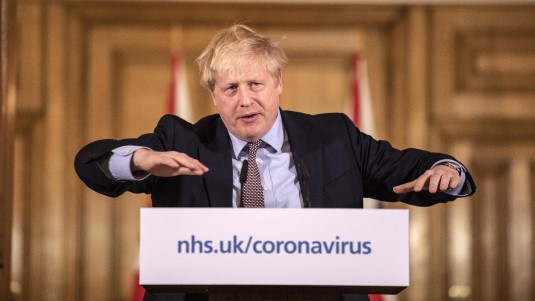
You don't have to "clap for Boris." There is no compulsion to put out earnest tweets or status updates "wishing the Prime Minister well." But going to the other extreme, to actively crow about Boris Johnson's illness or, in some cases, merrily willing him to suffer and die is so self-evidently stupid that it says something about the state of politics how a piece such as this has to be written. I don't need any lectures about what an arsehole Boris Johnson is, his bumbling chucklesome indifference to the hundreds of thousands who've suffered under the Tories, and how his own dithering and complacency has led to hundreds of unnecessary deaths, and is - poetically, one might say - responsible for his own hospitalisation. But before anyone caves into the little voice urging a public display of gloating, perhaps some thoughts should be spared for other people. Yes, a radical suggestion for our narcissistic times. Johnson's family deserve sympathy. Whatever Johnson is responsible for, his kids and relatives are not, and anyone wishing Johnson harm is also wishing distress, misery, and grief on others who aren't accountable for his actions. Hoping his unborn child grows up without a father is many shitty things, but radical and left wing it is not. That the Tories show scant concern for those who suffer at their hands does not matter: socialism is not a game of putting a plus wherever they put a minus and vice versa. We're not their mirror image, nor a revenge fantasy wrapped up in a critique of political economy. Socialism is a class politics, a collective struggle, and a morality too. As my mate Anna Chen has oft noted, Trotsky wrote a pamphlet called Their Morals and Ours, not Their Morals and We Ain't Got Any. Which brings me to the second point. After putting something out last night about Johnson's move into ICU, some dickhead on Twitter replied about not being on Labour doorstep now. Quite. But sure, it's a great idea to go round associating left wing ideas with wishing death on Coronavirus sufferers because of their politics - which is how most people will see it. As well as handing ammunition to our enemies, something cranks and idiots in our own ranks have proven more than happy to do in recent times. We don't know what politics is going to be like post-Coronavirus, but giving the powers that be excuses to snuff out, witch hunt, and delegitimise leftwingers is dumb beyond belief. And yes, there are very good non-political reasons to show a bit of bloody common sense. Right now there are millions of people stuck at home. Millions of people who are frightened of Covid-19 and are terrified of catching it, not least thanks to the unpleasant symptoms and the grim death toll that gets published every day. What do you think they feel about the stricken Prime Minister? Would the daily grind of stress and worry grow lighter if Johnson suffers badly, or dies? Or would this situation become more frightful and more difficult to cope with? And spare a thought for those living with mental health conditions, or need to stay healthy to discharge caring responsibilities, or live with at risk people. Are they going to be cheered up? Or, as folks deeply anxious about the future is it going to make every day more of a grind, more miserable and dreadful? The answer is so obvious it shouldn't need spelling out. If you can't stand Johnson, fine. It's that the world doesn't need to hear about your oh-so principled reasons for wishing him dead right now.
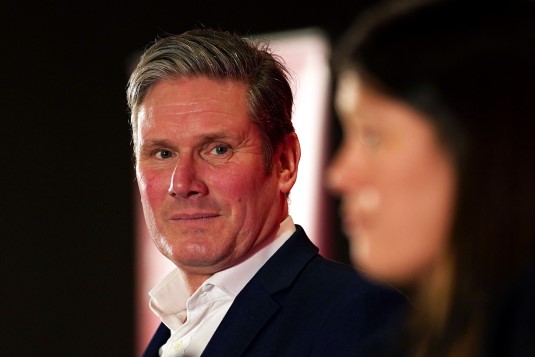
"It's the dregs of the Brown combined with the mediocrity of the Miliband era", so says a "senior Labour MP" finding themselves passed over for preferment in Keir Starmer's first shadow cabinet. That's one way of looking at it. The other is a candidate of the soft left fills his first appointments ... mostly from the soft left. Shocking, I know. In terms of political balance appointing Rachel Reeves the roving brief of the Shadow Chancellor for the Duchy of Westminster is a bone thrown to Labour First, while shuffling Rebecca Long-Bailey to Education is there to placate the left. Not that either wings are going to be satisfied by measly nuggets, but it doesn't matter. The left are strong, but not as strong as it might be, and the right have hitched their wagons to Keir's caravan - not the other way round. What to make of the rest of the new appointments? Slotting Anneliese Dodds into shadow chancellor is a good shout. Upon her election in 2017 she served loyally with John McDonnell, obtaining his endorsement, and helped work up Labour's green industrial programme. She was part of the party's economics road show, for instance. This will at least mollify the left who are happy to take John's recommendation as good coin, even if they don't know her terribly well. And for those who enjoy entertaining counterfactuals, it's likely Anneliese would have got picked for this position had RLB won. Giving Lisa Nandy shadow foreign was probably not much of a surprise, though it will be noted in the scheme of the Westminster pecking order that she was awarded a more senior position than the woman who actually came second. Folks can read into that what they will. But from the standpoint of making an impact, as we saw in the leadership election Lisa easily had the best of Andrew Neil and would therefore prove more than a match for the hapless Dominic Raab in the post-Covid world. Despite an unwelcome propensity to be economical with the actualité, from Starmer's point of view a top drawer media performer with a proven ability to think on her feet will, he thinks, make her an asset to the new leadership. Other appointments? I suppose the return of Ed Miliband is something Keir's core supporters will appreciate. Still popular in the party, politically it reconnects with the pre-Corbyn era and effectively parcels Jeremy's time off as adeparture from the norm. Now liberated from the Blairist constraints said to have saddled him between 2010 and 2015, we'll see whether there is radical mettle in his soul. The moving in of Jonathan Reynolds to shadow social security is interesting. Rare among the centre right of the party his idea of "radical welfare reform" isn't privatising and marketising everything, unlike some. But he is supportive of the basic income, which we hear today is now part of Spain's response to the Coronavirus crisis. Having an advocate for it in this position is encouraging. Scotland was only ever going to be given to Ian Murray, bringing back Charlie Falconer as shadow attorney general was entirely predictable, as was shifting Emily Thornberry to international development and giving David Lammy a prominent role (considering his exemplary work around Grenfell Tower). Who's in and who's out - which is all of Corbyn's top team except for RLB, Jonathan Ashworth, Angela Rayner, and Emily - is jolly good fun, but what about the politics? First, Keir has not gone out of his way to troll the left and appoint some of the party's biggest idiots. Positions for the likes of Wes Streeting, Jess Phillips, Neil Coyle, and Margaret Hodge was sure to severely damage his creds as the unity candidate and, well, undermined the capacity of his team. Having one eye on the brief, while giving under the counter briefings to the lobby hacks wouldn't have done. As regards wider alignments in the party this spells the end of Unite's disproportionate influence over the party leadership. It's certainly true many trade union tops in other unions felt their nose was put out of joint these last few years, both in terms of Unite's out manoeuvring them for influence and the Corbynist pressures coming upwards from their activist wings. Why else, despite the over long contest, did many general secretaries scramble to convene candidate endorsement meetings before pressure could build from lower down the union echelons - a lesson learned from 2015 when the collective apparat were caught on the hop. And so now Unite is more out in the cold and the other union leaders enjoy more pre-eminence - again, a return to how matters were pre-Corbyn. Overall though, folks claiming this is a neoliberal or Blairist restoration are wide of the mark. The left are right to harbour serious concerns about Keir Starmer, and his commitment to a Corbynish platform during the election probably owes more to positioning than genuine enthusiasm, but the politics of what we're seeing is a return to soft left Fabianism. A politics of brainy and socially concerned technocrats dispensing justice through a top down plan here, and tinkering with the state machinery there. This is a step back from Corbynism, which despite the criticisms that can be made of it recognised itself rooted in social struggles and class politics, whereas this - in as much as it tells itself a story of its lineage - is closest to ethical socialism (i.e. a better society is a nice idea as opposed to a material necessity) and therefore is liable to be overly wonky, remote from what's actually happening in the real world and, well, boring. But perhaps after the turbulent time we've had and the Coronavirus crisis, boring might just be what the electorate four years from now wants. Image Credit
Dear Corbyn Supporter, With 275,560 votes (56.2%) vs Rebecca Long-Bailey's 135,218 votes (27.6%) and Lisa Nandy's 79,597 (16.2%) Keir Starmer is the new leader. Sometimes politics is totally, straightforwardly predictable. Also the left candidates for the deputy leadership didn't do fantastically, what with Richard Burgon getting 80,053 votes (17.3%) and Dawn Butler receiving 50,255 (10.9%) in the first round. Alas, the crank right had little to shout about - Ian Murray could only muster 61,179 votes (13.3%), despite my endorsement. Fallow times for the left, then. Or are they? I'm extremely sceptical of Keir Starmer's leadership. His pushing of the second referendum after 2017 either demonstrated conscious complicity with an obvious campaign to undermine Jeremy Corbyn, appalling naivete, or - considering how central Brexit was to the Tory revival - an unseemly tone deafness. These are not qualities that recommended Keir as a serious leadership candidate, but alas. Here we are. We're going to have to live with someone whose first instinct is to praise the government when they're doing well, and keep quiet when they're not - an approach sure to set us up for future election victories. What does the left do now? It's very likely tens of thousands of party members are considering their position. If you're one of them, you should stay. This isn't to say the Labour Party must be the be-all and end-all of your political focus. As a number of comrades have noted, the eruption of Corbynism and the drawing of virtually the entire left into the party has left the field open for other forces to fill the street and community campaigning niches. Most obvious is the rapid growth of Extinction Rebellion and its radical liberal politics of personal responsibility and accountability, with its daft stunts like clambering on top of trains and activists gluing themselves to the front of Labour's battle bus. The end of Corbynism means this sort of organising by the left will no longer get neglected. However, the shift of focus doesn't necessarily entail dumping party membership. Especially when there are plenty of battles coming up. Regardless of my Starmer scepticism, he was elected on a Corbynist-lite programme. And as we're seeing the editorial board of the bosses' house organ, the FTcalling for a new settlement along these lines, the political room for backsliding is blocked by a largely left wing membership and an emerging bourgeois common sense - though I strongly suspect the latter will count for more than the former. But this is no room for complacency. Not only can we expect attempts at rolling back manifesto commitments, but also the limited democratic advances made in the last five years. Prepare for a lot of dishonest hand-wringing over the imminent EHRC conclusions, and the best efforts of the right to try and purge prominent leftists. We're likely to see some trolling too, with the inviting back of horrendous scabs like Ian Austin and John Mann, and finding jobs for backbench phantoms of Labour's recent past. In these circumstances there is no need for a purge if the left can be expected to purge themselves. These initiatives and moves need resisting not just because it weakens the left in the party, but because they weaken the left and, yes, the viability of the Labour Party as a whole. Therefore comrades who've had a bellyful (and seriously, who hasn't?) should approach the matter not as an issue of ideological purity but as pragmatic class politics. Keep the membership and follow your own political priorities outside the party, but support comrades in the party when it comes to crucial votes, meetings, and selections. That's it. And as quid pro quo, for comrades whose focus remains Labour stuff they should seek to use whatever leverage they have in the party to support and publicise activism and struggles taking place outside of it. This isn't particularly difficult, nor is it a big ask. Rather it's maintaining what is already happening in a lot of places, of preserving the relative cohesion of our movement. Consider the position of the left at the moment. Apart from a few irrelevances, for the first time in my political life the left is largely united and pulling in a common direction. Even with the catastrophic defeat and the subsequent arguments about who should stand for the left, what is unique about this moment is how the left hasn't turned in on itself. There's been a dribble of support from the active left over to camp Keir, but it has been clear sighted about how the class interests of our people are best served by Rebecca Long-Bailey's candidacy. I hope this clarity and seriousness continues as we grow accustomed to the new politics of the post-Covid era. For the left in Labour, resistance is the name of the game but, to borrow a phrase, not opposition for opposition's sake. Criticising the new leader when Keir makes his mistakes, continuing to advocate for policies and strategies that keep our coalition together, resist the spurious Coronavirus Union Sacrée and carry on forcefully attacking the Tories and, crucially, defending Starmer from the inevitable Labour right carping so they can get back to their long 90s comfort zone and, crucially for them, their former prominence and power. The left might have very little to no confidence in Starmer, but that doesn't mean we don't want him to succeed. We do, but success is measured by the demands of the moment. Our job is to ensure he and the rest of the party are up to it. And this is where those comrades whose focus outside of the party is crucial. We must resist the tendency to fragmentation and squabbling, but continue to learn from and keep accountable to one another. We need to keep ourselves honest. As someone who was once completely sucked into the party machinery, I know how a total fixation on the party can insulate one from wider politics and distort your perspective. Likewise, total neglect/outright hostility runs the risk of ceding conventional politics entirely to our enemies. The left then must stand with one leg in and one leg outside the party, that is how we stay united. This is our responsibility, no one else's. The future will not be kind if we fail. Best, Phil
Or to give it the full nomenclature, Bubsy the Bobcat in Claws Encounters of the Furred Kind, the dreadful punning should come as something of a warning. As should the heavy dose of 90s hoky. Just check out the blurb: "Don't just watch cartoons, play 'em dude." Really. Obnoxious, baggy t-shirt wearing teens pumped full of irreverent attitude were sure to find this invitation beguiling. But nevertheless, Bubsy was very much of the moment and, indeed, was a player in the great mascot rush that dominated console gaming in the first half of the decade. Unfortunately, Bubsy has a pretty poor reputation and has found the franchise, until its recent PlayStation 4 and Switch reboot, become a bygone word for bad games. Which isn't really fair. While it is true Bubsy 3D for the PS1 is known for broken game design and general awfulness, the first two games were relatively well-received outings on the MegaDrive and the Super Nintendo. It seems the general opprobrium the 16 bit efforts get now are partly framed by its three dimensional disaster, and herd opinion as filtered through video game YouTube. It's a shame because Claws Encounters isn't, well, that bad. Though not bad doesn't necessarily mean worth playing now. Gameplay is pretty standard 16 bit platforming fare. A ridiculous plot (this time, the alien "Woolies" have invaded Earth to steal our supply of yarn) that involves the titular character moving from left to right picking up collectibles - in this case, yarn balls - with a number of extra lives and power ups to be collected along the way. Enemies are dispatched by jumping on them Mario/Sonic stylee, and each zone ends with a boss fight. So far, so unoriginal. But there are a few things Accolade tried out with their mascot that are, well, interesting. First were the production standards. Yeah, whatevs the cartoon stuff but Bubsy is quite a pretty game. Not up there with MegaDrive Sonic but appealing enough, especially the first area. The greens and the blues make for an eye-popping and pleasant initial impression. The second are the water slides, which were clearly inspired by those Sonic segments where you could sprint and spin without worrying some beastie is about to cost you a life. There are intra level warps which, if played around enough with, will ferry you off to a bonus area riding the lava tubes for more yarn collating japes. And on the character of Bubsy himself, a lot of work went into the animations he performs. Sadly, most of these animations were oh so hilarious death animations, almost as if the developers knew their creation was horribly irritating and took pleasure in killing him off as entertainingly as possible. This is where you get to the problems with the game: you'll be seeing these animations a lot, and this comes down to very basic flaws in game design. If your mascot is a Sonic knock off who's all about speed, you need to provide room to stretch the character's abilities. And on first glance, the slides, the long platforms, the plethora of downhill paths and, in world two, a rollercoaster track simply invites sprinting. But you try it and you'll find one of the many one-touch-death enemies breaking your stride. Even worse, get in one of the water slides, where you barely control things, and you'll find baddies situated in them too. And more than one chute will drop you onto a pack of woolies. What can you say, bad enemy placement is a bane. There's also plenty of occasions where precise jumping is required to sort out the enemies, but the emphasis on speed means precision is lacking. Frustrating. Even worse, there are two more innovations that prove annoying. Off the top of a jump Bubsy can glide, and if it's a big jump he can float some way across a level. However, this always ends up being blind (unless you know the lay out well) and typically ends in a cheap death. More annoying is the decision to make falls from a great height fatal. Presumably this was so more death animation hilarity can ensure (this either reduces Bubsy to a puddle, or more commonly a concertina), but it is incredibly tedious. And unnecessary, because lay out wise the levels could have worked without the cheap deaths, and it might have given players a bit more incentive to explore the game (each level is pretty sizeable, after all). A notorious game that, well, doesn't live up to its rancid reputation. But is it worth playing nowadays? For me there was a touch of the dreaded nostalgics because we'd borrowed it from a mate at the time, and my opinion then seemed more forgiving than it is today. If you're interested in it as a curio, why not. Though be warned, it does wear thin and there are better time sinks out there.
A frightful ghoul stalks my nightmares. Boris Johnson makes a complete hash of the Coronavirus crisis, which is what he's presently doing (despite what the polls think), and he then screws up the subsequent peace with austerity 2.0. After all, we have to pay for all those bail outs. Yet, even then, despite a smooth new Labour leader at the helm we still lose. Because with everything else gone to pot, the Tories decide on replaying the 2019 general election. And Labour hasn't drawn a single bloody lesson from December's catastrophe and lose because significant chunks of the party can't stop banging on about Brexit. A portent of siren calls to come hails this time from Rafael Behr, who uses the occasion of unprecedented crisis to moan about Brexit. Padding out his piece, we are pointed to the tomb of Tory orthodoxy, wherein lies the mouldering bones of laissez faire and small statism. If these can be interred in the ossuary in the first throes of the crisis, he muses, then further down the track surely a Brexit delay and an extension to the transition period - lobbied for by the European Union, but so far resisted by Johnson - could be pulled off after a few more weeks of lock down. His second argument is against the very real threat Coronavirus poses, Brexit seems like a petty, trivial, and small-minded affair which this crisis could confirm and then write off as a bad idea. Unfortunately, this sounds very much like Coronavirus-conditioned wishful thinking. Politically, the pandemic has changed a lot. But that doesn't mean we're in Year Zero. A number of leftist writers have argued, including yours truly, how the government have skipped the most expeditious means of addressing employment and welfare problems (i.e. the payment of a flat, relatively generous basic income) in favour of measures designed to protect the wage relation, keep punitive social security arrangements in place, and guard against the principle of income deriving from anything but work. Like duh, capitalist states are going to protect capitalist economies, and that's true of any mainstream party regardless of political colours. In this sense, the Tories are ensuring that, at least where the fundamentals of political economy are concerned, there will be no great reset. Their pre-Corona budget set out a strategy for big spending, and the (intentionally blank) manifesto gives them plenty of room to liberally raid Labour's discarded document and do whatever they see fit. And doing whatever they see fit has the dual project of preserving class relationships, which is to be achieved by their continuing political dominance. And, yes, that means carrying on with Brexit. As Rafael observes, Johnson does have wiggle room here as some two thirds of voters, or thereabouts, are chill with delaying the negotiations and having an extension to the transition period. And it's probable Johnson will take it up in time once the practicalities assert themselves. Yet, seeing as his winning formula of sticking to Brexit made his political fortune, for as long as possible he will stick with the rhetoric of getting it done. The problem then comes with what happens next. One extension is fine, but given this crisis is with us for at least six months and rolling lock downs could be a feature of everyday life for the next year, the danger lies in the number of times the talks are extended and/or its length. The longer this goes on, the politics of old, the angry impatience with delay and Brexit thwarted will find ingress back into political life, and the greater the potential cost to Johnson. This is where the danger to Labour presents itself. Considering who we're about to make our party leader, Keir Starmer's base is, to put it euphemistically, enthusiastically pro-EU. And despite prior promises of Brexit being a settled issue, fools could easily rush in where Rafael happily treads. Coronavirus-induced Brexit delays are going to be seized upon to reopen the arguments we've enjoyed these last four years. I don't think it's going to be particularly helpful for Labour to enter into the politics of reconstruction and recovery with a prominent and vocal strand calling for a reassessment of Brexit, up to and including rejoining the EU as full members. What it would do, however, is throw Johnson and the Tories a life line when they most need it. Don't let them deflect attention from their reckless necropolitics and general incompetence, but this is precisely what reopening the Brexit debate on remain terms will do. It will then be Labour who'll be accused of exploiting a serious crisis to thwart a democratic vote, and Labour who'll be seen to disrespect the memory of those voters who didn't make it through the pandemic. And the result? The same polarisation, and the same outcome. If the new leadership has any sense it will abandon the Coronavirus timidity evidenced by Keir Starmer's candidacy, and ignore the temptation to bang the remain drum as Johnson founders in the Brexit negotiations. If we are to believe the forensically forensic hype, surely we're not about to lose focus as the task as the politics of recovery looms over everything?
Long time readers know I supported Rebecca Long-Bailey for Labour leader. It might therefore come as a surprise that my deputy vote went to ... Ian Murray. This appears a bit incongruous considering everything written here in recent years and, well, my choice for leader. Why have I found Ian's pitch so attractive? In brief, here are my reasons: 1. As a discerning writer of all matters politic, one must move with the times. Stay relevant. A wind is flapping about the Labour Party, and the gale that blew the left wing leadership off course has forced them onto the rocks of marginality. To be taken seriously one simply must ditch the hard left's beached hulk and bail out on the position takings of the last four/five years. And the rewards? There might be retweets from Stella Creasy, an occasional article in Unherd and CapX, and basking in five minutes of fame as a Corbynist-turned-sensiblist. I'm sure in time the smug supremacism and advocating for hospital car parking charges will come. Backing Ian is the best way of having my totally good faith apostasy taken seriously, and would secure my relaunch as an outrider for the New Moderation with a Marxisant turn of phrase. 2. I am a loyal Labour Party member who believes everyone has something to contribute, and Ian has a great record we can draw on. Just look at Ian's successful winning ways. Scottish Labour have fallen to just a single parliamentarian on two occasions, and Ian was just that only man left standing. Never mind Edinburgh South is one of the wealthiest constituencies in the country, and doing what Ian does to ensure victory there is very much not the way to win all the other Scottish seats doesn't matter. He wins where Labour loses, and that confers upon him a special status. He demands the party must learn from him! 3. Principles matter, and there's no higher value than ... winning. It's all about winning. Ian notes in his campaign material, Labour needs to win elections. As he eloquently puts it, "Only by winning can we have a Labour government." No other candidate has offered as sharp an analysis about the party's predicament. We need to win, and by saying we need to win we will be convinced that we need to win. Winningly winning, Ian's emphasis on winning certainly wins my vote. And by banging on about winning, we will win.
The month in which everything changed. But what posts tickled readers' fancies over the course of the last 31 days? 1. Meeting Coronavirus With Complacency 2. Finding Coronavirus Scapegoats 3. Dither and Delay 4. Oh Jeremy Corbyn 5. Criticising the Coronavirus Strategy Hey 'rona, ooooh 'rona. Covid-19's certainly done a job here. Not only when it comes to determining what's hot, but also by relegating the blog to, um, definitely not. Since the start of this crisis audience figures have approximately halved. There could be three reasons for this. Either the great internet-travelling public have grown tired of my jibber-jabber, Google and/or Facebook have messed around with their algorithms again, or people are not going into work and reading it on their phones during the commute, or filling up their lunchtimes with other things now many of them are at home. It may well be a combination of all three or none of them. If you have any further insights, please share in the comments below. What it does mean though is this place is upping its game, so stay tuned. Okay, who's getting the second chance treatment this month? As we can look forward to a new leader of the Labour Party this weekend, in all likelihood Keir Starmer, let's preview some of the super forensic and effectively oppositional effective opposition to come by looking back over his response to Coronavirus.
Three months since the last one of these. Can you Adam and Eve it? Me neither, so here's what I've got through since the beginning if this here year. Royals by Emma Forrest Cibola Burn by James SA Corey Stolen by Grace Blakeley The Atrocity Exhibition by JG Ballard Radical Thought in Italy edited by Poalo Virno and Michael Hardt The Only Story by Julian Barnes Fully Automated Luxury Communism by Aaron Bastani The Free Economy and the Strong State by Andrew Gamble The Age of Capital by Eric Hobsbawm Lie With Me by Philippe Besson Corbynism from Below edited by Mark Perryman Consent by Leo Benedictis The Card by Arnold Bennett Capitalism Divided? by Geoffrey Ingham Other People's Politics by JA Smith The History Man by Malcolm Bradbury The Street by Bernadine Bishop HHhH by Laurent Benet Politics and the Pound by Philip Stephens Tracer by Rob Bufford A History of Conservative Politics, 1900-1996 by John Charmley Legion by William Peter Blatty Let Us Face the Future Again by Wes Streeting The Strange Death of Tory England by Geoffrey Wheatcroft Brief Lives by Anita Brookner Eagle-eyed viewers will note this is the second time Geoffrey Wheatcroft's waspish account of the declining fortunes of the Tories (prior to 2005) has appeared on this list. Book writing duties necessitated a reread, which you could hardly describe as a chore - it comes highly recommended, even if the author spends the entire book mourning the passing of the old, patrician governing class. The other book of note is Geoffrey Ingham's polemic against the fractions of capital argument you often find in Marxist accounts of British capitalism (guilty as charged). Instead he makes the case that this underestimates and misrecognises the role of the City both in terms of why it is prioritised by the British state, how it has configured the class structure, and why industry has always been a subordinate sector. Certainly much pause for thought here which has led me to reevaluate and rethink the Tory party's relationship to and with capital. On the novels front Malcolm Bradbury's 1975 classic of a swinging, saucy, and utterly unscrupulous sociologist was good fun - though obviously a million miles away from the bureaucracy-bound, emotional labouring and homeworking exponents of the discipline in 2020. Arnold Bennett's The Card is considered one of the better novels from Stoke's best-known contributor to literary fiction. I suppose it is mildly entertaining, but the capers involved are pretty twee. And lastly, shout out to Anita Brookner's Brief Lives. This is an intense character study of an old woman brooding on her failed friendships and relationships, and is shot through with regret for a life that has passed her by. If you need a dose of well written and compelling misery, this is the book for you. Image Credit
Oh noes. According to the latest poll, the Tories are on 54% and Labour are stuck at 26%. 72% are satisfied with Boris Johnson's performance and ditto for the government as a whole. There are a few points that arise from this polling, quite apart from why pollsters are requiring call centres to carry this out for them when workers should be sat at home and stymieing the spread of Covid-19. Firstly, polling electoral intentions are utterly pointless - a point the article above concedes. It isn't just that elections are now postponed, but also the moment we're living in is fleeting and highly unusual. Voting intentions today aren't voting intentions four years hence, though it is beyond likely the politics then are still going to be dominated by this crisis and the subsequent recovery. Also, Labour isn't figuring in the wider political imaginary - apart from scabby MPs coveting the settling of scores. This isn't because Labour haven't been taking to the airwaves making their criticisms known as Jeremy Corbyn and John McDonnell both have ventured powerful criticisms of the government's handling that echo points long made by health campaigners and NHS workers. It is, sadly, because most people have tuned out from what they're saying. The double whammy of election defeat and the stupidly, unnecessarily long leadership contest has simply ruled Corbyn out as a contender. No doubt this will change with the election of a new leader next week, but in the mean time can't do anything but depress Labour's numbers. The second explanation is so obviously obvious even a politics prof would get it. In times of national emergency, there is a tendency for people to rally around the government because, well, there is nothing else they can do. We see it in country after country, the support for incumbent leaders have gone up. Even Donald Trump, whose handling of the Coronavirus crisis has proven spectacularly incompetent and has doomed tens if not hundreds of thousands to otherwise avoidable deaths has enjoyed a bounce in approval ratings. Hence the criticisms, of which there are legion, that can be made about the government completely bounce off or do not find a mass audience. Think about it like this. Facing an invisible adversary individuals are powerless against, the avenues of agency are radically narrowed. Abiding by the letter of the government's advice is an obvious means of doing something. And as someone who's been out everyday during the crisis to get in my state-sanctioned exercise, its effect has proven striking. Virtually no cars on the roads. Very few people in our local park. But staying home is not enough. As police reports suggest, we've descended into a nation of curtain twitchers with neighbour informing on neighbour, and suspicious people (i.e. anyone happening to stroll by) sparking unease and dread across the land. The likes of Derbyshire Police should be mocked for their over-the-top scouring of the Dales and Peak District by drone, but they're sublimating the eye-spy proclivities of millions of scared and frustrated people. The stymied agency does have its positives though, such as the public round of applause NHS workers received on Thursday, the setting up of mutual aid organisations, and the hundreds of thousands who've volunteered in response to the government's call. Things have got so bad that even Twitter is bearable, being used for good-natured bants and a means of whiling away the hours positively. And this in turn reflects on the government. As the state is the legitimised institutional expression of country and therefore representative of the "national community", it condenses the hopes of beating this disease and finds projected onto it what you might call aspirational agency - what its populace would like to do, but can only effect through collective effort. In this case, what the state is apparently doing on their behalf. This cannot persist, and will not persist. China and Italy have already seen outbreaks of violent unrest, and while it would be stupid to suppose the UK has this to look forward to with any sense of inevitability, these polling figures won't last forever. For as long as the emergency is perceived, unless the government does anything else egregiously and obviously stupid most will continue to give them the benefit of the doubt. What happens when normality arrives, and how the Tories are going to try and turn the clock back, this will be the crucial time. Therefore it's not worth paying any mind to polling until then, except as a curio for future historians. Image Credit