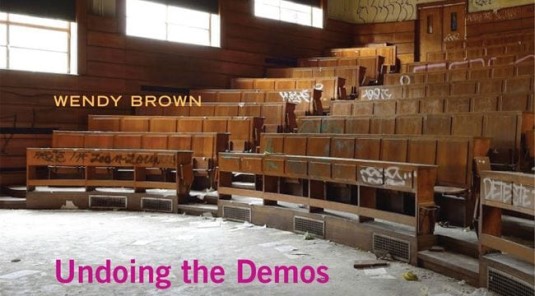
Due to do something on the IPCC report tomorrow, but let us have a moment of relative levity. In between reading A Thousand Plateaus (423 pages in!), I have started reading another book. As you might have guessed from the post's title, it's one of Wendy Brown's celebrated neoliberalism books and this is 2015's Undoing the Demos: Neoliberalism's Stealth Revolution. For those not in the know, Undoing is an exploration and critique of the effects the neoliberal reconfiguring of human relationships has had on our already shaky and inadequate liberal democracies. To celebrate opening a book that isn't Deleuze and Guattari for the first time in several months, here's a flavour of what to expect:
... as a normative order of reason ... neoliberalism transmogrifies every human domain and endeavour, along with humans themselves, according to a specific image of the economic. All conduct is economic conduct; all spheres of existence are framed and measured by economic terms and metrics, even when these spheres are not directly monetised. In neoliberal reason and in domains governed by it, we are only and everywhere homo oeconomicus, which itself has a historically specific form. Far from Adam Smith's creature propelled by the natural urge to 'truck, barter, and exchange', today's homo oeconomicus is an intensely constructed and governed bit of human capital tasked with improving and leveraging its competitive positioning and with enhancing its (monetary and nonmonetary) portfolio value across all of its endeavours and venues. (pp 9-10).
What does this mean politically and culturally speaking? Here's something of an essay from me from 2016 thinking about it.
Polls stubbornly putting your party behind the worst government in living memory? Personal ratings worse than the man whose neglect, incompetence, and tardy management of the pandemic has killed 130,000 people? If you are unfortunate enough to be in this position, like Keir Starmer, how might you go about turning around these poor numbers? One option would be to look at the one general election in 24 years in which the Labour Party won seats and grew its electorate. Seems reasonable. But then, there are factional considerations at play and so it's not allowed. What else then? Why, go back to its three-time election winner and talk him up - that will help round the corner!
As readers know, this is exactly what Starmer has done. In a widely trailed interview for the FT, he hopes some of Tony Blair's 1990s star power can, via a process of spooky entanglement at a distance, rub off on him. Or perhaps not. Blair isn't about to win popularity contests (except, perhaps among the shrinking Labour membership), and if the average punter is asked about his legacy the response won't be the tractor production figures of PFI hospitals, PFI fire stations, PFI schools, and PFI community centres, it will be Iraq. Which some of us with memories might recall wasn't favoured by the public, and - as forecast in advance - would result in a tragedy that still hasn't played itself out to this day. That's what Blair is associated with outside the rarefied world of the peculiar fan club among parliamentarians, centrist hacks, and strange Labour Party people.
Why celebrate Blair then? It's doubtful Starmer would have taken this tack in a Mirror interview, and that's because of the audience he has in mind. Since elected the Labour leader has enjoyed the most benign press. Arguably, the right wing tabloids were rougher on Blair during his rise. And this is because he's accepted their rules of the game. Ed Miliband and Jeremy Corbyn pushed back against and defied the papers, and were duly taken apart by them. Starmer's reward for accepting their gatekeeping is uncritical commentary and soft interviews. This one for the FT is a direct address to Britain's bosses (it is their house journal, after all), and he's told them under his watch Labour will be a safe pair of hands. Yes, there will be more Keynes-lite economics to fix the country's glaring problems, and a bone might have to be thrown to the unions to partially redress the imbalance of power in workplaces. But that's as far as it will go. Not as overtly pro-market as New Labour, the frequent attempts to outflank the Tories from the right and Starmer's well-trodden authoritarianism are all there to reassure Britain's hyper conscious ruling class that their interests can be entrusted to him.
Which brings us to one of the more irritating features of the grown ups in the room: their ceaseless talking down of Labour, telling everyone who listens how shit it is. Starmer did the same in his interview, attacking the party's own membership for focusing on internal issues (unlike him to be so rude about Labour First, and after all they've done for him too) and its supporters have to "get real". They're not the ones thinking headlines praising Blair are a good idea, Keir. Angela Rayner went through the same motions last week as well. Going through the authenticity motions, she had to throw in the line about how Labour needs to win elections and not be an opposition. It's congenital with these people, but it also serves a purpose. The party is seen to be fundamentally unreliable by the powers that be because of its relationship to the labour movement and history as the traditional workers' party. It is always under a certain amount of pressure from below to act in the interests it was ostensibly set up to represent. And this dangerous potential surfaced after 2015 and the rise of Corbynism. To appeal to the boss class, Starmer and his allies have to belittle, demoralise, and drive out the problem people. The rhetoric about turning the party inside out, of expelling thousands of people (another Raynerism), it doesn't matter that it makes winning an election more difficult, it's the bourgeois-friendly optics that matter the most. The self-flagellation is the party's leaders ostentatiously prostrating themselves before the people they think matter.
It's not going to work. If Labour somehow win the next general election, it won't be because Starmer has made the party safe for property portfolios and stock options, it will be thanks to Boris Johnson and the Tories proving themselves so bad, even worse than now that the electorate are determined to get rid and vote tactically to achieve this aim. This is not a grown up strategy, it's a case of crossing one's fingers and hoping the ruling class will give Labour a chance. It's the purest fatalism. The Labour leader might hope for a repeat of victorious Blairist history, but he's setting himself up for an almighty farce.
It's August, I'm off work and that means only one thing: sheets of rain. Still, with the showers forcing most indoors it would be a good time to explore the newest left media projects. Here's what I've spotted this last month. Check them out.
If you know of any new(ish) blogs, podcasts, channels, Facebook pages or whatever that haven't featured before then drop me a line via the comments, email, Facebook, or Twitter. Please note I'm looking for new media that has started within the last 12 months. The round up appears hereabouts when there are enough new entrants to justify a post!
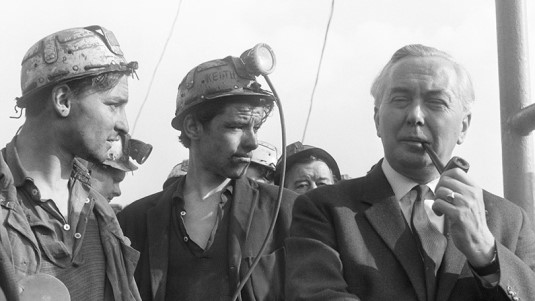
Harold Wilson's record on mines and mining was an unexpected front in political struggle today. But then perhaps not given Boris Johnson's joke about Thatcher closing the mines. Amid the sound and the fury, a Tory was always going to pop up and say "Actually, Labour closed more mines than the Tories did in the 1980s." And indeed, one did. It happens to be true as well. King Coal began his decline before Wilson, and so it can be presented - and it suits the Tories - to rewrite the 1980s as a coup de grace for an industry that didn't have a future.
As this comes up infrequently, it's useful to have a ready response. And the matter is a simple one. Coal seams don't last forever, and there is a finite amount of the stuff in the ground. Pits become exhausted and/or uneconomical eventually, and so mining ceases. The pit closure programme began under Macmillan in 1958 and carried on when Labour came to office. This, however, was not a slash and burn affair. Because of the strength of the labour movement, Macmillan's penchant for patrician Toryism and desire to keep the class peace, and the booming economy, the closure of pits were accompanied by generous redundancy packages, retraining (sometimes encouraged by the NUM), and investment to replace what was lost.
For example, consider the closure of Michael Colliery is East Fife in 1967. There was an unsuccessful struggle to keep the pit open, but as it was shutting down Wilson's government were able to attract a major alternative employer to the area. The economic wellbeing of the local community was assured, and the coherence of the union movement was preserved.
Contrast this with Thatcher's pit closure programme. This was understood at the outset as a class war offensive against the bedrock of the British labour movement. Having already thrown millions out of work to weaken manufacturing unions and use mass unemployment consciously as a labour discipline measure, the Tories succeeded in defeating the miners and destroying dozens of communities in the process. there was no investment, no retraining, and no hope for better futures as the Tories tore the hearts out of towns and villages across the country.
One programme of closures was about keeping the balance of class forces in the country by preserving full employment. And the other was a question of setting a new balance, one in which the state actively worked to tip the balance irreversibly toward capital. This was with no regard to the people affected and the ways of life destroyed. Next time Johnson tries to raise a chuckle about this bleak period in British history, just think of the tens of thousands of lives that were ruined then. And the hundreds of thousands of lives he's actively ruining now. To get their own way, for the Tories no price is too high for other people to pay.
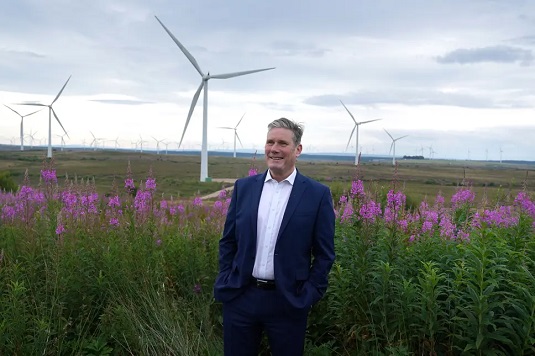
Keir Starmer has done something right. Yes, those words have been written down by me. Your eyes do not deceive you. On his visit to Scotland on Wednesday, he took time out from his hard hatted photo opportunities to say there would be no deal with the SNP before or after the next election. There would be no coalition government. Clearly, the Labour leader has taken heed of reports the Tories were planning on talking up an alliance between him and Nicola Sturgeon. Indeed, the Tories are always on the look out for useful divide and rule situations, and the prospect of an independence referendum is one of them.
Clever avoidance politics? Our learned comrade, Mark Perryman doesn't think so. By advocating a vote for Labour everywhere and ruling out alliances with other parties, Labour is on a hiding to nothing. He says, "If Keir is ruling out a coalition in any circumstances he’s ruling himself out of Number Ten short of the kind of surge in the polls there is absolutely no evidence of his leadership attracting." With the right united under the Conservative banner, the "progressive parties" competing for the anti-Tory vote can only ever benefit the Tories.
As it happens, I agree. The primary objective at every general election must be the removal of the Tories, or preventing them from gaining office. After the last 11 years, it should be obvious why. There is no damage they won't cause or amount of people they won't let die to stay in power and preserve the interests they organise and articulate. But there are ways and means of reducing competition between anti-Tory parties to get them out, and one way not to do it is declaring Labour's intention to forge an alliance with the SNP from the rooftops.
We don't have to go far back in time to remind us why Mark's recommendation isn't a good idea. The Tories dined out on the prospect of Ed Miliband and Alex Salmond allying to break up Britain and scrap its nuclear arsenal. What the Tories did was whip up a climate of inchoate fear to mobilise enough voters for an entirely undeserved victory. Rather than dealing with the acute sources of uncertainty and misery, i.e. themselves, their propaganda and allied media machine projected it all onto their opponents. And it worked. It didn't matter Ed said there wasn't going to be a coalition or a deal, as soon as the Tories started running it was too late. This line came back at me time after time on the doors in Stafford, so it cut through. For his sins, and they are legion, Starmer has got the plausible deniabilities in early. I suppose he has learned something about blunting attacks before they happen.
How about an open pact of assistance between the English parties? Does this avoid the problem? I'm afraid it does not. Despite the received wisdom that Boris Johnson is a positive politician, his programme is anything but. He talks about levelling up, but does nothing about it. And this means without any positive achievements to their name in 2023/24, the Tories are going to emphasise the fearmongering again. Their hope lies not in persuading opposition voters of their merits but turning out the already-convinced, and this job is easier if there's an identifiable "them" to kick against. In 2019, it was the establishment looking to steal their referendum votes. In 23/24, it would be the same pitch: they want to undo Brexit/break up Britain. Any formalised alliance looks like a conspiracy to mug the voters, and allows the Tories to cast themselves the plucky underdogs fighting for every day Brits. It's a heady brew and many are all too willing to neck it. Hence the business of alliances in our dysfunctional politics cannot be handled indelicately. They have to be informal, below the radar and annoyingly, formally forsworn by whoever is the Labour leader. This was true for Jeremy Corbyn, and it remains the case for Keir Starmer.
But this as far as this qualified defence of Starmer's ruling out a pact with the SNP goes. He is not for any kind of alliance, even of the quiet paper candidate sort. His politics are entirely top-down and authoritarian. In the unlikely event of winning an outright majority, there won't be any electoral reform, which sets the clock ticking for the next ruinous Tory government. And in the event of Labour becoming the biggest party in the Commons without a majority, one can easily imagine him ploughing on as if Labour did have a majority. Such a government wouldn't last very long. Our best bet at getting the Tories out, unfortunately, lies in the hands of a leadership with a rigid political imagination backed by a dominant faction not that fussed about winning anyway. It's enough to make any talk about coalitions and informal understandings seem superfluous.
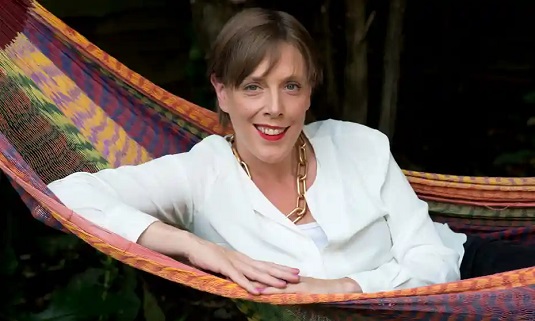
How did you spend your Wednesday evening? I spent mine listening to Jess Phillips talking about her new book, Everything You Really Need to Know About Politics: My Life as an MP. Why subject myself to this? Long-time readers know I'm not a fan by any means. I think she's vainglorious and self-promoting, and all too willingly made her name during the Corbyn era by crapping on a mass movement whose victory would have helped the people she affects to support. This got her attention alright, including undying antipathy from a section of current and former Labour members. But what I want to get at is her appeal. It's too much to say she's a popular MP - the average punter hasn't the foggiest who she is, despite benefiting from what in MTV's glory days we would have called heavy play rotation. But she is popular with the press and broadcast journalists, and she is boosted by them a lot. Before taking up residence on Keir Starmer's front bench, when have the media been so indulgent toward a Labour backbencher who didn't enter Westminster with Oxbridge connections nor were carrying particularly novel politics?
At the start of the session host Rosie Boycott hailed Phillips as the "most outspoken politician in Westminster today." But how has she acquired this reputation when she very obviously isn't? The dictionary defines outspoken as "frank in stating one's opinions, especially if they are shocking or controversial." The appalling Lee Anderson fits this criteria, even if it's racist cobblers he's peddling. On Labour's left, Richard Burgon, Jon Trickett, and Zarah Sultana fit the outspoken bill by raising issues the front bench prefer to run away from. But Jess Phillips? How does she make the grade, at least as far as Blairist/centrist/establishment feminist hackery is concerned?
First things first, in the relaxed atmosphere of a friendly interview, if you happened to be an apolitical punter or someone vaguely interested in politics without allegiance, she came across very well. As a general discussion of what MPs do and don't do, it was hardly revelatory but she was able to lift the veil a bit. An introductory tease if you like. Starting off, she began with the 'what is politics' questions, which she said was everything we do and say. Recalling her time on people's doorsteps, meeting people who see it as a "badge of honour" for not putting in an application for social security with the clear implication that those forced onto the likes of Universal Credit are undeserving. She challenges this by saying you've been claiming from the moment you were born. Every service used, every publicly-provided facility was paid for by your neighbourhood. There is a false dichotomy between taxpayers and claimers because everyone puts in and takes out. If we start to see things in this collaborative manner, we can start demystifying politics. It's not legislation and committees, it's about the decisions made that effect everyone.
Asked how old Phillips was when she came to that realisation, she replied her parents were deeply political people so she was very young. Instead of nursery she went to a "women's liberation play group" - a cooperative set up by local feminists. Most of the family's food came from a community-organised co-op as well. She had as socialist an upbringing as it was possible to have, and this bred in her a realisation of interdependence and why other people mattered. And because it was the 1980s, everything was Thatcher's fault. While her parents were out at work, she would watch Prime Minister's Questions with her Nan and talk about politics at dinner. She painted a picture of a happy childhood of CND face painting, the miners' strike (she was three/four years old at the time), "general strikes", but the ire of her parents was aimed at what was happening in parliament.
Her parents didn't push her into getting involved. The first political activity she decided to get involved with was an election campaign in 1992 for a family friend, but neither of her parents were interested in formalised roles. Shortly after rejoining the party in 2010 (she left the party as a student during the Iraq War), she mulled the idea of standing for the local elections. Her Mum said "It wouldn't be hard to shine on Birmingham City Council." But why rejoin Labour? Here there is a bit of a tension in her account. She said she joined in time for the leadership election, but also it was because she'd been asked by the party. Her street had seen a spate of arson attacks with cars getting set alight, and this provoked fear and finger pointing among residents. Phillips decided to do something about it by organising community events, including street parties, to bring people back together and overcome the paranoia. Because Ed Miliband's Labour was looking for people embedded in their community, she was asked to join. So which is it? Was she getting her rejoining mixed with her council selection meeting, which she also said was her first party meeting in 20 years (which meant her last was as an eight or nine-year old). Make of it what you will.
Getting selected for LibDem-held Yardley two-and-a-half years before the 2015 election (I recall her seated at the table for the anointed ones at a West Midlands Labour First dinner not long after her selection), she criticised the costs of running and the command the party had on financial and time commitments as a candidate. This caused her family some hardship as her husband had to come off nights and they lost £10k worth of income, and at that time with no certainty the seat would tip Labour's way. Luckily for her, it did. But she does talk about this in the book because she wants to scotch the idea some have that candidates are paid to campaign, when often it leaves them hugely out of pocket.
Asked about her first day in Westminster, she reiterated the reality of being an MP - that they are effectively small business people and have to do our own HR and sorting out their office without assistance from parliamentary authorities. There was also a bit of orientation from Labour. She recalls Dennis Skinner telling her cohort about the basics of procedure on the Commons floor and how to make a splash, but apart from that new MPs are left to their own devices. It's a role they can define themselves, so Phillips made hers a community-oriented job.
She did relish telling the assembled about the different categories of MPs. One are the chamber beasts who live there all the time, and they're seen by the cameras being across everything. These are about a quarter of MPs and are part of the furniture. Another quarter represent marginals so are embedded in their seats. She thought having a marginal seat makes for better MPs as they are more responsive to constituents and the constituency's nuances. This difference can be seen where MPs choose to locate their staff. Safe seat occupants tend to have more staff in Westminster, and vice versa for marginals. The other sort of MP is the campaigning MP, which is where Phillips located herself. And about 20% don't do as much as they should, and often end up in the cabinet.
A crucial skill MPs have to quickly learn is expectations management. Photo opps with politicians standing in front of new buildings raises expectations, for instance. It gives an impression that delivery is easy: "you asked for it, we delivered it" as she put it. What Phillips tries to do is make local achievements more collective and collaborative, emphasising the "we did this together" over a service relationship. She also tells constituents that she can't guarantee to sort their problems out. But politicians generally can't resist promising and then not ponying up the goods, and this is what makes people hate politicians and politics.
Asked about relationships with Tory politicians and how much Phillips works with others, now she's not a backbencher it's harder to get Tories to do things. What people didn't realise is how different parties work together all the time in committee. She thought 90% of Tory MPs went there to do good, but take a different routes. Sometimes, nominally opposing MPs are on the same route and you can find all MPs rolling their eyes when it comes to Child Support Agency casework, for example. She found it easy to make common cause when the issue is not deeply ideological, and there are opportunities for more of this kind of working now there is a cohort of Tory MPs representing seats with persistent problems their party previously ignored. Somewhat inadvertently, Phillips painted a cosy picture of parliamentary life. In Portcullis house she said we're all sat around tables with journalists and we're all just talking, but that is never seen by the public.
I couldn't see how many were in attendance, but put it like this. Only three questions appeared in the public question and answer box. One asked if the talk was being recorded, and the other two were from me. One was (I thought) soft ball, and the other would require a bit of reflection and self-awareness. I asked why she thought the Tories hadn't dipped below 40% since Johnson was elected party leader, and why she thought she was able to attract a high profile so quickly? In the end, the host ignored the second question and butchered my first. The question about support for the Tories as a political force was reformatted as one about Johnson's popularity - something entirely different. Phillips said people have low expectations in him, so he aims low and no one is ever disappointed. She also added that he's nothing like his public persona. She found him a shy and somewhat scared man who, on the occasions they've met, could not look her in the eye. He is certainly ill-prepared, but his popularity lies in his deliberate pushing of positivity - and people respond to that.
Why Rosie Boycott chose to skew the question is a strange one. Because she didn't have faith in her interviewee being able to provide a political answer to a persistent political problem (just like the question of the Labour base, there's scant intellectual interest by Labourist and Fabian thinkers/wonks about how the Tories have kept it together)? Or by steering it onto "Boris", she'd have an easier time of it with the question reframed around personality politics? Again, make up your own minds.
When all is said and done, are we any close to solving the mystery of Jess Phillips's appeal to a certain strata of media people? Only in the sense that she affects a certain kind of authenticity. Despite her family's left wing pedigree and associations with the radical politics of the 1980s, she is treated by London-based hackery as someone who is based and real because of her accent and refuge work done with Women's Aid. Despite this, she has become popular with the press because she articulates the views and common sense of establishment feminism. For example, helping out a working class woman on the run from an abusive partner? That's fine, that's permissible. But a political programme that would empower them? Absolutely not. Where Phillips has excelled these last few years, via her bad faith attacks on Corbynism and the left, is as defender of their privileged status. And, of course, through appropriate dog whistles and statements shown she's in alignment with their attacks on trans and gender non-conforming people, as well as sex workers. She is both a vessel for their aspirations and a champion of their political outlook. She's one of them, and they will continue to boost her accordingly.
The hype about the death of the office didn't last long. With the removal of virtually all Covid precautions, the return to work for millions of employees is underway. Though, just like last year, the Chancellor of the Exchequer has stuck his oar in to punt the process along. Reported in The Times, Dishy Rishi affects concern for young people at the start of their careers. Wistfully recalling his start at Goldman Sachs, he's worried new starters won't get the chance to schmooze 'n' booze their way up the corporate hierarchy and build the networks that will serve them for life. "That's why I think for young people in particular being able to be physically in an office is valuable", he concludes.
I'm not about to totally rubbish Sunak here. From the standpoint of Tory politics, he has a point. Across corporate life management has to reproduce themselves, and this is always more than being diligent, getting the work done, and pulling in extra sales. Recruitment into management strata is a process of having the right values and, crucially, being able to play the game. In Sunak's pre-parliament world, having front, being able to leverage networks to broker deals, making new connections, getting talked about, displays of hunger and drive on top of an appearance of competence is what is prized. And all this has to be seen. Stuck at home trading stocks from laptops and getting clients up on Zoom makes the everyday interaction managerial reproduction depends on much more difficult.
Having opined on this matter on several occasions since last summer, Sunak has also talked about "the buzz" people are missing from the office. As one of those weird academics who likes going into work for this reason, I know what he means. But this concern for the disappearance of the social side of seeing colleagues betrays another anxiety. As argued here manytimes, capitalist exploitation in the age of immaterial labour, where the bulk of work has shifted from producing goods to the production of services, information, care and, in some cases, people, has changed. This is work dependent on social competencies, and so being able to build networks and accumulate contacts is an avenue through which the sorts of firms Sunak has in mind do business and accumulate capital. But also, there is a role played by the serendipitous. Collaborations at work, even chance meetings can create the germ of an idea which can be harnessed for the organisation's benefit. Just think about the fab 'n' groovy workplaces that were all the rage prior to Covid with the soft furnishings, hang out zones, and in some cases (adult) soft play areas and games. If the brain is the primary force of production in the age of cognitive capitalism and capital is poised to capture and monetise the new knowledge they produce, they need to be on its premises to maximise potentially profitable encounters. This informs everything about the immaterial workplace, especially for relatively privileged workers and professions. Communal areas, open plan offices, up to and including received city planning wisdom about clustering cognate businesses are designed to facilitate in-person connectivity. Like most Tories and their relationships to their class interests, Sunak knows this instinctively and shows it in what appear innocuous expressions of his common sense.
There are other reasons why the Tories want to see a drift back to the office. A significant bloc of Tory support have capital tied up in business lets and speculative construction - the longer the great workplace stayaway persists, the longer those investments remain unrealised with consequences for the bottom line of the petty and the institutional investor. Not a few small and medium businesses depend on the passing trade of workers as well, the proprietors of whom are undoubtedly disproportionately Tory voters. And then there is the other chief concern the Tories have. Some on the government benches will find Sunak's talk of office conviviality a bit airy-fairy, but what worries them the most is the loosening of the norms of workplace discipline. No one hates British workers more than the party who has governed this country the longest, and for them the return to work can't happen soon enough. They need the firm hand of the working day to whip the hoi polloi into shape, and not get ideas questioning the employer's absolute right to encroach onto their free time, or even worse getting up to other kinds of mischief without management having an eye on things. It's one reason why Sunak was very keen to undermine the job retention scheme barely after it had begun.
From the beginning, the Tories have managed the politics of the pandemic with some skill, which is why they think they can get away with letting Covid rip. Contrast this with the nuts and bolts handling of Coronavirus. It has proven itself disastrous, and this is because of the clash of sectional bourgeois interests inside the party. The PPE trough, the delayed lockdowns, the decision to open universities, and sustaining the petty tyrannies underpinning the wage relation conflict with the wider interest of capital to have a fit and healthy workforce - a point of view previously associated with Matt Hancock but not shared by his successor.
Tory governments tend toward hubris. With Sunak encouraging the return to work, winding down furlough and other business support schemes, his close association with pretending normality while the delta variant is alive and well - 22,000 infections and 138 deaths in the last reporting period - could cause him severe reputational damage if the Tory gamble with our health turns into a catastrophe. No Dishy Rishi in Number 10,. Unfortunately, all we're left with is the hope that thwarting his ambitions doesn't come at the cost of thousands of unnecessary deaths blocking his path to the door.
What is the role played by Angela Rayner in the current Labour Party set up? She successfully resisted Keir Starmer's ham-fisted attempt at framing her for the Hartlepool and local election routs. And as Oliver Eagleton recently wrote, she acted as a sort of go-between in the toing and froing of Jeremy Corbyn's suspension and non-reinstatement, before lining up with the right and capitulating to their demands to keep him out of the parliamentary party. Likewise, as the nominal head of the party organisation she fully cooperated with the both-sidesism of the right wing framing of the Labour leaks document. This helped ensure the sting was drawn out of its damning findings, not least that senior staff sat on anti-semitism complaints to damage the party, and therefore protecting the apparat - a reliable base of the Labour right.
It wasn't supposed to be like this. Cast one's mind back to the deputy leadership contest, and we find a comfortably left wing Angela Rayner. "I'm not a Corbynite I'm a socialist" she said at the launch of her deputy bid, and her left credentials were well and truly burnished by endorsing Rebecca Long-Bailey for leader. To her credit, and unlike the party's scab tendency she stepped up to the plate when the bulk of MPs were trying to bring the former leader down. And even if it was for careerist or getting-her-face-known reasons, she put herself forward when fainter hearts fell into line. This has earned her the undying enmity from some on the Labour right, but for others she, like Starmer himself had a certain unifying appeal. Momentum and RLB were backing her, and Labour First stuck her on their list of preferences. Rayner projected a cross-factionalism offering as the others were identified with the continuity left (in the cases of Dawn Butler and Richard Burgon) or right wingers (Rosena Allin-Khan, Ian Murray), a point underlined by how the vote split following Dawn's and Murray's elimination from the race - 17,000 and 19,000 respectively transferred.
As a unity deputy side-by-side with a unity leader, the division of responsibility was clear from results day. Starmer would be the super serious one, the blank canvas for disgruntled ex-Labour voters and pro-EU people generally. His role would be to look pretty in a nice suit and expensive haircut, while beguiling the punters with his forensic deconstruction of Boris Johnson and simply looking Prime Ministerial. Rayner on the other hand could be a bit freer - he was the party's head while she was the heart. As a working class northerner who made her way into the Commons via the trade union movement (i.e. the old-fashioned way), she condenses the authority and authenticity of the "proper" Labour Party. She can and does say stuff that would be awkward coming from the leader, and does it with bombast and a touch of populism. Rayner fronting up Andy McDonald's trade union recommendations, which includes full rights on day one of employment, an end to zero hour contracts, and the right to flexible working is consistent with the role she occupies.
There's another level of symbolism Rayner's position personifies: the class composition of the Labour Party itself. From its inception Labour was a proletarian party, that is a party seeking to (formally) represent everyone who works for a living in return for a wage or a salary. As such it has been dominated by its wealthier, upwardly mobile, and professional layers from the start - a fact that has left an indelible stamp on Labourist politics. Trade union power might be crucial to the balance of factions in the party, but its political direction and intellectual life belongs to the middle class. Working class aspirations, apart from the brief interval of 2015-19, play second fiddle. The Starmer-Rayner duumvirate exemplify this just as Blair-Prescott did 20 years ago. The charismatic working class politician is there for show and enjoys a certain off-colour license as long as the apple cart goes un-upset, whereas the big brain thinking is entrusted to specialist advisors and clever people with the correct pedigree. The election of Starmer and Rayner was a reversion to the historic mean of relations between the party's strata and occupational groupings.
There's another historical truth incarnated by the deputy leader. Even though Rayner is a trade unionist and has experienced the sharp end of organising among low paid workers, this hasn't left her with an appreciation of class struggle and the opposition of interests. As she puts it in her Graun interview discussing her pressing for flexible working while a care worker, "We introduced a flexible rota that worked for the staff, and we saw productivity go up. The wellbeing of the staff, as well as the outcome for the service user, was they had the same staff going in – and sickness levels went significantly down as well, so it saved money for the employer. It’s a win-win ... If an employer looks after the employees, the employees will look after the employer, and it’s reciprocal." The take home here is jaw-jaw is always better than war-war. Reasonable employers will see the light if they listen to their workers, and benefit from it. This is ABC Labourism, the relation between worker and boss is a partnership of mutual interests, not the coercion of economic necessity, exploitation, and authoritarianism. This fundamentally peaceable, naive outlook finds its strongest expression in Labour's soft left and helps explain why it has never been politically hegemonic in the party. For all its faults and with some naivete of its own, Corbynism (or at least strands of it) had a conception of power politics. Its opposite on the Labour right certainly does, even if it leads them into stupid and self-defeating positions. The soft left, meanwhile, thinks ideas and reasonable discussion wins out in the end. A manifestation of idealism in the Marxian sense right at the heart of the oldest workers' movement in the world.
And what has been the historic fate of the soft left? To try and position itself as the conscience of the right. Never contesting them for power, as a trend it has backed the purging of leftwingers, provided intellectual cover and cabinet personnel during the Blair/Brown years, did little to nothing to push against the right wing pressures on Ed Miliband, and disgracefully under Corbyn lined up with Owen Smith (Luke Akehurst partly mischaracterised his leadership challenge as the revolt of the soft left), and/or pushed continuity remain. Angela Rayner as a soft leftist was a rarity for not going along with this, but now she is in office with not inconsiderable powers and influence at her disposal, she's faithfully followed her forebears in pushing bureaucratic politics and strengthening the right's hold over the party organisation.
It's true enough that Rayner stands out on the front bench, simply because the rest of her colleagues are deadly dull and, more importantly for the leader, unthreatening. But her position and her behaviour is nothing new. She's playing a well-trodden and well-understood role, one that is about making Labour safe for capital and its interests. But that's okay as long as she and the trend she personifies have permission to (ineffectually) appeal to its better nature, while sitting out and wringing their hands over the battles to come.
Keir Starmer's new head of strategy has spoken, and the words are ... nothing new. The strategic insights unveiled at a presentation Deborah Mattinson gave to Labour MPs last week revealed how Boris Johnson is becoming more annoying than endearing (a simple glance at recent polls would have told you that), and people aren't sure where Labour stands. Nearly 16 months into the job, one might ask who is to blame for that state of affairs. The big take home was how Labour has to win over voters who didn't vote Labour in 2019, and the party should adopt clearer positioning and more uplifting message. Money can't buy advice his precious.
Unfortunately, the whole piece is as lazy as the strategic guidance it reports on. Consider the line "millions defected to the Tories in 2019". This is simply not true. As most hacks are whizzes with Wikipedia, at the very minimum one would expect familiarity with the numbers our most recent general election yielded. There was a 3.7m vote gap between the Tories and Labour, but the Conservative vote increased by just 300,000 votes. What did for Labour was the splintering of the anti-Tory vote, with support bleeding to the LibDems, the Greens, the stay-at-homes and, oft-overlooked, the anti-second referendum protest attracted by the Brexit Party. This might be an honest mistake if the piece was penned by junior reporters as opposed to seasoned hacks, but an ulterior purpose is afoot. Further down we read "Some in Starmer’s team believe the party is still suffering damage from the Corbyn era, which ended with the 2019 defeat." Yawn. But we can see how the neutral reporting of this mood is tied with the spin on the election. If the evil doings of the former leader are the primary reason for the 2019 loss, we don't have to inquire too closely into the reasons why the previous coalition bled in all directions. Nor the role the party's current leader played in committing Labour to this vote-losing outcome.
To be fair to the Great Helmsman's chief navigator, I haven't seen Mattinson's presentation. There might have keen insights and worthy nuggets for all I know. But one thing that obviously wasn't mentioned, because the Observer piece doesn't reference it, is the 2017 general election. As the only time Labour has gained seats in an election since 1997, surely it would be reasonable to reflect on the hows and whys of an unexpectedly positive election - one depriving the Tories of their majority and seeing the greatest turn around in polling since 1945. There is an argument, though not a terribly convincing one, that the stars aligned in an entirely flukish way to grind out the result it did, but this doesn't feature in the report. This is because the Labour right aren't interested. To paraphrase a famous Blairism, even if going left was the only route to winning an election they wouldn't want to take it. Keeping their positions and securing future jobs as lobbyists, corporate executives, or star media people, it all depends on maintaining things the way they are. 2017 was a heart attack not just because it refused to conform to their strategy road map, but because it assembled a huge electorate behind a programme that broke with Labourism. It promised a politics in which managerialism was subordinate to the democratic impulse from below. What role for the social climber on the Labour benches when democratic input would have determined the fates of transport and public utilities, would have felt its presence on every company board in the land, and crucially would have reshaped the party around the aspirations of the many, not the careerist trajectories of the few? 2017 is more than a brush with collective death, it must be erased, purged from the party's collective memory while the screws are tightened to prevent its like from ever happening again.
As such, Mattinson's advice is shaped by the Labour establishment's chief desire and purpose - to remain the Labour establishment. The evidence is out there, don't take my word for it. Going from the past two elections, it's pretty obvious what Labour needs to do to win: consolidate the new base Corbyn was able to bring together and set about a twin track strategy of flushing out more potential voters from the pro-Labour demographics and winning over soft Tory supporters. This is eminently do-able. But instead, and going from how Mattinson's political imagination is stuck almost 25 years in the past, the thinking is going after hardened Tory voters by waving flags, bigging up the police and military, and opposing the Tories from the right will do the trick. Completely ignoring and disassembling the party's existing base, breathing more life into the Greens and LibDems is what they're actually doing. In their contrived forgetting of 2017 and partial view of 2019, the leadership are pulling together a strategy that just won't cut it. Couple this with the Labour right's habit to publicly broadcast how shit Labour is on every occasion, the destination Keir Starmer has set out for the party comes into view with increasing clarity: failure.