Saturday, 2 February 2019

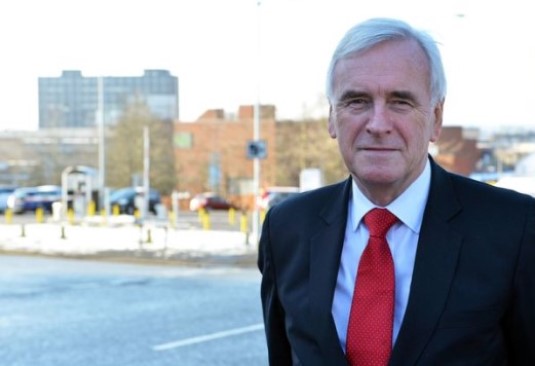
John McDonnell in Stoke

As part of John McDonnell's tour under the theme of Transform Your Town, he and the shadow treasury team came to Stoke to listen to what we think our local problems and priorities are, as well as talk about Labour's plan for Britain and what strategies we thought were useful for tackling the city's problems. About a hundred people squeezed in to the Hope Centre in Hanley for a series of talks and workshops on our programme for the city and the country.

After Annalise Dodds kicked off proceedings, John pulled together some key stats about Stoke-on-Trent. The weekly wage in Stoke South constituency, which was originally going to host the event, currently stands at £478, as compared to the UK average of £550 and London's £650. 5.5% are registered unemployed, 10,435 people are in the process of being moved on to Universal Credit, 764 people have to cope with the bedroom tax, and 17,938 pensioners benefit from the protections afforded by the triple lock - a measure Labour is committed to keep. In the city as a whole, 30.4% children live in households in poverty and last year, Stoke's fifteen food banks gave out 111,946 supplies. Additionally, 13.8% of city households are classed as living in fuel poverty, and the City Council's spending power has fallen by 27.5%. Public services have similarly suffered. There are 129 unqualified teachers in Stoke's classrooms while 3,465 schoolchildren sit in classes of 30 or over. Staffordshire Police have lost 556 officers while robberies are up 27% and violent crime has increased seven per cent. 19% of patients in the Stoke Clinical Commissioning Group area have to wait more than a week to see a nurse or a GP, and overall public spending stands at £8,969/head - compared to £10,323 for London.

Gareth Snell, our MP for Stoke Central, came next. He said that behind the numbers is a Tory attempt to tear at the social fabric that was built up by previous Labour governments and local authorities. Nationally the Tories take money from deprived communities, and locally the Tory-led council have cut services to the most vulnerable - homelessness services, and drugs and alcohol recovery - to fund their priorities. And yet, despite Stoke's problems, the city is rich in social capital. Despite the Tories undermining of city infrastructure and making a bad situation worse, communities have kept together and look out for each other, and beginning with Labour taking back control of the council in May both are a good basis from which to transform the city.

Mark McDonald, Labour's prospective parliamentary candidate for Stoke South said that since he'd moved to the city, he was struck by the pride people had in the place and its heritage. But it was being neglected by its council. He noted the old Woolworth's in Longton and many other abandoned buildings in the town - an indictment of a city council (ironically) determined to coral all investment into the city centre. Encountering a young family at a local food bank, he talked about how the child's eyes lit up when he saw two shopping bags of food. We have to change things, which is why we need a new radical economic plan. Therefore he was proud of Jeremy Corbyn's and John McDonnell's work on this. The 2017 general election saw Labour's manifesto dominate the media and it shook the country up. The next would build on it.

Lastly, local activist Becky Sergeant talked about the disengaged young people she met at work as a FE lecturer. They were alienated because sources of aspiration, inspiration and hope were lacking. Because of Stoke's industrial heritage, the old culture of it suiting local employers for young people not to do well at school has hung over. For example, of the 382 schools considered underperforming in terms of GCSE results, five of them are in Stoke-on-Trent. To turn this situation around, a culture of education needs a belief in something better. This means a campaign to bring schools back into local authority control, focus education by listening to communities and local businesses, and lastly listening to teachers - they're the professionals who know best. And this will provide a firmer foundation for a better economy.

We then moved into our groups to discuss some of the problems confronting the city. Our table came up with something of a grim list - the obvious increase in homelessness in Stoke (and, sadly, our first (and hopefully only) death this winter), cuts to youth services, bedroom tax and universal credit, debt, the expansion of cashpoint charging, cuts to policing, internal transport - particularly the dysfunctioning bus service across North Staffordshire, and cuts to early years. In the feedback we had to pick one to talk to, so we chose youth services and young people. The kinds of problems we're seeing: despondency, a growing gang culture, these are part of a legacy of Tory/independent failure over closing youth services and redirecting funds into building a new Hilton Hotel and vanity projects. The Tory solution is to demolish the post-apocalyptic (literally) East-West shopping precinct and bus station and build a central youth facility there. An idiot move that not only replicates the huge YMCA complex a stone's throw away, but is a recipe for a battleground for the emergent rival gangs. Such is the political calibre of the city's Tory councillors.

Other tables fed their challenges in too. These included addressing poor health, air quality and life expectancy, opportunities and graduate retention, the spread and geographic patterning of food banks, valuing all work and not fetishising received wisdom on "social mobility", underemployment, and addressing the mental health crisis.

Presiding over the afternoon session, Lyn Brown introduced John on Labour's plan for Britain. On each of the tables, there were flyers branded John McDonnell: Strong Principles, Sound Economics. And this is definitely what we got. John's discussion opened with the plan for a National Investment Bank. This involves keeping the Royal Bank of Scotland in public ownership as the NIB's basis, and its responsibility would be overcoming the bias against the regions by working with networks of regional banks. It would be governed by a strategic investment board to guide productive investment, and overcome the tendency of existing productive industry of investing profits not back into innovation, but property and land speculation.

Significantly, John was at pains to say Labour's programme wasn't a revisiting of nationalisations of the past. This was structural reform, and that means democratising services. The public ownership of water, energy, rail and the Royal Mail would mean experts, workers and consumers coming together. To embed democratisation further, the programme foresees a doubling of the cooperative sector (a target he thought was too modest) as a means of empowering workers and building long-term thinking into the economy. Co-ops, after all, tend to be less mercenary and short-termist than private business, particularly in the notoriously short-sighted culture of British capital. He also talked up the creation of a Ministry of Labour and the introduction of sectoral collective bargaining as a lever for redistributing wealth.

Additionally, Labour was committed to a proper national living wage at £10/hour. Greater protections for private tenants and more social housing, with half of the million new homes to be built by a Labour government being council housing. There was a reiteration of the pledge to introduce free childcare for 2-4 year olds, and an industrial strategy that would look to grow high value production. This is inseparable from ambitious targets to draw 60% of energy from low carbon or renewable sources by 2030, and and immediate pledge to grown Research and Design to three per cent of GDP. This combined with sectoral industrial strategies, the creation of an ecosystem of policies supportive of business, the embedding of the National Education Service, and strategic use of government procurement would contribute to reversing off shoring.

While this is exciting from the narrow standpoint of technocratic managerialism, this is very much a political programme. Each of the underpinning principles - economic justice, equality and diversity, and environmental sustainability throw down a gauntlet challenging existing vested interests, clusters of power, and piles of unearned wealth. For John, this represented a transformative programme that offers hope and a better future. In a number of ways, the damage the Tories have done has wound the clock back to pre-1945 levels of destitution and social dislocation. Summing up, he concluded that getting this programme through isn't a matter of electing Labour MPs and letting them get on with it - nodding towards efforts and democratising the party, he said that when we next get into government we all go into government.

Ruth Smeeth as the MP for Stoke North put some local context to the plan, noting the situation the Tories have foisted on the city completely unacceptable. Last summer, the Holiday Hunger programme served 16,500 meals to schoolchildren. Regarding a luncheon club she helped set up, 176 people in her constituency turned up when she and volunteers were expecting "about 25". Money and economics in Stoke North means 31% of kids living in poverty, and foodbank use going up 46% since the introduction of universal credit. Efforts aimed at rolling this back begins with the return of a Labour council this May, she concluded.

Unfortunately, I couldn't stay for the workshop session but overall this was much better than the usual talk/Q&A. With political education a perennial problem in all Labour parties, a focussed crowd sourcing of ideas like this in the framework of national policy (clearly explained!) made for an extremely useful event.

Friday, 1 February 2019

Local Council By-Elections January 2019

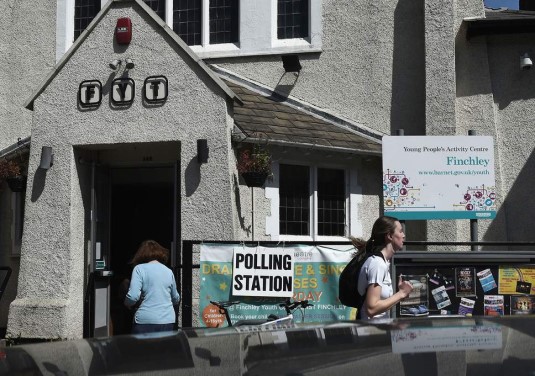
This month saw 7,650 votes cast over four local authority (tier one and tier two) contests. All percentages are rounded to the nearest single decimal place. No council seats changed hands. For comparison with December's results, see here.

Party
Number of Candidates
Total Vote
%
+/- 
Dec
+/- Jan 18
Average/
Contest
+/-
Seats
Conservative
            3
 2,791
    36.5%
+12.9%
   -13.1%
    930
     0
Labour
            3
  316
     4.1%
 -26.1%
   -23.5%
    105
     0
LibDem
            2
 1,251
    16.4%
  -2.1%
    -2.1%
    626
     0
UKIP
            3
   315
     4.1%
 +1.1%
    +3.2%
    105
     0
Green
            1
   107
     1.4%
 - 3.7%
    -2.0%
    107
     0
SNP
            0


     0
PC**
            0


     0
Ind***
            7
 2,870
    37.5%
+27.2%
   +34.2%
    410
     0
Other****
            1
     0
     0.0%
  -3.1%
    +0.0%
      0
     0

* There were no by-elections in Scotland
** There were no by-elections in Wales
*** There was one Independent clash this month
**** Others this month consisted of the SDP (0 votes)

January is usually the worst month for by-elections. No one wants to go campaigning in the cold, and people can't be arsed after Christmas. What this usually translates into are, um, anomalous results. In all the years I've been covering by-elections, this one truly has broken the laws of political physics.

Look, the low number of contests explain the weirdness, so don't go reading anything into them. Don't go reading anything into them. I mean, c'mon, when was the last time the Independents topped the poll? Labour got under five per cent? UKIP beating the Greens? Also, I was very pleased to see the SDP capitalise on the coup of recruiting Patrick O'Flynn from UKIP by polling the grand total of zero votes in the City of London by-election. Probably the best result ever.

Thankfully more or less normal service returns in February, so these abominable results can get buried in a lead-lined box and forgotten.


10th January
East Sussex CC, Bexhill East Ind hold
Rother DC, Bexhill St Mark's Ind hold

31st January
City of London, Billingsgate Ind hold
Surrey CC, Warlingham Con hold

Five Most Popular Posts in January

Cor blimey guv'nor, 2019 is a month old and already it feels like it's been going on forever. Alas, until Brexit day comes that's how it's going to be. Okay, let's put this aside and consider something else at a more sedate pace - the five most popular posts of the last 31 days.

1. Aaron Bastani Vs Smug Centrism
2. Anti-Corbynism and Brexit
3. John Mann's Red Wash
4. Never Let a Crisis Got to Waste
5. Heidi Allen's Poverty Porn Tour

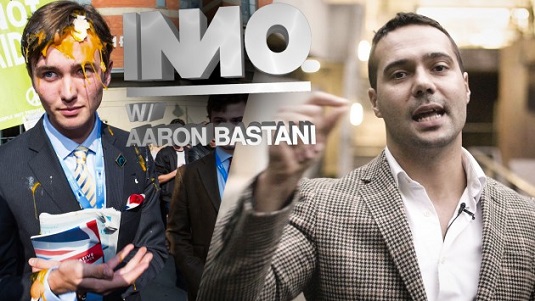
The ongoing crisis in establishment politics dominates, as you might expect. It's not just Brexit, it's how the whole scene is unravelling and spooling off in all directions. And so the attempted collective take down of Novara Media co-founder, Aaron Bastani, features as the month's most-read intervention. A not so curious case of jealousy and fear, I'm afraid to say. Anti-Corbynism and Brexit revisits the scene of the bourgeois character of the continuity remain campaign and how one cannot bodyswerve the inescapable fact that just as anti-Corbynism is a crucial current in establishment politics, we find this repeated and replicated in pro-EU positioning. Going to the other extreme we took a look at John Mann's capitulation to Theresa May's Brexit deal, a position he has since doubled down on. It's probably fair to say whether the deal stands or falls is largely in his hands, at least where Labour is concerned. Readers then found the politics surrounding the abuse of Anna Soubry congenial, followed by the public hand-wringing of Heidi Allen over the policies she has consistently supported and voted for in the Commons.

I've got two posts knocking about the second chance saloon today. The first is my blink-and-you'll-miss-it missive from last night on the market in higher education. And second up is a bit more chin strokey. Yes, Venezuela is commanding a lot of attention right now as Western powers have moved into a position of stoking civil war in that unhappy country, but standing square in their corner are among the worst people, including the newly-installed president of Brazil, Jair Bolsonaro. Now, I don't know a great deal about Venezuela but I do know more about what's happening in Latin America's largest and most populist country, and in this post we see Bolsonaro's project is primarily about resetting class relationships to make the country even safer and permissive to international capital.

No doubt next month's going to be a busy one again, but here I'll be scribbling about it all.

Thursday, 31 January 2019

The Market Mess in Higher Education

It was inevitable. The Times splashed with the "naming and shaming" of universities who've doled out unconditional offers like confetti. We learn that some institutions are making "up to 84%" of their offers without any strings, and topping out at 117,000 over the sector this last year. The Office for Students aren't happy, because they claim it takes pressure off students to do well in their A-Levels and liken such offers to pressure selling. The Universities of Suffolk, St John York, and Bolton are the worst offenders, but are going to carry on with the practice until the OfS says otherwise.

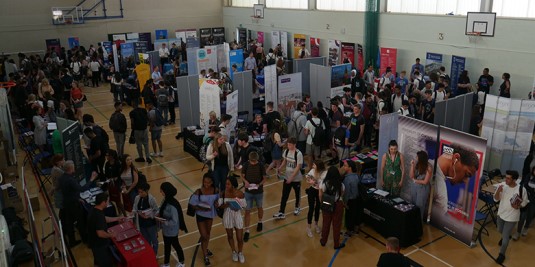
Why should anyone be surprised or scandalised that this is happening? Higher education has long been a market place in which university grapples with university for students. And when the pool is shrinking, as it is presently thanks to the diminishing number of 18 year olds (this is set to grow again in a few years' time) and international students steering clear because of Brexit and May's hostile environment, competition is fierce. Also, higher education is integral to the reproduction of class. Like life, competition between universities isn't a battle of equals. The top universities trade on their reputation and networks, and can afford to be choosy thanks to the huge grants they get through research projects, archives and, in some cases, government endowments. When times take a lean turn, all they need do is drop their tariff points and the punters flood in. This means institutions lower down the pecking order have to resort to other methods to get bums on seats, and issuing unconditional offers is one that comes easy to hand.

It's curious. Neoliberals of of the left and right presuppose that the market is the most efficient allocative mechanism that exists, and it drives up standards, produces value for money, and helps churn out the the most rounded human beings. As markets are the most efficient means for organising complexity, the state and outside institutions should keep their hands to themselves. And yet, time and again, we see perverse consequences and outright failure. One of the more obvious unforeseen consequences in the higher education context is what has happened to tuition fees. When the Tory/LibDem Coalition tripled tuition fees to a maximum of £9,000/year they believed different institutions would offer a range of fees, completely oblivious to the fact that in the class-bound realities of HE, a cheap degree would equate to a second class degree in the eyes of employers. Lo and behold there was little variation and now almost all, if not all, charge the maximum fee. Indeed, the very existence of the Office of Students as a hands-on regulator is an admission that markets cannot be relied on for service provision and requires an overseer to, um, ensure institutions don't respond to market signals.

Unfortunately, unconditional offers is but a minor ailment bedevilling the system. Large numbers of universities face going to the wall as they've played the capital markets or taken out huge loans to build fancy campuses to get the students in. And when they don't turn up? Bail outs for now, but closures can't be ruled out in the future. There is then the morality of lumping young people with massive debts before their adult lives have barely begun, and the massive pressure this places on them - as anyone working in HE will tell you, incidences of reported mental ill-health by students are galloping. And this is without talking about strains on staff, the culture of overwork, the burgeoning of bureaucracy and there in the background, the ever present threat of privatisation. The whole system is unstable and unsustainable, and it won't be long before it faces a serious crisis.

Tuesday, 29 January 2019

Lurching Towards No Deal

When Dave was in charge, Oliver Letwin was one of his key people. He was kept away from the cameras for a number of good reasons, but as a strategic brain he was essential to the Dave set up. So his contribution to the Commons this afternoon was always going to be interesting. Sidelined by May like the other Cameroons, he chose the occasion to nip back with this warning: "If things go wrong with No Deal, it will not be Opposition blamed, - it will be us, our party, not forgiven for many years ... will be first time when we have consciously taken a risk on behalf of nation ... and terrible things happen to real people".

Unfortunately for Letwin, the Tories under Theresa May are proving as short-termist and blinkered as his old gaffer. And after tonight's events in the Commons, they've gone and doubled down on that. Firstly, after Labour's and the SNP's amendments were seen off, Yvette Cooper's amendment which was to annex to parliament the power to request an extension of Article 50 got voted down. You might recall this was the very same piece of putative legislation that had Amber Rudd and David Gauke giving interviews that May could face the resignation of up to 40 ministers if they weren't granted a free vote. May didn't cave, they did. Nevertheless some usual suspect Tories did rebel. It's just a shame 14 honourable members on the Labour benches saved the government's bacon and put us on course to a hard Brexit. A round of applause if you please for Ian Austin, Kevin Barron, Ronnie Campbell, Rosie Cooper, Jim Fitzpatrick, Caroline Flint, Roger Godsiff, Stephen Hepburn, Kate Hoey, John Mann, Dennis Skinner, Laura Smith, Gareth Snell, and Graham Stringer.

In what will no doubt go down in history as the stupidest vote ever to have passed the chamber, Graham Brady's amendment got the nod by 317 to 301. Because the government chose to back this, May's position will now see her return to Brussels to renegotiate the Irish backstop. As was reported earlier this evening, Donald Tusk got her on the blower to say the EU are not interested in revisiting the agreed position, making these meetings entirely pointless. On the surface, May is positioning herself as a believer in magic. She thinks a new "mandate" from parliament means the EU will be forced to renegotiate - because it worked so well for Greece. But underneath, May knows very well nothing has changed, to repeat a well-worn phrase. Unlike the Brexiteers who think the EU are going to cave because Britain, May is knows that fruitless meetings in Brussels pisses away more time. And with no deal imminent, the chance of her deal passing inexorably increases while retaining the support of the hard Brexit right.

And so we're a step closer to a no deal Brexit and all the damage such a disaster would entail. Yes, this is a calamity cooked up by the Tories in response to a split in the Tories, and hopefully its consequences will damn them for the rest of this century. But let's not forget those enablers too, without whom none of this would be possible.

Monday, 28 January 2019

Mourning Conservative Values

Conservative values is an oxymoronic phrase for many readers, but there are millions of people who adhere to them. After all, the Tories cannot be the most successful electoral party in the world if all they offered was fear and thin gruel. Faith, family, flag are the favourite nostrums, to which we can add conservation, self-reliance, individual liberty, loyalty, unionism and community. Yes, yes, we know there is a disjuncture between Tory theory and Tory practice, as recently exemplified by one of its more liberal and sensible rising stars, but a mass purchase they still have.

Nevertheless, when you do one thing and say another you're going to get found out, and that is as true of political parties as it is people. When this happens a re-evaluation by some is inevitable. This is why I find Matthew D'Ancona's cry of despair in The Graun so interesting. The cause of his anguish? Theresa May's Tories, of course!

Casting an eye over the ugly scene, he confesses repulsion at Mark Francois's crude Germanophobia, the party's small-minded obsession with car crashing Brexit for the sake of tighter immigration controls, and the feeble and pathetic efforts of backbenchers at striking a waxwork Churchill. And what worries him more is the party's lurch into populism. While true that cancelling Brexit could have consequences, Brexiteers are talking up "treachery" and, as we know, insinuating a no deal martial law. What grotesqueries.

To this Matthew opposes a true blue conservatism. Whereas our Brexiteers are guilty of putting ideology before all else, proper Toryism is the dispensing of ideology, of approaching the world pragmatically and meeting it where it is. This is what Thatcher did, what Portillo called for when his Prime Ministerial destiny was snuffed out by 1997 general election, and was the basis of Dave's socially liberal modernisation project. Instead the Tories are now at the brink of a historic disaster precisely because this centrepiece of conservative thought has been abandoned. As he concludes, "the Conservative party is morphing into something I find alien and repellent. Like a listing galleon, holed below the waterline, it sails away stubbornly; dragging the nation towards a storm of unknown adversity, peril and pain."

A tempting response is diddums, but this kind of thinking typifies the attitude of a large number of what you might describe, with some inaccuracy, moderate Tory voters. As per centrism being out of sorts in the Labour Party since 2015, their sense of loss and estrangement is replicated on the other side among a layer of (sociologically similar) people mourning the loss of the Tory party they thought had become theirs. Yes, Dave oversaw unpleasant things like the bedroom tax and clamped down on welfare spending but everyone had to do their bit. And besides, at least he got gay marriage through, had a strong friendship with Barack Obama and totally looked the part on the world stage. You know, he was the sort of Tory that didn't make one queasy about voting Tory.

Dave was their Mr Sheen, flying about his dusty old party and shining umpteen things clean. It dazzled everyone who wanted to be taken in, and the glare was enough so none too many looked closely at the polished turd. With his presentational flare, people with short memories and a shallow feel for politics could be allowed to forget this was the party of class war, of crushing the working class movement, subverting democracy, and imposing an economic model that blew up in 2008. Hugging huskies and being all socially liberal helped ensure the vile bigotry, xenophobia and racism of the most malignant force in British politics was deftly swept under the rug. Then Dave fucked up, and in came Theresa May. Okay, she was a bit harsh on immigrants but she said nice words about tackling poverty and a social conscience. And then she went and defined Brexit in unacceptably hard terms, pulled up the rug and wafted about all the poison Dave stowed there. The Tories reveal themselves as backward, mean-spirited, small, and so unforgivably yesterday.

In truth the Tories in the early part of this decade were as backward and sectional as they proved under May. It's just that Dave was a better salesman, and they had a semblance of unity. They were not pragmatic, and definitely never eschewed ideology. They were the traditional party of the ruling class, and their primary objective - which the Liberal Democrats went along with - was to make working people and the poor pay for their economic crisis, and remorselessly grind labour beneath the heel of capital until there was little left other than motes of dust. This is what the Tory values Matthew and his ilk cry about mean in practice - a comfortable existence for people like him, an element (or illusion) of privileged access, and misery and struggle for those no one cares about.

Ultimately, happily, the problem the Tories have are much more serious than its social liberal veneer fluttering down the street with so many other discards. Brexit runs through the party like a gangrenous sore and it is totally split to the point of utter dysfunction. The support in the country, while substantial, literally diminishes by the day and there's no new constituency that can pick up the Tory standard and remake the party. To be sure the traditional party of the British ruling class is looking down the barrel of a gun. It has no answers, offers no leadership, and barely comes together as a coherent political force. Is it the Tories' distance from Tory values that bothers Matthew and friends, their exposure as a scam, or do they know in their bones that their party is in its death throes and they're getting their mourning in early?

Sunday, 27 January 2019

Paul Mason on Journalism and Fake News

As readers should know by now, Politics Theory Other is essential listening. To mark the beginning of Red Hacks, a new PTO series hosted by Joana Ramiro, I'm reposting her interview with Paul Mason. In this Paul elaborates on his theory of the collapse of establishment journalism and locates fake news in a battery of elite strategies aimed at securing certain sectional bourgeois interests. An excellent and thought-provoking contribution.

Saturday, 26 January 2019

Heidi Allen's Poverty Porn Tour

"I've absolutely had enough" says Heidi Allen of the Conservative Party's vindictive attitude to social security. Unlike her reptilian colleagues on the government benches, since entering the Commons she has talked about poverty and how the system her party has presided over makes the situation of the poorest and most vulnerable worse. Though not to the point of voting against the very legislation that tightens the screws, as many an incredulous observer have "fed back" to her via social media.

Here, Allen is exhibiting a patter of behaviour we find common among Tory MPs. They might note the increasing numbers of homeless people, the clogging up of Accident and Emergencies, the crappy state of the roads and a thousand and one other problems and infrastructural ills. And duly they get up in the chamber, or fire off a missive to the local rag saying how awful x, y, z is, but show a lack of comprehension or, more commonly, an absence of interest in why these are the case. Young people locked out of home ownership? It's just one of those things, a consequence of nothing in particular that happens for no rhyme nor reason. You could put it down to the abysmal political level of Tory MPs not possessing a a sociological imagination, but when what would normally be regarded as an individual attribute is a group characteristic, something is going on. The cognitive disconnect between Tory perception of their actions and their consequences in terms of the hardship and misery they dish out is a property of power, a by-product of the social distance between the point of decision and context of implementation, and of the indifference and sometimes gleeful cruelty this inculcates.

Tories might be in denial about their actions having consequences, but they know they really are responsible. Which is why among Tories, Allen is so unusual. You can talk the talk, as Theresa May used to, but to place yourself in close proximity to the consequences of the policies you personally have voted for is not done. A grinagog photo op down the food bank is one thing, quite another to speak with service users about why they're there and how Tory changes to income support have made life harder. For Allen, this must be an uncomfortable experience, and deservedly so. She knows and is beginning to confront what is her responsibility, but as far as Toryism is concerned her overt involvement and press work on poverty, her public displays of frustration and grief puts the rest of the party on the hook. When the cracks of British society can no longer be covered by the ideological paper of the strivers vs the skivers, Allen's concern with what the Tories have traditionally regarded as the undeserving poor is not helpful.

What to make of Allen's poverty porn tour? She herself is determined to blow the lid off what's happening and force her party to confront what they've done, and hopefully change their minds. I'm sure all readers have a view about the likelihood of her efforts succeeding, but Allen's motives appear sincere. Either that or she is an exceptional actor, we do at least get to measure her sincerity when she has future opportunities to vote on social security legislation. If you take the more cynical view and think about it as a profile raising exercise or leadership bid, then this coupled with her hanging around with a motley crew of Cameroons second vote'ers from the Labour benches is going to endear her to no one. But as far as the long-term health of the Conservative Party is concerned, as this place has long argued, Allen's trajectory is where the rest must tread.

Before she blotted her copy book with the parliamentary Tory party, I had Allen down as a future leader. A sign post as opposed to a weathervane, perhaps she will end up serving as a leader without ever being the leader. Cast your mind back again to the immediate aftermath of the referendum and the ease by which Theresa May assumed the Tory crown. She said warm, conciliatory words and affected her "grown up" approach to politics vs the reckless and light-minded record of her predecessor. She banged the one nation drum as well and talked about a country that worked for everyone. Rhetorically at least this was a break from Dave's two-nation Toryism and was well received, translating into an extensive poll lead over a Labour Party at war with itself. The moment swiftly passed as May returned to type, but her instincts were correct: the Tory party is in a a state of decomposition, and unless it reaches out to new constituencies the break down of the conservatising effects of age will do for them.

The Tory problem is there are no rising constituencies in the party. There are a smattering of relatively young and socially liberal Tories sat in the Commons, and nearly all of them post-date 2010, but they're there largely because Dave and the apparatus championed and put them there. They are atypical and do not reflect the declining membership, either demographically or politically, nor do they the Tory vote. If there's no base for a new wave of modernisation, then a defanged, moderate, one nation, and socially responsible Tory party is a pipe dream. And for as long as the Tories carry on pursuing a sectional strategy of holding together their declining coalition, the harder it will be when the day of decision comes and they can no longer win elections by trying to turn out their natural constituencies. Heidi Allen offers the Tories a sustainable future, but they won't take it and, effectively, can't take it.

The best Allen's poverty tour can hope for then is more publicity reaching more people, particularly Tory voters, and perhaps some votes down the line where Tory MPs might actually rebel on behalf of their long-suffering constituents. But don't hold your breath.

Wednesday, 23 January 2019

Can the Tories Win a General Election?

Politics is weird. After surviving her no confidence vote last week by the skin of her teeth, and with a general election seemingly off the agenda for the foreseeable everyone's gone election crayzay. More than one report over the weekend talked about preparations being made by CCHQ for a snap contest, and Tory MPs and commentators have mused aloud about its possibility. If that wasn't peculiar enough, it was The Sun who published the most interesting piece about the Conservative Party's plans. I know, reading this rotten rag for its politics coverage proved worthwhile for once.

In an entertaining report by Tom Newton-Dunn, it's panic stations in the thinning ranks of the Tories. Internal polling, not cited of course, suggests a minority Labour government in the event of another general election and the party is ill-prepared to fight a gruelling battle in the marginal seats. They haven't got the people, their membership is demoralised, and their data mostly dates from the 2015 general election. Of course, reports like this make it less likely for Tory MPs to support a general election should May be forced into calling one, but one cannot but cite its most delicious line. Quoting an (obviously) unnamed "senior minister", he moaned how once solid streets in their constituency have become toxic territory. "If you knock on a door and they have books on their shelves, you can be pretty sure these days they’re not voting Tory."

They're in a rum do, and a general election probably isn't going to happen. But in the event of one at the end of February how likely is it the Tories are going to do as bad as The Sun reports? Let's think through this. Out of the gates, the Tories have three in-built advantages. The print media are mostly in their corner, and their talking points have the tendency to dominate the broadcast media agenda - regardless of rules about balance in the immediate run up to polling day. Second, while print's influence is waning it is consumed disproportionately by older people, and these still remain more likely to turn out and vote, which cancels out the lead Labour has in younger age cohorts. Lastly, the Tories are the party of Brexit. This is the ideological glue holding together their declining bloc of voters. As May has shown zero interest in other approaches to Brexit, the Tories are singularly ill-suited to appealing beyond their existing voter group, and so like 2017 it's going to be a turnout game - though the time is rapidly coming when this is no longer a viable strategy and they're going to have to think about winning the active support of swing voters and younger people.

That's for the future, this is now. What else can we expect? With a prospectus that can hardly be described as positive, the Tories will resort to type and scaremonger. It's what they do. More evil Corbyn and John McDonnell, more Labour in the pockets of the Scottish nationalists, more tax and spend, scrapping nukes, abolishing the army, smashing the monarchy and nationalising your iPad. Frightening the horses has proved effective time and again, and the Tories are past masters at using fear to cow a segment of the electorate into voting for them. And while this played out in 2017, it wasn't enough to push them over the line like it did with Dave two years earlier. However, one lesson they have drawn from that debacle was their failure to put the frighteners on about the economy - a mistake they're unlikely to repeat twice in succession. Nevertheless, this isn't a foregone conclusion. May would frame it as the Brexit election, and so concentrating on that could muddy her warnings about economic collapse, violent revolution and gunpoint expropriation. The second difficulty was how super savvy Labour proved to be in driving the agenda last time: the agenda could easily be wrestled from her again and the election become about what kind of life people should be living. On wages, housing, security, the NHS, and so on, let's just say there's a reason why the Tories prefer peddling night terrors over and above the scrutiny of their record.

Stacked against the Tories is the power of social media. It's not just readers of books they need to worry about. If the Tories are going all out on Leave, they need to know "their people" are infrequently online and, it would stand to reason, less able to be mobilised by digital networks. As 2017 demonstrated, Labour was able to significantly close down the Tory media advantage by leveraging its mass membership as an electoral factor in sharing material with eyeballs that normally look askance or evade contact with matters politic. More important was the party's social density. As mentioned here many, many times there are very few people in the country whose social circle is untouched by a Labour Party member. A physical party presence, of knowing someone who can answer questions about the party, its policies, and offer a flesh and blood view in opposition to whatever's coming out of the TV, papers or radio is priceless. And there's the small matter of activism. Labour moaners might whinge about not seeing hundreds of Corbyn supporters at CLP meetings and ward leafleting sessions, but when the chips are down they will turn out in massive numbers again. To this the Tories have no answer.

Still, the Tories have the luxury of facing a divided opposition, and one that might become even more divided. Unlike last time, it would be difficult for the Labour Party to nod sitting MPs and 2017 candidates through as automatic selections. It is unconscionable how dead weights like Chris Leslie shouldn't face a full selection meeting. In the event of the old Blairites decanted out of the party, the prospect of a new centrist formation cannot be ruled out and with it the possibility of leeching Labour votes. Then again, more likely is it would sink without a trace thanks to lack of time to build a name and, well, its protagonists are guaranteed to bring zero charisma and even fewer recruits to proceedings. The Tories might hope the LibDems going hard remain in their campaign will also divert Labour votes - because it worked so well in 2017. However, this could just as easily attract Tory remainers suspicious of/horrified by left wing Labour. And as for the SNP, they're going to be emphasising Brexit and remain more than independence on this occasion, which poses those Scottish Tory seats a threat.

In sum, it's a mixed picture. The Tories aren't in a good place, but thanks to their institutional support and inertia as the so-called natural party of government they could do better than The Sun suggests. But if they want to go for it, they have to go sooner rather than later. The longer they wait, the more difficult remaining the largest party, let alone retaking a majority, becomes.

Tuesday, 22 January 2019

Love Unlimited Orchestra - Love's Theme

Not feeling the writing tonight. Instead, let's go back to the old school. Enjoy!