On reflection, this should have made the 2010s' top 100.
Sunday, 11 August 2024

Saturday, 10 August 2024
Deferring to the King
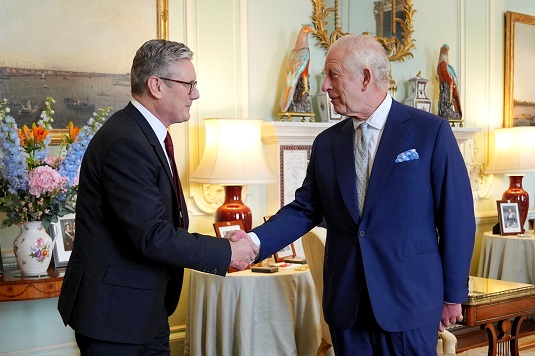
The king shared how he had been greatly encouraged by the many examples of community spirit that had countered the aggression and criminality from a few with the compassion and resilience of the many ...Could this be read as an expression of solidarity with anti-fascist forces that turned out, especially on Wednesday when the planned far right attacks on asylum and immigration services didn't happen but a huge counter-mobilisation effort did? It's difficult to read it any other way. Which raises an interesting question. Labour would benefit from directly associating itself with "the street" because the overwhelming majority of the public were against the riots, and yet Starmer has ceded this territory to the King.
There are two things going on here. Starmer personally, and Labour politically are favourably disposed towards the monarchy. His Tonyness can claim the credit for saving the institution and helping it modernise its media operation. These days with popular support in decline, it falls to Labour to shore it up. After all, if Starmer's project is the modernisation of the state and the restoration of its authority, that includes the monarchy. Having the King flatter popular anti-fascism places the state rhetorically on the side of multiculturalism, keeping it in line with public opinion and the growing popular consciousness. It's also consistent with Labour's handling of the riots. Politically, the furthest Starmer has gone is call the fascist rioters "far right", but has treated it as a technical law and order issue. I.e. His is an "above politics" affair. Having the King endorse anti-fascism is an attempt to elevate it and multiculturalism as a matter beyond party politics. I.e. racism is depoliticised as a matter of individual behaviour and personal morality. No need to ask further questions.
And yet a perfect circle is an impossibility in bourgeois politics. While there is an opportunity to consolidate Labour's meagre base, especially now the Greens and the extra-Labour left have started making inroads, it's evident that Starmer and the Labour leadership would rather retain the "flexibility" to position themselves to the right when required. So no criticisms of right wingers for what they've done stoking the riots. That is apart from the beyond-the-pale Tommy Robinson. Certainly no action to curb the right wing press is forthcoming, nor any cross words about the disgusting positioning of some Tory leadership contenders. Labour is fully signed up to the "genuine concerns" consensus and has no interest in tackling the background to the riots, because scapegoating might suit its interests too. Which are, when right wing Labour is in charge, forever chasing right wing votes while its left flank is dropping to bits.
Image Credit
Friday, 9 August 2024
Appease, Accommodate, or Oppose?

Before we go there, it's worth remembering that responsibility for the disgusting scenes and racist thuggery lies primarily with them. They made the choice to demonise immigrants and asylum seekers. They chose to present them as an existential threat to public services, security, and the British way of life. No one forced the Tories to slander Palestinian solidarity protests as hate marches, pretend Muslims are the enemy within, nor were they compelled to call the far right onto the streets. This is on them, their press, and the shit stirrers on their fringes. The question in front of our leadership hopefuls is how they turn a crisis, which Labour seems incapable of benefiting from politically speaking, into an opportunity that will net them their party's top job.
We already noted Priti Patel's surprising statement. Considering she was the architect of the Rwanda plan, and oversaw the most authoritarian anti-protest legislation seen in this country since the mid-19th century, the former Home Secretary made a splash by rounding on Nigel Farage's running commentary ("two-tier policing!"), and defended the right to protest, distinguishing between Palestine solidarity and fascist violence. That adds her to the ever-growing list of Tories Ian Dunt finds "impressive", but those of us somewhat less beholden to the delusions of liberalism will note there's a contest going on in which there is little to distinguish between our Tory Tweedie-Dees and Tweedie-Dums. She now has a selling point.
Contrast this with Robert Jenrick. Following a lacklustre launch, he's pitched for the fash-adjacent membership vote. On Wednesday he stoked tensions by saying Muslim demonstrators shouting "Allahu Akbar" should be arrested. Angela Rayner rightly replied that this was stirring up trouble, a point echoed by the contest's most anonymous entrant, Mel Stride. He said Jenrick's comments were "unhelpful and unwise", which is a very diplomatic way of saying reckless and stupidly self-serving. Still, none of this stopped Team Jenrick claiming they were responsible for ending the riots because their "hard truths" were like so many tablets of stone cast onto the fascist mobs from atop Mount Sinai. A joke response from a leadership campaign doubling as an unfunny parody of the Tory party itself.
Speaking of Mel Stride, following where Patel chose to tread he's attacked Farage directly for spreading conspiracy theories around the perpetrator of the Southport stabbings, and by linking this to an attack on an army officer in Kent stirred the pot further. "We need moderation, level heads, and very firm action" he concluded. That's the Reform leader told.
Last weekend, Kemi Badenoch made no bones about what she's selling on her stall. More racism. It was the repackaged moans about "integration" that are to blame for the riots. If such a problem exists, it's on the part of a tiny minority of lumpenised white men. But apart from her soft soap interview with last Sunday's Telegraph where she expounded her repugnant views without challenge, she hasn't commented further on the biggest issue in British politics at of the moment. This plays second fiddle to a social media feed is full of look-at-me photo opps and endorsements. A dereliction of duty by any reckoning.
What about James Cleverly? He's the only candidate to have ventured criticisms of Keir Starmer's approach to the riots. Zeroing in on the roving band of anti-riot specialist coppers the Prime Minister promised after Southport, Cleverly wonders aloud about what the unit is going to do when there are no riots, and it might take them a while to travel from London to trouble spots. Without wanting to defend Starmer, it's pretty obvious he was talking about a mobile intelligence unit and not hands-on crowd control cops. But this contrasts unfavourably with the money the Tories put into policing and the extra powers showered on them. And today, Cleverly has boasted that the policies he oversaw are working - visa application for work and study are significantly down. Well done that man for fuelling care industry shortages and chucking universities further into the red.
Lastly, where is wee Tommy Tugendhant? Before the riots, the leading "centrist" contender came out hard against the UK's continued membership of the European Convention, just so the government can be beastly to refugees in exchange for flattering headlines. Nevertheless, it's quite significant that - unlike Badenoch, Jenrick, and Cleverly - he at least issued a strong condemnation of the riots, albeit assuming an apolitical this-is-a-law-and-order issue stance. He later tweeted about these being "dark days" for our country, and urged Starmer to "get a grip". Why he attached a clip of young Muslim men in Birmingham and not any of the ample scenes of racist mobs attacking mosques, hotels, looting shops, and fighting the police is something for readers to make their minds up about.
We have then an interesting division among the contenders. You have Stride and Patel(!) who are offering the centrist and responsible establishment position on the riots. Cleverly and Tugendhat are in the middle and are trying to face both ways, and Badenoch and Jenrick throwing all caution to the wind and are overtly, crudely adopting the far right's framing of immigration and multiculturalism. It's a position that should see the pair of them drummed out of mainstream politics, but according to the unscientific but often accurate Conservative Home survey of members, these two are in pole position. They've decided that the party's route back is through consolidating the base and squeezing Reform, and at this early stage it seems the dwindling membership agrees. It's a strategy, I suppose, but one that's not going to get the party very far. The long-term decline of the Tories, which ate a banquet of Conservative MPs at the general election, is more or less guaranteed to continue unabated if they stick to this right wing path.
Image Credit
Wednesday, 7 August 2024
Keir Starmer's Reluctant Anti-Fascism

He was certainly quick to show off his law and order credentials. This afternoon the Prime Minister said 400 suspects had been arrested, 100 charged and sentencing will be carried out by the end of the week. Made easier by the abundance of evidence thanks to the far right's stupid reflex to share footage of themselves throwing bricks, egging on violence, shouting racist abuse, and looting gingerbread men from Greggs. Readers will recall that Starmer promised new powers for the police as well as a mobile specialist unit, which allowed the press to go all gooey about "supercops" over the weekend. But on the politics, Starmer's first instinct was to treat fascist mobilisation as a law and order issue. Until it became untenable. "I won't shy away from calling it far right thuggery" he said, despite waiting days to say this obvious truth. He acknowledged that Muslims were being specifically targeted, and for the first time Yvette Cooper acknowledged that the far right's attempted pogrom was motivated by Islamophobia. But that has been the limit of Labour's political response. Its MPs have been putting out more-in-common/kumbya statements, and none have been seen anywhere near anti-fascist demonstrations. Not even a token presence - following directives from the top.
Labour are missing a trick. As the party has a thin social base, these riots are an opportunity to assume that most Blairist of affectations - of presenting themselves as the political wing of the British people - by not just overseeing the prosecution and incarceration of racist thugs and their online cheerleaders, but showing empathy and solidarity with communities under siege. Obviously a difficulty thanks to the party's recent activity and long-term problems with institutional racism, but doing so would go some way of paying down debts that cost the party at the election (and could do so in the future), as well as win back those that by any measure should be in the bag. Doing the right thing now would provide the government some much needed social ballast, which would stop it from getting blown off course when the political weather gets rough.
Why is Labour not manoeuvring to capitalise on far right violence? It's alien territory for many of its MPs. The problem is the typical path to politics for most of the PLP is from outside the labour movement. The are not accustomed to and are even frightened by having to deal with masses of politicised people. It's a lack of fit between the Westminster-centred world view and skill set and a positive appreciation of an independently organised anti-fascist politics of the street. MPs are supposed to represent them, not treat with them as equals. The second is the investment in received wisdom, which has historically been driven by the needs of the Tory party. With the exception of when Jeremy Corbyn led Labour and Keir Starmer was in the running to take over, the party has always tailed the Conservative and right wing press framing of immigration and ethnic minorities as a problem to be managed. It's easier to go with the flow, especially when it's framed as the common sense of everyone outside of the M25, than to take on the myths and lies and actually lead on it. But worse than that, for right wing Labour it's not a question of capitulation for electoral reasons. Rather they too believe being seen as the best handlers of immigration - by deporting more and cutting numbers - is the route to keeping the Tories and the far right at bay. How's that perspective working out? And lastly, as per His Blairness Labour needs its own scapegoats. Taking on a political as opposed to a straight law and order approach to anti-fascism limits Labour's options in this regard, giving the government less room for manoeuvre when it thinks rightward shifts on multiculturalism and asylum are necessary.
In other words, Starmer's political timidity in the face of far right violence is conjunctural, but one consistent with the Janus-faced character of Labourism. And such reluctance now, an unwillingness and seeming inability to grasp the promise of the moment will cost Labour in the long run.
Image Credit
Sunday, 4 August 2024
Coddling the Far Right

Consider Cllr Alan Hosker, leader of the Tory group on Burnley council and a county councillor for Lancashire. He writes "Regarding these riots all over our Country it's down to the Labour Government to get a grip. Migration is way out of control. Folk in our Country feel they are being 2nd class citizens watching migrants be put up in hotels first class medical services including first on housing list". How is this any different to the ranting of the sieg-heiling fash on social media?
With a better grasp of written English but with the same awful politics, the chair of the Police and Crime Commissioners' organisation for England and Wales put out a statement (now deleted) calling for "calm and honesty". Donna Jones, PCC for Hampshire says "The behaviour of some of those protesting has been extremely violent, highly distressing and absolutely criminal". Leaving aside the dubious claims that any of them could be described as "protest", the nod to the customary respectability of the mainstream sits awkwardly with the thumbs up she gives the far right's politics. Sympathetically, she amplifies the fash complaint of "two-tier policing". She wrote the violence was driven by "the desire to protect Britain's sovereignty; the need to uphold British values and in order to do this, stop illegal immigration". This is the root cause, and banging people up does not address this problem. With the implication there will be more disorder until it's sorted. There's a word for this: apologism. Jones gives succour to mobs who target mosques and shout racist abuse.
But where Tory politics are concerned this pair are small fry. They're only putting out their mixes of the tunes performed by leading figures. These arguments are not dissimilar to what Robert Jenrick was pushing at his campaign launch, or what Rishi Sunak has been pushing since he came to office. And appearing tough on immigration is now a hill for Tory leadership campaigns to die on. In her Saturday interview with the Telegraph, the paper chooses to highlight Kemi Badenoch's comments on "integration". She says,
They should be saying that we need a clearer strategy on integration, which we don’t have at the moment. Instead, we just pretend that everything is fine and it’s a few bad apples, which is sometimes the case. But if you want to have a successful multi-racial country, you need to make an effort to do that. You can’t just pretend that there are no tensions. And we’ve been seeing this not just between ethnic minorities and white British people, but it’s even between ethnic minorities. This is not normal.What a steaming pile. Integration is a byword for the deep unease some have about concentrated pockets of people from minority ethnicities in certain areas. It's a mix of fear and envy that mean Muslim communities, for instance, have greater ties of solidarity and commonality with their neighbours than the average elderly Daily Mail reader sat alone in their majority white village, small town, or suburb. If there are barriers "integrating" minority ethnicities into dominant norms and values, where is the evidence? What "British values" do Muslims, for example, find objectionable? Fairness? Respect? Freedom? The problem, and not one ever likely to be championed by Badenoch and her dreadful opponents are structural inequalities. Where are her concerns for black and minority ethnicity wage gaps? The persistent exclusion of people from whole sections of the economy? The poorer physical and mental health experienced by most minority ethnicities? The whipping up of rhetoric by her party that tells people that they're in this country under sufferance, regardless of whether they were born here or not? The evidence is quite clear. Minority ethnicities are discriminated against to sustain a racialised division of labour, and one that has persisted since the dawn of industrial capitalism. Badenoch doesn't want to believe in "institutionalised racism" because it's embedded in the inequalities and hierarchies she thinks are just fine and dandy.
Badenoch blames minority ethnicities for the problems they face. So does the far right. The only difference is she believes in intervening in, disciplining, and closely monitoring individuals and communities, while retaining them - above all Muslims - as handy scapegoats for when political occasion demands. The fascists just want them driven out in an orgy of violence and blood letting on the way to establishing a terroristic dictatorship. Neither side cares about the consequences of their arguments and actions because both seek to profit politically from division. It follows an anti-fascist politics can't take on "real concerns", it has to challenge and rebut them. And it also means, always and everywhere, making clear the links between the hateful rhetoric of the far right and the more restrained, but no less consequential, racism of the mainstream.
Image Credit
Friday, 2 August 2024
Robert Jenrick's Missing X-Factor

Because this is a Tory leadership contest, Jenrick was at least aware he wasn't addressing the country. With a crowded field, he's hoping a pitch to the membership will build a groundswell of Association-level pressure on enough MPs to get him into the final four in September, and then the last two for the party-wide ballot. As such, Jenrick's effusing of "hard working activists" and all the rest was almost embarrassing. But what might have made the Tories' diminishing support pick up its ears was his defence of members having the final say over who gets to be leader, and for good measure he said selections should be their preserve as well. Somewhat optimistically, he said the Tories can be a mass membership organisation and, because the Tories won among young people in 2010 (not 18-24s, by the way) they can again.
Official optimism bordering on the delusional, considering what's just happened. But it's okay, because Jenrick has some "hard truths" the party must learn. He said two thirds of Tory MPs lost their seats through "no fault of their own". Poor lambs. They did because, despite having an excellent record in government, the Tories didn't keep its promises. There might be a universe where those two points marry up, but it's not this one. The main reason for the defeat was that most faithful of right wing friends; not controlling immigration and failing to secure the borders. That's not the whole story, according to Jackanory Jenrick. They did not build a strong and resilient economy, and they never got to grips with the NHS. What's happened to the economy had absolutely nothing to do with them, but the NHS did. Jenrick argued that too much of the British state isn't working. It's riddled with waste and inefficiencies. Poor management is its hallmark, and it needlessly soaks up never ending amounts of money. This malaise causes the problems with the NHS (front line staff are "lions" led by "back office donkeys"), but tackling it was too hard. So it was ducked.
Jenrick has a cheek. It was Rishi Sunak who led opposition to Boris Johnson's luke warm efforts at addressing the country's long-term structural problems. And wherever his penny pinching touch went, departmental budgets were pared down, infrastructure projects scrapped, public sector wages forced below inflation, and a stated intention to reduce the capability of the state to do things further. This wasn't dogma or "ideology", though it's often dressed up in those terms. It was a class conscious effort to curb raised political expectations after Corbynism, Covid, and Johnson's pie-in-the-sky promises. Defund the state, preside over its decay, and erode popular perceptions of its efficacy. Labour are attempting a different approach that involves enhancing the reputation of the state and rebuilding its capacity, but Jenrick wants to take it a step further. He's blaming the state itself for what his party have done to it, and the medicine he's prescribing is more of the same. The "British system isn't working for the British people" is the logical consequence of Tory design. His party is responsible for the shambles.
There were a few swipes at Labour (dishonest for raising taxes) and, weirdly, the "far left" (anti-British!). But while both offer something different, depending on one's political tastes, like a true conservative Jenrick's solutions are the same old same old. People and parliament should be sovereign (no ECHR), fast track deportations, immigration in the tens of thousands "or lower", build more nuclear, more money for the army, cut welfare, a small state "that works". I guess you'd have to be a Tory member to find this exciting.
But there are two problems. The long term issue is none of this is appropriate to the situation the Tories have bequeathed their successors. The audience for reheated Thatcherism is literally dying, are not being replaced like for like, and even those who might move into opposition against the new government aren't likely to turn to the Tories because of that inconvenient thing called memory. But more immediately, how does this differentiate Jenrick from his competitors? As we will see when other candidates are profiled here, you'll be hard pressed to find substantive differences between them. Whether they are from the identikit right, like Jenrick, or the briefcase/sensible "centre". What has Jenrick got that Badenoch and Patel haven't? Likewise how does he present as a more capable "safe pair of hands" unifier than Cleverly? It's a mystery to me, and I expect the Tory membership will have a hard time differentiating him as well.
Image Credit
Thursday, 1 August 2024
Five Most Popular Posts in July

1. Left of Labour General Election Results
2. After the Child Benefit Rebellion
3. The Class Politics of the Tory Collapse
4. An Ambiguous Triumph
5. Vote as Left as You Can
The election and its aftermath dominated the month's posts, and this place being this place the list of far left/left of Labour results won the most visited slot. Which it was always going to be. But hot on its heels was the fall out of Keir Starmer's suspension of seven Labour MPs who voted for the SNP's amendment to the King's Speech (and therefore not against the government's programme, as some commentators dishonestly claim). There is that most rarest of thing, a political opening for a new party of the left with parliamentary representation and an electoral base it can call upon. Are any of these MPs going to go for it? Coming in third was my survey of the defeated mess that used to be the Tory party. I told you so, I bloody told you so. Coming up behind was a quick analysis of the very thin Labour vote - a vote whose thinness can only embolden opposition to the new government on the left and, as we've seen this week, on the right. And coming in last was a set of voting recommendations.
A couple worth flagging that didn't make the list. The first considers Labour's attack on those elites outside the coalition of capital it wants to build to sustain it in power for years to come. And following on from that I also mulled over Rachel Reeves's financial statement. Too many have been quick to shout "austerity!", when in fact it's more subtle. Reeves gives with one hand and takes with another as a means of bedding down Labour's strategy to depoliticise public finances by tying them to the household budget model of state spending. Time to recalibrate and adjust, comrades.
Peering into the future, there will be something SF related coming in August. So much for the "turn" I announced last December. And as events have a habit of happening, unless my arms drop off I'll have plenty to type about. As ever, if you haven't already don't forget to follow the occasional newsletter, and if you like what I do (and you're not skint), you can help support the blog. Following me on Twitter and Facebook are cost-free ways of showing your backing for this corner of the internet.
Image Credit
Wednesday, 31 July 2024
The Far Right's Southport Rampage
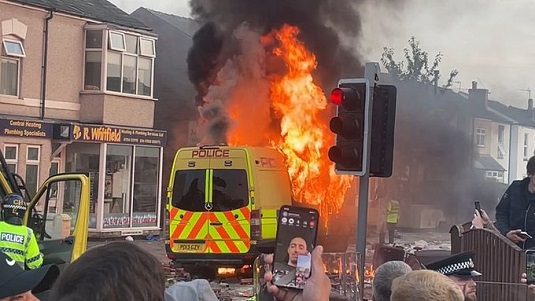
We've been here twice in 18 months. There was the riot at the Cenotaph, encouraged by Suella Braverman while she was Home Secretary. And then in February 2023, another mob - also mainly made up of people from outside the area - rioted in nearby Knowsley. Tonight, they're outside Downing Street scuffling with the police. The far right have grown in confidence and feel things are moving their way, thanks to the advances of the populist and far right on the continent, Donald Trump being in contention for the White House, and the election of five Reform MPs to the House of Commons.
About those MPs. Nigel Farage happily congratulates himself about the time he and UKIP (apparently) saw off the BNP. He presented the electorate with a respectable, non-fascist alternative to those "concerned" about immigration. And here we have this so-called safety valve claiming that the police were covering up the "terrorist motivations" - a dog whistle for Muslim if there ever was one - of the Southport stabbings. And in recent days we've seen his lackeys Richard Tice and Lee Anderson applauding a copper who stamped on the head of an incapacitated Asian man. This is not harmless shit talking for viral content. It's a call for their arms-length supporters to do what they do.
There have been calls for these three to face parliamentary standards investigations and, it's true, they should be open and shut cases if they happen. And the Daily Mail have reported that Yvette Cooper is considering banning the English Defence League. The first problem is the EDL doesn't exist except as lazy short hand for far right mobilisation. She would be banning a phantom. The organisation of the Southport racists is decentralised and distributed and doesn't have a formal structure with an HQ, bank accounts, and assets. There is no CEO or SLT, and no membership list. Just interlinked Facebook and WhatsApp groups, mailing lists, forums, and social media influencer networks. If Cooper wants a crack down she's going to have to take on the platform giants. And, as we know, Labour would rather shy away from confronting the powerful.
Politics is the easy and difficult answer to the far right. And that means pointing the finger at all politicians that have contrived this situation. From Theresa May and her crusade against immigration to the last three Tory horrors and their appalling Rwanda scheme to the new Tory leadership hopefuls banging on about the subject. Labour's is a straightforward contribution-through-capitulation to this hard right commonsense. The answer is building cohesive communities. Southport's reply has been exemplary in this regard through community clean up and local residents of all backgrounds helping repair the mosque. The answer is a politics that doesn't merely say refugees/migrants/Muslims welcome here, but takes on the lies of the politicians and the media by stating clearly and repeatedly that they are not to blame, and will not accept the scapegoat labels these elites are trying to paste onto them. And yes, as history has shown time and again, only mass mobilisation and confrontation with the far right can see them off.
Monday, 29 July 2024
Robbing Peter to Pay Paul
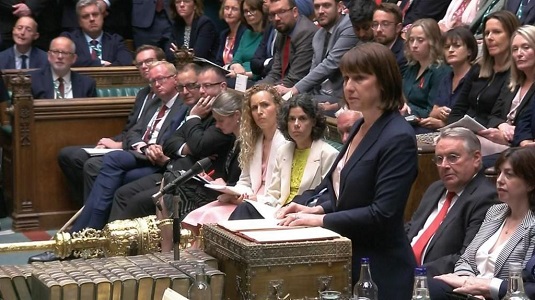
For political reasons, the government persists in treating state finances like a household budget. This isn't because Reeves or the cabinet really believe this (though the same cannot be said of many a clueless MP of every political persuasion), but it's useful for managing expectations. Whereas the previous government did this by promising nothing and defunding public services so state provision got such a bad name that no one would demand more, Labour's approach is to depoliticise politics and render it a technocratic exercise in which the bottom line is the bottom line, no questions asked. Hence our fearless "no one tells us what to write" press might quibble about this or that decision, but not challenge the framing of what "needs" to be done.
Nevertheless, going after Winter Fuel Payments is a strange one. Yes, Reeves caveated this with a campaign to sign up more pensioners who are eligible and don't claim, but unlike income tax thresholds the cut off is brutal. A few pounds over the qualifying line and its removal will make someone worse off than those just under it. But savings? On the one hand the introduction of a means test will put more off claiming, regardless of whatever Liz Kendall-designed initiative is launched to encourage take up. On the other, this creates delays in the system and the necessity of employing more civil servants to administer payments. In that sense, it's an under-the-radar pledge fulfilled. The manifesto, after all, implied a public sector job creation scheme.
Will there be a political price to pay? It's provided something for Tory leadership contenders to rail against as they try and rebuild their shattered coalition, but without any elections due until next May's locals and the general election four or five years off it's unlikely this will be top of the issue pops. Especially as Reeves has scheduled her budget for 30th October. There will be plenty of other issues exercising politics after then.
However, above inflation pay rises across the public sector and the big rise in junior doctors' salaries has almost certainly avoided another round of strikes in hospitals and schools. Who says industrial action doesn't work? But this is consistent with what you might call the Starmerist programme. I.e. the modernisation of the state and restoration of its functions as well as its authority. Of course, the concessions on pay do not address over a decade of salary erosion but it makes for a good start to the government's industrial relations and is therefore good politics as far as Labour is concerned. By offering more money from the off, unions will be minded to be less confrontational in future negotiations. Also, because there is something demonstrable and tangible to show this early in the new government - something more than piss and wind - we might get back to a situation where unions can be counted on to moderate and police workplace demands. Which is partly the object of Keir Starmer's enthusiasm for them. They, not managers, can be the most effective means for tempering and disciplining labour.
There was devil hidden in Reeves's detail. She said all departments will be given savings targets with the aim of finding £3bn between them. This apparently is supposed to be through dispensing with consultants (which will have the knock on effect of improving institutional skill pools and memory in lieu of anything else) and "back office" savings. How this won't impact the delivery of services Labour are committed to renewing after 14 years of cuts remains to be seen. Some road and rail projects have also got the axe, including the ridiculously stupid Stonehenge tunnel. Actual tax rises, which everyone knows are coming, are going to wait until the budget.
In all, what Reeves delivered was a speech that was almost entirely expected. The junior doctors' settlement was a surprise, and before today she could have done the "tough choices" routine on public sector pay. But this concession and everything else that was given and taken away is consistent with their authoritarian modernisation project. We can expect future financial statements and budgets to adopt exactly the same tone.
Image Credit
Friday, 26 July 2024
Tory Leadership Torture
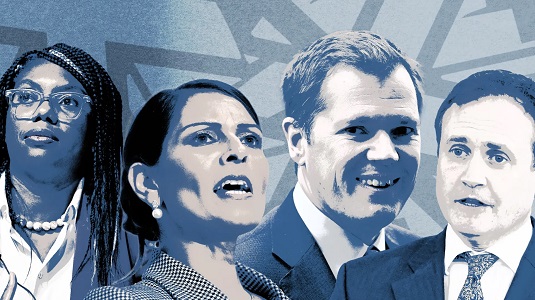
How are the Tories coping since crashing to their worst ever defeat? Apart from the Badenoch/Braverman barney, the first inner party dispute of note was about the length of the leadership contest to replace Rishi Sunak (California beckons, after all). Those who argued for a short campaign envisaged a new leader in place before party conference season so they could introduce themselves to the nation, and then start attacking Labour. Those who thought a longer contest was more appropriate argue the party needs time to think about its defeat, why it was defeated so heavily, and where the party goes next. It will also allow the leadership hopefuls to be put through their paces, which apparently wasn't the case in the short contests that returned Boris Johnson and Liz Truss.
From the standpoint of their self-preservation, the Tories have probably made the right decision going long in the abstract. But some will be disappointed. For instance, Oliver Middleton writing on ConHome notes that Labour's long leadership contest in 2010 allowed the Conservatives to set the tone for their programme of cuts. There is a danger history might repeat itself as Labour sets about its legislative programme with the opposition distracted. But this is a rewrite of history. It was not that Labour was absorbed by its own issues, it's that the politics pushed by the frontrunners - the Miliband brothers - capitulated to the Tories' agenda. Ed Miliband won on a softer left platform, but as soon as he became leader the messaging was all about accepting the need for cuts. "Too fast and too far" was the mantra, and the political initiative was duly ceded.
The Tories aren't about to make the same mistake. Okay, not exactly the same one. Labour have scrapped their on-shore wind ban and their attacks on HE institutions via the war-on-woke "free speech" act, and the Tories will oppose this. As Rachel Reeves comes forward with her statement next week to fix the £20bn deficit in state finances, Sunak's caretaker leadership aren't about to accept Labour framing and Labour arguments about the need for wealth taxes, cracking down on tax avoidance, and making sure private schools pay their way. But what they are doing is re-emphasising the issues that played their part in the Tories' catastrophic defeat.
Take Tom Tugendhat, for example. Apparently the "least unpopular candidate that members of the public have heard of, the centrepiece of his leadership campaign is his pledge to withdraw from the European Court of Human Rights. Supposedly on the sensible briefcase wing of the party, there might be method to this particular madness. After all, immigration has become the performative Tory issue par excellence and the ECHR are viewed as an illegitimate obstacle to being beastly to refugees. This will go down well with what's left of the Tory membership, but sets the tone for the rest of the contest. If Tugendhat is taking up this position, how are those to his right - Priti Patel, Kemi Badenoch, Robert Jenrick, and Suella Braverman - going to differentiate themselves? The gutter leads to the drain, and the drain leads to the sewer. The problem is that as the Tory hopefuls scrap over who can be the most right wing, the message is reinforced that the party remains out of touch, has nothing to say about the problems facing this country, and aren't contrite over the damage they've done.
In this regard, a long contest only reinforces these points. The Tories are set on spending the next four months reminding everyone how appalling they are.
Image Credit
Subscribe to:
Posts (Atom)