Saturday, 10 November 2018

Brexit: End Game or Paralysis?

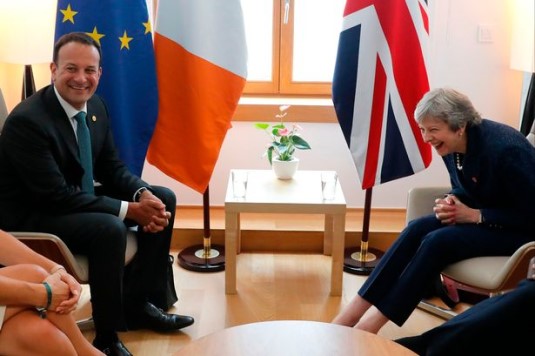
One should avoid making time for the Johnson family wherever possible. But due to their prominence, sometimes it's unavoidable. On this occasion at least it isn't the usual Johnson making the running. The resignation of Jo Johnson from the government was a shocker for two reasons. One, he has spent his parliamentary career thus far (relatively) quietly beavering away in the shadows and cutting an unassuming, if entirely mediocre figure on the lower rungs of ministerial ladder. And two, we have someone resigning because Theresa May's Brexit plan, such as it is, is too Brexity. Unfortunately, it is difficult to dispute his reasoning.

Leaving aside the debate about withdrawing from the EU, Johnson argues we're facing two cliff edges. The first is "an agreement that will leave our country economically weakened, with no say in the EU rules it must follow and years of uncertainty for business" and a no deal scenario which "I know as a transport minister will inflict untold damage on our nation." Quite. He follows it up with this excoriating observation: "To present the nation with a choice between two deeply unattractive outcomes, vassalage and chaos, is a failure of British statecraft on a scale unseen since the Suez crisis." Regretting writing that referendum pledge into the 2015 Tory party manifesto yet, Jo?

But yes, what we are seeing as we approach the Brexit end game - assuming it doesn't rumble on forever and a day - is an implosion of political vision and will. It might be that May does elicit sympathy from some quarters for her impossible position, but it was her government that got us into this mess. From the summer of 2016 when she declared 'no deal is better than a bad deal', to the shattering of her authority following the general election, she has followed the same approach as her predecessor. That is the subordination of everything, including the Brexit negotiations, to the problematic of Tory party management. A truly pathetic state and unnecessary state of affairs.

We can condemn the past and learn from it, but we can't change it. We are where we are, yet Brexit is far from finished with swinging its wrecking ball through British politics. With a deal that now, again, looks like it's going to create some sort of customs border down the Irish Sea - despite being a much-hyped "red line" - the DUP look increasingly unwilling to back May. The ERG aren't about to back it. Boris Johnson and his hangers ons won't back it, but neither will remainer Tories. That is if we take them at their word which, in the recent past, has proven to be anything but their bond. May's pitch to Labour MPs is unlikely to carry her Brexit through the Commons by way of compensation, and we are likely to see the EU enthusiasts like Ben Bradshaw and Chuka Umunna file through the no lobby as per the Labour whip's instructions in the hope they will get their second referendum.

And so May's Brexit not only has a legitimacy problem, it has a feasibility problem too. What's worse is what ever happens next has dire consequences. In normal times May could not possibly continue if her deal is rejected (though, granted, business is anything but usual), but should she fail we have paralysis. Parliament "taking control" of the negotiation process is meaningless rhetoric considering how divided it is, and isn't doing the negotiations. And the idea of a referendum on the deal, as per high profile campaigns is a non-starter too. If you can't get Brexit through the Commons, what makes you think legislation enabling another referendum would?

It doesn't end there. Supposing Jo Johnson somehow gets his way and there is a referendum on the deal. It appears the consensus among the hard remain/"people's vote" faction in parliament is that we should have three options on the ballot. May's deal, no deal, and remain. Not only would the very fact of another referendum have very serious consequences in and of itself, but the likely outcome of a three-way option would be ... more paralysis. Remain would get the highest score (which, of course, is why they want it on the ballot despite the whole thing definitely not being a rerun of the referendum), but getting 50% plus is a very big ask considering the same people who screwed it up last time are in the driving seat this time. You think politics is bad now? Imagine how poisonous it would be after a referendum large numbers of people don't see as legitimate takes place with a result that is indecisive. And meanwhile that clock is still ticking.

There is no easy way out of the mess. Paralysis of one sort or the other is coming, and the political centre of the British state is seizing up. Assuming May's Brexit cannot muster enough support, there is only one option left. For parliament to vote through a freeze on Article 50, followed by a general election. Getting shot of the Tories and giving Labour a shot is the best way - the only way - out of the crisis.

Thursday, 8 November 2018

Labour and the "Left Behinds"

The joint Hope Not Hate/British Future report, The National Conversation on Immigration and its focus on "left behind" communities is to be welcomed, not least because it isn't the usual regurgitation of Blue Labour dogma. It acknowledges some of the problems Labour has with its former 'traditional' base, and suggests things the party needs to do to avoid more significant difficulties down the road. You can read a précis here by Rose Carter, one of the report's authors.

The conclusions are familiar. At the last election, Labour did best in metropolitan, socially liberal, and graduate-heavy areas. Taking immigration as a lightning rod issue that condenses a range of attitudes, those surveyed who had the most positive attitudes toward it, for example, lived in close proximity to a university. Respondents who registered the highest degree of antipathy tended to live in former industrial communities. In other words, the most progressive were concentrated in the leading edges of the economy while those who are not comprise the left behind.

Combining survey research and focus groups, Rosie notes that "wherever you are, and whatever the questions are about, you always hear about they". The amorphous 'they' can be Muslims, immigrants, or elites. This they has the tendency to denote all of them at once. The common feature is a perception that the system works for them while the 'we' - us - lose out. As these sentiments are widespread, it's small wonder conspiracy theory is almost banal in its ubiquity. However, unlike other investigations of the relationship between values and political choices, Hope Not Hate is clear that there is a materialist basis for alienation of this kind. Similar to what's been argued on there since year dot, and many other places at many different times, is that the evaporation of industry, the changing character of work, greater precarity, and the shifting geographies of the most profitable economic activity fosters a sense of anxiety that makes changing culture, patterns of migration, new values, and the acceptance of minorities appear strange and threatening to some. Unaddressed these anxieties can be tapped into by populist and far right politics. This has been the case in the United States, but also here in the UK with the rise and fall of the BNP and UKIP respectively, the potency of tabloid shit stirring about Asian grooming gangs, and the social media celebrity of Tommy Robinson. It's not that economics and identity are opposed, they're intertwined.

This presents a challenge to Labour because it is Labour-voting areas where these views found the highest concentration. The research suggests many people feel abandoned by the party, therefore the party has to address their concerns. This requires an understanding of their frustrations, their anxieties, the wellsprings of this disenchantment and put forward a "genuine offer" that is more than an "ideological project".

There are some issues here with the framing, the findings, and the prescription. In the spirit of understanding our left behinds, we need to get to grips with what the report overlooks: age. While there are plenty of people for whom views like those described above are grist to the mill of populism (and worse), the distribution is not evenly spread. As polling after the election demonstrated, young people are most unlikely to vote right, especially if they're in the DE category. Meanwhile, older voters across the occupational groups are more likely to vote Tory, but there is still a class effect here with those in the lower grades doing so in fewer number than the better off. This is important. Labour's problems with left behind communities is not with the "traditional working class", it's much more specific: it's with older workers and the retired, a consequence of a class cohort effect. This may vary to a degree from place to place, but remember, the bulk of low paid and precarious jobs are immaterial in character too - they have the production of relationships, knowledge, data, services, and care at their heart just as much as the swanky jobs of the cool hipster haunts. And outside of work most younger workers are plugged into the networked world thanks to the supercomputers in their pockets. This is not insignificant.

The second issue is the degree to which the 2017 Labour campaign acted more of a push than a pull factor. We know Labour did lose some "traditional" seats and dropped votes in others, including Bolsover, the fiefdom of dear old Dennis. Obviously, it would be ridiculous to suggest the perception of Corbyn's Labour as a "they" without a clue about life in the provinces wasn't a factor, but nor should we discount the consequences of the types of campaigns ran in a number of these seats. In a handful of "core" constituencies of my acquaintance, majorities were slashed and elections lost by the localised campaigns of Corbyn-sceptic candidates. There are cases of candidates agreeing with voters on the doorstep that Jeremy Corbyn was awful and the Labour Party was crap because of it, but still vote for me. Far be it for me to question the wisdom of such an approach, but common sense might suggest saying your party isn't much cop, which would then be repeated by a punter to their friends and families is not the stuff from which a successful election night is made. Far from overcoming estrangement, they compounded it.

And on the topic of campaigns, if we're concerned about Labour losing votes a scientific approach would require that we also look at those votes we won. And I'm not referring to the "new votes" in this case either. Theresa May's Tories were able to triangulate the UKIP vote and annex large numbers of them, but a not insignificant number returned to Labour. Why? Presumably, these voters' concerns were broadly similar to others who supported UKIP, so why did they come home? Was it that Labour's acceptance of Brexit conferred on the party a 'permission to be heard'. Could the distinctly 'old Labour' positioning the Tories and the media ensured every voter knew about was a significant factor in bring them back?

As that is the case, it suggests that Labour is already on the right track to win back these communities. It can speak to the left behind in the clear language of industrialism, housing, and jobs. Going down the Blue Labour and addressing "genuine concerns" by pandering to them won't cut the mustard. Getting besuited Westminster types wrapping themselves in the flag and talking hard politics on immigration appears naff, insincere, and desperate. It would win over few, if any, socially conservative voters and succeed in alienating large swathes of the huge coalition we've built so far. You'd have to be really green to go blue.

Winning over left behind communities is not an over night task. Since 1979 they have grown used to having politics being done to them by successive governments of all party labels. Campaigning, community organising, and the right policies that speak to our people is the way of rebuilding trust, seeing off cynicism and combating the nihilistic turn to Toryism and the right. Contrary to the implications of the report, we need more Corbynism. Not less.

Tuesday, 6 November 2018

Monday, 5 November 2018

Bordering on the Farcical

Brexit is 95% sorted, say some. It's 50/50! claim others. Whatever you believe and irrespective of your flavour of Brexit (or whether you don't accept it at all), we're moving to make or break point. The outcome of which is sure to have a lasting - and a less than benign - impact on British politics for many years to come. Yet remarkably, the main obstacle to sorting out a deal and following it up with a comprehensive trade agreement with the EU is still the Irish border issue. And it's the UK, sorry, the Tories who are entirely to blame for this impasse.

Consider the position of the Irish government. They want to avoid a hard border at all costs. Not just because frictionless movement of people north and south and unimpeded trade is central to the Republic's economy, but a also because of a justified desire of wanting to avoid anything resembling the resumption of the North's low level civil war. True, conditions now are not what they were before the Good Friday Agreement was negotiated and ratified, but the reimposition of a hard border carries with it the risk of sparking off new grievances. A staffed, patrolled, and very visible symbol of the division of Ireland into north and south is unlikely to gladden the hearts of committed republicans. Likewise, for loyalists - both retired and would-be paramilitaries - this could be taken as a licence to re-entrench sectarian divisions, up to and including targeted killings of anyone who earns their displeasure. Unfortunately for the people of the two Irelands, the UK government of Theresa May and her ghastly cast of hoorays, chinless place-seekers, and gilded wastrels, they care nothing for the consequences of wrecking the Good Friday Agreement and trampling on the democratic rights of the overwhelming mass, north and south, who voted for it. Some referendums are more deserving of respect than others, it seems.

Nevertheless, playing hard and fast with the Irish border suits some. Despite their lip service to uninterrupted traffic with the Republic, the DUP are very much in the government's van. In fact, they know at the bottom that reinstating a border is in the party interest. Which is why Arlene Foster is unashamedly, recklessly pugnacious on matters Brexit. With no checks between the province and the Republic, the two parts have enjoyed a brisk social and economic convergence over the last 20 years, more or less rendering the north increasingly redundant and with it the long-term viability of unionism, and the DUP itself. As the rising generation in both communities and either side of the border view the continued division as an anachronism, thanks to their receptivity to socially liberal values courtesy of the immaterial economy and experience of large-scale emigration, particularly to mainland Britain, so the DUP finds it difficult and will increasingly find themselves out of sorts. Their response is not a liberal unionism, but a deeply backward, sectarian identity the accentuates the supposedly unique character of themselves, their community, and their statelet. For all the hypocritical whingeing we've seen about the inviolability of the bond between Britain and Northern Ireland and how a customs border in the Irish Sea is utterly unacceptable, they are quite happy to separate themselves from the rest on abortion and equal marriage. They do so because it is politically convenient for them, it gives the north a distinctive identity vis a vis the Republic. Once, the latter served as Unionism's Big Other because of its papist character. Now, with secularisation speeding forward at pace, the North can distinguish itself from the Republic because of its Godlessness.

May's official position, aided by Foster and crew, leaves many hostages to fortune. Presently, the backstop is there will be next to no dislocation between the Republic and the UK for an arbitrarily set period. The open border is protected for now and what can happen to it can get sorted by a trade deal somewhere down the line. If all the Prime Minister had to worry about was getting a deal through her own party, this would appear to be fairly pragmatic and sensible. But she has more than a bunch of cranky and otherwise irrelevant backbenchers to please. Rightly, Ireland is worried that a time-limited commitment implies that the UK could rip up Good Friday and the Common Travel Area if it suited future political manoeuvres. They are also no doubt alarmed by the disdain the Tories have shown the previous agreement signed by the PM before last Christmas. You will recall the Irish border issue was supposed to be sorted by that, and yet here was are almost a year later. Typical of their decadent stupidity, the Tories are allowing Albion to be perceived as perfidious over its treaty obligations. That's all well and good, but if your Brexit owes everything to swashbuckling your way around the globe with a series of bilateral trade deals, demonstrating a light-minded and unserious approach to negotiations and agreements is about the dumbest thing you can do. Would you sign a trade agreement with a demonstrably unreliable and untrustworthy partner?

Still, the truth of the matter is that the difficulties of May's position is thanks to it being an impossible one. If she accepts the Irish position and treats the border as inviolable in perpetuity, not only are the miserable wretches of the ERG going to pile in, there is the possibility of touching off a wider rebellion in Tory ranks. By the backdoor, an open border means unrestricted and uncontrolled immigration. "Controlling our borders", the pathetic totem the Leave campaign emblazoned on its banner, becomes an impossibility. But unless that happens, the a no-deal catastrophe comes into play. This means alienating permanently significant sections of business, centre leaving voters, and the further repulsion of younger voters. Having got this far by following the narrow interests of the Tory party, May is faced with an inescapable dilemma - a scissors crisis of its immediate and medium-to-long-term interests. Does party management of the moment win out at the risk of the destruction of the Tories later, or does going cap in hand to Labour rebels to offset her headbangers but make things less bad for the Tories in the long run win out? The clock is ticking, we've run out of road for the can to be kicked down, and the fatal hour of decision is almost upon us.

Sunday, 4 November 2018

Has Jeremy Corbyn Saved the Labour Party?

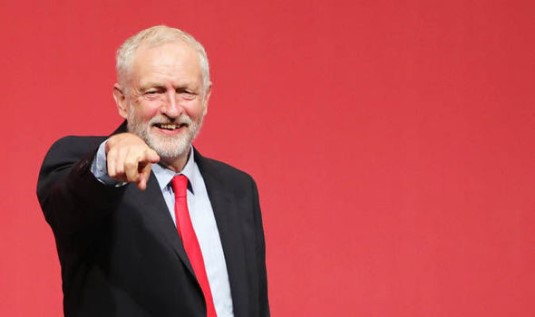
Jeremy Corbyn saved the Labour Party. This feat was accomplished by winning the leadership election in 2015, recruiting hundreds of thousands of new members, registered and affiliated supporters, and building a new coalition of voters uniting the comparatively better off with those at the sharp end. In so doing, Labour in England and Wales avoided the fates of the Socialists in France, Labour in the Netherlands, PASOK in Greece, the cataclysm that befell Scottish Labour, and the accelerating decline of the German Social Democrats. As the poll above demonstrates, they are now level pegging with the far right AfD while bleeding votes to the Greens.

Or did Corbyn not save the Labour Party? Well, according to some responses to this tweet, that is the case. The learned Professor Colin Talbot says comparing Labour favourably to the misery of the SPD is "simplistic nonsense" because, um, First Past the Post encourages "big, broad church parties". The implication being that the 2017 general election is merely the natural expression of the electoral system we use, so nothing to see here. The second claim he makes is that if Corbyn is an explanation for why Labour out-performed expectations, then May is equally responsible for the otherwise impressive number of voters who supported the Tories. Well, yes. Here then we have an opportunity to revisit the idea of PASOKification, what's happened to British politics, polarisation, and the empiricism that too often passes for the analysis of politics.

The PASOKification thesis is quite simple. As parties, particularly social democratic and labour parties, pursue policies that are detrimental to their coalition of voters so the tendency for them to collapse increases. This is not a disembodied process, an abstraction sitting above the comings and goings of politics and manifesting willy-nilly, but an outcome of a number of things. Chief among them is the acceptance of a neoliberal programme with New Labour, of course, providing the paradigmatic example. During its terms of office, and despite refurbishing and renewing public services, it politically demobilised its constituency. As the political arm of the labour movement and the party of wage earners, the implementation of market and business-friendly policy did nothing to enhance the collective political strength of its support. Trade union membership continued plunging along with the party membership and the party's vote, alienating many of its (former) voters in the process. Had instead it implemented greater collective rights at work, listened to its membership more and not ignored the largest, widest mass movement of our life times then it may have avoided the ignominy of the 2010 general election.

This, however, must be seen in context. Blairism and its commitment to market fundamentalism was a response to four general election defeats, the collapse of the labour movement, and the triumph of Western capitalism over the grotesqueries of Eastern Europe. It convinced many in the party and among its electorate that Blair's way was the right way (literally and figuratively) because it offered a story that helped make sense of what went before. Still, this isn't another essay on Blairism, but starting out with the proposition that class didn't matter it and the Milibandist sequel spent the next 21 years acting as if it didn't, with the election results to match. This story differs depending at the country you're looking at, but what is stark is centre left parties in Western Europe not only presided over similar policy menu, they did so while dishing out the thin gruel of austerity measures. In other words, they not only pursued a strategy that effectively meant they were organising against their base but ensured it would hurt them. Would you, for instance, want to vote for a 'left' party set on freezing your wages and ransacking your modest pension pot while threatening to throw you out of work. No, no one would, and indeed the left wing electorates of several liberal democracies have demonstrated just that.

The achievement of Corbynism then is, if you like, a reverse PASOKification. Labour in local government and Wales still administer Tory cuts, but the party now defines itself against them. Corbyn's politics, often derided as throwbacks to the 1970s, proved to be the most modern leftist politics because it spoke to the interests and hopes of millions excluded from the mainstream. Jeremy Corbyn and his immediate comrades understand that a Labour Party is supposed to stick up for working people and the poor, and if it does so it can build a coalition to win office and stay there. This is not rocket science, but is the most mysterious hocus pocus to anyone lacking the rudiments of a class analysis. Yet you don't have to be overly identified with the left to do this. Presently, Labor in Australia is polling consistently well and leading its Coalition opponents not because the party has a radical left programme, but because its agenda isn't about attacking its base: it's a straight forward anti-austerity position, a consistent Milibandism if you like. The New Zealand story is similar. Jacinda Adern's Labour is a far cry from Corbynism (despite getting hailed as its antipodean twin) and her government is quite centrist, but again, its holding on to its support (leading in the latest poll) because it hasn't (yet) gone down the road of attacking its own base.

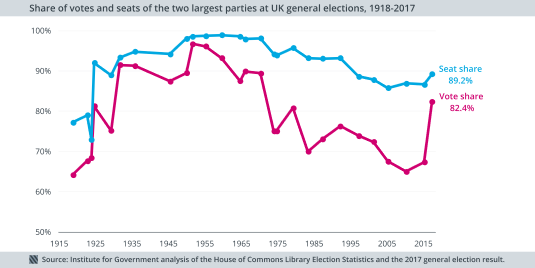
Of course, the learned professor is entitled to disagree with this political explanation of Labour's rejuvenation, but the facts aren't with him. If First Past the Post isn't a dependent variable, how to explain Labour's collapse in Scotland without resorting to political analysis? What we saw there, as if we need to remind ourselves, is a thoroughly establishment party throw its lot in with the Tories and be seen to set its face against its own progressive support. No wonder the SNP cleaned up. The second problem is holding FPTP responsible for 2017's polarisation goes against the vote trends prior to that general election.


As the graph shows, and every student of political science should know (let alone decorated academics), the combined vote share for the two main parties peaked in 1951 and declined by about one third by 2015. The sharp reversal came, you guessed it, in 2017. If then the FPTP thesis is correct, then why did voters spend 60 years moving away from the two parties the electoral system doled out unfair advantages to? Could it be because of, gasp, politics? And would an analysis of the politics yield reasons for the return of polarisation?

Well yes, obviously. But not from the vantage of the ivory tower it seems. I mean, who could possibly think that Corbynism as a valid explanation of the reverse in Labour's fortunes is refuted by the larger vote share Theresa May's Tories managed to poll? They are not mutually exclusive but, rather, are mutually conditioning. The present Tory coalition of voters was more or less in place shortly after May made it to Number 10, and here she did two significant things. She sounded the one nation bell that, at the level of rhetoric at least, suggested the years of dog-eat-dog and beggar-thy-neighbour were coming to an end. In other words, as someone vaguely new to the mass of the voting public she had a distinctive and mildly optimistic stance vis a vis her predecessor. And she explicitly positioned the Tories as the party of max Brexit. That is you can trust the Tories to deliver it, whatever "it" may turn out to be. This helped cement a tranche of voters attracted by (cautious) change and a right wing, semi-authoritarian and anti-immigrant vision of Brexit. Who were these people? The petit bourgeois hungry for "leadership", capital - naturally, older workers in declining occupations and retirees. These are segments of the population particularly prone to Tory scaremongering and, thanks to the breaking down of the conservatising effects of age, are in long-term decline.

Jeremy Corbyn is a factor here because his person is a lightning rod for their discontent and fears. Everything he is charged with - hanging around with terrorist supporters, spying for the Czechoslovak secret police, campaigning against wars, expecting the wealthy to pay more tax - these pluck at the anxious heart strings of millions of people ill at ease with the world and for whom such matters typify their anxieties. Funnily enough, Theresa May and the Tories perform exactly the same role for the coalition Corbyn's Labour has built. In power, their policies mean continued misery, continued precarity, no prospect of accumulating property and getting on, crumbling services, and zero interest in the threat of climate change.

These are the contours and movements of British politics now, and our job is to analyse them, get a sense of the trends and direction and, crucially, use it to inform political strategy. In other words, a million miles away from the academic political science demonstrated above. It's less a case of faulty analysis and one of structural distance, of treating the behaviour of parties and the stakes they contest as objects of contemplation. From such a remove it can appear as if parties are free floating, that voters pay obsessive attention to the comings and goings at Westminster, and that electoral systems play an overdetermining as opposed to a subordinate role in political life. Some might say they are reified precisely to avoid having to get to grips with the complexities of politics as well as the awful, impermissible conclusion: that Jeremy Corbyn has, indeed, saved the Labour Party.

Saturday, 3 November 2018

Obsolete Leninism

I saw a call for papers for a collection under the working title of Lenin 2020. And so, as if there wasn't a thousand and one other projects demanding my attention on top of the self-replenishing work pile, I decided to submit this abstract.


Beyond Leninism: Obsolescence, Multitudes, and the Place of the Party

In their influential and groundbreaking work, Michael Hardt and Toni Negri have repeatedly declared the death of the revolutionary party while in their most recent collaborative intervention, Assembly, they acknowledge that the struggle against capital demands permanent organisation and structure, while offering an idiosyncratic, accountable and ground-up approach to leadership. They suggest the revolutionary party is obsolete from the standpoint of the class struggles of the early 21st century mainly because, in extremis, they embody representative logics that squash complexity and impose political subjectivities and activism on a multitudinous mass in which class is but one axis of articulation and positioning. Capturing and nurturing revolutionary subjectivities demands that we venture beyond Leninism, the straitjacket of the disciplined party, and the quasi-theological belief in revolution as a singular redemptive event. In this paper we examine the experience of the most prominent and influential Leninist groups in Britain to flesh out the character of this obsolescence, particularly in a conjuncture marked by the sudden rise of Jeremy Corbyn and a renaissance of the Labour left, and locate their failures in an orientation that is cross purposes to the changes in political economy over the last 40 years, a strategic position akin to the ‘mass worker’ of a previous form of capitalism as opposed to the ‘socialised worker’ of immaterial production and networks. While Hardt and Negri are right to eschew the Leninist party for these reasons, following the arguments of Jodi Dean and particularly the understanding of the working class party advanced by Marx and Engels we suggest contemporary movements are bringing the party question back to the fore – Leninism might not be appropriate to the moment, and may never be again, but far from being out of sorts the party is demonstrating its continued relevance to radical politics. The question is how, and what sort of party should this be.

Friday, 2 November 2018

The Plight of David Cameron

Pity the fate of front-line politicians. Masters of all that they survey, they go from the centre of the universe to last night's chip wrappings. Imagine it. Your views matter. Your hobby horses matter. And your decisions are among the few that only, truly matter. Then, it might be sudden but is often drawn out, all this is revoked and you are bumped down to observer status. If you're lucky you might end up fondly remembered, but more often your name is indelibly associated with failures or catastrophes of one sort or another. The life after then, of getting stuck on the outside looking in at what was once yours, is a sad time of reflection in the dwindling twilight.

Therefore only the hardest of hearts would fail to be moved by the plight of Dave, whose latest ruminations made all the papers today. We learn he wishes to rededicate his life to a resumption of public service. Good on him! I'm sure there are plenty of food banks and homeless shelters that would have his arm off. Quite literally in most cases. Alas, according to reports - subsequently denied - Dave had other things in mind. "I would very much like to return to front-line politics", our former PM declaimed, "and I should like to be foreign secretary".

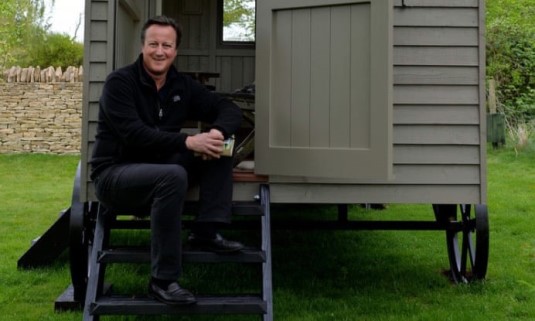
Giving the media the run around is so much jolly japes. What's a washed up ex-leader of a declining power to do when one's memoirs didn't command the asking price, and one has just assembled a flash £25k shed? We all need a hobby. Unfortunately, Dave's story does have a ring of plausibility to it. We recall when Theresa May decanted George Osborne from Number 11 and then, almost over night, he manifested at the helm of the Evening Standard. Thanks to the largesse of Evgeny Lebedev (just what is it with Tories and Russian money?), Osborne has preserved some measure of staying politically relevant, even if it is but a simulacrum of the power he previously dispensed.

One can easily imagine Dave making a similar move. Readers might recall that his ambitions weren't driven by anything so quaint as "helping people" or "making a difference", but that he desired becoming Prime Minister because he thought he'd be "rather good at it". He has the same chutzpah as Osborne, the same unwarranted but effortless PPE confidence that he could glide into any situation and know what to do. Dave and Osborne typify the merry-go-round at senior management level across institutions and companies. One doesn't have to do detail (too much) as one set of meetings are much the same as the other, and if caught short an underling's briefing notes are always to hand. What matters are connections, and social and cultural capital they can bring to bear.

Thinking it through, could Dave make a comeback if he was so moved? His chances look sketchy, no doubt. In times past it was possible for politicians to peak, decline, and peak again. Churchill is the most celebrated example, achieving ministerial prominence, fading from view, moving into Number 10, moving out, and then back in again when Attlee unnecessarily parted with the keys in 1951. Harold Wilson managed a couple of spells at the top, and there is the ghastly example of Silvio Berlusconi, the man who refuses to go away. It's been done before, so it's not impossible, on paper. But c'mon, this is Dave, the PM whose idea of "being rather good at it" saw the poor thrown under the austerity bus, imperilled the 300 year old Act of Union, and gambled away EU membership to prevent a ridiculous, rag tag and bobtail outfit of "fruitcakes, loonies and closet racists" from coming near to getting a handful of seats at Westminster. It stands to reason that there might be a few things standing in his way of getting a Foreign Office job.

Unfortunately, we can't count on good sense keeping Dave out of the way as this isn't the first time a return has got mooted. It wasn't very long ago when Theresa May allowed his name to be floated as her nomination for NATO general secretary. We're not going to see her do that again, but as her career threatens to go the way of Dave's and Osborne's what is there to stop a future Tory leader from ennobling him and letting him loose to raise more fresh hell and do more damage? Sadly, regrettably, I have a feeling Dave's time with British politics isn't quite yet over.

Thursday, 1 November 2018

Labour's Tax Bombshell

A question to everyone who thinks Jeremy Corbyn and the current Labour leadership aren't much cop. Can you imagine a Tory chancellor, a noted fiscal hawk, proclaiming the end of austerity if Labour wasn't an effective opposition and hadn't made the running against the cuts? And the honest answer, of course, is no. It says something about the growing hegemony of the left that the likes of Philip Hammond are forced to ventriloquise its programme. And yet, just to reinforce the point this was a Tory budget, there is the movement of the 40p tax threshold, of raising it from £45k to £50k from 2020 onwards. There is no economic necessity behind the move, Hammond chose to do this for naked political reasons. And this is where things get interesting.

From the standpoint of the slow-burning Tory crisis, Hammond's tax move was aimed at preserving their declining voter coalition. The reasoning goes that by offering a subsidy to higher earners support for the Tories will be shored up, and make the difference among those layers tempted by Corbynist fare. It's a bet that hundreds more in the pocket is enough to make better off voters forget the mess and the cruelties the Tories have dished out. This then was no attempt to reach beyond but preserve, conserve their vote, but one that falls short of the narrow requirements of party interests. When support is literally dying and not getting replaced, one might suggest something with a broader appeal might be considered.

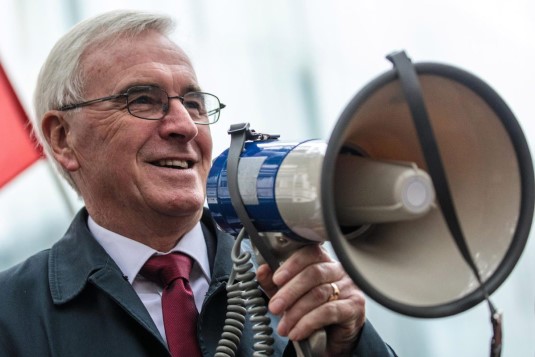
Then came a curve ball: John McDonnell has decided to accept this move, and drawing down criticism from the soft left and the usual suspects in equal measure. Yes, it's a bizarre spectacle to find erstwhile Blairites and Brownites criticising and rebelling against the party on this when, had either of their heroes done the same thing, you know they would have hailed it as a master stroke. See, for example, the contemporary praise for New Labour's pledge to stick to Tory spending plans for the two years following 1997. But, as Stephen Bush points out, most members tune out complaints from habitual bellyachers unless they're going out their way to attack the leadership. Still, it is a move not without risk as plenty of front benchers have criticised Hammond for prioritising this cut over and above the urgency with which crumbling infrastructure and the ever-present threat of climate change warrants. And by implication, criticism of Tory taxation plans is now a critique of Labour's.

What then is John's game? Why is a shadow chancellor unafraid of publicly commenting on his debt to Marx set on giving premier league footballers, FTSE 100 CEOs, and A-list TV personalities 900 nicker a year at the public's expense? As Stephen rightly suggests in his piece, there is a desire not to hammer the professions whose salaries often cluster in the £35k-£50k range. They're part of the Corbynist coalition too. But I'd also suggest it's about heading off future Tory attacks. Labour could commit itself to the most demented Friedman-Hayekian programme of flat taxes, privatisation and market fundamentalism, and the Tories will still paint it as a tax and spend party. By accepting Hammond's tax plan it does two things. It helps insure the next manifesto against attempts to reduce questions of economic competency to taxation - just as Dave and his media helpers managed in 2010 and 2015 with the deficit - and blunts Tory attacks. There can't be any smoke if there's no fire. This also gives Labour more room to pivot scrutiny onto Tory weakness, which is pretty much every aspect of their record. They are vulnerable on investment, growth, quality jobs, homes, and government debt.

Nevertheless, it is a funny business, an uncomfortable business for a left wing would-be chancellor to go down this road. Especially when there's no end to the benefits freeze in sight and public sector wages remain depressed. To add bite to the party's position, Labour could consider the possibility of introducing additional tax bands for higher earners, and other measures like beefing up Hammond's social media tax. Both would please the base and defend the leadership against charges of cynical positioning, as well as finding another angle to add punchy, populist policy to the next manifesto. While no doubt the Tories would try piling in, suggesting the likes of Jeff Bezos and Piers Morgan shouldn't pay more tax is not the stuff of which a popular politics is made.

Five Most Popular Posts in October


Hallowe'en is now over, but the horrors October unleashed are just beginning. Here are the five most popular posts last month:

1. The Bourgeois Politics of the People's Vote March
2. When Centrism Tanks
3. Ten Points about Brazilian Politics
4. David Davis's Brexit Fantasy
5. Theresa May's Pitch to Labour MPs

If you want to understand politics, a class analysis is part of the basic kit. Though be careful, some people really don't like it - as the piece looking at the elitism at the heart of the so-called People's Vote Campaign and march demonstrated (loose end tier-upper here). This came not long after Chuka Umunna burnished his radical, street politics cred with the launch of another centrist identikit think tank. Still, £65k for 12 hours a month is tidy work by anyone's reckoning. Who wouldn't talk wonk shit for that? In third came my consideration of the first round of the Brazilian presidential election results. If only Bolsonaro was so placed. And in the rear we have Theresa May and David Davis, people who, one hopes, no words will have to be expended on come this time next year.

Who's up for a second chance airing? It has to be our mate Gilles Deleuze with an excursion in how his philosophy can help think about the authoritarian turn in liberal democracies.

Tuesday, 30 October 2018

Immaterial Labour and Intangible Capital

There's a lot of banging on about immaterial labour around these parts, but can we speak of an (antagonistic) counterpart, immaterial capital? According to Capitalism Without Capital by Jonathan Haskel and Stian Westlake, we can. However, before we proceed our authors use capital in the mainstream economics sense, and not the Marxist one we're used to in this parish. That is to say we treat capital as a social relationship, whereas mainstream economics has a tendency to see it as an abstract input, a neutral application of tools, machinery, plant, etc. We'll come back to this later on.

The first conceptual distinction of import is, not at all surprisingly, that between tangible and intangible investments. The first of these relates, well, to their intangibility. The value of physical, tangible investments are easy to determine. You can see them, operate them, they take up space, require the application of labour, and depreciate. Measuring the value of branding or an internal operating system? Not so much. The second issue is intangible investment represents a sunk cost and cannot be sold on as they tend to be highly specific to that company. For example, when Infogrames purchased Atari's branding, arguably the image and legacy of the original company did not transfer over with them. It's a sign, an empty signifier, a bauble. Furthermore, investments in intangibles are messy and spillover the confines of ownership - selling on is difficult, but copying and modifying is easy. They cannot be contained and have a tendency of reaching escape velocity very quickly. They can, however, lend themselves to rapid scalability and easily outsourced. For instance, the coding for Red Dead Redemption 2 is infinitely replicable and has been transmitted for pressing at manufacturers around the globe. No more Nintendo manufacturing the cartridges centrally and exporting them from Japan. Lastly, intangibility means flexibility. That is their ability to combine with other intangibles in synergies that make possible new opportunities for value generation. See, for instance, how Facebook replicates and buys out other social media technologies to effectively create a cluster of intangibles under its ownership that, effectively, ensure one need never venture off the platform.

Haskel and Westlake also note intangible investment is increasing at a rate that will soon outstrip capital tied up in tangibles. Of the richest economies, by their reckoning the Rubicon has been crossed by Finland, Sweden, the US and UK. There are three reasons why. While labour intensive industries are more expensive over time than manufacturing (after all, the production of intangibles requires the application of bodies and brains), in its early period start up costs tend to be low. Offsetting the tendency for costs to rise are the potential for productivity gains, gains possible piggy-backing off existing (and often state-provided) infrastructure allowing for huge returns. Third, intangibles are increasingly baked into investment in manufacturing and has been from the first introduction of robotics into factories.

The authors recognise intangibles represent quite a challenge to mainstream economics - infinitely reproducible and scalable, the tendency to generate value in unforeseen combinations with others, a good that can neither be contained nor a use value that isn't used up when it is consumed, all are difficulties for economies (and economic theories) in which distribution presupposes scarcity and entropy. Therefore an economy switching over to intangibles should behave differently. One consequence, as outlined by Paul Mason, is an attempt by intangible-rich companies to capture as many spin offs from their investments as possible - see Facebook, above. Therefore the optimal market isn't one in which different competitors are disciplined by other actors contesting for the loyalties of the same groups of consumers, but the classic monopoly model on which one giant company squats above a market. Another is the tendency to synergy. As intangibles, especially knowledges, tend to increase in value in conjunction with others, these industries like to be in close proximity to one another. This way an intangible ecosystem can grow up as different workers meet in similar settings and collaborative partnerships spontaneously emerge, raising the possibility of new products and new value. However, there's no knowing in advance what will fly and what will fall flat - only practice can determine that, making forecasting especially difficult and with it, planning. Who, for instance, 20 years ago could envisage the contemporary social media ecosystem?

There are consequences for the existing economy too. While sceptical of the view that robots are going to make millions of people redundant, intangibles can exacerbate and aggravate inequalities by ensuring those with the skills for this brave new world enjoy an enhanced market status while those who don't will sink further. A reiteration of the old one-third/two-thirds job market arguments of the 1980s post-Fordism debates. This trend in the market doubles down on hierarchies in firms and between them, opening up huge differentials. And clustering, of course, drives up property prices as it gentrifies neighbourhoods. This also leads to political consequences. What happens to the workers who are left behind or are locked out of the intangible economy? Therefore encouraging a switch to intangibles means policies that curb its dysfunctions from the outset. These include action to curb galloping property prices, especially as exorbitant costs and rents threatens to throttle the goose before it's even laid the golden egg.

By way of a summary, Haskel and Westlake suggest strong, clear rules for intellectual property; ways of facilitating the spread of ideas, which includes an overhaul of urban planning for the maximisation of sociability (plenty of places to meet, relax, etc.); action to make finance more intangible-friendly through tax breaks and new debt vehicles; a strategic use of public spending both in providing the infrastructure for a thriving intangible ecosystem and using public procurement; extending educational opportunities; and lastly an approach that addresses and ameliorates new inequalities.

A couple of issues. Understandably their analysis sticks with the sexy and fashionable end of intangible production that is causing the most excitement and drawing the most attention. This, however, means they do not address the bulk of intangible production: the service industry, and particularly, care. This work and the capital invested here tends to be ignored in inverse proportion to its importance to intangible-rich economies. Fine, I get it. Drawing and animating lamp posts in Grand Theft Auto V is the wave of the future, tucking old people into bed at night is distinctly old school. Immaterial labour of this sort is low status, low paid, and low security. It also happens to be (mostly) the province of women and is regarded as unskilled labour. Yet what they produce is just as intangible, as labour intensive but, alas, not as scalable or reproducible as your funky ass app. Investment here is tied up in residential infrastructure and care packages but, unlike other intangibles, bucks the tendency to uncertainty because the population is ageing and the demand here, whether it is left to the market or comes increasingly under the state's purview again, represents an expanding sector of the economy and therefore the promise of steady growth. Any comprehensive overview of the intangible economy has to reckon with reproductive labour otherwise you're left with a very lopsided approach.

The second problem is the definition of capital mentioned earlier. Here, capital is more or less assimilated to everything the capitalist brings to the production process and the product - the constant capital and the commodity. There are times that what Heskel and Westlake are really describing are social relationships of which intangibles are a personification, but only some times. Ultimately, as we've described many times on this site, immaterial labour is prior to the production and accumulation of intangible capital. Only the ingenuity of human beings can stick together different intangibles in novel and unexpected ways, something half recognised in the discussion of clustering and its political consequences. However, because of the half recognition the features of capital are confused with the characteristics of labour, often giving the impression that capital accumulates capital spontaneously.

This brings us back to the title, Capitalism Without Capital. If capital is reduced to machinery and commodities we can see, touch, operate, then it does make provocative sense. But as capital is a social relationship, it does not. How it operates has undergone a shift, but capital is still there. With the added irony that the more quickly its products go intangible and vanish, the more visible its structures of command and exploitation becomes. A useful and interesting book then, but one demonstrative of the limitations of mainstream economics.