A comprehensive overview from Sai Englert on the history of settler colonialism. In discussion with Alex, this instalment of the always-excellent Politics Theory Other looks at North America, South Africa, Brazil, and Algeria, the processes that drive different settler projects, and how Israel sits in this continuity of infamy.
If you can please help support Alex's work here
Sunday, 7 January 2024

Thursday, 4 January 2024
Stirring Up Apathy

There's nothing wrong with trying to get a buzz about politics, but how you go about generating enthusiasm for the programme on offer depends on two things. What the party is selling, and what the wider mood is. Starmer, or at least his speech writer, has grasped the obvious. Politics and politicians are held in contempt. But their response is ham-fisted. Stung by criticisms from wide-eyed leftists like John McTernan that have criticised Starmer for offering nothing, it appears 'hope' is the new watch word. We should be hopeful that Labour can change things. Not "grandiose hope" or utopianism, or the glib quick fix, but what Starmer calls "credible and frank" hope. A hope that "levels with you", that needs patience and hard work, but that is tangible and deliverable. It is the hope of a national renewal that only Labour can and is offering.
Starmer recognises that building hope means recasting politics. He wants a politics that isn't about gesture or cynical positioning, which is the character and purpose of Tory politics. The best way to crush them is to make politics that centres service - a theme Starmer has banged on about for more than a year now. This contrasts with what Sunak's done (or, more accurately, has refused to do) and the "vanity dressed up as virtue", which is how the Labour right style the Corbyn years these days. He said politics is embedded in everything from the money we earn to how our communities feel about themselves. Working people [sic] don't want the earth (more's the pity), but will settle for "stability, security, fairness". They want politics to "tread lightly". The politics of division, the populisms and the nationalisms rely on the permanent mobilisations against, of ho do we hate this week? Starmer's service politics are about consensus building, moderation, patience, pulling together and making moves in the right direction that takes everyone with them. There were no fresh details about what the new "light politics" involve, except for the usual - by now ritualistic - evocations of "mission-led government" and his five missions. There was more about how economic growth is the magic bullet for everything, but this would be different to Tory growth because Labour would make sure it benefits "working people". He promised that there would be no more denigration of public service, that the 2030 clean power generation target was non-negotiable, and that growth would be powered by stronger workers' rights. He also said that the "dark side of Westminster" would not be tolerated. If politics is to change, so must politicians. "I will restore standards in public life by cracking down on cronyism" and "No one above the law in a Britain I lead." Ultimately, the next election comes to a simple choice. Five more years of Tory cynicism, or national renewal with Labour?
The Q&A didn't have much of interest to say. He dodged a question about Peter Mandelson's associations with Jeffrey Epstein, confirmed he was still in favour of votes for 16 year olds. He didn't say anything about tax apart from growth, growth, growth, and how closing nondom loopholes and ending private schools' charitable exemptions are going to pay for everything he wants to do in the NHS and education. Apparently, stopping small boats in the channel is as easy as cracking down on criminal gangs, and he did not commit to reversing any measures the Tories might make toward abolishing inheritance tax. Hope? Starmer's audience could barely contain themselves.
This speech tells us two things. The first reconfirms what was written here three years ago: that Starmer's politics are Fabian at best. Wanting politics to "tread lightly" is the same as leaving the questions of how things should be, whose interests should be prioritised, and what policies should be legislated for to the "professionals". The proper place of everyone who isn't a politician is to get on with their lives and simply turn out and vote when elections come. Trust the politics specialists because they know best.
Returning to enthusiasm, yes, Starmer does understand where the public's mood is. His speech was written to intersect with it and offer solutions, but hope and a belief that politics is the road to a better place cannot have mass appeal if all it does is regurgitate sound bites and rote phrases. Especially when the politician appealing to the sense of optimism has spent three years undoing hopes for positive change. Writing for a Tory paper to make easily misconstrued comments about Thatcher doesn't suggest you're in the change game. Nor does giving Israel a free pass as it carries out ethnic cleansing in full view of the world's media. Nor suggesting the NHS uses every winter beds' crisis as an "excuse" to ask for more money. Nor does performative and try-hard embraces of national symbolism, and the reiterating the inviolability of stringent "fiscal rules" in a poor imitation of George Osborne. Nor does looking at Labour's 10 million voters in 2019 and spitting on their aspirations. Words count for nothing if they're at odds with one's actions. People have no affection for Starmer or for Labour because he's responsible more than anyone for stirring up apathy.
The election win is locked in because of how the Tories have behaved. But because there is no hinterland nor reservoir of genuine support for Starmer, either he or the people around him have got to know that when things go wrong, they're going to go very wrong.
Image Credit
Wednesday, 3 January 2024
Stephen King's Nostalgic Bloat: 11.22.63

Stephen King's 11.22.63 is unnecessarily long. Jake Epping, this novel's Maine everyman drops down a rabbit hole in time that spits him out in September 1958, and under pressure from his dying friend decides to hang around to stop Lee Harvey Oswald from assassinating John F Kennedy. This would change a few things about the present day to say the least. The problem is in a 734-page novel, we don't get to the thwarted assassination until page 659 and it's 700 before we get back to the future to see the repercussions. King's novel is so bloated it could have wrapped The Hindenburg with some to spare.
This doesn't matter commercially. King could put out a compendium of his shopping lists and it would sell. What editor would ever say no? And the fans are not going to complain. His pacey and seductive prose makes his worlds convincing and relatable. The bulk of the novel takes place in Derry, which happens to be the setting of It (and features a couple of its characters and references sightings of a murderous clown), and Jodie, near Dallas. Both are fictionalised emblems of small town America. Derry is insular, unfriendly, suspicious of outsiders, and is pervaded by an undercurrent of threat. Jodie is the opposite. The people live in each others' pockets and pull together in times of tragedy. Its wholesomeness typifies boomer nostalgia: everyone knew their place, everyone was happy, and everyone was white. And it's here, at length, that Epping lives out his life under an assumed identity. In Derry he changes history by saving a girl from a lifetime in a wheelchair and prevents a family from getting murdered by their estranged father. And in Jodie, he becomes a respected teacher and community pillar. He falls in love and begins a relationship, and finds the time to keep Lee Harvey Oswald under surveillance in Dallas.
The vast majority of 11.22.63 is a mainstream novel of neatly mown lawns interspersed with will-they-won't-they romance, heart-stopping action, stalkerly obsession, and flashes of violence. And despite its length, it doesn't seem like a long book. Crafting page turners is a real talent, and to keep this up when nothing happens is indicative of King's power as a storyteller. But just because he can doesn't mean he should stretch everything to the size of a breeze block. I can't help but suspect that its thickness has something to do with pandering to a kind of reader interpellated by the commercial book trade. Someone who wants a lot of content for their money, and takes the page count as a marker of erudition. In terms of the SF element, it doesn't do anything that a thousand other time travel/alternative histories haven't done before. By the end, Epping is compelled to go back and reset the timeline as the fabric of reality - King's multiverse - is fraying toward disintegration. The problem with paradoxes is explained away via threads of time and the effect of the rabbit hole. Those who use it can remember life before they dabbled in time. Handy.
The most surprising thing about the book is King's projection of how poorly a full JFK presidency might have gone. He surmises that he would have downgraded Vietnam and not committed to Saigon in the way Lyndon B Johnson did. Instead he expends most of his energy and political capital addressing desegregation, but was ultimately successful. After his disappointing second term, he was succeeded by George Wallace - the pro-Jim Crow governor of Alabama - who nuked Hanoi to show who was boss. And from there the world descended into chaos with nuclear weapons lobbed around because presidents and prime ministers got out of the wrong side of bed that morning. Today's pin up for liberal constitutionalism and responsible realpolitik becomes unwittingly responsible for its dissolution. This was a surprising conclusion for a liberal/centre left writer like King to arrive at because the imagined consequences are worse than what LBJ oversaw, while conceding ground to rightist arguments that the pursuit of well-meaning policy paves the progressive roads to hell. I'm sure this was not what King intended to convey.
The book focuses in some detail on Oswald's movements, his abusive relationship with his Marina, his wife, and conveying a sense of his character. At one point it's noted that for all his radical and anti-imperialist rantings, he was much more likely to pick up the works of Zane Grey than of Karl Marx. In the afterword, King says his scrutinising of the evidence leaves him 98-99% convinced that the assassination was the confluence of opportunity and the unstable personality of a Walter Mitty character. He can't completely rule out the possibility of conspiracy, but in King's studied reconstruction through Epping's eyes there are no gaps for one to exist.
King is an entertainer, and there is no doubting his standing as one. He serves up the customary thrills and spills, but one that does not use the opportunity of his SF conceit to offer anything more than a romp through the golden age of Middle America. More's the pity.
Monday, 1 January 2024
The Opposite of Necessary

We’ve got a problem — we think that being cynical is sophisticated, but that’s how adolescents think. Our cynicism about our politics has resulted in cynical politicians. If you tell a child they’re bad, they become bad. If you tell politicians they’re a bunch of egotistical maniacs, then where is the value in trying to be anything else?Good grief.
The West Wing, for those who've never watched it or have repressed the memory, was a centrist fantasy about how US politics works. Set in the White House following President Bartlet and his lackeys, it spoke to every middle manager in middle America as the team had to handle competing pressures and interest groups, keep an eye on the polling, but making sure that everyone does the right thing. This is the essential core of the show for Moffat: its celebration of selfless public service. If we had more of that, then our politics would be better.
You don't need Holmes to realise there is a market for this. The people who listen to the George Osborne and Ed Balls podcast and watch the 2012 Olympics opening ceremony on the day every year. Moffat will have met the moneyed people, the celebrity people, the sensible people in his circuits around the entertainment establishment. Everywhere he goes there is the desire for "stability" and "proper" politics. This, on paper, is what Keir Starmer offers. And he himself always emphasises how keen Labour is "to serve". The problem is that even a portion of his natural base aren't convinced. Indeed, thinking about politics in 2023 it seems Starmer and his Tory opponents have concluded that you don't need to persuade the punters any more.
If Moffat is able to realise this project, it can only ever be naff. British politics right now is is not just naked, but is proudly parading itself in the buff. Its obscenities put off far more than it attracts and therefore unlikely to be commercially. It is sure to run cringe, earnest story lines that aren't believable. They run against the grain of the real. SW1 will love it, especially if it's called The Village. But that won't be enough to sustain it beyond a single season.
Bourgeois politics needs its fairy stories. On that Moffat is right. But there is no guarantee it can generate enough of them with the power to convince.
Image Credit
Five Most Popular Posts in December

1. This Here Blog
2. Embracing Thatcher?
3. Scorching the Earth on Immigration
4. Pondering Science Fiction
5. 2023 In Politics
Top of last month's pops was my announcement that posts will not be appearing with the same frequency as previously, and that topics other than politics are going to get more of a look in. Hopefully this is going to also mean some longer, more considered pieces. We'll see what the fates and the moods bring us. Coming in second was Starmer's stupid comments about "admiring Thatcher". Not her politics mind, he says while driving the Labour Party ever further to the right. Also coming in were the Tories enthusiasm for restricting immigration rules further - that is before the Rwanda policy blew up in Sunak's face and, for a few days, the warm spectacle of Tory MPs going hell for leather at each other provided some light entertainment. In at four was another post about more of what we're going to see on this blog - more writing considering works of science fiction. And last was my retrospective of 2023.
The two posts getting a second shout are, predictably enough, the most popular posts of the year. Because if I can't blow my own trumpet here, where can I? And the other is 2023's best choonage, the list absolutely no one ever asks for.
Not sure what you can expect over January. The new, slower schedule should mean between 10 and 15 posts a month, but who knows if motivation and inspiration might strike? It could be more, especially if I get round to mastering the art of the small, sharp missive. As ever, if you haven't already don't forget to follow the free newsletter, and if you like what I do (and you're not skint), you can help support the blog. Following me on Twitter and Facebook are cost-free ways of showing your backing for this corner of the internet.
Sunday, 31 December 2023
Top Ten Dance Songs 2023
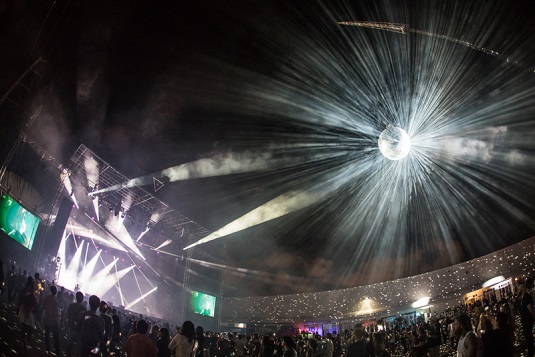
10.Stay Awake by Ferry Corsten feat. Diandra Faye
9.Take It Off by Fisher x Aatig
8.Circle of Light by Because of Art feat. Antony Szmierek
7.Clouds by BUNT., Nate Traveller
6.Mantra by Alex Sonata and TheRio
5. Voodoo by Gorgon City
4. Shades of Love by The Blessed Madonna feat. The Joy
3. Warehouse Requiem by Orkidea
2. Drifting by Tiësto
On last year's list, I lamented that yours truly's genre of choice - trance - was stuck in a deeply unoriginal groove and was looking to the past for inspiration. In practice, this meant a plethora of dull remixes of the classics and naff facsimiles. Those that did not fear to tread out a new path were recognised here but, unfortunately, the rest of the scene paid no notice. However, one did stand apart from the crowd because it did its own thing, and that's Subterranean by Miss Monique and AVIRA feat. LUNA. Play it loud.
Saturday, 30 December 2023
The Most Read 20 of 2023

Here then are the 20 that attracted the plenty.
1. The Class Struggle Vs Cognitive Capitalism
2. The Prospects of a Corbyn-Led Left Party
3. Why Do the Millennials Hate the Tories?
4. Exposing Russell Brand
5. Keir Starmer's Divided Base
6. Nick Cohen and Media Solidarity
7. UFO Disinformation as Social Control
8. Labour's Racist Attack Ad
9. Cultivating Labour's Scapegoats
10. Writing About Keir Starmer
11. BBC Framing and Distortion: A Case Study
12. A Bureaucrat First and Foremost
13. Untangling Reevenomics
14. Politics After the Local Elections
15. Never Apologise, Never Explain
16. And Then They Came for the Soft Left
17. Does Greatness Await the Greens?
18. Can the Labour Left Make a Comeback?
19. Strong on the Weak
20. The Repeated Surrender to Tory Framing
A surprising number read the monthly round up of the most popular posts. If you're one of those, you'll know I regularly plug missives that didn't catch the audiences but are worthy of a wider readership. Here are a dozen pieces, one from each month, that fall into this category. Read them, share them with your friends, and read them some more!
January: Can the Tories Make a 1992-Style Comeback?
February: Sybil, or, The Two Nations
March: The Economics of a Depleted State
April: Labour's Hierarchy of Racism
May: Patients and Profits
June: Hegel's Political Uses
July: Tony Blair Vs the NHS
August: Tronti's Defeatism
September: Habermas's Legitimation Crisis Today
October: Rachel Reeves's Plagiarism Scandal
November: On Tory Briefcases
December: Pondering Science Fiction
Last thing to note before the curtain falls on 2023. Regardless of what this blog ends up doing, it will always remain free to read. But if you do enjoy what appears here and you are fortunate to have quids to spare there are worse ways of disposing disposal cash than supporting this corner of the internet. If you can't or won't, that's fine. Cop us a follow and a like on Twitter or Facebook instead!
Image Credit
Thursday, 28 December 2023
What I've Been Reading Recently
Evelina by Frances Burney
What Maisie Knew by Henry James
Pudd'nhead Wilson by Mark Twain
The Sellout by Paul Beatty
Caleb Williams by William Godwin
The Perfect Hoax by Italo Svevo
A Nation of Shopkeepers by Dan Evans
The Demolished Man by Alfred Bester
Language and Hegemony in Gramsci by Peter Ives
The Last Temptation by Nikos Kazantzakis
The Virginian by Owen Wister
The History of Rasselas by Samuel Johnson
MaddAddam by Margaret Atwood
The Aftermath of Feminism by Angela McRobbie
The Cattle Truck by George Semprun
Solaris by Stanislaw Lem
Nightwood by Djuna Barnes
The Female Quixote by Charlotte Lennox
Glory by NoViolet Bulawayo
Best SF Stories of Brian W Aldiss by Brian W Aldiss
Without Gurantees by Paul Gilroy, Lawrence Grossberg, and Angela McRobbie (eds)
The Shards by Bret Easton Ellis
The Man of Feeling by Henry MacKenzie
Reading Science Fiction by James Gunn, Marleen S Barr, and Matthew Candelaria (eds)
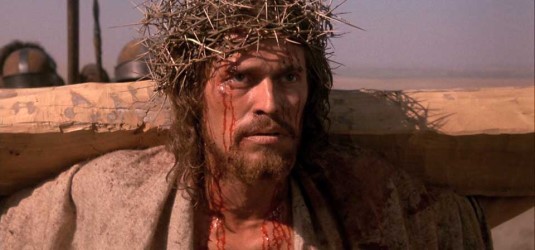
I'm going to leave talking about the Ellis to one side as I'm planning on writing about it. But of the others, the stand outs from this quarter's book pile was The Female Quixote. Probably the funniest book I've read this year, which isn't bad for something that's been out for 270 years. It complemented Evelina as 18th century novels of manners, despite the latter being (ostensibly) more serious and less satirical. Sticking with the 1700s, Caleb Williams was a rousing, radical masterpiece from one of the founding thinkers of anarchism. Efforts were made to ban it because the book dared to suggest landowners might be prepared to lie when their interests are at stake. Speaking of naughty books, I got round to reading The Last Temptation, which got on the Vatican's index for blasphemy. For most of the book I was entirely nonplussed. Okay, so some liberties are taken by Kazantzakis in his novelisation of Jesus's adult life but nothing to get the devout too sweaty. But that was before we get toward the end of the book, of which I'll say no more.
Also in there is Alfred Bester's The Demolished Man. Considered one of if not his best, I'm sorry to say I didn't get on with it. But the happy sequel to reading this was a realisation more science fiction was needed in my life, hence the new turn in what this blog will be covering. And why there's a nice academic tome about SF at the bottom of the list.
Did Christmas shower any books upon you? And what are you reading at the moment?
2023 in Politics

Following the last general election, professional political understanderers embarrassed themselves about what Boris Johnson's victory meant. Labour faced extinction. The Conservatives could look forward to a decade in power. You don't need me to repeat anything else. Even in the aftermath of this calamity, one corner of the internet held fast to the conclusion the Tories were in long-term decline and had the analysis to back it up. Everything since has vindicated that argument, and nothing in 2023 has suggested otherwise. Even some Tories have tried reckoning with the realities of their predicament. With zero success.
Since Liz Truss disastrously swung by Number 10, the long-term trend and the conjunctural have closely intertwined. It was possible before Johnson's hubris brought us Partygate and for the Tories to win again in 2024, but the actions of both have sped politics up and accelerated the Tories' demise. And Rishi Sunak has done nothing to apply the brakes. At the beginning of the year, he committed his government to do absolutely nothing and he's stuck to his promise. By letting their crisis unfold unimpeded, the local government base got a battering and demonstrated - despite what Saint John of Curtice said at the time - that the Tory doom was almost upon them. Things were no better with parliamentary by-elections, though their barely hanging on in Johnson's old seat saw them switch to anti-environmental and pro-motorist messaging as if this could save their bacon.
As long argued here, if a strategy is discernible among the crying and the panic, it's a reassertion of core vote concerns. Hammering the environment, attacking trans people, campaigning against refugees and migrants, and giving more money to the better off. All these are signs the Tories have given up trying to win over the undecided. And with Jeremy Hunt already announcing the date for the next budget, that suggests even bigger bribes are incoming. Not that it will help. The Tories are done and it's difficult to see how they might even begin a comeback, let alone make one.
The second concerns a forecast made three years ago. At a small online conference, I argued that Keir Starmer's strategies threatened to break up the core class coalition he'd inherited from Jeremy Corbyn. If he did not push policies with mass appeal that spoke to and articulated their interests, Labour's support would decompose. This was published by Political Quarterly, but has been revisited many times here since. 2023 also confirmed how right this argument was. In recent months, despite still enjoying strong polling leads over the Tories Labour's numbers have gone from hanging around the high to the low 40s, and its council by-election performance hasn't been stellar. With the consolations of spectacular parliamentary by-election wins at the Tories' and SNP's expense, some might think none of this matters. But it does. Starmer's repudiation or watering down of the pledges he was elected leader on has alienated millions of people. Most of these are still going to vote Labour at the election, but without any enthusiasm. And others have taken their votes elsewhere. It's no accident that the Liberal Democrats and the Greens have done so well this year.
When writing the paper I thought this might cause Starmer a significant issue in the medium time vis a vis the Tories. But as they have largely taken themselves out of contention, what this slight decomposition of the Labour vote has meant is a bump in support for the aforementioned parties, and setting themselves up nicely to do well out of the electoral opposition to a Starmer government. Again, people aren't about to start voting Tory again after the last 14 years. In other words, the consequences of Starmer's dispersal of Labour's new base will take place later rather than sooner. Though, to give the man credit, like his Tory counterparts he's doing his bit to speed the process up.
And so, political trends identified on this blog have continued to play themselves out. There is nothing new under the sun. But what did I get wrong in 2023? It was this: I gave Starmer too much credit that he would stick to his pledges. Sort of. Back in February, I reflected on his promises and where, if at all, he can be trusted to deliver. Since then the water has been muddied by the abandonment of more progressive policies and the £28bn/year on green modernisation is constantly briefed against. It is also now shackled to self-imposed fiscal rules set by the plagiarist Rachel Reeves, which will be wheeled out as an excuse not to do anything transformative. While the post on trusting Starmer noted how all Labour governments have had to be forced to make genuine concessions by labour movement pressure, even I was shocked by the scale of their retreat. With every passing day, Starmer and co make the positive case for their Labour government more and more fanciful.
Thinking ahead to 2024, it's obvious Labour are going to win an outright majority. But in their hubris they could drop another seat to the Greens. This time at Thangam Debbonaire's expense in the new Bristol Central seat. And if Aspire put someone up in Bethnal Green and Bow's successor seat, Rushinara Ali could be in trouble. The Tories are going to carry on as they are, hoping beyond hope more tax cuts and more meanness will carry them over the finish line. They will be looking back at 1992 with fondness, and believing a core vote strategy seemingly won 2019. And when defeat comes, the conclusion is going to be a lurch further right. Rather than trying to make political weather, don't be surprised if Starmer continues to tail the Tories on acceptable scapegoats.
One wishes this was not so, but there are reasons to be hopeful. The spike in strike days this year has led to a mix of modest victories and stalemates. Where workers have been defeated, these have not been strategic defeats. There is plenty of combativity left in the labour movement. And, most encouragingly, the swift emergence of an absolutely huge Palestinian solidarity movement has put the frighteners on establishment politics. Authoritarian Tory legislation against industrial action and protest haven't bitten yet, and given the wider mood is one of anger rather than despondency politics in 2024 could be a lot more interesting than the staid exchange of one set of establishment shills for another.
Image Credit
Tuesday, 26 December 2023
Pondering Science Fiction

As a student my reading was almost exclusively social theory and sociology texts, with the odd SF novel pitched in here and there. Such as Greg Bear's Eon, coincidentally another dumb object novel. I do remember visiting Marge Piercy's Woman on the Edge of Time after one of my lecturers raved about it, and also William Gibson's Neuromancer, which I understood about as well as anything I tried by Jacques Derrida. The only fiction I read with any consistency was the World War series of books by Harry Turtledove. An alternate history where alien lizards from Tau Ceti invade the earth in summer 1942, the scenario worked as a thriller and a war novel before grinding its way through four books to an inconclusive ending. It was enough to get me interested in trying something else, and not long afterwards I gave Iain M Banks's Excession a go, Which also stumped me. And then Peter F Hamilton's breeze block-sized The Reality Dysfunction - the first in his Night's Dawn trilogy. This successfully held my attention as an entry-level SF reader. It was packed with ideas, a fully-realised and believable space opera setting, and - to me, then - an original conceit. Despite each three of its volumes clocking in at over 1,000 pages, the pacing, characterisation, action, and how-the-bloody-hell-is-this-going-to-be-resolved hooked me in.
I only started with mainstream literary fiction 20 years ago, beginning - funnily enough - with an SF novel that is lauded from all quarters: Kurt Vonnegut's Slaughterhouse Five. Since then I've read widely, taken in a lot of classics, and kept up a regular SF intake. As you can see from the occasional What I've Been Readings, it is well represented. But to my thinking, not enough. I've read some of the classics and have my favourites, but there's an ocean of work I was, until recently, ignorant of. I've never read Octavia E Butler, Gene Wolfe, nor Robert Silverberg. My back catalogue is bereft of English and American New Wave. Philip K Dick, Isaac Asimov, and even Arthur C Clarke have barely featured. I intend to remedy these omissions over the coming year by visiting these and other giants of SF. It is the literature of change, and in a time like ours when the social and political imagination is stultified, looking forward might benefit from reading back. This project, if you will, is going to have an impact on blog content, seeing as I'm slowing down the politics commentary.
But to get into the mood, there are a few things worth saying about SF titles I have read this year. Among the acknowledged classics are Christopher Priest's The Prestige, which hoodwinks the reader into thinking it's mainstream literary fiction until the SF element is introduced. It's won plenty of prizes and had a film made, but I still don't think it - or Priest for that matter - get the respect that is deserved. Then there's Walter M Miller Jr's A Canticle for Lebowitz. A series of fixed up shorts threaded together in a post-apocalyptic tale, it ponders the preservation of knowledge, myth-making and dogma, and the warmongering stupidities of power politics. It's cheesy in places what with radioactive mutants knocking about but that does not detract from the book's strengths. Late, but better late than never, was Stanislaw Lem's Solaris. Perhaps the book with the biggest reputation I read this year, it is a touch weirder than I was expecting. But by no means impenetrable or imponderable.
I also finally got round to Peter F Hamilton's latest trilogy, or at least the first in the sequence. As per previous novels, Salvation offers multiple viewpoints and, like his Void trilogy, switches between two distinctly different but linked settings. It involves religious aliens, conspiracy and secret enemies (another well-worn Hamilton theme), and young people training for war. It took me a while to get into, but I'm glad I persevered. 2023 was also the year I read my first Adrian Tchaikovsky. Not his celebrated Children of Time (it's on the list), but his Doors of Eden. If novels can be so characterised, this was easily the most Deleuzian work I've read in years. Stretching across dozens of parallel worlds, it's a polemic against rigid identities and world views and subtly argues that embracing multiplicity is essential not just for a better future, but our survival. More explicitly philosophical was Rian Hughes's The Black Locomotive. Featuring another dumb alien object, this time under London, steam trains and rail hobbyists play a central role in unravelling the mystery of how it got there and what it means. It also features some of the most disturbing aliens recently seen in SF thanks to their ability to manipulate time, consciousness, and memory. Mind bending and unconventional as decent SF should be.
The best SF novel I've read this year left a lingering impression. And that's Jacqueline Harpman's I Who Have Never Known Men. Our unnamed protagonist awakes in a cell she shares with 39 other women. She has no memory of who she is or how she got there, and all she knows are the company of the inmates and the indignities forced upon them by their guards. Then one day an alarm sounds, the screws flee, and by chance the prisoners are able to escape. And what they find outside is a mysteriously empty world. Harpman's book imposes an all-encompassing mystery on her characters as they start exploring, form new, freer relationships with each other, and work to survive. It's bleak, and works as a meditation on making meaning in a meaningless place. I can't recommend it enough.
Why take a turn to SF? Now is a good a time as any, but think about where we are. Poised on the verge of 2024, the political horizon is devoid of hope. Clouded in smoke from the ruins of Gaza, our government and political establishments have openly supported the ethnic cleansing of the Palestinians. This has gone along with more governments overseas falling to the far right, and our domestic scene promises nothing except more of the same. We are in a peculiar moment. The ruling class have dispensed with the usual fairy tales about the realities of bourgeois politics and seemingly don't care that capitalism and big power interests are striding about the world stage, naked. This offers our class opportunities not just to contest their rules of the game, but think about our alternatives. We're good at the how we live part, less so on the how we might. By spending less time on the day-to-day of politics and more on the politics of thinking through possible futures, this blog could make a small contribution to re-imagining the 21st century and making it a time fit to be alive in.
Subscribe to:
Posts (Atom)