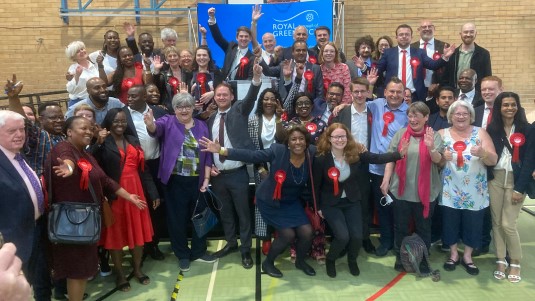
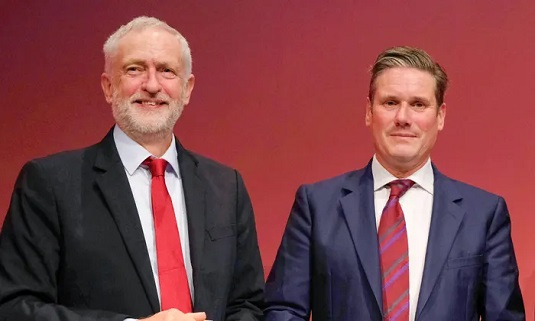
A few brief points. Again, as we've seen with recent local by-election results, some comrades on social media have allowed their dislike of Starmer get in the way of clear thinking. First, it is a good result. 60.8% is Labour's best result in Chester, and the highest vote polled by any winning party since 1959. Second, while some pretend the low turnout - 40% - is a marker for the disdain most people hold the parties in, this is standard fare for a parliamentary by-election. No by-election on mainland Britain has exceeded the turnout of the preceding general election since 1982. Yes, I don't like it either but when Jeremy Corbyn was leader by-elections more often than not plunged below Chester's turnout. There isn't much enthusiasm for Starmer, but there's no point pretending the collapse of the Tories isn't allowing Labour to weigh the vote in places.
Also keen to talk down the vote is, bizarrely, centrist pollster of choice Peter Kellner. After going on about how the swing away from the Tories in the by-election, which was just shy of 14 points, would never be repeated uniformly across the country's constituencies because circumstances aren't the same everywhere, he then goes on to complain that Labour are going to have to do better if it wants a thumping majority. He digs out a table to show how by-election swings aren't necessarily repeated in the same seat at general elections. Okay, but what's the point? Puffing his cheeks out, he recalls the Corby by-election from 2012 which Labour won handily, and then the seat returned to the Tory fold three years later. His conclusion is Labour needs to do better than that in future by-elections to have the next contest in the bag. Yes, if your sole guide is the numbers and you ignore the politics. Complete statistical sophistry.
Henry Hill for ConHome produces a much better analysis. He rightly argues that what was an extreme marginal seat just seven years ago has flipped in that time to a safe Labour seat. Actually, when Labour got a majority of 9,000 in 2017 that transformation was much quicker than Hill supposes. He surveys a bunch of other recent marginals in 2010 that even in 2019 had become rock solid Labour seats. And that leaves him worrying. How many more swing seats are set not just to fall Labour's way, but are going to fall hard. The one consolation for the Tories is despite the hype and the duff polling from Matt Goodwin's People Polling outfit, Reform only managed to increase their by-election support by a fraction of a percentage and finished sixth behind the Greens.
As argued many times here, the Tory decline was going to begin biting in the 2020s as the Tories' electoral coalition entered long-term decline and could not renew itself. Liz Truss, in her infinite wisdom, accelerated the process and Rishi Sunak, and any other Tory for that matter, haven't got a clue about turning the situation around. So they're not even bothering. There is then little room for doubt. The Chester result chimes with national polling and the mood of the country. The doom is upon the Tories, and there's no escaping the cataclysm coming for them.
Image Credit