Friday, 2 December 2022

Portending Tory Doom

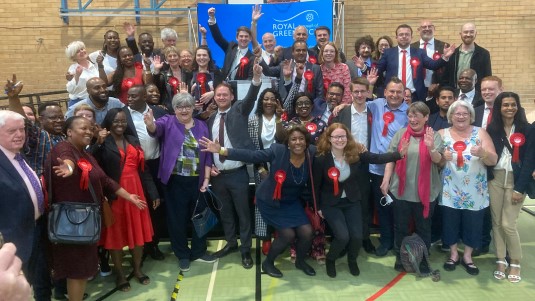
With news about Labour's by-election triumph in Chester over night, Keir Starmer's office began the day with a spring in their step. Labour increased its majority to over 11,000 - building on the healthy numbers achieved in 2017 and 2019. The Tories, however, plunged to their worst result since 1880 (not since 1832, as journalists incapable of using Wikipedia have claimed) with just over a fifth of the vote. It was always unlikely the Tories were going to bounce back and take a Labour-held seat, what with politics being what it is, but does the margin of victory tell us much?

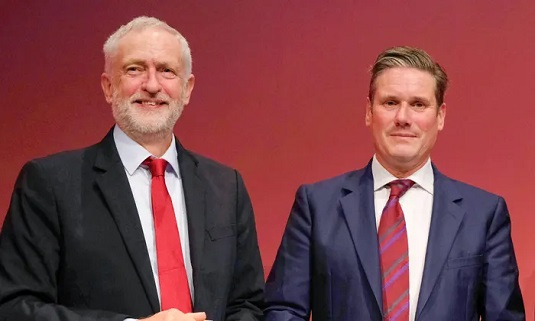
A few brief points. Again, as we've seen with recent local by-election results, some comrades on social media have allowed their dislike of Starmer get in the way of clear thinking. First, it is a good result. 60.8% is Labour's best result in Chester, and the highest vote polled by any winning party since 1959. Second, while some pretend the low turnout - 40% - is a marker for the disdain most people hold the parties in, this is standard fare for a parliamentary by-election. No by-election on mainland Britain has exceeded the turnout of the preceding general election since 1982. Yes, I don't like it either but when Jeremy Corbyn was leader by-elections more often than not plunged below Chester's turnout. There isn't much enthusiasm for Starmer, but there's no point pretending the collapse of the Tories isn't allowing Labour to weigh the vote in places.

Also keen to talk down the vote is, bizarrely, centrist pollster of choice Peter Kellner. After going on about how the swing away from the Tories in the by-election, which was just shy of 14 points, would never be repeated uniformly across the country's constituencies because circumstances aren't the same everywhere, he then goes on to complain that Labour are going to have to do better if it wants a thumping majority. He digs out a table to show how by-election swings aren't necessarily repeated in the same seat at general elections. Okay, but what's the point? Puffing his cheeks out, he recalls the Corby by-election from 2012 which Labour won handily, and then the seat returned to the Tory fold three years later. His conclusion is Labour needs to do better than that in future by-elections to have the next contest in the bag. Yes, if your sole guide is the numbers and you ignore the politics. Complete statistical sophistry.

Henry Hill for ConHome produces a much better analysis. He rightly argues that what was an extreme marginal seat just seven years ago has flipped in that time to a safe Labour seat. Actually, when Labour got a majority of 9,000 in 2017 that transformation was much quicker than Hill supposes. He surveys a bunch of other recent marginals in 2010 that even in 2019 had become rock solid Labour seats. And that leaves him worrying. How many more swing seats are set not just to fall Labour's way, but are going to fall hard. The one consolation for the Tories is despite the hype and the duff polling from Matt Goodwin's People Polling outfit, Reform only managed to increase their by-election support by a fraction of a percentage and finished sixth behind the Greens.

As argued many times here, the Tory decline was going to begin biting in the 2020s as the Tories' electoral coalition entered long-term decline and could not renew itself. Liz Truss, in her infinite wisdom, accelerated the process and Rishi Sunak, and any other Tory for that matter, haven't got a clue about turning the situation around. So they're not even bothering. There is then little room for doubt. The Chester result chimes with national polling and the mood of the country. The doom is upon the Tories, and there's no escaping the cataclysm coming for them.

Image Credit

Thursday, 1 December 2022

Local Council By-Elections November 2022

This month saw 42,692 votes cast in 30 local authority contests. All percentages are rounded to the nearest single decimal place. 13 council seats changed hands. For comparison with October's results, see here.

Party
Number of Candidates
Total Vote
%
+/- 
Oct
+/- Nov 21
Avge/
Contest
+/-
Seats
Conservative
          27
11.312
    26.4%
  -2.4
     -0.9
    419
    -9
Labour
          29
13,046
    30.6%
  -2.3
     -1.1
   450
   +6
Lib Dem
          17
 5,349
    12.5%
  -7.7
     -7.1
    315
     0
Green
          12
 3,881
     9.1%
 +0.2
     -1.7
    323
     0
SNP*
           3
 2,923
     6.8%
 +6.8
    +6.8
    974
   +1
PC**
           1
   56
     0.1%
  -0.7
     -0.9
     56
     0
Ind***
          13
 5,650
    13.2%
 +6.1
     -6.9
    435
   +2
Other****
           8
  475
     1.1%
  -0.2
     -2.4
     60
     0


* There were three by-elections in Scotland
** There was one by-election in Wales
*** There were no Independent clashes
**** Others this month consisted of Alba (90), Freedom Alliance (18), National Housing Party (59), Reform UK (144), Scottish Socialist Party (46), TUSC (63), UKIP (19), Vectis Party (36)

The popular vote might not be all that, but this is Labour's best electoral performance since May. For many years Tory held seats appeared resistant to the charms of the official opposition, but now the Conservatives are ceding seats to Labour faster than Vladimir Putin is giving ground to Ukraine in Kherson. As local election support shifts to reflect the facts of political life registered by national polling we can only expect more retreats in the future. It was also a very busy month for the Independents, who did well by scooping up a couple of seats and getting a pile of votes in some places. That skews the overall polling figures and depresses the vote share of the main parties.

That brings me on to some discourse circulating on social media about Labour's performance in by-elections. The argument goes like this: Labour's real lead is nowhere near that reported by the polling firms because the votes it's getting in by-elections fall short. This is a nonsense argument. One, the main parties' votes can be depressed as outlined above. It's very unlikely sundry independent candidates will get six per cent of the vote in a general election. Second is a sociological point. Who votes in local council by-elections? As older people are more likely to turn out in first order elections, if anything this is amplified in elections that are seen not to matter so much. As we know, older people are more likely to vote Conservative so, if anything, council by-elections give them a significant advantage. And yet they're slipping and dropping seats right, left, and centre. If the Tories are falling back here, imagine how much worse they would be doing if younger layers of voters turned out at the same rate as the older ones.

As we head into December then, the omens aren't looking good across the 24 by-election contests and the eight seats the Tories are defending.

3 November
Croydon, Selsdon Vale & Forestdale, Con hold
Lichfield, Chasetown, Lab gain from Con
Moray, Buckie, SNP gain from LDem
Nottinghamshire, Eastwood, Ind gain from Con
South Cambridgeshire, Longstanton, LDem hold, Con gain from LDem
Wiltshire, Salisbury St Paul's, LDem gain from Con

10 November
Braintree, Braintree South, Lab gain from Con
Braintree, Coggeshall, Ind hold
Broxtowe, Greasley, Con hold
Burnley, Rosehill with Burnley Wood, Lab gain from Con
Cannock Chase, Cannock West, Con hold
East Devon, Newton Poppleford & Harpford, Ind hold
King's Lynn & West Norfolk, Gaywood Clock, Lab hold
Kingston-upon-Thames, Green Lane & St James, Ind gain from LDem
South Kesteven, Bourne East, Con hold
South Kesteven, Grantham St Wulfram's, Con hold

17 November
Bolsover, Pinxton, Lab hold
Blackburn with Darwen, Darwen South, Lab gain from Con
Blackpool, Greenlands, Lab gain from Con
Glasgow, Linn, Lab hold
Oldham, Hollinwood, Lab hold
Rhondda Cynon Taf, Abercynon, Lab hold
Shetland, Shetland West, Ind hold
Suffolk, Beccles, Grn hold

23 November
Ashfield, Hucknall Central, Ind hold

24 November
Bassetlaw, Sutton, Lab gain from Con
Isle of Wight, Brighstone, Calbourne & Shalfleet, LDem gain from Con
Sefton, Linacre, Lab hold
Warrington, Rixton & Woolston, Con hold

30 November
Surrey, Sunbury Common & Ashford Common, LDem gain from Con

Image Credit

Five Most Popular Posts in November

What did the business over the course of the last month?

1. Starmerism and Trade Unionism
2. First Contact: An Alien Encounter
3. Murdering Twitter
4. Taking the Labour Right to Court
5. Why Starmer Trails Sunak

Keir Starmer tops the pops with my consideration of the role trade unionism plays in his project. He's not known as a lover of democratic politics, and his apparent enthusiasm for collective bargaining and workplace rights sits uneasily with his authoritarianism. How do the two fit together? A rare post that wasn't about politics gets the second spot - a look at the dull BBC documentary about first contact with an alien civilisation. Coming in third is Elon Musk's mismanagement of Twitter. The website is still there, but most people are reporting more spam and falling follower counts, and now Musk has decided to go to war with Apple and the EU are threatening action. Is it going to be with us this time next year? In the lead up to Ian Byrne's Liverpool West Derby reselection, I looked at the possibility of using legal action to halt some of the shenanigans we've seen around Labour Party selections. Where the party continually breaks its rule book, there should be. And last, we end the month as we started it with Starmer trailing Rishi Sunak in the best Prime Minister stakes. Why?

A couple of more requests for additional consideration. I wrote a long(ish) piece on the ruling class politics of Brexit as an antidote to the irrational/psychological cult explanations that dominate the discourse. Second is my long overdue review of Mike Phipps's Don't Stop Thinking About Tomorrow. Check them out!

As we enter the final month of the year, we can expect all the usual festive/end of year content. But the news won't be stopping. The by-election in Chester takes place today, which will be the first electoral test for Sunak. Ambulance workers and nurses organised by the RCN are due to take strike action, among others. And Sunak's authority will likely continue unwinding with opposition on the government benches to housing and the onshore wind ban. Other stuff to look forward to are reflections on immaterial labour, perhaps more Wendy Brown stuff, and the usual survey of the politics that goes down. If you haven't already, don't forget to follow the free weekly newsletter, and if you like what I do (and you're not skint), you can help support the blog too! Following me on Twitter and Facebook are cost-free ways of showing your backing for this corner of the internet.

Image Credit

Tuesday, 29 November 2022

Resenting Bourgeois Subjects

Just Wendy Brown situating identity politics in its conformist and radical potentials. Beginning from the bourgeois subject as the standard for politics, she writes (States of Injury 1995, pp 59-60):
If it is this ideal that signifies educational and vocational opportunity, upward mobility, relative protection against arbitrary violence, and reward in proportion to effort, and if it is this ideal against which many of the exclusions and privations of people of colour, gays and lesbians, and women are articulated, then the political purchase of contemporary American identity politics would seem to be achieved in part through a certain renaturalisation of capitalism that can be said to have marked progressive discourse since the 1970s. What this also suggests is that identity politics may be partly configured by a peculiarly shaped and peculiarly disguised form of class resentment, a resentment that is displaced onto discourses of injustice other than class, but a resentment, like all resentments, that retains the real or imagined holdings of its reviled subject as objects of desire. In other words, the enunciation of political identities through race, gender, and sexuality may require - rather than incidentally produce - a limited identification through class, specifically abjuring a critique of class power and class norms precisely insofar as these identities are established vis-a-vis a bourgeois norm of social acceptance, legal protection, and relative material comfort. Yet, when not only economic stratification but other injuries to the human body and psyche enacted by capitalism - alienation, commodification, exploitation, displacement, disintegration of sustaining albeit contradictory social forms such as families and neighbourhoods - when these are discursively normalised and thus depoliticised, other markers of social difference may come to bear an inordinate weight; indeed, they may bear all the weight of the sufferings produced by capitalism in addition to that attributable to the explicitly politicised marking.

Sunday, 27 November 2022

The Left after Corbyn

Reading Mike Phipps's Don't Stop Thinking About Tomorrow is an act of masochism for any left winger. Not because it's bad (it's not) or the arguments tendentious (they're not), but because it's a book about retreat. That is the retreat of the left from its position of strength in the Labour Party to where we are now, having gone through the experience of devastating election loss, the easy restitution of the right, the de facto expulsion of Jeremy Corbyn, and the barring of left wingers from constituency short lists. This all begs the question, where do we go now? Mike does offer some direction, but is it the right one?

Don't Stop is essential reading for anyone wanting a good tour of Labour's pains in the early 2020s. It's also useful for addressing some of the main arguments that have come from within the left to explain what happened. Mike is understandably coruscating of Gabriel Pogrund and Patrick Maguire's Left Out, which was the first book off the starting blocks. As the unofficial counterpart to Tim Shipman's Brexit duology, they explain matters entirely within the purview of he said/she said gossip mongery beloved of politics hacks. Owen Jones's This Land comes much better off because his offers a political critique of the Corbyn period: the leadership suffered because it lacked a coherent strategy and narrative, and Labour went high on policy instead of stooping low and attacking Boris Johnson's character. By way of a reply, Mike observes that had Corbyn gone for personal attacks it would have undermined his standing as an issues man, which had already suffered from the parliamentary manoeuvres over Brexit. Also, somewhat counter-intuitively to establishment and left arguments, Mike argues that Labour's adoption of the second referendum position had less of an impact than supposed. Quoting a contemporaneous poll of 2017 switchers from Labour, it found the Brexit position (17%) trailed leadership (43%). Brexit blaming also plays down the potentially greater losses to the Liberal Democrats and the Greens had the referendum position not been adopted. In my view, the immediate aftermath of the 2017 election was the time to cement Labour's position. That moment passed and by 2019 it was too late - what was adopted ensured a less worse outcome than what could have proven a complete catastrophe.

On Keir Starmer's leadership, Mike isn't likely to provoke much disagreement among his readers. He goes over the Labour leader's capitulation to the government on Covid (which was evident before he took office), which Starmer repeated time and again on undercover cop scandals, abstentionism on military offences, and what could only be described as reluctant opposition to the Tories' draconian sentencing bill. On trade union politics, such as the teachers' arguments against the government's reckless Covid strategy, there was studied silence. And on Starmer's campaign against the left, from sacking Rebecca Long-Bailey as soon as the opportunity presented itself to expelling Corbyn from the parliamentary party, all of Starmer's greatest hits are there. Curiously, Mike fits this into a theme of Starmer caving into right wing pressure. While there is always influence exerted from this direction, it does run the risk of letting Starmer off. For about 18 months, it's been clear that he has a project of his own that is simultaneously authoritarian and modernising, one centred on the restitution of state legitimacy and its efficacy. I think Mike's discussion would have benefited from reflecting a bit more on what Starmer's politics are about, because the idea he's uniquely scheming and Labour's faults stem from his legion of personal faults and habits has too much traction and speaks to a looking-out-for-a-hero politics the left would do well to avoid.

The what next prescription was always likely to be controversial. Mike observes that Labour still has a mass membership, despite the flood of resignations since Starmer won the leadership. As such, the party remains the biggest organised base of socialists and left wingers in this country. In fact, he registers his surprise that the exodus hasn't been bigger. Looking at arguments made by James Schneider and Jem Gilbert against those who've left the party, both have suggested these Labour leavers had a conditional attachment to the party. For as long as there was an accord between their views and the party's politics, they'd stay. Once that had disappeared, they did too. This typifies the "neoliberalisation" of political attitudes and engagement, of effectively getting into politics for a warm bath. Except this is not what Labour is. The party has always been a site of struggle, and therefore leaving is effectively ceding the field to the right. While Mike has some sympathy with the logic of this argument, he does point out that many of the new activists who joined the party in 2015 had previously gone through 13 years of Labour government and all the duplicity and right wing politics that entailed. Not wanting to be around for what many of them regard as more of the same is entirely understandable - but, as Mike says, still wrong. While not adopting the sharpness of the Schneider/Gilbert thesis, he does suggest too much of the left have adopted a defeatist mindset. Giving up struggling in the Labour Party typifies this.

In his own very thorough review of Don't Stop, Tom Blackburn argues that Mike does not get to grips with the book's great unsaid: Labourism. Rightly observing the party is a party of struggle and a party of state, with the Labour right putting loyalty to the latter above all, it can only ever be a compromised political location and one that stymies radical politics. Yet Labourism in its left manifestations cannot and will not face up to its own reality. Appealing to stay in the party, to fight rearguard actions against the right and sponsoring (and winning) progressive policies at conference rests on a fiction that change can come through the party. The experience of Corbynism, which at its best and most radical moments pushed at Labourism's limits have tested the Labour left's assumptions to destruction. Mike does shadow box with some aspects of the critique of Labourism by noting the historically poor performance of left wing parties that run in elections, but doesn't stop to ask whether this should be the criterion of political efficacy. To be fair, Mike does note the axis of struggle is now taking place outside the party, what with the street movements of recent years and the ramping up of serious trade union disputes. But a section of the Labour left have always engaged with extra-parliamentary struggles without offering a theory of political change that challenges Labourism's tenets.

There are no easy or ready answers. Tom, also acknowledging how the extra-Labour left have well-travelled the road to lost deposits, says that an alternative party remains essential for breaking with Labourism. Obviously, Mike thinks differently. Looking at the programme taking shape under the return to right wing Labourism, Starmer's prescriptions are an advance on what is offered by the Tories. Though obviously this comes with certain caveats. It means no change for those crossing the Channel in dinghies, for example. Whether his offering of a rejuvenated state is worth remaining in Labour for is another matter. A modest suggestion, then. As opposed to the defeatist mindset Mike warns against, perhaps instead we should come at matters with an organisers' mindset. That is maintaining the relationships built up during the course of the struggles we are embedded in, while looking to forge new connections and building new solidarities. It's obvious what this means for street movements and industrial action - build support, participate where directly involved, and push their politics on the cost of living crisis, on environmental degradation, police violence, and anti-racism. But doing this in Labour means asking searching questions and the action taken varies depending on where one is, the character of the local constituency party, if membership is a boon or hindrance to participating in wider struggles, and where the party runs councils if the power of local government can make a difference. Such a position does not have the advantage of a mapped out strategy apart from trying to cohere the left, wherever it is engaged, around and in service of current struggles. I haven't got a ready made answer, but perhaps one might come about through more collective action in the situations we find ourselves in.

Don't Stop therefore comes highly recommended. Mike provides an accurate summation of where the left are in the Labour Party, and while not a cheery read it is a necessary one. Changing the concrete situation is only possible if we're equipped with a sober analysis of it.

Image Credit

Friday, 25 November 2022

The Tories' Housing Crisis

If you wait by the river long enough, so goes the old Chinese proverb, the bodies of your enemies will float past. These last few weeks, I've found myself in this enviable position. Having banged on about the long-term decline of the Tories for a decade, mainstream politics has finally flowed in my direction. One can't move for Tory scribblers, politicians, and wonks despairing over the fate of their party. Ryan Shorthouse, the founder of the "modernising" think tank Brght Blue announced he was stepping down from leading the outfit. His party's betrayal of younger people has proven too much. Three young(ish) MPs - Dehenna Davison, Chloe Smith, and William Wragg have announced they're standing down at the next election. And even the Telegraph, the nearest organ to what passes for the Tories' collective brain, have a bad case of the jitters. As much as I'd like to think it's because the book is getting traction, in reality what I identified as a political fact of life has now become so obvious it cannot be ignored.

A core argument of my Tory decline thesis is their party is a barrier to aspiration. One does not become more conservative with age because aching bones and life experience spontaneously generates conservative attitudes. Instead it rests on the acquisition and ownership of property, and this is something the Tories used to understand. Margaret Thatcher, for example, sold off council housing on the cheap because she bet on it creating a millions-strong layer of mortgage holders. The disciplining consequence of debt, i.e. the need to keep up payments and making a generation of homeowners the beneficiaries of asset price inflation can and does have individuating, atomising, and conservatising effects. A look at historic data showing the relationship between owner occupation and the likelihood of supporting the Tories is known to any student of voting behaviour. But if property acquisition is disrupted, what then? Nothing good for the Tories. It means younger people are acquiring property later in life, if at all, and therefore it does not get the chance to exercise its rightist pull over time - as it has with large numbers of existing retirees.

The seemingly endless rise of house prices has had two consequences. One is a relatively numerous caste of petty landlords, who in turn are more or less solidly Tory in their politics. And then there is generation rent. Correctly, renters view the Tories as the party of those laying an unearned claim to their income just so they can put a roof over their heads. They are more numerous than the landlords and have the propensity to vote anyone but Tory. But since coming to power in 2010, the Tories temporarily off-setted their numbers deficit by relying on the older people who benefited from Thatcher's council house giveaway and the cheap mortgages of the 1980s. Older people turn out to vote, and younger people disproportionately do not. But this cannot last forever if an electoral coalition dependent on the old isn't reproducing itself. And it's not. The breakdown of property acquisition spells Tory doom.

Why don't the Tories do something about it? Social trends are not iron laws, after all. Belatedly, some in government have started waking up. Boris Johnson's so-called levelling up agenda partly addressed itself to the housing shortage. But this plan was fatally compromised because it was challenged from within the Treasury and Cabinet itself. We can't well have people expecting the state to do something that might benefit them, an orientation Rishi Sunak has been very happy to carry on with. Having put together a coalition dominated by the elderly and the propertied, doing nothing suits them while doing something opens the door to severe political difficulties.

Consider the putative rebellion by Tory MPs over housing targets this week. The rebel leader, former environment secretary Theresa Villiers, wrote earlier this month that she objected to "inappropriate" housing in her Chipping Barnet constituency. Building on the green belt was bad, and won't someone think of the environmental destruction this entails? Just don't talk about her voting record on climate change mitigation and low carbon energy generation. While there might be good reasons for some criticisms of top-down housing targets, appearances matter in politics and for millions this underlines their contempt they have for the Tories.

This might seem like NIMBYism on Villiers's part, but the reasons she and her 40-strong band of fellow rebels fielded were puff. They demonstrate the unbridgeable gulf between what the Tories need to do and what they can do. Political necessity requires they pander to the voter coalition they've built up since the New Labour years, and that chiefly means limiting the housing supply. Whether it helps maintain property values now prices are subject to downward pressures, or a "buoyant" rental market of too many renters chasing too few (expensive) lets, the consequences are the same. No excessive supply of new houses means their existing coalition benefits, and the crisis of Tory political reproduction plays out.

Because the Tories are stuck, they can write off the next two elections - unless Labour are the victims of catastrophes as stupid and as self-inflicted as Johnson's and Liz Truss's. But even then, the odds are not in the Conservative Party's favour. Memories last a long time and it's difficult to divine how the Tories could shake off their toxic housing legacy - as well as the myriad other ways they've made life worse for young and working age people. We're in existential crisis territory. Tory commentators are right to be concerned. The current occupant of Number 10 could be their last Prime Minister for quite some time.

Image Credit

Tuesday, 22 November 2022

An Introduction to Foucault

Plans for a discussion of Keir Starmer's immigration speech got canned by my having to trek around the West Midlands rail network to get home. And so, to make sure you don't leave this place without at least something here's a short but useful video on Foucault from the Acid Horizon comrades. Useful for anyone who can't see what the fuss is about.

Monday, 21 November 2022

Keir Starmer and House of Lords Reform

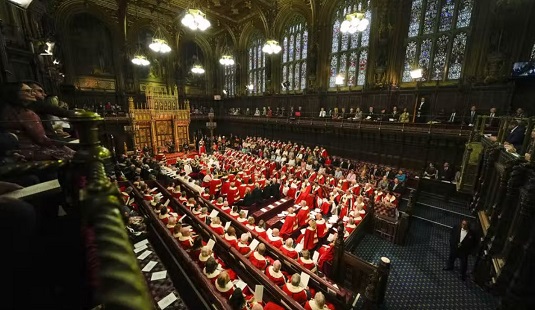
Labour are set on abolishing the House of Lords if it wins the next election, says Keir Starmer. At a speech of assembled Lords and Ladies, he said the Tories' habit of packing the Lords with cronies, failed MPs and beloved donors was undermining confidence. Instead, the second chamber should be fully elected but carry on its function of scrutinising and amending legislation. It would not become a rival centre of power to the Commons. Its size and nuts and bolt details (term limits? Electoral system? What to do with the bishops?) are to be determined, as are the fates of newly appointed Labour members - the latest tranche of which are due to take up their seats in early December. Pretty unambiguous and said at a time when Starmer is under no pressure to sugar coat his intentions.

The Tories don't like it. It would, apparently, undermine the Union. Quite how, they don't say. And it would clash with elected politicians in the Commons and the devolved governments. Again, not necessarily the case given its competencies are unlikely to exceed those the Lords currently enjoys. I.e. The most it could do is delay the government's plans and lay down some annoying amendments. Unsurprisingly, the Tories have an interest to declare. When Dave justified the constituency boundary readjustment way, way back in the Coalition years, weeding out 50 or so MPs was about reducing the cost of politics. Funnily, this never applied to the Lords. Since 2010, the growth trajectory has been upwards. There are now 786 sitting members and where, coincidentally, the Tories are the largest party. Removing this unelected hindrance on the desires of a Labour government should be something any Labour leader would seek to do.

Yet, we're back at a familiar contradiction. Keir Starmer is authoritarian and, among other things, Starmerism is an authoritarian political project. But, as per the enthusiasm for trade unions, where does the desire for more democracy fit in? Like a hand in a glove, as it happens. The Fabian tradition, which is core to Starmerism is not a dictatorial politics, but rather an elite managerialist politics adapted to liberal democratic conditions. Electorates are asked to choose between a cadre of elites every four or five years to run government, and they get on with the business of politics while the little people return to spectator status at best, but most usually indifference. Opening up another set of elections would not fundamentally change this. After all, devolution hasn't (whereas Corbynism would have).

It's also part and parcel of Starmer's strategy to restore the legitimacy of state institutions. And in this, offering democratic reforms are a sequel to the limited modernisation of the UK constitution carried out by Tony Blair. On top of referenda on devolution, Lords reform was carried out as well. Hereditary peers were expelled from the Lords in 1999, apart from a bridging group of 92 to tide the place over while reforms were implemented. There was promise of more to come, but it never did - finally getting killed by the Tories, despite having agreed to an elected chamber with the Liberal Democrats. Blair's motivation was to restore faith in the state by using limited reform as a means of bedding down the politics of (New) Labour and, in Scotland's case, addressing the alienation from Westminster that had grown worse under the previous 18 years of Tory rule.

For Starmer, Lords reform can't be divorced from his bigger package of measures. He knows there's no clamour for it in the real world, but it's a quick and relatively cost-free means of telegraphing his intentions as a change-minded politician, albeit one more interested in overhauling the form of UK democracy than deepening its substance.

Image Credit

Sunday, 20 November 2022

Briefing Bregret

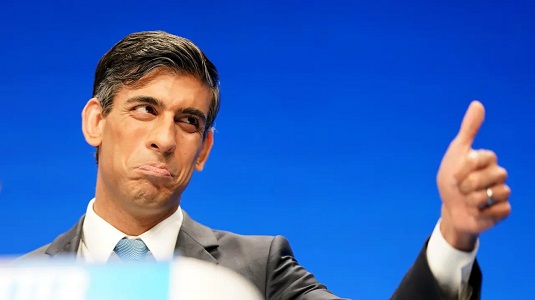
If there has been consistency between the last four Prime Ministers, it's been a desire to get Brexit done and put distance between the UK and the European Union. It was only a couple of months ago that Liz Truss couldn't decide whether Emmanuel Macron, the president of a nation that's been in alliance with the UK for 120 years, was friend or foe. And today, The Tories are set on delivering Britain to Brussels on a platter. Well, not quite. But the report in the Sunday Times has upset a lot of people. Apparently, Rishi Sunak is looking at developing a "Swiss-style" relationship with the EU. This would mean the removal of tariffs and checks but also, horror of horrors, could allow some influence for the European Court of Justice, contributions to EU coffers, and compromises on the freedom of movement. Some people are not pleased if the right wing froth on Twitter is anything to go by.

This comes with caveats. The report speaks of Britain's relationship with the EU evolving in this direction over the next decade, albeit with Sunak looking to cut deals sooner rather than later to knock the irksome corners of Boris Johnson's Brexit deal. Neither are the EU especially keen to repeat the Swiss arrangement any time soon, but it should be remembered the UK is an order of magnitude more significant (economically speaking) than Switzerland and that Brexit's impact has been felt across Europe as well. There are plenty of businesses on the continent who'd like to see the relaxing of trade barriers. But the politics of this for Sunak are difficult. He might have been a true Brexiteer, but his stronger grip on political realities tends him toward ameliorating the UK's strained relationship with the EU. He can't be anything but aware that the growing consensus among the "sensible" elements of his class that the damage done has to be mitigated.

On the other hand, the Brexit fundamentalists are concentrated on his side of the Commons. Sunak already has a legitimacy issue in that he studiously sidestepped an open contest in front of the membership. And while he has kept some of his would-be enemies close, such as Suella Braverman and Steve Baker, I doubt this would be enough to becalm the backbenches worried that the "achievement" of Brexit could vanish. With a rebellious mood abroad over some aspects of Jeremy Hunt's budget, it might encourage the awkwards to get a little bit awkward. In the medium term, there's concern for the Tories' right flank as well. Some of the more racist elements of Tory support have defected to the continuity Brexit Party, trading these days as Reform UK. And what do you know, Nigel Farage has piped up again with the threat to "crush" the Tories should the government take the Swiss road. Hard to see how he can without EU elections to ponce off, but grifters are gonna grift.

Being seen to renege on Brexit, however, is potentially dangerous to the Tories' shrinking coalition. A lot depends on the attitude the press are going to take. The problem with Truss's budget is she blew up the economy for the benefit of a few hedge funds and everyone, including most of the capitalist class, have paid the price with an unstable pound, skittish money markets and surging inflation. Are they going to play along with the "sensible" consensus, or use it as they have done with Braverman, Dominic Raab, and Gavin Williamson to try and push the government around?

Sunak is walking a tightrope. To his right are the gnashing teeth of Tory irreconcilables and the Brexit ultras. And to his left lies an increasingly confident and combative-sounding Labour Party. The polls continue to have the Tories in doom territory, and the Prime Minister's flat footedness, as per the Swiss briefing here, mean more trips are likely before the final fall.

Image Credit

The Bourgeois Politics of Brexit

As forecast on many occasions, Brexit is unravelling. It was and is dysfunctional for British capital as a whole, apart from a few outliers, and is depressing GDP growth on mainland Britain as Boris Johnson's deal multiplies paper work and closes off markets on the continent. Polling supports the view that Brexit is turning out to be a failure, with a branding it as such by 56% to 32%. Even the government can't deny reality any longer, with the Sunday Times reporting how Rishi Sunak and Jeremy Hunt are considering a closer, "Swiss-style" relationship with the European Union. Putting this to one side, within establishment circles there is something of a gap. On the one hand, popular support for Leave has been explained as a plebeian revolt against immigration and wokery by white working class people. A bullshit argument if there ever was one, but precious little has been said about the persistence of Brexit and Leaveism among Tory MPs themselves. It's treated like an irrational affectation by centrist and EU-leaning elites.

This "explanation" from a couple of months back from Matthew Syed illustrates the thinking perfectly. Brexit is a cult, and it has the Conservative Party in a vice-like grip. He argues that to understand Tory behaviour of the last six years, only one perspective makes sense: group psychology. Drawing on the work of Leon Festinger who was interested in the sustenance of group delusions, he infiltrated a UFO cult to observe what would happen when its predictions - that members would get whisked away by flying saucers on such-and-such a date - didn't happen. When the aliens stood them up, the cult guru rescheduled their appearance to the future and doubled down on their beliefs. Syed's contention is that believing in Brexit shares these characteristics. Pointing out data demonstrating that Britain is poorer, weaker, and more diminished is like talking to a wall. They're not interested, with its adherents lashing out at the "remainer" Treasury and "woke" financial markets for the country's predicament this last month. More reasonable Brexiteers might point out that Sunak did offer Tory members an alternative, and what we see now is thanks to Truss's idiocy. Which is only partly true.

The only way out for Syed is a change of government. The Tories need to relinquish power. That this is being touted openly across the Conservative press is remarkable and a sign of how dire their circumstances are. In a paean to Tory MP Charles Walker who famously denounced the collapse of government discipline and said the first duty of the Tory party is to the country, Syed writes,

I almost felt like hugging him as I heard those words, for it hinted at the Tory party that so many of us once admired. A party of pragmatism, of moderation, of realism. We need that party back for the health of our democracy. So, please, call an election, take a break and find yourselves again. Do so now, and you’ll be back. Cling on to the bitter end, changing leaders, jumping through hoops, gazing at navels, and you may never be forgiven.
It's worth noting Syed is a former Labour candidate, an admirer of briefcase politics, and a fan of good Tories. But still, his argument is superficially plausible. The Tory majority made a Leave judgement call because reasons and have stuck with it to the moment of destruction. But this explains nothing. For instance, why was Brexit the glue that held their voter coalition together when the Tories might easily have clung to the cuts-and-deficit dogmatism of the Dave and Osborne years? After all, wasn't it Labour's perceived weakness on the issue that won the Tories the 2015 election? Syed does nothing to explain why Brexit was the object of Tory "cultism". And that's fine, for in the bourgeois press it doesn't do to peer too closely into such things. Hence we're left with a junk psychosocial argument that says something while not saying anything.

The truth of the matter is Brexit and the Tory attitude to Europe are closely bound to issues of statecraft, class struggle, and divisions among British capital. It is not a whimsy impermeable to serious analysis, nor a matter of emotional attachments to a free-floating "ideology" these elite circles subscribe to. Consider the obsession with sovereignty, a much-invoked concept at the heart of Tory Brexit discourse. It's not enough to point out that the European Union can't be described as an anti-democratic affront to the UK state, nor that since leaving the EU British sovereignty has declined vis a vis global markets and our reduction in status from a European rule maker to rule taker. These don't matter, and understanding why requires a short descent down the Tory time tunnel.

Euroscepticism as we understand it is inseparable from Thatcherism. As is well known, the overriding (and self-defined) purpose of her governments was putting the labour movement back in its box. This involved shutting down nationalised industries and the deliberate stoking of mass unemployment, and smashing trade union power - above all, the miners - in set piece industrial disputes. This project demanded a centring of state authority. Then, as now, the state was a sprawling set of institutions with their areas of competence, lines of accountability, and degrees of autonomy. This reflected not just the expansion of the state to meet social demands and expectations placed on it, but also the (semi-) integration of the labour movement into official society, the absorption of a growing strata of professional and middle class occupations, and the management of an increasingly complex and variegated population. If the Tories were going to smash the labour movement, the writ of the executive, of the government, had to be enforced in deed and not in word inside the state. Hence, as per its confrontation with pickets Thatcher's government simply trampled over convention, regulation, and expertise in health, education, local government, and social security. In each case the aim was the same: destroy the relative independence they enjoyed from the centre, and firmly subordinate all state institutions to a rapidly centralising, authoritarian government and its habit of arbitrary intervention.

Thatcher made the state's class character more explicit. It became a machine overtly concerned with smashing working class power and eroding its institutions. Therefore any apparatus, within or without, that checked governmental power in some way had to be (and was) seen off. And this is where the antipathy toward the European Community and then the EU came from. Thatcher was a known Europe enthusiast during the 1975 EC referendum, but became progressively more hostile during her premiership. This was simply because, as barriers to governmental authority were dismantled, the European Court and the European Commission, offered limited means by which Tory schemes could be frustrated. As Thatcher put it herself in her famous Bruges speech, "We have not successfully rolled back the frontiers of the state in Britain, only to see them re-imposed at a European level". Sovereignty then has nothing to do with democracy, and its only relationship to freedom is allowing the British government to do as it may without oversight or blockage. As subsequent governments have only enhanced the power of the executive at the expense of other institutions, most Tories experienced the EU as an increasingly burdensome check. Their antipathy persisted because, wrapped in all kinds of nationalist nonsense, was a frustrated class instinct, and one that was finally freed when the UK finally exited the EU. It's therefore no accident the calamity of Liz Truss happened after Brexit and why many Tories cheered her ridiculous budget. This was democracy for them - the complete freedom of the British government to act as it pleased, and "it pleased" meant sustaining the prevalent balance in the relations of production.

Politics, they say, are concentrated economics. And it's not just the practical politics of waging class struggle that made Euroscepticism the common sense of the Tory party but the economics itself. As argued here several times, the Tories are committed to maintaining the global supremacy of the City of London. This comes before increasing GDP figures, deficit management and paying down public debt, dealing with unemployment and tackling the balance of payments. There are several reasons for this. Many Tories, their families, and the networks they move in have direct interests in the health of the City. Sunak as Prime Minister typifies this linkage. It is crucial for the British bourgeoisie itself. The traditionally dominant bloc in the capitalist class owe their fortunes to City-based commercial capital and the investments made via its offices. They have a vested interest in attracting more capital flows to London (i.e. more brokerage fees to be extracted, more opportunities for "wealth management", and a local high end property market to park cash in), and therefore possess an antipathy to anything that might threaten its operation. Such as state regulation of transactions, moves to close tax loopholes, checks on inward "investment" - in other words, anything that might provide a check on these markets. Indeed, the congruence between seeing the City "free" of external interference is not unrelated to the Tory preoccupation with state sovereignty. Finally, the privileged position the City occupies in the raising and disposal of capital grants the British bourgeoisie and, by extension, its state a similarly advantageous position. The empire is long gone but their empire of capital remains, and this extra clout in the international arena can (and does) afford British capital as a whole more access to global investment opportunities. I.e. It opens markets for the export of capital, as opposed to the export of goods.

The interests in the City might be broadly the same, but those who own and manage funds and capital flows aren't necessarily of like mind. All want to expand the City, increase transactions, attract more capital, and keep the British position as global leaders in commercial and finance. But how to go about it? One side, arguably the largest section of the City (as well as the ruling class as a whole), were broadly aligned with the EU project. Having been integrated into the wider European economy for 40 years, the pooling of sovereignty with the UK's traditional rivals offered plenty of opportunities as part of the world's largest economic bloc. The opt outs negotiated by successive governments from certain EU rules enabled the City to enjoy considerable autonomy while remaining within the formal umbrella of its regulatory regime. And, as part of said bloc, the EU's collective muscle would leave the City well placed as a direct beneficiary of trade deals negotiated with the rest of the world. A minority among the City and the capitalist class generally disagreed. For some, it was the swashbuckling view that without the EU "getting in the way" that even more advantageous deals could be pursued by facing outwards. As the sub-Saharan African and East Asian states are on long-term growth trajectories, the EU is in relative decline. A more agile Britain (i.e. the City) could take advantage of this by casting off from the EU. A component of this community of opinion was dark money, whose interests were tied up in laundering money through the capital. Sometimes proceeds of crime, but usually the corrupt acquisitions of heads of state and their families. The Tory support of the Russian oligarchy is a case in point. Outside of the EU, and with a government desperate to cultivate favours with regimes the world over, regulatory oversight of this financial sludge would be weak to non-existent and this section of British commercial capital would benefit handsomely.

As we know, Vote Leave and Leave.EU, who not at all coincidentally had money from murky overseas sources tied up in their enterprises, won. The section of the Tory party who agreed with the Leave prospectus for prosperity outside the EU perfectly understood that this was for them, and not the millions who voted for Brexit. It was only when Liz Truss carried Brexit and the sovereignty it afforded to its logical conclusion, when all but a few Tory-aligned hedge funds were hit by the Truss/Kwarteng car crash that a key section of elite Brexit supporters, again personified by Sunak's briefcase tendency, that perhaps the hard Brexit pursued by Boris Johnson needs unpicking. The wider economy has taken a hit and has added to the pre-existing inflation problem, but more importantly the City itself has been severely degraded thanks to the double whammy of EU capital diverting to its own commercial and finance markets, and the war in Ukraine and associated sanctions has (temporarily) stemmed corrupt Russian capital flows. To salvage something from the wreckage, a closer relationship with the EU is now an obvious necessity.

Ultimately, explaining Brexit and why sections of business and the state are wedded to the project means understanding class politics and divisions within ruling class politics. It does not explain how Brexit won the referendum and, subsequently, won the politics, but it helps us understand the character it has assumed, why euroscepticism was primarily an elite pursuit among the ruling class's preferred party and, because of how it's linked to coalition of interests, why some of these want to double down on Brexit. Values and identities and dogmatic attachments to ideas are fine things to have, but they all pale against power and filthy lucre.