This month saw 40,839 votes cast over 24 local authority (tier one and tier two) contests. All percentages are rounded to the nearest single decimal place. Seven council seats changed hands. For comparison with September's results, see here.
Party
Number of Candidates
Total Vote
%
+/- Sept
+/- Sept 18
Avge/ Contest
+/- Seats
Conservative
23
14260
34.9%
+1.2%
-1.5%
620
+2
Labour
18
6,940
17.0%
-9.8%
-13.6%
386
-3
LibDem
19
9,145
22.4%
-4.7%
+7.9%
481
+2
UKIP
2
171
0.4%
+0.4%
-0.5%
86
0
Green
12
2,132
5.2%
+1.2%
-2.4%
178
0
SNP
1
1,797
4.4%
+0.3%
-1.1%
1,797
0
PC**
2
738
1.8%
+1.8%
+1.8%
369
0
Ind***
9
4,297
10.5%
+8.2%
+5.2%
477
-1
Other****
6
1,359
3.3%
+1.1%
+1.2%
227
0
* There was one by-election in Scotland
** There were four by-elections in Wales
*** There was one independent clash
**** Others this month consisted of the Brexit Party (299), For Britain (70), Holland on Sea & Eastcliff Matters (537), Red Party of Scotland (9), The Borough First (428), Women's Equality Party (16)
A good set of results if you're from the Tories and Liberal Democrats, definitely not if you're Labour. Yes, part of our party's problem in terms of vote share is not standing in enough seats, but with a vote average like that and dropping three councillors too is a bad show. Nevertheless, readers shouldn't feel despondent when they see the above. There are a few things worth noting. First, local by-elections are second order elections, and so people are more likely to stray from their first preference when it comes to choice of government. Two, those who have a bee in their bonnet about a particular issue are more likely to turn out at any given election - we say something similar before 2015 with UKIP's support. Three, there has been an unusual skew in by-election locations for the last few months toward Tory/LibDem marginals - this is not to explain away Labour's poor performance of late, And four, most voters stay at home for council by-elections with those more likely to vote generally turning out, which means older people. And as we know, their preferences are not evenly spread - they are much more likely to vote for the parties of the right. And so Labour, and to some extent the Greens, enter each round of council by-elections at a disadvantage.
How about the next month? All of November is going to get saturated with electioneering, and so even the most obscure by-election in the most obscure corner of the land will benefit from additional coverage and volunteers. And, very likely, the month's results are going to get poured over and the profundity of the punditry shared about what these local contests mean for the big competition. Whatever happens, you can count on all the results getting published here.
3rd October
Aberdeen UA, Bridge of Don, Con hold and SNP hold
Cardiff UA, Whitchurch & Tongwynlais, Con hold
Charnwood BC, Syston West, Con hold
Essex CC, Clacton East, Ind hold
St Albans DC, Clarence, LDem hold
Somerset West and Taunton DC, Norton Fitzwarren & Staplegrove, LDem gain from Ind
10th October
Basingstoke and Deane DC, Bramley and Sherfield, Ind gain from Con
Corby DC, Beanfield, Lab hold
Watford DC, Tudor, LDem hold
17th October
Gravesham BC, Westcourt, Con gain from Lab
Liverpool MBC, Princes Park, Lab hold
North Yorkshire CC, Upper Dales, Con gain from Ind
Richmondshire DC, Hawes, High Abbotside & Upper Swaledale, Ind hold
24th October
Daventry DC, Abbey North, Con gain from Lab
Devon CC, Heavitree and Whipton Barton, Lab hold
Flintshire UA, Bagillt West, Lab hold
Powys UA, Llandrindod North, Lib Dem gain from Con
Powys UA, Newtown South, Con hold
South Ribble DC, Coupe Green and Gregson Lane, Con hold
West Lindsay DC, Torksey, Con hold
Wiltshire UA, Melksham Without South, Con hold
29th October
Warwick DC, Leamington Lillington, LDem hold
30th October
Windsor and Maidenhead UA, Riverside, Con hold
31st October
Worcestershire CC, Bromsgrove South, Con gain from Lab
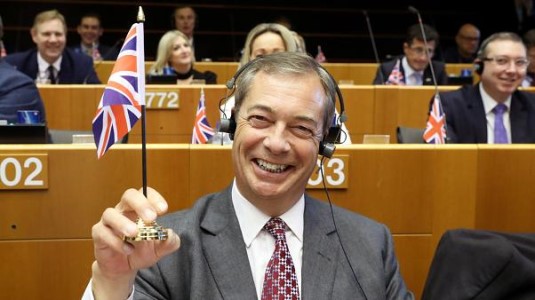
After rumours and rumours of rumours that Nigel Farage was planning a targeted campaign in this general election, he (sort of) launched the Brexit Party's campaign Friday morning with the intent to stand everywhere. This was trailed by an intervention from none other than The Donald himself, who just so happened to have a positive message for Farage's LBC show on the eve of his launch. Now, while it is true the more conservative-minded quite like Trump, his urgings for Johnson to come to an arrangement with Farage, repeated again this morning with the demand for a no deal Brexit, meant the Tory leader had no choice but to put distance between them. What then is Farage's game? We saw time after time how the European Research Group, the self-described and self-flattering Spartans of Brexit set themselves against Theresa May's deal despite Johnson's deal being worse in every regard. Most importantly concerning the relative bargaining strength of the UK vis a vis the EU post deal but pre-trade agreement. Negotiating oneself into an even worse position is no mean feat, so well done him. Anyway, assuming there isn't more to the ERG's change of heart and theirs was a pragmatic adaptation to the new Johnson regime in order to get Brexit over the line, why hasn't Farage, as more or less their external faction, followed suit? Well, for the same reasons the ERG "capitulated" - self-interest. The irony of the Brexit Party is their relevance demands the UK's continued membership of or close links to the European Union. Not just in the crude terms of the nice salaries its MEPs are now pocketing, but for their place in British political discourse. Imagine if we were living in the transition period now - the first and most fraught phrase of Brexit would be over, and only the hardest core of the EU-interested public would be contesting the deal on leave grounds. Not the stuff of a right wing populist pensioners' insurgency, nor capable of getting Farage on Question Time every other episode. If we keep this desire for relevance in mind, the impossible demands Farage has placed on Johnson for a de facto electoral alliance now make sense. Consider them for yourself: dumping the withdrawal agreement in favour of a no deal Brexit, and going for a Canada-style trade deal all to be sorted by the end of next year. Farage knows Johnson's not about to ditch a deal that stood a chance of getting through the Commons during this dying parliament, but for good measure he's let his satrap Richard Tice out the gates with proposals for constitutional reform. These concern the voting system, abolishing postal voting, and a number of other irrelevant and marginal fixes designed not to get the votes in, but to make the "offer" of an alliance with the Brexit Party a lot less acceptable. And for good measure Farage has promised no BXP candidacy against Tory candidates who renounce their support for Johnson's deal, which is also guaranteed to convince zero folks from doing so. Each PPC needs Central Office approval to become the actual candidate, after all. At least 500 seats Farage is promising to contest unless Johnson caves within the fortnight, and given he won't, bar one or two nudge, nudge, wink, wink local arrangements we're going to see hundreds of Brexit Party candidates. This begs the question. Is Nigel Farage Labour's de facto best friend in this contest? Well, it is tempting to say yes. When Johnson's strategy is fixated on monopolising the leave vote, anyone contesting it from a credible position (I use that term advisedly) has to give him something of a headache, surely? You would think. However, there is a counter-intuitive warning from recent history to consider. Remember the 2015 general election? It was set up to be the perfect storm for the Tories. The LibDems were scraping the barrel and UKIP were insurgent, having bagged two MPs from two by-elections and a storming performance in the 2014 EU elections. And? The Tories romped home with a majority government and Labour went backwards, chiefly because of the Scottish bloodbath`. At the time no one reckoned the Tories would be able to squeeze the LibDems so effectively, when in fact it was left opposition to the LibDems that grabbed the coverage ever since the tuition fees debacle. And UKIP? Its four million votes returned just the one MP, but its distribution was uneven. While it did take away more Tory voters than Labour, it tended to scoop up more ex-Labour votes where it mattered: in the key marginals. And so the legend of reactionary working class voters took wing, and led to Paul Nuttall's misdirected northern strategy. Come 2017, UKIP stood down to give Brexity Tories a free run and inadvertently helped harm their chances - Tory and Labour voters came flooding back, but the skew that helped the Tories two years earlier came back to bite them. Sucked to be them. Might a wide BXP challenge hurt Labour more than the Tories, then? It's possible, but less likely. 2017 was not 2015, and 2019 is further from it still. That election was the last fought under the old neoliberal/managerial consensus, and Labour was very much part of the wonky mainstream. When you had to temper your criticisms of wealthy tax dodgers with even-handed denunciations of cash-in-hand window cleaners, your pitch was never going to cut it. Labour's policy platform, the fact of its vast party machine being an electoral factor in itself, and the toxicity of Johnson outside the South East gives people plenty of reasons to stick with Labour rather than dilly dally with Farage. High stakes favours polarisation, and 2017's conditions have, if anything, sharpened. The second issue is the stubborn Labour leavers aren't coming back, which makes pandering to them pointless and counter-productive. Nevertheless, a section of this milieu of voters who went Tory in 2017 after supporting UKIP in several elections might switch to BXP if a candidate rocks up in their patch. And as Johnson has played fast and loose with his pledge to die in a ditch than accept and Article 50 extension, he might prove very vulnerable on the trust issue. What also matters is how Brexit is pitched. For Johnson, (and Jo Swinson, as well as Farage), Brexit might be their strongest suit but no matter how hard they try the election will be dragged onto other issues. Nevertheless, if Johnson gets bogged down into a bidding war over who's the most Brexity of them all, such a debate is corrosive of his own coalition. When most voters are fed up and want it sorted one way or the other, Corbyn holds a strong hand versus any of these. In sum, I would tentatively suggest Farage is doing Labour a favour. Our party's problem is one of squeezing the LibDems and knocking their share down. The Brexit Party can pose the Tories the same challenge, making this election more interesting and wildly unpredictable. And one in which Labour can come out on top. Image Credit
Brexit didn't happen, but a general election kicked off. What were the five most read posts on this here site during the last month? 1. The Genius of Dominic Cummings
2. Dear Jo Swinson 3. What is John McDonnell Playing At? 4. The Tory Party's Young People Problem 5. Boris Johnson's "New" Brexit Plan Ah, that's what I like to see. Analysis and take downs of Labour's opponents leading the pack over and above introspective Labour pieces. Jolly good show. A quick look at Cummings's dismal talents gets the top billing, and it's pretty obvious the esteem to which he is held says more about the hacks who fete him then anything else. Then a wee open letter to twisty, shifty Jo Swinson charges into the second slot. Not the only time these last couple of months she's been a number two. John McDonnell's adventures into placating the Labour right have hit number three, followed by the happy difficulties the Tories are having with younger people - basically anyone under the age of 50 - making its way to four. And last of all, a few ruminations on Johnson's Brexit deal bring up the rear. Remember, if you want to see the back end of his deal and Brexit more generally, only a Labour vote will do. Yes, even where your Labour candidate/sitting MP is completely useless. Well, we know what's going to happen over this next month. There's going to be highs and lows, moments of hope and flashes of despair. And your trusty chronicler plans on chronicling it all, if I'm not struck down while out on the doorstep. That also means contemplative posts probably won't make an appearance, so chancing its arm in the saloon for second goes is this meditation on Althusser and his contribution to Marxist thinking.
As households shudder in anticipation of the nation's trick or treat'ers descending on their doorstep, there is a terrifying something Labour people need to think about. There's this frightful ghoul haunting our political imaginations - and one we need to face up to. I'm talking about the spectre of defeat. Yes, this general election is open and no one knows what result we'll be cheering or booing when the exit poll drops. Labour has its plan and can win, and so does Boris Johnson. Therefore if things go awry for Labour, we have to think about what happens next. We need to plan for victory and defeat and do so now. Obviously, there is losing and there is losing. Labour lost the 2017 general election but confounded expectations to such a degree that it effectively emerged the winner, while Theresa May will forever be tarnished with the brush of failure. This time, if we do improve our vote and gain seats but not become the biggest party, or if we fall back, following John McDonnell's remarks earlier this month it is likely both he and Jeremy will resign. If that is the case, nevertheless there is no pressing reason why both should step down immediately. For example, Michael Howard stayed in post as Tory caretaker after their 2005 defeat while its leadership election was going on. There's no reason why we couldn't do the same and indeed, we should encourage Jeremy and John to do so. As this brief exchange notes, there is unfinished business aplenty when it comes to rule changes. The departure of Corbyn does not necessarily and should not herald the end of the left's dominance of the party. We still need his NEC seat while the contest unfolds and, well, do you really want Tom Watson as the interim boss? That's the first thing then. Jeremy staying in post helps stymie the shenanigans of the right while the leadership is up in the air. There is a second more important reason for his staying on temporarily: the membership. It is true people flocked to the Labour Party not because of Jeremy's saintliness or magic grandpa nonsense, but because he articulated something different and broke decisively with the miserable managerialism of his predecessor. His continued tenure at the top of the party is a short cut for the millions who don't follow things closely indicating that the party's heart remains in the right place, and is pushing policies that stick up for constituencies longneglected by previous Labour leaderships, and the rest. Unfortunately, because Corbynism hasn't bedded down a programme of education and cultural transformation (it's still the case that if you want to avoid politics, your best bet is a Labour Party meeting), there is every danger his resignation would see tens of thousands of members follow suit and/or let their subscriptions lapse - as well as an unwelcome return of the brigades of melts and right wingers who previously, and very kindly assisted the left's efforts by demobilising themselves. Obviously, it goes without saying that the left will continue to rule the roost as long as it has the numbers, recent setbacks notwithstanding. It's therefore encouraging then to see Jeremy plug Momentum, considering it has a big role in whatever happens next. The more members that can be signed up with the organised left, the more we will hang on to and continue our programme of transforming the party. Conversely, the more isolated the member, the more likely any shock of defeat and ensuing despair will push them back into private life. And lastly, the most vexed question is who comes after Jeremy? It's pointless speculating and picking and choosing while the campaign is fresh and winning is a very real possibility, but there's no point being naive. Would-be leadership contenders will be doing their quiet soundings right now, asking for support here and there, lining up union backing and making sure their people are ready for the stretch of internal campaigning. It's what happened in 2010 and 2015 ... For Corbynism after Corbyn, however, our objective has to be the maintenance of our policy platform, the only one appropriate to the conditions of the 21st century, and unite around one leadership candidate who can consolidate the work already done and build on it. Again, this is not a counsel of despair. Labour can win and, according to the patron saint of polling, John Curtice, a Labour minority government is the most likely outcome. But if that LibDem vote stays stubborn and, despite the deepening social problems and environmental crisis we're mired in, Brexit dominates everything - as Johnson hopes - we have to be prepared to fail as well. Nothing is set in stone. If we stumble on the 12th there will be new crises, new opportunities, and openings Labour can exploit. We can still make this century ours if we suffer a setback, but let's be clear, none of us want to spend the next five years pratting around with a socially regressive Brexit deal while the climate heats up. We're playing with high stakes, and the left needs to be prepared for the next move if it doesn't go our way. Image Credit
As is often wryly observed, the Tories play politics on easy mode. With a press happy to back them, and a media culture always more oriented toward obsessing over Labour's struggles and foibles, it's not difficult to see why. And as we enter this general election we see the Tories enjoying double-digit leads in most polls and a sense of entitlement from Boris Johnson and friends that they're simply going to walk it. Talk about de ja vu. And so we should properly consider their position and their strategy. After all, victory is not just about organising your own forces - but by disrupting and disturbing those of your opponents too. The first thing worth remembering is the Tories are in long-term decline. There are three interrelated aspects to this. First, the class structure of all advanced capitalist societies are undergoing a profound change in which immaterial labour is the increasingly dominant characteristic of work. i.e. Whether you are a low paid worker putting in the miles at an Amazon warehouse, a shop assistant in a high street Next outlet, an IT worker, a teacher, a social worker, or a manager your labour is qualitatively the same: the production of knowledge, services, care, data, and relationships. To use the clumsy body/mind division, we've moved from the kind of work where you are a body to one in which you are a brain. It's the kind of work that mobilises your social and intellectual competencies, one where you employed because of the type of person you are. In one sense this is nothing new. This has characterised the hidden and dismissed domestic labour women have undertaken and are still largely responsible for, but what is novel is its generalisation to the workforce at large. This has a number of implications for the balance of power re: capital vs labour and the types and transformation of alienation, but one key consequence is a shift in values away from conservatism to tolerance and social liberalism. And so those political scientists who witter about class voting being replaced by values voting have got it wrong: values voting is symptomatic of class voting or, rather, class cohort voting. The younger you are, the more likely you are to be engaged in immaterial labour of some description, and therefore the more likely social liberalism is your cultural default. The Conservatives on the other hand rely on either retirees, sections of the managerial middle class, the petit bourgeoisie, and older workers who are much less likely to be engaged with immaterial labour. The problem the Tories have then is their base is shrinking and the new class of workers, or the socialised worker, are rising. However, it's more than a question of simple non-congruence between the Tory party and socialised workers. After all, there has always been tensions and lack of fit between workers generally and Conservatism, but nevertheless significant minorities of workers have traditionally been anti-Labour and voted Tory. I know, it's where I'm from. No, what harms Tory chances is the fact their voter coalition, which is heavily dependent on petty property ownership, measure their wealth in terms of property prices and, for a small but important layer, derive income from renting out property. The Tories are not about to build houses anywhere near to the level of demand when their chances of getting into office are dependent on keeping these people sweet at the expense of other people who are never going to vote Tory anyway. And so young workers are locked out of property ownership, which has some quite serious long-term consequences for the Tories. We often talk about how people are supposed to become more conservative as they grow older, but this is not some essentialised characteristic gushing from the wellspring of wisdom. It is a concrete social process inseparable from property acquisition. If your conservative party is dependent on property ownership but is putting up barriers to its acquisition, you are not reproducing your voters. And this is without talking about the consequences of a decade of cuts, the pitiful rights at work, and all the rest building up a head of anger and bitterness that will ensure millions of people, regardless of how wealthy they become, are never going to support the Tories under any circumstances. In this sense, the Tories are trapped because their constituency is in decline. And matters are not helped by by the split in finance capital, traditionally a core Tory constituent but one whose EU markets-facing arm has given up and is now pouring money into the Liberal Democrats or, until a couple of days ago, the People's Vote campaign. It's doubtful any Tory would write about their predicament in these terms but they know they have serious problems. Plenty of Tories have expended speechifying and ink on how to reach out to the young, which is sublimated code speak for arresting their long-term decline. Some of it involves addressing the property problem, and other suggestions range from the idiotic, the comical, and the bizarre. Boris Johnson feels this crisis in his bones too. Unlike any other Tory leader of my life time, his embrace of new technologies, redolent of Harold Wilson's white heat of technology, is more than just show and cosying up to the frontier of capital: he hopes to project a forward facing image linking his dynamism to that of the green industries, the digital industries, and the space industries. However, this is a problem to be faced in time. And so there is only one route to another five years in government: putting Theresa May's voter coalition back together. As we saw in 2017, May was able to scrape up a coalition of voters with the characteristics described above on the basis of delivering a hard Brexit (yes, leave/remain is symptomatic of the values divide by class component and cohort as well) and, to a lesser extent, talking up the spine tingling shivers Jeremy Corbyn sent down their collective spines. Johnson's strategy is about doing the same, except with unseemly haste. Appearing desperate to get Brexit sorted so the Tories can get on with the domestic agenda, a sound bite I'm already tired of hearing sundry MPs emit, is about getting these people on board as well as scooping up those suffering with Brexit fatigue. And let's face it, who isn't? Though the irony is should Johnson win and get his deal through, we'll here no end of it when we get down to the brass tacks of the trade deal and the campaigns for re-entering the EU. Yet while the opposition is ostensibly divided between Labour and the LibDems, this should be enough. It is, if you like, a 40% strategy. Contrary to Blairist dogma, elections aren't always won on the centre ground. Of course, there are two vulnerabilities here. By putting all his eggs in the Brexit basket, Johnson can potentially conjure up a good vote that will get him over the line provided the Brexit Party doesn't spoil his party. And what do you know, there are indications that nice Mr Farage is happy to oblige. The second big difficulty is as much as Johnson wants this election to be about Brexit, May found to her cost how other issues can rudely intrude. And they can so again. For all the trumpeting of turning on the spending taps, Johnson's domestic agenda is weak sauce. When your top line is recruiting back the 20,000 coppers you spent the previous decade sacking, you know there isn't much in the tank. Indeed, as widely reported a fracking lobbyist has been hired to write the party's manifesto, which is sure to be seized upon by the other parties. True, Johnson might say he wants Brexit done but he's got to show his voters what his domestic agenda will look like, and his timidity makes him vulnerable. More plod, more crack downs on crime tickle the traditional Tory fancy, but the Australian being boring strategy might not work when your opponent is seeking to inspire. And so the Tories are set to mono-maniacally bang on about Brexit, and throw the usual smears Labour's way. As such it's a numbers strategy, of turning out Leave voters and not bothering trying to win anyone else over. It's classic Johnson: the perceived easiest route to something. And it could well work if Labour prove unable to squeeze the LibDems. Our job is to make sure it fails, and fails miserably.
And we're game on. No point moaning and weeping as the 2017-19 parliament slips into the history books. We've got a job to do: defeat the Tories and return a government that can face up to the serious and potentially existential problems this century is throwing at us. Labour are the first out the blocks with this campaign vid. Apols for the duff quality - my video editing skills leave a lot to be desired!
What to make of the major falling out at the top of continuity remain? Moves by Roland Rudd to sack Tom Baldwin and James McGory, the so-called People's Vote's chief spinner and campaigns guru respectively has produced the most unseemly of public spats. Alastair Campbell, having got over his recent tantrum, took to Twitter to defend Baldwin and McGory from the attempted coup. You can read his catty response for yourself. Indeed, the small number of staff variously employed by the principal organisations that make up the People's Vote walked out in support of the sacked pair, which must be the first time a wildcat solidarity action has ever received enthusiastic Blairite support. And this is sure to rumble on as it appears Rudd does not have the authority to sack anyone associated with PV, given that he heads up just one of its constituent organisations: Open Britain. Where there are fallings outs in elite organisations, politics has to be involved somewhere. But the politics here seem quite confused. According to Owen Jones, Baldwin's arrival at PV towers in summer 2018 coincided with a relaxing of an anti-Labour atmos. Indeed, speaking on the Today programme, Baldwin criticises the LibDems for pushing their election plan and said they were "playing some strange games" with the campaign. Well, yes, but Baldwin is a hopeless naif if he thought for one second they'd subordinate their perceived party interests to the remain greater good. And yet part of Rudd's beef with Campbell, Tony Blair, Peter Mandelson and Chuka Umunna (while he was a nominal Labour MP) was their determination to use the campaign less for securing a second referendum and more as a wedge between the pro-EU support of Corbynism's mass support and the EU-scepticism of Jeremy Corbyn and the Labour leadership. Rudd was, at least on the referendum issue, less partisan and largely unconcerned with Labour's factional ins and outs. And so we're left with a confusing mess where the "pro-Labour" people are using PV for factional ends to undermine Labour, and the non-Labour Ruddites are moving against the "Labourists" to ... protect Labour. The tangled web of elite politics, eh? Remember. The People's Vote campaign is an elite endeavour. It certainly has organised impressive demonstrations which, were they efforts pulled off by the usual suspects on the left, would have excited many a Trot newspaper editorial. Objectively speaking, they might not have secured their referendum but they have done the next big thing: Labour's now signed up thanks to the weather making of the campaign, and the capitalisation on it by the LibDems. And now there are genuine grass roots organisations up and down the country doing stuff, like organising stalls, sorting out coaches for the next big march, putting on public meetings and the like. And yet the critique made of PV here last October remains true: they are a bourgeois social movement. That is for all the campaigners on the ground and the hundreds of thousands who've demonstrated, the movement is rigidly controlled from the top by a (formerly) close-knit group of senior politicians, their hangers on, and Westminster-adjacent business people. They determine the programme, who gets to speak for the movement, what they have to say, and who addresses the assembled throngs from its platforms. All the branding, materials, and messaging are handed down from above and funded almost exclusively by the rich. The activist cadre in the rest of the country have no say over the matter. How has this happened? As argued before, Liberalism itself is an elite social movement, a network of political notables and business interests who are, or rather were, distributed across the main parties. And so why, for instance, Tory and Labour MPs were able to cooperate over the formation of Change UK and their subsequent stroll into the LibDems is because they were part of the same liberal team. The LibDems and its forerunners were traditionally the "open" manifestation of this faction, but liberalism was also overrepresented in the Parliamentary Labour Party (and in the party membership), and a section of latter day Toryism so belonged. And these are now elites in exile. Corbynism has routed them in Labour, and the attempts to heal the Europe rift in the Conservative Party has affected a split in its core City of London constituency. Any hopes of the Tories taking a liberal turn a la the Dave years is dead, and so there are two routes back to the political big time: continuing to needle Labour from the outside and hoping somehow a coming election defeat offers the chance of taking the party back to, and back for the right. Or investing their hopes in the rejuvenated LibDems. Presently, the latter scheme appears the more viable of the two. The party has real momentum behind it and offers a "sensible" capitalist alternative to the Tories while forswearing Corbyn and all his works. LibDem coffers also overflow with the largesse of banished liberal capital. And yet the Blairites haven't given up. British capital as a whole suffered a defeat when the left took over Labour, despite having previously thought the party had been made safe for the spivs and speculators of British finance capital and business generally, and they know for as long as the party has a mass purchase it's an ever-present potential menace to that class. Defeating Corbynism is the prerequisite for making politics a bourgeois playground for neoliberal technocracy again - and the conduit for ensuring their interests get first shout. Therefore the PV faction fight is inseparable from these strategies of return. The "Labourists" like Mandelson and friends are annoyed because the utility of the PV campaign has diminished as the LibDems' standing has grown, effectively peeling off a layer of the right's traditional support within Labour and with them a section of the electorate - people any reconquest of Labour must be able to draw upon in the struggle to come. And, even worse, Labour's move to the second referendum and repeated line about only voting for an election when no deal is off the table makes the PV wedge less effective, and the possibility their criticisms of Labour become more shrill and desperate. Meanwhile, the Ruddites are afraid that this might jeopardise a cross-party effort of turning out a remain vote at the next election (definitely not 12th December). Why would Labour Party people, even those sympathetic to the PV campaign, want anything to do with them if they spend the campaign trying to bounce Corbyn into some pro-EU position or another? Such an initiative requires an honest broker and so cannot afford to be contaminated by factionalism. And there we have the mess of the People's Vote campaign. However, as Owen rightly points out to make headway at the next election, to win, Labour has to convince the people who've took part in the PV marches, may have dallied with the LibDems back in the EU election, and are unsure about which way their vote is going to land come polling day to get on board. Their objective, a second referendum, is our objective. Labour offers the hope of a mitigated Brexit and the possibility of no Brexit at all, while Johnson offers Trump furst nonsense dressed up as a national renaissance and the LibDems many wasted votes that can keep the Tories out and a no deal Brexit off the table. Labour's position is, effectively, a wedge of its own designed to peel away the mass base of the remain movement from its compromised and scheming leadership. And thanks to the shenanigans that have erupted, they might make Labour's job a bit easier. Image Credit