What happens if you take a drum and bass classic, get the original artist to re-record her vocals and trance it up? In this case, something exceptional.
Want more memories? Indulge the hundred greatest tunes of the 2010s why not.
Thursday, 17 June 2021

Wednesday, 16 June 2021
Brexit Trade Deals and the Tory Class Interest
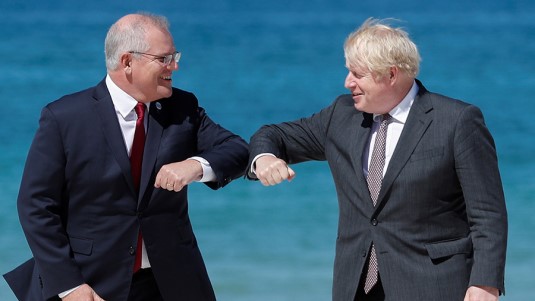
The full details haven't been finalised. This is an agreement in principle, so the trade secretary says. It might be small beans now, but Australia is in that part of the world rapidly becoming the centre of gravity for the global economy. The UK needs to be where the action's at. As Truss is fond of saying, we've got to stop treating current trade volumes - worth some £12.9bn - as a static figure and think about what the numbers are going to look like 15 years from now. Whatever the case one hopes the balance of trade would be somewhat better, considering under existing arrangements the UK imports twice as many goods and services than it sells to Australia.
Still, it's great news for everyone, right? Having tried to assuage UK farmers rightly fearful for their livelihoods seeing recent Tory moves against them, we learn the government are going to screw them. Details the Tories have kept out the press here, the fine print Boris Johnson wanted keeping under wraps has been published in Canberra. Turns out they lied. From day one Australian farming concerns have tariff-free access to the UK market, and the quota designed to manage the transition to unlimited trade places the cap at 60 times present levels. This is a terrible deal for UK farming and for what? There isn't a single discernible advantage for the British economy, but it is bedding in competitive disadvantage. How do we begin to explain the enthusiasm with which the government have embraced this shoddy piece of work?
It comes down to a confluence of a number of things. Brexit might be done and dusted, but for the rest of this government's time in office it has to permanently persuade chunks of its coalition that it was all worth it. Getting a quick and dirty deal done, any deal, plays well in the editorial offices who aren't about to scrutinise the specifics and tell their readers they've been sold a pup. Closely aligned with this is a peculiar but particular species of gesture politics. Sign trade deals, talk bewildering numbers, don't pay EU-stan criticisms any mind, and portray a stuttering recovery from Covid and Brexit as if it's a sovereign, independent Britain going from strength to strength. A deception, but one in full accordance with the hopes millions have invested in this false prospectus. It's easy to believe if you want to believe.
And there are the economics. It's true enough Tories wanted to escape the EU to avoid new regulations curbing tax dodging, and because the bloc was always potentially an impediment to their untrammelled power and desire to push down living standards of a workforce they hold in contempt. But in addition to and cutting across is a lazy perception that British or, rather, City of London interests are best served by making the UK the offshore hub and playground for the emerging powerhouses of East Asia. Hence the government submitted its application to join the Trans Pacific Partnership in January, despite being some 8,000 miles from the ocean. Still, if Australia can be in Eurovision ...
Getting a deal at any price with Australia and, in short order, New Zealand is about telegraphing to Pacific nations that the government will bend over backwards to be let in. It doesn't matter if the terms of trade entrenches a disadvantageous position for the UK because the sorts of interests the government are closest to - commercial and financial capital - have the most to gain. As per Tory custom and practice, levelling up in the context of "global Britain" means advantage for some and free market competition for the rest. But the real prize, the holy grail of the Brexiteers, is still the trade deal with the United States. The UK's admittance into TPP on a supine prospectus, they calculate, makes a transatlantic deal much more likely. And while the standing and influence of the UK is bound to diminish, the position and the wealth of the class the Tories organise and serve grows more secure.
A reminder then that Tory economics are about numbers second. In the first instance, whether Brexit, Covid, trade deals, it's always about class. Their class.
Image Credit
Tuesday, 15 June 2021
Normalising Institutional Corruption
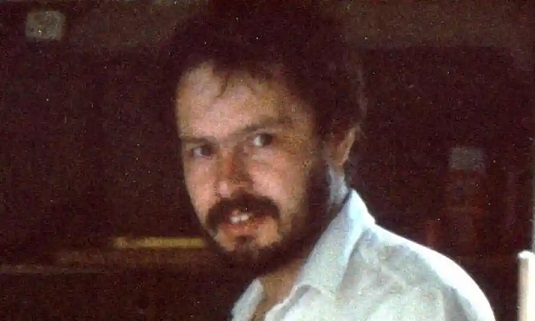
Okay, so what now? Conveniently forgetting her own last minute delay to the report's publication, in the Commons this afternoon Priti Patel said the government cannot and will not ignore the findings. She also said she'd written to Cressida Dick, criticised by the inquiry for throwing up barriers to its work, and asked for a detailed response to the panel's recommendations for rooting out the culture of arse-covering. Worryingly for anyone interested in supposing the thin blue line is whiter than white, the report also criticised the under funding of anti-corruption efforts and singled out budget cuts for the persistence of improper vetting of recruits. Given the popularity of Line of Duty and the fictional penetration of the force by organised crime, that fact alone might make the law-and-order brigade nervous. Evidently, given the multiple failures on her watch Dick should not have the luxury of considering her position. She ought to be sacked.
I'm sorry to say there's little chance of that happening. The Met has always been a compromised institution. There was never a golden age of Z Cars/Dixon of Dock Green proprietary. Honest coppers, bent coppers, all that has changed since the brazen corruption of the 1960s and 70s, when a significant number of police were either on the organised crime pay roll, or were a firm unto themselves shaking down criminals and enjoying a slice of their takings, is the character of corruption. Police on the take appear to be much less of an issue, but the police closing ranks, scratching backs and covering up wrongdoing, as the Morgan report shows, this continues unabated.
Nor is it about to change, because government operates on exactly the same principles. Having successfully shirked their responsibility for 128,000 deaths, the one move to have characterised the Tories since the general election is the body swerve. Rishi Sunak should be out on his ear for last summer's reckless Eat Out to Help Out. Matt Hancock ought to have fallen on a sword - any sword - for PPE failures, the Serco test and trace shambles, and shipping tens of thousands of elderly people into care homes where Covid exacted its grim toll. And Priti Patel for breaking the ministerial code while happily encouraging thuggish policing for straight up political positioning. At the very top not only do we see politicians behaving without accountability, the constant drip drip of Tory corruption is more a summation of the cronyism and back-scratching that characterises the UK's state institutions than anything else.
There will be headlines and handwringing. Perhaps Patel might see if fit to make an example of Dick, but likely not. Either way, nothing will change. Authoritarian policing is here to stay. Since Johnson's rhetorical toying with breaking the law in the lead up to the general election and over ignoring the withdrawal agreement, despite designing as well as signing up to it, the behaviour of Tory politicians are more than ever geared around what looks good and confers the right feels to their expansive and coherent support base. Ethics in politics, always a dubious proposition, aren't even worth lip service. All that matters is stoking the fires of support, and that means no institution, especially if their purpose broadly aligns with the project of an indefinite stay in office, is about to be held to account for incompetence and corruption. Lest it shines more of a light on the Tories themselves.
Image Credit
Monday, 14 June 2021
The Class Politics of the Work/Life Balance
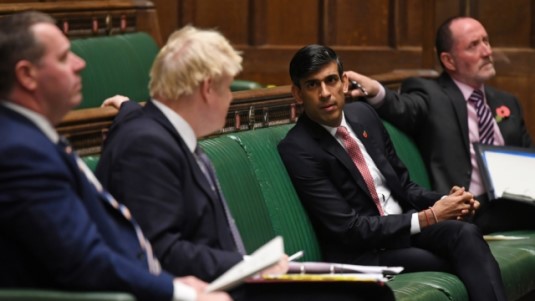
Thanks to Johnson's holding out on adding India to the red list of countries, the re-named Delta variant is in circulation and the government have lost control. Again. Therefore, the foolhardiness over so-called freedom day is to be pushed back from 21st June to 19th July. Some very minor restrictions will be relaxed in the mean time, such as caps on numbers at weddings and funerals provided there is social distancing, but nothing else changes. The good news, however, is the vaccine roll out is driving down hospitalisation rates and therefore deaths. Too late for some thanks to the usual lackadaisical Tory approach and their getting pulled in different directions by the interests they articulate and serve. But amid the gloom, at least Johnson can console himself with the fact public opinion is onside, especially the solid bloc of his core support. There's little sign Covid is chipping away at his edifice still.
High and dry then? Not quite. The problem with a huge majority, an obscene poll lead, and an opposition that's barely noticeable is the absence of a check on one's worst instincts, and thus the will to overreach manifests. Which is where Dishy Rishi comes in. Even though the government have extended restrictions, the Chancellor is determined not to add another month to the furlough scheme. As planned, the furlough scheme starts getting wound up from the beginning of July. The amount the government will pay drops from 80% of salary to 70% of up to £2,187.50/month, and then from August until the end of September it drops again to 60% of up to £1,875/month. However, employees on furlough will still be entitled to the 80% rate and so businesses are going to have to fork out. This means businesses, mainly small businesses, who can't return to normal and start taking cash are either going to collapse, or let go their hundreds of thousands of employees. Local government grants vary from area to area, and so Sunak is bent on unleashing a wave of unemployment and sucking demand out of the economy.
Economic madness, yes. But not if the primary concern is preserving class relations by reinforcing the discipline of the labour market. Since last year, Sunak has been concerned with cutting furlough and ensuring the "most generous package of support in the world" is anything but. Also gung-ho for a return to workplaces while many companies are contemplating a life of substantial home working, he (and a number of other Tories) feel the worry in their bones that things won't quite be the same after the pandemic. More time at home has, it is feared, tilted decisively the mental balance between life and work. The longer the emergency measures bed down as the new normal the harder it's going to be to turn back the clock and refasten the workplace rubber band on staff who want a bit more from life than the daily grind. It means moves by bosses to restore the ancien regime might be met with grumbles, slack productivity and perhaps, just perhaps, the worst thing of all: collective workplace resistance.
Leading Tories are nothing if not hyper class conscious, even if they clothe their interests and stakes in stuff and nonsense. The keenness to throw hundreds of thousands out of work is a play as old as Thatcherism. Pull the rug from under workers by forming a substantial army of the unemployed before going after others' pay, jobs, and industries. Few in the cabinet, particularly the true believers in hard right economics, know nothing restores labour discipline quite like the prospect of job losses. The uppity consequences of furlough and spending more time away from the workplace can be nipped in the bud, even if it means liquidating a small layer of small and medium-sized business.
Can the Tories get away with it? That same layer of the petit bourgeois have so far been kept afloat by the government and their support has been reciprocated in the polls, but now they're being lined up as sacrificial lambs, just like another key prop of Tory support, the question is whether these turkeys will carry on voting for Christmas. For the Tories, it doesn't matter. Heart strings might get pulled when the Daily Mail interviews some Hard Working Mother who has had to close her shire county teahouse, but with the solid block of retirees to fall back on the government feels it has a freer hand to tread on some toes in its coalition if the greater Tory good is served. And the question of keeping labour discipline on an even keel? Nothing, apart from the the persistence of the party itself is more important.
Image Credit
Saturday, 12 June 2021
Gunhed for the PC Engine

I remember my first encounter with Gunhed in the pages of Computer and Video Games. The PC Engine, along with Sega's MegaDrive were the wave of the future. Though it was debatable whether either of the two machines were more powerful than their 16 bit home computer counterparts in the West, the screenshots oozed quality. They just looked better than anything American and European gamers had encountered outside of the arcade. With my humbled clapped out Spectrum at home, the Gunhed screenshots - just like Tatsujin did a few issues later - woke something in me. A desire to have that experience, to be immersed in something way outside my means but also something cutting edge. And what did it were the bosses. Imposing and relatively intricate behemoths, you just knew going up against them in a comparatively puny spacecraft would make for a great digital ruckus. Such were the things to be gleaned from simple screenshots in those halcyon days.
30 years on from these lustful thoughts, how did finally getting my hands on Gunhed compare to the hopes I had for it? All expectations were met. Save one. The ship handled perfectly and zipped around the screen at just the right speed. The enemies came thick and fast, but not in overwhelming waves - provided the ship, the titular Gunhed, is packing the heavy artillery. And the power ups were fine. Anyone who has played a Compile shooter before knows the styles and the system. Different weapons are represented by numbers, which can alternately be powered up by collecting purple orbs. One is a multi-directional shot, two a wave blaster that can be partially directed, three is lightning - which is fun, and four is a crappy shot with spinning barrier balls. This can be complemented by three secondary weapons: a shield, multiples/options, or homing missiles. All of which come in handy. And naturally the more the ship acquires, the more one feels that false sense of invulnerability common to nearly all shooters. When you die you start off with the pea shooter again, which typically means a cascading collapse toward Game Over. Where Gunhed is a little kinder than its contemporaries is getting a bullet down your snout won't always kill you but knock you back a power level. And with plenty of power ups always available one can climb out of the hole relatively quickly. There's also smart bombs to get you out of a tight spot, but they're not great - they don't clear the screen and there is a delay between pressing the 'please blow them up' button and the fairly naff explosion. A shame.
Where Gunhed palls is in the music department. Expecting something pumping and energetic like a Technosoft game, instead the tune is the twee 80s anime-dramatic style, something it shares with Tatsujin and Super R-Type. A shame. The sound effects, however, are very serviceable and fit the action perfectly. Which is just as well, because the game is perfect action. This is definitely for winding down the higher brain functions and surrendering to the advanced reflexology it offers. Difficulty-wise it's perfectly balanced. A novice can get about half way on the first go, but then the challenge kicks in. The bosses, those oh so beguiling bosses are ... not that hard actually. Some are very well designed, but their attack patterns aren't difficult to master. If your ship is armed with the wave or the lightning they won't be too much trouble - what will be are the attack patterns of the minions and the sheer number of bullets that are thrown on screen. A fog of war can sometimes descend amid the mayhem, none of which ever lets up and, testament to Compile's technical virtuosity, none of it slows down either.
It was then, for its time, almost the perfect shooter. That probably explains why Compile more or less remade it for the Super Nintendo, known to us as Super Aleste. The music is better, but still not the rockfest that was standard when it came out. But it did recycle all of its sound assets, the same power up system (though with beefier weapons and more to choose from), and enemies with the same attributes. The core gameplay remains, and proved Gunhed's worthy successor. But now in the 21st century? After years knocking around the Virtual Console and recent appearance on the permutations of the PC Engine Mini, how is it remembered and how does it fare? As NEC's machine never made it out of import here, Gunhed was only really known by the few who had grabbed a PC Engine or followed C+VG. Curiously it didn't seem to influence later titles in the vertically scrolling genre apart from Compile's own loosely connected Aleste series of games. And so Gunhed, around these parts, is very niche. But it does not deserve to be. Not original when it came out, apart from the music it nails every aspect of how a vertical shooter should look, feel, and play. It is the distillation of a genre that still had many years to run, and one seldom surpassed.
Image Credit
Friday, 11 June 2021
In Praise of Deceleration

Then there is the Accelerationism of human potentials. This is a politics immanent to capitalism and its expanse of class struggle. It is of fighting encroachments of commodification and the state, of taking capital on in the workplace and the street, of winding through the fused spaces of online/offline, battling in culture wars, taking positions and holding them and always, always pushing the envelope of the possible. Its standpoint is against capital and its exploitation of our bodies and our souls, and for affirming life against the necessity wage labour. It's a politics of what might be versus a deadening existence of expenditure and waste. It struggles, it dreams of shaking off the chains of social obligation and economic necessity, and looks for those points where the primacy of living labour can be asserted against the phantasmatic dead labour of capital. When it finds them, it accelerates capacities outside of capital's capture in new ways of living, new ways of communing and belonging, it builds on the sum totals of human knowledge to anticipate societies beyond capitalism. Imagining the future is everywhere and always imagining a life lived differently. This species of accelerationism is not a counsel of despair unlike its inhuman counterparts, but a valorisation of our collective powers and it is this, these particulates of resistance and potential that any accelerationism worthy of the name disseminates. Its velocity is not an arrow pointing forward in time, but horizontal, flat, a wave of ever extending momentum. It never crashes, but like a tsunami it washes in and keeps on coming, sweeping capitalism before it.
But what's this, a third form of accelerationism? And one predating Nick Land's sojourn at Warwick's philosophy department by about a century. That is the accelerationism of impatience, or of the voluntarism that has proven as immanent to revolutionary politics as class struggle is to capitalism. Can we describe it as accelerationism? Sure. Just as macro/molar/Landian accelerationism is concerned with strapping rocket boosters to, for want of a better phrase, the "objective" tendencies and flows of capitalism pointing to its dissolution, the old or the first acceleration was a speeding up of politics by bypassing it completely. The most famous example was the infamous "third period" of Stalinism, of the declaration of social democratic parties as "social fascist" to be struggled against with a vigour equal to, if not surpassing that reserved for the existential menaces of mass fascist movements. The attempt to overcome the influence of larger rivals in interwar labour movements was not by making common cause against a common foe, but in the belief communist forces, sometimes quite meagre as per the still born CPGB here, could overcome disadvantage by stepping up activism and short circuiting the process of building class consciousness. Tragedy and farce, this has been repeated uncounted times by Trotskyist and Maoist groups since, as if one more paper sale, one more demo would turn the wheel and the masses wake up. Interestingly, Lenin himself - their alleged inspiration - set his face against the politics of bypass. In the 21st century it assumes new forms, and is typical of the alienation peculiar to the fusion of class and identity politics. Unlike the political subjectivities of openness, connectivity, and possibility pushed by the accelerationism of human or, if you prefer, molecular potentials, voluntarism rebooted is founded on closed subjectivities. This is identity as a bounded location, one shut off and policed. It generates a recursive universe, a lifeworld filled with certainties as long as the real world is kept at bay. By forswearing the outside, its acceleration enacts a double movement: a formal declaration of forward everywhere at all times. And, perversely, a complete loss of momentum. It flounders, lacks purchase, refuses to go anywhere. It's stuck. We see this in trade union elections where only the most left wing candidate will do, even if it means letting in the right. We see it in elections, in the raising of political demands, in the constant churn of internecine struggle and backbiting among those giddy with the speed at which they tear around around the closed circuits voluntarism sets up.
Because the production of subjectivities is simultaneously a vector of capital accumulation, the open apparatuses of regulation and control, and resistance to capital, the state, and the subjectivities it foists on us, voluntarism and its ironic negation of possibility is a temptation and a tendency molecular accelerationism must be alive to. Seminars and sermons on neoliberal identity, of samizdatting sophisticated theory will only ever go so far. Indeed, taking measures to mark off the voluntarist folly and holding out the hope of innoculation runs the risk of making it more, not less likely. Perhaps what might help is a more modest politics? One cannot escape the layers of history and inequality our fleshy bodies carry about them, but perhaps we can think more about how we invest our energies. What is gained, for example, by identifying with and reinforcing an identification with a politician, a party, or a set of policies and/or theoretical positions? That is going beyond solidarity, which is absolutely crucial to accelerationist politics, emptying the object of the relations that place them in the context of the movement and the struggle and instead pouring in self-identification? Perhaps a modest politics has to be a touch more instrumental, a bit more conditional. It also has to be a politics that is active, collective, and necessarily pragmatic. As old Timpanaro reminds us in his rehabilitation of Engels, the power of movement is constrained. All things at all times are not possible, and his advice for the Marxists of the 1970s was to pay attention to "passivity", of how the material contexts of politics always matter. They cannot be wished away.
In other words, a truly useful accelerationism needs an ethic of deceleration. Multiplying the potentials for new life is also about thinking through how this can be sustained, and in ways that empowers, politicises, builds solidarities and collective institutions, and this often means slowing down, taking stock, consolidating, thinking. Deceleration is understanding the world is never always open, and that our efforts, our attempts to accelerate the coming of the new society are, have to be, strategic.
What deceleration isn't is decelerationism. This is the very opposite of what we want to achieve. Decelerationism is bourgeois politics, and its raison d'etre is to make sure the flows and dynamics of capital do not trespass its speed limit. Capital, commodities, workers, their movements and velocities are fine as long as labour keeps meeting capital and producing surplus value, without excess spilling over into oppositional collective consciousness and leftist politics. They are all containers. Conservative politics suggest we live in the best possible world, and radical attempts to improve it lead to ruin. Liberalism and the reformist (or rather, technocratic) permutations of social democracy, labourism, and official communism say we also live in the best possible world, except for. Decelerationism, like its seeming antipode voluntarism, also cannot be screened out. Molecular accelerationism as it goes about its work has to make its case and continually make its case to the point it becomes spontaneous common sense. We're at the stage now where decelerationism and its slow flows are where we need to be. And getting there isn't just about putting one's foot down and rushing forward. No journey is completed without its necessary decelerations.
Image Credit
Thursday, 10 June 2021
Defeating Gerard Coyne
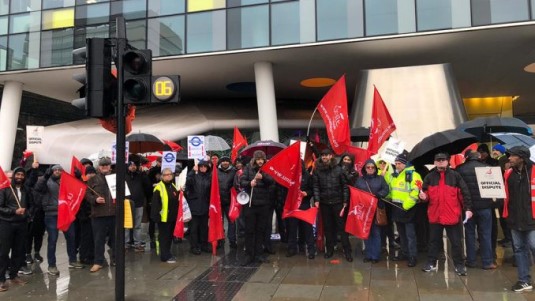
The question before the membership then is what sort of union should Unite be? Seemingly learning his lesson from the absurd campaign of four years ago, Coyne has so far steered clear of personal attacks and hysterical talking points. That's what the friendly rightwingers in the PLP are for. Instead, his website is economism, economism, economism. The six pledges from his manifesto repositions Unite as a service union there to help with reskilling, advice, and more full-timers to support the reps. Nothing about organising, nothing about struggle. Also of interest is a promised "democracy commission" to make the union "less divided" (code for curtailing Unite Community), and an investigation into the union's £98m Birmingham hotel. Save the size and the monies involved, Coyne's platform is no different in kind to election addresses ambitious randoms put together when pitching for a students' union post. It is a step back to the "new realism" of the post-Thatcher period.
And it might work. Trade unionism is political because it challenges management's right to manage, but because it's not immediately, spontaneously big P Politics, the fiction politics and economics are separate is relatively easy to maintain. This is something Coyne understands too well with his promising "an end to messing about in Westminster politics." It's not difficult to think this through. If a workplace branch is fighting to protect existing conditions or is complaining about health and safety, it's not obvious why Unite should be issuing warnings to Keir Starmer about ongoing issues. Whisper it, some don't see virtue in handing the Labour Party any funds at all, a reality that had a mass expression in the past, but these days is more likely to resolve itself into an apolitical stance, cynical about all politicians. An attitude that would suit Coyne down to the ground.
Coyne could be on to something. Pushing the same shtick last time got him within touching distance of the top job, so why not now His success or failure on this occasion is not within his gift: it depends on what his opponents do. Steve Turner has met with the other two left candidates about hammering out a deal so only one goes forward, but no movement at this stage. Given the splash Howard Beckett has made on social media, most of his following are egging him on and basically declaring he should go before the membership regardless. A case, I'm sorry to say, that owes more to stanning and voluntarism than considered analysis and an appreciation of what defeat in Unite means for the left in the labour movement. While Steve Turner is said to be Keir Starmer's second preference, the question Howard's die hard support need to ask themselves is whether our people, from the precarious worker trying to organise their office or depot to branches under attack as bosses foist the costs of the Coronavirus crisis onto them can live with a right winger in the general secretary's chair. To pose the question should elicit the obvious answer.
Obviously there's some distance to go and Steve has rightly said a running commentary on the negotiations would be unhelpful. But there is wriggle room among all three candidates to offer a common programme, and so no reason why politically a compromise cannot be reached. Howard is offering an explicitly politicised trade unionism, Sharon Graham talks tough on workplace organisation and equalities - especially important as trans people are under sustained attack - and Steve has a comprehensive list of priorities for building the union. On all of these issues, Coyne pales. His is a programme for locking the union in a state of quiescent decline and despite what he says, subordinate to the dismal schemes of his parliamentary allies.
As a former T+G shop steward and current member of Unite, politically Howard's pitch strikes me as the most attractive. But practically, what is his chance of winning if there is no unity candidate? Contrary to what some might think, even though the union is growing again it is not being overwhelmed by the newly politicised. The new layers are largely a reaction, a move into the union from workers whose immediate thoughts are clouded by the need for certainty and protection as the economy churns with uncertainty and business collapse. There was no Corbynist flooding of the unions, unfortunately. If Howard emerges as the unity candidate, then fine. The left should back him. But if not, then there is a duty, yes, a duty for leftwingers and socialists to support the best placed candidate to keep the union out of the death grip of the right. And that, at the moment, is the man with the most nominations, including the backing of the largest branches. Steve Turner, in other words.
Image Credit
Wednesday, 9 June 2021
Abdicating Leadership
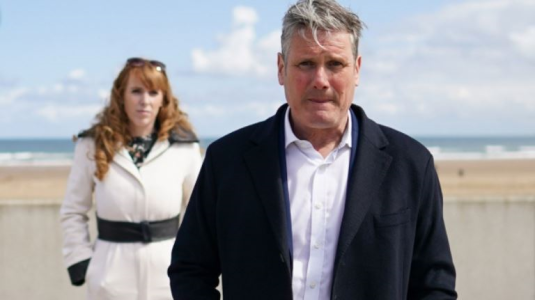
Following attacks on several footy players for showing solidarity with Black Lives Matter, and coming in for stick on social media, in a widely shared open letter Gareth Southgate took on the racists who abuse them. Defending the England team's stance on anti-racism and entirely consistent with the "progressive consensus" multiculturalism of the Blair years, he attacks the racists' sense of Englishness as old fashioned and dying out. With nods to soft patriotic markers of the monarchy, the war, and the "brilliance" of the country, he says his players have every right to stand up for the issues that matter and that all of them have a responsibility to the wider community. The clear implication being the racists are not just on the wrong side of history, they're outside a rebranded inclusive Englishness too.
Not controversial. A gentle nudging, barely even cajoling. It was a piece designed not to make racism a wedge issue but appeal to the better nature of fans who might put their love for the game before bigotry. Obviously not dyed-in-wool racists and dog whistlers like the appalling Tory MP, Lee Anderson. But in this moment on which Labour might capitalise and stand up for anti-racism, even of the most unchallenging kind, where was the Labour leader? Why did it fall to the England manager to defend this legacy of Labourist state building. How could the official inheritor of this tradition only muster a meek tweet of support?
A reminder of the context. The Batley and Spen by-election takes place in three weeks' time, a contest Keir Starmer would do well to win unless he wants a summer of unrest and rightwingers waking up to his lacklustre performance. Amid reports and whispers from the local Kashmiri community that they're minded to sit on their hands thanks to his hamfisted comments about Kashmir last year, and unwillingness to say anything about Palestinians as the Israeli government were slaughtering them by the dozen, even this, a little sign, an intimation of leadership on anti-racism might have helped a little bit. But no. It's almost as if the "grown ups" think they have nowhere to go, and somehow a sympathy vote will see Kim Leadbetter through.
Tone deafness toward an immediate and potentially existential threat to Keir's leadership is, sadly, par the course. The approach to opposition has been weak, from tailing the government and practically patting it on the head at points, to letting others do the oppositional groundwork for him. It was Marcus Rashford who gave Keir permission to start challenging the Tories on school dinners. It was Dominic Cummings's appearance before the select committee that gave Keir the strength to raise the issue of the horrors this government visited on care homes last year. And it was the G7 agreement on the corporation tax floor that encouraged him to start acting like taxing big companies is a good thing, despite Labour's awful rightwing opposition to Rishi Sunak, Rishi Sunak raising the rate. If Gareth Southgate hadn't penned his letter, it's very likely the Labour leader would not have uttered a word.
If this wasn't bad enough, we know the avoidance of wedge issues is purposeful. In his last rare intervention, his Blairness counselled for the avoidance of so-called culture war issues. Peter Mandelson did likewise. Keir did not need this advice from his forebears. By saying nothing it might hoodwink enough socially conservative voters into thinking the plastic patriotism was genuine. Or, alternatively, it clears the decks for Labour's presentation of its economic and social policy agenda. An economism of hoping warmed over Fabianism will do the trick as punters gaze upon the next manifesto in awe, but without actually saying anything now about what Labour would do in office. One might suggest picking priorities and banging on about them until the election might associate the grey blur of Keir Starmer with something substantial, but there's no sign yet this penny has dropped.
It's one thing to accuse leaders of not leading. All party leaders attract these brickbats at some point, but rare is the politician who is so hapless (or mendacious) that their entire strategy appears geared around triangulating defeat and the demobilisation of one's support in every direction. The question isn't whether Keir Starmer can turn it around. It's whether he wants to.
Image Credit
Monday, 7 June 2021
Cringingly Loyal Hoyle
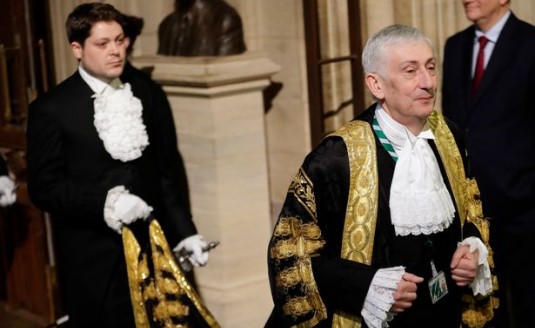
Having gathered a community of interest around the issue, including an eyebrow raising Theresa May, it looked a dead cert that the government would be defeated as the opposition benches joined with the Tory dissenters. The only difficulty, and what ultimately sank it, was the means by which this thoroughly deserved setback was to be administered. With the government's Advanced Research and Invention Agency bill making its way through the Commons, this innovation agency - a brainchild of the unlamented Dominic Cummings and set up to pour state money into radical technology projects - would be forced to make up the shortfall in the Overseas Budget had the rebel amendment passed. However, there was a risk of the Speaker dismissing it because of the lack of connection to the bill before the house. For example, casting our minds back to the parliamentary battlefront during the Brexit wars, when May was bringing her deal to the Commons for the third time, if a sympathetic backbencher had moved an amendment that would see a doubling of honourable members' salaries, this could, and in all likelihood would have been rejected by John Bercow on these grounds.
Today, our current Speaker Lindsay Hoyle said no. In ruling it out, he said the government should bring overseas aid to the House so MPs could have their definitive say on it. Fat chance. If he was worth a hill of beans he would have forced the government's hand by accepting the amendment as a means of forcing them to respect the modicum of democracy the Westminster system allows. It comes down to how one conceives the speakership. Should the Speaker try and make up for the advantages the government has by championing the backbench member and empower them so the executive can be held to account? Or is the Speaker the custodian of tradition, the preserver of the constitution, and working to keep the bewildering pomp and obscurity going? Bercow, a Tory, was very much a facilitator of accountability. Hoyle, nominally a Labour MP, a Labour MP clings to process, fetishising the form over the meagre democratic content.
This is not a coincidence. Several summers ago, the crowds gathered beneath Elizabeth Tower to hear Big Ben ring out for the final time for four years. As noted then, it was always going to be Labour MPs who got dewey eyed over the stilling of the bongs. And likewise, Labour MPs tend to be more attached to the ludicrous, alienating traditions of the Commons than their counterparts on the Tory benches. Plenty have commented on the private school ethos of the place, and how its obscure rules and stuffy atmos is specifically contrived to remind MPs from the lower orders that this is not theirs. A lot of Labour MPs, however, absolutely love it. Having secured a seat against the odds, what most would find alienating is actually flattering. They're being welcomed into the most exclusive political club of all, they're there by their sweats and talents, and they've earned it. It might bewilder, it might induce a sense of inferiority, especially with posher MPs about acting like they're very much at home, but because of their election, their elevation, they cling to if not enjoy the traditions and stupidities of the place. It affirms and confirms them as a cut above.
This is why we have such a contrast. The Tory Bercow was the most radical speaker of recent times. He was entirely at home running the Commons, having spent decades circulating around the top of the party's tree and, at one point, training other Tory politicians for their political careers to come. For Labour's Hoyle, he is as conservative and as plodding as they come. Hardly surprising considering he comes from a working class dynasty. A red prince before the term was coined, he entered the Commons just as his dad was kicked upstairs to the Lords, and in the days following her death telegraphed his penchant for sycophancy by calling for a national children's hospital named after Princess Diana. When one has a feel for the game, when it's as much a part of you as you are of it, the rules, the niceties, the ways of doing things can be bent to one's will. When one isn't, unless armed with a class analysis - which some MPs in recent times were - the tendency is to venerate, fetishise, and preserve. And in the case of Lindsay Hoyle, as it is destined to be during his spell in the chair, his first instinct to abide by the conventions and niceties of his holiest of holies will see him back the government each and every time.
Image Credit
Sunday, 6 June 2021
New Left Media June 2021

1. Class Activist (Twitter) (YouTube Channel)
2. DECODE (Twitter) (Podcast)
3. Fred Hampton Leftists (Twitter) (YouTube Channel)
4. Radicalize Me (Twitter) (Podcast)
5. Sister Sledgehammer (Twitter) (Podcast)
6. The Robert Tressell Society (Website)
7. The Socialist Hour (Twitter) (Podcast)
8. The World As It Could Be (Twitter) (Blog)
9. Tocqueville 21 (Twitter) (Blog)
10. Tricontinental Magazine (Twitter) (Magazine)
If you know of any new(ish) blogs, podcasts, channels, Facebook pages or whatever that haven't featured before then drop me a line via the comments, email, Facebook, or Twitter. Please note I'm looking for new media that has started within the last 12 months. The round up appears hereabouts when there are enough new entrants to justify a post!
Subscribe to:
Posts (Atom)