Highly recommend you give this episode of Politics Theory Other a listen. Alex interviews Nancy Fraser about her latest book, Cannibal Capitalism. An important intervention and reinstatement of how capitalism consumes everything it comes into contact with.
Saturday, 19 November 2022

Thursday, 17 November 2022
Stewarding the Depleted State
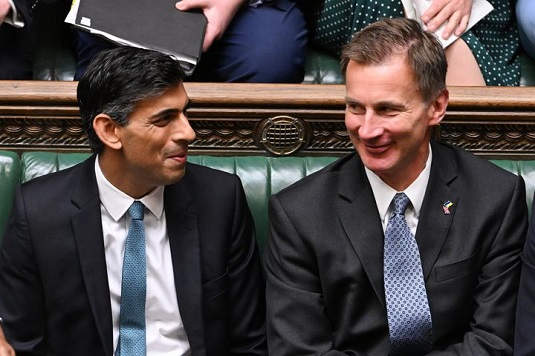
The Tory budget's been, and over the next few days a whole lot of household cash will go. Economically speaking, just like the first round of austerity (which never really went away), Jeremy Hunt's prescription for fixing the crisis of the Tories' own making will only compound stagnation, cause more business failure, and drag the economy further down the post-Covid, post-Brexit spiral. His protestations that growth is at the heart of everything the government does are just words. In what was probably the best performance of her career, in reply to the statement Rachel Reeves had little trouble eviscerating Hunt and his miserable prospectus.
Enough people have written about the economics, but what ultimately matters is the politics. The 10.1% increase in the state pension from April demonstrates Hunt has resisted those suicidal Tory voices seemingly bent on breaking the triple lock. And the uprating of benefits, something of a reluctant measure forced on the government by Boris Johnson's past promises and, more importantly, a change in political climate, does at least allow Hunt and Rishi Sunak to cosplay as compassionate conservatives. Even if their delayed introduction means no help now, sees pensions and social security depreciate in real terms, and subjects Universal Credit recipients to even more conditionality checks. Meanwhile, as Hunt announced an increase in the energy price cap from April the Tories went out their way to protect their real people. No, not the mass base they've long successfully suckered, but the likes of the oil companies. Despite expanding the pitiful levy on fossil fuel profits Sunak introduced early in the year, the tax breaks for investing in exploration remain. No closure of the non dom tax scheme, no proper taxation of unearned income (dividends and rents), no cap on bankers' bonuses, and, incredibly, a tax cut on bank profits.
Particularly insidious are the Tories' cuts to the public sector. Current spending will be maintained, which means real term cuts across the board - with the exception of more money for the NHS and a bit more for education. But most of what is going to happen is getting stored up for after the next general election. How unlike the Tories to put party politics before everything else. With George Osborne brought in to advise Hunt and Sunak, the ruse has his cynical fingerprints all over it. Services don't get cratered this side of the election and so any anger and opposition cuts would stoke are put on the never never. Meanwhile, the Tories can retreat to a pre-2010 austerity comfort zone, which would undoubtedly get marketed as "compassionate cuts". This wouldn't win them the election - only complete disaster can now knock Labour off course. Allied to their grotesque anti-immigration posturing, it'd be enough to cohere the base so something remains from the ashes of the coming defeat. Labour then cop the flak for "fiscally responsible" cuts and the Tories return, reinvented, at the general election after. Why not carry on as if the party's long-term decline isn't a thing?
Hunt's budget offered no political surprises. The state's capacity to do things is in crisis after 12 years of cuts and neglect. The break down in basic functions, first a consequence of Tory policy, looks increasingly like a matter of deliberate policy as the Tories work to wind in the horizon of political possibility. This statement sits entirely inside this do-nothing logic, where doing nothing means ratcheting up the misery and condemning everyone to substandard services. A declining party stewarding a depleted state. The Tories have worked toward this scenario, and this is how they would prefer things to stay.
Image Credit
Monday, 14 November 2022
Starmerism and Trade Unionism
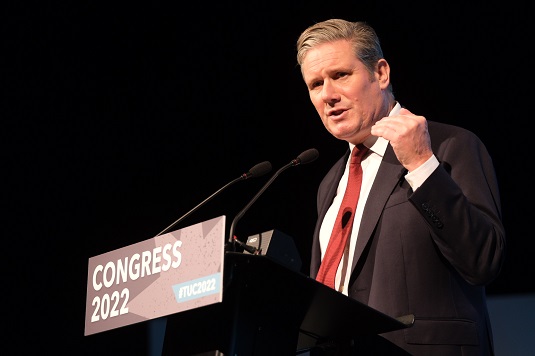
Having spent a leadership campaign making promises and then reneging on them, it's understandable that some labour movement people don't always believe what Keir Starmer says. To get around this, there's a good rule to apply. With Labour enjoying huge poll leads and it's being virtually certain of winning the next general election, what Starmer says now is what he's likely to do. There's an absence of pressure and need to compromise. When he talks about getting tough with Just Stop Oil protesters and attacks the Tories' draconian anti-immigration policies for not being efficient enough, no one has a problem believing this is what he wants to do. His authoritarian politics have been telegraphed enough times.
Yet there are a couple other things Starmer and the shadow cabinet keep going on about when they don't have to. One of them is the repurposed Green New Deal, and the other is the most significant extension of trade union rights since the 1970s. This, outlined by Andy McDonald before he quit the front bench last Autumn, got re-emphasised in Starmer's statement of intent published on the eve of the 2021 conference. Since then, Starmer has repeatedly referenced workers' rights from day one, and it got the retread treatment this weekend as Angela Rayner unveiled Labour's new deal for working people. This is not the place for a deep dive into the pledges, but more the seeming incongruity between Starmer's authoritarianism and his enthusiasm for trade unionism. Surely they are at cross purposes?
It could be read as a sop to the trade unions. Compensation for the abandonment of Corbynism's pro-worker, pro-working class agenda. And some comrades could be forgiven for thinking once the trade union reddies are banked that this charter will go the way of the Warwick I and Warwick II agreements during the Blair and Brown years. New Labour conceded worker-friendly policies in return for cash to ease the party's money woes, but were never implemented. Such scepticism is understandable and has precedent, but I don't believe either are the case. Rather, this pro-trade union position is entirely compatible with Starmer's politics. It's not a quirk or hold over from leftier times, but integral to his politics.
For one, it's been noted here enough that central to Starmer's authoritarianism is Fabian technocracy, that politics is not a question of interests or ideas, but the right managers. A position shared by most of the parliamentary party. And there are many schools of managerialism and how to handle industrial relations. Because we've got so used to neoliberal politics framing workplace matters, successive governments - even in moments of class peace - have barely concealed their treatment of workers as the enemy within. An industrial dispute is not something to be resolved, but toughed out and broken. Employees are to be starved back to work with nothing conceded. Strike action is always the result of troublesome militants. No matter how awful and bullying management is, disputes are the faults of the workers.
This does not appear to be Starmer's view. There has always been a patrician or "enlightened" management view that holds workplaces are partnerships between employer and employee, and one gets the best from workers by being friendly, supportive, relatively open, and clear about what an organisation/enterprise is trying to achieve. This is industrial relations as human resources, where the carrot always precedes the stick. Therefore, when a workforce comes into dispute it's a failure of management. They're in charge, they're responsible, and they have allowed a manageable situation to become unmanageable. Therefore, trade unionism is a means of structuring employer/employee dialogue, as well as providing basic protections against unscrupulous and unfit bosses. It's something good managers should welcome.
This might be how Starmer sees trade unionism as a workplace justice issue, but it's more politically significant than that. As mentioned here many times, in as far as a "Starmerism" exists, it's a politics for fixing the depleted state. If the state can't do basic things like sorting out passports in a timely fashion or resource enough ambulances, a crisis of legitimacy is not far away. Starmer wants to restore faith in the state and its institutions - an essential prerequisite for Fabian (and bourgeois) politics. But this also means preventing state overreach in other ways. As the Tories are set on reducing state capacity further, the Starmerist approach to trade unions have to be seen in this context. I.e. Repairing state legitimacy lies in re-establishing its "neutrality" in industrial matters. It represents the public interest versus the vested, producer interests of workers and bosses and therefore should not take sides but provide frameworks for dispute resolution. Therefore, the cowardice Labour is regularly chided over for refusing to show solidarity with workers in dispute, even when their cause is popular, is not so much a "fear" of the electoral consequences of solidarity. It has much more to do with its managerialist politics, and how Starmer wants to reposition an rebuild the state. This is in contrast to the Tory approach who go out of their way to oppose every strike and are therefore politicising disputes, making the state appear less than neutral and demonstrating its class character. Not useful for any project aimed at winning and keeping the consent of the many.
This suggest two further objectives. This empowerment of workers afforded by day one collective rights and state neutrality is suggestive of Starmerism moving in the direction of tripartism. That is abandoning the confrontational approach to industrial relations and creating partnership structures between the labour movement, business, and the state. These can only get buy in if the constituent organisations, presumably the TUC and CBI, believe government is an honest broker. Rather than the laissez-faire of the last 40-odd years, this is a way of providing purpose and giving the appearance of everyone having a stake in a common endeavour. 21st century modernisation, Starmer style, has been swotting up on the 1950s. And the second issue is by giving trade unions a position around the table, it introduces new pressures on them to discipline their members and keep demands inside the parameters of partnership. The theory being corporatist management generates industrial peace, and with it higher productivity, a prosperous economy, a happier work force, and a re-legitimised state guided by far sighted, well meaning (Labourist) managers.
I could be completely wrong, of course, but given Starmer's authoritarian politics, his concern with state modernisation, but his evident enthusiasm for extending the rights of trade unions to organise workers, this is how they fit in with his project. Evidently, this would reset the terms of class struggle in this country and raise a host of opportunities and challenges, but it's certainly a way out of the mess the Tories have left that recuperates the rising tide of trade union struggle into a politics of state legitimation and a programme for stabilising British capitalism.
Image Credit
Sunday, 13 November 2022
Murdering Twitter
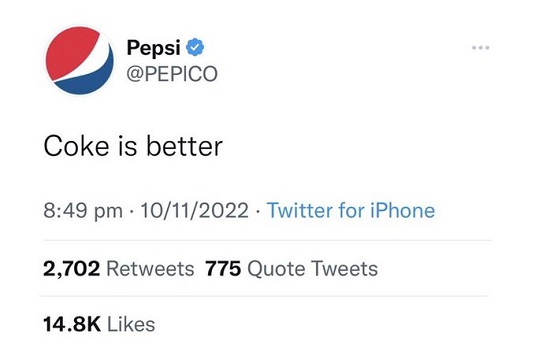
The brilliance of billionaires is not something I've ever held with. Their backstories are usually one of generously-provided start up capital, usually from the bank of well-to-do mum and dad, luck and timing mistaken for business acumen, and more often than not big state contracts and plenty of fictitious capital. This week, for example, we've seen the aptly-named Sam Bankman-Fried's crypto currency-derived billions simply vanish - a whole lot of money that, it turned out, didn't really exist. Similarly, the same can be said for Elon Musk. Reputed to be worth over $200bn, he still had to scrape together IOUs from banks, the Gulf's absolutist sheikdoms and various odds and sods, including Bankman-Fried, to finance his $44bn purchase of Twitter. And what has Musk done with his new plaything? He's completely trashed the platform's commercial value, and made himself look like an utter fool.
Unlike Meta and Google who have a strong business model based around the harvesting of data and using this to sell advertising, since its inception Twitter has proven much more difficult to monetise. If one's Twitter feed is cluttered with too many adverts, the platform's utility declines. And given the proliferation of apps through which Twitter can be viewed, it's a lot more difficult to bring in the commercial megabucks its peers enjoy. In 2020-21 it achieved an all-time revenue high of $5bn, but still posted a net loss of $221m. Reversing this appears to be Musk's priority to the exclusion of all else, and so within a week of his taking over he fired practically all the executive team and made approximately half of Twitter's staff redundant - leaving the company open to legal action outside the United States for violating local redundancy laws. Contrary to his cool techbro image, Musk also ordered the remaining staff back to the offices, a demand that has gone down as well as the fail whale did with old-time Twitter users. And Musk decided to "innovate". Claiming the mantle of man of the people, Musk said he was now charging verified accounts - the famous blue ticks - $8/month for the privilege of the badge. It has proved to be a disaster.
The arrival of the blue tick of verification did, at least for some Twitter users, signify a two-tier system. It awarded status to those upon whom it was conferred. However, the advantage of the system was that it verified the user. If, for example, the blue ticked Downing Street account tweeted something then it was official, not some impersonator. By introducing verification by payment, Musk at a stroke removed the only mark of trust the platform offered. For example, a blue ticked feed purporting to be Eli Lily and Company, a US pharmaceutical giant, announced it was making its insulin products free. That wiped $20bn off the firm's stock market value. Lockheed Martin was also stung by a similar prank, announcing sales to Saudi Arabia, Israel, and the United States would be suspended pending human rights abuse investigations. Their share price dropped 5.5%. It's a wonder these firms haven't launched action against Musk for damages done around trade mark infringement. Whatever, it will certainly put off further corporate engagement with Twitter as they try and protect their brand image. And the effect it will have on advertising can only make a bad situation worse.
How to explain this colossal idiocy? It demonstrates Musk's gargantuan arrogance and belief in his own Midas touch. There are no 11 dimensional reasons why he's trashed its primary revenue stream. He's not doing a solid for the Saudis and Qataris who part-financed his purchase. He's not wrecking the site because of secret deals done with other social media platforms. It's entirely a wrong decision driven by hubris and not having anyone around him who'll say no. In short, he is to Twitter what Liz Truss was for the UK economy and the Conservative Party. After 48 hours, the paid for blue tick scheme was abandoned but that's unlikely to reverse the damage to Musk's reputation. It makes you wonder how well SpaceX would manage if it wasn't propped up by US Space Force and NASA cash.
Unfortunately, while Musk will survive his humiliation to make another spectacle of himself the future of Twitter itself is less certain. Having already loaded the company with a billion dollars worth of debt, the public failure of his revenue generating scheme and sharp decline in advertisers could well bankrupt the company. And this would be an outrage. Twitter has all kinds of problems, but like other platforms it has become essential infrastructure. It is next to impossible to follow politics in this country without Twitter. It's where stories are broken, analyses are shared, and politicians get a measure of daily accountability. It's space where it is still possible to report on news the mainstream refuse to pick up and can be kept alive. Serendipitous connections are forged with every moment, and unlike other algorithm-heavy sections of the internet there's still a good chance of finding something random and interesting. More importantly, despite efforts by sundry dictatorships Twitter is the main method of getting reports and video out of closed societies and get the information quickly disseminated. There is no other place like it, and despite its regular descent into bad faith, ad hominem, and ridiculous wars over petty slights, politics and democracy would be the poorer for it.
Musk's antics reiterate the need for removing social media from private hands. Communication is the lifeblood of the common, and only common ownership will do.
Saturday, 12 November 2022
Putin's Kherson Humiliation
He can't say he wasn't warned. Indeed, one of the reasons why a lot of commentators were caught on the hop by his invasion, despite his weeks of posturing and fiery rhetoric, was the fact the troops assembled for the "special military operation" were too few and that Ukraine not only had a larger and better equipped army than in 2014, when Crimea, Luhansk, and Donetsk were claimed by the Russian Federation, it would mobilise for total war. Forget the nonsense about the United States goading Russia into war, this catastrophic misjudgement was Putin's and Putin's alone.
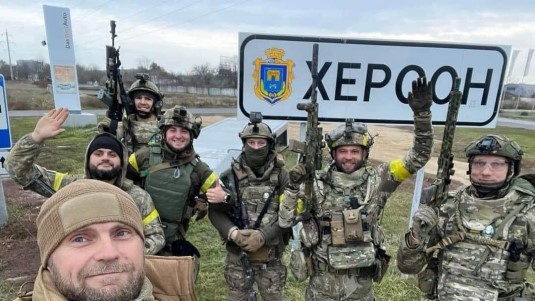
Consider the last nine months. The Russians poured over the border and headed toward Kiev where their armour simply sat on the roads and was gradually worn down by determined resistance to the point they had to abandon the attack and with draw from the environs of the city. In the summer, Ukraine very loudly announced to the world that it would be undertaking a counter offensive in the south of the country to liberate Kherson region. The Ministry of Defence took it on face value and rushed troops and heavy equipment across the Dneiper. The Ukrainians then shelled and knocked out the bridges, and slammed the real counter attack into the thinly held region around Kharkhiv. The Russian lines melted and 12,000 square km of land was recaptured, along with masses of equipment and the grim findings of multiple mass graves. By October, the pressure on the southern front was too much for Russia and the withdrawal began, with all soldiers making it back to the east bank of the river within the space of 24 hours. A decrepit state can only ever field a decrepit army.
Apart from withdrawing from Kherson in a timely manner, the only other success Russia can point to presently is the fighting on the borders of Donetsk where, for the best part of two months, its has been grinding towards Bakhmut. Almost two thirds of the city are in rubble, and it's been the site of some of the most intense fighting seen in the war. Every advance by Russian forces has been countered and thrown back but, with the remorseless logic of a First World War meat grinder, hundreds of newly mobilised Russian troops are thrown into the fray day after day. Yet the price paid in blood and equipment doesn't appear to be allied to any strategic perspective. Should the town get captured, it doesn't really improve Russia's tactical position. Indeed, the Ukrainian army would, if anything, find it even easier to degrade their opponent's forces by artillery from nearby higher ground. It appears to be an operation aimed at taking the city for the sake of taking something.
That is indeed the case. This region of the front line is under control Yevgeny Prigozhin, the former caterer/restaurateur turned private military contractor. His Wagner Group (who harbour as many if not more Neo-Nazis than Ukraine's famous Azov Regiment) have fielded their own private army outside of the Ministry of Defence's chain of command. It's Wagner that have recently been allowed to recruit from prisons. The use of mercenaries on the battlefield are normally problematic. Fighting for coin rather than country marks them out as more risk averse troops, but on the face of it the modest advances made since the beginning of the Autumn compares favourably to the 'official' army's performance in the north and south of Ukraine. And this is entirely the point of the Wagner "offensive". Prigozhin, as a long time Putin crony who amassed a huge fortune from corrupt state contracts, is angling for more power. It is an instance of how, as per all authoritarian regimes and dictatorships, elites compete with one another for favour and office. What does it matter if Ukraine are chewing up hundreds of troops around Bakhmut as long as Prigozhin's star carries on rising? No amount of deaths or setbacks can stop this from being a good war, as far as he's concerned.
The question now is where does the war go next. The Russians are dug in on the south bank of the Dneiper and with crossings across the wide river out of action, a lightning fast thrust from the environs of Kherson seems unlikely. However, the two main access roads into Crimea are within range of Ukrainian artillery and so we can expect the Russian occupation there to come under pressure. Which hasn't been great since a (seeming) special forces attack severely damaged the Crimean Bridge that linked the peninsula to Russia proper. An attack further to the east to cut off Russian holdings from Donetsk would appear to be a logical choice - one so obvious even Putin's MoD should be able to anticipate it. On the other hand, there are concerns Belarus might enter the war on Russia's side, imperilling Kiev once again, and the situation in the East could do with reinforcements and added firepower to squash Wagner and prosecute an advance into Luhansk. With momentum, confidence, strategic nous and a steady stream of Western weapons, Ukraine has the initiative.
There are no good options for Putin. The recapture of Kherson underlines how unwinnable the war has become for Russia. So low are its military stocks that it's relying on Iran for drones and missiles and, incredibly, North Korea for small arms munitions. The professional army has been virtually thrown away without enough left to train the draftees, meaning hundreds are showing up on the front lines every morning who will be dead by evening. And, it was widely reported, that Russia has begged Syria to send troops and is looking at recruiting Afghan commandos abandoned by the West after the Taliban took back power. Unfortunately for Putin, his humiliation has cost tens of thousands of Russian deaths and a growing crisis of confidence in his regime. The protests that greeted the outbreak of the war have become muted under the cosh of heavy policing, but the resentment of the partial mobilisation, and the inevitable turning of grief into anger is something that no regime, let alone one as decayed as Putin's, can forestall forever. It will not be molified by crude propaganda, nor by pointless punishment bombings of Ukrainian residential blocks and power stations. In Russian history, war has had the tendency of being the midwife of revolution. Putin beware.
Image Credit
Thursday, 10 November 2022
Andain - Beautiful Things (Gabriel & Dresden Unplugged Mix)
No time for writing tonight, but there's always room for dancing. Enjoy this understated down tempo cut from 2003.
Tuesday, 8 November 2022
A Farewell to Gavin Williamson
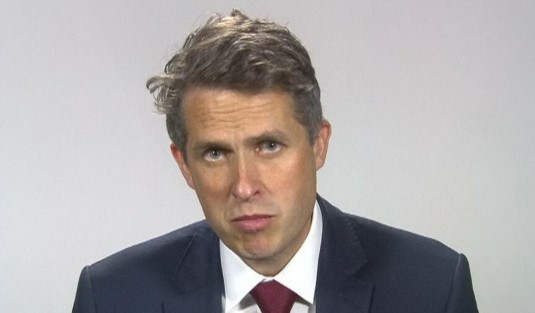
In Williamson's resignation letter, he's "stepping back from government" because the allegations, which he "refutes" (does politics abuse any other word as much?) are proving to be a distraction from what's Sunak's trying to achieve. For his pains as Minister Without Portfolio for a couple of weeks, Williamson can expect £18k in severance. Nice work if you can get it. But as these stories have been circulating among the lobby hacks for a long time, surely Williamson knew there were hostages to fortune out there. Why tempt fate by accepting a front bench position knowing his past would catch up with him? Vanity? The idea he'd muddle through, like Boris Johnson had done so many times?
It also turns out Rishi Sunak knew about these allegations, but appointed him all the same. Just like giving Suella Braverman's a job, Sunak's judgement was found somewhat wanting. Whereas for Braverman it was a grubby deal that underlined his cluelessness, for Williamson this was a reward for helping his leadership campaign. As significant sections of the press, including on the right, are going for the Tories because of how politically dysfunctional they've become Sunak should have had the wit to realise they would bite and continue worrying his government until a Williamson-sized chunk got torn off. His career is over for the third time, and there's more egg on the Prime Minister's face.
Unfortunately for Sunak, it doesn't end there. Having got Williamson's scalp, the attention switches back to Braverman. She and her boss intend on riding it out because, unfortunately, as the press have ramped up the anti-immigration coverage some polling has demonstrated support for the Home Secretary's remarks when she denounced the south coast "invasion" in the Commons last week. She's useful for the racist divide and conquer cards the Tories play when they're conquered. But by the same token, her flouting of national security rules and legal probity make her a huge liability where the security state is concerned. And so the press will keep the assault up, knowing that her career is ripe for the taking and that, unlike his predecessors, Sunak needs to heed the power of the papers.
Image Credit
Monday, 7 November 2022
Taking the Labour Right to Court

This is inseparable from a concerted effort by the Labour right to lock the left out of the parliamentary party. They don't always get their way, as the reselection of Faiza Shaheen in Chingford and Woodford Green shows. Then again, what is one selection against a score of left wingers who've been disposed of for dubious reasons? She's the exception that proves the rule. As Patrick Maguire points out in his Times piece, Keir Starmer is unconcerned - he's largely contracted the purging and the brutality out to the creatures for whom sharp practices are the definition of sharp politics. And the Labour right can get away with it. There's no Corbynite surge on the horizon threatening to sweep them away. On the contrary, as tens of thousands of leftists have quit and continue to quit, the stitching up jobs of self-styled Tammany Hall-types gets easier.
The right also rely on something else: a certain acquiescence of the Labour left. They reckon, not unreasonably, that the left won't rock the boat too much. The fact trade union leaders, even the left wing ones, aren't saying or doing much publicly as their affiliated branch endorsements get rebuffed for flimsy and/or undisclosed reasons. True, the CWU's Dave Ward has two crucial disputes occupying his time, and Sharon Graham has been clear that her priority is industrial action, not pissing around with internal Labour matters. But still. And the second is court action. Bringing the courts into labour movement matters has long been taboo. Because our organisations were built by the hard graft of our people in the face of bitter opposition, this is good grounds for not letting bewigged members of the ruling class adjudicate on our internal matters. That is a labour movement competency alone. But the Labour right have consistently and with great success relied on this taboo to get away with the most egregious rule breaking. As we know, the party rule book is enforced by the right. It never applies to them. However, the court taboo broken in the Corbyn years. Elements of the right supported a court challenge to keep Jeremy Corbyn off the second leadership ballot. And when the NEC changed the rules over who could vote in the election, some Corbyn supporters launched their own action. In both cases they were doomed to failure as the party's leading lay body acted entirely within its competency. Neither were successful, but the caution against using courts to settle disputes died with the cases.
Therefore, Ian Byrne's announcement that he's gathering materials for a legal challenge is a welcome one. From a mainstream melty, centrist point of view how can a party that hopes to be the lawful government of the land be cavalier about the breaking of its own rules? But from a leftist standpoint, given how the party treats its own rules as optional depending on the politics of those on the receiving end, there is a legal case to be heard. As argued previously, the degeneration of Labour Party structures into something akin to feudal patronage means a dashing of bourgeois law might be a step forward. In the absence of anything else, why not? If a day in court means shining light on party nepotism and hypocrisy, that could hardly be regarded as a bad thing. If Ian goes down this path, good luck to him. Enforcing proper due process across the party would be a big win for the left.
But there's something else of interest going on here. A side note of internal politics. As the North West region is home to Angela Rayner, Andy Burnham, and Steve Rotheram - three not inconsiderable party figures who have endorsed Ian Byrne's reselection, the fact dirty tricks are getting fielded against someone they support either suggests their backing is a cynical tilt to the left for movement kudos, or as is more likely their writ in the region doesn't run as far as it might. Admittedly, because Bryne won his 2019 selection by the tightest of margins - three votes if memory recalls - the contest would likely be tight without the right's attempts to fix the results. But if these two powerful Labour politicians can't knock the shenanigans on the head, what hope do either of them have in running successful future leadership campaigns if sections of the apparat can defy them with impunity?
Image Credit
Sunday, 6 November 2022
First Contact: An Alien Encounter

First Contact begins with one of the Voyager probes picking up a narrow band signal, which is a sure sign of an artificial origin. The scenario then plays out over 12 days as the source is revealed to be a 200km-long object approaching the solar system. Oh dear. Grainy images are obtained of 'The Artefact' and it appears artificial in character. Spectroscopy readings shows metals, but the craft is seemingly tumbling in space and out of control. The boffins get to work on tracing its fight path and settle on a star system some 500 light years away, implying the craft had been in transit for over 100,000 years. No wonder it's not taking any messages. NASA direct the new James Webb Space Telescope at the system and finds evidence of a shredded planet, but with traces of manufactured materials showing up in the analysis. Meanwhile, the Artefact sails past the Earth and away. First contact is over.
The story could have been told in a 10 minute YouTube video if I'm honest. But the main purpose was to show off the science, and was therefore seemingly aimed more at a general audience. SETI's infamous Wow signal from 1977 gets its umpteenth showcase. It too was a narrow band signal and was much stronger than the background noise, and it (apparently) moved with the stars - as you would expect anything inbound to - but that was it. The best candidate for contact so far, but it has never repeated. Nor has it been satisfactorily explained by earth-bound or natural celestial phenomena. The question mark remains and may never be resolved. We're also told about how difficult it would be to communicate with aliens anyway, given how different our environments, biologies, and psychologies are likely to be. Just look at our miserable efforts at trying to establish a dialogue with whales(!). And we had to have a wee segment on ʻOumuamua, the first identified extra-solar object that passed by these parts in 2017. What the show skipped over were claims, such as those coming from Harvard's Avi Loeb, suggesting it could be an artificial object.
Surprisingly, while First Contact was humdrum and not a good way to fill 85 minutes it did at least get the sociology right. As noted a while ago, chances are news of an alien civilisation would perturb the froth of social media for a day or two and fade from view. Because this premise is a close brush with some derelict spaceship things are likely to be different. People lighting candles, American shock jocks forecasting armageddon, little kids hoping the aliens would be friendly, talking heads arguing the toss. Social media getting rammed with little green men memes was definitely on the money. And then we have people rioting because they suspected governments were concealing knowledge was a bit of a stretch. Then again, who could have foreseen anti-mask/anti-vax protests as a global pandemic ripped through the population?
When all is said and done, it's difficult to see who this programme was made for. Anyone slightly interested in the topic would be caning the YouTube videos already, and the casual channel surfer wouldn't have found something compelling enough to stick with. Science programming does get a lot of flack, and rightly so given how plodding and simplistic the output tends to be. I can't imagine anyone young watching this and feeling inspired enough to pick up a telescope, which surely is the criteria by which any flight of speculative fancy should be judged.
Image Credit
Saturday, 5 November 2022
The Tory Politics of Small Statism
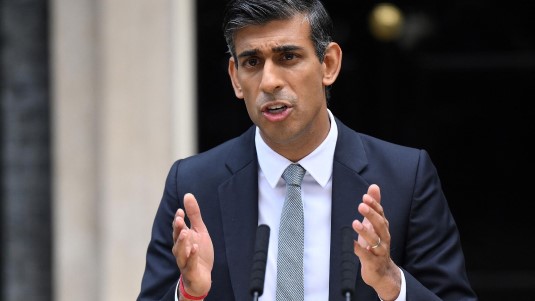
A trip down memory lane. Politics has been a traumatic experience and especially so for our establishments. In 2014 the UK state sailed close to the wind of breaking up. In 2015, the official party of liberalism imploded and socialism, having been asleep as a mass force since the Poll Tax rebellion, surged. In 2016 the double disasters of Brexit and Trump struck. 2017 saw the impossible and Labour surge in votes and seats when so-called professional opinion had written it off. 2018 and 2019 were endless engagements in the Brexit wars, with the Tories emerging triumphant at the end. And just as we were hoping for a respite in 2020, Covid hit and the purview of the state expanded massively to keep the economy and people's livelihoods going. This tumultuous period, which we haven't left yet, were and are characterised by big ideas and high stakes. In Scotland the SNP and in England and Wales Corbynism showed political alternatives were possible, and the Tories adapted to the mood. Outside Number 10, Theresa May talked about her one nation Toryism. And when Johnson won his Brexit election, his levelling up wheeze was the logical heir to what went before - with Dominic Cummings brought in to drive an authoritarian modernisation of the state.
This is not natural territory for modern Tories. For the Margaret Thatcher and John Major governments, their objective was putting socialism in a box and keeping the lid closed. Their party had not adapted itself to a popular Labour agenda since Winston Churchill signed them up to the post-war compromise in the late 1940s. Markets, privatisation, and law and order was all Tory governments could and should offer. Jeremy Corbyn's two leadership elections and the unexpected (and unwelcome) 2017 result tore a hole in this reality. It could not be ignored and had to be headed off. Arguably, the peak of Corbyn's impact on the Tories was felt after Johnson had administered the electoral coup de grace when they unceremoniously and without credit lifted the left's programme for mitigating Covid. Seeing a Tory government abolish homelessness, increase social security above inflation, and paying people to stay at home wasn't on anyone's 2020 bingo card. It definitely wasn't on Sunak's, and Johnson - despite being chill about state intervention - was very uncomfortable with this level of support. As soon as they felt they could get away with it, return to work messages were pushed out, the formal end of the Job Guarantee Scheme announced, the homeless were put back on the streets, benefits were cut back and the sanctions regime returned. The emergency could not be allowed to undermine the economic compulsion to work.
This is where the agreement between Johnson and Sunak ended. As noted here many times, the levelling programme such as it was got watered down repeatedly, becoming little more than pork barrelling at best and vapour at worse. And at the heart of the resistance to Johnson, those responsible for this incoherence, was Sunak and the Treasury. How they justified their opposition is largely immaterial. The consequence was a concerted Tory effort at reducing the capacity of the state just as Johnson, Michael Gove and before his departure, Cummings, were repairing and remodelling it. The outcome has been the ongoing decrepitude of the public realm and the ability of the state to do things. Especially simple things, like tax collecting, ordering a passport, and expecting an ambulance to turn up were significantly eroded while Johnson got on his modernisation shtick.
This had political effects too. It's quite simple. If the state can't deliver basic functions, then no one is going to place demands on it. What you might call nice things but are routine in equivalent countries, like cheap but good quality public transport and decent state pensions, can never be delivered because the state can't be trusted to do anything. If this becomes the common sense, even the mildly social democratic gruel offered by Keir Starmer is a banquet government can neither afford nor organise, and is fantastical to the point of it can never happening. Again, whether Sunak thinks of it likes this or clings to dreams of a small state, the effect is the same. A closure of political space and the attempted founding a new status quo on state incompetence.
As it happens, Truss was fully signed up to this view as well. Except her mistake was to go all in, believing public opinion was behind her own prejudices against the state (which, by complete coincidence, were shared by the hedge funds she was closely aligned to). Unfortunately for Truss, she forgot that crashing the economy upset just about every other section of Tory party support. When a Conservative leader becomes dysfunctional for almost the entirety of British capital, as happened in this case, their political life is not destined to be a long one. For his part, while Sunak is politically clumsy and prone to mistakes, on this he has been consistent and patient. He chipped away at the furlough scheme to which he owes any positive regard he has left, and subsequently only offering support - as per his earlier energy price freeze - when it was absolutely politically necessary to do something. Truss didn't want the state to offer anything, and was completely open about it. Sunak wants to be in the same position, but it is something to be achieved more gradually and with a bit more craft.
Which brings us up to date. In his Times interview, the Prime Minister alluded to some limited help for mortgage holders caught in the backwash from Trussonomics. But by being "honest" about how the state is suffering a budgetary shortfall, Sunak and Jeremy Hunt are looking at cutting the public sector more devaluing benefits and the state pension under the guise of necessity and hoping enough will swallow it as per the Tory messaging before and after the 2010 election. But none of this is regretful, done with a heavy heart or, heaven forfend, is a tough choice. Shutting down the capacity of the state undermines the faith in politics to do good, useful things. If that is eroded, Labour are likely to cleave to this "common sense" and keep to the new rules of the game. Sunak isn't likely to lead the Tories to victory, but if his opponents' room for manoeuvre can be circumscribed in advance he will, as far as the Tories' ruling class support is concerned, have rendered them a useful service.
Subscribe to:
Posts (Atom)