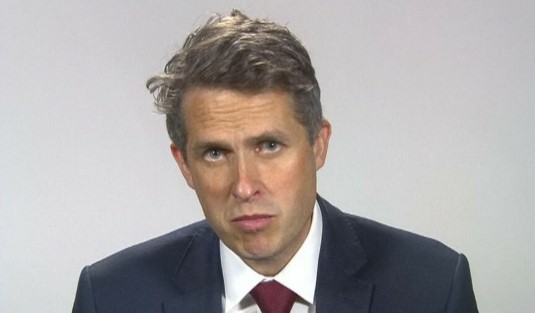
In Williamson's resignation letter, he's "stepping back from government" because the allegations, which he "refutes" (does politics abuse any other word as much?) are proving to be a distraction from what's Sunak's trying to achieve. For his pains as Minister Without Portfolio for a couple of weeks, Williamson can expect £18k in severance. Nice work if you can get it. But as these stories have been circulating among the lobby hacks for a long time, surely Williamson knew there were hostages to fortune out there. Why tempt fate by accepting a front bench position knowing his past would catch up with him? Vanity? The idea he'd muddle through, like Boris Johnson had done so many times?
It also turns out Rishi Sunak knew about these allegations, but appointed him all the same. Just like giving Suella Braverman's a job, Sunak's judgement was found somewhat wanting. Whereas for Braverman it was a grubby deal that underlined his cluelessness, for Williamson this was a reward for helping his leadership campaign. As significant sections of the press, including on the right, are going for the Tories because of how politically dysfunctional they've become Sunak should have had the wit to realise they would bite and continue worrying his government until a Williamson-sized chunk got torn off. His career is over for the third time, and there's more egg on the Prime Minister's face.
Unfortunately for Sunak, it doesn't end there. Having got Williamson's scalp, the attention switches back to Braverman. She and her boss intend on riding it out because, unfortunately, as the press have ramped up the anti-immigration coverage some polling has demonstrated support for the Home Secretary's remarks when she denounced the south coast "invasion" in the Commons last week. She's useful for the racist divide and conquer cards the Tories play when they're conquered. But by the same token, her flouting of national security rules and legal probity make her a huge liability where the security state is concerned. And so the press will keep the assault up, knowing that her career is ripe for the taking and that, unlike his predecessors, Sunak needs to heed the power of the papers.
Image Credit

This is inseparable from a concerted effort by the Labour right to lock the left out of the parliamentary party. They don't always get their way, as the reselection of Faiza Shaheen in Chingford and Woodford Green shows. Then again, what is one selection against a score of left wingers who've been disposed of for dubious reasons? She's the exception that proves the rule. As Patrick Maguire points out in his Times piece, Keir Starmer is unconcerned - he's largely contracted the purging and the brutality out to the creatures for whom sharp practices are the definition of sharp politics. And the Labour right can get away with it. There's no Corbynite surge on the horizon threatening to sweep them away. On the contrary, as tens of thousands of leftists have quit and continue to quit, the stitching up jobs of self-styled Tammany Hall-types gets easier.
The right also rely on something else: a certain acquiescence of the Labour left. They reckon, not unreasonably, that the left won't rock the boat too much. The fact trade union leaders, even the left wing ones, aren't saying or doing much publicly as their affiliated branch endorsements get rebuffed for flimsy and/or undisclosed reasons. True, the CWU's Dave Ward has two crucial disputes occupying his time, and Sharon Graham has been clear that her priority is industrial action, not pissing around with internal Labour matters. But still. And the second is court action. Bringing the courts into labour movement matters has long been taboo. Because our organisations were built by the hard graft of our people in the face of bitter opposition, this is good grounds for not letting bewigged members of the ruling class adjudicate on our internal matters. That is a labour movement competency alone. But the Labour right have consistently and with great success relied on this taboo to get away with the most egregious rule breaking. As we know, the party rule book is enforced by the right. It never applies to them. However, the court taboo broken in the Corbyn years. Elements of the right supported a court challenge to keep Jeremy Corbyn off the second leadership ballot. And when the NEC changed the rules over who could vote in the election, some Corbyn supporters launched their own action. In both cases they were doomed to failure as the party's leading lay body acted entirely within its competency. Neither were successful, but the caution against using courts to settle disputes died with the cases.
Therefore, Ian Byrne's announcement that he's gathering materials for a legal challenge is a welcome one. From a mainstream melty, centrist point of view how can a party that hopes to be the lawful government of the land be cavalier about the breaking of its own rules? But from a leftist standpoint, given how the party treats its own rules as optional depending on the politics of those on the receiving end, there is a legal case to be heard. As argued previously, the degeneration of Labour Party structures into something akin to feudal patronage means a dashing of bourgeois law might be a step forward. In the absence of anything else, why not? If a day in court means shining light on party nepotism and hypocrisy, that could hardly be regarded as a bad thing. If Ian goes down this path, good luck to him. Enforcing proper due process across the party would be a big win for the left.
But there's something else of interest going on here. A side note of internal politics. As the North West region is home to Angela Rayner, Andy Burnham, and Steve Rotheram - three not inconsiderable party figures who have endorsed Ian Byrne's reselection, the fact dirty tricks are getting fielded against someone they support either suggests their backing is a cynical tilt to the left for movement kudos, or as is more likely their writ in the region doesn't run as far as it might. Admittedly, because Bryne won his 2019 selection by the tightest of margins - three votes if memory recalls - the contest would likely be tight without the right's attempts to fix the results. But if these two powerful Labour politicians can't knock the shenanigans on the head, what hope do either of them have in running successful future leadership campaigns if sections of the apparat can defy them with impunity?
Image Credit

First Contact begins with one of the Voyager probes picking up a narrow band signal, which is a sure sign of an artificial origin. The scenario then plays out over 12 days as the source is revealed to be a 200km-long object approaching the solar system. Oh dear. Grainy images are obtained of 'The Artefact' and it appears artificial in character. Spectroscopy readings shows metals, but the craft is seemingly tumbling in space and out of control. The boffins get to work on tracing its fight path and settle on a star system some 500 light years away, implying the craft had been in transit for over 100,000 years. No wonder it's not taking any messages. NASA direct the new James Webb Space Telescope at the system and finds evidence of a shredded planet, but with traces of manufactured materials showing up in the analysis. Meanwhile, the Artefact sails past the Earth and away. First contact is over.
The story could have been told in a 10 minute YouTube video if I'm honest. But the main purpose was to show off the science, and was therefore seemingly aimed more at a general audience. SETI's infamous Wow signal from 1977 gets its umpteenth showcase. It too was a narrow band signal and was much stronger than the background noise, and it (apparently) moved with the stars - as you would expect anything inbound to - but that was it. The best candidate for contact so far, but it has never repeated. Nor has it been satisfactorily explained by earth-bound or natural celestial phenomena. The question mark remains and may never be resolved. We're also told about how difficult it would be to communicate with aliens anyway, given how different our environments, biologies, and psychologies are likely to be. Just look at our miserable efforts at trying to establish a dialogue with whales(!). And we had to have a wee segment on ʻOumuamua, the first identified extra-solar object that passed by these parts in 2017. What the show skipped over were claims, such as those coming from Harvard's Avi Loeb, suggesting it could be an artificial object.
Surprisingly, while First Contact was humdrum and not a good way to fill 85 minutes it did at least get the sociology right. As noted a while ago, chances are news of an alien civilisation would perturb the froth of social media for a day or two and fade from view. Because this premise is a close brush with some derelict spaceship things are likely to be different. People lighting candles, American shock jocks forecasting armageddon, little kids hoping the aliens would be friendly, talking heads arguing the toss. Social media getting rammed with little green men memes was definitely on the money. And then we have people rioting because they suspected governments were concealing knowledge was a bit of a stretch. Then again, who could have foreseen anti-mask/anti-vax protests as a global pandemic ripped through the population?
When all is said and done, it's difficult to see who this programme was made for. Anyone slightly interested in the topic would be caning the YouTube videos already, and the casual channel surfer wouldn't have found something compelling enough to stick with. Science programming does get a lot of flack, and rightly so given how plodding and simplistic the output tends to be. I can't imagine anyone young watching this and feeling inspired enough to pick up a telescope, which surely is the criteria by which any flight of speculative fancy should be judged.
Image Credit
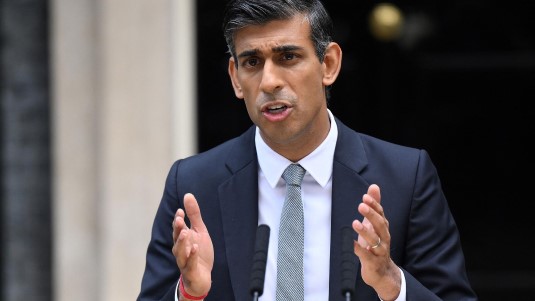
A trip down memory lane. Politics has been a traumatic experience and especially so for our establishments. In 2014 the UK state sailed close to the wind of breaking up. In 2015, the official party of liberalism imploded and socialism, having been asleep as a mass force since the Poll Tax rebellion, surged. In 2016 the double disasters of Brexit and Trump struck. 2017 saw the impossible and Labour surge in votes and seats when so-called professional opinion had written it off. 2018 and 2019 were endless engagements in the Brexit wars, with the Tories emerging triumphant at the end. And just as we were hoping for a respite in 2020, Covid hit and the purview of the state expanded massively to keep the economy and people's livelihoods going. This tumultuous period, which we haven't left yet, were and are characterised by big ideas and high stakes. In Scotland the SNP and in England and Wales Corbynism showed political alternatives were possible, and the Tories adapted to the mood. Outside Number 10, Theresa May talked about her one nation Toryism. And when Johnson won his Brexit election, his levelling up wheeze was the logical heir to what went before - with Dominic Cummings brought in to drive an authoritarian modernisation of the state.
This is not natural territory for modern Tories. For the Margaret Thatcher and John Major governments, their objective was putting socialism in a box and keeping the lid closed. Their party had not adapted itself to a popular Labour agenda since Winston Churchill signed them up to the post-war compromise in the late 1940s. Markets, privatisation, and law and order was all Tory governments could and should offer. Jeremy Corbyn's two leadership elections and the unexpected (and unwelcome) 2017 result tore a hole in this reality. It could not be ignored and had to be headed off. Arguably, the peak of Corbyn's impact on the Tories was felt after Johnson had administered the electoral coup de grace when they unceremoniously and without credit lifted the left's programme for mitigating Covid. Seeing a Tory government abolish homelessness, increase social security above inflation, and paying people to stay at home wasn't on anyone's 2020 bingo card. It definitely wasn't on Sunak's, and Johnson - despite being chill about state intervention - was very uncomfortable with this level of support. As soon as they felt they could get away with it, return to work messages were pushed out, the formal end of the Job Guarantee Scheme announced, the homeless were put back on the streets, benefits were cut back and the sanctions regime returned. The emergency could not be allowed to undermine the economic compulsion to work.
This is where the agreement between Johnson and Sunak ended. As noted here many times, the levelling programme such as it was got watered down repeatedly, becoming little more than pork barrelling at best and vapour at worse. And at the heart of the resistance to Johnson, those responsible for this incoherence, was Sunak and the Treasury. How they justified their opposition is largely immaterial. The consequence was a concerted Tory effort at reducing the capacity of the state just as Johnson, Michael Gove and before his departure, Cummings, were repairing and remodelling it. The outcome has been the ongoing decrepitude of the public realm and the ability of the state to do things. Especially simple things, like tax collecting, ordering a passport, and expecting an ambulance to turn up were significantly eroded while Johnson got on his modernisation shtick.
This had political effects too. It's quite simple. If the state can't deliver basic functions, then no one is going to place demands on it. What you might call nice things but are routine in equivalent countries, like cheap but good quality public transport and decent state pensions, can never be delivered because the state can't be trusted to do anything. If this becomes the common sense, even the mildly social democratic gruel offered by Keir Starmer is a banquet government can neither afford nor organise, and is fantastical to the point of it can never happening. Again, whether Sunak thinks of it likes this or clings to dreams of a small state, the effect is the same. A closure of political space and the attempted founding a new status quo on state incompetence.
As it happens, Truss was fully signed up to this view as well. Except her mistake was to go all in, believing public opinion was behind her own prejudices against the state (which, by complete coincidence, were shared by the hedge funds she was closely aligned to). Unfortunately for Truss, she forgot that crashing the economy upset just about every other section of Tory party support. When a Conservative leader becomes dysfunctional for almost the entirety of British capital, as happened in this case, their political life is not destined to be a long one. For his part, while Sunak is politically clumsy and prone to mistakes, on this he has been consistent and patient. He chipped away at the furlough scheme to which he owes any positive regard he has left, and subsequently only offering support - as per his earlier energy price freeze - when it was absolutely politically necessary to do something. Truss didn't want the state to offer anything, and was completely open about it. Sunak wants to be in the same position, but it is something to be achieved more gradually and with a bit more craft.
Which brings us up to date. In his Times interview, the Prime Minister alluded to some limited help for mortgage holders caught in the backwash from Trussonomics. But by being "honest" about how the state is suffering a budgetary shortfall, Sunak and Jeremy Hunt are looking at cutting the public sector more devaluing benefits and the state pension under the guise of necessity and hoping enough will swallow it as per the Tory messaging before and after the 2010 election. But none of this is regretful, done with a heavy heart or, heaven forfend, is a tough choice. Shutting down the capacity of the state undermines the faith in politics to do good, useful things. If that is eroded, Labour are likely to cleave to this "common sense" and keep to the new rules of the game. Sunak isn't likely to lead the Tories to victory, but if his opponents' room for manoeuvre can be circumscribed in advance he will, as far as the Tories' ruling class support is concerned, have rendered them a useful service.
For one, Sunak is a known quantity. He's not as popular as he was, but for most he's remembered as the Chancellor who kept millions afloat as the economy shut down in the first wave of Covid. Never mind there were significant gaps and that the scheme was first touted by, horror of horrors, Jeremy Corbyn, he's the one who fronted it. Second, he was spared much of the sleaze from Boris Johnson's premiership. His role in the Party Gate saga was, as generally accepted by the press, a genuine mistake of wrong place at the wrong time and not one of egregious, reckless, and wilful rule breaking. His other difficulties, which include his holding a Green Card while a member of the government, his significant other's non dom tax status, and the initial paltry offering of energy bill support haven't attracted visceral loathing. And lastly, his political mistakes - the ridiculous and ruinous Eat Out to Help Out scheme, and his bringing back Suella Braverman haven't harmed his personal standing. Yet.
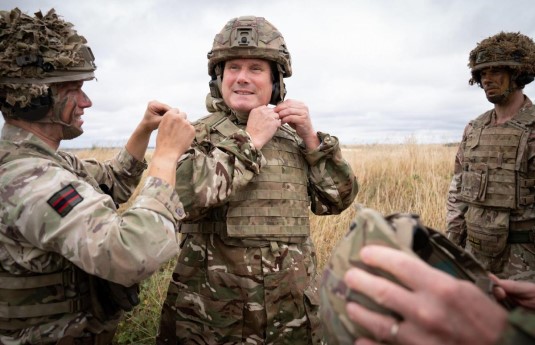
And Starmer? One thing his purge of the left, refusal to make the case for anything unless the public are already onside, and attempts to outflank the Tories from the right on policing, immigration, national security, etc. has accomplished is political distance from the Corbyn years. Unless you're gullible enough to buy into desperate Tory rhetoric, most people accept that Starmer is Corbyn's sequential successor. Nothing more. This is an advantage when it comes to being the repository of anti-Tory anger, but means the ridiculous poll leads are a reaction to what's happened and not enthusiasm for the Labour leader.
Does this matter when the polls are this wide? It does. Common sense and history suggests no governing party comes back from these kinds of deficits. But that's not entirely true. The early Thatcher years saw strong Labour leads under Michael Foot, including a couple of polls with a 30-point margin. But what did for him was not the "longest suicide note in history" nor the party's factional divisions, nor the formation of the SDP. It was that General Galtieri rode to Thatcher's rescue by invading the Falklands and kicking off an orgy of British patriotism. We know what happened next. It's a cautionary tale of events dear boy, events. However, 2022 is not 1982, and it's unlikely any singular event could pull huge numbers behind the Tories again as we saw a a couple of years ago. The rot has gone too deep, and the long-term decline has begun its inexorable grind.
For his part, Starmer and the shadow cabinet avoided looking smug as pollster after pollster put Labour at 50%+, and he is apparently in agreement with the left and everyone else that he's benefiting from not being the Tories. It's a big lead, but a soft lead. The question is what's he going to do about it. Perhaps use the occasion to lead public opinion, rather than tailing it? No. For the last month Labour's show pieces have been a playing down of expectations - an echo of the 'two Eds are better than one' austerity lite of the Miliband years, and ramping up the authoritarianism. Just Stop Oil protesters are the greatest threat to medical emergencies, not the lack of ambulance crews and overfull A&Es. Despite admitting to his allies that Labour is merely a default anti-Tory option, he's not taken advantage of the crisis moment where millions are receptive to alternative political messages. And now Sunak is the new kid on the block, the chance to consolidate Labour's vote has been lost. With the numbers as they are, it might not matter, but foolish is the political strategy that leaves so much to chance.
Frequently on the left, the equivalence between Starmer and Tony Blair is made. An understandable one, but mistaken all the same. This is because while Blair made sure Labour's promises didn't frighten the horses and, more importantly, the editorial offices of the Tory press, he also understood the importance of cultivating a positive case for New Labour. This was largely rhetorical and based on vague senses of change and hope - something adopted from the Clintons, and then recycled by Obama. The cultural zeitgeist played its part too. Starmer does not have this, nor has tried cultivating anything like it. To seal the deal, to capture anything like Blair's genuine popularity, he's going to have to show leadership. And that can only only come if he starts making the political weather and does it in such a way that says Labour has something worthwhile and positive to offer.
Image Credit
In the latest Politics Theory Other, Narges Bajoghili spoke to Alex about the eruption of protests in Iran and how such a huge movement seemingly erupted from nowhere. The discussion touches on the regime's response, and how the left in the West should respond to those who opportunistically seize on women's rights for their own Islamophobic purposes.
Give it a listen!
1. The Pointlessness of Plotting
2. Left Wing Ruthlessness
3. On Tory Pearl Clutching
4. Reinventing Toryism
5. Zombie Government
What a month. Doing the business in October was my analysis of the likely aftermath facing any successor of Liz Truss. No matter what the plotting, the divisions in the Tory party weren't about to go anywhere. In a rare (these days) post on the Labour Party, we had a butchers at Sam Tarry's deselection and argued that what the left counts as ruthlessness has to be different from the right's adminstrative shenanigans, otherwise it'll be self-defeating. Third up, we took apart a favoured rhetorical ruse the Tories often employ to make themselves look like the victims, and the fourth post was a gaze into the far future: are there signs among the current crisis suggestive of a strategy to overcome their long-term decline? And bringing up the rear is something of what is now a period piece: the paralysis of government under the about-to-be-toppled Liz Truss.
What's serving in the second chance saloon? Here's a couple. One on the current commentariat crusade against members having a say on who their party leaders should be. And then we have another media vendetta against Suella Braverman. Why have the press got it in for her?
Coming up this month will be some Labour Party stuff I've been saving up, a long gestating piece on Brexit, and after much promising my review of Mike Phipps's Don't Stop Thinking About Tomorrow. If you haven't already, don't forget to follow the free weekly newsletter, and if you like what I do (and you're not skint), you can help support the blog too! Following me on Twitter and Facebook are cost-free ways of showing your backing for this corner of the internet.
Image Credit
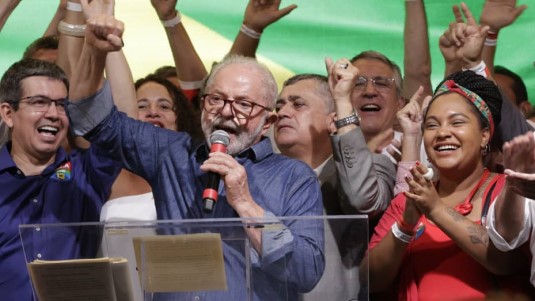
Since Bolsonaro came to office, he scrapped the anti-corruption unit behind Operation Car Wash. This revealed the looting of billions of dollars from public coffers by officials at all levels of the state, with a clustering of activity around the Brazilian state oil giant, Petrobras. Bolsonaro said the agency was no longer needed because his state was "free of corruption". He also doled out billions to Congress like a sweet bowl to trick-or-treat'ers to buy allegiances, and just like this country Covid procurement was a means of funnelling more cash into the bulging pockets of Bolsonaro supporters. Corruption in state contracts became routinised to the point of being a cost of doing business. And most appalling of all was the criminal negligence with which Bolsonaro handled the pandemic, with things getting so bad that the police accused him of spreading disinformation. He systematically undermined coordination between national, regional, and local state responses, attacked official social media campaigns, and peddled quackery as solutions to the Covid crisis. It was no accident it disproportionately hit working class people and racialised minorities - those most unlikely to support his grotesque government.
Bolsonaro would not have won office without the backing of key layers of the Brazilian bourgeoisie. At the outset, he was very clear about whose interests his administration would be serving and, of all the guff he promised his gullible mass voter base, this was one pledge he faithfully delivered. Inequality, already extreme by Latin American standards, widened under Bolsonaro's watch. It's so bad that even he was forced to act, with a 50% bump in welfare payments conveniently landing just prior to the election. This was after cutting spending on social security for the previous 18 months. He also raised the retirement age, and in another quid pro quo for his wealthy backers, set about attacking the labour movement.
His defeat at the hands of Lula and the Workers' Party is a stunning achievement in the face of Bolsonaro's efforts at undermining confidence in the election process, police interference with voting in PT strongholds, and a refusal by the electoral court's top judge to extend voting following reports of widespread voter suppression. All of the incumbent's advantages couldn't save him. And, much to Bolsonaro's chagrin, his allies in Congress and in industry have mostly spoken about the need to respect the result. No Capitol-style insurrection is to be tolerated, a point underlined by Joe Biden in his communique quickly recognising Lula's victory - a signal to the coup-minded that they don't have Uncle Sam's permission.
Despite striking a mighty blow for the left, the reason why many centrists are happy about Lula's victory - his popular frontist strategy - could easily become the incoming administration's Achilles Heel. There's nothing wrong with dragging bourgeois layers in one's political train if front and centre is a programme for empowering our class and elevating our movement. In such circumstances, they've accepted your terms. But it's quite another to tack right and effectively give them a veto over the politics. Lula having right winger Geraldo Alckmin, the former governor of Sao Paulo and Lula's presidential opponent in 2006, as his running mate typifies this. Unveiling the alliance at the beginning of the month, the rhetoric on abortion rights and police corruption/violence was significantly toned down. Significant stress has been placed on Bolsonaro's attacks on institutional legitimacy, with Lula co-opting arguments about business confidence and the need to calm the markets. And riffing off this, several trade unions have designed a corporatist plan similar to post-war West European tripartism - a recipe, one might argue, for disciplining rather than empowering labour.
Also worrying is the surge in Bolsonaro's support over the course of the campaign. In September, Lula routinely enjoyed double digit leads. Which one might expect when his opponent is a disaster zone. Yet despite the record, and the incredible scandals - such as paedophilia allegations against Bolsonaro, which were sparked by his own comments, the margin of victory was far narrower than many were forecasting in the Summer. The unpalatable truth is there was something about Bolsonaro that appealed beyond the core constituencies of fascists and right wing populists traditionally enjoy. Obviously, Lula must show no quarter in clearing out Bolsonaro's people from the state, but the more difficult task is fashioning a programme that brings millions more into the PT camp without watering down existing commitments, nor making the working class pay for cleaning up the damage of the Bolsonaro years. One that is easier said than done, but has to be accomplished if Lula wants to be in power, not merely in office.
Image Credit
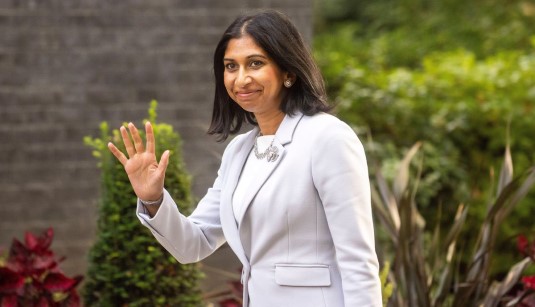
First is the obvious dysfunctionality of Braverman re: the rest of the Tories. As far as their press are concerned, there's still plenty to be scared about where Labour are concerned. Keir Starmer has gone out of his way to court the press, and they have been mostly nice in return. But there are things that scare them, such as the day one commitment to trade union rights, an apparently serious pledge to decarbonise the economy, and the fact they won't be able to lean on Labour ministers in the same way they can the Tories. If keeping Labour out is the aim, Braverman is a persistent pain. It's not just the incompetence, it's the politics. The power of anti-immigration politics is much weaker than it was during the Brexit referendum. Braverman can help consolidate what's left of the Tory base, but it's a barrier to wider support as the electorate becomes more increasingly socially liberal.
What's at stake is more serious than simply winning an election. Liz Truss recklessly destroyed the teetering reputation the Tories had on economic matters. This comes after Boris Johnson's behaviour threatened a crisis of legitimacy, which occasioned the turning of much of the Tory press. Braverman's security breaches threaten to make Sunak's the third government on the trot to stoke a major crisis of state. The problem is if the security apparatus and the police can't trust the Home Secretary with confidential matters, that's a major problem for a reliable elite prop for the Conservative Party. This creates problems from an operational point of view, and makes it much harder for the Tories to rebuild the alliance it needs at the state functionary level if it's to recover from the damage caused by Sunak's predecessors. It's doubtful many in the press have thought this through, but do they need to when their instincts and vibes nudge them in this direction?
And there's the power of the press itself. We've seen this recently expressed in the hack attack on the Tory party's very limited internal democracy. The papers are a waning force in the land, but are determined to keep hold of their chief-making and agenda-setting influence for as long as they can. Power without responsibility, as the famous media studies book put it. By kicking up a fuss about Braverman and delivering pain unto Sunak's government, they're attempting to reassert themselves. Johnson flattered the press when he wanted something, but otherwise ignored them. Truss refused to accede to their wisdom as well, and so Sunak's Braverman problem is the means by which he learns that he has to pay them heed. Or they will make his life difficult.
Given the pressure on Sunak, surely Braverman won't last much longer. Having dominated the agenda of the government's first few days, she has got to be on course for the shortest serving Home Secretary ever, regaining the record set by Grant Shapps's six day stint before he took it from her two short weeks ago. Something to put on the politics CV, I suppose. But for Sunak, there's a simple choice. He can cling on to her as she gets shredded by more scandal until she goes, or he caves to the press - but opens himself up for future pressure. It's not an enviable position to be in, but Sunak's poor judgement is responsible for landing his government in this mess.
Image Credit
