Sunday, 9 July 2023

The Tory Politics of the Four-Day Week

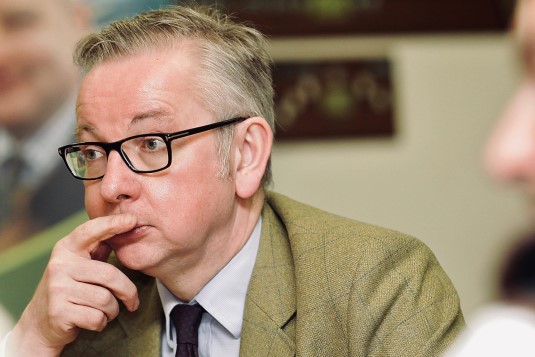
Local authorities have been under the cosh for 13 years, and before that cuts to budgets and therefore services were not uncommon. The result? Many councils are close to financial collapse, and nearly all are running services made brittle by the Tories' austerity agenda. With another challenging funding round in the offing, what do you suppose Michael Gove, in his ministerial Levelling Up guise, was noted for during his speech at last week's Local Government Association conference? More money? Answers to the terrible restrictions his government have imposed on councils? No. It was his attack on the four-day working week being trialled by South Cambridgeshire District Council.

In a 61-firm pilot of the four-day week by Autonomy, they found 39% of employees of the companies who took part were less stressed, 71% felt less burnout, 40% slept better, and there was an overall improvement of physical and mental health. Where it comes to the bottom line, revenue increased by 14% on average and staff turnover declined by 57%. Of the firms who took part, 56 said they were keeping to the four-day week. Why might Gove find this successful pilot so objectionable? It's worth quoting him at length:
I’m a strong believer that a five-day working week is what so many of our other citizens are facing, and they need to work those five days in order to be able to pay their council tax and meet their other needs. A five-day working week seems to me to be what we should expect of people in public service who are having their wages paid by those council taxpayers.
Gove might have talked about the practicalities. He could even have drawn on the grumbles cluttering up many a local newspaper website about council employees "never" being in, but he went straight for the beggar-thy-neighbour argument and reached for the fetish of "the taxpayer". But why? If you want to look at these things naively, a shorter working week that results in a happier work force has several beneficial spin offs. Less time off equals more productivity. Better physical and mental health means fewer visits to the doctor's. Staff retention saves money on recruitment and associated paperwork, and allows for the development of institutional memory. Why might Gove be against something that improves a service for all concerned?

The reasoning is not hard to fathom. It comes back to class relations. While it is true the Conservative Party have historically favoured certain sectors of business over others - particularly the City of London - their propensity to short-termism and seemingly illogical policy lurches (from the standpoint of economic growth) is never far from their custodianship of class relations. They came to power in 1979 with a plan of class warfare, carried it through by defeating the labour movement in literal pitched battles, and have ever since responded with alacrity whenever the wage relation has been challenged or undermined, or appears to face such an obstacle.

Recall our recent experience with Covid. During the virtual closure of the country and the suspension of business-as-usual, the Tories resisted all calls to make direct payments to help people through the acute phase of the crisis. Support was purposely linked to employment via the job guarantee scheme, and you'll recall the lack of support - that reduced some to destitution - for whole swathes of the self-employed. Especially in sectors the the Tories don't like. Then no sooner as furlough was rolled out and other support measures announced, the government began its campaign of whittling it away. Conditionalities for social security were the first to return, and the government and their press allies kept banging the drum for a generalised return to work and relaxation of restrictions - regardless of what the data showed. What Covid demonstrated, however, was politically impressible. Despite decades of rhetoric it turned out the power of the state, even one as pared down and as dysfunctional as the British state, might be used to support people. It demonstrated a different way of doing things. This (potential) raising of expectations, such as properly funded public services and the idea lif didn't have to revolve around work had to be hammered so the status quo could be resumed after the emergency.

And so it has proven. The Tories badly mismanaged Covid, but they largely escaped its political consequences by a conscious effort of depoliticising the crisis and blaming everything since on abstractions and international crises (inflation! Ukraine!). Indeed, inflation is being used by the Tories to drive down living standards, and should be seen in the context of the potential power workers might wield in a tight labour market. Gove's refusal to countenance the four-day week is a moment in the Tories' collective effort to drive down the horizon of political possibility, to reinforce the idea there can be no other possible way of living your life than selling five days of your time (or more) per week. There is no alternative, and Gove and the Tory party are working hard to make sure it stays that way.

Saturday, 8 July 2023

Pre-Ordering The Party's Over

Even the dogs in the street know The Party's Over: The Rise and Fall of the Conservatives from Thatcher to Sunak is out at the end of August.

But did you know that pre-orders are available? Whether you did or not, the best way to secure your copy - which will no doubt turn up before publication day if my experience with Falling Down is anything to go by - is via bookshop.org, the collaborative effort of the UK's independent bookshops.

What's stopping you? Order today!

Wednesday, 5 July 2023

Tony Blair Vs the NHS

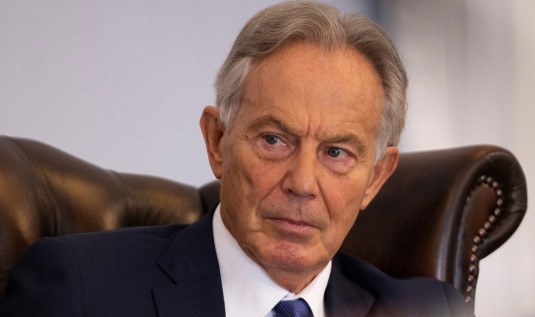
It's the 75th birthday of the NHS, so what better time for another rare intervention from Tony Blair. This morning his institute published a paper about the future of the NHS. In line with current Labour thinking that what public services need is reform, not funds (which, in turn, are informed by Tony Blair Thought of two decades ago), the report offers a number of technical and seemingly technical fixes to improve the health service. But the overall thrust is clear: bureaucratic centralisation is the chief opponent of efficient delivery, not lack of cash.

It shouldn't need saying that this corner of the internet rarely receives Blair's missives with open arms, but it would be churlish to file the report in the desktop recycling bin just because of its provenance. The report, authored by a health policy wonk and an academic, does make some good points. Yes, there does need to be an injection of capital so the NHS can fully utilise new technologies. Who would be against that? The report says this can be utilised to cut waste and introduce less labour intensive treatment. There should be local autonomy for what are termed 'integrated care systems' to treat and improve health outcomes in their areas, backed by the stability of multi-year budgets and incentives to innovate - which include keeping and reinvesting any savings made. A digitised 'Personal Health Account' - a souped-up NHS app enabling access to services and putting patients in charge of their own health data, which can be linked to secondary apps and wearable technology, would revolutionise and personalise our relationship to the NHS. Rolling health services out from GP surgeries and hospitals, which would reduce demand on those services through an expansion of provision is another floated suggestion. And making more use of personal-use genomic medicines, making sequencing available on a mass scale and integrating genetic susceptibilities it into one's personal data is another ambitious goal. If we absent social relationships for a moment, this is what a 21st century health service should look like.

But social relations aren't about to go away, and how the report frames this technologically enabled vision raises a lot of political questions. Firstly, the report says it wants to move the NHS away from a patch-them-up-and-let-them-go model of treatment to one more reflective of complex health needs. This is nothing new. In fact, the first NHS reorganisation in the mid-1970s was premised exactly on these terms. Of moving from treating disease to addressing the long-term health problems of a population that was living longer. Indeed, that is the main business of the NHS today. Therefore, the report's argument that we "must move from a health-care model set up to treat episodic sickness to one that prioritises continuously improving individual and population health" is an extension of what the NHS already does in part to the whole. A useful straw man if you want to exaggerate the case for reform though.

Then there are the rocket boosters these proposals have put under the so-called patient choice agenda. This is not an innocent idea of simply allowing patients more choice in their treatment, but was under Thatcher, Major, and Blair designed to introduce and bed down marketised relationships between different parts of the NHS. In the New Labour years, the idea was to allow patients complete choice of where they were treated. NHS organisations would compete with each other for patients, allegedly driving up standards and increasing efficiency. This was swept away by the Tories in 2012 for thoroughgoing marketisation, semi-privatisation, and outright scamming in which "any willing provider" was in with a shout of scooping up NHS money. What happened over Covid procurement and the missing billions was this writ large. The Blair Institute are proposing is something a bit more subtle. Through the use of personal health technologies, they want to bed down principles of individual responsibility for health - which can be monitored via the app. This builds on the individualist (and individuating) thrust of public health strategies in the Blair years, and one that attempts to evacuate politics from health altogether. I.e. You have the power to choose healthy outcomes informed by constantly updated metrics, and therefore what happens to you is (largely) in your hands. It's consistent with the modes of governance Blair enforced across the public sector, and one that proved (politically) effective quite recently. If you get ill, it's going to either be a case of 'pathogenic life factors' or bad luck. Never air quality, food quality, environmental despoliation, unhealthy work practices.

And then we have the private provider argument, because of course we do. There's the useless argument about "spare capacity" in private health that gets mentioned every five minutes by Wes Streeting. As an aside, Streeting often defends this saying he wants the NHS to get to the place where it can out-compete the private sector. Yeah, right. I'm sure the private health interests funding his operation do so because they want to be put out of business. The Blair Institute goes there, but they flag up more opportunities for private sector involvement. Remember the localised integrated care systems? "Freedom" of ICS chiefs would inevitably mean contracting in for-profit providers to meet targets, just as they did 20 years ago. Indeed, these organisations should "empower" patients to make "informed choices" about choosing between GPs and "secondary providers". On the dispersal of health services, the report is explicit that "high-volume, low complexity" services should routinely be hived off to "multiple providers". Again, it's all about patient choice. The patient data revolution the report envisages allows for more public private partnerships, and larger market for data add-ons to the key NHS app as well as "innovation". Undoubtedly encouraged by a generous system of state grants and inducements.

This, again, carries on where Blair left off in 2007. While there were plenty of New Labour true believers in marketised policies as drivers of best outcomes (the Tories, despite their well earned 'stupid party' monicker, are never daft enough to really believe this twaddle), the politics of this made sense because NHS outsourcing, PPPs, and Private Finance Initiatives tied - at least for a while - sections of British capital to what you might call the Blair Rich Project. By pouring state money into private pockets, this was one means by which New Labour was able to cultivate patronage and crony networks that helped ensure, for a brief window, that it was the favoured party of (most of) capital. It's entirely a matter of coincidence that ex-health ministers and certain MPs later enjoyed handsome consultancies and board positions advising private health and outsourcing giants. It didn't last, and when Labour was dumped out of office the Tories ramped up the openings through the total marketisation of the NHS. Here, the Blair Institute's programme for change is more than just about the future of the NHS. It is directly advising the incoming Labour government about how to use NHS reform to win over a section of British business, with the obvious consequence of diluting the popular pressures that will bear down on the party after such a long period of Tory rule.

Image Credit

Sunday, 2 July 2023

Making Sense of Tory "Corbynism"

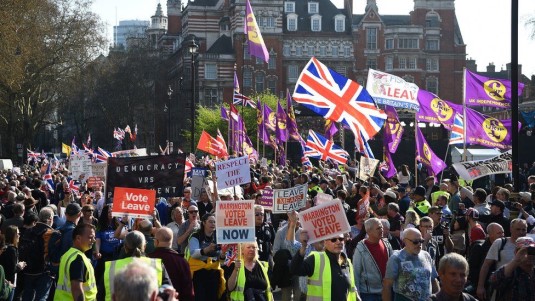
I regret to inform you that John Rentoul has written another terrible article about the Conservative Party. Telling us to "beware of Tory Corbynism", he notes the manoeuvres of Lord David Frost. Being an approved candidate, he's on the hunt for a safe seat. And when he's found it, he'll dump the peerage in the canal and make a play for the leadership of the party. Never mind that Rishi Sunak had to spend time undoing the Brexit mess he made. In the whacky world of Tory politics, the real world counts for nothing. Or so we're led to believe.

Why is Rentoul's take so bad? It's because he doesn't even attempt to get beneath the surface of what's going on, relying on lazy tropes that have long circulated among his milieu of commentators, verbally incontinent MPs, and establishment-friendly academics. He first raises the idea of a Tory bounce back. That if (when) Labour forms the new government, Keir Starmer and co. are going to have a tough first term with public finances being what they are and the economy in the toilet. There's a chance for the Tories to come back quickly if they stick with Sunak. How? Rentoul doesn't explain, because such an assertion dissolves when it's put to the analytical test. Would mortgage-holders wistfully look back to the time when the Tories stiffed them to get rid of Starmer? Or working age people in general miss the rocketing energy bills and the rampant price gouging by supermarkets? Only if the electorate lost their memory. And then there's the question of who's going to vote for them. After a term of a Starmer government, there will be fewer Tory-supporting pensioners about and the rising generation will never vote for blue in big numbers. In these conditions, a historic opportunity awaits the Liberal Democrats and the Greens.

And now for the main event. For Rentoul, the "psychology of defeat" means the Tories won't take the sensible Sunak road. Instead "recrimination and magical thinking" will prevail, because this was already evident when the membership voted in Liz Truss. Hit with the trauma of defeat, the Tories will turn inward in a right wing reflection of what happened In Labour when it elected Jeremy Corbyn. This means the party can look forward to going nowhere fast. This might and will be true, but it's apparently too much for a man who makes a handsome living from writing about politics to take the trouble to understand why this happens. Those mad head members, eh?

As argued here many times here and at length in the book, the long-term decline of the Tories manifests itself in the party's crisis of political reproduction. The coalition of propertied pensioners that are the bedrock of their coalition are not replacing themselves like-for-like precisely because of the policies the Tories have enacted to keep this constituency together. By 2017, the limits of relying on pensioners and older working age people was starting to show. Theresa May hit upon the idea of using Brexit as a glue for bringing together mass support, but this could only work if the opposition was split and Labour played ball. Corbyn did not and May lost her slender majority. Two-and-a-half years on, Boris Johnson went to the country using exactly the same strategy. And this time it worked because the opposition was disunited and riven with various flavours of overturning the referendum result. Johnson effectively maxed out the strategy. But since then, you could say the Tories have been looking for a new strategy that can save their bacon. As venal and awful Johnson was, he understood that his government had to be seen to be doing something. Hence the boosterist rhetoric, the brinkmanship with the EU, the levelling up waffle, and the selection of new scapegoats that can fill the space left by Brexit's (political) resolution. It was a coherent strategy, albeit part-derailed by Covid and finally driven off the embankment by Johnson's "colourful character".

Fast forward to last year's leadership contest and the options open to members as determined by the ever-so-wise parliamentary party. As much as I disagreed with Truss's prospectus it was not how Rentoul imagined it. I.e. Sunak's sensible centrism vs "madness". With the strategic impasse the Tories were in, Sunak offered boring technocracy - a politics of doing nothing - plus bad jokes and side dishes of racism and transphobia. Truss, minus the gags but with "interesting positioning" offered something that could get the membership excited. Her prospectus for tax cuts, and what would turn out to be Toryism at its most naked, recommended itself because plenty had swallowed 40-odd years of nonsense that this would boost economic growth. If Truss could unlock that then almost all the other problems would disappear. It was a load of rubbish and, on this occasion, Sunak's pro-Treasury critique of her plans were right. But from the standpoint of forging a way forward it made more political sense than steady-as-she-goes briefcase government. So no. Mistaken, yes. Reckless? Absolutely. But not mad.

Rentoul's detour into pop psychology further demonstrates a poor grasp of politics. Why, after an earth-shattering defeat might a party desire a return to fundamentals? He'll never ask this question and give an honest answer because that might mean a reckoning with Corbynism as it was. It's much better to maintain it was a cranky cult enraptured by purist ideology and the Magic Grandpa. The same is true with the Tories. Looking back at the period between 1997 and 2005 when the Tories were the down and outs of British politics, the accepted explanation for this was, again, madness. This is the view favoured by the country's premier authority on matters Tory, Tim Bale, and it's the line pushed in his otherwise excellent history of the Conservative Party. But, again, this explanation leaves a lot to be desired. For one, when a party suffers a severe reverse the return to basics can consolidate a base that has suffered a shock. The Tories in 1997 knew they were in for a pummelling, but not the wipe out they got. Their doubling down on euroscepticism made total sense in this context. Furthermore, many Tory politicians had convinced themselves that their stance was popular. The right wing press, which in the Tory imaginary is seen as the authentic voice of Middle England (and not the reflection of their own prejudices), echoed and fed that view back to them. And in William Hague's main electoral test prior to the 2001 election - the 1999 EU elections - the Tory vote surged and their MEPs doubled while Labour lost more than half of theirs. UKIP also broke into the political scene for the first time, returning three MEPs. From within the Tory party, not only did their embrace of euroscepticism consolidate their base, the case could be made that under certain circumstances, obsessing over Europe can win elections. Understandable, even if it was wrong.

Therefore, assuming the Tories don't win the next election, I agree with Rentoul they'll turn right. But this is because of the political sociology of their position, not them being thick or irrational. They're in for a shattering defeat. But they have their narrative of betrayal, and a mythology based on fighting a cultural war election and winning an election on that basis. If the Tories go for David Frost, or Kemi Badenoch, or even the grotesquerie of a Suella Braverman leadership, it's because of their reading of the political situation. And if this can't be understood by mega bucks politics commentators, it's high time they found themselves a new profession.

Image Credit

Saturday, 1 July 2023

And Then They Came for the Soft Left

In The Gulag Archipelago, Aleksandr Solzhenitsyn talks about Stalin's terror as a slavering beast with a life of its own. Originally directed at real and imagined opponents in the Soviet bureaucracy, it became an occasion for officials to settle beefs, or acquire a slightly nicer apartment. If that meant innocent people ending up in a camp or the basement of the Lubyanka, that's too bad. The idea of the terror building its own independent momentum and not stopping after meeting its objectives are not dissimilar to the purges that have gripped the Labour Party for the last year. Having successfully excluded so-called undesirables from selection long lists, and deselected a smattering of left wing Labour MPs, what happens to the purge now? Why, it finds new victims. This time from the soft left.

Neal Lawson wrote on Friday that he's under suspicion and could find his membership of 44 years terminated. His crime? Being in favour of progressive alliances. His argument, which is well trodden and well known, is that while the right are more or less united in the Tory party the "progressive vote" is split between Labour, the Liberal Democrats, and the Greens. In the circumstances of First Past the Post, it makes sense for these parties to have an alliance - whether open or a touch more discreet. Neal's crime was not to call for a vote against Labour. Which is a big no-no and warrants automatic expulsion. Instead, he welcomed an alliance between the Lib Dems and the Greens in Oxford as an example of the sort of understanding progressive parties should come to. Unfortunately, this is the backyard of Luke Akehurst, self-styled witch-finder general and arbiter of who passes the not-at-all politically factional "due diligence" tests for CLP shortlists. He says Neal is facing charges because he's backed an lash-up designed to unseat Labour councillors. Which is a creative interpretation of the progressive alliance argument.

This does involve some ancient history. Akehurst has long opposed Neal's organisation, Compass, because of its fondness for other parties. He's not the head honcho of Labour First for nothing. In 2011, Compass effectively decamped from Labour to admit members from anyone from any party, which made it "illegal" in the party. The organisation was also the route through which one Chuka Umunna found his way into the Commons, so perhaps Akehurst's antipathy wasn't entirely unwarranted.

But the significance of their move against a well known soft left figure hasn't been lost on anyone. On Twitter, Zoe Williams said that she felt betrayed by the Labour Party and Keir Starmer for this authoritarian step, especially after the liberal and pluralist noises he made during the leadership campaign. Earlier this month, John Harris twigged that bad things were happening and waded into print about the stitching and the authoritarianism. And, perhaps surprisingly, adding his voice to the rising criticism Jon Cruddas - who only briefly and somewhat tangentially associated with the left - wrote for this Sunday's Observer, saying "Labour is now kicking out people like Neal for upholding the democratic, pluralist traditions that created the party and lie deep within the its history. It is a disgrace." And he hangs the blame for the control-freakery on the "stale undemocratic faction who now runs the party". In other words, our friend Luke Akehurst and, by extension, Starmer's backroom boy Morgan McSweeney and the Dear Leader himself.

This situation was bound to happen. At the beginning of his leadership campaign, Starmer's "big tent" scooped up the soft left and a good chunk of the Corbynite membership, including luminaries like jolly old Paul Mason, Momentum's Laura Parker, and left-friendly wonk Tom Kibasi. But there at the heart of the operation was Labour First's Matt Pound and significant private donations Starmer refused to unveil until after the contest. While the MPs most associated with Labour First demonstrated their lack of nous by backing Jess Phillips and then Lisa Nandy, the organisers who do the hard yards in the party knew who their best bet was. And that should have been all anyone on the left needed to know. When he entered the Leader's Office, it was clear Starmer had no idea about how to run a voluntary party or, for that matter, formulate a political strategy. In came the consultants to advise on policy and structure, but it soon became clear that organising on behalf of the leadership could not be contracted out. That responsibility was devolved to Labour First, and they wasted no time making the party safe for Wes Streeting's future leadership candidature. A lesson for the left that if you don't make your revolution permanent, the counterrevolution won't be so reticent.

Five Most Popular Posts in June

Another month has flashed by in the blink of an eye. There were only 20 posts to shout about this month, but they were all killer. Even the music video. So here's what the internet travelling public viewed the most in June.

1. Solidarity with Jamie Driscoll
2. Boris Johnson's Final Farewell
3. UFO Disinformation as Social Control
4. Hegel's Political Uses
5. Why do Millennials Hate the Tories?

Labour's exclusion of the sitting mayor for the North East, Jamie Driscoll, from the shortlist for his job led the pack. It was and is a straightforward case of skulduggery, and the Labour hierarchy can get away with it because there are no means of a come back. The unions have either acquiesced, and no doubt look forward to the boom time in membership if Keir Starmer sticks to his pledge about workers' rights (and who knows if he will), or are concentrating their fire on industrial disputes. If Brother Driscoll decides to go independent he might well win, but even then the Labour machine won't learn its lesson. After all, this is the outfit that lost Scotland and that trauma did not force the slightest bit of self-reflection. In second place it was news of Boris Johnson's final departure from Westminster. He might not be done with politics, but so far his two Mail columns have steered clear of matters contentious. Then a bit of a weird one. The "disclosure" from a US intelligence officer that they have alien craft in their possession was interesting. No evidence, naturally. And so I took a scalpel to the social consequences of UFO/government cover up conspiranoia. Many thanks to James Meadway for giving it a boost on Novara too. Then came my lengthy piece on Hegel, which describes his basic positions, his politics, and how we might find him useful today for thinking through the centrist/state bureaucrat mindset. And lastly, I had a look at a friendly (to the Tories) report on why 25-40 year olds hate them so much. Their analysis didn't produce any insights, and if anything soft soaped the depths of antipathy toward the government among that generation. In other words, another confirmation of the long-term decline of the Tories.

In the second chance saloon in June is Triangulating Trouble, a look at the medium to long-term consequences of Starmer's mix of pledge-breaking, conservative-posturing, and expulsions of leftists.

And that's our lot for the month. July will bring with it more politics and more events, and more comment from me to accompany it. As ever, If you haven't already don't forget to follow the free weekly newsletter, and if you like what I do (and you're not skint), you can help support the blog. Following me on Twitter and Facebook are cost-free ways of showing your backing for this corner of the internet.

Friday, 30 June 2023

Quarter Two By-Election Results 2023

This quarter 156,612 votes were cast in 71 local authority contests. All percentages are rounded to the nearest single decimal place. 20 council seats changed hands. For comparison you can view Quarter one's results here.

  Party
Number of Candidates
Total Vote
%
+/- 
Q1
+/- Q2 2022
Average
+/-
Seats
Conservative
         71
47,437
   30.9%
 +4.7
    +1.4
   668
    -7
Labour
         67
50,306
   32.1%
 +3.2
    -5.4
   751
     0
LibDem
         60
32,391
   20.7%
 +2.4
    +2.7
   540
   +7
Green
         44
14,077
    9.0%
 +0.3
    +1.3
   320
   +4
SNP*
          1
  740
    0.5%
  -4.4
    +0.4
   740
    -1
PC**
          1
   34
    0.0%
  -1.6
     -0.3
    34
     0
Ind***
         17
 7,899
    5.0%
  -4.3
     -1.6
   465
   +1
Other****
         26
 3,728
    2.4%
  +0.2
    +2.0
   143
   +2


* There was one by-election in Scotland
** There was one by-election in Wales
*** There were four Independent clashes
**** Others consisted of Alba (103), British Unionist (108), Christian People's Alliance (16), Communist Party of Britain (150), Freedom Alliance (7), Heritage (54), Liberal Party (10), Our West Lancashire (704, 674, 664), Reform (75, 87, 118, 121, 130, 264, 169), Scottish Family Party (28), TUSC (20, 23, 25, 35, 15), UKIP (114, 5)

The Tories continue their inexorable slide this quarter, even if their vote count modestly recovered. Again, it's the same story as the monthly tallies. Labour do well but are unable to build a commanding lead over the government because there are alternatives and they're doing quite well at the moment. Looking at the numbers, the case for a progressive alliance almost makes itself. Especially as the Liberal Democrats and Greens improved on their already good results re: the previous quarter, and came out of the period with more local council by-election victories than Labour. Yes, yes, it doesn't really matter because the glittering prize is Westminster. But what these results show is while Keir Starmer hunts through the Labour Party pledge book for policies to dump, the case can be made that he's weakening the foundations of his party. You might say it's the Tories who are propping up his poll leads. Without them? Well, without them we'll see. But if these elections are any indication, the Lib Dems and Greens are well poised to capitalise on any Labour difficulties when they're in Number 10.

Image Credit

Local Council By-Elections June 2023

This month saw an improbable 55,555 votes cast in 20 local authority contests. All percentages are rounded to the nearest single decimal place. Nine council seats changed hands. Please note, because boundary changes effectively created six new seats the gain/loss totals won't tally. For comparison with May's results, see here.

Party
Number of Candidates
Total Vote
%
+/- 
May
+/- Jun 22
Avge/
Contest
+/-
Seats
Conservative
          33
17,619
    31.7%
 +2.1
     +6.4
   534
    -2
Labour
          27
17,336
    31.2%
  -0.6
     +1.3
   642
   +2
Lib Dem
          25
12,104
    21.8%
 +1.4
      -2.5
   484
   +3
Green
          19
 4,048
     7.3%
  -3.0
     +0.5
   213
   +1
SNP*
           1
  740
     1.3%
 +1.3
     +1.1
   740
    -1
PC**
           0


     0
Ind***
           3
  349
     0.6%
  -7.2
    -10.7
   116
   +1
Other****
          21
 3,359
     6.0%
 +5.6
    +5.2
   160
   +2

* There was one by-election in Scotland
** There were no by-elections in Wales
*** There were no independent clashes
**** Others this month consisted of Alba (103), British Unionist (108), Christian People's Alliance (16), Freedom Alliance (7), Heritage (54), Our West Lancashire (704, 674, 664), Reform (87, 118, 121, 130, 264, 169), Scottish Family Party (28), TUSC (23, 25, 35, 15), UKIP (5)

Quite a bit of volatility this month. The Tories lose out overall, despite emphatic wins in Stockton-on-Tees, while virtually everyone else is sitting pretty. But all the victorious parties got a knock. The Greens taking one from the Liberal Democrats, snatching another one from Labour, but conceding one to an independent. Speaking of the indies, where the hell were they in June? The 'Others' was where the action was at, with 10 different "parties" (a term one should use advisedly) entering the electoral fray. but, in vote terms, the Tories came out on top by a whisker. But only because they stood almost everywhere they could.

If there is a pattern, it seems anti-Toryism is the order of the day. Well, that seems to be the case if we're following the seat losses but the vote is holding up. Yes, caveats abound with how second order contests are more likely to turn out Tory support than other parties, but to still be winning in popular vote terms at this stage? That might be less a Tory effect and more a case of Lib Dem and Green strength, who continue to do well. Their performances here probably won't mean much when the general election comes round, but one term of a Keir Starmer government might see them put muscle on these by-election bones.

1st June
Camden, South Hampstead, Lab hold

8th June
Wiltshire, Tisbury, LDem hold

13th June
St Albans, St Peters, Grn gain from LDem

15th June
North Lanarkshire, Bellshill, Lab gain from SNP
Plymouth, Efford & Lipson, Lab hold
South Derbyshire, Hilton, LDem gain from Con x2, Con hold
Sunderland, Hendon, Lab hold
Surrey Heath, Frimley Green, LDem gain from Con, LDem hold x2
West Devon, Burrator, LDem gain from Con, LDem hold

22nd June
Bath & North East Somerset, Paulton, Lab hold x2
Southampton, Coxford, Lab gain from Con, Lab hold x2
Stockton-on-Tees, Hartburn, Con gain x3 (new boundaries)
West Devon, Tavistock North, Ind gain from Grn
West Lancashire, Rural South, Oth gain x3 (new boundaries)
Wyre, Warren, Lab gain from Oth, Lab hold

29th June
Bedford, Wyboston, Con hold
Bournemouth, Christchurch & Poole, East Cliff & Springbourne, Grn gain from Lab
Dorset, Sherborne West, LDem hold
Haringey, Hermitage & Gardens, Lab hold
Southwark, Newington, Lab hold

Image Credit