Saturday, 12 March 2022

Note on Everyday Digital Internationalism

Are younger generations more pacifistic than older people? Commonsense, as well as evidence would say yes. As discussed plenty of times on this blog, the turn away from social and political conservatism by young people isn't a consequence of "being young" and full of idealism. It's part caused by right wingers of all stripes repeatedly pushing policies that harm their interests, a culture where struggles against inequalities and prejudice have made enormous advances in the last 50 years, and the decades-long reorientation of work around immaterial labour. These processes were underway before the internet became an party of everyday life, but have in significant ways reinforced them.

This short guest post from @catherinebuca sees her teasing at one thread about how online communities among the young strengthens networked social liberalism, and why it irks authoritarians and would-be warlords everywhere.


Been thinking a bit around this lately. Younger generations have far less appetite for war in part because international interconnectedness via social media platforms buffers against the Othering that is required to manufacture mass consent for conflict.

Last month (before the invasion) a gaming community I'm part of was up in arms when EA weren't going to release a piece of downloadable content in Russia because of Putin's stance on LGBTQI+ issues. Russian fans set out in-depth and convincing reasons why this wouldn't hurt the Russian state and instead hurt only ordinary people who, in the case of this fan base, are largely LGBTQI+ supportive. It inspired an outpouring of solidarity amongst players around the world, and as a result Electronic Arts reversed their stance and went ahead with the release.

Platforms and online communities help erase - or at least make less solid - national boundaries and feelings of difference. When people share interests, it's those interests that inspire a sense of belonging and familiarity, and which country or culture someone is from is often unimportant to the point of it often not being known by participants in these spaces.

Severing those links makes sense if you're trying to reinforce nationalistic boundaries and set people apart from one another, creating antagonisms where they had previously been ameliorated.

Banning things like Instagram is done for the usual obvious reasons: economically punishing international (often American) companies, stopping information getting out/in, etc. But it also threatens that no-border solidarity inherent to online communities.

The problem for Putin - and other leaders - is that it's too late. Young people's social worlds are organised through nationless online engagement, where other groupings and identifications are more important. The idea of national loyalty is muddied and confused and no longer adheres to the more stable, traditional pre-social media identification. People still rally around their nationalities, and there's a lot of silly 'my food is better, your pronunciations are daft' stuff, but when it comes to sincere expressions of belonging, our shared interests trump what we see as artificial and arbitrary national divisions that are for the benefit of power.

That's a long-winded way of saying part of why I think this war feels different is because online social interconnectedness is a far greater force than it has been in previous inter-state conflicts, and it's going to be a problem for leaders from now on. We can also (and should try to) expand this to (partly) understand why this same effect isn't apparent to the same extent for Yemenis or others suffering under constant bombardment.

Not all populations have the same access to social platforms, not all have become part of the wider borderless, nationless online social commons. And because of this they are not as co-present. Younger people are still more solidaristic perhaps than they otherwise would have been though, because this has effects beyond the individuals they interact with.

These are rough and indistinct thoughts on the subject. It's basically just to say while there are lots of awful things about the platforms, more broadly they've complicated (in a good way) national identifications, which is having (and will continue to have) a significant impact on the ways consent for war and other types of conflict are manufactured, and ultimately support for an unrestricted internet should be one of our primary concerns.

Obviously, blind support for the companies that own these platforms isn't what we should be championing. Control of these platforms should be in the hands of the users (as per democratic ownership or whatever method you prefer).

Friday, 11 March 2022

Thompson Twins - Doctor! Doctor!

Here's a musical place holder for your Friday evening's entertainment.

Wednesday, 9 March 2022

The Politics of Refugee Visa Refusal

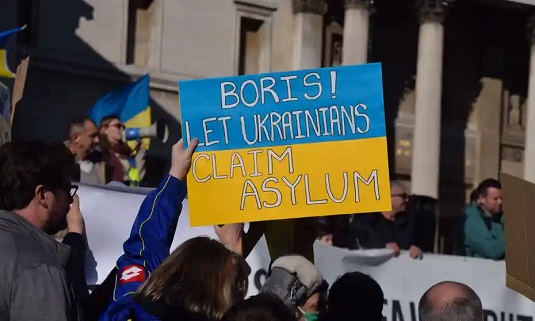
When the UK left the European Union, rightwingers hoped that Brexit would allow us to do things differently. Looking at Vladimir Putin's war and the unfolding refugee crisis, the government's refusal to suspend visas and not allow Ukrainians to travel here - the only European nation to do so - wasn't likely what most of them had in mind. It's a situation that puts the Tories badly out of step with public opinion. 75% of those polled by YouGov supported a visa waiver. Break that down by party loyalties and we find 84% of Labour voters vs 69% of Conservatives in favour. There is no electoral advantage to be had by digging their heels in and resisting calls for opening the borders, which begs the question why.

For Johnson, as with all things, party management comes first. With PartyGate in abeyance thanks to the Met's intervention, it is going to come back regardless of what happens in Ukraine and he needs as many backbenchers on side if he's to survive the fallout. And those Tory MPs don't share the public's enthusiasm for a humanitarian gesture. The reliably awful Daniel Kawcsynski, for instance, argues offering refugees sanctuary "is immoral". They should stay in countries near to Ukraine so they can readily travel back once the war is over. This view is by no means a minority one, and echoes a line we've heard many time from front benchers: Britain meets its obligations by giving generously to countries housing large refugee populations. Johnson isn't about to challenge a commonsense he himself supports if it means putting MPs' noses out of joint, so he won't.

It's not just about keeping the parliamentary party sweet. As far as the Tories are concerned, Ukrainians are the wrong type of refugee. A lot has been made recently of the unsubtle racism of the press and establishment about how war "isn't supposed to happen" in Europe, but we've seen the Tories willing to take in something like 106,000 people who've left Hong Kong. Compare this with their lack of enthusiasm to help Afghans fleeing the Taliban and we get nearer to the nub of the issue. It's about class. In the Tory imaginary, the Hong Kong'ers are entrepreneurial and more likely to have assets to their name. They speak fluent English and, politically, those making the journey are going to be right wing and anti-communist. A small but useful future constituency for the party that has offered them refuge. Ukrainians, like Afghans, do not. Most are women, working class, and likely to be travelling with dependents. Immigration minister Kevin Foster's suggestion that Ukrainians should apply to be fruit pickers betrayed the class frame the Tories are applying to this issue. The "strains" they will place on underfunded public services is not the reason, what is is a perceived vulnerability on their right flank. Farage is on his anti-green grift for the moment, but could quickly pivot to refugees if he thinks the political profits are there.

Does that explain everything? Again, no. While the Tories have tied themselves in knots over it, Labour hasn't covered itself in glory either. Yvette Cooper has been on the news, doing her overrated best to turn the visa issue into a matter of process. The problem, Cooper says, isn't the Tory refusal to waive visas, but that the visa office in Brussels should extend its opening hours. It's almost as if the shadow home secretary has form for this sort of thing. Again, looking at the polling and taking those lectures about being on the side of the public at face value, why have Labour joined with the Tories in an effort to ignore the popular mood?

It's a matter of what Johnson and Keir Starmer share: an authoritarian politics. Each has a different base. For Johnson, authoritarianism is the necessary flipside of his populism and is entirely crucial to the Tory project generally. For Starmer, as a manager accustomed to managerial habits the Fabian tradition with its emphasis on elite-led policy making and the Labour right's interminable preoccupation with protecting its factional advantages resolves itself in a politics concerned with rebuilding reverence in state institutions and, above all, the leader. Both leaderships have an interest in refusing public demands, simply because a concession on Ukrainian refugees green lights the idea both can be shifted by popular opinion. Consider PartyGate again, for example. Tory MPs haven't no-confidenced the Prime Minister (yet) because doing so under mass pressure sets a dangerous precedent. Starmer resisted hitching himself to the bandwagon for as long as he could get away with, subtly suggesting he would expect a quid pro quo from Tories alert to this sort of thing should he be subject to similar strain.

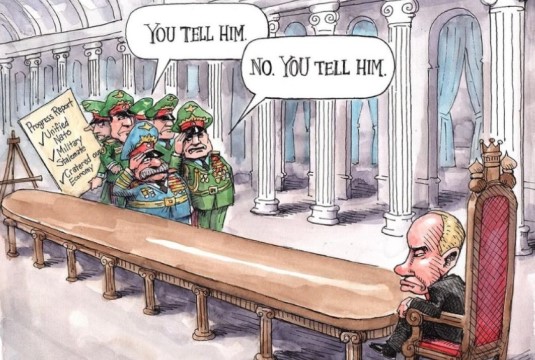
This is brittle politics. It shows how shallow both their projects are because they know they cannot be defended on their merits. Instead they have to affect a distance from the public mood every bit as wide as Putin's ludicrous table, even if accepting more refugees results in short term popularity. Opinion is fickle and can turn, so keeping to the status quo suits them fine: politics is narrowed to the point where both can police and define the terms of discourse, something the Tories normally rely on the press to do while Starmer has actively pursued this through his own party. It seems strange that denying public opinion is a sign of weakness, but what it shows is how, underneath all the blustering and posturing, mainstream politics in this country fears for itself.

Image Credit

Tuesday, 8 March 2022

Lives on the Left: Jennie Lee

This International Women's Day, we can do worse than celebrate the oft-overlooked work of women in the labour movement. To mark the occasion here's the first of a two-part episode on Jennie Lee from the excellent (and seemingly defunct) history podcast, Lives on the Left.

Monday, 7 March 2022

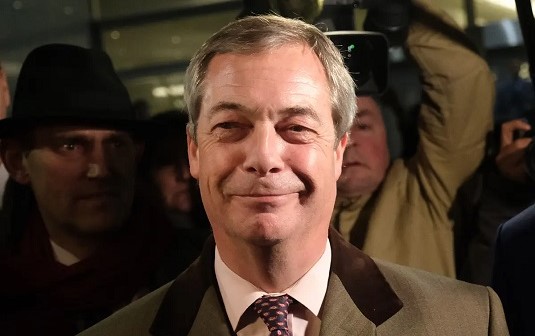
Nigel Farage's Anti-Green Grift

What happens to a politican when their objective has been completely, successfully achieved? Nigel Farage is a useful case study. Having moved from the margins to the mainstream, at least where levels of coverage and influence are concerned, his party made Brexit a reality. And thanks to the refusal of continuity remain to accept the result, Farage's career enjoyed four more years in the spotlight campaigning to get Brexit done and helping ensure the Tories got a handsome majority. And since? Shilling for Trump, nodding toward electoral reform with the Reform UK branding for his Brexit Party adjunct and ... getting sidelined thanks to Tory backbenchers and their mask obsessions and ostentatiously conspicuous wars on woke. Increasingly crowded out, whence does the rightwing political entrepreneur turn to cultivate a second stab at relevance?

Farage thinks he has an answer. Writing in the weekend's Mail on Sunday, Farage has launched a new "campaign" under the heading "The Net Zero zealots are the same elitists who sneered at Brexit and don’t have to worry about paying their gas bills". No need for an in-depth analysis here: you can see what the game is from the off. Those soaring energy prices - nothing to do with oil and gas profiteering or recent events, it's them Islington-dwelling liberals again.

Farage writes that net zero is "net stupid". It will cost the country £1tn, according to unsubstantiated figures he attributes to former Tory chancellor Philip Hammond. Instead of importing energy Britain needs to sink those shale gas wells and get fracking. What better way for bringing down those gas bills? But this isn't just about helping protect our purses and wallets. Proceeds should be poured into a Norway-style sovereign wealth fund "for future generations". But it doesn't stop there for our Nige: new pits should be opened to fire a renewed steel industry, and it's lunacy for oil fields in the North Sea to lie undeveloped. For Britain to be truly independent, and not reliant on the whims of foreign despotisms, we must develop our own independent energy policy from our own resources.

The problem with Farage's critique of net zero and other green policies adopted by this government is that, like his attacks on the European Union of recent vintage, some of them are substantially correct. It is madness to ship manufactured goods from half-way around the world from countries with lower environmental standards. And he is right that a fair whack of sustainable energy subsidies end up in capacious, private pockets. It's outrageous the taxpayer is getting hammered on VAT for fuel to pay for the green stuff, he says. And what's the point anyway - Britain is responsible for one per cent of global emissions whie China chugs along with over a thousand coal plants to its name. We need a referendum!

There are a few things Farage misses out accidentally on purpose. Like his point about importing stuff from the four corners of the globe, but how Britain is not responsible for those emissions. There's the dismissal of climate concerns - nice to show he has zero concern for the sort of world his four children will be left with after he's gone. And as an avowed friend of capital, he appears incredibly close minded to the advantages of becoming a market leader in a world that can only ever grow more reliant on sustainable energy generation. And we should expect these gaps in his argument, because Farage's argument is not coming from an honest place. He doesn't even care about a referendum on net zero, just as long as he gets to hawk his mug around the press and the TV studios again.

We don't need convoluted arguments linking Farage to Putin and Russian energy interests to explain his anti-green turn. Remember, Brexit was not made in Moscow. Rather, Farage, like many of his arms length co-thinkers on the Tory benches, were incubated in the belly of the City, which was variously divided about its future vis a vis the UK's relationship to the EU. Surely it's no coincidence that various points of Farage's City career has seen him work with funds and firms close to primary resource extraction - a sector not known for taking environmental concerns seriously. Therefore Farage is habituated to relegating green issues to nought, a point reinforced by the sole occasion he voted for the Green Party in the 1989 European elections - because they were the only eurosceptics standing.

The problem is not that Farage will get his referendum, but the consequences of his high profile grifting. If he is able to capture media attention in the same way as last time, a new fissure could open up by mobilising the same forces that resulted in Brexit. Another round of division and rancour, the deepening of political alienation between generations, and a spin off industry of anti-global warming and climate change denialists with bigger audiences. This creates its own political pressures, one the Tories might adapt to if Farage's bandwagon enjoys any traction, and that could set back the country's slow ecological modernisation back even further. But in the end, Farage will have his profile again while those susceptible to his message won't be around to reap the harvest.

Friday, 4 March 2022

On Irksome Erdington

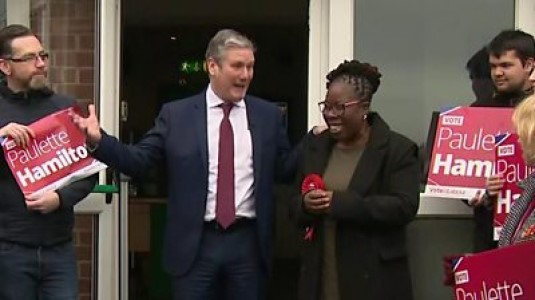
No, Keir Starmer. Labour's by-election victory was not "one of the best results we’ve had in Erdington for many, many years." 30 seconds with Wikipedia would dispel that notion. It is, however, the best parliamentary by-election result for Labour since he became leader. And as we're in Year Zero territory because the period between summer 2015 and winter 2019 never happened, according to his rewrite of Labour Party history Starmer is correct. But it's not a disaster either - just a middling, mediocre performance.

The majority Paulette Hamilton won was 3,266, lower than the nadir of the last election where Jack Dromey bequeathed 3,601. But this is a by-election which, as a second order election (i.e. an election viewed by a lot of the electorate as one that "doesn't matter"), turn out was well down. 35,000 Erdington residents hit the polls in 2019. On Thursday only 17k made the same journey, a story not just of by-elections this year but by-elections at any time. It's pointless comparing raw numbers because the comparison is not like-for-like. What matters is the proportion of the vote, and here Labour were up just over five points while the Tories fell by four. Had the proportion fallen, as per Batley and Spen, then Keir Starmer would be in trouble. But it didn't and the knives stay in the kitchen drawer for the time being.

That said, the result must be a personal disappointment for Starmer. Having seen the Liberal Democrats chalk up two famous victories, to properly cement his leadership and banish the mutterings the Labour leader needs a triumph of his own. Preferably a seat taken directly from the Tories to show the party and the press that he's a coming man, consolidating a marginal seat and making it safe would have done in Erdington's case. But it didn't happen. And there are two reasons for this. People haven't forgot Boris Johnson's partygoing antics, but his efforts to place the issue in abeyance with the Met investigation has worked. Though the Prime Minister also has a certain Vladimir Putin to thank for making sure his wrongdoing is buried under the weight of an international crisis. The visceral anger that fizzed around a month ago has petered out, and so there was nothing for Starmer to capitalise on.

This might not have mattered if Labour actually had something to offer, but the leadership have decided to say nothing and offer even less. Not even taking the Tories to task for being soft on Russia, not going hard on sanctions, and hinting we should be thinking about no fly zones have made people sit up and take notice. Voting against the Tories is never enough, you have to give them something to support. And the nice hair cut and saying "we're not left wing" ain't it. Whatever the case, while Starmer is safe for the time being it appears his de facto deputy is not.

"Ah!", might come a reply from a right wing Labour wiseacre, "if socialism was the answer then why did the literal Trade Unionist and Socialist Coalition perform so poorly?" Good question. Coming third is barely a consolation if there are 34 percentage points separating you from the second placed Tories, and were miles away from saving the deposit. I can divine the explanations in next week's Socialist, blaming a media blackout and the fact their candidate, Dave Nellist, wasn't invited to a BBC-run hustings. TUSC were going from a standing start, and the vote tally did not reflect the enthusiasm for socialist ideas found on the doorstep. But a marker has been put down for next time. I could almost write the article for them. The problem is the Socialist Party, the main component of TUSC, has, for all its vanguardism, a wonky idea about class that is less sophisticated than its new comrades in the People's Alliance of the Left. And, despite the "serious" reputation it has on the far left, the SP is congenitally unable to carry out the consistent work necessary to establish, maintain, and expand a base in working class communities. This is reflected in the life of TUSC itself, which is but an electoral appendage with no independent existence or means of becoming a new left party in embryo. That role, of course, falls to the SP itself.

Therefore, the 360 votes it polled are not the beginning of anything. TUSC will be packed away and might be seen at the next general election, but it might not. It stood in 2015 and polled 212 votes on that occasion, but evidently was packed away and nothing was done to try and cohere that vote and build outwards from it. Perhaps it will be different this time, but as the best predictors of future behaviour is past behaviour, I won't be holding my breath.

Image Credit

Thursday, 3 March 2022

Making Sense of Nuclear Psychosis

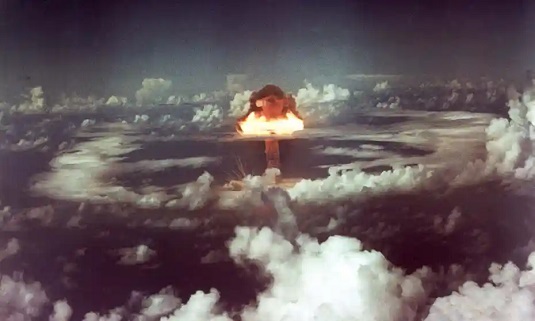
A collective psychosis has gripped a band of Twitter users, politicians, and columnists over Vladimir Putin's invasion of Ukraine. Without any cognisance of consequence, a narrow spectrum of Labour warmongers, liberals, and Tories call for a NATO-enforced no fly zone in the skies above the East European battlefield. Decades of cheering bombing practice over Middle Eastern targets has eroded their collective sense. It's almost as if you have to sit them in a chair and patronisingly explain to them that the Syrian and Iraqi regimes, the Taliban, and the people of Yemen don't have the means to strike back at the Western alliance whereas Russia does. And the gift of its retaliation goes beyond random knife attacks and the occasional suicide bomb. With six thousand nuclear warheads on tap, it is quite capable of incinerating its enemies. Seeing their newspapers go up in smoke is little consolation for hundreds of millions of deaths and an irradiated Threads-style hellscape.

Are these people really that stupid? No. They know why NATO won't be taking up arms against Russia any time soon. Some might privately agree that a no fly zone cannot be implemented because it's a dumb idea. But they go ahead and say it anyway. But why? What possible good can come from winding up their readers and social media audiences by arguing a blossoming of mushroom clouds is worth risking to show how tough the West is?

Turning to someone who knew a thing or two about causing outrage might be helpful. Better known for planting bombs with the Rote Armee Fraktion than anything else, prior to her descent into terrorism Ulrike Meinhof was a journalist who wrote for and edited konkret. This popular and influential magazine on the emerging West German New Left gave her pause to reflect on the political economy of the press generally, and the position of the columnist. In her rasping, uncompromising style her 1968 article on 'Columnism' took on the MVPs of print media. She wrote,
The investor expects two things from columnists. They should develop their own personal reading public, preferably readers who would not buy the paper if they weren’t in it. That is the profit factor. Columnists who cannot achieve this will sooner or later lose their job. Then there’s the prestige factor. The columnist’s fenced-in but independent thinking gives the whole paper the aura of independent thinking. The columnist’s outrageousness gives the paper the aura of outrageousness. The columnist’s occasional and courageous expression of unpopular ideas gives the paper the aura of courage to express unpopular ideas.
She paints a picture of the occupational hierarchy. Those doing the grunt work of minor stories and regurgitated press releases quickly learn that "they can do this, and that, and they write even if they haven’t finished thinking; they write without having read the necessary books. Good journalists turn the topic into the object, and do what they want with this object." This is writing for the sake of space filling, of shoving in blocks of text so the page looks full. It cultivates an ability to turn one's hand to almost any story. It's a frustrating, deadline-missing experience for junior hacks but those who stick it out can become the star columnist where they bring this light-minded approach to opinion pushing. For Meinhof, columnists are an editor's "best lackey", and are grateful for their elevation to this more indolent position as long as they behave "as though it were possible to have an opinion on any topic in the world, expressed in a text that is always the same length."

This is a position jealously guarded, and helps explain the obsession with cancelling. She wrote, "The publisher assigns the columnist the role of leading the readers ... Columnists cannot give their space to their readers. If they knew someone who could do a better job, they cannot ask that person to write in their place. That would frustrate the readers, who have, after all, grown accustomed to the one. Columnism is a personality cult." By creating stars, as per the Hollywood system, readers will keep coming back to buy the product and advertising space on or opposite their page can be sold at a premium. Columnism is inseparable from market logics, "we want the columnists’ freedom to be recognised for what it is: a prestige and profit factor, a fraud for the readers, self-deception ...".

You can certainly see all these traits among our media friends of radioactive fallout. The glib manner the spectre of nuclear war is passed over, as if it was no more consequential than deciding what jumper to wear that day. Knowing their offhandedness is an invitation to outrage, it keeps a brand going, guaranteeing exposure - and bankability where the papers are concerned. This might help explain the cynicism and the performative stupidity of a Dan Hodges, for example, but politicians and internet randoms? What unites Defence Select Committee chair Tobias Ellwood, EU supergrifter Femi, and youthful Blairites ostentatiously (and farcically) matching Putin's bellicose hints with nuclear threats of their own?

In the age of the internet and social media, we are all prey to columnism. Followings are an imagined approximation of social standing, an at-a-glance metric of influence and reach. The coming of the attention economy incentivises a veritable incontinence of opinion spouting. No matter how outlandish, stupidly, or self-evidently cynical the take there are audiences who lap it up. And this rough form of social capital can be traded in for economic capital, ranging from Patreons and Buy Me a Coffees to merch to paid gigs to getting taken on as a columnist. The attention economy is now vitally important for politics as well, giving outsiders a chance to make inroads into the mainstream or raising one's profile if normally overlooked in favour of more senior figures. See Oliver Dowden's recent play, for example.

Anything and everything can be a stake in the culture wars the attention economy thrives off, almost as if they don't have real world consequences. We've seen this with Brexit, Covid and the vaccination effort, and now nuclear holocaust. They are signs obeying the logics of the economy of the signs, and what they denote and connote doesn't matter as long as attention is attracted. And if it's not, they're rapidly substituted for something else that might. Ulrike Meinhof died in 1976 in apparently mysterious circumstances, but there's nothing mysterious about how columnism has escaped the pages of the press and weaved itself into the social fabric.

Image Credit

Tuesday, 1 March 2022

A Case Study in Decrepitude

In many ways, contemporary Russia is the culmination of trends present in Britain and the United States. Whereas a balance of constitutionalism, long-established (but strictly limited) democratic norms, and the combustible potential of civil society has dragged on the long-dominant programme of marketisation and privatisation, that hasn't happened in Russia. Since the end of the Soviet Union, the old economy has been sold off and looted by a fast emergent plutocracy. Institutions of state get by on a shoestring, and not even oil and gas money can shift the stubborn miasma of decay. If that wasn't bad enough, the authoritarian bent of our governments show a Russian-flavoured vision of a possible political future: an increasingly isolated and insulated autocrat cut off from the world, while the inefficiencies of their tyranny is content to leave what passes for civil society alone, as long as its movements don't mount direct political challenges against the creaking state. With economic power concentrated in few hands and political power held by even fewer, how much is this state of decomp responsible for the military debacle unfolding in Ukraine?

The poor performance of the Russian army has become the surprise consensus of Western war punditry, and while there's plenty of propaganda doing the rounds the use of social media triangulated with multiple reports paints a concerning picture - for the Kremlin. The viral footage of farmers towing away military hardware, of Russian soldiers complaining about being out of gas, and of armoured columns apparently shot up by Ukrainian drones. A Putin propaganda master stroke to lure his opponents and the West into a false sense of security about the quality of Russian arms, or what it immediately appears to be: an incredible display of ineptitude? Perhaps using up a load of fuel and provisions on manoeuvres in the freezing mud of Belarus in the weeks prior to the invasion wasn't the best of ideas.

As Ukraine has proved, no tragedy is without its moments of farce, but even if Putin's forces weren't experiencing the stubborn resistance we're seeing, from the conventional armed sort to human chains blocking convoys on Ukraine's highways to singing the national anthem at bemused Russian troops, that Putin would meet opposition was forecast by everyone with eyes and an internet connection. Putin, who was the world leader Nigel Farage previously most admired because of his acumen and feel for the international scene, grossly underestimated not just Ukraine but the diplomatic wall the West has quickly erected against him.

Hubris is one charge laid at Putin. As Ben Judah rightly points out, in recent years the top of the Russian state has undergone significant degeneration. From a mafia council to one boss ruling alone, Putin's closest lieutenants are his creatures bought by office holding and gas money. The oligarchy that supported the regime for so long are at arms length, literally distanced in the case of those domiciled in London or sailing the seven seas on their super yachts, or are either out of sorts or have fallen out with their former champion. Just like political parties in the West who erode as they become cut off from their planks of support and fall prey to their mythologies, it appears Putin has arrived at this destination through a simple process of social distancing, in the non-Covid sense, from his base. This does not mean that Putin lives inside an illusion pushing around imaginary battallions on a map, but it does mean it is distorted. And this helps explain his decision making.

On the Western powers, unfortunately there is a grain of truth in the oft-made warhawk claim about Syria. When Putin threw his support behind Bashar Al-Assad's regime the absence of effective action against the Syrian government precisely because Russia was now involved was obviously noted. The same was probably true of the Salisbury poisonings too. This summer the Anglo-American alliance abandoned Afghanistan to the Taliban and famine, having seemingly lost their resolve to defend their client government. And since 2003, Western publics have grown more wary of military entanglements. Add to this the shocks that have rippled through the body politic over the last decade - Brexit and its bad tempered negotiations, Trump, Corbynism, the collapse of the centre left in Europe, so-called culture wars, divisive referenda, and the fall out from Covid all, from the end of Putin's overlong table it looks like his traditional opponents are in a state of disarray. And then there are Russia's recent military adventures. The ghost of the first Chechen war was put to rest by the shock and awe brutality of the second. Then there was the short, sharp police action against Georgia which set up puppet regimes in Abkhazia and South Ossetia, and then the swift annexation of Crimea which was relatively hassle-free. The relatively low level war in Ukraine's eastern breakaway republics notwithstanding, this run of operational luck can inflate the perception of a military in the eyes of its commander-in-chief. Faced with an apparently divided West and a Ukraine that didn't put up much resistance to the bites Putin took out of it in 2014, living in splendid isolation with yes men spinning the military intelligence reports, we get some way along the road to understanding the conditions of Putin's thinking, and the grounds of his miscalculation.

What Putin got wrong was, obviously, Ukraine's resolve. With a better equipped and a larger army than eight years ago, plus a motivated population determined to push out an invader, it should have been obvious to everyone, especially someone historically as savvy as Putin, that the force assembled was not up to the task of subduing a large country. The second is his misreading of the West. While he was right NATO and the EU would not commit troops to fight in Ukraine, he miscalculated its appetite for sanctions, even if they caused the West some inconvenience. And he got this wrong because it directly confronted the common foreign policy interests of Europe and the United States. The West was and is divided over what to do in the Middle East, but not when it comes to containing Putin's revanchism on its eastern frontier. Putin is forcibly trying to remove an EU-NATO client state from the West's orbit for a Russia-friendly, dismembered buffer state. He is therefore confronting Western interests directly, and they will not countenance it. And given their collective economic and soft power clout, the other major world powers - India and China - are observing something of a Trappist silence with Xi, apparently, very displeased with Putin's adventure. They have used their influence to diplomatically isolate Russa like no big power has been since the Second World War. It didn't take genius insight to read where the tensions are and where there is unity among the Western alliance, but this is exactly what the Kremlin has failed to do.

The grey beards liked to talk about the materialism of historical processes, how social being conditions consciousness. To put it crudely, ideas don't drive history. Rather it is history that gives rise to thought. In Vladimir Putin, we see this play out like simple chemistry experiments in a laboratory. The decay of post-Soviet Russia was exacerbated by the class he championed and the state he contructed. The looting of his country's wealth and its disappearance into certain jurisdictions has left Russian infrastructure in a state of advanced disrepair, and the rot has spread throughout the political body, from the corruption of the state to the decrepitude of the military. This decomposition he and his cronies have overseen and profited from has boomeranged back, conditioning the thinking behind what is an egregious miscalculation. Putin has made a serious mistake that could cut short his time at the top, and one ensuring a river of blood lies between now and the consequences of his actions catching up with him.

Five Most Popular Posts in February

Here's what did the business on the blog this last month.

1. The Labour Right's Corbyn Obsession
2. Against Putin
3. Time for a Democratic Socialists of Britain?
4. The Class Politics of Levelling Up Failure
5. There's Nothing in the Briefcase

Was a major war on your bingo card for 2022? It wasn't on mine even at the beginning of the month. Before last Thursday, it was politics business as usual where this place was concerned. The same old obsessions of the Labour right topped the monthly chart. Even if the Labour Party lasts another 50 years you'll still have rightwingers in the 2070s carping on about the evils of Corbynism. And even earlier in the month, my musings about whether a network of leftists along the lines of the DSA, the tensions within the Tory voter coalition that make the government's levelling up promises extremely unlikely, and the emptiness of Labour Party politics in the pre-pre-period of the local elections were entirely unsettled by the build up on the borders of Ukraine. The sudden about turn in the situation ensured my piece on the invasion powered its way up to the second spot.

Given what's happening, there's only one real choice for the customary second chance piece, and that would be this on how the Labour right are sacralising NATO as a means of not just marginalising the left in Labour, but redrawing the boundaries of what passes for legitimate debate in mainstream politics.

Who knows what next month will bring except for more bloodshed and destruction, events that will find their echo on this here blog. But there are some "normal" things to look forward to, such as the Erdington by-election result this Thursday and all the usual ins and outs of politics.

As you're reading this chances are you're a hardcore follower of this blog. You'll also know I've hopped aboard the Patreon bandwagon. So if you like what I do and you have a few quid to spare, please consider supporting my work.

Image Credit

Sunday, 27 February 2022

Never Let a Crisis Go to Waste

The first casualty of war, they say, is the truth. Anyone trying to follow Vladimir Putin's invasion of Ukraine knows exactly what this is about. Past footage of actions in the east of the country are posted up and badged as recent fighting. A scene from a video game has purported to be a Ukrainian jet fighter in action. And then there are all sorts of claims about casualty figures, where Russian troops are, and the whereabouts of Ukrainian president, Volodymyr Zelensky. It's a complete mess, but what we should expect from the fog of war.

There are others taking advantage of the situation too. As the crisis broke on Thursday, the Labour leadership found time amid a hot war to issue threats against Labour MPs who signed Stop the War's latest statement. Pull the signatures or we pull the whip, said the party's leadership. The 11 names were duly dropped. The letter focuses its criticism on Britain and the bellicose role the Tories played in the lead up to Thursday's invasion. On the question of Ukraine's right to defend itself, let alone whether it deserves solidarity in the face of Putin's aggression, nothing is said. By focusing its critique on Britain, they say "In taking this position we do not endorse the nature or conduct of either the Russian or Ukrainian regimes." A weak statement then whose advice leaves those who take their cue from it rudderless on the central question of the conflict, in my opinion. But even this was too much for Labour's new management, who are ostentatious about their pro-NATO enthusiasm than the Tories.

On Sunday morning, the Labour right stepped up its war on the left with the comments made by Shadow Foreign Secretary David Lammy on Times Radio. He accused Jeremy Corbyn of "effectively parroting the lines that are coming from Vladimir Putin that suggest that this is because of threats from NATO, or NATO expansion." Yes, because "no to war in Ukraine" is the slogan emblazoned across every Russian tank as it heads into battle. Another example of using Corbyn to put what they think is electorally favourable distance between the party of its leftwing interlude and now? Yes, and they don't care if it, by insinuation, portrays people they share the green benches with as "traitors". It's not as if two MPs have been murdered in recent years or anything.

But there's also more to it than the usual rank manoeuvring. It's done with an eye to recasting politics. Starmerism, as much as it is a thing, isn't "Toryism" in a red rosette nor, for that matter, a rebranded Blairism. It is an authoritarian project that treats the party like a managed democracy. It has no time for members who expect to be more than leafleting and canvassing fodder because, in the best traditions of Fabianism, the big brains at the top have all the answers. They will make people's lives better by spending a bit more money here, a technocratic fix there, and getting on with the complicated business of government while everyone else carries on with their lives. For it to succeed, this project requires two things. A restitution of trust in state institutions. And new enclosures around what is "permitted" political debate. That is shutting down the spaces the Corbyn moment opened up and squeezing it into a circumscribed range of views. By shrinking the mainstream and forcing it down prescribed channels, Starmerism is working to restructure politics more broadly in a reverent direction. It's not about Blair-style cults of the personality, but ultimately closing off future avenues of dissent that will be politically costly to deal with. It's a politics of preparing ground for having faith in the leader and the state, and one that will allow him to govern as he sees fit.

Whether Russia achieves its objectives or Ukraine exacts a heavy price from Putin's forces, politicians away from the theatre of conflict are determined to have a good war. Keir Starmer is one of them.