DOOM-MONGERS have got it wrong - there is enough space in the world to produce the extra food needed to feed a growing population. And contrary to expectation, most of it can be grown in Africa, say two international reports published this week.Proof, as if it were needed, that the chaos of producing for markets dominated by foreign-based multinational capital is the root of the continent's food crisis.
The first, projecting 10 years into the future from last year's food crisis, which saw the price of food soar, says that there is plenty of unused, fertile land available to grow more crops.
"Some 1.6 billion hectares could be added to the current 1.4 billion hectares of crop land [in the world], and over half of the additionally available land is found in Africa and Latin America," concludes the report, compiled by the Organization for Economic Cooperation and Development and the UN Food and Agriculture Organization (FAO).
If further evidence were needed, it comes in a second report, launched jointly by the FAO and the World Bank. It concludes that 400 million hectares, straddling 25 African countries, are suitable for farming.
Models for producing new crop land already exist in Thailand, where land originally deemed agriculturally unpromising, due to irrigation problems and infertile soil, has been transformed into a cornucopia by smallholder farmers.
As in Thailand, future success will come by using agriculture to lift Africa's smallholder farmers out of poverty, aided by strong government measures to guarantee their rights to land, say both reports.
Monday, 29 June 2009
Breadbasket Africa
Here's an interesting piece from the latest New Scientist:

The Limits of the Individual and Authority

Unpacking this Mill turns to a social contract perspective. Despite its encroachment upon liberty society manages to afford individuals a measure of protection, in return for which it can reasonably expect a certain mode of conduct. This expectation does not injure individual interests, the sorts of responsibilities he had in mind - bearing a share of social responsibility and sharing the costs of society - can be unproblematically justified by the very act of preserving society. But also they can act as a benchmark for judging conduct. If the harm or injury caused by someone's conduct is less than the inconveniences social responsibility burdens the individual with then the appropriate sanction is punishment by opinion. If it is greater, then it's a matter for the law. What this means for individual conduct is as long as someone is "capable", they have the full freedom to act in a manner harmful to their self-interests, even if it is more damaging than the responsibility society levies.
This for Mill isn't a recipe for hard-heartedness - quite the contrary. He believes it's part of our general responsibility to promote good over ill and favour the cultivation of our higher faculties while avoiding the debauched and the degrading, and this includes a benevolence towards others. But that is where the line is drawn. We can promote good living, we cannot make it compulsory - even against those damaging themselves. For Mill the principle can be justified in terms of self-interest. The individual is the person most interested in their well-being. The interests others have in this, apart from close friends and family, is comparatively small. Therefore the interest society has in this well-being is less than even this and is necessarily indirect. The individual then has a greater understanding of the self than any other, meaning that not only do they have the right to exercise their spontaneity within generally accepted limits they are also the final judge of things that pertain to them. Regardless of how damaging or self-destructive they are, forcing behaviours on them is more injurious to liberty than anything they could do to themselves. Others are perfectly free to warn them and others of the dangers of their conduct, free make known their disapproval, free to avoid them, free to enforce customary (non-institutionalised) sanctions, but no freedom to force them to look after themselves. The flip side of this is (provided the individual is capable) there is no one but themselves to blame for their situation, and they have no cause to complain about the opprobrium they call down on their heads.
Obviously if the conduct injures others and infringes their liberty society reserves the right to apply legal sanctions. But, Mill asks, what if their behaviour causes to heap burdens indirectly onto the shoulders of others? Examples here would include making life difficult for dependents, causing unhappiness, reducing resources held in common by the community, and setting a damaging/subversive example. For Mill if it violates a distinct obligation then the demands of the obligation outweigh the liberty to discard it, but punishment and correction is a matter of those to whom the obligation is owed. Society should, as a rule, avoid getting enmeshed in such disputes.
A good example of this is religious liberty. While there should be freedom of religion, it should be accompanied by an equivalent freedom from religion. Communities of believers only have the right to morally enforce their doctrines on other believers. Sanctions that go beyond this, or attempts to extend them to non-believers is not in their interest as it invites resentment and opposition.
Mill's overall argument in this section is pretty simple and speaks for itself, but one problem is the vagueness he treats authority and society with. Society has a right under the social contract to enforce certain expectations, but what is society? Is it the state? Is this the only body with the legitimacy to compel people to meet the basic obligations of the social contract? And what about liberty and authority in a society riddled with conflicting classes and fractions of classes? These issues will be explored in the last piece in the series as Mill attempts to theorise practical applications for his philosophy.
Edit: A complete list of posts on On Liberty can be found here.
Saturday, 27 June 2009
Idolaters, Fornicators, Murderers ... Repent!

Unfortunately, our favourite devil-dodgers, Park Evangelical did not grace Hanley with their saintly presence today. But this isn't to mean souls weren't saved! That cross was bourn aloft by a solitary middle-aged woman who doled out fundamentalist Christian leaflets with meek abandon. And we're talking fundamentalist with a capital F here. She is to Park Evangelical what the cpgb-ml is to the Communist Party.
While reading her leaflet I was struck by a stark similarity between it and much ultra-left propaganda - neither pay any attention to framing their ideas intelligently or relating them to existing (religious, political) consciousness.
But I was so taken with her uncompromising message (and grammar!) I couldn't resist preserving the leaflet's text for all eternity. Behold!
ULTIMATE
Time is running out on you
REPENT
Repent for the kingdom of heaven is at hand. No one knows the date, month or year this world was created, no one knows the ending.
Gen.1: In the beginning God created the heavens and the earth.
Rev.1 verse 8: I am Alpha and Omega the beginning and the ending. Repent.
Rev 20: God has appointed a day in which he is going to judge the world, all nations.
What God is going to judge you for is sin. Stealing, lies, racism, adulterous fornication, idolatries, evil thoughts, murderers, drug users and pushers, lustful and rejecting Jesus Gods gift to you. Occult involvement such as fortune telling, witchcraft and palm readings. Repent or perish the choice is yours. This is a warning Jesus is coming soon. Repent. The animals in Noah's days went into the Ark and were safe, run to Jesus for safety because he is the only one that can save you. It does not matter what you have done for the love of God is more than your sins. He is waiting for you with open heart to receive you. Turn to him before it is too late. Time is running out on you. Repent.
You cannot say you have not been warned on the judgment day. Repent.
Lessons of Lindsey, Visteon and Linamar

Even before Thursday's welcome news the latest Socialist Party pamphlet, Lindsey, Visteon, Linamar: Lessons from the disputes of Spring 2009 was a timely publication. And though in a sense dated because it does not carry material from the recent events at Lindsey it remains a must read for all trade unionists and socialists.
The separate sections on Visteon and Linamar provide background to what's going on in the car industry. In short falling sales and overproduction are being seized upon by bosses to force through an industry-wide offensive determined to make workers pay for the crisis. Their favoured methods are slow downs and wage cuts - lays offs are supposed to be a last resort. Unfortunately most unions have accepted these measures without question, an acceptance that could weaken workforces when it comes to collective bargaining and defending existing conditions now and in the future.
Visteon, which was spun off from Ford in 2000, closed down its loss-making UK operation this year. It attempted to circumnavigate previous agreements with the workforce over the size of redundancy payments by simply tearing them up. Workers in Belfast, Enfield and Basildon were given just six minutes notice and were expected to melt away as Visteon/Ford paid over a measly redundancy and made off with their pension pot. In the pamphlet, Frank Jepson (Unite site convenor at Basildon and now SP member) gives a stirring account of the struggle to win back what Visteon/Ford owed them.
Linamar purchased its Swansea operation from Visteon less than a year ago. Rob Williams, Unite convenor and SP member threw himself into solidarity work with the occupations and struggles that broke out at the three remaining Visteon sites, and for his pains was summarily dismissed by Linamar management on grounds of an "irretrievable break down of trust". This of course was merely a pretext for getting rid of a trade unionist who had the temerity to not only stand up for workers' interests, but also had scored some important victories against management. Linamar believed that by removing Rob they would succeed in beheading the union in their factory. They were wrong. Thanks to impromptu wild cat action, strong union organisation and astute tactics Linamar caved in completely and Rob won his job back. The discussion in the pamphlet shows us how.
Finally, the Lindsey Oil Refinery dispute earlier this year was, from the standpoint of the left, probably the most controversial strike for many years. There is no use raking over the coals here seeing as this blog commented on the controversy at the time and is extensively discussed in the pamphlet itself. But is is suffice to say that this week's successful defence of the national agreement would not have happened without the winter stoppage. That's something those who were opposed or at best were luke warm toward the strike ought to consider when hailing this victory in the pages of their journals.
But above all, what all three of these successful struggles show is that where socialists are present or have an influence over the work force, the small forces of the far left can have a decisive influence.
The pamphlet is £1.50 or £2 including postage and packing. Buy online from Socialist Books, or order at PO Box 24697, London E11 1YD. Or ring 020 8988 8777.
Friday, 26 June 2009
Marxism and Michael Jackson's Death

But why should a socialist bother caring? Aren't there better things to write about? Why not leave the coming orgy of retrospectives and comment to the hypocritical media?
It would be a mistake to ignore the passing of Michael Jackson for the same reason why the deaths of Jade Goody and Diana Windsor were analysed and commented on by Marxists: his life and death says a great deal about contemporary celebrity. Which, in case you hadn't noticed, is a major hegemonic prop of advanced capitalist societies.
From a celebrity point of view, Michael Jackson's person was more or less in a league of his own. When I was growing up in the 1980s, the only other two pop megastars that could touch him in the fame stakes were Madonna and Prince. But Jackson was always a more alluring figure as far as the media were concerned. A household name from the age of six, his star shot into the stratosphere off the back of groundbreaking records that help define modern pop music - that and Thriller remains the best-selling album ever. His celebrity was something else, it was a cult of the personality.
But celebrity as a social phenomenon started taking a darker turn around the moment Jackson reached the height of his powers. The Gods among us were placed on pedestals by the media, but this self-same media realised it was in their commercial interests to knock it away. This was different from the gossip and muck-raking columns of the past. The new capriciousness articulated two seemingly contradictory but simultaneous moments of celebrity: of destroying its deifying aura, of using the media lens to cut celebrities down to size by revealing their all too human foibles; but paradoxically making celebrity more obtainable and more seductive, as a path to an easy life that trades the pressures of the mundane for a seemingly effortless existence in the spotlight.
Michael Jackson's celebrity epitomises this shift. At the unassailable heights of his 80s career, tabloid stories began circulating about his erratic behaviour: Neverland, the oxygen chamber, the childlike behaviour, surgery, Bubbles - all rumours parodied by Jackson himself in his 1987 single Leave Me Alone. But as long as he churned out the megahits Jackson was able to incorporate the eccentricities into his aura, which served to mark him a star apart from the rest.
Though his career was past its peak by the time he released 1991's Dangerous, the almost crippling blow came from the first set of child abuse allegations. Jackson never really recovered from this - partly because of the depth of the coverage, partly because they were never comprehensively refuted in court. Though HIStory performed creditably, the media feeding frenzy around his life was matched only by the growing hubris of Jackson's celebrity, a hubris that saw him humiliated during his Christ-like performance of Earth Song by Jarvis Cocker at the 1996 Brit Awards. His two year marriage to Lisa Marie Presley (widely seen as a cynical move to boost his "straight" credentials) was followed by a short-lived relationship to Deborah Rowe, the bizarre appearance of three children, the exposures by Martin Bashir and Louis Theroux and the second round of child abuse allegations finally and fatally compromised Jackson's aura for all but the most devoted die hard fans.
The passing of the corporeal Michael Jackson is a phase in the evolution of his celebrity. Already comparisons are being made with the late and very much lamented Elvis Presley, and it would be very surprising if he doesn't "ascend" to the disembodied state his ex-father in law has led these last 30 years. His celebrity will continue as it has done - it will fascinate, it will dazzle, it will feed the myth of individual (celebrity) redemption.
Friends, hangers on, journalists, and biographers will profitably mine Michael Jackson for many years to come. But peel away the artifice and grotesqueries there lies a real tragedy behind the fame. His death is a personal trauma for his family and young children, but marks an end to a deeply alienated life.
Thursday, 25 June 2009
Model Lindsey Trade Union Motion
Please circulate as wide as possible and act on it.
Model TU resolution
Support Lindsey workers!
This union branch notes with utter disgust the mass sacking of 647 skilled construction workers by Total at the Lindsey Oil Refinery site.
Hundreds of Lindsey contract workers walked out on Thursday 11 June to stop 51 redundancies being imposed without consultation or the opportunity to transfer to another contractor, in breach of the NAECI national agreement.
This branch believes Total’s refusal to enter into negotiations and their mass sackings in response to the walk-out represents a conscious decision to take on unionised construction workers and break the NAECI agreement.
This branch fully supports those construction workers at other sites across the country that have downed tools and walked out in solidarity with Lindsey contract workers – this dispute is not just about getting all jobs back at Lindsey but is about defending trade union rights, standards of pay and conditions across the construction sector. It is a fight against the ‘race to the bottom’.
This branch affirms that this is a struggle every trade unionist, across the workers’ movement must support. Total are attempting to break a union so that they can run rough-shod over workers hard won rights and conditions, if they are successful it would set a precedent for other employers. If, however, the workers in Lindsey win it will set a shining example of how workers can stand up, organise and take on the bosses – an example we all hope to see at a time of economic crisis and recession when workers, more than ever, need strong trade unions to defend their interests.
This branch resolves to:
1) Send a message of support to Lindsey strikers at geminis@geminis.karoo.co.uk and doyle_a5@sky.com.
2) Make a donation of (insert amount) to the striker’s hardship fund.
3) Circulate a copy of this resolution to all union branch members and urge them to send personal messages of support and make personal donations to the strikers' hardship fund.
4) Participate in or organise a local blockade of a Total petrol station to raise the profile of the dispute and help show public support for workers at Lindsey and across the construction sector.
Tuesday, 23 June 2009
Against Post Office Privatisation
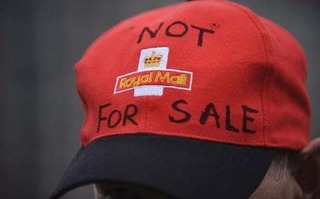
Mick Kavanagh of the Communication Workers' Union executive (post) took to the floor first and spoke about what the CWU was up against. Contrary to statements put out by Royal Mail, the government and the media the simmering disputes between the union and management do not come down to unreasonable stubbornness on the part of the workers, it's about the nature of the modernisation the company is going through. Management are using the introduction of new technologies and working practices to not only destroy jobs in the industry, but break the influence of the union too. Their contempt for the union and the workers can be seen in the way they are implementing modernisation. For example, last week's localised walkouts happened because management reneged on prior agreements over the phasing in of modernisation. As a result of this the CWU are preparing to organise for a nationwide dispute, and the executive is pushing for a ballot.
Dave Nellist, Socialist Party councillor in Coventry and long-time campaigner against privatisation argued that now the three mainstream parties represent a triple alliance for privatisation. And what Royal Mail are trying to ram through the postal service are a package of measures that will throw 50,000 workers on the dole, open the door to full privatisation and put the universal postal service at risk. And no one thinks this is a good idea, apart from the government, management and Royal Mail's competitors who are looking forward to cherry picking the most profitable services. Dave also attacked the main excuse they always trot out to defend part-privatisation - the claim the business hasn't got enough of an income stream to sustain it and fill the pensions black hole. For starters, that's because the government has deliberately sabotaged Royal Mail's capacity to make money. Its departments already use private firms to deal with their vast quantity of mail, a move that could only be justified in terms of neoliberal ideology. And the problems with the pension have far more to do with the company taking a 13 year holiday from paying into the pot. But in sum the attacks on Royal Mail are part of a wider canvas designed to give the bosses the whip hand over workers. Privatisation, the export of jobs overseas, the importing of migrant workers on inferior pay and conditions - all these three combine to force wages, conditions and workplace organisation down.
H O'Harney spoke for the Public and Commercial Services union, gvae the CWU his support and spoke of the state of play in the civil service. At present, the PCS are having to fight 236 separate privatisation schemes - and this is despite no empirical data proving private provision offers a superior service. It's now got to the point where the government want to go down the US route and contract out army training to private contractors. What is needed, he concluded, was an alliance for the public sector between all the unions to see off privatisation and get our services back into the public's hands.
Last of all came Lee Barron, the CWU Midlands regional secretary. He likened the position assumed by management and the government to blackmail. They are basically saying to the workers they either roll over and accept part-privatisation or they will do nothing to fill the hole in the pension fund. Already the final salary scheme is closed to postal workers and the retirement age raised to 65. The 13 year pension holiday was management's mistake, but it is the workers who are paying the price. Furthermore the government and management have another ally in their quest to break Royal Mail up. The "independent" watchdog, Postcomm claims to be the guarantor of the universal service, and yet now spends most of its time encouraging privatisation. Finally, Lee reminded the audience that Royal Mail is no millstone around the taxpayer's neck. The group as a whole made a profit last year despite years of having its monopoly being chipped away and services forcibly withdrawn from the post office. If indeed it was that much of a donkey, why are firms lining up for the juicy bits?
Brother S than opened it to the floor. First to the microphone was Arthur Bough who set the political tone for the rest of the meeting. He said we keep fighting the same battles decade after decade - he asked when are we going to stop fighting rearguard actions to save public services and instead put them out of reach of the privateers permanently? He argued for a different kind of nationalisation - one that puts workers' control at its heart. Dave Nellist agreed and argued the postal service should be run by a partnership of the workers and consumers. Mick added the present set up is a step backwards from the management under Thatcher when the union had members on the board.
Another recurring theme from the floor was the issue of political representation. A Unison comrade felt we had lost our relation to a party that has the chance of changing things for our interests. But what comes next now Labour is lost to working class people? A PCS comrade argued for a public sector alliance that can bring trade unions and socialists together in a campaign that would include contesting elections.
Returning to the theme of workers control, Boffy argued there are £500bn in workers' pensions invested as capital sloshing around the British economy. And yet neither individual workers or trade unions have any degree of control over it. Because it is our money, should we be agitating more around this issue? For starters - no investment in firms looking to take advantage of privatisation.
In sum, this meeting was an encouraging beginning for building a wide campaign against privatisation across all the public services in the Potteries. It demonstrates the role a campaigning trades council can play: as a facilitator of relationships between trade union activists at a local level. The next step for the local TUC is to play its part helping coordinate this public sector alliance in North Staffs while drawing more union branches and activists into the organisation.
Sunday, 21 June 2009
Socialist Party Replies to SWP on Left Unity
The Socialist Party replies to the Socialist Workers' Party open letter, Left Must Unite to Create an Alternative.
To the Socialist Workers’ Party
Dear comrades,
Your open letter, entitled ‘It’s time to create a socialist alternative’, poses the important question of how a left alternative can be created to contest the general election. The Socialist Party has always been prepared to support genuine left unity, provided it is on open, pluralistic terms. Unfortunately, in the past your organisation has not done so. You have taken a sectarian ‘rule or ruin’ approach – your own party’s narrow organisational dominance has been put before the interests of the workers’ movement. This is not just our experience, but the experience of a host of other organisations and individuals. If this open letter represents recognition of your past mistakes that would be welcome. However, there are a number of points in the letter that give the impression that this is not the case.
The need for such a left alternative in the general election is clear. However, you make no mention in your letter of the attempt to provide such an alternative in the European elections, No2EU-Yes to Democracy. No2EU was set up precisely in order to provide an alternative to both the three establishment capitalist parties, and to the far-right racist BNP. In the coming weeks the components of No2EU will discuss trying to build on the campaign in order to create a broader challenge for the general election. To put out an ‘appeal for unity’ which writes No2EU out of existence – with no prior formal or even informal approach to its constituent organisations – will not be considered serious by those seeking a way forward.
As you know, No2EU was initiated by the transport workers’ union, the RMT, and involved ourselves, the Socialist Party, as well as the Communist Party of Britain, the Alliance for Green Socialism, and others. This was the first time in over a century that a trade union stood on a national basis independently of Labour. Its candidates included many of the most militant fighters in the trade union movement today – including Rob Williams, Linamar car plants convenor, the convenors of Basildon and Enfield Visteon plants, and members of the Lindsey construction workers’ strike committee. Yet you make no reference to it in your letter, saying only that, when SWP members were asked who people should vote for, “the lack of a single, united left alternative meant there was no clear answer available”. We find this incredible. As you know we have argued in favour of the development of a new formation to the left of Labour for many years. Whenever attempts have been made in that direction we have called for a vote for them, including for Respect, even though we had criticisms of it. Yet many of your members called for a vote for the Greens rather than No2EU in the European elections.
If, as seems to be the case, you were opposed to No2EU, you should honestly and openly explain why, in order to allow a discussion to take place on what the basis for a new left alternative would be. To try to ignore the existence of an initiative as significant as No2EU undermines your stated aim of opening a discussion on creating an electoral alternative for the general election. Nor is your dismissal of its vote in Socialist Worker a serious analysis (which, incidentally, was only the second time No2EU has ever been mentioned in Socialist Worker). You state that “despite Labour’s vote collapsing, overall the radical left did not register gains in last Thursday’s elections. Between them the Socialist Labour Party and No2EU gained two percent of the vote nationwide, the latter trailing Arthur Scargill’s party. Five years ago Respect polled 4.84 percent across London, beating the BNP. The combined left vote in London was down this year to 2.1 percent.”
No2EU received 153, 236 votes, 1% of the total cast. Arthur Scargill’s Socialist Labour Party (SLP) gained a marginally higher 173,115 votes, 1.1%. Given that No2EU was founded only weeks before election day, we believe its vote was creditable and, particularly when taken alongside the vote for the SLP, gives an indication of the potential to create a fighting left electoral alternative. In 2004 you struck a very different tone than you have this time, when you declared that: “Respect [which you were then part of] got the best votes the left has seen for many years” (Socialist Worker 19 June 2004). Yet Respect’s national result was 252,216 or 1.65%, less than the combined vote of the SLP and No2EU this time around.
Unfortunately, we believe that your brushing aside of No2EU is an indication that your methods have not changed. You claim that: “Unity is not a luxury. It is a necessity” but as a party you have never been prepared to countenance working together with others in an honest and open fashion unless you hold the reins; hence your wrecking of the Socialist Alliance and your splitting from Respect. Far from playing a positive role, your approach has actually complicated and delayed steps towards a new mass workers’ party in England and Wales.
More recently you have almost completely withdrawn from electoral politics, except as an echo of the mainstream capitalist parties appeal to ‘vote against the BNP’. However, you have continued with the same high-handed ‘rule or ruin’ approach in the industrial and trade union fields. Your organisational high-handedness has been combined with a completely mistaken political approach to the significant struggle of the Lindsey construction workers, which you have dismissed as nationalist. We, by contrast, as Mark Serwotka pointed out at PCS conference, were able to intervene in Lindsey and win the strikers to a clear, class programme.
Your organisational methods were starkly demonstrated at the Fight for the Right to Work conference (which itself was called in direct competition with the conference of the National Shop Stewards’ Network conference taking place two weeks later, despite the SWP having members on the NSSN steering committee). The NSSN has been established for three years and has national backing from the RMT and POA trade unions. Yet your members voted on bloc at the Right to Work conference to defeat the following motion moved by a Socialist Party member:
“To recognise the important position of the National Shop Stewards’ Network (NSSN) in acting as the central coordinating body for rank and file union members, unorganised workers and the unemployed in the fight against unemployment. The NSSN, open to all workers, in its three years of activity, has brought together militant workers from many political traditions with a recent history of defeating the bosses’ offensives and has national backing from the RMT and POA trade unions. As such, conference resolves to direct its efforts through this body.”
Our approach to working with others is very different to yours. We have worked together with trade unionists from different political backgrounds to build the NSSN. And we enthusiastically took part in No2EU, despite differences between ourselves and other participants on some issues, because we saw it as a serious attempt by a national trade union to try to build a left political alternative. This does not mean we abandoned our own programme. No2EU was an electoral bloc that brought together different organisations around a common programme in order to maximise its electoral impact. The programme of No2EU was inevitably limited as a result, although not, as at least some of your members have suggested, nationalist. On the contrary it called for “international solidarity of working-class people”.
At the same time, the different component organisations had complete freedom to produce their own material. The Socialist Party, for example, was able to produce leaflets putting forward our socialist programme and explaining that our candidates, if elected, would only take a workers’ wage. This is a considerable advance on the position you adopted in the Socialist Alliance, where you opposed such latitude being allowed for constituent organisations. Have you since changed your position on this?
A new electoral alternative will not be created simply by any of the existing socialist organisations declaring their initiative to be ‘the’ alternative for workers, as the mistakes of the previous fifteen years demonstrate. Only the active participation of broader sections of militant workers and young people in any new electoral alternative will mark it as a significant step forward. This was the importance of No2EU, which we believe should now be built on, with a new name, for the general election, with the aim of involving, first and foremost, larger numbers of militant trade unionists and young people. However, as part of such a broad project we would support the right of all socialist organisations, including the SWP, to take part.
The election of two BNP MEPs does add even more urgency to the need to create a genuine mass voice for working class people. The BNP vote in Yorkshire and the North West actually went down, but the collapse of New Labour’s vote allowed them to get MEPs elected. Moreover, the BNP’s vote did increase markedly in some areas, all of which were working class communities which historically were bastions for Labour. As a recent YouGov poll of BNP voters concluded the BNP made gains “because many voters feel insecure and let down by the main parties”.
As we have repeatedly argued against yourselves and others, the BNP will not be undermined just by campaigns denouncing them as Nazis. Alongside the development of mass demonstrations against the BNP by the trade unions and young people, a crucial part of undermining the far-right will be building a political alternative.
If you were serious about creating an electoral bloc for the general election, why did you not approach the Socialist Party or, as stated before, any of the other component parts of No2EU, for a discussion on the way forward? Selected individual Socialist Party members around the country, largely members of our party in prominent positions in the labour movement, have been sent copies of your open letter, yet you did not approach the democratically- elected National Committee of the Socialist Party to discuss your appeal. Nor have you invited the party to debate these issues at Marxism this year, despite us debating with you at our national event, Socialism 2008 last year, and our request that you reciprocate at your event. This method has elements, albeit on a smaller scale, to the approach of the Communist Parties in the early 1930s, who made declarations for a ‘united front from below’ but who refused to engage in negotiations with the leaderships of other workers’ organisations.
Our experience, and the experience of others on the left, regarding your party’s willingness to engage in serious collaboration, is not encouraging. However, if you have reassessed and changed your methods, and are now willing to work together with others towards the creation of ‘a socialist alternative’ for the general election, we will of course welcome this. Unfortunately, all the indications are that this letter is an attempt to convince your own members, who must have doubts on your previous approach towards working with others, that you stand for ‘unity’, rather than a serious proposal to facilitate a step towards independent political representation for the working class.
Yours fraternally,
Socialist Party Executive Committee
Friday, 19 June 2009
Lindsey Oil Refinery Strike, Round Two
Readers will be aware that the owners of Lindsey Oil Refinery (LOR), Total, have sacked 900 construction workers at the site after a week of strike action. This is the text of Socialist Party leaflet being handed out on the picket lines this morning. Encouragingly workers had already printed it off and distributed it themselves. So far, the employers' clumsy attacks have provoked solidarity walk outs at at least 11 other sites. The SP site will carry further updates as the situation develops.
Supported by Keith Gibson ex LOR strike cttee, Trevor Grewar Hull Amicus/Unite branch chair, John McEwan national stewards forum, Steve Jones LOR steward (all in personal capacities)
APPEAL FOR SOLIDARITY ACTION
SUPPORT LINDSEY STRIKERS
The Facts:- Last Weds 10th June, 51 Shaws workers were give “imminent redundancy notices” to take effect from Friday 12th. THERE WAS NO CONSULTATION. On Monday 8th June, Blackett & Charlton (RBC) had taken on 61 recruits in almost identical numbers and trades to those being sacked by Shaws. The Shaws workers were given NO OPPORTUNITY TO TRANSFER. Remember that RBC are only at LOR as a result of the 102 new jobs created by January’s strike which was provoked by a third of Shaws contract being awarded to anti-union firm IREM. On Thurs 11th, Shaws workers walked out of the gate, supported by scaffolders from S.G.B, electricians for B.K., and other trades from B.I.S. O’Hares and RBC, and have all stayed out on strike. Jacobs’ management, who’s strings are being pulled by Total, have refused to negotiate unless there is a return to work. But have stated that the 51 will still be sacked anyway. Faced with this ultimatum, a mass meeting of LOR workers yesterday (Weds 17th) voted unanimously to continue the strike until the 51 redundancies are withdrawn. It is clear now that the LOR bosses are using this dispute (caused by their own mis-management and their reneging on agreements made in February) to seek revenge for their forced climbdown by the strike earlier this year. Taken with the leaked ECIA advice to employers on subverting the official union strike ballot, the bosses have declared war against the trade unions, shop stewards and the NAECI agreement. That is why we appeal for your support. Unity is strength. Together we will win. AGAIN.
YESTERDAY’S MASS MEETING (Weds 17th) VOTED TO:
• Continue the Strike at LOR until 51 redundancies withdrawn
• Place pickets at all LOR gates and appeal to tanker drivers not to cross
• Call for solidarity strike action across all NAECI sites
WHICH SITES ARE SUPPORTING STRIKE ALREADY:
Fiddlers Ferry (since Monday)
Aberthaw (300 walked out yesterday)
Conoco (2-300 walked yesterday and joined LOR pickets)
Dragon, BOC Scunthorpe & Hartlepool Power Station
SITES BEING DIRECTLY APPEALED TO BY LOR PICKETS THIS MORNING:
Ferrybridge, Stanlow, BP Saltend, Eggborough, West Burton, Cottam, Ratcliffe, Staythorpe, Wilton and maybe more.
Thursday, 18 June 2009
The Curious Silence of Political Islam

Let me start with the definition of political Islam. I understand it in a broad sense, as political movements that draw on Islam to meet their objectives. Applied to the British context this includes relatively innocuous organisations such as the Muslim Association of Britain, who aim to integrate British Muslims into the country's political and cultural mainstream while promoting Islamic teachings. It would also include the to be re-launched Al-Muhajiroun, who campaign for an Islamic UK state. In other words, political Islam encompasses movements right across the spectrum. It should not be confused with Islamism, which denotes a particular strand of political Islam that simultaneously treats the religion as a political philosophy.
It would be reasonable to assume organisations of political Islam would have something to say about the situation in Iran. I know if I was a young Muslim I would be interested to hear the opinion of organisations that claim to represent my interests or would like to recruit me. I'm pretty sure the musings of the local Imam - if he touched on the crisis in the Islamic Republic at all - would not be enough. So what are these groups saying?
Let's have a look at the more mainstream sites. The British Muslim Forum apparently aims to represent the political thoughts of Muslims resident in the UK and boasts of being the largest Muslim umbrella organisation in the country with 600 affiliates. Alas its not doing a great job of representing any kind of thought - at least on the internet - as the website has not been updated since February. The Muslim Association, the pressure group some on the ultra-left think is "Islamofascist" because of its links to the Egyptian Muslim Brotherhood doesn't have much to say either. Its last news item is Obama's speech in Cairo at the beginning of the month (the MB website is no better - seems every topic under the sun gets a look in ... apart from Iran). The story is the same for the Islamic Society of Britain, The Muslim Parliament of Great Britain, and Progressive British Muslims (another organisation who, online at least, looks like it's gone into abeyance).
What about the extremes? Over the years the mainstream political establishment have been pressuring so-called community leaders to aggressively stamp out the extremists and Islamists. The silence of the mainstream offers the head bangers an ideal opportunity, doesn't it? You would think ... but Hizb ut-Tahrir - an organisation no one could accuse of being idle - hasn't got a thing to say. US designs on Pakistan? Check. The global recession? Check. Revolution in Iran? Nope.
In fact, the only organisation that does is the two man show, the Muslim Public Affairs Committee. They carry a couple of snippets from Youtube, but don't really offer any opinion on the events.
This is indeed a curious silence on the part of British political Islam. Could it be for sectarian reasons? Or is it more likely they are utterly bewildered by events?
Subscribe to:
Posts (Atom)