The second edition of Falling Down will be released in paperback this summer! As you can see, it's getting a new title and cover. But is that it?
Quite a lot has happened in politics since the first edition hit the shelves 18 months ago. Boris Johnson is gone, we're on our second Prime Minister since he vacated the chair. And, happily, the Tories are looking at the electoral end times that could last a generation. If not longer. The second edition, or The Party's Over: The Rise and Fall of the Conservatives from Thatcher to Sunak, will feature an extended chapter on Boris Johnson and the Tory politics of the Covid-19 crisis, the failure of levelling up and, of course, his fall from grace. This will be followed by an extended discussion of the future of the Tories, calling in on the premierships of Liz Truss and Rishi Sunak along the way. The introduction will be slightly different, and those annoying typos and slippages that wriggled through into the first edition have been picked up and dealt with.
Everyone's going on about Tory decline these days but this book remains the first and most comprehensive effort to describe and explain their fall, and did so while the Conservative Party were at the heights of their powers and were destined for another decade in power. If you believed the political cognoscenti paid to utter trite and superficial opinions. What better time for a reissue now Tory decline is plain enough for everyone to see? The Party's Over will be appearing in time for party conference season and I'm hoping that events between now and then don't quickly date it!
As per the first edition, there is nothing I won't attend or do if it means the book and its arguments get a plug. Media programmes, book shops, podcasts, left events, party and trade union meetings, just give me a shout.
The only surprising thing about Friday night's targeting of a Knowsley hotel housing refugees by Patriotic Alternative was that fascist mobilisations of this sort aren't more common. All the conditions are there. An economy in the toilet, inflation knawing holes in people's bank accounts, the press attacking asylum seekers, and a government happily leading the rhetoric against refugees. It's a grotesque spectacle.
The Tories know full well where their rhetoric leads. When Jonathan Gullis, for example, names Stoke-on-Trent hotels that have taken on refugees, he doesn't do this supposing this information won't be acted on. Given the city's bleak history with the far right, he's fishing for racist votes in a doomed attempt to cling on at the next election. If someone with brown skin is attacked or one of the hotels is targeted for vandalism or worse, that's just the cost of doing political business. As if to underline the cynicism about small boats in the Channel while smirking at the camera, the Home Secretary's "condemnation" of far right protest violence keeps the racist ball rolling. She writes,
I condemn the appalling disorder in Knowsley last night. The alleged behaviour of some asylum seekers is never an excuse for violence and intimidation. Thank you to @merseypolice officers for keeping everyone safe.
Just Suella Braverman saying the "protesters" had a point but things got out of hand. She can't condemn the far right for what they are, because she's implicated. Indeed, that is precisely why Sunak appointed her. And as the culture war is central to the Tories' survival strategy, they can't well disown something they think will win them votes. And so the more the press and the government feed off each others' hysterical rantings and lying rhetoric, the more emboldened the far right will be to target another hotel. Or, thanks to the government's deliberately fanning the flames of hate against trans people, we're seeing LGBTQ events becoming a focus for far right violence too. Like Saturday's "protest" against a drag queen story time for kids at the Tate.
There are no shades of grey when it comes to fighting the far right. The frustrations they feed off are real enough, and confronting them on the street has to go along with direct refutations of their politics. This is the province of anti-fascism, because Labour aren't going to do it. Yvette Cooper's response to Knowsley is just as self-serving as Braverman's. She treats the far right as a policing as opposed to a political matter, and squeezes in Labour MPs' antipathy toward social media for good measure. Nothing about demonising refugees, nothing about the politics of scapegoating. Because it's a poisoned well she'll regularly draw from, when occasion demands it.
Unfortunately, while the decline and coming electoral drubbing of the Tories means the ground becomes less fertile for the far right, electorally speaking, the dynamics of how a new Labour government plays out in politics affords street-oriented fascist outfits like Patriotic Alternative more opportunities. Following a heavy Tory defeat, they're likely to lurch to the right as they did between 1997 and 2005. This is because following the trauma of a heavy pummelling, returning to "core values" is with an eye to consolidating a new base. We can expect the new Tories to run on issues of migration, asylum, and controlling our borders even harder, parroting whatever rubbish the out-of-sorts right wing press come up with to attack Labour. As past behaviour is the best indicator of future behaviour, it's entirely likely Labour accepts this framing (because it already views immigration generally and refugees in particular as problems) and cleaves to their position. Just as Uncle Tony did 20-odd years ago. And that empowers the far right, a cycle of cynicism and racism for grubby votes and nice editorials.
Unfortunately, what happened in Knowsley will happen again.
It was an easy win. In line with everyone who ventured a prediction, at the West Lancashire by-election Labour romped home with 62% - up over 10 points on the general election. The Tories carried on having a bad time as they dropped 10 points to 25%, and no one else managed to save their deposit.
Does the result suggest much about British politics? Only what even the dogs in the streets know. The Tories are getting hammered thanks to what one ex-Prime Minister did and what the current one carries on doing. Labour are the obvious alternative government and, in most cases, the best bet for registering a protest. It also shows that, for the moment, the Liberal Democrats, Greens, and Reform UK are also rans. Circumstance can and do arise where the first can be the beneficiary of tactical voting for Westminster elections, and for local council by-elections the Greens are benefiting too. Reform UK, however, are nowhere - despite coming third here with fewer than a thousand votes.
In the near future, it appears the conditions are ripening for the Lib Dems and Greens to have a happy time. For Reform, less so. With the Tories a spent force marking time before the inevitable defeat, a mix of ruinous economics and a significant misreading of the public appetite for culture war rubbish means they retain the core right wing vote. Those dribbling away to Reform can only be hardcore Brexit fanatics and those who can't bring themselves to support Rishi Sunak for straightforwardly racist reasons. This is not going to improve once the Tories are out of office. Indeed, once in opposition Reform is likely to go the way of UKIP, the space for them smothered by the battered carcass of the defeated Conservative Party.
An entirely inconsequential by-election then. Some, however, will pretend that the numbers behind the easy Labour victory actually means it's a catastrophic failure for Keir Starmer. Look at the turnout. It's down nearly 41 points on the general election. We've talked about this before. Turnouts for by-elections are typically depressed because they're elections that, effectively speaking, don't matter. By-election ballots cast dip even further when the contest is a foregone conclusion, and especially so in a safe seat. There is little enthusiasm for the Labour leader and his shadow cabinet of empty suits, but when the polls are where they are and the mood of the country is anti-Tory, that doesn't matter to him or Labour's chances very much. It's not a gotcha. The lack of popular support becomes significant later when Starmer tries implementing his programme, and particularly those parts of it that go after our people.
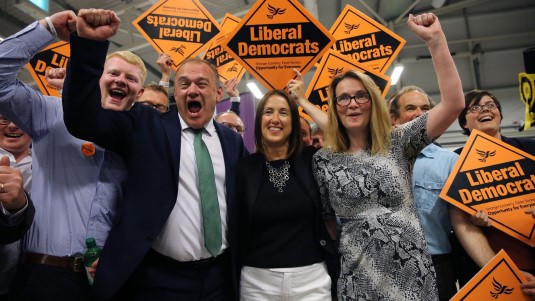
Looking at the polls, things aren't too peachy for the Liberal Democrats. Since late October, double digit figures are exceptions rather than the norm. With the Tories in a very bad place, why aren't they doing better? Consider the Ipsos archive for example. From Black Wednesday to the 1997 election, the Lib Dems dipped down to single figures just the once before winning 46 seats and five million votes. Despite some serious and famous by-election victories, if it wasn't for the odd appearance on politics TV no one would know they exist. And all this despite Ed Davey's crushing charisma. Why are they are where they are?
A couple of things. While the polls flatter Reform UK, they are doing the Lib Dems a disservice. At UKIP's peak in 2015, its four million votes were thinly spread. The Lib Dems mustered about two thirds as many, but returned eight MPs. Concentrated support kept the party on life support, and 'life support' is accurate. Apart from 2015 and 2017, you'd have to go back to 1970 to find them bumping along with the same number of votes. I'm sure trading in 40 years of work for stints as ineffective ministers in a de facto Tory government was worth it. Second, the Lib Dems do have something going for them as beneficiaries of anti-Tory tactical voting. This has become almost routine at the level of local council by-elections, and there were the North Shropshire, Chesham and Amersham, and Tiverton and Honiton by-elections: three cases in which the Tory position was totally destroyed. This was way before Liz Truss and her helpful intervention. There's no reason to believe they won't modestly benefit when the election swings round, though we're talking not many seats. The idea a return to the halcyon days of 2005-2015 are fanciful. For the moment.
But there are significant issues too. The first is Labour's success. There might not be much enthusiasm, but Labour is the obvious alternative by virtue of being the only alternative. Because Keir Starmer doesn't scare many swing voters in the way his predecessor used to, in most places pickings are slim for the Lib Dems. When voting to get the Tories out, everyone knows that a Labour vote is the best way to achieve it. As such the yellow vote is getting squeezed - repeating patterns captured by the aforementioned Ipsos polls after Tony Blair became Labour leader. The other problem is the Greens. Historically, the Lib Dems have fished from the pond of middle management and the petit bourgeoisie, particularly rural iterations of the latter. The Greens, who are similarly squeezed by Labour, have nevertheless made inroads into both, putting them into direct competition. At least on paper. The Greens taking a seat from Lib Dems in a Bristol council by-election last week was a rarity, as at local level they too have benefited from a degree of tactical voting. Still, because reasons the Greens are on an upward trajectory, and so more competition and pressure is inevitable.
What can the Lib Dems do? Returning to their 90s/00s peak remains the key aspiration, and it will likely be a slow return. That said, Jeremy Thorpe (remember him?) almost trebled the Liberal vote from two to six million between 1970 and 1974, and around that level it stayed until Calamity Clegg blew the party up. Therefore, despite not going anywhere fast the current strategy of prioritising defeating the Tories - something long counselled here as Tim Farron and then Jo Swinson disastrously targeted Labour's support - is the right one. The party is going to continue benefiting from local authority elections and, eventually, some time over the next two years a by-election will befall a safe Tory seat and the Lib Dems are pretty much guaranteed to take it. Always useful for a "Hi, we still exist!" flap of publicity. But in the longer term, should Starmer be returned with an overwhelming majority, with the Tories likely to retreat into a right wing ball and the SNP confined to Scotland, there are oppositional opportunities that the Lib Dems will be competing with the Greens to exploit. And the most obvious of these is Brexit's failure, and Starmer's softly-softly rapprochement with the EU. Effectively, the hard remainism of 2019 came five or six years too early - polling shows the electorate are growing more pro-EU with time, and the Lib Dems are best placed to capitalise on rejoiner frustrations.
The Lib Dems are therefore a bit of a spare part at the moment, adding some distraction to the Tories' coming evisceration at the hands of Labour. But it's what happens after that could reposition the Lib Dems as a viable challenger, provided they can keep the Greens at bay.
Congratulations to 30p Lee on his elevation to the Tory front bench as deputy chair of the Conservative Party. If you're racist, mediocre, but don't have an Oxbridge degree, a contact book that skims Debrett's, nor a thing for tax dodging you too can make it up the greasy pole of the right wing political establishment. It's not really a shocker though, is it? Rishi Sunak has already demonstrated his penchant for anti-woke politics by reappointing and keeping Suella Braverman in post. As if there was any doubt, giving Anderson a titled non-job is entirely typical. There might not be much in Sunak's fashionably expensive briefcase, but among what little there is is racism.
It makes sense to hold Anderson close for a couple of reasons. There are the internal politics. As someone with an instinct for irking liberal sensibilities and regularly blowing up social media with "outrageous" statements and stunts (challenging the almost-as-annoying Steve Bray to a boxing match, telling food bank users they can survive on 30p a day, and saying he won't be supporting the England men's team when they took the knee), until getting the job he was the best known Tory back bencher who hadn't got a profile from serving in government. Someone else probably qualifies now. But what the backbenches lose, Sunak gains. Rather than having a "maverick" shouting his mouth off and who might be a focus for red wall discontent, bringing him into the government's fold heads that potential trouble off at the pass.
Externally, incorporating Anderson serves a dual purpose. Westminster wisdom remains of the view that everyone north of M25 is racist, that the northern Leave vote was powered by racism and anti-immigration politics, and these trump all considerations. I.e. That social conservative "values" come before material interests. Of course, this isn't the case. Values are conditioned by and find interests sublimated within them. And besides, when Liz Truss did her thing the sharp dip crash in the polls should have put a bullet in the brain of this zombie argument. Still, Sunak and loads of the Tory establishment believe it, and going into the next election a lot of their strategy is riding on this being true.
But being Tories, even the clueless suits know the crudities of creatures like Anderson give "respectable" Tories pause, and rub right-leaning pearl-clutching voters up the wrong way. It's not hard to see why. The man is a thug and fancies himself as such. But promoting Anderson, Sunak hopes, will shore up his government among racist voters tempted away by the overstated, overrated Reform UK via favourable tabloid coverage, while reigning Anderson in and blunting his "provocative" qualities now he's bound by collective discipline and, presumably, is going to have some tasks assigned to him by the new chair, Greg Hands. And there you have the modern Tory party. The barrel has well and truly been scraped.
Yet let us not forget that Anderson didn't appear from nowhere. He had spent several years fermenting in the constipated bowels of Ashfield Labour Party before he was voided out as a Tory turncoat in 2018 and then their candidate for the 2019 election. We should not forget that eight years ago, the Labour apparatus determined him suitable enough to be one of its councillors and then Labour MP Gloria De Piero found his bearing and values entirely compatible with running her constituency office. She has never been held accountable for helping bring this disgusting toad on and has happily had a soft interview with him on her show for GB News. Lee Anderson is something of a Tory success story. But he's also a product of Labour's systematic failings, of the tensions that go back to Labourism's very beginnings.
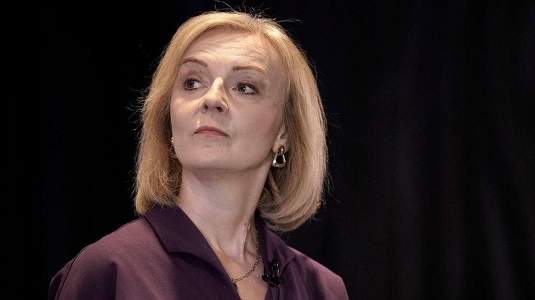
In a short that has done the Twitter rounds, a hypothetical beggar asks someone if they have a spare tenner. "Yes", replies our good Samaritan. They take the money out of the wallet ... and runs to the nearest mansion to post it through the front door, because the best way to help the poor and destitute is by giving the rich more money. In her 4,000 word essay, Liz Truss argues that trickle down is one of the "key arguments" forgotten by the press and her party as economics have marched ever leftwards since 2010.
What to make of this extraordinary reinsertion into public debate when she should still be enjoying a well-deserved period of silence? To demonstrate the absurdity of Truss's "return", imagine if Thatcher had penned a long piece 100 days after leaving office with a low key attack on John Major's abolition of the Poll Tax. She would not be given the political time of day by anyone, thanks to the mess she bequeathed her successor, and her going into print would have been regarded as ill-advised, if not outright deranged. But as David Gauke wryly observes, fears Truss's bruising contact with political realities destroyed her sense of self-confidence are unfounded. The delusion is strong with this one.
For Truss, there are two sets of actors to blame - the economic blob ensconced in the Treasury, civil service (the "left wing" rendering of the now famous headline is the Telegraph's doing, not hers), and in the international institutions; and the Tory party itself. Or, to be more accurate, those who removed Boris Johnson then did the same to her. As far as she's concerned, her diagnosis of the situation was sound and the prescription would have worked, if it wasn't for these pesky kids. Let's remind ourselves of the analysis Truss put forward during the Tory leadership contest: that Britain needs to grow the economy (outstanding insight!) and this requires cancelling the scheduled rise in corporation tax and cutting the increase in National Insurance introduced by her then opponent and now Prime Minister. After refusing to be drawn on what to do about energy price inflation, once in office she "borrowed" the freeze from the opposition parties, but Tories are going to Tory and made sure no energy giants were harmed as they received a hefty bung from the state. After the period of official mourning for the Queen, Kwasi Kwarteng presented their joint budgetary statement and announced a bunch of unfunded tax cuts, including the abolition of the 45p rate.
Truss usefully reminds us that there was substantial elite support for her plan. She singles out Kitty Ussher, Gordon Brown's former treasury bod who, shilling these days for the Institute of Directors, declared the mini-budget "a good news day for British business". The director general of the CBI, Tony Danker, was effusive with praise, saying it was a "turning point for the economy". Truss neglected to mention her approach had firm fans among the press too. The Telegraph, in its role as a semi-independent internal Tory bulletin, wrote that the "fiscal event" was "unashamedly putting wealth-creating enterprise back at centre stage". The Times, with a foot in political realities, nevertheless dubbed it a "gamble" on "boosting growth at all costs". Even as the wheels were coming off, The Sunargued that she was "jump-starting our stagnant economy" and called on readers to ignore the panic.
Given the effusive praise, how could it all go wrong? Truss almost treads into tin foil hat territory. She discusses the defeatist attitude in the Treasury. As someone who was there for two years, she complains about their "pessimism and scepticism", how monetary policy was sacrosanct, and everything was subordinated to an imagined post-Brexit trade deal with the EU. They also committed the most grievous sin of viewing Brexit as a damage limitation exercise. With this enemy within, Truss sets out her conspiracy theory. Having looked into the causes of the spectacular collapse, she discovered the importance of Liability-Driven Investments and how dependent many pension funds were on them. With market volatility being as it was, her announcement of unfunded tax cuts (i.e. cancelling corporation tax, National Insurance, and the 45p top rate) saw Sterling crash in value and therefore the value of government bonds, which pensions held and used as loan guarantees. With the bottom falling out of the floor of their assets, funds would be forced to sell to meet their obligations as loans were called in, leading to a spiral of collapse. The Bank of England stepped in to stop the crisis. Truss, who reportedly spent her time at the Treasury challenging civil servants to do sums on an abacus was obviously too busy to learn about how state finances and the fiscal wellbeing of the core Tory support were closely intertwined. Naturally, she was blameless: "At no point during any of the preparations for the mini-Budget had any concerns about liability-driven investments and the risk they posed to bond markets been mentioned at all to me ...". Perhaps Truss would have been warned had she not sacked Tom Scholar, the Treasury's most senior official. The subsequent carnage on the markets was volatility already baked into the system, she claims. Where she failed was not explaining things properly because of her lack of communications finesse.
Truss goes on to rant about the "lefty" Office for Budget Responsibility, forgetting it was set up by George Osborne to discipline government as a short-term gimmick to reinforce the shrink-the-deficit message. Apparently it provided a straitjacket that constricted Treasury and policy maker thinking ... along broadly Keynesian lines. The critique of her position by well known enforcers of social democratic orthodoxy, the IMF, were "politically motivated" - a point Truss sadly does not expand on. And Joe Biden's comments were all in service of an international attempt to harmonise tax regimes between G7 countries. Which just goes to show Truss's plan amounted to being a tax haven for capital fleeing from other advanced states. Therefore, she complains, her plan never had the chance to succeed. On what would be the perfect circumstances for her success, she does not say.
Truss paid the political price. When interest rates jumped up, the Tories very definitely lost the mortgage holder constituency. But also, it knocked on and affected the key Tory landlord base, businesses were hobbled by rising rates on bank loans, and added inflation put up the costs of commercial activity independently of energy prices. As usual, working age people were hit the hardest but for once the cost of Truss's efforts at "unashamedly putting wealth-creating enterprise" at the centre of politics found businesses big and small out of pocket. Some people did very well, but the number of Truss-supporting hedge fund managers are but a tiny sliver of the capitalist class.
The essay shows a depth of delusion to a degree seldom seen among someone who, briefly, was in the front rank of politics. With a proper comeback forever off the cards, Truss believes she can still steer things. Her prospectus of hard class politics makes for economic drivel, but where we see distended drool the Tory faithful identify nectar which they can't but lap up. Sunak's briefcase Toryism isn't bothering the polls, nor does its steady-as-she-goes excite much interest. As unreasonable as Truss is, she has identified that for her party to turn things around it does need to do something eye-catching. Confining oneself to boring, technocratic-sounding pledges won't cut it. Truss is hoping she can use her leverage on the backbenches to pressure Sunak onto the victorious path. And there's space for it now Johnson appears more interested in making money than doing his job.
To that extent, this is welcome. Truss's "return" creates new axes for the Tory party to splinter around, with more room for bad tempered tantrums, toy throwing, and playground-style bust ups. Having the former Prime Minister who crashed the economy
treated as a serious figure Tories should be listening to is manna from heaven for Keir Starmer. Labour could not have asked for a more favourable scenario. The Tory leadership debates amply demonstrated Truss was not suitable - the signs were plain to see. But now, through her, the Tories are demonstrating their tenuous grip on political realities. Just as Truss made our present crisis worse than it should have been, there's every chance her continuing influence could ensure the Tory defeat, when it comes, is heavier than it might otherwise be.
If you know of any new(ish) blogs, podcasts, channels, Facebook pages, spin offs of existing projects, campaign websites, limited series, or whatever that haven't featured before then drop me a line via the comments, email, Facebook, or Twitter. Please note I'm looking for new media that has started within the last 12 months. The round up appears hereabouts when there are enough new entrants to justify a post!
If it was three minutes long, last year's top ten pegged the following as an if-goths-did-Eurovision ditty. I'm here to stand by that assessment. Friday night is party night, so request this one down the dark disco.
Since the all-too-brief glory days of Liz Truss's government, the Tories have lagged well behind Labour in the polls. Projections of majorities greater than anything Tony Blair enjoyed are so routine they've become mundane. Unless there's some unforeseen catastrophe, the next election is in no doubt. Labour will win a majority and the Tories can look forward to evisceration. An unexpected comeback is less wishful thinking and more a matter of delusion. But what about the replacement? While most of what Labour is promising awaits the outcome of policy consultations and manifesto drafting, has "Starmerism" revealed enough of itself to anticipate what his government might look like?
There are two themes. The first is a Starmer government will be a reforming government. The attitude to trade unionism and the unveiled plan to renovate the state indicate as much. As managers first and politicians second, Starmer's front bench are fascinated by and fixated on finding fixes to political problems. They share the exasperation of millions with the fact the state is falling to bits and its most basic functions, like issuing passports or having enough ambulances, are seemingly beyond its power. Sorting it out, creating new agencies, making the state an efficient dispenser of services, on the rare occasions Starmer talks about social justice this is pretty much what he means. It also explains how, in the NHS for example, the place of private provision can sit alongside the usual promises to hire more nurses and doctors without getting troubled by the tension between the two. It's a return of "what works", with the public defined and positioned as (passive) consumers of services.
Similarly on economics, the idea of devolving more powers to local government with a vision that's suggestive of letting a thousand Keynesian flowers bloom is about serving business. This vibes with the emerging common sense among business, and one that even Boris Johnson had to reflect with his talk of levelling up. They know support is needed following the triple blows of Brexit, Covid, and the inflation crisis. A happy consequence for Starmerism is the creation of new and potentially influential layers of bureaucrats and technocrats at local levels now every authority will have teeth, and these new graduate positions are going to owe their existence to the Labour Party. When unveiled back in December, Gordon Brown discussed different economic clusters based on local economic profiles. Stoke-on-Trent, shock, horror, is considered a centre for ceramics, for example. If councils have the financial clout to back "their" businesses, the thinking goes that untapped potential will get unlocked and regional inequalities start eroding away. As such, there's no need for direct state intervention to mitigate inequalities - regulated and supported markets overseen by councils with strategic direction provided by the state will do the job instead.
But a Starmer government would also be an authoritarian government. Starmer has basically banned oppositional positions on NATO and the Israeli occupation of Palestine from the parliamentary party, stood by when spy cops legislation went through the Commons, has indicated his support for the government on criminalising "disruptive" protest, and attacks the Tories for not being efficient in dealing with refugee small boats in the Channel. We see Starmer's approach to change the Labour Party. It wasn't just about putting the right back in charge, but treating the party as an administrative machine slaved to a set of norms around "decency", political expectations on candidates, and forcing constituency parties to kowtow to appointed officialdom. As Starmer routinely lies about his record, lies about his predecessor, and lied to the members when he ran his leadership campaign, there's no reason to believe dishonesty won't be a feature of his government either. Though this is likely to be bad faith attacks on opponents and calumny tied to political objectives rather than personal enrichment and cronyism, as per Johnson's case. Anyone thinking Starmer is going to undertake electoral reform, reverse the civil liberties attacks of the last 40 years, challenge the power of the press, and restore access to the judicial system denied by savage cuts to legal aid are as blinkered as those few Tories anticipating a fifth term in office.
The contours of Starmerism are different to decaying Toryism. Because Starmer seeks to incorporate the labour movement into his modernisation project, there are opportunities for us to push, break, and remould politics on our terms. His project is not without risk for him. After all, every government regardless of political colouration opens up its own opportunities. But we need to be crystal clear. Getting the Tories out remains the immediate political objective, but that doesn't mean Keir Starmer is preparing a bed of roses for us post-election.
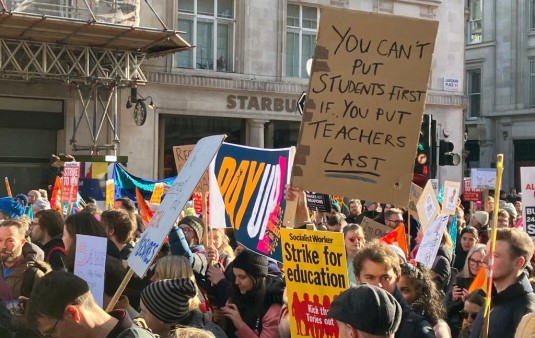
Congratulations to Rishi Sunak for reaching 100 days in office. He'd have preferred to mark the occasion with a quiet toast rather than the biggest single day of strike action this country has seen for 30-odd years. But even rich boys don't always get what they want. I agree with Richard Seymour, today's actions are significant in size and scope. After what seems like years of a virtual absence from public discourse, except either as whipping boys for Tory politicians or regarded as embarrassing relatives by sundry Labour MPs, since the RMT took action in the Summer momentum has been building behind trade unions. With no one in mainstream politics sticking up for the labour movement, hundreds of thousands of work days lost speak louder than mealy mouthed shadow ministerial apologetics.
The first consequence is such a big, visible action can only embolden further such action. With ballots live for civil servants, teachers, railway workers, HE workers, nurses, and dozens of smaller scale disputes flaring up week after week in the private sector, as the cost of living bites workers have no choice but to defend what we have and demand back what's been taken. This can only spread further, seeing as Sunak is is refusing to negotiate. Inflation and affordability aren't the issue. We've seen how these don't matter when occasion affords an excuse to shower their well-heeled support with state money.. No, Sunak wants to be seen as a strong leader and needs to keep a lid on the politics of expectations. Doing the sensible thing and hammering out compromise deals with trade unions, even if their demands are nowhere near met, is fatal to a Tory project working to delegitimise and render ineffective all forms of collective action.
Yet, despite this, not only is the strike wave growing, public support is growing. This doesn't matter so much for workers in dispute per se. The object of striking is to be disruptive and make life unliveable for the employer for the duration. This, ultimately, is all that matters. Yet with some 300,000 teachers taking action and the huge inconvenience for millions of parents, polling shows their sympathies lie with them as opposed to the government and that this has increased as the strike wave has picked up speed. The reasoning isn't hard to fathom. Parents speak to teachers. They know what goes on in their kids' schools. They can see how hard pressed they are for resources, and have an inkling about the ridiculous (unpaid) workload that comes with the job. Likewise, because of the spread of the strike action, we are approaching that crucial point where every family and social circle has someone who has either been on strike during this wave, came out today, or will be looking to very soon. Whatever Tory MPs say in the Commons or the lines they push in interviews, or rubbish written by the shrinking right wing press, social proximity cuts through their lies.
Herein lies the danger for establishment politics. For decades, Tory rhetoric has relied on supposing the unions are some sort of excrescence; a barely-acceptable set of institutions who don't have any place in the modern workplace and are divorced from and separate to the workers they organise. For much of the same period, Labour's attitude has been little different. This has left an opening. The combination of the inflation crisis, and that unions are the only organisations talking about solutions is turning heads. Last time, political neglect of entirely normal aspirations resulted in Corbynism. This time, ignoring the fact working people want a wage or salary they can live on is legitimising trade unions and militant action. Sunak's short-sightedness is not keeping the labour movement in a box, he's antagonising it, setting up a dynamic where disputes can only grow and grow - especially when it's he, the Prime Minister who dodged a leadership contest of his own members, who's lacking legitimacy.
There are medium term consequences here for Labour as well. Keir Starmer has spoken favourably about trade unions pretty consistently, even though he won't be drawn on the specifics of industrial disputes or offer striking workers the smallest amount of encouragement. His silence about today's actions are typical. However, by not saying anything positive he's already teaching trade unionists, especially those new to the movement and taking their first striking steps, a valuable lesson: that Labour, and particularly its leadership cannot be trusted. While most sections of the labour movement will support Starmer without enthusiasm to get shot of the Tories, the aloof positioning, the "we're not a party of protest" posturing is placing a wedge between the enlightened legislators of which he is the personification, and the increasingly class conscious workers voting for him. That means when the time comes for conflicts between unions and his government, and they will surely happen, large numbers of workplace activists as well as union officialdom won't feel the need to pull their punches as Labour-loyal unions have done in the past.
In other words, the strike wave has every possibility of opening politics up by normalising trade unions as aggregators of workers' voices, by framing industrial action as a reasonable and legitimate response to unreasonable and unacceptable establishment politics, and crucially create a spur for workers - us - to look to our own capacities rather than waiting on a great socialist messiah to save us. Today was significant not just because it hit several statistical milestones. We could be at the beginning of something new - and exciting.