Yesterday, I argued that Liz Truss had contrived the calamity she finds herself in. With no way out of the impasse, the Prime Minister has ham-fistedly taken a leaf from Boris Johnson's well-thumbed book of dodges: get someone else to take the blame. In this case it was Kwasi Kwarteng. Everything Truss and Kwarteng did was fully previewed in the leadership contest. She was less keen to discuss the energy price freeze, seemingly of the view massive tax cuts were her passage to popularity. The Tory faithful preferred to eat up this drivel than what Rish! Sunak was offering, despite his prospectus having some relationship to political and economic realities. And we all know what happened next. Kwarteng entered Number 11 and faithfully set about implementing Truss's promises. He definitely was a fully paid up member of Trussonomics (the undeclared £20k/month bung from Crispin Odey made certain of that), but by the same token he was only following orders. He did exactly what Truss asked, and got the sack for it.
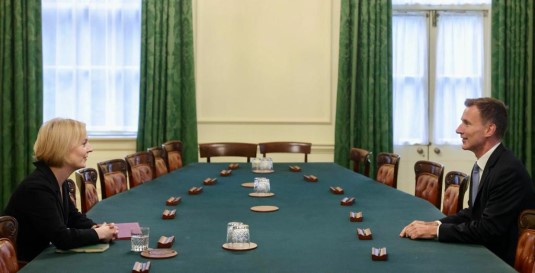
As politically flat-footed Truss is, calling on Jeremy Hunt to fill the Kwarteng-shaped gap in her cabinet was a good move. From her point of view. While Hunt is rightly despised across the labour movement for the damage he inflicted on the NHS, among the Tories he's a safe pair of hands. He managed a notoriously complex organisation and kept a lid on staff pay demands. Hunt possesses the experience lacking everywhere else in Truss's operation. And second, he's a member of the Tory briefcase establishment - that layer of politicians, present in all the Westminster parties, who are "reasonable" and well connected among the elite mainstream. Unlike Truss, Kwarteng, and their cosying up to the capitalist class's most short-term and extremist elements. Potentially a source of tension, now Truss has basically adopted Sunak's programme - albeit with the National Insurance rise reversal - her government now has something she foolishly failed to secure in the first place: buy-in from leading Tories. The briefcases and sharp suits might be less inclined to be as verbose with their text message briefings and quiet drinks on the terrace now one of their prominent own is on the inside.
Hunt's appointment and going with the Corporation Tax rise looked like it could get Truss through her immediate difficulties, despite rumours of a Sunak-Mordaunt dream ticket and "serious people" coming for the Prime Minister. But Truss is gonna Truss, and she immediately plunged herself into further difficulties with the worst press conference ever given by a sitting Prime Minister. It appeared Truss could not feel the tugs of the gravity of her situation. She had to offer some contrition about crashing the economy and stoking inflation, but also the conviction the country was still on the right path. The Tories needed the iron lady, but they got plywood woman. Stiff but evidently breakable, she phoned in her speech - written down on notes - and looked panic stricken as she scanned the assembled hacks for a friendly face. After picking two right wing papers and ITV and BBC, to whom she offered the same stock answer, she simply cleared off. Perhaps Truss thought she was being decisive in the same way Dave used to just walk away from interviewers, but it was super awkward. She emoted anything but strength and direction of purpose. While Twitter isn't real life, the messages shared from Tory "sources" by top politics correspondents suggested the crisis was back on and she wouldn't last until Christmas.
What happens immediately is in Truss's hands. She can try toughing it out, but having fluffed her own rescue plan it's only a matter of time before she lurches into another crisis. Or she could have a go at threatening her opponents. As Nadine Dorries(!) has perceptively remarked, swapping Truss out for a coronation makes the pressure for a general election hard to resist. I'm not so sure. But if Truss wants to scare her charges, threatening an election is exactly what she should do. Tory MPs might be wondering how Truss has brought their party so low so fast (pro-tip, here's a book that helps) and hate the situation they're in, but these Tories will rue the annihilation of their parliamentary party even more. The dissenters know this, and fear she might just be unpredictable enough to smash the button. In other words, the situation is pregnant not with her removal but with more of the same. The agony isn't over. Far from it, we might not even be anywhere near the end of the beginning.
Truss's collapse - what else can we call it - is astonishing and unprecedented because it is entirely self-inflicted. When Boris Johnson took on the remainers in his party three years ago, the prospect of damaging splits were chaos enough. The fact his own brother resigned in disgust at his constitution bending, bullying antics said it all. But there was a sound logic to Johnson's scheme. Having won the Tory leadership contest because he would move heaven and earth to get Brexit done, he knew the majority of MPs and members were on side, and he could rely on the largesse of the capitalist class beyond the usual suspects to see off Jeremy Corbyn. Johnson trashed his party to save his party. He packed the leave vote into the Tory train while the forces of remain were left squabbling in the sidings, and the election went entirely to plan.
Truss on the other hand massively miscalculated. Rather than embrace the political opportunities in front of her, she successfully boxed herself into the worst position possible. The first indication was her cabinet picks. The Parliamentary Conservative Party is not overburdened with talent, but those with experience of government largely stayed on the backbenches as supporters and lickspittles won Truss's favour. Effectively, the antis had no skin in the game making future rebellions more likely. This was a mistake to be sure, but not an insurmountable error - so long as Truss's governments kept playing its cards right.
The second bad call was her energy price freeze. Deciding to protect energy company profits was far from politically adept, but even then her position was salvageable. She might have missed the populist impulse to sock it to suppliers, but the two-year freeze provided some certainty - even if it meant everyone would be paying more. And the fates cut Truss some slack. Provided no one looked too closely at the detail, the rest of the parliamentary party could have gone along with it. They would have remained behind in the polls, but future recovery remained a possibility. Again, provided nothing else went wrong.
The fatal moment was Truss's budget. She did not go for naked Toryism because her and Kwasi Kwarteng are incompetent or blinded by ideology. It was an audacious effort at feathering the nests of their key allies in the City at everyone else's expense. This included large swathes of the capitalist class, and their base among homeowners and pensioners. Stoking inflation and raising interest rates to supposedly stimulate economic growth didn't wash with them, nor anybody else for that matter. Truss must have thought the traditionally reliable guard dogs of Tory support would have lapped it up, but it being 2022 and not 2012 they did not. Rolling back on the 45p tax rate and carrying on as if everything was okay have compounded Truss's woes.
The first week back at Westminster has made matters worse. Stopping Jacob Rees-Mogg from running a Winter energy saving campaign. Home Secretary Suella Braverman scuppered a trade deal with India, while she has been cut out of the upcoming relaxation of immigration rules. Prime Minister's Questions found Truss at her most wooden, but U-turns were extracted on scrapping no fault eviction reform and public spending cuts. By all accounts her appearance at Wednesday evening's 1922 Committee meeting was a disaster. It's one thing to treat the public with contempt by trotting out the same tired sound bites, but quite another to try the same scam on the cognoscenti. Throughout Thursday, the calls in the press for Kwarteng's head have got louder as he announced there would be no reversals on the mini-budget until the actual event on 31st October. And if that wasn't bad enough, the Bank of England's Andrew Bailey is effectively pursuing his own economic policy, such is the dysfunction of this government.
The Truss government is dead in the water. Never before has a government collapsed as quickly and as completely, nor is there any obvious way out. Rish! Sunak is a non-starter, being too divisive. Johnson is away making money (not declared properly, of course), Penny Mordaunt would be torpedoing her own future, and Michael Gove is despised by just about everyone. Short of an election and the Tories suffering the hard reset of annihilation, the most likely outcome is for Truss to keep on shambling on without direction and only slow witted instinct to rely on. It's an overused metaphor, but we are in the month of Halloween. Truss has managed to raise a zombie government.
Image Credit
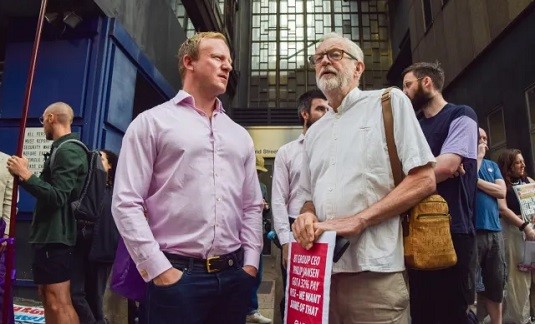
As a lot of people have spent the last day pointing out, Sam won the selection in 2019 thanks to less-than-transparent shenanigans. There is no suggestion Sam was involved in these himself, but it was a case of convenient timing that Athwal, then the frontrunner, got suspended on the eve of the selection meeting on "very serious allegations". Which were as empty and as defamatory than anything woven by the stitch up sweatshops in Luke Akehurst's basement.
There is a lesson here for the left. Writing in criticism of left stitching at the time, the resort to administrative measures to meet political objectives simultaneously showed the strength and weakness of Corbynism. Weak, because not enough of the rank-and-file could be relied upon to get the right outcomes. And strong because it underlined what appeared to be the left grip's on the apparatus. On reflection, this was more a tide mark - an impression left on the bureaucracy thanks to the unprecedented deluge of new members, but whose enthusiasm had ebbed by the period immediately before the election. This is a kinder way of saying what had really happened: the apparat had, to all intents and purposes, captured the left. And so it proved stupidly easy for Keir Starmer to clear out Corbynist officials, and the sights of newly apprenticed fixers who got their leg up from left notables now fritting here and there doing favours for Labour First are not unknown. As such, "advances" won by fixing a selection were vulnerable to reversal, especially when it was accomplished by committing an awful injustice in the first place.
It's a truth generally acknowledged that Jeremy Corbyn didn't have the stomach or the inclination to do what was necessary to kick the party into touch. I agree. Saboteurs and scabs deserved the door, not a seat in the House of Lords. But ruthlessness for the left is not the same as ruthlessness for the right. What we have to be ruthless about is opening politics up. This means in the Labour Party a single minded pursuit to maximise the accountability of representatives and officials, pushing policy making down from the top to the membership, and making sure politicians and bureaucrats whose raison d'etre is the preservation of their privileges are pushed out. This was the promise of Corbynism, and we fluffed it as decisive action was eschewed too many times for compromises with opponents who would never accept a compromise. The 2017 result and subsequent conference was the time to consolidate, but magnamity - if not hubris - won out over pragmatics, strategic thinking, and doing what was necessary.
And here we are, left in a situation where the right rule the roost again and left wing MPs are scrabbling around pleading to be reselected. A hard lesson but, unfortunately, a necessary one that democracy is never an optional extra where socialism is concerned.
The reasons why people hate the Tories aren't hard to fathom. While writing my book, it was hard keeping the loathing from spilling onto every page. What Sturgeon said about hating Tories is common sense. The devastation they have wrought upon this country and its people, the completely unnecessary suffering inflicted, the poisoning of politics and turning neighbour against neighbour, the squandering of natural resources and the despoliation of the environment, if leading Tories ever find themselves before a revolutionary tribunal it will take longer to read out the charge sheet than their serving any custodial sentence handed down. Yet the Tories act all shocked and shook when this is pointed out to them. I recall a Question Time from many years ago when Owen Jones pointed out the devastating consequences of social security cuts to Iain Duncan Smith, whose reply was at once hurt, bewildered, and incredulous.
Putting to one side the occasion Zahawi referred to Jeremy Corbyn as "a dangerous antisemite", where does this faux hurt and preoccupation with politesse come from? It says two things about how Tory politics operates.
The first is an excuse for the Tories to employ a favoured stratagem. Despite being the country's wealthiest and most successful political party, a strand of its appeal speaks to, for want of a better phrase, an underdogging sensibility. Because Conservatism here, like elsewhere, stirs up fear to offer security it sets up rhetorical ruses, always amplified by their press, that the Tories are harried by remainers, woke warriors, humourless communists, liberal celebrities, asylum seekers and, if you believe Suella Braverman, Cultural Marxists. Why do you think leading Tories purposely brave the protesters outside their conference when more secure entrances are available? The crafting of standing up against wrong 'uns too numerous to mention feeds a contrived victim complex - the angrier and shoutier, the better. Indeed, during her conference speech last week setting up a new wall of enemies is exactly what Truss attempted to do with her "anti-growth coalition". Because Britain is (always) under siege, and the Tories are under siege, there's a fundamental identity between the two. Calling Tories bad names and casting aspersions on their motives will always be spun by its MPs and advocates as unfair attacks, as bullying. And sympathy (and votes) will be duly elicited.
More fundamentally, it points to the intimate relationship between social distance and how politics works. We've noted many occasions down the years how politicians and their media running dogs create their own universe with its own strategies, stakes, framings, and doxa. Combined with a decent whack, status, and institutional power, politics - or "Westminster" - insulates MPs from everyday pressures that bear down on the rest of us. They are not nor can they be more "representative" than ordinary party members. The best of them actively resist this, while the worst embrace it. And as climbing up the greasy poll calls on careerists to adopt its stated and unstated rules, it's no accident the establishments of the two main parties comprise the most awful people. The Tories, as a structurally dishonest outfit whose job is to present the minority interest of capital as the universal interest, largely define the rules and hypocrisies of the game. Politics is about power, but they - and the official opposition - work hard to make power a question of who runs the government. While crucially important, it obscures and masks the real flows of power, the anti-democratic character of the British constitution, and that the Tories are a class project. Though props to the Prime Minister for stating Tory intentions openly.
The elaborate bullshit of the Commons, cross-bench chumming, and the Tory affectation that politics shouldn't be taken too seriously and we're all in it together are all aspects of the concerted masking effort. The reason Zahawi and sundry idiots take umbrage at Sturgeon is because of her refusal to buy into these fictions. While a bourgeois politician, the SNP's politics - despite its constitutionalism - puts her and the party outside the system, and she likewise feels no compulsion to support its illusio. Hers was an unwelcome truth, an exposure - not unlike Joe Lycett's mockery of Truss a few weeks back, the media's inability to cope with Mick Lynch, and the entirety of the Corbyn episode - that disrespects the rules and makes visible the contingent, continued effort to pretend official politics is something it's not.
Image Credit
Handing the reins over to Politics Theory Other tonight. In the latest episode of Interregnum, Alex's regular series talking with Richard Seymour, the comrades discuss Liz Truss's leadership of the Tories and the prospect of her being forced into making significant retreats. The majority of the conversation was recorded before the Prime Minister did her famous 180 on the top rate of tax, and if The Sunday Times is to be believed, another about turn on raising benefits in line with inflation is imminent. In a weak position from the outset, Richard is right that Truss and the Tory party are ripe for defeat.
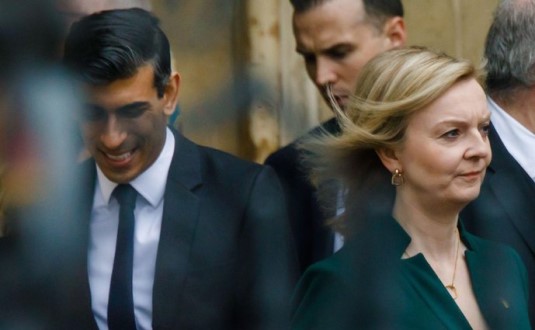
This reminds me of the period immediately following Black Wednesday when the Tories couldn't put a foot right and blundered into bad policy after bad policy. But Truss has cratered the Tories' chances inside of five weeks. No wonder Phillip Oppenheim, former Treasury minister (and my ex-MP, as it happens) suggested we could be in the last days of the last Tory Prime Minister. With the horizon black with imminent doom, I read with interest that efforts at a rescue are underway. The plotters are plotting and want to depose Truss and stick Rish! Sunak in the job.
According to our anonymous correspondents, Sunak could be relied on to do a Michael Howard. Long memories will recall he was coronated as leader to staunch the flow of damaging losses under Iain Duncan Smith's calamitous leadership, and indeed polled better than expected at the 2005 election. Sunak, apparently, would want to do this for the good of the country. A couple of problems. The former chancellor has been out of the spotlight for a month weighing up his downturn in political fortunes versus the guaranteed fortunes of a sabbatical to Silicon Valley. No one knows if he's minded to involve himself in this scheme. The second is the would-be rebels are divided. Some want to move yesterday, and who can blame them? But others want to give her a chance to claw things back. Every leader deserves at least one crack at the ballot box, don't they? The time to move will be after next year's local elections.
Let us play the plotters' game and suppose this coronation has legs. For one, it's unlikely Sunak - who's very much a tarnished figure these days - could undo the damage Truss has inflicted on the Tories. Short of giving everyone tens of thousands of pounds, or a declaration of war on Russia, it's hard to see how the party can come back. The self-inflicted wounds are too many and are being left to fester. Sunak, who is hardly the most sure footed and tactically adept of politicians (though, to be fair, he's a league above Truss) hasn't got the wherewithal or the temperament to carry the can. For him, it was Prime Minister for a decent interval or bust, and his moment has passed.
Our plotters look over another insurmountable problem: the party. Tory party democracy is strictly limited, and so what the members have they jealously guard. Just see the party's history of endless disputes between Association committees and the demands of Central Office for constituency money. The members supported Truss by a clear margin, though not one as convincing as any of her elected predecessors. They won't take kindly to her removal, and minus proper mechanisms of accountability in the party, swathes of the membership - which has more or less stabilised - are likely to abandon it in protest. But the main difficulty will be the Commons itself. During the leadership contest, it was obvious the divisions between Truss and Sunak and their respective wings were more serious than a matter of differing opinions. Truss was (and is) allied to a small section of City capital, while Sunak was the repository of wider City interests, and capitals big and small. Be that as it may, if Truss is dumped for Sunak what guarantees are there that her wing of the party - she didn't get a majority, but she did get a plurality of MPs - would meekly accept the Tory "establishment" head boy and file in behind him. No, even with extinction whispering in the party's ear it would become more of an ungovernable mess.
The sad truth for the Tories is there's no way out of this. Truss has cut the party off at the knees and all they can do is hobble toward the next election, bleeding themselves white and without hope of recovery until the electorate administers the euthanising injection.
Image Credit
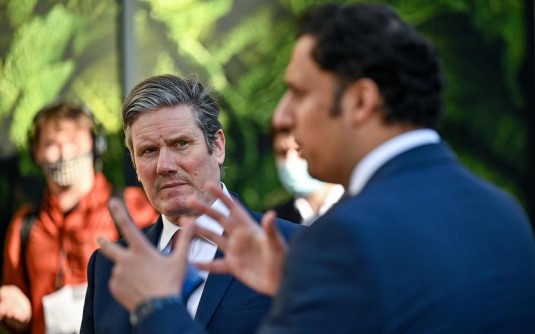
Only to a limited extent. We're now eight years after the Scottish independence referendum and seven since the almost total wipe out of the unionist parties, and still the Labour mainstream haven't produced an analysis of what happened, how it happened, and how the party could recover and become Scotland's dominant political force again. Indeed, at the last round of Holyrood elections Scottish Labour under Anas Sarwar reached new lows. It's not difficult to appreciate why: the party is running on vapours, sociologically speaking. Its old constituency was broken up along with Scottish industry, and what is left are retired elements and legacy votes. Sarwar's prospectus, during his leadership campaign, was a couple of shuffling steps to the left of Starmer (which is hardly difficult) but was all about Scottish Labour's comfort zone: winning back the unionist vote.
To borrow the language of Blairism, this was a core vote strategy. In 2015 the SNP ripped away swathes of Labour's base, and under the canny strategies pushed by Ruth Davidson the Tories made a good fist of cannibalising what was left of Labour's unionist vote. And now, as Tory fortunes sink through the floor Labour are taking some of it back. But as a strategy for winning loads of Westminster seats and forming a government at Holyrood, it's a non-starter. It has an inherent ceiling. And, like conservatism across these islands, unionism is in long-term decline. It's possible that a renewed unionism could be built on clear tangible benefits accruing to Scotland from remaining in the UK. For instance, if Boris Johnson had been serious about levelling up or if Starmer's very mild, very Fabian programme delivers on its promises. But until then, the tendency is downward, producing a spectacle not dissimilar to the folically challenged scrapping over a comb. Second, the unionist vote is split between Labour, the Tories, and the Liberal Democrats. While these parties might be squeezed they do have an irreducibly loyal core that would never vote Labour, even if it's a toss up between them and the SNP. Should Labour maintain its position as the unionist party, which seems likely this side of the next election, it can't take enough votes from its weakened and smaller rivals to make much of a dent in the SNP's dominance.
And here is the central problem. Scottish Labour has shut its ears to its former voters, and appears uninterested in winning their support again. It meets the Scottish government with the most dismal economism and complaints about the education system, because putting Labour on a firmer footing effectively means leaving its existing, union base to wither. What Corbynism was was a manifestation of the rising new layers of the working class, the burgeoning strata of immaterial workers well on its way to becoming the majority of wage and salary earners in this country, if it's not the case already. This was consolidating behind Scottish Labour and giving the patry a new base, but the party's arrogant and indistinguishable-from-the-Tories campaigning during the independence referendum showed that "their" party was nothing of the sort, and was uninterested in their backing. These erstwhile Labour voters got the message loud and clear, and duly supported the SNP in droves in 2015. Winning here means dumping the pathetic and grotesque socially conservative messaging (such as Rachel Reeves criticising Suella Braverman from the right for not deporting enough people), committing to a green strategy that is more than an environmentally friendly PFI scheme with a British badged holding company managing energy market investments, ensuring workers rights from day one are realised, that job prospects and new industries are invested in, and that the constitutional settlement grants, at the very least, more significant powers to the Scottish government.
In other words, Scottish Labour has to appeal directly to what is now the SNP base. That's the hard politics, and the road the party's leadership time and again refuses to take. And until it makes efforts to break out of its self-imposed unionist ghetto, no matter how badly the Tories do Labour can only ever play second fiddle in Scottish politics.
Image Credit
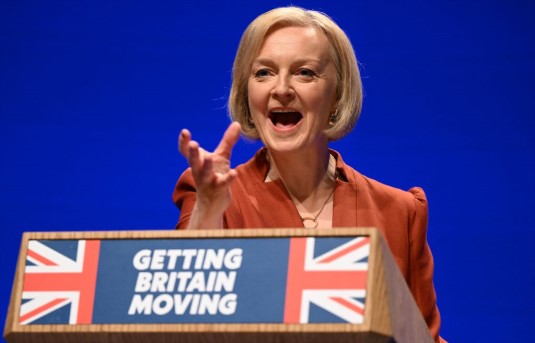
Simmering rebellions and senior ministers backbiting and musing aloud never ends well. It reminds me of the first few months of Jeremy Corbyn's leadership and how senior shadow cabinet figures would do as they pleased. Except Corbyn kept the unions and the members onside, which meant when Labour MPs moved to no confidence him that wider support remained and saved his bacon. Truss has no such luxury. She came out comfortably ahead of Rish! Sunak among the members, but not only was she not the MPs' choice, among the Tory selectorate she trailed her recently departed and umpteenth disgraced predecessor. Even as she was toasting victory, her tenure started off on unsure ground.
Given the tumult she has unleashed, Truss had to pull something special out of the bag. A rabbit that might have excited the press, or a dazzling bauble getting the Tory faithful cooing in wonder. A big ask, and one as limited a politician as the Prime Minister could never have delivered. It wasn't that Truss's speech was bad by Tory party standards, it just didn't rise above her dial-it-in stump speeches during the leadership contest. Apart from the interruption of Greenpeace campaigners ("Get them removed!" mumbled Truss from the podium), her speech was memorable for two things. First we had her characterisation of her opponents. Labour, the Liberal Democrats, the SNP, "militant trade unions", "vested interests dressed up as think tanks"(?), Brexit deniers, Extinction Rebellion, and "talking heads" are part of the "anti-growth coalition". These are the wrong doers Truss's Tories have pitched into battle against becase, lest we forget, her brasstacks Toryism has nothing to do with enriching the rich and is all about conjuring boom town Beijing-style growth figures. Unfortunately for Truss, the boss of Shell chimed in after her speech and practically begged the government to tax his firm. Not all members of the ruling class are so blinkered about the real damage Truss's sectional project could cause their immediate and long-term interests.
The second take away were the "tough times". Disappointingly, with the going getting tough she chose not to quote Billy Ocean and went with the altogether blander "we need to step up." It's a point worth recalling that the "stormy days" we saw last week were not the consequences of Vladimir Putin's faltering war in Ukraine, or the Fed mucking around with American interest rates. They were triggered by Kwasi Kwarteng's speech and their shared ambition to a) use state borrowing to shield energy company profits, and b) use state borrowing to give the rich a tax cut and protect the corporate balance sheet. The near cataclysm visited on pension funds, the inflationary pressures they stoked, and the interest rate hike they forced the Bank of England into immediately visited a vision of electoral doom upon them. Truss talks about tough times now, but a little over a month ago she was going round the country offering jam today and jam tomorrow while Sunak peddled (and subsequently failed with) a Tory politics that was anchored in some aspects of political reality. What Truss is doing is trying to mobilise a masochistic affection for toughness and penury among Tory and Tory-adjacent voters. The problem is she's forgot that the sacrifices Tory voters like to see are those borne by other people. And that millions of them are feeling the pinch. To start off it was the energy price increase, and thanks to Truss's handling of the politics she's replaced a cost of living crisis exacerbated by gas and electricity bulls with a cost of living crisis exacerbated by mortgage rates and inflation.
If Truss's speech taught us one thing, it's that she's learned nothing from her near death experience. With Westminster resuming next week, tough times are guaranteed. But on this occasion, the agonies won't be sparing of their architects.
Image Credit
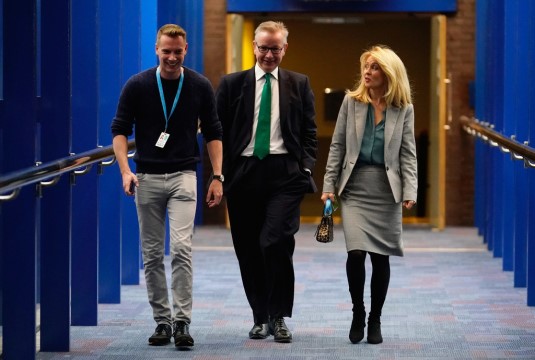
Likewise, Tory conference can offer glimpses of what might be. As the congenitally limited enjoy a couple of years in the spotlight before the curtain falls there have been signs that some Tories are coming to a realisation about their predicament. Liz Truss and Kwasi Kwarteng did their 180 on the top rate of tax because they were spooked by the vocal rebellion of the recently defenestrated big beasts and attacks on them by the Tory press. The Times, for instance, led the charge against their ruinous programme, and it was Murdoch lackey/agent Michael Gove who rubbished the Prime Minister's strategy moments after Truss finished her Sunday interview with Laura Kuenssberg. It was "unconservative" and demonstrated "the wrong values". Later on at a Tory fringe meeting he indicated he might have voted against the plans when they came before the Commons, an eventuality Truss headed off by pulling the cut. And then, weirdly, today - and totally unprompted - he came out against selection and grammar schools.
Esther McVey was also at it. The 45p rate has been kicked into the long grass, but the corporation tax freeze stays. Truss's plans for zero tax (and zero rights) enterprise zones remain. Redefining small businesses as anything with fewer than 500 employees are go. Bankers can look forward to unlimited bonuses, and cuts to public services and social security are still on the cards. McVey enters the picture as an unlikely champion of the poorest and most vulnerable. Having previously affected her down with the working class creds, the once-chopper of the DWP's budget said people wouldn't be helped back into work by making benefits lower. A thought that never troubled her while overseeing a brutal sanctions regime and real terms erosion in the value of welfare payments year after year.
A genuine change of heart by both? Obviously, there are practicalities to consider. For all the Tories' war on woke rubbish, Theresa May and Johnson did dial down the rhetoric on the kinds of benefit bashing that was de rigueur during the Coalition government. Johnson's promise to "level up" was a signature tune, even if it was composed of bum notes. And as part of the initial package of measures to blunt the consequences of the energy price rise, substantially increasing benefits along with pensions was promised. With Truss and Kwarteng hinting they will now limit increases in line with earnings (i.e. a real terms cut coming in under the rate of inflation - while the state pension is protected by the triple lock), McVey is not the only Tory to espy the electoral pain to come. Regardless of how well it plays with the Tory traditionalists. Therefore making a play defending the poor and vulnerable has more than a soupçon of self-interest involved. Unfortunately for them, as Labour MPs who broadcast their Brexit supporting credentials in 2019 found, the electorate seldom discriminates between party representatives.
But this does point to something. It's long been the argument around these parts that reversing the Tories' long-term decline and setting the foundation for a new cycle of support lies in a definite move to the centre, and junking the hard right and the far right of their party. The massive swing against the Tories wasn't because of "poor communication" as Truss supposes, but because her programme is fundamentally at odds with public attitudes and, most importantly, the fact she's imperilling living standard, jobs, and people's homes. It shouldn't take a genius among the Tories to realise there is a potential mass base for a proper one-nation conservatism that actually lives up to its promise, one that doesn't push culture war junk nor promotes utter morons like Jenkyns and demented class warriors like Jacob Rees-Mogg, and not only affects to but delivers a "kinder", more rounded and balanced British capitalism. Someone understands this desire very well. The problem the Tories have is Keir Starmer is leading the Labour Party.
The interventions of Gove and McVey suggests that a current in the party is picking up some elements of one nationism. The precipitating factor is having to attend to the problems of popular consent after Truss decided it wasn't worth bothering with. But given how compromised these characters are, they can at best only be harbingers of a repositioning to come, a re-engineering of their party that could taken even longer than the previous (and superficial) "liberal Tory" reinvention.
Image Credit
