Monday, 14 February 2022

The Labour Right's Corbyn Obsession

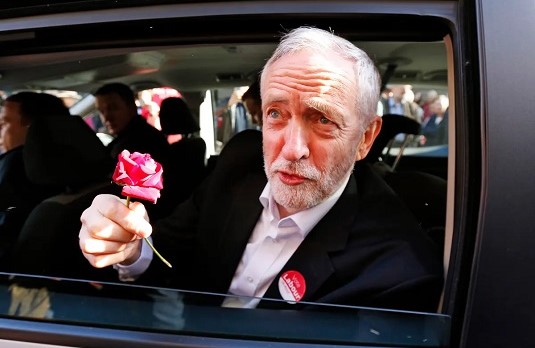
Why are the Labour right obsessed with Jeremy Corbyn? Talk about a spectre haunting their imagination, it seems every policy utterance or intervention finds the ghost of Labour's recent past summoned to the centre of attention. Consider the happenstances of recent days. Announcing his backing for the Tories' posturing over Ukraine, Keir Starmer couldn't help but take a dig at his predecessor. "Jeremy Corbyn was wrong about NATO", bobbed our wooden topped leader. Then over the weekend, it was "leaked" that the leadership are looking at how to deselect their bĂȘte noire. If Starmer was forensically going after the Tories with that famed laser-like focus, then why was his weekend briefing all about the previous leader? And also yesterday, Steve Reed straight up lied about Labour under Corbyn's leadership, arguing it previously "cared more about criminals". With three pollsters reporting big falls in Labour's lead, you could be forgiven for thinking the party has bigger fish to fry.

The drive to exorcise the left does have a theory of change behind it. It is imagined that bringing left wing dissenters to the square where they're publicly roasted, pelted with rotten fruit, and bull whipped in full public view is nothing but a vote winner. Therefore, expelling four tiny, irrelevant sects, being beastly about Jeremy Corbyn on every occasion, and distancing Labour from anything resembling left wing politics can only but dazzle the punters. They, after all, hate the left. And especially so the working class who voted Tory in droves in 2019.

You don't need me to tell you it's rubbish. Polls often report that Labour is not seen ready for government because, among other things, it's too disunited and at war with itself. Choosing to fix selections and disrespecting the former leader gives off vibes alright. Just not the ones the Labour right thinks it does. The trouble is as a fundamentally conservative strata in the party, they lack anything beyond anti-leftism as a unifying characteristic because they are invested in things as they stand. Right wing Labour MPs like being right wing Labour MPs, because most of them would never get such a cushy gig anywhere else. Those with a bit about themselves don't want to rock the boat too much because they wouldn't want to imperil future earnings outside of politics. As the examples of Michael Dugher, Tom Watson, Luciana Berger, Chuka Umunna, and Chris Leslie show, those positions are waiting. Party officialdom, once they get past the overworked junior stage, have an opening into head office jobs, Westminster jobs, think tank jobs, union jobs, spad jobs, and perhaps even a seat to work toward. And by far the most conservative wing of the party, the majority of Labour councillors, jealously guard their positions of influence, their allowances, and their stitched up state of affairs in the local constituency party. To think how much the democratic transformation of the party was stymied by long-established networks of cronies defending their £2,500/year borough council allowance and Big I Am personas at party meetings is frightfully sobering.

The anti-leftism then is about defending their fiefdoms, and from top to bottom the Labour right will trash everything, whether it's the party's electoral chances and/or Labour's reputation to keep hold of them. It also means anything on top, the vision they sell to voters and the positions they take are fairly eclectic as long as nothing fundamentally changes. Brownites and Blairites, the centre ground, "Labour values", Fabianism, whatever they propose that sounds good on paper they have to be pushed towards. And as the Blair years in government show, they have no such reticence about introducing regressive legislation.

Fundamentally, the constant carping on about Corbyn and the left comes from a place of fear. His election and then the unexpected advance of 2017 drove a stake of ice cold fear through their hearts. They thought they knew the world, they thought they were the master diviners of matters political, and the two Corbyn insurgencies caught them out. They still haven't got an explanation for what happened, and so it's passed over in silence. But they know despite the 2019 loss that things have fundamentally changed. The left is much stronger than before the Corbyn interlude, including within the Labour Party - despite their best efforts at driving them out and others finding alternative projects to spend their time on. On the industrial front the election of Sharon Graham presents them with something novel - a leader of a major trade union more focused on building workplace organisation and power than any of her immediate predecessors, while not having an emotional attachment to the party - and the danger of resurgent organising, which has been happening for years, and with notable victories, on the small scales the Labour right barely pay attention to. Socialist ideas are mainstream again, including those tinged with revolutionary hues. And they also know life is tough out there for tens of millions. The social is a combustible mix not seen since the foment of the Poll Tax struggle, and is awaiting a spark. Going on about Jeremy Corbyn is their coping mechanism, an imaginary anchor that steadies their boats ahead of the choppy seas and the titanic waves they feel are on their way.

Image Credit

Sunday, 13 February 2022

"A Whiff of Munich in the Air"

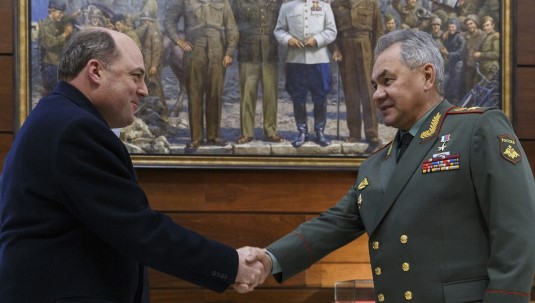
The chance of a Russian invasion of Ukraine? Highly unlikely. That's not me, but Volodymyr Zelensky, the Ukrainian President speaking a fortnight ago. Since then, the US and UK governments have warned conflict is imminent. Russia had planned spectacular false flag operations to use as a pretext for an invasion, a plot to engineer a coup and install a pro-Putin puppet, a campaign of sabotage by undercover agents, and all manner of skulduggery prefacing the kind of lightning war not seen in Europe since the 1940s. The US State Department and the duumvirate, with the emphasis on the dumb, of Foreign Secretary Liz Truss and Defence Secretary Ben Wallace have talked tough on consequences and sanctions for Russia. But if they're too tight how will the Tory Party make up the lost Russian money?

If Putin's show of strength on Ukraine's borders are for internal consumption, that is doubly true of the posturing by the Joe Biden and Boris Johnson governments. For Biden it's about telling his hawkish establishment that the chafing isolationism of the Donald Trump years are done, and the USA is back, baby. Whereas the Donald flattered dictators and authoritarians, in the US liberal imaginary Biden is leading the charge against them. Just don't mention Saudi Arabia, ever. And for the Tories here? Post-Brexit, the diminishment of the UK economically can be recuperated, at least on the level of spectacle, militarily. As the Tories fancy the UK as Western Europe's largest martial power (it isn't), sabre rattling is a way of demonstrating to its audiences that it matters and can still play a leadership role in world affairs. And given the fundamental anxieties of the Tory popular base, frightening them a little won't hurt either.

It's with this in mind one should approach the absurdity of the Ben Wallace interview in the Sunday Times. Because we haven't had enough Second World War similes these last two years, Wallace argues that the Ukraine crisis has "a whiff of Munich in the air." Now there's a line designed to attract attention. This pong is a not subtle dig at the diplomatic efforts of Emmanuel Macron and Olaf Scholz. Macron in particular has attracted ire for offering guarantees in exchange for certain guarantees. Or what is normally referred to as "diplomacy" and "talks". What's scary, says Wallace, is as the talks have continued the troops have carried on building up on the border, though outlets have been reporting there are now 130,000 gathered for "military exercises" for about a week now. And, adding to a contrived sense of urgency, Der Spiegel have acquired a Russian plan to invade Ukraine. I'm sure the Russian military have planning documents for putative invasions of all its neighbours and the near abroad, just as NATO have a continually updated plan to attack Russia.

There is real danger made all the more combustible by the stupidities of Anglo-American diplomacy. They misrecognise, probably entirely wilfully, what this game is. The basic reading that Putin is chancing his arm to rewrite the status quo in Eastern Europe is largely correct. There's the long-standing grievance over the expansion of NATO eastwards after the end of the Cold War. Though, contrary to Moscow's claims, there was no formal agreement between the West and the USSR (as was), the admission of former Warsaw Pact countries and Soviet republics are perceived as a block on the Kremlin's big power ambitions by Putin and his circle. This is reinforced by the fire last time, when the Western powers publicly backed and supported the overthrow of Moscow's man in Kyiv. Having seen the bad blood in Europe over Brexit, the paralysis induced by Covid, the Afghanistan debacle, and noting Western publics' scepticism toward military action, shifting troops towards Ukraine's border while undertaking joint exercises in Belarus is pretty straightforward brinkmanship. Think the periodic histrionics customary to the North Korean dynasty, minus the blood curdling language but backed by more serious military hardware.

The US/UK view, however, is that having wrenched Ukraine out from under Putin's thumb, save the long-running conflict in the Donbas and the "loss" of Crimea, seeing it back in Moscow's orbit is unconscionable. Even allowing Ukraine to consider a permanently neutral status guaranteed by treaty is a step too far. In fact, the current status of Ukraine as a friendly associate of the alliance suits US and UK governments. The permanent tension is good for the arms trade and, they believe, domestic politics - something that transcends party divisions. With both sides seemingly committed to a zero sum game, the danger of war can never be entirely discounted.

Nevertheless, there are good reasons to think the threat is overblown and that there's something pf the "45 minutes to launch WMD" about Wallace's claims an invasion is nigh. As the defence secretary is fond of WWII comparisons, let's consider another. In 1939, Poland's population was 34 million and Hitler fielded an army of 1.5 million, 2,500 tanks and 2,000 planes to overwhelm the country. In 2022, Russia has 130,000 troops in place and more modest complements of armour and air support. It is facing a Ukraine of 44 million people with 215,000 front line troops ready to go, with 53,000 militarised "border guards" and a 60,000-strong national guard. This is not counting the irregulars. Great show has also been made of the materiel and "advisors" dropped into Ukraine by the Western powers. In short, Putin hasn't amassed anywhere near a sizeable enough force if he was serious about invading. A war would be costly, drawn out, and a thrust toward Kyiv could easily get bogged down, air supremacy or no. And Russia has a colourful history of dealing with leaders who take them into unwinnable wars. Putin knows this, Macron knows this, and Wallace, Truss, and Johnson know it too.

I suppose in one respect the Defence Secretary's posturing aligns with the UK/France connivances over Munich. Wallace's appeasement comment was sharply criticised by Ukraine's ambassador to this country, attacking him for pouring cold water on the efforts of others and showing up division in NATO. What Wallace shares with Neville Chamberlain is the utter disdain of small countries and minor nations. When the signatures went on the Agreement, which gifted the Sudetenland to Hitler, Britain and France did so without consulting with the Czechoslovak government at all. They signed away the country's border areas, which contained some of its most advanced industries and most defensible terrain to appease the Nazis. Over Ukraine, witness the contrasting behaviours of our respective governments. The UK, shouting its mouth off about invasion and trying to whip up fears of war. And Ukraine? The President repeatedly saying the chances of a Russian attack are low, and generally trying to keep a cool head on things. If Wallace and the Tories respected the rights of small nations, they would defer to Kyiv's efforts at defusing the crisis instead of attempting to ramp it up.

Image Credit

Saturday, 12 February 2022

There's Nothing in the Briefcase

An explainer on the week in Labour.

Keir Starmer's NATO article has attracted much debate on the left, albeit positions that only differ on the shades of condemnation colouring the response. And rightly so. In recent years, we've seen the military alliance described in Labour circles as an example of "internationalism", and an institution up there with the European Union in the liberal/centrist imaginary. Some comrades have noted that making this intervention in the pages of The Graun was a curious choice, considering the militarist-minded tend to get their news and opinion from other outlets. But it seems to me Starmer was doing two things: letting the deep pockets of British capital know he's their man when bombing and drone strikes are called for, and getting his stance out there so the rest of the media could take it up and amplify his position.

But has Starmer miscalculated? The British public, whether left or right, tend not to be the warmongering sort. Indeed, the dominant attitude on the right remains the default Little England abstentionism on military entanglements. Something the Tories are well aware of, considering how their absurd, humiliating display on the world stage this week saw them talking tough with Russia on Ukraine while pledging Britain won't be drawn into any (unlikely) war. As far as Starmer is concerned, his posturing to the sceptical, socially conservative electorate he erroneously believes Labour has to win over is telling them he can stand up to Britain's enemies. It is an article of faith across the Labour Party that Jeremy Corbyn blew it when he (apparently) fluffed the response to the Skripal poisonings in Salisbury. Starmer's tough-guy affectation tells them he can be trusted on security issues, as well as giving the Tories no room to claim Labour are anti-patriotic. It's pretty transparent stuff - politics as cynical marketing and "brand identity" building.

As part of Labour's wider strategy, attacking Stop the War, rubbishing Corbyn, and tailing the Tories on Russia is designed to make the flanks impervious to the usual right wing gambits. Which, the leadership believes, gives them licence to go personal over the next few weeks - at least according to the latest HuffPo feature. As Johnson's doing a good job of trashing himself, the first priority is taking Rishi Sunak down a peg or two. Briefly the most popular politician in Britain, they rightly discern that not only is the Chancellor socially distanced from the majority of the electorate thanks to his ill-gotten fortune, he's not the political genius some think he is. As his energy bill discount reminds us. But, it seems, the accent is going to be on Sunak's evident cluelessness rather than how he is responsible for holding down people's living standards. We're back in Starmer's "competence" comfort zone instead of taking on the politics.

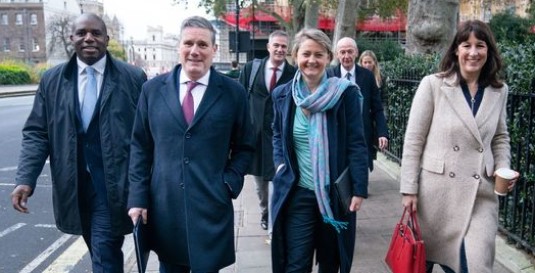
We see it too with their attitude to Liz Truss. According to the piece, the foreign secretary plays well in the focus groups, which just goes to show why focus groups should be put in the bin. Continuing their theme, leadership insiders are reportedly "impressed" with Truss and believe she would give Labour more touble than Sunak. Nudge, nudge, wink, wink, *innocent face*, and all that. We also learn they plan on countering Truss by spotlighting Labour's leading women. I'm not entirely sure pushing the wooden Rachel Reeves is going to conjure the electoral magic they think it will. They are on a surer footing with Lisa Nandy, who can do relatable and "authentic" quite well, when she's not telling outright lies. Yvette Cooper and the (heavily signposted) rising Bridget Phillipson are going to get top billing too and, and, ...and, that's it.

To quickly summarise. Inflation is galloping away while real wages are falling, Covid hasn't gone away even though the Tories are pretending it has, and there's no real relief from rising energy bills. Labour's response is to pretend a VAT cut will fix inflation, keeping mum about Tory management of the pandemic, and saying "look, we have female politicians too." As pre-pre-local election strategy goes, this is the weakest offering Labour have served up to the electorate for many a year. It's pathetic.

But pathetic has its purposes too. Like the NATO showboating, offering little beyond weak sauce rhetoric tells the Tory vote they're targeting that Labour is nothing to fear. And what is meant by "nothing to fear" is leaving the asset economy pretty much untouched. Hence no hint of nationalisation for dealing with energy costs (can't have the FTSE taking a hit, can we?) nor, for that matter, suggesting anything fundamental needs changing. The idea is to get this layer who benefits from rising property prices and who, disproportionately, turn out to vote entirely chillaxed so when the Tory attacks come they make a shallow impression. It might work, and it might also mean Labour stays true to its word if it gets into government. And that means doing nothing at all.

Image Credit

Thursday, 10 February 2022

Cressida Dick's Resignation

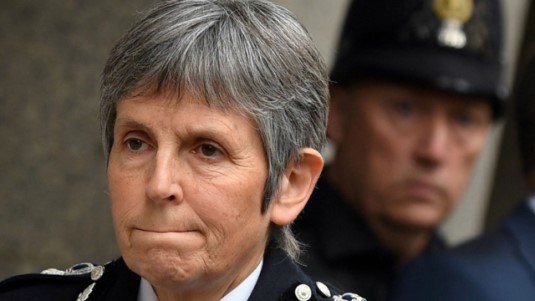
As it happens, I had a dream about a resignation last night. Chatting in the long-demolished Newcastle-under-Lyme branch of Sainsbury's, the canteen manager and I were discussing the departure of Boris Johnson, who had taken to the pages of the Daily Mail to exclusively explain his reasons for going. Alas, dreams seldom come true but the Met's Cressida Dick falling on her sword was an unexpected consolation. Her explanation is she "no longer enjoyed the confidence of the London mayor". It must have been bad for the otherwise establishment-friendly Sadiq Khan to want her out of the job. But has he inadvertently done us a solid as far as the Prime Minister's difficulties are concerned?

In all likelihood, no. But it's good to see Dick heading for the door anyway. This was a resignation long overdue. I'm not about to recapitulate her record in depth, but the lowlights of her career, which include overseeing the operation that killed Jean Charles de Menezes, throwing road block after obstruction after blockage in the way of the Daniel Morgan investigation, covering for institutional racism and, perversely, the culture of institutionalised misogyny that saw Wayne Couzens pass undetected in police ranks while dishing out beatings at the Sarah Everard vigil, and her studied refusal to investigate breaches of Covid rules in Downing Street until it was suspiciously convenient for Johnson, all point to a character who understood what policing is about.

As one rises up the ranks, each rung on the career ladder becomes increasingly political. It goes from banging up the bad guys and cracking heads on marches, to reach out activities that legitimate the police (what school assembly hasn't received a visit from a friendly, relatable copper?), to hobnobbing with local politicians and, if one's office warrants it, metro mayors and heads of governments. In addition to respective police forces, there is a growing and increasingly powerful constellation of institutional interests behind leading officers, which more or less reflects the three functions of policing. The National Crime Agency coordinates activity against trafficking (drugs, weapons, people), cross-border cases, cybercrime and complex fraud, and the "glamorous stuff" like serial killers and high profile crimes. This is the arm concerned with villainy, traditionally conceived. The College of Policing works at legitimating the police as a skilled profession, offering guidance on conduct, and is responsible for accrediting policing degrees at British universities. And the National Police Chief's Council is the political arm of the police, acting as a lobbyist of government (usually for more repressive legislation and better funding settlements) and advisor on policing and counter-terrorism matters. In the classical Weberian sense, they work together as a status group to promote the police in competition with other professional interests to improve their "market situation", as the old language has it. But the police aren't just another occupation looking for prestige and award, they are a key pillar of the state's repressive apparatus, the civilian-facing arm of institutionalised, organised violence.

Those who succeed in the police are the ones that instinctively or consciously grasp this fact. "Maintaining the peace" is, in the last instance, a class peace. Public order is a synonym for bourgeois order. The thin blue line is the ticker tape around private property, and happily wades into demonstrations and protests, batons aloft, regardless of the issue. If the Tories are hyper aware enough to clamp down on anything that offers a bit of political hope, the police know jumping on collective action with their size nines, and kettling protesters for seemingly no reason are techniques designed to have similar effects: a nipping in the bud of anything that might flower into mass mobilisation and challenge the status quo.

None of us know who Dick's successor is going to be, but they too will be a creature of this infernal machine. They will defend the Met by deflecting criticism, mollifying racism and sexism, papering over its failures, furthering the government's authoritarian politics and, in all aspects, carry on being the same institution it was before Dick handed in her notice. A change of face does not mean a change of purpose, but from an establishment point of view it draws a line under what went before and allows them to start afresh, as if the corruption, violence, cronyism and protection of privilege isn't a structural characteristic.

Image Credit

Wednesday, 9 February 2022

The Reckless Ending of Self-Isolation

In a piece published by the BBC earlier this month, we were reminded that as well as killing 50 million people globally (220-odd thousand in the UK), Spanish Flu's lingering legacy was a surge in Parkinson's disease in the 1960s among cohorts born between 1888 and 1924. Researchers found they were two-to-three times more likely to develop Parkinson's than those who weren't young at the time of that pandemic. Covid-19 has only been with us for just over two years, but we know already that it can become a long-term illness. Our comrade Ed Rooksby, who passed away this time a year ago from complications arising from long Covid - after experiencing a relatively mild illness initially - reminds us of the debilitating and life threatening consequences this virus poses to some otherwise healthy people. But we're still not talking about the long-term consequences. Covid increases the chances of strokes and heart attacks and it threatens the brain, storing up neurological nasties for later in life.

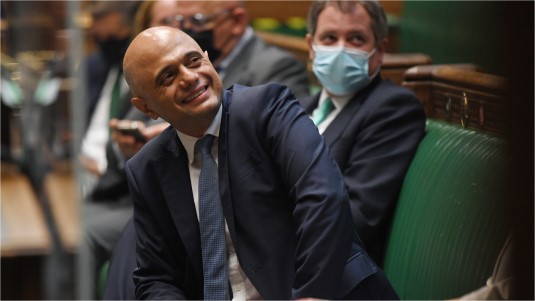
Knowing all this makes the government's latest announcement all the more unconscionable. As reported last month, Boris Johnson dropped a very big hint that he was considering scrapping the requirement to self-isolate for those who test positive. Nothing to do with clinical requirements or "the science". Everything to do with mollifying the the Conservative Friends of Covid on the back benches in the hope those no confidence letters will keep away from Graham Brady's letter box. Having already been whittled down to five days, Sajid Javid today delivered the coup de grace: all restrictions will be lifted a month early. It's hedged with the caveat about continuing positive data, but since when has this Tory government allowed the epidemiology to inconvenience their political timetable?

Let's be clear what this means. The immunosuppressed and clinically vulnerable have been thrown under the bus by the government. Nothing says "you don't matter" more clearly than not taking their health into account. The Tories are also dooming tens of thousands of the unvaccinated to chronic illness and the risk of death, people who are, for the most part, our people. And that's before we get to the stupidity of allowing Omicron and its newly emergent BA.2 sub-variant to circulate freely. This increases the chance of mutation in even more transmissible, if not virulent directions (again, Covid is not predestined to evolve toward harmlessness. For all the talk of Omicron's "mild symptoms", it is still worse than the original strain). With large numbers triple jabbed, it has the opportunity to "learn" vaccine escape, possibly making it more difficult to combat until the next generation of Covid drugs are available. And thanks to its already tricksy adaptations vis a vis vaccines and ability to reinfect weeks after an initial recovery, contracting it repeatedly is going to wear the body down, making people more vulnerable to other infections, and increase the chances of long-term damage along the lines indicated above. Learning to live with Covid on the terms chosen by the Tories means learning to cope with the long-term illness and unnecessary bereavements of tens of thousands more people.

On the narrow point of ending self-isolation, like all things Covid the Tories are guided by managing the class politics. This has come in two bitter flavours: being careful to ensure the emergency measures implemented in the earliest phase of the pandemic did not open the door to thinking about an alternative politics. Don't expect the state to do you any favours, you're on your own. A point recently underlined by Superspreader Sunak's energy bill "relief". And the other? Making sure the subordination of wage labour to capital returns to as it was prior to Covid. Taking away the legal requirement to self-isolate turns the clock back to the bad old days when employers demanded their staff to be in work come what may, regardless of illness and health status. The Tories are determined to get workers under the watchful eyes of their employers not just because they're the worst idlers in the world, according to the Deputy Prime Minister, but so those city-located workers can start spending again, fuelling retail business growth, more rents, and more investment opportunities for asset-rich interests. The Tories don't want millions of workers to take anything from their brief respite from in-person drudgery, be it alternative ways of working or questioning why they have to spend a good whack of the wage on transport costs.

This is, or should be, a ready made issue for the left. The struggle for decent sick pay and the right to be ill and not have to work for the duration is elementary labour movement politics. But in conjunction with Tory efforts to keep the horizon of political possibility as low as they can, few have risen to the challenge of exploiting the openings the pandemic offered. I.e. The ability and willingness of the state to splurge resources when its system is at risk, the reorganisation of social life, rethinking what work is for, and how naked the Tories' class politics have presented themselves throughout the crisis. Unfortunately, because the labour movement collectively and the Labour leadership in particular didn't or outright refused to rise to the moment, it looks like the government's biopolitical strategy has proven a complete success. They have reset class politics to where they want them, with nary a whisper from the opposition benches. What does it matter that they are storing up a public health calamity for the future when the prize of maintaining the relations of production as is has been achieved?

Image Credit

Monday, 7 February 2022

Weaponising Jimmy Savile

You could see the sequel to this particular lie coming from a mile off. Monday evening, Keir Starmer was ambushed outside Westminster by a small group of braying protesters. Though calling them protesters would be dignifying this bunch of Twitter attentionistas, edgelords, conspiracy theorists, and anti-vax weirdos an epithet of legitimacy they don't warrant. And what the footage of the self-styled "Freedom Convoy" shows is a strong connection between what happened in the Commons last week, and the hoarse ranting of this semi-fash mob. When the Jimmy Savile line was rehearsed in practice before last Monday's reply to the Sue Grey update, Johnson knew it would probably have an effect in the world outside of Westminster. Indeed, chances are one of his aides warned him. But he went ahead and did it anyway. Risking others and potentially placing them in harm's way is a price the Prime Minister is willing for others to pay to keep his job.

If Johnson didn't want the slur out there he could have drawn a line under it and apologised. Instead, we got a mealy-mouthed half apology in which he accepted Starmer was not the presiding lawyer over the case back in 2009, but was nevertheless responsible because he had been in position as CPS head for a year at that point. A factually accurate statement, yes, but one repeated to keep the smear alive. Was it worth it, now it proved too much even for Johnson's most loyal lackey to stomach? Johnson's still in position as of the time of writing, so for buying him a few extra days, yes.

The problem Johnson has is tonight's mobbing of Starmer is going to make more Tory MPs quesy as they hover on the brink of submitting a confidence letter. It's one thing for Johnson to say burqa-wearing Muslim women look like letter boxes and turn a blind eye as the resultant wave of Islamophobia rises up to harass and traduce the victims of the Prime Minister's pen, but quite another for an upstanding pillar of the British establishment to suffer the same fate. To underline the seriousness of the situation, cringingly loyal Lindsay Hoyle rebuked Johnson for his comments. And so, taken together it's quite likely Johnson's indulgence of a fashy talking point has probably made his position even weaker. Political bridges have been burnt while he's supposed to be mending them.

Is Johnson going to row back from this? I very much doubt it. His condemnation of the "protest" betrays not a scintilla of responsibility. This isn't just because of Johnson's entirely contrived chaos agent affectation, but it's embedded deeply in Tory statecraft. The concentration and exercise of authority in the person of the Prime Minister has characterised all governments for over 40 years, including Johnson's. Their semi-presidential style backed by untrammelled power, for as long as their parliamentary majority allows it, has led to a very rigid strategy. The legitimacy of institutions of state has become smothered by that conferred on (or claimed by) the PM, which encourages no turning back/I know best/never surrender behaviour. Tory PMs are usually fortunate in that their press won't highlight the multiple compromises any administration has to make, but on the big issues they like to dig their heels in. Compromise and climbdown hurts their authority, and as this is the most precious resource a Prime Minister possesses they jealously guard it to the point of absurdity.

We're at that point with Johnson now. Having set his face against so many issues these last two years - free school dinners, rescinding the National Insurance rise, and shielding the Met from criticism and accountability - the stock response is a shake of the head and a Churchillian evocation of beaches and landing grounds. When there is a climbdown, it's passed over quickly and with very little comment from his press allies. But since PartyGate broke, following his cack-handed defence of Owen Paterson on respect-my-authority grounds, Johnson has offered half- and non- apologies while telling Tory MPs, civil servants, donors, and favourite journalists that he thinks he's done nothing wrong. And in so doing, by sticking rigidly to the authoritarian play book inherited from his predecessors, he's making his position look increasingly untenable. There's a political rationality there, but as Max Weber might have observed, pursuing it instrumentally without other considerations can lead to irrational outcomes.

Johnson has survived up until now thanks to the question of timing. There are wiser heads in the Tory party than he. But there's only so much damage his party are willing to take for their leader, only so many MPs willing to risk their re-election for one man's overweening vanity and sense of entitlement. It could be that a ragtag mob shouting rude things and jostling Keir Starmer is the tipping point to finally bring this drama to a close.

Image Credit

Sunday, 6 February 2022

New Left Media February 2022

The first Sunday of February! Time for a quick glance at the new additions to the left media ecosystem.

1. Midnight Sun (Magazine) (Twitter) (Facebook) (Instagram)

2. The Educator (Blog) (Twitter)

3. Red Plenty (Video games!) (Twitter)

If you know of any new(ish) blogs, podcasts, channels, Facebook pages or whatever that haven't featured before then drop me a line via the comments, email, Facebook, or Twitter). Please note I'm looking for new media that has started within the last 12 months. The round up appears hereabouts when there are enough new entrants to justify a post!

Saturday, 5 February 2022

Time For a Democratic Socialists of Britain?

We've got the new left challengers, who've formed an alliance with TUSC to form the People's Alliance of the Left to challenge Labour at the ballot box, but what about existing socialist MPs? Gracing the politics public with very little fanfare, there is a new grouping of left Labour MPs on the block. Comprising mostly of newer comrades who are members of the Socialist Campaign Group of MPs, it aims to do the critical loyalty thing. I.e. Back the Labour leadership when it's on the right tracks, but constructively pressuring it when it's not. If we reflect on Keir Starmer's time as leader, there's going to be a lot of this sort of "dialogue" going on.

No website, nor any name yet. Indeed, the LabourList article says they're not interested in splitting from the SCG, but instead it's an effort at pooling resources and pushing their particular kind of politics. Their leaked strategy document says it aims to provide "intellectual leadership" for the new left, and get slick with the social media game. This attracted some hostile commentary from an existing SCG MP, saying they should bugger off and split if that's what they want to do. Before rowing back and stressing the importance of sticking together to get Jeremy Corbyn the whip back. What's the game then, People's Front of Judea hi-jinks or something more?

The latter, in my view. One of the frustrating things about the left in the Labour Party is its disorganisation and lack of coherence. All that unites us is what we're against: awful Tory policies, their adoption by the party, and the petty tyrannies of the Labour right. Apart from that, what is there? Consider the infrastructure. The left is bigger now than before 2015, but the old faults are replicated at a larger scale too. Momentum does its thing of mobilising people and having policy primaries, but is not known for articulating an analysis and an intellectual project. Time serving organisations like the Campaign for Labour Democracy is barely perceptible among members except when it sponsors fait accompli slates for internal elections. The newly rejuvenated Tribune, as good as it is, stands a step removed from Labour Party shenanigans. And there is the SCG themselves. While most of its MPs are fine, from the standpoint of the ordinary member trying to build the party and the labour movement, it is less than the sum of its parts. Newer comrades like Zarah Sultana and Richard Burgon make the right interventions in the Commons, turn up at demonstrations, encourage extra parliamentary mobilisation, but like the older generation they do not try and provide political leadership. They do their own thing, campaign, and occasionally backed by warm words from the more radical trade unions.

Contrast this with the Labour right. Progress, when it was a thing, used its finances to coach candidates, publish its own literature, and influence party debate with its regular publication and conferences. This was the shiny front that complemented the dirty business of working selections, competing/cooperating with Labour First over shenanigans, networking, and all the other things. And while now living in reduced circumstances, it offers an intellectual outlet for those on the Labour right who fancy themselves brainy revisionists but see the Fabians as too left wing. And from their point of view, their factionalising works well. If the Corbyn interlude taught us anything, all sections of the spectrum of right wing opinion are more serious than the left about taking power and holding it within the party.

Hence this initiative from some of the left MPs should be welcomed. It puts our representatives on the spot when it comes to pushing ideas, building capacity in the party, and doing the job of cohering the left - the job that, let's be frank, the SCG should have done from the beginning. If the left are going to advance in the party it needs a strategy and some coordination between parliamentarians, activists, and trade unionists while articulating its own standpoint. A Democratic Socialists of America if you like, but here in this plague-blasted isle. Whether the new group reaches out to the wider left or not, winning ground back definitely won't happen for as long as we amateurishly chug along, fighting the good fight but never fighting to win.

Image Credit

Friday, 4 February 2022

Nik Kershaw - Wouldn't It Be Good

Late working, take away, Top of the Pops from 1992 on the telly. No writing tonight, in other words. Instead, have a top retro tune.

Thursday, 3 February 2022

Why is Sunak's Energy Support So Stingy?

Topping out another disastrous day for the government, this evening four of Johnson's top aides quit/were fired. Depending on if you believe increasingly desperate Tory MPs or not. But while the chatter exciting Westminster's chatterati will last all the way to tomorrow lunch time, Rishi Sunak's half-arsed measures to deal with soaring energy bills matters most. With the energy price cap soaring to just under two grand a year and the typical bill putting on an extra £700, this is one cost of living crisis the Tories have to pretend to do something about. What costs you could cost them.

At the centre of Super Sunak's rescue plan is an automatic £150 rebate for Council Tax payers across bands A to D, with a £144m discretionary payment fund doled out to local authorities to cover anyone in band E and/or are particularly in need of support. This rebate will be resourced via government grants, though Sunak did not say if it would cover all or some of the rebate burden. The Tories have form on this, like the time when council tax and housing benefit were devolved to local authorities while cutting a fifth from these budgets. Or perhaps they'll expect councils to eat up the cost now and the grant will come later. Again, entirely the Tory thing to do. Aside aside, Sunak announced an interest-free loan scheme of £200 off energy bills to be paid back in five £40 installments . What people are supposed to do if neither goes far enough, Sunak neglected to say. Then again, while Rachel Reeves criticised the fare offered in the Commons Thursday morning, Labour's proposed VAT cut to bills is similarly weak sauce. The problem is structural: energy production is essential infrastructure that remains in private hands, and is heavily dependent on fossil fuels. Effective action requires the socialisation of energy and a swift transition to carbon neutral renewables. Labour aren't interested, of course, and the very notion of radical but necessary would bring the Tories out in a rash.

This begs the question. Why is Sunak's remedial help so meagre? Again, it's not about personal failings (apart from a personal commitment to the narrow politics of privilege) but the politics of the Tory coalition. There's a tiny bit of the ever-reliable divide and rule in Sunak's announcement. 80% of households are getting a tokenistic handout, but more is available for the needy. A set up tailor-made for tabloid exposes and Channel 5 programmes on feckless claimants who use social security money to heat their outdoor pools.

The addition of the loan is slightly more interesting, and there are three ways of thinking about it. With inflation soaring, the tried and trusted Thatcherite measure for combatting it is restricting the money supply. I.e. Pushing down wages. The energy bill loan, goes the thinking, takes the edge off the April price shock and becomes repayable in 2023 when, presumably, things have settled down a bit. The loan means money will be put aside to pay for it and therefore, they hope, won't have inflationary consequences. The second are the disciplinary consequences of debt. It has proven itself an effective method of population management and political pacification by individuating obligation and, from the Tory point of view, inculcating the "virtues" of thrift and living within one's means. If people can't pay back the debt being foisted on us, then that's their fault for not being responsible. Finally, throughout the pandemic the strategy the Tories have been united behind is not to offer too much. Sunak wants to wind the clock back and get politics into a position where there are no expectations on the state at all. This puts the horrors of socialism back into its box, dissolves all thought of a better future in non-neoliberal terms, and the asset economy the Tories depend on can chug along without challenge. At least, that's what they think.

Not that you would get any of this from reading mainstream political comment or the criticisms ventured by opposition politicians. It's all clueless, incompetent, nasty Tories. No scintilla of awareness of their relationship to class and political economy. Nor, most damning of all, any curiosity about why they are what they are either. Unless there is a popular backlash and Sunak's ratings take a tumble independently of the muck Boris Johnson is covering the Tories with, the chancellor will get away with it.

Image Credit