Monday, 12 December 2022

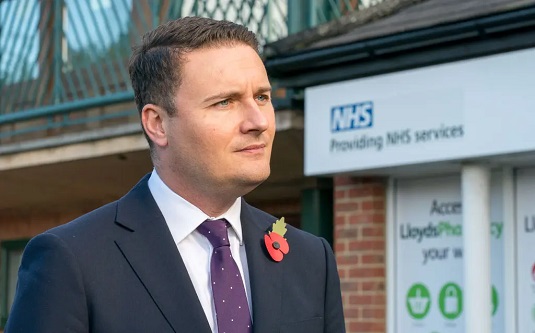
Wes Streeting Vs the NHS

When the Sunday Telegraph emblazoned "Labour vows war on health unions", the shadow health secretary tweeted about it not being "the headline I expected." In that case, Wes Streeting is more stupid than I thought for supposing the Tory party's house journal would treat him fairly. Thing is, I don't believe his protestation. The headline was an accurate reflection of his comments about doctors and the NHS. And as the piece put distance between Labour's front bench and the militant mood of nurses, there will be Leader's office spinners satisfied with a job well done. Making capital unafraid of a Keir Starmer government remains Labour's main strategic objective, and the weekend's intervention on health matters ticks that box.

Streeting's interview had all the subtlety of a sad trombone at a wake. He attacked the British Medical Association and GPs specifically for voting to reduce their working day from 8-6.30 to 9-5. What he failed to mention was practices would flex their hours and schedule GPs to meet local demand. Nor did he address that the move intends to help the retention of doctors. If Streeting had bothered with his briefing notes, he'd know 45% of junior doctors were considering leaving the medical profession, which means a recruitment crisis for GPs. Someone might be "living on a different planet", but it's certainly not the BMA who are looking at stemming the bleed of doctors.

Pouring more petrol onto the fire, he said the BMA were "hostile" to his plans (what plans?) to increase GP access and enforce better standards. Streeting said he wanted to end the "something-for-nothing" culture, and this would be contingent on making extra cash available. There is indeed a something-for-nothing culture in the NHS. It happens daily in every clinic, walk-in centre, and hospital in the land - that is nurses and doctors come on shift and end up finishing long after their contracted hours. They donate something - their unpaid labour - in return for nothing to cover staffing shortfalls and budgets cut to the bone. This is very obviously not what Streeting is talking about. Instead he's playing to his audience, who imagine money is lavished on the NHS so nurses can dance around doing TikToks on the ward, and doctors nip off to enjoy long liquid lunches. And if Streeting-style change isn't accepted by the health unions, what then? Is he going to deny hospitals cash to speed up waiting times and securing more beds because health workers won't show the necessary subservience?

Ah yes, beds. Streeting did the Sunday round of politics programmes defending his plan to use private health capacity to ease the crisis in the NHS. This was him being "bravely" pragmatic, arguing that if people are in pain then using empty beds is the right thing. Patients won't care as long as they're treated and they don't pay a penny. Okay, in a pinch I could imagine any Labour government doing this as a stop gap. Including the one we never got led by Jeremy Corbyn. But to make a song and dance about it? After all, it wouldn't make much of a difference. Between 2001 and 2021, the NHS lost just over 80,000 beds with the steepest falls registered when Labour was in government. Meanwhile, with 6.8m who awaited hospital treatment in September, and the number of beds available in private health are just 8,000. It's but a drop in an ocean, suggesting Streeting's posturing on this issue is less about clearing backlogs and more to do with virtue signalling at wealthy donors and for-profit health interests.

Save perhaps Starmer and Rachel Reeves, the shadow health secretary is the most right wing member of Labour's front bench (putting aside this summer's dalliance with rail nationalisation and backing strikes). The only thing he can be reliably trusted with is ensuring capital finds more profitable outlets in the NHS, while continuing to underwrite it with state money and sustaining the ruinous role played by markets - so dysfunctional that NHS institutions had to find work arounds, until the government kyboshed their efforts. The NHS is in need of serious reform, but one that unleashes the creative power of its staff, throws off the strait jacket of commoditised relationships between its components, introduces proper democratic functioning and accountability, and enjoys budgets that meet clinical demand and staffing needs. This is diametrically opposite to Streeting's arrogant, briefcase-and-sharp-suit managerialism. And that is why when Labour win the next general election health workers and all who support them have to be ready to take on a Labour government as surely as they're fighting the Tories.

Image Credit

Saturday, 10 December 2022

The Prospectless Future of Reform UK

UKIP was the most significant political force to the right of the Conservative Party that has ever arisen. At the 2015 general election it polled four million votes, had won two parliamentary by-elections in the year previous, steadily built up a base in local government and routinely dominated European Union elections. In 2019 and the EU elections that should never have been fought, its Brexit Party successor cleaned up with over 30% of the vote and saw the Tories reduced to seven per cent - their worst result in a national election ever. But success did not come from nowhere. Without its indulgence by the right wing press and, more crucially, very generous coverage given to by the BBC it's likely UKIP and Nigel Farage would have remained footnotes in the political history of the early 21st century.

The rise of UKIP is a case study in how a challenger party can break through if it suits the purposes of well-heeled and well-connected establishment figures. Initially, the 2004 circus around Robert Kilroy-Silk becoming a UKIP MEP gave the columnists and the 24 hours news editors something to fill their politics schedules with. As Farage built up his brand via frequent visits to BBC studios, he filled in following Kilroy's implosion. Never underestimate the ability to give good copy. After the 2009 EU elections, which awarded UKIP second place and 13 seats, they could be used as a means of pressuring the Coalition if the editorial offices at Tory papers thought the new government too liberal for their liking. On equal marriage, environmentalism, and latterly Europe the menace of UKIP was talked up to skew Tory politics, and therefore politics in general, to the right. This suited plenty of Conservative backbenchers fine, who had not forgiven Dave for throwing a commanding poll lead away and landing in Number 10 only because the Liberal Democrats supported him. A mix of threatened rebellions and grumbling, plus UKIP starting to perform well in parliamentary by-elections - especially after 2012 - began the tradition of appointing absolute horrors to cabinet, and eventually extracted the concession of the referendum on EU membership.

But since 2017, the ground hasn't been fertile for the right outside of the Conservatives. Save for the brief interlude of the Brexit Party's triumph before the general election, and the service it rendered the Tories by bleeding off Labour leave votes in seats where punters couldn't bring themselves to vote Tory in protest against the second referendum position (not that Labour had many options). With Boris Johnson straddling the ground from mainstream Tory voters to right wing populism, there was no space for the Brexit Party, long since renamed Reform UK. And especially so now since Farage retired from politics to become just another right wing grifter paid to say "outrageous" things.

But now things have changed. Liz Truss crashed and burned after appealing to Tory instincts, and Rishi Sunak is in with his near-billion pound fortune and briefcase Tory vibes. Apart from not sinking the economy to give the rich another tax cut, for all intents and purposes this government is a fusion of the party's hard right and far right. Obstinance on strikes, employing Putin-style legislation to protests, and appointing a fash-adjacent zealot with a penchant for antisemitic conspiracism as his Home Secretary, but this isn't enough for some. Sunak doesn't look the part for a layer of Tory supporters, while others are displeased by his dodging a membership contest. But what evidence is there that Reform UK are shaping up to be a force the Tories are going to have to reckon with?

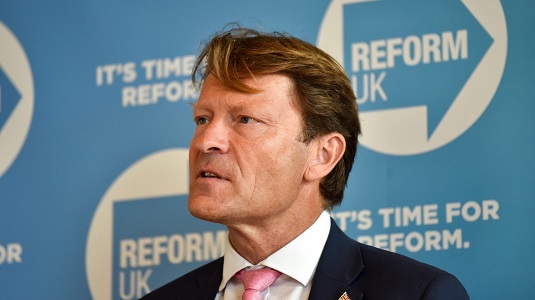
If you keep an eye on the Tory press, there's heaps of it. Early last month, Richard Tice, the party's leader/trustee appeared in The Telegraph boasting about an influx of 4,000 new members - some two-thirds of them disgruntled Tories. By any standards, this is not significant beyond broadening the "membership" subs base. The same paper (again) came with a second bite at the cherry this week. "Conservative jumps ship to Reform UK as talks over more defections continue with MPs" is not as exciting as it sounds. The Tory in question is ... a councillor who held a senior regional lay position in the Yorkshire region. There are conversations "across the board, said Tice, and suggesting Reform posed the Tories an existential threat. And then on Saturday The Telegraph again bangs the drum for the party, highlighting polling undertaken by the always ridiculous Matt Goodwin that shows Reform on nine per cent, almost half of the Tory showing on 20%.

Valiant efforts at inventing a right wing party to needle the Tories, but there's little to no evidence for much appetite for reheated Faragism. Goodwin's People Polling outfit flatters Tice and co, but nearly all other companies put Reform on three to six per cent. Territory inhabited by the Green Party, sure, but unlike Reform they are regularly road tested in council by-elections and often poll respectably as well as winning seats. Reform barely bothers, and when it does they're level with the likes of TUSC and the Elvis Bus Pass Party. This differs significantly from UKIP who did take council elections seriously where and when they were able. Then there are the parliamentary by-elections. In Chester they managed 2.7%, coming behind the Greens. In others that have taken place during 2022, where Reform has stood previously they actually lost ground. With protest voting currently advantaging Labour, the Lib Dems, and the Greens it's hard to see how Reform can capitalise on current Tory difficulties. Especially with no EU elections to fall back on.

Nor do things look rosy in the medium term. Assuming the Tories are hung out to dry at the next election, it's very likely they will move right to try and consolidate their base after the trauma of heavy defeat. Little room there for Reform. And when opposition starts manifesting against Keir Starmer at the polls, either the Tories would benefit (doubtful) or following what we've seen in Germany, the Lib Dems and Greens start making inroads into Labour's support at council level - with new opportunities here assuming the planned constitutional overhaul goes through.

The tide came in for UKIP after 15 years of press campaigning. In the completely different context of Labour's ascendency, and that of left wing politics more generally, pushing the boat out a second time will not see the populist right ruling the waves.

Image Credit

Friday, 9 December 2022

The Tory Dependence on Fossil Fuels

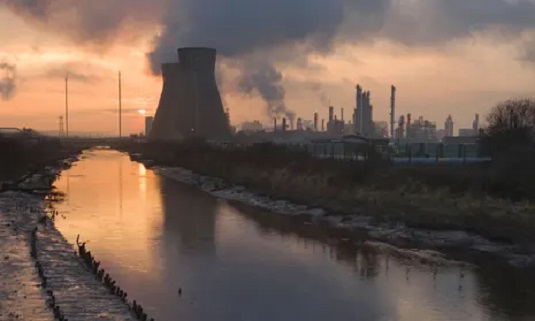
Implausibly, coal not dole could be the Tory slogan for their campaign in Cumbria at the next election. Michael Gove's approval of the first deep pit mine in 30 years. Ever the self-identified pragmatist, Gove has defended his decision because of the jobs it would create and establishing a reliable supply of coking coal for the steel industry means we don't have to buy from Vladimir Putin any more. The Conservative Friends of Primary Industry, who'd have thought it? Not the best look when the Tories boast about how much a world leader in net zero their government is, but there's another set of optics they are more bothered about.

Disinterring King Coal from his crypt is one moment of a pattern of behaviour. We had Rishi Sunak refusing to attend COP27, until it became politic for him to do so. The Tories as a whole (but not the Prime Minister himself) are very keen on fracking, and smart under the ban Boris Johnson introduced and public opinion has since enforced. And then we have the energy price guarantee. Earlier in the year while Sunak was chancellor he set up a supposed levy on the fossil fuel giants to freeze bills. By the time of her brief period in the Downing Street spotlight, energy was costing so much that Liz Truss was forced to act. Her scheme was to borrow on the never never and pay these funds over to the suppliers to fix the unit price. She then stupidly sunk her premiership and underlined the doom upon the Tories. When Sunak was coronated he continued with the U-turn on tax cuts for the rich brought in by Jeremy Hunt, but crucially kept the public subsidy for energy, categorically ruling out making the likes of BP and Royal Dutch Shell pay out their surplus profits. Likewise, his tax break for oil exploration stayed in place. What have these companies got on the Tories?

The party is well funded by oil and gas companies. Reporting prior to the 2019 election, The Graun found fossil fuel firms had spent over £5m lobbying MPs. The recipients of this aid were mostly Conservative members. Nadhim Zahawi, for instance, was on a £20k monthly salary as Chief Strategy Officer for Gulf Keystone Petroleum from October 2015 to August 2017, when it increased to £30k. He received a £116k golden goodbye when he became a minister in 2018. An egregious example when other loyalties could be bought for much less, such as the £10k Gove got in 2010, and the relative pittances enjoyed by Tory climate change denialists who concidentally are in receipt of similar monies. Tories enjoy incentives to stay sweet on fossil fuels, especially now many of them will look for new careers before long.

Much has also been made of Truss's oil links. But she last worked for Shell 22 years ago, a decade before she entered the Commons. Her leadership campaign was part funded by fracking interests and they were duly rewarded, but her enthusiasm for launching a new wave of drilling in the North Sea requires a bit more explanation. As does Sunak, whose spent his career as a City slicker but has bent over backwards to help the industry while in office - his system of tax reliefs being one example. His family have an indirect commercial interest in Shell and other Indian-based fossil fuel firms. Is it as easy and as crude as joining the dots?

It might seem that way, but it comes back to the particular constellation of class forces the Tories articulate and cohere. Principally, the City. In the first place, tax receipts from the North Sea bankrolled Thatcher's closure of nationalised industries and her subsequent attacks on the labour movement in the 1980s. And while there is still money to be made - some 3.2bn barrels remain unexploited under the sea bed - Tory attitudes, conscious and instinctual, are more driven by what's good for the City. Keeping it at the top of the global casino has, historically, meant the state is very hands off when it comes to the capital flows that sluice on through. Britain's companies and property markets are fair game, and offer convenient holding pens outside of the jurisdictions from whence the capital came. Oil and fossil fuels are and will remain strategically vital for the rest of the century, notwithstanding advances in batteries, fusion, and renewables. Keeping the regulatory environment light touch if not positively welcoming for carbon polluting industries tells them London is always open for their business, even if they're not interested in direct investments in exploiting Britain's substantial coal, gas, and oil reserves. And it has proven very successful so far, with energy oligarchs from Russia and the Gulf's absolutist tyrannies coming to town and finding the doors held open to the country's elite. For the Tories, petrochemicals are more than just about money, it's absolutely central to the City's soft power and therefore the global significance of the UK's capitalist class. Whose standing isn't harmed by having two of the world's largest oil concerns domiciled here either.

This helps explain the Tory politics of fossil fuels. It goes way beyond the role they play in the country's energy mix and the junkets, freebies, and consultancies they dole out to friendly politicians. It's central to the alignment of bourgeois politics and their state. This means environmental concerns about oil drilling, coal mining, fracking, are immediately questions of class that cuts to the quick of their power, and puts the Tory clamour for repressive legislation against Extinction Rebellion/Just Stop Oil in an entirely different light.

Image Credit

Wednesday, 7 December 2022

Hegemony in the 21st Century

Here's the first part of a trilogy of conversations Alex has with Jeremy Gilbert about the book he co-authored with Alex Williams, Hegemony Now: How Big Tech and Wall Street Won the World (And How We Win it Back). A must listen for thinking about the composition of the ruling class, and the importance of interest to radical politics. You can listen to parts two and three here and here. And, as ever, you can support Alex's work and Politics Theory Other via Patreon here.

Tuesday, 6 December 2022

The Tory Railway Pay Offer Stunt

You can always rely on the BBC to shred its partial commitment to impartial coverage where trade union disputes are concerned. Reporting on the RMT's decision to extend its strike days to include Christmas Eve to 27th December, it has dredged up any old random to criticise rail workers for ruining Christmas. As someone who's been very inconvenienced by the strikes for work and trying to sort a house move, I don't have any sympathy for this pleading. Especially when public support for the rail strikes is more popular than the government presiding over them. But the framing really sticks in the craw, as are the persistent lies allowed to pass without challenge or scrutiny by the media, save the tiny handful of left wing columnists.

This ramping up of action is in reply to the train companies' derisory "offer" to end the strikes. Having been allowed by the Transport Secretary to make a proposal, it would amount to a four per cent pay increase this year with another four per cent in 2024 (please note mathematically challenged journos, this is not the same as an eight per cent offer). In return for this real terms pay cut, the RMT would have to agree to thousands of job losses, which includes the closure of all ticket offices, the removal of guards from trains, and leaving staff at the mercy of company flexi scheduling. Race to the bottom doesn't quite cover it: these are proposals for completely wrecking the rail service by making it inaccessible to millions of people. But what does the Rail Delivery Group care as long as the government subsidy keeps rolling in?

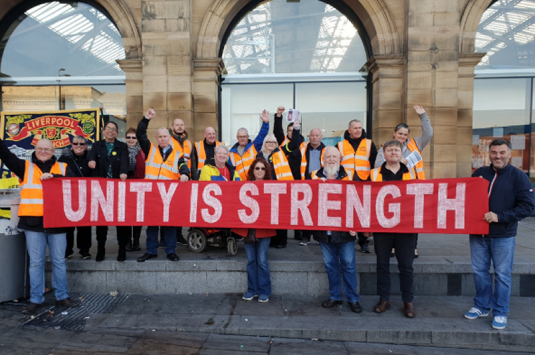
The RMT rejected it out of hand, and have rightly responded to this insult by escalating action. Good. Because this was not remotely a serious offer. With the government's connivance, it was a Rail Delivery Group media stunt. Knowing only the liberal press like The Graun would report it with any even handedness or detail, the Tories and the companies are supposing the existence of an offer makes them look reasonable and rail workers militant hold outs. In an uncharacteristic moment of honesty in the Summer, then transport secretary Grant Shapps declared his intention was to break the strike. He's now over at Business, but the aim remains the same.

The Tories are not interested in making a settlement and think toughing it out will see public patience wear thin and strikers' resolve weaken. So far, there's no sign of either. The problem they have is they're beset from multiple sides by industrial action. The post, FE and HE workers, nurses, ambulance crews, and who knows who else are going to go out in the new year, makes them exceedingly vulnerable. Margaret Thatcher was never stupid enough to take on multiple groups of workers at once. They're desperate to defeat the RMT, perhaps the most militant and best organised union in the country, as a means of deterring other unions. To the credit of Mick Lynch and the RMT's leadership, they know what the Tories' game is. If they lose, it will be a blow to rising militancy. But if the union sees off the Tory attacks, it's not just rail workers who win. We all do.

Image Credit

Monday, 5 December 2022

Keir Starmer and State Modernisation

Some first impressions on Gordon Brown's long-awaited review of the UK constitution. In his speech at Leeds University, Keir Starmer said Brown's recommendations would now form the basis of a consultation so they're ready to be implemented during the first parliament of an incoming Labour government. What's in them, and what are the politics of the proposals?

1. There are continuities between these proposals and what was in the last three Labour Party manifestos. In 2019, for example, Labour pledged to adopt a community wealth building approach with Preston as its model to regenerate local economies. There was to be greater freedom for local authorities over planning, but the real emphasis was on making funds available to rebuild public services run into the ground by a decade of Tory cuts. While nodding toward inequalities and the baleful consequences of centralised government, the Brown plan is driven by a different approach. I.e. Rather than restitution, his proposals reset the relationship between the state and its localities. Constitution, in other words.

2. The report identified 280 economic clusters scattered about the country. Transforming them into drivers of growth requires stronger local government, who will be responsible for driving economic plans and raising its own cash. Financial autonomy independent of the Treasury is a sharp divorce from received custom and practice. This is in conjunction with moving 50,000 civil service jobs out of London to save money and help build up the resilience of local economies, and encouraging cooperative relations between local authorities instead of the pork barrel competition set up by and presided over by the Tories' levelling up funds.

3. This is in the context of wider reform to the constitution. The abolition of the Lords, already trailed a couple of weeks ago, was reiterated again. Its replacement would be an assembly of the nations and the regions, which would lose the Lords' scrutinising function but work as the voice of local and devolved governments and safeguard their powers. Local authorities would also win the right to initiate legislation pertaining to their localities in parliament. Meanwhile, Scotland, Wales, and Northern Ireland would enjoy new freedoms. Some limited foreign affairs powers for Scotland, along with the same local government agenda as England and Wales (that would surely upset the SNP). There would be new crime and punishment powers for the Welsh Assembly, and all three of the nations would enjoy the same access to the new British Regional Investment Bank.

4. The Labour Party is promising a golden age for policy wonks. What Starmer is setting out is the rudiments of a new regime of capital accumulation. Rather than central government getting involved in picking winners and driving economic policy, pushing it down into the lower reaches of the state, on paper, creates a more benign and supportive environment for businesses to operate in. Though it does not say so in this report, going from Rachel Reeves's rebranded Green New Deal and Starmer's own pronouncements on trade unionism, their envisaged role of government is one that sets out the overall strategic priorities for economic development while stepping in as an honest broker between capital and labour where it comes to industrial relations. The document contributes to the blue print for a new model of British capitalism. One in which the state (the executive, its devolved and local government entities, and the public services run under their shared aegis), businesses, and labour know their place and have a clearly delineated framework for relating to one another.

5. This is an obvious improvement on the half-arsed and corrupt effort of Tory modernisation. It is more ambitious than the Blair/Brown efforts at revamping the British state because it goes further. Whereas New Labour retained the neoliberal settlement and significantly reinforced it, while implementing some mildly redistributive policies, Starmer is offering something new. Its ambition was only matched by the Corbyn years, but with significant differences. Corbynism was more than just reversing austerity and restoring public services, it pointed to a break with bourgeois politics. The championing of alternative forms of ownership and the promise of more workplace democracy implied a fundamental challenge to capital and its right to manage its assets. I.e. The means of production. The radicalism of the Brown plan departs from the received wisdom of British statecraft (and its centring on the City) only, and it does this not to enhance democracy but to save British capitalism from itself.

6. This nevertheless is big politics, and it proved too much for the reporters who quizzed Starmer about it following his speech. Beth Rigby asked Starmer how this would help people facing the pressures of the cost of living crisis. Another suggested talk of Lords reform was bewildering given the scale of our present economic problems. Aren't these just Westminster bubble issues? And tweeting away, Times Iain Martin hack ignorantly crowed about Labour's 40-point plan. It's almost as if a generation of journalists are incapable of comprehending anything but the most marginal of changes, or anything more abstract than the state taking money from one area and spending it in another. To be fair to Starmer, he deftly dealt with this small-minded line of questioning by pointing out how short-termism was one of the contributing reasons why the Tories have got the country into such a mess. It also spoke to people's desire to do things differently and stop politics from being a block on what they want to do. Getting the politics right is central to economic prosperity.

7. Again, the question of trust has to be raised. Why should we believe Starmer is going to deliver on this? Because, ultimately, it's the politics. The 2020 leadership pledges were mostly ditched or watered down because they are fundamentally at odds with his technocratic, managerial politics. The settlement set out in the Brown document doesn't challenges his authoritarian view of government in any tangible way. He has his job at the top, and the First Ministers, the metro mayors, and the council leaders have their own domains to attend to further down. Introducing more elections to replace the Lords and making local authority elections matter more are hardly a major difficulty where the supremacy of his administration are concerned. In short, he's offering a great deal of change so things can, fundamentally, stay the same.

Image Credit

Sunday, 4 December 2022

The Right's Walking Wounded

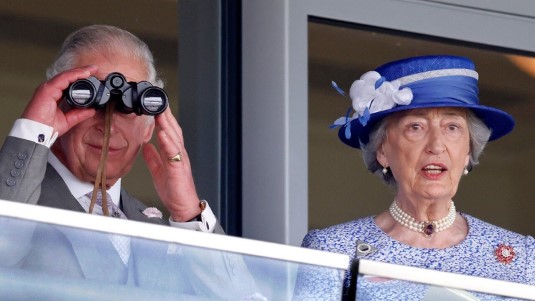
Won't anyone think of the racist aristo? Poor Lady Susan Hussey. A life time of craven service at the apex of Britain's class system, an episode of racist bullying - among who knows how many unremarked such episodes - has brought her 60-year association with Buckingham Palace to an end. The defences, of which there are plenty, were tediously predictable. She's 83 years old! Lady Hussey is from another time! She can't be expected to treat black people with respect! Probably the most stupid defence came from the pen of Petronella Wyatt. In what is 2022's greatest line in comment journalism, she writes, "Susan Hussey has no prejudices at all. She spent much of her life married to a man called Marmaduke, who had one leg." Game, set, and match.

While complaining of the "wasteland" her life has become, the sort of defence Wyatt is making on her well-heeled acquaintance's behalf speaks to the identity politics the right likes to play. Or, to be more accurate, a certain simulacra of wounding.

In Wendy Brown's States of Injury, a great deal of radical politics is characterised by a permanent attachment to suffering. In the context of the United States (and liberalism generally), the abstract citizen of American democracy is sovereign. They are individuated, and politics and civil society are the arenas for exercising their rights. Such as the right to free speech, freedom of conscience, to own property, etc. These are juridically and constitutionally guaranteed. However, as is well known, the lineage of these rights are premised on exclusions. Marx famously critiqued the liberal subject as a political appendage of the bourgeoisie. After all, what good is a political theory that doesn't even acknowledge the existence of the capitalist mode of production? Various thinkers from WEB Du Bois to Cedric Robinson demonstrated how this class subject was premised on racialised others, with the freedoms ascribed to it consciously defined against the less-than-human (because less-than-free) status of the slaves/colonised peoples. Likewise, the women's movement have critiqued the liberal subject as a masculine one, both in terms of how women were less than citizens before the vote was conceded and after in terms of its silences over gender. As Catharine MacKinnon observed, gender blindness marks gender bias in the law and political order.

For Brown, despite citizenship premised on the exclusion of women, minority ethnicities, and the working class, in US politics it has become something for excluded groups to aspire to. Indeed, the last 200 years could be read as an extension of citizenship to those whose existence it originally erased. During this time communities of solidarity have banded together to prosecute their interests within the boundaries of the political order. The abolition of Jim Crow and the institutionalisation of civil rights, the achievement of equal rights for women and sexual minorities at local and state level, and the subsumption of organised labour via the New Deal demonstrated the openness of the US system.

The first problem for Brown are the depoliticising outcomes of these struggles. While representing real strides forward that materially benefit millions of people, simultaneously what was a source of productive political conflict, upon victory, negates its potential and slots the identity location in question into the disciplinary apparatus of the state. In other words, it goes from a political subject with the power to mobilise to a position subject to normative regulation. Less poacher turned gatekeeper, more revolting bodies made docile. The second difficulty for Brown is how identity locations of necessity mobilise on the basis of pain and wounding. Identities share common histories, and what characterises the narratives told about those histories are the crimes and oppression inflicted upon them and their predecessors. Always a necessary component for struggle, because of the dynamics of liberal political regimes the formation of strong identities is the precondition for winning legislation that addresses their interests/concerns. The consequence of this is the tendency toward fetishising identity, of treating pain and wounding as essential components of a collective social location. Rather than working toward abolishing the relationships perpetuating the wounded life, they become talismanic. Suffering is political capital to be cashed in, and justifies more claims making in the terms of the liberal order. This form of identity politics, while making its claims, does not contest the rule of the game nor the system they seek recognition under. Taken to its logical conclusion, the state becomes a neutral arbiter among a plurality of depoliticised identities as well as the guarantor of all of their rights. Alliances between different groups on this terrain are precarious and episodic, and is why Brown, similar to Donna Haraway, argues that radical politics should start from commonalities and affinities, not identities.

Britain is an altogether different polity to the US, and while not as open as that system identity politics is constituted in similar ways. The manual working class fetish on the left, the feminist border wars over class and transphobia, and the struggles in minority ethnicity communities between "established leaders" and those coming up to challenge them speak to the same phenomenon. Even identities seemingly based around invented political labels, Leaver and Remainer, Cybernat, #BringBackBoris and Corbyn stans have similar characteristics. But the wounding, the use of pain and suffering to cohere identities is as much, if not more so a property of the right than the left. Recently, the Tories reacted with horror after Nicola Sturgeon said she "detested" the Tories and everything they stood for. The poor shrinking violets. Nigel Farage flitted from BBC studio to BBC studio on a not dissimilar shtick. Here was someone telling the truth you're not allowed to say any more. Farage adopted a faux subaltern position, claiming he was under attack from the establishment because he told it how it was. In fact, Farage has always been an establishment figure but his under-siege ruse, his pantomime of wounding was beguiling to some. Boris Johnson followed the path the former UKIP leader had trod. Except it wasn't him who was suffering, it was the British people. The remain establishment, in cahoots with the luvvie left around Jeremy Corbyn and every minority grouping the Tories customarily scapegoated wanted to steal their democratic choice to leave the European Union. To repair the country the second referendum lobby were grievously bruising, concerned citizens had to vote Conservative to get Brexit done.

The right's sense of wounding is different to that identified by Brown among the left and progressive movements. The identity the right validates and identifies with is the unreconstructed, unmodified liberal subject of representative democracy. Not the one that (theoretically) allows space in its abstraction for those hitherto excluded from it, but the act of exclusion itself. The right identifies with what is unstated - the white, propertied man who was the model liberal political philosophy articulated and is articulated upon. It is the sovereignty of one class looking downwards upon another, of the masculine and the white adjudging and guarding against those demanding the same recognition and equalities before the state afforded them. As, among other things, philosophy is class struggle in theory we shouldn't be surprised that the right's sense of wounding, of privilege under siege, is the thought echo of conceding ground on workers' rights, equal rights legislation for women and minority ethnicities, the acceptance and normalisation of same sex relationships, and now struggles against police racism and misogyny, transphobia, environmental destruction and climate collapse. What is "wounded" is their perceived capacity not to exercise their sovereignty. What this really translates into is how naked exercises of their power and privilege comes with significant social costs. "You can't say anything any more" more often than not means getting challenged in some way. After all, Lady Hussey wasn't sacked, she was called to account. Similarly, Liz Truss and her ridiculously reckless growth plan fell apart because she was called to account. And it's this, the right's exposure to accountability is what they find so offensive. It's the pain of having to cope with democratic norms and expectations, as limited as they are. This is how wounding characterises their politics, and it could, among other things, be said that the Conservative Party's project is the management of this discomfiture.

The right's walking wounded, therefore, is less a reaction against "woke" politics. That's just the current manifestation of the agonies they are facing under the impact of proliferating identity politics and cultural trends tending toward social liberalism. Rather the wound, their stinking maggoty wound is a permanent one that cannot but fester for as long as a semblance of liberal democratic politics are in play, and the system remains just open enough to be continually contested. There will be more Lady Husseys for as long as this state of affairs persists, or is superseded by something better.

New Left Media December 2022

It's been a few months since we last had a round up of new left media projects, so here are some to fill your appetite for new voices and new outlets.

1. Harry's Last Stand Podcast (Twitter)

2. Labour for the Long Term Blog

3. Pro-Revolution Soccer (Podcast) (Twitter)

4. Red Medicine (Podcast) (Instagram, Twitter)

5. Stir to Action (Magazine) (Twitter)

If you know of any new(ish) blogs, podcasts, channels, Facebook pages, spin offs of existing projects, campaign websites or whatever that haven't featured before then drop me a line via the comments, email, Facebook, or Twitter. Please note I'm looking for new media that has started within the last 12 months. The round up appears hereabouts when there are enough new entrants to justify a post!

Saturday, 3 December 2022

The Stylistics - I Can't Give You Anything (But My Love)

There are a couple of posts on the hob, but as the cat is being annoying you'll have to make do with a ditty for tonight. Strap yourselves in, we're heading back to 1975.

Friday, 2 December 2022

Sajid Javid: An Anti-Appreciation

As a reminder of how Twitter is essential political infrastructure, former health, home, housing secretary, chancellor for five minutes, and serial leadership contender, Sajid Javid took to the platform to announce he's stepping down at the next general election. Can't say I blame him, to be honest. Despite having a reputation as an ideologue as hard on the party's right as Rishi Sunak, Javid is rare among Tories for possessing a brain. And with the chances of an election victory in 2024 at absolute zero, a lengthy if not permanent period of opposition doesn't appear appetising. Especially if there are more lucrative opportunities elsewhere, which there will be for an ex-banker like Javid.

To be honest, I'll be sorry to see him go. There are Tories, and there are interesting Tories and Javid fits that bill for me. I've always had a bit more time for those born without the silver spoon and haven't benefited from undue privilege. That doesn't mean Javid wasn't a frightful horror, politically speaking. As Home Secretary he described Momentum as a "neo-fascist organisation", an allegation he would never repeat outside of the Commons chamber. He also shielded the Tory party from allegations of Islamophobia, despite hailing from a Muslim background himself. He mixed himself up in the "Asian paedophiles" discourse with the worst of them. And as part of his duties in his previous life in the City, he operated a tax avoidance scheme that laundered bankers' bonuses through the Cayman Islands so they could enjoy the fruits of their ill-gotten gains in full.

What was interesting about Javid was his first stab at the top. Unconventionally, he formed a joint ticket with Stephen Crabb in 2016 and offered a first stab at blue collar Toryism - this was before Theresa May and Boris Johnson variously adapted themselves to it. The ruse didn't work for them and it wasn't long before Crabb had to step down from front rank politics following the unearthing of inappropriate text messages. Second was, despite the peddling the same disingenuous and dishonest rubbish as fellow Tory ministers, he appeared to have an attachment to ideas. Initially billed as a follower of the unlamented Ayn Rand, in 2020 Javid put his name to a report by the Centre for Policy Studies. The think tank, founded by the blessed Margaret and her mentor/hanger-on Keith Joseph did a 180 and called for more public spending and state intervention in the economy. For a disciple of so-called objectivism to endorse this non-Thatcherite course demonstrated again a certain flexibility in his thinking. Unlike Sunak who is a plodder and is dogmatically sticking with a strategy that won't save the Tories, the two occasions Javid showed an innovative spirit suggests that he would have served his party well as leader, and therefore made our lives and that of the labour movement more difficult. But he did do us a solid - he kicked off the mass resignations from Johnson's cabinet and ensured their best electoral asset was put out to pasture.

Javid's departure is, by my reckoning, the 13th Tory to have announced his decision to stand down in 2024. He won't be the last one calling time on his political career either. If sitting MPs can't show they have confidence in their party, why should the voters?

Image Credit