Saturday, 8 October 2016

Jeremy Corbyn and the SWP

The Socialist Workers Party. Remember them? Famed, if that's the right word, for shameless opportunism, wrecking tactics, and poncing off movements they did little to build, they perhaps owned the worst reputation of any organisation on the far left. And that was before evidence of covering up a rape complaint, the hounding of one of the women concerned, and testimony of an abusive culture emerged. In short, anyone who remained a member of the SWP after all this came out must have a seriously twisted view of what socialist politics is about.

Since this news broke, different parts of the labour and radical movement have treated the SWP differently. Seeing as they still haven't openly and honestly accounted for their disgusting behaviour, I'm of the view of shunning them, actively avoiding them, and making it clear they're nothing but pariahs is the best way of dealing with them. Zero tolerance of sexual violence in our movement means zero tolerance of those who alibi and brush it under the carpet. Others believe in attacking SWP stalls, which in my opinion is self-indulgent and narcissistic. Nevertheless, the SWP have soldiered on trying to rebuild their battered reputation, which is a labour of Sisyphus every time a new recruit or contact Googles the party's history.

As a Leninist outfit, the SWP has long worked behind the scenes in a number of front groups. Set up an organisation dedicated to a particular issue, campaign, and draw people into the party by being the "best builders" of "the movement". One area the SWP have always placed much emphasis is anti-fascist and anti-racist work. Since the success of the Anti-Nazi League in the late 70s and its resurrection in the 90s, the transformation of the ANL into Unite Against Fascism in the early 00s, and foundation of Love Music Hate Racism and Stand Up to UKIP, this has been a fertile seam for party recruitment. And, to show fairness to the SWP's record, it has played an essential role in mobilising protests against the likes of the BNP, the English Defence League, and latterly the occasional real world manifestation of the Britain First Facebook group. That isn't to say there aren't problems with the various approaches to anti-fascism the SWP and its fronts employ, but that's a separate debate.

Fast forward to now. Obviously, in light of the Brexit vote and Theresa May's wrexit speech, the increase in reported hate crime since June, and the continuing exploitation of race and immigration by politicians of the right and the ostensible left, racism is all set to become more of a football. Therefore this weekend's Stand Up to Racism conference is timely and potentially important. The one problem, however, is despite having a steering committee staffed with the great and the good of the labour movement, its co-convenors are Weyman Bennett of the SWP and Sabby Dhalu, also of SWP UAF. In other words, these are the folks who do the organising, book the speakers, decide the format, and "suggest" the content while the "name" officers (here) front it up. Having been invited to speak, Owen Jones was one of several to turn SUTR down on account of the SWP's involvement. Reportedly, Jeremy Corbyn did the same thing on the same grounds.

And yet the Labour leader turned up anyway.

Disappointing isn't the right word. A phrase full of expletives would perhaps about cover it. And so much for upping his game. Perhaps Jeremy thought that it was important to speak at an anti-racist event by an organisation presided over by Diane Abbott because, well, not doing so might have been interpreted as a snub within days of her appointment. Perhaps he thought it was important to be seen speaking out against racism and bigotry, and this was a convenient platform to do so from. I don't know, and chances are you don't either. But from his point of view, it's so incredibly stupid and reckless.

Jeremy has a commanding bedrock of support in the party, but there is a tension between two broad wings within this base. There's the sweep of reluctant Corbynists, Labour lefties, and others who want to get on with the business of building a broad based movement with the potential of taking Labour to power. On the other, there's the wave of very enthusiastic Corbyn supporters who tend to be totally fresh to politics but unwavering in their loyalty to Jeremy because of the ideas he represents. Mixed in here too are a few old hands whose politics are principled but allergic to adapting them to the concrete situation. Whether he intended to or not, Jeremy today provided cover for the SWP. He affirmed them as a legitimate part of our movement. And for a chunk of his support, especially those who've encountered the SWP (and that would be a good proportion of his seasoned extra-parliamentary activist milieu), this is the sort of thing disconnect and distrust is made of. Especially given the vile nature of the allegations at the centre of the SWP's cover up. And this could serve to prise apart the coalition of the left his leadership rests on.

If the spiking of Clive Lewis's conference speech and his subsequent move from shadowing defence was the first crack in the Jez monolith, this could well be the second.

Correction 10/10: According to his staff, Jeremy was originally booked to do an event in Scotland that clashed with Saturday's conference was cancelled, and so apologies were sent accordingly. When this was cancelled he elected to speak at SUTR. He did not pull out and then go as suggested here. Nevertheless, the rest of the piece remains the case. He knows well who the SWP are, and he also knows what they've done


Friday, 7 October 2016

The Woolfe was on the Floor

And lo, we've gone from the Woolfe was at the door to him sprawling across the floor. I'd be lying if I said yesterday's altercation between UKIP leadership front runner Steven Woolfe and the hitherto anonymous Mike Hookem didn't provide some entertainment in the office. It had bewilderment and humour, then a touch of tragedy when it sounded as if Woolfe's injury was very serious, and then back to larfs once he was declared okay. Bonus mirth was added after the rumour broke that Hookem was on the run from the French fuzz, and there had been a car chase. Politics often isn't very entertaining, so you have to take your jollies as you find them.

UKIP's week of hell began with the resignation of its former leader, Diane James, in what must be the shortest tenure of any properly elected chief in British political history. The usual "family reasons" were cited, but it turns out the reception she got from her fellow UKIP MEP group was so rough she decided to throw the towel in. And besides, there is the suggestion her arm was twisted to stand in the first place. Then Woolfe, one of party's few politicians with something about him, admitted he'd hobnobbed with Tories about defecting. At least that was before James helpfully threw herself under a bus and all of a sudden, being the big fish in a small, toxic pond didn't seem that bad of a proposition. And then there was the playground scrapping, ostensibly on this very matter. And you know the rest.

The surprising thing about UKIP is this mano-o-mano method of resolving political differences doesn't happen more often. Newly emergent political parties are always unstable. If they are to persist for any length of time, they must stabilise through the establishment of relatively firm relationships with certain constituencies of people, be they classes and class fractions, religious groups, minority communities of some description, nationalities, and so on. As I put it previously:
In Western liberal democratic systems, the primary functional outcome of party activity is the appointment of leading office-holders in the state apparatus, enabled by and recruited from voluntary party organisations rooted in one or more constituencies of people. Parties, if they're doing their job properly, act as bridging mechanisms between parliamentary elites and the wider population. Each party condenses the interests and aspirations of their constituencies and feed them upwards, acting as a spur to and a check on those at the top. New 'challenger' parties, like UKIP, appear to stake their success on articulating grievances and issues hitherto ignored by dominant political elites and haven't, for whatever reason, been properly taken up by the existing parties. However while this may help small parties, the danger is that either the issues which led to their success become less salient over time, or might be co-opted by parties capable of forming governments. Therefore small parties need to orientate themselves to a number of constituencies and establish a linkage function if they wish to be long lasting.
The angry white, middle aged man brigade immediately come to mind when you start thinking about the party's core support. But that is cris-crossed with all kinds of contradictions. Ex-Labour folks. Thatcher fans. Petit bourgeois know-it-alls and mansplainers. Blimps and empire nostalgics. Former BNP voters. Racists. Class, status, national and gender identity, all rub up against each other, in a strictly manly, non-gay way of course, in a collective that seethes with tension. Exacerbating UKIP's problem is its 2013 rebirth as a Tory home from home, as Conservative refugees - the only ones Farage has ever welcomed - sought asylum from Dave's promotion of equal marriage. These people tended to be old, which added to a party that was predominantly made up of older people that was having little luck attracting younger members and voters, and so did nothing to halt the party's replacement problem. As it soared in the polls and threatened all the parties in parliamentary by-elections, its apparent strength was underwritten by a pronounced tendency to decline and fall.

And now Theresa May has come along and thrown Dave's liberalism in the bin. Brexit is going to be hard, so the nation must pull together and make a success of it. Working class people in left behind communities can look forward to a fairer deal, immigrants can sling their hook, and EU residents are bargaining chips to be manipulated in talks with Brussels. As Thatcher blew apart the National Front in 1979 by annexing people's fears over race and immigration, so May has undertaken a similar land grab. As we saw, she came within a whisker of snagging Woolfe before opportunism came knocking. And for a swathe of the Tory kipper wing, a return home to live their strong leader/Thatcher's second coming fantasies is too much. Since the summer, some 50,000 people have joined the Conservative Party. Even Farage's political draw can't stem the flow. The ballast provided by the shire bigot vote is heading south, and so all they have left is a doubling down on the support that UKIP attracted during the 00s - the disaffected small business people, the traditional anti-Labour working class voter, and the declassed ranks of the unskilled unemployed and retired. In other words, the electoral volatiles that can condense sharply and heavily, and evaporate moments later, as the BNP's rise and fall chronicles.

Chances are the crisis gripping UKIP won't have much of an immediate effect on the party's remaining support. After all, Farage is the only kipper most people have heard of, and that includes their voters. But ultimately a party, especially a small fringe one like UKIP can't contain the instability drawn up from its roots. It will poison its limbs, weaken the structure, and bits will start dropping off. We don't know the precise circumstances why Woolfe crashed to the floor, but it might not be that long before the party follows his example.

Thursday, 6 October 2016

Stuart Hall on Social Democracy

The moment you discover things you've been writing about for years were pre-empted decades ago.
Social democracy ... has long ago ceased to work the 'good sense' of the class, its 'spontaneous' class instinct, its sense of the world as unjustly divided into the oppressed and the oppressing classes: it has limited itself to making tactically pragmatic accommodation with the most traditionalist and conservative elements in popular morality. It has no conception of the educative and formative function of 'parties' in relation to the 'classes which they aim to represent - and which, in order to represent, they must first form, politically and ideologically. Indeed, the left as a whole, in its one-sided rationalism, has utterly failed to comprehend the necessity to educate the commonsense of the common people, in order to constitute a popular bloc, a practical material force, against traditionalist ideas.
Stuart Hall, The Hard Road to Renewal, 1988, pp.142-3.

Tuesday, 4 October 2016

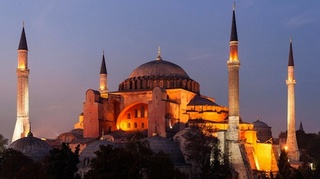
Banditry and Violence in the Ottoman Empire

New academic year, a new season with the Sociology Research Seminar Series at the University of Derby. Opening for the semester was Baris Cayli, Research Fellow in Criminology with his paper, ‘Zones of Fragility: Outlaws and the Forms of Violence in the Ottoman Empire’. This was one of a series of interlocking projects spun off from Baris’s work in the old Ottoman archives scattered about its former territory. These range from the Grand Vizier’s office and Imperial decrees on foreign affairs hosted in Istanbul, to smaller collections of correspondence and edicts from governors and local officials. The basic question guiding the paper was how the structure of the empire was shaped by violence, or rather how the sporadic violence undertaken by bandits, outlaws, and rebels – regardless of subjective intentions – contributed to this shaping of the empire.

Received histories of the Ottoman Empire, particularly from the 19th century on to its eventual collapse after the First World War was one of decline and gradual dismemberment by the European Great Powers and newly independent Balkan states. Pressed by imperialism and colonialism from without, the Ottomans faced instability thanks to the spread of national consciousness among subject peoples, and perpetual cycles of tension and revolt around land ownership and tax, the latter varying enormously across the empire’s territory. This was symptomatic of a weak central state and high levels of autonomy for governors. Effectively, they comprised petty states within a state and was seldom in touch with the imperial centre. This itself was a consequence of poor and/or non-existent infrastructure. In TE Lawrence’s First World War memoir, Seven Pillars of Wisdom, he notes it was quicker and easier to move reinforcements from London to the Palestine front than it was for the Ottomans to transfer forces from Constantinople to the same.

A consequence of this ramshackle state structure was its lack of immediate presence. There was no social fabric as such to support Ottoman rule, little or no identification with the centre. Issues of hegemony and consent, traditionally bound up with socialist strategy in the advanced countries were absent because the structures underpinning them were absent. This meant in towns and villages throughout the empire, there was no rule of law. Instead there was sporadic and unrestrained violence on the part of bandits. The archives talk about Bosnian outlaws sometimes, but not always, influenced by nationalist ideas who would sack towns and villages. It follows that if a state cannot acquit itself of the very basic function of protecting life and property of subject populations, then its potency, power, and legitimacy becomes much diminished.

This is where Baris introduced his notion of zones of political fragility. These are simply spaces where political violence occurs. Likewise, zones of social fragility are locales in which non-political violence are regular occurrences. Where they proliferate, antipathy towards central authority grows. And the second consequence is that terrorised subject populations may surrender to outlaw groups, form alliances with others, and/or take on a nationalist coloration. In short, fragile zones act as centrifugal pressures that prise away national minorities and territories. This dynamic seems to have been at work especially in the Balkan provinces previously under Ottoman control. However, while political and non-political violence contributes to this fragility, and therefore should be viewed holistically in its consequences for state authority, Baris was clear that this is only a provisional concept and requires refinement through the examination of comparative cases.

In the subsequent questions, Baris was asked about how does one differentiate from political and non-political violence? Especially as criminal enterprise can be carried out for political reasons, as well as sustain political violence (an example that immediately jumped to mind was of a youthful Stalin and his bank-robbing scrapes in the Caucasus that helped fund the Bolsheviks). For Baris, the definition just concerns goals, though in practice they may entail similar consequences. With Stalin, for example, the criminality of his enterprise was wedded to political objectives. For most bank robbers, that obviously isn't the case, but a multiplication of this violence for whatever subjective reason results in the fragility zone problem.

While far from a modern state on the 19th century/early 20th century West European model, I asked if hegemony was entirely absent from the Ottoman Empire and if the central apparatus and the constellation of forces bound up with the empire at least promulgate an official ideology and inculcated discourses of consent? Baris replied that its internal looseness (provincial governors often paid none of their tax take to the central treasury) meant such a project had only a limited scope. Plus for consent to be obtained, it needs to acquit the basic function of providing security - a point long noted by Max Weber and the state as the repository of the monopoly of legitimate force. However, as the empire was officially Islamic, while there were degrees of religious freedom for subject populations Muslims were officially privileged. However, late in the day it did try and introduce citizenship laws that guaranteed all subjects certain rights and obligations. The problem here is that in a multi-ethnic, multi-faith empire in which there was already a legally privileged population, stripping those advantages away stirred up resentment among what would be its social bedrock. It was also difficult to enforce. Given the autonomy of the periphery, different areas were ruled alternately by imperial law, Sharia law, Christian covenants, and other local political and religious permutations of both. Not only were these sources of existing tension, a hegemony-building edict from the outside would do exactly the opposite. The state, rather than placing itself as an arbiter of tension becomes its origin, therefore contributing to the dynamics rending the empire.

Overall, an interesting start to the 2016-17 round of Sociology seminars.

Monday, 3 October 2016

Meet the New Chancellor ...

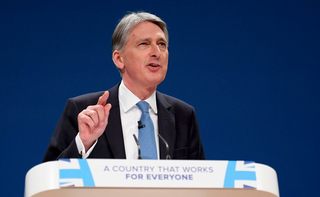
... much the same as the old chancellor. "Call me Philip" Hammond didn't apply smug factor 50 before his speech to Tory party conference, but he didn't need to. Beneath the boring exterior and the truly, truly awful jokes is a politician whose programme is little different to his unlamented predecessor's. Yes, in tune with his boss's whole nation conservatism, Hammond has woken up to the role the state can play in stimulating the economy and making things a wee bit better. That said, so had Osborne. Before his unceremonious disposal, the deficit and austerity had largely become political window dressing* for a more, how should we say, sensible approach to economic management. The slower, steadier austerity of the old Darling plan necessity forced on Osborne in 2012 had given way to a Keynesian-lite iteration of Ed Miliband and Ed Balls. Not that it was politic to admit this.

And so Hammond is picking up where Osborne had left off. Nevertheless, for politics watchers the speech was entertaining as a plod along a tightrope can be. The long-term economic plan, which never existed, has found itself replaced by the "flexible and pragmatic" plan. A phrase that won't be finding its way to a leaflet near you, Hammond's message, like Osborne's previous trajectory, has economic and political necessity stamped all over it. One of the architects of Tory austerity, Hammond was keen to lay claim to the book balancing rhetoric that served Dave well. Making sure the public finances are sorted is a top, but not the top priority of his economic strategy. And for good measure, he had a go at the "la-la-land" (his words) approach of John McDonnell. Apparently, borrowing while interest rates are at historic lows is not the thing to do, but of which more momentarily. In practice, the Tory manifesto surplus commitment has got itself kicked into the long grass along with all the other decisions May has singly avoided these last three months. Yet for those Tories mono-maniacally wedded to cuts and small-statism, provided they don't look too deeply (and the odd sacrificial lamb is hauled onto the slab), there was enough rhetorical gruel here to keep them sated. After all, with all May's party management problems, she can ill-afford a division opening up on economics.

With the right flank covered for now, the Keynesian turn addresses two pressing problems. If Brexit isn't going to mean wrexit, the state has to intervene to stabilise British capitalism. As overseas investment is likely to wind down once negotiations get underway and given the PM's idiot preference for a hard Brexit, insulating the economy from shocks is a big ask. Unpicking commercial ties and supply chains built up over 40 years of EU membership is as uncertain an endeavour as it is fiendishly difficult. Oh, and remember that thing called the world economy? Instability there hasn't gone away either. Undoing Britain's ties to the EU would be hard at the best of times, but should a new tsunami of crisis break over the world economy then things could get very messy indeed. Having the state undertake industrial activism now and into the immediate future to meet housing demand, provide investment, and sort out the productivity puzzle (which really isn't much of a puzzle).

Then there's political positioning vis a vis Labour. The media and assorted "friends" of the party may have written it off, but May certainly hasn't. Remember - again, that thing: memory - how she made a splash when she told her party they were seen as "the nasty party", and that was the root of their electoral woes. She hasn't forgotten this, despite running stunts like her universally-panned racist van. And neither have other smart lieutenants like Robert Halfon, one of the few Tories who tries to understand his opponents in their own terms. Having seen public opinion swing away from the Tories on tax credits and disability cuts, and a sense that politics is no longer "normal", Hammond's economics must work toward the political centre. And as that is more to the left than in the times of Blair, Brown, and Dave, failure to do so would give Labour an opportunity to define the debate. Don't forget, we've already had some success here despite a year of damaging in-fighting.

A country that works for everyone is the Tory conference slogan, but a paternalist concern for those at the sharp end of crisis and Brexit is entirely absent from the rollercoater ride we're about to embark upon. The bottom line is the bottom line: the preservation of British capital, and the Tory party's place as its chosen political vehicle.

*Only largely, because local government can still look forward to a difficult time.

Sunday, 2 October 2016

Theresa May: Brexit Means Wrexit

If politics is war by less violent, constitutional means, it follows that truth fares no better in the peaceful competition between interests. This is especially the case when politics is staking out new territory. If one can define what a problem or challenge is, your solutions, such as they are, have a certain credibility from the off while everyone else plays catch up. Consider the deficit determinism Dave's administration served up for for six years, and scored him a general election result too. The truth didn't matter. By linking the crisis in the public finances with alleged Labour profligacy and not with bail outs and recession, the Tories controlled the story.

Theresa May is doing exactly the same with Brexit. And that means dishonesty at the very basic level is fundamental to how she defines it. In her short speech at Tory party conference earlier, she had this to say:
I believe there is a lot of muddled thinking and several arguments about the future that need to be laid to rest. For example, there is no such thing as a choice between “soft Brexit” and “hard Brexit”. This line of argument – in which “soft Brexit” amounts to some form of continued EU membership and “hard Brexit” is a conscious decision to reject trade with Europe – is simply a false dichotomy. And it is one that is too often propagated by people who, I am afraid to say, have still not accepted the result of the referendum.
She and every leading Tory knows full well this is untrue. When matters turned to Brexit over the summer, proponents of soft Brexit - presumably favoured by reconciled remainers and a large number of leave voters because, after all, a soft exit is what the likes of Johnson and Grayling talked up during the referendum campaign - defined it as fundamentally non-disruptive. Britain after Brexit was to be business as usual with as many benefits retained as is practicable. The hard Brexit position, which has only recently started speaking its name this last month or so, isn't the rejection of trade with the EU as May pretends. It's the reckless abandonment of arrangements that have strengthened the British economy and allowed for the interpenetration of capitals, of workers, of flows of trade and the circulation of goods. The EU sells more to us than what we buy, say the idiots, but as an entity where risk is distributed among a market of 440 million people, the sundering of free ranging economic ties with Britain are going to hurt us far more than our withdrawal will hurt it. And we know from the 2008 crash who'll end up paying for this failure.

In the Bermuda Triangle of the Foreign Office, Dept of International Trade, and the Brexit office sense disappeared right after truth vanished from the radar. May has swallowed the Leave line that Britain can negotiate its own exit that retains all the benefits of the EU with none of the responsibilities simply because, well, we're Britain and we're a Very Important Place. As an assumption to hang a negotiating position, it's utterly reckless. For one, as the default party of British business the Tories show scant awareness of capitalist economics. To demonstrate, there is some evidence British car exports to the continent have taken a hit post-referendum. Who benefits? Well, that would be other manufacturers. Imagine that on steroids. Two years of Article 50 negotiations means a drop in inward investment for companies wanting unimpeded access to the single market. Meanwhile multinationals with a significant presence in the UK, such as Toyota and Nissan, will no doubt hold negotiations of their own with a view to relocation. And European competitors are going to go hell for leather on EU market share held by UK companies because they cannot respond quickly to competitive pressures thanks to Brexit uncertainty. May's foolhardy Brexit is going to put British capital at a disadvantage. Again, remember, this is supposed to be the party of business.

There's a strategic deficit when it comes to the 27 member states too. She seems to have forgotten they have politics too. As above, some would gain from a Brexit as UK-based business relocates and their companies muscle in on markets: they have an interest in a bumpy landing for Britain. At the same time, EU member states - Germany especially - working toward greater integration have to strike a fine balance between maintaining stability that won't negatively impact on their economy, and ensuring no one else has exiting thoughts. While the Tories believe in appealing to the rationality of unimpeded Mercedes sales in Britain, German and EU politics are divided over detente or punishment because EU business benefits differently and unevenly from Brexit. The second big political issue is the Tories' fantasy of free trade without free movement. If by some fluke Britain negotiated such a deal, the populist and the far right in the EU could be emboldened to demand the same. With immigration and the refugee crisis a perennial issue, it's difficult to see how Brussels, with the backing of Paris and Berlin would sign up to an arrangement that could accelerate EU disintegration.

Recall how we got into this mess? That's right, the short, medium, and long-range interests of the country were put into jeopardy for the sake of a small number of Tory voters tempted by a declining and doomed fringe party. May likes to pose as a different kind of leader, but I can't shake the feeling this negotiating position is also conditioned heavily by parliamentary party management. The Brexiters were always going to be her bastards, so the pre-announcement of Article 50 and a clear, if stupid and dangerous position on hard Brexit would keep them happy. But couple it with the Great Act of Repeal (an invite for a limited but publicity-hungry backbencher to call for a national holiday in perpetuity to fall on that date, to be sure), due to be legislated for as the EU negotiations take place and the PM can now look forward to a trouble-free conference. Let this be clear. The government are adopting the weakest negotiating position vis a vis the EU because it preserves party unity.

Asked about his son's role in negotiating Britain's future, Stanley Johnson reportedly said his Boris needs to avoid Brexit becoming a wrexit (wrecks it). Even if he was competent, which he is not, his boss is determined to steer the ship of state right into the harbour wall.

Tory Cynicism and the Work Capability Assessment

When I used to write letters to ministers for a living, it struck me that Damian Green was relatively decent. Well, if you ignore the appalling voting record, the missives we got back from the civil servant who scribbled his letters in immigration suggested he was a reasonable bloke, albeit one hemmed in by the politics he chose to associate himself with. This was entirely of a different character to his predecessor at the Department for Work and Pensions. Iain Duncan Smith's letters cadenced his cruelty with evangelism and zealotry. Now Damian Green has taken over from the execrable IDS, in a rare Tory concession to decency he has announced the government will no longer subject the chronically ill to repeat work capability assessments. Good.

Readers not familiar with the Work Capability Assessment will recall the well-publicised misery its work fitness test has caused. Not only have seriously ill and disabled people been found work fit, because the "trained medical professional" assessors deemed them capable of some form of employment, it has exacerbated illness in a great many cases as the dread of the assessment and the anxiety of going through the appeal process for many hundreds of thousands of people have compounded their conditions. We know it's been a factor in several premature deaths and suicides. Whether you believe whether some kind of independent, non-medical test is appropriate to qualify an applicant for social security or not (and I don't), if you can be found work fit simply because you went to your interview in a suit then obviously something is horrendously wrong.

Nevertheless, the Tories do not deserve any credit for exempting the chronically ill from future evaluations. It is true that Labour, for its sins, introduced this horrendous test. But the Tories made it their own, aided (lest we forget) at all times by the Liberal Democrats. The main question they have to answer is why chronically ill people, who aren't going to get better (the clue is in the name) were subject to repeat testing in the first place. The government have overseen social security policy for six years. If common sense proved elusive, there was evidence aplenty pouring in from the rate of successful appeals, repeat submissions from disability campaigners and charities, and the petitioning of Tory MP constituency surgeries by worried people. For years they've turned a tin ear to the experiences of some of our most vulnerable, and that alone condemns them.

On The Sunday Politics this lunch time, the formerly media-shy IDS was asked about this. He put up some waffle about the nature of the test. Under the old Disability Living Allowance system, access to disability payments was on the basis of medical diagnosis and need. Employment Support Allowance, which is basically dole for ill and disabled people, came with all kinds of conditionalities around income, capacity to undertake work-related tasks, and availability for "training". IDS argued he wanted to change the system to recognise the long-term ill and incurably sick, but was thwarted by the incompatibility of the two sets of support. The genius of the WCA was to disregard any and all medical evidence presented by applicants and recipients, and focus on whether they could lift a cardboard box or sit still for more than five minutes. Therefore to do what Damian Green has said means overhauling the test quite radically, tilting it - rightly - toward medical evidence. If indeed IDS is speaking the truth, and we know that our self-serving friend has form for a fib or two, then he was actively being overruled by Dave. That makes for another nail in the ex-PM's wretched coffin.

There's a whiff of cynicism about this. Since May appeared in front of Downing Street to do her Ed Miliband impression, this has been a government on a go-slow. The media again focused on the unnecessary Labour leadership contest and so a summer of Tory to-ing and fro-ing over Brexit, with May having to intervene publicly to slap down the likes of Johnson and disgraced international trade minister Liam Fox, went virtually unnoticed as far as folks outside of Westminsterland are concerned. They can't hide their paralysis forever - governing things involves being seen to govern things, after all. Piloted by Green, this change generates positive headlines, helps radiate an aura of Tory sensiblism and fluffiness, and gives some substance to May's one nationist pose. Pure coincidence the announcement is timed perfectly for Conservative Party Conference. If the decision was heartfelt and genuine, it would have been enacted in July. Meanwhile, the WCA continues alongside the system of punitive welfare sanctions. Note no change here: misery is fine as long as it remains politically expedient.

Saturday, 1 October 2016

Saturday Interview: Jacqui Berry

Jacqui Berry is a nurse, Unison, and Socialist Party activist from Medway. Jacqui's vlog, Austerity Blows went viral after her message to Jeremy Hunt was featured by Cosmopolitan magazine. When not vlogging, campaigning, or working Jacqui can be found tweeting her thoughts and opinions here.

After the leadership contest, what do you think is next for Jeremy and his support? Can he reach the parts other political leaders cannot?

So I’m not a full member of the Labour Party, but I am an affiliated supporter via my union. I am delighted for Corbyn, his team and for all of us who have supported him. I’m a nurse. I work on an Intensive Care Unit which is about as far away a person can get from the Westminster bubble and there are girls who I work with who have never voted before but bloody love him! His programme, which to be honest is not exactly a radical one, gives people hope.

My concern for him is that despite the increased mandate he got in the most recent leadership election, the Labour right won’t rest. If it’s true that it was representatives from my own union UNISON who led the charge in getting through a package of rule changes, I would be more than disappointed and given that its members voted heavily to support Corbyn I think there would need to be a reckoning for those involved.

And can you see a way back for Progress, Labour First, et al?

Absolutely! If anything they’re in a stronger position now than there were before the election. Now that they don’t have to pretend that Owen Smith is in any way credible they can set their sights on the next plot. By manoeuvring themselves a majority on the NEC, allegedly propped up by trade union allies, the Labour right wing are in a strong position to push through shadow cabinet elections which will give the PLP no end of opportunity to undermine Corbyn. I really liked that Corbyn closed Labour Conference with the Bill Shankley quote “The socialism I believe in is everyone working for each other …” but on the football pitch if half your team are trying to put the ball in the back of their own net, as a manager you would replace them before the fans stopped showing up every week.

Moving on, are there any blogs or other politics/comments websites you regularly follow?

Definitely this one.

You use YouTube to get your point across. Do you think it's a useful outlet for left and labour movement activists?

Vlogging is just another way of popularizing socialist ideas. I definitely think if Lenin was developing is ideas around revolutionary organisation today, he’d have vlogged. I cover local pickets, protests, demonstrations, trade union stuff and comment. The medium allows you to chronicle real life in austerity Britain without necessarily being preachy. It’s recorded in working class homes, using equipment that a nurse can just about afford. People will be able to look back and see how working class people dressed and talked, what was considered funny, where we shopped. If it feels authentic, that’s because it is. Sometimes when people put a camera in front of their face, the patter of their speech becomes very newsy but vlogging should be more relaxed. It’s a video diary at the end of the day and political diaries have been inspiring people for decades. People like the personal. I would urge anybody struggling against capitalism to have a go!

Are you reading anything at the moment?

Last week I picked up a copy of Seeing things as they are: Selected journalism and other writings by George Orwell. Because I want to start writing again but the best parts are the poems he writes about death. It’s one of my favourite subjects.

Do you have a favourite novel?

Watership Down by Richard Adams.

Are there any works of non-fiction that has had a major influence on how you think about the world?

Lots! My favourite would probably have to be The Revolution Betrayed by Leon Trotsky.

Who are your biggest intellectual influences?

Between the ages of about 17 and 20 I consumed a diet almost entirely of Marx, Engles, Lenin and Trotsky, so obviously that has had a big impact on the way I see the world. I’ve also been influenced not just in my nursing practice but also in how I approach politics by nursing academics like Susan Jo Roberts, whose work on lateral violence and oppressed group behavior have got me through many a night shift!

And has there ever been an event/moment that has exercised a similar influence?

I had a fairly tough time as a teenager. I had some mental health problems, and my family and I didn’t always get on. I was homeless for a bit. Not everything influences you in a good way, but it made me resilient. I know what it is to be dirt poor. I think it’s given me a sense of perspective which means I’m someone who looks for the funny side even in the darkest circumstances. I don’t think I’ve laughed so much as the week me, my mum and her brother spent with my grandma on her death bed. It was a hoot! I try not to take myself too seriously. Some people have real problems.

How many political organisations have you been a member of?

Loads! I think the first one was Greenpeace when I was about 10 and I read a leaflet about deforestation in The Body Shop.

Is there anything you particularly enjoy about political activity?

For me, once the initial enthusiasm had worn off, activism had always been a means to an end. It’s easy to get burnt out, especially in the political period prior to Corbyn’s victory when the situation wasn’t that open. An incredibly conservative trade union bureaucracy stifled the confidence of workers to resist austerity. In the NHS the real value of our pay has fallen by 15% since 2010. This has been met with four hours of strike action. Things have changed now. Corbyn’s victory was based on him tapping into a mood that was always there under the surface, that there is an alternative to austerity. Maybe that’s why some in the trade union movement allegedly don’t like him! Either way he’s enthused hundreds of thousands.

Vlogging also gives my activism a new dimension, I feel like it’s more meaningful. Being able to reach a few hundred people with a vlog from a local picket line not only spreads the message but it builds relationships. People love it when I stick my phone in their face. Also the editing process forces me to work out what’s important. No one wants to see Junior Doctors faffing about trying to decide whether to allow more than 6 on a picket line. People do want to feel like their fight is our fight.

Can you name an idea or an issue about which you've changed your mind?

I’ll be honest, I didn’t expect the re-populisation of socialist ideas to have anything to do with the Labour Party.

What set of ideas do you think it most important to disseminate?

The other day I was making up a syringe of IV morphine and my line manager came up to me and asked me what a Trotskyist is.

What set of ideas do you think it most important to combat?

Racism and bigotry are always bad. Also, this idea of “wiping the slate clean” as Corbyn puts it is bogus. The definition of madness is making the same mistake over and over again, expecting a different outcome. Purge the purgers or be purged yourself mate.

Do you have any political heroes?

No.

How about villains?

Plenty! Although special mention to Jeremy Hunt who has literally no redeeming qualities, apart from making Patricia Hewitt look not so bad.

If you could affect a major policy change, what would it be?

I would love to nationalise the banks. It would make me really happy. Whatever my sister manages to achieve, I’d always be the sibling who nationalised the banks.

What do you consider to be the main threat to the future peace and security of the world?

Capitalism. Always capitalism.

What would be your most important piece of advice about life?

Have a bit of humility. We all sit down for shit and no one gets out alive.

What is your favourite song?

I’m having a Fleetwood Mac revival. Such a millennial.

And what was the last film you saw?

I think it might’ve been Beauty and the Beast.

What do you consider the most important personal quality in others?

I have a lot friends from many different background and the one thing they all have in common is bravery.

What fault in others do you most dislike?

People who can’t acknowledge their own shortcomings and mistakes.

And any pet peeves?

The lift in my hospital is the bane of my fucking life.

What piece of advice would you give to your much younger self?

Get regular smears, dickhead.

What do you like doing in your spare time?

I like micro-pubs! They’re brilliant.

What is your most treasured possession?

Probably my phone. That’s bad isn’t it?

Do you have any guilty pleasures?

Nah, I’m shameless.

What talent would you most like to have?

Genuinely wish I could sing but I’ve tried and it really is terrible.

If you could have one (more or less realistic) wish come true, what would you wish for?

I’d lose a stone. I know that’s really shallow but we’re all subject to bourgeois patriarchal conditioning when it comes to body norms.

And if you were to suddenly win or inherit an enormously large sum of money, would it change you and how would you spend it?

I’d pay off my mortgage and my mum and dad’s. I’d get my sister a place as well, her landlord sounds like an arse. I’d get some fancy vlogging equipment and have a couple of years travelling. The rest I’d set up a workers co-operative and build a shit ton of wind turbines with solar panels on top. I’d also get Spotify Premium.

If you could go for a drink with three people, past or present, who would they be?

Natalie from work, Lenin, and Stevie Nicks. I think Lenin would have a really boring night. Poor Lenin.

And lastly ... why are you a socialist?

I really can’t cope with injustice.

Five Most Popular Posts in September


The five most read posts this last month were:

1. Why I Voted for Jeremy Corbyn
2. Jeremy Corbyn's Prime Ministerial Speech
3. Jeremy Corbyn in Stoke-on-Trent
4. Now What for the Labour Establishment?
5. Some Critical Advice for Jeremy Corbyn

Critical Corbyn studies absolutely dominated the blog last month, with my piece explaining why I voted this time for Jezza cleaning up and going semi-viral on the old social media. Jolly good. Its ilk helped push the blog to its third highest page view total ever with a monthly tally a shade under 101,000 page views. Perhaps now the summer's interest in Jez dies down and the Westminster slog resumes after next week's Tory conference, the numbers might drop back. We'll see soon enough.