I've always found it a bit weird that teaching presently has four trade unions vying to represent it: the NASUWT, NUT, ATL, and Voice. However, four may very soon become three as "non-formal" talks are taking place between the Association of Teachers and Lecturers (124,000 members) and the National Union of Teachers (333,000 members). Good. Anything reducing competition between unions maximises the hand of the employee in negotiation with the employer and should be welcomed by all labour movement people. That isn't to say everything is bright and cheerful. Gossip about some very questionable behaviour on the part of the ATL is doing the rounds in organising circles and what's going on is disturbing. It's something NUT and ATL members might be interested in knowing about. I'll ask readers to cast their eyes across the Irish Sea to the Emerald Isle. Here it would seem that the ATL have been launching recruitment raids on my own union, the University and College Union. This goes back several years. In November 2008, the Irish Congress of Trade Unions heard a complaint made by UCU against the ATL. That complaint accused the latter of recruiting workers in the Further Education sector contrary to the ICTU's constitution. The UCU and its predecessor union had long been recognised by the employers for the purposes of collective bargaining. The Congress's constitution also stipulates that each of its affiliates have a protected sphere of influence from which they may recruit. The UCU's is HE and FE teaching/lecturing and management staff, the ATL's school teachers. As part of the complaint, UCU alleged that they had seen a recruitment email sent from an ATL organiser to UCU members that suggested they also had collective bargaining rights - which was untrue. Furthermore these and other antics came at a time the UCU in Northern Ireland was involved in a dispute with the employers. Basically, what the ATL are accused of doing is akin to Unite recruiters turning up on Unison picket lines and signing them up. It's atrocious behaviour. Some might characterise it as a little bit scabby. In their reply to the committee, the ATL affirmed the unions' respective spheres of influence and accepted they had no recognition rights in FE in Northern Ireland. As for the email, this was sent because the ATL had entered into an arrangement with another union, the Association of Managers in Education (AMiE) to provide their Ulster members representational services. Of course, said email was "sent in error". In their findings, the ICTU disputes committee found in favour of the UCU and asked the ATL to write to any member recruited from this operation to advise them the union has no bargaining rights in the sector, and the right one to join is the UCU. It also recommended ATL review its procedures to ensure something like this didn't happen again. Done and dusted? Apparently not. In February this year both unions were back at the disputes committee. This time the ATL were accused of explicitly running a recruitment campaign in FE contrary to the previous findings. Even more damaging, they undermined the UCU by misrepresenting the union's position on the "Deane payment": i.e. FE lecturing pay scales in Northern Ireland. This misrepresentation involved making false claims in their publications inferring that the UCU blocked pay rises for staff in management grades. This is despite ATL (and the employers they represent) having sight of correspondence authored by a government official stating that management grades did not attract a pay increase because they were not included in the employers’ business case. FE pay in N.I. is subject to the government's hard line on public sector pay restraint and thus UCU does not enjoy free collective bargaining over pay in any true sense. Worse still, since the 2008 ruling ATL subsequently embarked on a poaching assault on UCU’s higher education membership. Once again this is a sector for which the ATL has no recognition rights. The ATL poached members in Stranmillis teacher training college directly from the UCU while the union was involved in a UK-wide pay dispute. The ATL for their part disputed the demarcation established by the previous disputes committee. In 2011 they had taken over AMiE and argue they had assumed their representational rights, up to and including collective bargaining, in FE. They also denied knowledge of the dispute at Stranmillis but conceded they should not have begun recruiting. They also deny they set out to undermine the UCU's position. This is where it starts to get interesting. The Congress committee only in part accepted the ATL's acquisition of representational rights. It held that the union now possesses rights on behalf of staff on 'director grades' but not for the sector as a whole. They remain the province of the UCU. It also found it should not have accepted members from the UCU during the course of a dispute. Therefore the ATL should contact these people and direct them back to the appropriate union and, again, address its processes and procedures. In official correspondence I've seen with the ICTU dated 9th June, the ATL's Northern Ireland director had this to say in response to the findings:
Dear Patricia, Thank your [sic] for your letter of 3rd June. I am writing in response on behalf of the Association of Teachers and Lecturers (inclusive of our leadership section, the Association of Managers in Education). As set out in our earlier letter of 15th May, ATL neither accepts nor is willing to implement the findings of the Disputes Committee 01/15 report. The report has, for us, little traction in the real world and would be injurious to the interests of our union. ATL recognises that this may put in question its continued membership of ICTU. As such, I should advise that ATL will cease our membership with the ICTU with immediate effect and that ATL personnel and representatives will withdraw from all Congress representative bodies and committees. [Emphasis mine] It is with regret that we are obliged to take this action. It is, nonetheless, inevitable and unavoidable in the circumstances. Yours Fraternally, Mark Langhammer Director, ATL, Northern Ireland
By way of a summary then, the ATL were dragged twice to the highest trade union body in Ireland to undergo an adjudication process after attempts at mediation and resolution failed. On the second of these occasions, ATL accepts it shouldn't have undertaken a recruitment raid on UCU members during a dispute, but has flicked ICTU the Vs and has pledged to keep hold of them. More than that, it no longer recognises the authority of the Congress to decide what demarcation boundaries there are, nor the established arrangements from which staff in that sector - be they UCU, newly minted ATL, or non-union - benefit from. What then is going on here? It is my understanding that there has been some bad blood between Mark Langhammer of the ATL and the UCU. In 2012, the Northern Irish government commissioned this report into industrial relations at the North West Regional College based in Derry. This is something of a "super-college" with around 25,000 students. However, there were persistent tensions between the UCU and NWRC management, reflecting a general lack of trust between staff and bosses. The remit of the report was to investigate the college's culture and communication practices. It found that staff felt intimidated and were micromanaged by people on senior grades, and recommended a transformation of the culture whereby management shifted its attitude and they and the union jointly collaborated in joint fora and the like. Hardly "kick out the bosses and occupy the factory!" stuff. However, in a statement put out shortly before the report's publication in February 2013, Langhammer (then with his AMiE hat on, representing the NWRC's directors) denounced it in a laughable press release. Here are some highlights: "The issue is simple. It comes down to who should run the College? Should it be the governing body, through its management team? Or should it be the infantile left within a Luddite union stuck in the habits and mores of old style 1970’s bargaining?" [Author's emphasis] "What the College has been faced with is an ongoing battery of engineered, manufactured, complaints and tribunals. What the North West public need to understand is that this is a concerted, determined, and irresponsible campaign of disruption by a backward thinking union led by the infantile left." "His draft report is consequently one-sided, biased, inaccurate, runs well outside his terms of reference and is, in parts, potentially actionable. It gratuitously identifies individuals in a manner that can only cause them reputational damage." "... the McConnell report is a “stitch up” - a “hatchet job” that has given the college union their ‘pound of flesh’ and can only encourage more of the same." "I have direct and personal experience of the sort of frivolous, vexatious and malicious grievance-mongering generated as the stock-in-trade of the complaints factory of this college based union branch." Were I a member of AMiE, I'd be embarrassed that the boss of my union would write something like this in an official capacity. The frothing antipathy Langhammer shows toward the UCU - albeit a local branch - does provide some context for their behaviour after the ICTU investigation. One might draw the conclusion that his petulance in "the interests of our union" is merely cover for a smash and grab on the UCU driven by vindictiveness and revenge. I appreciate that as far as the UK goes, these days Northern Ireland is regarded as a backwater peripheral to "proper politics". Even Question Time hasn't bothered filming an episode there for the last two years. But that doesn't mean it's not without significance. What has happened is the equivalent of the ATL turning round to the TUC here and telling them to do one as it targets the membership of other unions in aggressive and - yes - scabby recruitment campaigns. So the question is where's the wider union in all this? Withdrawing from the ICTU is no little matter. It's not like a local branch getting in a huff with the local trades council and not bothering to send next year's affiliation cheque. The evidence suggests that ATL’s tactics in Northern Ireland are being used to test the efficacy of hostile strategies in boosting ATL’s membership. An experiment in the ends justifying the means. In April of this year the General Secretaries of Unison, GMB, and Unite had cause to author a joint letter to ATL general secretary Mary Bousted about her union's recruitment practices among school support staff - an area outside of their demarcation. The recruitment activity in Northern Ireland under Mark Langhammer’s watch is specifically referenced. What the trade union movement needs to know is: 1. How long has Mary Bousted been aware of the situation in Northern Ireland? 2. Why she backs the actions taken by Langhammer (we can only assume she does). 3. Why the ATL's disaffiliation to the ICTU has not been put to the membership? 4. To what extent the raids on UCU members in Northern Ireland are known to ATL lay officers and activists in the province and the rest of the UK? 5. Is this isolated, or part of a smash 'n' grab recruitment model set to be rolled out elsewhere? Of course, this is of direct import to the informal talks going on between the ATL and NUT. As the latter is known for being something of an activist union with a broad left-leaning membership, how are they going to view scabrous goings ons in Northern Ireland by the union they're in unity talks with? Not with unalloyed enthusiasm, I'm sure. The ATL senior leadership has some very serious explaining to do.
Celebs and dodgy photos, eh? The latest pair to succumb in this fashion are ex-EastenderDaniella Westbrook and the chunky, hunky Dr Christian Jessen of C4's Embarrassing Bodies. In case anyone missed the last two editions of the Daily Star Sunday, both have been caught somewhat in flagrante. Daniella apparently became infatuated with a man she met on Instagram and sent him some samples from her adults only collection. Dr Christian was similarly skewered. A sent a gent he met on Grindr a series of snaps that left very little to the imagination. Some might say if you're a celeb and you're using this wonderful marvel of the digital age to hook up, then you get what you deserve really. I'm not so sure, however. From a moral viewpoint, this is not like the so-called "fappening" (ah, such wit) that released hundreds of intimate pictures of celebrities - the vast majority of whom were young women - after stealing them by hacking their accounts. The investigation into the theft hasn't turned up much so far, except the confiscation of a man's computer equipment in June. If anyone is eventually convicted for this that can look forward to doing a stretch - another hacker got 10 years for breaking into Mila Kunis's and Scarlett Johansson's account. Nor is it the same as the revenge porn treatment recently meted out to TOWIE's Lauren Goodger and UKIP staffer Lizzy Vaid. Readers will recall the attempted slut-shaming of both these women after ex-partners released intimate films and photos of both. However, despite crimes being committed in both cases there have not been any arrests or prosecutions to date. In Lauren's case this might have something to do with her dating the culprit again. Where Daniella and Dr Christian are concerned, neither set was stolen. But can they fall into the category of revenge porn? In the first case, the photos Daniella sent were apparently unsolicited. And - though not familiar with any dating app - I assume Dr Christian's pics were exchanged once a romantic word or two (or whatever passes as such in hook up culture) were exchanged in the ether. Yet there's something deeply uncomfortable about both. Salacious gossip is par the course for sleaze rags like The Star, but none of it is really in the public interest, but I've always found it pretty distasteful that the other party to this case - in Dr Christian's it's the would-be hooker-upper - emerges with their anonymity protected and probably a couple of K in cash. Even worse is Daniella's case. The man concerned, one Alfie Southion, claimed she was sending 30 messages a day, some of which with intimate pictures and other apparently asking for sex. As he puts it, "When she started sending me naked pictures I couldn’t believe it. It was a bit sad and degrading. In the end I had to block her. To be honest she scared me a bit ... She didn’t seem in a good place, I think she needs help." So our Alfie believed that Daniella was suffering mental health problems and needed specialist assistance. So by way of rendering her aid he flogged the images and publicly slut-shamed her in the pages of a national daily, presumably in return for a few grand. What a loathsome, morally reprehensible creature. Helpfully, The Star clarifies the law here as :
Individuals who publish explicit videos or images without consent and with intent to cause distress could face jail. Under the new legislation, offenders will face up to two years in jail for sharing images on or offline without the subject’s permission. The law defines revenge porn as “photographs or films which show people engaged in sexual activity or depicted in a sexual way or with their genitals exposed, where what is shown would not usually be seen in public”. Newspapers are entitled to publish such images if they believe it to be in the public interest.
Basically, as far as the paper is concerned they can republish the photos because a) the public are interested and b) they're censored anyway. However, The Star are certainly in breach of the spirit of the legislation and can under a wide interpretation be considered to have broken it. It appears young Alfie and our friend from Grindr may have as they shared explicit images with a third party without permission. I do hope Daniella and Dr Christian make complaints to the police. Was it unwise of our two celebrities to make and share pornographic images of themselves? Considering their position, probably. But ultimately that is immaterial. What they do with their phones and fiddly bits is up to them, and it's no one's place - not hypocritical rags, not opportunists on the make - to breach their trust and use sex imagery to embarrass, traduce, and shame.
It says everything you need to know about the state of journalism. Last week, there was a brief flurry of excitement and incredulity when Sylvester Stallone reportedly announced that he was making a final Rambo movie (dubbed Last Blood) and the baddies he'd be mowing down were to be ... our friends Islamic State. There were a lot of red faces in the news room when a Stallone spinner intervened to deny the announcement. The original source was a spoof news site that ran with the headline "Sylvester Stallone to Employ ISIS Militants for New Rambo Film?". It would have taken but two seconds to note that a) it doesn't actually say IS are going to be Rambo's cannon fodder, and b) that a site running stories like Caitlyn Jenner Innocent; Bruce Jenner Crashed Car, Witness Claims might not be the most credible of sources. Such touching naivete. Whatever happened to the world-weary cynical hack? That said, I'm actually a bit disappointed that Rambo V is reportedly socking it to Mexican drug cartels instead, because parachuting John Rambo into IS-occupied Syria might have made for an unexpectedly good movie. Okay, an interesting one. For two reasons. First, action movies can be a proxy by which audiences vent sublimated frustrations against an enemy - whether real or imagined. Despite IS being on the receiving end of US and UK bombs, there isn't a great deal of news coverage. You can partly understand why when, in north Syria, the Americans are acting as an air force for anarcho-communist Kurdish militias. Hence there is little chance Westerners feel "enough" is being done to curb IS, leaving it free to murder tourists in Tunisia and gunning down Parisian cartoonists. The urge to hit back is understandable, even if misplaced. Likewise, IS feel similarly. They cannot mix it up directly with Western military, hence why they brutally kill hostages. Seeing how Stallone taps into these frustrations would have proved an interesting way into reading Rambo. What would be much more interesting, however, is if Rambo were to drop into Syria, hook up with someone vaguely palatable to mainstream Hollywood - such as the Free Syria Army. After mucho macho combat, Rambo ends up in a foxhole with an injured IS fighter ... and finds they fought alongside one another in Afghanistan against the Soviets in Rambo III. Together they explore how they went from allies to foes, and it gradually dawns on Rambo that he is but a pawn and his employers - the US government - are unconcerned with freedom per se. They covet regional hegemony. After the Afghan assists Rambo's escape from the predations of Jihadi John, he radios in for a pick up and returns home to raise some very awkward questions. If Stallone is serious about making a Rambo that is a serious departure from its predecessors, I'd recommend another think about the IS angle.
Who wasn't tickled by this front page? Well, The Palace, obviously. They said it's "disappointing that film, shot eight decades ago... has been obtained and exploited". Disappointing? How so? It's not like anyone seriously believes the Queen has an attic full of Nazi regalia and goes to bed with a signed copy of Mein Kampf. And no one is suggesting that she is somehow culpable for what the Queen Mother and the execrable Edward VIII encouraged her to do. Those for whom sycophancy is the only appropriate mode for treating with and speaking about the royals should neck a bottle of chill pills. Relax, Elizabeth Windsor today remains the same patrician Tory who places herself above big P politics as she was upon her assumption of the throne. What is, of course, inexcusable is the behaviour of the dear old Queen mum and the empty-headed simp Edward. The Sun tries its best to soft soap the pair, adding that the film should be seen "in context". That "no one" knew Hitler was a bit of a wrong 'un, and that these are just larks because "families of all kinds larked around apeing the stiff-armed antics of the faintly comic character". This is just so much poppycock. The 1930s had mass media. The press had international correspondents. You did not need to follow Trotsky on the rise of Hitler to know the Nazis were violent thugs who routinely attacked opposing parties (eternal kudos to those KPD and SPD comrades who replied in kind). It was also fairly common knowledge that the Nazis singled out and attacked Jews, were committed to tearing up the Versailles Treaty, and was bent on rearming Germany with a view to expanding its borders. For toffs like Elizabeth and Edward, liberal democracy, the rule of law, rights of minorities, and political freedom were so much collateral. Germany had a large and powerful labour movement that could, on paper, have swatted away the Nazis with a flick of its wrist were it not paralysed by internal fratricidal division and hobbled - at least in the SPD's case - constitutionalism. It was perceived as a latent threat to the prevailing social order and required putting in its place, hence why so many aristos and bourgeois-types in Germany and abroad broadly welcomed the Nazis' assumption of power. As The Sun itself notes, the Queen Mother did her bit once the Luftwaffe started bombing London and arguably atoned for her earlier attitudes. Edward was later to scab on the war effort advising the Nazis to bomb Britain into a quick peace, and until his dying day remaining an unrepentant fascist and anti-semite. Small wonder the royal archives concerning him remain under lock and key. In all, there's nothing especially new here - though The Sun were right to publish this because it is of historical interest. And comes as a welcome tonic to the usual grovelling and kowtowing we get from the press. In fact, it's Rupert Murdoch's sole redeeming quality that he finds the monarchy as an institution pretty appalling, though it's been a signal feature of his entire business career to put his own political leanings second to News International/News Corp's commercial interests. Apart from that, however, why have The Sun decided to splash on this story now? What's grinding away in the background, is there a surreptitious master plan at work here? Nah. It's a scoop and it will sell newspapers, ensuring the currant bun features on news bulletins around the world. It needs it as the paper's web presence is but a fraction of its rivals. The Sun's army of readers conspicuously give it the body swerve treatment when they venture onto the internet. But the story will not be without its consequences for how the royals are perceived. Only the most deluded thinks Charles won't follow mummy to the throne - unless she outlives him. Nevertheless, we are reminded that the royals have their views about political issues. Whereas the Queen has always been discreet enough to keep hers away from the prying eyes of the public, Charles is not so fussed. By acknowledging the views of royals past, we may be preparing ground for a monarch who's openly opinionated.
Is Jeremy Corbyn leading the Labour leadership pack? According to unattributed private polling, yes he is. As we know, polls are never wrong. But what is undeniable is the mass support his candidacy is attracting, and some people are starting to get a touch worried. Yet where has this groundswell of support come from, and what's driving it? Is the influx of Trots and Tories to blame? 1. In common with quite a lot of Labour Party members, I'm a socialist. And I believe that policy and the machinery of government can ameliorate social evils, restructure economies, and empower people to take charge of their own lives. Something that's the opposite of this. For a long time people who share these views have learned self-denying ordinance. It was apparently necessary to avoid appearing too left in every election since 1997 in order to win. This situation got particularly irksome over the last five years because, formally speaking, Labour had identified inequality as a social problem and austerity as a counterproductive policy response to the economic crisis. Despite this, time and again, for every progressive position adopted a regressive one was also dropped in. Labour tried to make weather on some issues, and submitted to the prevailing winds on the other. Harriet Harman's tax credit debacle summed this situation up perfectly. After years of watching Labour governments that left much of the Thatcherite settlement intact, and not winning twice on the terrain of "sensible" politics, there are many Labour members who are pissed off. They know from the experience in Scotland that anti-austerity politics can be electorally attractive. They know from speaking to former Labour people up and down the country that many feel the party doesn't care about people like them any more - giving the likes of UKIP (and worse) an opening into the mainstream. And they believe - rightly - that the job of the opposition to pose an alternative choice to the Tories at election time. Why vote for austerity-lite when one of the parties will give you the real deal? The Corbyn campaign condenses all these frustrations and combines it with the hope for something better. It's not that supporters don't care about winning power in 2020 - they do. But they think getting into a race to the bottom on immigration and beggar-thy-neighbour is not the way to win power again. If the Labour right wants to win these members over - and I assume they do - they need to understand this, because badging more of the same as 'electorally credible' won't wash. 2. The Labour Party is a proletarian party. Thrust those images of flat caps, whippets, and blast furnaces out of your mind. A proletarian is someone who has to work for a living - they rent out their ability to labour under the direction of an employer for X amount of hours and receives a wage or salary in return. As a vanishingly tiny minority own enough capital and property to live off, this is the lot of the overwhelming majority of people not just in Britain, but in advanced industrial societies everywhere. It's a social category far wider than the archetypal industrial worker that has animate political fantasies past and present - it takes in people from all manner of occupations, all kinds of incomes, all skill levels, all ranges of conditions of work. It is a messy mass of people who, understandably, are closely related to the bulk of retirees (former proletarians) and people who depend on social security (occasional/semi-proletarians, family members who cannot work). The labour movement and the Labour Party are expressions of that section of this class who have banded together around common interests, such as securing better pay and better conditions at work, the provision of public services, and so on. It is not a movement of angels. Many of the prejudices of and conflicts between different sections of this class also find life within the movement. Therefore as a proletarian party Labour is not a pure organisation that clearly expresses the short, medium, and long term interests of proletarians in general. Rather it aggregates them as they are. Attacking public sector pay or social security, for instance, is definitely not in their interests but sometimes appears to be. Blaming immigrant workers for lowering pay is also a concern, even though everywhere and at all times it's the decision of employers that are to blame. And so on. Therefore the mish-mash of policies adopted in the manifesto reflect the uneasy, disparate unity the party rests on. It's not just a matter of weak MPs capitulating to media hobby horses. It's not all negative though. Occasionally the Labour Part refracts the common interests of its constituency as well, interests best served by policies that promote security and that defend what's left of the welfare state. Yes, as a contradictory social body Labour is quite capable of pursuing policies whose logics are at odds with one another - sometimes simultaneously, and sometimes within the same policy. What the movement behind Jeremy Corbyn's candidature represents is a more or less expresses those interests attacked by austerity, undermined by torrents of media bile, traduced and slandered by leading politicians of all parties. Little wonder that he's so far cleaning up where affiliated union nominations are concerned. The lesson here is if you press down on interests you find politically inconvenient, they will still find a way. 3. Movements don't just happen, they always have a precipitating factor, a flash point that sets things into motion. And #JezWeCan has two. The first is the aforementioned austerity: the prospect of a five year long assault on our movement and everything it stands for. Then there are the other Labour leadership candidates. Cast your mind back two months when there were still five in the field. How did they acquit themselves in the immediate aftermath of the general election? We heard that Labour lost because it was insufficiently pro-business. Because we were too left wing. Because we'd vacated the centre ground. Because we dismissed people's aspirations. Because we were too soft on the deficit and debt. It does make you wonder what manifesto these would-be leaders stood on - none of these criticisms stack up. Ah, but it's the vibes we gave off apparently. Nevertheless I was very annoyed to find crass and simplistic explanations straight out of the 1997 how-to manual getting bandied about as if there were truths relevant for everywhere at all times. I wasn't the only one who was annoyed. Tens of thousands of other Labour Party members and supporters were too. Until Jeremy got his name on the ballot paper, many were distinctly unenthused and indifferent to the outcome - the deputy leadership contest was starting to look more interesting. Is it any surprising then that those of left, and some not so left persuasions, have grasped the Corbyn campaign with some alacrity? Perhaps if Liz Kendall wasn't so unreconstructed in her so-called "modernism" that some wouldn't have been frightened into Jez's arms? Maybe if Andy Burnham had avoided being slippery about his London accommodation arrangements, and stopped bigging up Labour's spending record in one breath and attacking it in the next. There is certainly an element of anyone-but-this-pair in Jeremy's support, and it's something that Yvette Cooper - who has the most coherent centre left campaign among the "sensible candidates" - has had problems intersecting with. Nevertheless Jeremy's presence has forced the candidates to tack moderately to the left. All have denounced Dave's plans for unions, and all but Liz saw how immoral and politically stupid backing benefit caps and tax credits cuts were. Had they not tilted that way, there's a very good chance Team Jez could be doing even better. Image Credit
It's been a long wait for the New Horizons flyby of Pluto and its system, but what's nine years between friends? At the risk of sounding all Star Trek about it, every successful space mission sending robots to skim, orbit, or land on astronomical bodies are stupendous technical achievements that mark our growing capabilities. They are also important moments in securing our species collective futures. While one should be weary of science fiction that sees space as an escape from the environmental degradation the reckless pursuit of profit is bequeathing future generations, our long-term survival ultimately demands expanding beyond the atmosphere into the cosmos - climate change or no climate change. That said, no other body in the Sun's family of worlds you'd describe as a des res without significant colonisation and industrialisation. Pluto definitely isn't. A freezing orange-tinged ball of rock and ice wrapped in a coating of sublimating nitrogen, in the far future it may become an extreme holiday destination or staging post for further missions into the Kuiper Belt and interstellar space. It's unlikely to be overburdened with mineral riches, however, and for the remainder of our life times is likely to be little more than a scientific curio. It could be a very long time before another probe swings in for a visit. That's a shame. Nevertheless, let us glory in the most detailed image so far released by NASA of this tiny world and read into it the possible futures waiting to mark its surface.
The deal imposed by the Eurozone grouping on Greece is nothing short of shameful. It continues to pile up the debt, reducing Greece to the status of a debt colony of the rich, Northern European countries. It, like all austerity programmes, expects working people, pensioners, the young to pick up the tab for payments that never touched the Greek economy. It puts the kibosh on Syriza's radical manifesto and any hopes the Greek people had on ending the entirely preventable depression the country sits in. And naturally, as every crisis is an opportunity to make money, parts of the Greek state are to undergo forcible privatisation. This is yet to make its way through the Greek Parliament, but nevertheless I think Tsipras and his comrades have done the best with the awful hand they were dealt. For those screeching betrayal, spare a thought for Syriza's position - it does not command an overall majority, it presides over an economy in a state of collapse, is harried by the big powers who've used their clout to undermine the government as much as they can, and was elected by a people bone weary of austerity but want to stay in the Eurozone at any price. When those are the circumstances, what else could have been done? While Syriza's appeals for solidarity across Europe didn't get much of a mass echo, the shoddy and stupidly self-destructive way they've been dealt with by technocrats and politicians from Germany, Italy, and Spain will have a lasting impact among left wing activists. What the ceaseless negotiations and brinkmanship have unveiled is an unyielding cruelty at the heart of the European Union, where a member state can see its population reduced to further penury at the stroke of an accountant's pen. It could be, as far as British politics are concerned, just the spur a new left wing Euroscepticism needs. Yet why is it that prior to the Greek crisis coming to a head (again) this was barely a ripple in the political pond? Where are the left wing Eurosceptics? In one sense, they've never really gone anywhere. Some remnants of the old Bennite left cling to Euro-critical positions. The 'official' Communist Party of Britain believe the EU to be a neoliberal project that circumvents the democratic checks nation states can exert on capital (kinda hard to dispute after this weekend's display), and my erstwhile comrades see it as a "capitalist club" with no progressive content whatsoever. These are very much fringe positions that are unlikely to gain much traction in our in/out referendum campaign unless the Greek crisis rumbles on/flares up again. Yet why should they be on the margins of political life? Why does the mainstream left fight shy of being overly critical of the EU? Brainstorming a few reasons, there are the very good reasons why, as a rule, the trade unions are supportive. Originally the bastions of left Euroscepticism themselves, the course of industrial struggle in the 80s and 90s helped mold their views. As the Thatcher and Major governments pared back workplace rights and imposed ever more restrictive regulations on trade unions, 'Europe' with its social chapter and enhanced protections for employees was something to aspire to: the labour movement had a stake in the EU. That stake materialised when Tony Blair signed Britain up shortly after the 1997 general election and has since then acted as a guarantor of certain rights. While not all trade unions are pro-EU (the RMT for instance), the majority see the EU as a convenient ally in the protection of their members. What purpose is served by being critical? The municipal left, primarily the Labour group in the Local Government Association, but also councillors for the SNP, Greens, etc. are also unlikely to take a critical view. Starting in the late 80s where the economic regeneration of towns and cities came to the fore as pressing local political issues, where government was reluctant to stump up the monies the EC/EU were an alternative funding provider - especially via the European Regional Development Fund. There are thousands of buildings and community facilities that now exist become local authorities applied for and were granted monies, and even today there are various cash streams that can be applied for for similar purposes. If the EU was seen as more willing to invest in post-industrial communities than the right wing government of the land, on what basis can the municipal left be critical? From the perspective of the Parliamentary left the EU was a realisation of social democratic values. Even while neoliberalism was written into EU documents often at the urging of our New Labour government, the EU was the repository of an internationalist ideal (albeit from above) in which European citizens benefited from continent-wide social-democratic policies and do-goodery. By pooling sovereignties Europe had more kick on the world stage. Rather than being pushed around by the winds of global market forces, it was large enough to make weather in its own right in clear contradistinction to those on the right who prattled on about national character and national sovereignty. For British centre left MPs, the EU was a bastion of progressive, modern, and forward-looking politics - everything Britishness, and particularly Englishness, isn't. These were components of the European Idea, a shining beacon of cooperation across borders and solidarity between peoples divided by war in the recent past - even radical MPs see it this way. How then can the left be critical? Then there are the simple practicalities of governing. The free market may bring perceived social problems, but on inflating GDP, tackling climate change, cracking down on organised crime, and being able to strut around the stage like a senior world figure. All of these are very good reasons to not be outside the EU. Anyone willing to argue the moves to mitigate climate change would be better if Britain acted alone? And last of all, there's the simple matter of positioning. The most regressive and boorish elements in politics have made anti-EU tub-thumping their cause celebre. Who on the left would want to be politically associated with Boris Johnson, Peter Bone, Melanie Phillips, Nigel Farage, and Nick Griffin? Doesn't a critical attitude vis a vis the EU also entail lining up with them? These are the props that have kept the mainstream left EU-friendly. Putting aside the awful way Eurozone leaders have acquitted themselves over Greece, the biggest threat to any of these are Dave's negotiations. If he reverts to type and "unsigns" the social chapter, what vision of the EU is being sold to the British public? A big market and that's it? If that's the case, there's every sign more unions could become alienated from the EU project, and f they go tens of thousands of activists will too. Yet if the member states tell Dave no because they won't be bounced into an arbitrary timetable set by the Tory manifesto, it's very unlikely mainstream left support for the EU will unravel. Of course, it's ridiculous that this is the case. Sensible socialist politics surely means having no sacred cows and understanding that the EU is simultaneously progressive and regressive, that it could become something so much more but is always in danger of sliding into something less than the sum of its parts. Our comrades in Europe raise the idea of a 'Social Europe', the struggle for a continent that strives to imbue the rarefied values of the European project with the flesh and blood of real social content. That should be the socialist starting point - neither Euroscepticism nor Europhilia but Euro-realism, Euro-solidarity, and Euro-internationalism.
The Labour Party is a mass organisation. Under its banner you find all kinds of people harbouring all kinds of views. It could hardly be otherwise, given the roots it has in the labour movement representing the sectional interests of otherwise quite disparate occupational groupings. It is also a party that has to reach beyond its natural support at election time in order to win. Hence there is a fundamental political contradiction that's sat at the heart of the party since its inception. Should one follow principles or try and chase votes? Can Labour try and set the political weather, or is it forever doomed to be buffeted hither and tither by it? In truth skillful leadership has to navigate between the two, knowing what is possible at any one moment and being equally aware when doing nothing is the worst possible option. Unfortunately, acting leader Harriet Harman has flunked the basics of leadership spectacularly. It is well known that George Osborne's budget set political traps so utterly obvious that an oil tanker would have time to change course. Unfortunately, Harriet has spotted them and is determined to steam right in. Osborne must be chuckling to himself as this morning she announced the party would go along with further reductions to social security caps and perhaps back scrapping child tax credits for the third child onwards. It's all about "fairness": people see large families getting additional support from the system, and feel resentful - they're being helped, but why should they when I haven't got two ha'pennies to rub together? On these pragmatic grounds, on wanting to be seen on the side of the flattered and patronised "hard working families", she would send Labour MPs through the aye lobby. With her comments, she has decided for perceived expediency's sake to line up with the government to risk putting millions of children into poverty. What a disgrace. Apart from the abomination of the Labour Party queuing up to impoverish, this is quite possibly the most stupid unforced error the acting leader will commit in her brief period in office. On the one hand, she herself is caught up in classic doublethink. On Wednesday she rose in the Commons to denounce the axe falling on the low paid. Come Sunday she's wielding it herself. When Harriet has to deal with a sobbing mum at a constituency surgery whose life has become harder because she has three kids, will that woman be comforted by bland assertions that "we could not offer blanket opposition" or that "we didn't win the election"? Absolutely appalling. And then there's the wider political ramifications. Next time Harriet's in the Commons, she might care to look at the sizeable block of new MPs sitting where the LibDems used to perch in days gone by. Sat there are the SNP who have everything to lose by being outbid on Labour on social justice issues. Does she really want to gift them an excavator for dumping tonnes more dirt on our Scottish grave? Also this morning, Harriet noted that for Labour to win it has to pick a candidate who's basically anyone but Jeremy Corbyn. How then does she think her capitulation on the benefits cap and tax credits will go down with Jez-minded members and supporters? Are her "tough choices" going to dissuade those people, or help them identify further with a left campaign against shoddy compromises and wishy-washy opposition that's nothing of the sort. It would also be helpful if the acting leader thought about the legacy she immediately bequeaths her successor, whoever that might be. How can the Labour Party campaign on child poverty when Harriet is happy to see it increase? In Commons debate after Commons debate, Tories will find great delight reminding the new leader and their front bench team that they too voted for these measures. How can new constituency MPs be taken seriously if child poverty becomes a key local campaigning issue for them? And worst of all, Harriet has forgotten - if she ever understood it in the first place - that the party is an integral part of a movement of working people, its allies, and its support. By kicking the people who are our natural base, she drives a wedge between them and us. That makes it harder for us to renew: we're effectively undermining ourselves. Look at it this way, were the shoe on the other foot and we had won the general election, would the Tories be saying "the people have spoken" as they accompany Labour through the lobby for the mansion tax, increased top rates, and forced land acquisitions? Of course not. Instead of trying to play clever-clever Parliamentary games that no one will care about come 2020, why not do the daring thing and try and break the narrative instead? The Tories want to make kids in low paid families poorer so the better off can enjoy tax cuts. Say that, bang on and on and on about it, and never shut up. That's opposition, and that's the starting point for winning people over to our point of view.
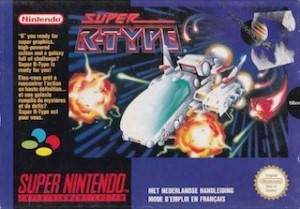
R-Type. There was a point in time when that name was synonymous with horizontally-scrolling shooters. When it hit the arcades in 1987, the splash it made was huge. It wasn't the first of its kind, and by that time the acquisition of power-ups were pretty standard too. What marked it off was three things. Its unique selling point was the use of 'The Force', a bolt-on indestructible droid that could be attached to the front or back of your ship and used to absorb bullets in those tricky moments. It could also be fired out front to operate semi-independently - a very handy thing to have for those annoying bosses. Your craft also came with a super shot that could be charged up by holding down the fire button. R-Type was also distinguished by some of the largest end-of-level bosses seen in an arcade game at that time, and adding to its beguiling appeal was a very swish biomechanical art-style: the baddies just weren't aliens, they were alien/machine hybrids. And last of all, why R-Type did so well was because its gameplay was utterly compulsive. Blasting never felt so satisfying! The game was duly converted to practically every home format going where the legend took fresh root. The Spectrum, C64, Master System, and PC Engine conversions were especially noteworthy and ranked among the very best games available for those respective systems. R-Type II made it into the arcades in 1989 and wasn't quite as successful. After all, you can only redefine a genre on so many occasions. By then there were a welter of blasters to compete with that had built on its elder sibling's influence. This time only Commodore's Amiga saw a home port. That was until Nintendo's Super Famicom was released in Japan. To have the biggest name in shooters grace what became the Super Nintendo in the West was a restatement of the company's supremacy. Nintendo may have lost ground in the overseas markets, but it could still rely on having the platform of choice for arcade manufacturers wishing to port their games to home systems. Super R-Type fit this mold perfectly: the biggest name in shoot 'em ups was hitting the biggest name in video games.
Certainly, Super R-Type was very impressive. Converted by IREM themselves, this was hailed as an improvement on the arcade original - a killer accolade for a time when 'arcade perfect' was a much-coveted honour gamers cared about. Small wonder it was a release title when the SNES made it to these shores in Spring 1992: there was a lot of ground it needed to claw back from the MegaDrive's two-year lead. And, on the face of it, Super R-Type is a superlative product. It had all the features of the old game, but benefited from significant upgrades. There were a couple more weapon types you could access, and the huge beam could be powered up twice in succession into a mega-powerful plasma shot that would pretty much obliterate anything. Position yourself at the right position, unleash the beam and even the most fearsome looking boss would crumble. SNES Super R-Type also benefited from an extra level than its arcade counterpart, multiple difficulty levels, and quite a good soundtrack that was redolent of 70s anime like the celebrated Gatchaman. The gameplay was perfectly replicated and, for a brief period, was hailed the best shooter on the system - at least until Capcom's UN Squadron bested it a few months later. The first time I saw Super R-Type was at the local import gaming emporium, and it looked amazing. The graphics seemed to be carbon copies of the arcade. The action looked frenetic and challenging. But playing it, that was a different matter. There were two chief flaws to this game - one intentional, one not. The first, which is persistently annoying, are the checkpoints or lack thereof. Suppose you battle your way through a tough level only to be smited by the boss at the end, you respawn back at the level's midpoint. That was definitely not cool but a long-established convention whereby difficulty or similar artificial challenges were deliberately deployed by designers to lengthen a game's longevity when, for reasons of technology and memory, there wasn't that much game to play through. The second are the game's technical issues: it is notorious for suffering from slowdown. As an early release, IREM clearly hadn't yet got a handle on the hardware and how to use clever programming to compensate for an almost laughably slow processor. This was all good ammo for the console wars of the time, but the slowdown almost made for a broken game. While it can be used to the player's advantage, such as slowly crawling around a bullet-filled screen, it can be a frightful foe too. Shoot too many opponents and the action ramps up to normal speed, which can see your ship become acquainted with a bullet or the scenery. There must have been hundreds of thousands of SNES owners whose progress through the game was delayed because they fell foul of dodgy programming.
Approaching this from the vantage point of early 21st century gaming, there are two things the experience of chronic slowdown flags up. It interrupts the flow of the game and disrupts whatever narrative the player has imposed on proceedings. The R-Type universe has concocted a tale about the evil Bydo Empire invading things and being thoroughly disreputable, but for a good chunk of players blasting away at hordes of enemies might have involved reliving Star Wars fantasies or something similar. Slowdown breaks this flow down, forcefully curtailing the suspension of belief that was crucial for the story-lite games of the eight and sixteen bit eras. Secondly, it draws attention to the difference between game cultures then and now. These days when a broken game is released, such as Batman: Arkham Knight and Assassin's Creed Unity, developers and publishers are panned, patches have to be rush-released, and gamers return games to the retailer by the bucket load. Back in 1991-2, there was no such culture. Had I been flush enough to have acquired a SNES back then and a copy of Super R-Type, no retailer would have taken it back on the grounds of slowdown. The game wasn't considered broken, it was what it was. As you can see from this contemporaneous review, this issue - which reaches epidemic proportions as the levels wear on - merits but a slight mention in passing. British gamers at least, having been weaned on tape loading and disk-swapping, were habituated to dodgy software, so a bit of on-screen slowdown was nothing. Super R-Type is an important game because of the place it occupied in the early SNES "must-have" pantheon. For collectors it's perhaps a title no collection should go without. But had I splashed out then on a Super Nintendo and forked out a further £44.99 on this cart (for that was its price upon release), I'm sure disappointment would have set in pretty quickly - especially in comparison to the nifty MegaDrive shooters I was used to.