Friday, 23 December 2022

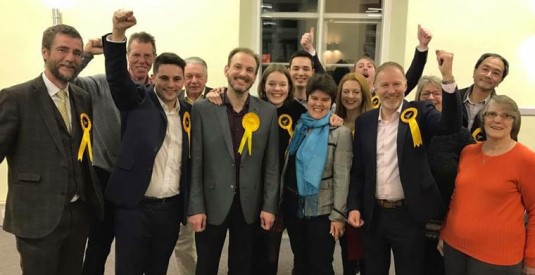
Local Council By-Elections December 2022

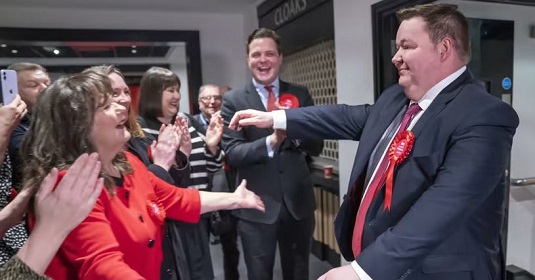
This month saw 29,603 votes cast in 23 local authority contests. All percentages are rounded to the nearest single decimal place. 12 council seats changed hands. For comparison with November's results, see here.

Party
Number of Candidates
Total Vote
%
+/- 
Nov
+/- Dec 21
Avge/
Contest
+/-
Seats
Conservative
          20
 9,228
    31.2%
 +4.8
     -1.8
    461
    -3
Labour
          17
 8,428
    28.5%
  -2.1
    +3.5
    496
   +1
Lib Dem
          17
 3,960
    13.4%
 +0.9
     -3.2
    233
   +6
Green
           9
 2,084
     7.0%
  -2.1
     -3.5
    232
     0
SNP*
           2
 2,455
     8.3%
 +1.5
    +4.6
  1,228
     0
PC**
           0


     0
Ind***
          14
 3,307
    11.2%
  -2.0
    +2.3
    236
    -2
Other****
           3
  141
     0.5%
  -0.6
     -2.1
     47
    -2


* There were two by-elections in Scotland
** There were no by-elections in Wales
*** There were four Independent clashes
**** Others this month were Alba (81), TUSC (26), UKIP (34)

And here are the last contests of 2022. The Tories leave the month marginally weaker in local government, Labour and the Liberal Democrats marginally stronger. Though the late gain on the last day of action in Redcar shows the Tories are not down for the count quite yet. The Lib Dems will be pleased to return to winning ways with their most handsome haul of seats in months, which is cheering for them considering the run of poor numbers reported in the polls. It's also Labour's fourth month in a row that it has enjoyed a net gain of seats, so despite dropping two seats to the Tories in December the local by-election signs remain positive. Meanwhile, it's been 10 months of consecutive losses for the Tories and you'd have to go back to November last year to find them rounding a month off with a net gain. Sucks to be them.

As ever, reading by-elections come with significant health warnings and should be approached with care. But the direction of travel is clear, and as we look forward to a quiet January (only eight by-elections confirmed) we can expect more Tory pain.

1st December
Arun, Arundel & Walberton, Grn hold
King's Lynn & West Norfolk, Gaywood Clock, Lab hold
Norfolk, Gaywood North & Central, LDem gain from Con
Southampton, Bitterne, Lab gain from Con
Waverley, Chiddingfold & Dunsfold, LDem gain from Con
West Lothian, Broxburn, Uphall & Winchburgh, Lab hold

8th December
Brighton & Hove, Wish, Lab gain from Con
City of London, Aldgate, Ind hold
City of London, Farringdon Without, Ind hold
City of London, Queenhithe, Ind hold
Colchester, Highwoods, Lab gain from Oth (Highwoods Group), LDem gain from Oth (Highwoods Group)
Dumfries & Galloway, Mid Galloway & Wigtown West, Con gain from Lab
Lincolnshire, Spalding West, Ind hold
Medway, Peninsula, Ind hold
North Devon, Landkey, LDem gain from Con
South Holland, Monks House, Con gain from Ind

15th December
Amber Valley, Wingfield, Con hold
Ipswich, Priory Heath, Lab hold
Pendle, Barrowford & Pendleside, Con hold
South Kesteven, Toller, LDem gain from Ind
Test Valley, Andover Romans, LDem gain from Con
Wigan, Ashton, Lab hold

22nd December
Redcar & Cleveland, Normanby, Con gain from Lab

Image Credit

Thursday, 22 December 2022

Sweary Centrism

Consider sweary centrism. Some people have built a media career out of it, others not inconsiderable social media followings. But why? Commenting in the after glow of recent Twitter beef, Owen Jones writes that it "stems from a desire to be seen as radical, but without having the political opinions to back that up." Using colourful language to make up for the lack of substance is a fair enough premise to start from.

To use the parlance, the years 2015 to 2019 saw plenty of self-defined radicals show their arses. With the rise of Jeremy Corbyn and the upending of everything they understood about politics, the veneer of progressivism fell away as reality defied their expectations and they scrambled for excuses to oppose the left wing upsurge. But without any cogent argument to explain why they had turned against previously adopted values and aspirations, their collective discourse slipped down the personality/character assassination route. As such, absent anything but vibes, the insult and the swear word were substituted for political argument. It wasn't as though it began as forthright and frank polemic. There was no transitional period. One moment countenance of moderation, the next straight up abuse. It was sound and fury signifying nothing, except their frustrations with the collapse of their world view.

But we have to place our courageously cursing crusaders in another context: that of the attention economy. Those who find a niche and keep plugging at it can build a following, a hefty Patreon, and tot up the writing and broadcasting gigs. And to keep their corner of the market squared, they need to bang out the sweary content to entertain and to ensure some upstart doesn't come along and do a better job. This partly explains the endless proliferation of compound swears. Cockwomble, asshat, shitgibbon, you've heard the lingo and if you haven't cringed, you're part of the problem. This has sprouted an accursed ecosystem of social media users competing to lodge their own witty coinages in the popular consciousness, which the stars of this godforsaken firmament freely dip into to feed their shtick, whether it's "commentary" or "comedy", its edge.

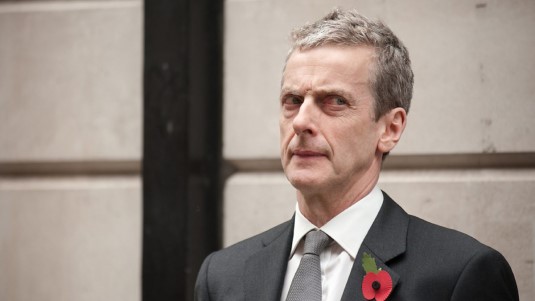
Unfortunately, some of this has to do with the legacy of The Thick of It. Mainstream politics has always been a sweary business behind the scenes, but the satire expressed by Malcolm Tucker and friends was assimilated and embraced as a positive by insiders and the self-fancied politics cognoscenti. The culture of sweary centrism draws on this, calling on the show's absurdity and naffness as a marker of their in-group. It, along with an accompanying fetishising of ruthlessness and the dark arts work as markers of authenticity. Signs of them "getting it", of knowing what politics is really about. It also shows that no matter how "stinging" and fruity their descriptions of the Tories and their works are, they are telegraphing their acceptance of the rules of the game.

In other words, it doesn't matter if they carpet the Tories with clusters of F-bombs and C-incendiaries. The damage they can only ever do is superficial, because there's nothing there. Which fits centrist politics and its desire to preserve what is very well.

Image Credit

Tuesday, 20 December 2022

Sunak's War on Striking Workers

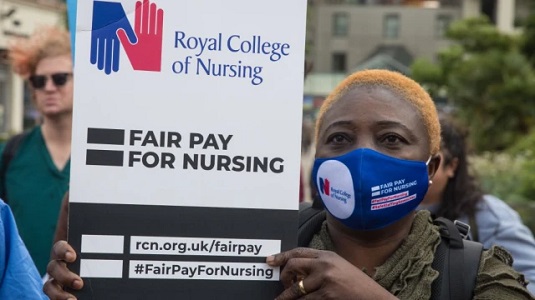
The nurses have spent another day out on strike. On Wednesday it's the turn of ambulance workers. This is against a backdrop of postal workers striking, rail workers striking, civil servants striking, and border staff striking. The New Year can look forward to higher education staff walking out again (hello!), as well as all these workers ramping up their action. By the time Spring comes around, it'll be more a case of which sections of the work force haven't taken action. And Rishi Sunak is loving it. Assailed from all sides, the government are trying to make saying no a virtue.

While polling on other workers walking out is mixed, there is obvious public backing for the nurses' claim. Most people have an awareness of the pressures in the job, regard it as a calling rather than a career, and that they put everything on the line during the acute phases of the pandemic. This is reflected in the coverage of the dispute. Can you remember the last time the BBC gave striking workers sympathetic coverage? Or when the Daily Express backed workers taking action? Two Tory MPs, Jake Berry and Dan Poulter, have called on the government to reach a settlement, and other establishment figures are likewise weighing in with similar sentiments. And this has led to some confusion among politics journalists.

Take, for example, The Graun's Richard Partington. Looking at the small print of the pay recommendation by the NHS Pay Review Body (the "independent" committee which is the government's convenient scapegoat for holding out), he rightly notes that they too acknowledge that raising pay is unlikely to have an effect on inflation as its drivers have nothing to do with wages. But for Richard and not a few others, it makes no sense. There has been a modest recovery in the polls for the Tories, but following rebellions on housing and onshore wind - which Sunak had no issue caving in to - it makes no sense why he'd burn through political capital facing the nurses down. And likewise, seemingly content with cratering the economy (for the second time in a year) with his intransigence over the railways. What's going on?

Sunak appears to be acting against the tenets of capitalist realism. I.e. Keep the economy growing, investments flowing, and markets healthy. But he's not. Always overlooked is the fact capitalism is an extractive, exploitative system. What's missing is an appreciation of bourgeois realism, the maintenance of the class relationships that produce surplus labour and surplus value. For this to run smoothly, the ruling class of this country long ago decided that they should keep trade unions - the collective strength of the workers - shackled, and the demands and politics corresponding to it driven out of popular discourse. No tactic is too low or scurrilous, and no lie is too absurd to achieve this aim. It's no accident that as the strike wave built up during the Autumn and into Winter the Tories and their press helpers launched another campaign against asylum seekers "illegally" coming here. Their very own game of D&D: distraction and demonisation.

Sunak's project, if it can be called that, is concerned with overseeing the depleted and depleting state. His strategy is an attempt at depoliticising politics. I.e. If state institutions break down and don't work, if you can't even get a passport on time, then fewer and fewer will look to government and state action to step in and solve our collective problems. It can't ever be entirely successful, but it doesn't need to be. It's like the Tories have looked at the well-developed and often discussed concerns about hollowed out democracy and are actively set on reproducing these conditions. Cynicism about politics and mass non-participation favours the Tories, as long as the elderly can be relied on to turn out.

Of all the available alternatives on offer this Summer, no Tory leader would have differed from Sunak's approach. Conceding ground to the rail workers, the nurses, and telling Simon Thompson to knock off refounding Deliveroo with Royal Mail branding would be a major reversal of 40 years of industrial policy. It just so happens the Prime Minister is particularly committed to doing nothing. But this inflexibility has invited multiple disputes, that can only get more bitter and bite deeper the longer Sunak holds out. It's a pivotal moment for him, the Tory party, and his class, and any concession extracted from the government from any group of workers will show what the Tory cabinet discovered in July. That collective action works. And we can't well have that.

Image Credit

Sunday, 18 December 2022

An AI's Defence of Socialism

ChatGPT is the chatbot of the moment. Getting praise from across the tech spectrum for its conversational abilities, its article and essay writing abilities are starting to get newsrooms and academia nervous. Why employ staff writers when an AI can churn out fire-brigade-called-to-house stories? Why bother cramming for an assignment when the chatbot can write your essay for you? Having had a play with its essay writing function the work churned out isn't bad. Appropriate referencing and stylistic flair are not there yet, but surely it's only a matter of time before I can ask an AI to write a book in my style about whatever topic. Or that a computer could pen Marx's never completed volumes four, five, and six of Capital. That would be interesting.

I've generated three essays. Here's the first - a (sort of) rejoinder to CapX's defence of capitalism. You can play around with ChatGPT here.

Socialism is a political and economic ideology that aims to establish a more equal and fair society by redistributing wealth and resources more evenly among its members. It advocates for the collective ownership and control of the means of production, rather than their private ownership by individuals or corporations.

There are several reasons to defend socialism. First and foremost, it addresses the issue of economic inequality. In capitalist societies, wealth is highly concentrated in the hands of a few individuals and corporations, while the majority of people struggle to make ends meet. This unequal distribution of wealth leads to numerous social and economic problems, such as poverty, lack of access to education and healthcare, and political disenfranchisement. Socialism aims to reduce these problems by redistributing wealth and resources more evenly among all members of society, ensuring that everyone has access to the necessities of life.

Another reason to defend socialism is that it promotes economic security and stability. Under capitalism, economic booms and busts are a regular occurrence, with workers often bearing the brunt of the instability. Socialism, on the other hand, seeks to smooth out these ups and downs by emphasizing planning and cooperation over competition. This can lead to more stable and predictable economic conditions, which benefits both workers and businesses.

Socialism also promotes social cohesion and community. In capitalist societies, people are often isolated and individualistic, as they are primarily motivated by their own self-interest. Socialism, however, emphasizes the importance of community and collective well-being. This can lead to a more cohesive and supportive society, where people are more likely to help one another and work together for the common good.

Finally, socialism can be seen as a more democratic and participatory economic system. Under capitalism, the ownership and control of the means of production is concentrated in the hands of a few individuals and corporations, who wield a disproportionate amount of power and influence. Socialism, on the other hand, seeks to democratize the economy by giving workers and communities a greater say in how resources are allocated and used. This can lead to a more democratic and participatory society, where ordinary people have a greater voice in the decisions that affect their lives.

In conclusion, socialism is a political and economic ideology that offers a number of benefits over capitalism. It promotes greater economic equality, stability, social cohesion, and democracy, and is therefore a viable and worthwhile alternative to capitalism.

Image Credit

Saturday, 17 December 2022

Revolutionary Deflation

Some things are just irritating. In the 15 years or so I spent around the far left, what always got my goat was revolutionary inflation. The practice common among all the groups to talk up the impact of their interventions. For instance, the 2006 NHS demo against hospital bed losses saw Stoke Socialist Party boost attendance from around 2,500 to 5,000 in the subsequent edition of The Socialist. If you've been in a Trotskyist group, you know exactly what I'm talking about. Inflated membership figures, inflated attendees at party events, inflated paper sales and, most egregious of all, an inflated sense of influence and self-importance. It annoyed because it substituted wishful thinking for accurate assessment, of consensual illusion for analysis. Little wonder that folks didn't understand why their activities weren't getting wider purchase, and why activists tended to stick around only for short periods. It was the tinder box for burnout.

On the internet-travelling left, there's a similar phenomenon: revolutionary deflation. Instead of inflating the strength of the left and its works, this goes in the opposite direction and talks down the standing and appeal of its opponents. And nowhere do we see this more clearly than on the occasion of parliamentary by-elections. You might have missed the most recent one in Stretford and Urmston, which took place on Thursday. With Kate Green leaving the Commons to carry bags for Andy Burnham, Trafford council leader Andrew Western easily dispatched the Tories in a safe Labour seat. With little room to add to the party's vote, Labour nevertheless put on nine points and came within stretching distance of 70%. The Tories were a distant second, and the Greens an even more remote third - with the overhyped Reform doing as dismally as they always do. A sign that Labour's on course to win the next election? In all likelihood, yes.

This is where revolutionary deflation comes in. Rather than admitting to themselves that, electorally speaking, Starmer is now doing well in the polls some comrades argue that the by-elections are flattering him. And their proof? The turnouts. On Thursday, turnout was well down (by 43 points) on the general election. The story was similar but not as pronounced in Chester. A strong result for Labour, except the turnout was 30 points down. Proof, as if it was needed, that Starmer is an albatross around Labour's neck and his chances of getting in Number 10 are lower than supposed.

It would be a stretch to say Starmer is popular. For most people, he's background scenery. They're only interested in what he has to say when there's a big crisis, such as his announcement on the energy price freeze this summer. Other than that, he's neither offending nor gaining plaudits from the punters at large. And while Starmer has his moments in the clanking and shanking of Westminster knockabout versus Rishi Sunak, his acquisition of poll leads have largely been a passive exercise. Labour's doing well because the Tories are in the mire, and their chances of extracting themselves are close to zero.

If the general consensus is meh, with polling alternately showing slight leads or slight deficits in the best Prime Minister scores, does the deflationist argument stand up? Not really. If low by-election turnouts during Starmer's time are indications of his lack of popularity, then surely it was the case for Jeremy Corbyn. In his last two English by-elections of 2019, turnouts were 30 points and 36 points down on the previous election. Even during the lead up to 1997, by-elections saw some shocking numbers. Barnsley East in 1996 was 39 points down. Hemsworth, also in 1996 - and which saw Jon Trickett returned to the Commons for the first time - was 36 points in deficit. Ditto for Islwyn the year before, and a 35-pointer from Dudley the year before that. Whether you liked Tony Blair and John Smith or not, they were at that time as popular as mainstream politicians can be. Perhaps we might consider other factors are in play.

In mainstream political science, a distinction is made between first and second order elections. The latter in this country consist of by-elections, local authority elections (and by-elections), mayoral elections, the EU elections (as was), and perhaps still (just about) elections to Holyrood and the Senedd, and the London Assembly. When (if) Labour implement Gordon Brown's constitutional proposals, the Council of the Nations and the Regions, which is slated to replace the Lords, will also fit in this category. They are "second order" because it's only the general election that matters. It determines who the government of the day is. Everyone understands this, and so there tends to be higher turnouts for first order than second order elections. And this isn't just true of the UK and its Westminster system, but of all liberal democracies. By-elections "don't count", so we see two kinds of behaviour. Voters are more likely to stray from their preferred party (where they have one) to deliver a protest vote, and/or are more disposed to staying at home because the stakes are low. So turnout is lower, regardless of whether the Labour leader at the time was on the right or the left of the party.

There's a second problem with the deflationist argument. Those who vote in second order by-elections are the politically motivated and interested, and older people. Voting data has shown for decades the latter are more likely to vote than younger people in general elections, and this tendency becomes even more exacerbated in second order contests. Because older people are also more likely to vote Conservative, this also gives the Tories an edge. Therefore, when Labour wins by-elections and does so by increased margins, it suggests the party is making inroads into that Tory vote. This appears borne out by polling. Labour still trails the Tories among the over 65s, but not by the yawning chasms of the years previously. Therefore, Starmer and his supporters are justified in feeling buoyed by Labour's recent by-election performances. Despite the low turnouts.

Where does this leave the deflationist argument? Nowhere. It's revealed as nothing but an illusion, if not a wilful delusion. It gets in the way of analysing things as they are. Not because writing about the strength of Labour's support is jolly japes, but because getting a handle on Starmer's support as it is is crucial for campaigns that might wring concessions out of his government in the future. It's this view to action that must guide our thinking. Therefore, these suggestions need bearing in mind when approaching by-elections. Unless something other than changing the world is your primary concern.

Image Credit

Friday, 16 December 2022

Gordon Brown's Deck Chair Arrangement

Had a chat with the Podcasting is Praxis comrades the other night. The topic of our not-entirely-serious discussion was Gordon Brown's "constitutional revolution", which we kicked around like a deflated old football. That and we did think through its implications for statecraft, cronyism, accountability, and asked whether it would change much about our Very Normal Island. Give it a listen! And if you like what you hear, the podcast has the obligatory Patreon.

Thursday, 15 December 2022

Enthusiasm for Keir Starmer?

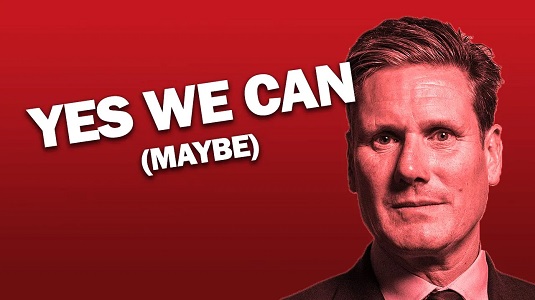
Amid the uncertainty and tumult of British politics, some things are drearily predictable. Take Andrew Fisher's recent Graun article, for example. In this piece, he observes there is no fervour for the Labour Party any more. Anything that might be inspiring has come out in Keir Starmer's boil wash, leaving what's left thinner, a little bit more fragile, and paler in colour. This is in contrast to parts of the country where Labour have campaigned for rent freezes (Scotland and London), and publicly backed workers taking strike action (Manchester). With problems mounting in every direction, there's no sign the party leadership are rising to the occasion with the radical answers to urgent questions. Andrew observes, "Can anyone imagine hundreds of thousands of young people chanting “Oh Keir Starmer”, as they did about Corbyn?"

How do you suppose the ranks of Starmer cheerleaders responded to the article? The New Statesman's Ben Walker typified the line: "Pick one: > Having your name chanted at Glastonbury > Beating the Tories on the economy." The "rebuttal" was so consistent you could be forgiven for thinking a secret WhatsApp group somewhere was transmitting the line to the few dozen social media personalities who hawk themselves as Starmer stans. But we don't need a conspiracy. Their refusal to engage with the argument while fixating on a line Andrew added to emphasise the point shows they have no answer to the points he raises. Equally telling is that despite having supremacy in the party, they still feel the need to bite back in this overly defensive and sarcastic way. It's almost as if they don't feel secure in their control at all.

If anyone could be bothered to string together a counter argument, it might be along the lines of "so what?". The days of 39-point poll leads are well behind us, but Labour's lead is firm, even if Starmer's personal ratings are not. But, as the saying goes, one should not interrupt an enemy while they're making a mistake. On strikes, on the environment, on housing, the Tories are on the wrong side of public opinion on practically everything. Rishi Sunak is under siege from the press and the prospects of backbench rebellions, and even loyal papers and his own MPs are breaking ranks on the nurses' strike. Labour therefore doesn't need to do flashy. All Starmer and the shadow cabinet need do is be patient, not give away hostages to fortune, and everything will come right.

This is complacent. It's difficult to see how Labour can possibly lose in 2024/5, but there are dangers. Polling time and again shows that the one demographic stubbornly clinging to the Tories are the elderly (because reasons), and they have a greater likelihood of turning out to vote. Plastic patriotism and right wing posturing won't be enough to erode the Tory advantage among this group. But added to this we have the great Tory gerrymander and attempted voter suppression with the introduction of compulsory photo ID. It's not enough to turn out younger people any more, Labour has to convince them it's worthwhile putting themselves out to meet the stringent new requirements. And that demands inspiration, hope, and something unambiguously positive to vote for. Wonk-friendly constitutional reform won't cut it.

Perhaps I've got this all wrong. We're still 18 months to two years away from the next election. Time aplenty for Starmer to wow us with his policies and vision. But as with all things, the best indicator of future behaviour is past behaviour. One can emote better days ahead without promising a single thing, an affect Tony Blair carried off with aplomb. There is none of this about the Labour leader or the emerging shape of his programme. Soulless managerialism is the vibe, and Labour appears determined to forecast nothing except more grey skies ahead.

Image Credit

Monday, 12 December 2022

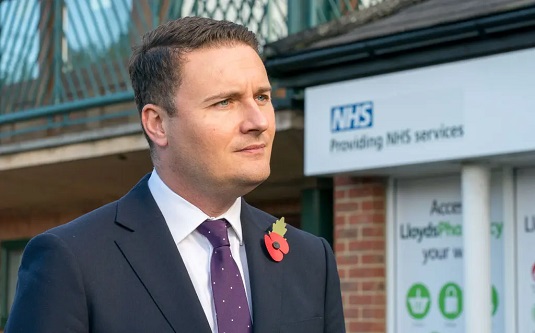
Wes Streeting Vs the NHS

When the Sunday Telegraph emblazoned "Labour vows war on health unions", the shadow health secretary tweeted about it not being "the headline I expected." In that case, Wes Streeting is more stupid than I thought for supposing the Tory party's house journal would treat him fairly. Thing is, I don't believe his protestation. The headline was an accurate reflection of his comments about doctors and the NHS. And as the piece put distance between Labour's front bench and the militant mood of nurses, there will be Leader's office spinners satisfied with a job well done. Making capital unafraid of a Keir Starmer government remains Labour's main strategic objective, and the weekend's intervention on health matters ticks that box.

Streeting's interview had all the subtlety of a sad trombone at a wake. He attacked the British Medical Association and GPs specifically for voting to reduce their working day from 8-6.30 to 9-5. What he failed to mention was practices would flex their hours and schedule GPs to meet local demand. Nor did he address that the move intends to help the retention of doctors. If Streeting had bothered with his briefing notes, he'd know 45% of junior doctors were considering leaving the medical profession, which means a recruitment crisis for GPs. Someone might be "living on a different planet", but it's certainly not the BMA who are looking at stemming the bleed of doctors.

Pouring more petrol onto the fire, he said the BMA were "hostile" to his plans (what plans?) to increase GP access and enforce better standards. Streeting said he wanted to end the "something-for-nothing" culture, and this would be contingent on making extra cash available. There is indeed a something-for-nothing culture in the NHS. It happens daily in every clinic, walk-in centre, and hospital in the land - that is nurses and doctors come on shift and end up finishing long after their contracted hours. They donate something - their unpaid labour - in return for nothing to cover staffing shortfalls and budgets cut to the bone. This is very obviously not what Streeting is talking about. Instead he's playing to his audience, who imagine money is lavished on the NHS so nurses can dance around doing TikToks on the ward, and doctors nip off to enjoy long liquid lunches. And if Streeting-style change isn't accepted by the health unions, what then? Is he going to deny hospitals cash to speed up waiting times and securing more beds because health workers won't show the necessary subservience?

Ah yes, beds. Streeting did the Sunday round of politics programmes defending his plan to use private health capacity to ease the crisis in the NHS. This was him being "bravely" pragmatic, arguing that if people are in pain then using empty beds is the right thing. Patients won't care as long as they're treated and they don't pay a penny. Okay, in a pinch I could imagine any Labour government doing this as a stop gap. Including the one we never got led by Jeremy Corbyn. But to make a song and dance about it? After all, it wouldn't make much of a difference. Between 2001 and 2021, the NHS lost just over 80,000 beds with the steepest falls registered when Labour was in government. Meanwhile, with 6.8m who awaited hospital treatment in September, and the number of beds available in private health are just 8,000. It's but a drop in an ocean, suggesting Streeting's posturing on this issue is less about clearing backlogs and more to do with virtue signalling at wealthy donors and for-profit health interests.

Save perhaps Starmer and Rachel Reeves, the shadow health secretary is the most right wing member of Labour's front bench (putting aside this summer's dalliance with rail nationalisation and backing strikes). The only thing he can be reliably trusted with is ensuring capital finds more profitable outlets in the NHS, while continuing to underwrite it with state money and sustaining the ruinous role played by markets - so dysfunctional that NHS institutions had to find work arounds, until the government kyboshed their efforts. The NHS is in need of serious reform, but one that unleashes the creative power of its staff, throws off the strait jacket of commoditised relationships between its components, introduces proper democratic functioning and accountability, and enjoys budgets that meet clinical demand and staffing needs. This is diametrically opposite to Streeting's arrogant, briefcase-and-sharp-suit managerialism. And that is why when Labour win the next general election health workers and all who support them have to be ready to take on a Labour government as surely as they're fighting the Tories.

Image Credit

Saturday, 10 December 2022

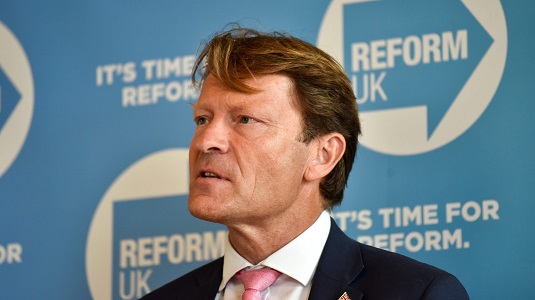
The Prospectless Future of Reform UK

UKIP was the most significant political force to the right of the Conservative Party that has ever arisen. At the 2015 general election it polled four million votes, had won two parliamentary by-elections in the year previous, steadily built up a base in local government and routinely dominated European Union elections. In 2019 and the EU elections that should never have been fought, its Brexit Party successor cleaned up with over 30% of the vote and saw the Tories reduced to seven per cent - their worst result in a national election ever. But success did not come from nowhere. Without its indulgence by the right wing press and, more crucially, very generous coverage given to by the BBC it's likely UKIP and Nigel Farage would have remained footnotes in the political history of the early 21st century.

The rise of UKIP is a case study in how a challenger party can break through if it suits the purposes of well-heeled and well-connected establishment figures. Initially, the 2004 circus around Robert Kilroy-Silk becoming a UKIP MEP gave the columnists and the 24 hours news editors something to fill their politics schedules with. As Farage built up his brand via frequent visits to BBC studios, he filled in following Kilroy's implosion. Never underestimate the ability to give good copy. After the 2009 EU elections, which awarded UKIP second place and 13 seats, they could be used as a means of pressuring the Coalition if the editorial offices at Tory papers thought the new government too liberal for their liking. On equal marriage, environmentalism, and latterly Europe the menace of UKIP was talked up to skew Tory politics, and therefore politics in general, to the right. This suited plenty of Conservative backbenchers fine, who had not forgiven Dave for throwing a commanding poll lead away and landing in Number 10 only because the Liberal Democrats supported him. A mix of threatened rebellions and grumbling, plus UKIP starting to perform well in parliamentary by-elections - especially after 2012 - began the tradition of appointing absolute horrors to cabinet, and eventually extracted the concession of the referendum on EU membership.

But since 2017, the ground hasn't been fertile for the right outside of the Conservatives. Save for the brief interlude of the Brexit Party's triumph before the general election, and the service it rendered the Tories by bleeding off Labour leave votes in seats where punters couldn't bring themselves to vote Tory in protest against the second referendum position (not that Labour had many options). With Boris Johnson straddling the ground from mainstream Tory voters to right wing populism, there was no space for the Brexit Party, long since renamed Reform UK. And especially so now since Farage retired from politics to become just another right wing grifter paid to say "outrageous" things.

But now things have changed. Liz Truss crashed and burned after appealing to Tory instincts, and Rishi Sunak is in with his near-billion pound fortune and briefcase Tory vibes. Apart from not sinking the economy to give the rich another tax cut, for all intents and purposes this government is a fusion of the party's hard right and far right. Obstinance on strikes, employing Putin-style legislation to protests, and appointing a fash-adjacent zealot with a penchant for antisemitic conspiracism as his Home Secretary, but this isn't enough for some. Sunak doesn't look the part for a layer of Tory supporters, while others are displeased by his dodging a membership contest. But what evidence is there that Reform UK are shaping up to be a force the Tories are going to have to reckon with?

If you keep an eye on the Tory press, there's heaps of it. Early last month, Richard Tice, the party's leader/trustee appeared in The Telegraph boasting about an influx of 4,000 new members - some two-thirds of them disgruntled Tories. By any standards, this is not significant beyond broadening the "membership" subs base. The same paper (again) came with a second bite at the cherry this week. "Conservative jumps ship to Reform UK as talks over more defections continue with MPs" is not as exciting as it sounds. The Tory in question is ... a councillor who held a senior regional lay position in the Yorkshire region. There are conversations "across the board, said Tice, and suggesting Reform posed the Tories an existential threat. And then on Saturday The Telegraph again bangs the drum for the party, highlighting polling undertaken by the always ridiculous Matt Goodwin that shows Reform on nine per cent, almost half of the Tory showing on 20%.

Valiant efforts at inventing a right wing party to needle the Tories, but there's little to no evidence for much appetite for reheated Faragism. Goodwin's People Polling outfit flatters Tice and co, but nearly all other companies put Reform on three to six per cent. Territory inhabited by the Green Party, sure, but unlike Reform they are regularly road tested in council by-elections and often poll respectably as well as winning seats. Reform barely bothers, and when it does they're level with the likes of TUSC and the Elvis Bus Pass Party. This differs significantly from UKIP who did take council elections seriously where and when they were able. Then there are the parliamentary by-elections. In Chester they managed 2.7%, coming behind the Greens. In others that have taken place during 2022, where Reform has stood previously they actually lost ground. With protest voting currently advantaging Labour, the Lib Dems, and the Greens it's hard to see how Reform can capitalise on current Tory difficulties. Especially with no EU elections to fall back on.

Nor do things look rosy in the medium term. Assuming the Tories are hung out to dry at the next election, it's very likely they will move right to try and consolidate their base after the trauma of heavy defeat. Little room there for Reform. And when opposition starts manifesting against Keir Starmer at the polls, either the Tories would benefit (doubtful) or following what we've seen in Germany, the Lib Dems and Greens start making inroads into Labour's support at council level - with new opportunities here assuming the planned constitutional overhaul goes through.

The tide came in for UKIP after 15 years of press campaigning. In the completely different context of Labour's ascendency, and that of left wing politics more generally, pushing the boat out a second time will not see the populist right ruling the waves.

Image Credit
Friday, 9 December 2022

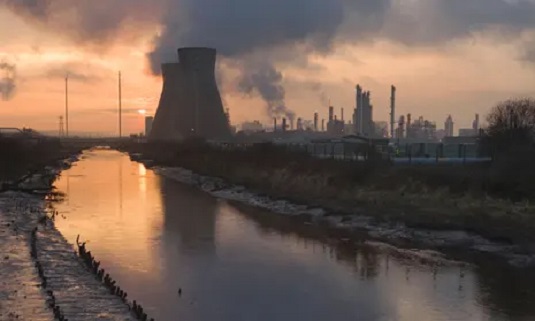
The Tory Dependence on Fossil Fuels

Implausibly, coal not dole could be the Tory slogan for their campaign in Cumbria at the next election. Michael Gove's approval of the first deep pit mine in 30 years. Ever the self-identified pragmatist, Gove has defended his decision because of the jobs it would create and establishing a reliable supply of coking coal for the steel industry means we don't have to buy from Vladimir Putin any more. The Conservative Friends of Primary Industry, who'd have thought it? Not the best look when the Tories boast about how much a world leader in net zero their government is, but there's another set of optics they are more bothered about.

Disinterring King Coal from his crypt is one moment of a pattern of behaviour. We had Rishi Sunak refusing to attend COP27, until it became politic for him to do so. The Tories as a whole (but not the Prime Minister himself) are very keen on fracking, and smart under the ban Boris Johnson introduced and public opinion has since enforced. And then we have the energy price guarantee. Earlier in the year while Sunak was chancellor he set up a supposed levy on the fossil fuel giants to freeze bills. By the time of her brief period in the Downing Street spotlight, energy was costing so much that Liz Truss was forced to act. Her scheme was to borrow on the never never and pay these funds over to the suppliers to fix the unit price. She then stupidly sunk her premiership and underlined the doom upon the Tories. When Sunak was coronated he continued with the U-turn on tax cuts for the rich brought in by Jeremy Hunt, but crucially kept the public subsidy for energy, categorically ruling out making the likes of BP and Royal Dutch Shell pay out their surplus profits. Likewise, his tax break for oil exploration stayed in place. What have these companies got on the Tories?

The party is well funded by oil and gas companies. Reporting prior to the 2019 election, The Graun found fossil fuel firms had spent over £5m lobbying MPs. The recipients of this aid were mostly Conservative members. Nadhim Zahawi, for instance, was on a £20k monthly salary as Chief Strategy Officer for Gulf Keystone Petroleum from October 2015 to August 2017, when it increased to £30k. He received a £116k golden goodbye when he became a minister in 2018. An egregious example when other loyalties could be bought for much less, such as the £10k Gove got in 2010, and the relative pittances enjoyed by Tory climate change denialists who concidentally are in receipt of similar monies. Tories enjoy incentives to stay sweet on fossil fuels, especially now many of them will look for new careers before long.

Much has also been made of Truss's oil links. But she last worked for Shell 22 years ago, a decade before she entered the Commons. Her leadership campaign was part funded by fracking interests and they were duly rewarded, but her enthusiasm for launching a new wave of drilling in the North Sea requires a bit more explanation. As does Sunak, whose spent his career as a City slicker but has bent over backwards to help the industry while in office - his system of tax reliefs being one example. His family have an indirect commercial interest in Shell and other Indian-based fossil fuel firms. Is it as easy and as crude as joining the dots?

It might seem that way, but it comes back to the particular constellation of class forces the Tories articulate and cohere. Principally, the City. In the first place, tax receipts from the North Sea bankrolled Thatcher's closure of nationalised industries and her subsequent attacks on the labour movement in the 1980s. And while there is still money to be made - some 3.2bn barrels remain unexploited under the sea bed - Tory attitudes, conscious and instinctual, are more driven by what's good for the City. Keeping it at the top of the global casino has, historically, meant the state is very hands off when it comes to the capital flows that sluice on through. Britain's companies and property markets are fair game, and offer convenient holding pens outside of the jurisdictions from whence the capital came. Oil and fossil fuels are and will remain strategically vital for the rest of the century, notwithstanding advances in batteries, fusion, and renewables. Keeping the regulatory environment light touch if not positively welcoming for carbon polluting industries tells them London is always open for their business, even if they're not interested in direct investments in exploiting Britain's substantial coal, gas, and oil reserves. And it has proven very successful so far, with energy oligarchs from Russia and the Gulf's absolutist tyrannies coming to town and finding the doors held open to the country's elite. For the Tories, petrochemicals are more than just about money, it's absolutely central to the City's soft power and therefore the global significance of the UK's capitalist class. Whose standing isn't harmed by having two of the world's largest oil concerns domiciled here either.

This helps explain the Tory politics of fossil fuels. It goes way beyond the role they play in the country's energy mix and the junkets, freebies, and consultancies they dole out to friendly politicians. It's central to the alignment of bourgeois politics and their state. This means environmental concerns about oil drilling, coal mining, fracking, are immediately questions of class that cuts to the quick of their power, and puts the Tory clamour for repressive legislation against Extinction Rebellion/Just Stop Oil in an entirely different light.

Image Credit